Vue normale

  • ✇Euromaidan Press
  • Reuters: The Patriot deal Trump denied is quietly still alive
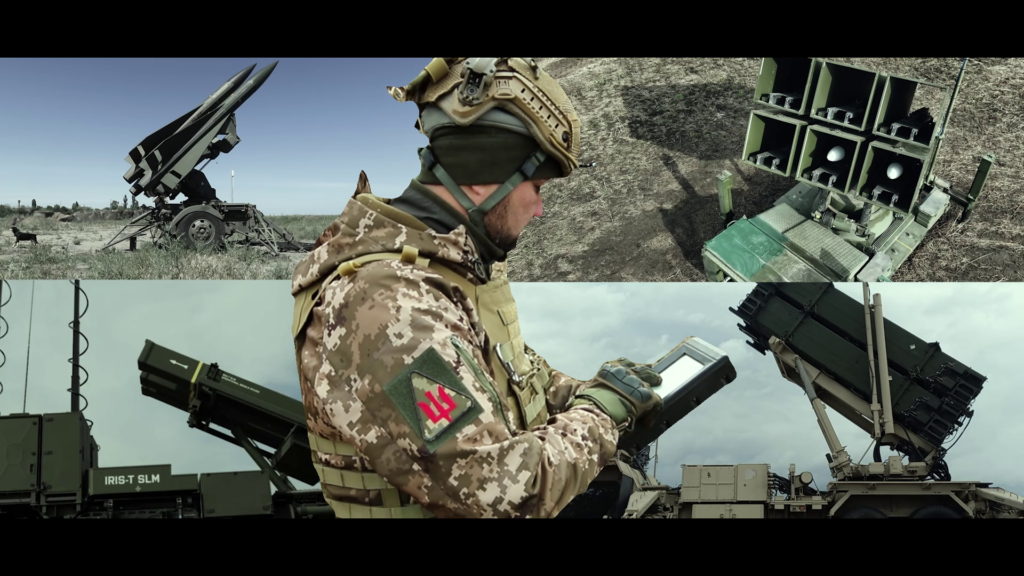
    US negotiators have quietly kept a deal to let Ukraine help build Patriot interceptor missiles alive, even after US President Donald Trump publicly cast doubt on it, Reuters reported. Four people familiar with the talks said Washington never ordered them stopped. Ukraine, running low on air defenses, urgently wants the missiles to blunt Russia's growing ballistic strikes. Russian daily drone attacks forced Kyiv to chase air defense from every direction at once, includin
     

Reuters: The Patriot deal Trump denied is quietly still alive

6 août 2026 à 09:07

nato send ukraine $5 billion weapons year’s end — focus air defense · post american patriot missile systems patriots final weeks 2025 set receive large batch us-supplied worth about deputy

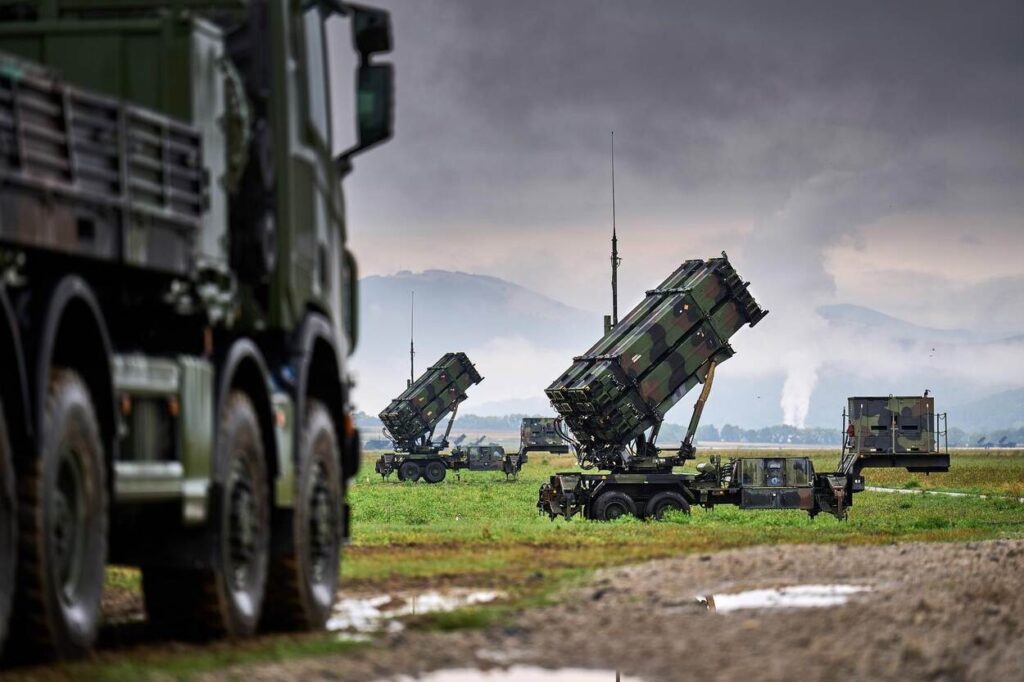
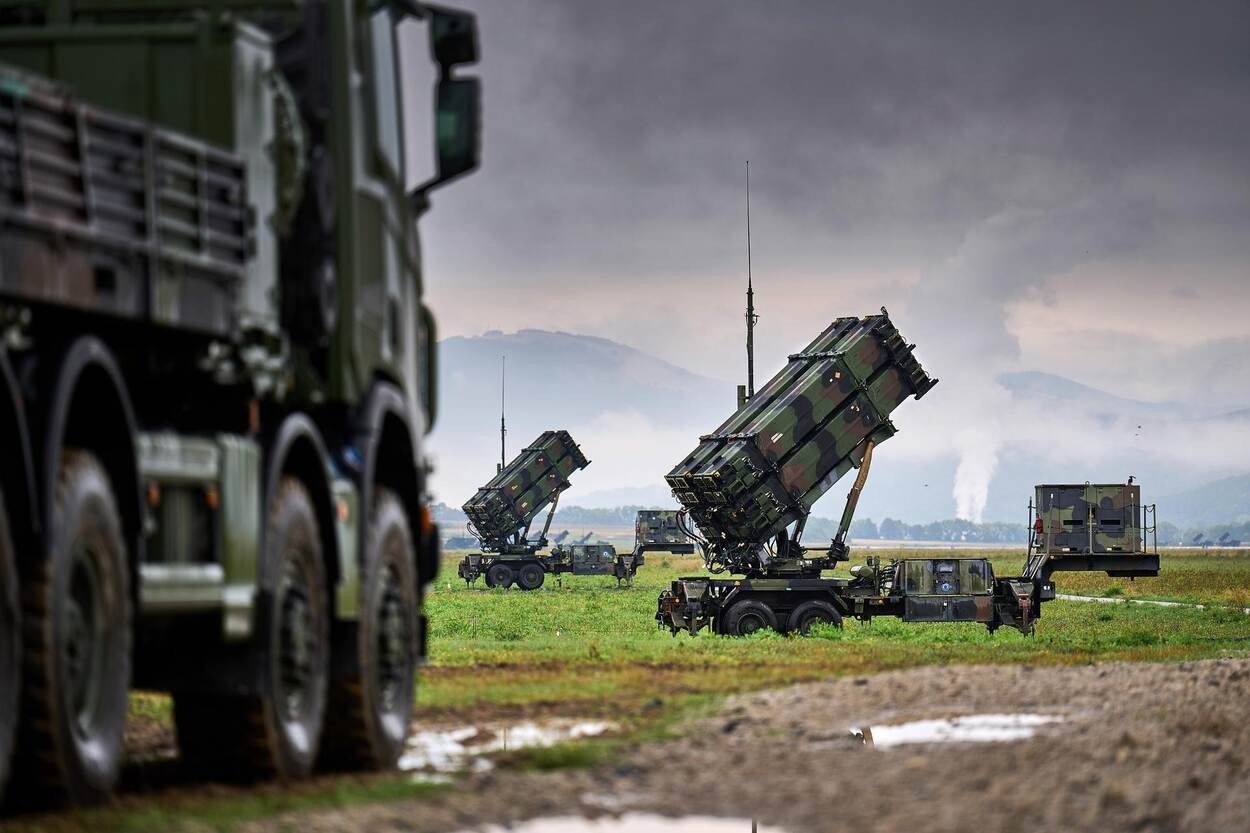
US negotiators have quietly kept a deal to let Ukraine help build Patriot interceptor missiles alive, even after US President Donald Trump publicly cast doubt on it, Reuters reported. Four people familiar with the talks said Washington never ordered them stopped. Ukraine, running low on air defenses, urgently wants the missiles to blunt Russia's growing ballistic strikes.

Russian daily drone attacks forced Kyiv to chase air defense from every direction at once, including home-grown interceptors. But this year, Moscow has increasingly turned to ballistic missiles, the hardest weapons for Ukraine to stop. US-supplied PAC-3 interceptors fired by Patriot systems are among the few weapons that can reliably shoot them down, and Ukraine has now run out.

President Donald Trump greets Ukraine's President Volodymyr Zelenskyy at his Mar-a-Lago club, Sunday, Dec. 28, 2025, in Palm Beach, Fla. AP Photo/Alex Brandon/Eastnews

The talks Trump seemed to kill

Last week, Trump appeared to reverse course, telling reporters the US had not agreed to let Ukraine build Patriots and must be "very careful about letting somebody build them." 

According to Reuters, two sources tied that to a tense White House meeting with Zelenskyy. Yet the negotiations pressed on. 

"No order was given to halt the discussions," one source said, adding that talks continued with US arms makers and military officials.

Matthew Whitaker, Washington's envoy to NATO, is leading the drive for a deal. He visited Kyiv last month to weigh options with Ukrainian officials and weapons executives. His spokesperson framed the trip around drone collaboration that would benefit US forces, without naming the Patriot plan. 

A senior administration official told Reuters that any agreement must protect US technology. 
nato send ukraine $5 billion weapons year’s end — focus air defense · post american patriot missile systems patriots final weeks 2025 set receive large batch us-supplied worth about deputy

Reuters: The Patriot deal Trump denied is quietly still alive

What Ukraine could build

The options include making Patriot components in Ukraine and shipping them to Germany for final assembly, the sources said. A US official called that the most feasible route. Germany already produces an older Patriot model, and the advanced PAC-3, the newest Patriot interceptor, is expected to follow.

Ukraine could instead join an existing US-European Patriot program, or build a cheaper version of the PAC-3. 

It might also tap Lockheed Martin's new lower-cost interceptor, the PAC-3 ACE, unveiled last month.

A promise made, then pulled back

During a meeting with Zelenskyy in Ankara last month, Trump said the US would license Ukraine to make PAC-3s. His later reversal caught many off guard, including Zelenskyy. In a follow-up call, US Vice President JD Vance assured him that deals between presidents would hold, one source said.

nato send ukraine $5 billion weapons year’s end — focus air defense · post american patriot missile systems patriots final weeks 2025 set receive large batch us-supplied worth about deputy
Explore further

Reuters: The Patriot deal Trump denied is quietly still alive

Ukraine's clock is running

Even with a deal, Ukraine would not receive newly built interceptors for a year or more. So Kyiv is urging allies to hand over some of theirs and exploring swaps to get missiles sooner. 

Earlier, Zelenskyy warned that Ukraine had run out of Patriots. That day, it intercepted just one of 27 ballistic missiles Russia fired. 

Global stocks of high-end interceptors have shrunk since the Iran war, with Patriots once bound for Ukraine diverted to US forces and Gulf allies.

  • ✇Euromaidan Press
  • Double-tap strike kills 20-year-old Hospitaller volunteer in Kyiv
    On 1 August, 20-year-old fourth-year psychology student Vitalina Yarovenko was killed in a double-tap strike while helping victims in Kyiv. She was a volunteer paramedic with the Hospitallers medical volunteer battalion. After completing her training, she was preparing to officially join the battalion, said Nataliia Chykhachova, head of the Hospitallers' patronage service. Kyiv bid farewell to the volunteer on 4 August. Every day, Russia fires drones and missile
     

Double-tap strike kills 20-year-old Hospitaller volunteer in Kyiv

6 août 2026 à 08:46

20-year-old fourth-year psychology student Vitalina Yarovenko was killed in a double-tap strike while helping victims in Kyiv on 1 August 2026. Photo: Vitalina Yarovenko/Facebook

On 1 August, 20-year-old fourth-year psychology student Vitalina Yarovenko was killed in a double-tap strike while helping victims in Kyiv. She was a volunteer paramedic with the Hospitallers medical volunteer battalion. After completing her training, she was preparing to officially join the battalion, said Nataliia Chykhachova, head of the Hospitallers' patronage service. Kyiv bid farewell to the volunteer on 4 August.

Every day, Russia fires drones and missiles, targeting Ukrainian cities. Overnight into 1 August, Russia attacked Kyiv with ballistic missiles, killing nine people and injuring more than 30 others, Kyiv Mayor Vitali Klitschko said. Vitalina and a group of volunteer paramedics were on their way to rescue people after a strike on Zdolbunivska Street in Kyiv's Darnytskyi district. The second strike took Vitalina's life as they were getting out of their vehicle, said Oleksandr Kostiuk, head of military training at the National University of Kyiv-Mohyla Academy. The Russian troops often employ the double-tap tactic, targeting the first responders.

The aftermath of Russia's overnight strike on Kyiv on 1 August. Photo: Ivan Vyhivskyi/Facebook

Vitalina was killed alongside 25-year-old paramedic Yeva Roiter, while their driver remains in critical condition.

Farewell ceremony

Several hundred people gathered in central Kyiv. Most of them were dressed in white and held white flowers at the request of Vitalina's mother. Some knew the young woman personally, while others had never met her but decided to come. The farewell ceremony began at St. Michael's Golden-Domed Cathedral and continued at Maidan Nezalezhnosti (Independence Square). Vitalina was buried near the Alley of Heroes at Berkovetske Cemetery.

People gather to pay their respects to 20-year-old volunteer Vitalina Yarovenko, who was killed in a Russian double-tap strike on Kyiv. Independence Square, Kyiv, 4 Aug. 2026. Photo: Serhii Okuniev/NV

"I begged, I did not want a hero at home, I wanted my child at home. But it was her choice. Vitalina had always been a very brave girl. At the age of 20, I wrote that I once held her in my arms, and now she firmly holds the world. I wanted her to keep holding this world for a very long time. But, perhaps, now she will hold it from heaven," Vitalina's mother, Natalia Koretska-Yarovenko, shared during the farewell ceremony.

People gather to pay their respects to 20-year-old volunteer Vitalina Yarovenko, who was killed in a Russian double-tap strike on Kyiv. Independence Square, Kyiv, 4 Aug. 2026. Photo: Serhii Nuzhnenko/RadioSvoboda.org (RFE/RL)

Vitalina Yarovenko

During the farewell ceremony, people recalled that during her school years, Vitalina led an active life. She took part in environmental initiatives, practiced athletics, and competed in sports competitions. In the eighth grade, she decided that she would become a psychologist. Vitalina fulfilled that dream, and while studying at university, she returned to her former school to hold workshops for children.

20-year-old fourth-year psychology student Vitalina Yarovenko was killed in a double-tap strike while helping victims in Kyiv on 1 August 2026. Photo: llunulla/Instagram

After the full-scale invasion, Vitalina tried to help the military. She visited soldiers in hospitals and launched more than 30 fundraising campaigns. She also conducted military training courses at her university and joined the Hospitallers, helping people at the sites of Russian strikes in Kyiv as part of the battalion.

"She truly was a friend of the Hospitallers and had our shoulder patch, which not everyone has. She was going to complete the training and officially join our ranks. But she did not manage to," Chykhachova said.

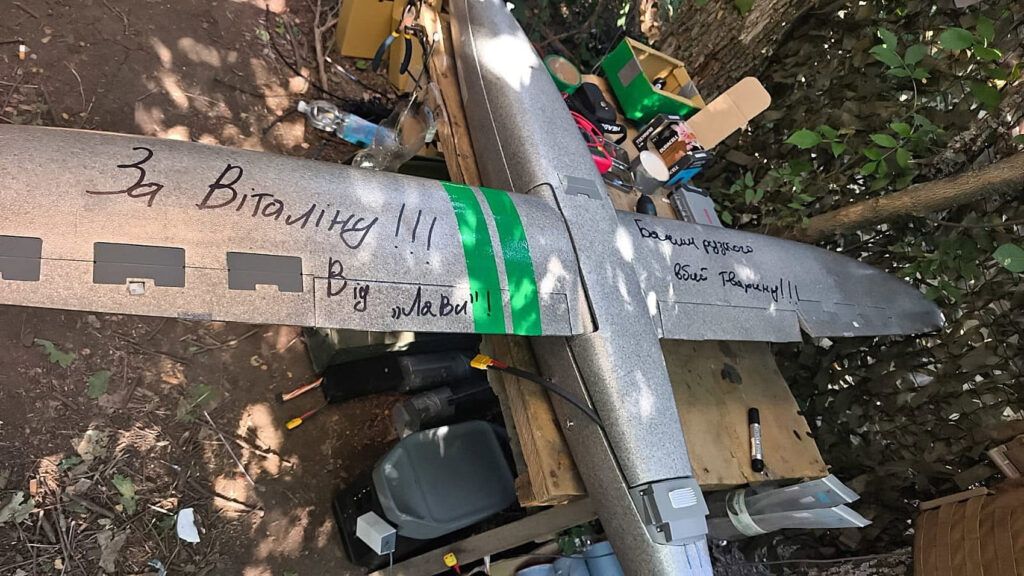
As an act of revenge, soldiers on the front line have been writing "For Vitalina" on their UAVs. One such photograph was shared in the comments under a post by freelance presidential adviser Serhii Flesh by the Lava Unmanned Systems Regiment of the Khartiia 2nd Corps of the National Guard of Ukraine.

A UAV bearing the inscription "For Vitalina!!!" Photo: Lava Unmanned Systems Regiment of the National Guard of Ukraine's 2nd Khartiia Corps/Facebook

Deliberately striking medics as they reach the wounded — the "double-tap" — is widely assessed as a likely war crime under the Geneva Conventions, which protect medical personnel, including volunteer paramedics.

Shortage of Patriot missiles from allies and intensified Russia’s attacks made July deadliest month for Ukrainian civilians since April 2022

6 août 2026 à 02:08

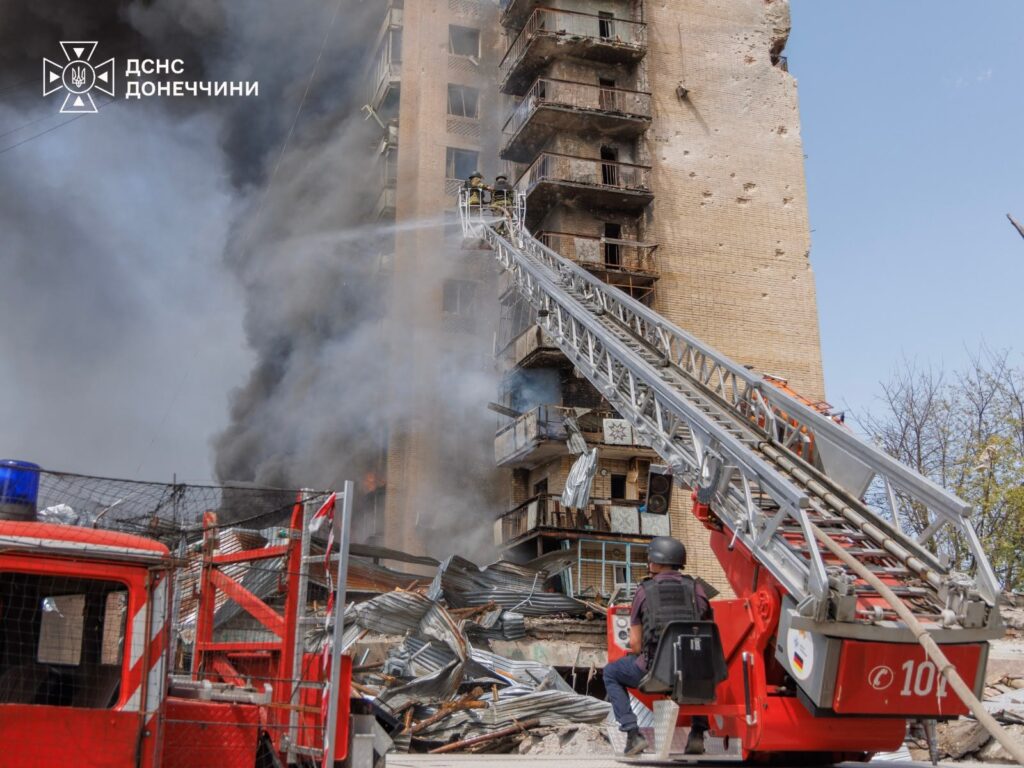
Ukrainian rescuers are working at the Russian strike on 4 August 2026, in Donetsk Oblast. Source: The State Emergency Service of Ukraine

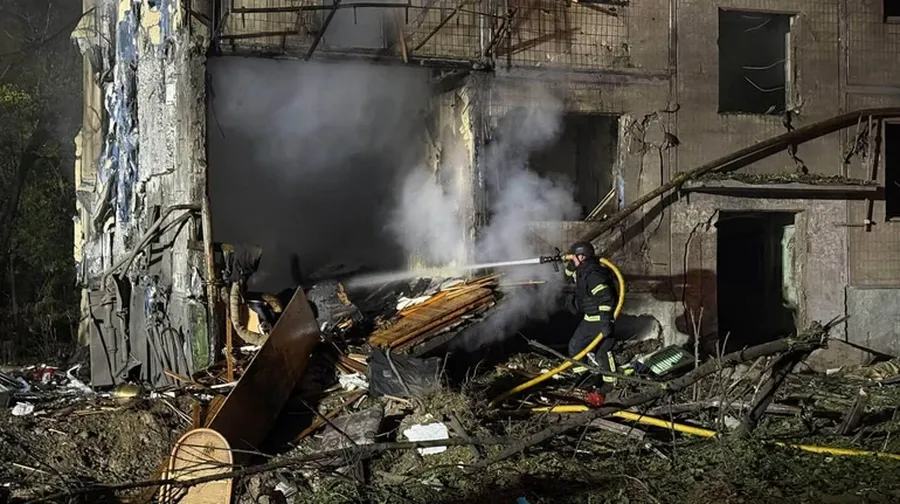
Russia's escalating strikes made July the deadliest month for Ukrainian civilians in more than three years. More civilians were killed in Ukraine in July than in any month since April 2022, driven by intensified Russian attacks using ballistic missiles and long-range drones, the UN human rights office in Ukraine reports.

The record is the human cost of a shortage of interceptors for ballistic missiles amid the US war with Iran. However, Ukrainian President Volodymyr Zelenskyy has said the cut in interceptor supplies from partners may be a political attempt to make Ukraine more compliant, a claim he made after the same overnight attack that killed at least 17 civilians, mainly in Kyiv and the surrounding region.

The month's toll came from strikes on cities

The July deaths clustered around attacks on populated areas. Beyond the Kyiv strike, air and drone attacks hit Kramatorsk, Kherson, and Zaporizhzhia, killing and wounding dozens and destroying homes, schools, public transport, water systems, and humanitarian warehouses, according to the UN.

The targets read as the fabric of civilian life. Water systems, schools, and aid depots are not military objects, and their destruction alongside the deaths is what the UN monitoring mission records when it documents the effect of Russia's long-range strikes on the civilian population.

The half-year figures show a steep climb

The July record sits atop a sharply rising trend. In the first half of 2026, the UN monitoring mission confirmed 1,396 Ukrainian civilians killed and 7,978 wounded.

Those numbers are climbing fast. The first-half toll is 37% higher than the same period in 2025 and 114% higher than the year before, as Russia intensifies its long-range strikes. Civilian deaths have more than doubled in two years, a direct measure of what the shift to massed ballistic and jet-powered drone attacks has done to the people beneath them.

Russia reported its own civilian deaths

The UN also noted casualties on the Russian side. According to Russian local authorities, Ukrainian long-range drone retaliation strikes on several Russian cities this week reportedly killed at least 12 people.

The scale is asymmetric and the cause singular: it is Russia's war on Ukraine, and its intensifying strikes on Ukrainian cities, that made July the deadliest month for civilians since the war's first spring.

  • ✇Euromaidan Press
  • Why can’t Ukraine just blow up Russian launchers firing ballistic missiles at its cities?
    There is a reason Ukraine cannot simply blow up the launchers firing ballistic missiles at its cities. Russia's Iskander launchers are extremely hard to catch, and interfering with the missiles' production is nearly as difficult, presidential adviser Serhii "Flash" Beskrestnov said on the national telethon, according to UNIAN. The launchers survive by never staying still or coming within reach. Iskander launchers head to their firing positions only when a combat task is
     

Why can’t Ukraine just blow up Russian launchers firing ballistic missiles at its cities?

5 août 2026 à 15:54

ukrainian intelligence russia’s advanced missile arsenal shrinks nearly 50% since russia's iskander-m its mobile launcher iskander domestic pyongyang-supplied kn-23 ballistic stockpile has dropped 580 300 told liga report does mention

There is a reason Ukraine cannot simply blow up the launchers firing ballistic missiles at its cities. Russia's Iskander launchers are extremely hard to catch, and interfering with the missiles' production is nearly as difficult, presidential adviser Serhii "Flash" Beskrestnov said on the national telethon, according to UNIAN.

The launchers survive by never staying still or coming within reach. Iskander launchers head to their firing positions only when a combat task is set, sometimes moving along forest roads for five hours to avoid detection by satellites, then deploying fast, firing, and fleeing.

They launch from 140 to 150 kilometers behind the front line, which is why catching one on the march or at its firing position is so hard.

The launcher is a fleeting target

Beskrestnov described a weapon designed to be gone before it can be hit.

"The deployment of the Iskander happens very quickly. Then the launch. The Iskander fires and then flees the position," he said.

The forest-road approach and the 140- to 150-kilometer standoff are deliberate. By staying beyond HIMARS' range and moving under tree cover to evade satellites, the launcher gives Ukraine almost no window to detect, target, and strike it before it fires and moves on.

Attacking the factories is hard too

Ukraine's other option, hitting production, faces its own obstacles. The missiles are made deep underground, where they are not easy to attack, Beskrestnov said.

He also claimed sanctions do not work well against the Iskander because it is "probably the only product made 100% from Russian resources and Russian electronics." That claim sits awkwardly against Ukraine's own documented findings.

Ukraine's sanctions commissioner, Vladyslav Vlasiuk, reported that an Iskander fired at Kyiv Oblast on 10 July held more than 140 foreign components, 62 of them American. Meanwhile, Ukraine's Defense Intelligence has said that without foreign parts, Russia cannot build the missile at all. Ukraine has repeatedly struck the plants making Iskander components, precisely because those production nodes are vulnerable.

The interception gap makes it worse

The launcher problem compounds the shortage of defenses against the missiles themselves. With Ukraine short of the Patriot interceptors that are the only reliable defense against Iskander ballistic missiles, and the launchers nearly impossible to catch, Russia can keep firing them at a pace Ukraine cannot fully answer, striking cities from safe forest positions deep behind the front.

  • ✇Euromaidan Press
  • For under $120, Russia can get Ukrainian warehouse bombed. Here’s how it finds its targets
    Russia has the ballistic missiles to keep hitting Ukraine every month at the current pace. Russia can launch about 100 ballistic missiles at Ukraine each month, technology specialist and presidential adviser Serhii "Flash" Beskrestnov said on 5 August. The estimate sets the scale of a threat that Ukraine's air defenses cannot fully answer. The current density is higher because Russia wants a demonstrative reaction and is attacking partly from reserves, but going for
     

For under $120, Russia can get Ukrainian warehouse bombed. Here’s how it finds its targets

5 août 2026 à 12:10

Presidential adviser on defense technology development Serhii "Flash" Beskrestnov at the test range of new electronic warfare means against jet-powered Shaheds. Source: Serhii "Flash" Beskrestnov

Russia has the ballistic missiles to keep hitting Ukraine every month at the current pace. Russia can launch about 100 ballistic missiles at Ukraine each month, technology specialist and presidential adviser Serhii "Flash" Beskrestnov said on 5 August.

The estimate sets the scale of a threat that Ukraine's air defenses cannot fully answer.

The current density is higher because Russia wants a demonstrative reaction and is attacking partly from reserves, but going forward, the attacks will run at around 100 ballistic missiles a month, Beskrestnov said.

Against a weapon that only the Patriot reliably stops, and with Ukraine short of Patriot interceptors, roughly 100 ballistic missiles a month is a sustained lethal pressure the country will have to endure.

The target is Ukraine's warehouses

Beskrestnov said Russia has intensified strikes on a specific set of civilian targets. Moscow has stepped up attacks on various warehouses and production sites, including those for food products, construction materials, and retail, and this trend will continue for now.

The pattern matches recent strikes. Russia has hit the warehouses of the retailer Rozetka, killing a worker, and food storage across the country, part of a campaign against the civilian logistics that keep daily life supplied, which has forced businesses to decentralize storage and reroute deliveries.

Russia finds the targets with cheap informants

The chilling part is how easily Russia locates these warehouses. It takes little effort because warehouse data is completely open and requires no satellites or intelligence channels, Beskrestnov said.

"A person is hired, a traitor for a few thousand hryvnia, who watches what happens at the warehouse, the movement of trucks, the volume. Then this information reaches Russia, and a decision is made about a strike," he explained.

He said his own house was targeted the same way in April, when he had just returned from a work trip and was wounded in the strike.

His advice to businesses

Beskrestnov urged businesses to adapt. He advised entrepreneurs to diversify storage, avoid concentrating large quantities of goods and vehicles in one place, and, where possible, seek subleased small warehouse spaces.

Spreading stock across many small sites makes each one a poorer target, not worth a ballistic missile, and denies the local informants an easy, high-value warehouse to point Russia toward. It is a war-economy adaptation forced on Ukrainian business by a bombing campaign that now reaches the supply chain itself, as Beskrestnov suggested.

Russia destroys the warehouses of Ukraine’s biggest retailers and parcel carrier in overnight Kyiv barrage

5 août 2026 à 08:36

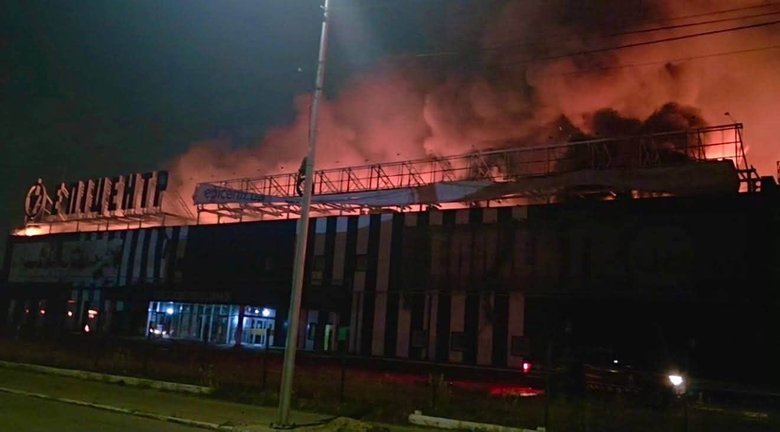
Flames and thick smoke rise from the roof of an Epicentr facility following a Russian missile attack on 5 August 2026.

Russia's overnight missile-and-drone barrage on Kyiv and its surrounding region on 5 August destroyed the warehouses and production sites of several of Ukraine's largest retail and logistics companies, killed 17 people and wounded 44 more, and laid bare the country's dwindling ability to intercept ballistic missiles, according to Ukrainian officials.

Russia's main target on 5 August: Ukraine's warehouses

Russia has spent this year pushing its air war toward the ballistic missiles that Ukrainian defenses struggle most to stop, launching more of them than Ukraine can shoot down while its Patriot interceptor stocks run dry, and pairing them with drone waves that keep reaching homes, transit and the warehouses that feed the country.

Three Russian ballistic missiles destroyed the largest distribution center operated by Rozetka, Ukraine’s biggest online retailer, near Kyiv overnight on 5 August. Rozetka co-founder Iryna Chechotkina said the warehouse had processed more than 100,000 online orders each day and was beyond repair.

By dawn, the attack had torn through the civilian logistics network moving parcels, groceries, household goods and construction materials across the capital and its suburbs. At least 17 people were killed and 44 injured in the broader barrage, according to President Volodymyr Zelenskyy.

Russia launched a massed missile and drone attack on Kyiv and Kyiv Oblast overnight, killing 14 people and injuring 27.

Fires burned across three raions. A residential building collapsed in Kyiv's Holosiivskyi district, where rescuers are searching for people under the rubble…

— Euromaidan Press (@EuromaidanPress) August 5, 2026

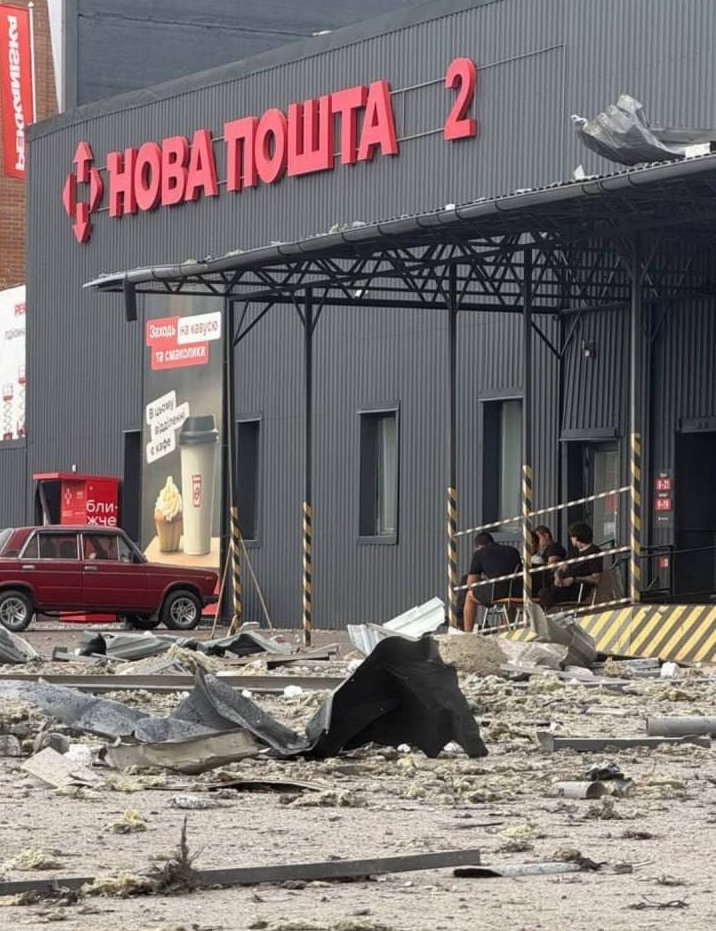
In its 5 August 2026 strikes, Russia destroyed a sorting center owned by Nova Poshta, Ukraine’s largest private parcel carrier, as well as major facilities operated by Epicentr, the country’s largest home-improvement retailer. Sites belonging to Novus and Fozzy Group, two major Ukrainian grocery retailers, were also damaged.

Nova Poshta said cluster munitions—bombs that scatter smaller explosives across a wide area—destroyed its Kyiv sorting center. Three people were killed and eight injured. Two of those killed were drivers for a partner carrier, while the third worked for a contractor.

Debris covers the grounds of a Nova Poshta sorting center in Kyiv after a Russian strike on 5 August 2026. Source: Kyiv24 via Censor.NET.

Epicentr lost two major warehouse complexes and much of its ceramic-tile production. One employee was killed, and three were hospitalized at the company’s complex in Kalynivka. Its logistics center on Kyiv’s Viskozna Street burned completely, while another Russian missile destroyed the factory's kilns.

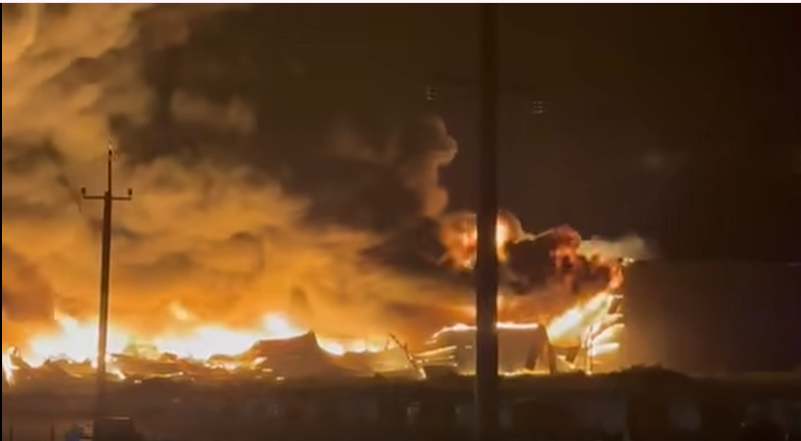
During a separate overnight attack on 3-4 August, a Russian drone destroyed a Biosphere warehouse storing household and personal-care products in Dnipro, although all employees reached shelter and no one was injured.

Fire engulfs a warehouse complex in Dnipro after a Russian drone strike overnight on 3–4 August 2026. The complex included a 20,000-square-meter warehouse operated by Biosphere. Source: screenshot from a video posted by Andriy Zdesenko, Biosphere’s founder and CEO, on Facebook

The Kyiv attack extended beyond commercial facilities. Russia's attack killed eight people waiting for a delayed train at Kvitneva station, a commuter stop near Brovary, east of Kyiv. Missiles also hit homes and offices, damaged an ambulance and caused an ammonia leak at a non-residential site.

8 Passengers waiting for a delayed train were killed at "Kvitneva" station in Kyiv Oblast

Radio Svoboda published footage from the "Kvitneva" station in the Kyiv Oblast, where 8 people were killed as a result of a Russian missile strike.

According to Volodymyr Bihun, head of… pic.twitter.com/5ShA7Pdbot

— UkraineWorld (@ukraine_world) August 5, 2026

An earlier Euromaidan Press report detailed the destruction across Kyiv and the surrounding region.

Why Ukraine intercepted none of the missiles

Russia launched 24 ballistic missiles and four Zircon and Oniks anti-ship missiles, high-speed weapons designed primarily to strike naval targets but also used against Ukrainian cities.

Ukraine intercepted none of the 28, the Ukrainian Air Force said. Air defenses shot down or electronically disabled 98 of the 115 accompanying drones.

Missiles and 17 drones struck 26 locations, while debris fell at another six.

Zelenskyy said ballistic-missile interceptors could have saved those killed. Ukraine’s stocks of Patriot missiles, its only reliable defense against Russian ballistic weapons, are critically depleted

A global interceptor shortage means manufacturers cannot produce advanced air-defense missiles fast enough to meet demand.

Russia exploited the same gap on 1 August 2026, when it fired 27 ballistic missiles at Kyiv and Ukraine intercepted only one.

Moscow may point to recent Ukrainian strikes on Wildberries logistics centers to frame its attacks as retaliation. Ukrainian officials say the Russian retailer transports military goods, including drone components and navigation equipment. The Kremlin denies that Wildberries carries military cargo.

Ukraine’s acting Foreign Minister Andrii Sybiha rejected any comparison between the attacks. "Russian attacks cannot be justified by anything, including any actions by Ukraine," he said.

  • ✇Euromaidan Press
  • North Korean missile unit deploys to Russia for ballistic strikes on Ukraine, Kyiv says
    A North Korean missile unit has begun deploying to western Russia and could soon operate up to 120 ballistic missiles and six launchers for strikes against Ukraine, according to Ukraine's military intelligence agency, Reuters reports. Russia has sharply increased its use of ballistic missiles against Ukraine in recent months. Unlike drones and cruise missiles, ballistic missiles are much harder to intercept, and most launched in recent barrages have penetrated Ukraine's
     

North Korean missile unit deploys to Russia for ballistic strikes on Ukraine, Kyiv says

5 août 2026 à 06:52

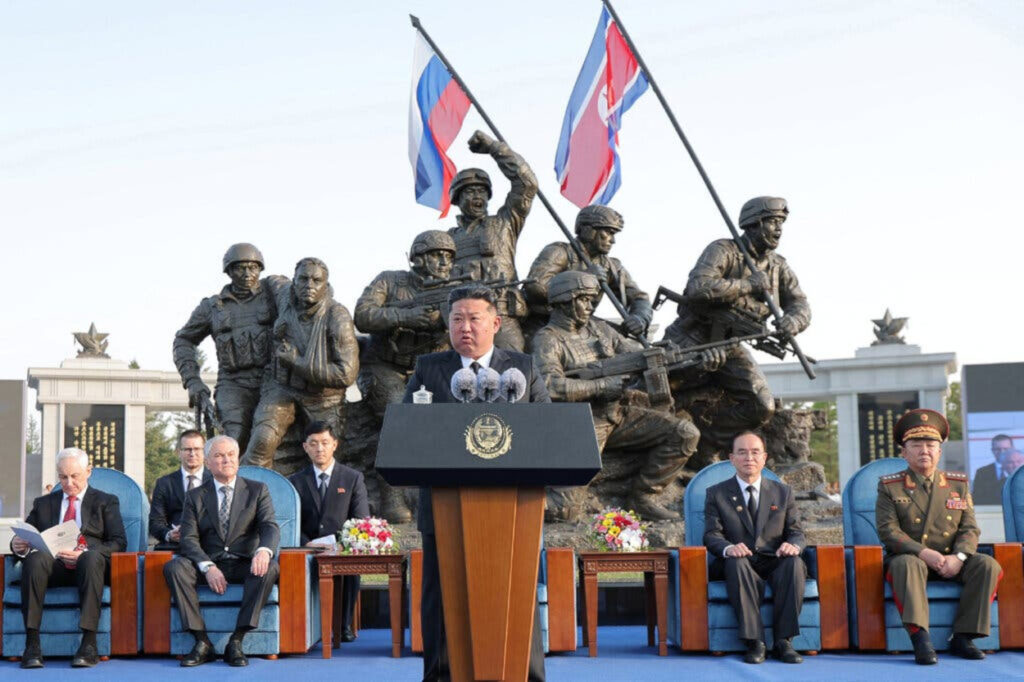
North Korean leader Kim Jong-un speaks at the opening of a memorial in Pyongyang, with Russia's Defense Minister Andrei Belousov and State Duma Speaker Vyacheslav Volodin seated behind him. April 2026. Illustrative photo: KCNA

A North Korean missile unit has begun deploying to western Russia and could soon operate up to 120 ballistic missiles and six launchers for strikes against Ukraine, according to Ukraine's military intelligence agency, Reuters reports.

Russia has sharply increased its use of ballistic missiles against Ukraine in recent months. Unlike drones and cruise missiles, ballistic missiles are much harder to intercept, and most launched in recent barrages have penetrated Ukraine's air defenses, causing widespread destruction and high civilian casualties.

North Korean missile unit deploying to Russia

Andrii Cherniak, a representative of Ukraine's Main Directorate of Intelligence (HUR), told Reuters that around 90 North Korean personnel are expected to be stationed in Russia's Voronezh Oblast within the Russian military's 112th Missile Brigade.

According to Cherniak, Pyongyang has already delivered another batch of 40 KN-23 and KN-24 ballistic missiles to Russia along with personnel. He said the final structure of the deployment and the total number of missiles are expected to be decided during high-level talks between Moscow and Pyongyang next month.

Reuters said it could not independently verify the intelligence assessment. Russia's Defense Ministry and North Korea's mission to the United Nations did not immediately respond to requests for comment.

Ballistic missile threat grows

The reported deployment comes as Russia increasingly relies on ballistic missiles, which are far more difficult for Ukraine to intercept than drones or cruise missiles.

Ukraine has warned for months that shortages of Patriot interceptor missiles leave it vulnerable to ballistic attacks. Last week, Russia launched what Ukrainian officials identified as the first North Korean ballistic missiles used against Ukraine since August 2025.

According to Cherniak, Russia has already received about 150 KN-23 and KN-24 missiles from North Korea since late 2023. The latest shipment of 40 missiles was reportedly used in last week's attacks.

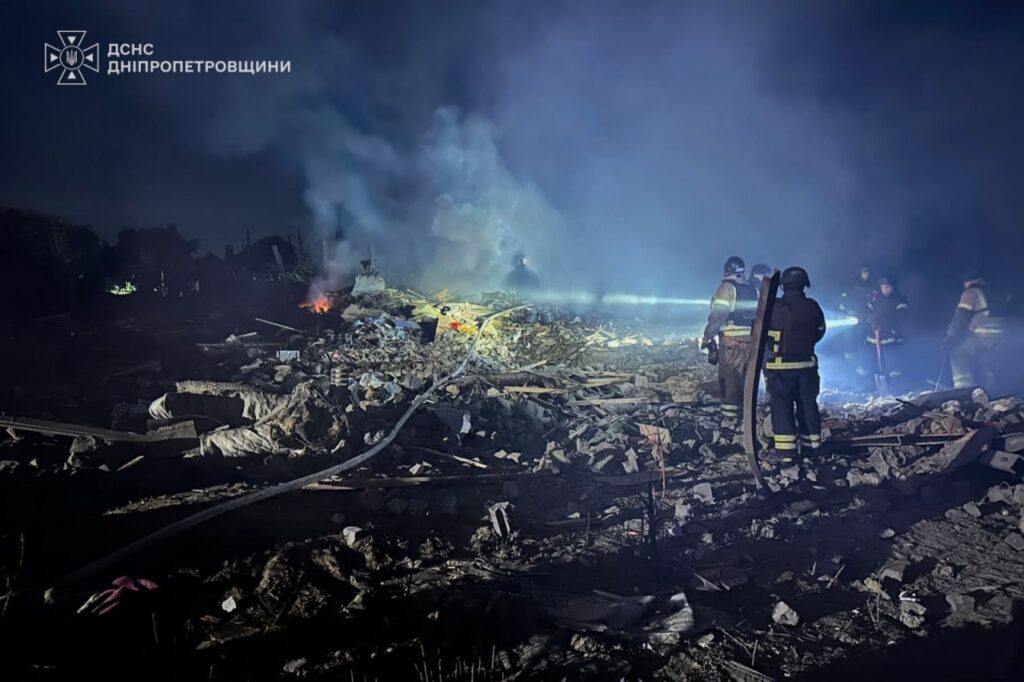
Cherniak said North Korean KN-23 and KN-24 missiles carry larger warheads and have greater range than Russia's Iskander ballistic missiles, although they are less accurate and have been associated with strikes causing high civilian casualties, including last week's strike on the village of Radushne in Dnipropetrovsk Oblast that killed an entire family.

Rescuers search through rubble in the aftermath of a Russian ballistic missile attack on Radushne, Dnipropetrovsk Oblast, Ukraine, 30 July 2026. Photo: Ukraine's State Emergency Service

Rob Lee, a senior fellow at the Foreign Policy Research Institute, told Reuters that additional North Korean ballistic missiles would pose a significant challenge for Ukraine because ballistic missile defense remains one of Kyiv's greatest vulnerabilities.

The report comes as Russia continues to intensify its ballistic missile attacks on Ukraine. Overnight on 5 August, a combined missile and drone barrage on Kyiv and Kyiv Oblast killed at least 16 people, marking the third mass strike on the capital in a week.

Expanding military cooperation

The reported missile unit deployment would mark another step in the rapidly expanding military partnership between Moscow and Pyongyang since Russia launched its full-scale invasion of Ukraine in 2022.

North Korea has already supplied Russia with millions of artillery shells and, according to Ukrainian officials, deployed about 14,000 troops to Russia's Kursk Oblast in 2024. Ukrainian President Volodymyr Zelenskyy said last month that Russia was preparing to receive an additional 30,000 North Korean troops in Voronezh Oblast.

Cherniak told Reuters that about 9,500 North Korean soldiers remain in Russia's Kursk Oblast but are not currently participating directly in combat operations against Ukraine.

Ukraine has intercepted 445,000 Russian aerial targets since 2022, but cracks in the shield are starting to widen

4 août 2026 à 10:36

Ukraine's Air Force says air defenses have intercepted over 445,000 Russian missiles and drones since February 2022. Screenshot from video: Ukraine's Air Force

Ukraine's Air Force says its air defenses have destroyed more than 445,000 Russian aerial targets since the start of Russia's full-scale invasion in 2022, according to figures released on 2 August.

The numbers come as Russia is reshaping much of its aerial campaign around ballistic missiles, exposing one of the few remaining vulnerabilities in Ukraine's air defense network despite its continued success against drones and cruise missiles.

The statistics were published in a statement marking more than four and a half years of resistance since Russia launched its all-out invasion on 24 February 2022. The Air Force said its personnel preserved Ukraine's air defense network under sustained missile and air attacks from the opening hours of the war, preventing Russia from achieving its initial objective of subjugating the country.

The statement paid tribute to fighter pilots, air defense missile units, radar troops, drone operators, communications specialists, and support personnel involved in defending Ukraine's airspace.

More than 65,000 Shaheds intercepted

According to the Air Force, Ukraine's air defenses have destroyed more than 445,000 aerial targets since February 2022, including:

  • 91 Kh-47M2 Kinzhal aeroballistic missiles
  • 794 Kalibr cruise missiles
  • 2,809 Kh-101/Kh-555/Kh-55 cruise missiles
  • 13 Kh-22/32 cruise missiles
  • 12 Oniks anti-ship missiles
  • 294 Iskander-K cruise missiles
  • 346 Iskander-M and North Korean KN-23 ballistic missiles
  • 12 Zircon anti-ship missiles
  • 622 guided air-launched missiles
  • More than 70 missiles of other types
  • 65,618 Shahed attack drones
  • 20,286 reconnaissance drones
  • 10,604 Lancet loitering munitions
  • 342,585 drones of other types

Ukraine's Air Force says it has destroyed more than 445,000 Russian aerial targets since the start of the full-scale invasion, including more than 65,000 Shahed attack drones, hundreds of ballistic and cruise missiles, and tens of thousands of reconnaissance and attack UAVs.

The… pic.twitter.com/DzB9sBqgQb

— Euromaidan Press (@EuromaidanPress) August 4, 2026

Air Force reports more than 38,000 combat sorties

The Air Force said Ukrainian military aviation carried out 38,367 sorties between 2022 and 2026, including 12,280 strike and close air support missions and 21,524 fighter cover missions.

It added that aircraft from Ukraine's Defense Forces have destroyed more than 12,000 aerial targets during the full-scale war while striking Russian command posts, logistics facilities, and concentrations of troops and military equipment.

The statement also honored fallen service members and thanked those who continue defending Ukraine's skies.

Russia's ballistic missile attacks rise, breaking through Ukraine’s proven air defenses

The figures come as Russia increasingly turns to using ballistic missiles against Ukrainian cities, which are among the most difficult threats for Ukraine's air defenses to intercept.

Russia launched 126 ballistic missiles against Ukraine in July, the highest monthly total recorded this year. The attacks included Iskander-M missiles, North Korean KN-23 ballistic missiles, and S-300 and S-400 air defense missiles repurposed for ground strikes.

The shift is exposing a growing vulnerability in Ukraine's air defense network. Unlike drones and cruise missiles, ballistic missiles can only be reliably intercepted by a limited number of advanced systems, primarily the US-made Patriot with PAC-3 interceptors, which remain in short supply in the country. 

Ukraine has urged international partners to provide more of these interceptors, but these efforts have not led to any major supply breakthroughs and have so far not made a significant difference.

The trend towards ballistic missile use suggests Russia is increasingly exploiting one of the few remaining gaps in Ukraine's air defense shield.

While Ukraine continues to destroy large numbers of drones and cruise missiles, the growing use of ballistic missiles is placing mounting pressure on its most limited and hardest-to-replace interceptor stocks, all while causing mass civilian casualties and major damage to cities across the country.

❌