🎧 Édition du 7 aout 2026 :– OpenAI bonifie ChatGPT avec GPT-5.6– Adobe intègre plus de 70 outils à ChatGPT– Google déploie « Demander à Maps » dans 160 pays– Suno veut mieux identifier la musique créée par IA– Rockstar dévoilera un nouvel aperçu de GTA VI « 120 secondes de Tech », un regard sur le quotidien […]
🎧 Édition du 7 aout 2026 :– OpenAI bonifie ChatGPT avec GPT-5.6– Adobe intègre plus de 70 outils à ChatGPT– Google déploie « Demander à Maps » dans 160 pays– Suno veut mieux identifier la musique créée par IA– Rockstar dévoilera un nouvel aperçu de GTA VI « 120 secondes de Tech », un regard sur le quotidien […]
Ukrainian jamming worked too well: it compelled Russian drone developers to innovate
Now many Russian drones communicate via unjammable optical fiber or jam-resistant mesh radio
But the Russians can't make all the hardware themselves
Instead, they rely on Chinese imports
Frustrated by Ukrainian electronic warfare, Russia transformed its drone arsenal to be harder—or impossible—to jam.
Most of Russia's tiny first-person-view drones now send and receive s
Ukrainian jamming worked too well: it compelled Russian drone developers to innovate
Now many Russian drones communicate via unjammable optical fiber or jam-resistant mesh radio
But the Russians can't make all the hardware themselves
Instead, they rely on Chinese imports
Frustrated by Ukrainian electronic warfare, Russia transformed its drone arsenal to be harder—or impossible—to jam.
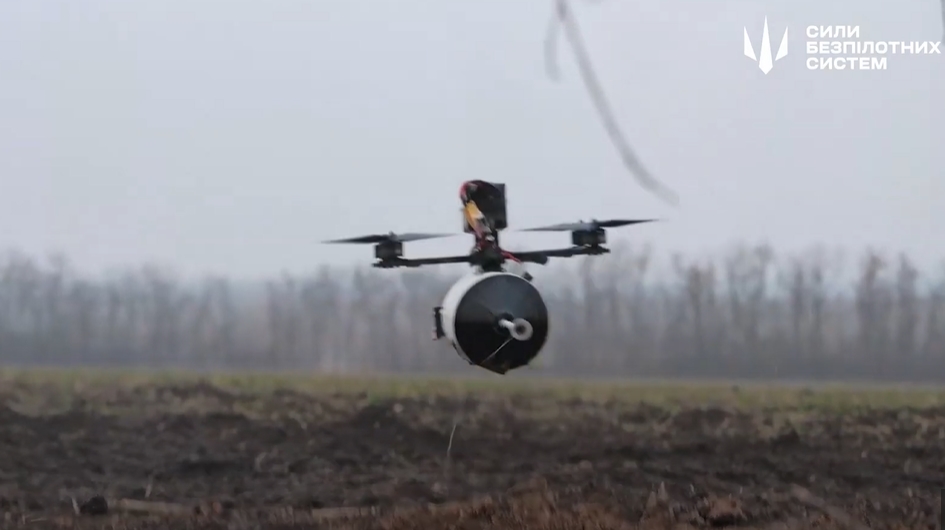
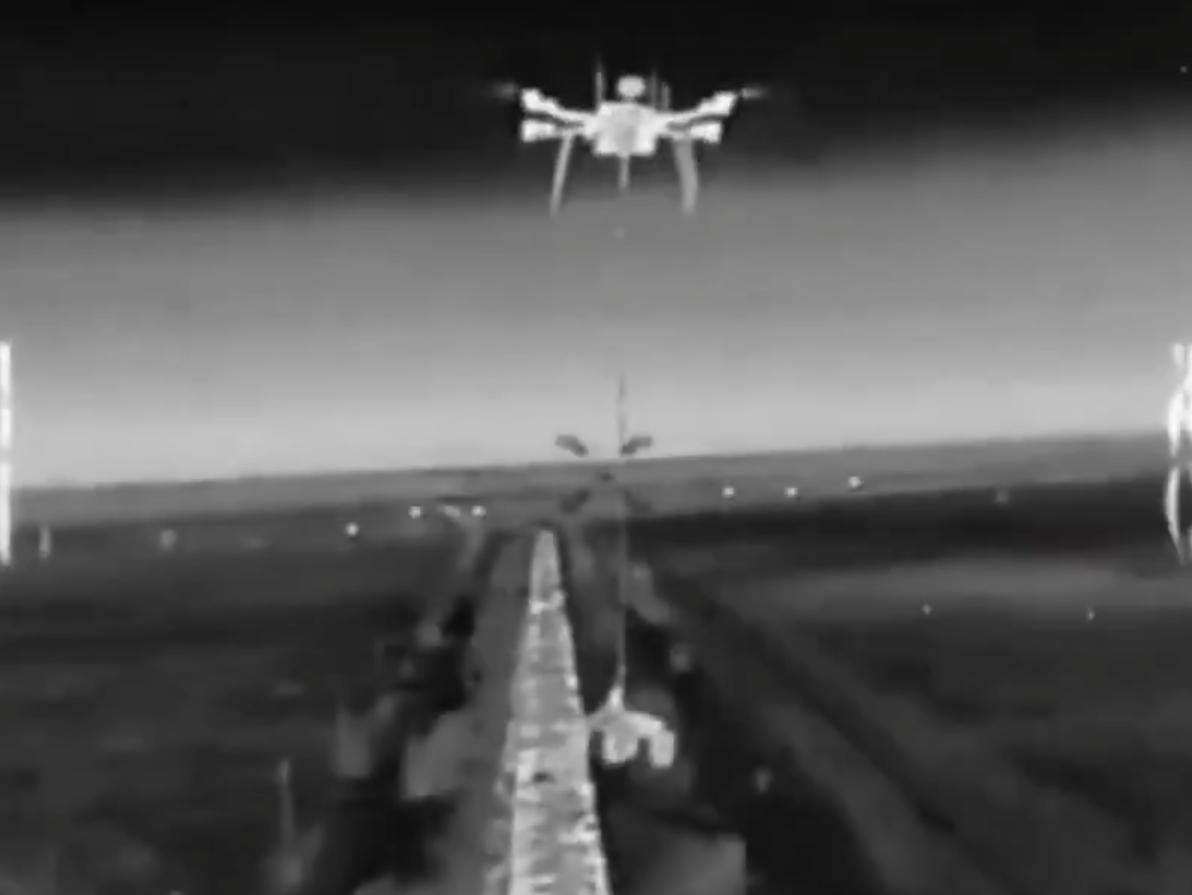
Most of Russia's tiny first-person-view drones now send and receive signals via jam-proof fiber optic cable instead of wireless radio. For heavier one-way attack drones that travel too far for fiber optics, the Russians have mostly switched to jam-resistant mesh radio networks made up of many interconnected senders and receivers.
In both cases, China is key. Chinese companies sell Russian companies the optical fibers and mesh modems that the Russians install in their drones. In other words, Beijing is the critical enabler in Moscow's ongoing aerial aggression.
That's the unsurprising yet sobering conclusion that Tatarigami, the founder of the Ukrainian Frontelligence Insight analysis group, reached in a recent investigation.
It's not enough for Ukrainian forces to shoot down or otherwise defend against Russian drones, or to fight back with their own drones. To win the drone war, Ukraine and its allies must "step up pressure on Chinese manufacturers," Tatarigami wrote.
Russia's response to electronic warfare wasn't a single solution. It evolved along two major paths: fiber-optic drones and mesh networks. This thread summarizes Frontelligence Insight analysis based on OSINT data and a report by the Center for Defense Reforms. Threadpic.twitter.com/k0v0ZeWKYB
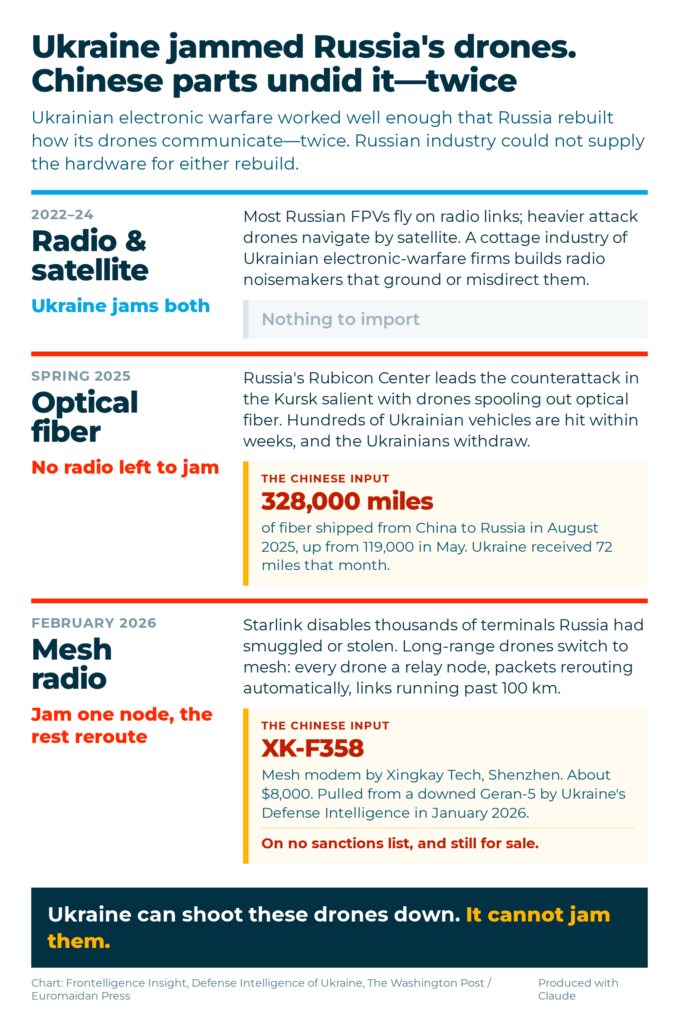
As the drone war over Ukraine ramped up in 2022 and 2023, most Russian FPVs were wireless models. And most heavier one-way attack drones navigated via satellite. Both classes of drone could be jammed. A cottage industry of Ukrainian electronic warfare producers sprung up. Each firm offered some variation of a radio noisemaker that can ground or misdirect wireless and satellite-guided drones.
The jamming worked. Combined with kinetic defenses—guns and missiles—and add-on protections such as mesh, cages and netting, the jamming blunted the impact of Russia's drone arsenal. But the Russians adapted. The turning point came in the spring of 2025, when Russia's elite Rubicon Center drone group led the counterattack against Ukrainian troops occupying parts of Kursk Oblast in western Russia.
Rubicon's fiber optic FPVs wreaked havoc on Ukrainian forces in the Kursk salient, damaging or destroying hundreds of trucks and other vehicles in the span of a few weeks. Starving for supplies and in danger of being cut off, the Ukrainians retreated.
But the Russian adaptation was just beginning. The Russians are now launching 10,000 FPVs a day. And in certain key sectors, 60% of the FPVs were fiber optic models, according to Tatarigami. The Ukrainians can shoot down these drones and block them with armor, nets and earthworks. They can also strike at the Russian FPV teams before the Russians can launch their FPVs.
But there's one thing the Ukrainians can't do: they can't jam the drones.
Over the past six months, SBS has been able to narrow the drone usage gap. They started at 1 for every 3 Russian drones in February, after russia spiked to 9K strikes and are running at 1 for every 2 by August. pic.twitter.com/9GWrU0fx4W
Jamming continued to work against many one-way attack drones that must travel hundreds or even thousands of kilometers—too far for optical fiber. Another turning point came in February, when Elon Musk's Starlink bricked Russia's thousands of smuggled and stolen satellite terminals, some of which Russian forces used to control the approximately 5,000 Geran attack drones they launch every month.
The Starlink shutdown compelled Russian developers to accelerate the transformation of the one-way attack drone force. "Russia's second adaptation was mesh networking, routing data through mesh modems to keep communications alive across both short and long-range drones," Tatarigami explained.
It's possible to jam a mesh radio network, but it's hard. Every drone in a given network is a node. It's not enough to jam a few of them; you have to jam all of them.
Chart: Euromaidan Press
If there's a constraint on Russia's switch to fiber optics and mesh networks, it's that Russian industry can't produce all the necessary hardware. "Unable to meet domestic demand, Russia turned to China," Tatarigami wrote.
The Washington Postreported Chinese optical fiber shipments to Russia growing from 119,000 miles in May 2025 to 328,000 miles that August. China sent Ukraine 72 miles the same month. For mesh networking, the Russians came to depend on XK-F358 modems from China's Shenzhen Xingkai Technology.
Ukraine's overstretched air defenses can't shoot down every Russian attack drone. Ukrainian troops and vehicle crews can't hide from 10,000 Russian FPVs a day. To defeat Russia's jam-proof drones, Ukraine and its allies must cut off the supply of Chinese parts, Tatarigami stressed.
They should extend export controls to modem-makers and producers of optical fiber, reels for the fiber and equipment associated with fiber production. "The recommendation is to expand sanctions beyond individual firms to the entire supply chain," Tatarigami advised.
🎧 Édition du 6 aout 2026 :– Google Assistant disparaît d’Android le 4 septembre– BMW affiche une publicité dans ses véhicules– OnePlus n’a plus de téléphones à vendre en Amérique du Nord– Disney ouvre ses personnages aux créateurs TikTok– Mauvais conseil pour refroidir les téléphones « 120 secondes de Tech », un regard sur le quotidien de l’actualité […]
🎧 Édition du 6 aout 2026 :– Google Assistant disparaît d’Android le 4 septembre– BMW affiche une publicité dans ses véhicules– OnePlus n’a plus de téléphones à vendre en Amérique du Nord– Disney ouvre ses personnages aux créateurs TikTok– Mauvais conseil pour refroidir les téléphones « 120 secondes de Tech », un regard sur le quotidien de l’actualité […]
🎧 Édition du 5 aout 2026 :– Samsung bat un record avec ses téléphones pliables– Fitbit synchronise enfin ses données avec Apple Santé– Apple prépare un copier-coller entre iPhone et Windows– Spotify dépasse les 300 millions d’abonnés payants– La prochaine Xbox miserait sur la rétrocompatibilité totale « 120 secondes de Tech », un regard sur le quotidien de […]
🎧 Édition du 5 aout 2026 :– Samsung bat un record avec ses téléphones pliables– Fitbit synchronise enfin ses données avec Apple Santé– Apple prépare un copier-coller entre iPhone et Windows– Spotify dépasse les 300 millions d’abonnés payants– La prochaine Xbox miserait sur la rétrocompatibilité totale « 120 secondes de Tech », un regard sur le quotidien de […]
🎧 Édition du 4 aout 2026 :– Sony défend l’avenir tout numérique de la PlayStation 5– Starlink pousse un pionnier du satellite à la faillite– Bluesky veut bâtir un réseau social ouvert à grande échelle– DuckDuckGo lance des lunettes… sans technologie– Apple préparerait de nouveaux AirPods Pro– Une fuite révèle le Lenovo Googlebook 15 « 120 secondes […]
🎧 Édition du 4 aout 2026 :– Sony défend l’avenir tout numérique de la PlayStation 5– Starlink pousse un pionnier du satellite à la faillite– Bluesky veut bâtir un réseau social ouvert à grande échelle– DuckDuckGo lance des lunettes… sans technologie– Apple préparerait de nouveaux AirPods Pro– Une fuite révèle le Lenovo Googlebook 15 « 120 secondes […]
Grammarly, a company with Ukrainian roots, announced its intent to acquire AI email writing app Superhuman as part of its expansion into an AI productivity platform, the company said in a press release on July 1. Grammarly is the most valuable company with Ukrainian roots, reaching $13 billion valuation as of 2021. Grammarly was founded in 2009 in Kyiv by Oleksii Shevchenko, Maksym Lytvyn, and Dmytro Lider.According to Grammarly's press release, email is Grammarly's top use case, with the platfo
Grammarly, a company with Ukrainian roots, announced its intent to acquire AI email writing app Superhuman as part of its expansion into an AI productivity platform, the company said in a press release on July 1.
Grammarly is the most valuable company with Ukrainian roots, reaching $13 billion valuation as of 2021. Grammarly was founded in 2009 in Kyiv by Oleksii Shevchenko, Maksym Lytvyn, and Dmytro Lider.
According to Grammarly's press release, email is Grammarly's top use case, with the platform editing over 50 million emails weekly.
Superhuman is an AI email application that the company says helps users respond to emails faster and reduces time spent on email communications.
Users are already sending and responding to 72% more emails per hour after using Superhuman compared to the previous period, according to Grammarly.
"This is the future we've been building toward since day one: AI that works where people work, not where companies want them to work," said Shishir Mehrotra, Grammarly's CEO.
The acquisition follows Grammarly's recent purchase of Coda, a productivity tool company. The combined platforms will allow users to work with multiple AI agents for different tasks within email communications.
Grammarly says that its service is used daily by over 40 million users, generating annual revenue of more than $700 million for the company.
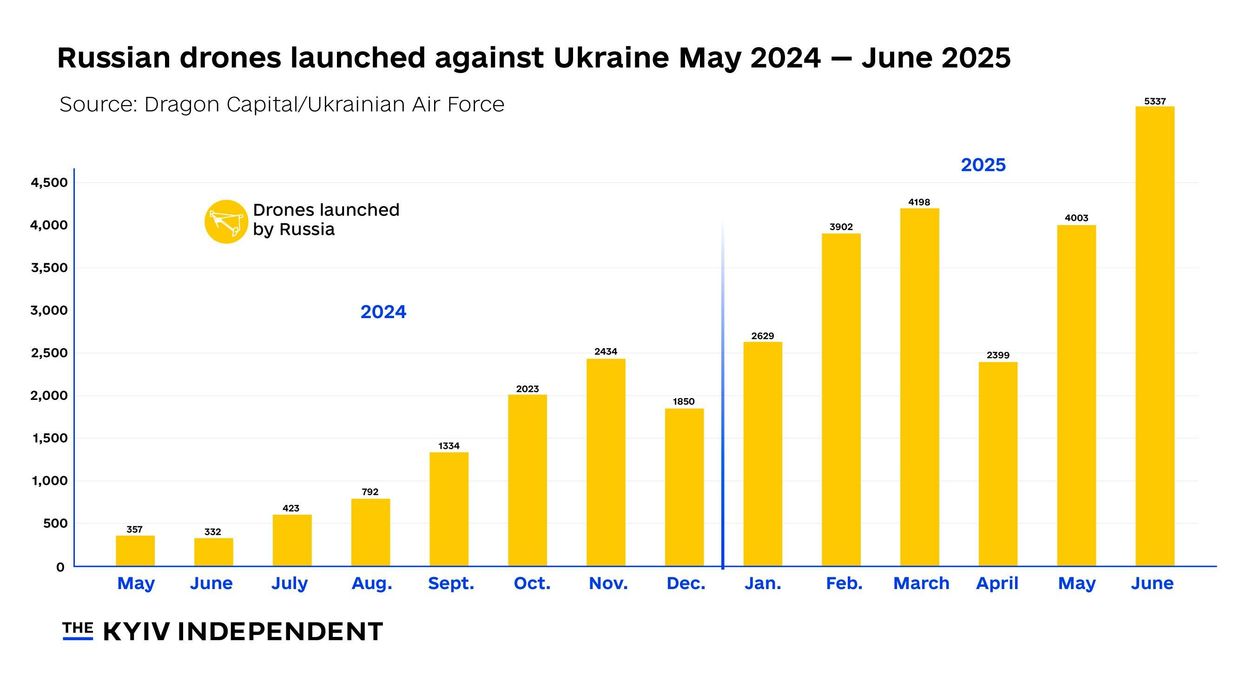
Russia has the capacity to launch as many as 500 Iranian-designed Shahed attack drones at Ukraine in a single attack, but doing so on a daily basis is not possible, Ukraine's military intelligence chief Kyrylo Budanov said on July 2, according to Suspilne.In recent weeks, Russia has intensified its drone assaults on Ukrainian cities, often launching hundreds in a single day. The largest aerial attack since the start of the full-scale invasion occurred overnight on June 29, when Moscow launched 4
Russia has the capacity to launch as many as 500 Iranian-designed Shahed attack drones at Ukraine in a single attack, but doing so on a daily basis is not possible, Ukraine's military intelligence chief Kyrylo Budanov said on July 2, according to Suspilne.
In recent weeks, Russia has intensified its drone assaults on Ukrainian cities, often launching hundreds in a single day. The largest aerial attack since the start of the full-scale invasion occurred overnight on June 29, when Moscow launched 477 drones and 60 missiles across Ukraine.
"Launching 450–500 Shaheds every day — it's just not realistic," said Budanov during a ceremony recognizing five Ukrainian intelligence achievements in the national record book, according to public broadcaster Suspilne.
"But unfortunately, they do have the ability to do it periodically. They can realistically launch up to 500 in one strike," Budanov added.
Budanov also said Russia is upgrading the capabilities of the Shahed-type drones by improving their CRPA (Controlled Reception Pattern Antenna) systems, which protect the drones from GPS jamming. He noted that Russian engineers are now producing 16-channel CRPA antennas, which are harder to counter electronically.
Russian drones launched against Ukraine by month (Nizar al-Rifai/The Kyiv Independent)
"These antennas are currently produced in Russia, but the engineer who developed this CRPA antenna was here in Ukraine," Budanov said.
"Back in the early 2000s, no one here needed it, so the engineer moved to Russia. One (of the two engineers involved in the development) has already died under unclear circumstances. The other is still alive, though probably not for long."
Russia has used thousands of Shahed-type drones throughout its full-scale invasion to strike Ukrainian cities and infrastructure, often in large overnight waves. Ukrainian air defenses have adapted over time but face growing challenges as Moscow improves drone resilience and electronic warfare capabilities.
President Volodymyr Zelensky said that Moscow has launched 28,743 Shahed-type drones at Ukraine since the start of Russia's full-scale invasion.
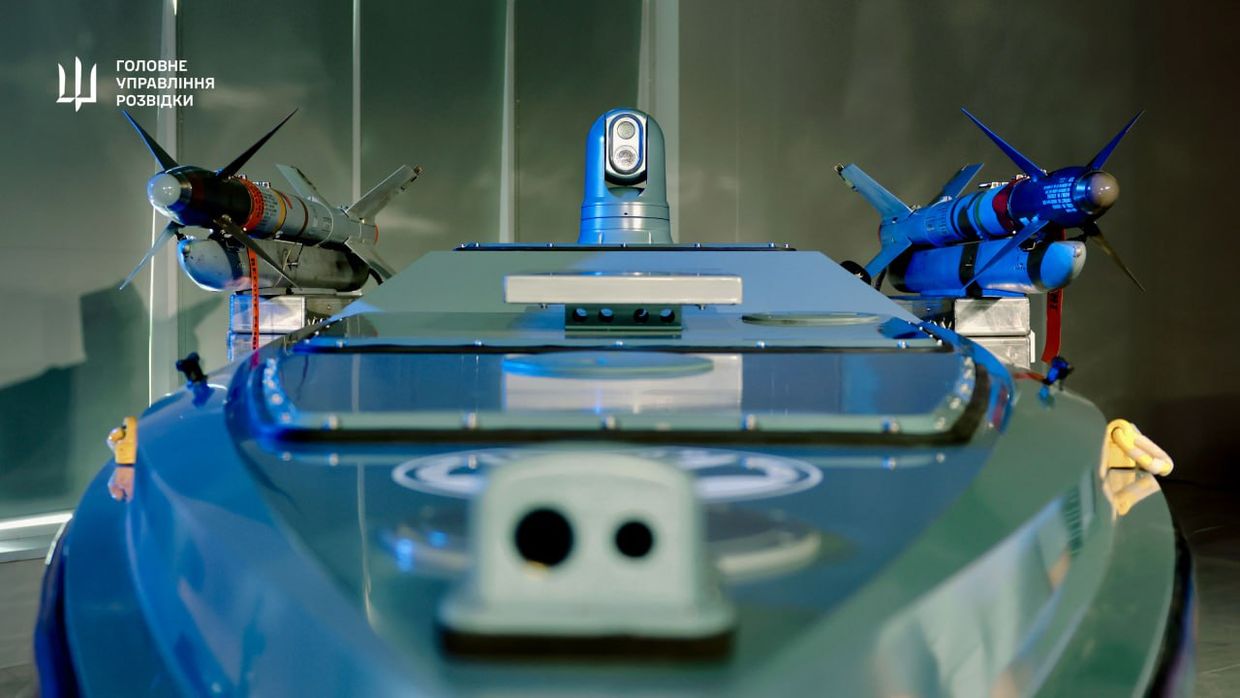
Budanov also said Russia has made unsuccessful attempts to develop its own naval drones. The last known effort came in early June, when experimental models detonated before reaching Ukrainian territorial waters, he said.
"They didn't achieve results. Based on our information, they were heading toward the city of Yuzhne, searching for targets," he said.
Ukraine has been using domestically developed Magura naval drones to target Russian military assets in the Black Sea, keeping much of Russia's fleet pinned in port.
Despite their small size, the unmanned surface vessels have proven effective, including in a May 2 operation when Ukraine's military intelligence used Magura-7 drones armed with air-to-air missiles to shoot down two Russian Su-30 fighter jets near Novorossiysk. It was the first recorded instance of fighter jets being downed by naval drones.
The Defense Ministry has approved the Ukrainian-made ground-based robotics complex "Murakha" ("Ant") for combat operations, the ministry announced on June 28. Since 2024, Ukraine has been scaling up robotics development in hopes that mass production of unmanned ground vehicles (UGVs) will "minimize human involvement on the battlefield." The Murakha is a tracked robotic platform designed to support front-line units working under challenging conditions, such as under enemy artillery and in heavily
The Defense Ministry has approved the Ukrainian-made ground-based robotics complex "Murakha" ("Ant") for combat operations, the ministry announced on June 28.
Since 2024, Ukraine has been scaling up robotics development in hopes that mass production of unmanned ground vehicles (UGVs) will "minimize human involvement on the battlefield."
The Murakha is a tracked robotic platform designed to support front-line units working under challenging conditions, such as under enemy artillery and in heavily mined terrain, the Defense Ministry said.
Its larger size makes it one of Ukraine's leading UGVs in terms of load capacity. The Murakha can reportedly carry over half a ton of weight across dozens of kilometers. It can also cross difficult terrain and shallow water.
According to the Defense Ministry, the Murakha's multiple control channels allow it to function successfully even in areas of the battlefield where Russian electronic warfare (EW) systems are operating.
Mobile robots are capable of performing several tasks on the battlefield, including offensive and defensive activities, evacuation of the wounded, logistical support for units, and mining and demining.
In April, the Defense Ministry unveiled the D-21-12R UGV, a ground-based robot equipped with a machine gun.
The European Commission has proposed that Ukraine join the European Union's mobile roaming area starting January 1, 2026, providing Ukrainian users the ability to make phone calls, texts, and use mobile data in the bloc's 27 countries at no extra charge. "We want Ukrainian citizens to stay connected to their loved ones across the EU, as well as in their home country. That's why we propose that Ukraine join our roaming family," European Commission President Ursula von der Leyen said in a statemen
The European Commission has proposed that Ukraine join the European Union's mobile roaming area starting January 1, 2026, providing Ukrainian users the ability to make phone calls, texts, and use mobile data in the bloc's 27 countries at no extra charge.
"We want Ukrainian citizens to stay connected to their loved ones across the EU, as well as in their home country. That's why we propose that Ukraine join our roaming family," European Commission President Ursula von der Leyen said in a statement.
The proposal, first announced on June 16, will serve as a means of integration into the European Union's "Roam like at Home" provision in affect between all EU nations. The proposed change will impact the over four million Ukrainian refugees living in the EU.
Ukraine's full integration in the roaming provisions will replace voluntary measures that "allowed for roaming without surcharges and affordable international calls for EU and Ukrainian citizens abroad," according to the European Commission. The current measure will extend to December 31, 2025, ahead of the planned integration.
If approved, Ukraine will become the only country outside of the EU to join the bloc's "Roam like at Home" policy.
The move, which awaits European Council approval, comes as Ukraine continues to implement reforms in pursuing membership in the European Union.
Ukraine applied for EU membership at the onset of Russia's full-scale invasion in 2022. The country has made quick progress, achieving candidate status within months, with the initial negotiations formally launching in June 2024.
Since the start of 2025, Ukraine has opened three negotiation clusters under Poland's rotating presidency.
Poland lead the EU Council's presidency until June, and Denmark will take over the role in July. Ukraine aims to open the remaining three negotiation clusters in the second half of 2025 under the Danish chairmanship, the President Volodymyr Zelensky said.
There are six accession negotiation clusters, consisting of several individual chapters. Negotiations prepare a candidate country to become an EU member.
The EU’s Commissioner for Enlargement, Oliver Varhelyi, said that Ukraine could potentially join the bloc by 2029 if it successfully implements necessary reforms.

 Connexion