Vue normale

Mini air defense against FPVs and the “Peace Duck” AI interceptor: Ukraine unveils 20-system counter-drone arsenal
3 juillet 2026 à 16:43

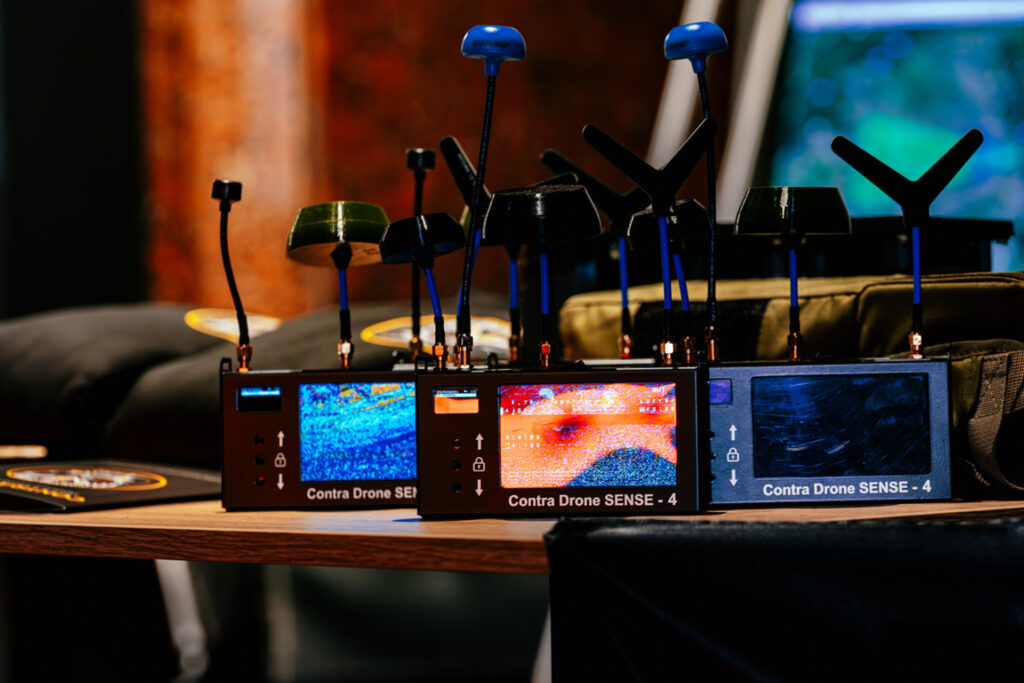
Contra-Drone Sense 4 drone video channel detectors on display at the "War'26: People vs Machines" conference, March 2026. Photo: Oboronka

A Ukrainian defense technology company has unveiled an integrated counter-drone architecture featuring an automated "mini air defense" system designed to intercept FPV drones and an AI-enabled interceptor capable of autonomously targeting Russian reconnaissance UAVs, RBK-Ukraine reports.

Ukraine has rapidly expanded development of domestic drone and counter-drone technologies as both sides increasingly rely on unmanned systems across the battlefield, with FPV drones and reconnaissance UAVs becoming central to frontline operations.

The new systems were presented during a closed Demo Day field demonstration organized by Ukrainian company Contra Drone, where the company showcased more than 20 counter-UAV technologies intended to protect troops, vehicles, and critical infrastructure.

Automated "mini air defense" for FPV drones

According to RBK-Ukraine, the centerpiece of the presentation was the Mini Air Defense System (MADS), an automated platform designed to detect, track, and destroy small aerial targets, including FPV drones, quadcopters, and fixed-wing UAVs.

The company said the system can engage targets flying at speeds of up to 300 km/h at ranges and altitudes of up to one kilometer without operator intervention. Interceptor missiles can reportedly be fitted with fragmentation, thermobaric, or net warheads depending on the mission.

Contra Drone also demonstrated several supporting detection systems, including the SPECTRE electronic intelligence complex, SENSE-3 and SENSE-4 FPV drone detectors, and the CD-T15 radar, which the company says can simultaneously track more than 300 aerial objects at distances of up to 22 kilometers.

Electronic warfare for troops and vehicles

The demonstration also featured electronic warfare systems intended to protect soldiers operating near the front line.

Among them was D-JACK, which the company says automatically detects enemy FPV drone controllers using the ELRS communication protocol and applies targeted electronic jamming. Developers also presented the Anti-FPV Backpack 3, a wearable electronic warfare system designed to create a protective electronic "bubble" around moving personnel.

For vehicles and infrastructure, Contra Drone showcased both mobile and fixed electronic warfare systems, including the Contra-drone 8 Ultra, which reportedly suppresses a broad range of digital and analog drone communication channels while on the move.

AI-powered interceptor drone

The company also introduced Peace Duck, a high-speed autonomous interceptor drone equipped with artificial intelligence.

According to Contra Drone, the drone can independently complete the final phase of an interception without operator input, targeting Russian reconnaissance UAVs such as the Orlan and ZALA.

The demonstration also included Yell Duck FPV strike drones, Blackwing and Black Goose fixed-wing UAVs designed to operate in GPS-denied environments, and the Nyvexa unmanned ground platform for logistics and electronic warfare missions.
  • ✇Euromaidan Press
  • Ukraine clears its first-ever export of finished combat drones — and they went to the US
    Ukraine has authorized the export of fully assembled combat drones for the first time, and the first shipment has gone to the United States. The State Service for Export Control issued the permit on 1 July for a batch of F10 strike drones built by the Ukrainian manufacturer F-Drones for the US military, Interfax-Ukraine reported. "The permit is working — the drones have already crossed the state border," a company representative said. The Ukrainian defense outlet
     

Ukraine clears its first-ever export of finished combat drones — and they went to the US

3 juillet 2026 à 09:00

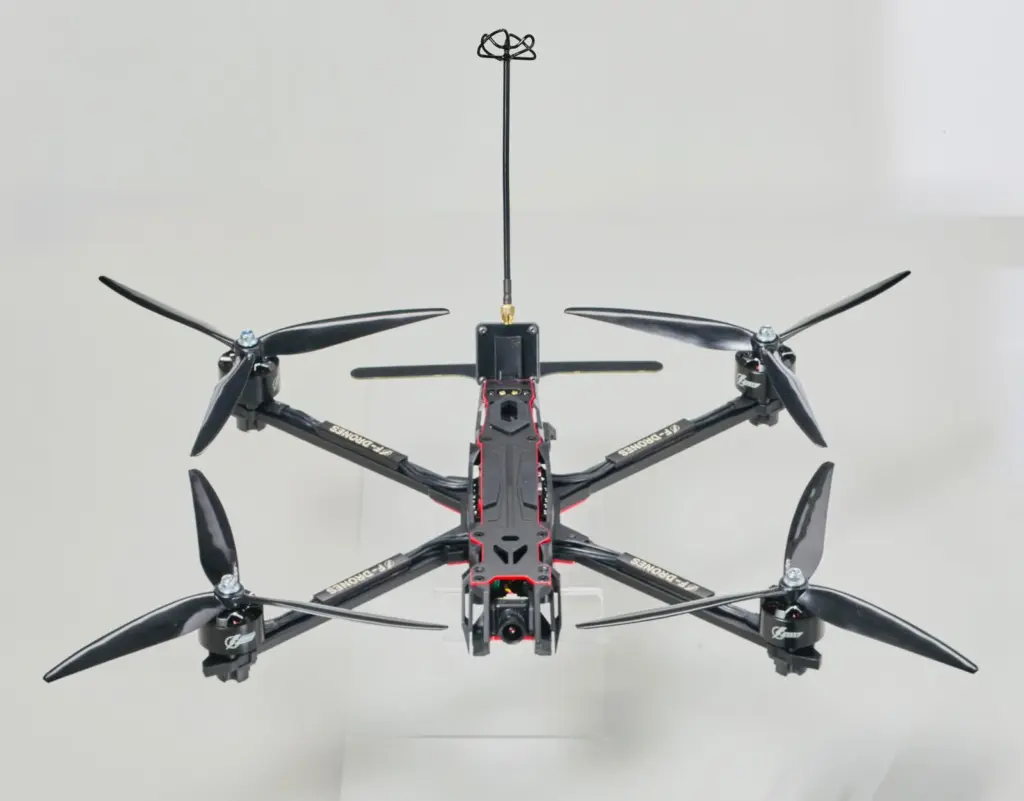
F-10 strike drone.

Ukraine has authorized the export of fully assembled combat drones for the first time, and the first shipment has gone to the United States. The State Service for Export Control issued the permit on 1 July for a batch of F10 strike drones built by the Ukrainian manufacturer F-Drones for the US military, Interfax-Ukraine reported.

"The permit is working — the drones have already crossed the state border," a company representative said.

The Ukrainian defense outlet Defender Media first broke the story.

The shipment inverts the arrangement that has defined Russia's war on Ukraine: for more than four years the West armed Ukraine, and Ukrainian law required defense firms to send their entire output to the front. Now a Ukrainian company is supplying combat-tested strike drones to the Pentagon — and it did so while the government-to-government drone deal Kyiv wants with Washington remains stuck. What made the F10 sellable is what US industry lacks: a cheap attack drone proven against Russian armor and built without Chinese components, which disqualify most commercial quadcopters from US military use.

A first for Ukraine's export controls

F-Drones says this is the first time Kyiv has cleared finished Ukrainian-made drones for export rather than individual technologies or components. The company completed the approval through the existing interagency export-control process, and — it noted — secured the permit before new government rules simplifying military exports took effect. The state arms trader SpetsTechnoExport handled the procedure.

How the F10 reached the Pentagon

The F10 is an FPV strike quadcopter carrying an explosive warhead, developed and refined under fire since F-Drones was founded in 2023. Its contract runs through the US Department of Defense's Drone Dominance program, a roughly $1 billion effort to buy more than 200,000 low-cost attack drones by 2027. At the program's first trials — Gauntlet I, held at Fort Benning, Georgia, in early 2026 — the F10 scored 72.9 out of 100, placing sixth among 25 vendors and landing among 11 winners with a prototype order for 2,000 drones, Defender Media reported. The company's US arm, Ukrainian Defense Drones, announced on 29 June that it will build its first American factory in Holland, Ohio, an $18.4 million plant expected to create at least 300 jobs. A second Drone Dominance phase opens in August, with 48 companies competing for orders of 60,000 drones.

Ukraine opens the door to arms exports

The permit landed as Ukraine formally opened defense-technology exports to partner countries. Under the framework announced by the Defense Ministry on 1 July, states with intergovernmental "Drone Deal" agreements can buy directly from Ukrainian producers; the Foreign Ministry sets the list of eligible countries, and the Defense Ministry the list of critical items barred from sale. Producers may apply to export arms worth 15 million hryvnia (about $360,000) or more, with intellectual-property rights retained in Ukraine and re-export allowed only with Kyiv's written consent. Where products made with Ukrainian technology are exported onward, 20% of their value goes to the state budget. F-Drones chief executive Stas Khutor framed exports not as diverting from the front but as a way to scale production and strengthen the military. The ministry says the armed forces' needs stay the priority: a firm can export only if it can guarantee its state contract and its export order at the same time.

Ukraine says it has Donetsk airport under “fire control.” Satellite images show Russia building there anyway

1 juillet 2026 à 14:51

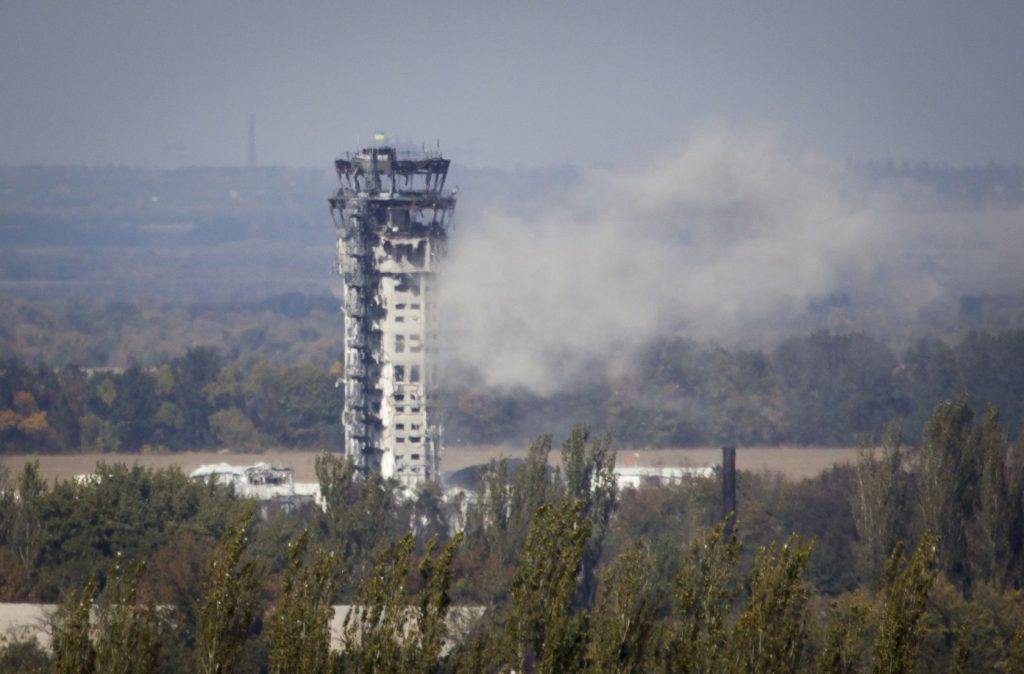
Ukraine Commemorates Defenders of Donetsk Airport

Russia is enlarging launch pads at the occupied Donetsk International Airport for its jet-powered Geran-3 drones. Satellite imagery analyzed by the Telegram channel "Strategic Aviation" shows that the size of standard launch pads has increased to accommodate Geran-3 launches, and new access roads were added to the Geran/Gerbera drone warehouse in June.

The construction extends Russia's ongoing conversion of the occupied airport into a full drone launch and storage complex, following the satellite-confirmed initial conversion that began in mid-2025.

Donetsk Airport and Russia's Tsymbulova training ground in Oryol Oblast are the only two known launch sites for Russia's jet-powered Geran-3 and Geran-4 drones.

Ukraine's 1st Separate Unmanned Systems Center claimed in June 2026 that sustained drone strikes had brought the airport under "fire control" and rendered it unusable for Russian operations. The new satellite analysis indicates that Russia continues to make industrial-scale investments there regardless of the operation.

New Geran-3 launch pads, warehouse access roads, second storage building

The Strategic Aviation analysis flagged three specific developments visible in satellite imagery as of 29 June 2026:

  1. The enlargement of standard launch pads to accommodate the larger Geran-3 airframe,
  2. The completion in June of several access roads leading to the Geran/Gerbera drone warehouse,
  3. The likely start of construction on a second warehouse in the central airport section, per the channel.

The Geran-3 uses a turbojet engine and cruises at 300-370 km/h with a range of up to 1,000 km. Its increased size requires launch installations larger than those used for the original gasoline-powered Geran-2.

Russia completed preparations for mass production of the Geran-4 by January 2026, with test launches from the Primorsk drone airport in Oryol Oblast and from Donetsk Airport. 

From the "Cyborg" stand to a Russian drone base

Donetsk Airport was the site of one of the most iconic Ukrainian defensive stands of the war — the 242-day "Cyborg" defense of 2014-2015, when Ukrainian forces held the airport's terminal buildings against Russian-led forces. Russia captured the site in early 2015 and has held it since.

Until 2024, the airport lay effectively at the line of contact, preventing large-scale Russian construction. As the front moved westward in 2024, Russia gained enough rear-area depth to begin converting the site into a drone launch base.

  • ✇Euromaidan Press
  • Russia’s Shaheds cost $10,000 each. Ukraine just unveiled drone that kills them for $2,000
    Ukraine has unveiled a $2,000 interceptor drone capable of hunting Russian unmanned aerial vehicles on its own. The ZIRKA drone integrates automatic target detection, tracking, and terminal guidance, defense outlet Militarnyi reports. ZIRKA enters a Ukrainian interceptor market where unit price has become as decisive as capability. President Volodymyr Zelenskyy has publicly cited a per-Shahed cost to Russia of roughly $10,000, compared with Ukrainian interceptor drone c
     

Russia’s Shaheds cost $10,000 each. Ukraine just unveiled drone that kills them for $2,000

1 juillet 2026 à 10:32

Interception drones ZIRKA in 2026. Photo: Vyriy Industries

Ukraine has unveiled a $2,000 interceptor drone capable of hunting Russian unmanned aerial vehicles on its own. The ZIRKA drone integrates automatic target detection, tracking, and terminal guidance, defense outlet Militarnyi reports.

ZIRKA enters a Ukrainian interceptor market where unit price has become as decisive as capability. President Volodymyr Zelenskyy has publicly cited a per-Shahed cost to Russia of roughly $10,000, compared with Ukrainian interceptor drone costs of $3,000–$5,000, and $4 million for a US-made Patriot missile.

The claim of a $2,000 fully-automated interceptor places ZIRKA at the price floor of the current Ukrainian interceptor market.

Auto-detection, tracking, terminal guidance at 340 km/h

ZIRKA integrates three automation layers: automatic target detection, tracking, and terminal guidance onto the target. That combination — detection through terminal-phase homing at the claimed price — is what NOCTIS and Vyriy Industries cite as the basis for the "lowest cost in class" claim among similar systems with equivalent automation.

The drone's 340 km/h speed places it in the same performance class as Germany-funded STRILA (355 km/h.

That speed is sufficient against standard Iranian-designed Shahed-136 attack drones. But it is below the burst speed of Russia's newer jet-propelled Shahed variants, which cruise at 300–350 km/h and can burst to 500–600 km/h.

NOCTIS as developer, Vyriy Industries as scaling partner

NOCTIS handles ZIRKA's interception technology, software, and automation. At the same time, Vyriy Industries provides investment support and a manufacturing partnership to scale.

The engineering team drew on combat experience from the Darknode anti-Shahed battalion, a sub-unit of the 412th Nemesis Unmanned Systems Brigade.

Ukraine's interceptor market: 40,000 delivered in January alone

Ukraine's Ministry of Defense took delivery of approximately 40,000 interceptor drones in January 2026 alone, and Zelenskyy has said Ukraine could scale to 2,000 per day with sufficient funding. 

Ukrainian interceptor prices have been dropping across the market as production has scaled. Skyfall's P1-Sun destroyed more than 3,000 Shaheds at roughly $3,000 per unit in the first half of 2026. Wild Hornets' Sting interceptor became the first drone control system approved to NATO standards in Ukraine in June 2026, with the platform having destroyed more than 600 aerial targets. 

  • ✇Euromaidan Press
  • Japan and Ukraine will jointly develop and produce military drones
    Japan is stepping up drone cooperation with Ukraine to develop its own unmanned forces from Kyiv's wartime experience, and the two are building a joint drone cluster, the South China Morning Post reported. The centerpiece is a planned Japan-Ukraine Drone Cluster linking the two countries' industries. The drones are meant for Japan's defense against Russia and China, not for Ukraine. Four years of drone warfare have turned Ukraine into a live laboratory that militaries from
     

Japan and Ukraine will jointly develop and produce military drones

1 juillet 2026 à 05:52

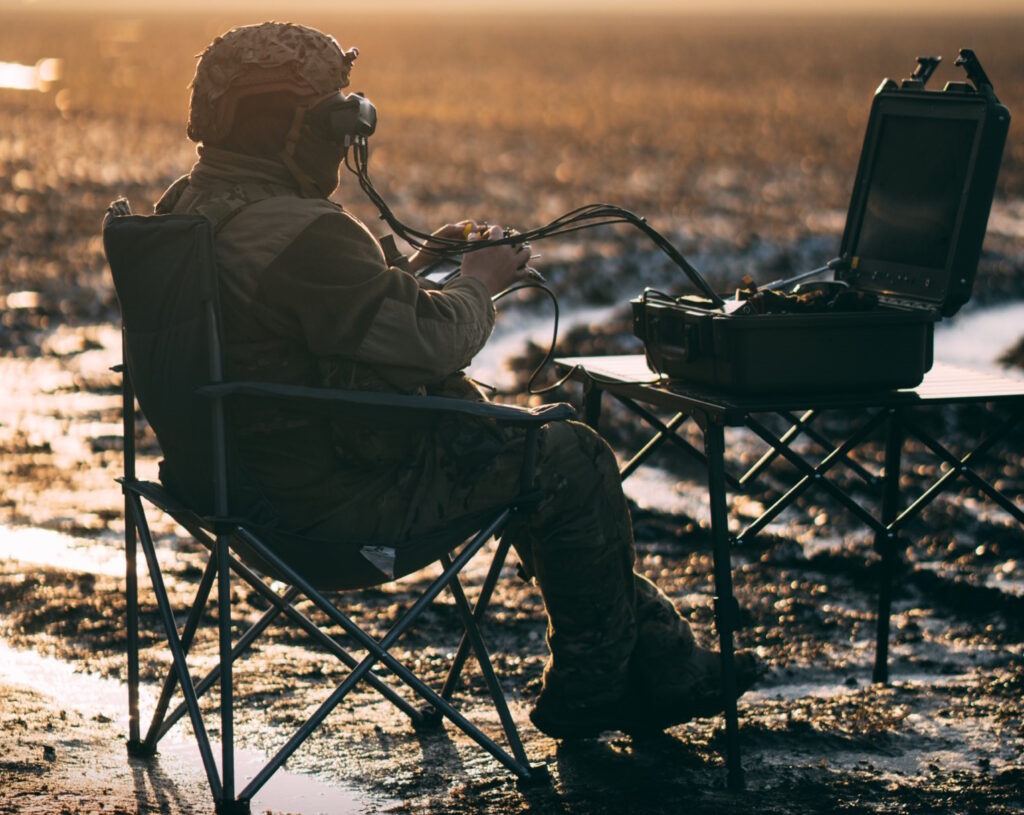
A Ukrainian drone operator. Source: The 411th Unmanned Systems Regiment "Hawks"

Japan is stepping up drone cooperation with Ukraine to develop its own unmanned forces from Kyiv's wartime experience, and the two are building a joint drone cluster, the South China Morning Post reported. The centerpiece is a planned Japan-Ukraine Drone Cluster linking the two countries' industries. The drones are meant for Japan's defense against Russia and China, not for Ukraine.

Four years of drone warfare have turned Ukraine into a live laboratory that militaries from Washington to Tokyo now study, as cheap unmanned systems rewrite how wars are fought and won.

Inside the cluster

The proposed cluster would unite Japanese manufacturers with Ukrainian defense firms, research centers, universities, and technology companies, the South China Morning Post says. Japanese companies are also working with European partners on anti-submarine drones.

Masayuki Masuda, who heads Chinese studies at Japan's National Institute for Defense Studies, the Defense Ministry's think tank, said the world has watched warfare change since Russia's invasion, and that drones will carry "much of the fighting on the future battlefield." He credited Ukraine's strong performance largely to drones.

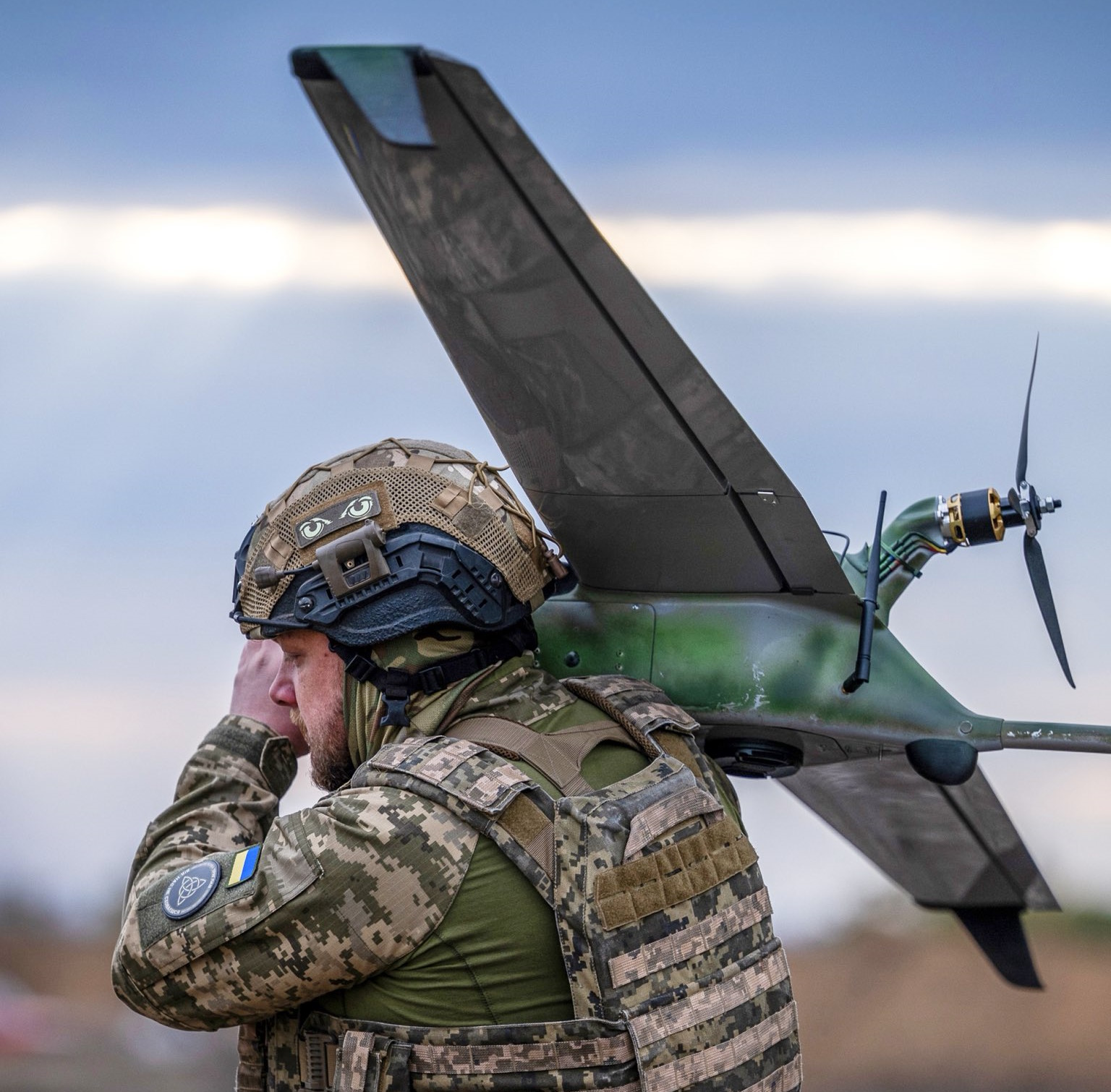
A Ukrainian soldier with a drone. Source: Ukraine's UAV Forces
Explore further

Japan is sending engineers to Ukraine’s frontline — and they’re coming back with $2,500 weapon

Masuda argued that quantity now matters as much as quality. Japan's many small firms, he said, could quickly turn out cheap drones in the numbers a war might demand.

A defense turn

The cooperation is part of a wider overhaul of Japan's defense policy. In May, Tokyo sent Self-Defense Force officers to NATO's mission headquarters in Germany for the first time—to a facility that coordinates weapons deliveries and training for Ukraine. Japan also joined the Prioritized Ukraine Requirements List (PURL), the program through which allies fund US weapons for Ukraine, including Patriots. Japan, however, pledged funds only for buying non-lethal equipment from the US.

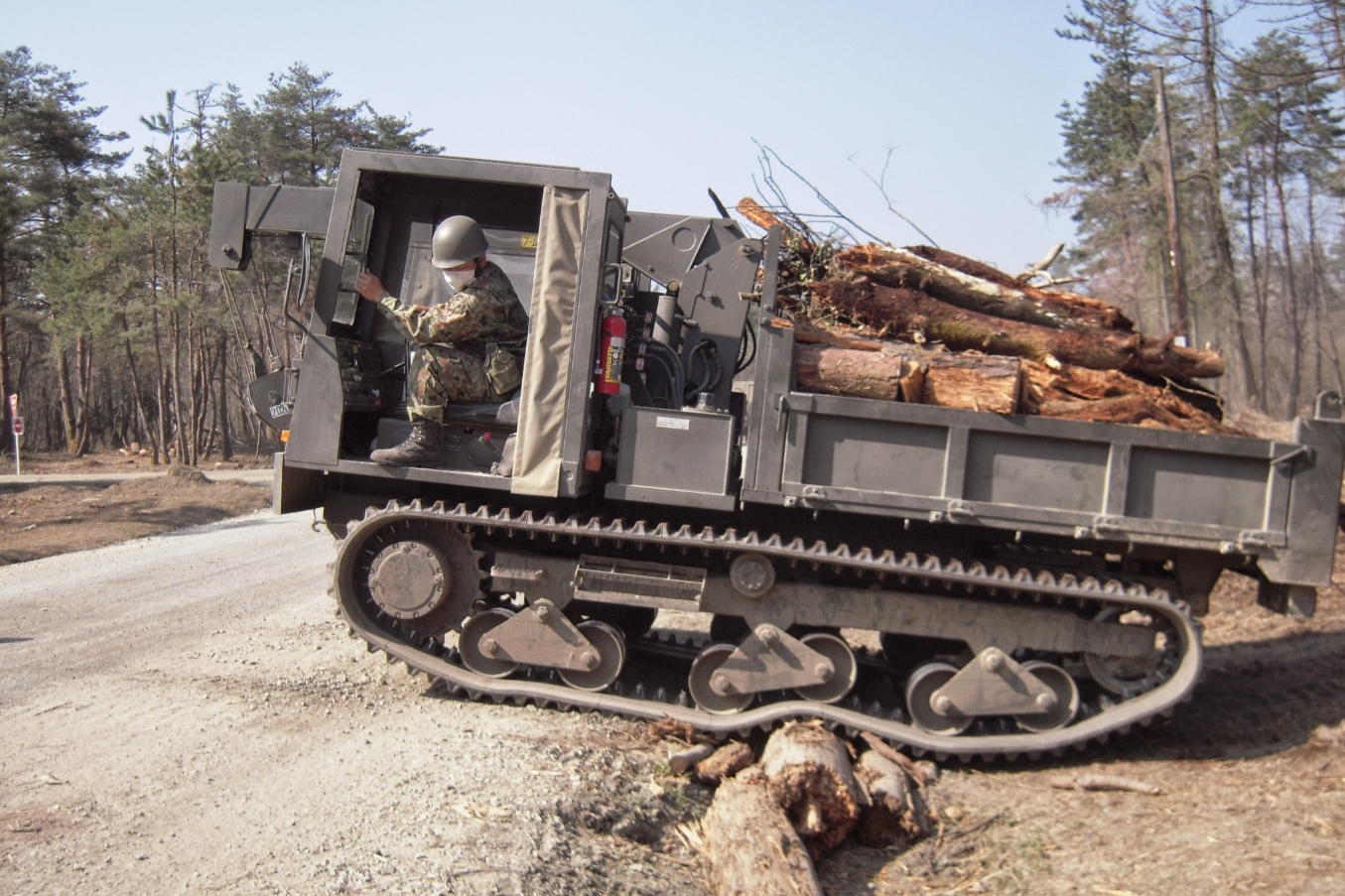
Engineering tracked truck manufactured by Morooka, model PC-065B, of the Japanese forces.
Explore further

Japan is sending soldiers to NATO’s Wiesbaden mission to study Ukraine’s emerging combat tactics

The drive is not only about Russia's war. It is also a response to China's growing military activity, with Tokyo tracking Chinese drones near the disputed Senkaku Islands, close to Taiwan, and across the South China Sea.

❌