Editor's note: The previously published footage, provided by an SBU source, was allegedly related to a different operation and was deleted after the mistake was identified.Drones operated by the Security Service of Ukraine (SBU) struck the Kirovske military airfield in occupied Crimea overnight on June 28, the SBU told the Kyiv Independent.The attack destroyed Mi-8, Mi-26 and Mi-28 attack helicopters, and a Pantsyr-S1 self-propelled anti-aircraft missile and gun system, the SBU claimed.According
Editor's note: The previously published footage, provided by an SBU source, was allegedly related to a different operation and was deleted after the mistake was identified.
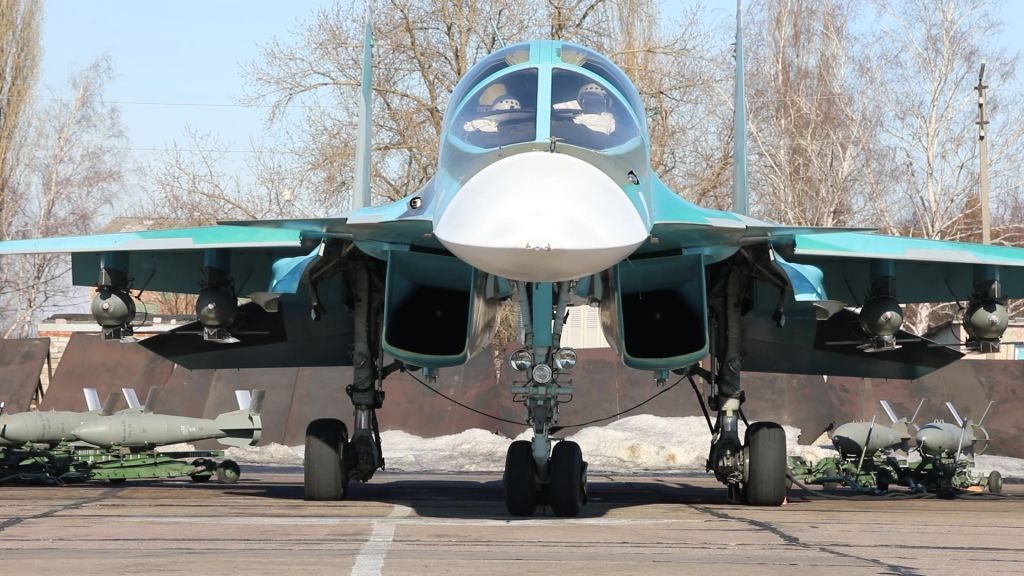
Drones operated by the Security Service of Ukraine (SBU) struck the Kirovske military airfield in occupied Crimea overnight on June 28, the SBU told the Kyiv Independent.
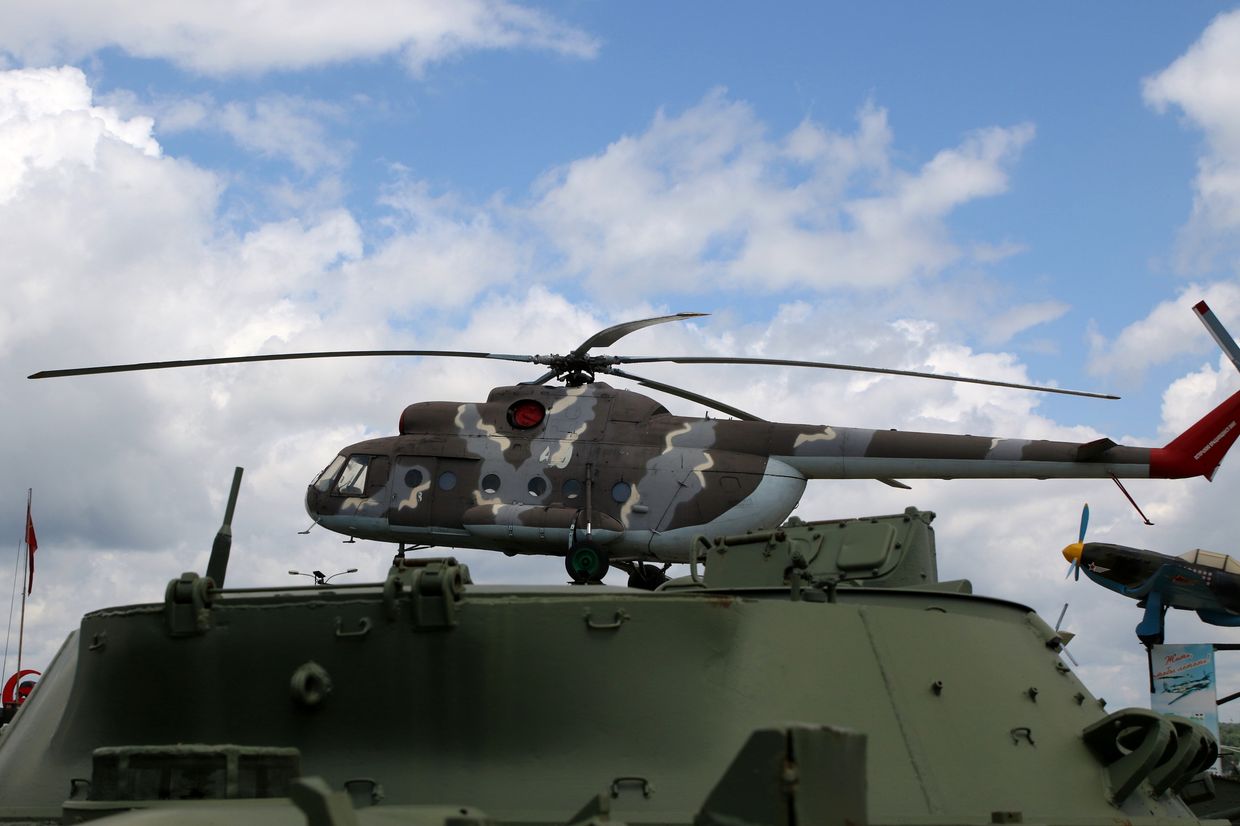
The attack destroyed Mi-8, Mi-26 and Mi-28 attack helicopters, and a Pantsyr-S1 self-propelled anti-aircraft missile and gun system, the SBU claimed.
According to the SBU, Ukraine targeted Russian aviation, air defense systems, as well as ammunition, reconnaissance and attack drones storage facilities.
Secondary explosions were heard at the airfield during the night.
The Kyiv Independent could not verify these claims.
Earlier on June 27, Ukrainian drones struck four Su-34 fighter jets at the Marinovka airfield in Russia's Volgograd Oblast, according to the military.
Preliminary reports indicate that two Russian fighter jets were destroyed in the June 27 attack, and the other two were damaged. Russia uses the aircraft to bomb Ukraine.
Since the start of its full-scale war in February 2022, Russia has lost 420 airplanes and 337 helicopters, Ukraine's General Staff said in its latest update on June 28. The Kyiv Independent could not verify these figures.
Ukrainian drones struck air defense equipment in Russian-occupied Crimea, damaging radar units and components of the S-400 Triumph system, Ukraine's military intelligence agency (HUR) claimed on June 26. The drone strike was carried out by the agency's "Ghosts" unit, HUR said. Video footage of the operation published on HUR's official Telegram channel shows the trajectory of multiple drones as they approach and hit their targets. The attack damaged "critical and expensive components" of Russia's
Ukrainian drones struck air defense equipment in Russian-occupied Crimea, damaging radar units and components of the S-400 Triumph system, Ukraine's military intelligence agency (HUR) claimed on June 26.
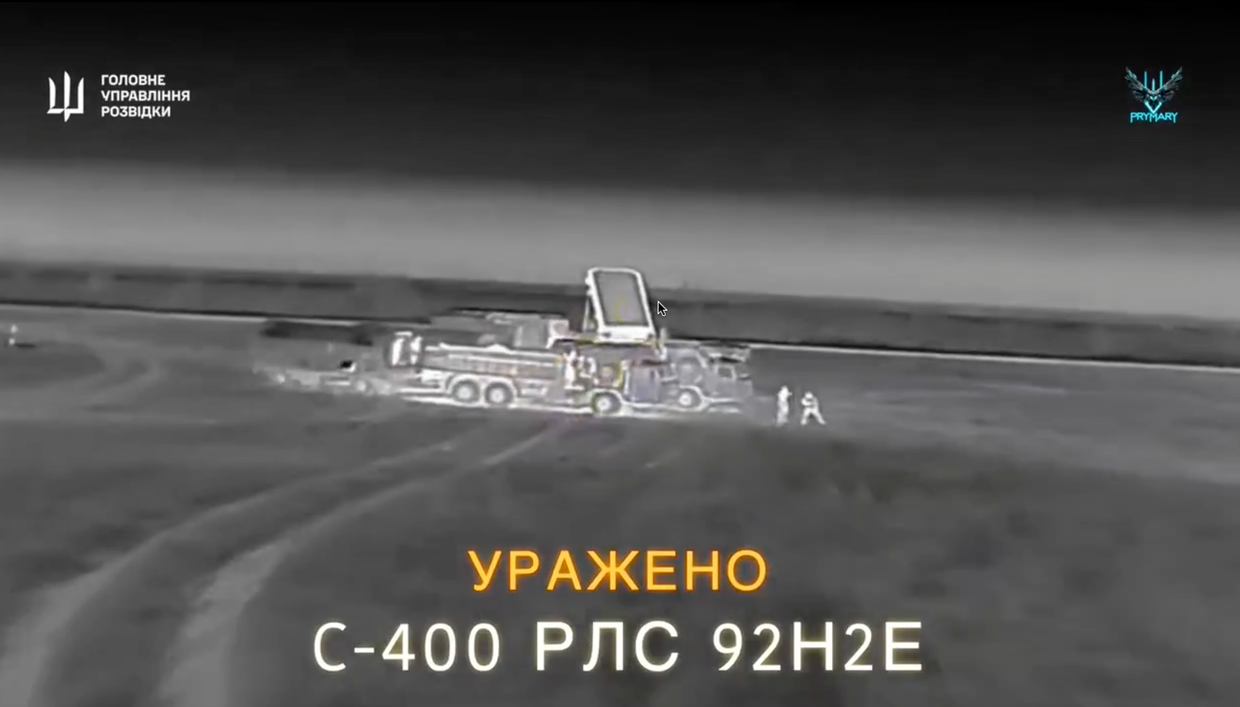
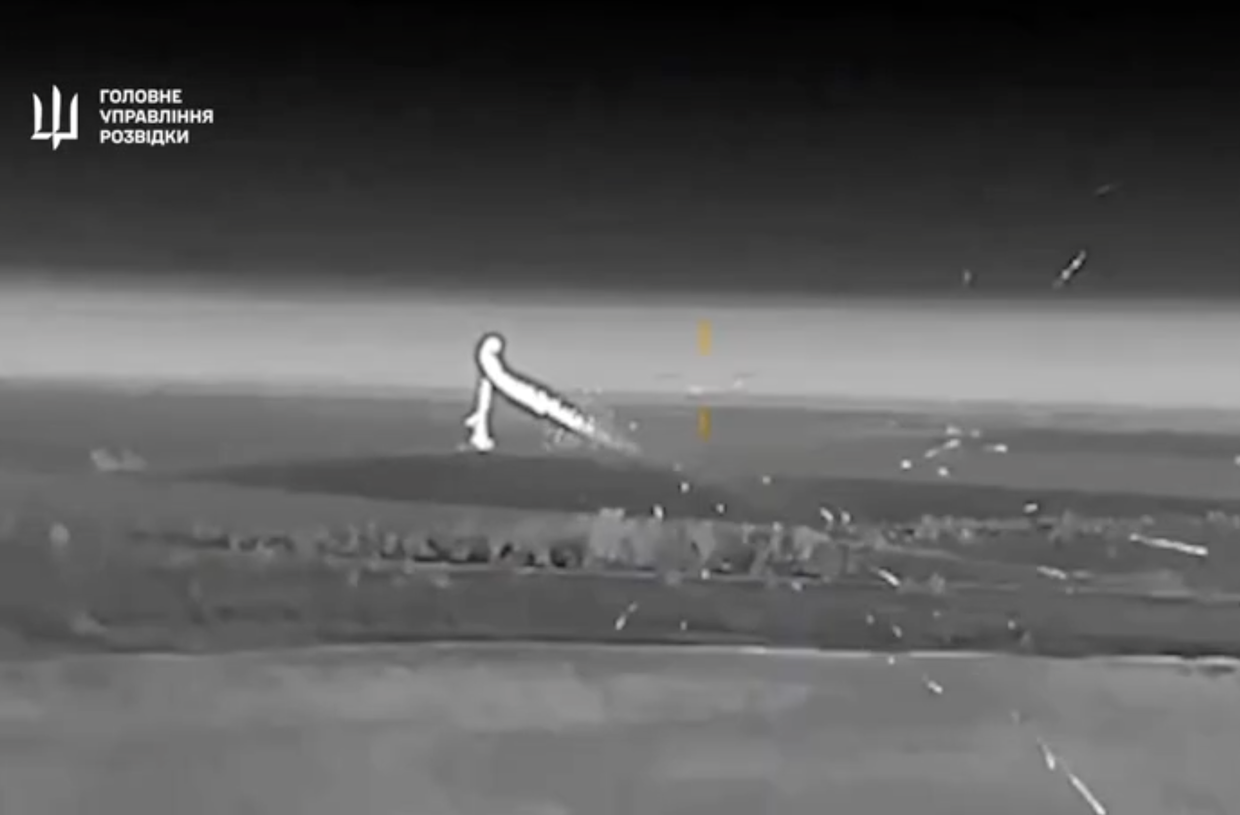
The drone strike was carried out by the agency's "Ghosts" unit, HUR said. Video footage of the operation published on HUR's official Telegram channel shows the trajectory of multiple drones as they approach and hit their targets.
The attack damaged "critical and expensive components" of Russia's S-400 Triumph air defense system, including two 92N2E multifunctional control radars, two 91N6E detection radars, and an S-400 launcher, according to HUR.
"Radars are the 'eyes' of the enemy's air defense system. Without them, anti-aircraft systems become combat ineffective," HUR wrote.
The Kyiv Independent could not verify these claims.
0:00
/
Video footage of an alleged Ukrainian drone strike on a Russian S-400 air defense radar system in occupied Crimea, June 2025. (Ukraine's military intelligence agency / Telegram)
Earlier this month, the Atesh partisan group reported that a Ukrainian drone attack hit Russian military facilities near Simferopol. The group claimed on June 13 that Ukrainian drone attacks likely hit a Russian air defense system.
Ukraine has previously carried out successful attacks on S-400 radar systems in Crimea and other regions, including Russia's Belgorod Oblast. Kyiv regularly launches strikes on military and industrial targets in both Russia and Russian-occupied regions of Ukraine.
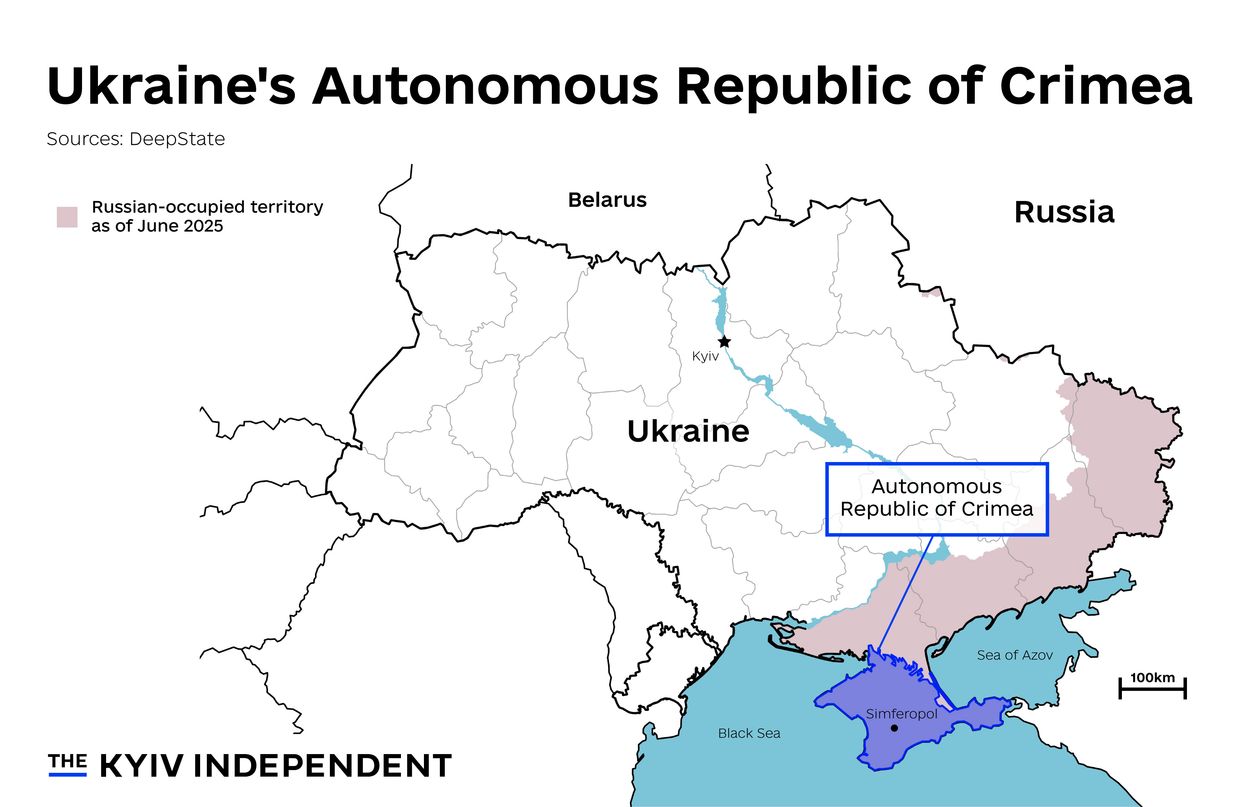
Russia has illegally occupied Crimea since 2014, transforming the peninsula into a heavily militarized stronghold. Moscow uses the region to support its war in Ukraine, launching missiles from the Black Sea and exploiting the peninsula as a key logistics and transport hub.
The Kerch Airport in Crimea has also been repurposed from civilian to military use, with Moscow-backed proxies transferring part of the airport's land to the Russian Defense Ministry in spring 2025, according to an investigation by Radio Liberty/Radio Free Europe.
Ukraine's Autonomous Republic of Crimea (Nizar al-Rifai/The Kyiv Independent)
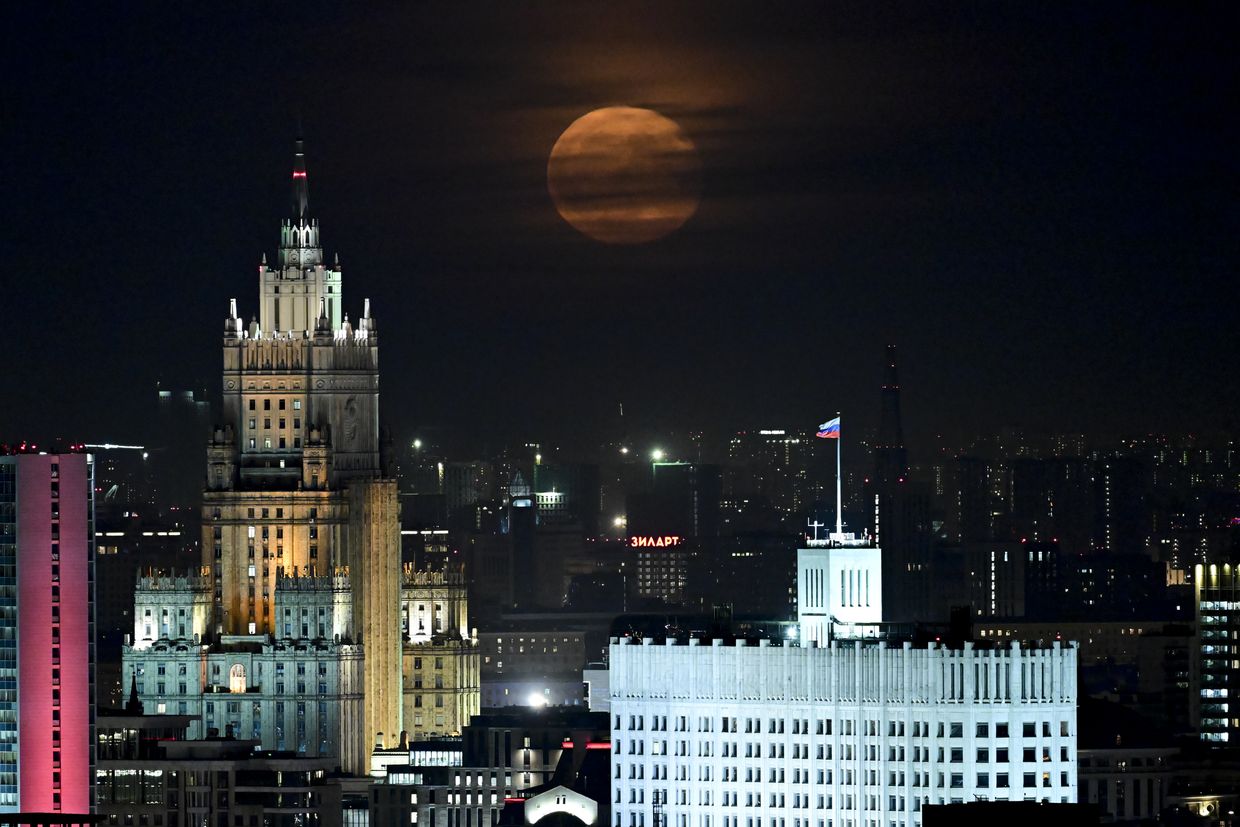
Editor's note: This is a developing story and is being updated.Explosions were reported in Moscow overnight on June 26, prompting airport closures, with Russia's Defense Ministry claiming 50 Ukrainian drones were downed across the country.Moscow Mayor Sergey Sobyanin said emergency services were at the sites where two drones were downed.According to the Shot Telegram channel, which appears to be close to Russian security forces, debris from a downed drone struck a residential building."Alarms we
Editor's note: This is a developing story and is being updated.
Explosions were reported in Moscow overnight on June 26, prompting airport closures, with Russia's Defense Ministry claiming 50 Ukrainian drones were downed across the country.
Moscow Mayor Sergey Sobyanin said emergency services were at the sites where two drones were downed.
According to the Shot Telegram channel, which appears to be close to Russian security forces, debris from a downed drone struck a residential building.
"Alarms went off everywhere," a local resident told the channel.
Ukraine's military regularly strikes military targets deep within Russia in an attempt to diminish Moscow's fighting power as it continues its war against Ukraine.
Russia's Defense Ministry later claimed 50 Ukrainian drones had been downed across the country, two of which were "flying towards Moscow."
The Kyiv Independent could not independently verify these claims.
Kaluga airport and Moscow's Vnukovo airport had flight restrictions imposed amid the drone attack, Artyom Korenyako, a spokesperson for Russia's state aviation agency Rosaviatsia, said early on June 26.
"The airport is temporarily not accepting or sending flights. Aircraft crews, air traffic controllers, and airport services must take all necessary measures to ensure flight safety," he said.
Ukrainian drones have forced at least 217 temporary airport closures across Russia since Jan. 1, independent Russian outlet Novaya Gazeta Europe reported on May 14, citing data from Russia's state aviation agency Rosaviatsia.
The figure already surpassed the combined total for all of 2023 and 2024, underscoring Kyiv's growing ability to put pressure on Russia, even in areas far from the border with Ukraine.
According to Serhii Bratchuk, spokesperson for the Ukrainian Defense Army's Southern Division, the surge in disruptions reflects a strategic shift in Ukraine's drone campaign.
"Moscow is the biggest aviation hub in the Russian Federation — flights go everywhere, not only across Russia, but worldwide," he told the Kyiv Independent last month.
"This is about the potential disintegration of Russian regions and the weakening of internal control."
Ukraine has also had remarkable success using first person view (FPV) drones — on June 1, Ukraine launched a game-changing drone attack on four key Russian military airfields, damaging 41 planes, including heavy bombers and rare A-50 spy planes.
Kyiv claimed it disabled 34% of Russia's strategic bomber fleet in what is seen as one of the most daring operations during Russia's full-scale war.
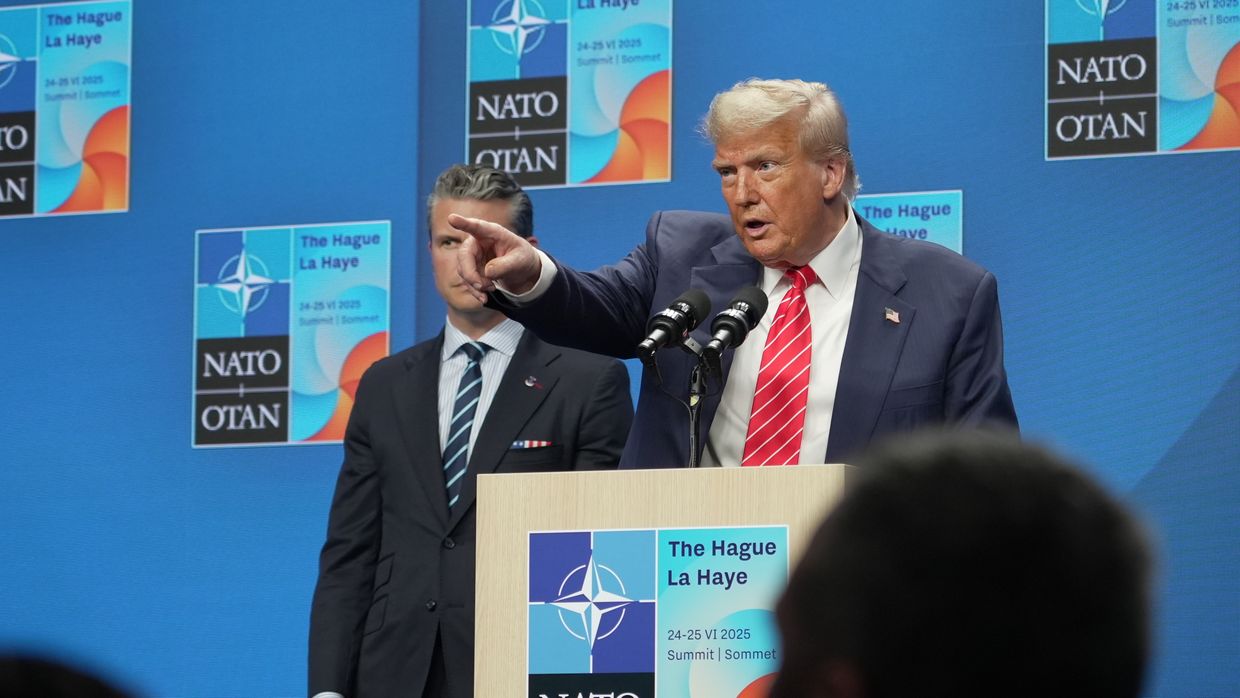
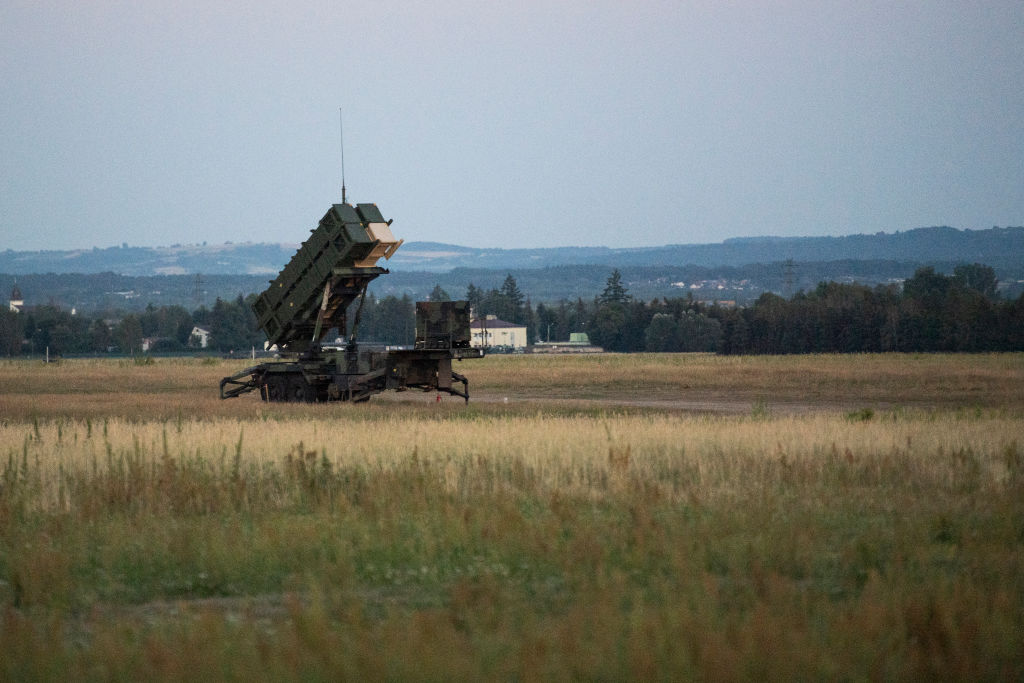
Washington will "see" whether it can supply Kyiv with additional missiles for its Patriot air defense systems, U.S. President Donald Trump said during the NATO summit in The Hague on June 25 as Russia escalates its air strikes against Ukraine."They (Ukraine) do want to have the anti missiles, as they call them, the Patriots, and we're going to see if we can make some available," Trump said."They are very hard to get. We need them too. We are supplying them for Israel, and they are very effective
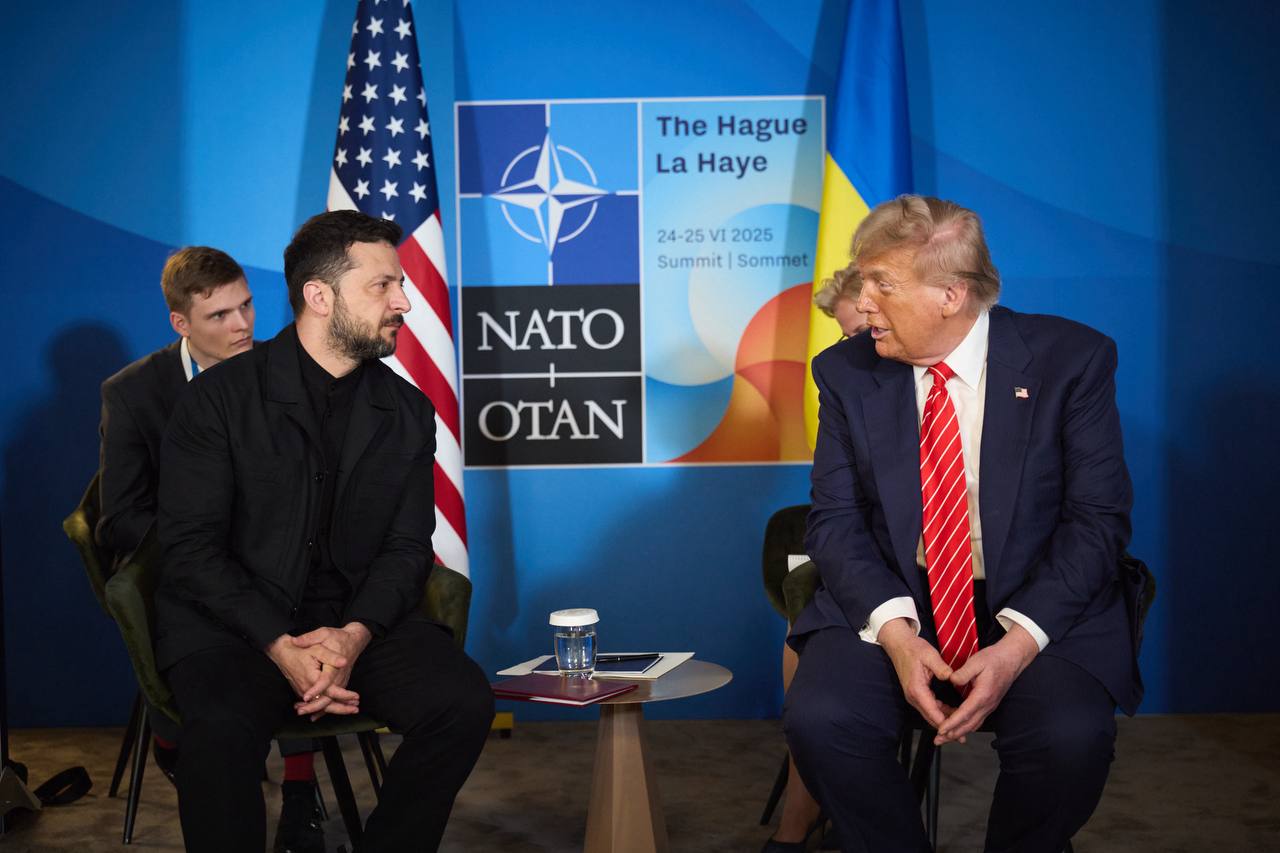
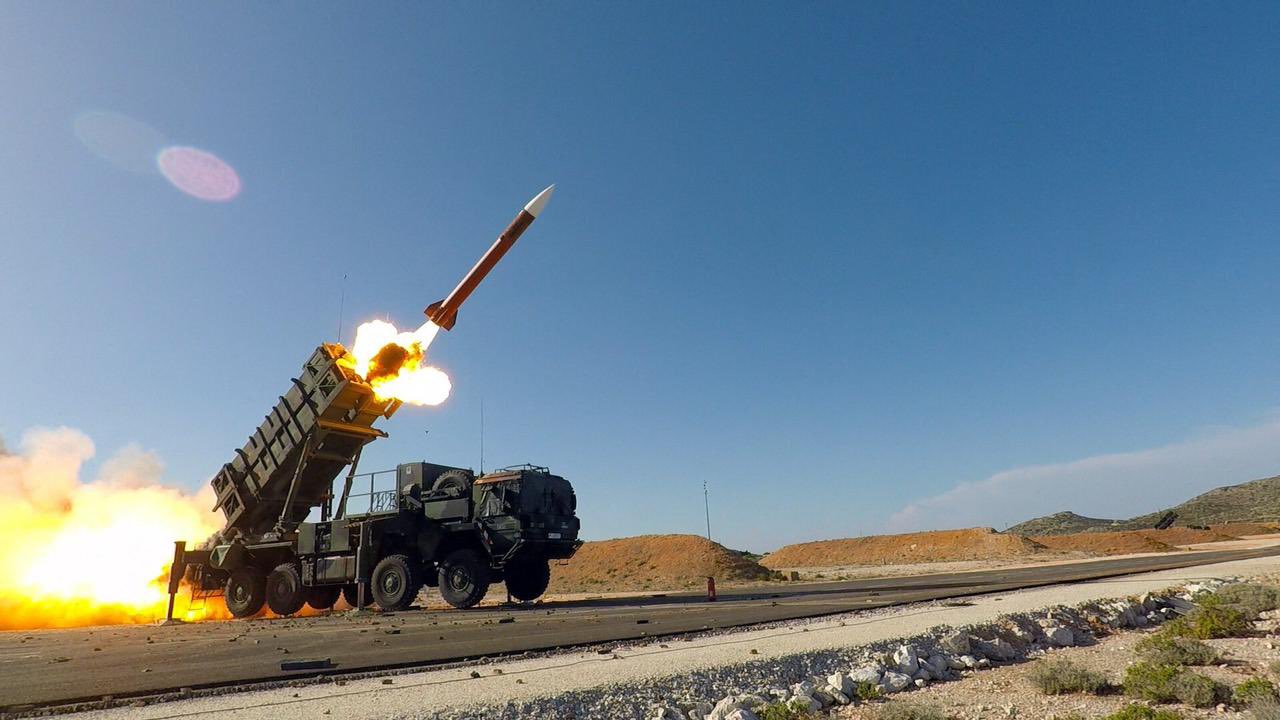
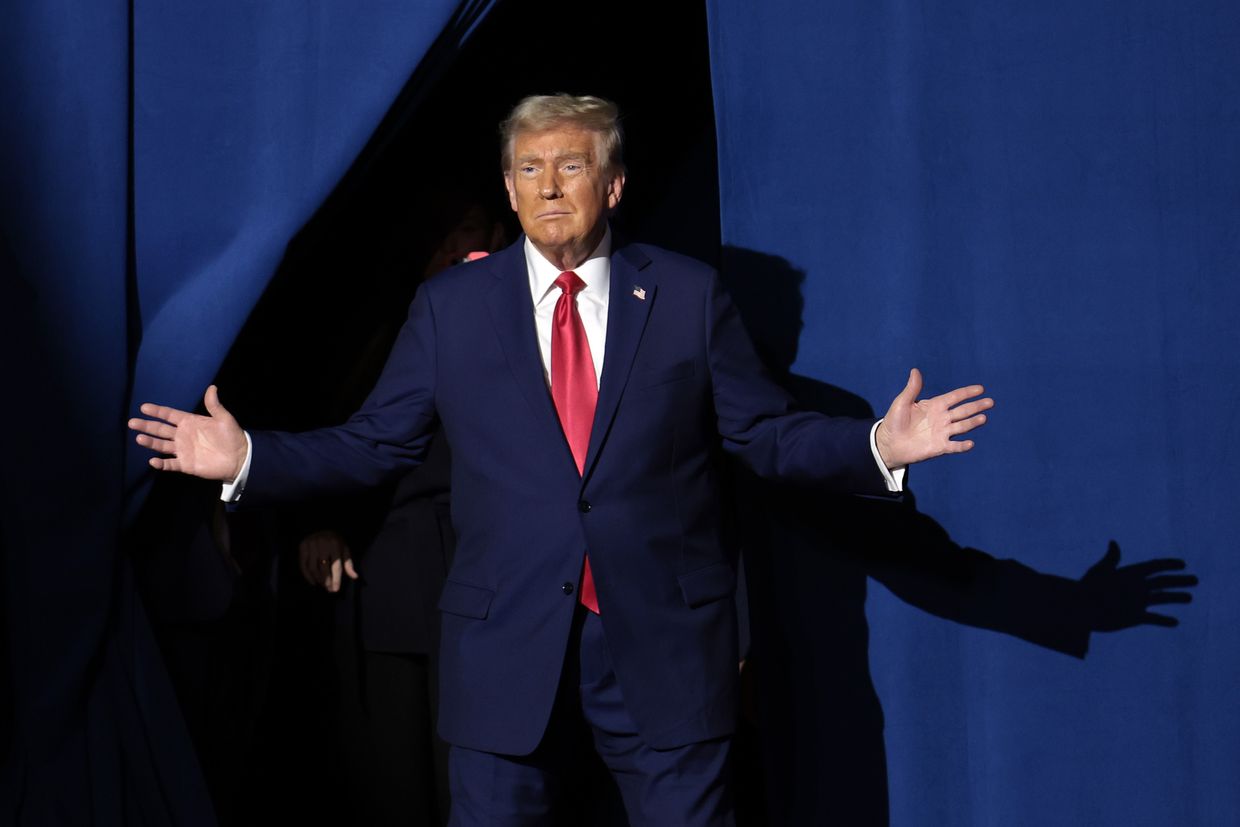
Washington will "see" whether it can supply Kyiv with additional missiles for its Patriot air defense systems, U.S. President Donald Trump said during the NATO summit in The Hague on June 25 as Russia escalates its air strikes against Ukraine.
"They (Ukraine) do want to have the anti missiles, as they call them, the Patriots, and we're going to see if we can make some available," Trump said.
"They are very hard to get. We need them too. We are supplying them for Israel, and they are very effective."
After the meeting with Trump earlier in the day, Zelensky said that the two discussed the purchase of American air defense systems to shield Ukrainian cities and critical infrastructure.
In recent weeks, Moscow has intensified its drones and missiles strikes. As NATO leaders gathered for the summit, Russia launched an attack on the city of Dnipro, killing at least 19 people and injuring more than 300 others.
"Ukraine is ready to buy this equipment and support American weapons manufacturers. Europe can help. We also discussed the potential for co-production of drones. We can strengthen each other," Zelensky added.
Previously, despite Kyiv's appeals, Trump has dismissed the request, accusing Ukraine's president of "always looking to purchase missiles" and falsely blaming Ukraine for provoking the war.
The Patriot is a high-precision, U.S.-made surface-to-air missile platform capable of intercepting aircraft, cruise missiles, and ballistic threats. Zelensky has repeatedly said Ukraine needs at least seven more systems to defend its most at-risk regions.
In early June, he confirmed that Trump's administration diverted 20,000 anti-drone missiles originally intended for Ukraine to American forces in the Middle East.
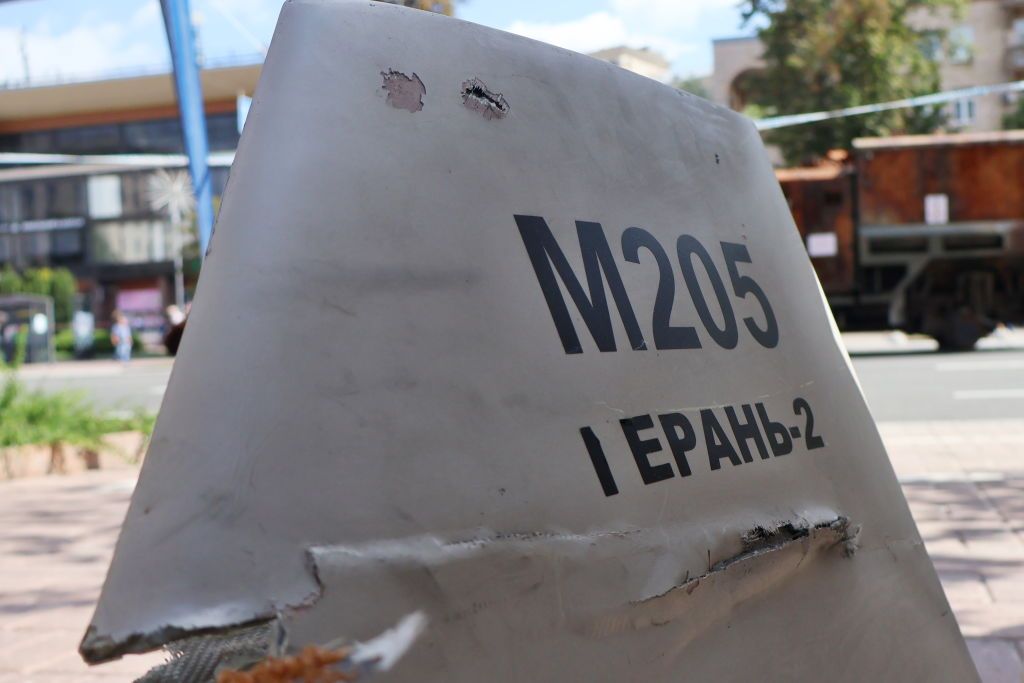
Since the start of Russia’s full-scale invasion, Moscow has launched 28,743 Shahed-type drones at Ukraine — with 2,736, or roughly 9.5%, fired in June 2025 alone, Zelensky said.
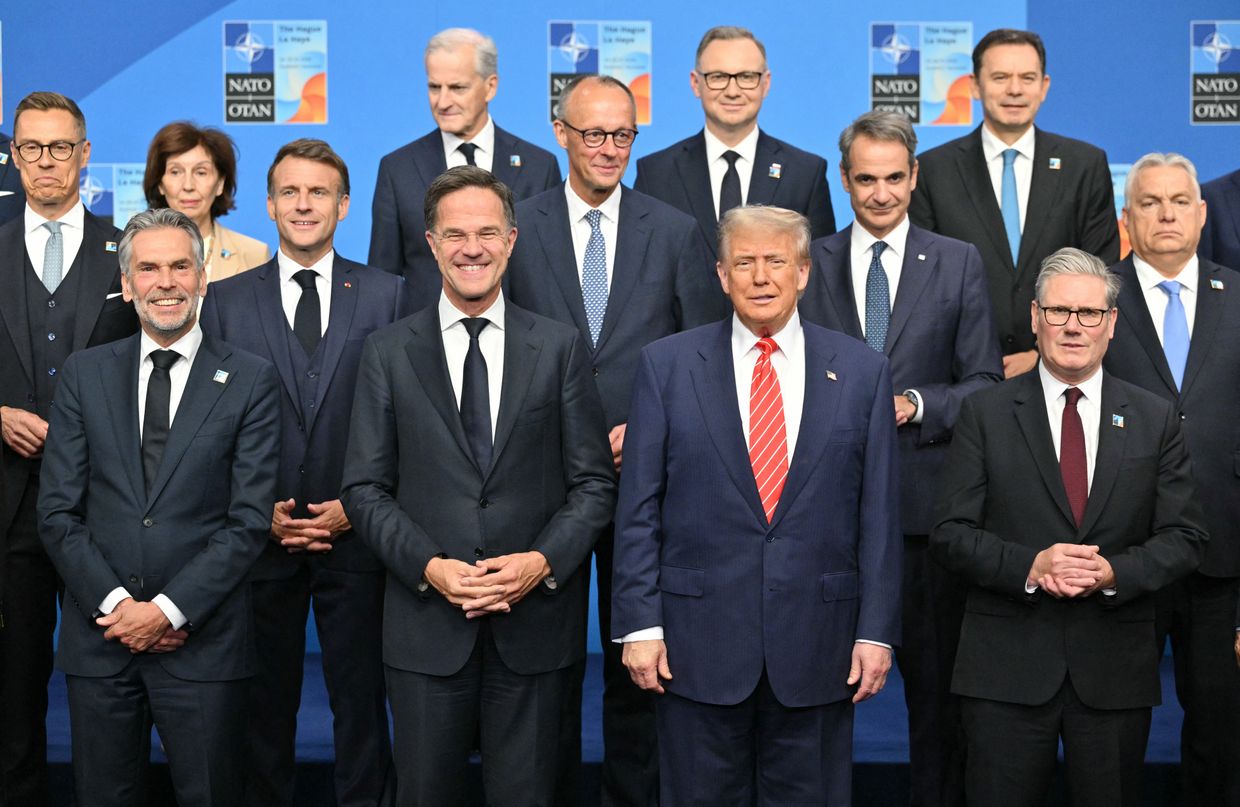
Editor's note: This story was updated with comments made by NATO Secretary General Mark Rutte.NATO member states have agreed to a new defense spending benchmark, committing to allocate 5% of their gross domestic product annually to defense and security-related expenditures by 2035, according to a joint statement released on June 25 by alliance leaders meeting in the Netherlands.The decision marks a significant increase from the current 2% guideline and reflects the alliance's response to the pus
Editor's note: This story was updated with comments made by NATO Secretary General Mark Rutte.
NATO member states have agreed to a new defense spending benchmark, committing to allocate 5% of their gross domestic product annually to defense and security-related expenditures by 2035, according to a joint statement released on June 25 by alliance leaders meeting in the Netherlands.
The decision marks a significant increase from the current 2% guideline and reflects the alliance's response to the push from the U.S. and growing security threats, particularly the long-term challenge posed by Russia.
"We remain united and steadfast in our resolve to protect our one billion citizens," the statement reads. "Allies commit to invest 5% of GDP annually on core defense requirements as well as defense and security related spending."
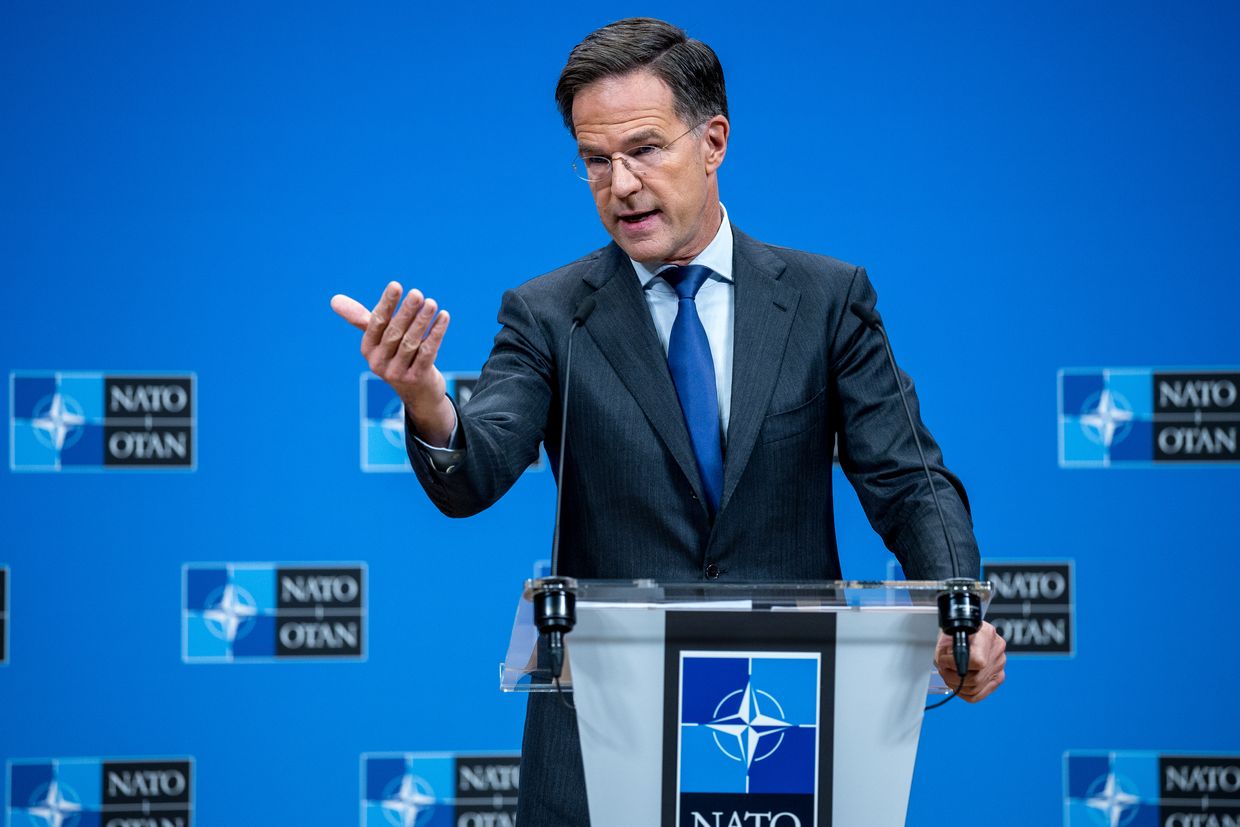
"The decision we make today makes NATO much stronger. It also makes NATO a much fairer alliance, with Europe and Canada stepping up," NATO Secretary General Mark Rutte said during a briefing on June 25.
Unlike in previous years, this year's NATO statement does not include a direct condemnation of Russia's actions, unlike the communique issued during the 2024 NATO summit in Washington, which explicitly condemned Russia's full-scale invasion of Ukraine.
But the leaders reaffirmed support for Ukraine, stating that direct contributions to Ukraine's defense and industrial capacity will be counted toward the 5% total.
When asked by a journalist whether the current trajectory of military aid from allies could help Ukraine "not only survive but win the war," Rutte said he is "optimistic."
"You can safely assume that the trajectory in the first almost six months now is really north of last year's," he said. "By the end of the year, it will end up north over $50 billion, which was pledged in 2024. I'm optimistic about that, but I won't make a concrete prediction."
He emphasized the importance of sustained and long-term support.
"We have to make sure Ukraine can stay in the fight, that it has what it needs... But we're also working to secure peace deal or a long-term ceasefire. And then we have to make sure that Ukraine has what it needs to prevent (Russian President) Vladimir Putin from effort ever trying this again in the future,” Rutte said.
Rutte added that part of the strategy includes supporting Ukraine's defense industrial base, which has an estimated $35 billion in spare capacity.
Rutte emphasized that NATO's immediate priority is to "keep (Ukraine) in the fight," noting that support includes "training, delivering military equipment, but also various streams of money going into Ukraine" to help it defend itself and lay the groundwork for a future peace deal or long-term ceasefire.
Politico earlier reported that the narrowed focus of the NATO summit in The Hague was designed to appease U.S. President Donald Trump.
"(Trump) has to get credit for the 5% — that's why we're having the summit," one unnamed European defense official told Politico.
Under the new framework, at least 3.5% of GDP will be directed toward core defense needs, including NATO capability targets, with the remaining 1.5% covering civil preparedness, infrastructure protection, innovation, and the defense industrial base.
Allies will submit annual plans outlining a credible path to reach the targets, with a mid-term review scheduled for 2029.
Trump has consistently accused NATO members of underfunding their militaries, pushing for raising defense spending target to 5% of GDP.
In 2024, only 23 alliance members met the 2% target, according to NATO estimates. Poland was ahead of all members with 4.12% of GDP allocated to defense, followed by Estonia (3.43%) and the U.S. (3.38%).
Rutte previously said on June 17 that all NATO countries are on track to meet the 2% threshold in 2025.
The U.K. has used interest generated from frozen Russian assets to purchase weapons for Ukraine, buying 350 air defense missiles worth £70 million ($87 million), The Guardian reported on June 25.The move represents the U.K.'s first direct use of Russia-linked funds to buy weaponry for Kyiv.The weapons purchase was funded through Britain's Extraordinary Revenue Acceleration (ERA) scheme, which captures interest from frozen Russian central bank assets.According to The Guardian, the missiles, origi
The U.K. has used interest generated from frozen Russian assets to purchase weapons for Ukraine, buying 350 air defense missiles worth £70 million ($87 million), The Guardian reported on June 25.
The move represents the U.K.'s first direct use of Russia-linked funds to buy weaponry for Kyiv.
The weapons purchase was funded through Britain's Extraordinary Revenue Acceleration (ERA) scheme, which captures interest from frozen Russian central bank assets.
According to The Guardian, the missiles, originally designed as air-to-air weapons, were converted by RAF engineers and MBDA UK in just three months to fire from ground-based systems.
Five additional Raven launcher systems will accompany the missiles to Ukraine, bringing the total to 13.
U.K. Prime Minister Keir Starmer announced the package ahead of NATO's annual summit.
"Russia, not Ukraine, should pay the price for Putin's barbaric and illegal war," he said.
The package is part of Britain's largest-ever annual military commitment to Ukraine of £4.5 billion ($5.6 billion), the Guardian reports.
It follows a £1.6 billion ($2.0 billion) deal in March for over 5,000 air defense missiles and a separate £350 million ($436 million) investment to increase drone deliveries tenfold.
The announcement comes as Starmer and President Volodymyr Zelensky agreed to work closely on military production between the UK and Ukraine. On June 24, Ukraine's Defense Minister Rustem Umerov announced that Britain will finance Ukrainian-designed drones manufactured in the UK.
European countries cannot fully confiscate the frozen Russian assets due to concerns about international law and financial stability. The European Central Bank warned that such a move could undermine confidence in the euro as a reserve currency, since most of the assets are euro-denominated.
Instead, only the interest generated from these funds is currently being used to back a $50 billion loan package for Ukraine, while the principal amount of 300 billion euros ($348 billion) remains frozen but not seized.
In June, Ukraine received another 1 billion euros ($1.1 billion) from the EU as part of the G7 loan program backed by frozen Russian assets, Prime Minister Denys Shmyhal announced.
Since the start of Russia’s full-scale invasion, Moscow has launched 28,743 Shahed-type drones at Ukraine — with 2,736, or roughly 9.5%, fired in June 2025 alone, President Volodymyr Zelensky said during a speech to the Dutch Parliament in The Hague.Speaking on June 24, he stressed that Russia would never have been able to carry out such drone attacks without support from Iran, and Ukraine, in turn, could not have intercepted most of the drones without the help of its international partners.Zel
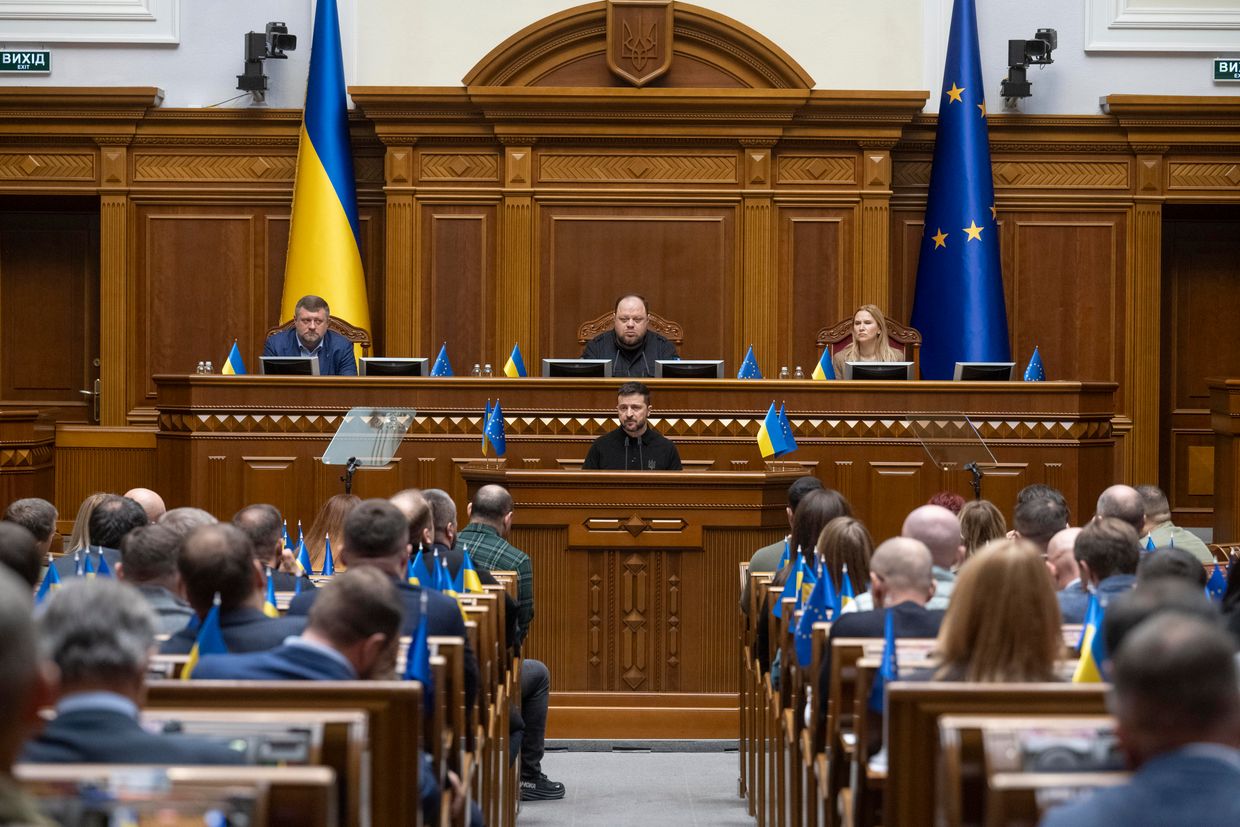
Since the start of Russia’s full-scale invasion, Moscow has launched 28,743 Shahed-type drones at Ukraine — with 2,736, or roughly 9.5%, fired in June 2025 alone, President Volodymyr Zelensky said during a speech to the Dutch Parliament in The Hague.
Speaking on June 24, he stressed that Russia would never have been able to carry out such drone attacks without support from Iran, and Ukraine, in turn, could not have intercepted most of the drones without the help of its international partners.
Zelensky called for accountability and emphasized that rules must apply to all — including the Kremlin: "Putin pretends not to understand the rules that shape the modern world. And here, in The Hague, I want to say this very clearly to him: There is a rule — do not kill. There is a rule — do not treat people like beasts. There is a rule — do not destroy cities and villages. There is a rule — do not sponsor terror. There is a rule — do not steal children. And if you break these rules, you will be held accountable."
According to Zelensky, these principles — though difficult for Russia to grasp — form the foundation of international norms, from the UN Charter to Europe’s shared vision of life.
To achieve lasting peace, Zelensky outlined two key strategic priorities. First, he called for maximum isolation of Russia which includes full political isolation, comprehensive sanctions, and the termination of any cooperation that allows Russia to survive and continue waging war.
"Every loophole that allows them to keep going must be closed. We need a strong 18th EU sanctions package. We need tough, painful sanctions on Russian oil. Every reduction in Russia’s oil revenue helps bring peace closer," he said.
Zelensky argued that the most effective step would be imposing a $30-per-barrel price cap on Russian oil exports.
“The world must reach this threshold — not just to help stop Russia’s war against us, but to prevent any future military operations that Russia might launch against Europe and the Alliance,” he said. “Military plans must become prohibitively expensive for Russia. We must fully block their tanker fleet and cut them off from international banking. That’s what works.”
Second priority, according to Zelensky, is the need for stability in defense support. "Russia must see that Ukraine will not be left alone, and that Europe will not back down."
President Donald Trump refused to give a clear commitment to NATO’s Article 5 — the alliance’s collective defense clause — as he departed for a pivotal summit in The Hague, raising fresh concerns about his stance on one of NATO’s core principles.When pressed by reporters aboard Air Force One on whether he would uphold the mutual defense obligation, Trump replied, “It depends on your definition of Article 5,” adding, "There’s numerous definitions of Article 5. You know that, right? But I’m commit
President Donald Trump refused to give a clear commitment to NATO’s Article 5 — the alliance’s collective defense clause — as he departed for a pivotal summit in The Hague, raising fresh concerns about his stance on one of NATO’s core principles.
When pressed by reporters aboard Air Force One on whether he would uphold the mutual defense obligation, Trump replied, “It depends on your definition of Article 5,” adding, "There’s numerous definitions of Article 5. You know that, right? But I’m committed to being their friends, you know, I’ve become friends with many of those leaders, and I’m committed to helping them."
Although Article 5 is central to NATO’s security framework, Trump has previously expressed skepticism about honoring it, often criticizing member states for not contributing enough to shared defense efforts.
Asked to elaborate, he said, "I’m committed to saving lives. I care about life and safety." He added that he would explain his position in full once at the summit: "I’ll give you an exact definition when I get there — I just don’t want to do it from the back of a plane."
Trump’s remarks come as NATO faces what its leadership describes as its most significant threat in decades.
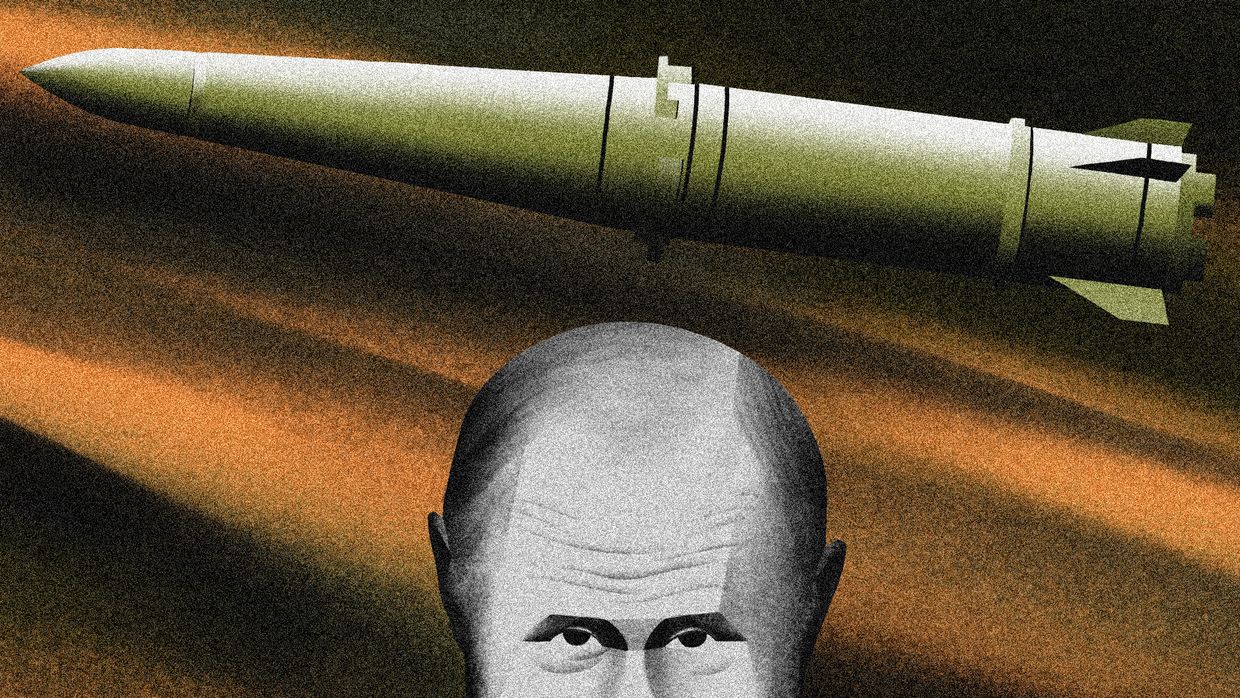
At a press briefing on June 23, NATO Secretary General Mark Rutte said Russia remains the primary danger to the alliance, citing its growing alignment with China, North Korea, Iran, and Belarus.
"Moscow continues to wage war against Ukraine, with support of North Korea, Iran, and China, as well as Belarus," Rutte said.
He added that NATO leaders plan to adopt a "historic" defense investment plan at the June 24–25 summit in The Hague, including a new 5% of GDP benchmark for defense spending and stronger backing for Ukraine.
"All leaders will take bold decisions to strengthen our collective defense, making NATO a stronger, fairer, and more lethal alliance," Rutte said. “This is a leap that is ambitious, historic, and fundamental to securing our future.”
Their last meeting was in April at Pope Francis' funeral, amid concerns over the U.S. role in peace talks between Kyiv and Moscow. Details of the June 25 meeting are still being finalized, but the talks are expected in the "early afternoon," a source told AFP.
Ukraine and the United Kingdom have reached an agreement to jointly produce drones, Defense Minister Rustem Umerov announced on June 24.Britain will finance the procurement of Ukrainian-designed drones manufactured in the UK, he added. The deal comes as Ukraine has rapidly developed its drone capabilities since 2022, evolving from modifying commercial aircraft to producing military UAVs, attack drones, and reconnaissance systems at scale.The agreement was reached between President Volodymyr Zele
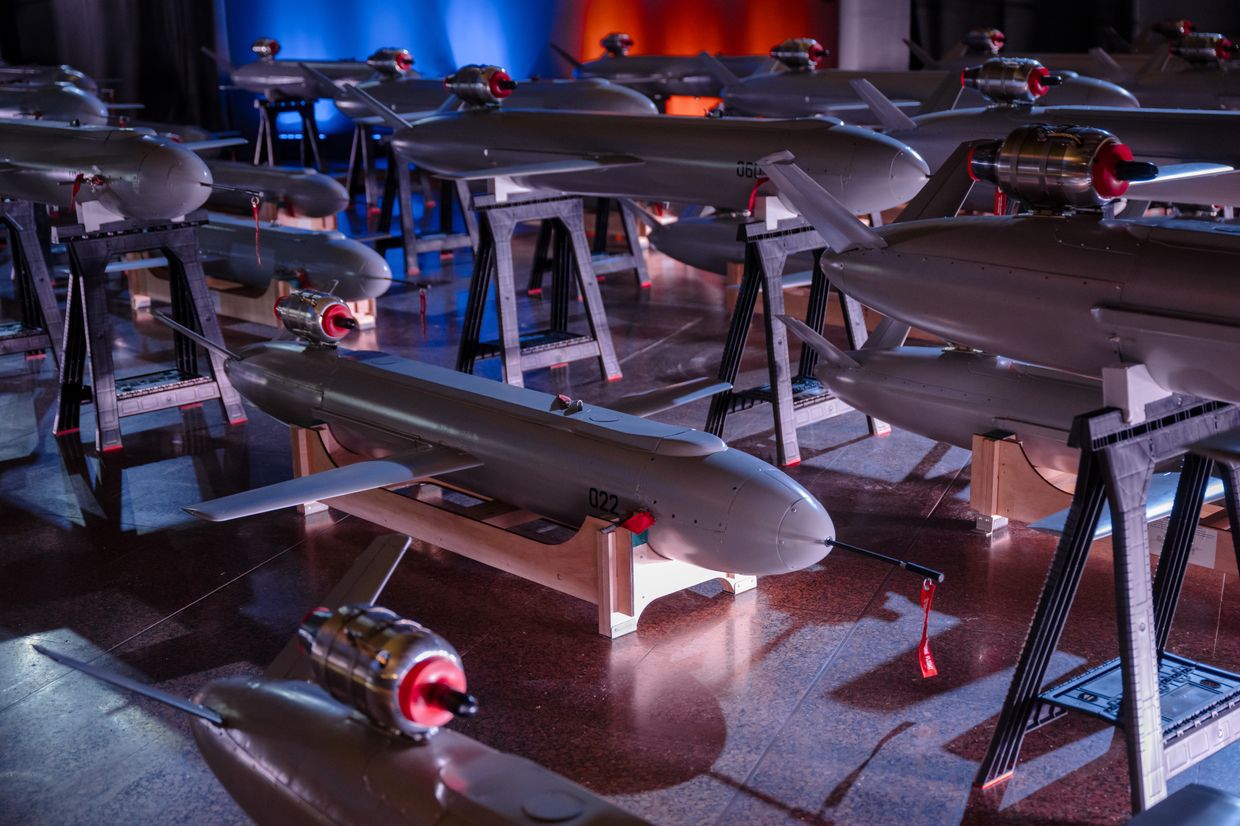
Ukraine and the United Kingdom have reached an agreement to jointly produce drones, Defense Minister Rustem Umerov announced on June 24.
Britain will finance the procurement of Ukrainian-designed drones manufactured in the UK, he added.
The deal comes as Ukraine has rapidly developed its drone capabilities since 2022, evolving from modifying commercial aircraft to producing military UAVs, attack drones, and reconnaissance systems at scale.
The agreement was reached between President Volodymyr Zelensky and British Prime Minister Keir Starmer, Umerov said.
Under the three-year program, the UK will finance the procurement of a wide range of Ukrainian drones to be produced by British defense companies.
"This will enable British defense companies to rapidly design and produce state-of-the-art drones on a large scale," Umerov wrote on Facebook.
According to Umerov, all production will be directed to meet the needs of Ukraine's Defense Forces. After the war ends, the UK and Ukraine will share the produced drones between themselves.
The initiative will support the scaling of advanced technologies, increased drone production, and the integration of Ukrainian and British defense industries, Ukraine’s defense minister wrote.
Ukraine has ramped up domestic drone production over the recent years of its war with Russia, as well as the development of new missiles.
Various aerial, naval, and ground drones have been developed and often successfully used for reconnaissance, combat, and other tasks throughout the full-scale war with Russia.
In January 2025, Umerov announced that the United Kingdom would finance the production of air defense systems and long-range weapons in Ukraine.
NATO Secretary General Mark Rutte said during a press briefing on June 23 that Russia remains the main threat to the alliance, citing Moscow's cooperation with China, North Korea, Iran, and Belarus. "Moscow continues to wage war against Ukraine, with support of North Korea, Iran, and China, as well as Belarus," Rutte said.The Secretary General told reporters that the alliance leaders are set to adopt a historic defense investment plan at the summit in The Hague on June 24-25, including a new ben
NATO Secretary General Mark Rutte said during a press briefing on June 23 that Russia remains the main threat to the alliance, citing Moscow's cooperation with China, North Korea, Iran, and Belarus.
"Moscow continues to wage war against Ukraine, with support of North Korea, Iran, and China, as well as Belarus," Rutte said.
The Secretary General told reporters that the alliance leaders are set to adopt a historic defense investment plan at the summit in The Hague on June 24-25, including a new benchmark of 5% of GDP for defense spending and a strengthened commitment to Ukraine.
"All leaders will take bold decisions to strengthen our collective defense, making NATO a stronger, fairer, and more lethal alliance," Rutte said at a press conference before the summit. “This is a leap that is ambitious, historic, and fundamental to securing our future.”
Rutte said the plan includes major increases in air defense systems, tanks, armored vehicles, and artillery, a response to the evolving threat landscape, particularly Russia's war against Ukraine.
"We see Russia's deadly terror from the skies over Ukraine every day. We must be able to defend ourselves from such attacks," Rutte added.
The Secretary General warned that NATO must act urgently to prepare for future threats, citing assessments that Russia could rebuild sufficient military capacity to challenge NATO within five years. "Our security environment has changed, and not for the better. The threats we face today demand that we do far more," he said.
Rutte emphasized that the new defense investment plan will be reviewed in 2029, with annual reporting to ensure credibility.
He stressed that NATO remains committed to supporting Kyiv and reaffirmed the alliance's long-standing position that "Ukraine's path to NATO membership is irreversible." According to Rutte, the allies have pledged over 35 billion euros ($40,6 billions) in military aid to Ukraine for the first half of 2025, up from 20 billion announced earlier this year.
President Volodymyr Zelensky is attending the summit and will hold multiple meetings with NATO leaders. However, NATO's Ukraine Council will not convene, a decision seen as part of efforts to keep the summit's focus narrow, a move aimed at appeasing U.S. President Donald Trump, according to Politico.
The summit, shortened to 24 hours, has only one major session on defense spending. European officials cited by Politicosaid the format was designed to deliver a clear win to Trump, who is expected to tout the 5% spending pledge as a personal success. The U.S. is reportedly exempting itself from the new benchmark.
While recent summits have centered on Russia's invasion of Ukraine, this year's joint communique may omit references to the war.
During the briefing, Rutte said that the final communique, agreed by NATO ambassadors, has "important language" about Ukraine, including defense spending up until 2035.
"This is a clear commitment by allies," Rutte said.
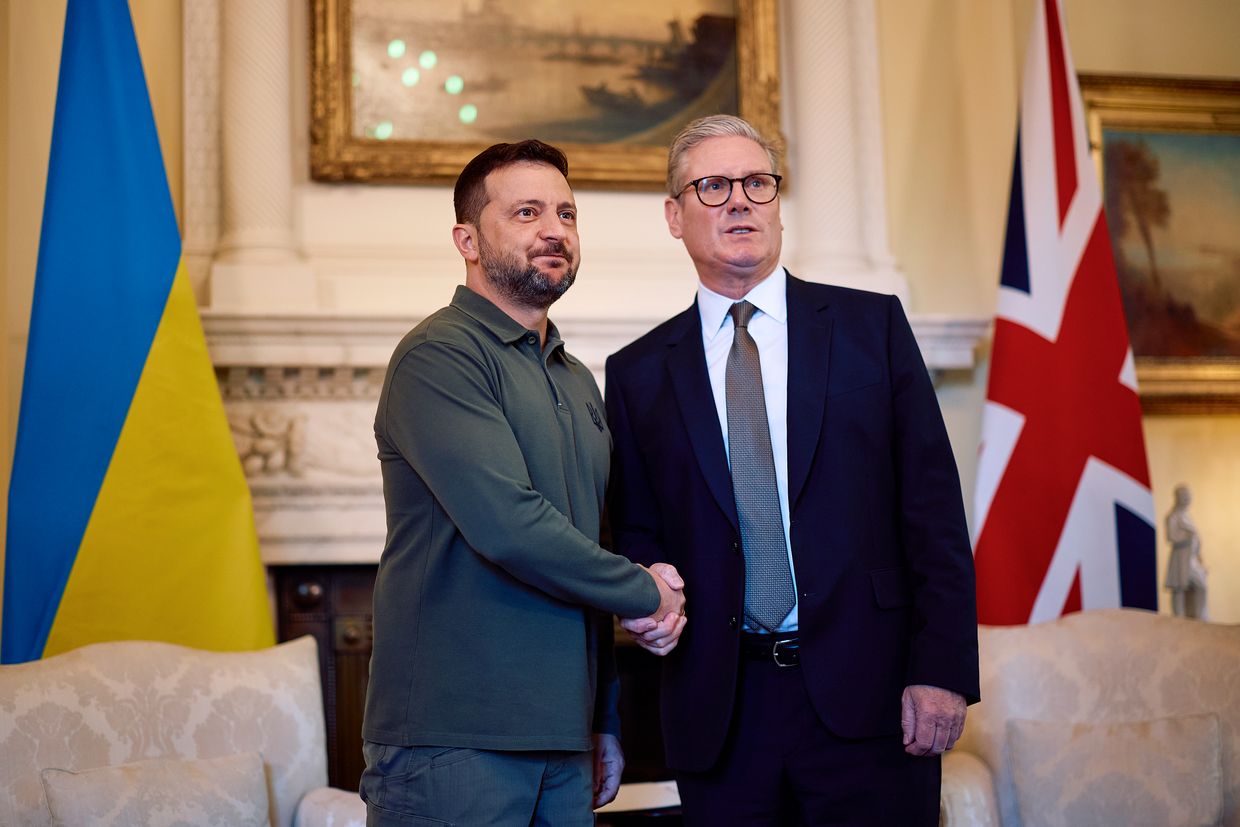
Ukrainian President Volodymyr Zelensky met with U.K. Prime Minister Keir Starmer at Downing Street on June 23, ahead of the NATO summit in The Hague.Zelensky had earlier paid a visit to King Charles III at Windsor Castle before joining Starmer to discuss continued British support for Ukraine’s defense.During a joint visit to a U.K. military training site for Ukrainian personnel, Starmer said he and Zelensky held "an excellent bilateral meeting" and had agreed to an "industrial military co-produc
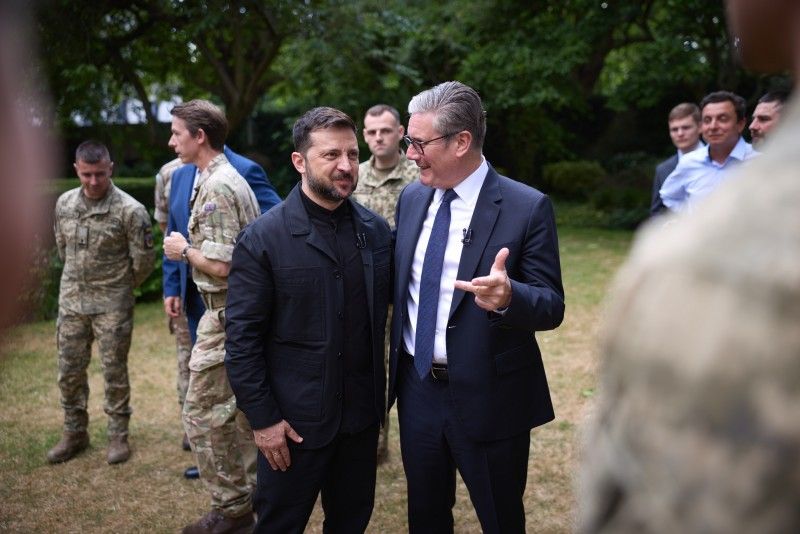
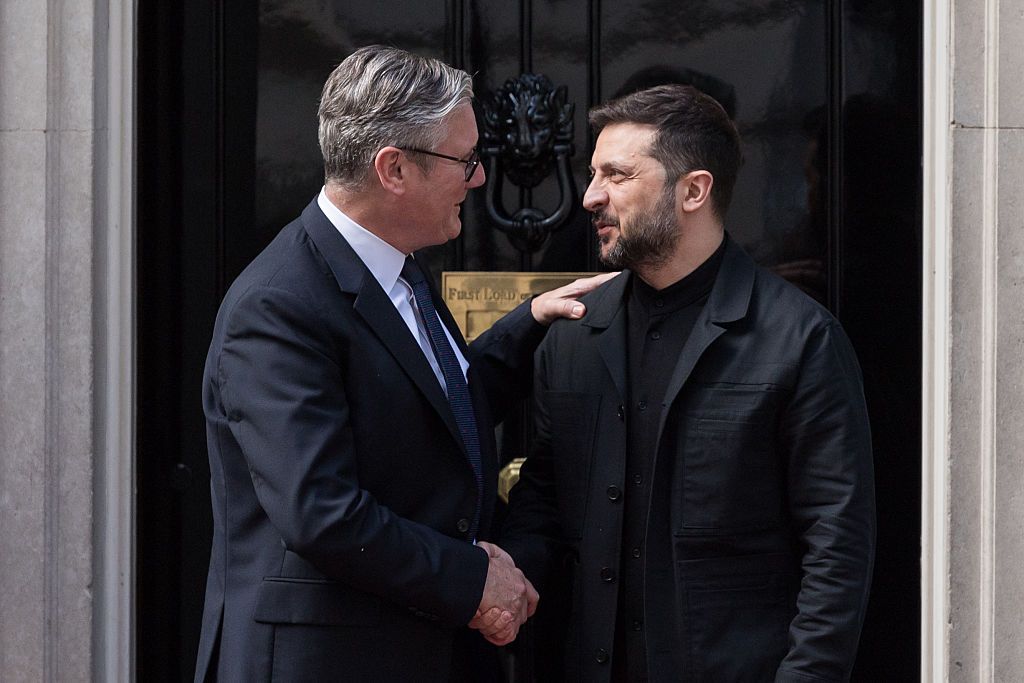
Ukrainian President Volodymyr Zelensky met with U.K. Prime Minister Keir Starmer at Downing Street on June 23, ahead of the NATO summit in The Hague.
Zelensky had earlier paid a visit to King Charles III at Windsor Castle before joining Starmer to discuss continued British support for Ukraine’s defense.
During a joint visit to a U.K. military training site for Ukrainian personnel, Starmer said he and Zelensky held "an excellent bilateral meeting" and had agreed to an "industrial military co-production agreement." He described the deal as "a massive step forward in the contribution that we can continue to make." Zelensky added the agreement "will be very strong and will transform both nations," though specific details were not disclosed.
Addressing Ukrainian troops, Starmer said it was "really humbling" to witness their "level of professionalism, commitment and bravery." Around 58,000 Ukrainian service members have been trained under the international program based in the U.K.
Zelensky thanked the U.K for its consistent backing since the start of Russia’s full-scale invasion in 2022. “We are very thankful to the UK... for such big support of Ukraine from the very beginning of this war,” he said. He noted that the UK-based training initiative has “strengthened our army” and enabled Ukraine to “survive and fight.”
The visit precedes the NATO summit in The Hague, where allies are set to unveil new defense spending targets. NATO Secretary General Mark Rutte said member states will aim to spend five percent of GDP on defense — a move he called “a quantum leap that is ambitious, historic and fundamental to securing our future.”
Under a compromise deal, members will commit to allocating at least 3.5 percent of GDP to core military expenditures and 1.5 percent to broader security areas such as cybersecurity and infrastructure.
Ukraine's state defense conglomerate Ukroboronprom and European aerospace giant Airbus have signed a trilateral cooperation memorandum at the Le Bourget International Air Show, the company announced on June 23.The agreement launches initiatives to develop maintenance and repair capabilities for Airbus aircraft operating in Ukraine among specialists at Ukroboronprom's enterprises.As part of the deal, Airbus will send representatives to Ukraine to train local specialists, who will then become cert
Ukraine's state defense conglomerate Ukroboronprom and European aerospace giant Airbus have signed a trilateral cooperation memorandum at the Le Bourget International Air Show, the company announced on June 23.
The agreement launches initiatives to develop maintenance and repair capabilities for Airbus aircraft operating in Ukraine among specialists at Ukroboronprom's enterprises.
As part of the deal, Airbus will send representatives to Ukraine to train local specialists, who will then become certified instructors for aircraft maintenance.
"Trust in our defense industrial complex, particularly Ukroboronprom and its enterprises, is growing among global high-tech companies," said Oleh Hulyak, Ukroboronprom Director General, in a press release. "This proves we have chosen the right path for development and international cooperation."
Hulyak expects new partnerships with foreign partners in aviation and other areas of the company's work.
Ukroboronprom is a leading strategic manufacturer of weapons and military hardware in Ukraine. The association unites about 100 enterprises that develop and manufacture weapons, military equipment and ammunition, including missiles, drones, armored vehicles.
The company reported a consolidated net profit of Hr 1.31 billion ($31.5 million) for the previous year as its enterprises tripled production volumes in 2024 compared to 2023, with a 36% increase in contracts.
In 2024, Ukroboronprom was rankedfor the first time in history among the top 50 global defense companies by Defense News, according to Strategic Industries Minister Alexander Kamyshin.
Norway will invest $400 million in Ukraine's defense industry to support drone and air defense missile production, President Volodymyr Zelensky said in his nightly address on June 22.The announcement followed a visit to Ukraine by Norwegian Defense Minister Tore Onshuus Sandvik."Today, Norway’s Minister of Defense visited Ukraine. A decision has been reached to invest $400 million in our production – new funding, primarily for drones," Zelensky said.Zelensky added that the two countries are also
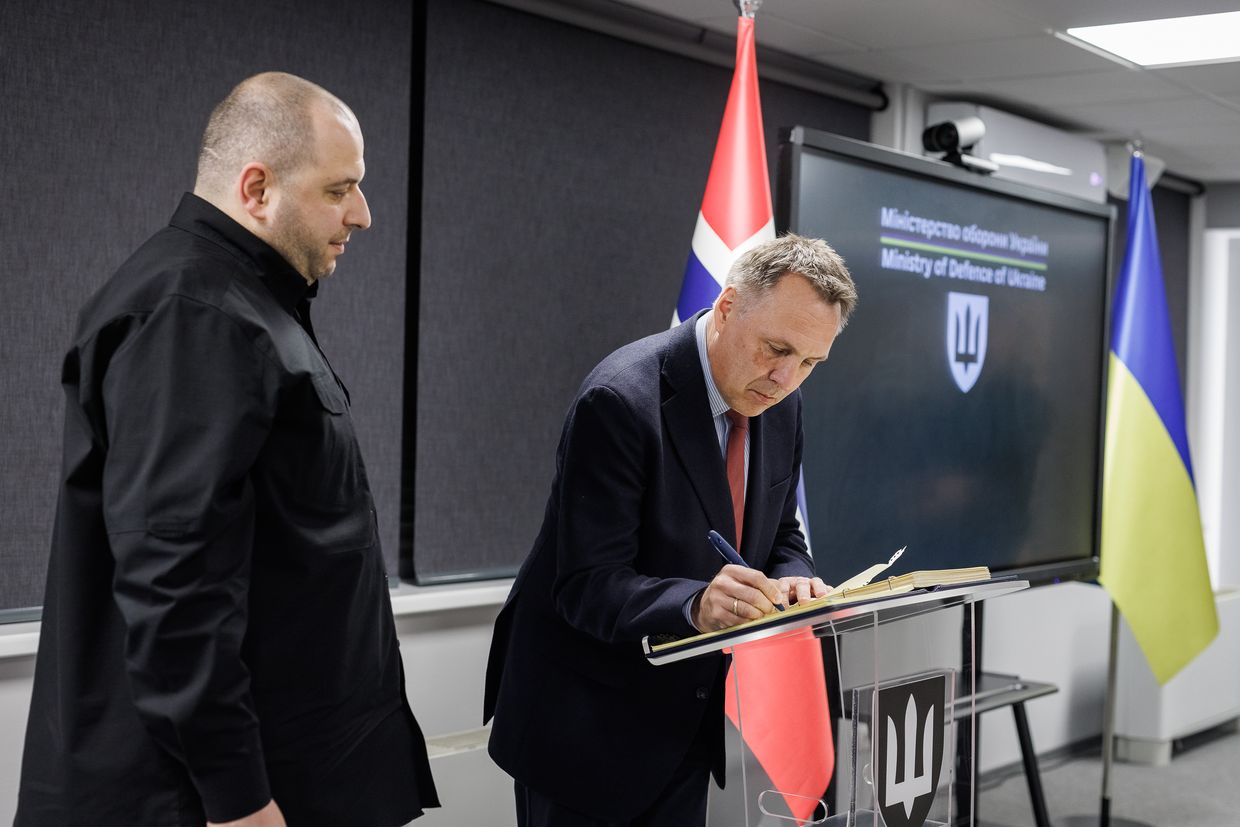
Norway will invest $400 million in Ukraine's defense industry to support drone and air defense missile production, President Volodymyr Zelensky said in his nightly address on June 22.
The announcement followed a visit to Ukraine by Norwegian Defense Minister Tore Onshuus Sandvik.
"Today, Norway’s Minister of Defense visited Ukraine. A decision has been reached to invest $400 million in our production – new funding, primarily for drones," Zelensky said.
Zelensky added that the two countries are also working together to establish joint air defense production inside Ukraine.
"We are working together to create all the necessary conditions to produce air defense systems in Ukraine — jointly with partners, jointly with Norway," Zelensky said.
He added that Norway's largest defense company – Kongsberg Defence & Aerospace – has already opened an office in Ukraine as part of the cooperation.
"We are expediting all processes to the maximum extent," Zelensky said.
On X, Norway's defense ministry confirmed that Kongsberg has signed agreement with a major Ukrainian company to jointly develop and produce missiles for air defense systems in Ukraine.
The collaboration will focus on producing missiles for the National Advanced Surface-to-Air Missile System, or NASAMS.
"The Norwegian NASAMS system saves lives in Ukraine every day, and is crucial in protecting critical infrastructure. That is why it is important for the Norwegian Government to finance this development of cheaper missiles for the NASAMS system in Ukraine," said Minister Sandvik.
The announcement marks deepening ties between Kyiv and Oslo as Ukraine seeks to expand its domestic defense industry amid Russia’s ongoing full-scale invasion and reduced military aid from the United States.
Ukraine is downing approximately 82% of Russian Shahed-type drones during Russian massive aerial attacks on Ukrainian cities despite a serious shortage of surface-to-air missiles, Commander-in-Chief Oleksandr Syrskyi told journalists on June 21.Ukraine needs to have many times more surface-to-air missiles and anti-aircraft missile systems to ensure reliable defense of cities and critical infrastructure facilities, Syrskyi said at a briefing attended by the Kyiv Independent.Russian attacks agains
Ukraine is downing approximately 82% of Russian Shahed-type drones during Russian massive aerial attacks on Ukrainian cities despite a serious shortage of surface-to-air missiles, Commander-in-Chief Oleksandr Syrskyi told journalists on June 21.
Ukraine needs to have many times more surface-to-air missiles and anti-aircraft missile systems to ensure reliable defense of cities and critical infrastructure facilities, Syrskyi said at a briefing attended by the Kyiv Independent.
Russian attacks against Ukraine have surged in May and June as Moscow has launched several record-breaking mass strikes against Kyiv and other cities. The latest attack on June 17, primarily targeting the capital, killed 30 people and injured over 170.
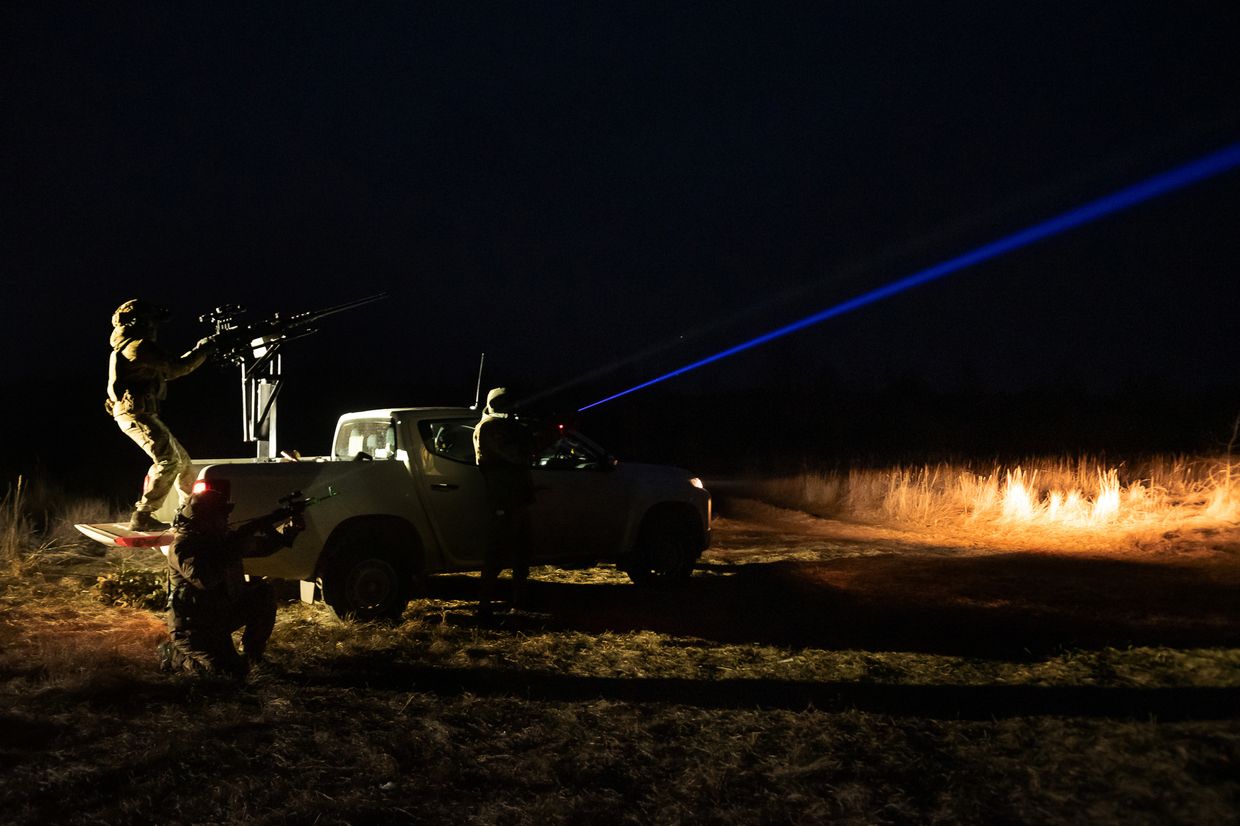
"Since we have to save anti-aircraft guided missiles, mobile fire groups are the priority for defending from the Shaheds," Syrskyi said.
Despite Russia's changing tactics of massive air attacks, mobile fire groups account for the largest share of destroyed drones. The fire groups' effectiveness is up to 40%, according to Syrskyi.
Aviation is used almost every night to repel Russian air attacks, featuring the Defense Forces' helicopter crews and fighter aircraft of the Air Force, which includes U.S.-made F-16 and French Mirage-2000 aircraft.
"One promising area in countering Shaheds is the use of light aircraft," Syrskyi said, adding that "there are new projects thanks to financial and material assistance from our foreign partners."
"We are receiving modern light aircraft, which have modern weapons and navigation, which will increase the effectiveness in countering Russian strike drones."
Syrskyi stressed that "cooperation with partners, primarily Canadian ones, enables us to obtain modern surveillance and targeting systems that enhance the combat capabilities of our helicopters."
Regular Air Force reports show that the majority of Russian drones are intercepted during overnight attacks, some by air defenses and others by electronic warfare systems. However, these reports do not always clarify how many of the intercepted drones were actual attack drones and which were only decoys launched to overwhelm air defenses.
Ukraine works to develop other means of protection against Russian air raids in the non-front-line oblasts as it scales up the use of interceptor drones.
Syrskyi said that over five types of interceptor drones have been cleared for use in the army, and new units are being formed and taught to operate them. Some of these Air Force units have already downed dozens of Russian Shaheds, according to Syrskyi.
The effective use of interceptor drones is hindered by the lack of tactical radar systems in Ukraine, such as Israel-made radars by RADA Electronic Industries and their analogues.
Syrskyi said the Ukrainian army needs hundreds of tactical radar systems instead of the few currently in service for radar reconnaissance, which is key to the use of interceptor drones.
Failure to provide stronger military and financial support for Ukraine could leave Europe vulnerable to growing Russian influence, meaning Europeans might have to "start learning Russian," the EU's top diplomat, Kaja Kallas, said, the Guardian reported on June 17."We know that Russia responds to strength and nothing else," Kallas said. She called Ukraine "Europe's first line of defense" and emphasized the need for continued sanctions against Russia and more aid to Kyiv.The comments come as Russi
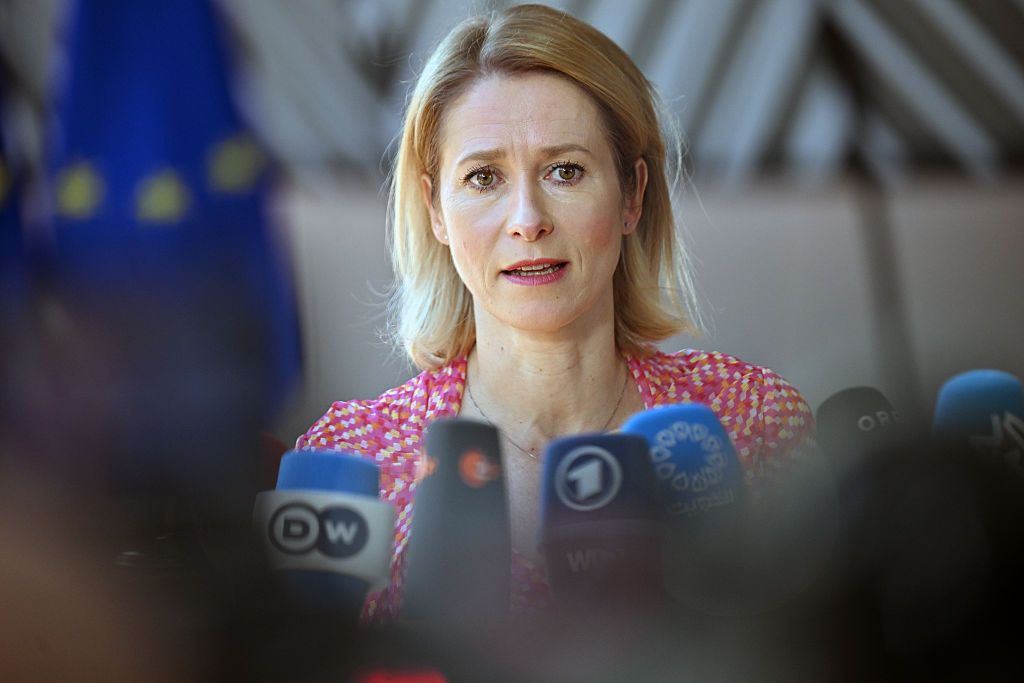
Failure to provide stronger military and financial support for Ukraine could leave Europe vulnerable to growing Russian influence, meaning Europeans might have to "start learning Russian," the EU's top diplomat, Kaja Kallas, said, the Guardian reported on June 17.
"We know that Russia responds to strength and nothing else," Kallassaid. She called Ukraine "Europe's first line of defense" and emphasized the need for continued sanctions against Russia and more aid to Kyiv.
The comments come as Russian forces are intensifying their attacks on Ukrainian cities and the Kremlin continues to reject a push by Kyiv and its Western allies for an unconditional ceasefire.
"To quote my friend, NATO Secretary General Mark Rutte: if we don’t help Ukraine further, we should all start learning Russian," Kallas said.
Kallas cited a sharp increase in Russia's military spending, noting that Moscow is now allocating more money to defense than the EU combined, and more than its own health care, education, and social policies put together.
"This is a long-term plan for a long-term aggression," she said.
In light of this, Kallas urged governments to adopt NATO's new target of spending 5% of GDP on defense, warning of Russia's hybrid warfare tactics, including airspace violations, attacks on critical infrastructure, and covert sabotage operations within EU borders.
The 5% defense spending target is expected to be formally adopted during the upcoming NATO summit, which will take place on June 24 and 25 in The Hague. U.S. President Donald Trump has insisted that the European allies increase their defense budgets.
Earlier, Kallas said Russian President Vladimir Putin "cannot be trusted" to mediate peace while continuing to bomb Ukrainian cities and civilians, as Moscow suggested to mediate negotiations between Israel and Iran amid growing escalation.
"Clearly, President Putin is not somebody who can talk about peace while we see actions like this," she said during a June 17 briefing, after a massive Russian missile and drone strike on Kyiv killed at least 28 people and wounded over 130.
Kallas also reiterated her call for the EU to move forward with tightening the oil price cap on Russian exports, even without U.S. backing. She warned that the ongoing Israel-Iran crisis could cause oil prices to spike, boosting Russia's war revenues.
The EU is currently preparing its 18th sanctions package against Moscow, targeting energy, defense, and banking sectors. The 17th round of sanctions came into effect in May.
Ukraine's military intelligence (HUR) destroyed three Russian air defense systems using drones in the occupied Zaporizhzhia Oblast on June 14, HUR says."Strike drone masters of the Department of Active Operations of the HUR of the Ukrainian defense ministry discovered and destroyed expensive air defense systems of the Russian invaders in the temporarily occupied territory of the Zaporizhzhia region," HUR reported in a post to Telegram.Ukraine's military regularly strikes military targets in Russ
Ukraine's military intelligence (HUR) destroyed three Russian air defense systems using drones in the occupied Zaporizhzhia Oblast on June 14, HUR says.
"Strike drone masters of the Department of Active Operations of the HUR of the Ukrainian defense ministry discovered and destroyed expensive air defense systems of the Russian invaders in the temporarily occupied territory of the Zaporizhzhia region," HUR reported in a post to Telegram.
Ukraine's military regularly strikes military targets in Russian-occupied territories and deep within Russia in an attempt to diminish Moscow's fighting power as it continues its war against Ukraine.
A Russian Buk-M3, a Pantsyr S1, and a 9S19 Imbir radar from the S-300V air defense system were destroyed in the Ukrainian drone attack.
"The video shows a stunning maneuver of a Ukrainian drone dodging a Muscovite anti-aircraft missile, as well as episodes of successful fire strikes," HUR's statement said.
Kyiv claimed it disabled 34% of Russia's strategic bomber fleet in what is seen as one of the most daring operations during Russia's full-scale war.
Ukraine's military intelligence agency was behind explosions near Desantnaya Bay in Russia's far eastern Vladivostok on May 30, which reportedly damaged military personnel and equipment, a source in HUR told the Kyiv Independent.
Efforts are underway to rapidly expand Ukraine's ability to counter Russian drone attacks, Commander-in-Chief of Ukraine's Armed Forces, Oleksandr Syrskyi, said on June 14.In a statement shared on Telegram, Syrskyi said he held a meeting focused on strengthening defenses against Russian strike drones, particularly Iranian-designed Shahed drones used by Russian forces to target Ukrainian cities."Task number one is scaling up the systems that already work effectively," Syrskyi said. "First and for
Efforts are underway to rapidly expand Ukraine's ability to counter Russian drone attacks, Commander-in-Chief of Ukraine's Armed Forces, Oleksandr Syrskyi, said on June 14.
In a statement shared on Telegram, Syrskyi said he held a meeting focused on strengthening defenses against Russian strike drones, particularly Iranian-designed Shahed drones used by Russian forces to target Ukrainian cities.
"Task number one is scaling up the systems that already work effectively," Syrskyi said. "First and foremost, that means increasing the number of drone interceptors."
Russia has been escalating drone attacks against Ukraine over the past weeks, launching record 400-500 UAVs (unmanned aerial vehicles) per night.
Syrskyi emphasized the need for a comprehensive approach that incorporates all available capabilities. "(Russia) is constantly modifying the characteristics of its Shaheds and changing their tactics," he said.
Ukrainian officials discussed ways to improve early detection of incoming drones and ensure their timely destruction. Syrskyi said he had set clear priorities and tasked military leaders accordingly.
Russia has repeatedly targeted Ukrainian cities with waves of attack drones, often striking energy infrastructure and residential buildings overnight. Ukraine's defense forces use a mix of electronic warfare, air defense systems, and drone-on-drone interception to repel the assaults.
Drones have become one of the defining tools of the full-scale war, used extensively by both Ukraine and Russia for surveillance, long-range strikes, and tactical battlefield advantage. In recent weeks, Russia has intensified its drone and missile attacks on Ukrainian cities and infrastructure.
Earlier on June 9, Ukraine's Air Force said it intercepted 479 drones and missiles during one of the largest attacks since the start of the war. Russia launched 499 weapons overnight, including 479 Shahed-type drones and multiple ballistic and cruise missiles.
NATO plans to enhance its missile defense systems on its eastern flank in response to a growing threat from Russia, Bloomberg reported on June 12, citing its undisclosed sources.For the first time, member states of NATO are reportedly considering combining the alliance's ballistic missile shield with other integrated missile defense assets. The talks are taking place behind closed doors and involve sensitive deliberations, Bloomberg reported, citing its sources.Moscow has long opposed NATO's mis
NATO plans to enhance its missile defense systems on its eastern flank in response to a growing threat from Russia, Bloomberg reported on June 12, citing its undisclosed sources.
For the first time, member states of NATO are reportedly considering combining the alliance's ballistic missile shield with other integrated missile defense assets. The talks are taking place behind closed doors and involve sensitive deliberations, Bloomberg reported, citing its sources.
Moscow has long opposed NATO's missile defense infrastructure, particularly the U.S.-built interceptors deployed in Poland and Romania, states neighboring Ukraine. The alliance has previously said those systems are intended to counter potential long-range threats from Iran, not Russia.
The so-called "NATO expansion to the east" is one of the key narratives used by Russian propaganda to justify its large-scale war against Ukraine.
The proposed integration of ballistic missile defense with NATO's broader air and missile defense network would address threats from any direction in the future. This shift suggests the effort would increasingly be focused on deterring Russian capabilities, according to Bloomberg's sources.
The move comes as NATO ramps up its defense posture more than three years after Russia launched its full-scale invasion of Ukraine. The alliance recently agreed on the most ambitious new weapons targets since the Cold War.
NATO Secretary General Mark Rutte called on alliance members to make a "quantum leap" in defense investment in response to the enduring threat from Russia. Speaking at Chatham House in London, Rutte urged allies to increase air and missile defense by 400%.
Talks on integrating the systems may wrap up ahead of the NATO summit in The Hague on June 24–25, but could continue afterward, the sources said. Ukraine is invited to attend the summit. It remains unclear whether the initiative will still officially cite Iran as a threat or move fully toward addressing Russia.
The effort is part of a broader strategy to reinforce NATO's eastern flank, but some officials have raised concerns about how it might affect peace efforts in Ukraine and whether the United States will fully support the integration, Bloomberg reported.
Previously, U.S. President Donald Trump echoed Russian claims that Kyiv provoked the invasion by pursuing its NATO ambitions.
Earlier, Bloomberg reported that NATO is deploying a new satellite surveillance system aimed at monitoring military activity in Ukraine and along the alliance's eastern borders. The system, known as Smart Indication and Warning Broad Area Detection (SINBAD), will use AI-powered analysis to scan large areas and detect potential threats with unprecedented frequency.

 Connexion
 The Kyiv IndependentThe Kyiv Independent news desk