❌

Vue normale

  • ✇Euromaidan Press
  • Lived in occupation, fought against Ukraine. Now, Kyiv says, Russia won’t take them back.
    Russia has effectively stopped taking back the prisoners of war it recruited in Ukraine’s occupied territories, Ukraine’s Coordination Headquarters for the Treatment of Prisoners of War told Radio Svoboda. The headquarters said Kyiv is ready to return those who want to go, and swaps happen as soon as Moscow puts them on its exchange lists. Russia drafts men in the Ukrainian territories it occupies and sends them to fight Ukraine. The headquarters’ statement, published on 4 November, cam
     

Lived in occupation, fought against Ukraine. Now, Kyiv says, Russia won’t take them back.

5 novembre 2026 à 06:54

43% russian pows rated ukrainians less than fully human — kremlin propaganda explains why · post prisoners war filling out questionnaires part lingvalexa study propaganda's influence mobilization combat motivation russian-pows-partaking-in-research-photo-from-the-study

Russia has effectively stopped taking back the prisoners of war it recruited in Ukraine’s occupied territories, Ukraine’s Coordination Headquarters for the Treatment of Prisoners of War told Radio Svoboda. The headquarters said Kyiv is ready to return those who want to go, and swaps happen as soon as Moscow puts them on its exchange lists.

Russia drafts men in the Ukrainian territories it occupies and sends them to fight Ukraine. The headquarters’ statement, published on 4 November, came after Russia’s human rights commissioner claimed Moscow had just won such men back for the first time since 2022. These men fit neither side’s story. Ukraine counts them as its citizens, yet they fought in Russia’s army, and by Kyiv’s account Moscow rarely asks for them.

Recruited under occupation

The headquarters declined to give a total. It said 15% of the Russian POWs held in Ukraine were recruited in the occupied parts of Donetsk and Luhansk oblasts and in Crimea.

The share itself is not new. In February 2026, the headquarters told investigative outlet Slidstvo.Info that about 15% of POWs had joined the Russian army from occupied territories.

Kyiv’s terms

According to the headquarters, Ukraine has never objected to swapping these prisoners, provided they voluntarily ask to return to Russia in exchange for Ukrainian defenders. Kyiv has told Moscow this many times, it said. However, since 2023 Russia has effectively stopped taking them back. By the headquarters’ count, only a few dozen from this group were swapped in 2023–2026. Nothing on the Ukrainian side blocks their return, it added.
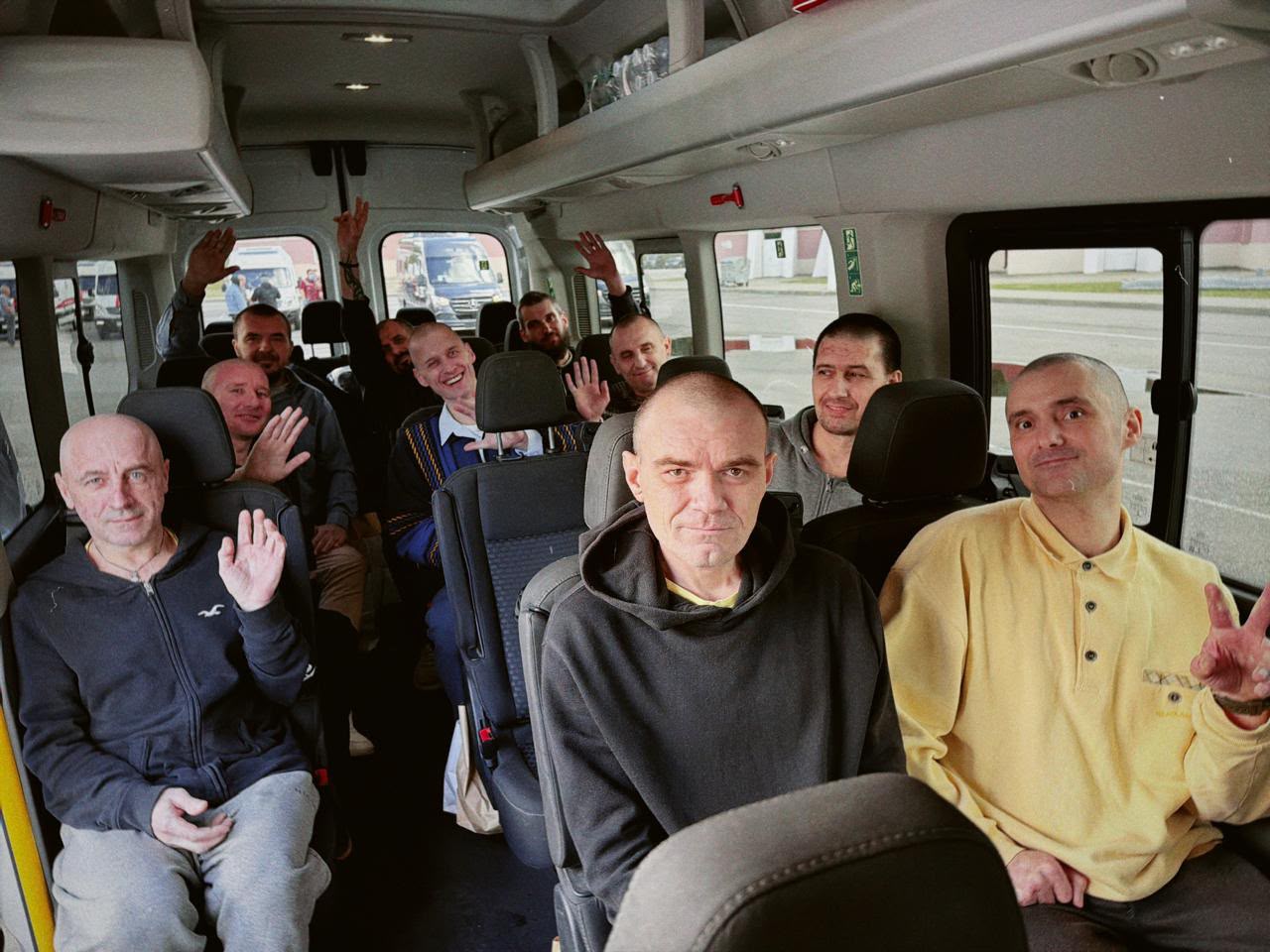
red cross has had access ukrainian pows russia since 2024 around 1500 captives face prosecution without having status confirmed—ukraine’s coordination headquarters · post returned servicemen inside minibus day release 24
Explore further

Russia has kept the Red Cross away from Ukrainian POWs since 2024. Now about 1,500 captives it never confirmed as prisoners face prosecution

Kyiv’s line has not always sounded this open. In November 2025, the headquarters’ secretary Dmytro Usov said 16% of POWs in Ukrainian camps were Ukrainian citizens. He also said changes would go to parliament so that Ukrainians from occupied territories would not be returned to Russia in swaps. Euromaidan Press could not establish whether such a bill was filed.

Moscow’s version

On 23 October, Ukraine and Russia exchanged 270 prisoners each, and Ukraine’s 270 included nine civilians. It was the third stage of a combined swap that began on 19 August, the headquarters reported.

Russia’s human rights commissioner Yana Lantratova then claimed Moscow had received 31 servicemen from the “DNR” and 13 from the “LNR,” Russian outlet Verstka reported. Those are Russia’s names for the occupied parts of Donetsk and Luhansk oblasts. She named six more from occupied Crimea. She claimed this was the first such return since 2022, and that Kyiv had earlier refused to list these men, calling them traitors for choosing Russia.

russia calls volunteers they're ukrainian prisoners war forced new combat brigade · post members maksim krivonos detachment which komsomolskaya pravda claimed 2024 numbered hundreds propagandist caption state отряд максима кривоноса
Explore further

Russia calls them “volunteers.” They’re Ukrainian prisoners of war forced into a new combat brigade

The headquarters denied the “first since 2022” claim, Radio Svoboda reported. The outlet noted that even Russian-installed administration heads in occupied areas had earlier reported such exchanges. Meanwhile, Ukraine’s state project I Want to Find told Novaya Gazeta Europe that Russia’s exchange lists included men from the “DNR” and “LNR” for the first time since 2025. The headquarters did not say whether its tally of a few dozen includes the 50 men Lantratova named.

Cases like these reach beyond the three areas the headquarters named. In February, Ivan Vikhariev, 22, from occupied Zaporizhzhia Oblast, told Slidstvo.Info he had signed a Russian contract in pretrial detention. He was then on trial for treason in Ukraine and could be handed to Russia if Moscow claimed him, the outlet reported.

Kremlin sees “no similar plans” after Oleshky—Kyiv plans to set up a center to return civilians Russia holds

3 novembre 2026 à 06:42

Ukraine’s Human Rights Commissioner Dmytro Lubinets. Photo: Dmytro Lubinets

Ukraine will create a Center for the Return of Civilians to bring home Ukrainian civilians held by Russia or living under occupation, Human Rights Commissioner Dmytro Lubinets said on 2 November. On the same day, the Kremlin said it had no plans, for now, for another humanitarian operation like the one in occupied Oleshky.

The Oleshky truce, the longest since 2022, got civilians out because Moscow agreed to it. Within a week, the Kremlin went from calling such a truce a possible precedent to saying it has nothing similar planned, for now. For Ukrainians still in Russian prisons or under occupation, the next negotiated exit has no date.

Oleshky exposed the gaps

In Lubinets’s view, the Oleshky mission showed that Ukraine’s efforts to return civilian hostages from Russian prisons and civilians from occupied territory are not coordinated enough. His office will run the center, modeled on the Child Rights Protection Center, which he called a similar pilot.

Families of people held by Russia or living under occupation will be able to apply to the center, and it will draw attention to Russia’s violations of civilians’ rights. Lubinets said his office is building it on its own, with partners willing to help, and not together with Russia. Still, he said he had agreed with Russia’s Human Rights Commissioner Yana Lantratova to make aid deliveries to Oleshky regular, and the two sides are now discussing how to send them at least once a month.

Kremlin: no similar plans for now

On 26 October, Kremlin spokesman Dmitry Peskov said the Oleshky truce could become a precedent for humanitarian pauses elsewhere. On 2 November, he told a briefing Moscow had no similar plans or initiatives for now, saying each case is unique.

Lantratova claimed Russia had expected more people to leave, but many did not want to leave their homes and relatives. She cited individual cases, including a woman who would not leave her mother after a stroke.

How the mission unfolded

Oleshky lies on the Dnipro’s left bank, across from Ukrainian-held Kherson. In July, international monitors confirmed Russia’s blockade of the town. In September, an Odesa volunteer said residents were foraging for roadside grass. Russian troops also seized food Ukraine dropped by drone, the town’s Ukrainian administration head said.

On 23 October, the White House announced a local ceasefire brokered by US First Lady Melania Trump. It ran from 27 October to 1 November, and its zone expanded beyond the town. Both sides kept their commitments, Lubinets said on 1 November.

Ukrainian troops used the pause to evacuate 167 civilians from Ukrainian-held riverside villages, Ukraine’s General Staff reported. On 31 October, the two ombudsmen agreed to keep working toward regular humanitarian missions.

Ukraine’s and Russia’s human rights commissioners agree to keep working on regular humanitarian missions after the Oleshky evacuation

2 novembre 2026 à 03:13

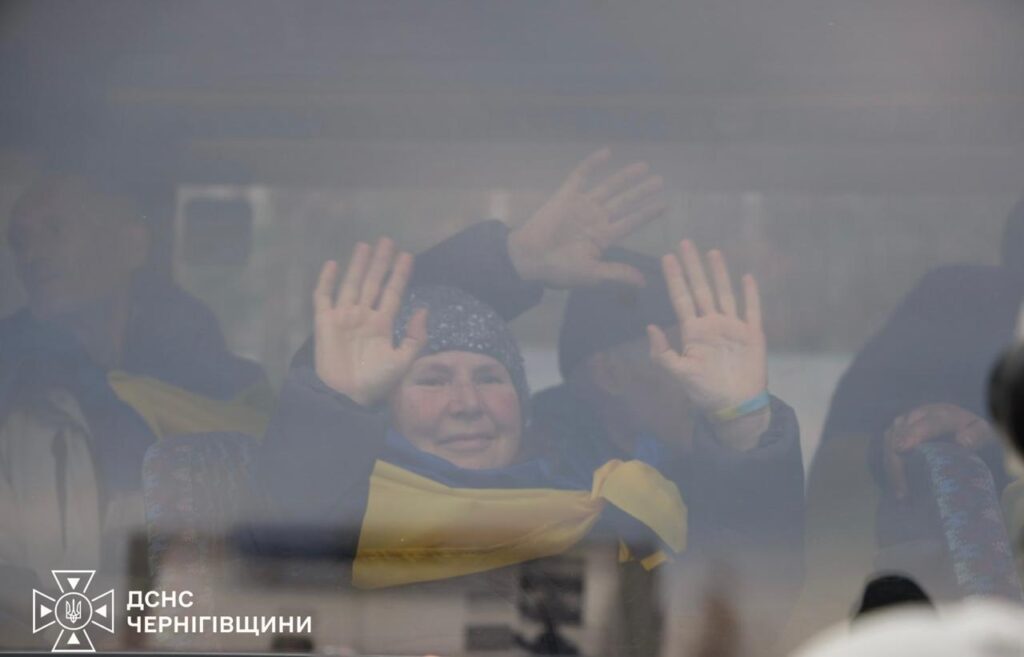
Residents evacuated from Russian-occupied Oleshky ride a bus in Chernihiv Oblast, Ukraine, 31 October 2026

Ukraine’s and Russia’s human rights commissioners have agreed to keep working on regular humanitarian missions after the evacuation from occupied Oleshky, Ukrainian ombudsman Dmytro Lubinets said on 31 October. A day later, the ceasefire that made the evacuation possible ended.

Without a new truce, the people left behind are back where they were. In July, the Institute for the Study of War concluded that Russia was effectively blockading Oleshky, which lies across the Dnipro from Ukrainian-held Kherson. In May, journalist Zarina Zabrisky said the existing route out, through occupied Crimea, Russia, and Belarus, did not work: only three of 20 people who recently tried it got through.

Oleshky as a first step

Lubinets wrote that he and Russian ombudsman Yana Lantratova had agreed to continue work on regular missions. He said Oleshky should be the first step, since people living near the front line need constant support.

Lantratova claimed the same day that the sides had agreed to hold regular missions.

The truce had been coordinated by US First Lady Melania Trump. On 1 November, Lubinets said both sides had kept their commitments. He added that the two were working through the possibilities of continuing such steps.

Who stayed behind

On 30 October, Lubinets wrote that some buses were heading to Ukraine and others to Russia. About 700 to 1,000 people may remain in Oleshky, The Insider correspondent Tatiana Popova estimated on 31 October. Many feared a provocation or did not want to leave their homes.

Meanwhile, Ukrainian troops used the truce to evacuate 167 civilians, 22 of them children, from Ukrainian-held riverside settlements that came under daily Russian shelling, Ukraine’s General Staff reported on 1 November.

Bodies moved to Henichesk

On 1 November, Ukrainian journalist Oleh Baturin wrote that Henichesk residents had told him dozens of civilians’ bodies were brought there from Oleshky. Volunteer Kseniia Arkhipova confirmed it, he said. By her data, 47 bodies had been kept in the basements of Oleshky’s hospital since May.

How these people died remains unknown. In September, Tetiana Hasanenko, head of Oleshky’s Ukrainian military administration in exile, said more than 100 bodies lay in the basement of the hospital, which had had no electricity for four years.

❌