Vue normale

  • ✇Euromaidan Press
  • Russia’s new ballistic missile could reach western Ukraine—and it may be tested there within months
    Russia plans to test-fire a new type of ballistic missile before the end of 2026, one built to fly farther than the Iskander missiles it now launches at Ukraine, according to Ukraine's military intelligence. Its deputy chief outlined the plan at a Ukraine-NATO meeting on 8 September, ZN reported. A longer-range missile would erode the relative safety of western Ukraine, where the routes carrying Western aid run beyond the front, and stretch air defenses already struggli
     

Russia’s new ballistic missile could reach western Ukraine—and it may be tested there within months

9 septembre 2026 à 10:03

An Iskander test launch in 2018

Russia plans to test-fire a new type of ballistic missile before the end of 2026, one built to fly farther than the Iskander missiles it now launches at Ukraine, according to Ukraine's military intelligence. Its deputy chief outlined the plan at a Ukraine-NATO meeting on 8 September, ZN reported.

A longer-range missile would erode the relative safety of western Ukraine, where the routes carrying Western aid run beyond the front, and stretch air defenses already struggling against ballistic strikes.

A longer reach into western Ukraine

Russia plans final tests of a new ballistic missile with a range of up to 800 kilometers, or about 500 miles, by year's end, Vadym Skibitskyi, deputy head of the Defense Intelligence of Ukraine (HUR), told the Ukraine-NATO Interparliamentary Council, citing the agency's own assessments. Russian forces may try to hit targets in western Ukraine during those tests, he said.

The deputy chief noted that Moscow is raising both the output and the range of its ballistic missiles to intensify strikes and push Ukraine into a social and economic crisis. He urged partners to tighten sanctions until Russia loses access to the foreign components in its long-range weapons.

Russia's modernized 9M723-2, also called the Iskander-1000, reaches up to 550 km, HUR says, and the older 9M723-1 covers 390 km. An 800-km weapon would carry strikes well past the front.

The missile Russia already fields

Russia already fields a longer-range Iskander variant. This summer, its forces first fired the modernized 9M723-2—part of the Bora-M system—in a combined missile strike on Kyiv. A bigger engine and a larger launcher gave that missile its extended reach, HUR said. Ballistic missiles are the hardest of Russia's strikes for Ukraine to stop, and Moscow has poured them out in recent months, running its plants above quota and firing them in larger salvos.

Losing more soldiers than it signs up

Russia is waging a war of attrition despite heavy losses and has not given up on destroying Ukrainian statehood, Skibitskyi said. Skibitskyi put Russia's August losses at 43,000 soldiers against 39,000 recruited. Russia has struggled to fill its ranks for months. Russia's General Staff sees intensified mobilization as the only way to reach its main goals—fully occupying the Ukrainian Donbas and seizing the strategic initiative—he explained.

The Kremlin plans to mobilize about 600,000 people across 2026 and 2027, half of them by the end of this year, he said. Russia will also try to close the Black Sea to Ukraine and to drag Belarus into the war and into hybrid operations against NATO, he added, though HUR sees no signs of Russian strike groupings forming there yet.

Each new kilometer of range puts more of Ukraine within reach from deep inside Russia, without moving a launcher closer to the border.

  • ✇Euromaidan Press
  • Putin dismisses mobilization reports as Ukraine warns Russia could call up 600,000 to war
    Asked about reports in Ukrainian and Western media that Russia could order a mass mobilization after September’s parliamentary elections, Vladimir Putin replied: “That’s complete nonsense. It’s an information attack on Russia,” RBC reported. He was speaking after the Shanghai Cooperation Organization summit in Bishkek. Ukraine’s military and foreign intelligence services say Russia’s General Staff has prepared a scenario for mobilizing an additional 600,000 people durin
     

Putin dismisses mobilization reports as Ukraine warns Russia could call up 600,000 to war

2 septembre 2026 à 12:06

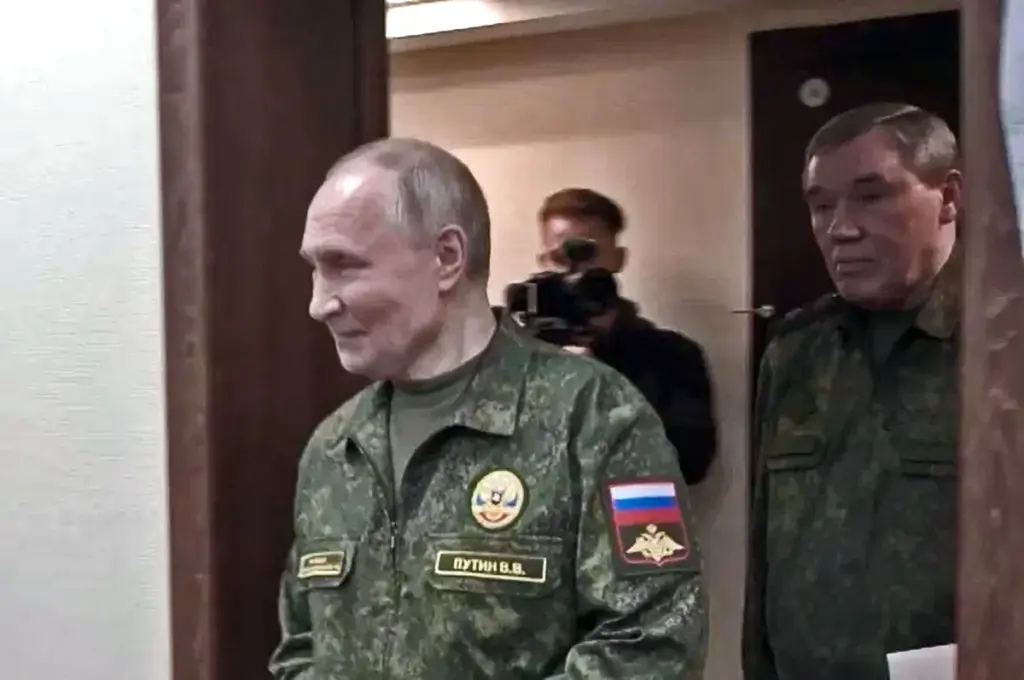
Vladimir Putin walks through a doorway in a military uniform, followed by Russian Chief of the General Staff Valery Gerasimov.

Asked about reports in Ukrainian and Western media that Russia could order a mass mobilization after September’s parliamentary elections, Vladimir Putin replied: “That’s complete nonsense. It’s an information attack on Russia,” RBC reported. He was speaking after the Shanghai Cooperation Organization summit in Bishkek.

Ukraine’s military and foreign intelligence services say Russia’s General Staff has prepared a scenario for mobilizing an additional 600,000 people during 2026 and 2027—300,000 each year. Their briefing described a contingency, not an issued call-up, and did not say mobilization had begun. If activated, the agencies said, the recruits would primarily reinforce units fighting Ukraine and newly formed military units.

Ukraine’s intelligence services linked the scenario to mounting battlefield losses and a slowdown in contract recruitment. They said Russia lost roughly 240,000 personnel from January through July, including at least 140,000 killed or permanently lost, while recruiting about 232,000 contract soldiers. The figures could not be independently verified.

Russia’s military also rehearsed procedures for mobilizing residents of Kaliningrad Oblast in July, Ukrainska Pravda reported, citing The Wall Street Journal.

Reports of a possible draft have generated concern inside Russia. More than 20,000 people crossed into Georgia through the Verkhny Lars checkpoint in a single day amid fears of mobilization, as EP previously reported.

Ukraine’s warnings and Russia’s denials

Ukrainian President Volodymyr Zelenskyy said in August that Moscow planned to mobilize several hundred thousand people after the elections and roughly the same number in 2027, citing military intelligence. HUR deputy chief Vadym Skibitskyi later assessed that a call-up could provide troops for a northern offensive by February 2027, while stressing that the agency saw no preparations underway at the time.

Dmitry Medvedev, Vasily Nebenzya, and the State Duma’s defense committee have all denied plans for another mass draft. Russian officials issued similar denials shortly before Putin announced the 2022 call-up. RBC notes that the decree authorizing that mobilization was never formally revoked. No new call-up has been publicly announced or reported as underway.

  • ✇Euromaidan Press
  • Russia’s UN envoy denies reports of post-election mass mobilization
    Russian UN Ambassador Vasily Nebenzya denied reports that Moscow could launch another mass mobilization after September’s parliamentary elections, saying none was planned or expected “as far as I know,” The Moscow Times reported Russia has avoided another draft since its 2022 mobilization triggered protests and an exodus, relying instead on contract soldiers. Ukraine says those recruits no longer replace battlefield losses, and Moscow may mobilize several hundred thousa
     

Russia’s UN envoy denies reports of post-election mass mobilization

21 août 2026 à 13:57

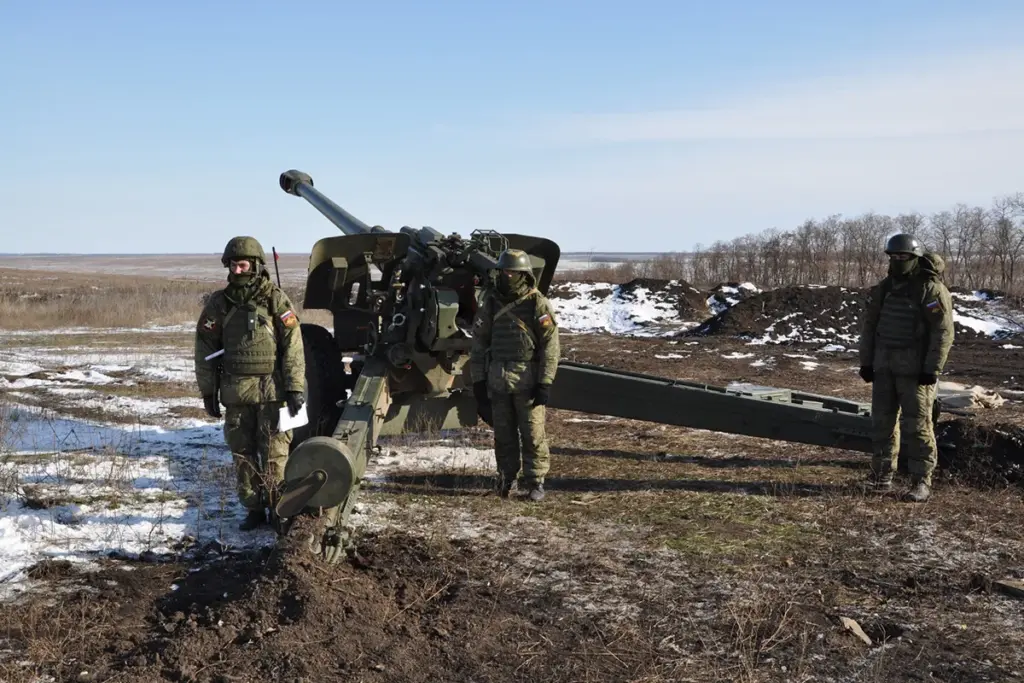
Russian soldiers stand beside a field artillery gun in a snow-covered position.

Russian UN Ambassador Vasily Nebenzya denied reports that Moscow could launch another mass mobilization after September’s parliamentary elections, saying none was planned or expected “as far as I know,” The Moscow Times reported

Russia has avoided another draft since its 2022 mobilization triggered protests and an exodus, relying instead on contract soldiers. Ukraine says those recruits no longer replace battlefield losses, and Moscow may mobilize several hundred thousand people after the elections. That could replenish its forces and support new offensives, although Ukrainian intelligence sees no preparations now.

Nebenzya’s remarks followed a question about more than 20,000 people crossing Russia’s Verkhny Lars border checkpoint into Georgia in one day amid fears of post-election mobilization, Meduza reported.

His comments extend a series of Russian denials. Deputy Security Council Chairman Dmitry Medvedev dismissed reports of another mobilization as “nonsense” in late July. The State Duma’s defense committee said a mass compulsory call-up was not under consideration because the army was recruiting contract soldiers, The Moscow Times reported.

Russia has avoided another mass draft since its September 2022 mobilization triggered protests and an exodus. Officials had also denied that mobilization was planned shortly before President Vladimir Putin announced it, Meduza noted.

Russian government seeks new wartime penalties

Moscow is separately seeking penalties for people and companies that ignore mobilization and military-supply orders issued by regional authorities. The bill would not itself order a new call-up.

The government submitted it to the State Duma, the lower house of Russia’s parliament, on 20 August, The Moscow Times reported. Companies could face fines of up to 1 million rubles or suspension for up to 90 days.

Russian law already punishes such defiance in areas under martial law but imposes no nationwide penalty elsewhere in Russia, according to the bill. Its authors said a “significant number” of violations had been recorded.

Ukraine says a new draft could provide troops for a northern offensive

President Volodymyr Zelenskyy said on 11 August, citing Ukrainian military intelligence, that Russia planned to mobilize several hundred thousand people after the elections and roughly the same number in 2027.

HUR, Ukraine’s military intelligence agency, later assessed that a post-election mobilization could enable Russia to build a strike force for a northern offensive by February 2027. Its deputy chief, Vadym Skibitskyi, stressed, however, that the agency currently sees no evidence that such preparations have begun.

❌