Germany is expanding drone detection at its airports with a new system operated by German air traffic control provider Deutsche Flugsicherung (DFS), the German Federal Ministry for Transport (BMV) announced on 5 October.
Germany has accused Russia of attempting a hybrid attack at Germany’s Leipzig/Halle Airport near a Ukrainian An-124 aircraft using a drone carrying explosives. Earlier, Finnish President Alexander Stubb said Europe must be prepared for “continued hybrid and sabotage att
Germany is expanding drone detection at its airports with a new system operated by German air traffic control provider Deutsche Flugsicherung (DFS), the German Federal Ministry for Transport (BMV) announced on 5 October.
Germany has accused Russia of attempting a hybrid attack at Germany’s Leipzig/Halle Airport near a Ukrainian An-124 aircraft using a drone carrying explosives. Earlier, Finnish President Alexander Stubb said Europe must be prepared for “continued hybrid and sabotage attacks” by Russia, adding that Russia seeks to sow panic through such actions.
On Monday, two more sites were added—Stuttgart and Hamburg. As of Monday, seven of Germany’s eight largest airports were equipped with the new drone detection system in their approach and departure areas.
Germany seeks responses to new hybrid threats
The Federal Ministry cited the reason for the new measure: drones near airports can affect air traffic very quickly.
Federal Transport Minister Steffen Bilger and Baden-Württemberg Transport Minister Nicole Razavi were briefed on the new system at Stuttgart Airport, where it is being put into operation, the ministry said. The system creates “an important technical basis for detecting potential threats at an early stage and quickly informing the competent authorities,” Bilger said.
“With today’s commissioning of the drone detection system at Stuttgart Airport, the federal government is fulfilling a key promise: it is not only talking about the dangers posed by unmanned aircraft, but is also following through with very concrete action. Protecting critical infrastructure and ensuring the safety of passengers at Stuttgart Airport require continuous adaptation to a changing security situation,” Razavi said, according to the ministry.
The new DFS system allows drones near airports to be detected at an early stage and information about possible threats to air traffic to be passed more quickly to the relevant authorities. This helps them assess risks and respond to them more quickly, the statement said.
DFS is responsible for detecting drones in approach and departure areas, while the Federal Police and other security services are responsible for preventing threats and defending against drones. The BMV, Federal Ministry of the Interior, DFS, Federal Police and airports coordinate their work to exchange information quickly and maintain a shared picture of the situation.
No further details about how the system operates have been disclosed.
The first stage of the expansion at Germany’s eight major commercial airports will be fully implemented this week, with the systems in Stuttgart and Hamburg being put into operation, the statement said.
Explore further
A drone came down beside a Bundeswehr air base, weeks after Berlin blamed Moscow for the Leipzig airport attack
The system will also be installed at the airport where a bomb-laden drone was found
The system will also be put into operation at Leipzig/Halle Airport this week, meaning that the first stage will be fully implemented at all eight of Germany’s largest commercial airports, according to the press release.
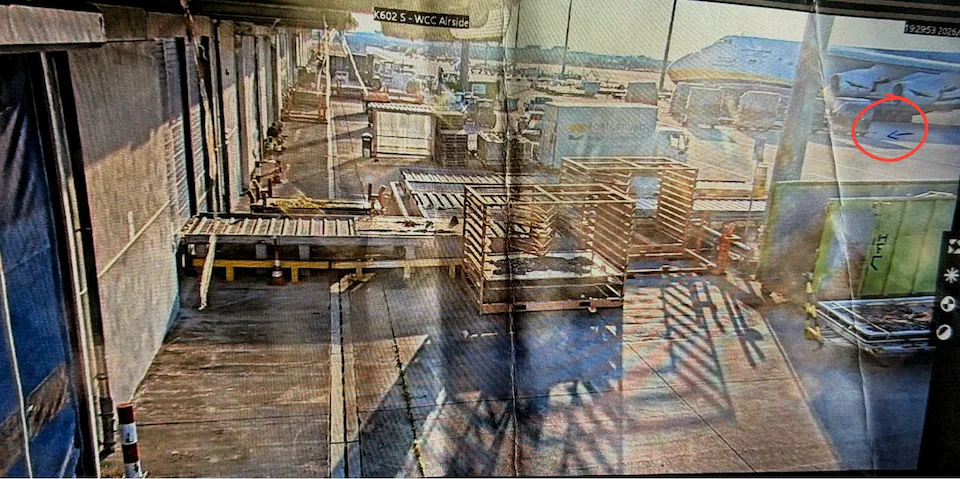
A quadcopter drone carrying a Semtex explosive flew directly toward a parked Ukrainian An-124 Ruslan cargo aircraft and struck its wing at Leipzig/Halle Airport in Germany on the evening of 4 August, Die Zeit reported on 10 August. The drone hit the aircraft at around 19:30 local time, bounced off the wing, and fell to the ground without detonating, according to the media outlet.
Ukrainian An-124 at Leipzig/Halle Airport in Germany, 5 August 2026. Photo: screenshot from Bild video
Germany has accused Russia of attempting the drone attack and announced further sanctions against Russian citizens and institutions, Tagesschau reported on 1 September.
At the crime scene, investigators found the drone configuration, explosives and detonation technology that had already appeared in other Russian hybrid operations and in Russia’s war against Ukraine, Federal Interior Minister Alexander Dobrindt said during a joint press conference with Federal Foreign Minister Johann Wadephul, the media outlet reported.
The German government assumes that Germany has been and will be a target of further such Russian attacks. Germany is not at war with Russia but is a “target of war,” Foreign Minister Wadephul said, according to the outlet.
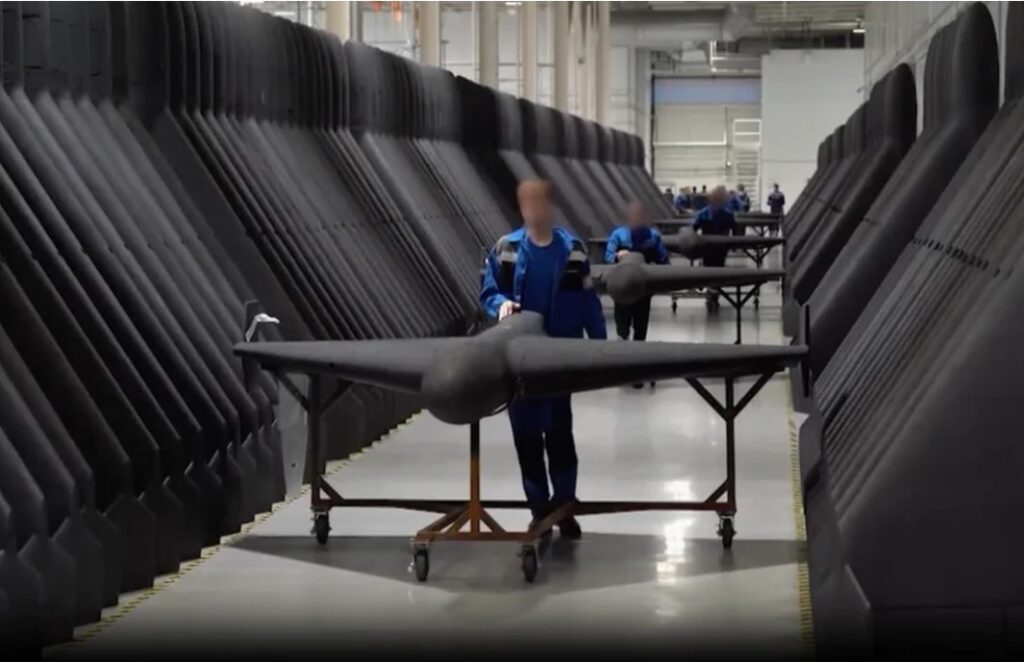
Russia is quietly moving to expand the capacity of the plant behind its long-range attack drones, a step that could sharply raise how many it launches at Ukraine, according to Politico. The plan turns on a single carbon fiber factory in Russia's Tatarstan region and runs to the end of the decade.
These files add something narrower than Russia's known intent to fight on: they identify carbon fiber as a critical material capping how many drones it can build. To break that cap, the Kremli
Russia is quietly moving to expand the capacity of the plant behind its long-range attack drones, a step that could sharply raise how many it launches at Ukraine, according to Politico. The plan turns on a single carbon fiber factory in Russia's Tatarstan region and runs to the end of the decade.
These files add something narrower than Russia's known intent to fight on: they identify carbon fiber as a critical material capping how many drones it can build. To break that cap, the Kremlin is funding production lines that will not run until the decade's end—a bet on winning by out-building Ukraine, even as the strikes grind on.
The bottleneck Russia wants to break
Politico obtained internal documents from Russian state nuclear corporation Rosatom showing its Alabuga-Volokno plant would add 500 tons of military-grade aerospace carbon fiber a year by 2029. Rosatom declined to comment. Weapons expert David Albright, who heads the Institute for Science and International Security, estimated that volume could yield airframes for about 28,000 more attack drones a year—a 78% jump.
Ukraine already estimates Russia can build more than 36,000 Shahed/Geran kamikaze drones a year. Carbon fiber is the choke point: it keeps the airframes light and strong, and Russia has no cheap substitute.
"Without the carbon fiber, they can't make the drone. Can't substitute for the carbon fiber in the drone and keep its weight down," Albright said.
Moscow is investing in the raw material, not just more assembly halls—the fiber, not floor space, is what caps output.
Ground already cleared in Tatarstan
Documents gathered by the Ukrainian Security and Cooperation Center describe a new factory on the site designed to produce UMT42S-3K aerospace-grade fiber. Satellite images from May to July show land cleared for construction. Albright's own August imagery shows foundations going in. He said the stated 2027 completion date "requires rapid construction." Russia has spent the past year adding new assembly halls at the same site.
The plant and its parent, Rosatom's Umatex Group, already sit under US, UK, and other Western sanctions. The US House Select Committee on China and the Ukrainian government both verified the documents, officials told Politico.
The push comes as Russia leans harder on jet-powered Shaheds, which Ukraine's Air Force says are hard to down with conventional defenses. Kyiv has fielded its first jet interceptor and tested a new one in September—but the plant is a bid to out-build those defenses faster than Ukraine can scale them.
German security services can now name two suspects in the drone attack on Leipzig/Halle airport with high probability, one of them attributed to Russian military intelligence, Welt am Sonntag reported, citing secret investigation files it obtained. The paper says that evidence is what allowed Berlin to blame Russia publicly a week and a half ago. Russia has denied any involvement.
Western officials have attributed roughly 200 acts of arson, surveillance, cyberattack, and attempted killi
German security services can now name two suspects in the drone attack on Leipzig/Halle airport with high probability, one of them attributed to Russian military intelligence, Welt am Sonntag reported, citing secret investigation files it obtained. The paper says that evidence is what allowed Berlin to blame Russia publicly a week and a half ago. Russia has denied any involvement.
Western officials have attributed roughly 200 acts of arson, surveillance, cyberattack, and attempted killing across Europe to Russia since the full-scale invasion, carried out largely by locally recruited civilians rather than by intelligence officers in person. German authorities have unpicked that pattern before, including the plot against a Bavarian drone manufacturer supplying Ukraine, and a Bundeswehr colonel has said his country was late to read these incidents as a single campaign.
The two men
The main suspects are a Belarusian citizen, Andrei Ka., and a Russian, Oleg Le., according to security sources cited by the paper. German investigators believe Le. was responsible for the preparation and logistics of the attack, and attribute him to the GRU, Russia's military intelligence agency.
Le. entered Germany through Türkiye, landing at Berlin Brandenburg airport, and later left from the same airport for Serbia. He is now back in Russia. Investigators knew at the point of entry that he was tied to the GRU's circle, and he was not surveilled afterward.
Explore further
A drone beside a Ukrainian cargo plane is costing Russia its last consulate in Germany
What was on the drone
The attack used three drones at Leipzig/Halle airport on the evening of 4 August, and two were destroyed at launch for reasons still unclear. The third landed beside a Ukrainian transport aircraft and sat there for hours. About 1.8 kg of Semtex, built into a vegetable can, failed to fire because a detonator tore loose. The Antonov it reached held 25,000 liters of kerosene, and investigators estimate a detonation would have destroyed parts of the airport.
How the trail was found
Forensic technicians recovered glove remains with DNA traces from the antenna used to fly the drone, and those traces were already on file in Finland and Lithuania, where Ka. has a record for ordinary criminal offenses, including theft in Finland. Polish prosecutors separately link him to a hardware-store fire in Łódź in the summer of 2024 that they treat as sabotage directed from Russia, which fits the pattern European authorities have documented since 2022: Russian services hiring residents, often migrants, to burn warehouses and malls. The Leipzig explosives are thought to have crossed from Bulgaria through Serbia in truck cavities and gone into buried caches, and police found several suspected hiding places after examining the suspects' rental-car data.
Explore further
Germany suspects Russian intelligence behind arson attack as hybrid warfare threat grows across Europe
What Berlin has done about it
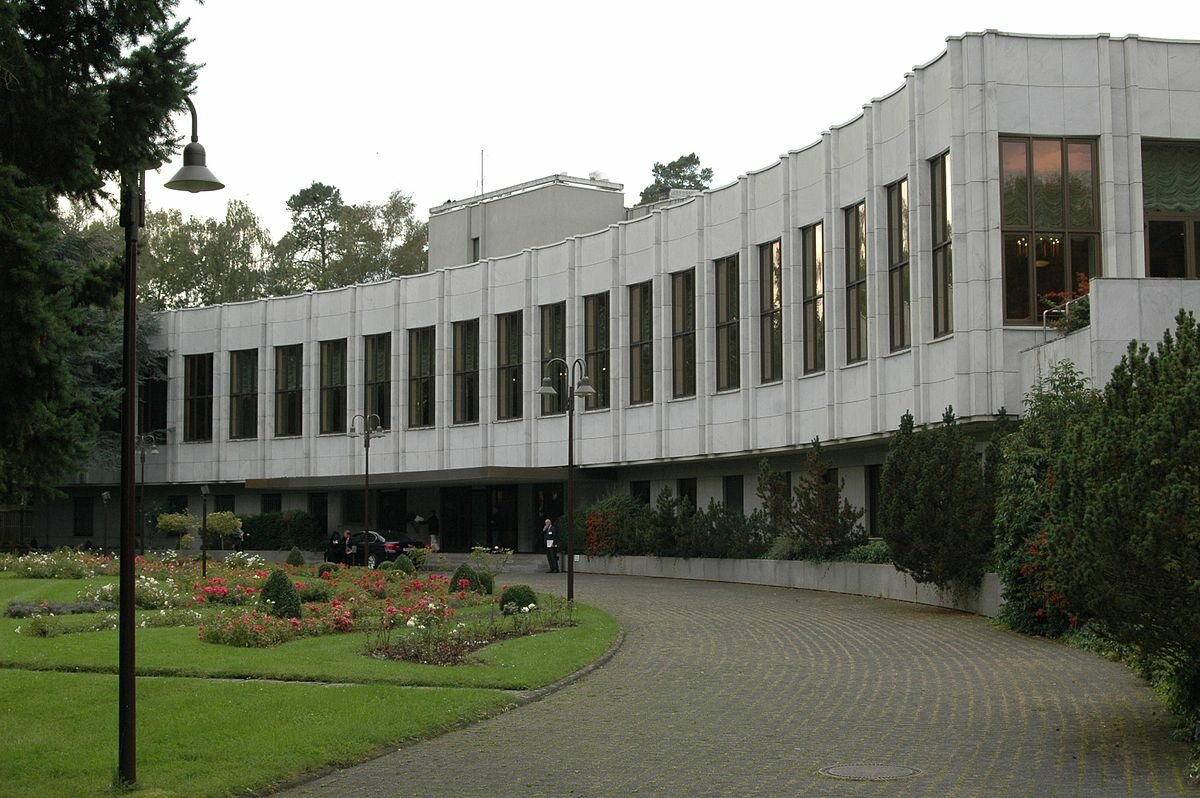
German Foreign Minister Johann Wadephul and Interior Minister Alexander Dobrindt blamed Russia at a joint press conference on 1 September, ordering the closure of Russia's last consulate in the country and scrapping the agreement behind Moscow's cultural center in Berlin. Russia's embassy claims more than 150 of its mission staff and their families must now leave Germany, and Moscow answered by closing the German consulate in St Petersburg and the Goethe institutes.
Four days after the attribution, German investigators suspected Russian intelligence behind an arson attack on a defense company.

 Connexion