Vue normale

  • ✇Euromaidan Press
  • Second Russian MiG-29 in two days: Ukraine’s drones worked over Millerovo airbase
    Ukrainian drones worked over dozens of Russian military and industrial sites overnight on 24 August, reaching from occupied Ukraine and the Black Sea to southern Russia, the commander of Ukraine's Unmanned Systems Forces (SBS) reported. The night's targets included a fighter jet at a Russian airbase, air-defense radars, fuel and propellant facilities, and vessels of Russia's sanctions-evading shadow fleet. A fuller breakdown released later in the day named the site of e
     

Second Russian MiG-29 in two days: Ukraine’s drones worked over Millerovo airbase

24 août 2026 à 14:36

second russian mig-29 two days ukraine's drones worked over millerovo airbase · post fighter jet beside shelter rostov oblast russia ukrainian drone's sights 24 2026 telegram madyar ukraine news reports

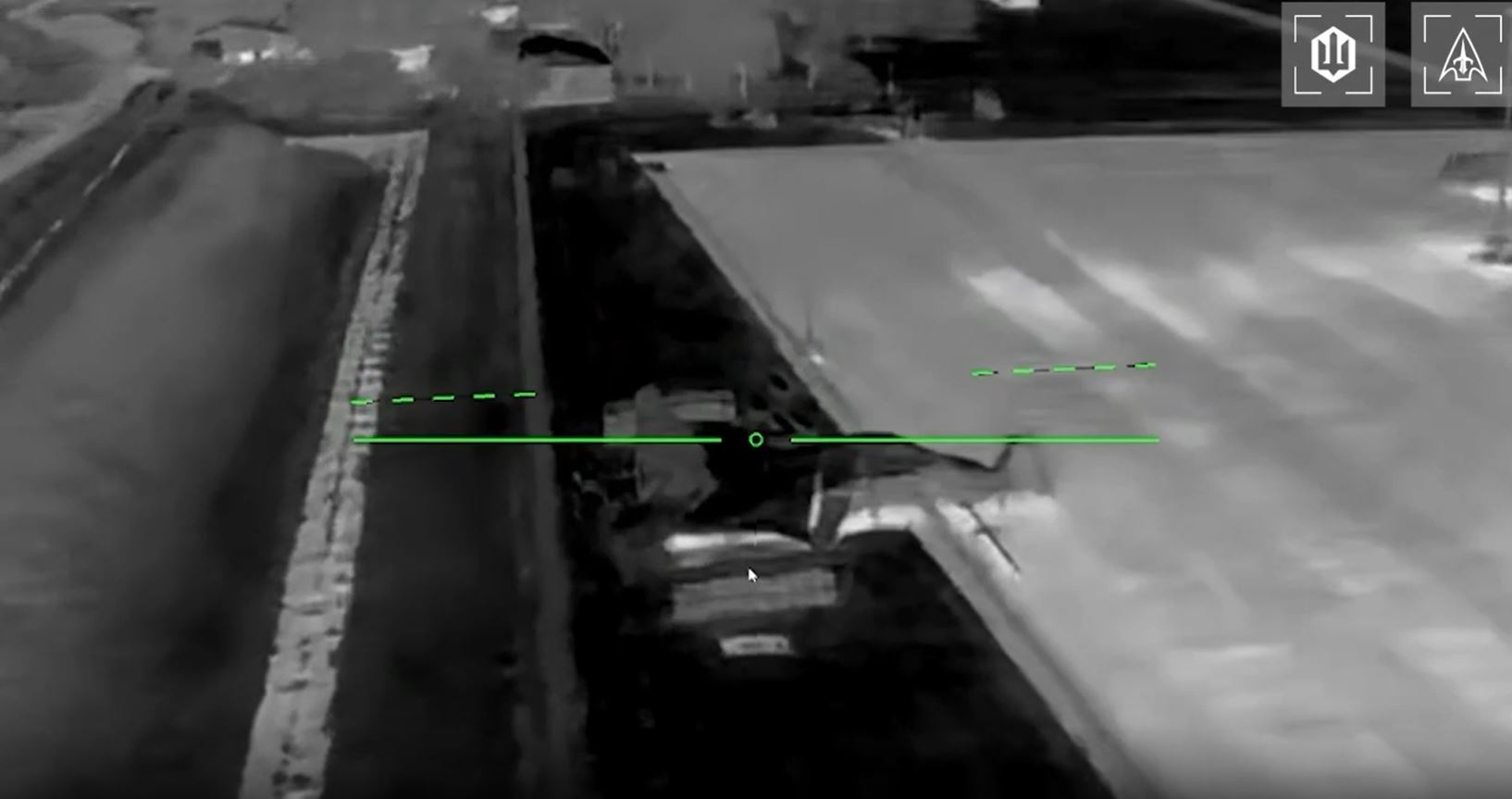
Ukrainian drones worked over dozens of Russian military and industrial sites overnight on 24 August, reaching from occupied Ukraine and the Black Sea to southern Russia, the commander of Ukraine's Unmanned Systems Forces (SBS) reportedThe night's targets included a fighter jet at a Russian airbase, air-defense radars, fuel and propellant facilities, and vessels of Russia's sanctions-evading shadow fleet. A fuller breakdown released later in the day named the site of each strike and the unit that carried it out. Footage released with the breakdown shows the strikes.

Ukraine has been running mid-range strikes across the belt from occupied Crimea to Rostov Oblast for months, taking out the radars, missile batteries, and the aircraft that fly air-defense patrols over it — a rolling effort to thin the cover that meets every deeper Ukrainian strike.

A fighter jet and a decoy at the same airbase

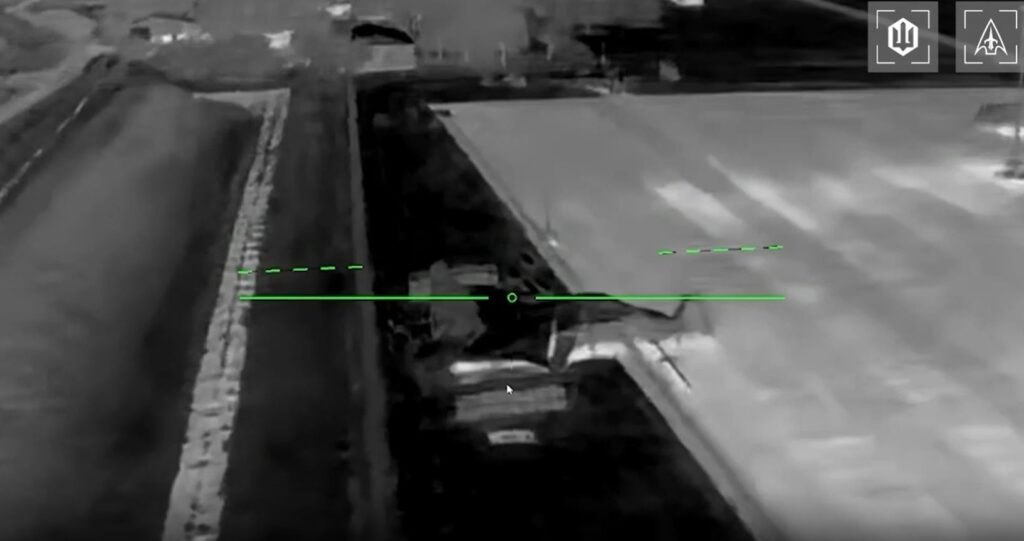
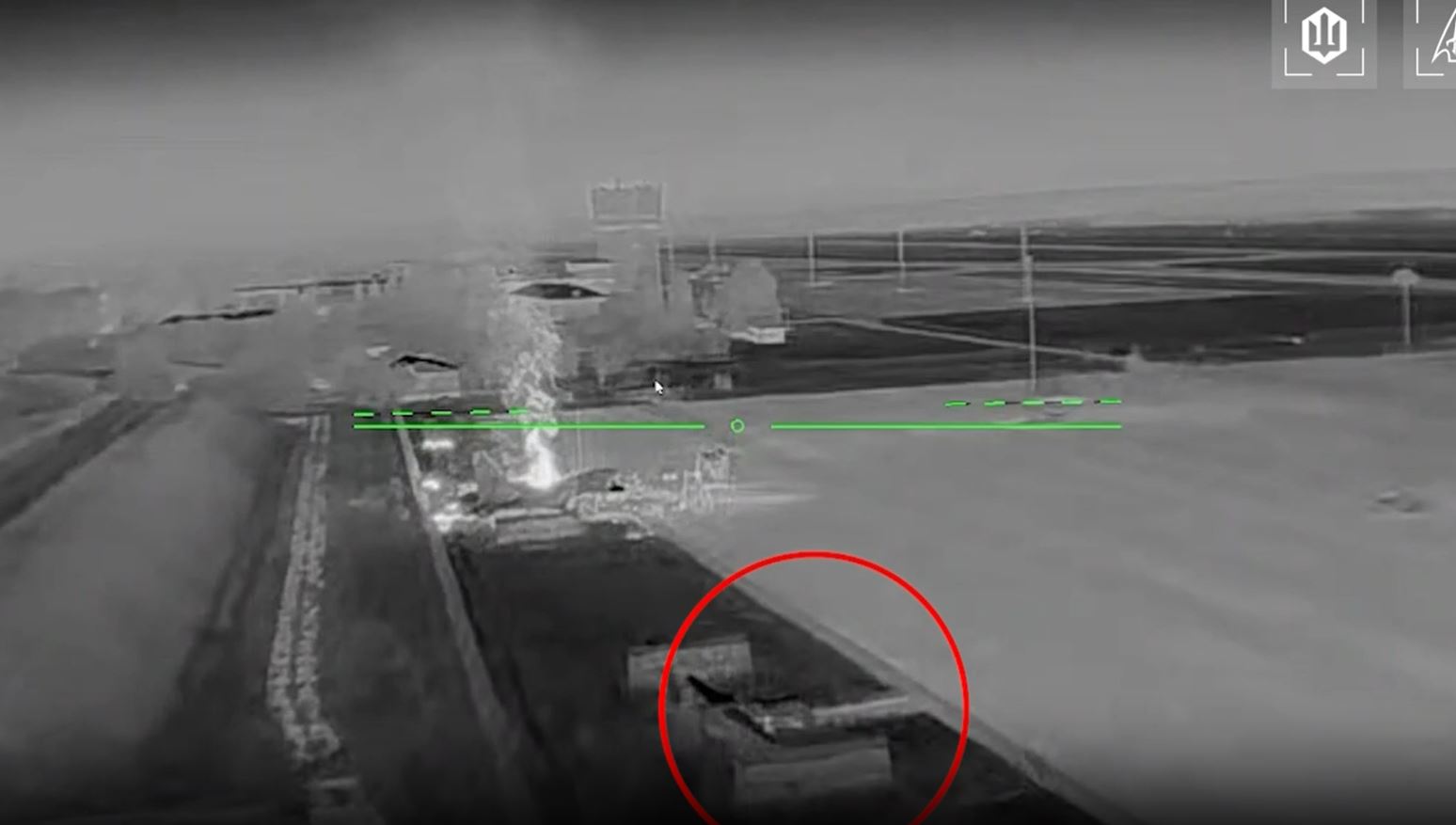
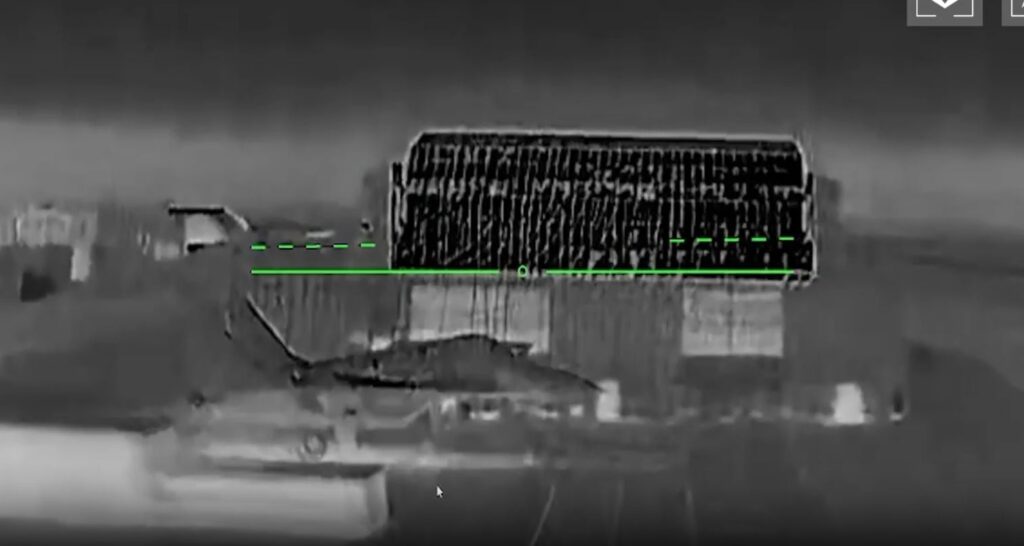
Robert Brovdi, callsign Madyar, said his crews hit 66 targets in the operational depth of the Russian rear. Among them was a MiG-29 at Dolotinka, on the grounds of the Millerovo airbase in Rostov Oblast. The 1st Separate Center of the SBS carried out that strike.
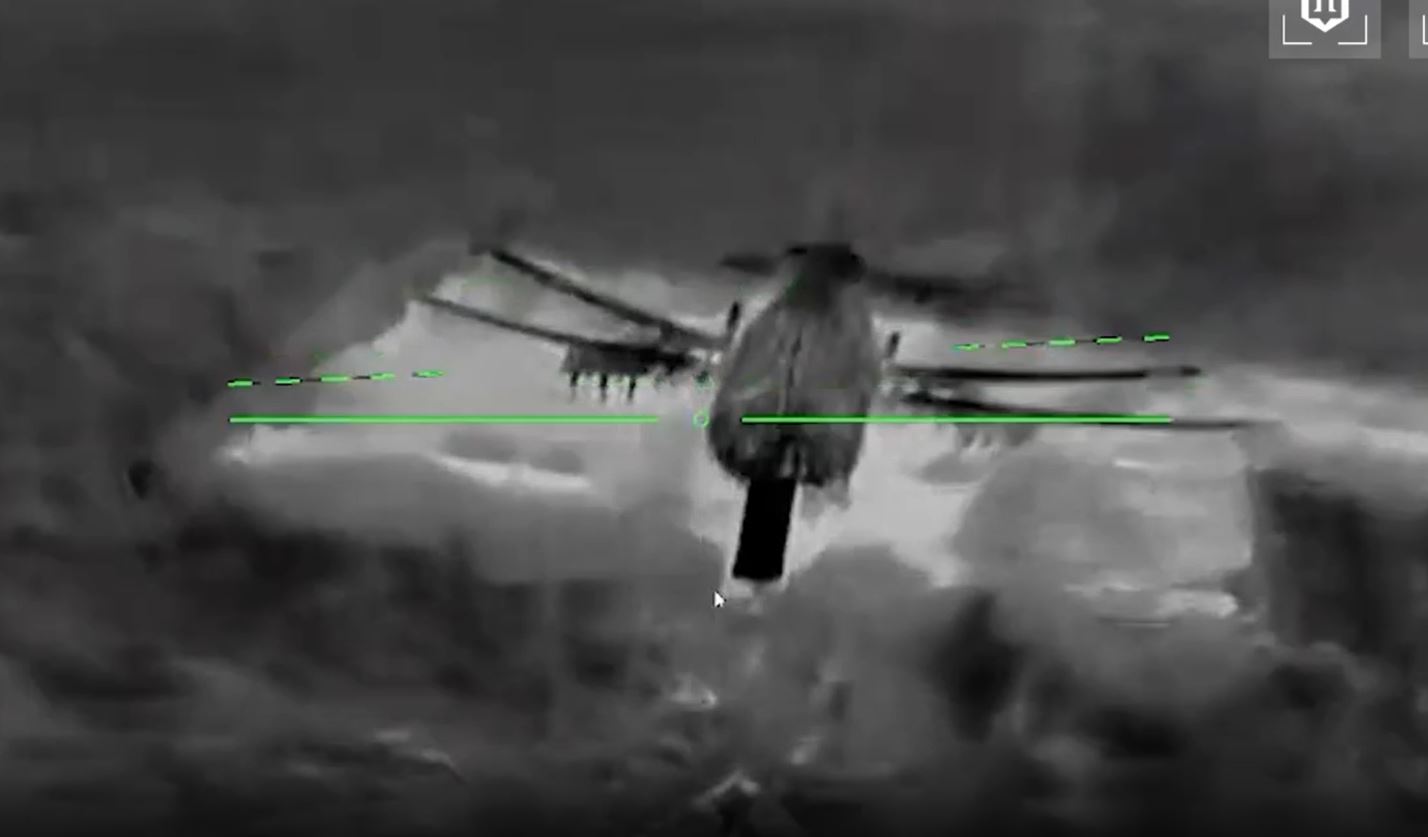
second russian mig-29 two days ukraine's drones worked over millerovo airbase · post ka-52 helicopter mockup rostov oblast russia ukrainian drone's sights 24 2026 heli ukraine news reports
A Ka-52 helicopter mockup at Millerovo airbase in Rostov Oblast, Russia, in a Ukrainian drone's sights, 24 August 2026. Photo: Telegram/Robert Brovdi

The same unit hit a mockup of a Ka-52 Alligator attack helicopter at the same location. Russia uses such decoys to draw drones away from real aircraft.
two russian fighters one spy drone hit kranodar radars anti-air systems elsewhere—ukraine forces · post combat aircraft ukrainian drone's sights vityazevo airfield krasnodar krai russia 23 2026 su-33 video sbs
Explore further

Ukraine’s drones hit two Russian fighters and a spy drone—and blinded radars from occupied Crimea to Rostov

It was the third Russian fighter jet Ukrainian drones reached in two days. Crews struck another MiG-29, a jet SBS identified as a Su-33 and Militarnyi assessed as a Su-30SM, and an Orion strike-reconnaissance drone at Vityazevo in Krasnodar Krai on 23 August. Ukrainian drones have caught a MiG-29 on a Russian airfield before, at Kursk in July.

Four radars, from Rostov Oblast to occupied Crimea

Crews hit four radar systems overnight. Two Kasta-2E2 sets went down at Geraskin and Karaichev in Rostov Oblast, and a Nebo-SV at Gukovo in the same oblast. All three fell to the 1st Separate Center.

The fourth, an ST-68, stood at Rozdolne in occupied Crimea. The 9th Kairos battalion of the 414th Madyar's Birds brigade struck it.

The radar work is part of a campaign against Russian sensors and launchers that has run for months without a pause.

Rocket propellant, fuel, and two ships

The 1st Separate Center struck the Kamensky Combine at Kamensk-Shakhtinsky in Rostov Oblast, a plant producing solid rocket fuel, according to SBS. The 9th Kairos battalion hit a fuel tank at Yeysk in Krasnodar Krai. In occupied Luhansk Oblast, the 20th K-2 brigade struck a fuel depot belonging to the 106th material support brigade of Russia's 41st Army at Dovzhansk. 

Brovdi also said his crews hit and destroyed two shadow-fleet vessels, a tanker and a bulk carrier, in the Black Sea. No independent account of either loss has appeared.

A drone school, relays, and a base in occupied Kherson Oblast

In occupied Kherson Oblast, Ukrainian crews destroyed the quarters of a Russian National Guard rapid-response unit and hit two relay stations for Geran attack drones, according to the SBS breakdown.

second russian mig-29 two days ukraine's drones worked over millerovo airbase · post explosions base national guard rapid-response unit strilkove occupied kherson oblast 24 2026 - seen ukraine news ukrainian
Explosions at the base of a Russian National Guard rapid-response unit in Strilkove, occupied Kherson Oblast, 24 August 2026. Photo: Telegram/Robert Brovdi

They also struck a shelter for a Zala reconnaissance drone crew in occupied Crimea, a drone school in occupied Zaporizhzhia Oblast, and a drone laboratory in occupied Donetsk Oblast.

Brovdi also reported 11 Russian rear deployment points burning across occupied Zaporizhzhia, Donetsk, and Luhansk oblasts, along with strikes on energy nodes in occupied territory.

Ukraine’s drones hit two Russian fighters and a spy drone—and blinded radars from occupied Crimea to Rostov

23 août 2026 à 12:36

two russian fighters one spy drone hit kranodar radars anti-air systems elsewhere—ukraine forces · post combat aircraft ukrainian drone's sights vityazevo airfield krasnodar krai russia 23 2026 su-33 video sbs

Ukraine's drones hit three Russian aircraft and eleven air-defense targets in one day, its Unmanned Systems Forces reported on 23 August. The strikes reached from occupied Crimea to airbases hundreds of kilometers inside Russia. They pushed the force's August count of struck Russian air-defense assets to 20, the latest run in a Ukrainian campaign against Russia's radars and launchers that has not paused for months.

Russia leans on a layered net of radars and mobile launchers to keep Ukrainian drones and missiles away from its airfields, fuel plants, and occupied land, so every set burned off that net widens the corridors its long-range weapons fly through. With its S-400 battery caught in the open again and jets chased off Crimea still within reach, Russia has shrinking safe ground for the aircraft and air defenses covering its south — a squeeze already visible when Ukraine caught a fighter and its protecting launcher on the same airfield weeks earlier.

A one-day sweep of 14 targets

The Unmanned Systems Forces (SBS) commander, Robert Brovdi, callsign Madyar, put the 23 August haul at 14 targets. They included two fighter jets, a strike-reconnaissance drone, eight radar systems, a Tor and a Pantsir short-range launcher, and a position of an S-400 — a Russian long-range air-defense system.

Eleven of the 14 fell in Rostov Oblast and Krasnodar Krai in southern Russia. The other three were in occupied Crimea. 

two russian fighters one spy drone hit kranodar radars anti-air systems elsewhere—ukraine forces · post aftermath strike combat aircraft seen another ukrainian vityazevo airfield krasnodar krai russia 23 2026 дорозвідка
Aftermath of the strike on a Russian combat aircraft as seen from another Ukrainian drone at Vityazevo airfield in Krasnodar Krai, Russia, 23 August 2026. Screenshot: SBS

Jets that fled Crimea, caught on the mainland

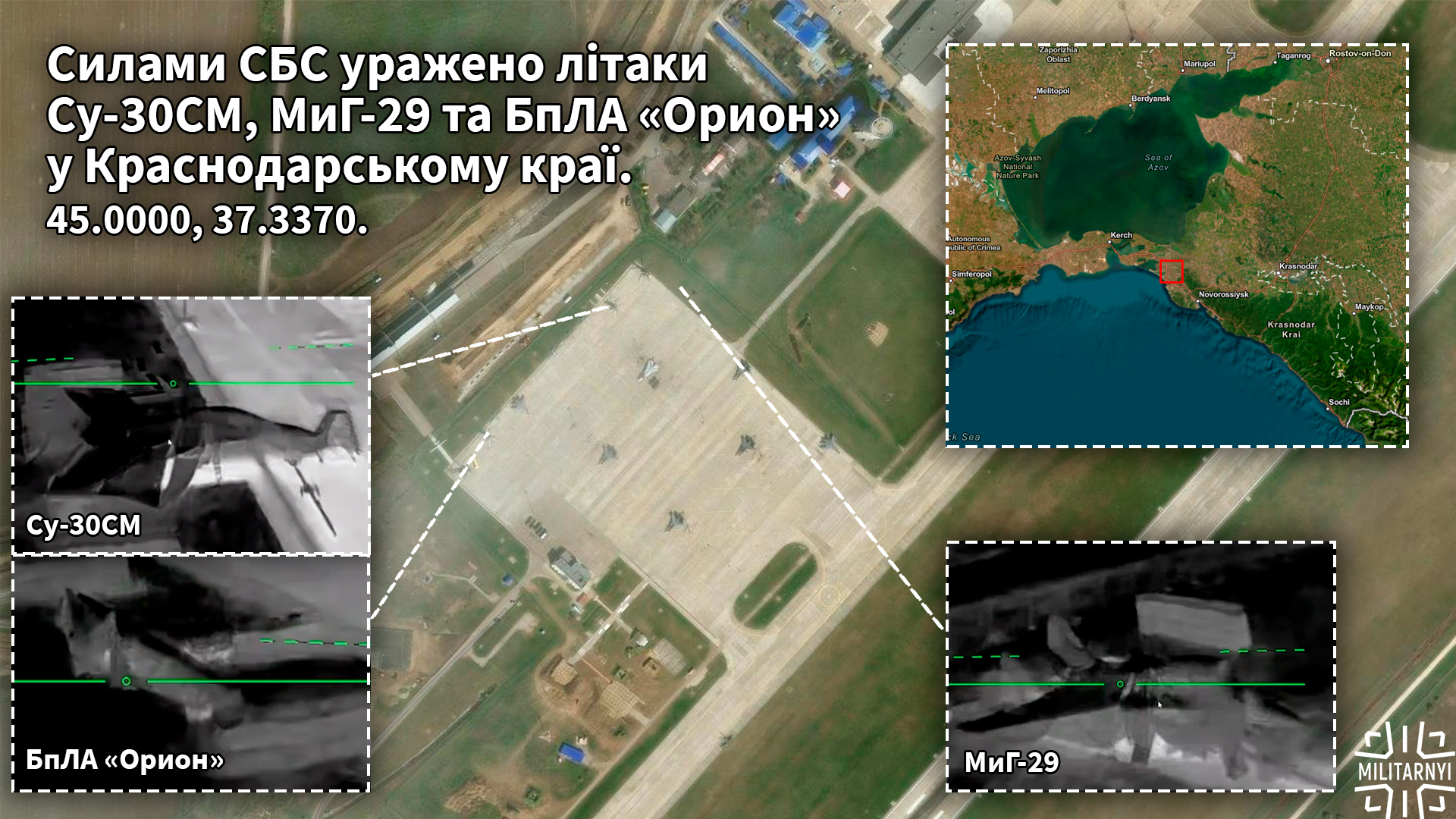
The three aircraft were struck at Vityazevo, a Krasnodar Krai airfield about 300 km from the front line, the 1st Separate Center of the Unmanned Systems Forces said. Militarnyi assessed that the jet SBS called a Su-33 was likely a two-seat Su-30SM, judging by its cockpit hump.

two russian fighters one spy drone hit kranodar radars anti-air systems elsewhere—ukraine forces · post ukrainian strikes su-30sm fighter mig-29 orion strike-reconnaissance vityazevo airfield krasnodar krai russia 23 2026 airfield's
Ukrainian drone strikes on a Su-30SM fighter, a MiG-29 fighter, and an Orion strike-reconnaissance drone at the Vityazevo airfield in Krasnodar Krai, Russia, 23 August 2026, with the airfield's location marked on the map. Collage: Militarnyi

Russia flies the Su-30 from its southern bases to attack Odesa and Mykolaiv oblasts, to hunt Ukrainian sea drones, and to patrol occupied territory. The struck jet likely belonged to a naval aviation regiment pushed off Crimea by repeated Ukrainian strikes on the peninsula.

two russian fighters one spy drone hit kranodar radars anti-air systems elsewhere—ukraine forces · post strike podlyot radar holovativka rostov oblast russia 23 2026 sbs ukraine news ukrainian reports
A strike on a Russian Podlyot radar at Holovativka in Rostov Oblast, Russia, 23 August 2026. Screenshot: SBS

Based on the SBS footage, Militarnyi says one drone could not hit the fighter cleanly. It exploded beside the aircraft and set off a fire that Russian crews tried to put out — a near miss, but enough to sideline the jet for a long stretch. A second drone then found the MiG-29 fighter jet and scored a direct hit, starting a large fire. A third caught the Orion, a strike-reconnaissance drone Russia uses to launch small cruise missiles and to track Ukrainian naval drones in the Black Sea.

Radars, launchers, and an S-400 on the coast

The air-defense targets ran across three regions. In occupied Crimea, crews hit a Nebo-U long-range radar at Sevastopol, the ST-68 at Yevpatoria some 30 km from the front, and a 36D6M at Uiutne. In Rostov Oblast and Krasnodar Krai they knocked out more radars, including two Kasta-2E2 sets and two Podlyot radars, plus the Tor at Pudovy and the Pantsir at Yeysk.

The 413th Reid regiment of the SBS reported hitting the S-400 position near Gelendzhik on the Krasnodar coast — the same stretch where drone crews have caught the system out in the open before.

two russian fighters one spy drone hit kranodar radars anti-air systems elsewhere—ukraine forces · post enhanced colorized frame thermal footage view ukrainian closing st-68 radar moments before impact yevpatoria occupied
Enhanced and colorized frame from the drone thermal footage showing the view from a Ukrainian drone closing on a Russian ST-68 radar moments before impact at Yevpatoria in occupied Crimea, 23 August 2026. Screenshot: Ukraine's Unmanned Systems Forces (SBS)

An August of hunting Russia's air shield

A battlefield video counter run by the force reached 20 Russian air-defense assets struck through August. The month's work extended a campaign that has steadily burned through the sensors and launchers guarding Russian airfields and occupied territory. 

  • ✇Euromaidan Press
  • NASA shows Crimea as Russian on a map during its eclipse broadcast
    On the evening of 12 August 2026, NASA displayed a map on which Crimea was marked as Russian. It happened during the live broadcast of a total solar eclipse: on the graphic, the peninsula was separated from mainland Ukraine by a border line and presented as part of Russia. Crimea is a Ukrainian region that Russia occupied after its illegal annexation in 2014. Ukraine and the overwhelming majority of the world's states do not recognize that annexation, and no cartog
     

NASA shows Crimea as Russian on a map during its eclipse broadcast

14 août 2026 à 04:01

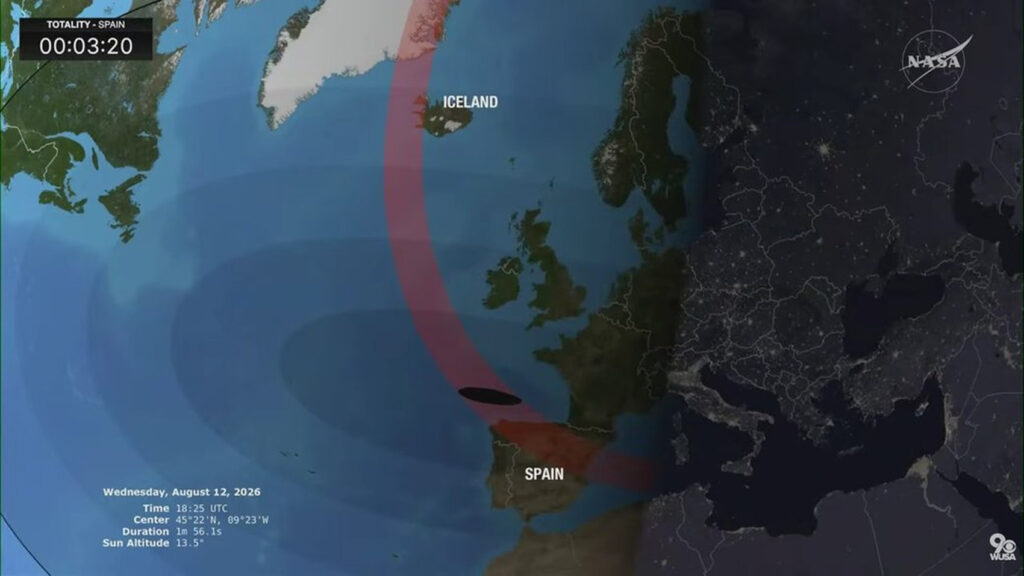
During the eclipse broadcast, NASA depicted Crimea as Russian on 12 August 2026. Photo: Screenshot from NASA's broadcast

On the evening of 12 August 2026, NASA displayed a map on which Crimea was marked as Russian. It happened during the live broadcast of a total solar eclipse: on the graphic, the peninsula was separated from mainland Ukraine by a border line and presented as part of Russia.

Crimea is a Ukrainian region that Russia occupied after its illegal annexation in 2014. Ukraine and the overwhelming majority of the world's states do not recognize that annexation, and no cartographic error changes the peninsula's status under international law. Each uncorrected map treats as ordinary what international law still calls an illegal occupation.

What happened during the broadcast

The US agency streamed the total eclipse, whose path crossed Greenland, Iceland, and Spain, live to a global audience. The error appeared on one of the visibility maps NASA showed during the broadcast: on it, Russia's border was drawn along the land boundary between mainland Ukraine and the peninsula, creating the impression that Crimea belongs to Russia.

Additional images from the August 12 Solar Eclipse are on our Flickr feed. Check them out! A few more frames may be added later too. 📷 https://t.co/CwbEoWw3Eq pic.twitter.com/mZRukcYnZd

— NASA HQ PHOTO (@nasahqphoto) August 12, 2026

Not the only case

In December 2024, FIFA eventually apologized for a map it displayed during the qualifying draw for the 2026 World Cup that left occupied Crimea outside Ukraine's borders. The graphic was meant to show pairs of teams that cannot be drawn against each other for geopolitical reasons, among them Spain and Gibraltar, Kosovo and Serbia, and Ukraine and Belarus. It marked out Ukraine but drew the country without the peninsula. Ukraine's Foreign Ministry spokesman Heorhii Tykhyi objected, Kyiv called the omission an unacceptable error, and football's world governing body pulled the image.

On 24 September 2024, the British broadcaster Sky News published an investigation into a scheme for supplying sanctioned goods to Russia through third countries, Georgia among them. The report was accompanied by three maps of vehicle-transport routes into Russia, on each of which Crimea was marked as Russian territory, Detector Media reports. The maps have since been edited, and Crimea is now marked as part of Ukraine.

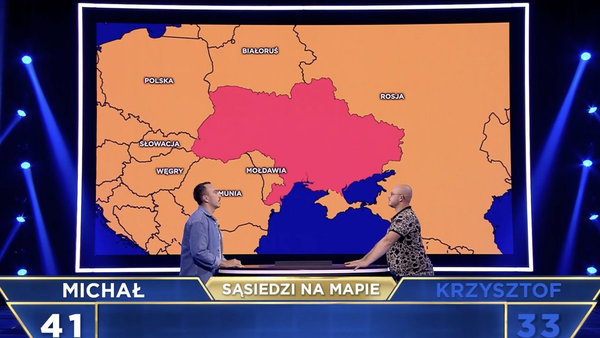
The Polish broadcaster TVN showed a map of Ukraine on which occupied Crimea was marked in a separate color during the entertainment show The Floor. The episode aired on Polish television, and the broadcaster published its video on its website in 2025.

Map of Ukraine without Crimea aired on Polish TV channel TVN during The Floor. Photo: Screenshot from the TVN website

Behind Putin's sacred Crimea stood Sevastopol's airfields

Explaining the annexation, Putin spoke not of the military but of sacred things. In his December 2014 address to the Federal Assembly, he called Crimea a place of "enormous civilizational and sacral significance," comparing the peninsula to the Temple Mount in Jerusalem. Europe rejected that mythology: just ten days after the sham referendum, the UN General Assembly passed Resolution 68/262 by a vote of 100 to 11 and declared the annexation illegal.

Putin arrived in annexed Sevastopol, where he took part in a ceremony marking the launch of the Balaklava Thermal Power Plant. 18 March 2019. Photo: TASS

But behind Moscow's "spiritual" rhetoric lay a different purpose for Crimea. Sevastopol, its airfields, and its logistics turned the peninsula into a springboard for the 2022 invasion, and it is largely for this reason that Ukraine's forces are now focused on striking Crimea. Robert "Madyar" Brovdi, commander of the Unmanned Systems Forces on 10 August said that the strikes are the first phase of a campaign meant to render the peninsula unusable for Russian troops.

"Crimea is one of the key conceptual pillars on the path to ending the war," Madyar told the Associated Press.

  • ✇Euromaidan Press
  • Ukraine’s Crimea campaign could strike seven times more targets with faster funding, Brovdi says
    Ukraine's Crimea campaign aims to make the occupied peninsula unusable to Russian forces, its drone-forces commander told The Associated Press. Russia annexed Crimea in 2014. The campaign is only the first phase, said Maj. Robert "Madyar" Brovdi. His units could strike seven times more military targets with faster Western funding, he said. The constraint is financing, not factory output. Brovdi put his forces at 14 percent of the strength a full-capacity operation would
     

Ukraine’s Crimea campaign could strike seven times more targets with faster funding, Brovdi says

10 août 2026 à 07:47

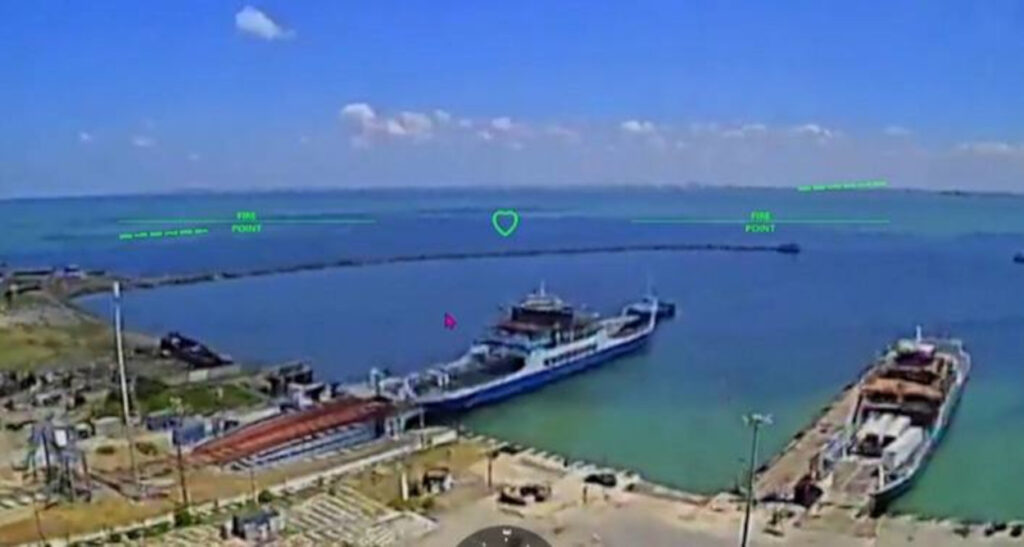
A photo shared by Robert “Madyar” Brovdi shows the Russian ferry “Maria” before it was struck in Ukrainian drone operations, with the damaged “Panagia” ferry visible to the right. Photo: Robert "Madyar" Brovdi

Ukraine's Crimea campaign aims to make the occupied peninsula unusable to Russian forces, its drone-forces commander told The Associated Press. Russia annexed Crimea in 2014. The campaign is only the first phase, said Maj. Robert "Madyar" Brovdi. His units could strike seven times more military targets with faster Western funding, he said.

The constraint is financing, not factory output. Brovdi put his forces at 14 percent of the strength a full-capacity operation would require. He traced the gap to the timing of allied money, not to Ukraine's drone production. "It's not that the production capacity of Ukrainian manufacturers doesn't allow us to make the necessary quantities" of drones, he said. He added: "It's the banal problem of untimely financing, which our partners do allocate, but which moves significantly slower than our plans."

Even so, Brovdi framed the peninsula as decisive. "Crimea falls within the key conceptual pillars on the path to ending the war," he said.

What the Crimea campaign has hit

The summer strikes have hit rail bridges, oil depots, and power infrastructure. These aim to cut supply lines and blind Russian air defenses as drones approach. To pry open a "window" for those drones, the force destroyed more than 300 air defense assets in recent months. Those included surface-to-air systems, radar stations, and electronic-warfare equipment.

Where Starlink connectivity reaches, an average of three drones can now destroy even a heavily defended target, Brovdi said. In turn, his crews match the munitions to each aim. One mix suits a bridge pier; another fits a fuel truck or a moving train. Even so, his forces avoid civilian infrastructure, he added. Still, strikes on the power grid have cut electricity for residents. Brovdi said he has twice publicly apologized to Ukrainians living in Crimea.

He also pointed to one measure of progress. Across four recent large-scale Russian barrages from the peninsula, launch sites fired only five missiles in total. He credited that drop, however, to the destruction of Russian air defenses. The AP could not independently verify the claim.

Forcing Russia off the peninsula

Much of Russia's Soviet-era air defense runs on the power grid. That is one reason Crimea's electricity network keeps drawing fire. As a result, losing power leaves Russian soldiers "blind," Brovdi said, with only machine guns and rifles.

Meanwhile, Ukraine is working to dismantle Crimea's role as a naval base. "Creating conditions that make it impossible for any kind of military capability … to remain there will make Crimea uninteresting … as a military staging ground," he said.

The offensive began in late June. Two weeks in, Ukrainian intelligence indicated Russia had ordered its military commands and security services off the peninsula, Brovdi said. In addition, a covert order called for removing secret archives and artworks. The AP could not independently verify the account.

Russian countermeasures and the missile threat

Russia is pushing back against the Crimea campaign. It is installing jamming systems that will degrade Starlink to some degree, Brovdi said. Russia is also building its own satellite network to rival the service. "This is a risk for the entire planet," he said, "because a dictatorship will gain access to information across the whole globe."

Other threats are mounting as well. Jet-powered Shahed drones are harder for Ukraine to shoot down. Their concentration has risen two and a half times in recent weeks, he said. Moreover, Russia can now fire a simultaneous salvo of 77 ballistic missiles and plans to raise that to 200. As a result, the danger is pressing. Ukraine is short of interceptors for the US-made Patriot, its only defense against ballistic missiles.

"Even if they only manage half of that, it will all be flying at us," Brovdi said. The only way to bring the number down is to hit every facility that builds the missiles, he added. That, he said, is why Ukraine's long-range strikes inside Russia matter.

Wildberries in the crosshairs

One civilian-facing target Brovdi named was Wildberries, Russia's largest online marketplace. Many call it the country's answer to Amazon. "Wildberries is, first of all, a supply platform—it's the war's quartermaster," he said. The company also runs a dedicated section selling goods for Russia's military, he noted.

For now, these strikes aim to make ordinary Russians feel the war directly. He declined to give a timeline. Instead, the strikes will continue "until it becomes impossible for it to recover quickly," he said.

Finally, he cast the retailer as a pressure point on morale. "Ultimately, Wildberries is, forgive the expression, a consumer gambling addiction," he said, comparing lost access to restrictions on social media. "It turned out to be a sensitive sensor of the comfort of Russia's massive population—people who consider themselves completely untouched by the actions of the aggressor country."

❌