❌

Vue lecture

Russia repeatedly attacks bridge connecting Kyiv’s two sides across the Dnipro river, disrupting transport across the capital

Damage to Kyiv's Southern Bridge connecting the left and right banks of the city following several Russian drone strikes on 1-2 October, 2026. Photo: Ukraine's State Emergency Service

Russian forces have repeatedly struck Kyiv’s Southern Bridge with drones since 1 October, disrupting one of the capital’s main routes between the left and right banks of the Dnipro.

The strikes are part of a broader intensification of Russian drone attacks on the capital. In recent weeks, Russia has begun launching daily attacks involving jet-powered Geran drones, increasingly disrupting everyday life in Kyiv.

The Southern Bridge is an important road and rail crossing over the Dnipro. It carries road traffic between Kyiv's left and right banks and also forms part of the city's metro network.

The bridge was fully closed to traffic following the latest attacks, while restrictions were also introduced on the Metro and Paton bridges, according to Suspilne. Public transport has been diverted to alternative routes, while the disruptions have caused major traffic congestion across Kyiv.

Update 17:50: Kyiv Mayor Vitali Klitschko said Russian forces have struck the Southern Bridge again on the evening of 2 October. The bridge remains closed to road traffic and metro services following several previous attacks. Emergency services are heading to the site.

Bridge targeted repeatedly

The Southern Bridge came under attack multiple times on 1 October and was targeted again during the overnight attack into 2 October.

Ukrainian President Volodymyr Zelenskyy said Russian forces struck the bridge several times with drones during the night. He said the attacks were part of a larger Russian barrage involving more than 100 attack drones, nearly 50 of them jet-powered Gerans.

The bridge has not been destroyed, but the repeated strikes have forced authorities to limit its use and reorganize traffic across the Dnipro.

Ukrainian analyst Andrii Kovalenko said the Southern Bridge is difficult to destroy with the weapons Russia is using. However, he said such strikes can damage the bridge enough to disrupt its normal operation, while the resulting disruption can also be used to spread panic.

Russia’s repeated strikes on Kyiv’s Southern Bridge are now severely disrupting traffic across the capital.

Major roads are gridlocked, with some people reportedly walking across bridges as traffic comes to a standstill. Photos from Suspilne show the resulting congestion on… pic.twitter.com/7SyYG0WOCO

— Euromaidan Press (@EuromaidanPress) October 2, 2026

Zelenskyy: Russia is targeting bridges and critical infrastructure

Zelenskyy said Russia's intensified attacks are part of a broader effort to disrupt life in Ukrainian cities and damage infrastructure beyond individual military targets.

Citing Ukrainian intelligence and people he said are close to Russian President Vladimir Putin, Zelenskyy claimed Putin said in early September: “Now, there are no rules.” Zelenskyy said Russia had failed to occupy Ukraine and was therefore turning to mass attacks and killings.

“They want to destroy our bridges and, as we understand it, our data centers, internet, mobile networks, hospitals, kindergartens, schools, universities – everything,” Zelenskyy said.

He added that Russia wants to force Ukrainians to leave their cities. “They want people to flee their cities, and we need to do everything to save our people and our cities,” he said.

A key crossing for Kyiv disrupted

The bridge’s closure puts additional pressure on the capital's other bridges. On 2 October, traffic on the Metro Bridge was restricted to one lane toward the right bank, while traffic from the right bank toward the left was restricted on the Paton Bridge.

Several bus routes were diverted to other bridges. Kyiv authorities reported major traffic jams on the city's main roads as the restrictions disrupted normal movement between the two sides of the capital.

Metro service across the Southern Bridge also remains tied to an assessment of the structure. Kyiv Mayor Vitali Klitschko said on Friday the metro can resume crossing the bridge during yellow-level air alerts after experts provide an assessment confirming its condition.

Part of a wider campaign against Kyiv

The bridge strikes came alongside attacks on civilian areas of Kyiv. A Russian drone hit the upper floors of a 25-story residential building in the Darnytskyi district on 2 October, causing a fire on the 24th and 25th floors.

One person was killed and two were injured. The attack also damaged buildings and vehicles in the Holosiivskyi district.

A Russian drone struck a 25-story residential building in Kyiv’s Darnytskyi district this morning.

According to President Volodymyr Zelenskyy, Russia launched more than 100 attack drones at Ukraine overnight, including nearly 50 jet-powered drones.

In Kyiv, the strike caused a… pic.twitter.com/jiGjJeUgVf

— Euromaidan Press (@EuromaidanPress) October 2, 2026

The growing frequency of jet-powered Geran attacks is making the impact of Russian strikes increasingly visible beyond individual damage sites. Repeated attacks on infrastructure such as the Southern Bridge can disrupt transportation and daily routines across the capital even when the targeted structures are not destroyed.

  •  

Ukraine turned ground robots into a frontline workhorse. Its first competitive tender may reward cheap copies over proven machines, an officer warns

ukraine turned ground robots frontline workhorse its first competitive tender reward cheap copies over proven machines officer warns · post fifth-generation themis unmanned vehicle developed milrem robotics themis_5th_generation_ugv-1536x1024jpg news ukrainian

Ukraine has turned ground robots into a frontline workhorse, and the state is now trying to buy them at scale through its first competitive, ministry-spec tender. Viktor Pavlov, an officer of the 3rd Separate Assault Brigade's UGV battalion, laid out the risks of that model to Army Inform, the Defense Ministry's outlet, in an interview. Once a robot clears the military's technical requirements, price becomes the main criterion, Pavlov says. The order is split into lots, and no maker can take more than half a class. He warns the model may not tell a cheap, makeshift machine from one that actually survives at the front.

Robots now handle the war's deadliest chores—driving supplies through kill zones and reaching the wounded where people can't—and Ukraine has already contracted more than 22,000 for 2026. How the military buys them now shapes whether the push yields machines troops trust or a stockpile of cheap ones they don't.

From disposable drones to the next mass weapon

Aerial drones became disposable, mass-produced weapons years ago. Ground robots—the tracked and wheeled machines that haul supplies, pull out the wounded, and attack Russian positions—are only now reaching serial state supply. In August, the Defense Procurement Agency (DOT), the body that buys Ukraine's arms, opened its first competitive tenders for logistics and strike robots built to specs set by the Defense Ministry. Pavlov, founder of Ukraine's UGV School, calls it an experimental format that can work where market prices are inflated. Splitting the order into lots also gives smaller engineering teams a real chance, he said, because many large producers are already busy with state contracts.

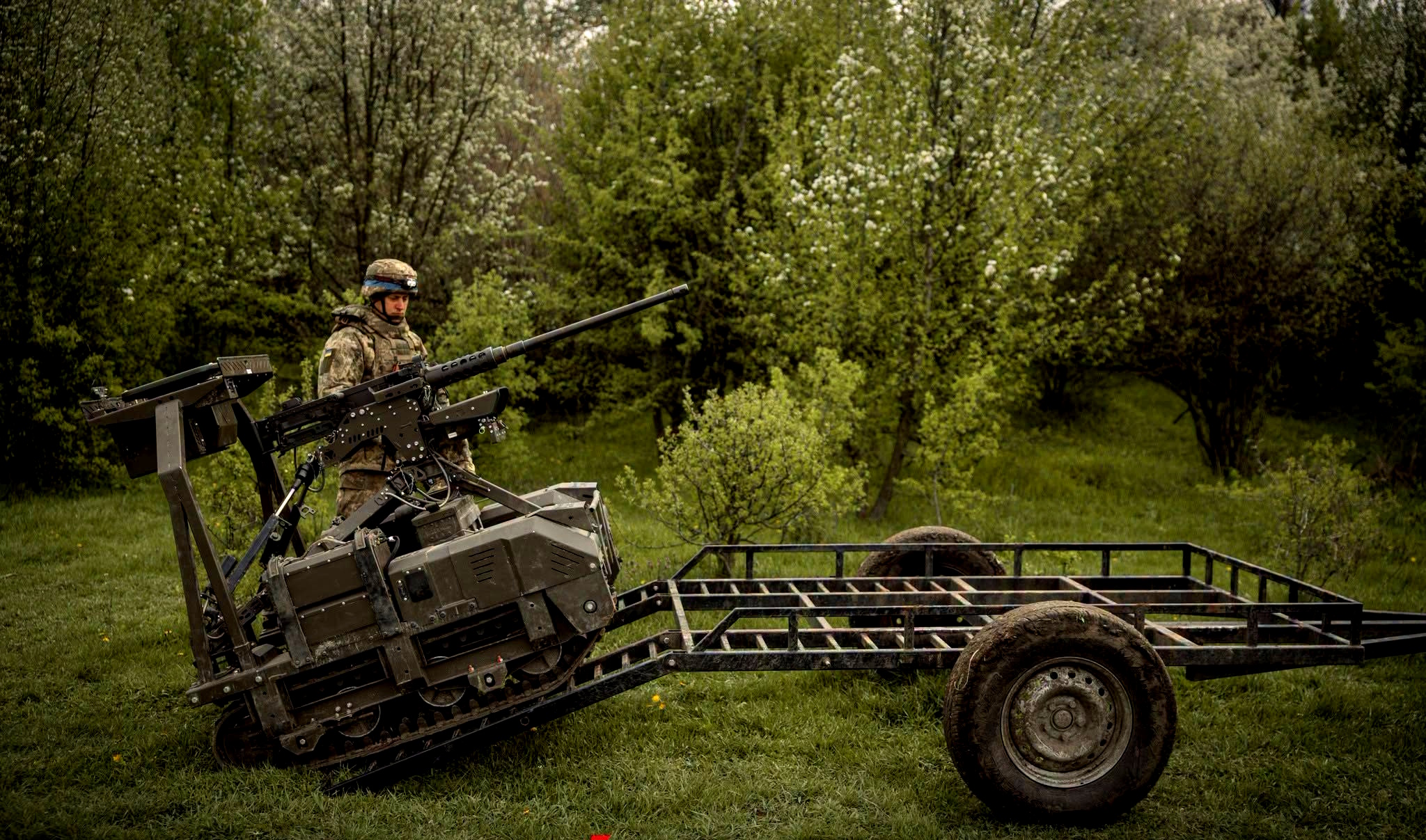
The image shows a Ukrainian soldier standing next to an unmanned ground robotic vehicle. Source: The General Staff
Explore further

New Vivaldi tactic: Ukraine’s ground robots, each carrying two Bullspike grenade launchers, attack Russian positions and then detonate inside their shelters

Why the lowest bid may beat the best robot

A tender rewards the cheapest product that formally meets the requirements, not the best one, Pavlov said. A thermal camera, for example, can be listed as desirable rather than mandatory, so a maker chasing the lowest price will most likely leave it off. On any given feature the machines diverge—suspension, cameras, comms channels, a winch—one has it, another doesn't, yet both can land in the same class.

The machines themselves are very different. One carries 250 kilograms, another up to 349, but both fall into the "200-plus" category. Unlike FPV drones, which share standard sizes and parts, ground robots have no common frame—Ukraine fields many local variants. Pavlov compared the choice to picking an iPhone over a cheaper Android: on paper the features match, but soldiers know which machine they can run and repair.

Ground drone UGV medical evacuations
Explore further

Four ground robots for one evacuation: Russia is targeting Ukraine’s robotic medevac missions

He also fears the model punishes innovation. A company can spend 18 months and a 20-person team building a robot, then watch a rival copy it, skip the research costs, and undercut it. A design troops already know how to run and repair—like the Ratel—is a known quantity. An untested bargain can break down mid-mission with no spare parts.

A mixed system, not tenders alone

Price competition should be one tool, not the only one, Pavlov argued. New robots should first reach units through pilot buys, letting soldiers test them and say what works. Proven systems can then be contracted in bulk, with tenders saved for classes where the offers are truly comparable. Ukraine's robots are too varied, he said, and what units need can't always be squeezed onto a spec sheet.

  •  

Ukrainian firm fields 11 crewless boats and eight drones at NATO’s biggest naval drone drill

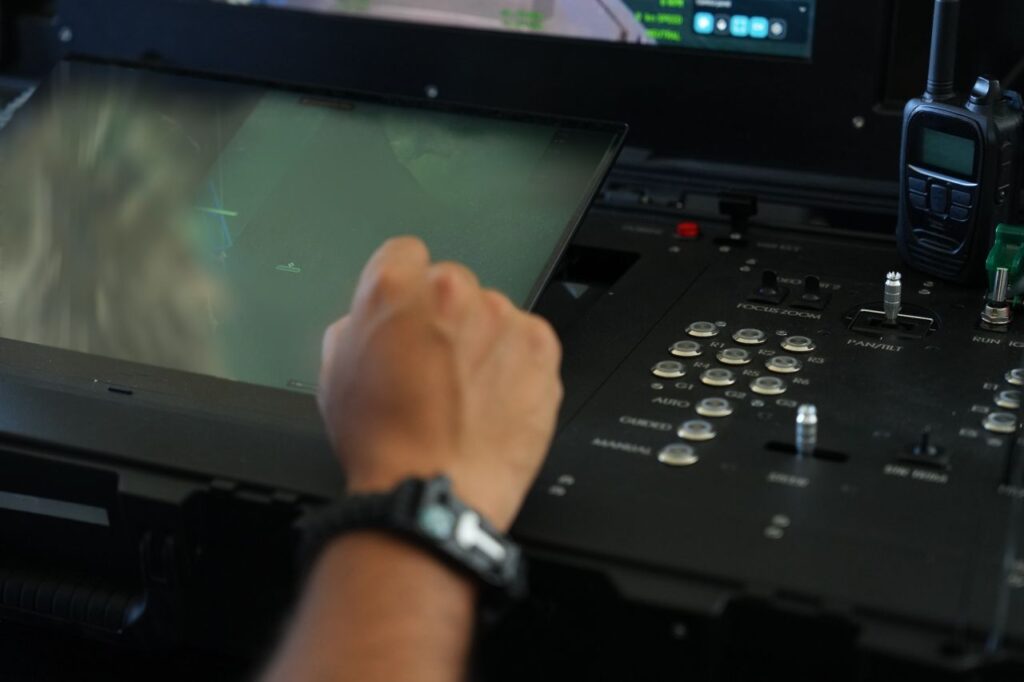
UFORCE drone control station. September 2026.

UFORCE, a Ukrainian defense company, says it fielded 11 crewless boats and eight drones at NATO's largest unmanned-systems exercise in Portugal, Militarnyi reported. The firm's crews acted as both mock enemy and allied forces alongside Ukraine's Navy during the 31 August–25 September drills. The turnout more than doubled the company's presence at last year's exercise, when it brought five vessels.

Ukraine began the all-out war without large warships, yet uncrewed boats drove Russia's Black Sea Fleet out of its main base on the Black Sea—a result that now pulls far larger navies to the same ranges to test the weapon for themselves.

Ukraine brings its sea-drone playbook to Portugal's NATO exercise

UFORCE joined REPMUS 26, the Portuguese Navy's annual exercise, co-organized with NATO, where member states try out robots and drones built for combat at sea. This year the company widened its presence sharply, UFORCE said on LinkedIn. Across the scenarios, its crews ran strikes, reconnaissance, and defense.

At the center sat the MV7, an uncrewed boat UFORCE showed in every setup it offers. Across its configurations, the MV7 carried interceptors, FPV drones, other kinetic weapons, and electronic-warfare gear. Crews launched flying drones straight off the decks while the boats sat on the water, all run by a single control program.

The company brought three systems to REPMUS for the first time: the Nemesis SeaStrike drone, which launches from the MV7, the MV11 boat, and a supply vessel called L11. UFORCE teams worked beside Ukraine's Navy throughout. Portuguese President António José Seguro inspected the MV7 on the pier, the company said.

Not Ukraine's first visit

Ukraine was at REPMUS last year, too. At REPMUS 2025, a Ukrainian-led "enemy" team beat NATO's side across all five drill scenarios and, in one, landed enough mock strikes on a NATO frigate to have sunk it in a real battle. Ukraine also brought the upgraded Magura v7.2 to that year's drills.

  •  

Spain, Belgium, and Poland are sending Ukraine F-16 cannon rounds to fight Russia’s jet drones

ukraine's defenses against jet drones aren't built up yet its f-16s getting more rounds meantime · post ukrainian foreign minister andrii sybiha сибіга andrij 7ca21 ukraine news reports

Ukraine may soon receive a multimillion package of 20-mm rounds for its F-16 fighter jets, Foreign Minister Andrii Sybiha told journalists, Hromadske reported. He called the ammunition critical for shooting down Russia's jet-powered drones and said several partners have already begun transferring it. He expects the larger package after an upcoming high-level visit.

Russia now strikes Kyiv and other Ukrainian cities daily, increasingly with jet-powered drones that outrun the cheap interceptors built for slower Shaheds. Fighter jets are among the tools Ukraine uses against them, while its overall interception rate for jet drones still trails its rate against propeller drones.

"Critically important" ammunition

Sybiha said Ukraine has yet to build up its capability to repel jet drones.

"Given that we have not yet built up the capability to repel jet drones, and given the preparations for new strikes, it was critically important to help our military shoot down these drones. Apart from air defense systems, which are too expensive to use constantly against drones, the most effective tools right now are F-16 fighter jets," Sybiha said.

He thanked Spain, Belgium, and Poland, which have begun the process of transferring the ammunition, and said that thanks to them Ukraine will "very soon" have the rounds it needs.

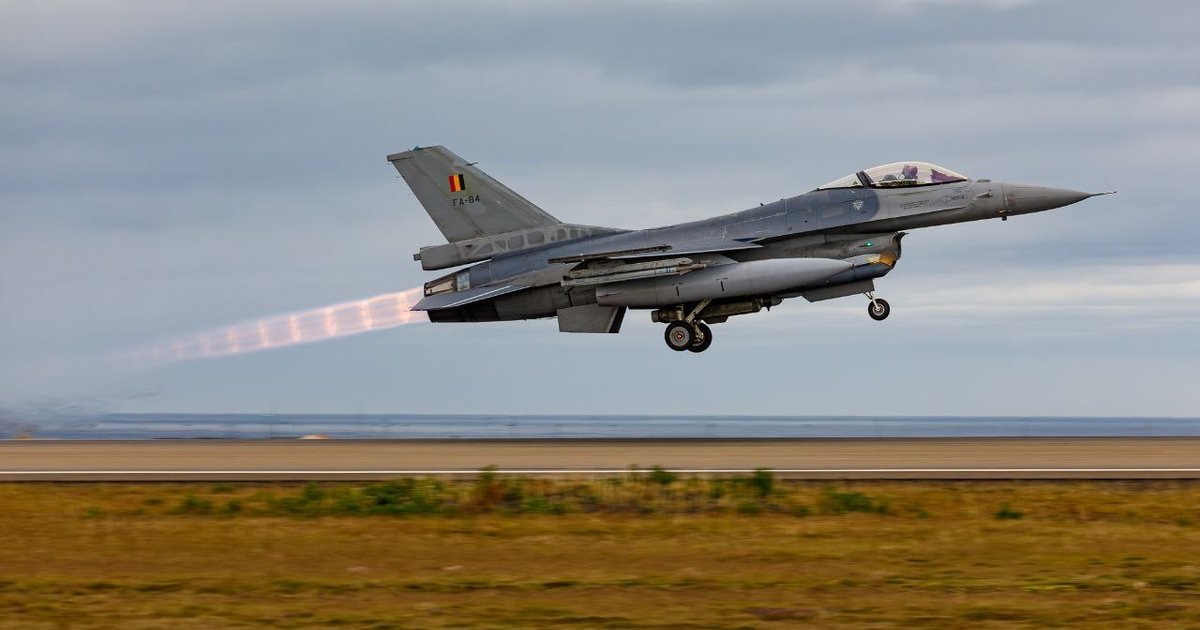
belgium send three f-16 fighter jets maintenance delays keep ukraine using · post belgian jet belgium-f-16-takes-off news ukrainian reports
Explore further

Belgium will send three F-16 fighter jets, but maintenance delays may keep Ukraine from using them

A "very serious visit" ahead

Sybiha linked the larger package to a visit he did not name.

"We will soon have one very serious visit. We think that one of the decisions following this visit will be a multimillion package of this ammunition for Ukraine," he said.

Talks on buying the rounds from private manufacturers are also underway, he added.

Ukraine has already received urgent batches of F-16 ammunition from Belgium, Spain, and other partners, and Belgium plans to send three more F-16s by the end of 2026 under an accelerated procedure. The jets' air-to-air missiles and cannon rounds are imported and not always in stock.

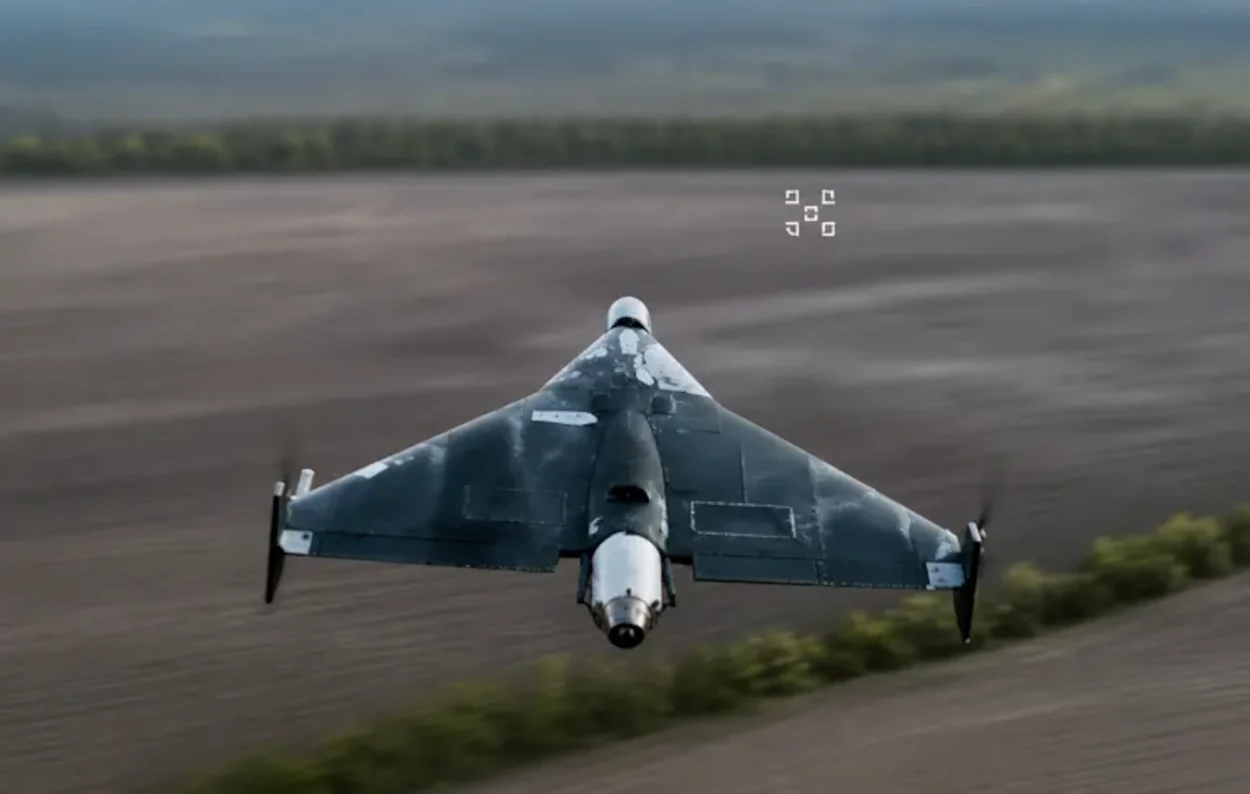
money engineering what stands between ukraine russia's fastest drones zelenskyy says · post russia’s new “geran-4 seeker” shahed variant geran-4 news ukrainian reports
Explore further

Combat shows speed alone can’t catch Russia’s jet-powered drones, despite eight Ukrainian makers’ assurances. So why can’t they stop them?

Another night of Russian strikes

Overnight on 2 October, Russia launched 108 drones at Ukraine, 47 of them jet-powered, and air defenses downed 88 of them. In Kyiv, a Russian strike on a 25-story residential building in the Darnytskyi district killed one person and injured two. Russia also targeted the Southern Bridge again, after striking it three times the previous day, and the city restricted public transport across several bridges.

In Kharkiv Oblast, a Russian FPV drone hit a car in the Solonytsivka hromada on the afternoon of 1 October, injuring a man and a boy. A Russian strike damaged a civilian enterprise in Rivne Oblast and started a fire that forced an evacuation of nearby homes, regional head Oleksandr Koval said, and drones attacked Cherkasy Oblast.

In neighboring Romania, an object believed to be a drone crashed near the village of Plauru in Tulcea County during the attack, starting a fire that caused no casualties, Romania's Defense Ministry said.

  •  
❌