Vue lecture

Every Russian attack on Kyiv costs the city about $12 million. They now come almost twice in week
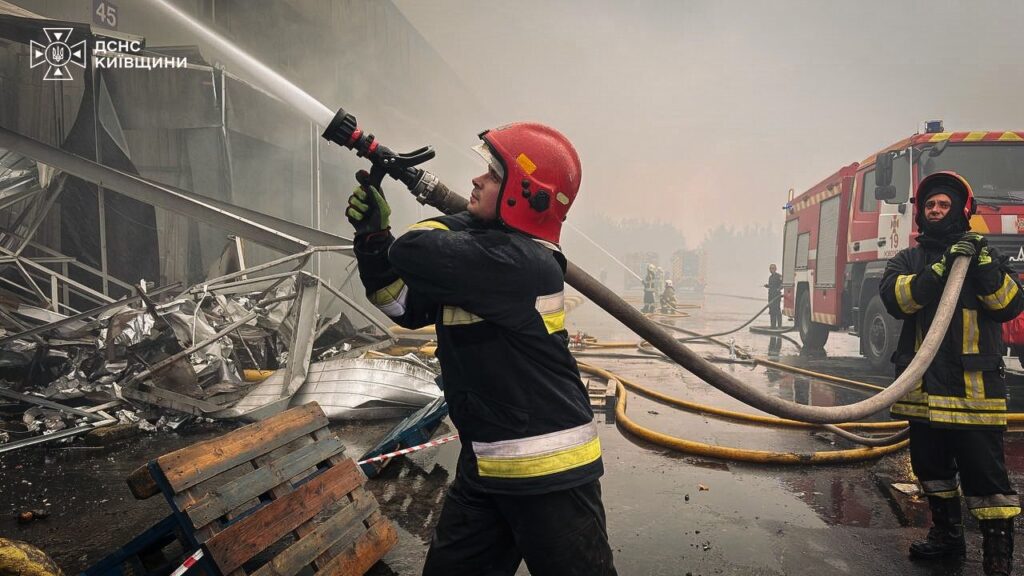
Ukrainian firefighters respond to a blaze at warehouses hit by a Russian drone strike in Kyiv Oblast’s Brovary district, 18 August 2026. Photo: Ukraine's State Emergency Service

Each Russian attack on Kyiv costs the city budget about $12 million. Russian strikes have already damaged more than four thousand buildings in the capital, Mayor Vitali Klitschko said in answer to a Novyny.LIVE journalist.

Russian forces now strike Kyiv with ballistic and cruise missiles or drones on average almost twice a week. The latest massed attack, on the night of 20 August, killed at least 16 people in Kyiv and the region.

The cumulative damage keeps growing

The toll on the city's housing is vast. More than four thousand buildings in Kyiv have been damaged by Russian strikes, Klitschko continued, with each attack adding to a repair bill the city carries alongside the human losses.

New shelters are planned, but old money went unspent

Kyiv plans to expand its shelter network. By the end of 2026, the city intends to install new mobile shelters, placed first in districts and locations that lack other accessible cover, Klitschko stated.

The plan follows a failure that the mayor acknowledged. Last year, Kyiv allocated $12 million for mobile shelters, but the district administrations did not use the money. It was returned to the city budget.

The capital also still lacks enough professional bomb shelters capable of better protecting people during missile strikes, he added. This gap persists as tens of thousands of Kyiv residents shelter in metro stations through the attacks.

The city is building a backup heating system

Meanwhile, Kyiv is preparing for winter under fire. The city has completed more than 50% of planned work to create a backup heating system, with readiness at some sites already reaching 90%, the Kyiv mayor added.

Russia has struck Ukraine's energy and heating infrastructure each winter of the war. A backup system is Kyiv's insurance that a successful strike on one heat source does not leave districts frozen, part of the same preparation for the heating season that Ukraine's government is racing to complete nationally before the cold.
  •  

Ukraine’s drones hit two Russian fighters and a spy drone—and blinded radars from occupied Crimea to Rostov

two russian fighters one spy drone hit kranodar radars anti-air systems elsewhere—ukraine forces · post combat aircraft ukrainian drone's sights vityazevo airfield krasnodar krai russia 23 2026 su-33 video sbs

Ukraine's drones hit three Russian aircraft and eleven air-defense targets in one day, its Unmanned Systems Forces reported on 23 August. The strikes reached from occupied Crimea to airbases hundreds of kilometers inside Russia. They pushed the force's August count of struck Russian air-defense assets to 20, the latest run in a Ukrainian campaign against Russia's radars and launchers that has not paused for months.

Russia leans on a layered net of radars and mobile launchers to keep Ukrainian drones and missiles away from its airfields, fuel plants, and occupied land, so every set burned off that net widens the corridors its long-range weapons fly through. With its S-400 battery caught in the open again and jets chased off Crimea still within reach, Russia has shrinking safe ground for the aircraft and air defenses covering its south — a squeeze already visible when Ukraine caught a fighter and its protecting launcher on the same airfield weeks earlier.

A one-day sweep of 14 targets

The Unmanned Systems Forces (SBS) commander, Robert Brovdi, callsign Madyar, put the 23 August haul at 14 targets. They included two fighter jets, a strike-reconnaissance drone, eight radar systems, a Tor and a Pantsir short-range launcher, and a position of an S-400 — a Russian long-range air-defense system.

Eleven of the 14 fell in Rostov Oblast and Krasnodar Krai in southern Russia. The other three were in occupied Crimea. 

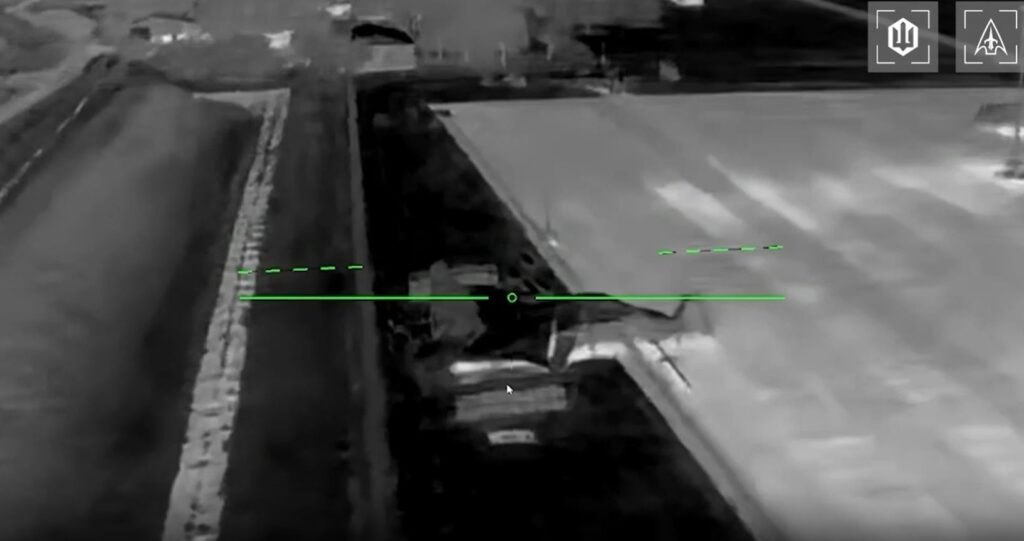
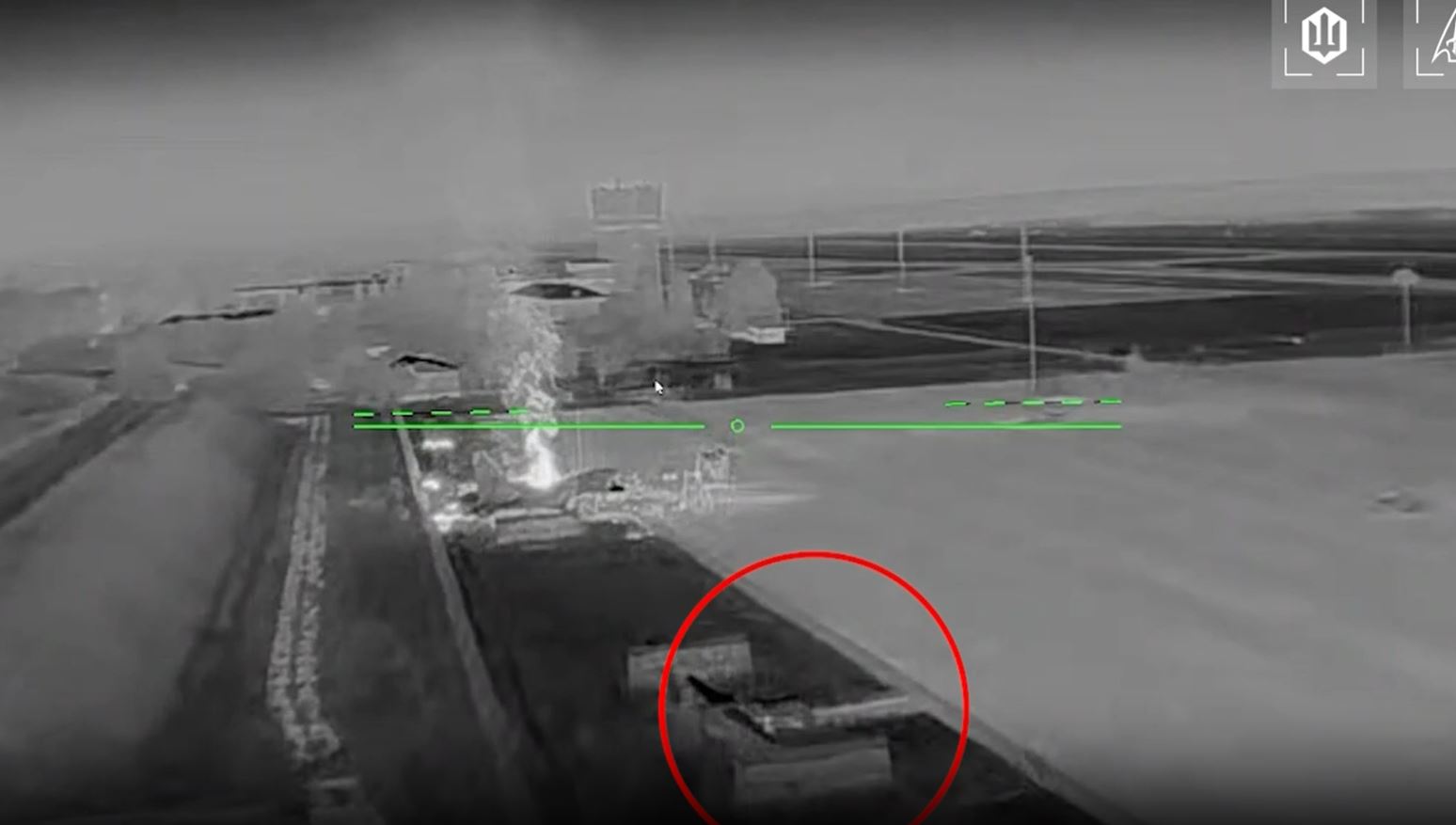
two russian fighters one spy drone hit kranodar radars anti-air systems elsewhere—ukraine forces · post aftermath strike combat aircraft seen another ukrainian vityazevo airfield krasnodar krai russia 23 2026 дорозвідка
Aftermath of the strike on a Russian combat aircraft as seen from another Ukrainian drone at Vityazevo airfield in Krasnodar Krai, Russia, 23 August 2026. Screenshot: SBS

Jets that fled Crimea, caught on the mainland

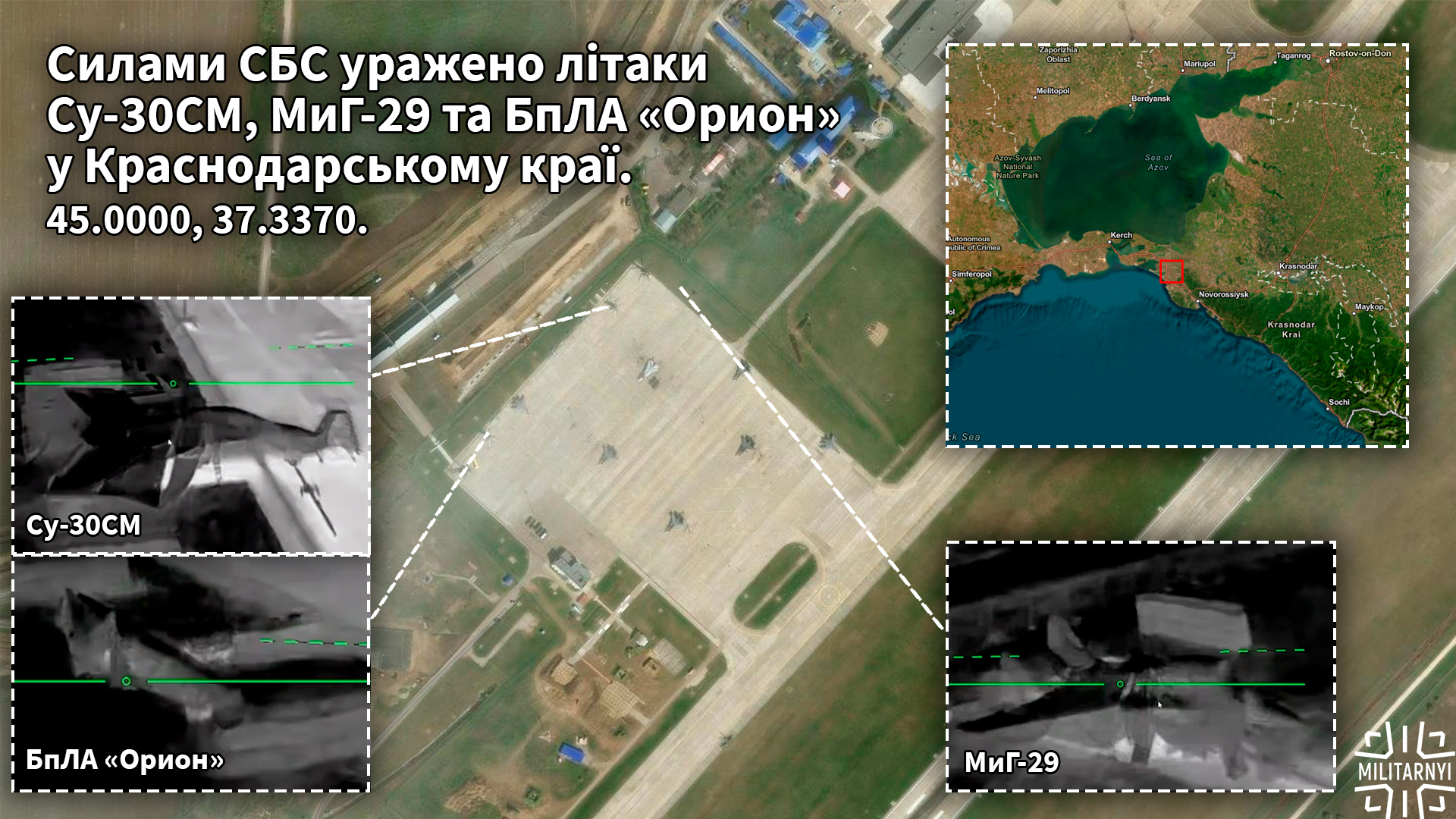
The three aircraft were struck at Vityazevo, a Krasnodar Krai airfield about 300 km from the front line, the 1st Separate Center of the Unmanned Systems Forces said. Militarnyi assessed that the jet SBS called a Su-33 was likely a two-seat Su-30SM, judging by its cockpit hump.

two russian fighters one spy drone hit kranodar radars anti-air systems elsewhere—ukraine forces · post ukrainian strikes su-30sm fighter mig-29 orion strike-reconnaissance vityazevo airfield krasnodar krai russia 23 2026 airfield's
Ukrainian drone strikes on a Su-30SM fighter, a MiG-29 fighter, and an Orion strike-reconnaissance drone at the Vityazevo airfield in Krasnodar Krai, Russia, 23 August 2026, with the airfield's location marked on the map. Collage: Militarnyi

Russia flies the Su-30 from its southern bases to attack Odesa and Mykolaiv oblasts, to hunt Ukrainian sea drones, and to patrol occupied territory. The struck jet likely belonged to a naval aviation regiment pushed off Crimea by repeated Ukrainian strikes on the peninsula.

two russian fighters one spy drone hit kranodar radars anti-air systems elsewhere—ukraine forces · post strike podlyot radar holovativka rostov oblast russia 23 2026 sbs ukraine news ukrainian reports
A strike on a Russian Podlyot radar at Holovativka in Rostov Oblast, Russia, 23 August 2026. Screenshot: SBS

Based on the SBS footage, Militarnyi says one drone could not hit the fighter cleanly. It exploded beside the aircraft and set off a fire that Russian crews tried to put out — a near miss, but enough to sideline the jet for a long stretch. A second drone then found the MiG-29 fighter jet and scored a direct hit, starting a large fire. A third caught the Orion, a strike-reconnaissance drone Russia uses to launch small cruise missiles and to track Ukrainian naval drones in the Black Sea.

Radars, launchers, and an S-400 on the coast

The air-defense targets ran across three regions. In occupied Crimea, crews hit a Nebo-U long-range radar at Sevastopol, the ST-68 at Yevpatoria some 30 km from the front, and a 36D6M at Uiutne. In Rostov Oblast and Krasnodar Krai they knocked out more radars, including two Kasta-2E2 sets and two Podlyot radars, plus the Tor at Pudovy and the Pantsir at Yeysk.

The 413th Reid regiment of the SBS reported hitting the S-400 position near Gelendzhik on the Krasnodar coast — the same stretch where drone crews have caught the system out in the open before.

two russian fighters one spy drone hit kranodar radars anti-air systems elsewhere—ukraine forces · post enhanced colorized frame thermal footage view ukrainian closing st-68 radar moments before impact yevpatoria occupied
Enhanced and colorized frame from the drone thermal footage showing the view from a Ukrainian drone closing on a Russian ST-68 radar moments before impact at Yevpatoria in occupied Crimea, 23 August 2026. Screenshot: Ukraine's Unmanned Systems Forces (SBS)

An August of hunting Russia's air shield

A battlefield video counter run by the force reached 20 Russian air-defense assets struck through August. The month's work extended a campaign that has steadily burned through the sensors and launchers guarding Russian airfields and occupied territory. 

  •  

Russia holds up to 20,000 Ukrainian civilians in captivity. One of newest is teacher who stayed in her occupied village to care for her 83-year-old mother

Hanna Pyrozhenko, a resident of Pershokostiantynivka in Kherson Oblast. Source: The Crimean Tatar Resource Center

On 5 August, Russia detained Hanna Pyrozhenko, a resident of Pershokostiantynivka in Kherson Oblast. The 52-year-old former teacher is currently being unlawfully held in Henichesk. Her husband, who tried to find out where she was being held, was tortured by the Russians and ordered to leave the occupied village, Zarema Bariieva, a manager at the Crimean Tatar Resource Center, says.

Russia is currently holding around 7,000 Ukrainian prisoners of war and up to 20,000 civilian hostages. Some of them are subjected to systematic torture and cruel treatment, including amputations without anesthesia and denial of medical care to wounded detainees, says Deputy Speaker of the Ukrainian Parliament Olena Kondratiuk, according to ZMINA.

Teacher who stayed

Hanna is a former teacher at a local school with more than 20 years of teaching experience. After the full-scale war began, she resigned from her job to care for her 83-year-old mother and her 77-year-old brother.

“She could not and did not want to leave her native village, where she had spent her entire life,” Bariieva said.

Russian security forces first searched the Pyrozhenkos’ home in January 2025. They found nothing at the time and left the couple alone for a while.

Russia troops don't answer questions

On 5 August, FSB officers searched the Pyrozhenkos’ home for a second time. This time, they confiscated Hanna’s phone and laptop and detained her.

“The woman was given just a few minutes to change clothes. Then, without explaining anything, they ordered her to go with them. Her husband’s questions about where he should look for his wife and when she would return home went unanswered,” the human rights activist added.

The Crimean Tatar Resource Center established that Hanna was initially held in Chaplynka and was later transferred to Henichesk. It is currently unknown what exactly she is accused of. A lawyer appointed by the occupation authorities said she would be returned home only to participate in an investigative experiment.

Propaganda teaching instead of truth

At a time when Ukrainian teachers are being detained by Russian security forces, Russia continues to bring its own teachers into the occupied territories.

Russian educators, in turn, are attempting to “re-educate” schoolchildren by eradicating everything Ukrainian from them, according to Ukraine’s Center of National Resistance.

“They tell children about ‘heroes of the SMO’ [the Russian term for its war in Ukraine] and ‘Ukrainian Nazis,’ involve them in activities to support the occupation forces, and organize clubs centered around ‘Victory Day fanaticism’ and the creation of rocket models,” the statement said.

The Kremlin's policy of "re-educating" Ukrainian children and fully colonizing the occupied territories is overseen by Russia's highest leadership. This is evidenced by the visit of Maria Lvova-Belova, Russia's presidential commissioner for children's rights, to the occupied areas of Zaporizhzhia Oblast.

The International Criminal Court has accused her, along with Russian ruler Vladimir Putin, of war crimes over the unlawful deportation and transfer of Ukrainian children from occupied territories.

To ensure that teachers in the occupied territories of the Donetsk and Zaporizhzhia regions teach in accordance with the Kremlin's directives, they are sent to Russia for "professional development" training.

  •  

Ukraine’s ousted defense minister confirms M&M’s operation planning and discloses real story behind its name

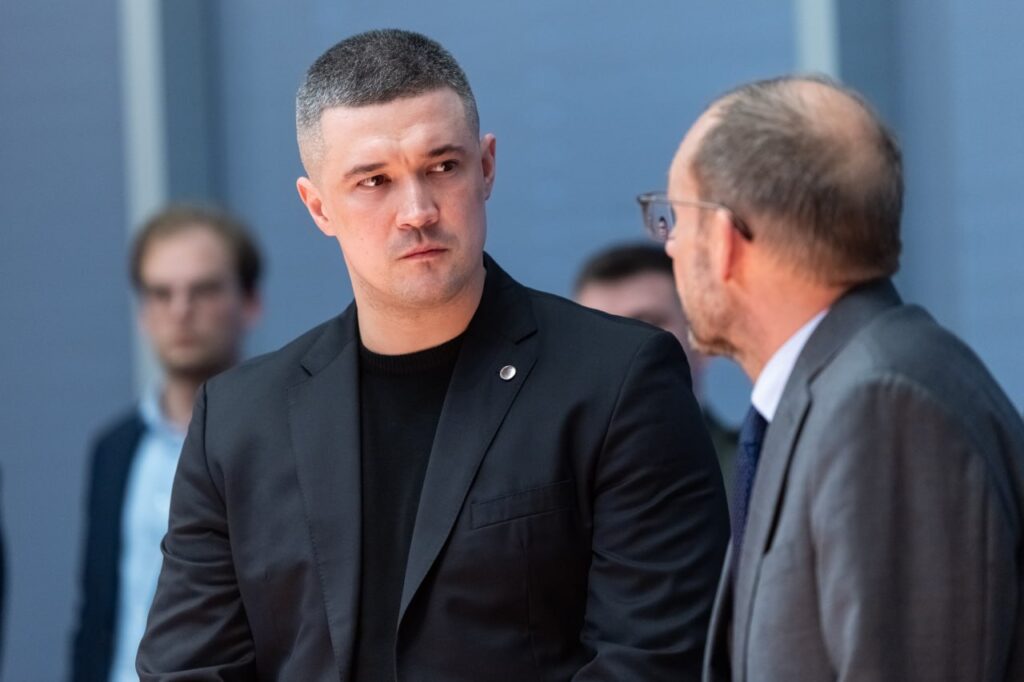
Ukrainian Defense Minister Mykhailo Fedorov in Germany, on 15 April 2026. Source: Fedorov

Former Defense Minister Mykhailo Fedorov has confirmed that Kyiv had planned an operation against targets in Moscow. Recently, The Atlantic reported that at the beginning of 2026, Kyiv had planned Operation M&M’s, which involved using AI-powered drones against Moscow's airports to paralyze them.

President Volodymyr Zelenskyy warned at the time that if any of the drones struck a civilian aircraft, Ukraine’s actions could be perceived as an act of piracy. Nevertheless, work on implementing the plan began.

Sources in the Office of the President have declined to confirm the organization of the operation in comments to journalists. However, former Defense Minister Mykhailo Fedorov, who initiated the operation and whose departure from office led to the plan being shelved, did confirm it.

Why M&M’s?

In an interview with 24 Channel, Fedorov declined to explain the idea behind the operation, adding that it could still be implemented in the future.

But he provided details on the operation’s codename, saying journalists had misinterpreted it, as the plan had nothing to do with deploying a large number of cheap drones.

“That is a mistake. At a meeting where we were discussing fully autonomous deep-strike drones, I was handing out M&M’s to everyone. It was my birthday, and someone gave me a box of M&M’s. I shared them with everyone and said that we would call this autonomous-drone project M&M’s," Fedorov said.

What does the former minister plan to do next?

During the interview, Fedorov said he wants to create a venture fund to attract Western capital for investment in Ukrainian startups and developers.

“I have several priorities. One is cheap missiles, because I am convinced that they are the future of warfare involving artificial intelligence. These are inexpensive missiles that could be used to deter strikes and further escalation," he explained.

Another priority for him is the robotization of the front line and the deployment of sensors.

"We need to think about how to remove infantry from the front line. We need to robotize the front line as much as possible so that people do not have to spend months in dugouts under drone attacks," he said.

Opposition to the system

Fedorov also announced that he planned to travel to the US the following week, not to seek President Donald Trump’s support after calls for Ukraine to hold elections.

When asked whether he planned to meet Elon Musk there and continue their cooperation in some form, the former minister replied, “We’ll see.”

He said he did not yet know whether he would run for president or parliament, or, if so, which political team he would join, adding that everything would become clear only after it was possible to prepare for a vote.

The former minister also said that he was currently in opposition—not to any particular politician, but to the system.

“We are not talking about one person, or two people, or just some top officials. We are talking about hundreds of people who have simply become accustomed over the years to making money from the state budget,” he said.

  •  

Six Nordic-Baltic leaders came to Kyiv. Norway put a $9 billion figure on 2027 support

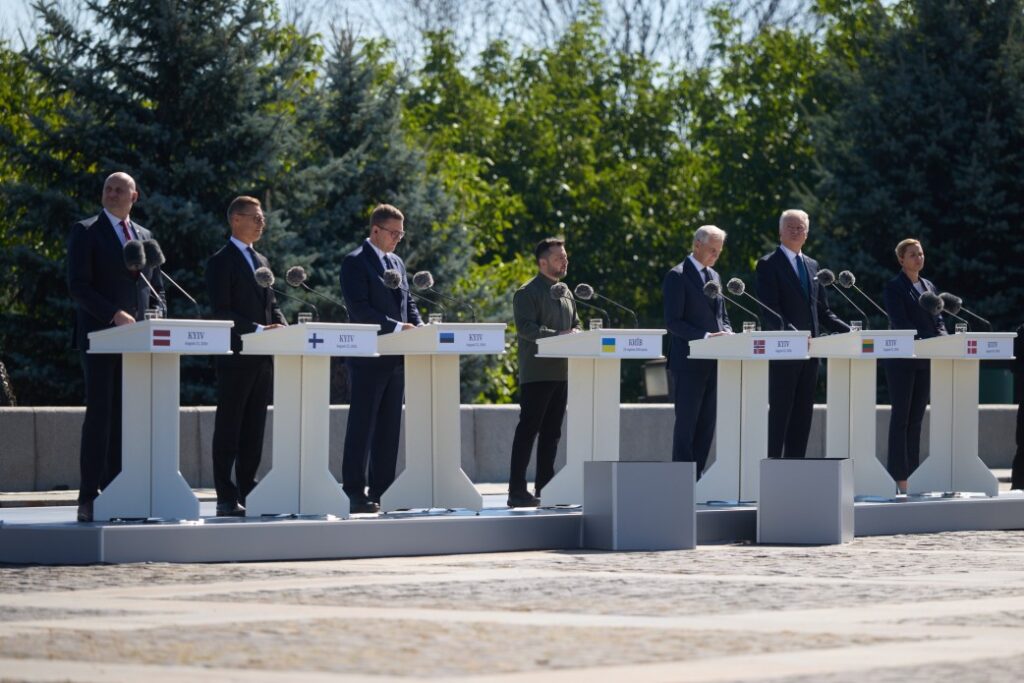
six nordic-baltic leaders came kyiv norway put $9 billion figure 2027 support · post ukrainian president volodymyr zelenskyy finland denmark estonia latvia lithuania attend ukraine's state flag day ceremony 23

On 23 August, Norwegian Prime Minister Jonas Gahr Støre said Norway will keep Ukraine aid unchanged in 2027, Ukrinform reported. He spoke during Ukraine’s State Flag Day ceremony in Kyiv, attended by six Nordic-Baltic leaders. Ukrainian President Volodymyr Zelenskyy thanked them and tied the flag to Ukraine’s resistance against Russia’s war.

Nordic and Baltic states have been among Ukraine’s biggest supporters relative to their economies as Russia continues its all-out invasion of Ukraine. Their support carries disproportionate weight: Northern Europe accounts for only 8% of the combined economy of 31 tracked European countries, but provided 33% of their military aid to Ukraine in 2025, as European countries took on more of the burden after US assistance sharply declined.

Norway keeps 2027 support at about $9 billion

Norway's PM Støre put Norway’s 2027 assistance at about $9 billion, the same level as this year. It will cover military, humanitarian, and financial support.

In 2027, we will maintain aid at the same level as this year—approximately $9 billion,” Støre said.

He said every party in Norway’s Parliament supports continued aid. Støre also said the package would follow Ukrainian priorities. He noted that supporting and rebuilding Ukraine is not just aid but an investment in Europe's own security.

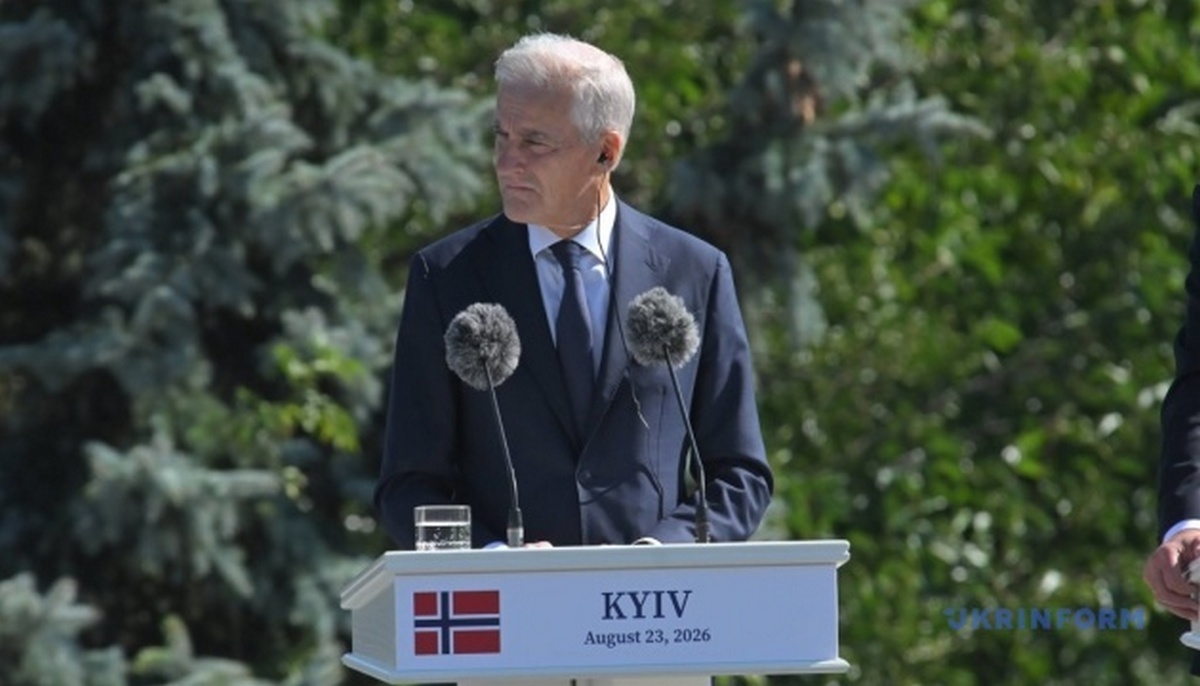
six nordic-baltic leaders came kyiv norway put $9 billion figure 2027 support · post norwegian prime minister jonas gahr støre speaks ukraine's state flag day ceremony 23 2026 leader today
Norwegian Prime Minister Jonas Gahr Støre speaks at Ukraine's State Flag Day ceremony in Kyiv on 23 August 2026. Photo: Ukrinform

Støre said Norway and Ukraine were due to sign a strategic partnership declaration later on 23 August. He said it would put cooperation on a long-term footing and benefit both countries.

On Kyiv's Poshtova Square, the little bronze boys who founded the city got dressed up for the holidays.

For National Flag Day and Independence Day, the sculptures known as "Kids, founders of Kyiv" were given new outfits—embroidered shirts and costumes sewn by the artist's wife,… pic.twitter.com/uy3kL0KUde

— Euromaidan Press (@EuromaidanPress) August 23, 2026

Zelenskyy puts Ukraine’s flag at the center of the ceremony

Ukraine marked State Flag Day on 23 August, one day before Independence Day. In his address, President Zelenskyy pointed to the historic Independence Flag displayed at the ceremony. Ukrainians carried that flag into Parliament after restoring independence on 24 August 1991.

Zelenskyy said Ukrainians had preserved their blue-and-yellow symbol through 70 years of Soviet rule. He then connected it directly to Russia’s invasions.

In 2014 and in February 2022, Russia attacked to take away this flag, our symbols, our freedom and independence,” Zelenskyy said.

He also thanked the Nordic-Baltic leaders standing alongside him. The visitors came from Denmark, Estonia, Finland, Latvia, Lithuania, and Norway.

Ukraine marks the 35th anniversary of restoring its independence tomorrow, on 24 August.

Ahead of our Independence Day, we feel we are not alone. Our allies are with us.

Today in the morning, I was pleased to welcome leaders of Denmark, Estonia, Finland, Latvia, Lithuania, Norway, alongside other high representatives, at the Kyiv Railway Station.

They will hold… pic.twitter.com/NmPgIVH1g3

— Andrii Sybiha 🇺🇦 (@andrii_sybiha) August 23, 2026

Norway’s support already spans defense, budget, and energy needs

The 2026 Nansen Program covers Norwegian support for Ukraine’s military and civilian needs.

  • Norway supplied Ukraine with missiles for NASAMS air defense systems in January.
  • In March, Oslo provided $200 million in budget support for pensions, teachers, emergency workers, and other civilian needs.
  • Zelenskyy and Støre signed a declaration on enhanced defense and security cooperation in April.
  • Norway then pledged $45 million for Ukraine’s energy resilience in May.
  • In June, Støre pledged further support for Ukraine’s air defenses after a Russian attack.
  •  

One Russian warehouse smolders near Kazakhstan while a bigger fire rages near St. Petersburg

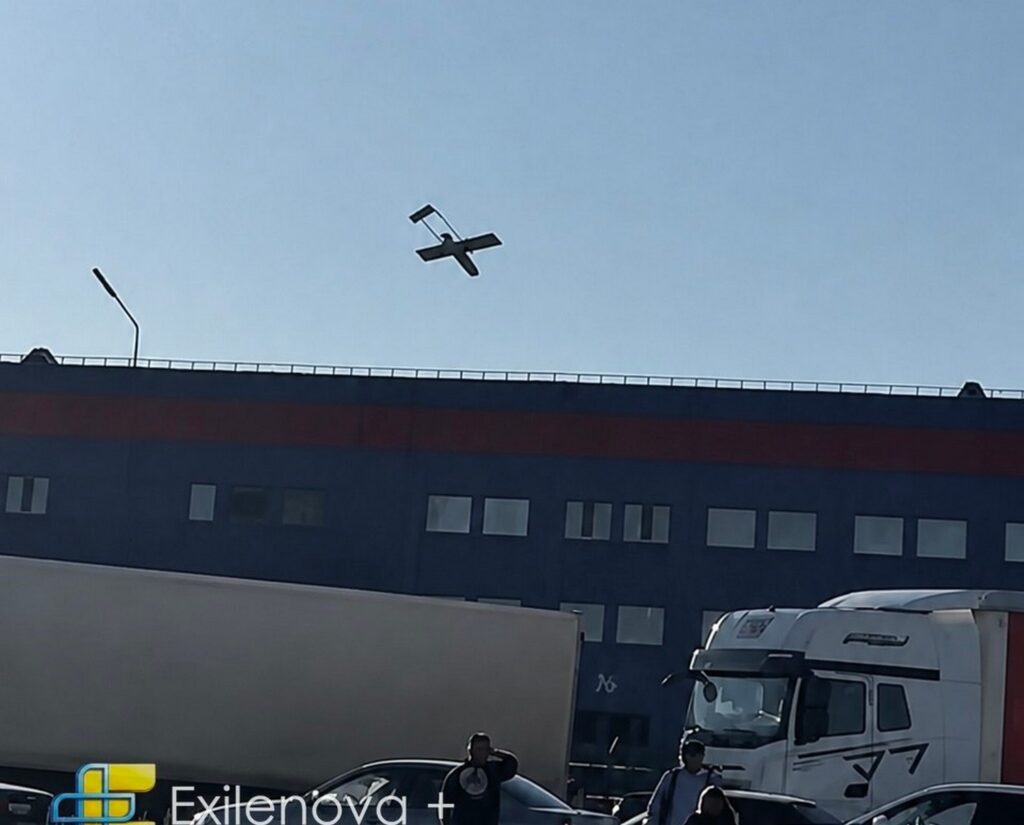
one russian warehouse smolders near kazakhstan while bigger fire rages st petersburg · post ukrainian drone over ozon logistics complex orenburg russia 23 2026 fp-1 hitting ozone exilenova ukraine news

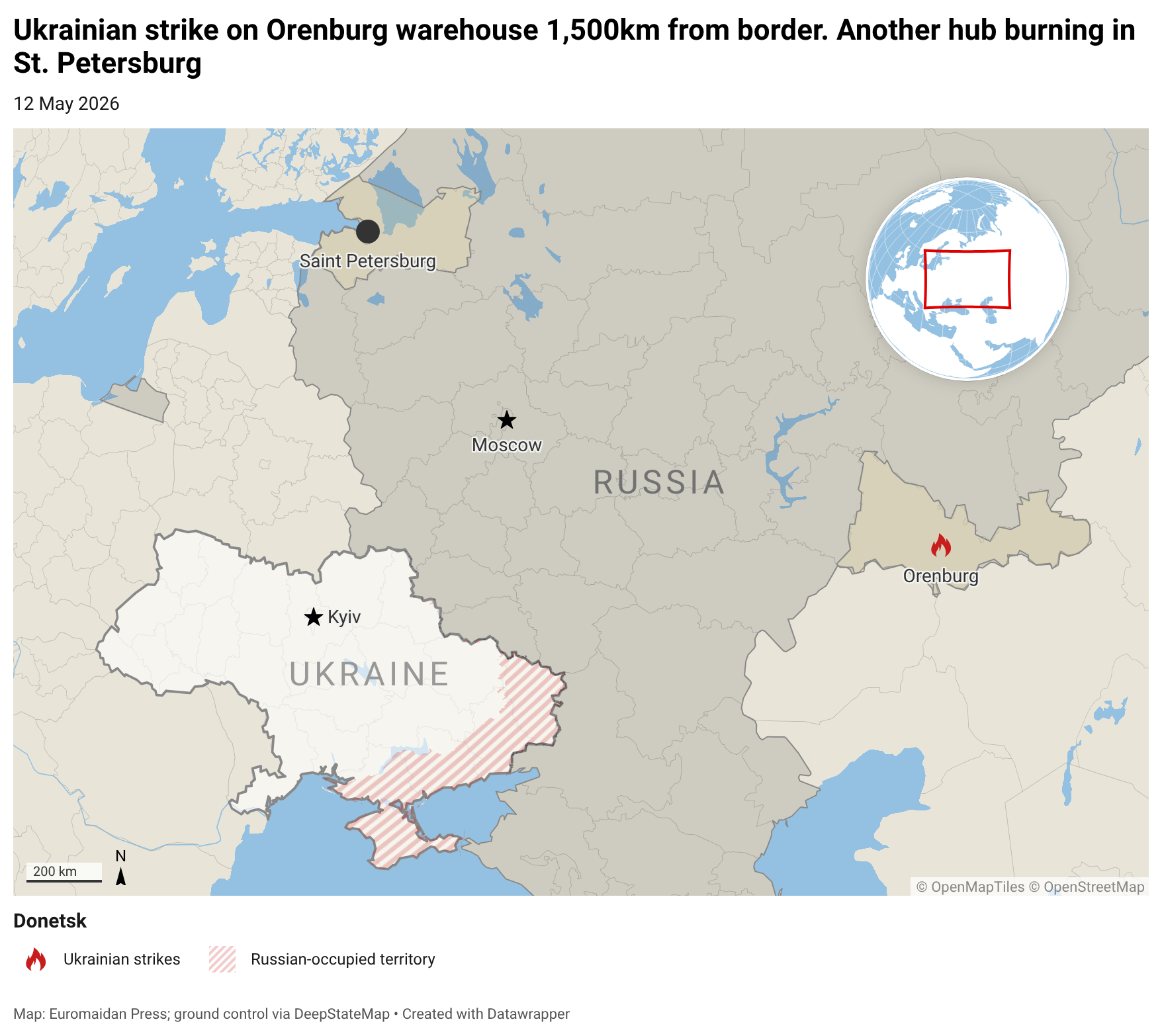
Ukrainian drones struck a logistics complex belonging to Russian online retailer Ozon in Orenburg on 23 August, the second Ozon warehouse hit in two days, monitoring Telegram channels reported. The site sits about 1,200 km from the war zone, near Russia's border with Kazakhstan. Hours earlier, a large fire tore through a separate warehouse outside St. Petersburg, roughly 900 km north of Ukraine, though local authorities declared no drone or missile threat.

Kyiv's long-range drone program has pushed its reach ever deeper into the Russian rear, turning fuel depots, factories, and delivery hubs far behind the lines into routine targets, and retail networks have drawn special attention because their warehouses double as arteries for the wider war economy. Each strike this far inside Russia forces Moscow to stretch air defenses across a country too vast to shield everywhere at once. Disrupted e-commerce warehouses also add to pressure already showing at the pumps, where fuel shortages have brought rationing to major cities.

Drones hit Russia's biggest Ozon warehouse

Ukrainian monitoring channel Exilenova+ published video of the strike moment, after which a fire took hold on the site. Independent Russian outlet Astra analyzed eyewitness footage showing an emergency vehicle racing toward the depot. The complex spans more than 200,000 m² and was designed to hold over 31 million items, ranking among Ozon's biggest in Russia.

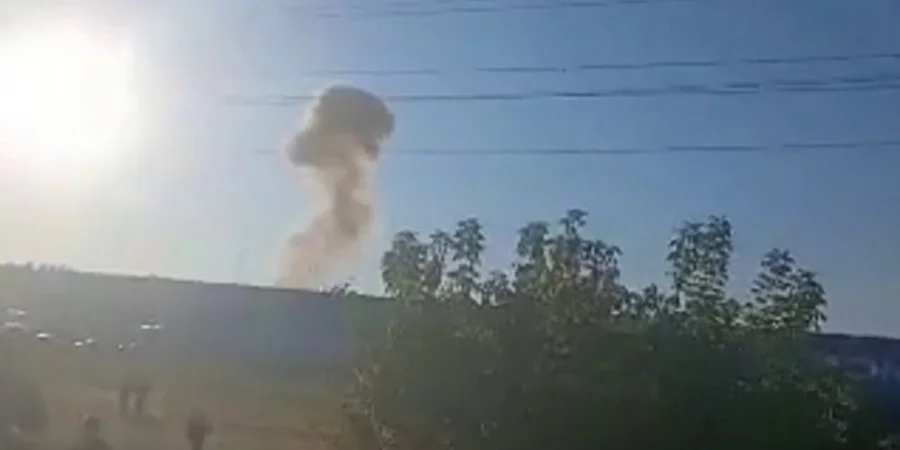
one russian warehouse smolders near kazakhstan while bigger fire rages st petersburg · post smoke rising over ozon logistics complex orenburg russia 23 2026 заявлено як задимлення на території складу
Smoke rising over the Ozon logistics complex in Orenburg, Russia, 23 August 2026. Photo: Exilenova+

The warehouse stands inside the city's special economic zone, a tax-favored industrial park on the eastern edge of European Russia. The first phase opened in August 2024, and a second building followed in 2025.

Orenburg mayor Albert Yumadilov claimed several drones were downed over the special economic zone and that debris fell on the Ozon complex, starting a fire that crews quickly put out with no one hurt. 

Ozon confirmed the strike, saying it evacuated more than 300 workers, pulled its goods from the marketplace and stopped taking new deliveries while the site sat idle. 

A second fire near St. Petersburg, with no air-raid alert

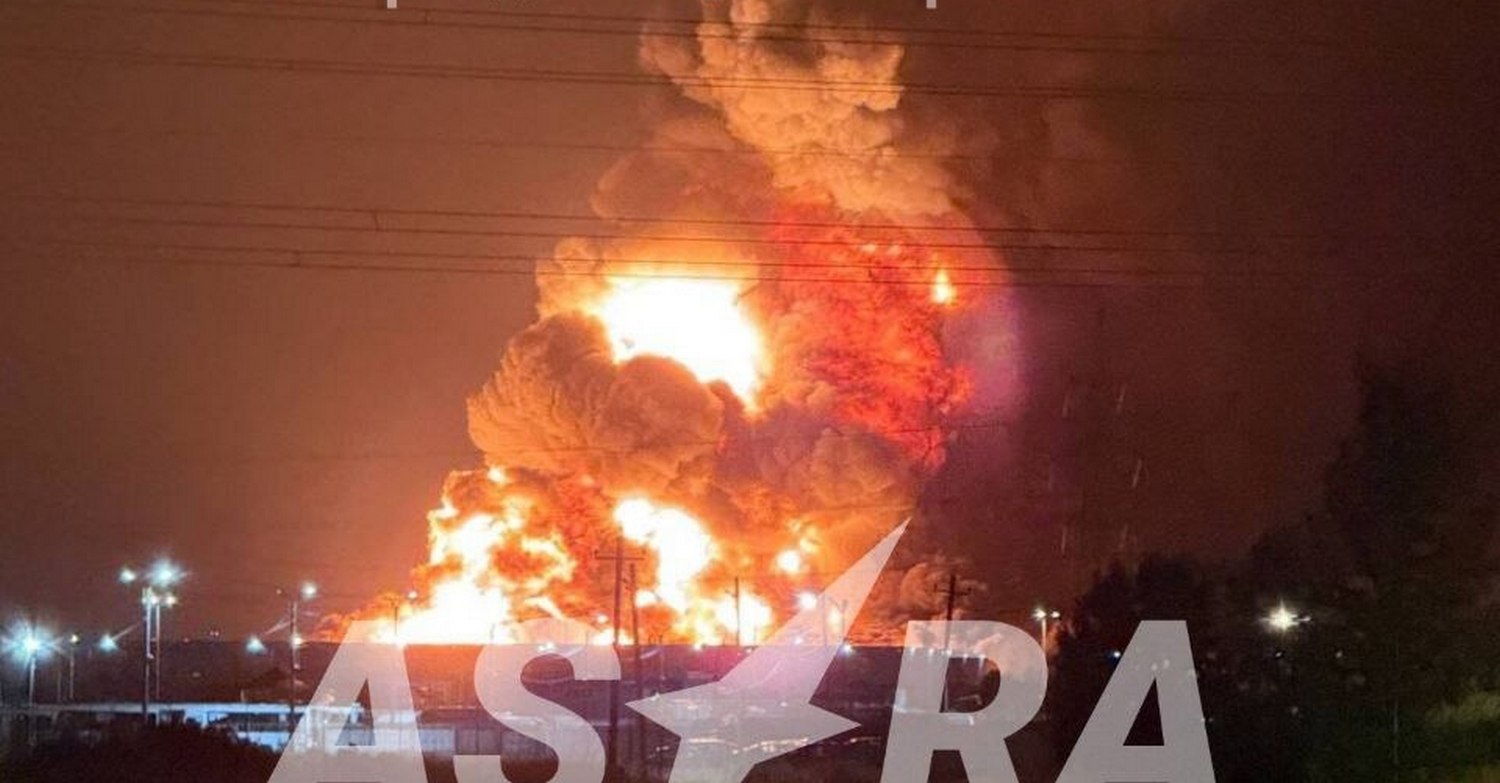
Overnight, a large blaze hit a warehouse in the Kolpino area south of St. Petersburg. Astra established that the warehouse stood about 350 m from an Ozon site, and witnesses said they heard no drones or air defense. Ukrainian Telegram channel Exile+ identified the burning facility as a storage warehouse run by Logistera.

one russian warehouse smolders near kazakhstan while bigger fire rages st petersburg · post large complex kolpino area russia 23 2026 saint astra ukraine news ukrainian reports
A large fire at a warehouse complex in the Kolpino area of St. Petersburg, Russia, 23 August 2026. Photo: Astra

Part of a widening campaign on Russian marketplace logistics

The Orenburg hit followed the first-ever Ozon strike a day earlier, at a warehouse in Chapaevsk, Samara Oblast. Before turning to Ozon, Ukrainian drones had struck more than 10 warehouses belonging to the larger Russian marketplace Wildberries. Such marketplace hubs move not only consumer goods but dual-use items like electronics and drone components that can reach Russia's military.

  •  

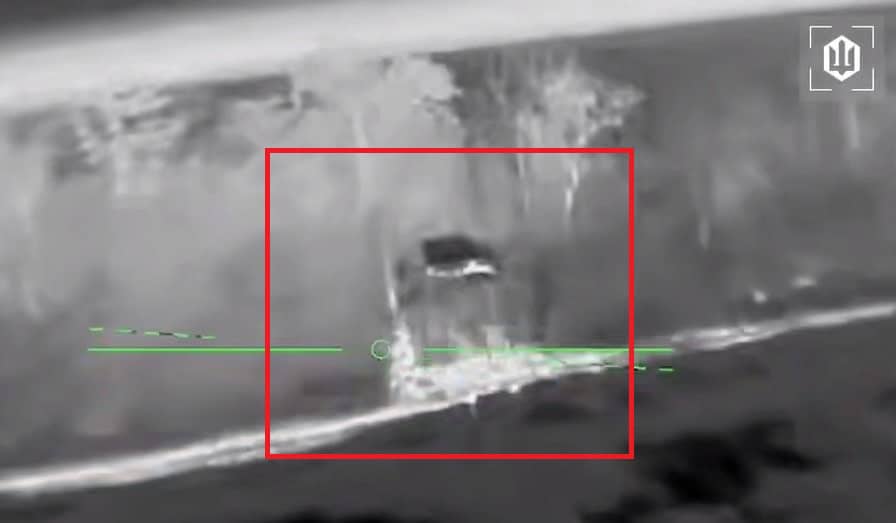
Ukraine says it hit an Iskander launcher near the border—part of a dedicated hunt for Russia’s ballistic launch sites

ukraine says hit iskander launcher near border—part dedicated hunt russia’s ballistic launch sites · post russian missile under ukrainian drone attack taganrog russia 30 2026 1st separate center unmanned systems

Ukraine has struck a Russian Iskander launcher near its border as part of a dedicated operation against nearby ballistic-missile launch positions, Ukrainian President Volodymyr Zelenskyy told journalists, according to Ukrinform

Russia continues using ballistic missiles against Ukrainian cities while Ukraine has rationed Patriot interceptors and warned of acute shortages, pushing Kyiv to combine interception with strikes on the systems and positions used to launch those missiles.

President says Ukraine hit an Iskander launcher

President Zelenskyy described the strike as a success but said the sensitivity of the operation prevented him from providing many details.

We struck an Iskander launcher near our borders,” he said. “I am grateful to our warriors who are carrying this out. This is our operation to hunt their systems positioned nearby.”

The president, however, didn't disclose where the launcher was located or what weapon Ukrainian forces used to hit it.

Zelenskyy said strikes on launchers are one way Ukraine is trying to counter Russian ballistic attacks when anti-ballistic interceptor stocks are limited.

When our anti-ballistic missile stocks are at a minimum, there is another tactic. It is more difficult, and we developed it,” he said. “It is hunting their nearby positions from which ballistic missiles are launched.

He described the effort as a separate program and operation. Euromaidan Press could not independently verify the reported strike.

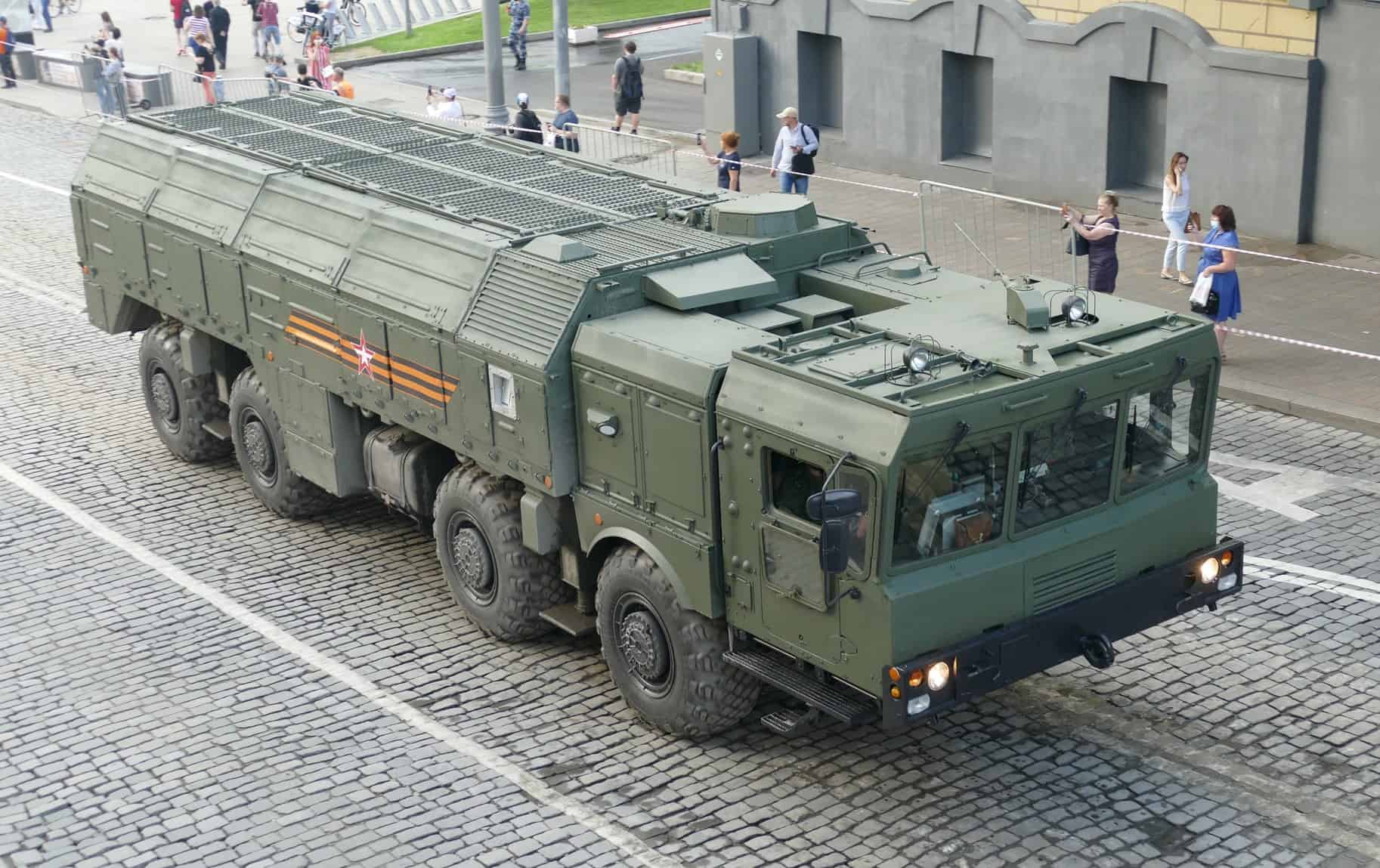
Russian Iskander-M missile system, 2020. Illustrative photo. Photo from Russian government sources via Militarnyi

Ukraine has already targeted Russian ballistic missile infrastructure in several operations this year. In April, Ukrainian drone forces reported strikes on two bases linked to Iskander systems in occupied Crimea.

On 30 May, Ukraine’s Unmanned Systems Forces said they destroyed an Iskander system at a launch position near Taganrog in Russia’s Rostov Oblast.

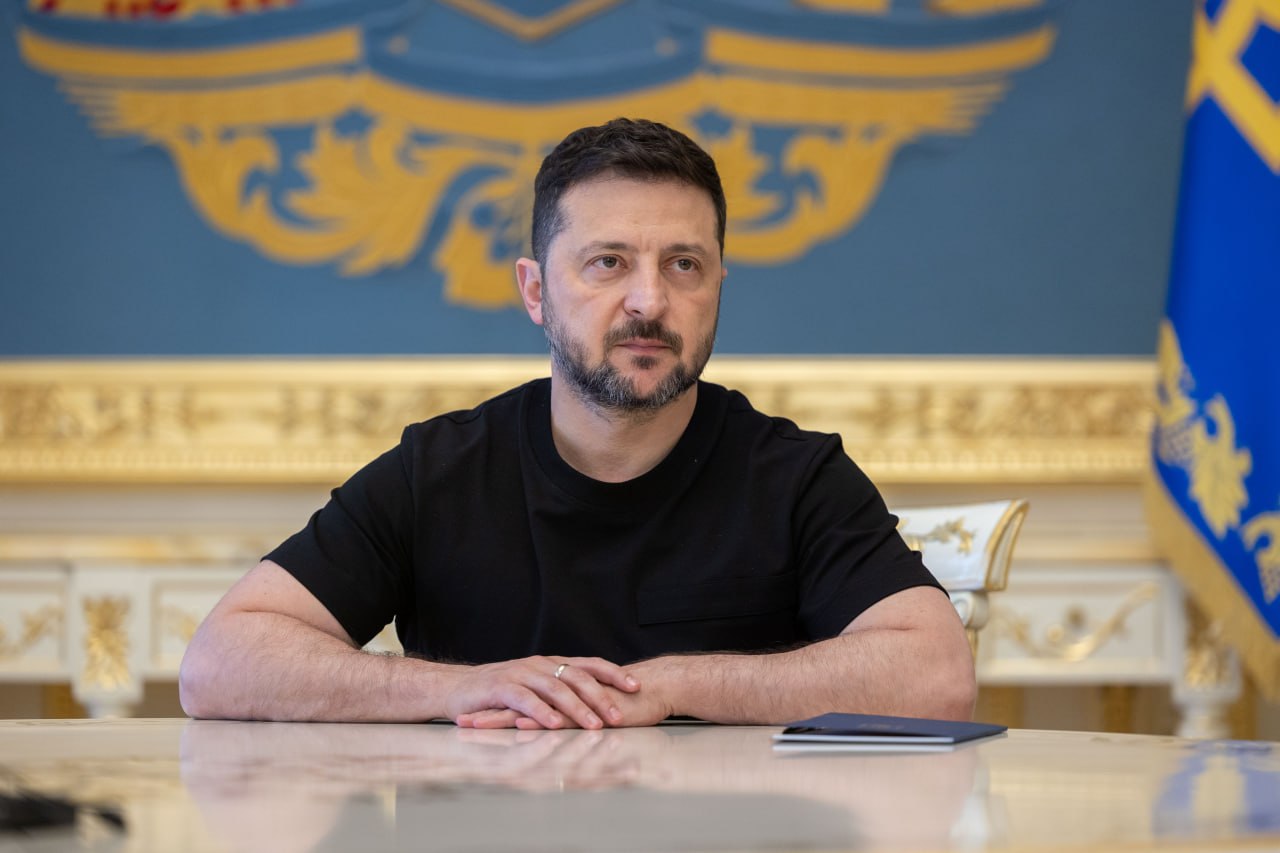
Ukrainian President Volodymyr Zelenskyy, 7 July 2026. Photo: Zelenskyy / Telegram
Explore further

5% of US Patriot stocks gets Ukraine through winter, 10% ends the ballistic threat — and Zelenskyy has just 1%, he tells CNN

SpaceX rejected Ukraine’s request to use Starlink inside Russia

The launcher strike comes as Ukraine is also looking for better ways to operate long-range drones against military targets in Russia. Zelenskyy said SpaceX ultimately refused to let Ukraine use Starlink inside Russia because of escalation concerns.

Kyiv had wanted Starlink to work over Russian territory for defense operations, including drone strikes on Russian ballistic-missile launchers near the border. The Defense Ministry asked him in the first half of 2026 to raise the issue with US President Donald Trump, Zelenskyy said. Zelenskyy said Trump relayed that decision to him at a later meeting. Ukraine continues discussing the issue with the US side.

Ukraine and European partners are separately developing the FREYJA anti-ballistic system, with Kyiv seeking a prototype capable of demonstrating practical results by mid-2027. The project is intended to combine Ukrainian missile technology with European radars, sensors, and command systems.

  •  

Reports credit North Korea’s newest missile of terror with 2.5-ton warhead and 900-km range. Expert explains why those numbers can’t both be true

ballistic missiles north korea

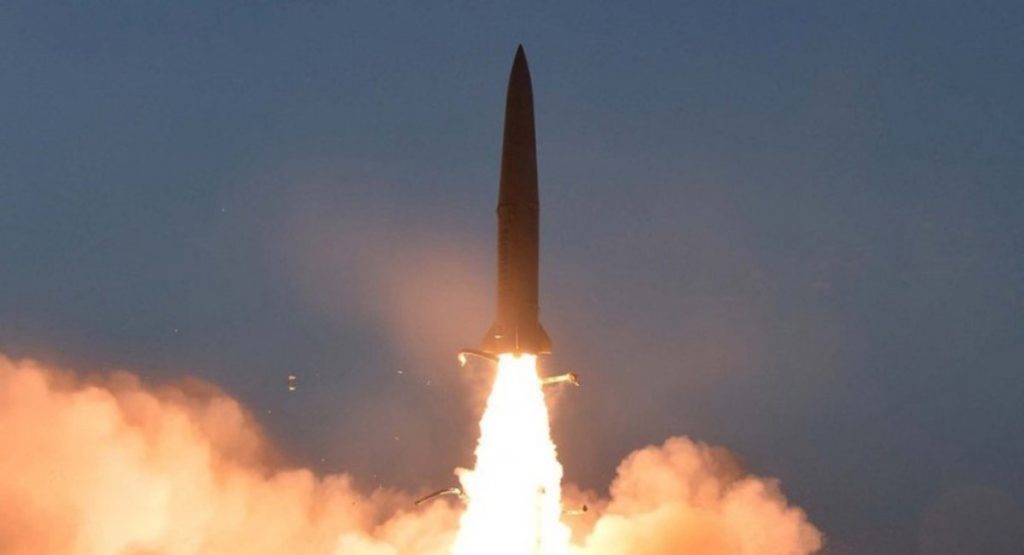
Russia may soon get 150 more missiles from North Korea, and their inaccuracy is precisely what makes them dangerous to civilians. This characteristic makes them above all weapons of terror, military expert and Defense Express director Serhii Zghurets said on Espreso.

The particular danger may carry the KN-30, credited with a range of up to 900 kilometers and a 2.5-ton warhead. For comparison, the warhead in Russia's Kalibr cruise missile is 450 kilograms, as in the Iskander ballistic missile, and even those destroy large objects. A missile carrying anything near five times that payload would hit far harder than any weapon already devastating Ukrainian cities.

The claimed specs don't add up

Zghurets urged skepticism toward the most hyped missile. The KN-30's credited figures can hardly be combined in one missile, he said. Physics forces a trade-off.

"If we are talking about a missile that can fly 900 km, then it has a significantly smaller warhead weight. If we are talking about 2.5 tons, then the range will be much shorter," Zghurets explained.

Either version remains dangerous, but the claims as advertised describe a missile that likely does not exist.

A 150-missile delivery is under discussion

North Korea keeps feeding Russia's arsenal. Pyongyang continues to strengthen Russia's military potential with missiles of several types, including the KN-23, KN-24, and KN-30, and a possible supply of about 150 North Korean missiles to Russia is now actively discussed, Zghurets said.

Even if the missiles' real characteristics differ from the claims, such a number would be a substantial addition to the Russian arsenal, he noted, more missiles for the campaign Russia fires at Ukrainian cities regardless of how well each one performs.

Inaccuracy makes them terror weapons

The missiles' precision is their defining flaw. By one estimate, Zghurets cited, missiles flying about 800 kilometers can deviate from their target by 18 kilometers, an error radius wider than most cities.

That rules out military precision but not harm.

"There is definitely no talking about any accuracy with these missiles. But as a weapon of terror that supplements the Russian arsenal, the Russians will of course need it now," Zghurets said.

A missile that can land anywhere within 18 kilometers of its aim point cannot reliably hit a military target, but if fired at a city, it will hit something, which is how Russia has used North Korean missiles against Ukrainian civilians.

Both sides get what they want from the axis

Moscow's interest goes beyond missiles. Russia is also interested in bringing in North Korean troops, which would free part of its own forces for combat against Ukraine, Zghurets said.

Pyongyang is paid in money and technology. North Korea seeks military-technological advantages from the cooperation, including improving its submarine-launched ballistic missile technology, and over the years of the war, may have received about $20 billion from Russia, Zghurets estimated.

The Moscow-Pyongyang military alliance is a serious challenge for the West, he said, though it is hard to predict how actively the US will try to limit the two countries' cooperation.

  •  

Zelenskyy awarded Vikings star, ballistic missile CEO took stage, and strike drone got signed with messages to Russians: Ukraine’s major UNITED24 platform turns four

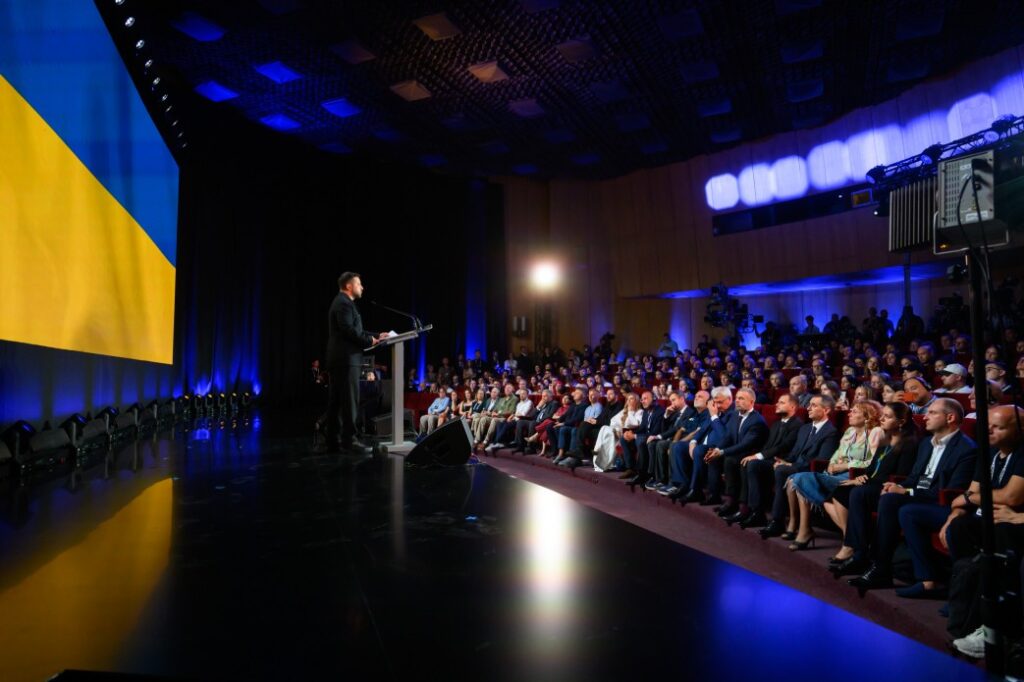
Ukrainian President Volodymyr Zelenskyy at United24 MODE Summit 2026 on 22 August 2026, in Kyiv. Source: Ukraine's Presidential Office

Kyiv held the UNITED24 MODE Summit 2026, dedicated to the results of four years of work by UNITED24, the president’s fundraising platform. The event came two days before Ukraine's Independence Day.

Since its launch in 2022, the initiative has raised nearly $4 billion to support Ukraine. The platform has become an important fundraising tool, bringing together millions of donors from 145 countries.

The largest contributions through UNITED24 have come from the US, Germany, France, Canada, Australia, Switzerland, Sweden, the Netherlands, Finland, Denmark, Austria, Italy, Norway, Belgium, Ireland, Japan, Poland, Lithuania, Türkiye, Singapore, Paraguay, El Salvador, and Guinea-Bissau.

Zelenskyy awarded Vikings star

During the event, Ukrainian President Volodymyr Zelenskyy awarded several prominent UNITED24 ambassadors, volunteers, and philanthropists for their significant support of Ukraine.

Liev Schreiber, the American actor and director, received the Order of Merit. Katheryn Winnick, the Canadian actress best known for Vikings, received the Order of Princess Olga, 3rd Class. Both of them are UNITED24 ambassadors, according to Ukraine's Presidential Office.

Ballistic missile developer attended event

The main topic of the summit was the further development of Ukrainian defense technologies — from creating new solutions to serial production, scaling, and international cooperation, ArmyInform reports.

The discussion featured Fire Point CEO Iryna Terekh, STARK Ukraine COO Maksym Cherkis, and Brave1 head Andrii Hrytseniuk.

Fire Point is the company that is working on the development of the first Ukrainian ballistic missiles.

Behind buying military equipment, platform helped healing Ukrainians

Overall, donors and philanthropists have also contributed to the purchase of medical equipment.

During this period, more than 117,000 medical devices and pieces of equipment were purchased for a total of more than $51.6 million, according to Ukraine's Health Ministry. These included:

Ambulances: 247 vehicles worth $15.0 million.

Armored evacuation vehicles for military medics: 43 vehicles worth $10.6 million.

Anesthesia machines: 83 units worth $2.6 million.

Neurosurgical microscopes: 10 units worth $2.1 million.

C-arm X-ray systems: 39 units worth $3.1 million.

What are platform's next tasks

The panel was moderated by Hanna Hvozdiar, an adviser to Ukraine’s defense minister, who outlined the state’s key priorities for developing Ukraine’s defense technology sector. She said Ukrainian Defense Tech had already demonstrated its ability to respond extremely quickly to the challenges of war.

Over the past several years, a new industry has effectively emerged in Ukraine, in which a battlefield need can be turned into a technological solution several times faster than in the traditional defense industry.

“The next task is to preserve this speed, scale up the strongest developments, and turn the technological advantage Ukraine is creating today into a long-term strength of the state,” she said.

Particular attention was also paid to Ukraine’s technological independence, including the development of its own critical technologies and component base alongside deeper international partnerships.

“Ukraine continues to develop cooperation with Ukrainian manufacturers, the technology community, and international partners so that promising developments can be scaled up faster,” the Defense Ministry said.

Participants left message to Russians on wings of drone

At the summit, Fire Point presented its FP-1 long-range drone, whose wings were signed with messages to Russians by summit participants, according to UNN.

Foreign Minister Andrii Sybiha also left his message to Russians on the wings of the FP-1.

“The farther our special long-range ‘sanctions’ fly, the closer peace and our victory come,” he wrote.

  •  
❌