Vue lecture

This new drone stays aloft for more than day and resists jamming. Ukraine says it can now reach beyond the Urals
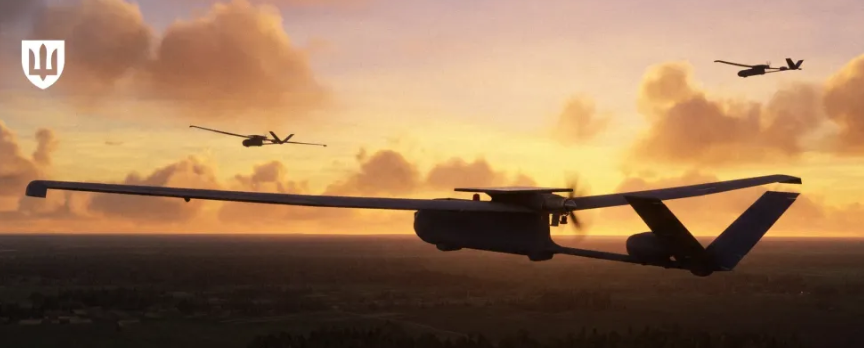
Ukraine's Dovbush T40, a strategic drone that can stay aloft over a day. Source: The Ukrainian Defense Ministry

Ukraine has approved a drone built to reach the deepest parts of Russia. Ukraine's Defense Ministry has codified the domestic Dovbush T40 uncrewed aviation complex, a strategic-level drone for deep reconnaissance and precision strikes on distant Russian targets, the ministry announced.

The drone extends the reach of Ukraine's homegrown deep-strike arsenal to Siberia. With a wingspan of nearly 5 meters, the Dovbush T40 has enough range to hit targets beyond the Urals and in Russian Siberia.

What the drone does

The Dovbush T40 is a multi-role strategic aircraft. It is designed for deep reconnaissance, fire correction, and precision strikes on structures, equipment, and enemy personnel far from the line of contact.

Its endurance is the enabler. More than a day aloft gives it the range to reach targets, letting Ukraine threaten the deep-rear sites, from factories to airfields, that Russia has kept far from the front for safety.

Its advantages over similar drones

The drone offers several edges, the ministry said. It has ultra-low radar visibility, a high-performance engine with electronic fuel injection, and a choice of strike methods, either as a kamikaze drone or by dropping a munition.

It is built to work under jamming. The Dovbush T40 stands out for high resistance to electronic warfare, according to the Defense Ministry, the recurring requirement for any Ukrainian drone meant to fly deep into a contested electromagnetic environment.

It builds on combat-proven predecessors

The drone comes from a maker with a track record. It was built by a Ukrainian enterprise whose Dovbush T20 and Kotyhoroshko drones have operated on the battlefield since 2022 with some of the highest effectiveness ratings.

The T40 is an evolution of a proven system. The medium-range Dovbush T20, used for reconnaissance, real-time artillery correction, and pinpoint strikes, evolved through battlefield feedback into the longer-range, more powerful T40. It joins a fast-growing domestic fleet: since the start of 2026, Ukraine's Defense Ministry has codified 413 uncrewed systems, almost all of which are Ukrainian-made.
  •  

Slovakia resumes BMP-1 hull production after 36 years. The secret customer may be Ukraine

slovakia resumes bmp-1 hull production after 36 years secret customer ukraine · post manufacturing slovak company stv machinery 2025 slovakia_bvp_productionjpg3 news ukrainian reports

Slovak company STV Machinery has produced the first two prototype hulls for the BMP-1 infantry fighting vehicle after a 36-year break in production. The plant in Dubnica nad Váhom began developing an updated design in 2024, and a contract with an unnamed foreign customer was signed in late 2025, with serial production scheduled for 2026 to 2027.

The Slovak outlet Future Army reported this on 15 August, citing STV Group's director of special projects, Pavel Beran. He said one prototype is being used to test final assembly and the integration of weapons systems, while the second is undergoing physical and stress testing. The company will not disclose the customer's identity, citing security and business-ethics considerations.

Ukraine has a substantial need for armoured vehicles. Its forces already use and modernise the BMP-1, and cooperation with Western manufacturers could help replenish the fleet faster. In 2024, for example, Ukraine and Germany's Rheinmetall agreed to produce the Lynx IFV and to expand defence cooperation.

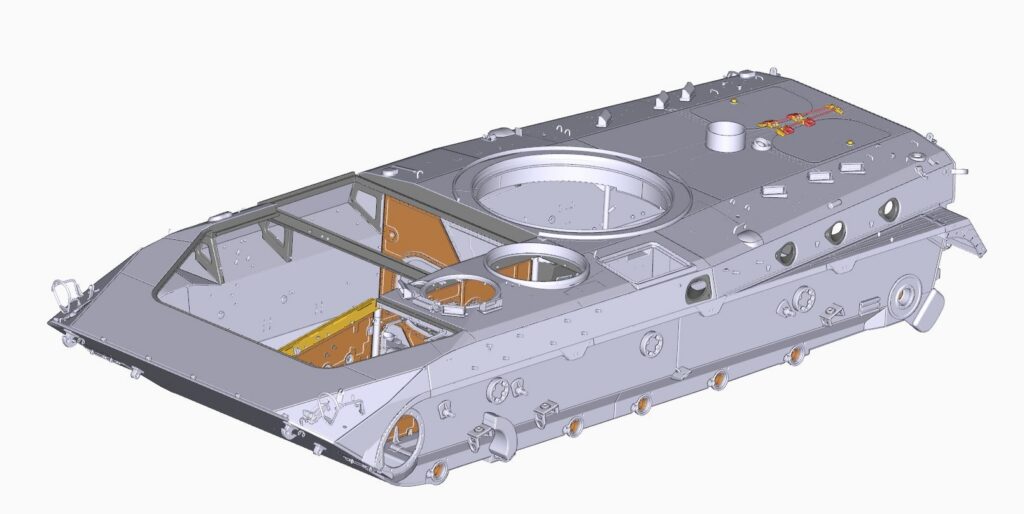
Digitised BMP-1 project. Photo: STV Machinery

The Slovak plant has returned to BMP-1 production

According to Militarnyi, the new hulls remain outwardly similar to the Soviet BMP-1 design but have been reworked to more modern requirements. STV Machinery revised the design to meet NATO standards for ergonomics and materials, and strengthened the armour using more modern materials.

Future vehicles will offer a choice of powerplant, with Western-made engines among the options. STV Machinery, the Slovak firm, will produce the hulls and other components, after which its Czech sister company STV Group will carry out full assembly and testing.

The exact size of the order is not yet known, though earlier reports suggested production could eventually reach up to 100 hulls a year.

The company has not named the customer. Defense Express suggested as early as December 2025 that it could be Ukraine. One scenario the outlet floated was the supply of hulls or turretless vehicles, which would allow other combat modules to be fitted.

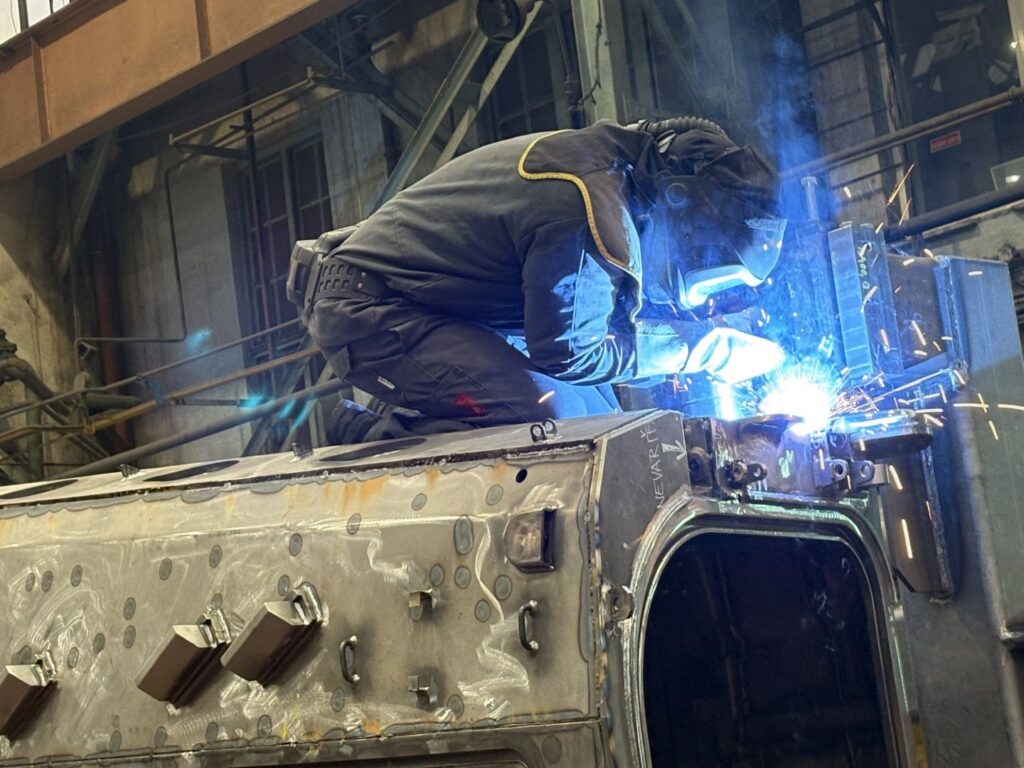
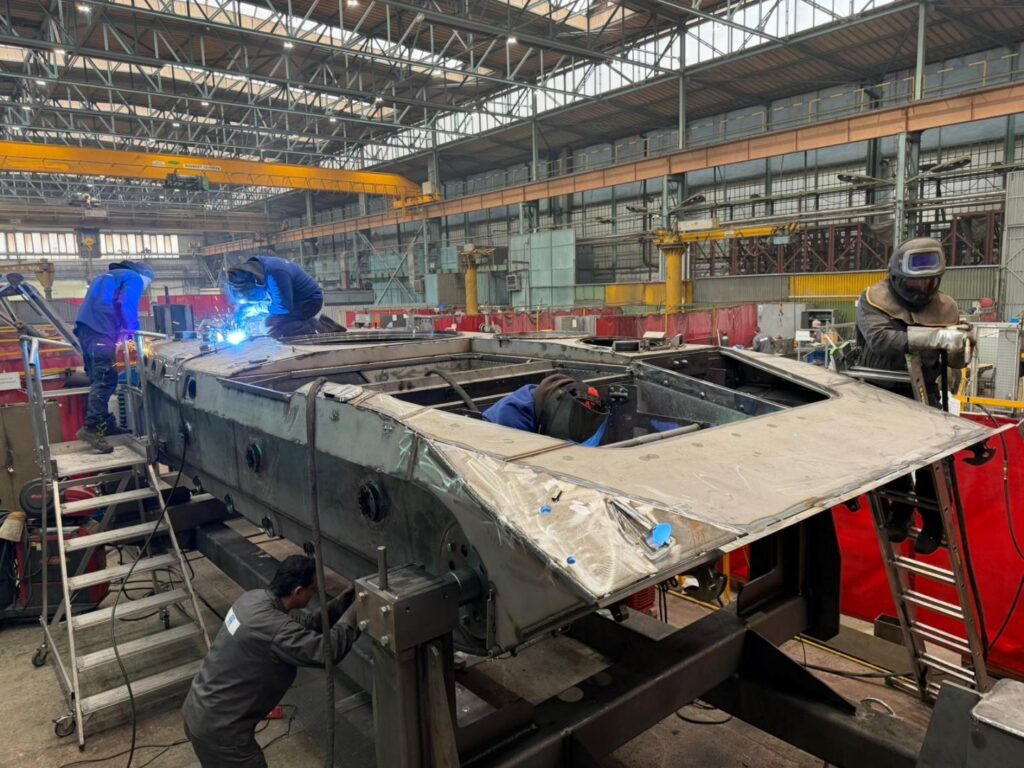
Production of the BMP-1 hull by the Slovak company STV Machinery. 2025. Photo: STV Machinery

Why Slovakia is building the BMP-1 again

The Dubnica nad Váhom plant previously built licensed versions of the BMP-1, known locally as the BVP-1. Serial production there ran until 1989, after which the plant went more than three decades without making new hulls for the vehicle. The site is the same, but the manufacturer is not: the original vehicles came off the ZŤS Dubnica nad Váhom line in the Czechoslovak era, while today's hulls are made by STV Machinery.

At the same time, the BMP-1 remains a vehicle of the 1960s. Even a modernised hull does not change the platform's fundamental limitations, particularly its level of protection. So if Ukraine really is behind the order, it is likely more a way to rapidly increase the number of armoured vehicles than a long-term replacement for modern Western IFVs, Defense Express noted in 2025.

Also Defense Express stressed that the customer's identity remains only speculation, adding that the buyer could turn out to be another country that operates or once operated the BMP-1, and that firmer detail will have to wait for the company.

  •  
❌