Connexion

Kremlin sees “no similar plans” after Oleshky—Kyiv plans to set up a center to return civilians Russia holds

Ukraine will create a Center for the Return of Civilians to bring home Ukrainian civilians held by Russia or living under occupation, Human Rights Commissioner Dmytro Lubinets said on 2 November. On the same day, the Kremlin said it had no plans, for now, for another humanitarian operation like the one in occupied Oleshky.
The Oleshky truce, the longest since 2022, got civilians out because Moscow agreed to it. Within a week, the Kremlin went from calling such a truce a possible precedent to saying it has nothing similar planned, for now. For Ukrainians still in Russian prisons or under occupation, the next negotiated exit has no date.
Oleshky exposed the gaps
In Lubinets’s view, the Oleshky mission showed that Ukraine’s efforts to return civilian hostages from Russian prisons and civilians from occupied territory are not coordinated enough. His office will run the center, modeled on the Child Rights Protection Center, which he called a similar pilot.
Families of people held by Russia or living under occupation will be able to apply to the center, and it will draw attention to Russia’s violations of civilians’ rights. Lubinets said his office is building it on its own, with partners willing to help, and not together with Russia. Still, he said he had agreed with Russia’s Human Rights Commissioner Yana Lantratova to make aid deliveries to Oleshky regular, and the two sides are now discussing how to send them at least once a month.
Kremlin: no similar plans for now
On 26 October, Kremlin spokesman Dmitry Peskov said the Oleshky truce could become a precedent for humanitarian pauses elsewhere. On 2 November, he told a briefing Moscow had no similar plans or initiatives for now, saying each case is unique.
Lantratova claimed Russia had expected more people to leave, but many did not want to leave their homes and relatives. She cited individual cases, including a woman who would not leave her mother after a stroke.
How the mission unfolded
Oleshky lies on the Dnipro’s left bank, across from Ukrainian-held Kherson. In July, international monitors confirmed Russia’s blockade of the town. In September, an Odesa volunteer said residents were foraging for roadside grass. Russian troops also seized food Ukraine dropped by drone, the town’s Ukrainian administration head said.
On 23 October, the White House announced a local ceasefire brokered by US First Lady Melania Trump. It ran from 27 October to 1 November, and its zone expanded beyond the town. Both sides kept their commitments, Lubinets said on 1 November.
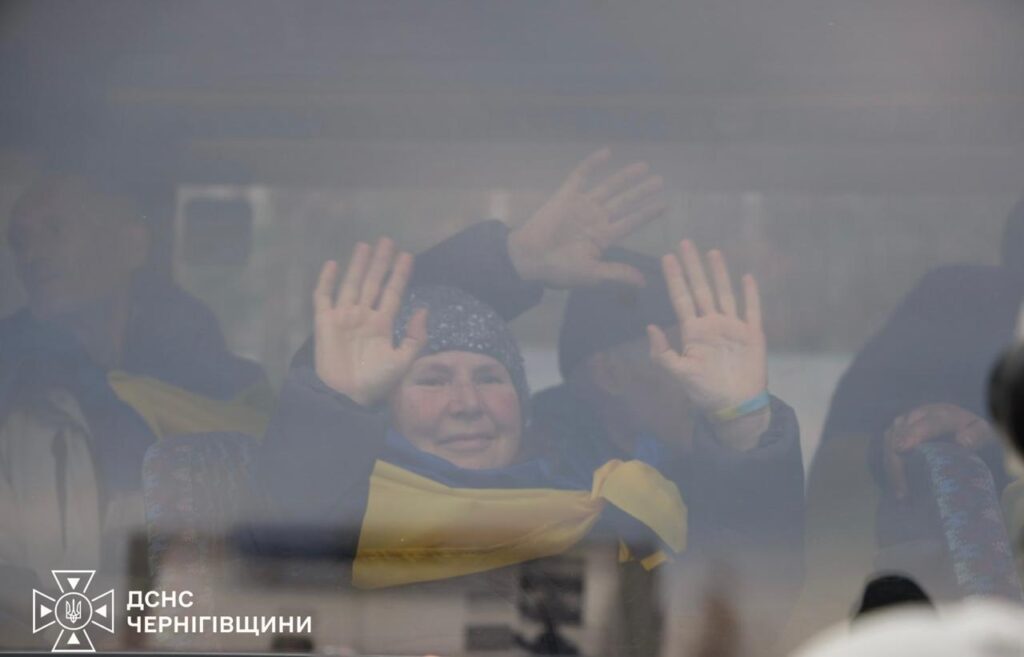
Ukrainian troops used the pause to evacuate 167 civilians from Ukrainian-held riverside villages, Ukraine’s General Staff reported. On 31 October, the two ombudsmen agreed to keep working toward regular humanitarian missions.
Read also
-
Ukrainian officials reach Russian-held Oleshky. The question now is where its residents can go
-
Russia may not give Oleshky evacuees a free choice to return to Ukraine, ISW warns, after Putin called the town a “Russian settlement”
-
Russia may use the Oleshky truce to rebuild its forces, ISW warns, as evacuees face a route through Russia and Belarus