Minnesota lawmaker’s attorneys asked for return of seized items and the preservation of any recordings of search
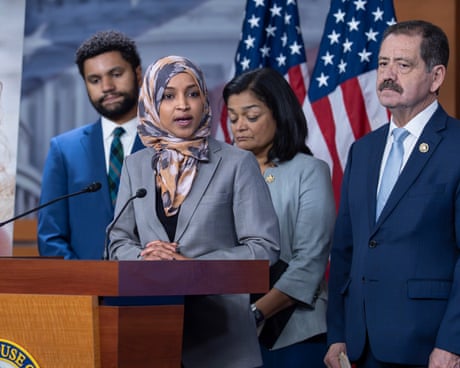
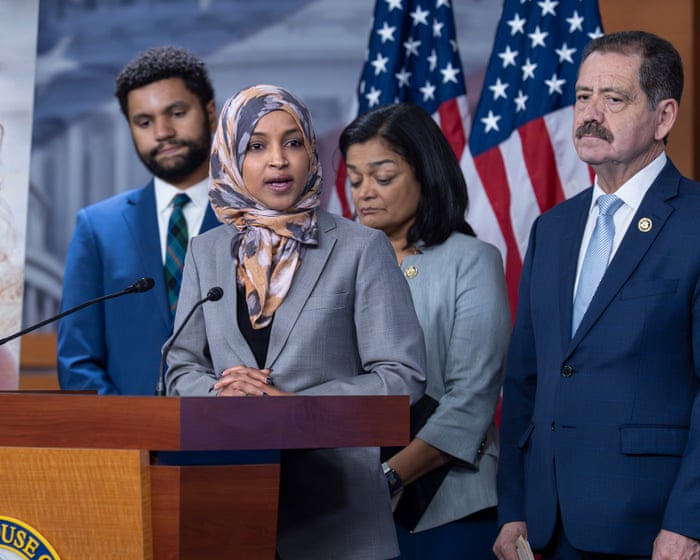
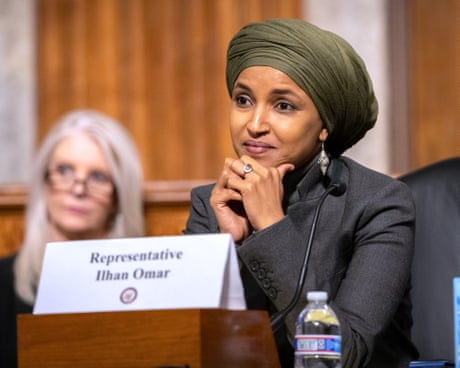
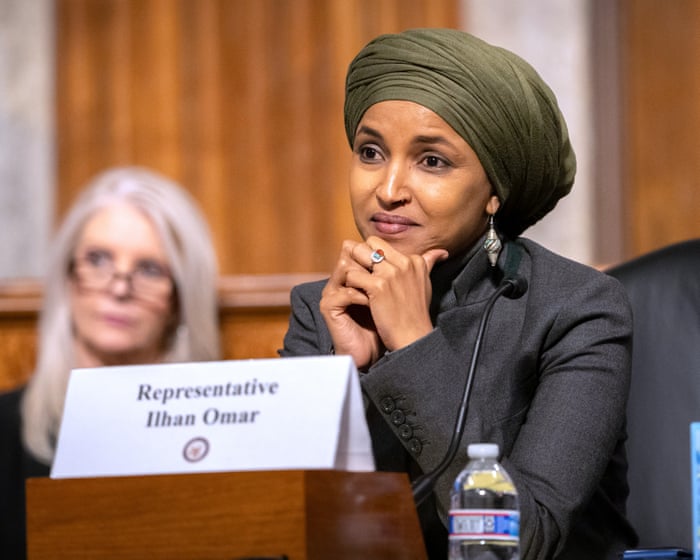
Ilhan Omar’s attorneys have asked the US Department of Justice to return property that federal agents removed days earlier from her home during a search.
The lawyers for the Minnesota Democrat contended that the seizure as “neither justified nor lawful”, according to a letter that the Associated Press reported on Friday.
US President Donald Trump has suspended the tariffs and sanctions on the biggest buyers of Russian oil set by the Lindsey Graham Act, the law he signed himself in September. He says the move serves US national interests, according to an executive order published on the White House site.
The act required the president, within 30 days, to impose 100% tariffs on all goods from the five biggest buyers of Russian oil, to sanction a range of Russian entities and to put 500% tariffs on all Russian energy imports to the US. The deadline for those measures fell on 18 October.
Trump has used the president’s power under Section 115 of the Graham Act, which allows him to waive sanctions, restrictions, and duties by certifying to Congress in writing that doing so serves US national interests and submitting a report explaining why. The act does not, however, allow him to cancel sanctions that have already been announced.
Moscow calls it historic, Kyiv calls it a gift to Putin
The two capitals read the same order in opposite ways. Kirill Dmitriev, an envoy for Russian leader Vladimir Putin, called it “an important and truly historic moment” on X, claiming the sanctions had mainly harmed the US economy and world markets.
“Economic cooperation between Russia and the US serves the interests of both nations, contributes to global economic stability and lays the foundation for building trust and achieving lasting peace,” Dmitriev writes.
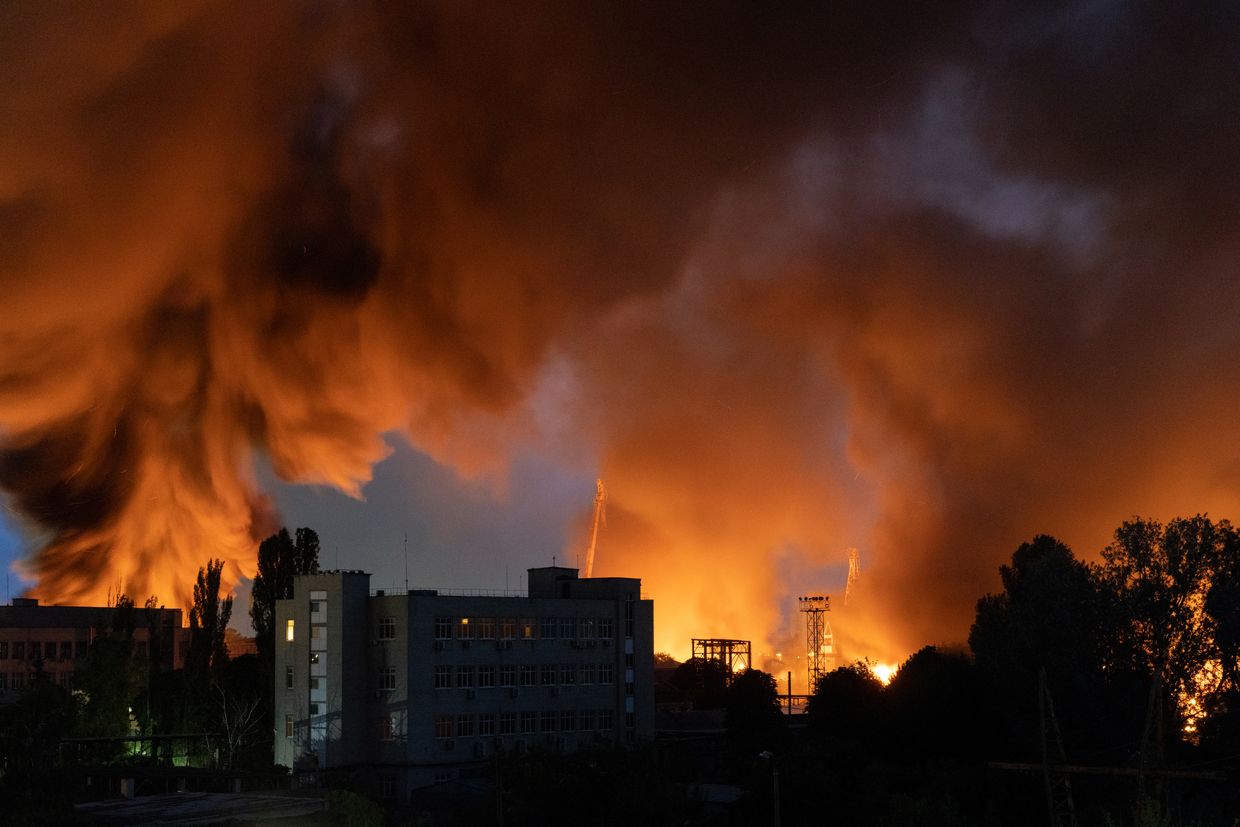
President Volodymyr Zelenskyy answered from under fire. Russia struck Ukraine’s energy system on 17 October, and at that very moment Washington chose “to completely ignore the Lindsey Graham law, which was supposed to impose real, effective pressure on Russia to end this war,” he says.
A law its own backers say is being gutted
The waiver lands amid a bipartisan revolt in Congress. Seven Republican and Democratic senators had already warned on 11 October that Trump’s move to allow Russian diesel imports had broken the law Congress passed after the full-scale invasion, urging the administration to reverse it so US money would not help finance Russia’s war.
Meanwhile, Zelenskyy argued the law can still work if Washington lets it.
“This law could, and still can, help a great deal. But the law has actually to work, and every vote for it matters,” he said, warning that the step only pushes Moscow to strike harder.
The world must not give up ground and must try to end the war, Zelenskyy added.
“To end it, and not give Putin every reason to continue it indefinitely,” he stressed, thanking everyone who “is truly fighting for peace and helping Ukraine," he stated.
The word from the Ukrainian opposition
The Ukrainian opposition also commented on Trump’s decision. Iryna Herashchenko, co-chair of the European Solidarity parliamentary faction, said that “the most cynical and stupid decisions are usually made by rulers on Saturday night,” when public attention is scattered, and people are preparing for the weekend.
“Rehabilitating Putin harms not only Ukraine but also the US itself, strengthens the axis of authoritarian regimes, and undermines international security,” she claimed.
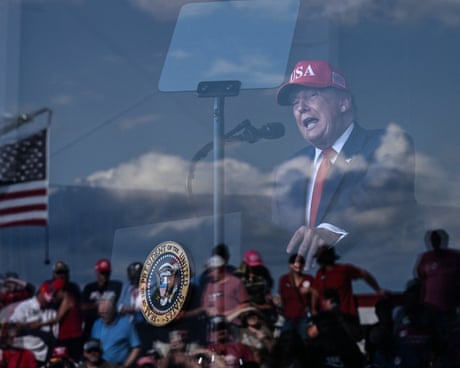
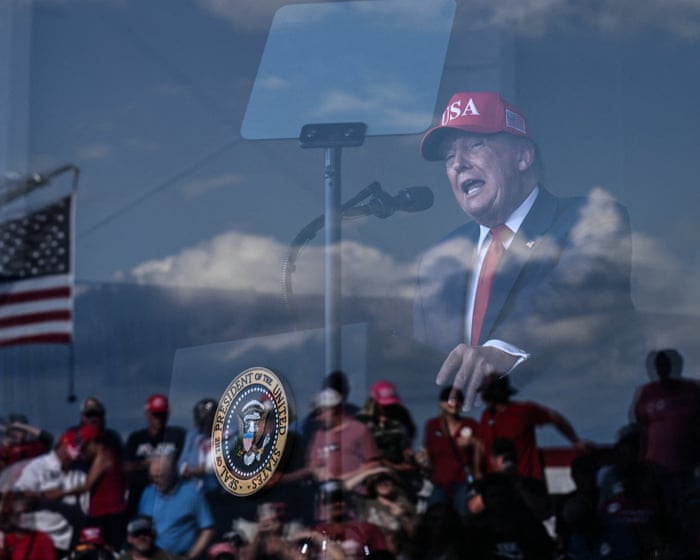
President appears at rally for struggling Mike Collins, dismisses critics and touts ‘most successful’ two-year run
At a rally in north Georgia, Donald Trump again claimed that the 2020 election in Georgia was fraudulent, alleging that the election of US senator Jon Ossoff was illegitimate.
Ossoff, who faces US congressman Mike Collins in November, does not represent Georgia’s values, Trump said.
A bipartisan group of 22 House lawmakers is urging President Donald Trump to fully implement the new Russia sanctions law and revoke a license allowing certain Russian diesel transactions. In a letter sent on 15 October, they copied Secretary of State Marco Rubio and Treasury Secretary Scott Bessent and requested details on planned sanctions, tariffs and waivers.
Their request comes as the law’s first requirements fall due on 18 October, while lawmakers from both parties challengethe administration’s decision to allow certain Russian diesel transactions. Some restrictions take effect automatically, while others require presidential action. The law does not specify a penalty for the president missing the deadline.
What the Russia sanctions law requires
Congress passed the Lindsey O. Graham Sanctioning Russia and Iran Act of 2026 by votes of 86–11 in the Senate and 262–159 in the House. Trump signed it on 18 September. Graham, a Republican senator from South Carolina, died in July.
Restrictions taking effect automatically on 18 October include a ban on US banks and broker-dealers processing transfers to or from the Russian government, a ban on new US investment in Russia, a ban on new US investment in Russia’s energy sector, and a ban on US energy exports to Russia.
Other measures require presidential action by the same date. The law directs Trump to review and sanction Russian officials, oligarchs and shadow-fleet vessels, sanction the Bank of Russia, specified Russian banks and state-owned companies, and impose tariffs of up to 500% on Russian goods. Tariffs of up to 100% can apply to goods from countries among the five largest importers of Russian oil or gas, or among the top five countries facilitating Russian oil sanctions evasion.
Trump may waive sanctions, restrictions and tariffs under the law if he first certifies in writing to Congress that a waiver is in the US national interest and submits a report explaining its basis.
The diesel license at the center of the dispute
House members also urged Trump to revoke General License 135, which the Treasury Department issued on 9 October and that is valid until 7 April 2027. It permits certain transactions involving Russian-origin diesel, including imports into the United States. Trump said Russia would immediately supply more than 300,000 tons of diesel to US and global markets and predicted prices would fall sharply, according to a 9 October Truth Social post.
On 13 October, a bipartisan group of 12 senators also urged Trump to rescind the deal and revoke the license. Seven senators said the deal conflicted with a 2022 law banning Russian energy imports.
The Graham Act says nothing in its provisions affects the Treasury secretary’s existing authority to issue general licenses. That provision does not resolve whether the diesel license complies with the separate 2022 law.
A White House official told Newsweek the administration would comply with the Graham Act. Bessent said the administration would use “all the legal authorities we have” and called the deal “good for the American people,” Fox News reported on 11 October.
How the sanctions could be lifted
Separately, the law sets a process for terminating sanctions, restrictions or duties against Russia. Trump must report to Congress that Russia has signed a peace agreement accepted by Ukraine’s government and ceased military hostilities against Ukraine, as well as activities to overthrow, dismantle or subvert its government. Congress has 30 days to block termination through a joint resolution of disapproval, or 60 days for reports submitted between 10 July and 7 September.
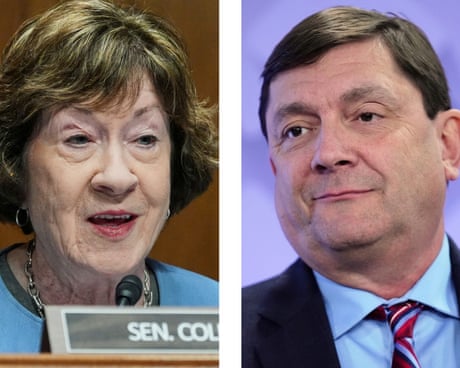
In Maine, Troy Jackson, the Democratic nominee for US Senate, and Susan Collins, the five-term Republican incumbent traded barbs on Thursday in their final debate ahead of the November midterms.
This was the fourth showdown between the pair. Collins has tried to cast Jackson as an inexperienced state lawmaker, and attempted to yoke him to the former nominee, Graham Platner, who dropped out of the race earlier this year following allegations of rape and sexual assault (which he still denies). Meanwhile, Jackson accused his opponent of corruption, and castigated her for her “moderate” persona in Congress.
The two shootings took place only a few weeks before pivotal, nationwide local elections, and as the party, the A.N.C., is embroiled in a dispute over the eligibility of more than 100 candidates.
A leader of the Jewish community in Ireland said a hotel canceled a deal for 70 rooms when it learned they were reserved for guests attending the international forum.
Move comes as Senator Elizabeth Warren condemns Barclays response to questions over ex-boss’s ties to sex offender
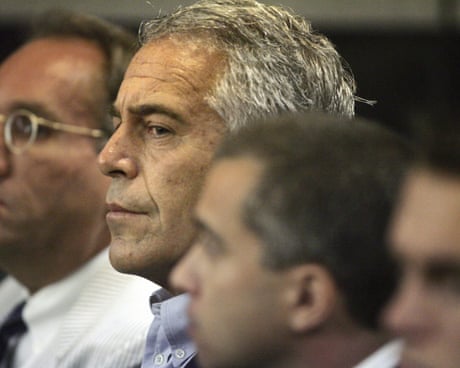
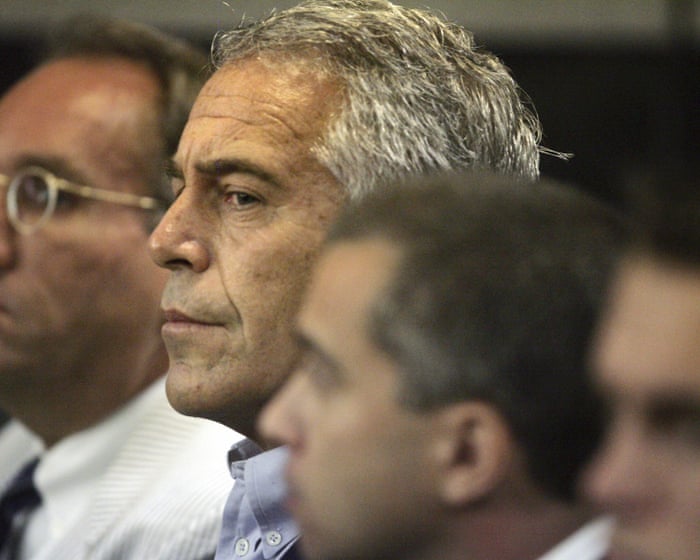
US lawmakers have unveiled a new bill to hold Wall Street’s “Epstein-connected” bosses to account for helping finance the late sex offender’s crimes.
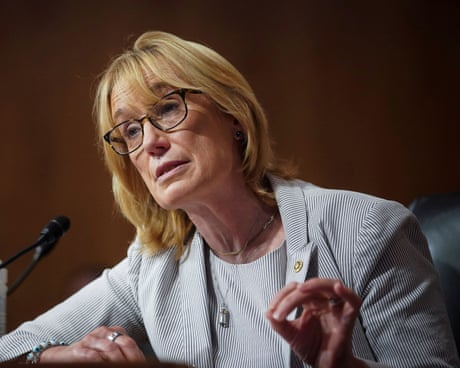
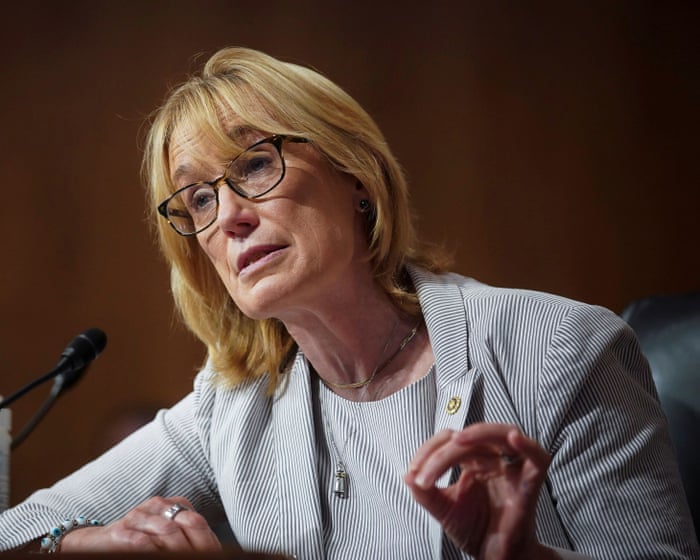
It came as top Democratic senator Elizabeth Warren condemned the UK bank Barclays for “dodging responsibility” over its failure to vet former boss Jes Staley and his ties to the once well-connected billionaire.
Talarico casts himself as a moderate who would put Texans’ needs over party allegiances amid close contest against Republican Ken Paxton
James Talarico, the Texas Democratic nominee for Senate, sat face to face with skeptical Republicans and independents voters who grilled him on a slew of contentious issues including Israel’s military campaign in Gaza, abortion and foreign aid, during a CNN town hall co-hosted by the Jubilee Media digital platform on Wednesday.
One voter, a young Republican activist who volunteered at the party’s midterm convention in Dallas last month and recently appeared on Fox News as a supporter of Talarico’s opponent, questioned the authenticity of Talarico’s faith, referencing a past remark where he described God as nonbinary.
Congress calls for Match Group and others to do more to help victims like Mary, who lost $100,000 to app scammer
Mary met a man on the dating app Plenty of Fish in 2024. She told the Guardian she had been looking for a connection, but instead became the victim of a romance scam that cost her almost $100,000.
“There was a lot of conversation, and then it started with the constant contact, pressure and repeated asks for money,” Mary, who asked that her last name be withheld, said in an interview on Tuesday. “It just escalated really, really quickly.”
Elon Musk has become the biggest political donor of the 2026 US midterm elections cycle, funneling about $366m into political groups and campaigns as he backs conservative candidates and rightwing causes. The world’s richest person has poured more than $276m into politics since July alone, some of the most rapid political spending in US history. He’s targeting key races that will determine which party controls the US Senate.
The New York Times first reported the spending numbers, which will be released in a federal filing on Thursday. Musk’s spending outpaces his 2024 presidential election contributions, in which he sunk nearly $300m into Donald Trump’s re-election campaign.
Democrats have described a raid on the home of Congresswoman Ilhan Omar as “deeply disturbing” and a “rogue abuse of power” by the Trump administration. The Democratic representative for Minnesota has long been a target of highly personal attacks by Donald Trump, who claims he was not involved in ordering the Justice Department raid. Omar criticised the raid as an attempt to “weaponize law enforcement” as part of a “campaign of political intimidation” against her. Lucy Hough speaks to Guardian US political reporter Shrai Popat – watch on YouTube
Though Democrats have a strong edge heading into the midterms, some races have openings for Republicans
While marquee races from Maine to Michigan get all the attention, and draw in a ton of money, a significant batch of lower-profile contests across the US could result in upsets.
Democrats have a strong edge heading into November’s US midterm elections, polls show. In recent days, election prognosticators have shifted even more races in favor of Democrats.
Top House Democrats question the ‘corrupt weaponization’ of federal government against Trump’s adversaries
Ilhan Omar’s Democratic colleagues have condemned federal agents’ search of the Minnesota congresswoman’s home on Monday morning, describing it as “deeply disturbing” and emblematic of the Trump administration’s “corrupt weaponization” of the US government.
House Democratic leaders, including the minority leader, Hakeem Jeffries, party whip Katherine Clark and caucus chair Pete Aguilar, issued a joint statement excoriating the president for the search.
The raucous demonstrations by opposition groups on Monday followed days of an effective lockdown and mass detentions of young protesters by security forces.
Seven US senators from both parties said the Trump administration's decision to authorize Russian diesel imports conflicts with a 2022 law banning Russian energy imports and accused it of failing to consult Congress, in a statement on 11 October.
The dispute comes as the war with Iran drives up US fuel prices, which US President Donald Trump has blamed on Ukraine's strikes on Russian refineries. Trump says Russian supplies will help bring prices down, while lawmakers warn that purchases could provide Moscow with revenue to continue its war against Ukraine.
The senators—Republicans Susan Collins, Lisa Murkowski, Thom Tillis, and John Curtis, and Democrats Jeanne Shaheen, Richard Blumenthal, and Ron Wyden—called on the administration to reverse course, saying the US should not provide Russian President Vladimir Putin with “a financial lifeline.”
What the 2022 law requires before the ban can end
The law, signed on 8 April 2022, allows the president to end the import ban only after submitting a certification to Congress. The certification must find that Russia has agreed to pull out its forces and stop the fighting on terms Ukraine's free and independent government accepts, no longer poses an immediate threat of attack to any NATO member, and recognizes Ukrainians' right to pick their own government.
The law also requires consultation with four congressional committees and a report at least 45 days before certification. The termination takes effect 90 days after certification unless a joint resolution of disapproval is enacted into law during that period. The senators allege the administration failed to meet the consultation and reporting requirements. Their statement does not establish whether a certification has been submitted.
Treasury’s license cites sanctions rules, not the 2022 law
The Treasury Department's Office of Foreign Assets Control issued General License No. 135 on 9 October, authorizing certain transactions involving Russian-origin diesel that would otherwise be restricted under US sanctions regulations. It runs until 7 April 2027 and cites sanctions regulations, not the 2022 import-ban law.
Explore further
EU blacklists 1,569 Russian arms suppliers and their bosses in its biggest sanctions round ever, as Trump eases up on Moscow
Treasury Secretary Scott Bessent defended the deal on Fox News on 11 October, saying the administration would proceed under existing legal authority. He said lawmakers who argued that either the earlier law or the current Lindsey Graham sanctions law prohibited the deal were wrong, and argued the agreement would lower prices, Reuters reported.
How much diesel Trump says Russia will supply
Trump said on Truth Social that Russia would immediately supply more than 300,000 tons of diesel to US and global markets, followed by 500,000 tons in November and 1 million tons after that. He said Russia would deliver another 3 million tons “within a short period of time,” depending on the condition of its diesel refineries. The promised volumes have not been independently verified.
Russia partially lifted its diesel export ban on 10 October, allowing 500,000 tons onto the global market at this stage, the Russian government said, according to state news agency TASS.
A House bill to block Russian oil purchases
Pennsylvania Republican Rep. Brian Fitzpatrick plans to introduce the Ronald Reagan Peace Through Strength Act to block Russian oil purchases and use a discharge petition to force a House vote, Axios reported. The procedure can force consideration of a bill if 218 House members sign. Republican Rep. Don Bacon said he would support the bill and called Trump's decision a serious mistake, according to Ukrainska Pravda.
Barrasso defends the deal. Zelenskyy calls it an investment in war
On CBS's Face the Nation on 11 October, Senate Majority Whip John Barrasso, a Republican from Wyoming, called the deal “another point of leverage” for Trump to use against Putin. Asked whether the decision violated US law, Barrasso said the president was balancing competing priorities and had to make tough decisions.
Ukrainian President Volodymyr Zelenskyy wrote on Telegram on 9 October:
“Allowing Russia to sell petroleum products is an investment in a war that must be ended, not prolonged.”
Trump also expects Ukraine to stop striking Russian refineries under his proposed energy ceasefire, a White House official told Axios. Zelenskyy said Kyiv would halt such strikes if Moscow did the same.
JoAnna Mendoza draws on unique biography to connect with voters in Arizona battleground – can she flip a key swing seat?
On a recent morning, Tucson mayor Regina Romero knocked on a yellow door above a mat emblazoned with a cat’s silhouette and the words “go away, peasants”. A young man cracked the door open and stood there silently, a toothbrush dangling from his mouth.
After giving him a moment to finish brushing his teeth, the mayor introduced herself and asked if the man had heard of JoAnna Mendoza, the Democrat running to unseat Republican congressman Juan Ciscomani. Romero handed him a pamphlet and rattled off her candidate’s virtues. The young man stood stone-faced, until she mentioned that Mendoza had served for nearly two decades as a US marine.
Trump and key allies have accused Omar of immigration fraud, and have called to expel her from the country
Federal agents searched Representative Ilhan Omar’s home on Monday morning as part of a criminal investigation, according to the Department of Justice andreports inthe Associated Press and Fox News.
In a social media post later on Monday, Omar criticized the raid as an attempt by the Trump administration “to target political enemies and weaponize law enforcement” and said she would “not be silenced”.
Gwinnett county is home to many immigrants and other newcomers, and how it votes could be decisive for Congress
Johanna Park might just be an ambassador for Gwinnett county, Georgia, one of the 10 most ethnically diverse counties in the United States.
Park owns Cafe Amico at Suwanee Town Center, one of her three Italian coffee shops in the area just north of Atlanta. She was born in Korea and lived much of her life in Argentina and Peru. She’s been in Gwinnett for more than 20 years, part of an early wave of Korean immigration that’s built Korean American car dealerships, banks, insurance agencies, supermarkets and restaurants like her own. It’s also a population that’s increasing in influence and not just numbers.
The Michigan candidate for US Senate seat is running without directly acknowledging specific constituent groups
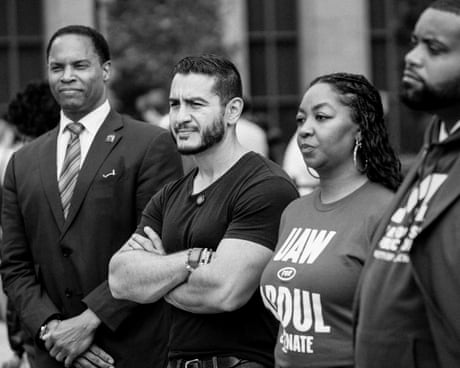
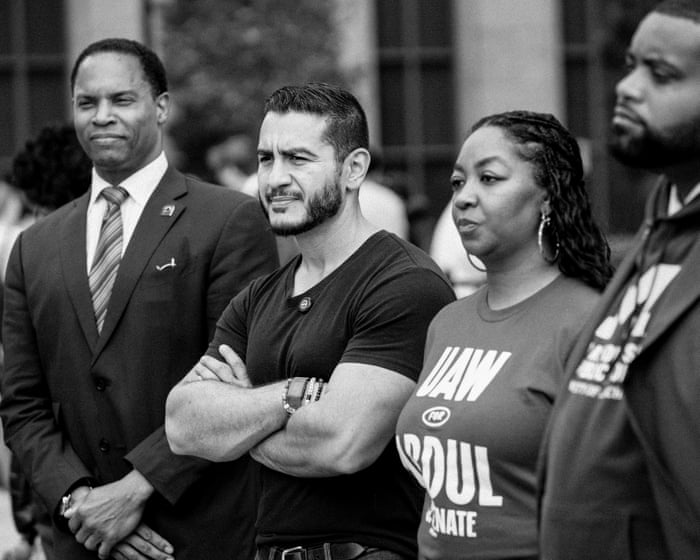
Abdul El-Sayed has an impressive résumé: Rhodes scholar, professor of epidemiology at Columbia University, executive director of the Detroit health department. And, at 41, the Michigan Democratic senatorial candidate represents a new generation of politicians, a shift that he also embodies sartorially. Whereas casual dress for many politicians is a tieless dress shirt with rolled up sleeves, El-Sayed has embraced a post-corporate, digital nomad-ish uniform: fitted black T-shirt, slim jeans and sneakers.
His progressive politics are having a moment among liberals, and he remains unswervingly disciplined about his message: “Money Out of Politics, Money in Your Pocket, Medicare for All.” On paper he appears well-aligned to Democratic sensibilities in this moment, and he is competitive in the polls. But his support is softer than overall Democratic sentiment would dictate, especially among Black voters.
Rev Dr Frederick Douglass Haynes III is reclaiming a faith-based politics to counter Trump-allied white evangelicals
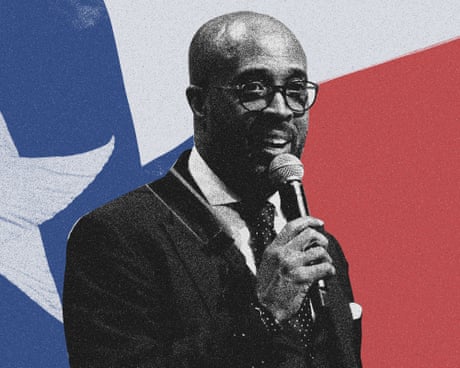
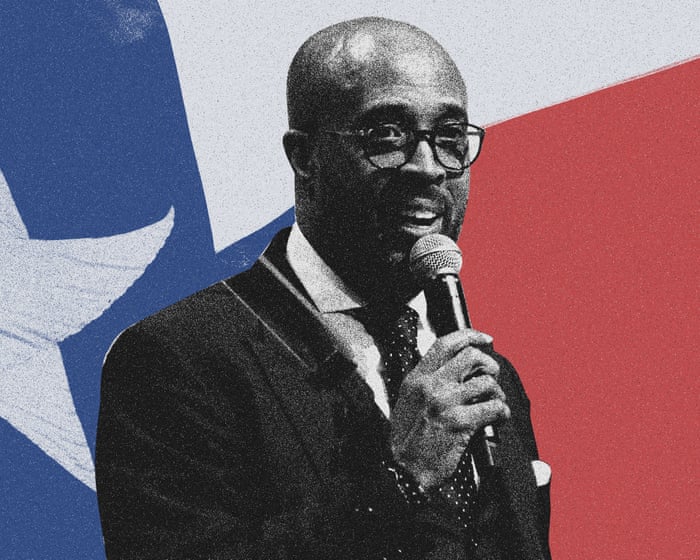
It was that point in the evening: dinner plates were cleared; speeches had run long; people were chatting, milling or eyeing the exit. But then the Rev Dr Frederick Douglass Haynes III took the stage. Bald, bearded, bespectacled and dressed in black, he delivered a mix of fiery sermon and performance poetry. Soon the guests were back in their seats – rapt, listening, clapping and whooping.
Haynes’s rolling cadence was evocative of the pulpit but the political message was far from kumbaya. Aiming to succeed Democratic star Jasmine Crockett in Texas’s 30th congressional district, he danced like a butterfly with references to the boxer Muhammad Ali and rapper Tupac Shakur. But he also stung like a bee, branding Donald Trump as “President Pickpocket” and Republicans as the authors of racist gerrymandering and voter suppression.
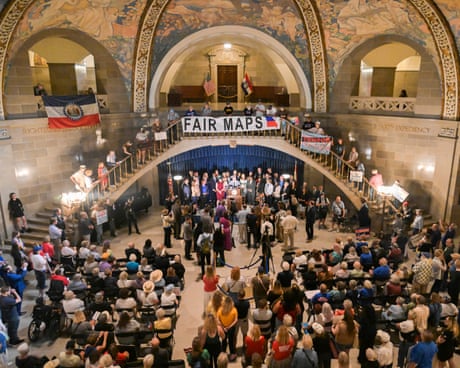
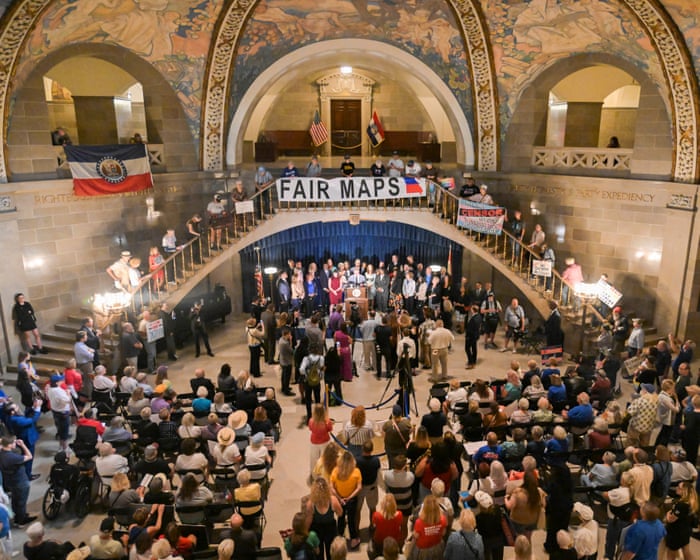
Eric Leventhal knows he’s going to vote for a Democrat in Congress when he goes to the polls in Missouri this November – the problem is he has no idea which candidate is going to be on his ballot.
In the state’s August primary, he voted for Fred Wellman, a Democrat running in the state’s second congressional district. But after a long and complicated legal battle sparked by Donald Trump’s desire to gain every advantage in the upcoming midterm contest, the districts have changed for the general election that will determine which party controls Congress. Leventhal said he lived right near the border of the first and second congressional district, so now he’s not sure which one he’s in.
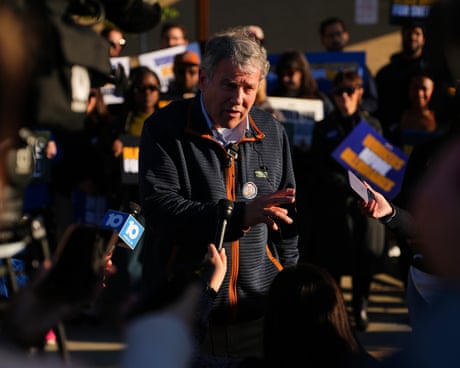
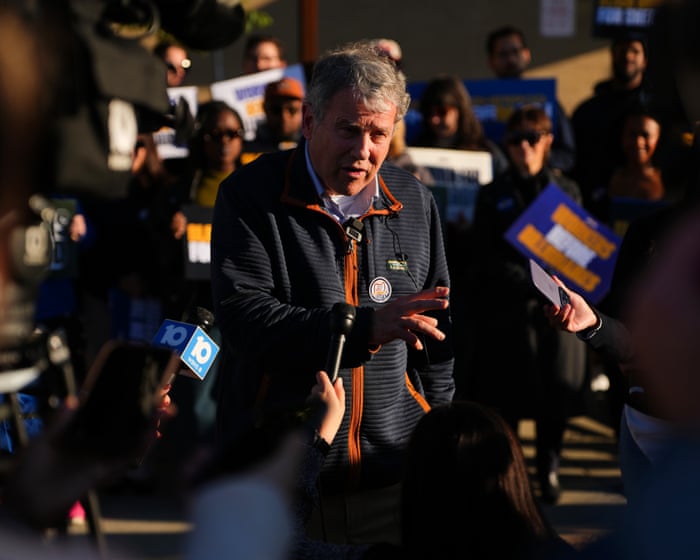
Sherrod Brown, the Democratic former senator from Ohio hoping to return to office in November’s midterm elections, has spent the past year traveling across his home state explaining to voters about all the ways the “system is rigged” against them. Recently, he’s been telling people about a trip he took across the north-west Ohio countryside.
“You’re driving on what looks like really good farmland, driving past fields, driving past barns, driving past milking parlors, and you see, all of a sudden, you see these huge cranes and you see these trucks coming,” Brown told a crowd of dozens at a coffee shop in the city of Lima earlier this month.
Lawmakers in the capital were forcibly removed for a second consecutive day as police cracked down on demonstrations against the deletion of voter names.
Police detaining Indian opposition leader Rahul Gandhi, during a protest organized by opposition parties demanding the resignation of Chief Election Commissioner Gyanesh Kumar, in New Delhi, India, on Wednesday.
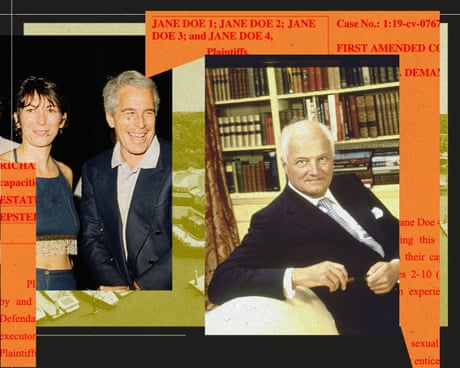
Sir James Goldsmith’s links to Hilton Head, South Carolina, add to mystery of Jane Doe 4, who claimed she was abused by Epstein in the 1980s
For Jeffrey Epstein, the billionaire Goldsmith family was a gateway to elite society and he wanted to be in their circle.
The disgraced financier, who died in prison in 2019 facing sex-trafficking charges, longed for a billionaire’s lifestyle and cultivated the family’s friends, bankers, business associates and advisers.
Republican challenged by Democrat Troy Jackson in critical Senate race says she opposes Iran war and Canada tariffs
Susan Collins, the Republican senator for Maine, pointedly distanced herself from Donald Trump in a televised debate with Democratic challenger Troy Jackson on Tuesday, as she sought to present an image of independence in a state that has voted against Trump three times.
Proclaiming herself as not the US president’s “favorite senator”, Collins made the highly unusual boast for a Republican that she had voted with Joe Biden, a Democrat, more than 90% of the time when he was president. She also emphasized her differences with her fellow Republicans, saying she voted against her own party more than any other senator.
Public anger is growing over an exercise that critics say undermines the world’s largest democracy, particularly disenfranchising Muslims under the Hindu nationalist government.
A protest in New Delhi on Sunday, demanding the resignation of India’s chief election commissioner, Gyanesh Kumar. More protests are planned for this week.
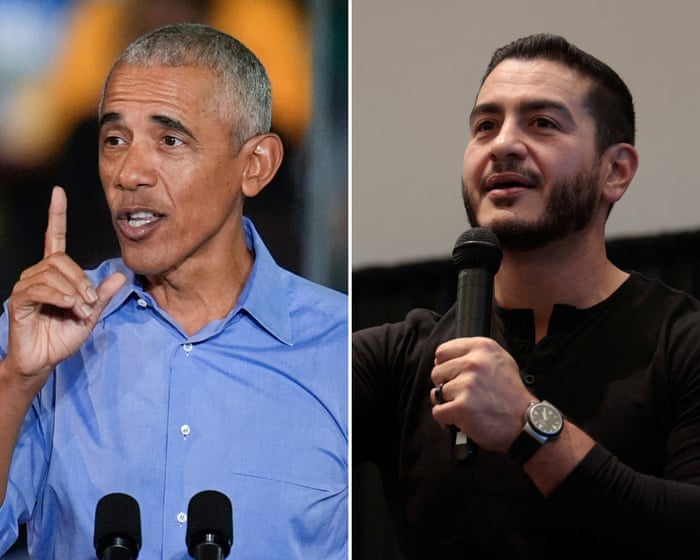
Barack Obama will head to Detroit this month to rally with Abdul El-Sayed, a show of establishment support for a progressive insurgent in Michigan, one of the most consequential Senate races in the country.
The former US president will appear with El-Sayed and the gubernatorial nominee, Jocelyn Benson, on 24 October, the state’s Democratic party announced on Monday. The rally falls on the first day of the state’s in-person early voting period and 10 days before election day.
The Republican, who was sent to prison in 2016 in a hush-money case tied to the allegations, died over the weekend
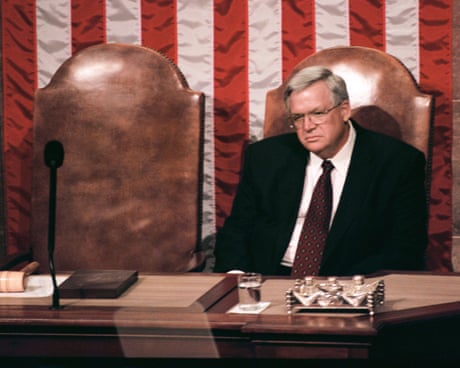
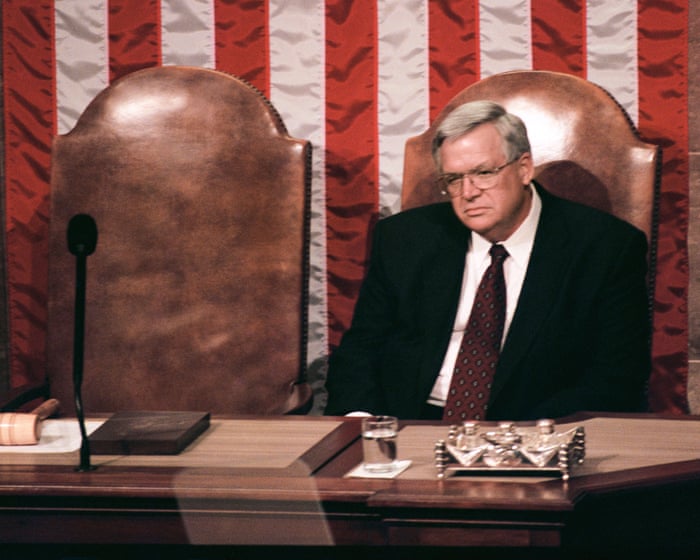
Dennis Hastert, whose congressional legacy as the longest-serving Republican US House speaker was later fouled by allegations that he had molested high school athletes during his prior career as a teacher and wrestling coach, died over the weekend, a coroner said on Monday. He was 84.
Hastert, who was speaker from 1999 until 2007, died of natural causes at his home, according to Jacquie Purcell, the Kendall county coroner.
In today’s newsletter: As Americans get ready to vote on whether the Republican party remains in control of Congress, our Washington editor talks about the disconnect between Trump and his supporters
Good morning. Later today, Donald Trump will be in the state of Nebraska to rev up supporters as he kicks off a campaign blitz of rallies ahead of the midterm elections on 3 November.
If his early speeches are anything to go by, cornhuskers can anticipate poll denial, accusations of veganism and an expletive ratio that my nine-year-old would love. And Nebraskans may love it, too: aside from one “blue dot” district in Omaha, Republicans argue their support is steady in the state that has easily backed Trump three times.
UK politics | The Greens in England and Wales have formally adopted a policy that equates Zionism with racism and calls for Israel to be replaced by a single Palestinian state.
Schools | Lawyers and campaigners have condemned the “horrifying” scale of child-on-child sexual abuse in schools after a Guardian investigation revealed thousands of sexual offences against under-13s are reported to police each year.
Brazil | Brazil’s presidential race will go to a second round after the far-right candidate, Flávio Bolsonaro, beat the incumbent leftwing president, Luiz Inácio Lula da Silva, but failed to secure the outright majority he needed to avoid a runoff.
Environment | A study of Europe’s summer paints a grim picture for the future, with doctors and climate scientists calling on governments to stop burning fossil fuels, shade buildings, green cities, and install air conditioning in hospitals, schools and care homes.
US military | The US Air Force has pulled its bombers from RAF Fairford following an investigation into an alleged planned terror attack at the base.
Tuesday | ABC News is suing the Federal Communications Commission (FCC) over its licence review, and on Thursday its hearing will take place. The broadcaster claims the review, ordered by Donald Trump in April over comedian Jimmy Kimmel’s comments about the US president, is a “retaliatory campaign” in violation of its first amendment rights.
Wednesday | Kemi Badenoch is to speak at the Conservative party conference in Birmingham. This day also marks the third anniversary of the 7 October attacks by Hamas. In London, the Met are asking organisers of a pro-Palestinian student march to move the event.
Thursday | Holborn and St Pancras will hold its byelection. The seat belongs to former prime minister and Labour party leader Keir Starmer, who held it from 2015 until his resignation in September.
The US House of Representatives has approved sweeping new sanctions on Russia and the countries and companies that help finance its war, sending the measure to the president to sign into law, The Hill reported. The vote breaks a nearly two-year stretch in which Congress passed no major measure to back Ukraine. It also hands Washington fresh power to choke the oil money that keeps Moscow's war running.
For most of the full-scale war, US backing for Kyiv came through emergency spending battles, not laws built to cut off Moscow's income. Washington's long wager that negotiations would end the fighting kept its sharpest economic tools on the shelf. That bet has now shifted toward squeezing the customers who keep the Kremlin's oil trade alive.
The vote and what comes next
In the House, 58 Democrats broke from their party's leaders on 16 September to join most Republicans. The bill passed 262-159, with 203 Republicans and one independent also voting yes, and seven Republicans joining 152 Democrats against.
Whether the full weight of the bill lands is now Trump's call. A White House official said he planned to sign it, and the White House had pushed House Republican leaders to move it. The bill directs him to impose the tariffs and mandates sanctions on Putin, senior officials, and Russian banks, though he can waive them by certifying that it serves US national interests, and how far he goes stays uncertain.
His posture on Russia keeps shifting. Days before the vote, he urged Kyiv to stop striking Russian oil refineries. He said the strikes were pushing diesel prices up worldwide. Those same strikes drain the war economy this bill sets out to squeeze.
Explore further
US sanctions relief for Russian oil shipments appears to end with no renewal issued
What the sanctions do
The bill directs Washington to impose tariffs of up to 100% on the five biggest buyers of Russian crude, the five biggest buyers of its gas, and the five countries doing most to help Moscow evade oil sanctions—a target aimed squarely at China and India. Countries whose Russian gas imports are less than 15% of everything Russia exports in gas, and that take significant steps to cut them, would be exempt from the gas-based tariff. There is no such carve-out for crude.
It also blacklists Russian officials, banks, and the aging tankers of Russia's shadow fleet, the vessels that move sanctioned crude around Western restrictions. The measure also extends US sanctions on Iran's energy and weapons sectors, a piece Trump asked for. That is why the bill's full name is the Lindsey O. Graham Sanctioning Russia and Iran Act.
Explore further
US sanctions 13 Iran-Belarus-China entities supplying Iran’s IRGC. That’s three of four “Axis of Upheaval” states
Why a stalled bill finally moved
For more than a year, the package sat frozen. It had a veto-proof majority of co-sponsors, but the White House wanted room to negotiate with Moscow, and the bill never reached a vote. Its author, Senator Lindsey Graham of South Carolina, spent more than a year negotiating the measure before he died in July. Lawmakers in both parties revived and fast-tracked it in his name, and Trump dropped his resistance and signaled he would sign.
Not everyone wanted it. Most House Democrats voted against, saying the bill hands the president broad new tariff powers and lets him waive away the sanctions it claims to impose. Nearly a dozen Republicans privately pressed leaders to strip the new powers out, alarmed they could push up prices at home before the midterm elections. Their leaders moved it through anyway. Ukrainian President Volodymyr Zelenskyy had lobbied for weeks, even watching an early Senate vote from the chamber.
"To Vladimir Putin—we have your number,"said Senator Richard Blumenthal, who co-wrote the bill, after the vote. "And to Ukraine—you are not alone."
Kyiv's response
Ukraine welcomed the vote within hours. Foreign Minister Andrii Sybiha thanked the House for its bipartisan leadership and said Ukraine honors Graham's legacy. Parliament speaker Ruslan Stefanchuk thanked both chambers of Congress and House Speaker Mike Johnson. He singled out Blumenthal for carrying the bill through after Graham's death. What matters for Ukraine, Stefanchuk said, is that pressure on Russia's war funding is turning into concrete decisions.
President Zelenskyy called the timing symbolic: the House voted during another Russian missile and drone attack on Ukraine. The bill and other strong sanctions steps are "an extremely powerful instrument capable of stopping this terrorist war," he said.
A bipartisan group of U.S. lawmakers are voicing their opposition to the Trump administration's decision to halt shipments of some air defense missiles and other weapons previously promised to Kyiv.
The U.S. Defense Department (DOD) made the decision to pause the aid deliveries after conducting a review of U.S. munitions stocks, reportedly concerned about dwindling levels of artillery rounds, air defense missiles, and precision munitions.
Among the items being held back from Ukraine are over two dozen Patriot air defense missiles, over two dozen Stinger air-defense systems, precision artillery rounds, Hellfire missiles, drones, and more than 90 AIM air-to-air missiles that Ukraine launches from F-16 fighter jets. The Washington Post reported that the weapons were already in Poland being prepped for delivery to Ukraine.
Republican Rep. Brian Fitzpatrick, the co-chair of the Congressional Ukraine Caucus, lambasted the decision in a post on X.
I will be aggressively looking into this matter and will be demanding accountability. We must build up our own Defense Industrial Base here in the U.S. while simultaneously providing the needed assistance to our allies who are defending their freedom from brutal invading… https://t.co/pRTOMCghWh
— Rep. Brian Fitzpatrick 🇺🇸 (@RepBrianFitz) July 2, 2025
Fitzpatrick, a staunch ally of Ukraine who has previously visited the front line, said he "will be aggressively looking into this matter and will be demanding accountability."
"We must build up our own Defense Industrial Base here in the U.S. while simultaneously providing the needed assistance to our allies who are defending their freedom from brutal invading dictators. To not do both is unacceptable," the Congressman added.
In a letter to U.S. President Donald Trump about the reported halt of air defense deliveries, Fitzpartick requested an emergency briefing from the White House and DOD on the shipments.
"Ukraine's courage must continue to be met with action, and the United States must continue to lead with clarity and purpose," Fitzpartick wrote.
Another Republican House member, Rep. Michael McCaul, said he is examining "very intensely" whether the Pentagon’s freeze breaches legislation on aid to Ukraine passed in 2024, Politico reported.
As Trump continues to call for a ceasefire from Moscow, McCaul said that the decision comes "at the wrong time."
"If you want to get (Russian President Vladimir Putin) to the negotiating table in good faith, you have to put leverage and pressure on him, and that would be (Senator) Lindsey Graham’s economic sanctions and the flow of weapons," McCaul said. "If you take the flow of weapons out, yeah, then you’re not, you don’t have the leverage over Putin to negotiate."
Other Republican members of Congress have thus far dismissed concerns over the reported halts, stating that they are waiting to be briefed with additional information before speaking about the reports.
On the other side of the isle, Democratic lawmakers have also lambasted the real world implications of halting military aid for Ukraine.
Senator Richard Blumenthal, a member of the Senate Armed Services Committee, said in an interview that more civilians are "going to lose more lives, more people will be maimed and injured — more homes, hospitals, schools will be destroyed," calling the decision, "fallacious and maybe even disingenuous."
Since his inauguration in January, Trump has not approved any additional military aid packages for Ukraine. Defense Secretary Pete Hegseth also announced recently that the U.S. will reduce the total aid it sends to Ukraine in its upcoming defense budget.
In his evening address on July 2, President Volodymyr Zelensky said Ukrainian and U.S. officials are working through the aid issue at a "working level," including discussions on critical air defense support. Head of the Presidential Office Andriy Yermak held a late night phone call with Rep. Brian Mast, Chair of the House Committee on Foreign Affairs.
Ukraine's Defense Ministry said it has not received any formal notification of delays or cancellations but has requested urgent consultations with U.S. defense officials.
The Foreign Ministry also summoned U.S. Charge d'Affaires John Ginkel, warning that "any hesitation" in military support would encourage further Russian aggression.
The Kremlin welcomed the decision, with spokesperson Dmitry Peskov saying, "The fewer weapons that are supplied to Ukraine, the closer the end of the (war)."
NATO Secretary General Mark Rutte expressed understanding of Washington's desire to safeguard its stockpiles but said, "Ukraine cannot do without all the support it can get."
A bipartisan group of U.S. lawmakers introduced a resolution in Congress demanding the return of Ukrainian children abducted by Russia, according to a press release published on June 30.
Kyiv estimates that Russia has abducted or forcibly displaced at least 19,500 Ukrainian children since the outbreak of the full-scale invasion of 2022, and has deported them to Russia, Belarus, or the occupied territories of Ukraine.
The resolution, introduced in the U.S. House of Representatives by Democratic Congressman Gregory Meeks and Michael McCaul, a Republican chair of the Foreign Affairs Committee, condemns the abductions and calls for the repatriation of children even before a potential peace deal.
Senators Chuck Grassley (Republican) and Amy Klobuchar (Democrat) introduced the resolution in the Senate.
"These children have been stripped of their national identity, adopted into Russian families, or indoctrinated as soldiers for the Kremlin," McCaul said in a statement.
"Russia’s mass-scale child abduction is nothing short of evil; the United States must demonstrate moral leadership by demanding every child be returned to his or her family in Ukraine before true peace can be achieved."
The Trump administration has previously cut funding for a Yale University-based Ukraine Conflict Observatory tracking the abduction of Ukrainian children. Nathaniel Raymond, the executive director of the Humanitarian Research Lab overseeing the effort, has said the operation would cease on July 1 due to the lack of funds.
Since its launch in May 2022, the observatory has compiled evidence of Russian war crimes, including the deportation of Ukrainian children, many of whom were sent to reeducation camps or adopted by Russian families.
The database suggested that the actual number of abducted Ukrainian children could be higher than the figure provided by Ukraine's Children of War database, placing it as high as 30,000. Over 1,360 children have been brought back home.
According to the resolution newly introduced in Congress, "Russia's abduction and Russification of Ukrainian children demonstrates the intent of the Government of the Russian Federation to erase the Ukrainian nation and identity."
The document also says that Russia's invasion "has significantly increased the risks of children being exposed to human trafficking and exploitation, child labor, sexual violence, hunger, injury, trauma, deprivation of education and shelter, and death."
Andriy Yermak, President Volodymyr Zelensky's chief of staff, called the resolution "an important step in support of justice and peace."
The abductions have been widely denounced as war crimes and violations of international law. In 2023, the International Criminal Court issued arrest warrants for Russian President Vladimir Putin and children’s rights ombudsman Maria Lvova-Belova over their roles in the deportation of Ukrainian minors.
Former U.S. Ambassador to Ukraine Bridget Brink announced on June 18 that she is running for Congress from Michigan's 7th district, pledging to oppose U.S. President Donald Trump.
"I've dedicated my life to protecting democracy and fighting for freedom. It's why we stood up to (Russian President Vladimir) Putin and why I spoke out against Trump," Brink wrote on X.
"My next mission: fighting for what's right here at home."
Brink resigned from her post on April 10, and in a May 16 op-ed in the Detroit Free Press, publicly confirmed her departure was driven by disagreement with the Trump administration's stance on Russia's full-scale war against Ukraine.
"I just came home to Michigan from three years in the toughest job of my life," she wrote. "I could no longer in good faith carry out the administration's policy and felt it was my duty to step down."
Brink accused the Trump administration of pressuring Ukraine rather than holding Russia accountable, calling that approach "dangerous and immoral."
"I cannot stand by while a country is invaded, a democracy bombarded, and children killed with impunity," she wrote. "Peace at any price is not peace at all — it is appeasement."
Elections for the representative of Michigan's 7th district will take place in November 2026.
Trump, who began his second term in January, pledged to end the war within 100 days. That deadline has passed with no deal. He has alternated between blaming both sides for the conflict and claiming a breakthrough is still possible.
Despite repeatedly expressing frustration with Putin, the U.S. president has continued to avoid placing additional sanctions on Moscow, even as the Kremlin refuses to agree to a ceasefire.
Brink's relationship with Ukraine's leadership frayed in April after the U.S. Embassy issued what was seen as a muted response to a deadly Russian missile strike on Kryvyi Rih that killed 20 civilians.
"Horrified that tonight a ballistic missile struck near a playground and restaurant in Kryvyi Rih," Brink posted on X following a Russian missile attack. "This is why the war must end."
"Unfortunately, the response from the U.S. Embassy is surprisingly disappointing — such a strong country, such a strong people, and yet such a weak reaction," he wrote on April 5.
Julie S. Davis, the new U.S. Charge d'Affaires to Ukraine, arrived in Kyiv on May 5.

 Connexion