❌

Vue lecture

Ukraine keeps finding ways to replace its MiG-29s. It’s running out of MiG-29s to find
Par : David Axe

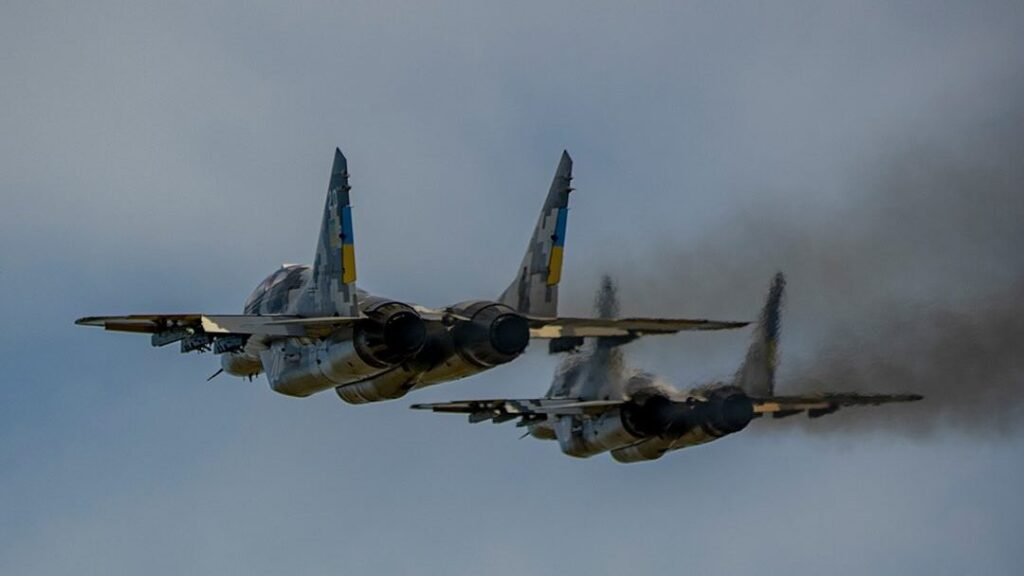
Ukrainian MiG-29s.

  • Ukraine has lost another Mikoyan MiG-29 fighter as well as its pilot
  • The Ukrainian MiG fleet is slowly dwindling owing to combat losses and wear and tear
  • The Ukrainian air force is acquiring new Western types to replace the MiGs and other ex-Soviet jets

Ukraine has lost another Mikoyan MiG-29 fighter and its pilot. The Thursday shoot-down extends the steady attrition of the Ukrainian air force MiG fleet, potentially drawing down the fleet to its pre-war strength.

That means Ukraine may have lost as many of the twin-engine, supersonic MiG-29s as it has received from its allies or restored from surplus stocks since February 2022.

It's an ominous milestone. The Soviet-vintage MiG-29 is no longer the Ukrainian air force's most important fighter. That honorific belongs to the air force's ex-European Lockheed Martin F-16s.

But the MiG-29 is still the air force's second most important fighter—and will remain so through 2027 as Ukraine awaits its first ex-Swedish Saab Gripens, due early next year, and French-made Dassault Rafales, due from 2028. Ukraine sorties MiG-29s for ground attack missions targeting Russian troop concentrations, strikes on Russian air defense systems, and air defense sorties over Ukrainian cities and ports.

Today, October 1, 2026, another Ukrainian defender fell in combat.

Flying a MiG-29 fighter jet, he carried out missile and bomb strikes against Russian occupiers along one of the front-line directions.

During the mission, his aircraft was hit by an enemy missile. The pilot… pic.twitter.com/3DC1VJAiWm

— Ukrainian Air Force (@KpsZSU) October 1, 2026

The air force announced the loss of the MiG-29 and its pilot, Capt. Marat Mambetov, shortly after it occurred on Thursday. Mambetov, 25, was a flight commander in the 40th Tactical Aviation Brigade, known as the "Ghost of Kyiv" brigade. "Flying a MiG-29 fighter jet, [Mambetov] carried out missile and bomb strikes against Russian occupiers along one of the front-line directions," the air force stated. "During the mission, his aircraft was hit by an enemy missile. The pilot ejected, but tragically did not survive."

It's the 37th confirmed combat loss of a Ukrainian MiG-29 since Russia widened its war on Ukraine in February 2022, according to a tally by the Oryx open-source intelligence collective. Oryx has also registered damage to an additional three Ukrainian MiG-29s.

Thirty-seven write-offs, plus the likely grounding of several previously flyable MiG-29s owing to intensive wear and tear since 2022, may have reduced the Ukrainian air force's MiG-29 fleet to around three dozen active jets.

Ukrainian Air Force MiG 29 of the 204th tactical aviation brigade making a low pass. Note the absence of 4 R-73 air to air missiles. And only a pair of R-27 missiles. pic.twitter.com/I07qKxO3Yw

— capt. Wild Bill Kelso (@_wild_billkelso) May 26, 2026

Fighter subtraction

The math is simple. The air force probably had between 30 and 35 MiG-29s in service when Russia attacked in February 2022. As losses cut into the fleet, Poland donated 14 surplus MiGs, Slovakia donated 10, and Azerbaijan reportedly donated three. Meanwhile, Ukrainian engineers tapped a global pipeline of spare parts to reactivate an estimated 20 grounded MiG-29s moldering in hangars at various Ukrainian airfields.

That's as many as 82 MiGs in and, as of Thursday, 37 out owing to Russian action—plus additional jets grounded due to airframe fatigue. The resulting active fleet should number around three dozen planes, around as many as Ukraine had on the eve of the wider war.

There aren't many more old MiGs that Ukraine could obtain to bolster the fleet. Poland still has as many as nine very tired airframes, but Kyiv and Warsaw have consistently failed to negotiate a transfer. There may yet be a few ex-Soviet MiG-29s, grounded for years or even decades, that Ukrainian engineers can restore to flightworthy status. Other than that, options are scarce.
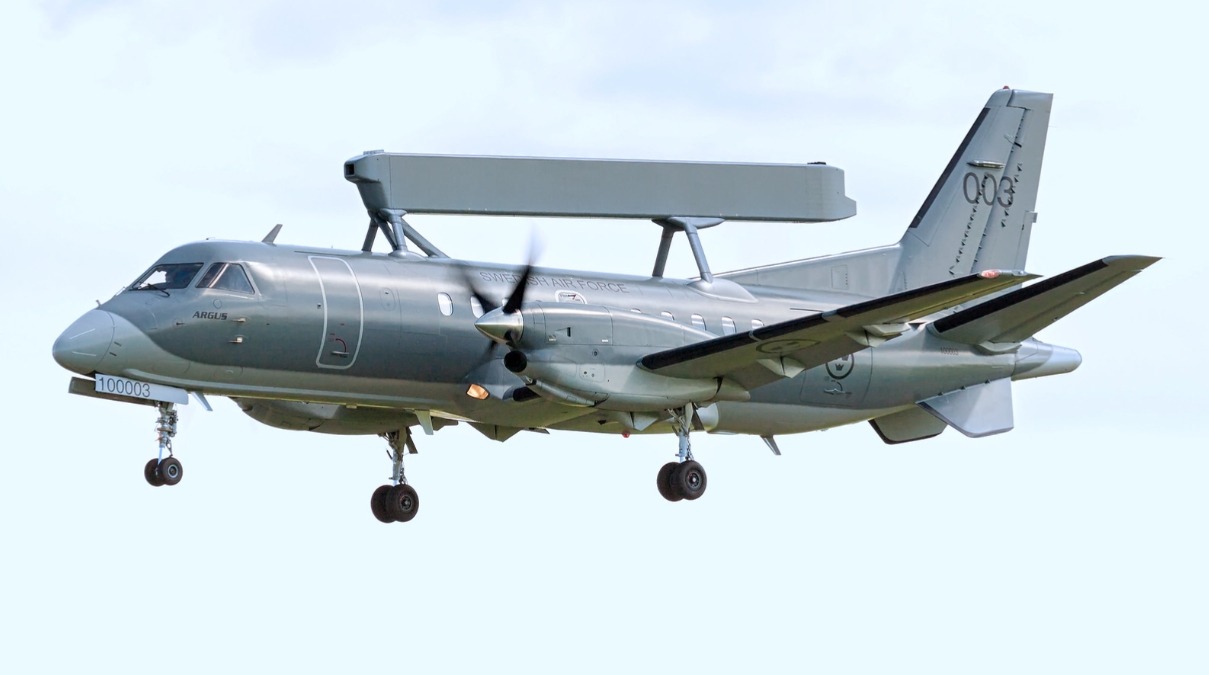
ukraine receive swedish asc 890 early warning aircraft after f-16 modifications airborne control (aew&c) saab 340 news ukrainian reports
Explore further

Ukraine’s Swedish radar planes have flown inside Russian missile range for six months. None has been shot down.

The three dozen MiGs still in the inventory may have to last a little while alongside the few survivors of Ukraine's other Soviet-vintage warplanes, including Sukhoi Su-27s, Sukhoi Su-24s, and Sukhoi Su-25s.

Older Western types—the 80 or so F-16s European allies have pledged, about half delivered, as well as potentially a dozen or so ex-French Dassault Mirage 2000s—are steadily replacing the ex-Soviet jets. (So far, Ukraine has lost five F-16s and one Mirage.) Next year, the transformation of the Ukrainian air force from a largely Soviet-equipped force to a largely Western-equipped force will accelerate when the first of 32 Gripens arrive. Sixteen Rafales are to follow from 2028.

Barring catastrophic combat losses among Western types and assuming Ukraine can maintain and arm these new warplanes, by the end of 2027, the air force may not need its remaining MiGs and Sukhois, which by then could be very tired.

Russian missiles are steadily reducing the MiG and Sukhoi fleets, effectively forcing Ukraine to switch to new types.

  •  

Ukraine is now sending its tanks into battle with drone escorts: they can drive into a Russian kill zone and come back alive

Par : David Axe

475th Assault Regiment tanks under drone escort.

  • The 475th Assault Regiment found a new way to protect its tanks from Russian drones
  • It surrounded its up-armored tanks with drones of its own
  • During a recent counter-infiltration mission, two 475th Assault Regiment tanks were shepherded into battle by three different drone types

Russian infiltrators have been slipping into villages and towns along Ukraine's northeastern border with Russia, likely aiming to draw Ukrainian troops away from the bigger fights farther south around the cities of Sloviansk and Kramatorsk.

Desperate to clear out the infiltrators without dedicating too many precious infantry to the task, the Ukrainian 475th Assault Regiment formed a unique team: two heavily up-armored tanks plus three different types of drone. The drones scouted ahead of the tanks and protected them as they trundled through Russia's own drone kill zone on their way to a point-blank clash with Russian troops.

In this mission, the blend of mechanized and unmanned forces worked: the tanks accomplished their mission and survived to fight another day. If the tank-drone pairing keeps working, expect it to become more common all along the 1,200-km gray zone as Ukraine struggles with a deepening shortage of manpower.

Two Ukrainian turtle tanks of Code 9.2 of the 475 Assault Regiment assault Russian position in Vilkhuvatka, Kharkiv Oblast@GeoConfirmed @UAControlMap

50.187782, 37.508585
src: https://t.co/ItVhiR0hrW pic.twitter.com/4KlQZaYt0T

— Bielitz (@Bielitzling) September 30, 2026

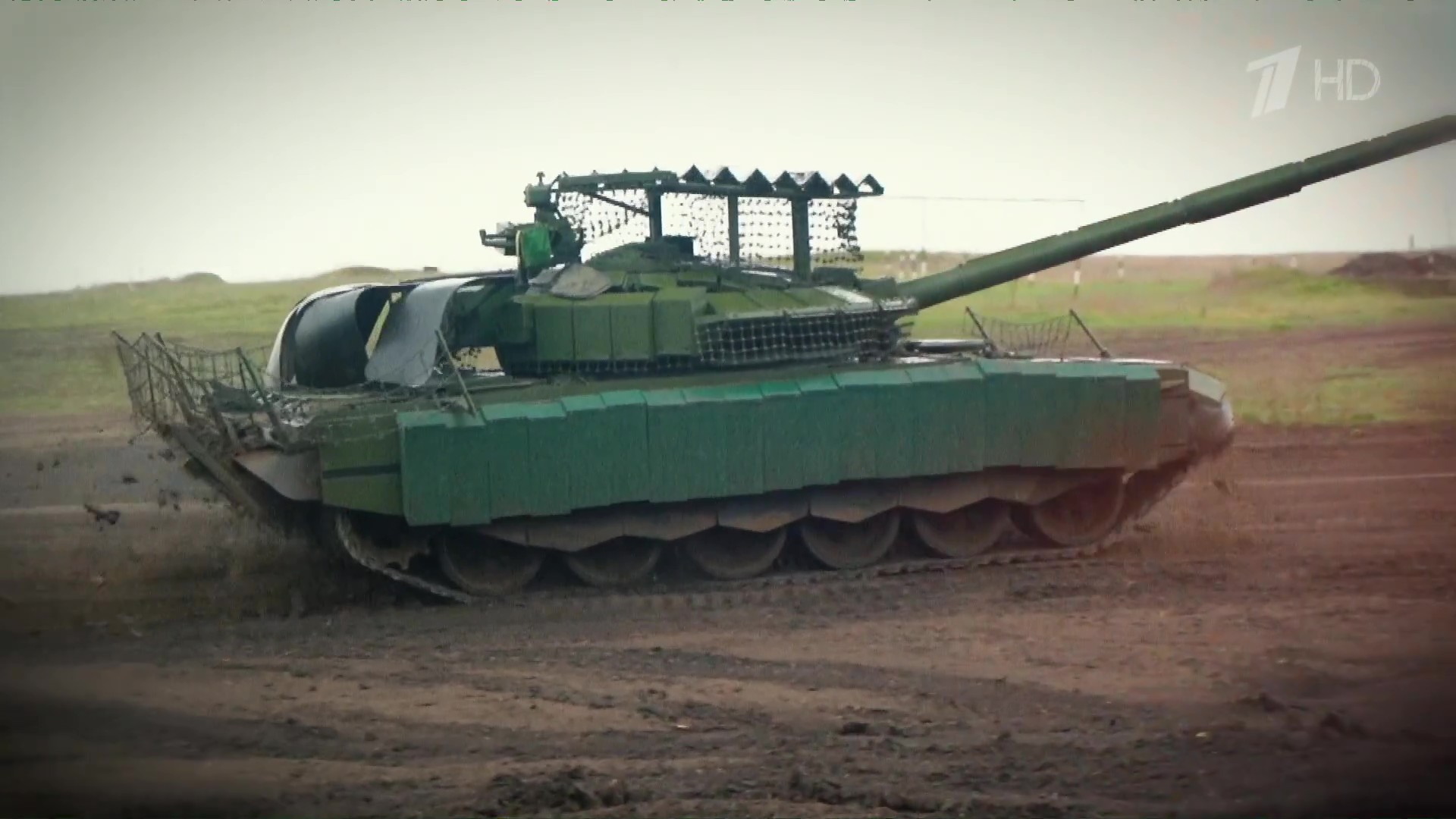
It's unclear what kinds of tanks the 475th Assault Regiment operates. It is clear how the regiment protects the tanks from ever-present Russian drones. The unit wraps the tanks in metal cages and then welds hundreds of metal spines on the cages. The spines trigger incoming explosive drones at a safe distance from the tank's hull. The cage supports the spines and catches any drones the spines may miss.

We call these kinds of tanks "hedgehog tanks." The Russians developed the hedgehog application but, seeing that it worked, deflecting potentially dozens of drones at a time, the Ukrainians copied it.

Hedgehog helpers

But even the best-protected hedgehog tank might struggle to get through the enemy's kill zone when that kill zone may include bomber and one-way attack drones in the air and loitering ambush drones waiting on the ground as well as mines and other threats.

Sometimes the best defense against a drone is another drone, and the 475th Assault Regiment put that truism into practice. To shepherd those two hedgehog tanks into battle with Russian infiltrators in the village of Vilkhuvatka, in Kharkiv Oblast 9 km from the border with Russia, the regiment deployed a Vampire heavy bomber drone, at least one explosive first-person-view (FPV) quadcopter, and at least one surveillance quadcopter.

Kharkiv Oblast vilkhuvatka border infiltrators
Vilkhuvatka on a map (Euromaidan Press)

The surveillance drones could scout ahead. The bomber drone could blast mines and loitering ambush drones. The FPVs could intercept incoming enemy FPVs. The layered protection was effective. As evident in the 475th Assault Regiment's video depicting the two-tank counter-assault, the tanks took multiple hits from Russian drones and mines, but not enough hits to slow them down.

T-72AM.
Explore further

Russia may soon have more tanks than pre-war. It just can’t use them.

Both tanks reached an intersection inside Vilkhuvatka, fired their cannons at nearby Russian infiltrators, and then withdrew.

It should come as no surprise that the 475th Assault Regiment is pioneering mixed formations of drones and tanks. The regiment recently partnered with the 1st Assault Regiment to develop new "multi-domain" tactics combining ground, air, and cyber forces. "We came to the conclusion that fighting in only one domain makes no sense," said "Perun," the 1st Assault Regiment commander. "We'd simply lose because the enemy would bring another domain into play."

The key takeaway is that, despite the serious threat that drones and mines pose to tanks in the fifth year of Russia's wider war on Ukraine, tanks can still fight, win, and survive—if they have plenty of support from the same kinds of drones that, in enemy hands, vex them along every kilometer of disputed terrain. The tank isn't dead yet. It just needs a little help.

  •  

Russia just accidentally crashed its first Tu-95 bomber in 11 years. Its missiles will keep striking Ukraine anyway

Par : David Axe

Russian missiles rain down on Ukraine: Kyiv, Dnipro, Lviv, Zaporizhzhia under fire

  • A Russian Tu-95 bomber crashed on takeoff in Russia's Far East on Tuesday, the type's first crash in 11 years
  • It's potentially the 11th Tu-95 the Russians have lost in the current wider war, and they can't build more
  • But Russia still has enough bombers to keep up its missile raids on Ukraine

A Russian air force Tupolev Tu-95 Bear bomber crashed on takeoff, apparently from Ukrainka air base in Amur Oblast in Russia's Far East. The Russian defense ministry said the plane was on a training flight without munitions and blamed a technical fault. The crash, while reportedly accidental, is still a win of sorts for Ukraine. Every bomber the Russians lose is a bomber they can't immediately replace—and sortie for missile strikes on Ukrainian cities.

The problem for Ukraine is that Russia still has bombers to spare. It'll take more than a few crashes or drone raids on Russian bomber bases to cut into Russia's capacity to bombard Ukraine.

That's why Ukraine needs missile-armed fighters, ground-based self-propelled guns, speedy interceptor drones, and long-range surface-to-air missiles such as American-made Patriots, among other air defenses. The Ukrainians can't prevent missile attacks by destroying bombers or waiting for bombers to crash; they need to shoot down missiles as they near their targets.

A Russian Tu-95MS Bear heavy bomber crashed on takeoff in Amur this evening during a training flight.

The airframe is a total loss, with no survivors reported. pic.twitter.com/tbujV6RVP5

— OSINTtechnical (@Osinttechnical) September 29, 2026

A security camera on the ground recorded a large aircraft plunging toward the ground in Amur Oblast on Tuesday night. Video from the crash site confirmed it was one of the Russians' four-engine, propeller-driven Tu-95s, aging workhorses in Russia's escalating campaign of missile and drone attacks on Ukrainian cities.

The crash killed six crew and left one survivor injured, according to Russian state media. It is the first Tu-95 to go down in 11 years, Defense Express notes, and the first known non-combat loss of the type since the full-scale invasion.

It's potentially the 11th Tu-95 Russia has lost since widening its war on Ukraine in February 2022. Ukrainian drones caught two Bears on the ground at Engels-2 air base in Saratov Oblast in July and August. On 1 June 2025, Ukraine's Operation Spiderweb—coordinated strikes on Russian bomber bases by more than 100 small drones smuggled across Russia in trucks—destroyed as many as four Bears at Olenya air base on the Kola Peninsula and another four at Belaya air base in Irkutsk Oblast.

Now the Russian air force may be down to somewhere between 36 and 44 working Tu-95s, depending on the count, the youngest of which rolled out of the factory in the 1990s. That matters because the Tu-95 is, like the jet-propelled Tupolev Tu-22M bomber, out of production. Vendors have gone out of business. The skilled workers who assembled the types retired decades ago.

While the Russians can still build one or two Tupolev Tu-160 jet bombers every year, slowly growing a fleet that currently stands at around 18 active planes, that's far too few new bombers to replace combat losses as the wider war grinds through its 56th month.

On September 8, four Tu-95MS from Olenya Air Base and two Tu-160M from Ukrainka Air Base conducted a combat mission against Ukraine.

The Tu-95MSs and Tu-160Ms launched Kh-101 cruise missiles from the airspace over the Leningrad and Smolensk oblasts. pic.twitter.com/xAZRc8EDO5

— AviVector (@avivector) September 8, 2026

Slow attrition

The Russians have also lost at least nine Tu-22Ms, and possibly far more: Defense Express estimates losses at up to 70% of the combat-ready fleet since 2022. All told, Russia's bomber force has shrunk to around 105 planes since the wider war began, or fewer.

Equally problematically for the Russians, the old Tu-95s and Tu-22Ms that carry out the majority of air-launched cruise missile strikes on Ukraine are wearing out from heavy use; not all are available for front-line use as more airframes spend more time in deep maintenance.

Explore further

Ukraine is working down the short list of ships that shell its cities with cruise missiles. A Neptune reached one of them tied up at its own pier

But a Tu-95 carries as many as eight Kh-101 cruise missiles at a time; a Tu-22M carries up to three Kh-22s or Kh-32s. A Russian drone and missile strike might include just a dozen or so air-launched cruise missiles launched by a handful of bombers. A raid on 8 September involved just four Tu-95s and two Tu-160s.

The Russians don't need 105 bombers to sustain six-bomber raids once or twice a week, even as those bombers suffer more and more wear and tear. Ukraine would have to take out a lot more Russian bombers, and fast, to put a dent in Russian strikes.

Unless and until that unlikelihood happens, Ukraine will still need to defeat Russian raids inside Ukraine—by shooting down hundreds of incoming drones and missiles at a time. But that's getting harder as the Russians deploy faster jet-propelled Geran drones and more ground-launched Iskander missiles, combining them with the bomber-launched missiles in complex packages that routinely overwhelm ammunition-starved Ukrainian air defenses.

  •  

In Ukraine’s Vivaldi offensive, nobody rides in the BTR-60s. Bulgaria’s old troop carriers go into Russian bunkers packed with mines

Par : David Axe

A BTR-60B. Source: Ukraine's Ministry of Defense.

  • Bulgaria donated 110 BTR-60 armored personnel carriers, too thinly armored to carry infantry into a drone war
  • Ukraine's 3rd Army Corps fills them with anti-tank mines, drives them by remote control, and detonates them inside Russian bunkers
  • A jet with a glide bomb does the same job. It costs a hundred times more

Bulgaria gave Ukraine 110 BTR-60 armored personnel carriers. They are 1960s vehicles, too thinly armored to carry infantry anywhere near a front line patrolled by explosive drones. So Ukraine's 3rd Army Corps found another use for them during Operation Vivaldi, its counteroffensive north of Lyman. Fill one with anti-tank mines, rig it for remote control, drive it at a Russian bunker, and set it off.

Packing potentially dozens of TM-62 anti-tank mines, the speedy BTR-60s become what's called vehicle-borne improvised explosive devices, or VBIEDs. Once a favorite weapon of insurgents battling US forces in Iraq and Afghanistan, VBIEDs have found a new niche in Russia's wider war on Ukraine as unmanned demolition systems.

"To break through the enemy's defenses, the 3rd Army Corps employed its own invention, Soviet BTR-60s converted into robotic kamikaze complexes," the corps stated. "They were used to demolish the enemy's strongest fortifications." If an enemy strongpoint is too heavily protected to bomb from the air but exposed to attack from the ground, send in a VBIED.

Білецький: «Противник був введений в оману і проспав справжній удар»

Третій армійський корпус звільнив Нове, Рідкодуб і Катеринівку та відновив контроль над Карпівкою і Новомихайлівкою. Втрати противника — 2000 живою силою, понад 250 росіян захоплені в полон. Так закінчився… pic.twitter.com/GSV4LFG3gj

— Третій армійський корпус (@ab3army) September 28, 2026

The Russians were the first to deploy vehicular IEDs in the current war, but the Ukrainians may have mastered the tactic. It's one thing to rig an explosives-filled MT-LB tractor or T-55 tank to roll straight forward without direct human control, as the Russians once did. It's another to rig an explosive BTR-60 to maneuver before going off, as the 3rd Army Corps' VBIEDs clearly did.

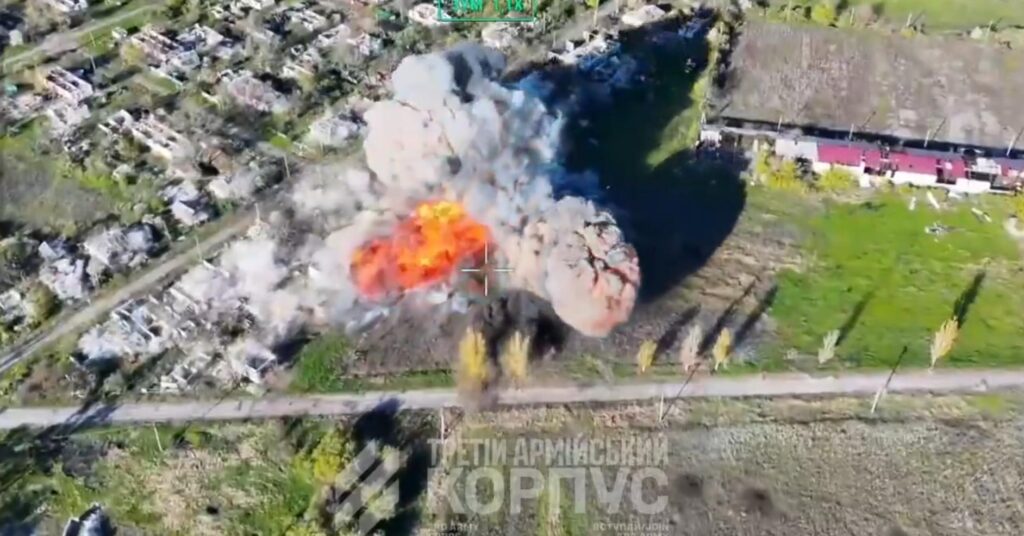
On 28 September, announcing the close of Vivaldi's third phase, the 3rd Army Corps released drone footage depicting one of the explosive BTRs blasting a Russian strongpoint north of the town of Lyman. The sheer scale of the explosion is testimony to the VBIED's destructive potential. And the trail the BTR leaves in the grass in the heavily edited video indicates the Ukrainians can steer their VBIEDs around obstacles and guide them to precision strikes.

A BTR-60 converted into a vehicle-borne improvised explosive device detonating against a Russian position north of Lyman
A BTR-60 VBIED explodes. 3rd Army Corps capture.

Why it gets there

A slow wheeled vehicle crossing open ground toward a fortified position should not survive the trip. In most sectors it would not. What makes the tactic work north of Lyman is a condition the 3rd Army Corps built into Vivaldi before its assault groups moved: Ukrainian air defense and electronic warfare threw a protective dome over the battle area, blinding Russian drones so they could not read the operation's design or strike what was moving through it.

Ukraine liberates area above Lyman in Operation Vivaldi. Map: Euromaidan Press

Robots have played critical roles in each phase of Vivaldi. Surveillance drones have watched from overhead. One-way attack drones have pummeled Russian positions and supply lines. Heavy bomber drones have not only dropped bombs, they've also airlifted explosive unmanned ground vehicles into position so the UGVs can roll right through the front doors of Russian bunkers.

The self-exploding BTR-60s are too big to airlift, but that's the point. A small UGV might carry a few tens of kilograms of explosives. A remote-controlled BTR-60 can easily haul hundreds of kilograms.

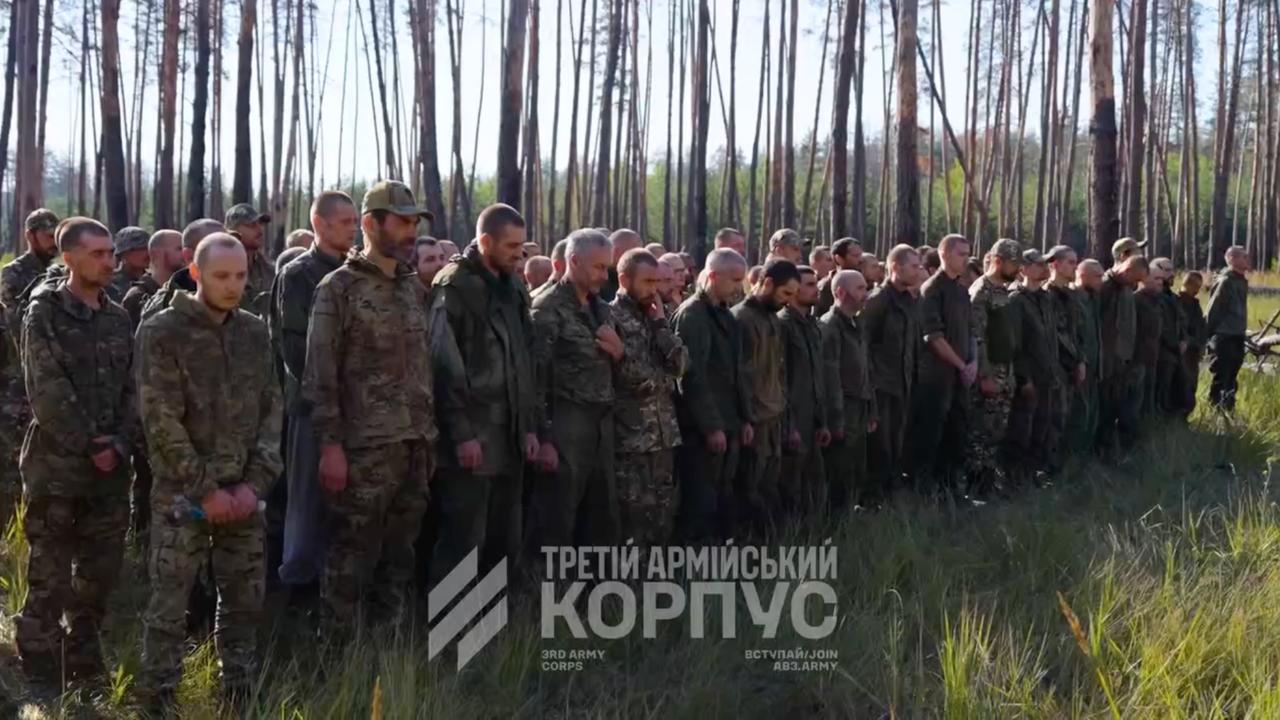
The image shows Russian prisoners of war on the Lyman direction. Source: The 3rd Army Corps
Explore further

Ukraine outfoxes Russia near Donetsk’s fortress belt with Soviet BTR-60s rebuilt as kamikaze robots, storms a key hub and takes 250 Russian prisoners

The arithmetic

It's not impossible to take out a VBIED before it strikes, of course. Mines, anti-tank missiles, and even concentrated gunfire can stop a vehicular bomb in its tracks. But losing one of the aged BTR-60s costs Ukraine very little. The vehicles are too thinly armored for use as front-line infantry transports anyway. You might as well convert them into bombs.

That is the whole case for the tactic. A manned fighter jet lobbing a precision glide bomb is the preferred approach to bunker-busting. But it costs tens of thousands of dollars an hour to keep a jet in the air, and a single glide bomb can cost tens of thousands or even hundreds of thousands of dollars. It's unclear how much it costs to convert a BTR into a VBIED. It could be just a few thousand.

And it reduces Russian fortifications without risking any Ukrainian lives. That's the philosophy underpinning all of the 3rd Army Corps' robot-first tactics. "This is exactly the direction of the corps' development set by Brig. Gen. Andrii Biletskyi," the corps stated, "to reduce the number of fighters in the most dangerous areas and replace them with robots."

Vivaldi began in mid-April under an information blackout that held for five months. The corps says it has regained control of 176 sq km across three of a planned four phases, around half of that de-occupied outright, and taken more than 250 Russian prisoners. Those figures are the corps' own and have not been independently verified.

Sometimes the robots doing that work are 60-year-old APCs modified for an explosive one-way mission.

3rd Army Corps troops.
Explore further

Ukraine retook 240 square km north of Lyman and nobody reported it for three months

  •  

Ukraine’s tanks are fighting from kilometers back. A 1960s Soviet model does that nearly as well

Par : David Axe

A 19th National Guard Brigade T-62M.

  • Many tanks on both sides now fire indirectly, from kilometers back, instead of closing with the enemy
  • At that distance, a 1960s tank is not much less effective than a modern one
  • And Ukraine, short of newer tanks, still has use for the T-62Ms it captured from Russia

1960s-vintage, Soviet-made T-62Ms aren't the oldest tanks in the Ukrainian inventory. That dubious honorific belongs to Ukraine's ex-Slovenian M-55S tanks, which are based on Soviet-made T-55s from the 1950s.

The T-62M hasn't gotten better. The job has changed. These days, many tanks on both sides function as mobile artillery, angling their guns high to fire a few rounds at targets kilometers away. They rarely work as tanks, closing with the enemy and firing directly from a few hundred meters. The threat from tiny explosive drones has pushed armor back from the gray zone, and at that distance a T-62M is not much less effective than a T-64BV. Or, for that matter, than a far more precious Leopard 1, Leopard 2, or M-1.

That is one reading of a war that has changed shape, and nobody has published a study of it. Ukraine's T-64, Leopard, and Abrams fleets have all taken heavy documented losses. Oryx, which logs a loss only where photos or video exist, lists no Ukrainian T-62Ms at all.

These tanks, all captured from the Russians, are also available. And that matters in a military struggling to sustain its tank force. As Russia's war on Ukraine grinds through its 56th month, Ukraine is running low on its newest and best tanks. Older and less capable ones fill in ... for lack of a better alternative.

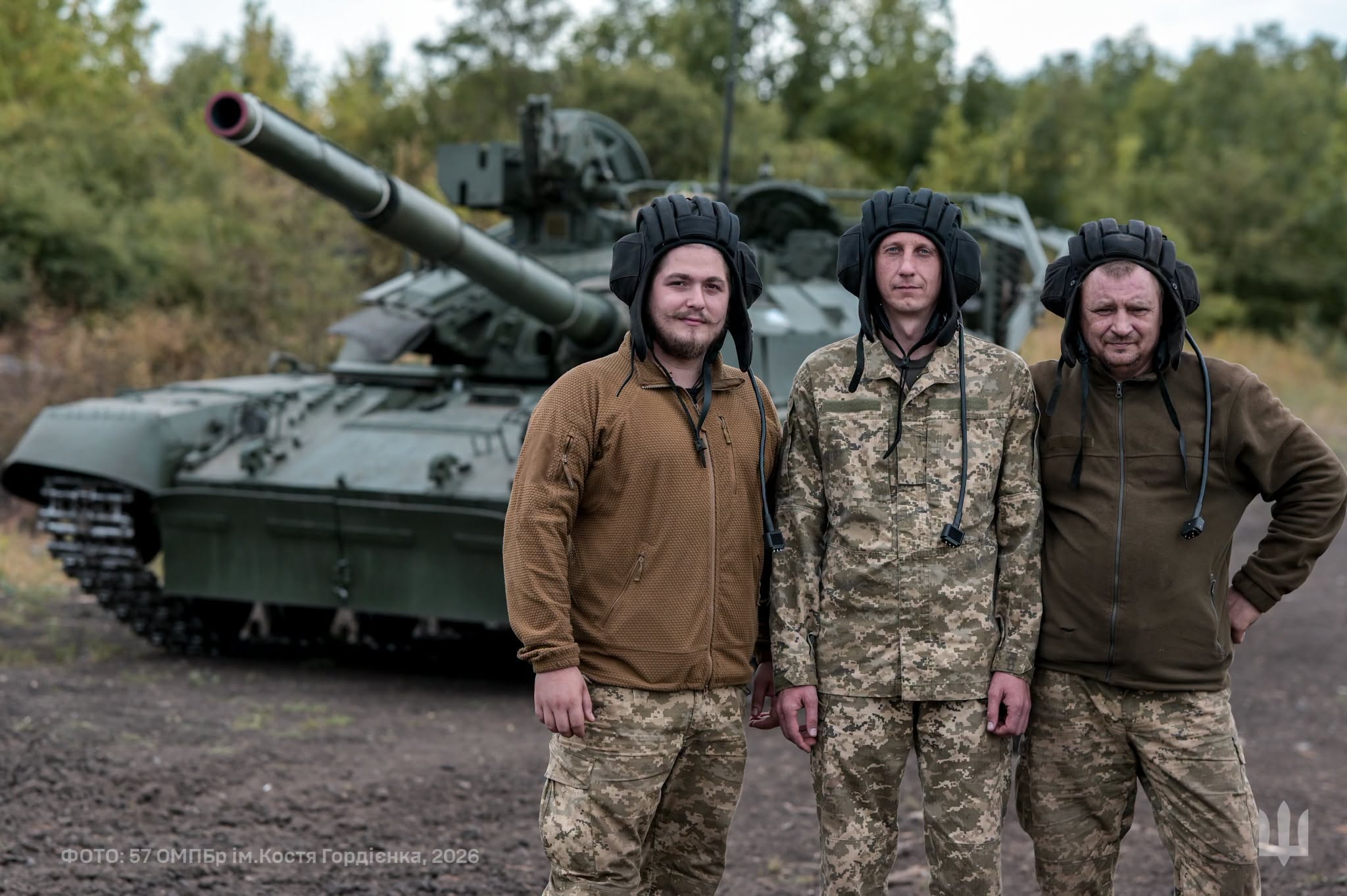
A T-64BM Bulat in the 57th Motorized Brigade. Photo by the brigade
Explore further

A rare Ukrainian Bulat tank turned up in a brigade that never had them

Observer Stevius, who closely tracks developments in the Ukrainian armor corps, recently highlighted the ongoing importance of former Russian T-62Ms to the Ukrainian war effort. "Captured T-62Ms still out there!"

Specifically, Stevius noted an ex-Russian T-62M belonging to the Ukrainian National Guard's 19th Brigade participating in a recent competition for best tank crew in the National Guard. According to Stevius, at least two other Ukrainian units have operated the survivors of at least 45 T-62Ms that Ukrainian troops have captured. Most of the captures took place during the Ukrainian counteroffensives in eastern and southern Ukraine in late 2022.

🧵👀‼ T-62M capturés toujours là!
45 T-62M (ou MV) russes ont été capturés par les Ukrainiens, presque exclusivement en 2022 et beaucoup à Kherson.
Certains ont été transformés en BREM, d'autres en BMPT, mais une partie d'entre eux ont été maintenus comme chars de combat malgré… pic.twitter.com/bysFtEUNnI

— STEVIUS (@Stevius21) September 23, 2026

Lesser tanks

The 40-ton, four-person T-62M is Ukraine's second-oldest tank, and where the slightly older M-55S got a deep upgrade in 1990s Slovenia, the T-62M has not. In its DNA it is still a vehicle of the early Cold War. The Ukrainian army's 110th Mechanized Brigade temporarily operated T-62Ms before swapping them out for much newer and more capable T-64BVs. Where the T-62M has a 115-millimeter main gun loaded by hand by a fourth crew member, the T-64BV has a more powerful 125-millimeter gun loaded by a fast mechanical autoloader.

The fast-firing capability of the made-in-Ukraine T-64BV was central to the Ukrainian 1st Tank Brigade's successful defense of the city of Chernihiv during the early weeks of the wider Russian invasion starting in February 2022. The Ukrainian tanks engaged passing Russian tanks at point-blank range, and out-shot them.

That is the kind of fight the T-62M would lose. It is a kind of fight fewer tanks now get.

An Arena-M tank right before a drone strike.
Explore further

Russia has thousands of tanks it can’t risk. One drone shield decides whether they roll

Surely some of the 60-something-year-old T-62Ms in Ukrainian service have been withdrawn owing to wear and tear and a possible shortage of spare parts. But there's a good chance most of the 45 Ukrainian T-62Ms are still in, or near, the action.

But not all are still tanks. Seeing the value in the thickly protected hull and reliable chassis that carries the T-62M's turret and gun, Ukrainian volunteers and units have converted some captured T-62Ms into specialist vehicles that benefit from the tanks' sturdy bottoms but don't need their obsolescent tops.

A few ex-Russian T-62Ms have undergone conversion into recovery vehicles by losing their turrets and guns and adding a heavy-duty winch for towing other armored vehicles. Volunteers working with the Serhiy Prytula Charity Foundation turned another into a heavy infantry fighting vehicle. The recipe is simple. Just pop off the existing turret and replace it with a smaller one fitted with a 30-millimeter autocannon, in this case one pulled from a captured Russian BMP-2.

Potentially dozens of Ukrainian T-62Ms are still T-62Ms, however, and still adding bulk and firepower to units that otherwise might struggle to deploy any tanks at all.

  •  
❌