Vue lecture

Ukraine retakes ground in a region Russia has fought for years to capture. “Vivaldi” is only getting started but is already “one of the most important victories for Ukraine in 2026”
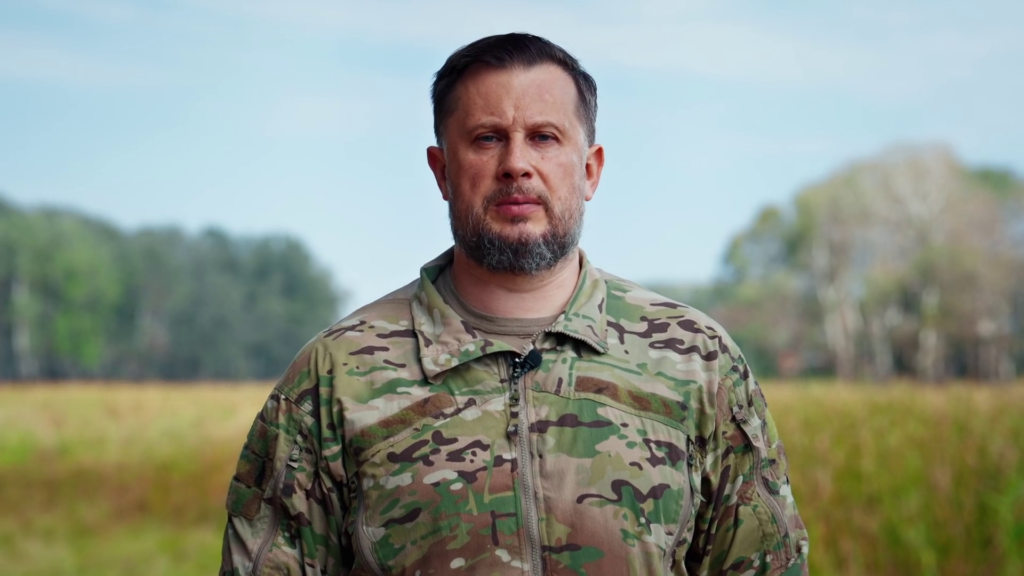
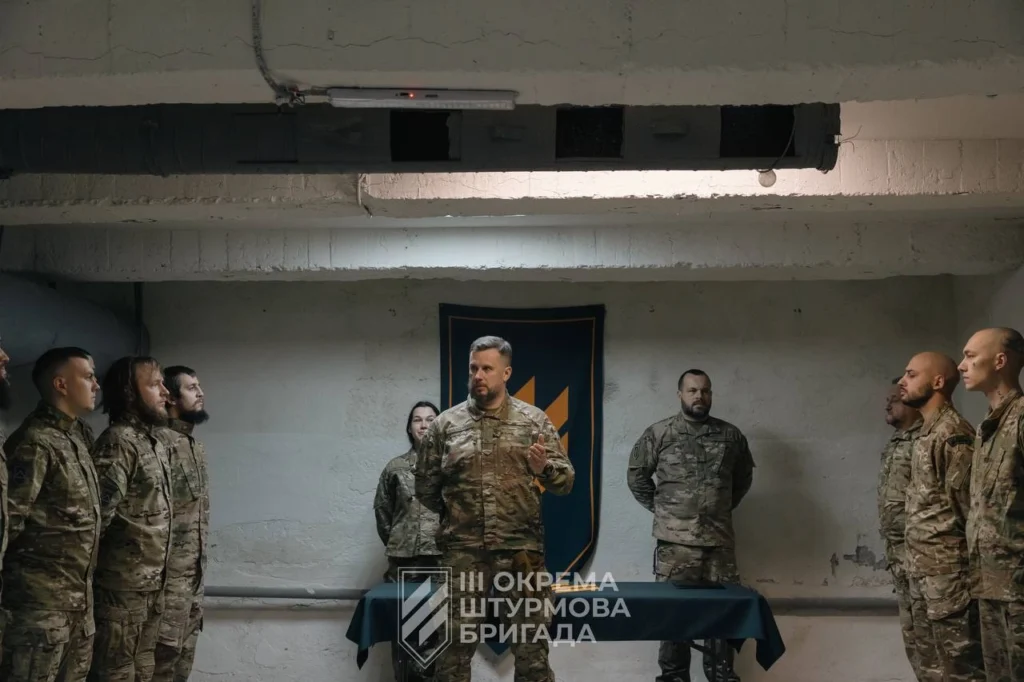
Ukraine's Third Army Corps commander Brigadier General Andrii Biletskyi announcing new developments in "Operation Vivaldi," 20 September 2026. Screenshot from video: Ukraine's Third Army Corps

Ukraine’s Third Army Corps says its forces have liberated Shandryholove and Derylove and established full control over Drobysheve in Donetsk Oblast as part of its ongoing “Vivaldi” offensive.

Ukraine is taking the initiative in northern Donetsk, where Russia has spent years trying to seize the remaining Ukrainian-held territory. By retaking ground and disrupting Russian logistics, the “Vivaldi” counteroffensive could complicate Moscow’s plans for a broader offensive in the Donbas.

According to the corps, Ukrainian forces and attached units have regained control of 125 square kilometers during the first two phases of the operation, including 50 square kilometers that had been under Russian occupation.

The corps said the operation has also inflicted more than 3,000 Russian personnel losses across the two phases, including 800 more during the latest phase. 

Ukraine expands gains in “Vivaldi” offensive

The Third Army Corps said its forces captured Shandryholove and Derylove and established full control over Drobysheve during the second phase of the offensive.

The offensive is aimed at degrading Russian forces operating in the area, with the corps saying it is targeting elements of Russia’s 20th and 25th Combined Arms Armies and 1st Guards Tank Army.

Brigadier General Andrii Biletskyi, commander of the Third Army Corps, said Ukrainian assault groups are preceded by drones and unmanned ground vehicles.

The corps said its heavy bombers have been used to deliver kamikaze ground robots more than 10 kilometers behind Russian lines. Artillery and drone units have targeted Russian command posts, communications nodes, logistics, crossings, and reserves.

Ukrainian air defense and electronic warfare units have also helped shield the area of operations, according to the corps.

The operation involved units from the 60th Mechanized Brigade, 125th Heavy Mechanized Brigade, 3rd Assault Brigade, KRAKEN, the 3rd Separate Reconnaissance Battalion, and the corps’ 25th Anti-Tank Battalion, along with attached units.
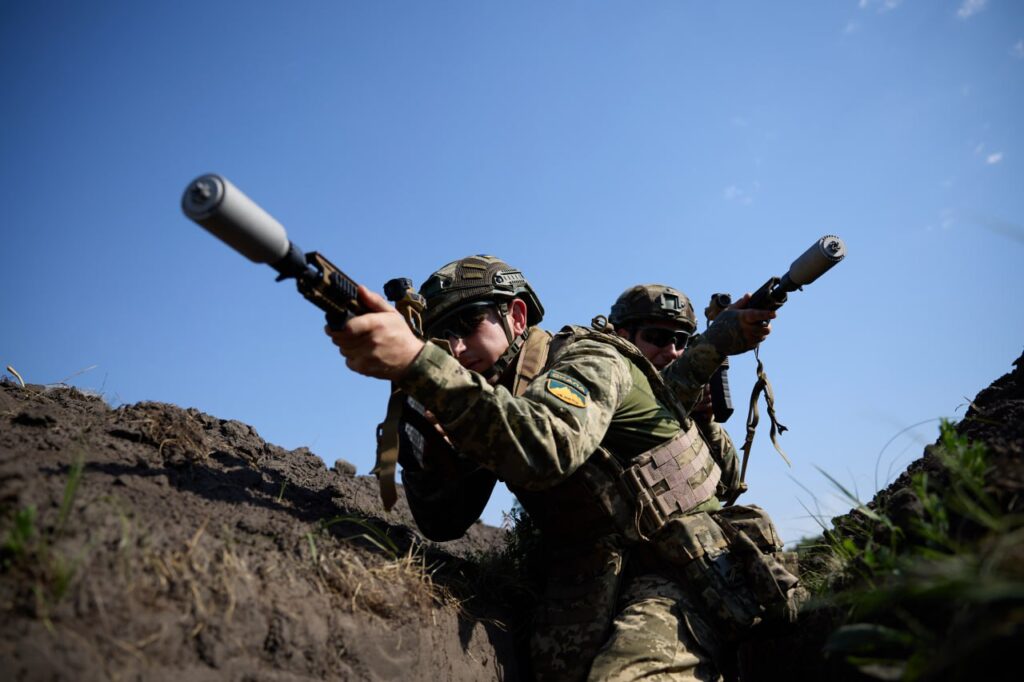
Soldiers of Ukraine's Third Army Corps. Photo: Ukraine's Third Army Corps
Explore further

“Only the first season” – Ukraine unveils secret counteroffensive in a region Russia has been trying to seize for 12 years

“One of the most important victories for Ukraine in 2026”

Open-source analyst Clément Molin, who has tracked the offensive using publicly available information, described the developments as highly significant.

“This is one of the most important victories for Ukraine in 2026, which will delay the offensive on northern Donbas,” Molin said.

After 4 months of the Lyman counter-attack, Ukraine 🇺🇦 3rd Army Corps managed to cut Russian 🇷🇺 salient north of Lyman and liberate more than 200 km2

This is one of the most important victory for Ukraine in 2026 which will delay the offensive on northern Donbas

🧵THREAD🧵1/20⬇ pic.twitter.com/PybB6jO9DO

— Clément Molin (@clement_molin) September 8, 2026

He also cautioned against claims that a large Russian grouping had been encircled, while assessing that Ukrainian advances had put pressure on Russian positions and supply routes.

The information surrounding the operation has remained limited, with Ukrainian forces maintaining operational security around their movements.

The Third Army Corps said the offensive is continuing and that further developments are expected soon.

  •  

Ukraine’s Vivaldi operation cleared 85 square kilometers near Lyman. A soldier who fought it says one thing was hardest of all

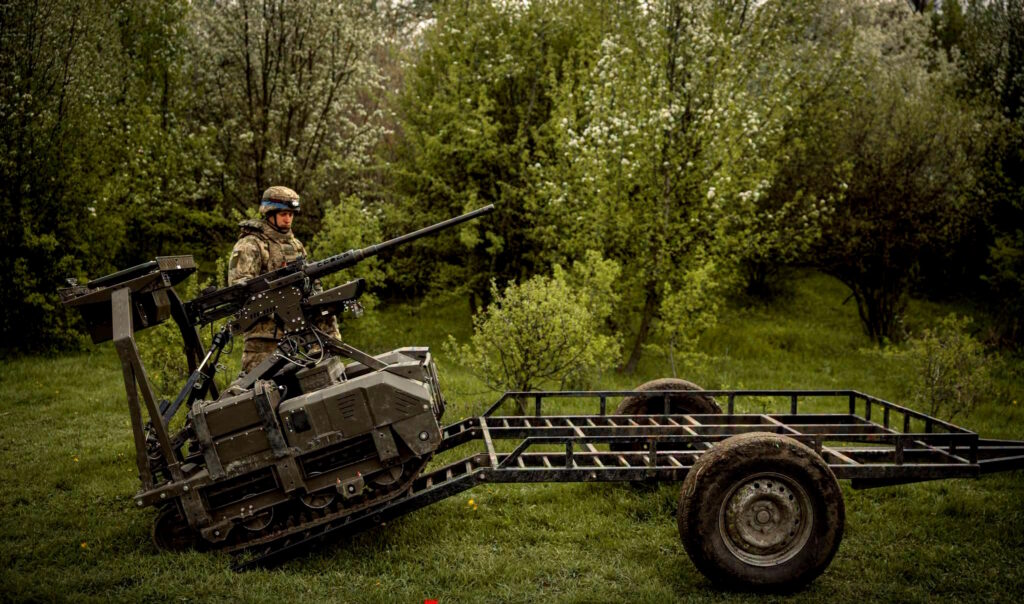
The image shows a Ukrainian soldier standing next to an unmanned ground robotic vehicle. Source: The General Staff

A soldier of Artan, a special unit of Ukraine's Defense Intelligence, known by the callsign Derun, described the fighting during important Ukraine's Operation Vivaldi, according to Novyny.Live. He says the hardest part of Ukraine's counteroffensive in the northern part of Donetsk Oblast is prying Russian troops out of positions they have fortified so well that they see every approach coming.

Vivaldi is bigger than any one assault. It is the counteroffensive that the Third Army Corps is running near Lyman. The Institute for the Study of War says it has disrupted Russia's plan to encircle the fortified "Fortress Belt" of Donetsk cities, as the corps says its first phase cleared 75 square kilometers of Russian infiltrators and de-occupied another 10.

Dug-in Russians see every approach

The problem is Russia's preparation, when "the enemy has made his positions very well fortified," Derun said.

"The hardest is to knock him out of there, because when a position is competently prepared, they see everything," he explained.

A well-sited position lets the defenders watch the open ground an assault group has to cross, spot the attackers early, and fight them at a distance, which is the worst way for the attacker to come.

A lapse opens the way in

When Russian troops stop watching the approaches to their position, the assault group can close the gap unseen, Derun said.

"When Russian troops are distracted, it can play into our hands: we can approach under cover, when he does not see us, and work him from close range," he added.

Once the attackers are in close, he added, the defenders can start to panic and make mistakes.

Vivaldi runs to four seasons

Artan fought as part of a larger force. Alongside the Third Army Corps' own brigades, the operation drew in Ukraine's Special Operations Forces, the border guard, and the military-intelligence unit, all under a single tactical command, and it ran for months under an information blackout before the corps disclosed it.

The corps commander, Andrii Biletskyi, said the phase revealed so far is only the first of four, naming the operation for Vivaldi's Four Seasons.

"This is only the first," he said, promising more.

  •  

Russia was sure the terrain made this village impossible to take—Ukraine walked in anyway

Soldiers of Ukraine’s 425th Separate Assault Regiment Skelia. Photo: Skelia

Ukrainian troops pushed into a front-line village Russian forces were sure they could never reach, an officer from the assault force told Army TV. He described a methodical, house-by-house clearing—then a Russian response that, once the village fell, called the footage an AI fake.

Through 2026 Russia has pressed on this stretch of the eastern front, creeping toward the fortress belt, the chain of fortified cities anchoring Donetsk Oblast. Retaking Serednie is one move in a quiet Ukrainian counteroffensive that has clawed back ground on this axis—which is why this village changing hands lands harder than the map suggests.

The terrain Russia trusted

Serednie sits on the Lyman direction in eastern Ukraine, an axis where Russian forces have been pressing toward Ukrainian-held Sloviansk and Kramatorsk. Troops from Ukraine's 66th Separate Mechanized Brigade entered the village during Operation Vivaldi, said the deputy commander of its first mechanized battalion, Kassta, callsign Timokha.

Ukraine's Third Army Corps commander Brigadier General Andrii Biletskyi announcing "Operation Vivaldi," 15 September 2026. Screenshot from video: Ukraine's Third Army Corps
Explore further

Ukraine’s Vivaldi counteroffensive disrupts Russia’s plan to encircle Donetsk Fortress Belt – ISW

Sitting on their own gains there, the Russians assumed no counterattack could follow and were certain the terrain itself ruled out any move into the village.

"The enemy, having success in this direction, did not expect that any counterattack or offensive could come in response," Timokha said.

Preparing for the operation took more than a day or two, he added, because the village was full of basements and buildings that each had to be checked. Reconnaissance came first, then fire from drones, heavy bomber drones, and artillery to grind down a garrison he put at at least a platoon, before assault groups moved in with friendly units alongside.

Operation Vivaldi as a whole, run under an information blackout, has cleared 75 km² of enemy infiltration pockets and de-occupied another 10.

Then the Russians called it AI

Small Russian attempts to retake the village broke apart on the approaches, Timokha said. The louder reaction came online: Russians claimed the Ukrainian liberation videos were made with artificial intelligence.

He likened it to Sviatohirsk, where Vladimir Putin announced the town's capture before the commander of Ukraine's Third Army Corps, Brigadier General Andrii Biletskyi, publicly denied it, Timokha said.

  •  

One pincer stalled a year ago, the other has just been broken near Kostiantynivka—Russia’s ring will not close, Ukrainian commander says

one pincer stalled year ago other has just been broken near kostiantynivka—russia's ring close ukrainian commander says · post andrii biletskyi founder azov third assault brigade (center) 3d ukraine news

Russia's attempt to encircle the fortified cities of Donetsk Oblast has lost its northern pincer, the commander of Ukraine's Third Army Corps, Brigadier General Andrii Biletskyi, said in a television interview reported by Ukrinform. He described where the two Russian pincers were meant to meet, far behind the front line, and what Moscow must do now that one of them is gone. He also named what the Ukrainian operation there is meant to achieve, after declining to do so when he revealed it two days earlier.

Seizing all of Donetsk Oblast is Russia's central objective in the ongoing all-out war, on the battlefield and at the negotiating table alike, and Russian leader Putin has ordered it done by the end of 2026. Russian forces have already missed 15 of his earlier deadlines against a belt of fortified cities Moscow can neither storm nor bypass, and it is losing men faster than it can replace them.

Two pincers that were to meet in another oblast

Biletskyi set out the Russian design "to envelop the so-called fortress cities from the north and from the south"—the four cities, Sloviansk, Kramatorsk, Druzhkivka, and Kostiantynivka, that have been the backbone of Ukraine's defense in the oblast since 2022..

"From the south it was an envelopment through Dobropillia, and from the north through this salient, which is now being cut off, it went to the city of Sviatohirsk and further, to the settlement of Barvinkove, where these two claws of the Russian army, the Dobropillia one from the south and the Sviatohirsk one from the north, were supposed to close," the commander said.

Barvinkove sits in Kharkiv Oblast, west of the fortified belt. The distance from there to the current front line shows how far behind Ukrainian lines the ring was meant to close.

Neither pincer got near it. Ukrainian forces stopped the Russian infiltration near Dobropillia last year, Biletskyi said, and the situation there remains difficult but under control. Russian assault groups have kept pushing toward the town in recent weeks, though Ukrainian troops have mined or destroyed the main approaches.

On the northern pincer he was blunt: 

"The northern claw has effectively been routed and destroyed," he said.

Soldiers of Ukraine's Third Army Corps. Photo: Ukraine's Third Army Corps
Explore further

“Only the first season” – Ukraine unveils secret counteroffensive in a region Russia has been trying to seize for 12 years

Now the cities have to be stormed

Holding that result now depends on Russian supply, Biletskyi said. The critical task is "paralyzing logistics, paralyzing the rear areas, not letting the Russians restore this offensive."

He then set out what the failure costs Moscow.

"Then they will have to storm the Sloviansk-Kramatorsk and the Druzhkivka-Kostiantynivka agglomerations head-on," he said. "And storming these cities head-on is a far more painful and costly business for them than trying to envelop them and effectively take them without a fight."

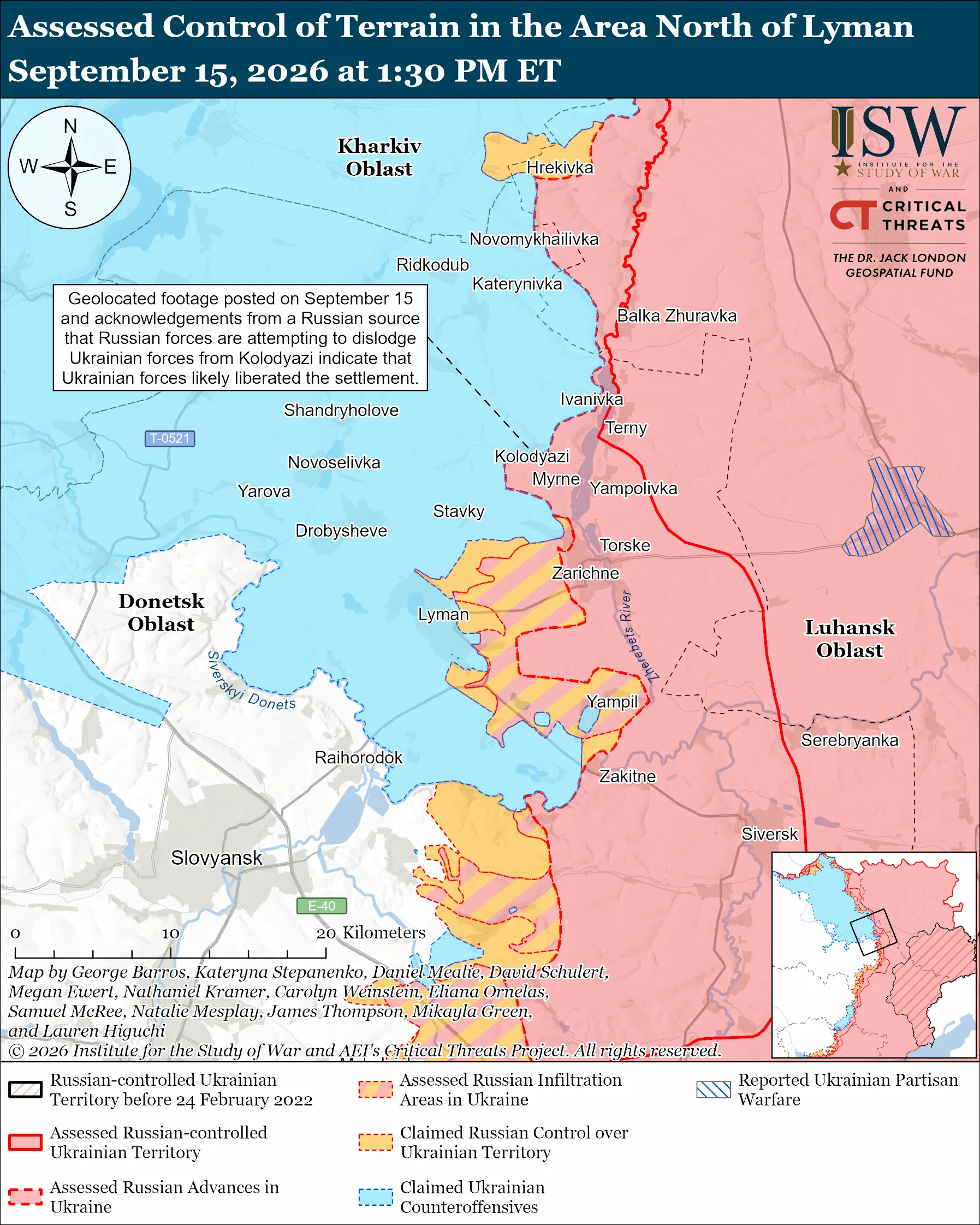
Map: ISW

Russia has taken none of them: it has been fighting for Kostiantynivka since October 2025 and has not reached the other three. Ukraine reinforced the sector last month, placing two newly formed groupings under Azov commanders. One of them has since warned that Russia may mobilize up to 600,000 troops for its next offensive.

Ukraine's Third Army Corps commander Brigadier General Andrii Biletskyi announcing "Operation Vivaldi," 15 September 2026. Screenshot from video: Ukraine's Third Army Corps
Explore further

Ukraine’s Vivaldi counteroffensive disrupts Russia’s plan to encircle Donetsk Fortress Belt – ISW

What Vivaldi is actually for

Two days after the operation was made public without a stated objective, Biletskyi gave one, and it is defensive.

"Our main strategic task for the Armed Forces of Ukraine is defense on the Donetsk and Luhansk axes, the defense of Donetsk and Luhansk oblasts," he said.

Ukrainian forces are not trying to take as much ground as they can, he added. 

"We are not fighting there just for tens or hundreds, and at one time thousands, of kilometers. We are fighting first of all for favorable defensive lines."

Vivaldi is meant to put the troops on exactly those lines. That sets a different yardstick than captured settlements: the operation will be judged on the ground Ukraine ends up holding, not on how much of it there is.

Biletskyi confirmed the offensive in northern Donetsk Oblast on 15 September, after a period of information silence. His corps had cleared 75 square kilometers of Russian infiltrators and liberated 10 more, and its drone units had cut Russian supply routes and burned fuel infrastructure, the corps said at the time. Asked then what the operation was aiming at, he declined to say, offering only that Vivaldi has four seasons and this was the first. The Institute for the Study of War assessed a day later that the operation disrupts the Russian plan to encircle the fortress belt.
  •  
❌