❌

Vue lecture

Kyiv stockpiles food and water as Russia’s new aerial tactics threaten a brutal winter
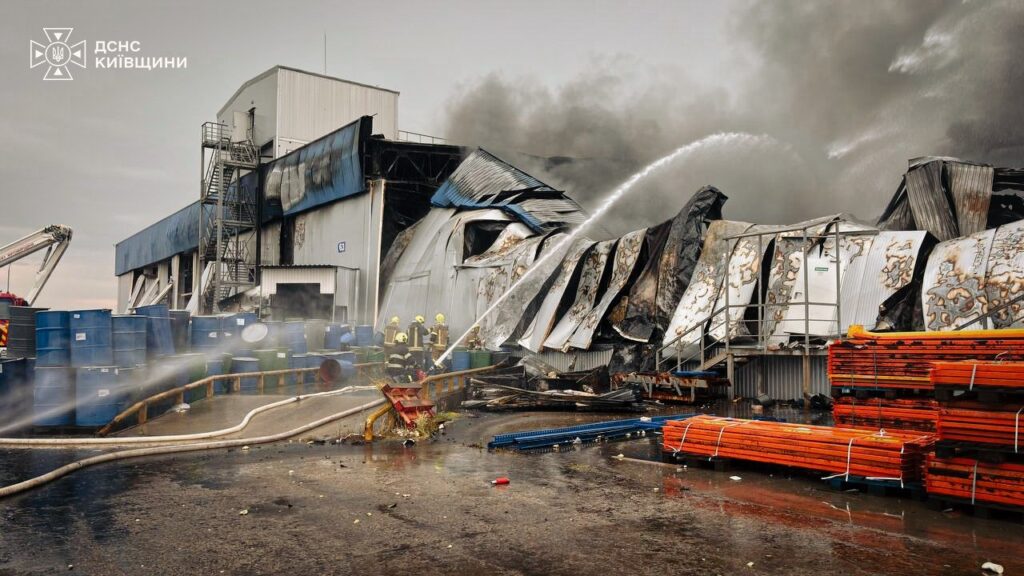
Ukrainian firefighters respond to a blaze at warehouses hit by a Russian drone strike in Kyiv Oblast’s Brovary district, 18 August 2026. Photo: Ukraine's State Emergency Service

Kyiv is building reserves of food and drinking water to help residents during prolonged power outages and other emergencies, the Kyiv City Council said on 7 September.

The preparations come as Russia continues to target Ukraine’s critical infrastructure and food supply chains, while Ukrainian officials warn that water systems could also come under attack. Kyiv is therefore preparing for a broader range of disruptions this winter, not just power outages.

The city is preparing the reserves ahead of the 2026–2027 fall and winter season, with priority given to low-income residents and people facing difficult circumstances.

The supplies will also be available at Points of Invincibility, emergency support centers set up to provide basic services during prolonged blackouts, for people affected by emergencies, and for workers involved in emergency and other urgent response operations.

Kyiv prepares for attacks on food and water supplies as Russia makes air attacks harder to stop

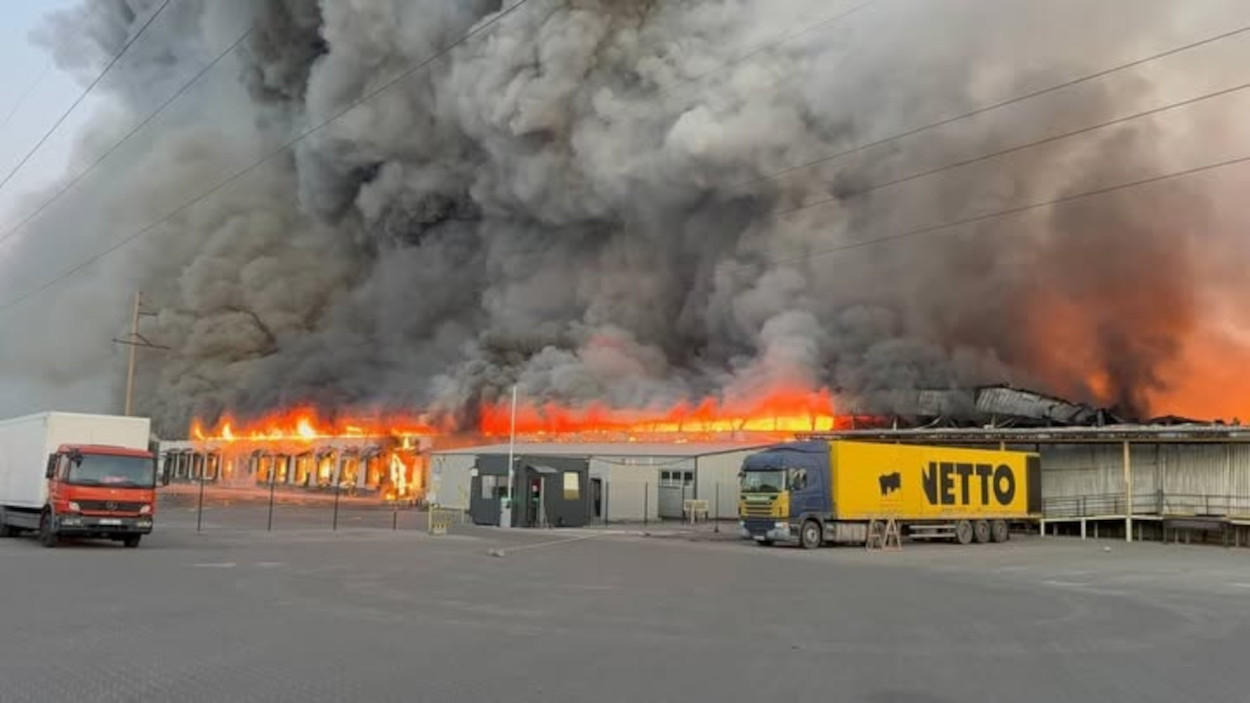
Russia has increasingly targeted infrastructure connected to Ukraine’s food supply in recent months. Russian strikes have hit food warehouses and distribution facilities around Kyiv, contributing to shortages and periods of empty supermarket shelves in the capital and other parts of the country.

Ukrainian officials have also warned that Russia could target water infrastructure as part of its attacks on critical civilian systems, raising concerns about access to drinking water during prolonged disruptions.

This year, the threat is particularly acute as Russia has expanded its use of ballistic missiles and introduced faster, jet-powered Geran drones that are harder for Ukraine to intercept. Ballistic missiles can only be reliably intercepted by a limited number of air defense systems, while the faster drones reduce the time available to detect and engage them.
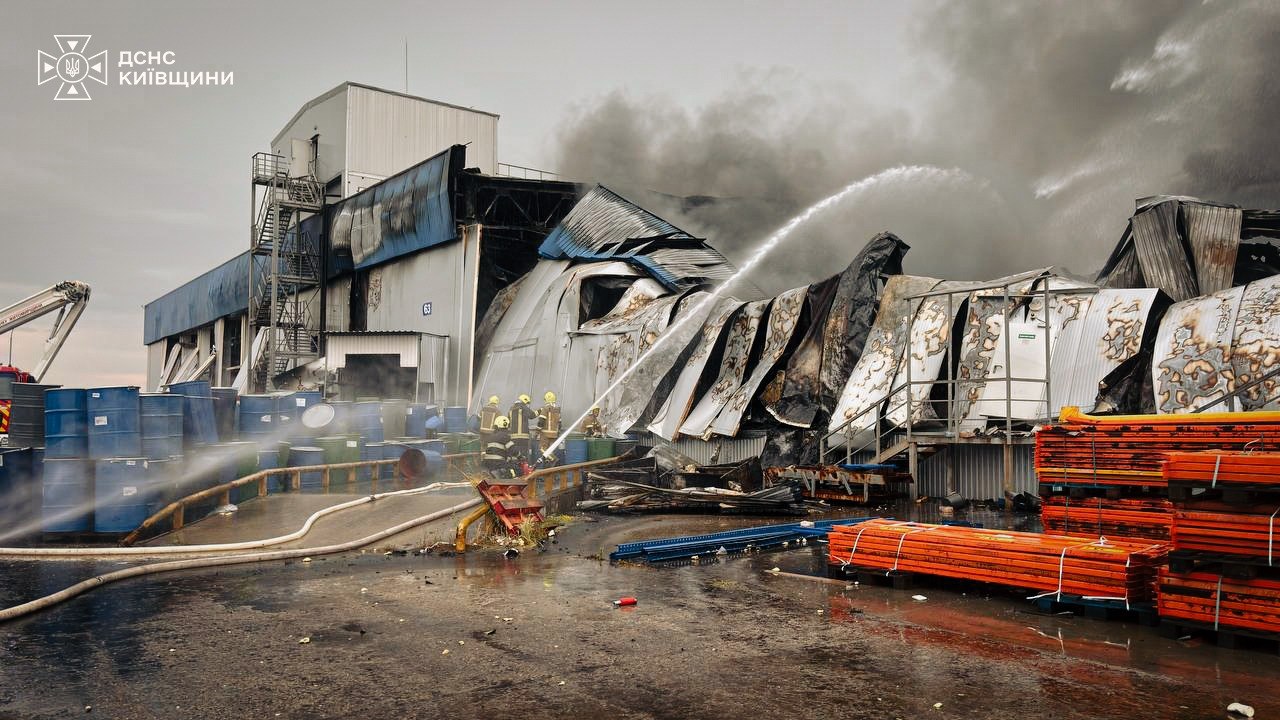
Ukrainian firefighters respond to a blaze at warehouses hit by a Russian drone strike in Kyiv Oblast’s Brovary district, 18 August 2026. Photo: Ukraine's State Emergency Service
Explore further

Russia has destroyed 90% of Ukraine’s modern commercial storage capacity. Retail logistics are being reshaped

Kyiv prepares for another difficult winter

Russia's strikes have repeatedly targeted Ukraine's energy infrastructure during previous winters, causing extended blackouts and disruptions to heating and other essential services.

Kyiv is now preparing for the possibility that attacks could again leave residents without electricity or access to essential supplies for extended periods.
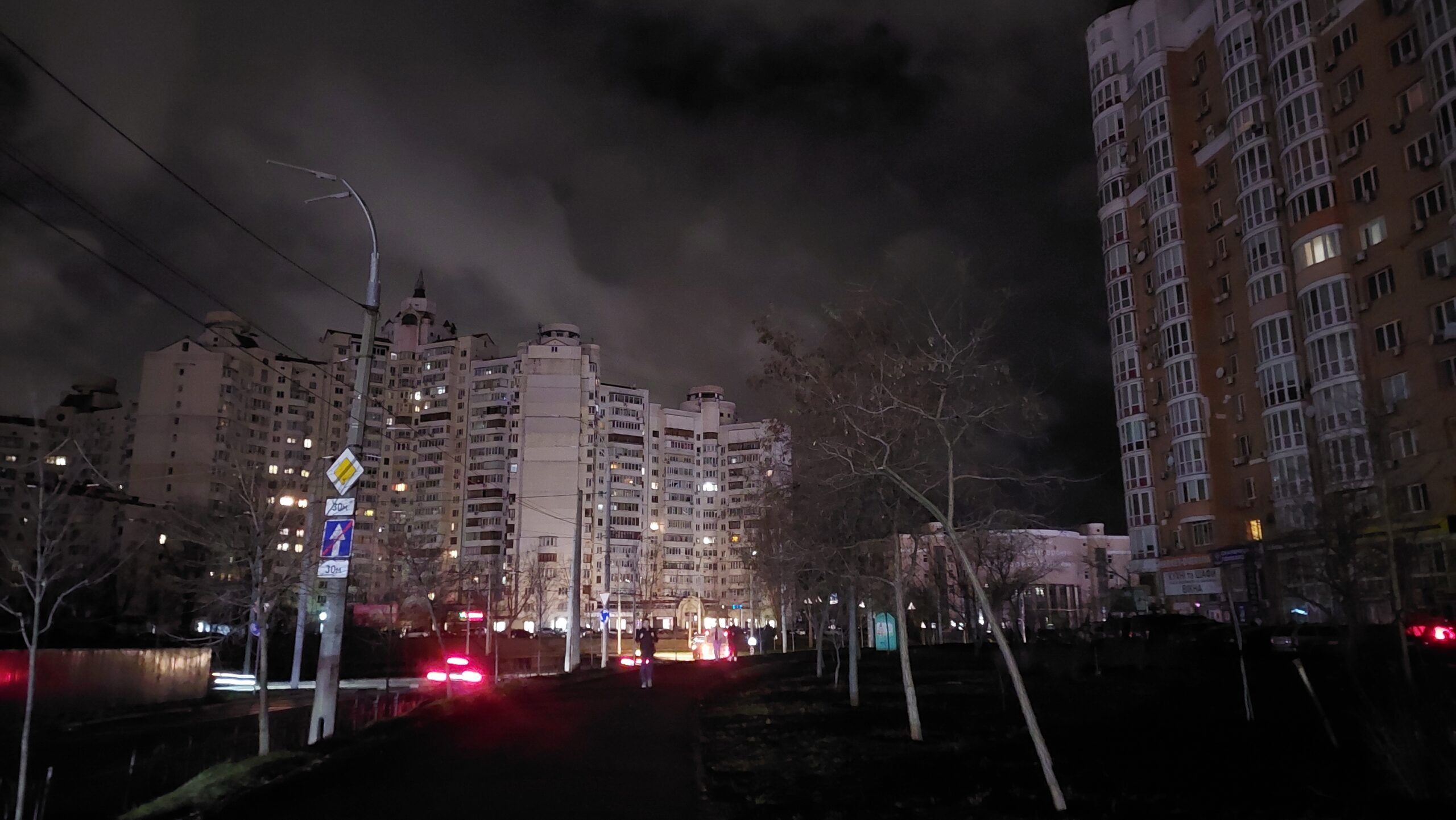
During blackouts, apartment blocks in Kyiv are mostly dark, with scattered lights from apartments with battery-powered sources. Generators power businesses on the ground floor. Street lights are largely off.
Explore further

Behind the black windows: How Kyiv survives a winter in the dark

Kyiv says food supply remains stable, for now

Oleh Kuіavskyi, deputy head of the Kyiv City State Administration, said the city's preparations are focused not only on accumulating supplies but also on ensuring they can quickly reach people who need them.

“Food security in the capital is not only about having the necessary reserves, but also a clear system for their distribution and delivery to those who need help most,” Kuіavskyi said, according to the Kyiv City Council.

He said Kyiv's consumer market remains stable and predictable, while the city continues to hold agricultural food fairs across its districts to help maintain access to basic food products.

Grocery shortage
Empty shelves in a Lviv supermarket. Photo: Times of Ukraine/Telegram

Reserves could feed 25,000 people

According to the city council, Kyiv has already formed and is maintaining reserves of key food products for use if the energy system comes under severe strain.

With support from charitable and civic organizations, the city can organize hot meals for up to 25,000 people, officials said.

The city's Department of Industry and Entrepreneurship Development also plans to purchase another 20,000 food packages for use during emergencies.

The reserves are being coordinated through Kyiv's Humanitarian Headquarters, established in February 2022. The body coordinates the city administration, district administrations, municipal companies, charities, and donors, including the accounting and distribution of emergency resources.

  •  

Russian drone strikes SBU headquarters in central Kyiv. Zelenskyy says “geography” of Ukraine’s response is set

Smoke seen from the damaged SBU headquarters building on Volodymyrska Street in central Kyiv following a Russian drone strike on 4 September, 2026. Screenshot from video: Suspilne

A Russian drone struck the central building of Ukraine’s Security Service (SBU) on Volodymyrska Street in central Kyiv on September 4, injuring 12 people, according to Ukrainian officials.

The strike hit the SBU’s central headquarters directly opposite St. Sophia’s Cathedral, one of Kyiv’s best-known historic landmarks.

Kyiv Mayor Vitali Klitschko said nine of the injured were hospitalized, with two in serious condition.

Drone targeted SBU chief’s office

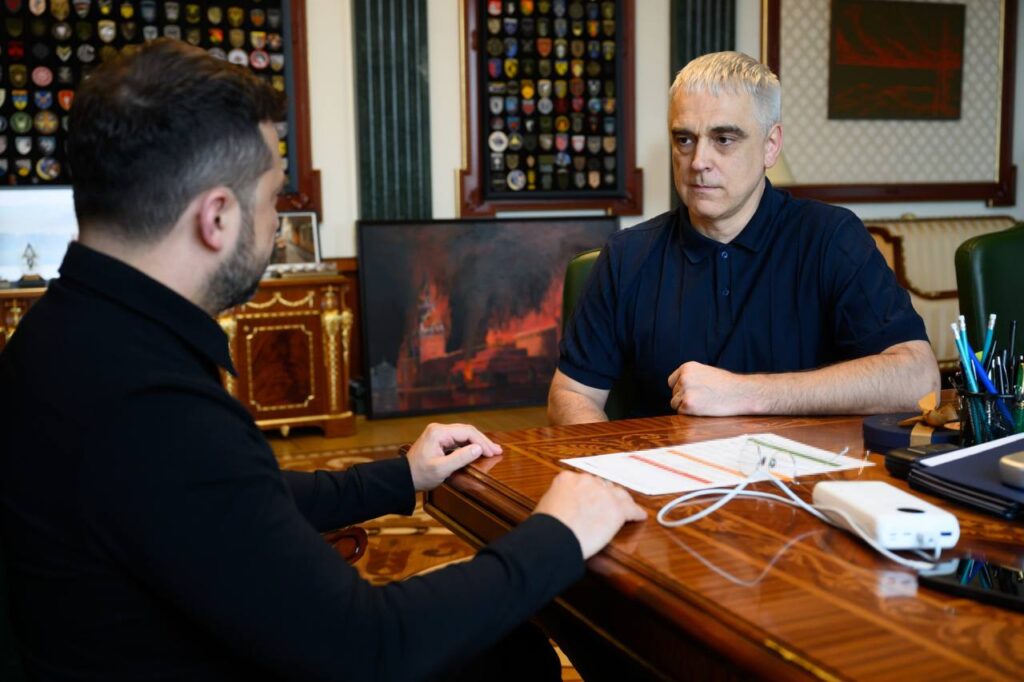
Ukrainian President Volodymyr Zelenskyy said the drone was directed toward the office of SBU chief Oleksandr Poklad inside the building.

The SBU confirmed that the strike was deliberately aimed at Poklad’s office, but said he was not injured.

Zelenskyy said he had ordered Poklad to prepare a “meaningful” and, if possible, symmetrical response to the Russian attack, with Ukraine’s military supporting the operation.

Later, Zelenskyy said Ukraine had already determined the "geography" of its response and would choose the timing based on when it could achieve an effective result.

SBU chief Oleksandr Poklad meets with Ukrainian President Volodymyr Zelenskyy following a Russian drone strike on SBU headquarters in Kyiv, 4 September 2026. Photo: Zelenskyy

Ukrainian Foreign Minister Andrii Sybiha called the strike on the SBU headquarters “major escalation that demands resolute responses,” saying it showed Moscow’s rejection of diplomacy during a renewed push for peace.

The Russian attack on Ukraine’s Security Service Headquarters is a major escalation that demands resolute responses.

Moscow launched this strike during a renewed push for peace — laying bare its true rejection of diplomacy.

Located nearby, the UNESCO World Heritage Site — St.… https://t.co/3gjvVXJJfl

— Andrii Sybiha 🇺🇦 (@andrii_sybiha) September 4, 2026

Kyiv faces near-daily Russian drone attacks

The strike occurred in the middle of the day in one of central Kyiv’s busiest areas, with large numbers of civilians and vehicles on nearby streets, according to Euromaidan Press sources on the ground.

The attack came amid a sustained Russian campaign of drone attacks on Kyiv and the surrounding oblast, with the capital repeatedly targeted by large waves of jet-powered Geran drones and other weapons.

The attacks have increasingly brought explosions, fires and falling debris to residential and civilian areas across the capital and its suburbs, forcing emergency crews to respond repeatedly as the city remains under a persistent aerial threat.

Russia’s new models of Geran drones, developed from Iranian-designed Shaheds, are harder for Ukrainian air defenses to intercept. Moscow is deploying them in growing numbers, increasing the chances that drones reach Ukrainian cities and intensifying the threat to civilians.

Building damaged and fire breaks out

The drone strike caused a fire in the building, which emergency crews later extinguished.

Klitschko said sections of the building’s ceiling and an exterior wall were destroyed. Emergency services remained at the scene after the fire was brought under control.

The SBU said the damaged headquarters would be restored.

The agency also vowed that Russia would face a response through further Ukrainian operations, including strikes against Russian assets and networks.

A Russian drone struck the Ukrainian Security Service (SBU) headquarters on Volodymyrska Street in central Kyiv on September 4, injuring 12 people.

The drone was deliberately directed at the office of SBU chief Oleksandr Poklad, according to Ukrainian officials, but he was not… pic.twitter.com/DQ76MyAEeO

— Euromaidan Press (@EuromaidanPress) September 4, 2026

Historic Sofia Kyivska complex damaged

The Russian strike also damaged a building within the National Conservation Area “Sofia Kyivska,” located directly across Volodymyrska Street from the SBU headquarters, according to Suspilne.

According to the reserve’s director general Nelia Kukovalska, the blast shattered windows and destroyed the glass entrance structure of the complex’s Consistory building, whose exterior faces Volodymyrska Street.

No one at the reserve was injured, as staff and visitors took shelter. The historic St. Sophia Cathedral itself was not damaged, according to Kukovalska.

The St. Sophia Cathedral in Kyiv was founded in 1011, under the reign of Volodymyr the Great, the king who ruled Kyivan Rus from 980 to 1015. (Photo: ukrmandry.com.ua)

The nearby Zavertailo bakery was also damaged, though all staff and customers survived after taking shelter in the basement.

  •  

Russia now hunts Kyiv by daylight too, Flash explains why

geran-5

Russia has started launching its strike drones during the day, not only after dark. The reason is the new jet-powered Geran drones, which fire groups cannot take down, so for Russia there is no longer any difference between attacking by day or by night, Serhii "Flash" Beskrestnov, President Zelenskyy's adviser on defense technologies, told Glavcom.

The near-hourly daytime raids are the new face of a campaign that culminated on 1 September, Knowledge Day, when Russia hit Kyiv and its region with ballistic missiles and jet-powered drones and killed 12 people. That strike culminated a six-day assault on the capital that began on 27 August, two days after CIA Director John Ratcliffe arrived in Moscow. However, even after that, the attack continued. Sirens now sound across Kyiv and the surrounding oblast roughly once an hour, around the clock.

Why the shift to daylight

The daytime raids carry an added economic and psychological weight, he said. The threat of strikes forces shops and businesses to open and close unpredictably, snarls transport, and can halt rail service.

"They understand perfectly well that daytime attacks hurt the population and business," Beskrestnov said, adding that the state railway Ukrzaliznytsia is paralyzed.

Keeping the defenders on their feet

A further aim is to hold Ukraine's air defense in a permanent state of readiness, Beskrestnov said. Round-the-clock attacks mean radar stations and generators must run without pause.

"Radar stations and generators run constantly, and that also puts a strain on our troops," he added.

Kyiv remains a Russian prime target because it carries symbolic as well as military weight, as the capital houses the government, business, and warehouses, and a strike there would resonate far more than terrorizing a small town.

Russian forces first concentrated on districts nearer the drones' launch corridors — Kyiv's Left Bank, and the Brovary and Boryspil raions — before switching to the other bank to hunt for targets. As the cold season approaches, he expects Russia to intensify strikes on the energy infrastructure it has so far spared.

  •  

Estonia quarantines emails from Russian domains over cyberattack risk

Abstract illustration of computer code and binary numbers glowing blue and green against a dark background.

Estonia is automatically diverting emails using Russia’s .ru internet domain into quarantine for additional security checks before they reach state institutions connected to the country’s secure government network, Justice and Digital Affairs Minister Liisa Pakosta told Estonia's public broadcaster ERR.

The measure is intended to protect Estonian government computer systems amid a post-2022 surge in cyberattacks that officials link to Russia. It applies only to institutions operating inside the secure state network, leaving local governments and some state bodies outside.

Many Estonian residents, particularly Russian speakers, still use .ru email services, ERR noted. Because the filter is triggered solely by the address ending, legitimate messages will be screened alongside potentially malicious ones and may take longer to arrive.

Pakosta said the safeguard was necessary because cyberattacks against Estonia had increased “exponentially” since 2022 and that many were linked to Russia. She said such attacks had not succeeded against Estonia, while major public-sector cyberattacks had succeeded in both Latvia and Lithuania.

The rerouting is automatic and handled centrally, so agencies do not need to take any action, Pakosta said. A large proportion of state institutions have already moved behind the government’s unified cyber shield, while the transition continues.

Pakosta described the quarantine as one small measure within Estonia’s wider cybersecurity work. Estonia’s courts have gone further, saying they will ask parties in legal proceedings to stop using .ru addresses for official communication, according to ERR.

How the Baltic states are hardening against Russia

Estonia's email quarantine forms part of a broader Baltic effort to limit Russian influence and strengthen defenses against military, cyber, and covert threats.

Estonia, Latvia, and Lithuania are constructing a Baltic Defense Line, a planned network of bunkers, anti-tank ditches, and other barriers, along their borders with Russia and Belarus. Latvia has also banned imports of Russian and Belarusian books, clothing, toys, and other goods.

The threat extends beyond cyberattacks: an Estonian court found that Russia’s military intelligence agency, the GRU, ordered the 2024 firebombing of a Ukrainian restaurant in Tallinn, part of a wider Russian sabotage campaign targeting European supporters of Ukraine.

  •  

A masked figure got into a Polish drone-parts plant—Poland now suspects a foreign spy service set the fire

View of the WB Group factory building in Skarżysko-Kamienna, Poland. August 2026.

A fire at a Polish plant that makes drone parts for Ukraine's and Poland's militaries is being investigated as possible sabotage by a foreign intelligence service, Militarnyi reported. Poland's National Prosecutor's Office opened the case on two counts: foreign-intelligence activity against the country and a terrorist offense.

Fires and break-ins like this fit a widening pattern — the factories and supply lines that keep Ukraine armed are increasingly targets far from the front line. Across the continent, prosecutors keep opening the same kind of arson case against plants tied to Ukraine's defense.

A masked intruder and a two-hour fire

The fire started shortly after midnight on 31 August in the assembly hall of the WB Electronics plant in Skarżysko-Kamienna and spread to the storage rooms. Five crews put it out in under two hours. No one was hurt, but the storage rooms were destroyed, leaving at least 15 million zloty ($4 million) in damage. The plant had no permanent guards on site; a security company monitoring it remotely reported the fire.

Prosecutors say the blaze was set deliberately with a planted charge of flammable material, and no one has been charged. Security cameras recorded a masked person who climbed a fence and got onto the site.

Why Poland is looking at Moscow

Czesław Mroczek, deputy head of Poland's Interior Ministry, told RMF FM radio that many signs point to arson, and that a Russian trail is the obvious inference. An attack on the defense industry can suggest Russian involvement, he said, since European states have faced sabotage for years while backing Ukraine. Mroczek said protection plans for key defense plants must be richer than what this site had. No one has been detained, and investigators are still tracing how the intruder got in and who may have ordered it.

tusk polish prime minister
Explore further

After CIA head’s visit to Moscow, Poland’s PM warns Russia is preparing to escalate war. He puts critical window at seven or eight months

What the plant actually makes

WB Electronics is the core of WB Group, Poland's biggest private arms holding, whose firms build reconnaissance and strike drones such as the FlyEye and the Warmate. The Skarżysko-Kamienna site itself makes drone components for unmanned systems, used by both Polish and Ukrainian forces. Ukraine received FlyEye drones back in 2022 under its Army of Drones program, and in 2025 WB Group launched drone production inside Ukraine.

  •  

Zaporizhzhia’s largest mall closes as Russia’s attacks seek to make Ukrainian cities unlivable

Zaporizhzhia’s City Mall, the city’s largest shopping and entertainment complex. Photo: City Mall

Zaporizhzhia’s largest shopping and entertainment complex, City Mall, will remain closed throughout September following a Russian drone strike on a neighboring hypermarket last week.

Russia’s attacks are increasingly disrupting the basic civilian life of Ukrainian cities, as strikes on shops and other commercial facilities make it harder for businesses to operate and residents to go about their daily lives. The pattern is especially pronounced in cities close to the front, where Russia is unable to seize territory but can continue attacking from the air.

City Mall announced the closure on 1 September, apologizing to visitors and saying it would provide updates on when operations could resume. The complex did not give an official reason for the decision.

The announcement came four days after a Russian strike hit an Epicentr hypermarket located near the mall on 28 August. The attack sparked a fire covering about 2,000 square meters.

Russia targets Ukraine’s civilian economy

Shopping centers and other commercial facilities have increasingly been caught up in Russia’s attacks on Ukrainian cities.

In recent weeks, Russia has stepped up attacks on commercial sites and retail storage facilities, particularly in and around Kyiv, as well as other major cities closer to Russia and the frontlines.

On 21 August, a Russian drone strike on a shopping center in Kryvyi Rih killed at least 15 people and injured 130, including 23 children, according to local authorities. A second strike hit emergency responders about 30 minutes later as they worked at the scene.

The attacks have also hit Ukraine’s retail sector financially. As of August, three shopping centers had been destroyed and nine more damaged by Russian attacks since the beginning of 2026, with direct losses to the sector reaching 3.226 billion hryvnias ($72.5 million), according to industry data cited by Censor.NET.

Fear of attacks is also keeping shoppers away. Air raid alerts accounted for 21.8% of shopping centers’ operating hours in August, up from 20.1% in July and 9.4% a year earlier.

A fire burns at a Nova Poshta fulfillment and sorting center in Sviatopetrivske, Kyiv Oblast, after a Russian drone strike on 28 August 2026. More than 60,000 books were destroyed in the attack. Photo: Readeat
Explore further

Russia has burned millions of Ukrainian books, striking at the infrastructure of Ukrainian culture

Zaporizhzhia under Russian attack

For Zaporizhzhia, the pressure is particularly severe. The major city lies close to the front line and has faced sustained Russian attacks throughout the full-scale war. 

Unable to seize the city through ground advances, Russia has repeatedly used missiles and drones to strike its infrastructure and civilian areas.

The result is a city where even businesses that survive direct strikes can be forced to close because of the continuing threat.

  •  
❌