Québec solidaire a annoncé hier qu’un gouvernement solidaire accueillerait 70 000 immigrants permanents par an.
Le Parti libéral souhaitait, jusqu’en 2024, en accueillir 70 000, mais son nouveau chef, Charles Milliard, ne s’est pas encore prononcé sur un nombre précis.
La Caq maintiendrait le plan adopté en novembre dernier qui prévoit l’accueil de 45 000 résidents permanents par an.
Le Parti québécois limiterait leur nombre à 35 000 par an.
Le Parti conservateur n’a pas indiqué combien il souhaiterait en accueillir.
Proposal offers look at how state department could enforce Trump order targeting what it calls ‘birth tourism’
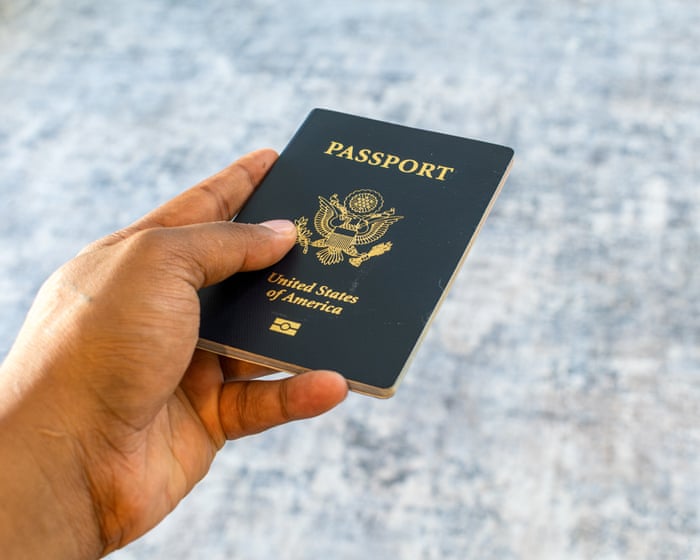
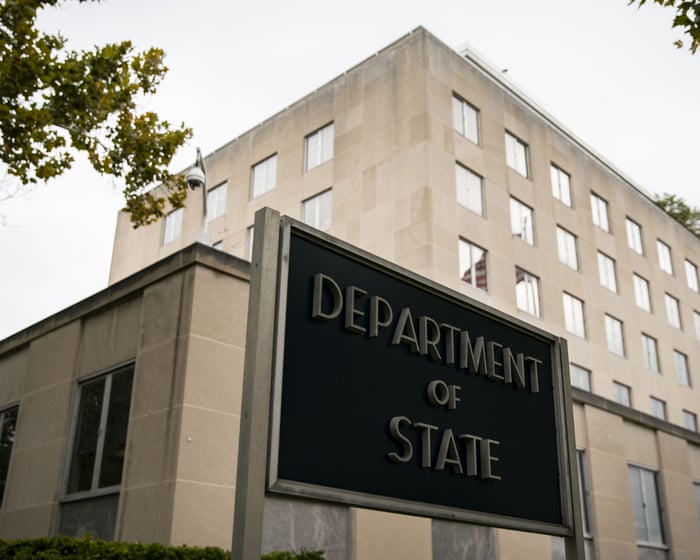
The US state department has proposed requiring parents applying for passports for their children to provide proof of their own citizenship or immigration status as part of Donald Trump’s latest effort to limit birthright citizenship.
The draft guidance, reviewed by Reuters, is the first detailed look at how the state department could enforce Trump’s 6 August executive order targeting what it calls “birth tourism” and broadening historical exceptions to birthright citizenship.
Federal immigration officials detained Loreto Javar during his US citizenship interview in Tukwila, Washington, in June. Javar, a Filipino national, moved to the US in 1995 and has lived in the country with his wife and daughter ever since.
Transportation Secretary Sean Duffy, who has targeted truckers in the country illegally, said the schools certified drivers later found to lack proficiency.
The president’s deportation machine is creating a class of people inside the US who have fewer protections against the power of the state
Is the Trump administration creating a group in the US with fewer protections against executive power owing to their immigration status? Its often openly racist actions suggest so. US Immigration and Customs Enforcement (ICE) claims to target “the worst of the worst” – undocumented migrants who commit violent crimes. Yet the Guardian reported that over half of those arrested in July had no criminal convictions or pending charges. That month, ICE made record arrests and deportations, apprehending 1,500 people and removing 1,100 daily.
When campaigning, Donald Trump falsely claimed that Haitians were “eating the pets”. In office, his administration moved to end temporary protected status (TPS) for Haitians. In June, the supreme court let the protection expire, leaving about 350,000 people at risk of deportation to a country gripped by violence and instability. The court’s decision means more than 1 million TPS holders from 13 nations previously considered too unsafe to return to are now at risk of deportation. Many have lived and worked legally in the US for years.
Do you have an opinion on the issues raised in this article? If you would like to submit a response of up to 300 words by email to be considered for publication in our letters section, please click here.
Tom Homan denies British far-right commentator, who was deported one day after arrest, got preferential treatment
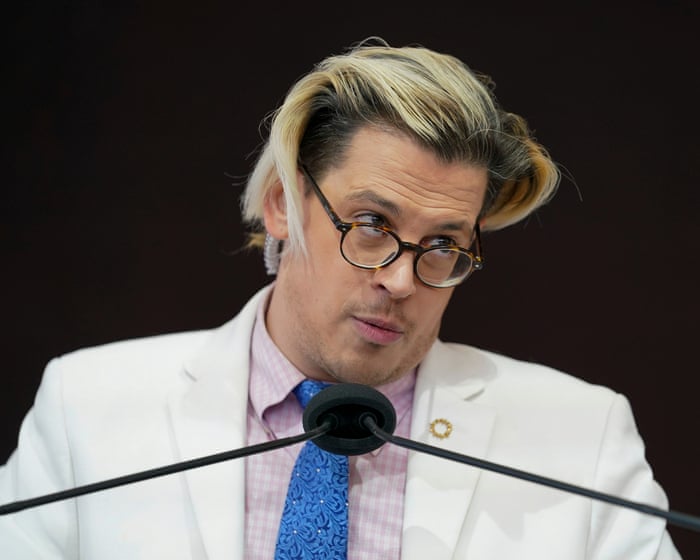
The White House “border czar,” Tom Homan, denied on Sunday that deporting the British far-right commentator Milo Yiannopoulos just a day after being arrested by US Immigration and Customs Enforcement (ICE) amounted to preferential treatment.
Homan said it was his understanding that Yiannopoulos, 41, had overstayed what he believed to be a visitor visa, had not appeared at an immigration hearing and was issued a final order of removal on 22 July.
‘Alt-right’ agitator and former Trump backer deported from US is said also to be too extreme for Reform
As he arrives back in the UK after being deported from the US by the Trump administration, the far-right provocateur Milo Yiannopoulos may be wondering what lies ahead for him in his native country.
The “alt-right” agitator, 41, made his name in the US by promoting Donald Trump and associating with his allies before the 2016 election.
Ten deportees said they experienced or witnessed what they called abusive or violent treatment by ICE. They spent months in detention, they said, before being sent to nations where they had no ties.
Ex-Breitbart editor has vocally supported immediate deportations for anyone who can’t prove US residency
Far-right British media provocateur Milo Yiannopoulos has been deported from the US after being detained on Thursday by Immigration and Customs Enforcement (ICE) in New Orleans in connection with what the agency said was expired authorization to be in the country and a deportation order.
Yiannopoulos’s deportation to the UK occurred on Friday, said a statement on Saturday from a spokesperson for the US Department of Homeland Security (DHS), which oversees ICE.
The Trump administration has deported thousands of immigrants to countries where they have no ties. Dozens were on the latest flight, to the Central African Republic.
A privacy measure for immigration aid workers became a free speech cause for backers of Mr. Shirley, a right-wing YouTube star. Democrats say the furor is fueled by misinformation.
Nick Shirley, 24, has quickly become a hero in the MAGA movement as a YouTube influencer who has produced viral videos claiming to expose fraud in Democratic-led states.
Senator Jon Ossoff, the youngest sitting senator and the only Democrat seeking re-election this year in a state President Trump won in 2024, hasn’t moderated his message in his critical race.
At rallies across Georgia this summer, Senator Jon Ossoff has delivered a series of blistering rebukes of the president and a challenger for his seat, Representative Mike Collins.
Our White House correspondent Zolan Kanno-Youngs explains how so-called third-country deportations are sending immigrants to countries across the globe.
Mr. Yiannopoulos, a prominent early supporter of President Trump, was detained at the New Orleans airport. The Trump administration publicized his arrest and shared a mug shot.
The announcement has sent panic through a community that fled its country’s brutal military rule, civil war, religious persecution or some combination of the three.
Rohingya refugees in front of the office of the United Nations High Commissioner for Refugees in Kuala Lumpur after being evicted from their home in July.
A former lieutenant colonel in Venezuela’s National Guard living in Florida was deported, interrupting a lawsuit that accused him of ordering violent raids and torture.
Flights to the Caribbean nation will increase from once a month to once a week now that the Supreme Court allowed President Trump to cancel a humanitarian program.
The two states have waged an unusual court battle over the agent facing charges over a shooting in Minneapolis. The agent could be released from jail on Thursday.
A US Immigration and Customs Enforcement (ICE) agent accused of firing his gun and wounding a Venezuelan man in the leg is caught in an interstate extradition dispute between Texas and Minnesota – and could walk out of a Texas jail as soon as Wednesday after a federal judge refused to intervene.
Christian Castro is charged in Minnesota with assault and falsely reporting a crime by another, in relation to the incident in which he was involved in the wounding of 24-year-old Julio Cesar Sosa-Celis in January.
Joshua Aviles, a Navy sailor, said his father had been freed days after he was detained as Mr. Aviles returned from a lengthy deployment in the Middle East.
Administration moved away from high-profile raids that defined immigration enforcement approach last year but still deported record number of people
The Trump administration arrested and deported a record number of immigrants in July, according to newly released government data – apprehending an average of 1,500 people and removing 1,100 people daily.
This latest data confirms what attorneys and immigrant advocates have been seeing across the US – although the administration has moved away from the high-profile, militarized raids that came to define its immigration enforcement approach last year, it is quietly ramping up its operations.
Move by state department to limit access is part of Trump’s crackdown on both lawful and undocumented immigration
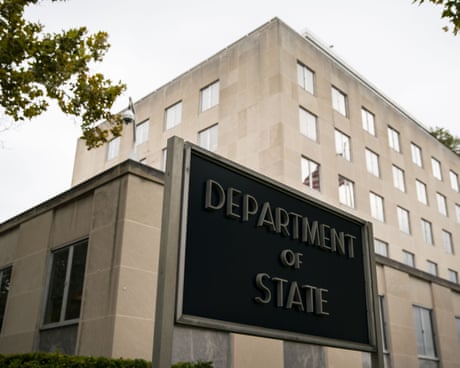
All US immigrant visa applications have been paused by the Trump administration as the state department moves to tighten restrictions and limit access to applicants who they deem could end up relying on US assistance, a state department official confirmed Tuesday.
The agency launched the initiative at all embassies and consulates in early August, according to the official and visa appointments had to be adjusted to accommodate “in-depth training”, according to the official. The state department has been working on updated guidance and training since early this year, “to ensure all consular officers are fully equipped to evaluate every visa applicant comprehensively and consistently”, they added.
Agents arrest women who ‘almost died’ after they were hit by vehicle and their car flipped over four times, family say
An Ecuadorian mother and daughter were arrested by Immigration and Customs Enforcement (ICE) agents at a hospital after a car crash in central Florida.
On 20 August, Grace Stephanie Calero Cabanilla, 39, and her daughter, Giulianna Mía Carriel Calero, 19, were involved in a car crash in Poinciana, Florida, according to arrest reports reviewed by multiple news outlets.
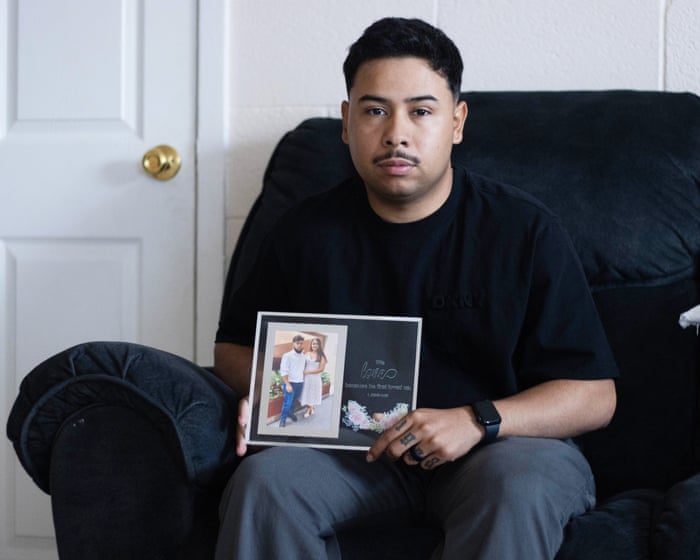
Arrest of Luis Manuel Aviles, 48, sparked backlash as he was detained while his son, Joshua, was deployed in Middle East
The father of a US navy sailor who has been deployed in the Middle East for a record-breaking nine months on the USS Abraham Lincoln aircraft carrier has been released from immigration detention, according to his family.
His arrest sparked intense backlash after the Associated Press reported that his son was entering his ninth month on the Lincoln with the navy when his father was detained. The carrier had just set a US military record for uninterrupted time at sea and has raised concerns about supply shortages and deteriorating mental health among those serving onboard.
Cristy Maryori Villafranca-Trejo, deported to Honduras, is latest military spouse to face removal amid Trump 2.0
The wife of an active-duty US soldier was deported on Monday to her native Honduras, according to her family and the federal Department of Homeland Security (DHS).
Cristy Maryori Villafranca-Trejo is at least the seventh spouse or parent of an active-duty US soldier to be deported under the immigration crackdown during Donald Trump’s second presidency.
The State Department, in a move that could affect as many as 200,000 visa holders and asylum applicants, has begun its review. Cancellations could occur in waves.
“Obtaining a visa in order to seek asylum is fraud — which is grounds for visa revocation,” Tommy Pigott, a State Department spokesman, said in a statement.
The State Department, in a move that could affect as many as 200,000 visa holders and asylum applicants, has begun its review. Cancellations could occur in waves.
“Obtaining a visa in order to seek asylum is fraud — which is grounds for visa revocation,” Tommy Pigott, a State Department spokesman, said in a statement.
Exclusive: internal correspondence reveals USCIS anti-fraud officers shifted on to two ‘high-priority’ initiatives
All US immigration officers working for a key anti-fraud unit have been reassigned by the Trump administration to focus on screening South African refugees and alleged “unlawful” voters.
Fraud Detection and National Security Directorate (FDNS) immigration officers have been shifted full-time on to two “high-priority” initiatives, according to internal correspondence seen by the Guardian, leaving US Citizenship and Immigration Services (USCIS) unable to provide officers to train asylum officers in “the near future”.
The sailor, Joshua Aviles, was on his way home from the Middle East aboard the beleaguered aircraft carrier when he learned his father had been detained.
Joshua Aviles, right, with his father, Luis Manuel Aviles, in 2025, shortly before Joshua shipped out for the Middle East aboard the aircraft carrier U.S.S. Abraham Lincoln.
The president’s border wall plan could damage or destroy ‘the oldest-known books in North America’
On an overcast summer morning, Carolyn Boyd, an archeologist at Texas State University, stood at the foot of a cave in west Texas, looking up toward a series of towering murals painted on a rock wall. Three massive human-like figures soared toward an overhang that had sheltered the painting from the elements since they were drawn here perhaps 4,000 years ago.
An artist herself, Boyd knows how hard it would have been to paint these long, crisp lines. Before starting, the bands of Indigenous hunter-gatherers who lived in this west Texas valley, where the Pecos River empties into the Rio Grande, would have spent weeks pulverizing gypsum, hematite, limonite and manganese to make paint. They would have gathered massive quantities of sotol stalks to fold its fibers into scaffolding. The painting itself would have required teamwork and precision, with people at the bottom guiding artists on the wall as they painted figures stretching up to 30ft tall.
The five men were part of the first group of deportees to be sent to the West African nation by the Trump administration. The Liberian government has not clarified their status.
Monrovia, the capital of Liberia. The U.S. deportation deal with Liberia is one of the largest so-called third-country deportation agreements struck by the Trump administration so far.
The reversal of the plan, which had not been publicly disclosed, comes amid mounting confusion about how the administration is protecting the rights of unaccompanied minors.
En quelques jours, plus de 1 500 personnes – dont plusieurs centaines hier – sont arrivées par la mer en provenance du Maroc dans l’enclave espagnole de Ceuta.
Les corps de neuf personnes qui avaient tenté de rejoindre la rive à la nage ont été repêchés.
Le gouvernement espagnol a déployé des militaires.
Il a indiqué que les personnes entrées illégalement seront rapatriées vers le Maroc.
Ceuta, située à la pointe nord du Maroc, est l’une des deux enclaves espagnoles en Afrique du Nord.
C’est une frontière terrestre de l’Union européenne sur le continent africain.
Il paraît que l’Allemagne et le Danemark devraient servir d’exemple au Québec en matière de politique migratoire. C’est ce que laisse entendre le député Alex Boissonneault dans une vidéo voulant défaire le « mythe » que « plus d’immigration veut dire moins de pénurie de main d’œuvre ». Selon lui, les gouvernements allemand et danois ont changé leur politique d’immigration après avoir réalisé que l’immigration ne règle pas la pénurie de main-d’œuvre. M. Boissonneault connaît-il réellement la politique migratoire de ces deux pays et leurs fondements?
À gauche: Alex Boissonneault, député d’Arthabaska-l’Érable depuis 2025 À droite: Mette Frederiksen, première ministre du Danemark depuis 2019
« Il y a plusieurs exemples de pays qui ont changé de politique en matière d’immigration parce qu’ils ont constaté cette situation. C’est le cas de l’Allemagne. L’Allemagne qui comptait beaucoup sur l’immigration pour combler ses postes vacants mais qui a constaté en 2023 que l’augmentation de l’immigration avait créé une pénurie de main d’œuvre dans les secteurs névralgiques. Donc il y a eu changement de politique. »
C’est complètement faux. La modification de la politique migratoire allemande en 2023 n’a rien à voir avec des considérations économiques ou sociales. Au même moment où le gouvernement d’Olaf Scholz renforçait le contrôle des frontières, l’Allemagne cherchait à attirer des travailleurs étrangers, en particulier les travailleurs qualifiés, notamment en réduisant les barrières administratives. Voici ce qu’affirmait Scholz en novembre 2024: « Aucun pays du monde ne peut connaître de croissance économique avec une main-d’oeuvre qui diminue. C’est la vérité à laquelle nous sommes confrontés. » Dans le même discours, le chancelier allemand défend le droit de l’Allemagne de choisir qui est admis en son sein, donc de repousser les réfugiés. Le problème de l’Allemagne n’est pas que l’immigration ne suffit pas à combler la pénurie de main-d’oeuvre, mais qu’elle ne parvient pas à attirer une main d’oeuvre de souche européenne en assez grande quantité.
« Même chose pour le Danemark avec un gouvernement social-démocrate, normalement considéré de gauche. Le gouvernement danois a constaté que l’augmentation de l’immigration a eu des conséquences négatives sur les services à la population. Il y a donc eu un changement de politique. »
Encore une fois, ce « changement de politique » du gouvernement danois n’a rien à voir avec l’économie ou avec les services à la population. C’est une question purement idéologique et, ce gouvernement ne s’en cache pas, raciste.
Commençons par dire que le racisme n’est pas une question de droite ou de gauche. On peut très bien être à gauche économiquement et à droite sur le plan de l’identité nationale. C’est le cas de la première ministre danoise, Mette Frederiksen, très attachée à l’État-providence danois, mais ouvertement raciste. En 2018, elle proposait de renvoyer les migrants « non occidentaux », non seulement du Danemark, mais de l’Europe, et de les placer dans des camps de concentration en Afrique sous supervision des Nations unies. À son arrivée au pouvoir en 2019, Frederiksen a promis de faire du Danemark un pays « sans demandeur d’asile ». En 2021, le gouvernement danois a voté une loi pour expulser les demandeurs d’asile hors d’Europe en attendant le traitement de leur demande, en contradiction totale avec les traités internationaux et les directives européennes. En 2022, une entente est signée avec le Rwanda. En gros, le Danemark paie le Rwanda pour détenir les demandeurs d’asile. Un bien triste revirement pour le premier pays à avoir signé la Convention de 1951 sur les réfugiés. Ce n’est pas sans raison que ce gouvernement « social-démocrate » est appuyé par l’extrême droite danoise.
En soi, la politique de Frederiksen et des sociaux-démocrates ne jure pas avec celle des administrations précédentes. Depuis le début des années 2000, le gouvernement danois est hostile à l’immigration. Le délai nécessaire pour obtenir la résidence permanente est passé de trois à huit ans. La « loi sur les étrangers » est modifiée régulièrement pour devenir toujours plus restrictive et viser des groupes en particulier. Elle a été modifiée 42 fois entre 2017 et 2019. Et la loi danoise est ouvertement raciste en ciblant des groupes spécifiques. En 2016, les Syriens ont été directement ciblés par une loi restreignant l’accés au regroupement familial pour les réfugiés et confisquant leurs objets de valeur pour financer leur séjour. En 2018, des mesures sont prises pour que des peines plus sévères soient infligées aux « résidents non occidentaux ». Des amendes importantes sont infligées aux personnes venant en aide aux « immigrants irréguliers ». Et pour bien montrer que la politique danoise est motivée par le racisme et non pas par des préoccupations économiques ou sociales, le Danemark a ouvert grand ses portes aux réfugiés ukrainiens fuyant l’invasion russe.
Ironiquement, ces dernières années, c’est la droite (modérée) qui a commencé à demander un assouplissement des politiques migratoires au Danemark. Pas pour des raisons humanitaire, mais pour des raisons économiques. Il y a une pénurie de main-d’œuvre, voyez-vous. Et les employeurs aimeraient bien qu’on leur permette de recruter à l’étranger les travailleurs qu’ils ne trouvent pas localement.
Christèle Meilland, chercheuse à l’Institut de recherches économiques et sociales (IRES), explique que la politique migratoire danoise s’appuie sur un discours « assimilant les étrangers, et particulièrement les réfugiés, à un fardeau pour l’État-providence ». Ça vous rappelle quelque chose?
Il paraît que l’Allemagne et le Danemark devraient servir d’exemple au Québec en matière de politique migratoire. C’est ce que laisse entendre le député Alex Boissonneault dans une vidéo voulant défaire le « mythe » que « plus d’immigration veut dire moins de pénurie de main d’œuvre ». Selon lui, les gouvernements allemand et danois ont changé leur politique d’immigration après avoir réalisé que l’immigration ne règle pas la pénurie de main-d’œuvre. M. Boissonneault connaît-il réellement la politique migratoire de ces deux pays et leurs fondements?
À gauche: Alex Boissonneault, député d’Arthabaska-l’Érable depuis 2025 À droite: Mette Frederiksen, première ministre du Danemark depuis 2019
« Il y a plusieurs exemples de pays qui ont changé de politique en matière d’immigration parce qu’ils ont constaté cette situation. C’est le cas de l’Allemagne. L’Allemagne qui comptait beaucoup sur l’immigration pour combler ses postes vacants mais qui a constaté en 2023 que l’augmentation de l’immigration avait créé une pénurie de main d’œuvre dans les secteurs névralgiques. Donc il y a eu changement de politique. »
C’est complètement faux. La modification de la politique migratoire allemande en 2023 n’a rien à voir avec des considérations économiques ou sociales. Au même moment où le gouvernement d’Olaf Scholz renforçait le contrôle des frontières, l’Allemagne cherchait à attirer des travailleurs étrangers, en particulier les travailleurs qualifiés, notamment en réduisant les barrières administratives. Voici ce qu’affirmait Scholz en novembre 2024: « Aucun pays du monde ne peut connaître de croissance économique avec une main-d’oeuvre qui diminue. C’est la vérité à laquelle nous sommes confrontés. » Dans le même discours, le chancelier allemand défend le droit de l’Allemagne de choisir qui est admis en son sein, donc de repousser les réfugiés. Le problème de l’Allemagne n’est pas que l’immigration ne suffit pas à combler la pénurie de main-d’oeuvre, mais qu’elle ne parvient pas à attirer une main d’oeuvre de souche européenne en assez grande quantité.
« Même chose pour le Danemark avec un gouvernement social-démocrate, normalement considéré de gauche. Le gouvernement danois a constaté que l’augmentation de l’immigration a eu des conséquences négatives sur les services à la population. Il y a donc eu un changement de politique. »
Encore une fois, ce « changement de politique » du gouvernement danois n’a rien à voir avec l’économie ou avec les services à la population. C’est une question purement idéologique et, ce gouvernement ne s’en cache pas, raciste.
Commençons par dire que le racisme n’est pas une question de droite ou de gauche. On peut très bien être à gauche économiquement et à droite sur le plan de l’identité nationale. C’est le cas de la première ministre danoise, Mette Frederiksen, très attachée à l’État-providence danois, mais ouvertement raciste. En 2018, elle proposait de renvoyer les migrants « non occidentaux », non seulement du Danemark, mais de l’Europe, et de les placer dans des camps de concentration en Afrique sous supervision des Nations unies. À son arrivée au pouvoir en 2019, Frederiksen a promis de faire du Danemark un pays « sans demandeur d’asile ». En 2021, le gouvernement danois a voté une loi pour expulser les demandeurs d’asile hors d’Europe en attendant le traitement de leur demande, en contradiction totale avec les traités internationaux et les directives européennes. En 2022, une entente est signée avec le Rwanda. En gros, le Danemark paie le Rwanda pour détenir les demandeurs d’asile. Un bien triste revirement pour le premier pays à avoir signé la Convention de 1951 sur les réfugiés. Ce n’est pas sans raison que ce gouvernement « social-démocrate » est appuyé par l’extrême droite danoise.
En soi, la politique de Frederiksen et des sociaux-démocrates ne jure pas avec celle des administrations précédentes. Depuis le début des années 2000, le gouvernement danois est hostile à l’immigration. Le délai nécessaire pour obtenir la résidence permanente est passé de trois à huit ans. La « loi sur les étrangers » est modifiée régulièrement pour devenir toujours plus restrictive et viser des groupes en particulier. Elle a été modifiée 42 fois entre 2017 et 2019. Et la loi danoise est ouvertement raciste en ciblant des groupes spécifiques. En 2016, les Syriens ont été directement ciblés par une loi restreignant l’accés au regroupement familial pour les réfugiés et confisquant leurs objets de valeur pour financer leur séjour. En 2018, des mesures sont prises pour que des peines plus sévères soient infligées aux « résidents non occidentaux ». Des amendes importantes sont infligées aux personnes venant en aide aux « immigrants irréguliers ». Et pour bien montrer que la politique danoise est motivée par le racisme et non pas par des préoccupations économiques ou sociales, le Danemark a ouvert grand ses portes aux réfugiés ukrainiens fuyant l’invasion russe.
Ironiquement, ces dernières années, c’est la droite (modérée) qui a commencé à demander un assouplissement des politiques migratoires au Danemark. Pas pour des raisons humanitaire, mais pour des raisons économiques. Il y a une pénurie de main-d’œuvre, voyez-vous. Et les employeurs aimeraient bien qu’on leur permette de recruter à l’étranger les travailleurs qu’ils ne trouvent pas localement.
Christèle Meilland, chercheuse à l’Institut de recherches économiques et sociales (IRES), explique que la politique migratoire danoise s’appuie sur un discours « assimilant les étrangers, et particulièrement les réfugiés, à un fardeau pour l’État-providence ». Ça vous rappelle quelque chose?

 Connexion