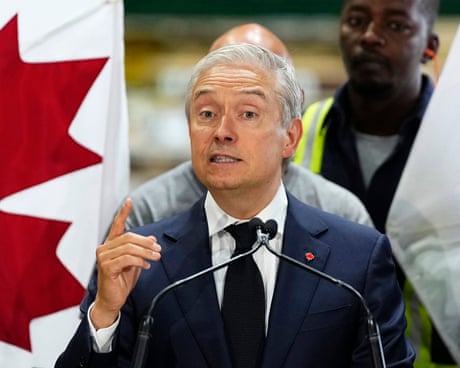
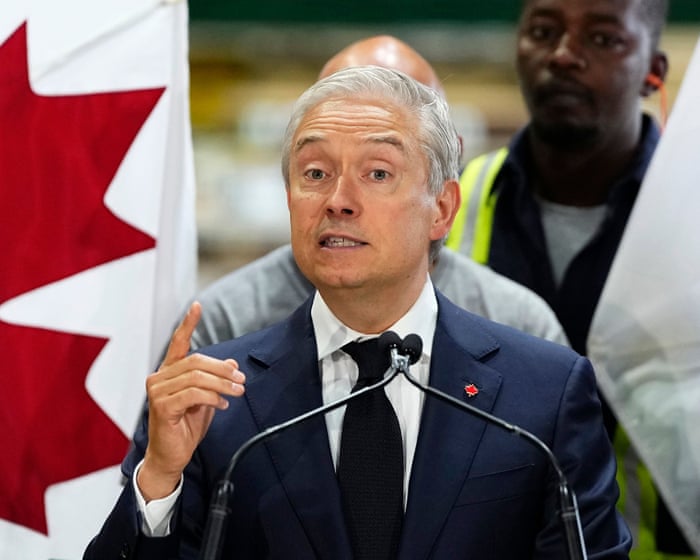
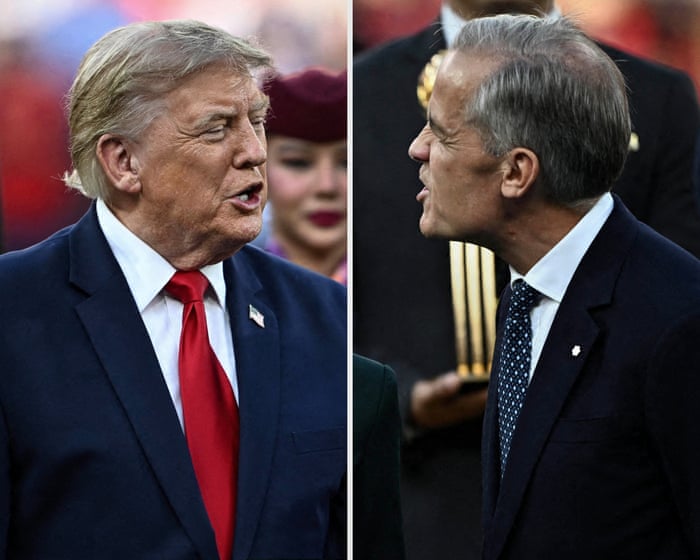
Le gouvernement fédéral a présenté des mesures en représailles aux droits de douane américains entrés en vigueur samedi dernier.
À compter du 8 septembre, le Canada imposera des taxes à l’importation de 15%, 25% ou 50% sur environ 700 produits américains.
Secteurs les plus touchés
acier
produits laitiers
électroménagers
matériel agricole
pâtes et papiers
électronique
Ces contres-tarifs ne visent que des produits frappés par des tarifs américains.
Ils s’appliqueront à presque 28 milliards $ d’exportations annuelles des États-Unis vers le Canada.
C’est un montant équivalent à celui des exportations canadiennes vers les États-Unis visées par les nouveaux tarifs américains.
Réponse américaine à la riposte canadienne
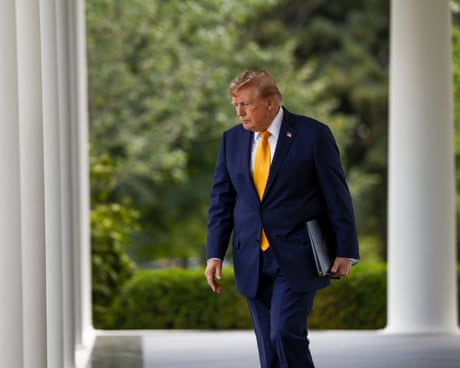
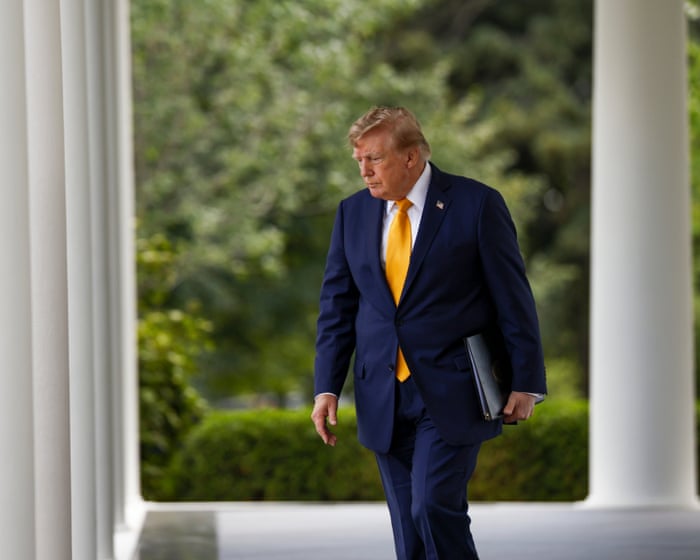
Donald Trump avait dès lundi, avant qu’on connaisse le détail des contre-tarifs, menacé de porter à 50% en janvier prochain les tarifs américains sur les voitures, les camions, les pièces automobiles et l’acier canadiens.
créer un fonds de diversification doté de 2 milliards $ pour soutenir les entreprises touchées par les droits de douane qui ont des projets prêts à démarrer;
bonifier de 1,5 milliard $ l’initiative qui aidait déjà les PME à faire face aux droits de douane;
injecter 500 millions $ dans un programme de la Banque de développement du Canada.
Principales mesures pour les travailleurs
Ottawa compte prolonger plusieurs mesures de l’assurance-emploi visant à:
éliminer la période d’attente d’une semaine;
permettre aux travailleurs de recevoir des prestations sans que les indemnités de cessation d’emploi ne soient d’abord épuisées;
accorder 20 semaines supplémentaires de prestations aux travailleurs de longue date.
The authority that operates Montréal-Trudeau International Airport said a worker employed by Samsic, a company that provides support services, was killed in an accident on Monday.
While the president remains the most dominant figure in the world, other leaders and institutions are pushing back more vigorously than at the beginning of his second term.
Tariffs on Canada, threats against Iran’s partners and bond market intervention show a president weaponising US power while making Americans poorer at home
Three moves in the last week have exposed the limits of Donald Trump’s economic bullying. The US slapped 50% tariffs on another $20bn of Canadian goods – then threatened the same rate on the cars, trucks, parts and steel that America Inc depends on. On Monday, the Treasury secretary, Scott Bessent, menaced Iran’s trading partners with exclusion from the US financial network, hoping that coercion can deliver what months of war have not. And as the costs of war, tariffs and pro-billionaire tax cuts helped send US bond yields higher, the Treasury stepped in to tame long-term rates. These are not contradictory policies but a gamble: that US economic power can be repeatedly weaponised without reducing others’ willingness to depend on it.
The Trump administration’s “D-day” sanctions are potentially the most consequential because they expose the scaffolding of American financial power. While markets shrugged off the immediate threat, that calculation might change were the US to target a major Chinese refinery or bank. Such an escalation could spark a trade war with Beijing. The US has leverage. But China has pressure points – especially farmers in Republican states – that make using it costly. In the long run, there is a price to pay. Nations hold one another’s currencies partly because they trust the political relationship. Mr Trump is testing what happens when they don’t.
Canada said the higher levies, on items from aluminum foil to dishwashers to fish, would help protect workers, producers and manufacturers harmed by new Trump tariffs.
The U.S. Steel Clairton Coke Plant in Clairton, Pa. Canada has announced it will impose retaliatory tariffs of up to 50 percent on hundreds of American products including steel.
US president has been obsessed with restricting the ability to vote by mail, despite using it himself. Plus, why we are still fascinated with Meg from the White Stripes
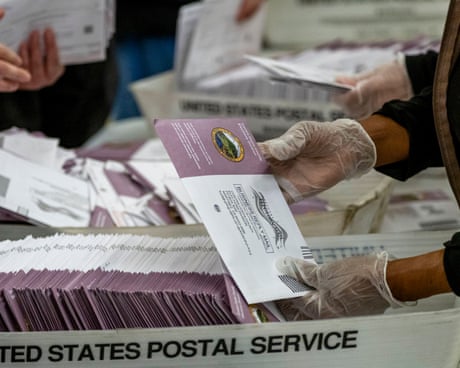
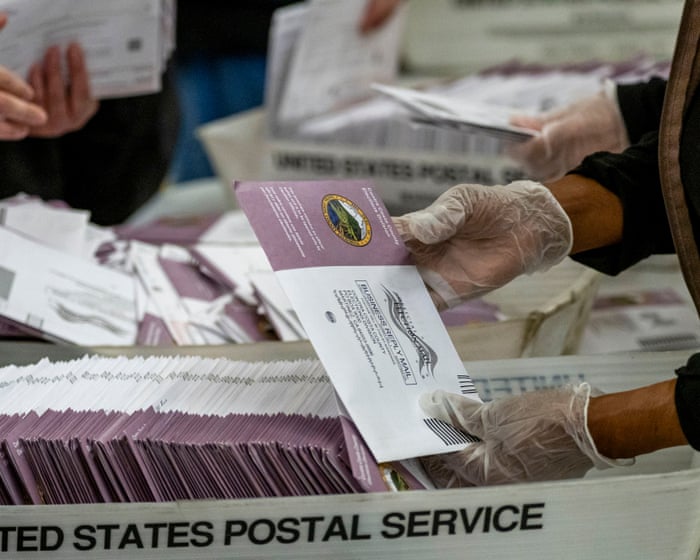
Good morning. The US supreme court has sided with Donald Trump in his effort to crack down on mail-in voting, though it is unclear whether or not his administration will be able to take action before the midterm elections in November. The court’s justices voted 6-3 along ideological lines to lift an injunction that a judge in Massachusetts had placed in June on an executive order issued by the president. But a second injunction remains in place, and the ruling leaves room for legal challenges.
Trump has repeatedly likened voting by mail to cheating, despite his own use of it and overwhelming evidence that the system is secure. In March he ordered the government to create a “state citizenship list” of eligible voters, requiring that mail-in ballots only be delivered to people on that list. He also directed the justice department to prioritise investigations and prosecutions of state and local election officials who issue ballots to people deemed ineligible to vote in federal elections.
What did the dissenting judges say? In a blistering dissent, Justice Ketanji Brown Jackson wrote that the decision “needlessly injects chaos and uncertainty into the upcoming midterm elections”.
How have rights organisations reacted? The president of the National Association for the Advancement of Colored People, Derrick Johnson, said: “Let this ruling be a reminder that democracy is never, ever guaranteed. We have to fight for it, we have to fight to keep it and we have to protect the rights we do have within it … they are trying to do everything they possibly can to make it difficult for you to vote.”
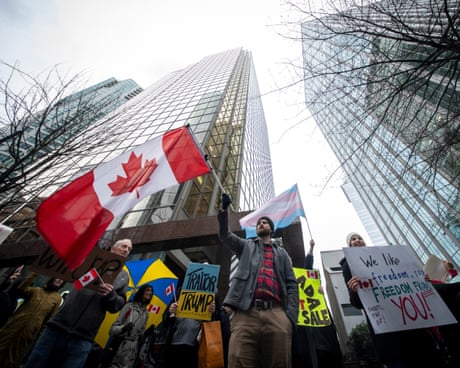
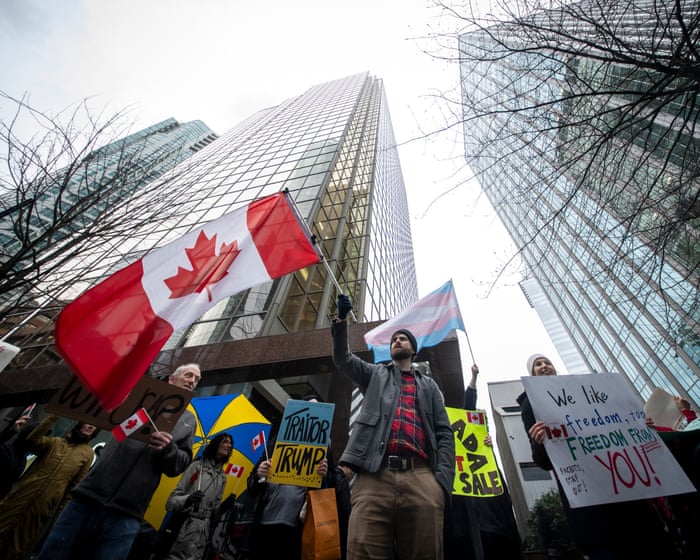
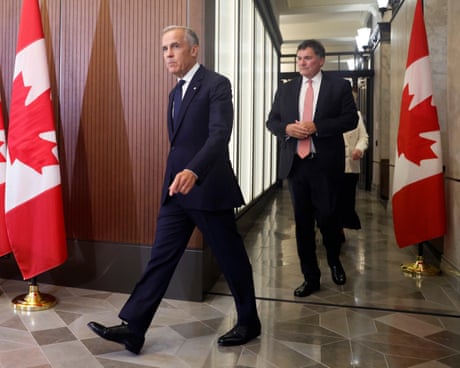
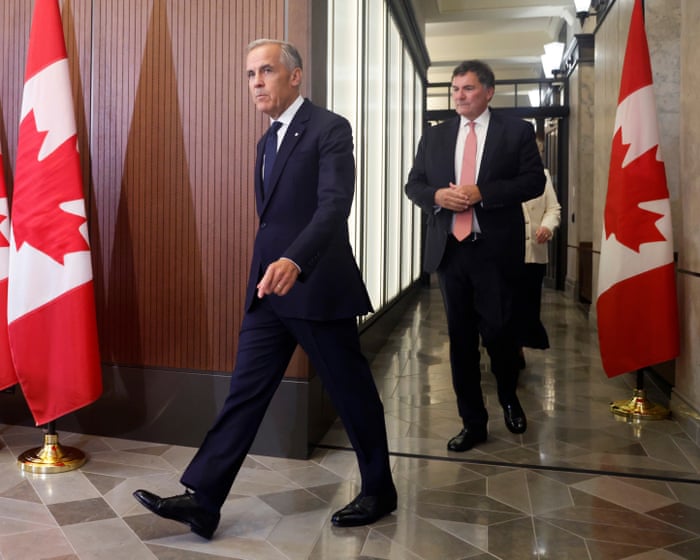
How has Canada reacted? The country’s prime minister, Mark Carney, told reporters that Trump’s announcement was largely expected. “It’s not a surprise for us that the US would take some form of reprisal to our response to their unjustified tariff,” he said. Carney has vowed to match the American tariffs “dollar for dollar”, and said Canada could not accept any proposed trade deal that would weaken French language protections.
Artemis Ghasemzadeh, who had escaped religious persecution, was deported to Panama under Trump’s immigration crackdown. Now, Canada has given her asylum.
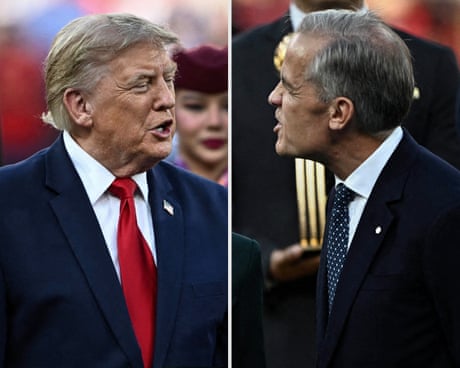
On Truth Social, however, the president shot down assertions that the US talks with Canada collapsed in part due a proposed trade deal that would have weakened French language protections.
“I would never interfere with Canadians speaking French!” he wrote. “In fact, I have never even thought of doing such a stupid thing. This lie was made up by a weak and ineffective Prime Minister in an attempt to gain political support, which he has totally lost, from the people of Quebec.”
Artemis Ghasemzadeh, who had escaped religious persecution, was deported to Panama under Trump’s immigration crackdown. Now, Canada has given her asylum.
A fundamental rupture in the values that have united North America is not a problem that can be wished away: this is a warning to the western alliance
The Canadians are exceedingly angry. I realise this can sometimes be difficult for foreigners to deduce, given our national struggle to express the full range of human emotion outside ice hockey riots. However, let me assure you that the prime minister Canadians saw take the stage on Saturday morning in the wake of the collapse in trade negotiations with the US was a Mark Carney practically vibrating with fury.
“You’re at war when you get attacked. We got attacked,” he said, in a rare press conference that was as candid and clear as he ever tends to be. “That’s fine … We’ve got the reserves, we’ve got the resilience, we’ve got the plan, we’ve got the focus. We’re gonna respond, we’re going to focus on what we can control and what we’re going to build.”
Jen Gerson is a Canadian commentator and co-founder of The Line. She lives in Calgary, Alberta
Detailed accounts of the final hours of the negotiations show that, while the United States offered Canada what it said was the best deal of any country, what Canada had to give up in exchange was seen as unthinkable.
The 50 percent tariffs President Trump imposed on Canadian exports to the United States will make it impossible for many Canadian companies to continue to sell to the U.S. market, economists say.
Move is latest deterioration in trade relations between neighbors with historically strong economic ties
Donald Trump announced a new 50% tariff on automobiles and crucial raw materials from Canada, the latest deterioration in trade relations between the two neighbors with historically strong economic ties.
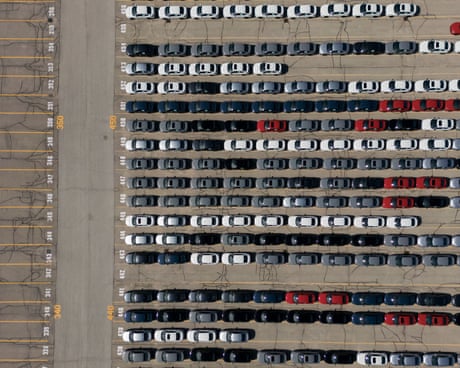
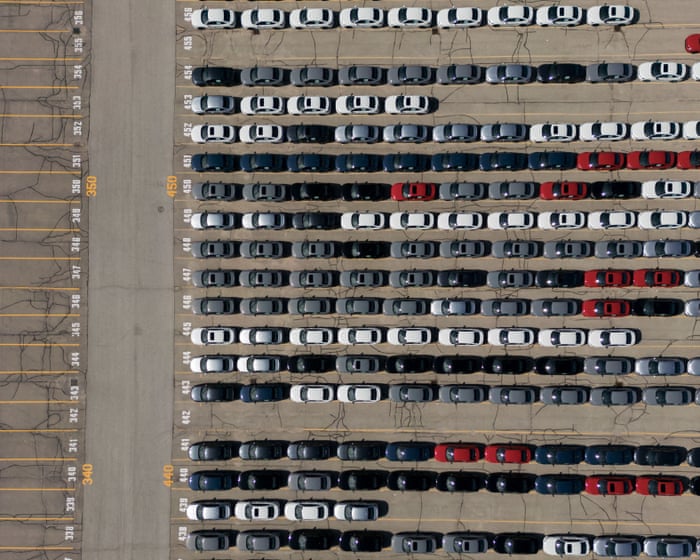
The US president said that the increased tariffs would start on 1 January 2027 on all cars, trucks, automobile parts and steel. He also derided the nation’s tariffs on American farmers, writing on social media that Canada has been “ripping off” the US “for years”.
Mark Carney said on Monday that while American negotiators saw the French language in Canada as an “irritant … in Quebec, these are rights,” days after receiving widespread praise from political leaders for rejecting a US trade proposal that many perceived as weakening the country’s Francophone culture.
The prime minister’s remarks came hours after the US president, Donald Trump, showed little interest in retreating from the spat, posting on social media that Canada had been “ripping off the United States of America for years” and threatening a swath of new, economically devastating tariffs on cars and trucks.
Mark Carney a suspendu vendredi soir les négociations commerciales avec les États-Unis.
Il a expliqué que des modifications demandées par Washington étaient «inéquitables, non rentables et remettaient en cause la fiabilité de tout accord».
Selon Carney, les négociateurs américains voulaient:
restreindre les ententes commerciales que le Canada pourrait conclure avec d’autres pays;
maintenir des droits de douane trop élevés sur le secteur automobile;
exempter les entreprises américaines de l’obligation d’afficher et d’étiqueter leurs produits en français.
Le premier ministre fédéral a résumé samedi: «quand vous êtes attaqués, c’est que vous êtes en guerre», avant d’affirmer: «nous avons été attaqués».
Le gouvernement américain applique depuis samedi des tarifs douaniers de 50% sur de nombreux produits canadiens:
les produits laitiers
les alcools
des matériaux de construction
d’autres produits très variés, dont des appareils électroniques, des meubles et des bâtons de hockey
Ces tarifs affecteraient 5% des exportations canadiennes aux États-Unis.
La proportion est de 9% pour les exportations venant du Québec.
Le gouvernement canadien a l’intention d’imposer le 8 septembre des droits de douane d’un montant total équivalent, «au dollar près», sur les exportations américaines vers le Canada.
Ces contre-tarifs viseraient notamment les produits laitiers, l’acier et les appareils électroniques.
The calamitous collapse of trade negotiations between Canada and the United States is a warning to nations worldwide that pursuing any kind of dialogue with the current US administration is doomed at the outset, according to observers who say this recent episode indicates seeking a fair deal is futile.
Andrea Lawlor, an associate professor of political science at McMaster University in Ontario, said: “No matter the closeness of the historical relationship, the American administration has signalled that it now prioritises its interests above those of some sort of global economic coordination or harmony.
Canada suspended trade negotiations, triggering President Trump’s 50 percent tariffs on a range of Canadian goods. Mark Carney retaliated “dollar for dollar.”
In an interview, Jamieson Greer, President Trump’s trade representative, laid out details of what the United States offered to Canada before talks crumbled.
Prime Minister Mark Carney gave a powerful speech to Canadians on Saturday morning, hours after ordering negotiators to suspend U.S. trade talks despite President Trump’s punishing tariffs.
Prime Minister Mark Carney of Canada said that he had pulled negotiators out of trade talks with the United States because the Trump administration had “asked too much and offered too little.”
Canada’s prime minister walked away from what he thought was a bad trade deal with the United States. Many Canadians are behind him, but it will be costly.
Canadian negotiators were in Washington to finalize a deal that would stave off new tariffs and improve the terms of existing ones, but Mark Carney faces a tough sell back home.
The ArcelorMittal Dofasco steel plant in Hamilton, Ontario. President Trump hit the Canadian steel industry with tariffs of up to 50 percent last year.
Intense negotiations to stave off new levies by the Trump administration ended in an impasse as Mark Carney suspended talks. U.S. tariffs on Canada, and retaliatory tariffs on the U.S., will come into effect.
Prime Minister Mark Carney of Canada said he suspended the trade talks because the American side introduced last-minute terms that ”called into question the reliability of any deal.”
Canadian negotiators were in Washington to finalize a deal that would stave off new tariffs and improve the terms of existing ones, but Mark Carney faces a tough sell back home.
The ArcelorMittal Dofasco steel plant in Hamilton, Ontario. President Trump hit the Canadian steel industry with tariffs of up to 50 percent last year.
While President Trump has declared that the two countries effectively have a deal, a Canadian trade official said progress continued ahead of the Saturday deadline.
Dominic LeBlanc, the Canadian minister in charge of U.S. trade, arriving to meet with Jamieson Greer, the U.S. trade representative, on Thursday in Washington.

 Connexion