Vue lecture

Armor can barely reach Ukraine’s front now—so robots drive and soldiers walk

A Russian tank destroyed in Kharkiv Oblast, Ukraine

Drones have pushed armored vehicles off the roads to Ukraine's front line, a Ukrainian brigade commander told RBC-Ukraine. Denys Perch, who commands the 107th Territorial Defense Brigade, says the drone-saturated belt has grown so deep that pickups no longer reach forward positions. The one enemy weapon his jammers can't touch is the fiber-optic drone.

The war has become a contest over who can pull people off the battlefield fastest, as cheap drones make any human movement near the front a target. Ukraine keeps out-inventing Russia at the front, but Russia copies each advance and floods the line with it at state scale.

When armor becomes the target

Until recently, armored vehicles still drove supplies to logistics hubs near the front. That is now almost impossible. Perch says that when a large, armored machine appears, Russian forces treat it as a prize target and swarm it with dozens of drones and munitions. Perch would sooner park his armor than seat soldiers inside it.

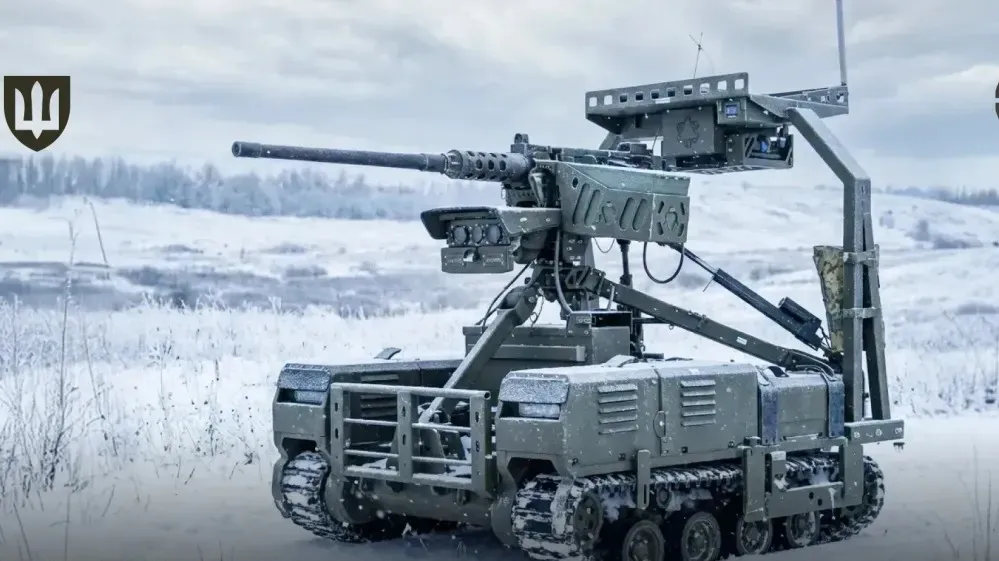
A Ravlyk UGV from Ukrainian Unmanned Technologies displayed at Eurosatory 2026, here mounting twin anti-tank launchers from Ukroboronprom. (Photo: Ukrainian Unmanned Technologies)
Explore further

This Ukrainian UGV, beloved by Ukrainian intel, is now winning over NATO countries and global defense giants

A kill zone that keeps widening

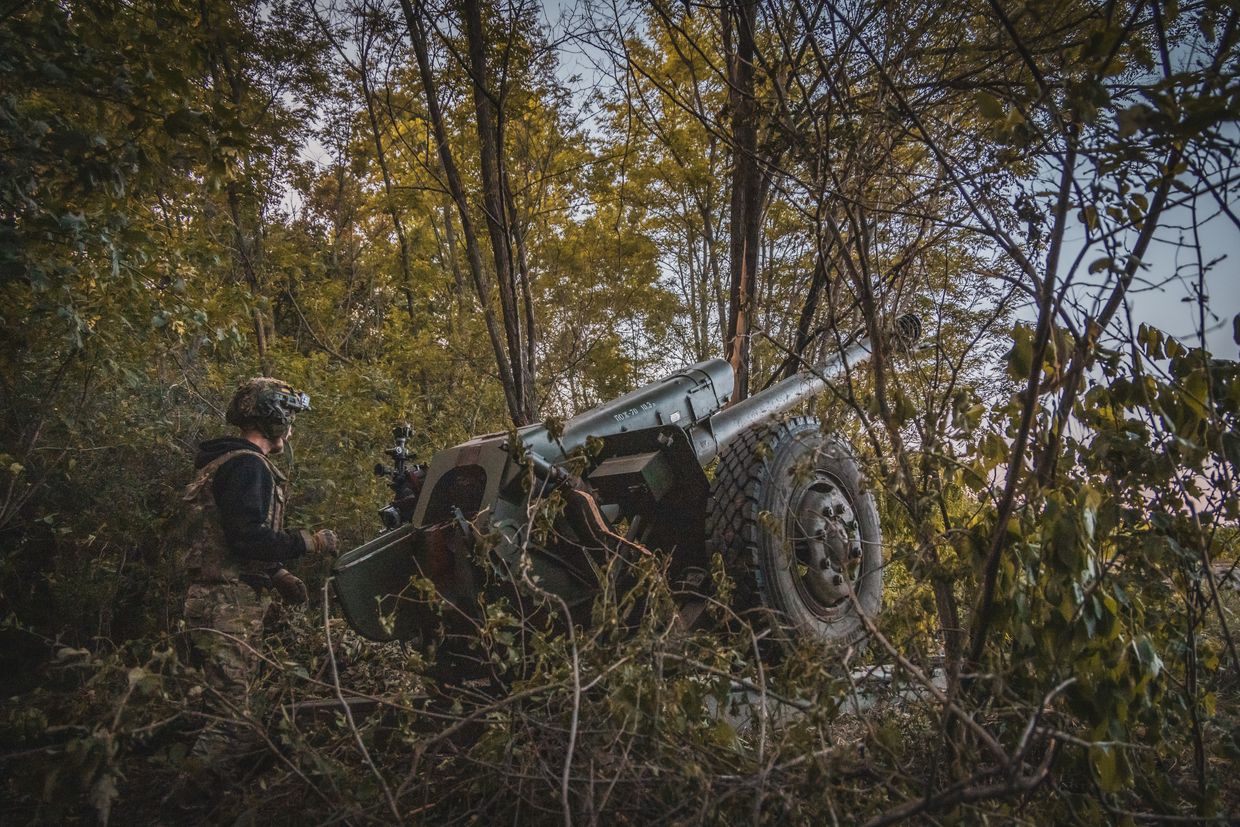
On the busiest sectors, Perch says, the kill zone—the drone-ruled strip around the contact line—now runs 15 to 20 kilometers deep. Some positions take three days to reach on foot. Where troops once drove most of the way and walked the last stretch, they now walk it all.

Robots take the drive

Under Perch, the brigade climbed, by his account, from around 22nd to third among Ukraine's Territorial Defense forces on the military's strike-results leaderboard, the home-guard units now fighting on the front. Ground robots—unmanned ground vehicles (UGVs)—do the work that armor cannot. They haul supplies and evacuate the wounded, though the robot often can't be brought back. His brigade runs over 1,500 logistics missions a month by heavy bomber drones alone, and still more by first-person-view (FPV) drones and robots. Russia hunts those bombers, he says, with interceptors that scramble the moment they hear one take off, so his crews mix high and low flight to slip past. Perch expects robots to move from supply runs into combat, hitting Russian troops in their rear.
A ground robotic system. The Ukrainian Defense Ministry
Explore further

Ukraine wants robots doing 100% of frontline logistics. In June, they ran nearly 17,000 supply and evacuation runs

The drone his jammers can't touch

Both armies now field fiber-optic drones—machines guided by a hair-thin glass thread instead of radio. No signal means nothing to jam. Ukraine learned to block radio and digital drones, cutting their controls and video, Perch said. The glass-fiber ones his electronic warfare cannot reach, because there is no radio link to attack. His brigade still has no counter to them, Perch said, and he wants a technical fix that stops them.

  •  

Russian electric locomotive was named target of Ukrainian partisan operation. It carried military supplies toward Kharkiv front

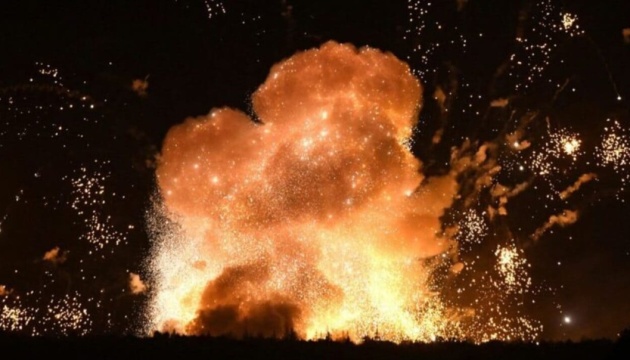
An explosion. Credit: UkrInform

Ukrainian partisans say they crippled a locomotive moving Russian military supplies to the front. Agents of the ATESH movement carried out a sabotage operation near Voronezh, destroying the cab of an electric locomotive used to support military transport, ATESH reported.

Disabling a single locomotive cripples the entire supply line. The locomotive was supposed to continue its journey toward the Kupiansk direction, and after the cab was damaged, operating the machine at its former pace became impossible, disrupting the schedule for forming and dispatching the next trains.

The target was a rail supply line to the front

ATESH said the sabotage hit a link in Russia's military logistics chain. The locomotive was part of the rail transport that moves Russian military cargo, and it was bound for the Kupiansk direction, one of the active sectors of the front in Kharkiv Oblast.

Russia depends heavily on railways to supply its forces. Its army moves ammunition, fuel, weapons, and heavy equipment to the front largely by rail, so the locomotives and the lines they run on are critical arteries of its war effort. A partisan network can reach them behind the front lines at a vulnerable point.

One damaged locomotive slows the whole chain

ATESH framed the value of the strike in terms of the cascade it sets off. The loss of even one link in the mainline causes delays in the delivery of ammunition, fuel, weapons, and heavy equipment.

Those delays compound at the front. When rear supply operations are interrupted, units lose combat effectiveness and suffer significant personnel losses, ATESH said, casting a single sabotaged locomotive as a blow that reaches the soldiers, depending on what it was carrying.

The strike fits ATESH's partisan campaign

Euromaidan Press cannot independently verify the Voronezh sabotage, which is ATESH's own account. But rail sabotage is a documented feature of the war behind Russian lines, and the movement's focus on the logistics that feed the front reflects a real vulnerability in an army that runs on rail.

  •  

Russian military, industrial sites allegedly targeted in Ukrainian strikes on occupied Donetsk, Luhansk

Russian military, industrial sites allegedly targeted in Ukrainian strikes on occupied Donetsk, Luhansk

Editor's note: This is a developing story and is being updated.

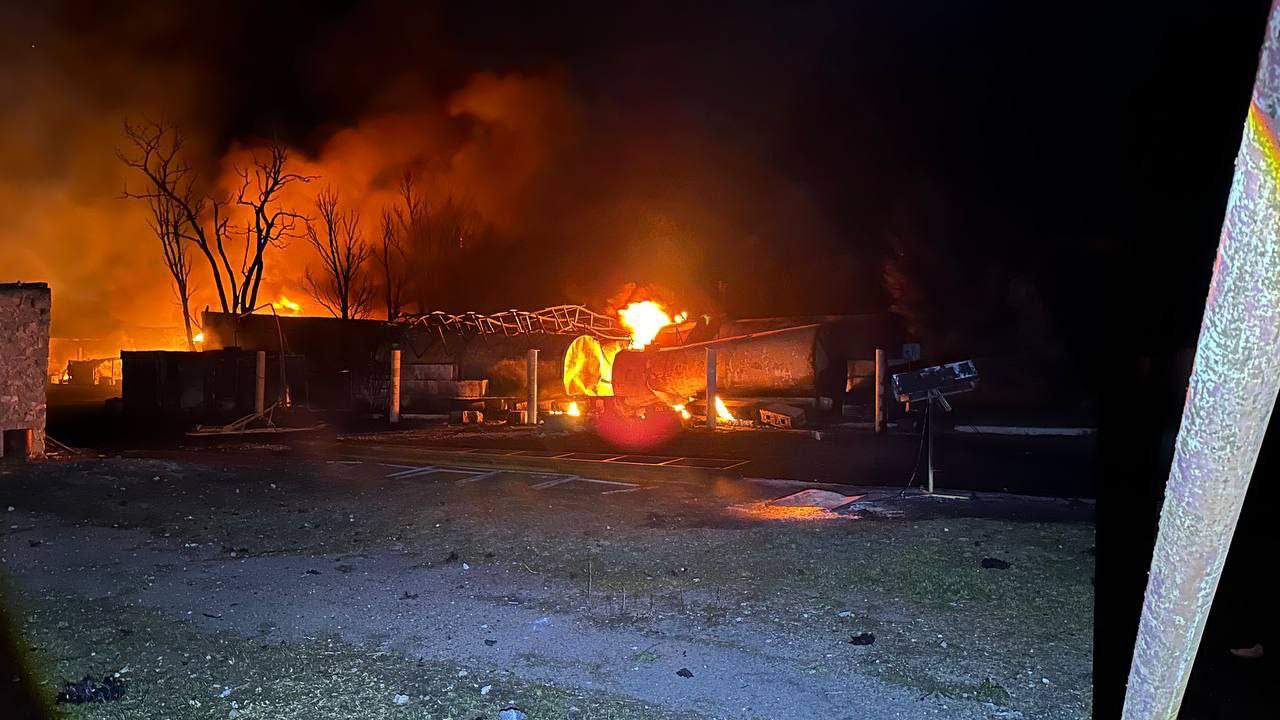
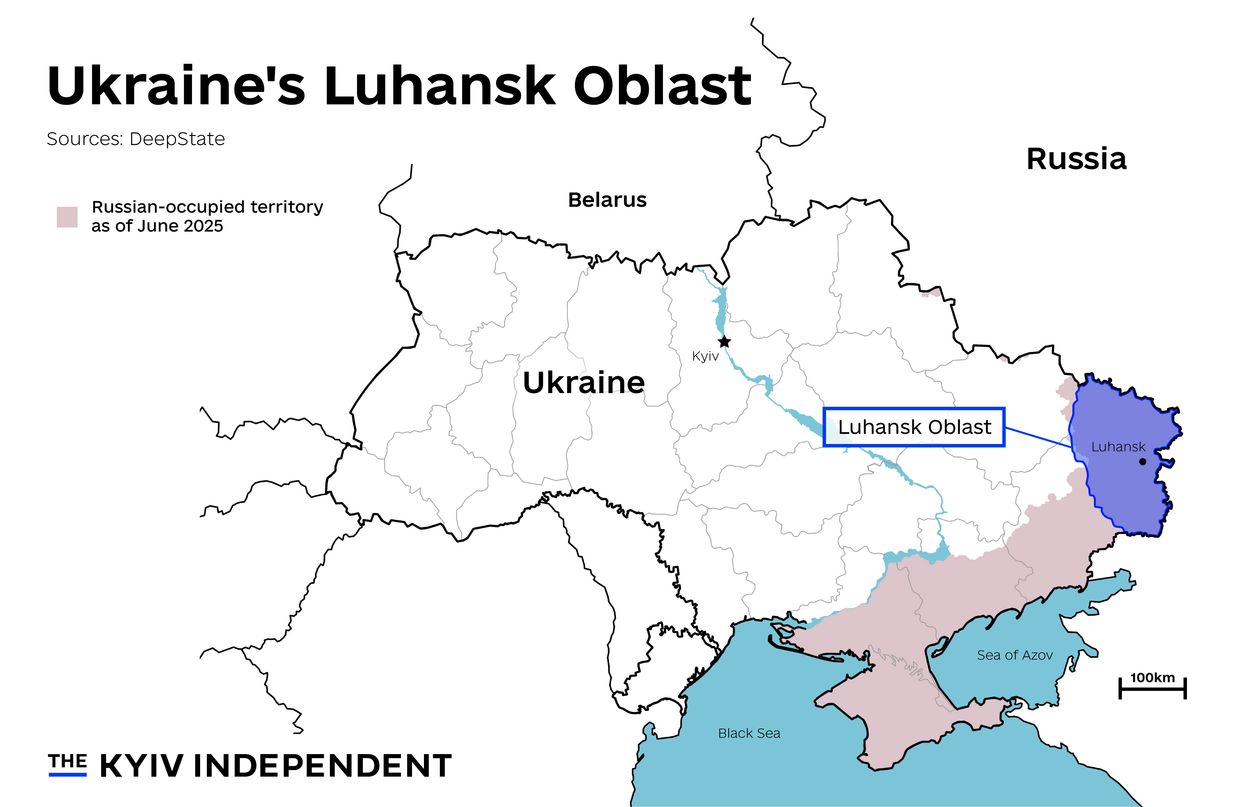
Ukrainian forces reportedly struck a Russian logistics hub and an oil depot in Russian-occupied Luhansk and a military base in occupied Donetsk on June 30 and July 1, with fires breaking out in the two cities.

"Russian logistics in temporarily occupied Luhansk are burning," head of Ukraine's Center for Countering Disinformation Andrii Kovalenko said.

The drone attack was reported by the local media, publishing what appear to be videos of the burning logistics hub and the sound of drones.

Leonid Pasechnik, head of the Russian occupation authorities in Luhansk Oblast, reported that air defenses shot down 35 of the 40 drones over Luhansk Oblast. Drone wreckage fell on the premises of an oil depot, and a woman was injured, Pasechnik claimed.

Russian military, industrial sites allegedly targeted in Ukrainian strikes on occupied Donetsk, Luhansk
Ukraine's Luhansk Oblast (Nizar al-Rifai/The Kyiv Independent)

Overnight Ukrainian attacks were also reported in occupied Donetsk, with Telegram news channels sharing apparent footage of damaged buildings and fires in the city.

Denis Pushilin, the head of the Russian occupation authorities in Donetsk Oblast, claimed that one person was killed and three were injured in the attack. Ukrainian news channel Supernova+ reported that the attack targeted the headquarters of Russia’s 8th Combined Arms Army.

The Ukrainian military has not commented on the claims, which could not be independently verified.

Videos from occupied Donetsk after Ukrainian strike on the evening of June 30. Ukrainian analysts and media report a military facility was hit, while the “DPR” head says a woman was killed and three civilians injured

“It appears the Donetsk Institute of Non-Ferrous Metals… pic.twitter.com/evPG9eajl0

— ASTRA (@ASTRA_PRESS) July 1, 2025

Ukraine's military regularly strikes military targets in Russian-occupied territories and deep within Russia in an attempt to diminish Moscow's fighting power as it continues its war against Ukraine.

Ukraine's military intelligence (HUR) destroyed three Russian air defense systems using drones in the occupied Zaporizhzhia Oblast on June 14.

"Strike drone masters of the Department of Active Operations of the HUR of the Ukrainian defense ministry discovered and destroyed expensive air defense systems of the Russian invaders in the temporarily occupied territory of the Zaporizhzhia region," HUR reported in a post to Telegram.

A Russian Buk-M3, a Pantsyr S1, and a 9S19 Imbir radar from the S-300V air defense system were destroyed in the Ukrainian drone attack.

Ukraine war latest: Ukrainian forces push Russian army away from Sumy
Key developments on June 30: * Ukrainian forces push Russian army away from Sumy, General Staff says * Ukrainian military again denies reports on Russian troops entering Dnipropetrovsk Oblast * After months of stalling, Russia blames Ukraine, US for slow pace of peace talks * Germany vows to pursue ‘every path’ to boost Ukraine’s
Russian military, industrial sites allegedly targeted in Ukrainian strikes on occupied Donetsk, LuhanskThe Kyiv IndependentThe Kyiv Independent news desk
Russian military, industrial sites allegedly targeted in Ukrainian strikes on occupied Donetsk, Luhansk
  •  
❌