Christine Fréchette a réuni hier les principaux acteurs économiques québécois quelques jours avant la date prévue pour l’entrée en vigueur de nouveaux droits de douane américains de 50%, mercredi prochain.
La première ministre a indiqué que ces nouvelles surtaxes américaines pourraient affecter jusqu’à 9% des exportations québécoises.
Christopher Skeete, ministre des relations internationales, a rappelé, selon Radio-Canada, que la nouvelle politique internationale du gouvernement Fréchette pourrait amener le Québec à se soustraire à une éventuelle entente Canada–États-Unis qui empiéterait sur ses champs de compétence.
Donating plasma for Grifols at a hospital in Barcelona in 2020. The company has suspended collecting plasma in Canada because of scrutiny over two deaths.
Le gouvernement américain avait imposé le mois dernier de nouveaux droits de douane de 50% sur de nombreux produits canadiens.
Il est prévu qu’ils entrent en vigueur mercredi prochain.
Dominic LeBlanc, ministre fédéral responsable du commerce Canada–États-Unis, et Jamieson Greer, ministre américain du commerce international, se sont rencontrés hier pour la troisième fois en trois semaines.
Selon plusieurs médias, LeBlanc et Greer pourraient conclure une entente au cours des prochains jours.
Une telle entente pourrait être soumise lundi à Donald Trump, deux jours avant l’entrée en vigueur des nouveaux tarifs douaniers.
Steven MacKinnon, ministre fédéral des transports, a annoncé hier le lancement d’un nouveau programme de soutien au secteur de l’acier.
Doté de 100 millions $, ce programme remboursera la moitié des frais de transport ferroviaire ou maritime aux entreprises qui expédient d’une province à l’autre de l’acier canadien ou des produits d’acier canadien.
Il restera en vigueur pendant une durée maximale d’un an ou jusqu’à épuisement des fonds.
Le gouvernement Carney a indiqué qu’il mettrait également en place des mesures de soutien pour le secteur forestier.
Les fabricants de nombreux pays verront désormais certains types d’armoires et de meubles-lavabos en bois soumis à un droit de douane de 25% lorsqu’ils les vendent au Canada.
François-Philippe Champagne, ministre fédéral des finances, a présenté cette mesure comme un «droit de sauvegarde provisoire».
Elle s’appliquera pour un maximum de 200 jours, pendant que le Tribunal canadien du commerce extérieur enquête sur des suspicions de dumping de la part de certains pays.
La surtaxe ne touche pas les meubles fabriqués aux États-Unis, au Mexique, en Israël, au Chili ni «dans les pays en développement».
Le chef du Parti libéral du Québec a affirmé, devant le consulat général des États-Unis à Québec, que le Canada devrait s’abstenir de riposter aux nouveaux droits de douane imposés récemment par les États-Unis.
Il estime que ce n’est pas la solution à privilégier face à un président américain «imprévisible».
Un mois avant le début officiel de la campagne électorale, Milliard propose de:
rétablir une alliance entre le Québec et l’Ontario, qu’il accuse la Caq d’avoir rompue;
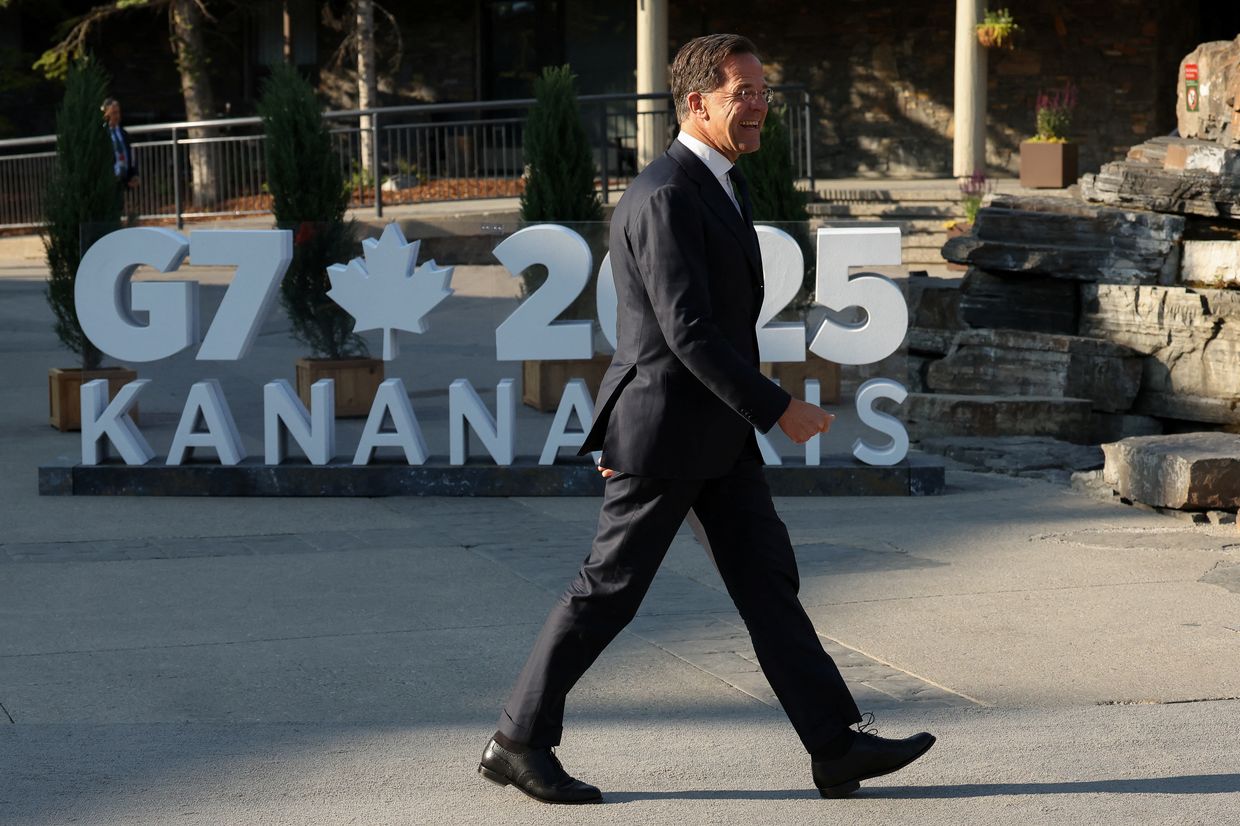
All 32 NATO member states are on track to meet the alliance's 2% GDP defense spending benchmark in 2025, Secretary General Mark Rutte said on June 17 at the G7 summit in Canada.
The announcement marks a major shift for the alliance, which has faced repeated criticism from U.S. President Donald Trump for failing to meet spending commitments.
The U.S. president has long pushed NATO members to spend more on defense, at one point suggesting the threshold be raised to 5% of GDP.
"This is really great news," Rutte said, praising announcements from Canada and Portugal, the last two holdouts. "The fact that you decided to bring Canada to the 2% spending when it comes to NATO this year is really fantastic," he told Canadian Prime Minister Mark Carney.
In 2024, only 23 alliance members met the 2% target, according to NATO estimates. Poland led all members with 4.12% of GDP allocated to defense, followed by Estonia (3.43%) and the U.S. (3.38%).
Rutte's comments come ahead of the June 24–25 NATO summit in The Hague, which has been reportedly scaled back to a single working session on defense spending and alliance capabilities.
The move, according to Italian outlet ANSA, is designed to avoid friction with Trump, whose presence at the summit remains unconfirmed.
Ukraine has been invited to the summit, but President Volodymyr Zelensky may reconsider his attendance amid uncertainty over the U.S. delegation, the Guardian reported on June 17.
According to the outlet, some in Kyiv are questioning whether Zelensky's presence at the summit would be worthwhile without a confirmed meeting with Trump.
Many NATO members have cited Russia's ongoing war against Ukraine and Trump's isolationist rhetoric as reasons to accelerate defense spending and prepare for potential future threats.
President Volodymyr Zelensky said on June 17 that the G7 summit had produced concrete results for Ukraine, including increased military support, new tranches of aid using frozen Russian assets, and additional sanctions targeting the sources of Russia’s war effort.
"It is important that our partners are ready not only to support our defense now, but also to rebuild Ukraine together after the war ends. I thank everyone who helps us fight Russian aggression and who, together with Ukraine, is building a strong security architecture for the future," he added in a Telegram post.
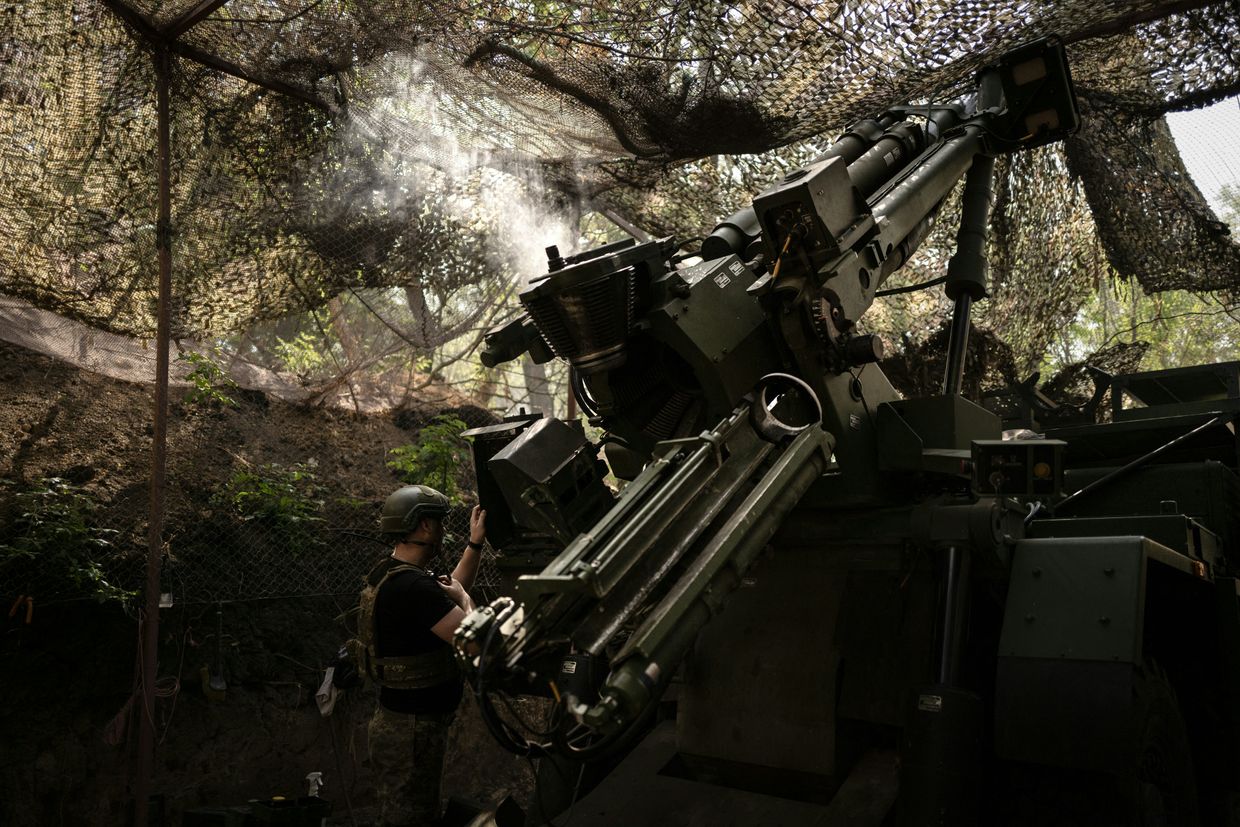
Canadian Prime Minister Mark Carney announced a new support package for Ukraine earlier in the day, including two billion Canadian dollars ($1.5 billion USD) in military aid and over two billion Canadian dollars ($1.6 billion USD) loan for reconstruction. The package also includes funding for drones, ammunition, armoured vehicles, and new sanctions targeting Russia’s energy revenues and sanctions evasion.
U.K. Prime Minister Keir Starmer also announced a set of measures aimed at increasing pressure on Russian President Vladimir Putin, who continues to reject calls for an unconditional ceasefire in Ukraine. "The 30 targets strike across Russia’s financial, military and energy sectors in response to Putin’s continued aggression," reads the U.K. government statement. The new sanctions also "crack down further on Putin’s shadow fleet," targeting 20 of his oil tankers.
Starmer added that he "strongly" supports tightening the price cap on Russian crude oil to further cut into the Kremlin’s energy revenues.
The G7 nations, however, struggled to present a unified stance on the war in Ukraine after U.S. President Donald Trump voiced support for Russian President Vladimir Putin and called for Russia to be readmitted to the group. Russia was expelled from what was then the G8 after its 2014 invasion of Crimea.
Trump left the summit a day early to address the Israel-Iran conflict from Washington, departing without meeting Zelensky, who had hoped for a one-on-one conversation to press for stronger sanctions against Russia.
Zelensky had already cut his own visit to Canada short on June 17 and was preparing to return to Kyiv while G7 talks were still underway. He had been scheduled to travel to Calgary for events and a press conference with the Ukrainian diaspora, a source told a Kyiv Independent journalist on the ground, but those plans were canceled following a deadly Russian missile strike on Kyiv and changes to the summit agenda.
Zelensky later said he told G7 leaders that "diplomacy is now in a state of crisis" and urged allies to continue pressing Trump "to use his real influence" to help end the war.
Editor's note: This is a developing story and is being updated.
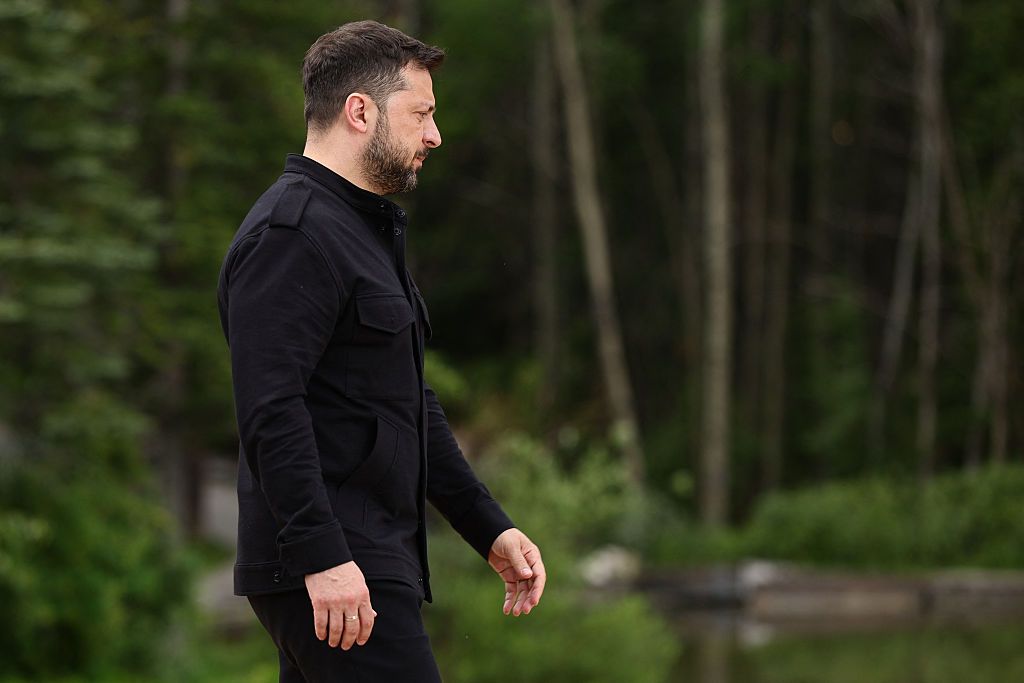
President Volodymyr Zelensky is cutting his visit to Canada short and will return to Kyiv on June 17, while G7 talks are still ongoing, a source told a Kyiv Independent journalist on the ground.
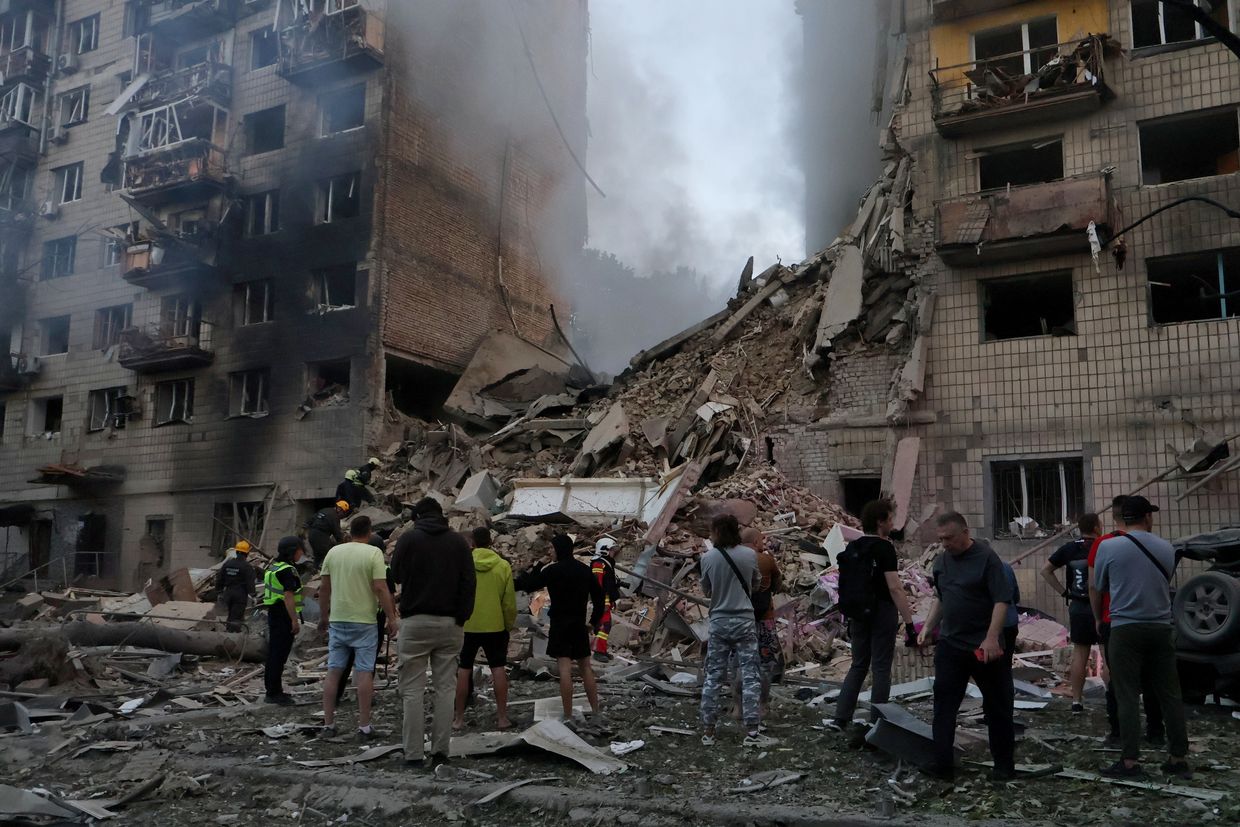
He had been scheduled to travel to Calgary for additional events and a press conference, but those plans have been cancelled. The change comes in the wake of a deadly Russian missile strike on Kyiv overnight, as well as changes to the G7 agenda.
Zelensky had travelled to the summit hoping to meet one-on-one with U.S. President Donald Trump and to push for stronger sanctions against Russia. However, Trump left the summit early, citing the crisis in the Middle East, and no bilateral meeting or unified G7 statement took place.
Zelensky said he had told the G7 leaders that "diplomacy is now in a state of crisis" and noted the allies need to continue calling on Trump "to use his real influence" to force an end to the war."
"Even if the American President is not putting enough pressure on Russia right now, the truth is that America still has the broadest global interests and the largest number of allies. All of them will need strong protection," he said in a Telegram post.
Meanwhile, Canada dropped plans for the G7 to issue a joint statement on the war in Ukraine after the United States pushed to weaken the language, according to a Canadian official speaking on the sidelines of the summit. The official said Canada felt a watered-down version would not be fair to Ukraine.
"Canada and the rest of the G7 should strengthen their support for Ukraine, particularly by furnishing it with additional military assistance that would include, among other things, increased ammunition," Alexander Lanoszka, an associate professor of international relations in the department of political science at the University of Waterloo, told the Kyiv Independent.
"One hopes that the specter of U.S. disengagement would catalyze increases in assistance. Unfortunately, despite whatever they say, G7 leaders could very well lack the confidence for whatever reason to do much absent strong U.S. leadership," Lanoszka added.
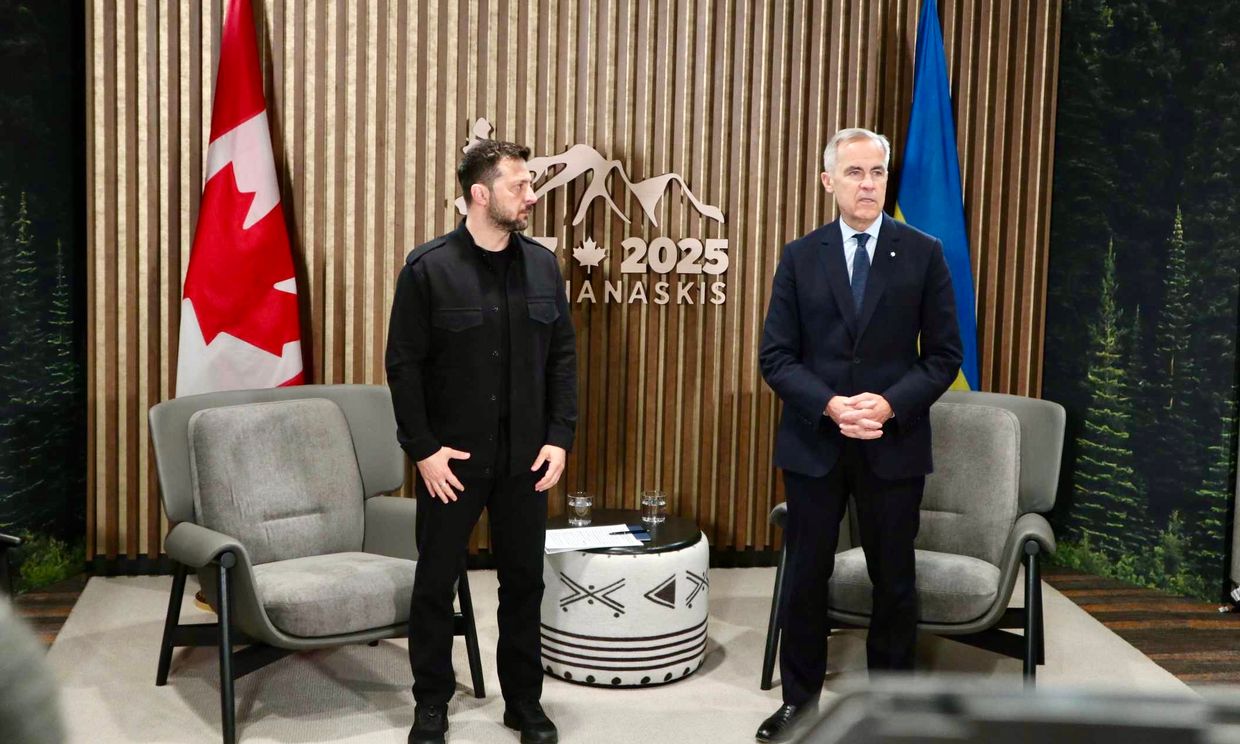
Canada did announce a sweeping new support package for Ukraine on June 17, during a bilateral meeting with Zelensky on the final day of the G7 summit in Kananaskis. The measures include two billion Canadian dollars ($1.5 billion USD) in military funding and new sanctions aimed at restricting Russia’s energy revenues and evasion tactics.
U.K. Prime Minister Keir Starmer also announced a set of measures aimed at increasing pressure on Russian President Vladimir Putin, who continues to reject calls for an unconditional ceasefire in Ukraine. "The 30 targets strike across Russia’s financial, military and energy sectors in response to Putin’s continued aggression," reads the U.K. government statement. The new sanctions also "crack down further on Putin’s shadow fleet," targeting 20 of his oil tankers.
Starmer added that he "strongly" supports tightening the price cap on Russian crude oil to further cut into the Kremlin’s energy revenues.
Zelensky said late on June 17 that the G7 summit still produced concrete results for Ukraine, including increased military support, new tranches of aid using frozen Russian assets, and additional sanctions targeting the sources of Russia’s war effort.
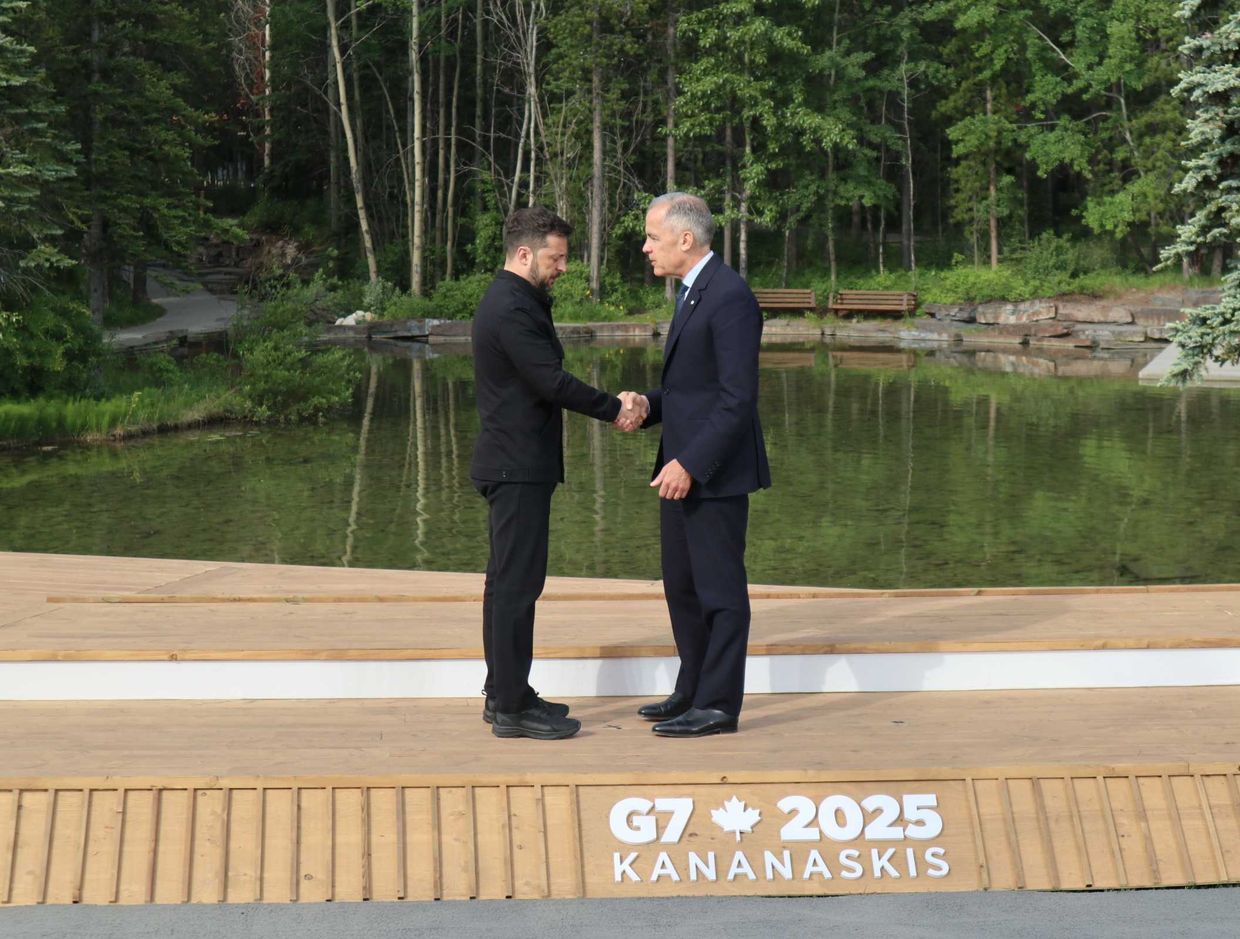
Canadian Prime Minister Mark Carney announced a sweeping new support package for Ukraine on June 17, during a bilateral meeting with President Volodymyr Zelensky on the final day of the G7 summit in Kananaskis, Alberta.
The measures include two billion Canadian dollars ($1.5 billion USD) in military funding and new sanctions aimed at restricting Russia’s energy revenues and evasion tactics.
"To be absolutely clear, this support will be unwavering until we get a just peace for Ukraine and the Ukrainian people," Carney was quoted as saying.
The aid package includes funding for drones, ammunition, and armoured vehicles, as well as a $2.3-billion loan to support the reconstruction of Ukrainian infrastructure damaged by Russian attacks. Zelensky, who was invited to the summit by Carney, thanked the prime minister for his support, noting that Ukraine had just endured one of the largest missile attacks since the start of the full-scale invasion, killing 14 and injuring 117 people in Kyiv.
The new sanctions target 77 individuals and 39 entities, including 15 people involved in Russia’s so-called “shadow fleet,” three financial firms facilitating war-related transactions, and 14 entities tied to the development of quantum technologies with possible military use. Canada also upgraded its sanctions against Russian oil and gas giant Surgutneftegas.
Canada’s announcement came alongside similar measures from the U.K., which sanctioned individuals and entities connected to Russian finance, energy, and military operations, including 20 shadow fleet vessels and two U.K.-based individuals accused of exporting high-tech electronics to Russia.
Canada's Prime Minister Mark Carney is expected to announce additional support for Ukraine during the G7 summit, CBC News reports on June 16, citing government sources.
Canada, which holds the G7 presidency in 2025, invited President Volodymyr Zelensky to participate in what will be his fourth — and arguably most fragile — G7 Leaders' Summit since the outbreak of the full-scale invasion in 2022. Carney is also expected to hold a one-on-one meeting with the Ukrainian president.
As part of Carney’s pledge to boost defense spending this year, Ottawa has allocated two billion Canadian dollars ($1.46 billion USD) for military aid to Ukraine and the expansion of broader defense partnerships. According to one source, the government is set to disclose on June 20 how much of that funding will be directed specifically to Ukraine and what it will support.
Canada has been a strong ally of Ukraine, providing 19.5 billion Canadian dollars ($13.5 billion) in assistance, including 4.5 billion Canadian dollars ($3.1 billion) in military aid.
Following their bilateral talks, G7 leaders will join outreach countries for discussions on Ukraine’s ongoing fight against Russia.
Meanwhile, European Commission President Ursula von der Leyen and European Council President Antonio Costa urged G7 nations to ramp up pressure on Moscow through tougher sanctions, arguing that it is key to securing a ceasefire in Russia’s war against Ukraine.
"To achieve peaceful strength we must put more pressure on Russia to secure a real ceasefire, to bring Russia to the negotiating table, and to end this war. Sanctions are critical to that end," von der Leyen said at a press briefing on June 15, attended by a Kyiv Independent journalist.
Von der Leyen emphasized that economic sanctions have been effective since the start of Russia’s full-scale invasion. She pointed out that joint G7 and European Union measures have reduced Russian oil and gas revenues by nearly 80% since February 2022.
"(T)he sanctions are working, and we will do more," she said.
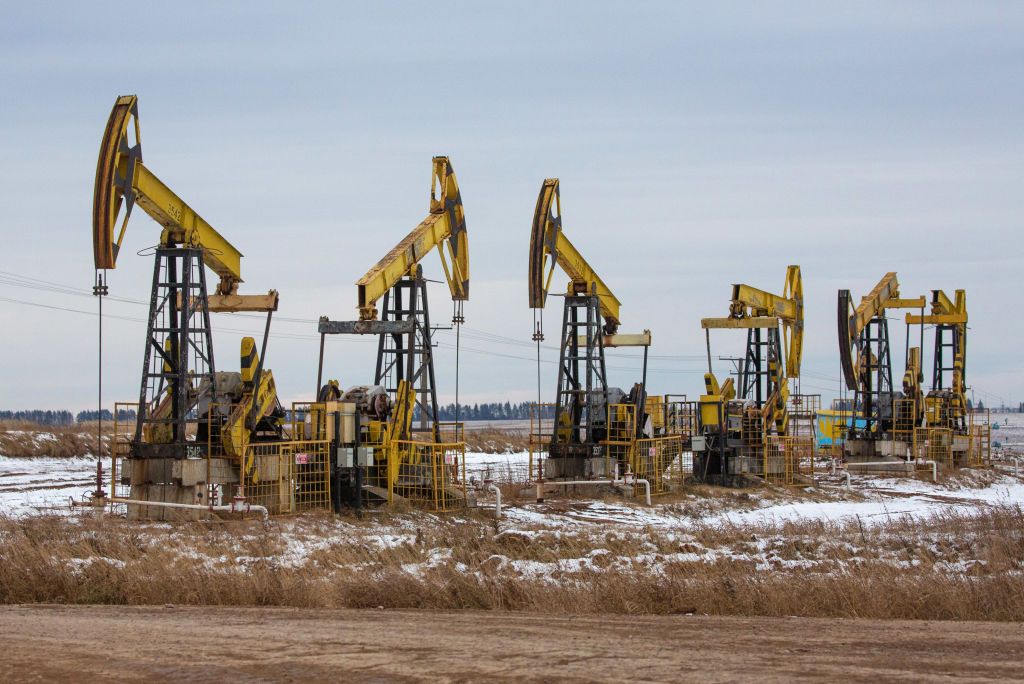
Most Group of Seven (G7) nations are prepared to lower the Russian oil price cap from $60 to $45 a barrel even without support from the United States, Reuters reported on June 12, citing unnamed sources familiar with the matter.
According to Reuters, the European Union and United Kingdom, backed by other European G7 countries and Canada, are ready to lead the charge in lowering the Russian oil price cap – even if U.S. President Donald Trump opts out.
The price cap, which bans Western companies from shipping, insuring, or otherwise servicing Russian oil sold above $60 per barrel, was first introduced in December 2022 as a measure to limit the Kremlin's ability to finance its war against Ukraine.
The G7 had previously attempted to lower the Russian oil price cap; however, the proposal was dropped after U.S. Treasury Secretary Scott Bessent reportedly declined to support it.
It is unclear whether the U.S. will support the decision this time around. Japan's position is also undecided.
Participating country leaders will revisit the price cap discussion at the upcoming G7 summit. Canada, which holds the G7 presidency this year, will host the summit on June 15-17 in Kananaskis County, located in the western province of Alberta.
The summit agenda will include topics such as support for Ukraine in the Russian war, global economic stability, digital transformation, and climate change.
President Volodymyr Zelensky is expected to attend the summit and seek a meeting with U.S. President Donald Trump.

 Connexion