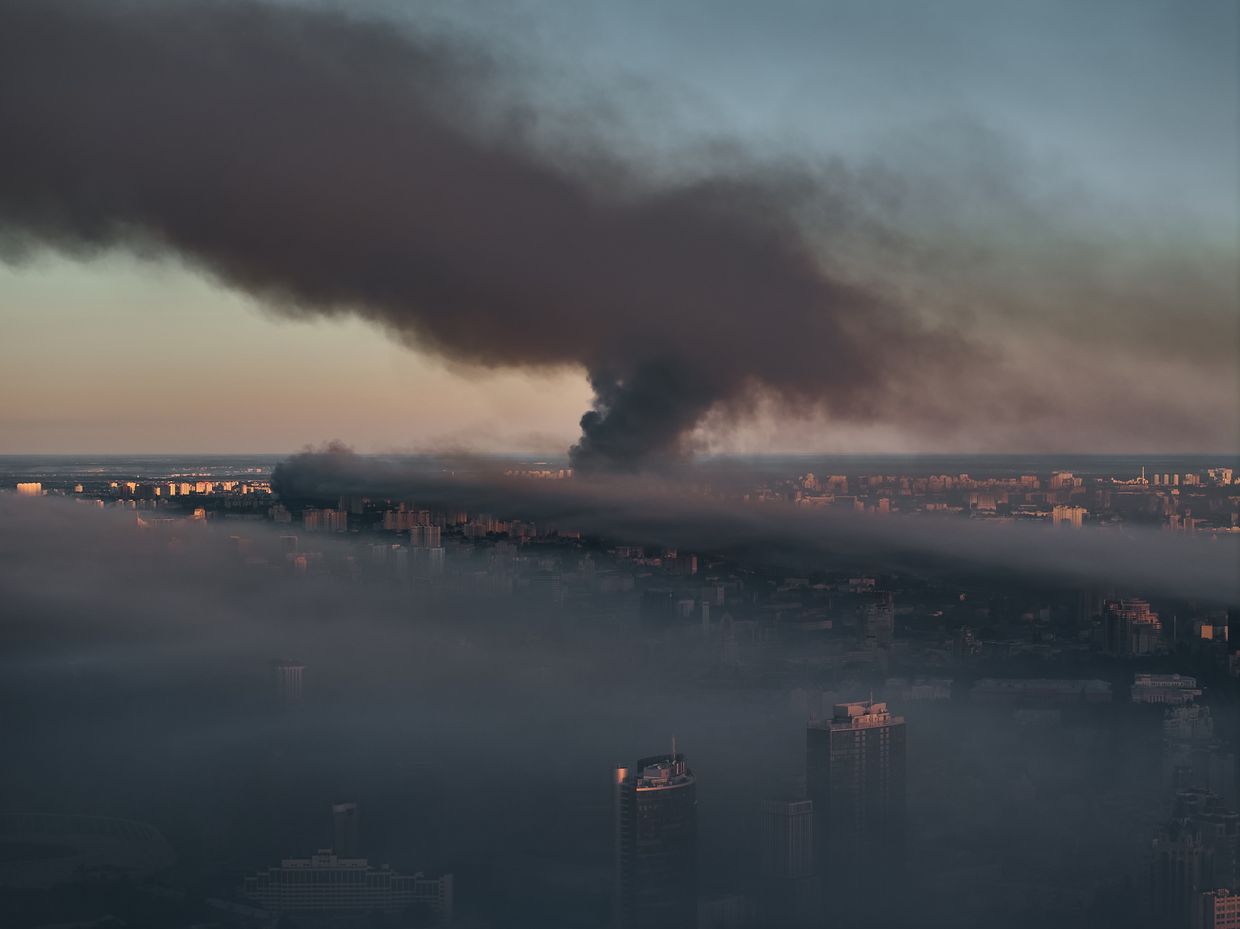
On 1 August, 20-year-old fourth-year psychology student Vitalina Yarovenko was killed in a double-tap strike while helping victims in Kyiv. She was a volunteer paramedic with the Hospitallers medical volunteer battalion. After completing her training, she was preparing to officially join the battalion, said Nataliia Chykhachova, head of the Hospitallers' patronage service. Kyiv bid farewell to the volunteer on 4 August.
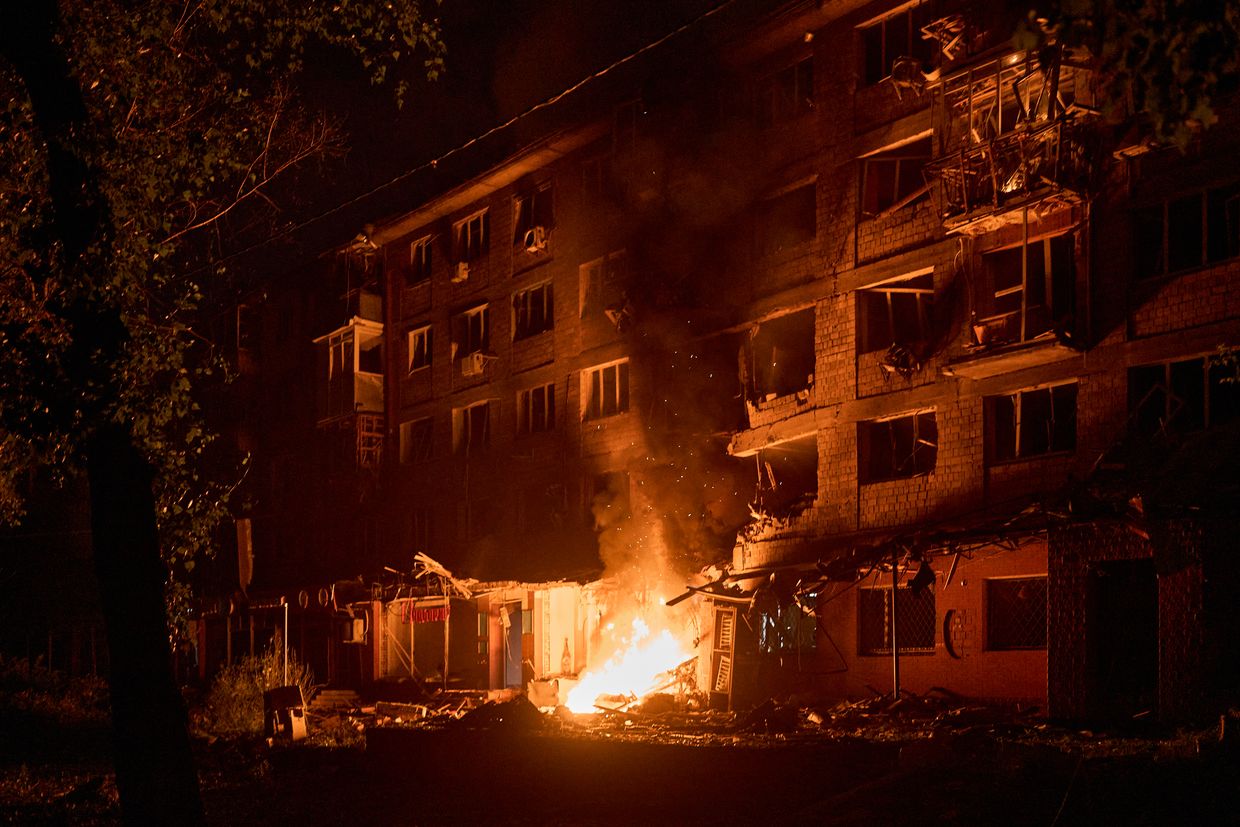
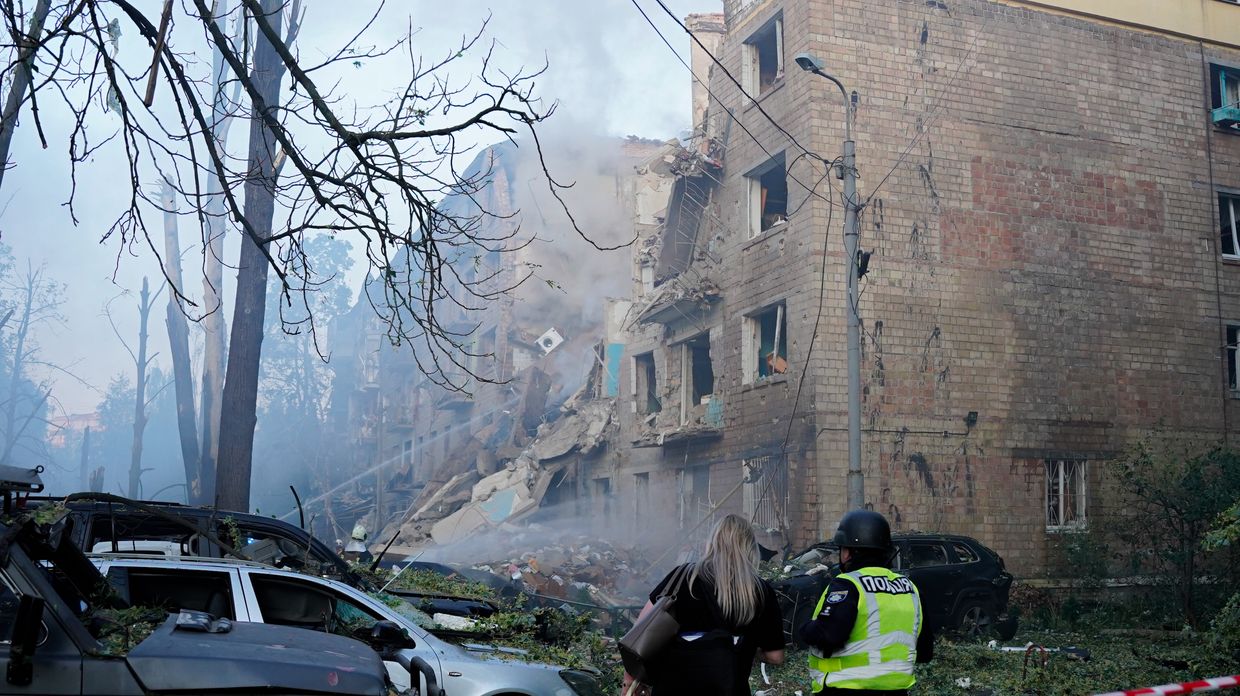
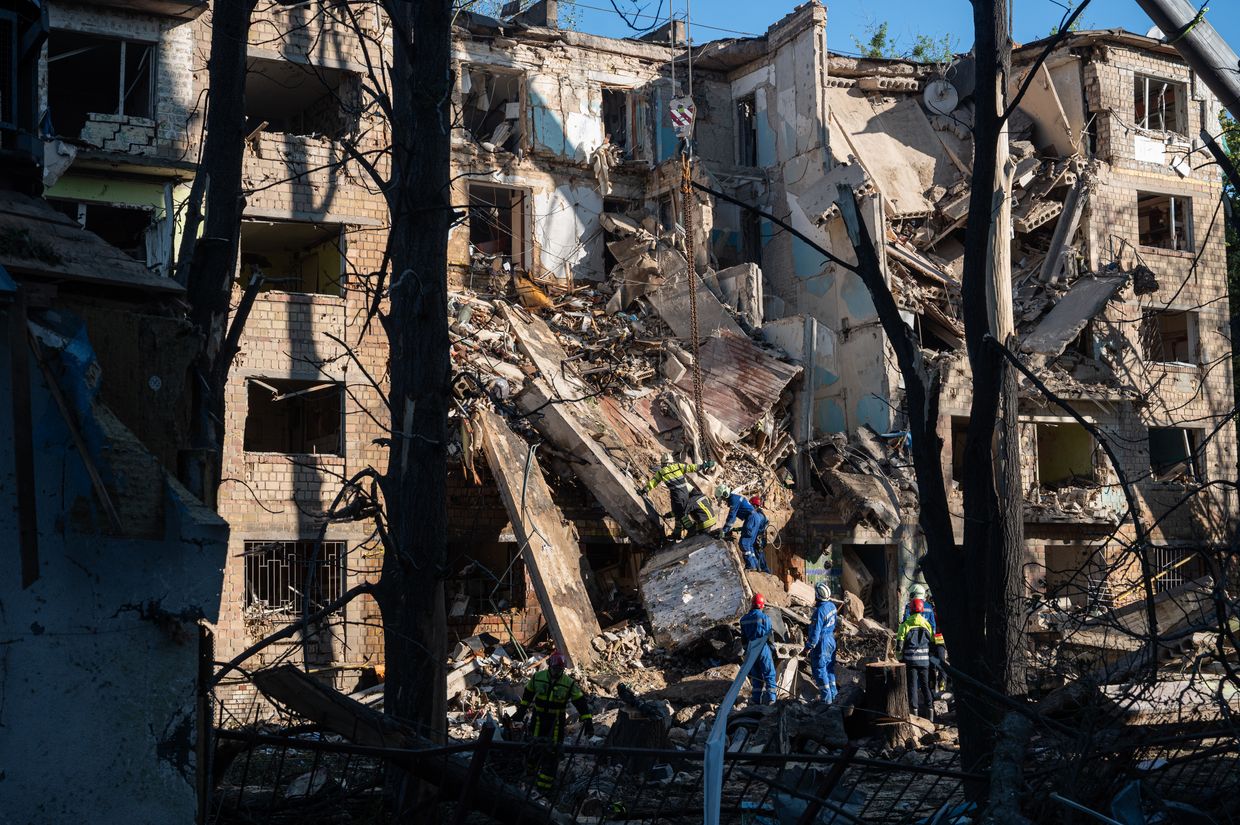
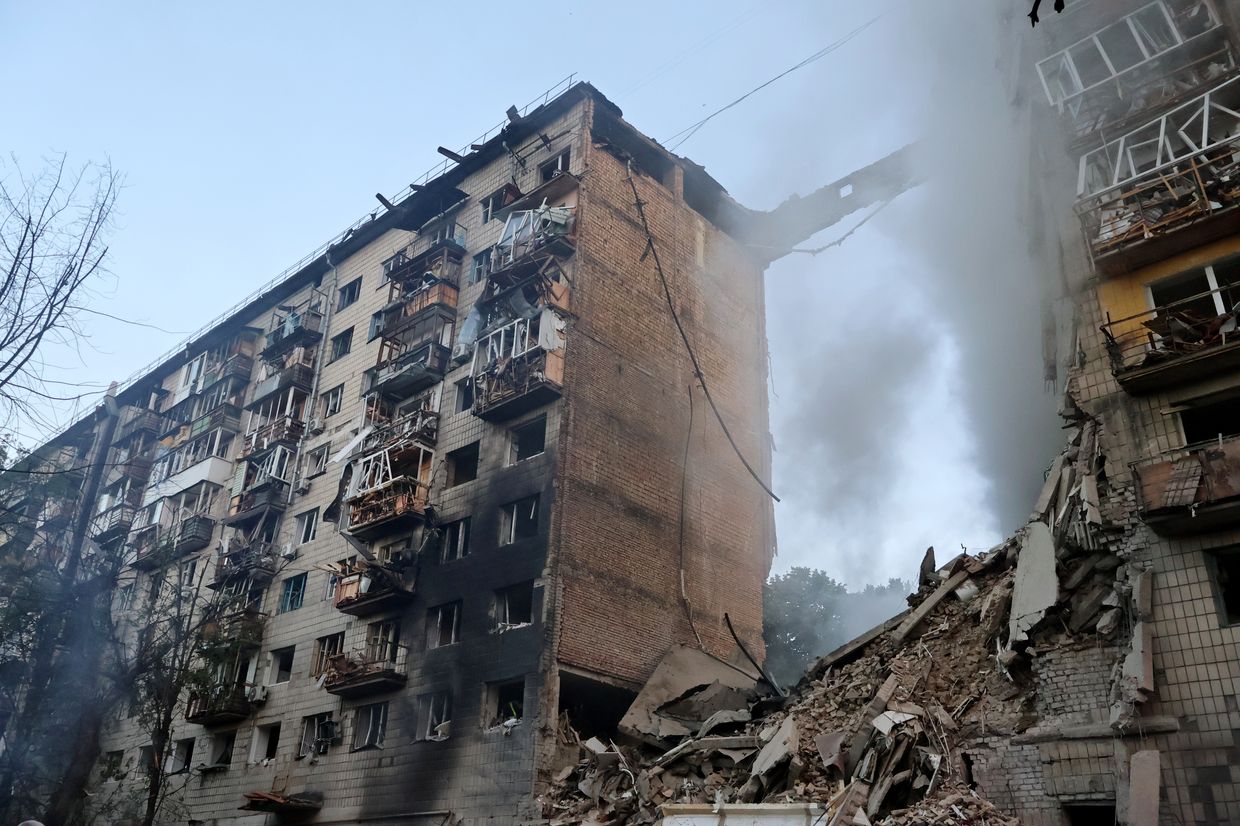
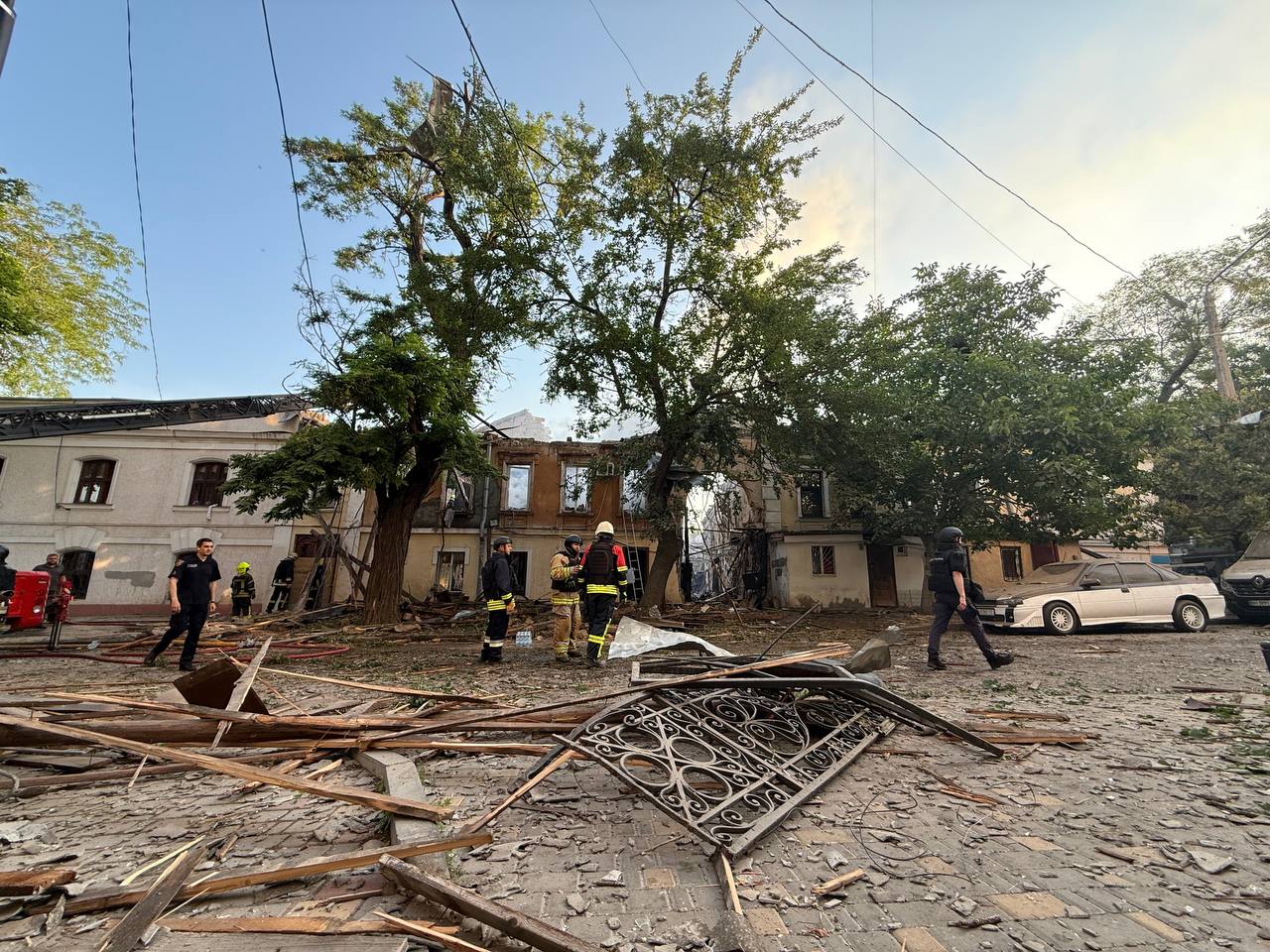
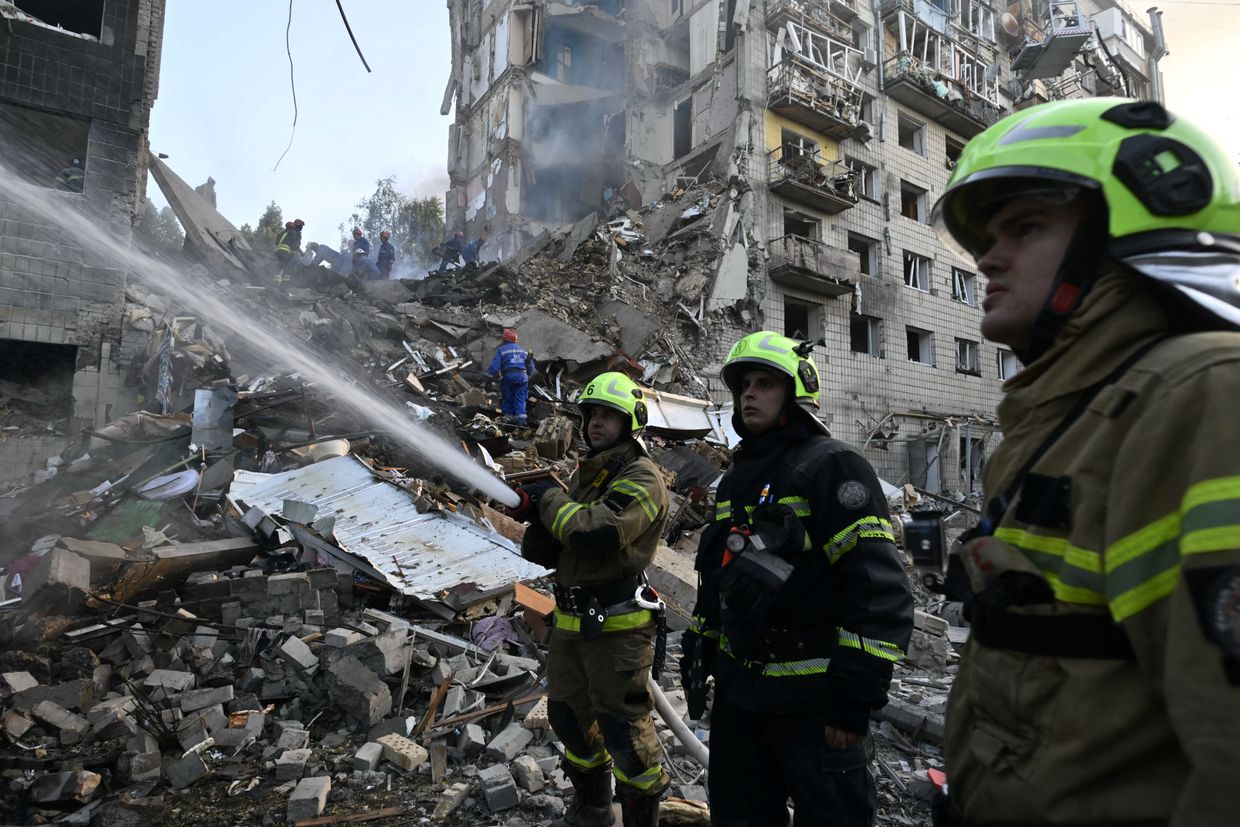
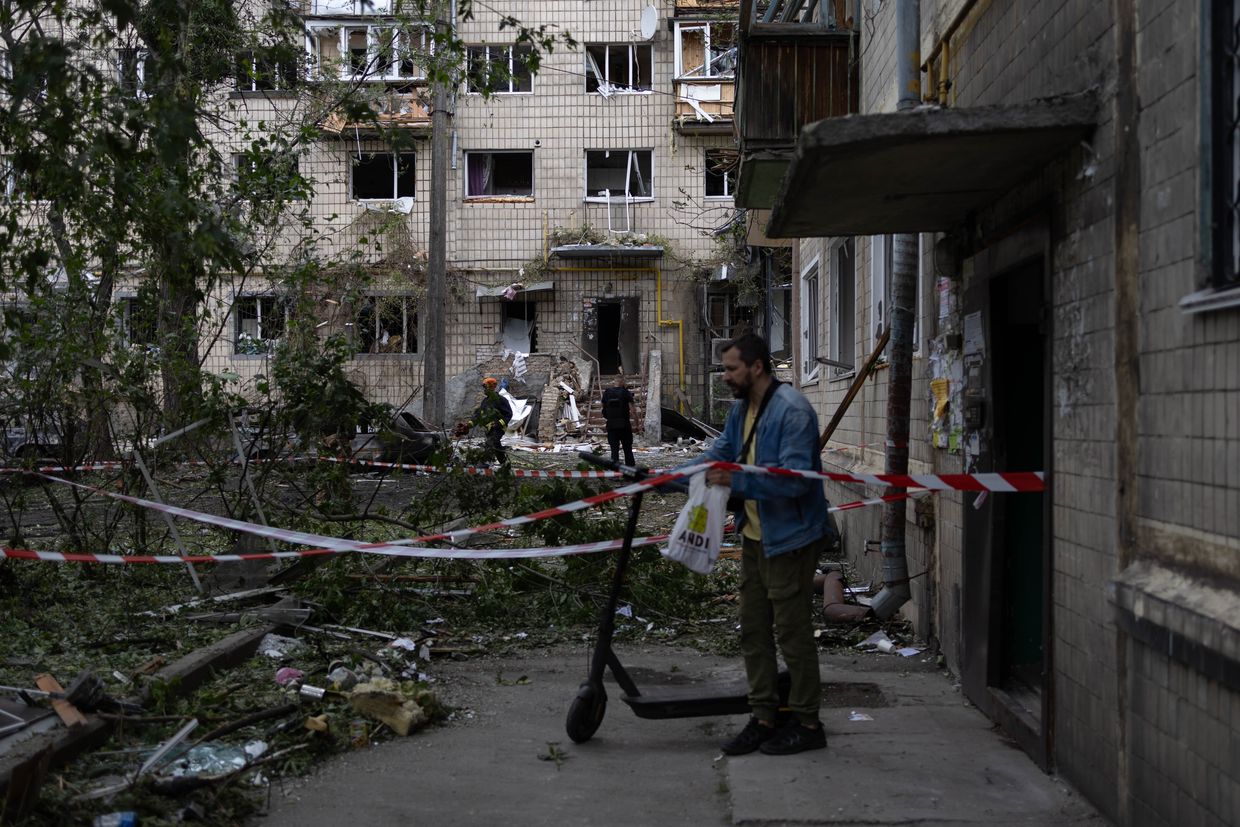
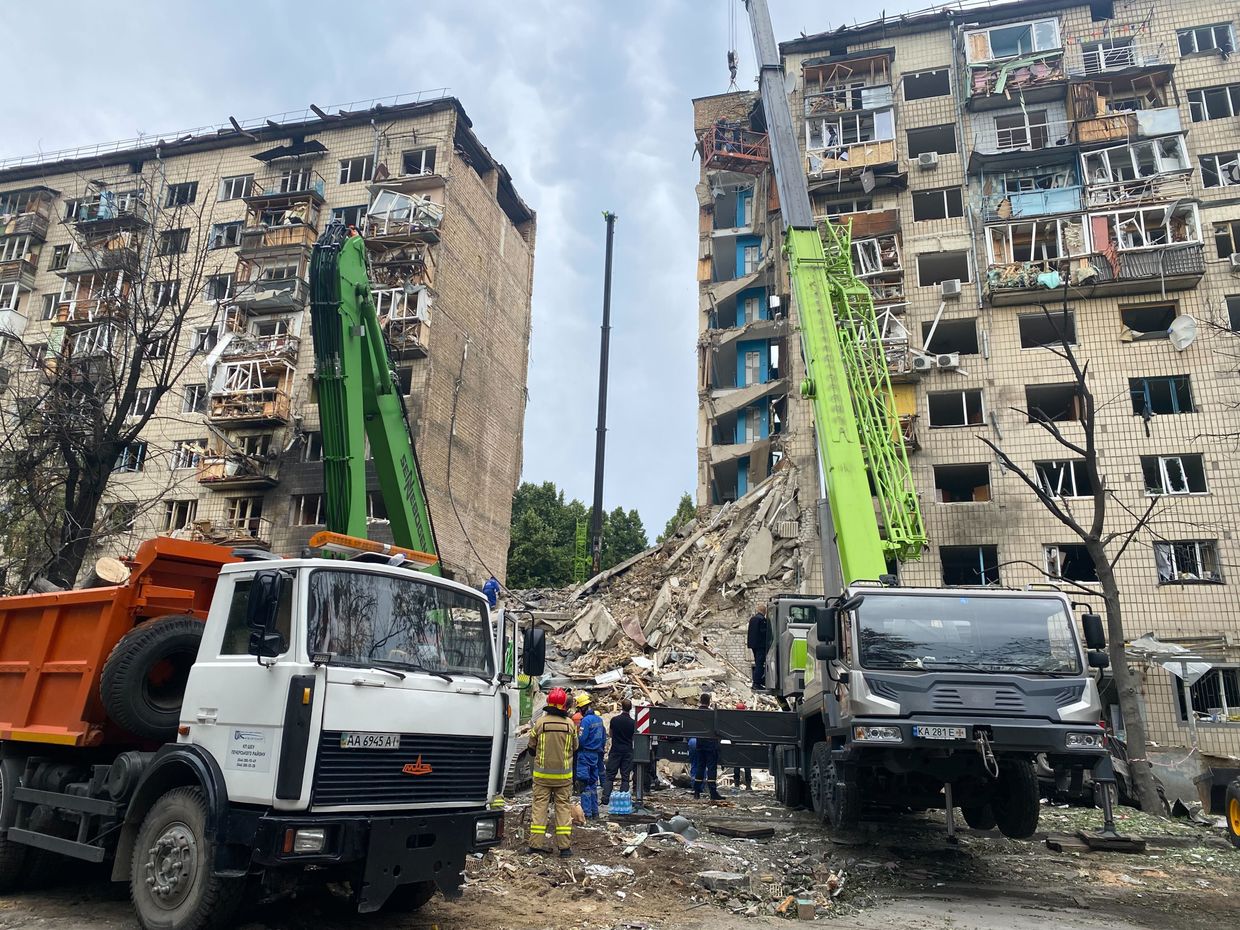
Every day, Russia fires drones and missiles, targeting Ukrainian cities. Overnight into 1 August, Russia attacked Kyiv with ballistic missiles, killing nine people and injuring more than 30 others, Kyiv Mayor Vitali Klitschko said. Vitalina and a group of volunteer paramedics were on their way to rescue people after a strike on Zdolbunivska Street in Kyiv's Darnytskyi district. The second strike took Vitalina's life as they were getting out of their vehicle, said Oleksandr Kostiuk, head of military training at the National University of Kyiv-Mohyla Academy. The Russian troops often employ the double-tap tactic, targeting the first responders.
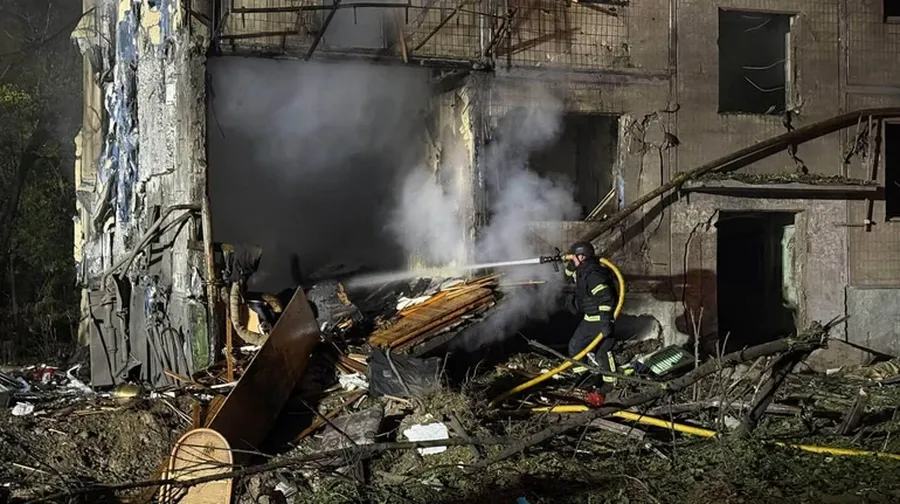
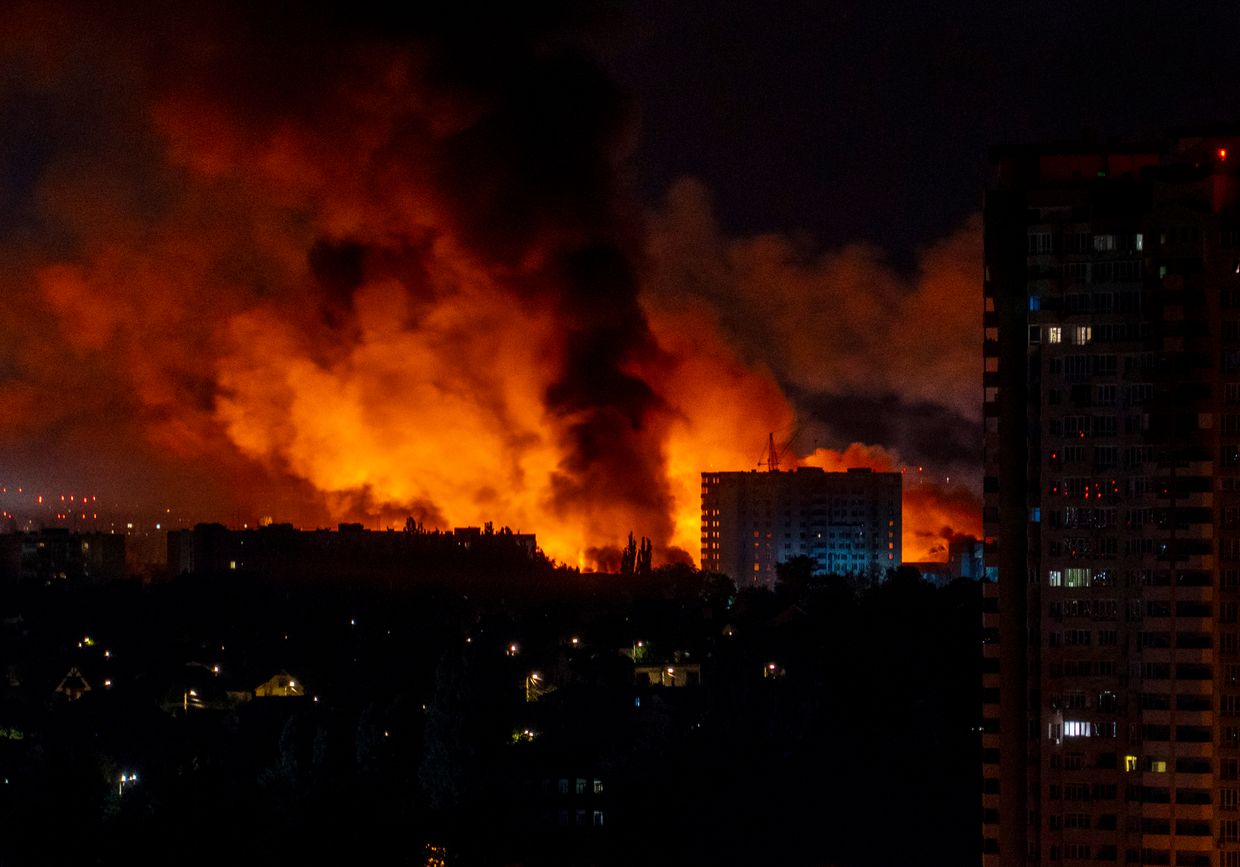
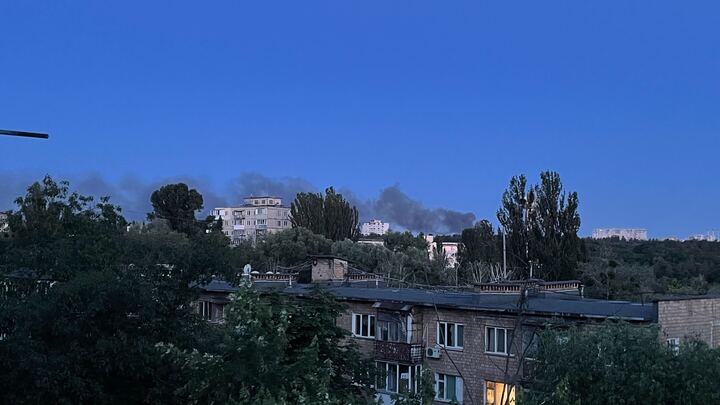
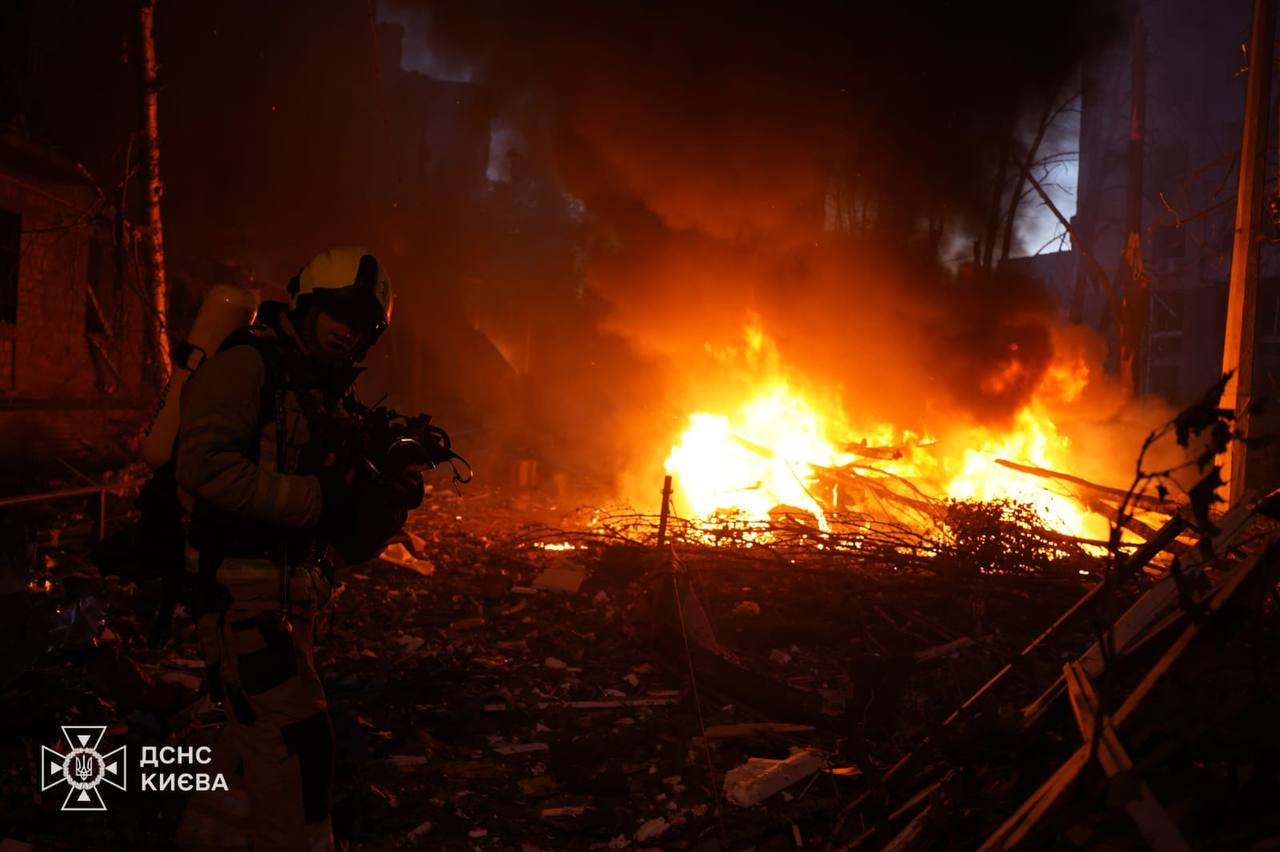
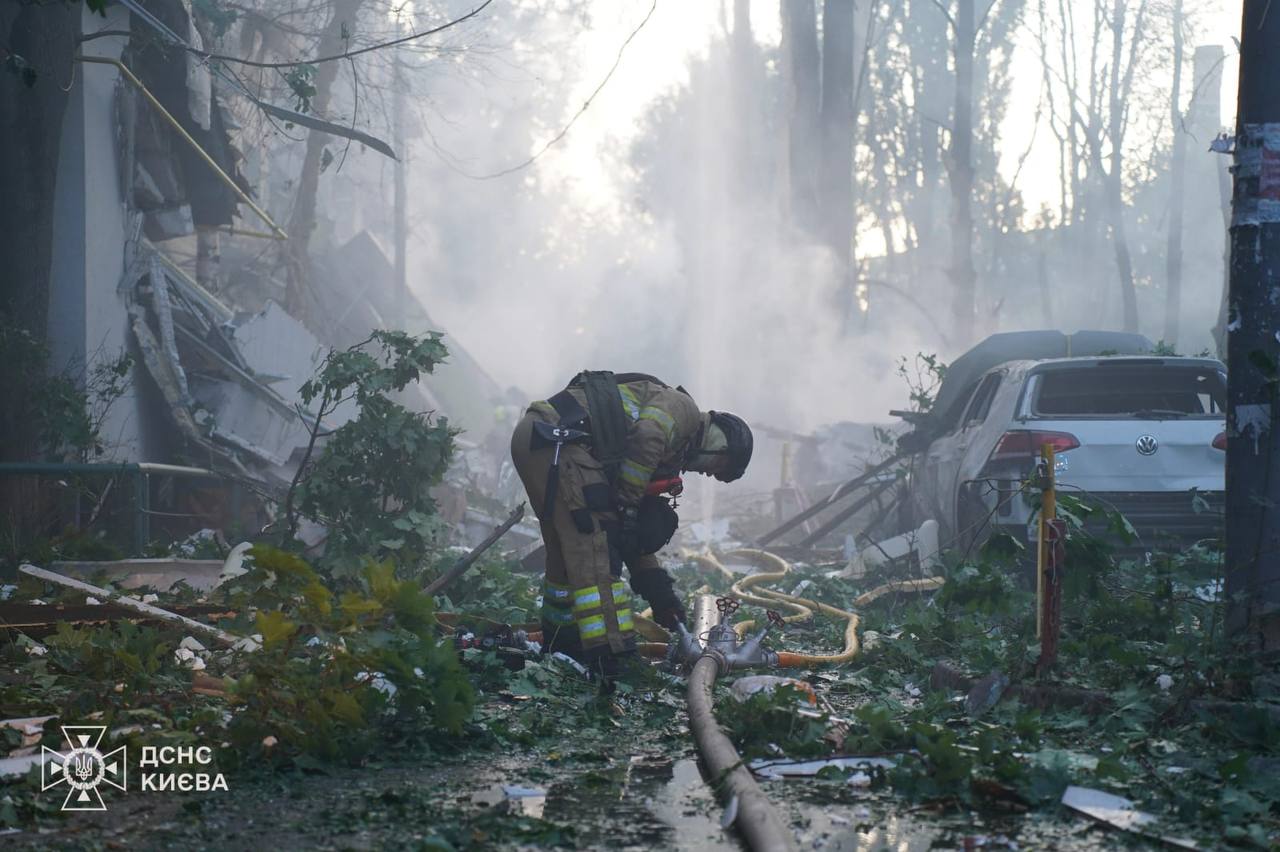
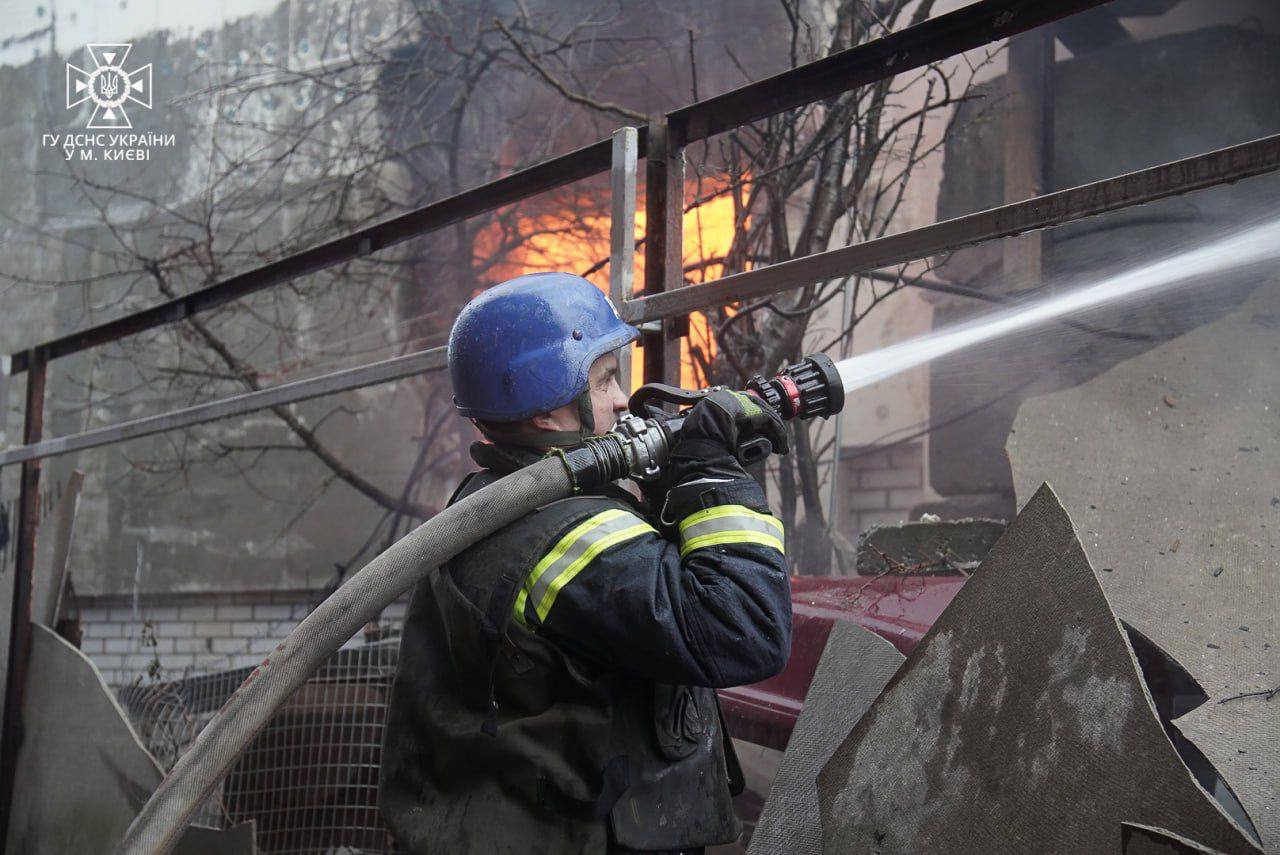
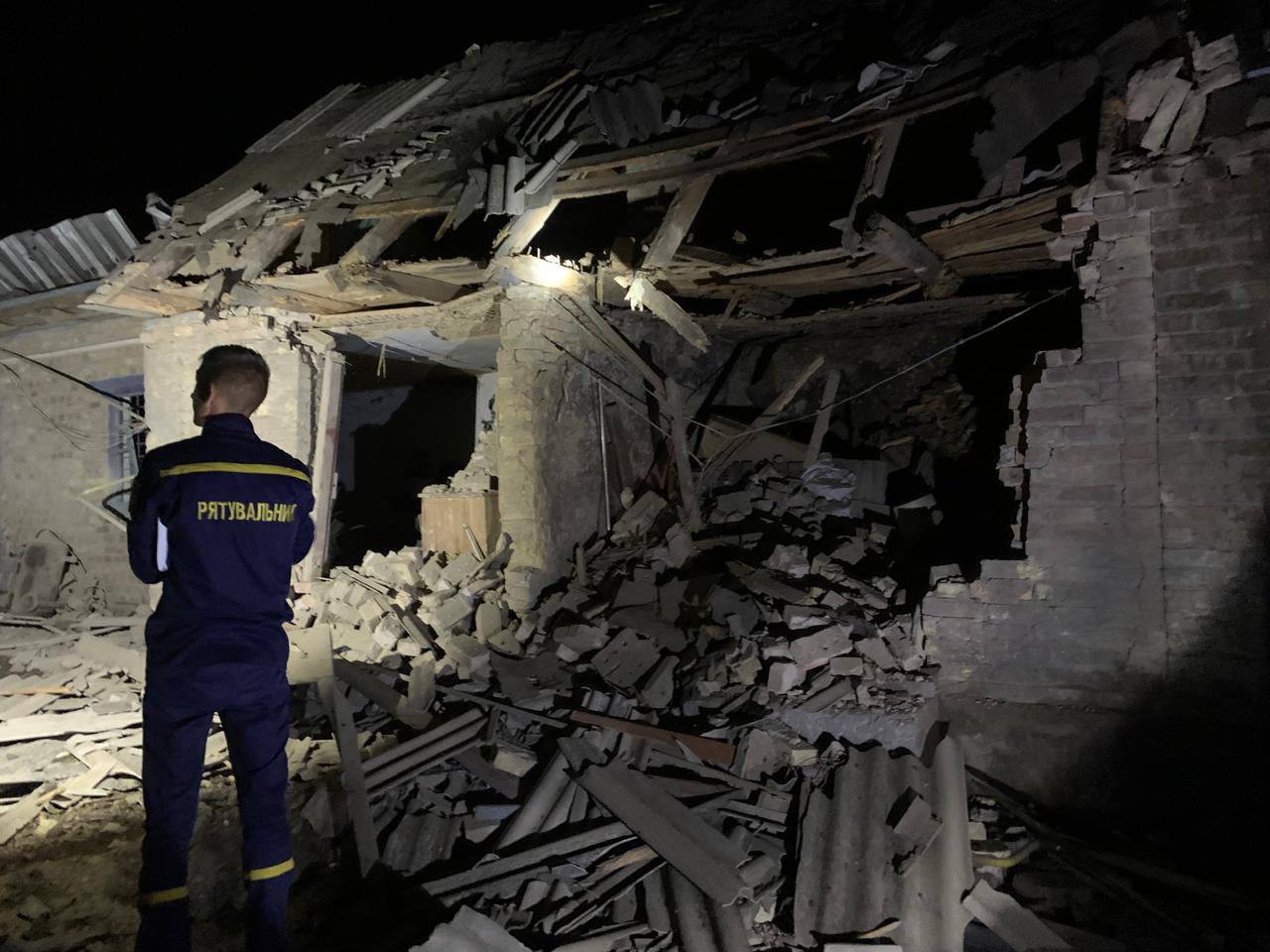
The aftermath of Russia's overnight strike on Kyiv on 1 August. Photo: Ivan Vyhivskyi/Facebook
Vitalina was killed alongside 25-year-old paramedic Yeva Roiter, while their driver remains in critical condition.
Farewell ceremony
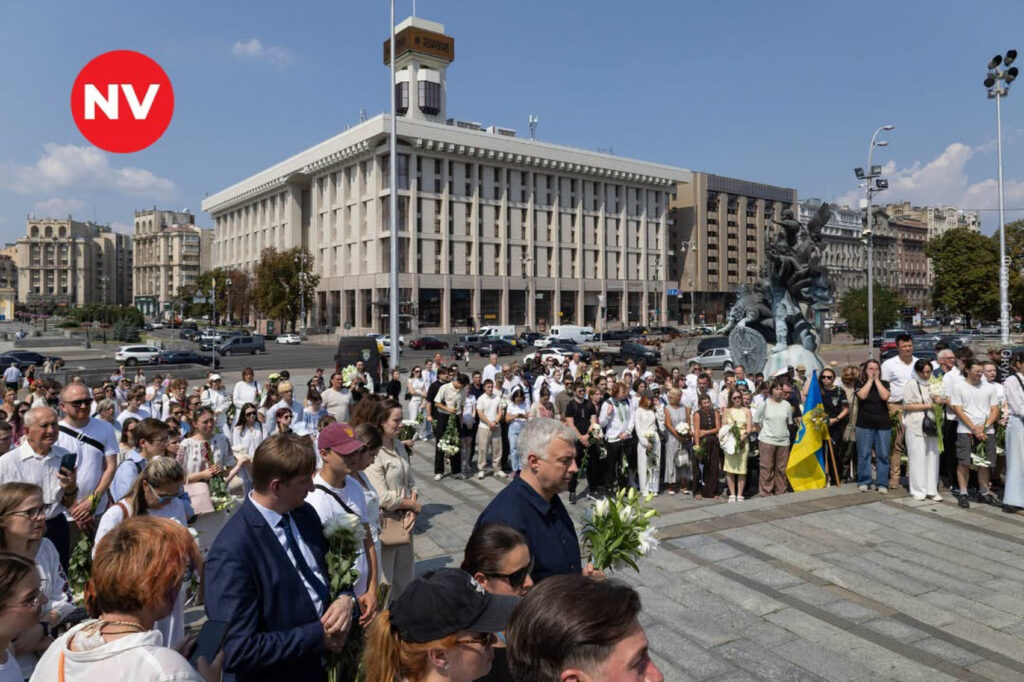
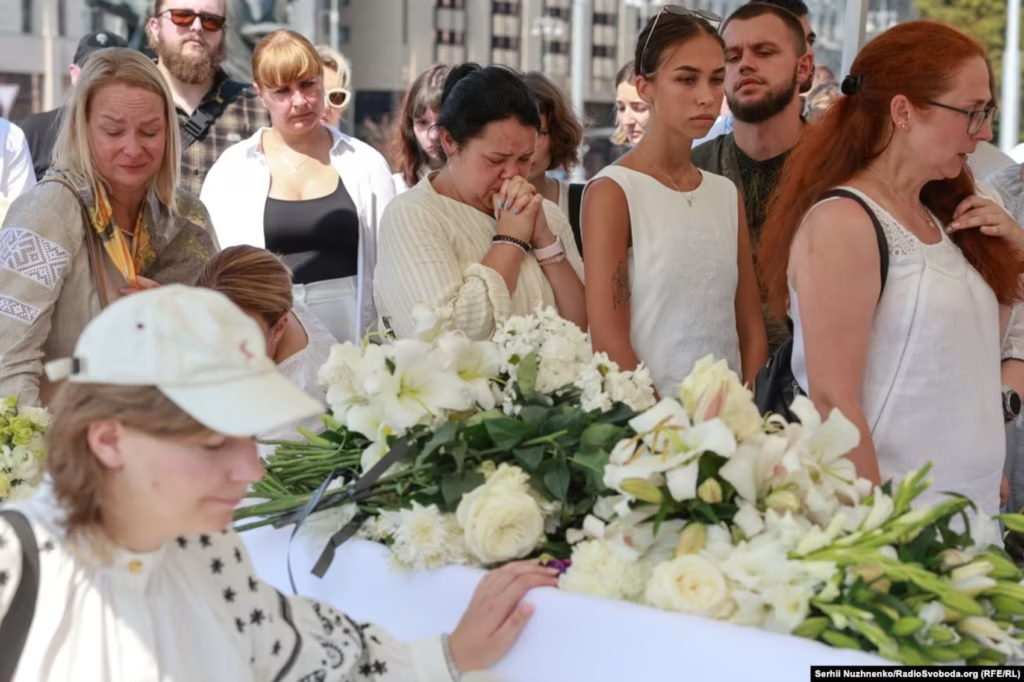
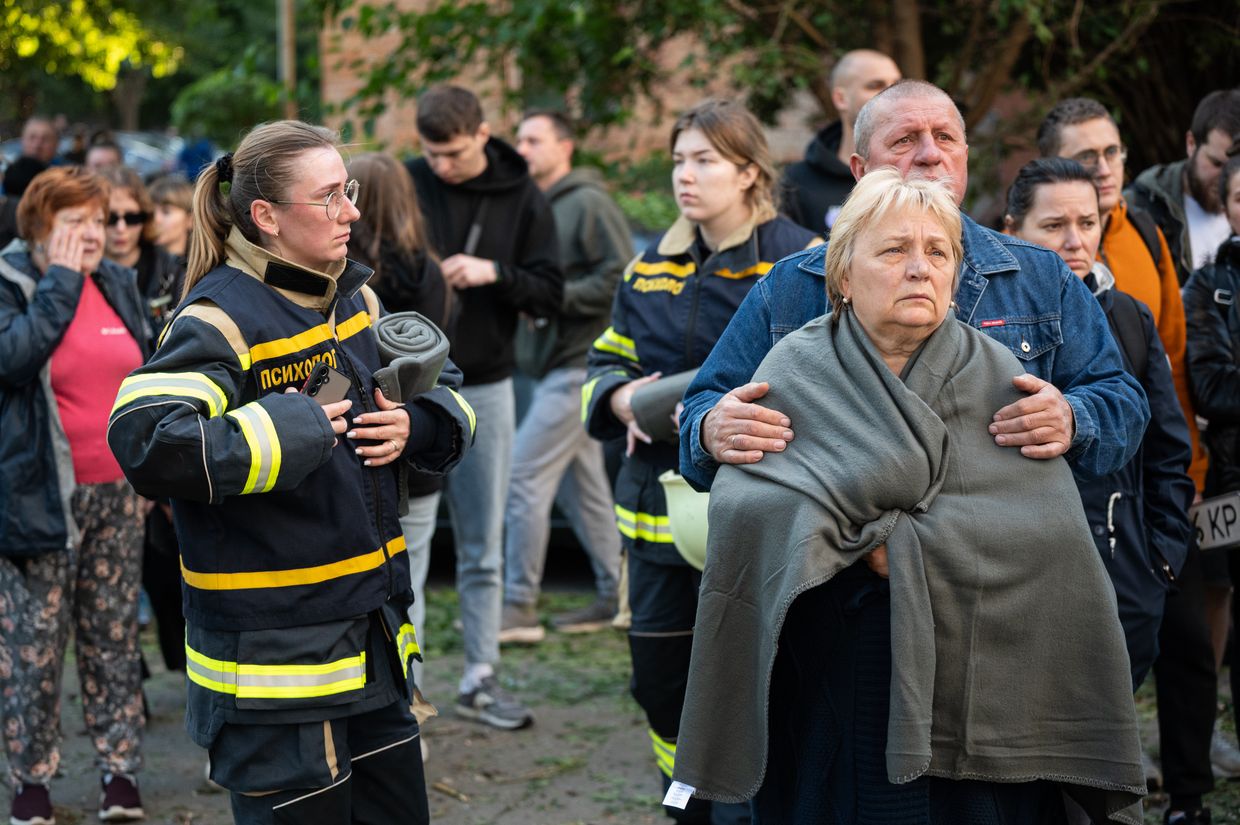
Several hundred people gathered in central Kyiv. Most of them were dressed in white and held white flowers at the request of Vitalina's mother. Some knew the young woman personally, while others had never met her but decided to come. The farewell ceremony began at St. Michael's Golden-Domed Cathedral and continued at Maidan Nezalezhnosti (Independence Square). Vitalina was buried near the Alley of Heroes at Berkovetske Cemetery.
People gather to pay their respects to 20-year-old volunteer Vitalina Yarovenko, who was killed in a Russian double-tap strike on Kyiv. Independence Square, Kyiv, 4 Aug. 2026. Photo: Serhii Okuniev/NV
"I begged, I did not want a hero at home, I wanted my child at home. But it was her choice. Vitalina had always been a very brave girl. At the age of 20, I wrote that I once held her in my arms, and now she firmly holds the world. I wanted her to keep holding this world for a very long time. But, perhaps, now she will hold it from heaven," Vitalina's mother, Natalia Koretska-Yarovenko, shared during the farewell ceremony.
People gather to pay their respects to 20-year-old volunteer Vitalina Yarovenko, who was killed in a Russian double-tap strike on Kyiv. Independence Square, Kyiv, 4 Aug. 2026. Photo: Serhii Nuzhnenko/RadioSvoboda.org (RFE/RL)
Vitalina Yarovenko
During the farewell ceremony, people recalled that during her school years, Vitalina led an active life. She took part in environmental initiatives, practiced athletics, and competed in sports competitions. In the eighth grade, she decided that she would become a psychologist. Vitalina fulfilled that dream, and while studying at university, she returned to her former school to hold workshops for children.
20-year-old fourth-year psychology student Vitalina Yarovenko was killed in a double-tap strike while helping victims in Kyiv on 1 August 2026. Photo: llunulla/Instagram
After the full-scale invasion, Vitalina tried to help the military. She visited soldiers in hospitals and launched more than 30 fundraising campaigns. She also conducted military training courses at her university and joined the Hospitallers, helping people at the sites of Russian strikes in Kyiv as part of the battalion.
"She truly was a friend of the Hospitallers and had our shoulder patch, which not everyone has. She was going to complete the training and officially join our ranks. But she did not manage to," Chykhachova said.
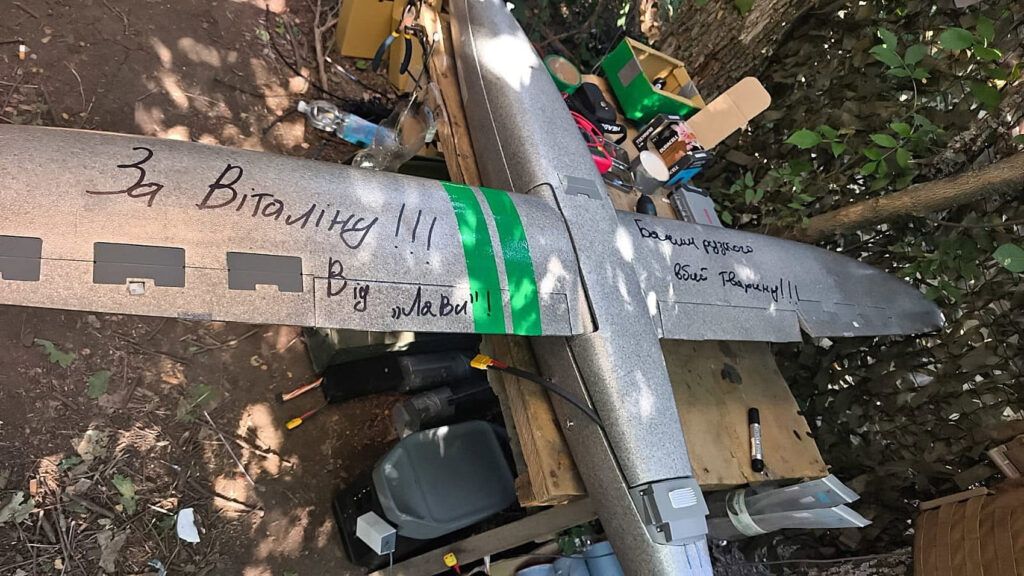
As an act of revenge, soldiers on the front line have been writing "For Vitalina" on their UAVs. One such photograph was shared in the comments under a post by freelance presidential adviser Serhii Flesh by the Lava Unmanned Systems Regiment of the Khartiia 2nd Corps of the National Guard of Ukraine.
A UAV bearing the inscription "For Vitalina!!!" Photo: Lava Unmanned Systems Regiment of the National Guard of Ukraine's 2nd Khartiia Corps/Facebook
Deliberately striking medics as they reach the wounded — the "double-tap" — is widely assessed as a likely war crime under the Geneva Conventions, which protect medical personnel, including volunteer paramedics.
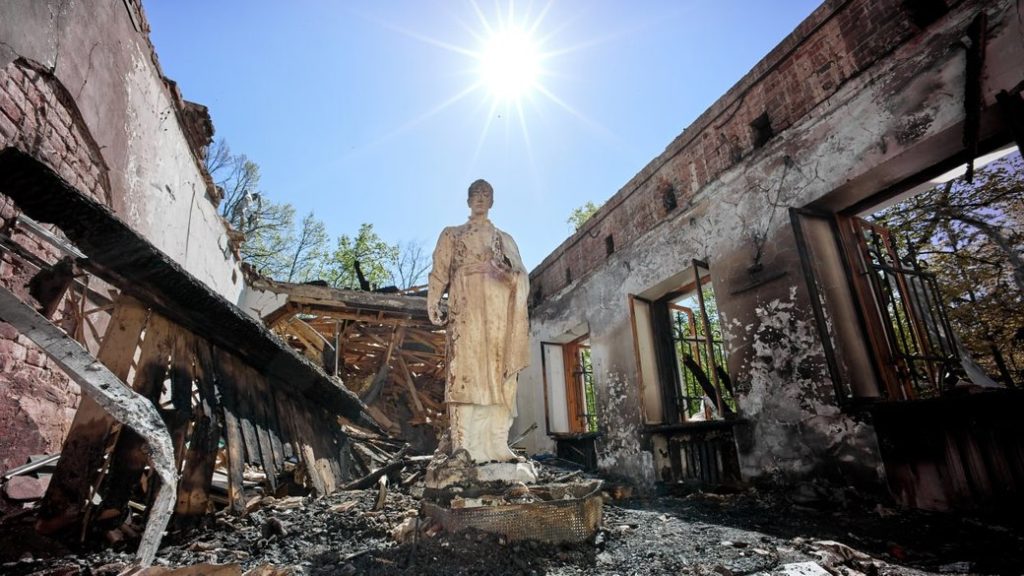
Russia has damaged or destroyed close to 2,000 cultural heritage sites and thousands more cultural venues across Ukraine since its full-scale invasion began, Ukraine's Ministry of Culture reported. The losses grew again over the past month, and officials say occupied territory keeps the true scale out of reach. As the tally rises, more of Ukraine's allies are stepping in to help protect what survives.
Russia's aerial strikes on residential buildings and civilian infrastructure are the most consistently hit targets of the ongoing war, and the leading source of civilian casualties. Some of those strikes hit museums, concert venues, monuments, and other cultural sites, hollowing out the civilian and cultural life that defines Ukraine. In June, a Russian drone struck the Kyiv-Pechersk Lavra, a UNESCO-listed monastery, a site as significant to Ukrainians as Notre-Dameis to the French.
The toll keeps rising
By the end of July 2026, Russia had damaged or destroyed 1,990 cultural heritage sites and 2,625 cultural venues, the ministry said. Russia "continues to systematically destroy" Ukraine's cultural heritage and infrastructure, it added.
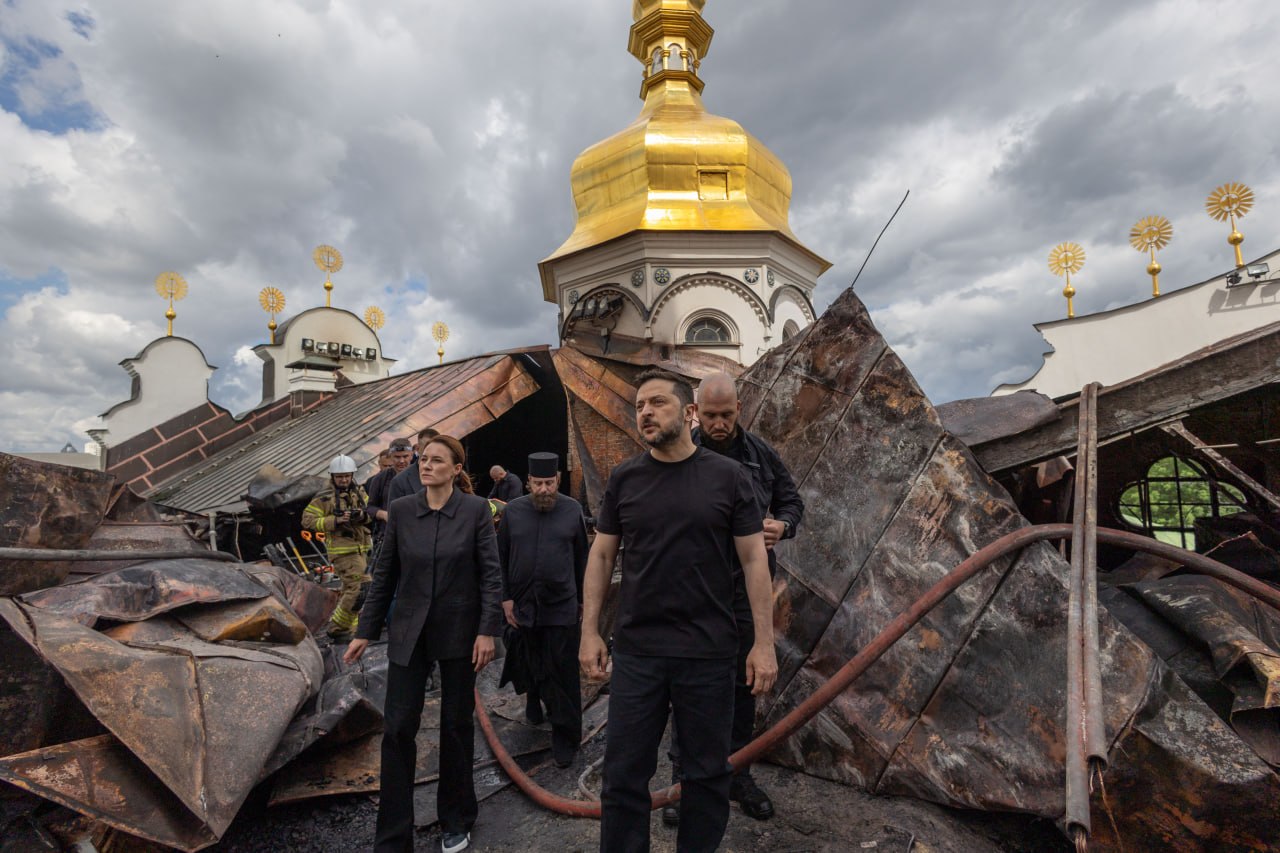
Ukrainian leader Volodymyr Zelenskyy at the Kyiv-Pechersk Lavra, a UNESCO World Heritage site, damaged in a Russian attack on 15 June 2026. Source: Zelenskyy Telegram
Over the past month, the count climbed by 90, adding 41 heritage sites and 49 cultural venues. Of the heritage sites, 47 are gone entirely: one of national significance, 44 of local significance, and two newly identified. The remaining 1,943 are damaged. The full list includes 192 sites of national significance, 1,605 of local significance, and 193 newly identified.
Explore further
France compares Lavra strike to bombing Notre-Dame, calls for tougher sanctions
A protected site struck in July
In July, a Russian attack damaged a site inside Odesa's historic center, which sits on the UNESCO World Heritage List. Kyiv and the Sumy, Kharkiv, and Zaporizhzhia oblasts also saw fresh strikes on monuments. In the Zaporizhzhia and Sumy oblasts and in Kyiv, Russian forces hit heritage sites they had already damaged before.
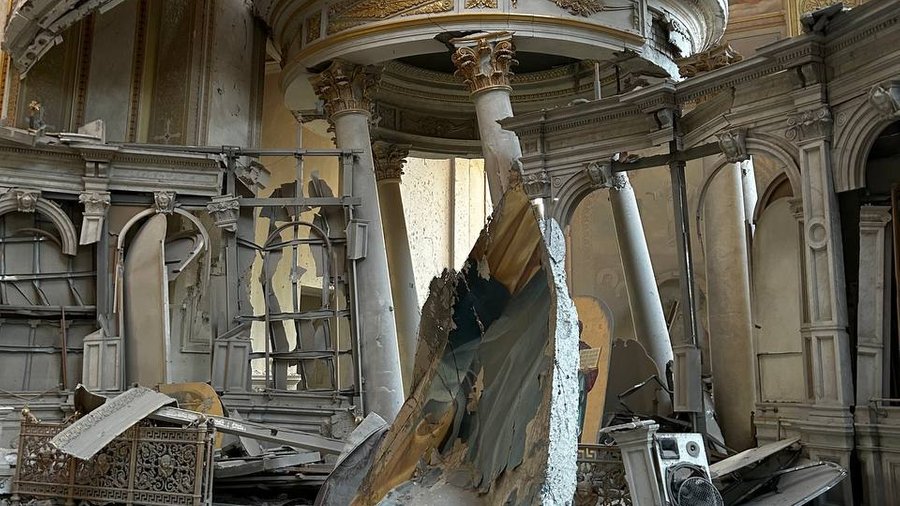
The damaged interior of Odesa's Transfiguration Cathedral after a Russian strike, 23 July 2023. Photo: Odesa Eparchy of the UOC
The ministry records the most damaged heritage in Kharkiv Oblast, with 358 sites, followed by Kherson Oblast with 303, Kyiv with 272, Donetsk Oblast with 229, and Odesa Oblast with 211. Cultural venues have been hit across 354 communities, or 24% of all local communities in Ukraine. Over the past month, the Sumy, Dnipropetrovsk, Zaporizhzhia, and Chernihiv oblasts saw the most new destruction.
Explore further
Russia loots occupied Crimea’s ancient sites through six illegal archaeological digs
Village clubs bear the brunt
Community and club venues form the largest group of damaged cultural facilities, at 1,300 sites, or 49.5% of the total. Russian attacks destroyed 283 of them and damaged another 1,017. The heaviest facility losses fall on the Donetsk, Kharkiv, Kherson, Sumy, Kyiv, and Zaporizhzhia oblasts. Russia also re-struck previously damaged sites in the Kharkiv, Kherson, Odesa, Sumy, and Donetsk oblasts.
The ministry stresses the figures understate the loss. Russia's occupation of nearly all of Luhansk Oblast and large parts of the Zaporizhzhia, Donetsk, and Kherson oblasts blocks any full assessment.
Explore further
Russia blames Ukraine for museum it destroyed in Huliaipole, erasing memory of anti-imperial fighter Nestor Makhno
Earlier, Sweden signed a heritage-preservation deal and the EU backing a UNESCO initiative to catalog Ukraine's losses.
Each month of strikes turns reversible damage into permanent loss, and much of it now sits in land Ukraine cannot yet reach. The World Heritage site already declared in danger in occupied Crimea shows how far the erasure can run if the war grinds on.
Russia's overnight missile-and-drone barrage on Kyiv and its surrounding region on 5 August destroyed the warehouses and production sites of several of Ukraine's largest retail and logistics companies, killed 17 people and wounded 44 more, and laid bare the country's dwindling ability to intercept ballistic missiles, according to Ukrainian officials.
Russia's main target on 5 August: Ukraine's warehouses
Russia has spent this year pushing its air war toward the ballistic missiles that Ukrainian defenses struggle most to stop, launching more of them than Ukraine can shoot down while its Patriot interceptor stocks run dry, and pairing them with drone waves that keep reaching homes, transit and the warehouses that feed the country.
Three Russian ballistic missiles destroyed the largest distribution center operated by Rozetka, Ukraine’s biggest online retailer, near Kyiv overnight on 5 August. Rozetka co-founder Iryna Chechotkina said the warehouse had processed more than 100,000 online orders each day and was beyond repair.
By dawn, the attack had torn through the civilian logistics network moving parcels, groceries, household goods and construction materials across the capital and its suburbs. At least 17 people were killed and 44 injured in the broader barrage, according to President Volodymyr Zelenskyy.
Russia launched a massed missile and drone attack on Kyiv and Kyiv Oblast overnight, killing 14 people and injuring 27.
Fires burned across three raions. A residential building collapsed in Kyiv's Holosiivskyi district, where rescuers are searching for people under the rubble…
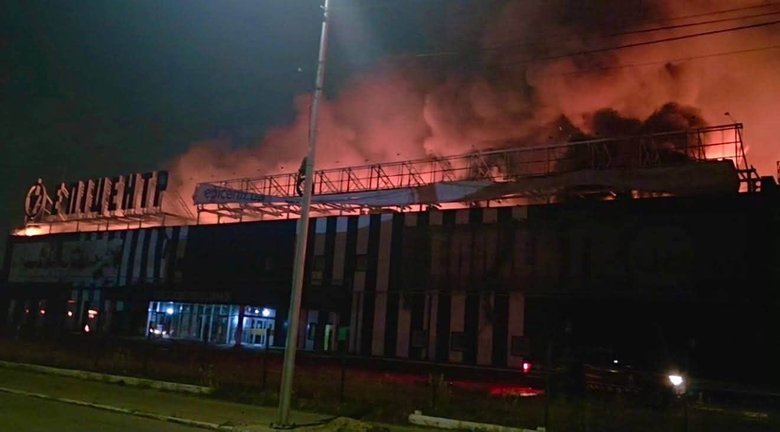
In its 5 August 2026 strikes, Russia destroyed a sorting center owned by Nova Poshta, Ukraine’s largest private parcel carrier, as well as major facilities operated by Epicentr, the country’s largest home-improvement retailer. Sites belonging to Novus and Fozzy Group, two major Ukrainian grocery retailers, were also damaged.
Nova Poshta saidcluster munitions—bombs that scatter smaller explosives across a wide area—destroyed its Kyiv sorting center. Three people were killed and eight injured. Two of those killed were drivers for a partner carrier, while the third worked for a contractor.
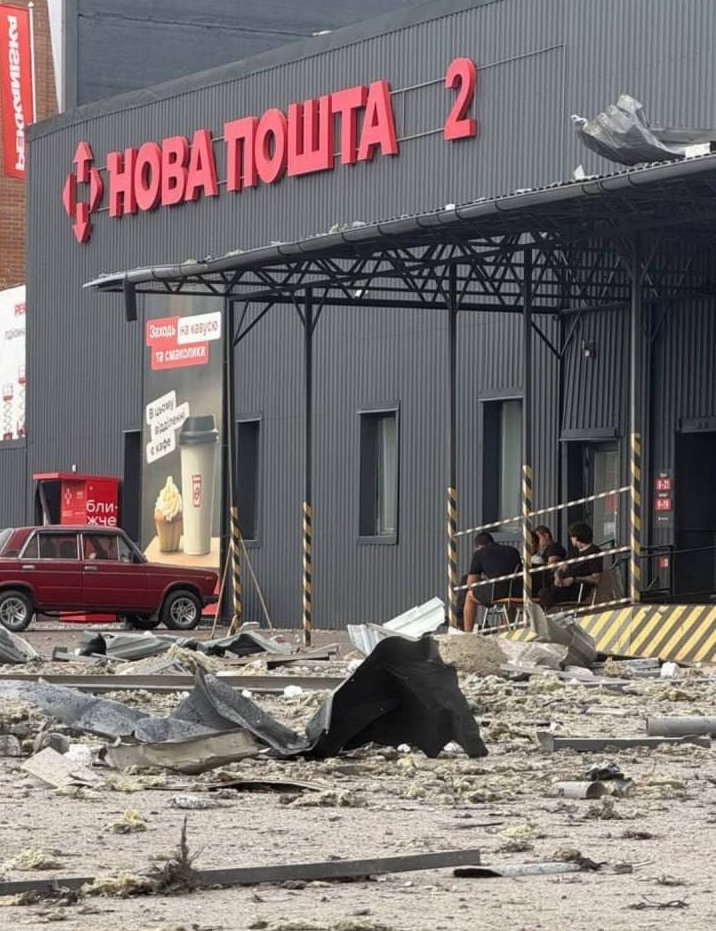
Debris covers the grounds of a Nova Poshta sorting center in Kyiv after a Russian strike on 5 August 2026. Source: Kyiv24 via Censor.NET.
Epicentr lost two major warehouse complexes and much of its ceramic-tile production. One employee was killed, and three were hospitalized at the company’s complex in Kalynivka. Its logistics center on Kyiv’s Viskozna Street burned completely, while another Russian missile destroyedthe factory's kilns.
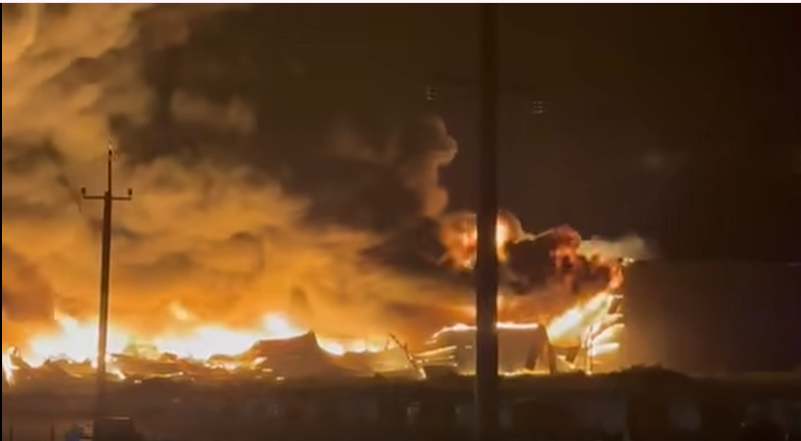
During a separate overnight attack on 3-4 August, a Russian drone destroyeda Biosphere warehouse storing household and personal-care products in Dnipro, although all employees reached shelter and no one was injured.
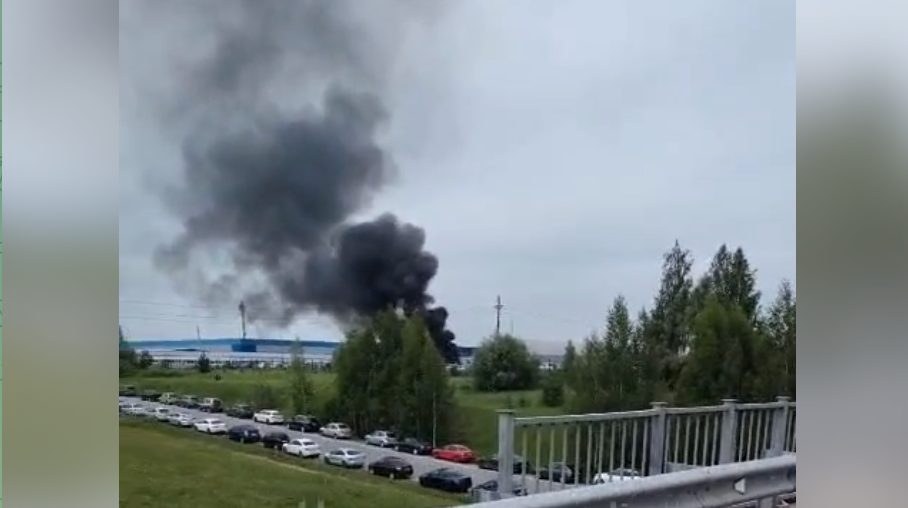
Fire engulfs a warehouse complex in Dnipro after a Russian drone strike overnight on 3–4 August 2026. The complex included a 20,000-square-meter warehouse operated by Biosphere. Source: screenshot from a video posted by Andriy Zdesenko, Biosphere’s founder and CEO, on Facebook
The Kyiv attack extended beyond commercial facilities. Russia's attack killed eight people waiting for a delayed train at Kvitneva station, a commuter stop near Brovary, east of Kyiv. Missiles also hit homes and offices, damaged an ambulance and caused an ammonia leak at a non-residential site.
8 Passengers waiting for a delayed train were killed at "Kvitneva" station in Kyiv Oblast
Radio Svoboda published footage from the "Kvitneva" station in the Kyiv Oblast, where 8 people were killed as a result of a Russian missile strike.
An earlier Euromaidan Press report detailedthe destruction across Kyiv and the surrounding region.
Why Ukraine intercepted none of the missiles
Russia launched 24 ballistic missiles and four Zircon and Oniks anti-ship missiles, high-speed weapons designed primarily to strike naval targets but also used against Ukrainian cities.
Ukraine intercepted none of the 28, the Ukrainian Air Force said. Air defenses shot down or electronically disabled 98 of the 115 accompanying drones.
Missiles and 17 drones struck 26 locations, while debris fell at another six.
Zelenskyy said ballistic-missile interceptors could have saved those killed. Ukraine’s stocks of Patriot missiles, its only reliable defense against Russian ballistic weapons, arecritically depleted.
A global interceptor shortage means manufacturers cannot produce advanced air-defense missiles fast enough to meet demand.
Russia exploited the same gap on 1 August 2026, when itfired27 ballistic missiles at Kyiv and Ukraine intercepted only one.
Moscow may point to recent Ukrainian strikes on Wildberries logistics centers to frame its attacks as retaliation. Ukrainian officials say the Russian retailer transports military goods, including drone components and navigation equipment. The Kremlin denies that Wildberries carries military cargo.
Ukraine’s acting Foreign Minister Andrii Sybiha rejected any comparison between the attacks. "Russian attacks cannot be justified by anything, including any actions by Ukraine," he said.
Ukraine's military intelligence (HUR) identified Russian Armed Forces Major Denis Sheynov as allegedly involved in the July 2024 missile strike on Kyiv's Okhmatdyt children's hospital, HUR reported on July 8.
The strike, which killed two adults and injured at least 34 people, directly hit the country's largest pediatric medical center, where 627 children were receiving treatment at the time.
According to HUR, Sheynov is the head of the special engineering service of the 121st Heavy Bomber Aviation Regiment, part of Russia's 22nd Heavy Bomber Aviation Division, tasked with executing the strike.
Sheynov, born in Saratov on Jan. 30, 1978, was reportedly responsible for the technical preparation of the X-101 air-launched cruise missiles used in the attack.
He graduated from the Saratov Higher Military Command Engineering School Missile Forces, and previously served in Syria in 2018. Sheynov has been awarded several medals by the Russian government, including for participation in the Syrian war.
Ukrainian authorities previously charged Russian Lieutenant General Sergey Kobylash in absentia for ordering the strike, which was widely condemned internationally.
Kobylash gave the order at around 9:15 a.m., while the hospital was struck at 10:45 a.m.
Editor's note: This is a developing story and is being updated.
Explosions rocked the city of Kyiv for more than seven hours overnight on July 4, as Russia launched a record missile and drone attack targeting the capital and other cities across Ukraine.
At least one person was killed, and 23 others injured in Kyiv. Mayor Vitali Klitschko said 14 people had been hospitalized, while Tymur Tkachenko, head of the Kyiv City Military Administration, in the afternoon confirmed a body had been found during rescue operations.
"Today’s attack was like the worst nightmare come to life," Kyiv resident Olha Vershynina told the Kyiv Independent at the site of damaged residential buildings in the capital's Solomianskyi district. "Because when the strike happened, the lights went out and glass came crashing down on my head.
"It was terrifying. Our entire building was shaking."
President Volodymyr Zelensky said Russia launched a record 550 drones and missiles during the seven-hour barrage. Kyiv Independent journalists on the ground heard multiple rounds of explosions in the city beginning around 8 p.m. local time on July 3 and continuing into the early hours of July 4
The attack damaged apartment buildings, businesses, a school, a medical facility, railway lines, and other civilian infrastructure in multiple districts. Fires blazed across the city, making the air dangerous to breathe.
Tymur Tkachenko, head of the Kyiv City Military Administration, warned residents to close their windows due to dangerous levels of "combustion products" in the air.
"Russia, a terrorist country, has wreaked havoc," Tkachenko wrote on Telegram. "The Russians bring nothing but terror and murder. That is a fact."
Liliia Kuzmenko, 23-years-old and eight months pregnant, moved to Kyiv a month ago with her husband from the embattled city of Pokrovsk, Donetsk Oblast.
"The kind of explosions I heard here were unlike anything I heard in Pokrovsk. It’s just beyond words," she told the Kyiv Independent. "Fortunately, everything in our apartment is intact. But in others, the windows were blown out, and everything fell apart."
"Russia is once again demonstrating that it is not going to end the war and terror."
Ukraine's Air Force reported that Russia had launched a ballistic missile towards Kyiv at around 12:30 a.m, and then additional missiles around 2:30 a.m.
"This time was truly terrifying.," Maria Maznichenko, a pensioner who lives in Kyiv's Solomianskyi district. "The explosions kept coming. Shaheds drones were flying in every minute, like a swarm of bees — one after another. It was very frightening."
Flames and smoke billow from buildings in Kyiv, Ukraine, on July 4, 2025, during mass Russian drone and missile strikes. (Oleksii Filippov/AFP via Getty Images)
As officials reported real-time updates on damage and casualties amid the ongoing assault, Kyiv Independent reporters in the city said that smoke from explosions clogged the air even in neighborhoods far from the attack sites.
The massive assault came hours after a phone call between Russian President Vladimir Putin and U.S. President Donald Trump, during which Putin reaffirmed that "Russia will continue to pursue its goals" in Ukraine despite calls for a ceasefire from the West.
"The first air raids in our cities and regions began yesterday almost simultaneously with the start of media discussions of President Trump's phone call with Putin," Zelensky said in a post on social media on July 4.
"This was one of the most large-scale air attacks – deliberately massive and cynical... Russia is once again demonstrating that it is not going to end the war and terror."
Tkachenko reported that an earlier drone strike damaged a residential building in the city's Obolon district, causing a fire to break out on the roof.
In the Sviatoshynskyi district, drone wreckage caused fires at storage facilities and hit the courtyard of a 16-story apartment building, Klitschko said. Vehicles in the area caught fire after the attack. Another fire broke out at a business in the district due to falling drone debris.
In the Dniprovskyi district, drone debris fell near a school and several residential buildings, Tkachenko reported.
Fires also broke out in the Solomianskyi district, Klitschko said. An administrative building was in flames after the attack, as were storage facilities and a garage. Debris damaged "non-residential buildings" in the area.
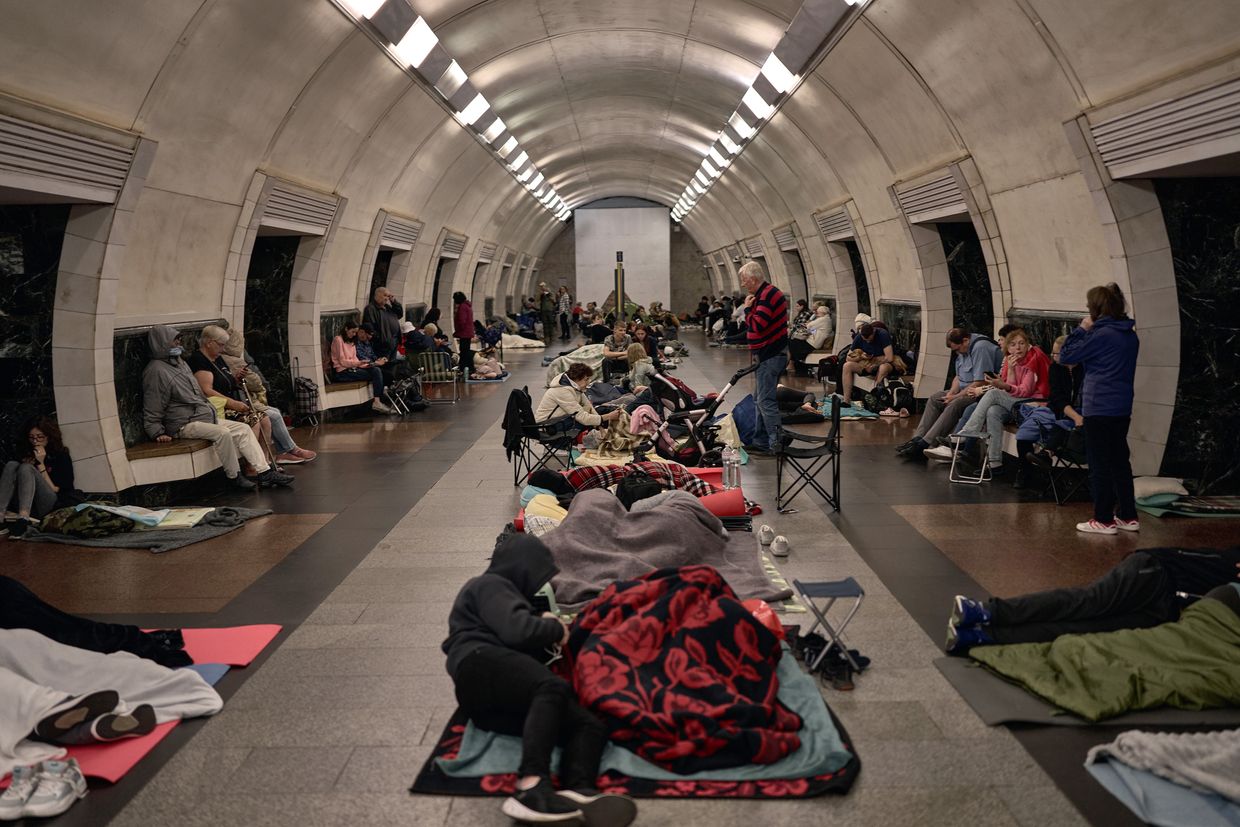
A damaged civilian home burns in Kyiv, Ukraine, on July 4, 2025, after being hit by a kamikaze drone during a mass drone and missile attack by Russia. (Kostiantyn Liberov/Libkos/Getty Images)Local residents take cover in a metro station used as a shelter in Kyiv, Ukraine, on July 4, 2025, during a mass drone and missile attack by Russia. (Kostiantyn Liberov/Libkos/Getty Images)
Klitschko reported another fire on the first floor of an 8-story residential building in the Shevchenkivskyi district, but said the building was not inhabited. Another fire broke out at a business in the same district.
A medical facility in the Holosiivskyi district was damaged in the attack, Klitschko said.
Ukrainian Railways (Ukrzaliznytsia) said that the attack damaged rail infrastructure in Kyiv and cautioned residents to expect delays due to diverted routes.
Polish Foreign Minister Radoslaw Sikorski said that the consular section of Poland's embassy in Kyiv was damaged during Russia's attack on Kyiv. "I just spoke with Ambassador (Piotr) Lukasiewicz; everyone is safe and unharmed," Sikorski said.
He added that Ukraine urgently needs air defense systems.
Russia also targeted other regions of Ukraine with overnight attacks. Downed drones struck property and a vehicle in the city of Poltava, regional Governor Volodymyr Kohut reported. The strike injured two people.
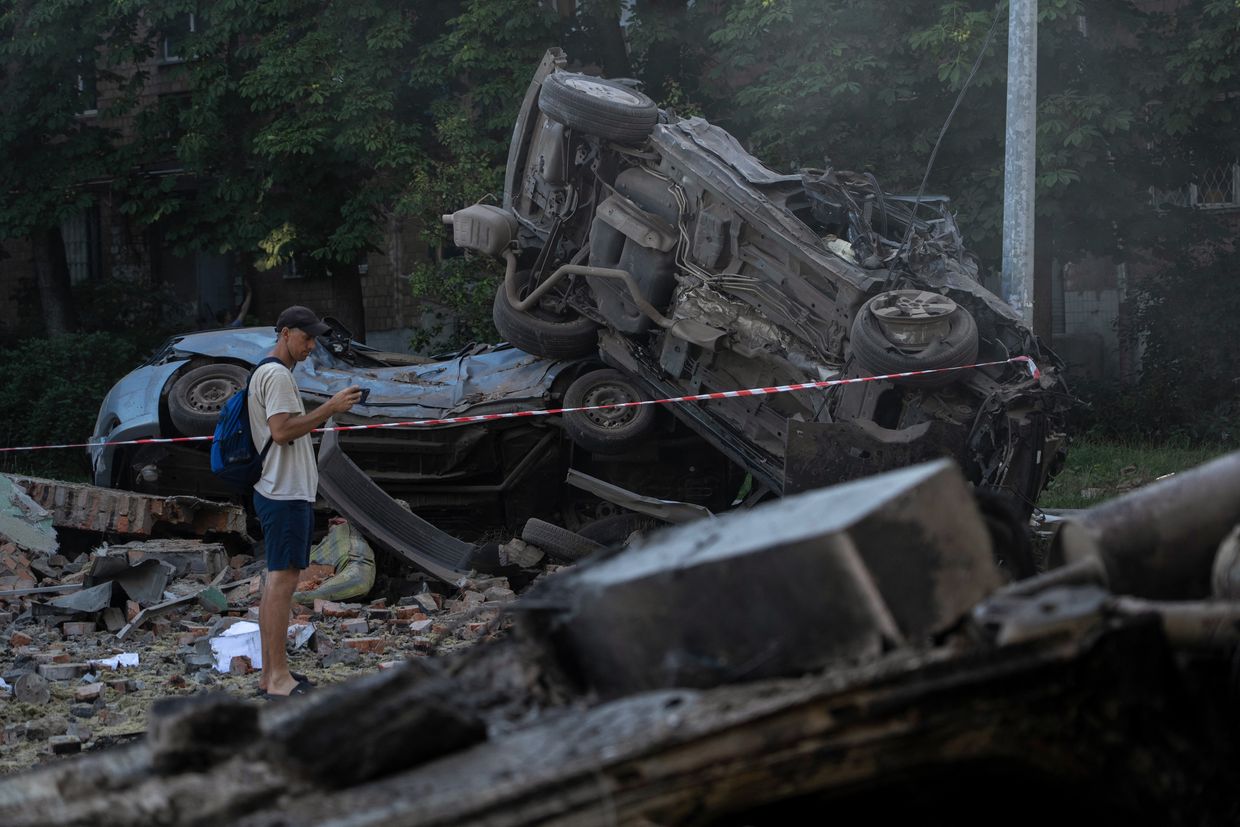
A man looks at the wreckage of cars in Kyiv, Ukraine, on July 4, 2025, after mass Russian drone and missile strikes. (Oleksii Filippov/AFP via Getty Images)A large plume of smoke covers Kyiv, Ukraine, on July 4, 2025, after a mass drone and missile attack by Russia. (Kostiantyn Liberov/Libkos/Getty Images)
Kyiv and other major Ukrainian cities have faced intensified drone and missile strikes in recent weeks, with Russia deploying Iranian-designed Shahed drones in record numbers.
Russia on June 17 launched one of its largest attacks against Kyiv since the start of the full-scale war, killing 28 people and injuring 134 others. Less than a week later, ballistic missiles and kamikaze drones assailed the city in another mass strike.
Ukrainian officials have warned that continued attacks are aimed at wearing down air defense systems and terrorizing civilians.
Despite Russia's escalating attacks and Ukraine's desperate need for air defense munitions, the U.S. has decided to halt shipments of Patriot missiles and other promised weapons to Kyiv, claiming it needs to bolster its own stockpiles.
Editor's note: This is a developing story and is being updated as new details emerge.
Russia launched a mass missile and drone attack on Kyiv overnight on June 23, killing at least nine people and injuring 33 others, including four children, local officials reported.
Kyiv Independent journalists heard explosions and kamikaze drones flying overhead from around 1 a.m. Louder explosions from ballistic missiles were heard an hour later, with the attack lasting around 3.5 hours in total.
The heaviest damage occurred in the Shevchenkivskyi district of the city, when a five-story building partially collapsed after being hit by a ballistic missile, Ukraine's military reported. At least nine people died as a result, and more may be trapped under the rubble.
An 11-year-old girl was confirmed as the ninth victim of the strike, Tymur Tkachenko, head of the Kyiv City Military Administration, said. Her mother's body was recovered earlier from the rubble.
0:00
/
The scene of the damaged building in Shevchenkivskyi district (Vitalii Klitschko/Telegram)
Student Veronika Sherinova, who lives in a nearby building, said she didn't sleep all night — first because she was hiding from the attack, then because the missile strike shattered the windows in her home and neighboring apartments.
"Most of my former classmates lived in this building (that was hit), most of my friends and acquaintances, too," she told the Kyiv Independent at the site of the strike. "We got dressed right away and went over."
"When my mom and I arrived, I saw them coming out in just their underwear, covered in blood, wounded. It was impossible to look at. It was pure shock. We were all in a state of shock."
At first, she just wanted to help clear the shattered glass and debris. But after seeing the extent of the destruction, Sherinova realized that some of the people she knew might not have survived the attack.
"The strike hit exactly the floors where our friends lived," she said. "Unfortunately, they didn’t survive. My other friends did — they were on the first floor," she added, her eyes filling with tears.
"It was a miracle they came out without a single scratch. But the upper floors were just blown away, there wasn’t even a chance for anyone up there to survive."
A woman and policeman stand in front of the partially collapsed residential building after a Russian attack on June 23, 2025 in Kyiv, Ukraine (Ihor Kuznietsov/Novyny LIVE/Global Images Ukraine via Getty Images)
According to Sherinova, the Russian strike killed a family living on the upper floor — a father, mother, and grandfather — but their teenage son survived.
"We suspected it right away, but we didn’t want to believe it until the very end. But then we found out that they were the first ones they carried out," she said. "The boy is in shock right now; he doesn’t realize what’s happened. He’s just not reacting at all."
She said her two other friends who lived in the building left for abroad immediately after the strike.
"They went abroad — they took a bus and left right away."
State Emergency Service spokesperson Svitlana Vodolaha told journalists at the site that when rescuers arrived, they had been told only a few people would be affected there.
"As it turned out, the information we had was not reliable — there were more people here than we had been told. At this moment, we still don’t have complete information on how many people might be trapped under the rubble," Vodolaha said.
"That’s why we’ll keep working until the very end, until we’re completely sure no one is left under the debris."
Shortly after their arrival, rescuers pulled 10 people from under the rubble, including two children and a pregnant woman, Vodolaha said.
A wounded woman with smartphone stands near the partially destroyed building on June 23, 2025 in Kyiv, Ukraine (Ihor Kuznietsov/Novyny LIVE/Global Images Ukraine via Getty Images)
Vodolaha did not rule out the use of cluster munitions in this attack. After arriving at the site, Kyiv Independent journalists observed holes in the building across from the one that was hit, resembling those from the previous strike on the capital on June 17.
Cluster munitions are banned under international law by more than 100 countries due to their indiscriminate nature and the long-term threat they pose to civilians, especially when unexploded submunitions remain hidden in residential areas.
"It’s possible as such incidents have happened not only during today’s attack but at other times as well," Vodolaha said.
"I think everyone has noticed how our attacks have become longer and more intense, even across the capital," she added. "That’s why this morning we were working simultaneously at 15 locations."
Fifteen-year-old Roman Turko arrived at the site in the morning after the attack with his friend. His uncle lived in the destroyed building but, luckily, wasn’t home when the strike happened.
"He’s currently serving (in the military), he’s a border guard. He was on duty, so luckily he wasn’t home," Turko told the Kyiv Independent. "His apartment doesn’t really exist anymore: The balcony is gone, the walls are gone."
"If he had been there, it probably would have been the end for him."
After surviving such a heavy attack, Sherinova is now considering leaving Kyiv, at least for a while. But she says it feels like there’s nowhere left to hide from the Russian war.
"There’s a kindergarten nearby where my mom works. It has a shelter, and that’s where we usually go when we see reports of (Russian) jets taking off or a possible strike."
"But today it happened so suddenly, we wouldn’t have had time to run anywhere. We just stepped into the hallway, crouched down, and covered our eyes and ears," she said.
"It’s hitting everywhere, strikes are happening everywhere. I still can’t believe it happened to me, to my neighborhood, where I was born and have lived my whole life."
"I just can’t believe it. I’m still in such a state of shock, looking at all of this and not believing it really happened."
In the wider Kyiv Oblast, a woman was killed and eight others injured in Bila Tserkva, the Kyiv Oblast Military Administration reported.
Casualties were also reported in other areas around the capital in Kyiv Oblast, including Bucha, a town just northwest of Kyiv.
According to the Ukrainian Air Force, Russia deployed 368 aerial weapons, including 352 attack drones, 11 Iskander-M/KN-23 ballistic missiles, and 5 Iskander-K cruise missiles, striking primarily Kyiv. Ukraine's air defenses destroyed 354 of them.
The residential building damaged by a Russian attack as teams continue search and rescue effort in Kyiv, Ukraine on June 23, 2025 (Danylo Antoniuk/Anadolu via Getty Images)
Russian forces reportedly struck six locations directly, with debris falling in 25 sites across Kyiv and its surrounding region.
Earlier, it was reported that a high-rise apartment building was damaged as a result of the attack in the area, as well as an exit at the Sviatoshyn metro station and a nearby bus shelter.
Reports indicate that the Darnytskyi, Podilskyi, Solomianskyi, Shevchenkivskyi, and Sviatoshynskyi districts had been affected by the attack.
Fires also broke out in the Podilskyi district, where debris struck a residential building and a vehicle.
A large fire was also reported at a four-story office building in the Solomianskyi district. The fire reportedly covered an area of 800 square meters, the State Emergency Service said, with firefighting efforts ongoing.
Drone strike debris also landed in an open area of a stadium in Sviatoshynskyi without causing injuries or fire.
President Volodymyr Zelensky condemned the attack, noting that while Moscow had previously criticized strikes on Iran's nuclear program, it remained silent following its own "cynical" bombardment of Kyiv with Shahed drones and missiles.
"Only in Kyiv, five apartment buildings were damaged. These are ordinary residential buildings," he said, adding that one person was also killed in Bila Tserkva after a Shahed drone hit a hospital.
Zelensky said the attack damaged sites in four Ukrainian regions and involved 352 drones—including 159 Shaheds—and 16 missiles, possibly including North Korean ballistic missiles.
"Every country near Russia, Iran, and North Korea should be thinking about whether they can protect life if this coalition of killers continues spreading terror," Zelensky said.
The view in Kyiv seen outside of a window as Russia launches another large-scale attack on Kyiv on June 23, 2025. At least five people have been injured in the attack, local officials reported. (Olena Zashko/The Kyiv Independent)
A fire burns in the aftermath of a Russian attack on Kyiv on June 23, 2025. (Ukraine's State Emergency Service/Telegram)
A firefighter extinguishes burning debris in the aftermath of a Russian attack on Kyiv on June 23, 2025. (Ukraine's State Emergency Service/Telegram)
The attack on the capital comes just days after Russia launched one of its largest attacks on Kyiv, killing 28 people and injuring 134 others.
Russia's latest round of large-scale attacks comes as Commander-in-Chief Oleksandr Syrskyi warned on June 21 that Russian forces are attempting to advance along almost the entire front in eastern Ukraine while trying to establish a buffer zone in northeastern Sumy Oblast.
Fred Grandy, a 62-year-old American artist and volunteer who was killed in Russia's mass missile attack against Kyiv on June 17, appears to be the first U.S. civilian killed by a Russian strike on Ukraine, the New York Times (NYT) reported on June 19.
Russia launched a massive assault on Kyiv overnight on June 17, pounding the capital with hundreds of kamikaze drones and multiple missiles in a nine-hour attack that left 30 dead and around 172 injured.
Among the vicitms was Grandy, a U.S. citizen who arrived in Kyiv in May to volunteer to clear away rubble after Russian attacks. He had hoped to volunteer in Ukraine for five or six months, his sister told the NYT.
"He was a person who wanted to make a difference so badly," Grandy's sister Siestka Reed said. "I talked to him about five days ago, and he told me that he felt he was right where he should be."
During the attack, Kyiv Mayor Vitali Klitschko reported that a 62-year-old U.S. citizen had died near one of the attack sites, but the details of their death remained unclear. The U.S. State Department and Ukrainian authorities later confirmed that a U.S. citizien had been killed, the NYT reported.
According to Ukrainian authorities, Grandy died after sustaining shrapnel wounds.
Before arriving in Kyiv, Grandy had worked as a bartender, bouncer, and builder. He was also an artist, fashioning bird houses and planters out of reclaimed wood and flowers out metal. According to his family, his desire to volunteer in Ukraine stemmed from his dismay at U.S. Presidend Donald Trump's lack of support for Kyiv.
Grandy was upset by Trump's treatment of President Volodymyr Zelensky and withdrawal of military support, Reed told the NYT.
"He thought, you just don't let a bully do that stuff, and you don't just abandon people," Reed said.
"Then he saw how hard they fought to save their country, or are fighting still. It was just hard to understand walking away, you know? And he just believed that people need a hand up."
Russian drone and missile attacks are not new, but in May and June, mass strikes on civilian targets surged. Russia has launched a number of record-breaking attacks on Ukrainian cities in recent weeks, resulting in hundreds of casualties.
Moscow's escalating aerial assaults have even directly harmed U.S. enterprises and individuals. An office used by the U.S. aerospace and defense giant Boeing was hit in a mass strike on Kyiv launched overnight June 9-10. The Financial Times (FT) reported that Russia deliberately targeted the site.
Grandy's death marks the first time a U.S. civilian has been killed in a Russian aerial attack against Ukraine.
Meanwhile, Trump's interest in securing a ceasefire in Ukraine appears to have fizzled out. He left the G7 Leaders Summit in Canada early, jettisoning a much-anticipated meeting with Zelensky, and barely responded to the mass attack on Kyiv.
The U.S. Embassy in Kyiv on June 18 condemned Russia's massive missile and drone attack on Kyiv that killed at least 23 people and injured more than 130 a day earlier, saying it "runs counter" to U.S. President Donald Trump's peace efforts.
"Today, with all of Ukraine, we join a day of mourning in Kyiv for the victims of Russia's June 17 attack," the U.S. Embassy in Ukraine said in a statement. "We extend deepest condolences to the victims' families. This senseless attack runs counter to President Trump's call to stop the killing and end the war."
The nine-hour overnight attack, which began late June 16, has become one of the largest aerial assaults on the Ukrainian capital since the start of Russia's full-scale invasion in 2022.
Ukrainian officials said Russia launched 472 aerial weapons, including nearly 280 Shahed-type attack drones and cruise and ballistic missiles. Ukraine's air defense downed 428 targets, but several struck residential areas, including a nine-story apartment building in Kyiv's Solomianskyi district.
Among the dead was a U.S. citizen, State Department Press Secretary Tammy Bruce confirmed at a briefing on June 17.
"We are aware of last night's attack on Kyiv, which resulted in numerous casualties, including the tragic death of a U.S. citizen," Bruce said. "We condemn those strikes and extend our deepest condolences to the victims and to the families of all those affected."
President Volodymyr Zelensky called it "one of the most horrifying attacks on Kyiv" and urged stronger international support to help Ukraine defend itself.
Despite the scale of the attack, Trump appeared to be unaware of the strike when questioned by reporters aboard Air Force One early on June 17.
"When was that? When?" Trump responded when a reporter asked for his reaction. Told that the drone and missile attack had occurred "very recently," Trump said: "Just now? You mean as I’m walking back to see you, that’s when it took place? Sounds like it. I’ll have to look at it."
As of a day later, the White House had still not issued an official response to the strike.
The June 17 attack caused extensive damage across the capital. Civilian infrastructure hit included kindergartens, a university dormitory, residential neighborhoods, and industrial sites.
Fahrenheit, a Ukrainian manufacturer of military and civilian clothing, reported that its Kyiv factory was damaged and operations were suspended. Ukrposhta, the national postal service, lost two branches. Ukrainian Railways said a grain-carrying train was struck, disrupting transit.
Kyiv Mayor Vitali Klitschko said unexploded cluster munitions were found in the city — a type of weapon banned by some countries due to the danger they pose to civilians. June 18 was declared a day of mourning in Kyiv.
Foreign Minister Andrii Sybiha called the timing of the attack, as G7 leaders gathered in Canada, a deliberate message from the Kremlin. Moscow has escalated strikes on Ukrainian cities in recent weeks, targeting residential areas and critical infrastructure.
Ukraine has urged Western allies to respond by reinforcing air defense capabilities and tightening economic pressure on Russia.
U.S. President Donald Trump was unaware of a deadly Russian drone and missile strike on Kyiv that killed at least 15 people and injured over 120, when asked about the attack by reporters on June 17.
On board Air Force One as he flew back from Canada, Trump was questioned about the attack by a reporter. A clock in the plane shows it was shortly after 1:30 a.m. Washington time, 8:30 a.m. Kyiv time, two-and-a-half hours after the nine-hour-long attack ended, and after reports of casualties had been made public.
When asked for his reaction, he responded: "When was that? When?"
The reporter then says the "Russian drone attack on Kyiv" occurred "very recently."
"Just now? You mean as I’m walking back to see you, that’s when it took place? Sounds like it. I’ll have to look at it," Trump replies.
At the time of writing some seven hours later, the White House has still yet to comment on the attack.
The comments came a few hours after Ukraine endured the largest aerial attack on Kyiv in 2025. According to Ukraine's Air Force, Russia launched 472 aerial weapons overnight, including nearly 280 Shahed-type attack drones, 16 Kh-101 cruise missiles, two Kinzhal ballistic missiles, and other guided munitions, primarily targeting the capital.
Air defenses downed 428 of them, including 239 Shaheds and 15 cruise missiles, while at least one Kinzhal was intercepted.
The almost nine-hour assault killed 15 people and injured 124, according to local authorities. A nine-story residential building in the Solomianskyi district was struck and partially collapsed, killing residents.
Kyiv Mayor Vitali Klitschko said cluster munitions were discovered in the city, a type of weapon banned under international conventions due to their indiscriminate nature and long-term threat to civilians. June 18 has been declared an official day of mourning in Kyiv.
President Volodymyr Zelensky called the strike "one of the most horrifying attacks on Kyiv" and urged international partners to respond decisively. Foreign Minister Andrii Sybiha said the timing of the strike, as G7 leaders meet, was a deliberate message from the Kremlin.
Civilian sites hit in the capital include kindergartens, residential areas, a university dormitory, and production facilities. Ukrainian manufacturer Fahrenheit, which produces military and civilian clothing, announced its factory was damaged and all orders suspended indefinitely. Ukrposhta, the national postal service, lost two branches. A Ukrainian Railways train carrying grain was also struck, temporarily halting traffic.
Russia has escalated attacks on Ukrainian cities in recent weeks, including mass strikes on energy infrastructure and residential areas.
Emergency services in Kyiv have recovered fragments of cluster munitions following the overnight Russian missile and drone attack on June 17, Mayor Vitali Klitschko reported, calling it further evidence of Russia's "genocide" against Ukrainians.
"In the capital's Nyvky neighborhood, emergency workers are now finding these kinds of cluster munition parts," Klitschko said in a statement shared on social media. "Another clear sign of the genocide Russia is committing against Ukrainians."
Cluster munitions are banned under international law by more than 100 countries due to their indiscriminate nature and the long-term threat they pose to civilians, especially when unexploded submunitions remain hidden in residential areas.
While Russia and Ukraine are not signatories to the Convention on Cluster Munitions, international humanitarian organizations have repeatedly condemned the use of such weapons in populated areas. Ukraine uses cluster munitions on the battlefield against Russian forces.
The mayor's comments came hours after one of the largest and deadliest attacks on the Ukrainian capital in months, in which at least 15 people were killed and nearly 100 injured. The Russian strike, which lasted nearly nine hours, included waves of kamikaze drones, ballistic missiles, and what authorities now confirm were banned explosive parts.
President Volodymyr Zelensky called the assault "one of the most horrifying attacks on Kyiv," saying more than 440 drones and 32 missiles were launched across Ukraine overnight.
"Such attacks are pure terrorism," he said in a statement on social media. "And the whole world, the U.S., and Europe must finally respond as civilized societies respond to terrorists."
Zelensky confirmed that damage had been reported in eight districts of Kyiv, with emergency workers still searching for survivors beneath the rubble of a destroyed apartment block.
He added that strikes also hit Odesa, Zaporizhzhia, Chernihiv, Zhytomyr, Kirovohrad, Mykolaiv, and Kyiv regions. "Fifteen people are confirmed dead. My condolences to their families and loved ones," Zelensky said.
Foreign Minister Andrii Sybiha also condemned the attack, calling it a "massive and brutal strike" timed deliberately to coincide with the G7 summit, which is taking place in Canada on June 16-17.
Editor's note: This is a developing story and is being updated as new details emerge.
At least 14 people have been killed and 117 others injured after a mass Russian missile and drone attack on Kyiv overnight on June 17.
Ukraine's National Police initially reported 15 dead and 124 injured in the attack, but Interior Minister Ihor Klymenko later revised the death toll to 10. The State Emergency Service subsequently updated the figure to 14.
Klymenko said operational data may change, as body parts found during rescue efforts can sometimes be mistakenly counted as multiple victims.
According to the State Emergency Service, one body has been recovered from the rubble of the nine-story building, and rescue operations are still ongoing.
The almost nine-hour-long attack saw Moscow's forces launch large numbers of kamikaze attack drones, as well as cruise and ballistic missiles at Ukraine's capital.
Kyiv Independent journalists on the ground reported the sounds of drones, missiles, and multiple rounds of explosions throughout the night.
The Ukrainian Air Force confirmed that Russia launched 472 aerial weapons overnight, including nearly 280 Shahed-type attack drones and two Kinzhal ballistic missiles. The strike primarily targeted Kyiv.
Ukraine's air defense forces reportedly destroyed 428 air targets, including 239 Shahed drones and 15 Kh-101 cruise missiles. Air defenses also intercepted one Kinzhal missile, while another was reportedly lost from radar tracking.
President Volodymyr Zelensky called the assault "one of the most horrifying attacks on Kyiv," saying more than 440 drones and 32 missiles were launched across Ukraine overnight.
"Such attacks are pure terrorism," he said in a statement on social media. "And the whole world, the U.S., and Europe must finally respond as civilized societies respond to terrorists."
The aftermath of the Russian missile attack on a residential building in Kyiv, Ukraine on June 17, 2025. (Anna Donets / The Kyiv Independent)
Zelensky confirmed that damage had been reported in eight districts of Kyiv, with emergency workers still searching for survivors beneath the rubble of a destroyed apartment block.
In a video posted on Telegram, Kyiv Mayor Vitali Klitschko said cluster munitions had been found in one area of the city. He later added that June 18 would be an official day of mourning in Kyiv.
Many of the deaths and injuries occurred when a Russian missile hit a nine-storey residential building in the Solomianskyi district, "completely destroying" one section, Ukraine's State Emergency Service said.
"I saw the missile because it was low," Olena Kushnirova, a 46-year-old nurse who lives in a neighboring building to the one that was hit, told the Kyiv Independent.
Olena Kushnirova, 46, a nurse who lives in a neighbouring house in Kyiv, Ukraine, on June 17, 2025. (Anna Donets / The Kyiv Independent)
"I grabbed my daughter by the hand and shouted 'run!' It was literally 15 seconds. We ran to the toilet, and then there was a very powerful explosion."
During the attack on the capital, a 62-year-old U.S. citizen died in the Solomianskyi district in a building across from where medics were assisting the injured, Klitschko reported. Medical personnel confirmed biological death.
Foreign Minister Andrii Sybiha also condemned the attack, calling it a "massive and brutal strike" timed deliberately to coincide with the G7 summit.
"Putin does this on purpose... He sends a signal of total disrespect to the United States and other partners who have called for an end to the killing," Sybiha said. "Only strong steps and real pressure on Moscow can prove him wrong."
A partially destroyed residential building after a mass Russian missile and drone attack overnight in Kyiv, Ukraine on June 17, 2025. (Katya Denisova/The Kyiv Independent)Victoria Smirnova, 37, waits for her father to be pulled up from under the rubble of the house that was struck by a Russian missile in Kyiv, Ukraine on June 17, 2025. (Anna Donets / The Kyiv Independent)
A Russian drone also hit a multi-storey building Darnytskyi District.
"At first there was shock," Tatiana Bratus, a 50-year-old resident of the building told the Kyiv Independent.
"People started running outside, shouting, some in panic, because the attack wasn't over yet. They said there were still rockets flying. People ran to the bomb shelter.
A kindergarten in the Darnytskyi district was also damaged, Tymur Tkachenko, the head of the Kyiv City Military Administration said. No casualties were reported at the site.
The upper floors of residential buildings in the Solomianskyi and Shevchenkivskyi districts were also damaged.
A dormitory at the Kyiv Aviation Institute was hit by drones during the attack, the news outlet Suspilne reported. Drones struck the institute's 10th floor and broke windows on three other floors.
Outside the capital, the attacks also caused damage and injured civilians in Kyiv Oblast towns. At least one woman was injured and multiple homes were damaged, according to the regional administration.
The Russian strike damaged the production facility of Fahrenheit, a Ukrainian clothing manufacturer that supplies apparel and undergarments for both civilians and the military. The company announced it was forced to cancel all current orders and suspend new ones indefinitely following the destruction of its Kyiv site.
Russian forces also hit a Ukrainian Railways (Ukrzaliznytsia) freight train carrying grain. Several railcars overturned, temporarily halting operations and spilling grain from the damaged wagons. Ukrzaliznytsia said the damage would be "promptly repaired" and train traffic would not be affected.
Ukrposhta, Ukraine's national postal service, reported the destruction of two of its branches in Kyiv during the attack, according to CEO Ihor Smiliansky. The company's team is working to "quickly restore services," he said.
The attack followed a series of drone strikes overnight on June 16 targeting Kyiv Oblast, including both the capital and surrounding settlements. In the Obukhiv district, a 60-year-old man was injured, according to regional authorities.
Russian attacks against Ukraine have intensified in May and June, with Moscow launching several record-breaking mass strikes against Kyiv and other cities.
Ukraine has accused Russia of "lying about everything" after yet another drone attack on Kyiv injured two people overnight on June 16, saying the strike once again rubbished Kremlin claims that only military objects are being targeted.
The strike hit Rusanivka Gardens, a private neighborhood in the capital’s Dniprovskyi District, creating a crater near civilian homes, and injuring a 20-year-old man and a woman, Tymur Tkachenko, head of the Kyiv City Military Administration, said.
"The Russians lie about everything. When they claim to have hit military targets, they are actually targeting our homes and our people," he wrote on Telegram.
"This is a deliberate tactic of terror."
The injured man was hospitalized in serious condition, while the woman is being treated on an outpatient basis, Mayor Vitali Klitschko said.
"Miraculously, significant damage and casualties were avoided," Tkachenko said.
Despite Moscow's denials, Russia has repeatedly hit civilian areas throughout its full-scale war. On July 8, 2024, one of the deadliest strikes on Kyiv killed 33 people and wounded 121 others, including patients at Ohmatdyt, Ukraine's largest children's hospital.
The Russian Defense Ministry continues to insist it targets only military infrastructure, dismissing reports of civilian casualties as "absolutely untrue." The pattern of destruction across cities like Kharkiv and Kherson shows civilians are often the primary targets.
Moscow launched 138 drones at Ukraine overnight, including Iranian-designed Shahed-type drones. Ukraine's Air Force reported that air defenses intercepted 125 of them, while another 41 went off radars — likely used as decoys to overwhelm air defense systems.
The strike comes as Russia intensifies its air campaign against Ukraine and continues to reject Western-backed proposals for a ceasefire. Kyiv, located along the Dnipro River in the country's north-center, remains one of the most heavily targeted cities in the war.
Editor's note: This is a developing story and is being updated as new details emerge.
Russia launched a series of drone attacks on Kyiv Oblast overnight on June 15-16, targeting both the capital city and regional settlements, according to government officials.
In the Obukhiv district of Kyiv Oblast, a 60-year-old man was injured as a result of Russia's drone strike, reported regional governer Mykola Kalashnyk at 1:37 a.m. local time.
The injured man received medical assistance, Kalashnyk confirmed.
Civilian targets, including a private home, were also damaged in the attack. Emergency services are currently working at the scene.
Earlier in the night, explosions were also heard in Kyiv.
Kyiv Mayor Vitali Klitschko confirmed that the city's air defenses were operating and that drones were entering the city late on Sunday night, at about 11:29 p.m. local time.
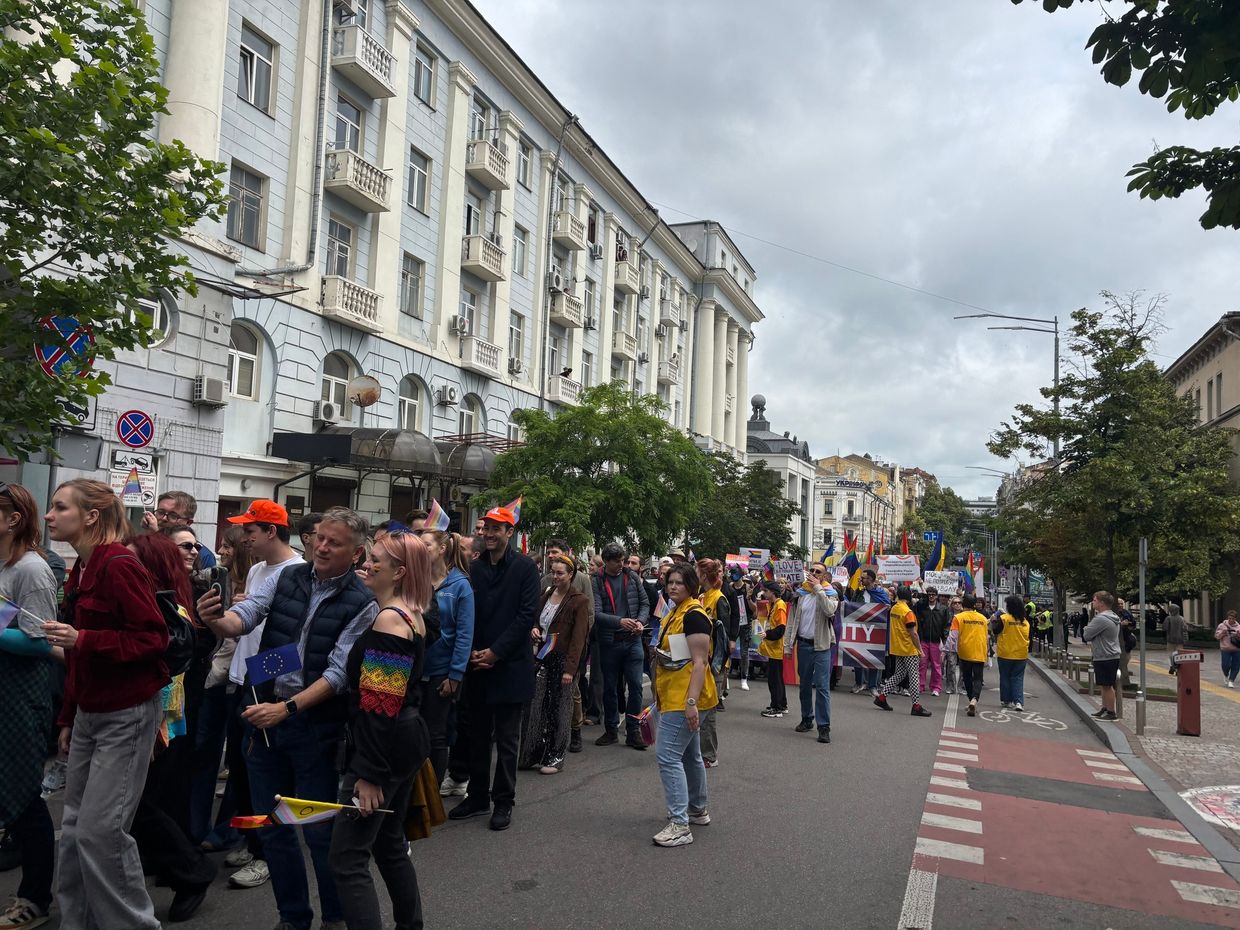
Kyiv Pride held a parade with over 1,500 participants in the Ukrainian capital on June 14, which was met with counterprotests.
"Other Ukrainian Prides also participated — including Kharkiv Pride and Ukraine Pride. Kyiv’s student community was represented, among others, by the Student Parliament of Taras Shevchenko National University of Kyiv and Ukraine Global Scholars," Kyiv Pride said in a post to Facebook.
On June 7, a drone charity event for Kyiv Pride took place outside the Foreign Ministry building and was met with a nearby counterprotest.
The march was joined by representatives from the EU, Canada, the U.K., and various other countries, including France, Germany, and Spain.
The march was joined by the LGBT+ Military non-governmental organization (NGO) as Russia's war against Ukraine continues.
"Among the marchers was veteran Viktor Pylypenko, head of the NGO LGBT+ Military for Equal Rights. He drew public attention to the growing loss of military personnel and veterans who are dying at war — while their families remain unrecognized by law," Kyiv Pride said in its statement.
The march raised 20,000 hryvnia for the Serhiy Sternenko Foundation to purchase drones for the military.
Representatives, including Canada's ambassador to Ukraine, Natalka Cmoc, joined the event.
"Ambassadors, the Canadian embassy team, along with many diplomats, joined (the) Kyiv Pride march this morning," Cmoc said.
The Kyiv Pride event was met with a nearby counterprotest.
"With regret, we must note that those who incite violence still have broader access to public space and freely walk through the central streets, while participants of Kyiv Pride March are surrounded by police and restricted in their route. We continue to witness the spread of hate speech," Kyiv Pride said.
Kyiv Pride held a march in June 2024 for the first time since Russia began its full-scale war against Ukraine in February 2022.

 Connexion