❌

Vue lecture

Ukraine’s $33 veterans’ gym subsidy drew 800,000 uses. Now it is gone, squeezed by war and stalled reforms, holding up $20 billion in aid

rehab-center2

Ukraine has stopped paying veterans to go to the gym because of the economic crisis looming in the country, the war, Russian strikes, and the lack of reforms needed to receive extra funds from the EU. The Veteran Sports program, which provided veterans and combat participants with about $33 per quarter toward a nearly monthly gym membership, was suspended on 1 October after the state found no funds for it, the Ministry of Veterans Affairs said.

The suspension is a telling sign of Ukraine's budget squeeze, and the ministry puts it plainly: defense comes first, so the money for everything else runs short. It fits a wider government decision to freeze non-essential spending and fund only the army, pensions, and public wages.

The program proved far more popular than planned, drawing more than 800,000 users and costing over double its budget.

Defense takes the money

"The main priority of state spending remains the country's defense. Under these conditions, the state budget's ability to finance other areas is limited," the ministry said.

Launched in 2026 with about $13 million for an expected 100,000 recipients per quarter, and roughly 300,000 applications over three, the program instead saw more than 800,000 uses. Payments passed $27 million, more than twice what was set aside.

The crisis runs deeper

The squeeze has two main drivers. Russia's intensifying strikes on Ukraine's energy and infrastructure are pushing the war's cost higher and battering the economy.

And billions in Western money sit on hold: Kyiv has struggled to complete the reforms the EU set out before releasing roughly $20 billion in aid, and the prime minister has admitted that part of it is late because Ukraine missed commitments to its partners.

The ministry plans a 2027 restart

Ukraine intends to bring the program back in 2027, this time for good, said Deputy Veterans Minister Ruslan Prykhodko.

"We have to account for real demand, fix the shortcomings we saw this year, and make the use of funds more targeted," he said.

In next year's budget, Ukraine would provide significantly more funds, he added. In the meantime, the ministry says it is talking to the sports community and businesses about covering the gap for veterans, with concrete proposals to come.

  •  

Russia’s 2026 deficit nearly doubles to a record $88 billion, and its new budget plans three more years in the red

russia's 2026 deficit nearly doubles record $88 billion its new budget plans three more years red · post russian president vladimir putin brics summit kazan 23 2024 holding commemorative banknote

The Russian government has submitted a draft federal budget for 2027–2029 to the State Duma, Meduza reported on 30 September, citing TASS. In all three years, Russia's expenditures will exceed its revenues, the outlet noted.

Russia's finances have been eroding since it launched its full-scale invasion of Ukraine. To keep paying for the war, the Kremlin has drained its reserves, borrowed more, and pushed tax burdens onto residents and businesses, while the wider economy stalls.

The government listed social obligations, including aid to those who fought in its war against Ukraine and their families, along with defense needs among the budget's priorities, while its press release left out the planned cuts to social spending and the rise in military spending, Meduza noted, citing The Bell.

Spending will exceed revenue by about 2% of GDP a year

Russia's federal budget for 2027 sets spending at 48.8 trillion rubles ($585 billion) and revenue at 43.3 trillion ($519 billion), the Russian government stated, leaving a deficit of 5.5 trillion rubles ($66 billion). It claimed the draft is "balanced" and that healthcare spending will rise compared with 2026.

Deficits of 5.1 trillion rubles ($61 billion) in 2028 and 5.3 trillion ($64 billion) in 2029 are also planned, about 2% of GDP a year, Meduza noted.

This year's deficit is now set to reach a record 7.345 trillion rubles ($88 billion), nearly double the previous forecast of 3.785 trillion ($45 billion), The Moscow Times reported on 1 October. To help close the gap, Moscow plans an array of tax hikes for 2027–2029 to fund military spending. Already by May, its four-month deficit had run 50% above what it had planned for the whole year.

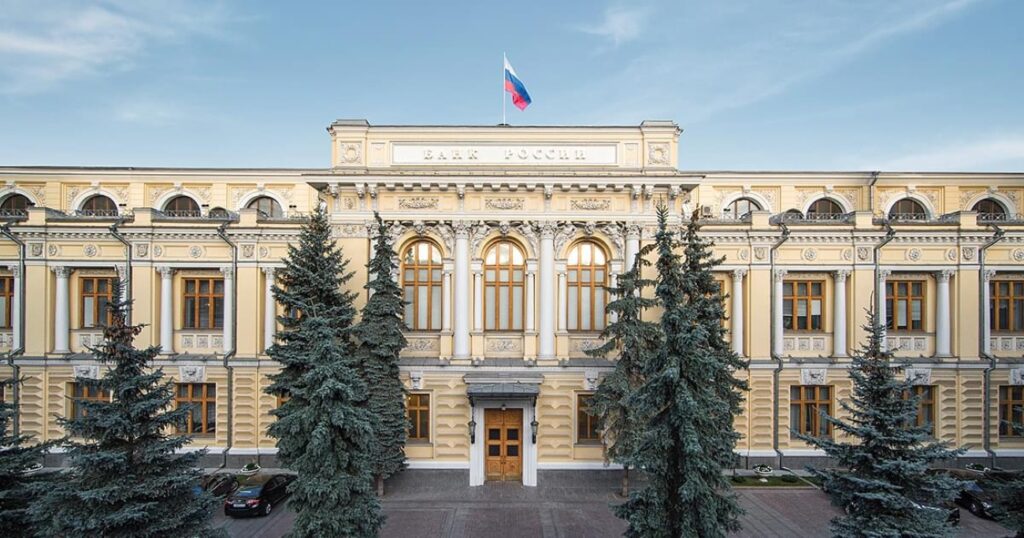
Head office of the Central Bank of the Russian Federation in Moscow.
Head office of the Central Bank of the Russian Federation in Moscow. Photo: Central Bank of Russia

Even as the deficit widens, Russia plans its highest defense spending since the full-scale invasion began: 17.1 trillion rubles ($202.58 billion) in 2027, 27% more than the 13.5 trillion originally planned.

Only 2.3 trillion rubles ($28 billion) of that sum is itemized in public documents, and 34.9% of all 2027 spending will be classified, the highest share in at least 12 years, exiled outlet Vyorstka reported. The Duma is expected to hold the first of three readings on 29 October, the date proposed by Budget Committee chairman Andrei Makarov, Interfax reported.

  •  

War is costing Ukraine $155 billion per year. With Western aid running late, Kyiv is freezing everything but army, pensions, and public wages

russia hits kharkiv high-rise overnight injuring 43 people strikes central kyiv dnipro broad daylight · post rescuers destroyed floors apartment building hit ukraine 28 2026 synehubov5319173733626879672 news ukrainian reports

Ukraine's government plans to pay for its army, pensions, and public-sector wages first, and freeze the parks, fountains, and repaving. Prime Minister Serhii Koretskyi says his Cabinet reordered its spending priorities because part of the international aid it counted on has not arrived.

The war is costing the country at least $155 billion this year, Koretskyi stated earlier.

Defense and people come first

"We continue to take tough anti-crisis measures to ensure the most important thing, the needs of defense and our people," Koretskyi says.

The state will continue to pay for the army, pensions, social benefits, and the salaries of teachers, doctors, and other public-sector workers. Everything deemed non-critical is on hold: new construction, reconstruction, capital repairs, and tidying-up projects, among them parks, squares, fountains, and repaving.

"It is worth finally ceasing to spend money on non-priority things," he continues, promising the state will return to them later.

The aid runs late

On 27 September, Ukraine's prime minister stated that the shortfall in the defense budget's needs stands at $27 billion.

"The president, the government, and all branches of authority are working with partners to find mechanisms and sources to cover the remaining $20 billion," he stressed.

These funds are critically needed to supply the Defense Forces with drones, missiles, equipment, and other resources ahead of winter.

"The government, for its part, guarantees that by 15 October, all government decisions required to receive the international financial assistance promised by partners will be implemented," he stated.

Local budgets get the same call

Koretskyi extended the order downward, urging local councils to review their own budgets and cut spending that is not a priority now. The message across government is the same: pool what is available for the army and citizens, and leave the fountains and the rest for after the war.

  •  

Oil price rise creates more pressure on UK policymakers before budget

Treasury sources concede ‘less room’ for manoeuvre as global bond sell-off also hikes government’s borrowing costs

Oil prices lurched upwards again on Thursday, creating a growing headache for UK policymakers ahead of John Healey’s budget next month.

While Healey has been keen to present an upbeat picture of the UK’s economic prospects, Treasury sources concede the sharp jump in oil and gas prices means they have “less room” than a month ago.

Continue reading...

© Photograph: Andy Rain/EPA/Shutterstock

© Photograph: Andy Rain/EPA/Shutterstock

© Photograph: Andy Rain/EPA/Shutterstock

  •  

A fifth of Russian refining sits idle, and the sector’s earnings still grew

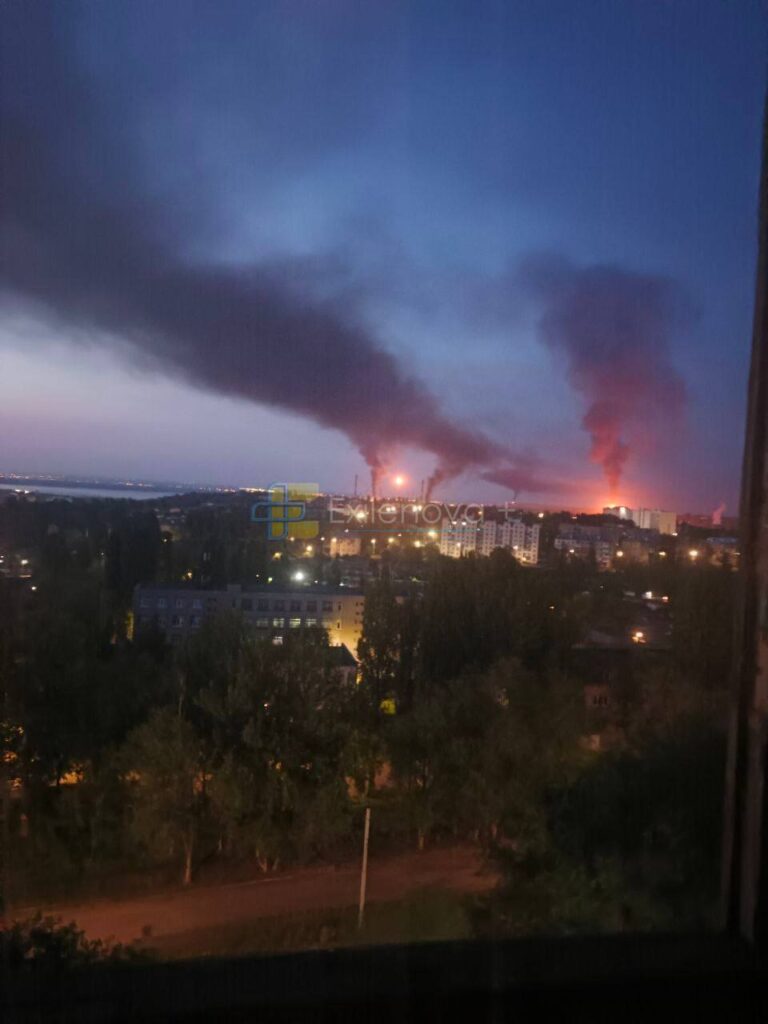
refinery saratov two tatarstan pumping station bashkortostan — one night's russian oil target list · post smoke fire rise over russia after ukrainian drone strike 8 2026 saratov5075776523918314508 ukraine news

Russian oil refineries earned more in the first half of this year than in the same period a year earlier, even as Ukrainian drone strikes kept a fifth of the country's refining capacity out of action, The Moscow Times reported. Record wholesale prices and fast-growing payments from the federal budget have more than covered what the attacks and the repairs cost. Russian consumers are covering the rest at the pump.

Refineries turn Russian crude into the two things the war needs: fuel for the army, and billions in export earnings and taxes that help pay for it. That is why That is why Ukraine keeps hitting them with long-range drones, and why what those strikes do to Russian oil earnings matters more than how many plants are burning.

Where the profits come from

Russian refineries earned 938 billion rubles ($11.1 billion) in the first half of 2026, 16.2% more than a year earlier, according to the state statistics service Rosstat. Ukrainian drone strikes have put a fifth of the country's refining capacity out of action.

Two things produced that result, according to Promsvyazbank analyst Yekaterina Krylova: high wholesale prices on the SPIMEX commodity exchange, and a sharp increase in state fuel subsidies.

Wholesale prices took off in March, after the war in the Middle East began: light petroleum products have risen 37% since late February and diesel by a third, with July bringing record exchange prices of 82,600 rubles ($982) per tonne of AI-95 gasoline. Crude got cheaper for the refiners over the same stretch, as the ruble price of Urals oil peaked in spring and fell through the summer while the products made from it kept getting dearer.

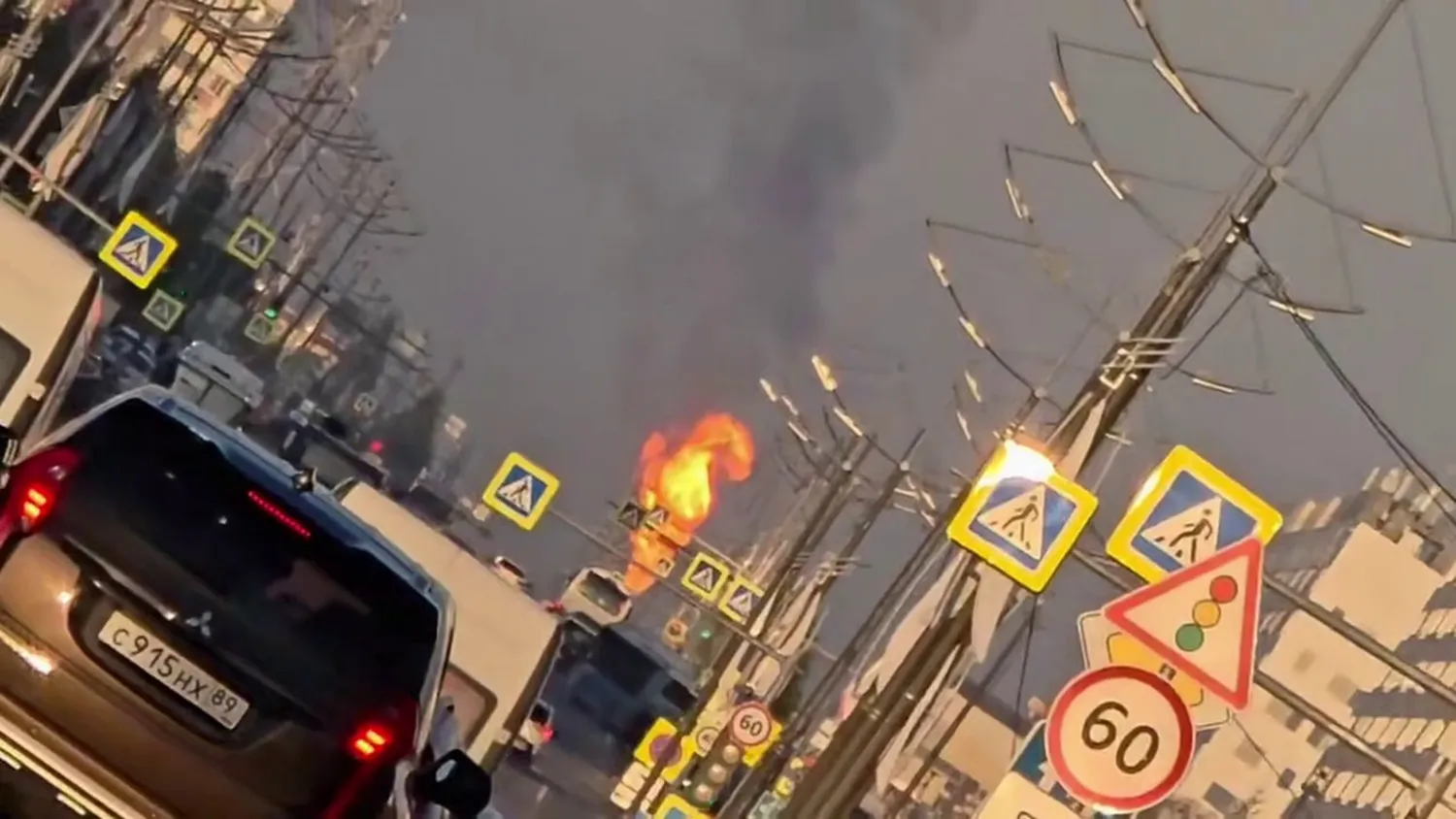
A tall flame rises above an industrial facility in Novy Urengoy at night.
Explore further

Ukraine says drones hit Russia’s gas heartland over 3,000 km from its border—a wartime record

The budget pays the difference, the country pays the bill

Russia's damper mechanism compensates oil companies for selling fuel cheaply at home rather than exporting it, and the payments grow as the gap between domestic and world prices widens.

The Finance Ministry paid out close to 350 billion rubles ($4.2 billion) a month in the second quarter, and 500 billion rubles ($5.9 billion) for July and August together. Krylova expects the subsidies and the prices together to widen net margins by 45% in the third quarter, to 35,000 rubles ($416) per tonne of gasoline.

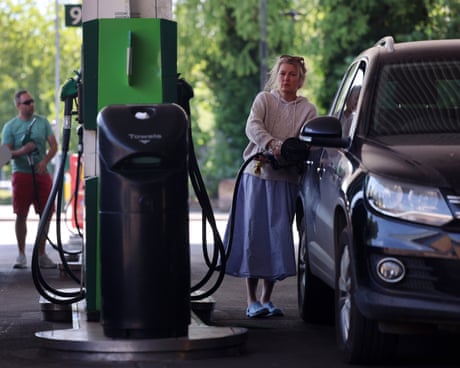
Russia's retail prices tell the other half of the story. Gasoline has risen 21.2% since January and diesel 18.4%, well above Russian inflation. Budget money lets the majors, which own both the refineries and the filling-station chains, hold their own forecourt prices near inflation. Independent chains have no such cushion: they buy at the higher wholesale prices and sell dearer, which is how Russia has been squeezing them out of the market. For drivers, the crisis has been physical as well as financial, with rationing and dry pumps spreading across dozens of regions.

Kazakh President Kassym-Jomart Tokayev and Russian President Vladimir Putin walk past an honor guard in Astana, Kazakhstan, on 27 November 2024.
Explore further

Kazakh refinery deal could ease Russia’s front-line fuel pressure—but it covers just 0.3% of demand

What the strikes have cost

Ukrainian drones have been hitting Russian refineries since 2024, and the campaign escalated sharply from August 2025, when strikes deep inside Russia became systematic. Russian refineries disclose none of their losses from it.

Ukraine's General Staff estimated the total damage to the Russian oil industry since August 2025 at $13.5 billion, in a count published in early July. The insurance broker Mains put direct losses to the oil and gas sector from drone strikes last year at more than 100 billion rubles ($1.2 billion), and above a trillion rubles once lost profit and indirect damage are counted.

  •  

Ukraine's 2026 budget could face $19B shortfall as Europe weighs how to fill the gap, FT reports

Ukraine's 2026 budget could face $19B shortfall as Europe weighs how to fill the gap, FT reports

The European Commission is discussing with EU member states various options to cover Ukraine's budget deficit for next year, which could range from $8 billion to $19 billion, the Financial Times reported on July 8.

International partners have provided Ukraine with over $39 billion for its wartime economy so far this year, Prime Minister Denys Shmyhal announced.

The financial hole in Ukraine's budget is linked to reduced U.S. support and the lack of prospects for a swift ceasefire with Russia that Europe had hoped for, the Financial Times reported.

A senior EU official told the publication that many of Ukraine's partners had previously counted on a peace deal in 2025, but are now forced to revise their funding plans.

This includes the European Commission, which has already adjusted spending from Ukraine-related funding streams.

Without support from Western partners, Kyiv would face a budget deficit of $19 billion in 2026, according to the Financial Times. However, even if additional international financing for the wartime economy can be secured, a gap of at least $8 billion would remain.

To support Ukraine's budget, Europe is considering providing military aid in the form of off-budget grants that would be recorded separately as external transfers but would count toward NATO member countries' national defense spending targets.

One EU diplomat told the Financial Times that military support for Ukraine is viewed as a contribution to the defense of all of Europe.

In a document for G7 countries reviewed by Financial Times, Kyiv proposed that European allies co-finance Ukrainian forces, framing this as a service to strengthen continental security.

Other support options under discussion include potentially accelerating payments from the existing $50 billion G7 loan program and reinvesting frozen Russian assets in higher-yield financial instruments that the EU allocated to help service the debt.

According to the Financial Times, two sources confirmed that the commission planned to discuss these options with EU finance ministers on July 8.

The funding issue will also be raised at the Ukraine Recovery Conference in Rome on July 10-11, dedicated to Ukraine's reconstruction needs. European Commission President Ursula von der Leyen will attend the event.

  •  
❌