❌

Vue lecture

White House ordered limits on Ukraine’s military satellite service — Reuters. Who made the decision remains unclear

The White House, seen from Lafayette Square. File photo, June 2024.

White House officials instructed Pentagon leaders to limit Starshield, SpaceX’s military-grade satellite service used by Ukrainian forces, Reuters reported on 15 October, citing three officials. The report came a day after a senior US official told Axios the Trump administration had nothing to do with the alleged Starlink restrictions.

Ukrainian forces rely on US-controlled satellite technology for battlefield operations and for intercepting Russian drones aimed at Ukrainian cities, so the latest restrictions have raised questions about how reliably they can depend on it.

    Senior US official denies president requested restrictions

    Asked about the order, a senior US official replied, “No such request was ever made by the president.” The White House did not respond to questions about whether other administration officials might have made the request.

    Ukrainian officials contacted the White House, State Department and Pentagon on 13 and 14 October and were told it was a White House decision

    European allies question Starlink restrictions

    European officials raised concerns about the restrictions. German Foreign Minister Johann Wadephul criticized the throttling and said Ukraine must continue to receive full support, Spiegel reported on 15 October. Wadephul said Germany had questions for the US, noting that Germany finances part of the Starlink technology used in Ukraine.

    On 16 October, UK Defense Secretary Wes Streeting said US Defense Secretary Pete Hegseth had assured him in a face-to-face meeting that Starlink was back up and running, the Guardian reported. However, a Ukrainian Defense Ministry source said that military-grade terminals were working in motion again, but only at speeds of up to 160 km/h.

    New data-speed restrictions disrupted drone missions

    The military Starshield package previously had no data-speed restrictions, Ukraine’s 7th Rapid Response Corps told Novynarnia. Ukrainian officials said that after the restrictions were imposed, terminals disconnected when drones exceeded 160 km/h and sometimes at 80 km/h.

    The Corps also reported 10–20-second connection drops at 110–120 km/h on the Huliaipole front, which made drones harder to control. One unit had to cancel some missions.

    The restrictions came as US President Donald Trump pressed Kyiv to stop striking Russian oil refineries, blaming them for soaring energy prices ahead of November’s midterm elections. Ukraine suspects SpaceX imposed the restrictions to pressure Kyiv over the refinery strikes, but that motive has not been confirmed.

    •  

    Ukrainian producer that neutralized more than 7,000 drones over 100 square kilometers in year, plays enemy in Pentagon contest, and gets invitation to continue

    The C2 KUPOL platform. Source: Phantom Defense

    A Ukrainian company has played the enemy in a Pentagon drone contest, and the US liked what it saw. Phantom Defense, a Ukrainian defense-tech firm, was one of three companies whose systems built the counter-drone environment for Gauntlet II, the second stage of the US military’s Drone Dominance program, and has been invited to take part further, Defender Media reports.

    Drone Dominance is the Pentagon’s four-phase effort to field cheap attack drones fast, a roughly $1 billion program to buy more than 200,000 low-cost attack drones by 2027. Phantom Defense brought a system that was already proven at home, where in one city it neutralized more than 7,000 enemy drones over an area of more than 100 square kilometers in a year, the company says.

    Rather than enter a drone of its own, Phantom Defense supplied the resistance that the American drones had to fly through. Its setup paired the Specter PRO, L, X, and XL jammers with the Streamhunter video-interception tool and a command-and-control layer that detected and classified targets, coordinated the countermeasures, and confirmed the kills. The jammers suppressed drones and held up in heat and rain, it adds.

    The arrangement lets American developers fly their drones under live electronic attack rather than calm conditions, recreating a battlefield where a drone’s performance swings with the jamming around it, according to the company.

    One map to run the whole fight

    At the center sits Phantom Defense’s C2 system, Kupol, which integrates separate tools into a single ecosystem on a shared map. It lets crews run electronic warfare remotely, without driving out to a position, and ties in sensors, interceptor drones, and turrets, the company says.

    Kupol reads the terrain and a drone database to propose the best way to take down a target, then logs each mission automatically so its recommendations sharpen over time.

    The high-power Specter PRO station, built to shield positions, critical infrastructure, and cities, serves as the hardware anchor.

    An invitation, not yet a contract

    Previously, Ukraine’s battle-tested drone makers also took part in Drone Dominance. However, they didn’t succeed in it, though some of their technology competed under Western partners. The program bars direct purchases from Ukrainian firms, which must set up a US legal entity to bid.

    •  

    Lithuania gets its US tank battalion back while the Pentagon weighs pulling up to 40,000 troops from Europe

    lithuania gets its tank battalion back while washington still plans smaller army europe · post lithuanian president gitanas nausėda j stacevičius/lrt nausėda lrt ukraine news ukrainian reports

    Lithuania is getting its US troops back although the overall American presence in Europe will shrink, Lithuanian President Gitanas Nausėda said. He tied the wider drawdown to Washington's demand that Europe take more responsibility for its own defense. Lithuania's case, he suggested, is the exception.

    While waging all-out war on Ukraine, Russia keeps probing Europe with drones and sabotage that stop just short of open attack. Its small Baltic neighbors are already preparing their people for a possible invasion, and American soldiers on their soil have long been the clearest sign that attacking them means fighting the US. With Washington weighing a pullback and telling Europe to fend for itself, each US unit that stays on Russia's doorstep carries more weight than its size.

    "There will be fewer US troops in Europe"

    Nausėda spoke in an interview with LNK television on 28 September.

    "There will be fewer US troops in Europe. This is partly related to what US President Donald Trump says, to the signals the US administration is sending us that Europe must take on more responsibility itself," he said.

    Europe must do more for itself, and it is already doing so, Nausėda added. The US presence in Lithuania matters not only for its military power but also for deterrence, he argued.

    "The presence of these troops is precisely what reduces the likelihood of military conflict or military aggression," he told LNK, ELTA reported.

    "The heavy battalion will be here"

    Nausėda called the decision a kind of encouragement for Lithuania. "As the overall number of US troops in Europe decreases, in Lithuania that number will at least remain, will not decrease, and perhaps will even be slightly larger," he said. "In any case, the heavy battalion will be here."

    The battalion will keep its Abrams tanks, but an engineer battalion will replace the artillery battalion, Nausėda said on LRT's Savaitė program. The rotation will again last nine months. The Americans will number roughly as before, over 1,000, Defense Minister Robertas Kaunas said.

    Estonia has also secured the return of US troops, at least temporarily, LRT noted.

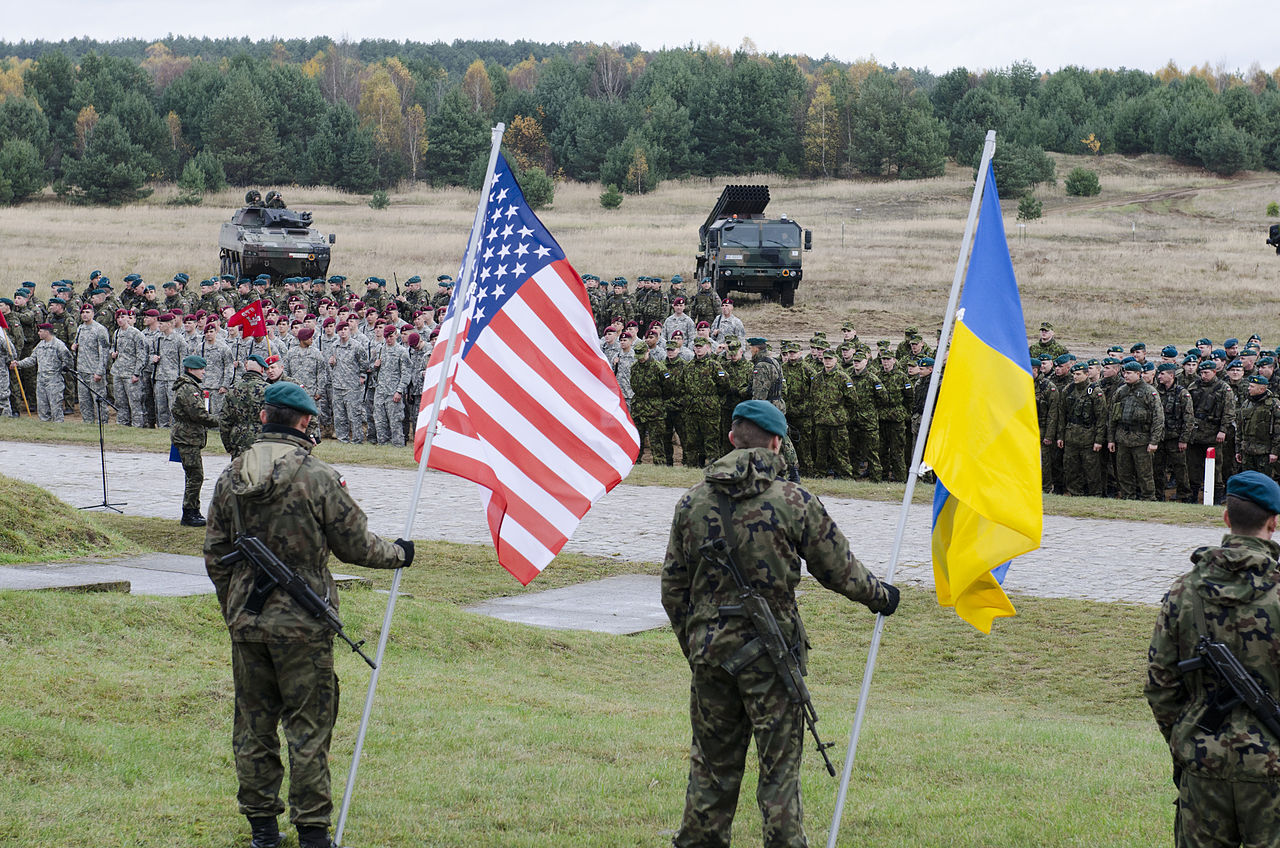
    Polish paratroopers holding the United States and Ukrainian state flags during the NATO military exercise Steadfast Jazz 2013 in Poland. (Source: Sgt. A.M. LaVey via Wikimedia)
    Explore further

    Trump announces 5,000 US troops to Poland — one week after US froze scheduled combat-team rotation and amid Russia’s threat

    More than 1,000 US troops began leaving Lithuania when their rotation ended in early June, and no replacement arrived, LRT said. It was the country's first gap in the US presence since 2020. American heavy battalions have rotated through Lithuania since 2019.

    The Pentagon is weighing a withdrawal of about 25,000 US troops from Europe, and possibly as many as 40,000, NBC News reported, adding that no final decision had been made. About 80,000 US troops are now stationed on the continent. Germany, Italy, and Spain would likely be among the countries most affected.

    •  

    Pentagon brings in Ukrainian jamming maker to do to its candidate drones what Russia does to Ukraine’s, and see which survives

    The testing of drones at Fort Carson in Colorado. Source: Unwave

    A Ukrainian jamming-systems maker went to a US Army base to do to candidate drones what Russia does to Ukraine's: flood them with electronic warfare (EW) and see which survives. Unwave company has tested four of its EW systems at Fort Carson in Colorado as part of the Pentagon's Drone Dominance program and has been asked to continue supporting it.

    The Pentagon is using Drone Dominance to choose the drones it will buy at scale, more than 200,000 by 2027, and it needs to know they work under jamming, the condition that decides most drone fights in Ukraine.

    So it brought in a Ukrainian electronic-warfare maker to supply that jamming, turning Ukraine's hard-won counter-drone experience into the test bench for American hardware. It follows a pattern in which US defense efforts adopt Ukrainian battlefield models.

    Ukraine brings the jamming

    From 24 August to 2 September, Unwave's team worked at the base, running scenarios that pitted its jammers against drones tasked with protecting fixed positions, moving vehicles, and infrastructure.

    The crews operated from three separate positionsat short and long range to compare how drones from different manufacturers held up.

    "Our mission was to create conditions as close to the real battlefield as possible," the company said, adding that it judged the tasks successfully completed but could not detail the scenarios for security reasons.

    In all, 14 drone makers and three electronic-warfare firms took part.

    Four systems on show

    Unwave brought four:

    • VIHA, which it calls Ukraine's first tactical-operational jammer for directed suppression of drones
    • BOOMBOX, built to shield troops and positions from FPV and drop-drones
    • SHATRO, for vehicles
    • CHOVEN-2, a multi-frequency amplifier for cars.

    Its participation was organized by Revenant Technologies, a US firm that specializes in bringing combat-proven defense tech to the American market, and helped design the scenarios using its ties to Ukraine and frontline experience.

    A foothold in the US market

    For Unwave, the value is a door into the alliance's security architecture. The event showed the importance of Ukrainian, American, and European specialists testing together, the company said, and "such interaction will help integrate Ukrainian technologies into the security architecture of our allies."

    •  

    Seventeen makers head to Michigan to test bomber drones for the Pentagon, and Ukrainian firms are back in field, some under US partners

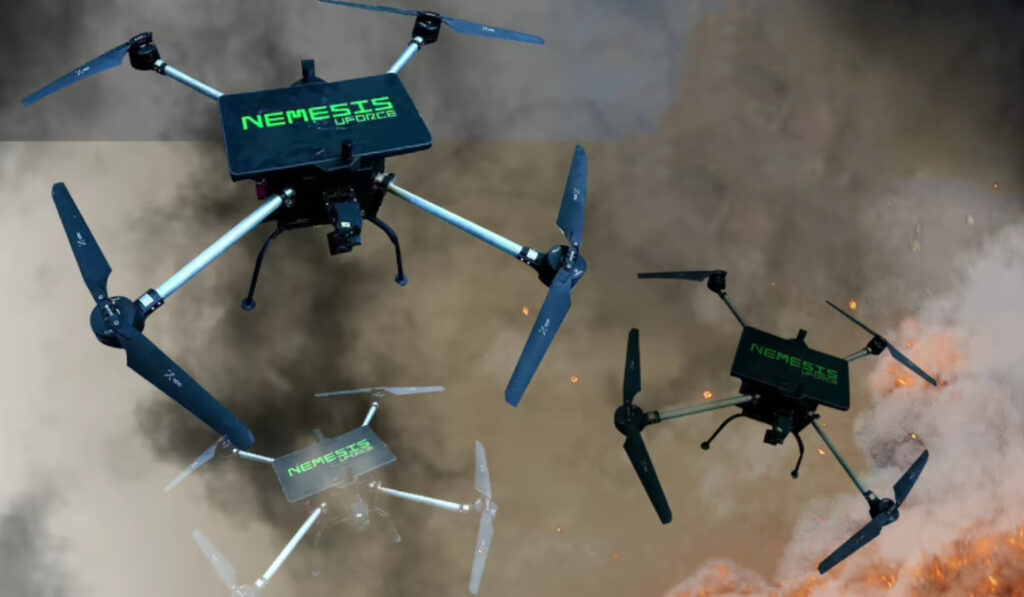
    Ukrainian Nemesis heavy drone. Source: Militarnyi

    Ukrainian drone makers are getting another shot at a Pentagon contract, this time for bomber drones. Seventeen companies, including Ukrainian firms and Western partners fielding Ukrainian designs, will test bomber drones at Camp Grayling in Michigan in October, the next stage of the Pentagon's Drone Dominance program, Defender Media reported.

    The Phase 2.5 Bomber Qualifier is the latest round of the Pentagon's drive to buy combat-tested drones at scale, and Ukrainian makers are again in the field, some through US-registered partners, because Pentagon rules bar direct sales from foreign firms.

    This time, the target is bombers, the drones that drop munitions on what is below them.

    Seventeen makers head to Michigan

    The contest runs at Camp Grayling, a Michigan training range, and organizers call it the hardest and fastest-paced stage of the program yet. Each company must bring at least six fully built systems.

    The testing splits into two parts: a Bomber Qualifier, which the makers conduct themselves, and a Bomber Gauntlet run by US soldiers. Organizers have not published details of a third mission. Winners of the wider program earn Pentagon supply contracts.

    Ukrainian bombers make the list

    The invited firms include UFORCE USA Services, Grim Tech, Gurzuf Defence, UA Defense Tech, Skycutter, and UDD Tech Corp. Which models they will bring is not yet clear.

    UFORCE is known for its Nemesis bombers. Grim Tech showed a light bomber, the Grim-18, at the MSPO defense expo in Poland this month, and Gurzuf builds heavy bombers, including the Ayudag-6, which recently set a Ukrainian payload record for multirotor drones at 130 kilograms.

    A second try after a US sweep

    In the program's last phase, the Pentagon picked five winners in each of two categories, and all were American, though a Ukrainian firm had reached the second round and, by industry accounts, Ukrainian designs were incorporated into some Western entries. For Ukraine's makers, the bomber round is another chance to turn battlefield-proven hardware into a US contract.

    •  

    Defender Media: Ukraine’s battle-tested drone makers reach no top slot in Pentagon’s $1.1 billion Drone Dominance program, but some Ukrainian technology wins anyway

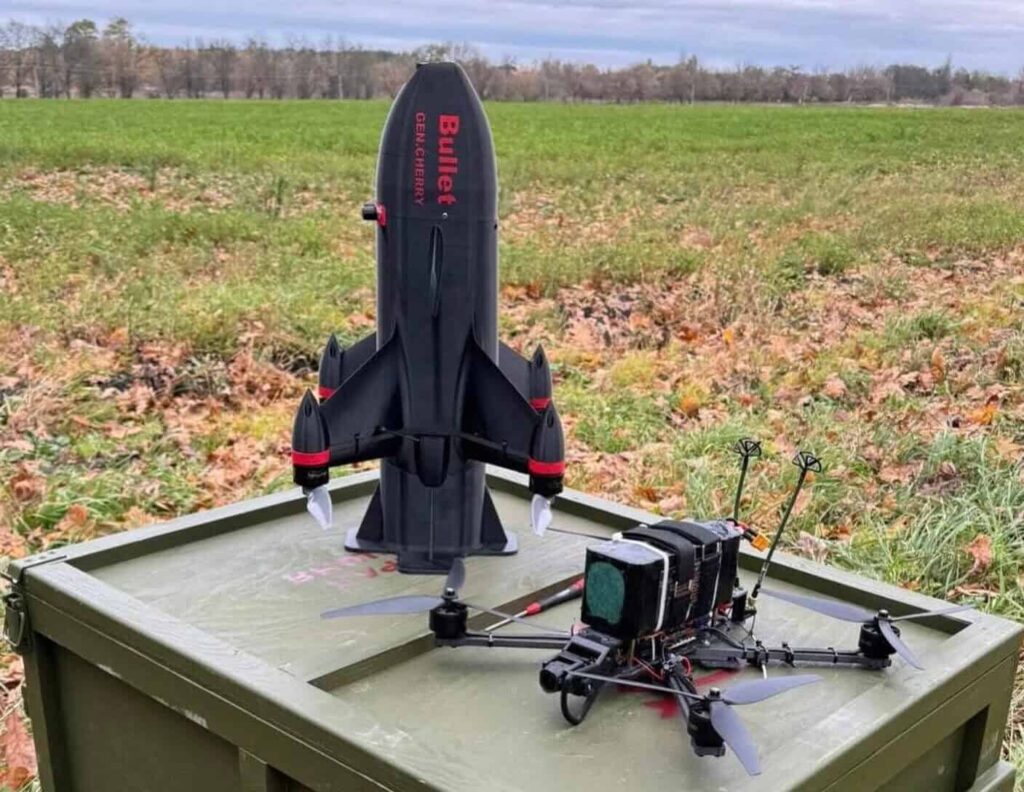
    interceptor drones General Cherry (Chereshnia)

    Ukraine's battle-tested drone makers did not win a single top slot in the Pentagon's latest drone contest. But some Ukrainian technology won anyway, competing quietly under the names of Western partners, The Defender Media reports.

    The Pentagon's $1.1 billion Drone Dominance program does not allow direct purchases from Ukrainian firms, which must set up a US legal entity to bid.

    The Ukrainians who competed under their own names were hampered by export licenses, the hunt for non-Chinese components, and visa issues, and none of the four cracked the top five in either category.

    American firms sweep the top slots

    The Pentagon picked five winners each in two categories, long-range strikes out to 15 kilometers and close-in assault. Eric Schmidt's Perennial Autonomy topped the long-range field with its Hornet drone, on 80.1 points, and Neros led the close-in category with 88.1. Neros already supplies Ukraine with 6,000 of its Archer FPV drones.

    The rest of the winners, from ORQA's US arm to XTEND and ModalAI, were American as well. All will receive Pentagon supply contracts, with order sizes to be set later.

    Ukrainians win under other flags

    The Ukrainian firms that announced their entries, F-Drones, General Chereshnya, Grim Tech, and Stellarion, all missed the cut, though General Chereshnya had reached the program's second round earlier in the year.

    Bureaucracy tripped the open entrants

    Stellarion laid out what went wrong. Getting export permits and moving hardware took so long that integrating American parts, including warheads, and adapting the finished system on schedule became "complicated," its representatives said.

    Finding NDAA-compliant, non-Chinese components ate up more time, and visa delays kept its specialists from fixing technical problems on site.

    Firms that missed the top five can enter later rounds: a Gauntlet 2.5 contest for bomber drones is set for October, and a third phase begins in February 2027, with missions built to test control of several drones at once.

    •  

    'We haven't' — Trump denies US pausing weapons to Ukraine, despite Pentagon decision to halt shipments

    'We haven't' — Trump denies US pausing weapons to Ukraine, despite Pentagon decision to halt shipments

    U.S. President Donald Trump brushed off a reporter's question on July 3 about pausing weapons deliveries to Ukraine, claiming Washington is "giving weapons" to Kyiv.

    The Pentagon previously confirmed that the U.S. has already halted some military aid shipments to Ukraine in order to conduct what it calls a "capability review" of its own stockpiles.

    "Why did you pause weapons shipments to Ukraine?" a reporter asked Trump as the president prepared to board Air Force One.

    "We haven't," Trump replied. "We're giving weapons."

    Trump then offered a contradictory answer, saying the U.S. is "trying to help" Ukraine while also claiming that former U.S. President Joe Biden depleted the country's weapons stocks with military aid to Kyiv and that Washington must defend its own interests.

    "But we've given so many weapons — but we are giving weapons, and we're working with (Ukraine), we're trying to help them," Trump said.

    "But we haven't... You know, Biden emptied out our whole country giving them weapons and we have to make sure that we have enough for ourselves."

    Trump then asked the reporter which media outlet he represented.

    "The New York Times," the journalist said.

    "Ah, no wonder," Trump replied.

    Ukraine scrambles to clarify extent of US military aid pause and ‘whether everything will continue’
    When the U.S. Department of Defense (DOD) halted the transfer of critical air defense missiles and other weapons to Ukraine, Kyiv and its partners were caught off-guard and are now left scrambling for clarity on the scope and length of the Trump administration’s decision. The White House confirmed the halt after a July 1 report by Politico said shipments were paused due to concerns over the size of domestic stockpiles. The decision “was made to put America’s interests first following a DOD rev
    'We haven't' — Trump denies US pausing weapons to Ukraine, despite Pentagon decision to halt shipmentsThe Kyiv IndependentAndrea Januta
    'We haven't' — Trump denies US pausing weapons to Ukraine, despite Pentagon decision to halt shipments

    Reports that the U.S. had suddenly paused some weapons shipments — including deliveries of desperately needed air defense missiles — left officials in Kyiv scrambling for answers. Trump's response provides little clarity and even less reassurance to Ukrainians facing increasingly deadly Russian missile attacks night after night.

    The decision to halt the shipments "was made to put America's interests first following a (U.S. Defense Department) review of our nation's military support and assistance to other countries across the globe," White House Deputy Press Secretary Anna Kelly said in a statement after Politico broke the story on July 1.

    The Washington Post later reported that a shipment of U.S. weapons, including advanced air defense systems and precision missiles, was halted in Poland where it was awaiting delivery to Ukraine.

    U.S. State Department Spokesperson Tammy Bruce, like Trump, insisted that the U.S. was not pulling support from Ukraine.

    "This is not — I will reinforce this — this is not a cessation of us assisting Ukraine or of providing weapons," Bruce told reporters at a briefing.

    "This is one event in one situation, and we'll discuss what else comes up in the future. But be wary of painting too broad a brush there."

    Trump's remarks about the weapons shipments followed an update on his July 3 phone call with Russian President Vladimir Putin.

    "We had a call. It was a pretty long call. We talked about a lot of things," he said.

    Their conversation brought the Kremlin no closer to agreeing to a ceasefire, according to Trump.

    "No, I didn't make any progress with (Putin) today at all," he said.

    Ukraine war latest: Putin tells Trump Russia won’t back down from its war aims in Ukraine
    Key developments on July 3: * Putin tells Trump Russia won’t back down from its war aims in Ukraine * Deputy commander of Russian Navy killed in Ukrainian strike in Kursk, Russian official confirms * Ukraine signs major drone co-production deal with US Swift Beat, Zelensky announces * Russia targets Ukrainian conscription offices to disrupt mobilization, military spokesperson says after Poltava attack * ‘One of Russia’s most critical targets’ — Ukraine confirms strike on missile battery pl
    'We haven't' — Trump denies US pausing weapons to Ukraine, despite Pentagon decision to halt shipmentsThe Kyiv IndependentThe Kyiv Independent news desk
    'We haven't' — Trump denies US pausing weapons to Ukraine, despite Pentagon decision to halt shipments
    •  

    US halts Ukraine-bound weapons already staged in Poland, WSJ reports

    US halts Ukraine-bound weapons already staged in Poland, WSJ reports

    U.S. weapons already in Poland en route to Ukraine have been halted, including advanced air defense systems and precision missiles, the Wall Street Journal reported on July 2.

    The Pentagon confirmed the halt in a July 2 briefing, citing an ongoing "capability review" aimed at ensuring U.S. military assistance "aligns with its strategic defense priorities."

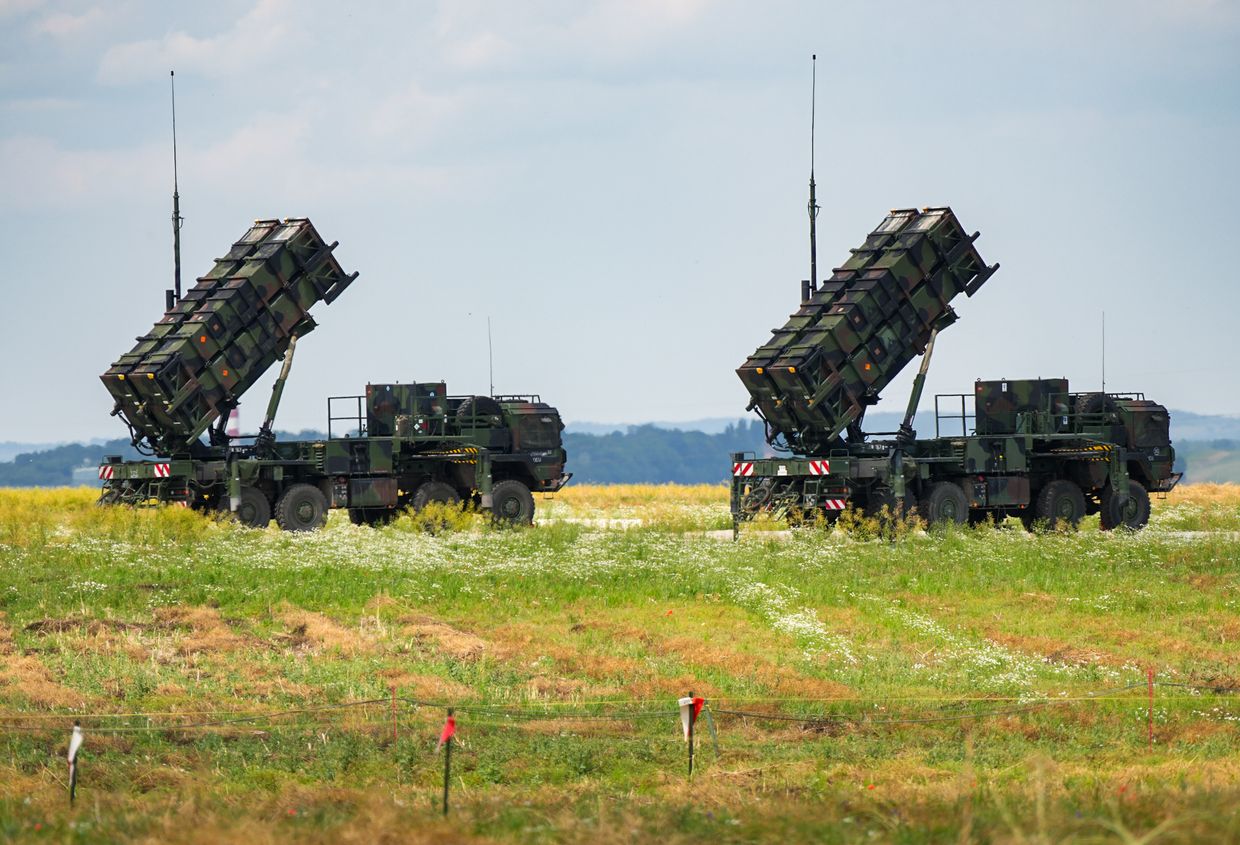
    The shipment in Poland includes over two dozen PAC-3 Patriot missiles, more than two dozen Stinger air-defense systems, Hellfire air-to-ground missiles, and over 90 AIM air-to-air missiles intended for use with Ukraine's F-16 fighter jets, according to U.S. administration and congressional officials cited by the Wall Street Journal.

    "We see this as a common-sense, pragmatic step towards having a framework to evaluate what munitions are sent and where," Pentagon spokesperson Sean Parnell said.

    The decision has sparked backlash from both sides of the political aisle in Washington. Republican Rep. Brian Fitzpatrick, co-chair of the Congressional Ukraine Caucus, called the pause "unacceptable," while Democratic Senator Richard Blumenthal labeled it "fallacious and maybe even disingenuous."

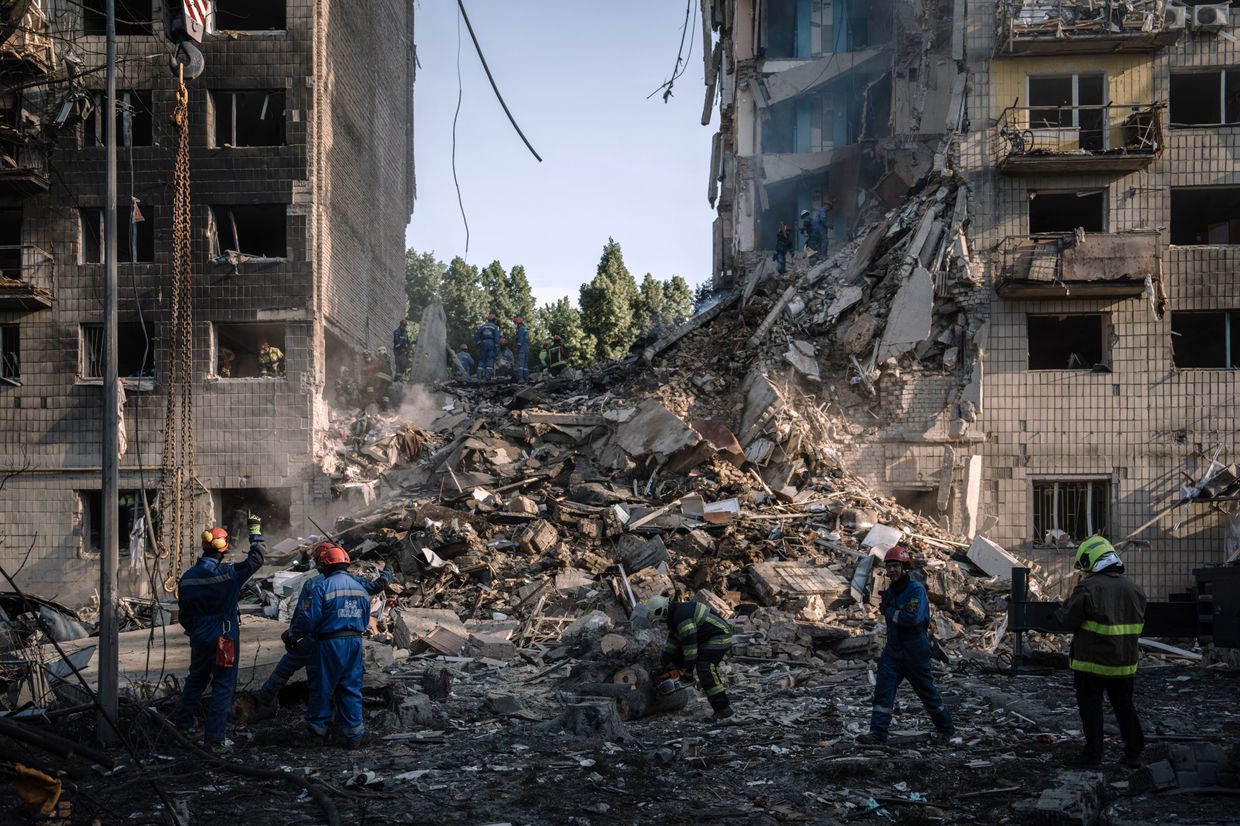
    The pause comes at a critical moment for Ukraine, which faces intensified Russian missile and drone strikes. On June 29, Russia launched the largest aerial assault against Ukraine since the start of its full-scale invasion in February 2022, targeting civilian infrastructure and cities far beyond the frontline.

    NATO Secretary General Mark Rutte, speaking on July 2, emphasized the urgency of continued Western support for Kyiv. "I totally understand that the U.S. always has to make sure its interests are covered," he said. "But in the short term, Ukraine cannot do without all the support it can get."

    The Pentagon has not provided a timeline for when the held-back shipments might resume.

    ‘Major casualties among civilians’ — US freeze on air defense missiles is terrible news for Ukraine
    The halting of deliveries of air defense missiles from the U.S. will lead to“major casualties among civilians,” a deputy commander in Ukraine’s air defense told the Kyiv Independent. Politico reported on July 1 that the U.S. Defense Department (DOD) had halted shipments of some weapons previously
    US halts Ukraine-bound weapons already staged in Poland, WSJ reportsThe Kyiv IndependentKollen Post
    US halts Ukraine-bound weapons already staged in Poland, WSJ reports
    •  

    Pentagon confirms pause in aid deliveries to Ukraine amid 'capability review'

    Pentagon confirms pause in aid deliveries to Ukraine amid 'capability review'

    Pentagon spokesperson Sean Parnell confirmed on July 2 that some military assistance to Ukraine has been halted as the U.S. Defense Department conducts a review of foreign aid deliveries.

    "This capability review... is being conducted to ensure U.S. military aid aligns with our defense priorities... We see this as a common-sense, pragmatic step towards having a framework to evaluate what munitions are sent and where," Parnell said.

    The White House earlier confirmed the pause in shipments, citing a broader reassessment of U.S. military stockpiles amid media reports of the halt in military assistance.

    The weapons reportedly being held back include two dozen Patriot air defense missiles, over two dozen Stinger air-defense systems, precision artillery rounds, Hellfire missiles, drones, and more than 90 AIM air-to-air missiles launched from F-16 fighter jets.

    New U.S. military aid packages have not been approved since U.S. President Donald Trump was inaugurated in January, raising concern among Ukraine's allies.

    "Ultimately, our job here at the Department of Defense is to pursue the president's 'America First' agenda and make sure that we achieve peace through strength throughout the world," Parnell said at a Pentagon press briefing.

    The U.S. Defense Department will not provide updates on the timeline and quantity or type of munitions provided to Ukraine, he added.

    "What we've done here at the Department of Defense is create a framework to analyze what munitions we're sending (and) where," Parnell said.

    A bipartisan group of U.S. lawmakers has voiced their opposition to the decision to halt military aid shipments to Ukraine.

    "We must build up our own Defense Industrial Base here in the U.S. while simultaneously providing the needed assistance to our allies who are defending their freedom from brutal invading dictators. To not do both is unacceptable," Republican Rep. Brian Fitzpatrick, the co-chair of the Congressional Ukraine Caucus, said.

    Democratic Senator Richard Blumenthal, a member of the Senate Armed Services Committee, described the military aid pause as "fallacious and maybe even disingenuous."

    NATO Secretary General Mark Rutte said on July 2 that he understands the White House's need to safeguard its own defense capabilities, but underscored that Ukraine urgently requires sustained support.

    "I totally understand that the U.S. always has to make sure its interests are covered... When it comes to Ukraine, in the short term, Ukraine cannot do without all the support it can get," Rutte said.

    The Washington Post reported that the military aid was already in Poland, being prepared for delivery to Ukraine.

    ‘Major casualties among civilians’ — US freeze on air defense missiles is terrible news for Ukraine
    The halting of deliveries of air defense missiles from the U.S. will lead to“major casualties among civilians,” a deputy commander in Ukraine’s air defense told the Kyiv Independent. Politico reported on July 1 that the U.S. Defense Department (DOD) had halted shipments of some weapons previously
    Pentagon confirms pause in aid deliveries to Ukraine amid 'capability review'The Kyiv IndependentKollen Post
    Pentagon confirms pause in aid deliveries to Ukraine amid 'capability review'
    •  

    As Russia ramps up missile attacks, US halts promised air defense shipments to Ukraine

    As Russia ramps up missile attacks, US halts promised air defense shipments to Ukraine

    The U.S. Defense Department (DOD) has halted shipments of some air defense missiles and other weapons previously promised to Kyiv out of concerns over the size of U.S. stockpiles, Politico reported on July 1, citing sources familiar with the matter.

    The suspension comes as Ukraine faces a shortage of air defense munitions along with increasingly intense and deadly Russian bombardments. In June 2025, Russia launched 5,337 Shahed-type drones at Ukraine, shattering its previous monthly record.

    Pentagon policy chief Elbridge Colby made the decision to pause the aid deliveries after conducting a review of U.S. munitions stocks, three sources told Politico. Colby was reportedly concerned about dwindling levels of artillery rounds, air defense missiles, and precision munitions.

    Among the items being held back from Ukraine are Patriot air defense missiles, precision artillery rounds, Hellfire missiles, drones, and other missiles that Ukraine launches from F-16 fighter jets.

    Colby made the decision in June, amid a surge in Russian mass aerial attacks against Ukraine. The White House later confirmed the pause.

    The Pentagon's decision "was made to put America's interests first following a DOD review of our nation's military support and assistance to other countries across the globe," White House Deputy Press Secretary Anna Kelly said in a statement issued after Politico published the story.

    "The strength of the United States Armed Forces remains unquestioned — just ask Iran," she said.

    Since his inauguration in January, U.S. President Donald Trump has not approved any additional military aid packages for Ukraine. Defense Secretary Pete Hegseth also announced recently that the U.S. will reduce the total aid it sends to Ukraine in its upcoming defense budget.

    At the NATO summit in The Hague in late June, Trump said he would "see" if the U.S. could supply Kyiv with additional missiles for its Patriot systems.

    Want to invest in Ukrainian startups from the US? This platform promises to be the bridge
    Hans Braunfisch wants Americans to invest in Ukrainian startups, but there’s a problem: there’s no clear path for individual investors to put money into the more than 26,000 Ukrainian startups out there. The former PwC consultant plans to change that with Pravo Venture, a platform streamlining foreign investment for
    As Russia ramps up missile attacks, US halts promised air defense shipments to UkraineThe Kyiv IndependentDominic Culverwell
    As Russia ramps up missile attacks, US halts promised air defense shipments to Ukraine

    "They (Ukraine) do want to have the anti missiles, as they call them, the Patriots, and we're going to see if we can make some available," he said after meeting with President Volodymyr Zelensky.

    "They are very hard to get. We need them too. We are supplying them for Israel, and they are very effective."

    But according to a source who spoke to Politico, plans to reduce and redirect air defense munitions and other weapons for Ukraine have been in the works for months. The administration is looking to redirect artillery shells, tank shells, and air defense systems to Israel or back to Washington.

    "They have proposed repeatedly since March to pause the shipments," the person said.

    Colby, the reported architect of the decision, has previously advocated for reducing U.S. military assistance to Ukraine to prioritize deterrence efforts in Asia.

    Russia on June 29 launched the largest missile and drone attack against Ukraine since the start of its full-scale war.

    Ukraine’s new interceptor UAVs are starting to knock Russia’s long-range Shahed drones out of the sky
    Russia’s Shahed drone swarms are pummeling Ukraine on a nightly basis, inflicting ever more death and destruction in cities that had managed to carve out some sense of normalcy amid wartime. Civilian alarm has grown. With traditional air defense stockpiles running low, the government is banking on newly created
    As Russia ramps up missile attacks, US halts promised air defense shipments to UkraineThe Kyiv IndependentKollen Post
    As Russia ramps up missile attacks, US halts promised air defense shipments to Ukraine

    •  
    ❌