Vue lecture

Germany will close Russia’s Bonn consulate after attributing Leipzig Airport drone attack to Moscow

Germany will close Russia’s General Consulate in Bonn, terminate the agreement concerning the Russian House in Berlin, and tighten entry controls for Russian citizens. Foreign Minister Johann Wadephul announced this at a joint press conference with Interior Minister Alexander Dobrindt on 1 September, after German authorities formally attributed the attack at Leipzig/Halle Airport to Russia.

German investigators have identified two suspects allegedly linked to the operation: a Russian-born man with a Latvian passport and a Belarusian man with a Russian passport. This information was reported by Süddeutsche Zeitung. Investigators believe both have links to Russian state structures, according to the report.

Both men have already left Germany, complicating efforts to bring them to justice, Tagesschau reports. One of Berlin’s responses was the closure of Russia’s Consulate General in Bonn — the last Russian consulate general remaining in Germany.

Table of The Russian Consulate General in Bonn, Germany. Photo: Marc John/IMAGO

Germany tightens its Russia policy

Russia’s General Consulate in Bonn will close on 18 September, according to Wadephul. Germany will also seek additional EU sanctions against people linked to Russian hybrid attacks, increase pressure on Russia’s “shadow fleet,” and strengthen entry controls for Russian nationals.

He stated that since the beginning of "the unlawful war of aggression" against Ukraine, Germany's goal has been to bring the war to an end, restore the peace order in Europe, and return to a constructive relationship.

"However, this requires a minimum level of willingness on the Russian side. We must acknowledge that Russia shows no willingness to reach an accommodation,” Wadephul said.

Moscow rejected the accusations. Russian President Vladimir Putin called Germany’s response a “grave mistake,” TASS reports.

The investigation leads to two suspects

According to German investigators, the Belarusian suspect left DNA traces on one of the drones, inside a container containing explosives, and on an antenna found near the airport. The Russian-born suspect, who holds a Latvian passport, is believed to have coordinated and directed the operation, entered Germany through Berlin, and then traveled toward Saxony.

The Russian-born suspect left Germany two days before the attack, while the Belarusian suspect also left the country.

Drone found near a Ukrainian An-124 aircraft in Leipzig, Germany, on 5 August, 2026. Photo: screenshot from Bild video

What happened at Leipzig Airport

The diplomatic response stems from a sabotage attempt on 4 August, when a bomb-laden drone struck a Ukrainian An-124 cargo aircraft but failed to detonate. The drone, carrying explosives, remained unnoticed for about four hours before being discovered, while later analysis indicated it had been aimed at the aircraft near its fuel tanks.

  •  

EU foreign ministers want Russia’s ex-fighters out. Nobody has written down what counts as proof

eu foreign ministers want russia's ex-fighters out nobody has written down what counts proof · post kaja kallas high representative affairs security policy 9 2025 ukraine news ukrainian reports

EU foreign ministers have given broad backing to an entry ban on Russians who fought in Ukraine and to stricter tourist visa rules for Russian citizens, DW reported. The bloc's foreign policy chief announced that support on 2 September, after an informal meeting in Wicklow, Ireland, without setting out what the tightening would involve. She tied the visa question to the risk of sabotage in Europe.

Russia has been attacking Ukraine since 2014 and at full scale since 2022, bombing Ukrainian cities, and for several years its agents have also worked inside Europe, cutting cables, flying drones over military bases, and setting fires at plants and warehouses that supply Ukraine. The bloc that funds much of Ukraine's defense has still not managed to keep the citizens of that state out of its own territory.

"Broad support," and nothing pinned down

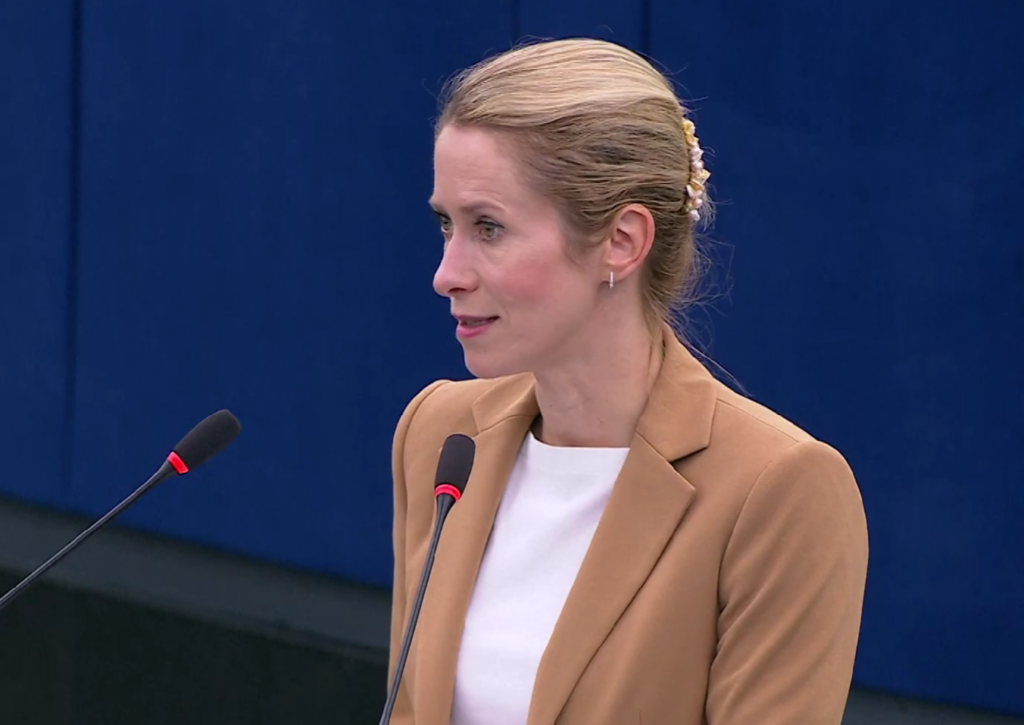
EU foreign policy chief Kaja Kallas spoke to reporters after the ministers finished. 

"There was broad support for moving ahead with a ban on entry to the EU for Russian ex-combatants and tougher visa restrictions for Russian tourists," she said.

She did not name the restrictions planned for Russian tourists, say when they might take effect, or say which categories of Russian citizens they would cover.

The bloc has no unified position on tightening visa rules further, Kallas acknowledged. Some member states have so far argued against additional steps in that direction, she said.

greece blocked gas ban france italy softened entry ban—now brussels tries 1600 companies helping russia's war · post 9 parade moscow 2025 youtube/kremlin grate patriotic warr shitshow ukraine news ukrainian
Explore further

Russia’s former soldiers may face a locked EU border—if France and Italy stop balking

Many EU countries say tourist visas serve sabotage preparation

Reporters asked Kallas about accounts that one suspect in the Leipzig attack may have entered the EU on a tourist visa issued by Italy. German authorities have to confirm or refute those accounts, she said. If the information is correct, it shows that visas can be used to enter the bloc by potential wrongdoers who intend to harm it, she added. Many EU countries pointed out that tourist visas are used in preparing sabotage, because the people who carry it out need to get onto EU territory, she said.

Berlin blamed Moscow for the hybrid attack in Leipzig on 1 September, and moved to close Russia's consulate in Bonn and end the agreement for a Moscow-backed cultural center in Berlin after the drone attack on Leipzig/Halle Airport. Lithuania has exposed a Russian military intelligence network behind attempted arson in four NATO countries, and someone left funeral wreaths outside defense companies in Lithuania and Czechia in late August.
russia's ex-combatants entering eu risk flagged leaked threat assessment · post russian soldier captured perspective ukrainian fpv drone moments before impact 2025 birds magyar about strike ukraine news reports
Explore further

Russia’s ex-combatants entering the EU is a risk flagged in a leaked threat assessment

"It is not normal": Russians in Europe while Russia bombs Ukraine

Many ministers raised the visa question while the meeting was discussing Russia's war against Ukraine, Kallas said.

"It is not normal when a country bombs Ukraine, kills civilians—in July and August more than ever during this war—and at the same time Russians enter and enjoy the hospitality of European countries. That should not be," she said.

EU representatives said in July that the ban, kept separate from the tourist visa rules, was agreed in principle but still needed an evidence standard for refusing entry. The EU Council signs off after that, and the European Commission hoped at the time to finish by October.

UN monitors counted 437 civilians killed and more than 2,600 injured across Ukraine in July, the deadliest month since 2022. That count included 183 children killed or injured, also the highest since 2022. Russian drones and missiles then kept Kyiv under near-constant fire for four days at the end of August.
  •  

Russia’s shadow war on Europe is widening—NATO still sees no attack coming

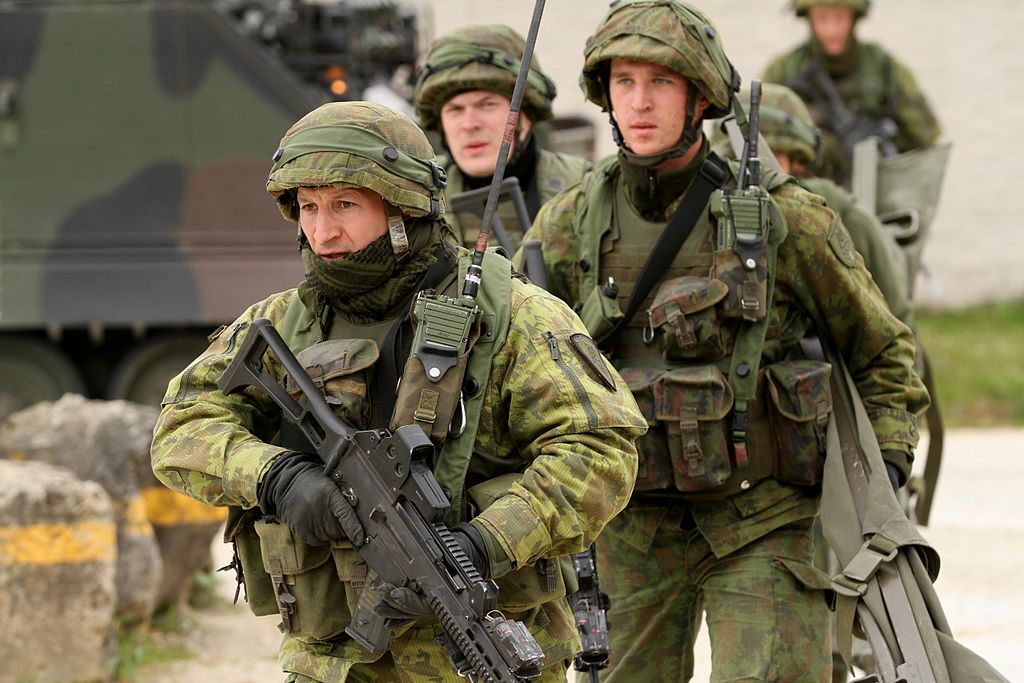
Lithuanian soldiers of the Iron Wolf Mechanized Infantry Brigade during Combined Resolve II NATO exercise in Germany

NATO said on 30 August 2026 it sees no imminent threat of attack from Russia, Reuters reported. Russia is stepping up covert operations across Europe alongside its war on Ukraine, a NATO official said. The statement followed a week of warnings from Western capitals.

Russia's sabotage campaign in Europe has grown steeply since the full-scale invasion, reaching from Molotov cocktails thrown at a French drone plant to severed undersea cables and attacks on railways. Recorded attacks in Europe hit 34 in 2024, nearly triple the 12 counted a year earlier by the Center for Strategic and International Studies, which says Western states have yet to build an effective answer to a campaign pitched below the threshold that would trigger a military response.

Attacks on Ukraine and covert acts in Europe are both rising

Russia is attacking Ukraine harder and running more covert operations in Europe at the same time, the official said.

"Even as the Russians are facing very substantial resistance from Ukraine, they are stepping up attacks on Ukraine as well as hybrid acts in Europe," the official said, adding: "As always, NATO remains vigilant and alert to the variety of threats we face. At this time, we see no imminent threat of attack."

Hybrid acts mean covert moves—sabotage, arson, drone flights—that stop short of open war.

A week of alarms

Three developments that week bore on the same question—whether Russia would strike a NATO country, not only Ukraine. Polish Prime Minister Donald Tusk warned on 28 August that Russia is preparing to escalate both in Ukraine and across the region, putting the critical window at seven or eight months.

Days earlier, CIA Director John Ratcliffe flew to Moscow to meet intelligence counterparts. Two people familiar with the meeting told Reuters that Ratcliffe did raise the prospect of Russia acting against a NATO state, though whether the trip had any other aim stayed unclear. One source said several topics came up, including Russia's support for Iran. US President Donald Trump dismissed that reading two days later, saying Russian President Vladimir Putin will not attack NATO territory and that Ratcliffe carried no message.

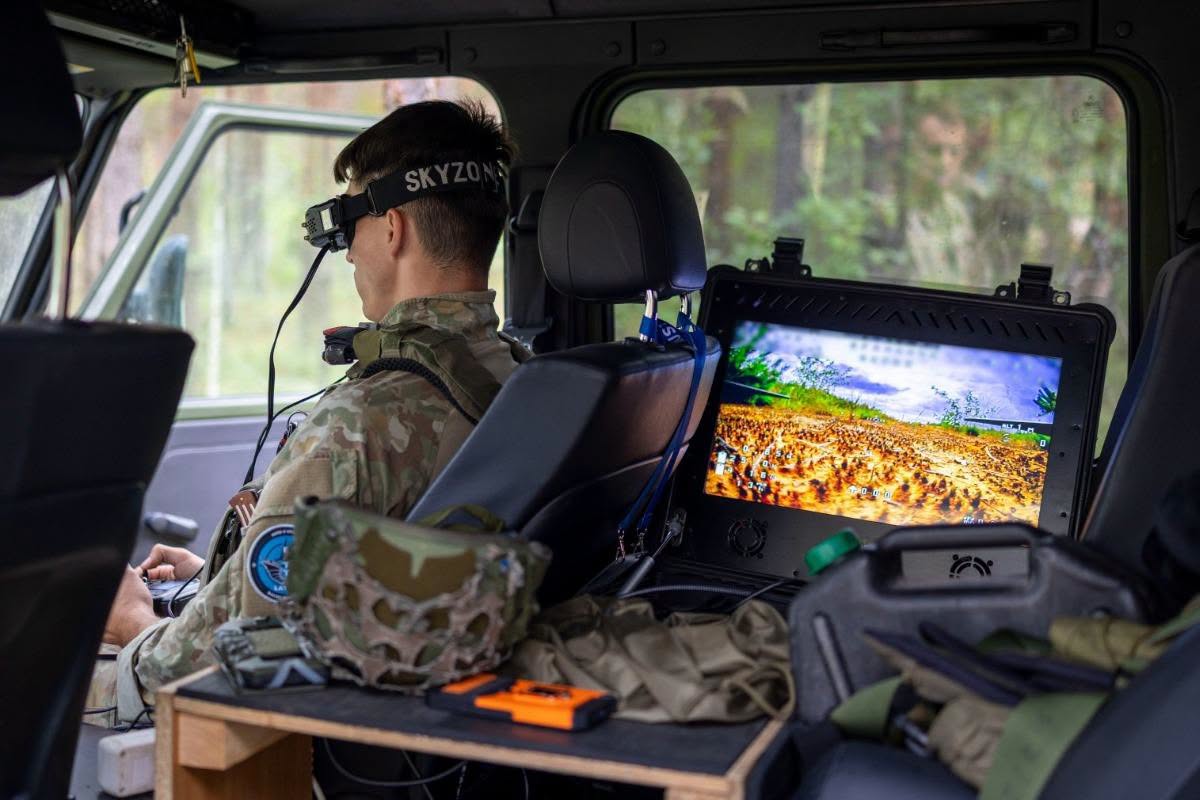
Ukrainian soldiers at NATO's Baltic Trust 2026 exercise in Latvia. Source: NATO
Explore further

650 participants from 24 countries: Ukraine brings its battle-tested drone-defense experience to NATO’s Baltic Trust 2026 exercise

On 25 August, German Chancellor Friedrich Merz said at a coalition summit that his government will soon name who was behind the 4 August drone attack attempt at Leipzig/Halle airport. Russia denies any role in sabotage on European soil and dismisses such accusations as Western scaremongering.

  •  

About 50 grams of suspected military explosive lay in a German field 10 days after the attempt on Ukraine’s plane

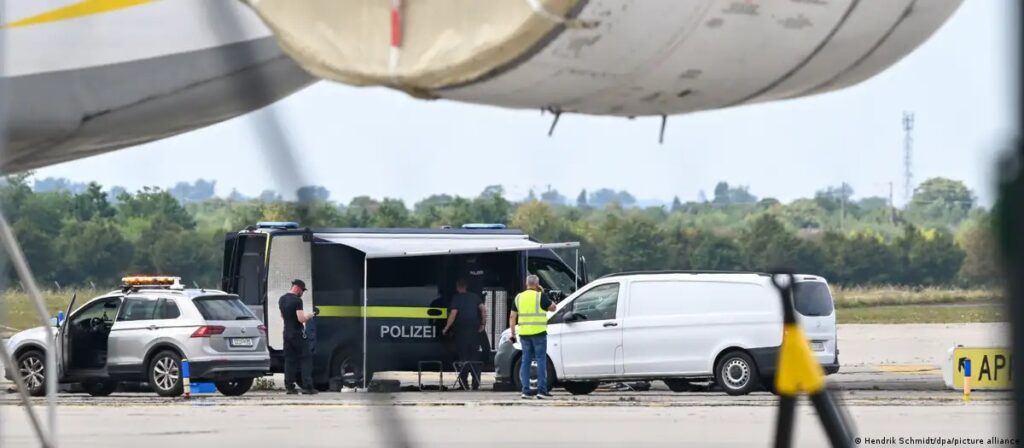
fifty grams hexogen ten days late what germany missed after attack ukraine's plane · post german police vehicles officers apron beneath wing ukrainian cargo aircraft leipzig/halle airport 2026 leipzig halle

German investigators now count three drones around the failed 4–5 August attack on a Ukrainian cargo plane at Leipzig airport, Tagesschau reported on 25 August. Officers found the third machine and a suspected military explosive in a field near the runways. Security circles assume Russian intelligence services helped plan the attempt, and Russia denies any role.

Russia has answered Western support for Ukraine with a campaign inside Europe that runs on arson, recruited agents, and plots against arms-industry figures. While attribution in this case stays at the level of assumption, a suspected move by Moscow's services from watching people to leaving explosives on a working apron widens what German authorities have to guard rather than merely monitor.

A third drone and about 50 grams of suspected hexogen

Investigators found the third drone on the early evening of 14 August in a field in Kabelsketal, security circles told NDR, WDR, and the newspaper Süddeutsche Zeitung (SZ). The area borders the airport's western edge in Saxony-Anhalt. Forensic technicians from Germany's Federal Criminal Police Office (BKA) arrived that day, and the next day they reportedly found a substance at the site. First assessments put it at about 50 grams of hexogen, a military explosive known internationally as RDX. The perpetrators may have had a far larger attack in mind than what has become public, according to Tagesschau. 

The target was a Ukrainian plane

The drone found on the tarmac was meant to hit a Ukrainian Antonov cargo aircraft that moves military goods, according to the investigation cited by the public broadcasters NDR and WDR and SZ. The bomb never went off, because its detonator was apparently defective. The plane had been apparently loaded with ammunition the previous day. Leipzig/Halle carries military freight for the German armed forces and NATO allies, and Ukraine's Antonov Airlines uses it as a base, Euronews reported the same day.

Ukrainian An-124 at Leipzig Airport in Germany. August 5 August, 2026. Photo: screenshot from Bild video
Explore further

A bomb-laden drone hit a Ukrainian An-124 in Germany, then lay unnoticed for hours

The first drone turned up on the airport grounds at around 23:42 on 4 August. Shortly afterward, at about 00:03, a second drone reportedly collided with a cargo plane of the delivery company DHL. That aircraft had broken off its landing because the first find shut the airport, and it probably hit the drone at fence height at several hundred kilometers per hour. Neither that drone nor parts of it have turned up, NDR, WDR, and SZ reported. The German broadcasters placed the damage on the tail unit, while Bild gave a different account, putting the collision about six kilometers out with minor damage to the nose, Euronews said.

Camera footage analyzed after the attempt showed a quadcopter carrying Semtex plastic explosive fly into the wing of a parked An-124 Ruslan without detonating, and Washington assessed that the drone belonged to Russian intelligence. The same airport saw a parcel ignite in July 2024, before crews could load it onto a DHL cargo plane, in what security services treated as a suspected Moscow-linked arson plot.

State-protection officers at the BKA work under orders from Federal Prosecutor General Jens Rommel to establish how the attack was meant to run and who is responsible. Investigators are following several leads, among them recovered DNA. Germany ranks among Ukraine's biggest military backers, and its authorities suspect Russia of orchestrating many of the drone incidents as part of a campaign of sabotage, espionage, and disinformation, Euronews said.

  •  
❌