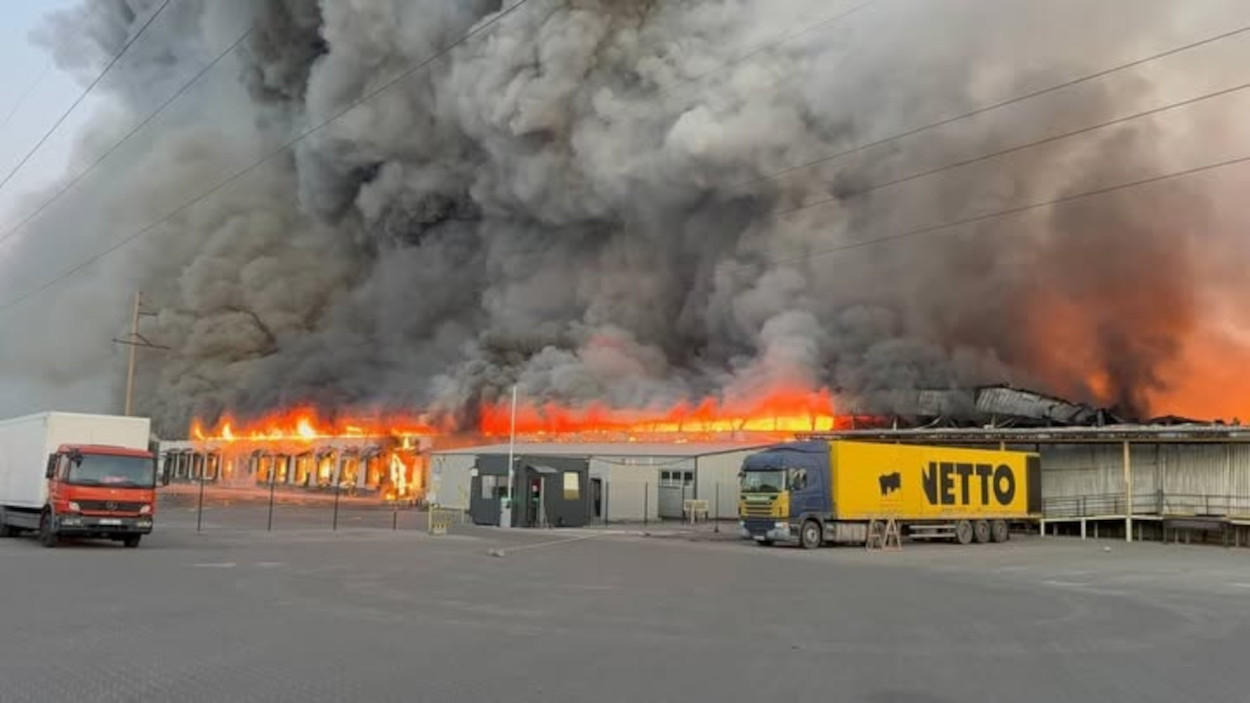
Russian drones killed one man and injured eight people in Kyiv on the morning of 15 September, hitting two gas stations along with warehouses, a restaurant, and an office building, the National Police reported. The strikes came in a night-long wave of 200 drones that also hit Odesa Oblast in southern Ukraine.
Moscow's full-scale war against Ukraine grinds on, and Russia has been targeting Ukraine's civilian supply system for months, taking out retailer warehouses, medicine depots, and the railways that move them. The two Kyiv filling stations were the fourth and fifth stations reported as belonging to state-owned Ukrnafta to be struck in the capital since 10 September.
What Russia hit in Kyiv
The first drone came down at a gas station in the Darnytskyi district shortly after 06:00, and more drones hit warehouses in the Obolonskyi district around the same time, the Kyiv Military Administration said. The strike critically wounded a man who was standing near the Darnytskyi station.
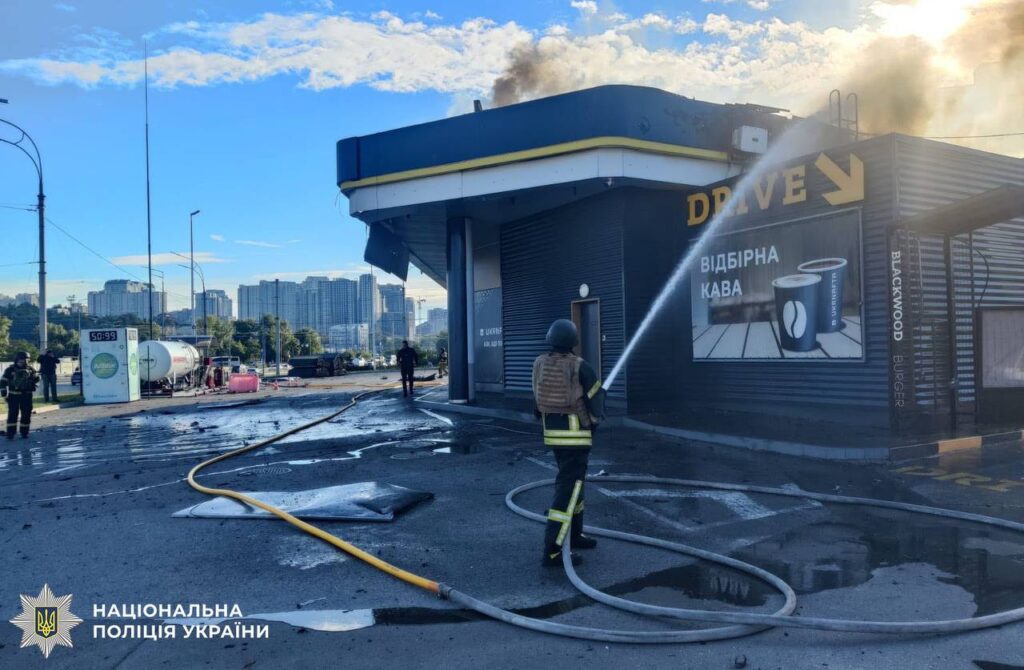
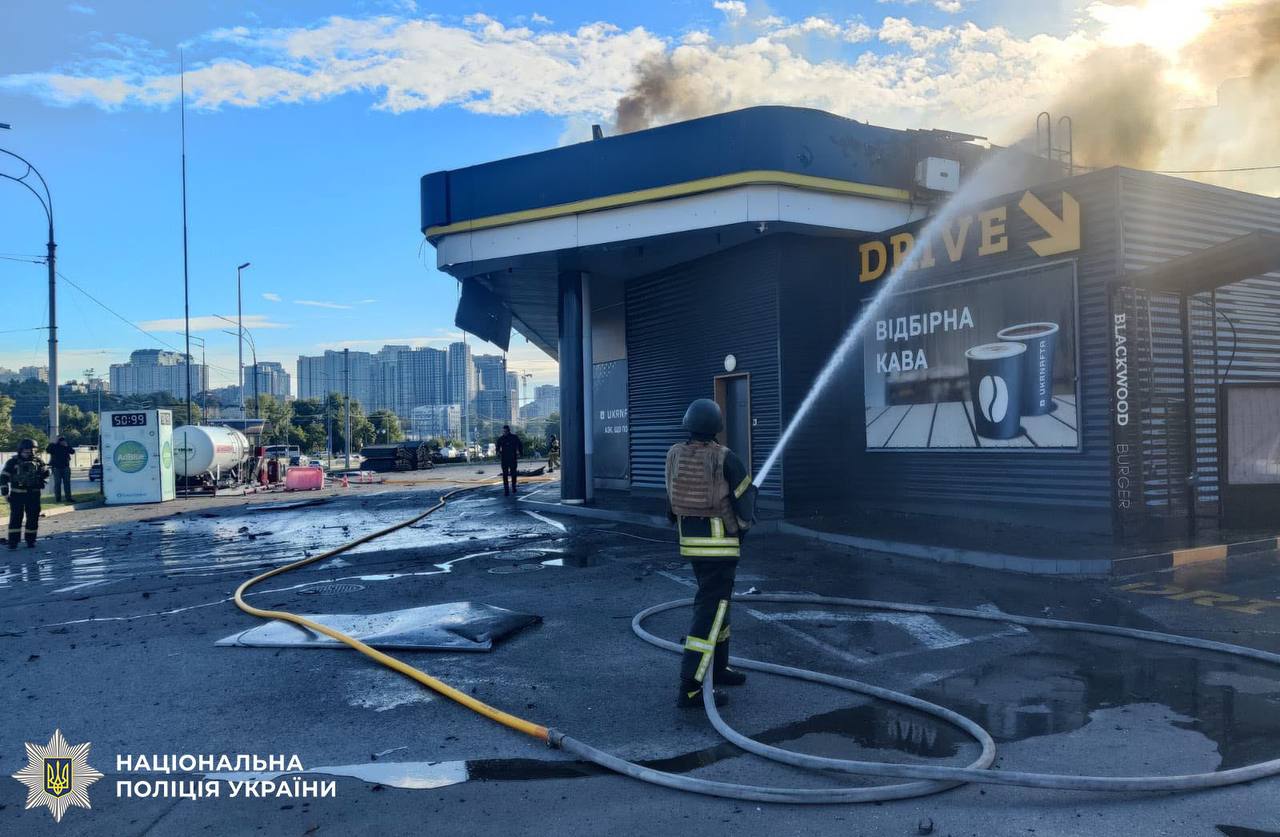
The attack resumed after 08:00. A drone struck a non-residential building in the Solomianskyi district, then a second gas station in the Holosiivskyi district, where heavy smoke rose over the site. Mayor Vitalii Klitschko reported the number of injured climbing through the morning, from two to four to eight, with two of them in serious condition. Emergency services put six of the eight in the Solomianskyi district, which took a second hit around 10:00.
The man hurt at the Darnytskyi station died in hospital at about 10:35. Beyond the two stations, police recorded damage to warehouses, a fast-food restaurant, and a business center.
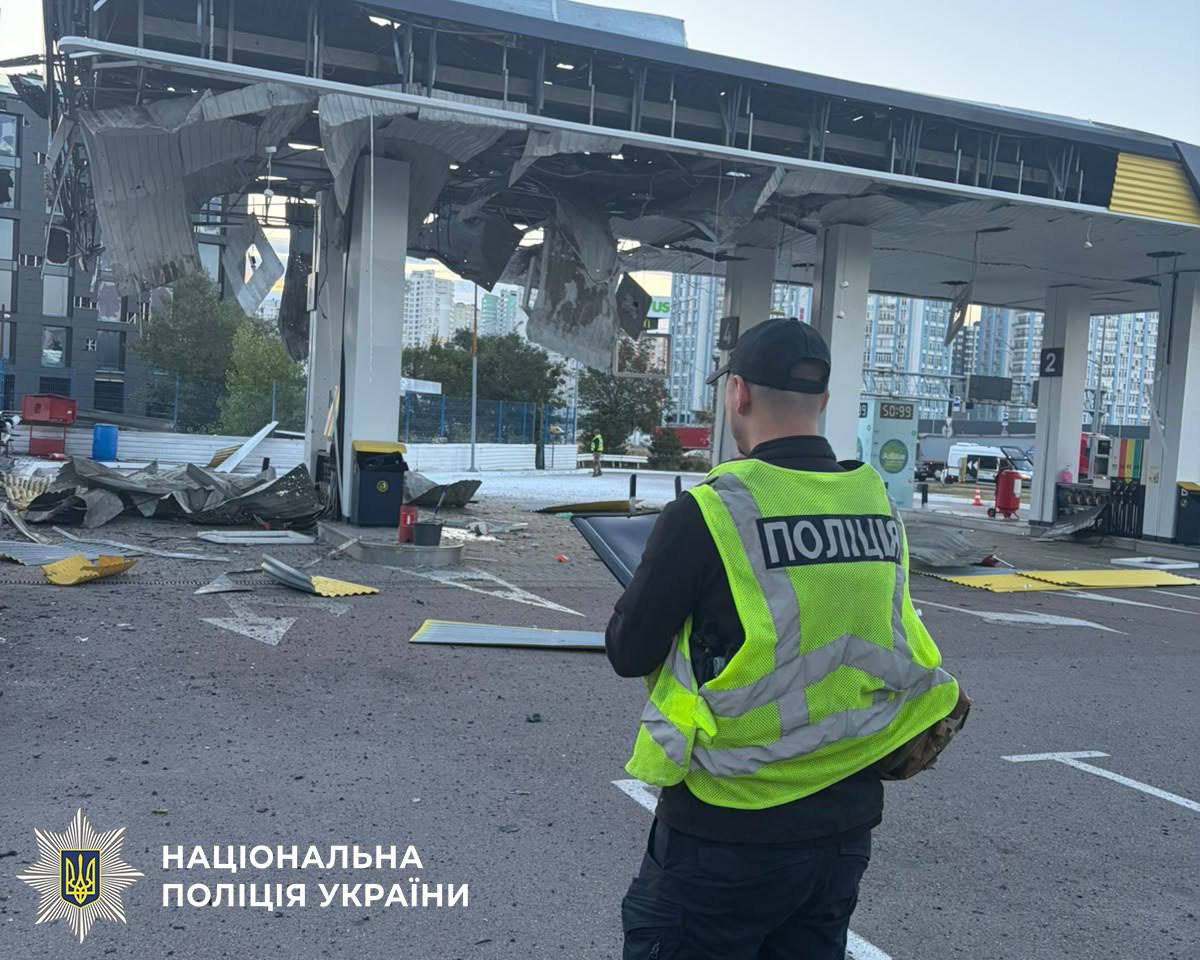
A police officer at an Ukrnafta gas station destroyed by a Russian drone strike in Kyiv, Ukraine, 15 September 2026. Photo: National Police of Ukraine
The wave that carried them
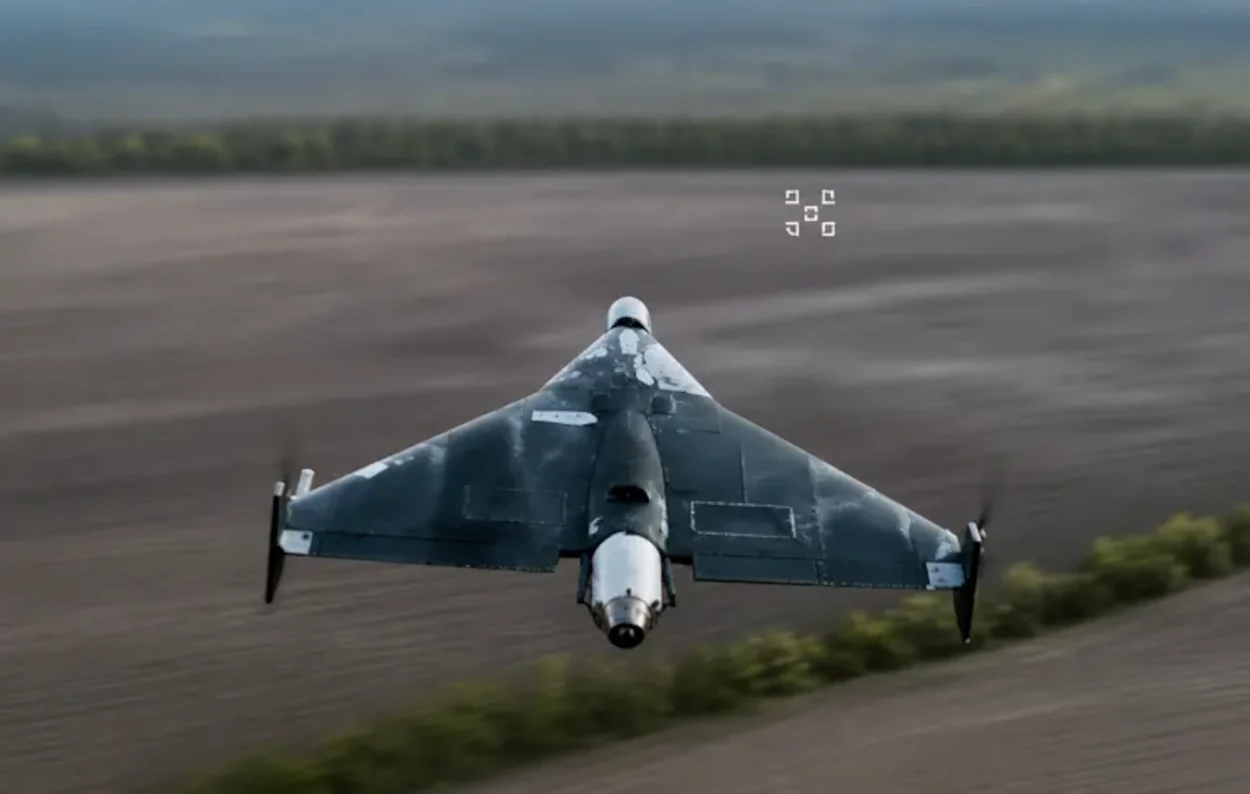
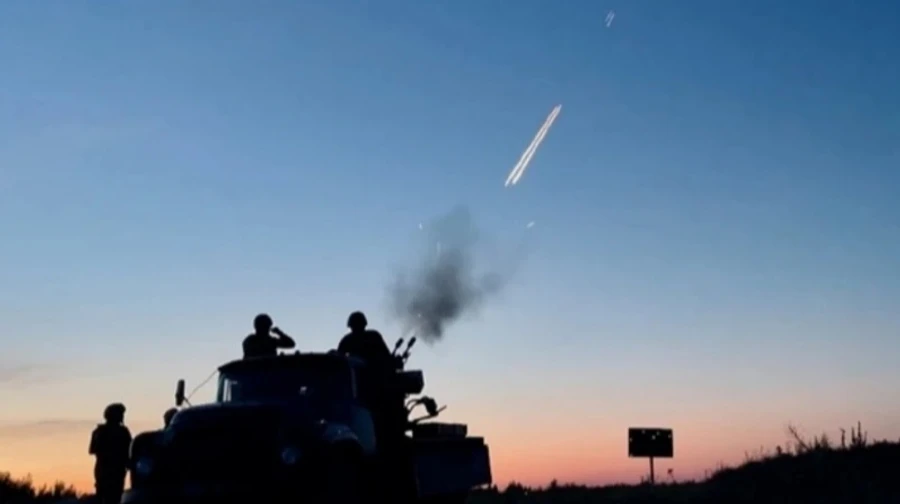
Russia launched 200 strike drones from 18:00 on 14 September, the Air Force said: Shahed types including jet-powered ones, Gerberas, and Parodiya decoys, flown from Russia and occupied areas. Air defense downed or suppressed 187 of them by 08:00, with hits recorded at seven locations and debris falling at three more. The attack was still running when that count was published.
Russian drones killed a man and injured eight in Kyiv, hitting two gas stations
Russian forces hit Odesa Oblast at the same time. Russian forces struck residential buildings, logistics sites, and port and transport infrastructure, oblast head Oleh Kiper said, damaging roofs, facades, and windows of private houses along with dozens of garages and cars.
The same night, NATO fighters shot down a drone over Lithuania that had crossed from Belarus, and Ukrainian forces struck the Syzran refinery in Samara Oblast and a warehouse in Taganrog.
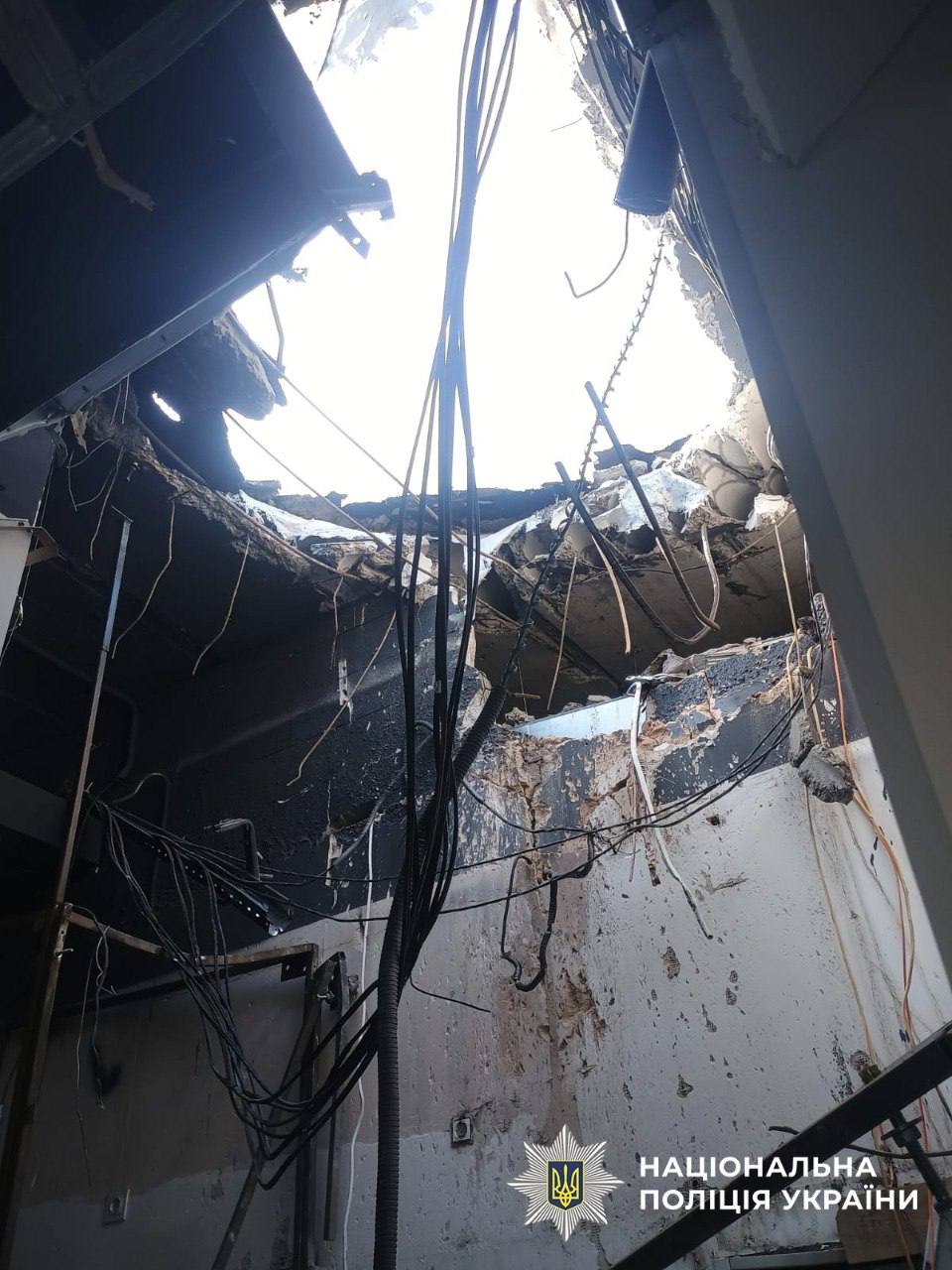
A hole torn through the ceiling of a building hit during the Russian drone attack on Kyiv, Ukraine, 15 September 2026. Photo: National Police of Ukraine
Why gas stations
Kyiv's filling stations have been under systematic attack since 10 September, when a drone came down at a station near a shopping mall. On 11 September, jet drones hit two Ukrnafta complexes on opposite banks of the city and returned to strike one of them a second time.
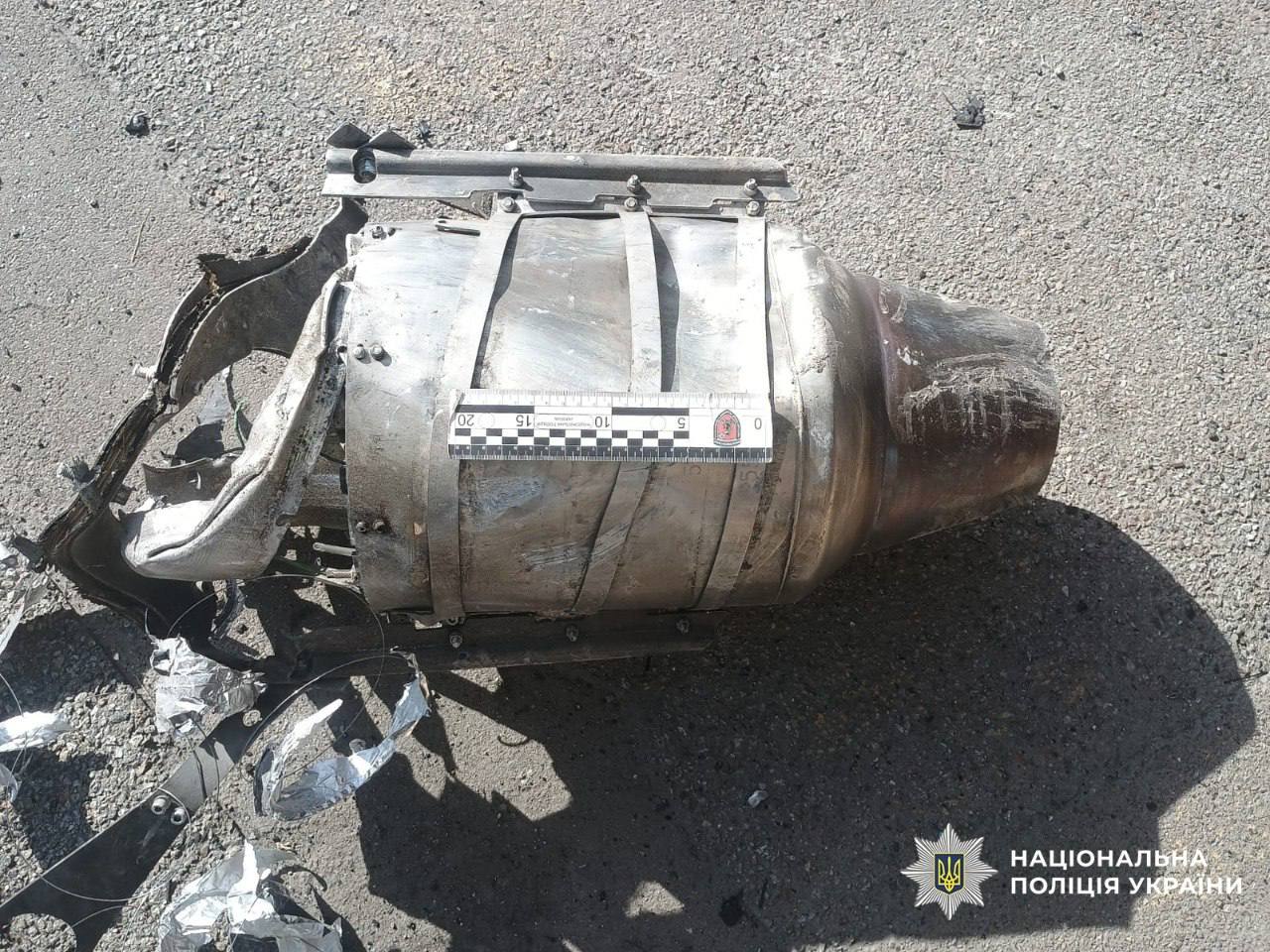
A fragment of a Russian drone recovered after the attack on Kyiv, Ukraine, 15 September 2026. Photo: National Police of Ukraine
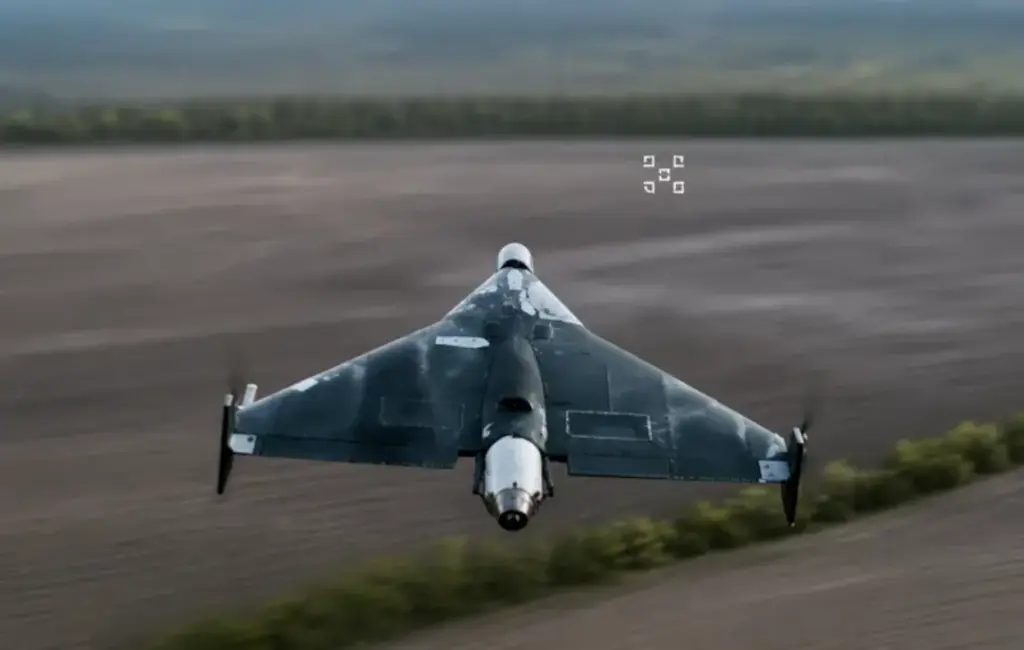
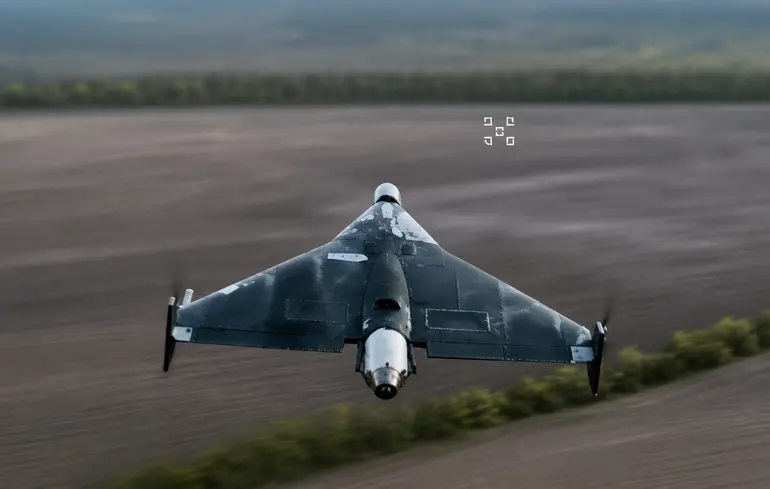
Unlike filling stations in the border oblasts, which Russia hits with cheap short-range drones, the Kyiv stations are being struck with its most expensive ones. Ukrainian stations are mostly struck with the Geran-4 Seeker, the variant fitted with machine-vision targeting, according military observer Oleksandr Kovalenko of Information Resistance.
Geran-5 (above) and Geran-4 (below). Image: TurDef
More than 300 gas stations have been attacked across Ukraine since the current wave began, according to energy ministry data. The strikes have moved gradually from front-line oblasts deeper into the country, and about 80% of damaged stations return to work.
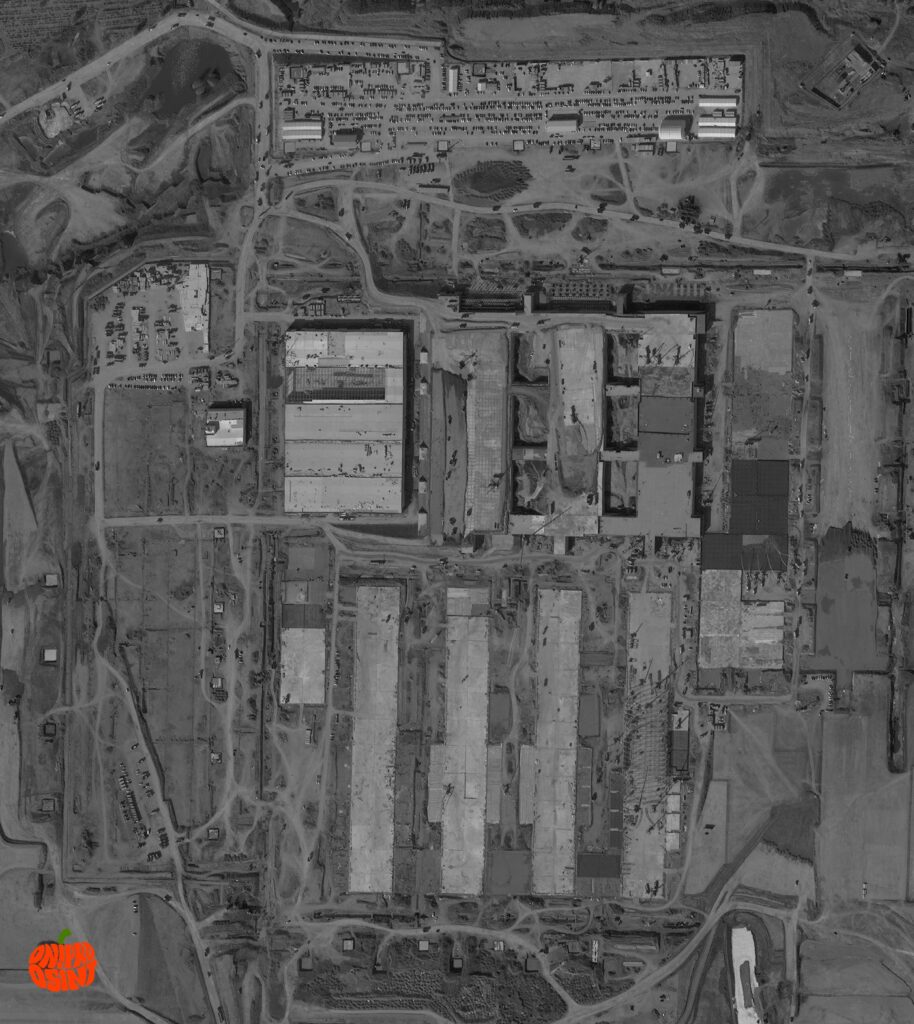
Russia is building large new production halls at the Tatarstan site where it assembles the Shahed/Geran-type attack drones it fires at Ukrainian cities, the Ukrainian geospatial and satellite intelligence analyst Dnipro Osint reported, publishing satellite images of the work. At least five long buildings stand finished in the southern part of the Alabuga special economic zone, with internal roads and access ways laid around them and further construction under way. What the new halls are for is not known yet.
Russia has spent three years enlarging the drone campaign against Ukrainian cities rather than narrowing it, and the cheap Iranian-designed Shahed is the weapon carrying it—fired in nightly waves that now reach the Polish border and paired with the missiles Ukraine intercepts least often. Growth in that campaign starts as floor space in Tatarstan, which makes new assembly halls a forecast of the winter rather than a construction story.
What the images show
Several of the large workshops in the zone's southern section are already complete, and several more sites are in active construction, the analyst said. Laid roadways, and the outlines of additional buildings appear beside the finished rows, and he published the coordinates of the site along with the images.
The plant behind the nightly waves
The zone lies near the city of Yelabuga, more than 1,000 kilometers from the Ukrainian border, and has been one of Russia's principal military plants since 2023. It assembles the Shahed-type strike drones Russia calls Gerans, along with the Gerbera decoys flown alongside them, built at a tenth of a Shahed's cost to make Ukrainian air defense spend interceptors on empty airframes.
Explore further
800 jet drones in four days: Russia is now firing type Ukraine’s interceptors cannot catch
Output has climbed with the attacks. Russia builds about 3,000 of the jet-powered version a month, by Ukrainian military intelligence's count, and has accumulated a reserve of more than 6,000 Gerans for large-scale attacks. The zone itself expanded by 340 hectares in a year, media reported in May.
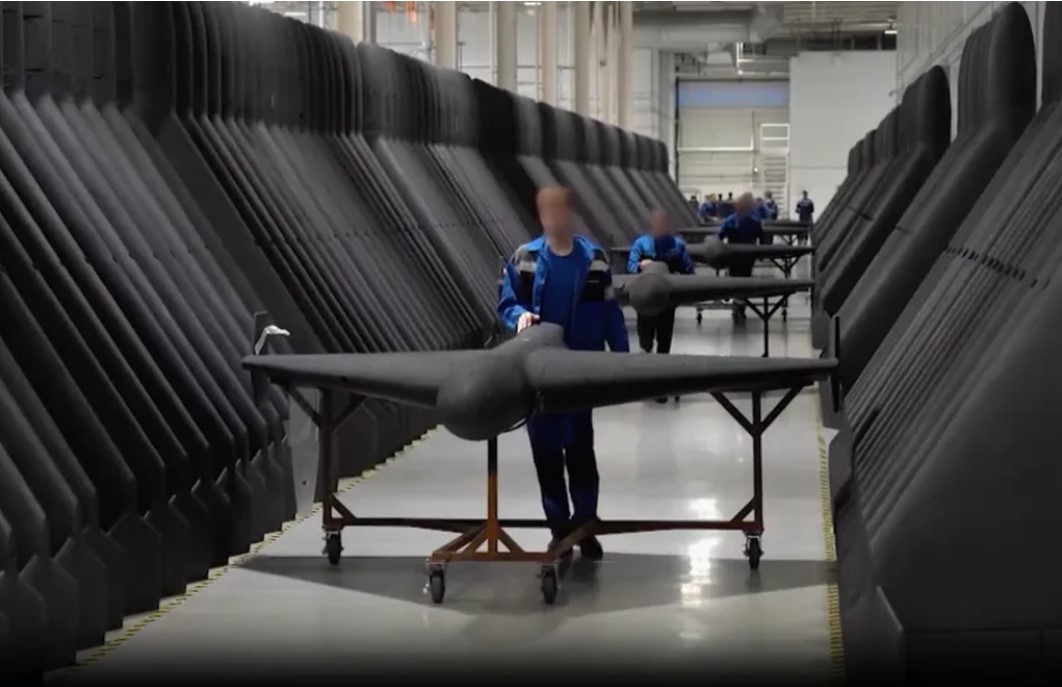
Russia's drone factory in Tatarstan. Photo: Screenshot from the video
Chinese firms supply the engines, navigation systems, and avionics, with Iran's role reduced to consultations and occasional deliveries, while Moscow claims the drones are fully localized. The workforce includes teenage students from the site's own Alabuga Polytech college and women recruited as labor migrants from African and Central Asian countries, some of whom were later sent to the occupied Zaporizhzhia nuclear plant.
Russia’s new “Geran-4 Seeker” Shahed variant uses machine-vision AI for targeting. Source: Dyki Shershni
Struck repeatedly, expanding anyway
Ukrainian long-range drones have hit the zone's workshops more than once, including a confirmed strike on Shahed storage there. None of them disabled the facility, since Ukrainian long-range drones carry too little explosive to wreck industrial buildings. Russia has also fortified the site, installing more than 20 towers with heavy machine guns on its territory and perimeter.
Russia struck a passenger train just two kilometers from Ukraine’s border with Poland on 13 September, as Moscow continued a second day of attacks on Ukraine’s railway network and expanded strikes against transport and logistics infrastructure far from the front line.
Russia is increasingly using its expanding drone fleet to reach transport, logistics, industrial and civilian infrastructure deep inside Ukraine. Western regions, long considered safer because of their distance from the front, are now seeing strikes on railways and border crossings, making even civilian travel and routes out of the country increasingly dangerous.
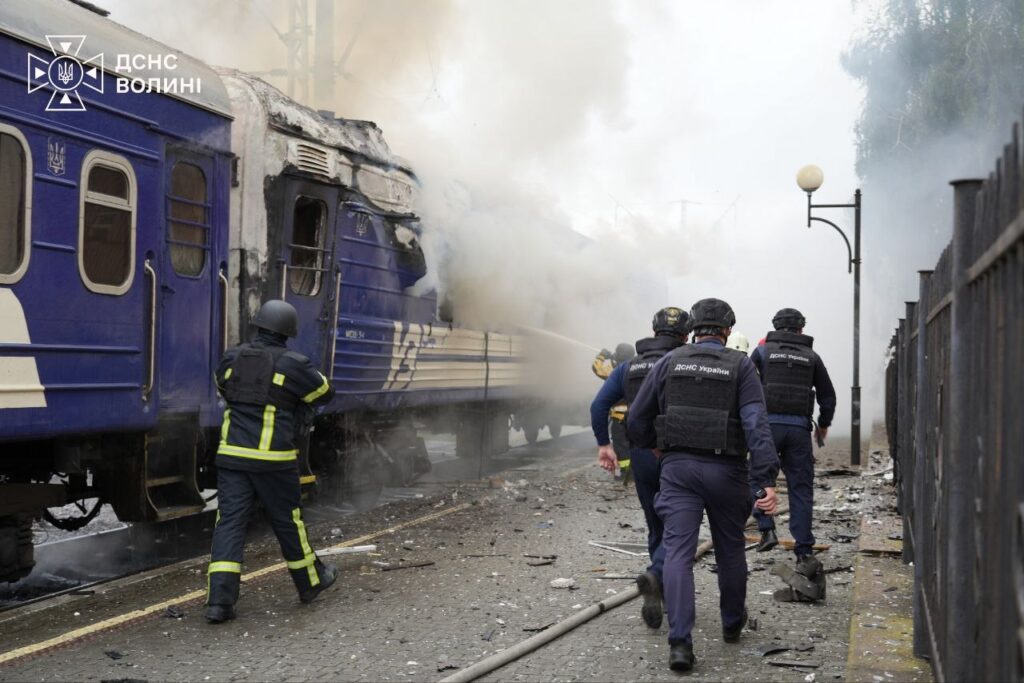
The latest attack took place in Ukraine’s north-western Volyn Oblast, near the Yahodyn border crossing with Poland. According to Ukraine’s state railway operator Ukrzaliznytsia, a Russian drone struck the locomotive of a passenger train.
A monitoring team detected the threat in advance and warned the train crew, preventing casualties. The railway operator said trains to Warsaw and back were already running again after the strike, although with significant delays.
A gas station was also struck in a Russian drone strike near the Yahodyn crossing, causing a large fire, according to UNN, adding to the danger around a key transport route between Ukraine and Poland.
Poland also issued an air-raid alert for areas near the Ukrainian border, including Włodawa, Łęczyński and Świdnik counties and the cities of Chełm and Krasnystaw.
The attacks came alongside Russian strikes on railway infrastructure in several other parts of Ukraine.
A Russian drone struck a Kyiv–Warsaw passenger train just two kilometers from Ukraine’s border with Poland on 13 September, as Russia continued a second day of attacks on Ukraine’s railway network.
The strike hit the train’s locomotive in Volyn Oblast near the Yahodyn border… pic.twitter.com/vb9FuOJTQ5
Update: Diplomatic train may have been Russian drone’s target
Update 19:00: Ukrzaliznytsia later said a diplomatic train carrying security advisers from several EU member states and former European leaders, including former UK Prime Minister Boris Johnson, had been at Yahodyn shortly before the strike. Another train at the station during the attack carried former CIA Director David Petraeus.
Ukrzaliznytsia said the Russian drone may have been targeting the diplomatic train, which departed earlier than scheduled as railway staff adjusted train movements in real time because of the ongoing threat of Russian strikes. The operator said it continues to change routes and schedules as tracks are damaged or blocked by attacks.
Russia targets railways across Ukraine
Ukrzaliznytsia said this was the second consecutive day of Russian attacks on the railway network.
On 12 September, Russian drones struck railway facilities in Lutsk, Volyn Oblast, including a passenger train, as well as Fastiv, Kyiv Oblast. Passengers were evacuated after the threat was detected.
Ukrzaliznytsia said its monitoring center and railway personnel remain on heightened alert as Russia continues targeting the network. Evacuations and diversions have caused delays on several routes, including services toward Dnipro, Zaporizhzhia and Kryvyi Rih.
Russia also attacked a railway infrastructure site in Vinnytsia Oblast on 13 September, according to Ukraine’s State Emergency Service.
Russia’s drone campaign is expanding
Russian attacks are increasingly reaching critical infrastructure and civilian areas across Ukraine. Ukrainian President Volodymyr Zelenskyy said Russia struck energy facilities, railway sites, businesses and residential buildings during the latest wave of attacks, including missile and drone strikes on Odesa.
Zelenskyy said Russia had launched around 2,100 drones against Ukraine in the past week, alongside nearly 1,700 guided aerial bombs and 78 missiles.
He said Russia is using jet-powered Geran drones to “destroy the economy and destroy people’s lives.”
Russia has sharply increased its use of upgraded Geran attack drones in recent months, which are faster than earlier versions and can cover the long distances needed to strike targets deep inside Ukraine. Their growing speed and scale are putting additional pressure on Ukraine’s air-defense system, which has to detect and intercept large numbers of drones across the country.
“Russia’s terrorism is a common threat for many,” Zelenskyy said, arguing that the threat must be defeated in Ukraine rather than allowed to spread further into Europe.
Border crossings increasingly targeted
The strike near Yahodyn comes after Russia began targeting Ukrainian border crossings farther from the front line.
Since late August, Russian forces have struck at least five Ukrainian crossings with Moldova and NATO member Romania. The crossings handle civilian traffic, trade and logistics that are increasingly important to Ukraine as the war continues.
On 9 September, Russian drones struck the Starokozache crossing with Moldova, killing two civilians and injuring three others. One Russian drone entered Moldovan airspace and flew toward Romania, prompting NATO aircraft conducting air-policing duties to scramble.
Russia also struck the Orlivka ferry crossing on the Romanian border twice in early September.
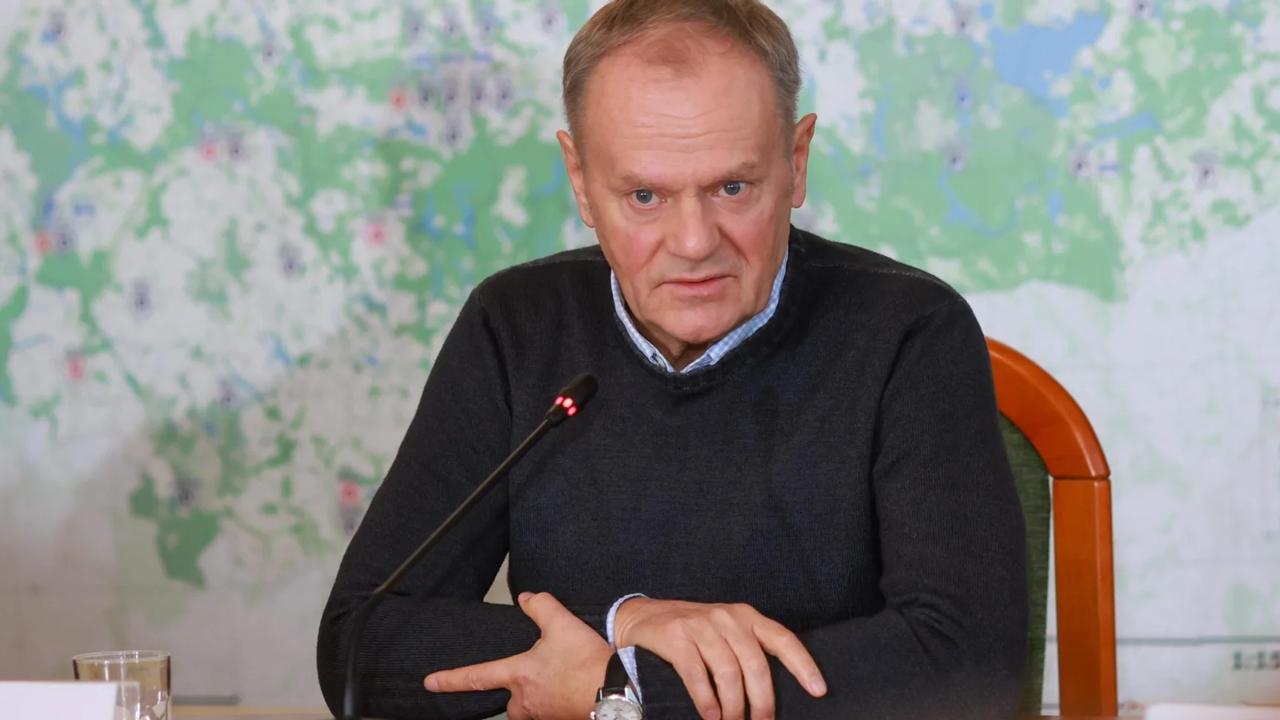
The attacks prompted growing concern in Poland. On 10 September, Polish Prime Minister Donald Tusk said Poland expected Russia could target Ukrainian border crossings with Poland as Moscow expands its strikes against transport and logistics routes.
Tusk said Poland had received intelligence indicating that similar attacks could occur against crossings involving other countries. He also warned that Poland and Europe needed to prepare for different scenarios along Europe’s eastern flank.
The strike near Yahodyn came only three days after that warning.
Explore further
Poland expects Russia to target border crossings as attacks on Ukraine escalate – Russia has already hit crossings with Moldova and Romania
“Russia is trying to expand the geography of its terror”
Ukrainian Foreign Minister Andrii Sybiha said Russia was deliberately expanding the geography of its attacks.
“Moscow tries to expand the geography of its terror,” Sybiha said, arguing that Russia is trying to turn the entire territory of Ukraine into a battlefield as it fails to achieve its objectives on the front.
He said Moscow was targeting “civilians, trains, and the infrastructure that keeps the country moving.”
Sybiha called for stronger air defenses, interceptors and counter-drone capabilities, as well as measures targeting Russia’s drone production and supply chains.
In a separate statement after the Yahodyn attack, Sybiha said Russia’s strikes near the Polish border were “not just a continuation of its attacks on our state borders.”
“This is Putin’s terror ‘knocking’ directly on the doors of the EU and NATO. Russian barbarians are at your gate, dear partners,” he said, urging European countries to respond with stronger sanctions.
Moscow tries to expand the geography of its terror. Unable to achieve its goals on the battlefield, Russia attempts to make the entire territory of Ukraine a battlefield and turns to systematic attacks against civilians, trains, and the infrastructure that keeps the country… pic.twitter.com/Kw85G0DEHM
Estonian Foreign Minister Margus Tsahkna said members of his ministry had been stuck at the same Ukrainian-Polish border crossing only hours before the latest images emerged because of the Russian drone threat.
“Russia’s attacks are becoming more intense and moving ever closer to NATO and the EU,” Tsahkna said.
Ukraine has not had enough of the right weapons to shoot down Russia's jet-powered drones, President Volodymyr Zelenskyy said at a press conference with Canadian Prime Minister Mark Carney in Calgary on 10 September. He put the remaining obstacles at time and money rather than engineering, and used the appearance to press partners for joint production. Russia attacks Ukrainian cities with drones every night, and the defense against the fastest of them is still being built.
Russia has spent this year rebuilding its air campaign around whatever Ukraine intercepts least, and aiming it at supply chains, industry, and housing across the country. Ukraine answers with hardware it can design in months and cannot yet fund in the quantities the nights demand, which is why it now asks partners for production lines alongside finished weapons.
"We did not have enough means"
Zelenskyy was answering a question about the Russian drone found at Leipzig airport in Germany and the drone that delayed his own flight out of Moldova.
"We have to be very frank: we did not have enough means to destroy all these fast drones," he said. "Yes, we are on the way, more than 60 companies are already working on this. Yes, we will get a result, but it takes time."
Three days earlier, he noted that only three to five of the firms show real results.
Explore further
Germany blames Moscow for Leipzig drone attack, closes consulate and cultural center among sweeping diplomatic measures
The bottleneck is money
He then went past the engineering.The problem is not only technology, he said, but the funding to build thousands of interceptors every single day.
That arithmetic sends Ukraine abroad with its blueprints.
"That is why we talk about joint production, about production lines in one country or another," Zelenskyy said.
Russia now builds about 3,000 jet-powered drones a month, by Ukrainian military intelligence's count, and fired some 800 of them in four days at the end of August. They fly faster than propeller Shaheds and are harder to bring down, which has stretched air raid alerts nationwide. Ukraine's Air Force cannot yet rely on usual interceptor drones against them.
One drone, of the kind that turned up at Leipzig or crossed Moldova, is not a problem for Ukraine, Zelenskyy said. Thousands of fast drones a day are.
Explore further
One Russian drone held up seven flights in Moldova, Zelenskyy’s trip to Norway for King Harald V’s funeral among them
What a night without enough interceptors looks like
The same night, Russia sent 161 long-range attack drones at Ukraine, decoys among them, along with a cruise missile.That is an ordinary night now, and its damage spreads thin across the map instead of landing in one place.
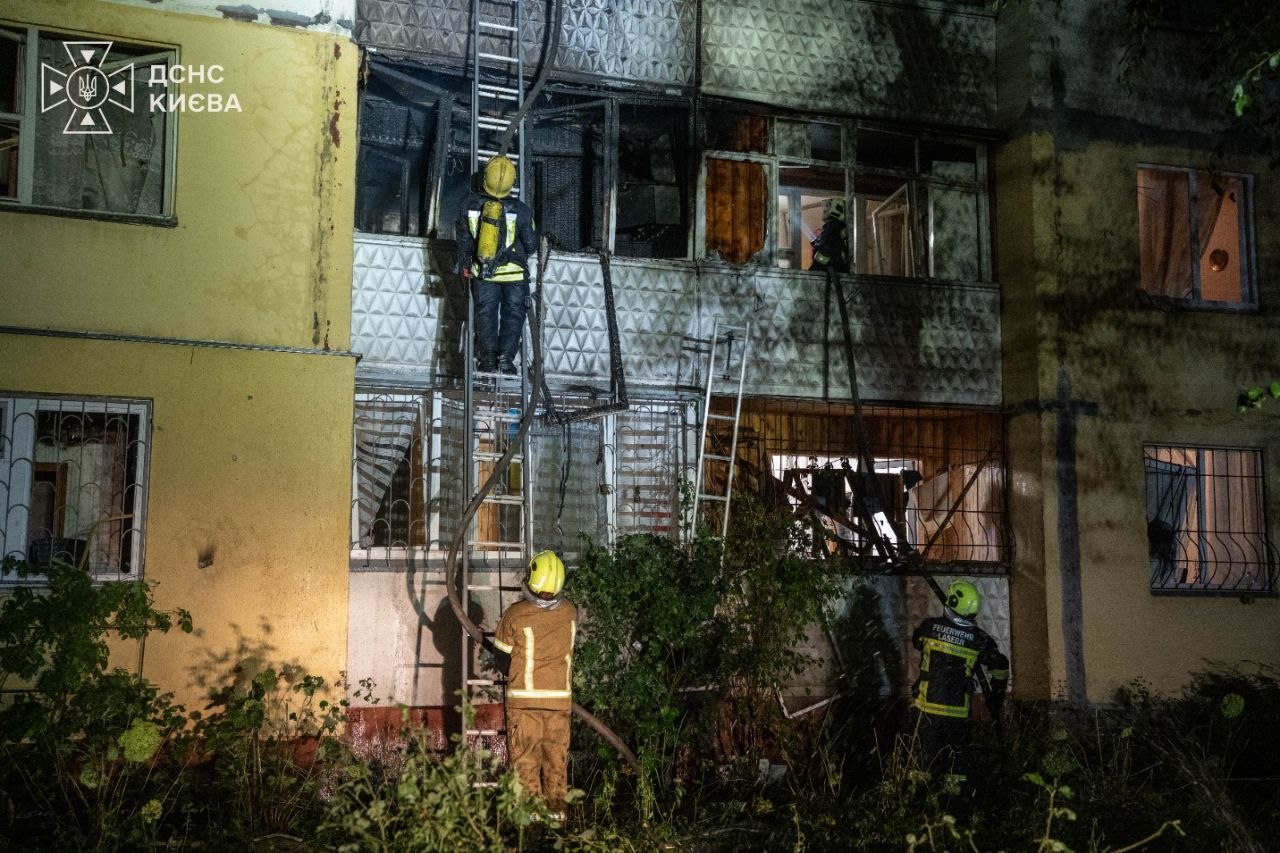
A Russian strike set a nine-story apartment block alight in Kyiv, burning the facade up to the fifth floor and a flat on the second. Firefighters carried seven people out and handed seven more to medics. Russian drones injured eight people in the capital overnight.
North of the city, Russia burned warehouses in the Bucha district, then struck the same site again while the crews were still dousing the flames.
In Dnipro, the drones kept coming back, more than ten times from the evening on, damaging a plant and a row of garages and injuring seven people.
Farther out, Russia injured a mother and her son in Zaporizhzhia and damaged a plant in Zhytomyr Oblast, and the waves ran west far enough that NATO jets went up over Romania.
Ukraine has nearly run out of the one weapon that reliably stops Russia's ballistic missiles, and no replacement is close, according to The Economist. Now it is betting on cheaper homemade interceptors—and on hitting Russian missiles before they launch.
Russia has spent this year rebuilding its arsenal around the weapons Ukraine can least often intercept and aiming them at cities and the power grid, so the race to field cheap defenses will help decide how many people survive another winter of strikes.
Ukraine's homemade bet
Kyiv is building its own answer. The pan-European Freyja project, led by Ukrainian firm Fire Point with 12 European defense companies, aims for an interceptor near $700,000. That is a fraction of a $7 million export Patriot round. The second track is "left-of-launch": hitting the factories and launchers before missiles fly. In March, Ukraine struck a Bryansk plant making Iskander components. It also hopes to add its own Sapsan and FP-series missiles within months, though catching Russia's mobile launchers is a tall order.
Explore further
Europe’s answer to the Patriot costs $700,000 a shot—and no foreign government can switch it off
Faster drones, less warning
Russia sends waves of jet-powered Geran-4 and -5 drones to swamp Ukrainian radar, then fires ballistic missiles behind them. The drones fly at up to 600 kph, and 3,000 leave Russian factories each month. Over five days to 1 September, Russia hit Kyiv almost hourly. The barrage paused on 6 September for the visit of American envoys Jared Kushner and Steve Witkoff, who had just met Putin in Moscow. The day after they left, Russia killed three civilians. Ukraine's F-16s, meanwhile, are running low on the American air-to-air missiles they need against cruise missiles.
The shield is empty
Ballistic missiles are the class of Russian weapon Ukraine's air defenses stop least often, which is why Brussels recently cleared Ukraine to spend EU loan money on American interceptors for the winter, and why a cheaper homemade fix carries so much weight.
Explore further
1,000 Patriot missiles arrive too late for this winter, so Ukraine asked the Ramstein arms coalition to open its warehouses
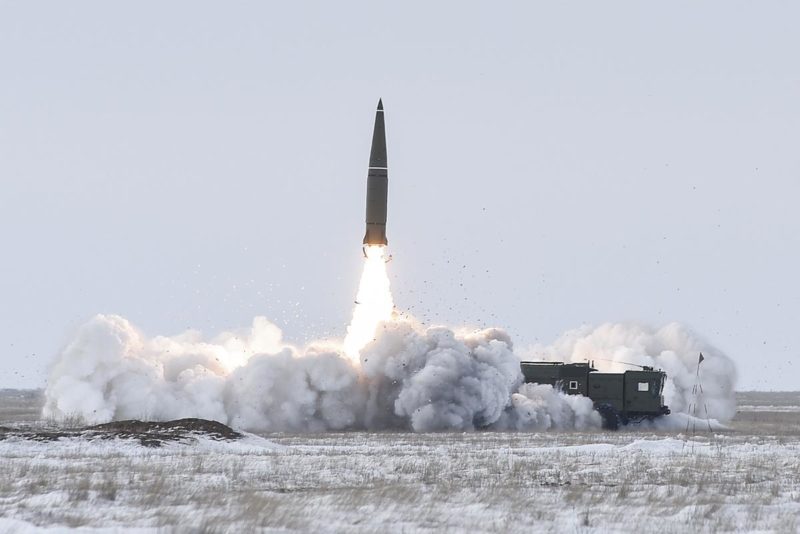
Of 57 ballistic missiles fired in the first eight days of August, Ukraine intercepted only one. Kyiv has almost nothing left of the PAC-3, the one interceptor that reliably downs them. Russia now turns out about 100 of its deadliest missiles a month, 60 of them Iskander-Ms. Resupply looks unlikely, because US President Donald Trump's war on Iran drained America's own Patriot stocks, and no ally wants to give up interceptors it cannot replace.
Moldova closed its airspace on the afternoon of 8 September and delayed the plane carrying Ukraine's President Volodymyr Zelenskyy to Norway after a Russian drone crossedinto the country, its government said in a statement to Reuters. The aircraft was cleared for takeoff once officials established that it had come down on Moldovan territory. Norway's prime minister described the episode as a near-miss, and neither government has said how close the drone came.
Russia runs three things at once along the EU's eastern frontier—mass drone attacks on Ukraine, drones crossing into Moldovan and Romanian airspace almost weekly, and strikes on the border checkpoints tying the three countries together—and states without interceptors can answer only by closing their skies.
What happened, and when
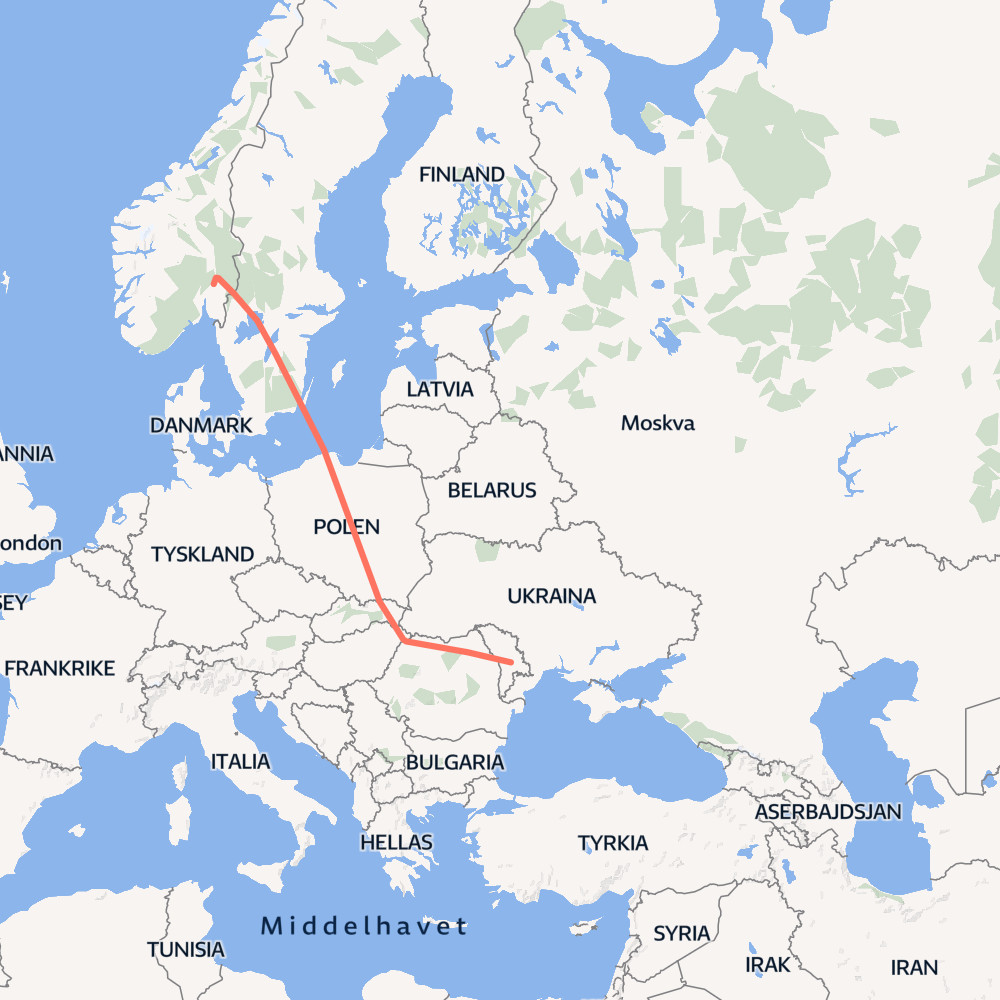
Moldova's National Army detected a Shahed-type drone entering from Ukraine at 16:20, the country's Defense Ministry reported. It flew toward Bender, a city in the Russian-backed breakaway region of Transnistria, then turned toward the capital, Chișinău, by 16:32. At 16:37, it left the country over western Moldova and headed into eastern Romania, across the Prut river border.
The route of Zelenskyy's flight from Moldova to Oslo, 8 September 2026. Map: NRK
Controllers restricted the airspace over central Moldova at 16:30. The same drone came back from the Romanian side, crossed the north of the country, and came down outside a village in the northwest, near the Romanian border, setting dry vegetation alight, according to the log. Nobody was hurt, and the airspace reopened at 17:39, more than an hour after it closed. The BBC's Ukrainian service placed the crash near a different northern village, without naming a source, so the exact spot is unsettled.
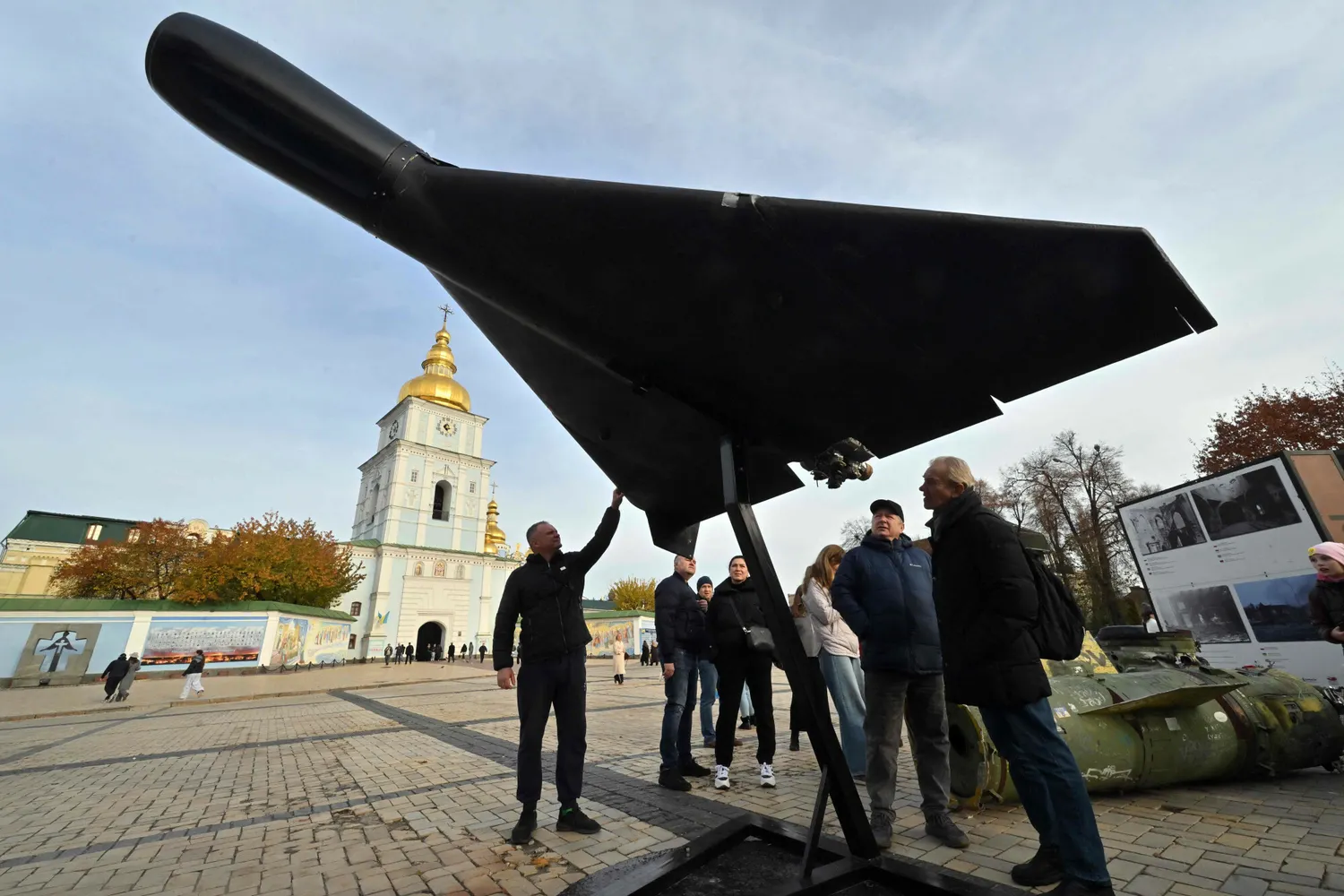
People look at an Iranian-designed Shahed 136, (Geranium-2) drone of Russian Army at an open-air exhibition of destroyed Russian equipment near Saint Michael's Golden-Domed Cathedral in Kyiv on November 2, 2025, amid the Russian invasion of Ukraine. Photo by Sergei SUPINSKY / AFP/Eastnews
The violation fell in the window when Zelenskyy's aircraft was preparing to take off, Militarnyi reported, citing the ministry. The civilian airport he was leaving from suspended operations and the border service closed the nearby crossings, the outlet added. Three departures and four arrivals were delayed in all, Reuters said.
Explore further
A drone nearly hit Zelenskyy’s plane taking off from Moldova on his way to a king’s funeral, Norway’s PM says
How the plane and the drone crossed paths
Zelenskyy flies an Airbus A319 corporate jet, and the threat to it probably came from a jet-powered Geran drone that crossed Romanian and then Moldovan airspace at around 17:00 that day, Militarnyi wrote, publishing the drone's track from the monitoring channel Oko Hora. That fits the return leg in the army's log, though no authority has tied a specific aircraft to the delay.
The route of a Russian jet-powered Geran drone across Romania and Moldova, 8 September 2026. Map: Oko Hora
Norwegian Prime Minister Jonas Gahr Støre told the broadcaster NRK the plane was almost hit as it prepared to leave, without naming his source. His office later described a danger recorded in Moldovan airspace that forced the delay. Norway's Finance Minister Jens Stoltenberg said Zelenskyy recounted the details himself at a closed meeting in Oslo.
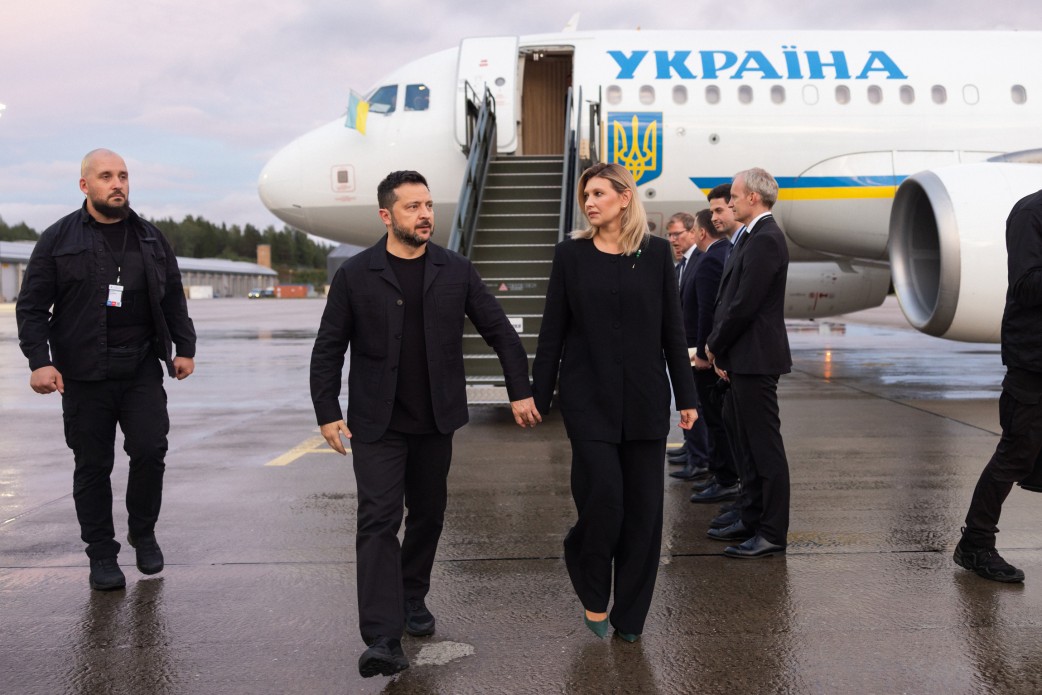
Zelenskyy and First Lady Olena Zelenska attended the farewell ceremony for King Harald V, who died on 28 August. Around it, the president worked on air defense, meeting Støre and then executives of defense companies from partner countries about the FREYJA anti-ballistic missile program, which Norway's government casts as a cheaper alternative to the Patriot.
The next night, the border crossing
Overnight on 9 September, Russian drones struck the Starokozache crossing on Ukraine's border with Moldova, killing two people and injuring three. The dead were Ukrainians, and a Moldovan citizen was among the injured, Moldova's Foreign Ministry told the broadcaster TV8. Border guards reopened the crossing that afternoon.
Russia claimed it had struck the crossing because it was used for military logistics. Moldova's Foreign Ministry rejected that outright, saying no weapons move through its territory, and that the people crossing there are families, children with their mothers, and the elderly. It is one of the working crossings on the Odesa Oblast stretch of the Ukrainian-Moldovan border, where the heaviest traffic runs through Palanca and Giurgiulești.
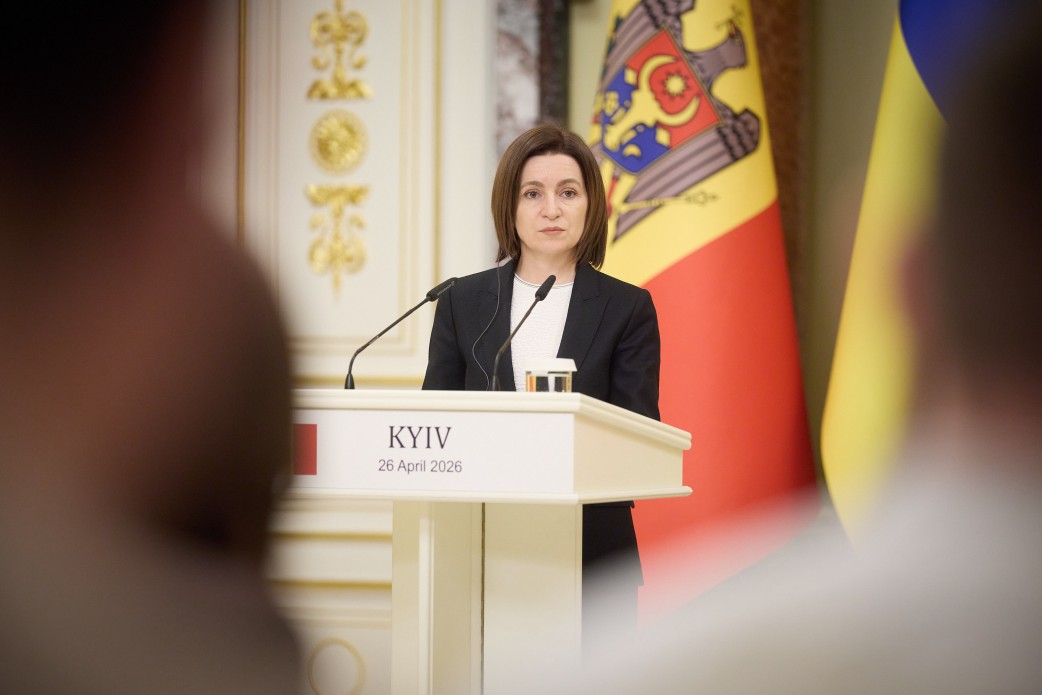
Moldova's President Maia Sandu condemned both the strike and the Geran-type drone that had forced her country to close its airspace the day before, and said the events show Ukraine needs more air defense.
Explore further
Moldova is investing in air defense against the Russian drones crossing from Ukraine—Romania shoots down the ones that reach it
The pattern, and Moldova's empty sky
Russia has hit at least five checkpoints on Ukraine's western borders since late August, four of them facing Moldova and one facing Romania, and the drone that struck the Kotlovyna crossing on 20 August flew in through Moldovan airspace. Euromaidan Press has covered part of that campaign, including burned food cargo near the Giurgiulești crossing in August. The State Border Guard Service has called such strikes an act of terrorism, because people are present at the crossings when they are hit.
In the air, Moldova can do little. It is still buying its first serious air defenses, so it restricts airspace and waits while Romania scrambles jets against the drones that reach its side. It logged three airspace breaches in nine days in August, and more than 100 drones were detected near Romania in four days that month.
Ukraine has four potential interceptor systems that could shoot down Russia’s increasingly common jet-powered Geran attack drones, Ukrainian Defense Minister Yevhen Khmara said on 30 August, according to Suspilne.
Russia has sharply increased its use of the faster drones against Ukrainian cities, causing major damage to civilian infrastructure and many civilian casualties. The attacks are putting near-unprecedented strain on Ukraine’s air defenses.
All four interceptor systems have undergone field testing, Khmara said. Ukraine now aims to bring them to the required level as quickly as possible and scale production to thousands of units.
“The search for countermeasures against jet-powered drones continues,” Khmara told journalists, according to Suspilne. “There are already four potential interceptors that can shoot down jet-powered ‘Shaheds.’ Field tests have already been conducted on them.”
Russia is rapidly expanding Geran attacks
Russia's Gerans are jet-powered adaptations of the Iranian-designed Shahed attack drones that Russia has produced domestically throughout the full-scale war. The faster Geran variants give Ukrainian air defenses less time to detect and engage them.
Ukrainian defense technology adviser Serhii “Flash” Beskrestnov said Russia used more than 2,500 jet-powered Gerans against Ukraine in August, up from about 1,500 in July.
He also said the drones are being launched against Ukraine almost directly from Russian factories, highlighting the rapid expansion of their production and use.
Zelenskyy calls for faster production
Ukrainian President Volodymyr Zelenskyy has made countering the Gerans a priority as Russia sustains repeated attacks on Ukrainian cities.
At a 28 August meeting of Ukraine’s military leadership, Zelenskyy said the country needed to maximize domestic weapons production, with the immediate focus on defending against jet-powered Gerans and increasing Ukraine’s own long-range strikes against Russia.
“[The] main thing is our defense against jet-powered ‘Shaheds,’” Zelenskyy said in his evening address.
He said Russia had adopted a tactic of keeping Kyiv and other cities under repeated air raid alerts, with Gerans reaching the capital as well as cities including Kharkiv and Zaporizhzhia.
Explore further
Four days of Russian attacks keep Kyiv under near-constant fire. Ukraine is struggling to defend its skies
“All our means of countering [them] are already being used,” Zelenskyy said, adding that Ukraine needs a significant acceleration in production of interceptors specifically designed for the jet-powered drones.
Khmara said the four potential interceptors are now at the field-testing stage, with the next step being to bring them into production at a scale of thousands of units.
For Ukraine, that scale is critical. The country must defend a large territory against increasingly large Russian drone barrages while also preserving limited air-defense resources for ballistic and other missiles that require more advanced interceptors.
Ukraine's cheap interceptor drones have been knocking Russia's nightly attackers out of the sky, so Russia has now bolted a jammer onto some of its own drones to blind them, according to Serhii "Flash" Beskrestnov, an adviser to Ukraine's President on defense technology. He examined the system, found in drone wreckage, and mapped how it strikes back at the interceptor sent to hunt it.
Russia batters Ukrainian cities with long-range drones most nights, and Ukraine has leaned on a cheap shield—drones costing a few thousand dollars—instead of burning through far pricier missiles. Anything that dulls that shield pushes the cost of defending the sky back up.
A jammer that waits for the interceptor
The unit rides on a Geran, Russia's version of the Iranian Shahed one-way drone. It listens for the video signal an approaching Ukrainian interceptor beams back to its pilot. Its receiver reads the interceptor's working frequency, then orders a transmitter to bury that same channel in noise, Beskrestnov found.
Explore further
How Ukraine uses AI to guide long-range drone strikes through electronic warfare and deep into Russian-controlled rear areas
By his first estimate, the jammer's signal runs about five times stronger than the interceptor's video link—enough to wipe the picture and any chance of steering the drone onto its target.
Seconds decide it
In Beskrestnov's account, the system detected a test transmitter and switched on jamming after about three seconds, and the feed cut out. The device stays nearly idle until a hunter comes close, then jumps to full power to smother the signal. It targets the ordinary analog video band around 5.8 gigahertz that many cheap interceptors still use.
Possible answers, include interceptors with terminal-guidance homing for the final stretch of flight, digital communication links, or transmitters set to non-standard frequencies.
Explore further
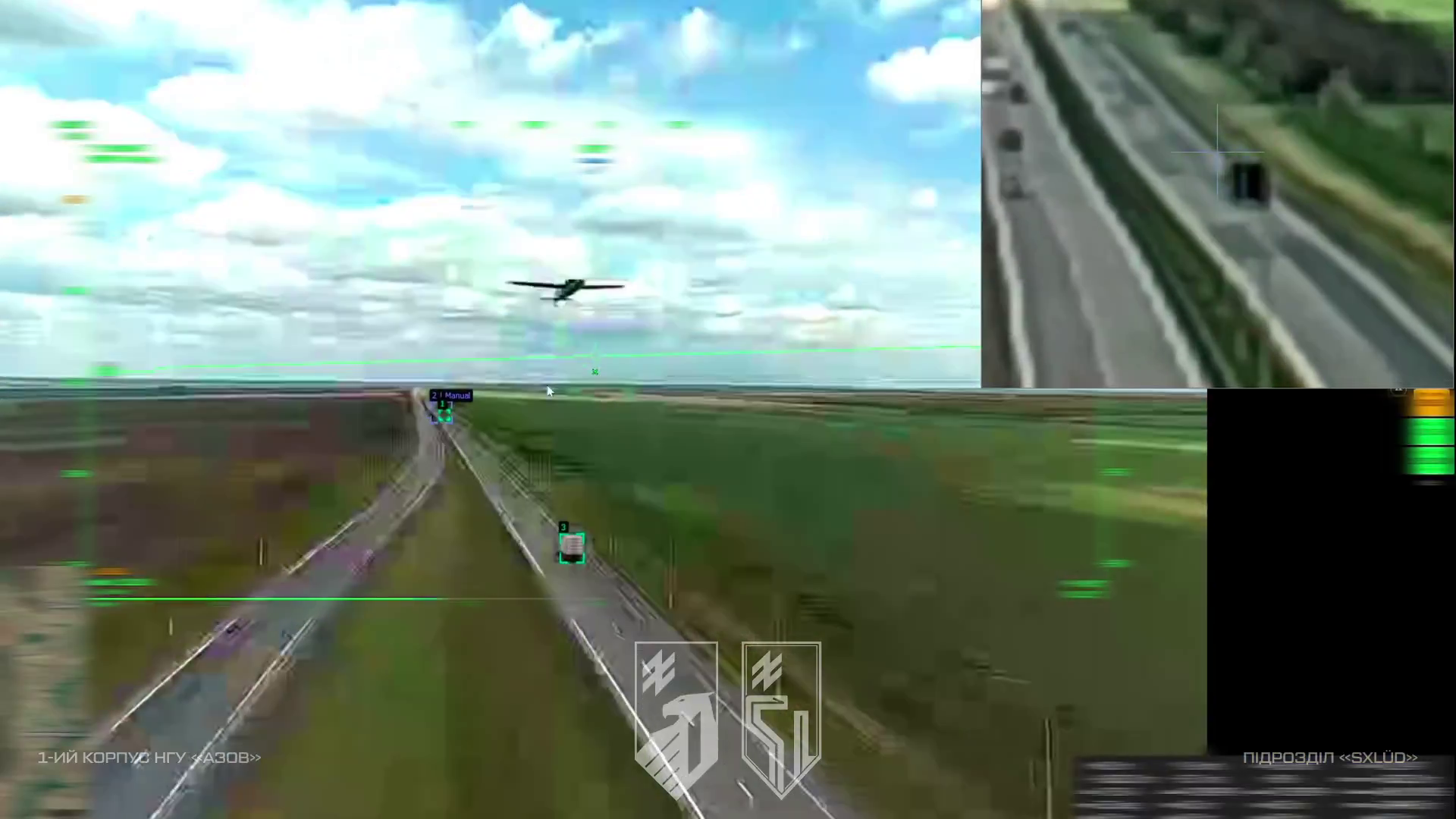
“Two targets and ammo with one drone”: How a Ukrainian drone crew hunts Russian transport behind the front line
An old problem for Russia's drones
Russia has tried again and again to keep its one-way drones alive against Ukraine's defenses, including wiring jammers into some Shaheds earlier this year. Spending weight and power to protect a drone from a far cheaper interceptor shows how well those cheap drones work.

 Connexion

 (@andrii_sybiha)