Rodney Mims Cook Jr., chairman of the U.S. Commission of Fine Arts, sought to pay tribute to Russia’s ambassador to United States, whose death was announced on Nov. 11.
Rodney Mims Cook Jr., chairman of the U.S. Commission of Fine Arts, sought to pay tribute to Russia’s ambassador to United States, whose death was announced on Nov. 11.
Rodney Mims Cook Jr., whom President Trump appointed to the U.S. Commission of Fine Arts, orchestrated the display of a Russian flag at Millennium Gate Museum in downtown Atlanta this week.
Current and former officials say that Transportation Secretary Sean Duffy’s push to quickly finish modernization during President Trump’s second term could continue to disrupt air travel.
Current and former officials say that Transportation Secretary Sean Duffy’s push to quickly finish modernization during President Trump’s second term could continue to disrupt air travel.
Ukraine must put a "just and tough" end to Khimprom, a drug cartel led by a Russian citizen, President Volodymyr Zelenskyy wrote on 17 November. He discussed the cartel investigations with Ukraine's acting top prosecutor, after an anti-corruption case that caught the cartel's leader on tape reached the security service and police.
Russia keeps fighting Ukraine along the front line and hitting Ukrainian cities with drones and missiles, while Kyiv negotiates to join the European Union. Br
Ukraine must put a "just and tough" end to Khimprom, a drug cartel led by a Russian citizen, President Volodymyr Zelenskyy wrote on 17 November. He discussed the cartel investigations with Ukraine's acting top prosecutor, after an anti-corruption case that caught the cartel's leader on tape reached the security service and police.
Russia keeps fighting Ukraine along the front line and hitting Ukrainian cities with drones and missiles, while Kyiv negotiates to join the European Union. Brussels ties those talks to the rule of law, and Kyiv can't close any negotiating chapter until it meets interim targets on courts, corruption, policing, and democratic institutions. In October, Kyiv and Brussels agreed to set up a joint task force to speed up the rule-of-law and anti-corruption reforms that gate membership. A cartel accused of trying to buy people in the very agencies meant to stop it shows what those reforms are up against.
The president wants punishment nobody can dodge
Zelenskyy and acting Prosecutor General Anton Kovalskyi went over the work of the Prosecutor General's Office in the two months since Kovalskyi took charge, and the investigations into what the president called the Khimprom gang.
"The inevitability of punishment is the principle that must become the best answer to the criminal activity of Khimprom and the people linked to this structure," Zelenskyy wrote.
Acting Security Service of Ukraine (SBU) head Oleksandr Poklad proposed internal steps to strengthen the service, Zelenskyy wrote in a separate post on 17 November. The president ordered a plan for them and said there were also answers to "weighty personnel questions."
A Russian-built drug network inside Ukraine
In April, Ukraine's National Police tied Khimprom to U420, a chain of shops it says sold drugs, and said the cartel's network had grown to 105 distribution points across the country. Khimprom's leader is a Russian citizen known as "Mexican," and police counted more than 30 violent crimes the gang committed or ordered.
Why now: the trail reached the security service
On 4 November, detectives from the National Anti-Corruption Bureau (NABU) detained SBU Major General Serhii Duka, suspected of shielding a group that investigators say ran or protected scam call centers, drug sales, and a fake-euro workshop. Two police officers are also among the five people NABU charged. On the investigators' recordings in the same case, Khimprom's leader offered $2 million to remove Dmytro Torhalo, the police's anti-drug chief, investigative outlet Slidstvo.Info reported. Torhalo confirmed the cartel leader had threatened him. The leader also discussed bribing then-Interior Minister Ihor Klymenko, a NABU unit head said.
Serhii Duka (center), a general in the Security Service of Ukraine (SBU), being detained by anti-corruption detectives at a cottage in Roslavychi, Kyiv Oblast, Ukraine, 4 November 2026. Photo: DR, via NV
Duka left custody on 13 November after 1,612 payments covered the bail the court had set, Ukrainska Pravda reported, citing its sources. The outlet's sources had said SBU officers in the regions were pressed to pay. Duka told a parliamentary inquiry on 18 November that nobody had forced anyone to collect the money.
On 7 November, Zelenskyy called that week's news about the SBU "frankly shameful" and asked lawmakers to make security officers declare their wealth again. He also said Kyiv had raised Khimprom with the United States. On 10 November, Kovalskyi ordered an internal check on whether prosecutors helped return property seized from scam call centers and U420, his office said.
Explore further
Investigators say prosecutors shielded scam call centers. Their office has now fired eight people and is checking how its ex-chief left Ukraine
On Friday, Zelenskyy told reporters the cartel had already entered Poland and was trying to enter Germany, and that Ukraine needed foreign law enforcement, primarily the US, to stop it, Interfax-Ukraine reported. Anti-corruption officials told him they had nothing linking Klymenko, now secretary of Ukraine's National Security and Defense Council, to Khimprom, he said.
Police officers at a U420 shop, part of the chain linked to the Khimprom drug cartel. Photo: National Police of Ukraine
A prosecutor's office with a record of its own
Kovalskyi, previously Khmelnytskyi Oblast's chief prosecutor, became acting prosecutor general by decree on 17 September. His predecessor, Ruslan Kravchenko, left Ukraine while anti-corruption agencies investigated alleged protection of scam call centers.
An investigation by the Government Accountability Office found that researchers were able to prod chatbots into generating data that could be used in planning or conducting mass-casualty attacks.
An investigation by the Government Accountability Office found that researchers were able to prod chatbots into generating data that could be used in planning or conducting mass-casualty attacks.
The study, conducted in the spring at the request of Senator Maggie Hassan, Democrat of New Hampshire, involved chatbots from OpenAI, Anthropic, Google and SpaceXAI.
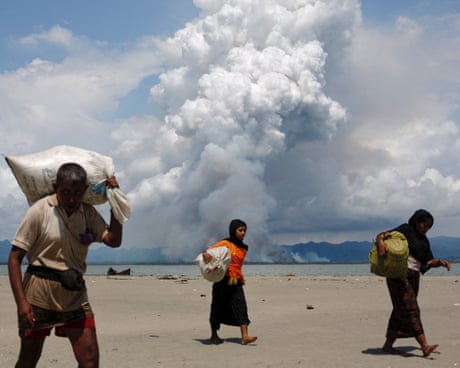
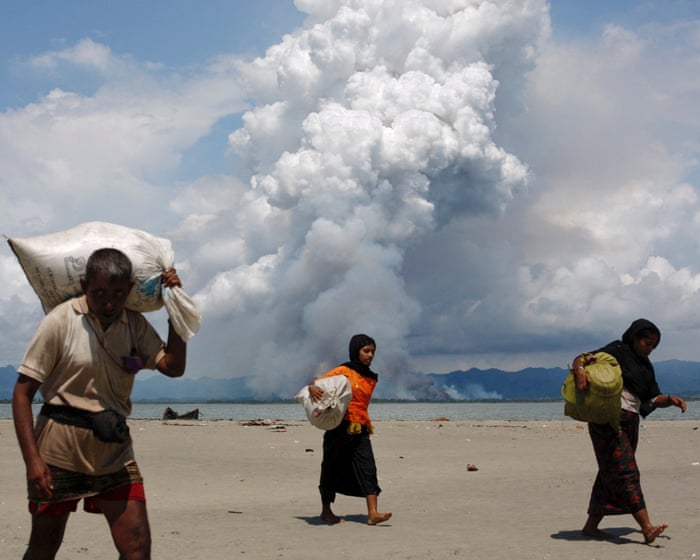
A ruling against Myanmar could set precedent for court’s judgment on Israel’s actions in GazaFears are growing that the US could impose sanctions on judges at the international court of justice, including this year’s Nobel peace prize winner, Navi Pillay, if the court rules on Thursday that the Myanmar government committed genocide against the Rohingya.The ICJ has never found a state responsible for committing genocide, and a significant factor in previous cases has been how to prove “intent” in
The ICJ has never found a state responsible for committing genocide, and a significant factor in previous cases has been how to prove “intent” in a crime defined as acts committed with the “intent to destroy, in whole or in part” a national, ethnical, racial or religious group.

 Connexion