❌

Vue normale

Fears that Ukraine will lose Starlink are back after Musk backed Trump against Zelenskyy. Adviser says profit makes cutoff unlikely

11 octobre 2026 à 15:10

SpaceX will not cut Ukraine off from Starlink satellite communications, Serhii “Flash” Beskrestnov, presidential adviser on defense technology, says. The reason is that the company could lose a large share of its revenue.

Ukraine’s troops and drones lean heavily on Starlink, a network Kyiv neither owns nor controls, and Elon Musk has used that control against it before. The latest shutdown fears spread after Elon Musk supported US President Donald Trump's criticism of Ukrainian President Volodymyr Zelenskyy.

    “Not a year goes by without it coming up again: ‘They’ll cut off our Starlink.’ The enemy’s Telegram channels fuel these rumors. We have good and stable partner relations with SpaceX,” Flash writes.

    Musk is first of all a businessman, and Ukraine brings SpaceX significant profit, so he is sure no one will switch Starlink off in Ukraine, Flash said. Unexpected moves are possible, he added, but of a different kind, such as turning Starlink on for Russia inside its own territory.

    The rumors come amid real US pressure

    The fears did not appear in a vacuum. After Trump allowed Russian diesel back to US markets, talk spread of "sanctions" on Ukraine if it keeps hitting the Russian refineries that fund Moscow, with the Financial Times reporting, citing European officials, that Trump’s administration has threatened to halt the mechanism for buying US weapons for Ukraine, known as PURL.

    Axios has also reported, citing a Ukrainian and an American official, that Washington has threatened to stop sharing intelligence with Ukraine if it continues striking Russian refineries.

    Ukraine is building a backup

    The scare feeds a longer effort to reduce dependence. Ukraine is working on a satellite system of its own, something similar to Starlink but beyond Musk’s control, President Volodymyr Zelenskyy said on 4 October.

    The timing is the reason, he said: some states will share the technology with Russia late this year or early next, and the Chinese are among them. Moscow is already fielding its own Starlink-style constellation, Rassvet, though for now it reaches Ukraine only in brief passes.

    The Guardian view on the US, Russia and the international criminal court: Trump’s assault on the rule of law intensifies | Editorial

    Par : Editorial
    11 octobre 2026 à 12:25

    A fuel deal with Vladimir Putin, and sanctions against the legal institution, ram home the president’s belief that might is right

    On Friday, Donald Trump drove home his belief that might is right and the rule of law is an obstacle rather than an essential foundation stone of international order. First came the escalated assault on the international criminal court (ICC), sanctioning the body itself. Then he announced a deal with Russia to buy diesel.

    The US has long chafed at the notion of being bound by the rule of law that it espoused publicly. That hypocrisy now appears as a lesser vice. The president has declared that “my own morality” is all that constrains him. His brazen flouting of the law, embrace of dictators and rhetorical attacks all undermine global standards.

    Do you have an opinion on the issues raised in this article? If you would like to submit a response of up to 300 words by email to be considered for publication in our letters section, please click here.

    Continue reading...

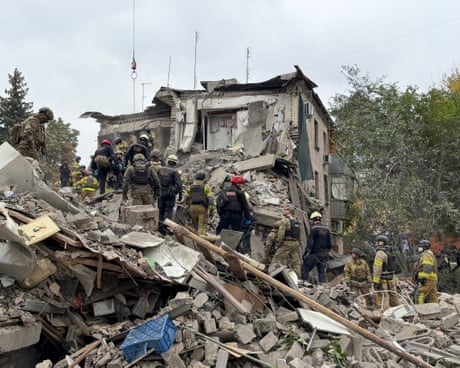
    © Photograph: Daryna Naumova/EPA

    © Photograph: Daryna Naumova/EPA

    © Photograph: Daryna Naumova/EPA

    • ✇US news | The Guardian
    • Trump’s deal with Putin will have little impact on US diesel prices, experts say
      Analysts say fuel will take weeks to ship and quantity is too small to affect prices, while full deal is unlikely to be met given damage to Russian refineriesTrump announces partial ceasefire but Zelenskyy says deal is ‘news to me’Donald Trump’s deal with Vladimir Putin to temporarily lift sanctions on US imports of Russian diesel will have little “meaningful” effect on motorists and businesses in the US and overseas, energy and foreign policy analysts have predicted.The US president infuriated
       

    Trump’s deal with Putin will have little impact on US diesel prices, experts say

    11 octobre 2026 à 11:56

    Analysts say fuel will take weeks to ship and quantity is too small to affect prices, while full deal is unlikely to be met given damage to Russian refineries

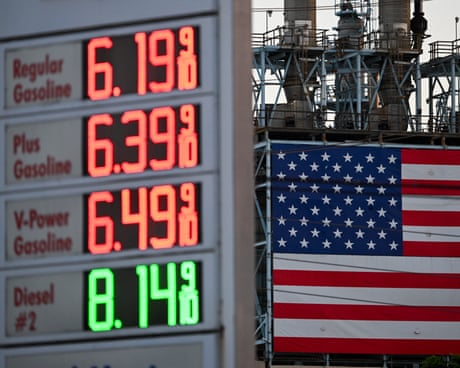
    Donald Trump’s deal with Vladimir Putin to temporarily lift sanctions on US imports of Russian diesel will have little “meaningful” effect on motorists and businesses in the US and overseas, energy and foreign policy analysts have predicted.

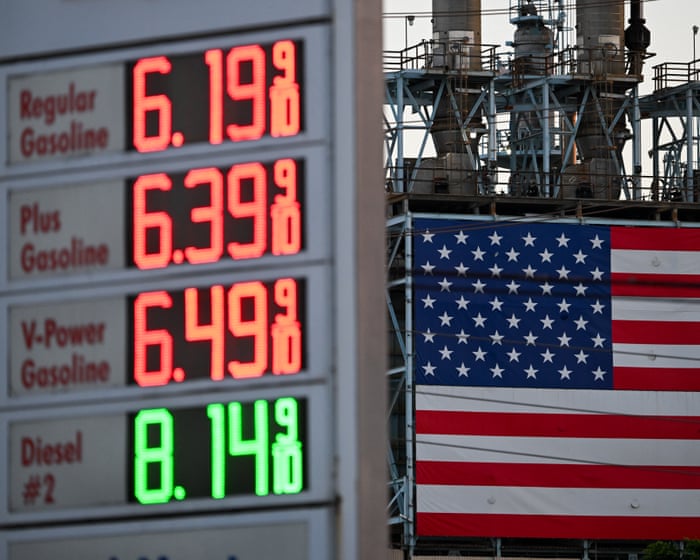
    The US president infuriated Volodymyr Zelenskyy when he announced the deal on Friday, writing on Truth Social that the agreement with his Russia counterpart to supply millions of tonnes of diesel was essential to reduce fuel prices in the US, which have soared after his decision to go to war against Iran.

    Continue reading...

    © Photograph: Patrick T Fallon/AFP/Getty Images

    © Photograph: Patrick T Fallon/AFP/Getty Images

    © Photograph: Patrick T Fallon/AFP/Getty Images

    Trump declares immediate energy ceasefire between Russia and Ukraine. Zelenskyy says it was news to him, but Ukraine’s ready

    11 octobre 2026 à 11:29

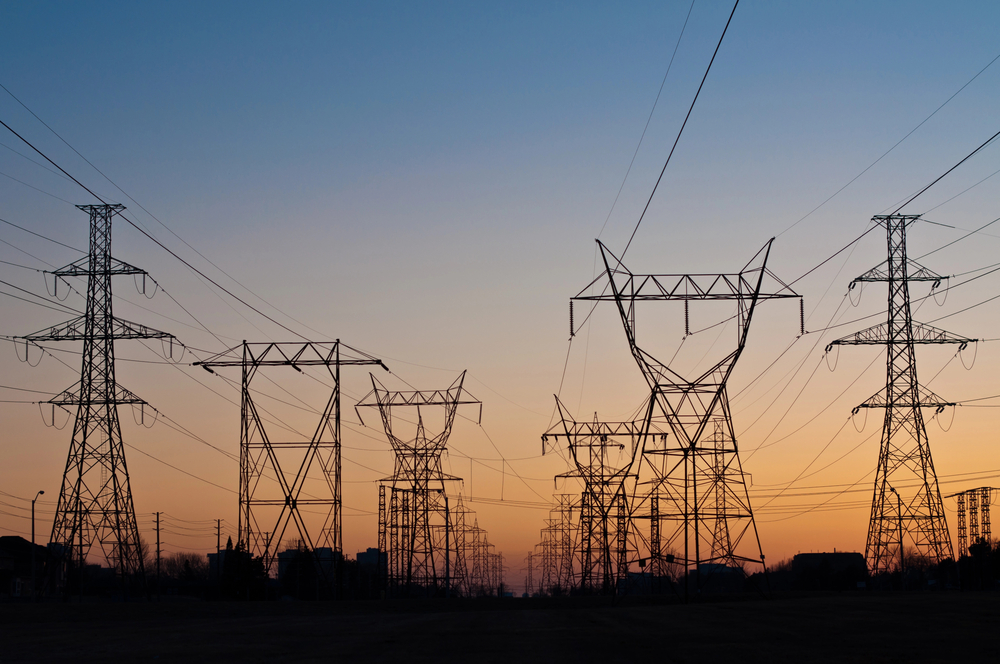
    Nordic energy infrastructure power grid transmission towers silhouetted against sunset sky

    US President Donald Trump has announced an immediate energy ceasefire in the war between Russia and Ukraine, saying both sides agreed to stop striking each other’s energy facilities, in a post on Truth Social. Ukraine, however, knew nothing about the deal.

    Russia has spent the war hitting Ukraine's power plants, refineries, and grids, while Ukraine answered with strikes on its refineries and plants that produce missiles. If confirmed, a halt before winter would be a major break. Yet about seven minutes before Trump’s announcement, Russia struck at Kyiv’s thermal plant, cutting power to several districts of the capital at once.

    “Effective immediately, there is an ENERGY CEASEFIRE in the War between Russia and Ukraine. Both parties have agreed. Do not break it!” Trump wrote.

    News for Zelenskyy

    President Volodymyr Zelenskyy told Axios the announcement “was news" for him. But if Russians agree to an energy ceasefire, Ukraine will agree, he added. Moscow gave no immediate confirmation.

    The announcement follows days of friction over energy. Washington has just eased sanctions on Russian diesel and pressed Kyiv to stop hitting Russian refineries, while Russian strikes killed more than 80 Ukrainian civilians in two days.

    A truce no one in Kyiv confirmed

    Zelenskyy had already signaled Ukraine’s terms. He said on Sunday that Kyiv was ready to stop striking Russian refineries if Moscow halted its attacks on Ukrainian energy, so the condition was on the table before Trump spoke, not settled by him.

    If Trump negotiated it with Putin, then he should say when the ceasefire begins, Zelenskyy added, underlining that Ukraine had not been party to any such agreement.

    Ukrainians greet it with doubt

    The reaction in Kyiv was wary. Trump already declared an energy ceasefire once, and Putin broke it within five minutes, said Andrii Kovalenko, former head of Ukraine’s Center for Countering Disinformation, asking whether Trump was now “announcing it to himself.”

    Meanwhile, lawmaker Yaroslav Zhelezniak called for an explanation, warning that Trump’s “energy ceasefire” might mean Ukraine stops hitting Russian refineries and tankers while Russia merely promises not to strike Ukrainian oil tankers it would struggle to find in the first place.

    Zelenskyy signals surprise at Trump claim of Russia-Ukraine ‘energy ceasefire’ but would back it if Moscow does – as it happened

    11 octobre 2026 à 14:36

    Ukraine’s president reportedly says Kyiv would accept a deal if Moscow does after US president posts announcement with no detail on social media

    The president of the EU Commission, Ursula von der Leyen, has expressed her “full support for President Zelenskyy” amid calls for a ceasefire.

    In a telephone call with the Ukrainian leader, von der Leyen posted on X that she “fully supported the call of President Zelenskyy for a ceasefire that would protect global food supplies and energy infrastructure in Ukraine and Russia.

    “Ukraine supports the ceasefire, and it’s important for Russia to support it as well. We are awaiting details from the American side. From our Ukrainian side, there is always FULL support for de-escalation steps, protection of lives, and the necessary decisions to end the war and ensure lasting peace.”

    Continue reading...

    © Photograph: Sergey Bobok/AFP/Getty Images

    © Photograph: Sergey Bobok/AFP/Getty Images

    © Photograph: Sergey Bobok/AFP/Getty Images

    Russia equips Geran attack drones with image-based navigation using Google map imagery, reducing reliance on satellite navigation that Ukraine can jam, defense adviser warns

    11 octobre 2026 à 09:01

    Ukrainian defense technology adviser Serhii “Flash” Beskrestnov works near the front line monitoring Russian drone signals. Photo: Serhii “Flash” Beskrestnov

    Russia is developing new navigation systems for attack drones and missiles that could make its strikes against Ukrainian cities harder to stop, as Moscow adapts its weapons to counter Ukrainian electronic warfare defenses, Ukrainian defense technology adviser Serhii “Flash” Beskrestnov said.

    The shift poses an additional challenge for Ukraine as Russia continues to attack cities and critical infrastructure with drones and missiles. Systems that can navigate without relying on satellite signals may be harder to disrupt electronically, increasing the importance of other defenses, including interception and physical destruction of incoming weapons.

    Image-based navigation could make Russian strike drones harder to jam

    Beskrestnov, an adviser to the Ukrainian president on defense technology development, said image-based navigation systems would see wider use in 2027, including in medium- and long-range strike drones and inexpensive cruise missiles.

    The technology allows drones to navigate by comparing images captured by an onboard camera with stored photographs of the terrain. Even basic navigation can use publicly available satellite or ground imagery from services such as Google, Beskrestnov said.

    Unlike satellite navigation, which can be disrupted by electronic warfare, image-based navigation relies on visual recognition of the terrain. This makes drones using the technology more resistant to jamming and could allow them to continue toward their targets even when satellite navigation signals are unavailable.

    Russia already uses image-based navigation on attack drones

    Beskrestnov said Russian forces were already using the technology on several types of unmanned aircraft, including Molniya, V2U, and Lancet drones.

    He also reported that similar systems had recently been identified on the Russian Geran-4 and Geran-5 attack drones, using a flight controller called Susanin.

    The Geran series includes Russian attack drones used in strikes against Ukrainian cities and infrastructure. The introduction of image-based navigation could make some variants more difficult for Ukrainian forces to counter using electronic warfare.

    Russia adapts its weapons to Ukrainian defenses

    The development reflects Russia’s broader effort to adapt its weapons as Ukraine improves its air defenses and electronic warfare capabilities. By reducing reliance on satellite navigation signals, Russian drones can become less vulnerable to one of Ukraine’s key methods of disrupting incoming attacks.

    Beskrestnov warned that image-based navigation would expand beyond individual drone models, with broader adoption expected next year across different categories of strike weapons.

    A Russian Spy’s Lone Regret: ‘I Got Caught’

    11 octobre 2026 à 05:00
    Though born in Ukraine, Alexsander supports the Russian cause. He wishes he had deleted one photo from his phone.

    © Maria Varenikova/The New York Times

    Alexsander at Prison Colony No. 122 in central Ukraine.
    ❌