❌

Vue normale

  • ✇Euromaidan Press
  • Lithuania puts up to 100 soldiers on Kaliningrad border as officials brace for possible Russian mobilization
    Lithuania plans to deploy up to 100 soldiers to support border guards along its frontier with Russia's Kaliningrad Oblast, Defense Minister Robertas Kaunas said on 7 October. Lithuanian Interior Minister Martynas Katelynas has described the deployment as a preventive measure linked to possible Russian mobilization and a recent incident on the Latvia-Belarus border, where masked, armed escorts tried to push a group of migrants into Latvia. Katelynas said Lithuania could face people tryin
     

Lithuania puts up to 100 soldiers on Kaliningrad border as officials brace for possible Russian mobilization

8 octobre 2026 à 13:49

lithuanian soldier

Lithuania plans to deploy up to 100 soldiers to support border guards along its frontier with Russia's Kaliningrad Oblast, Defense Minister Robertas Kaunas said on 7 October.

Lithuanian Interior Minister Martynas Katelynas has described the deployment as a preventive measure linked to possible Russian mobilization and a recent incident on the Latvia-Belarus border, where masked, armed escorts tried to push a group of migrants into Latvia. Katelynas said Lithuania could face people trying to avoid mobilization and seeking asylum.

Kaunas said he had granted permission to use Lithuanian soldiers to strengthen border protection for the next several weeks.

 “The order starts being implemented immediately,” he wrote on Facebook.

Russia denies a new mobilization

The Kremlin denies a new mobilization is coming. In early September, Russian President Vladimir Putin called reports of one "complete nonsense" and "an information attack on Russia." Ukraine's military and foreign intelligence services say Russia's General Staff has prepared a scenario to mobilize 600,000 people over 2026 and 2027. On 28 September, President Volodymyr Zelenskyy said that "in effect, the Russians have already begun additional mobilization."

Frontier-station patrols for a couple of weeks, possibly longer

On 8 October, the Lithuanian army said soldiers were being brought in to help the State Border Guard Service from that day. A company-sized unit was planned for the assignment, initially for two weeks, with the option to extend. Soldiers will patrol with border guards in frontier-station areas, while mobile patrols, mobile observation posts, and military police crews may be added as needed. The army described the deployment as preventive and a normal form of interagency cooperation.

Kaunas had told LRT TV the soldiers would stay until 16 October. On the morning of 8 October, he said the deployment "was supposed to start" overnight and that he would check with the army. On 8 October, the Lithuanian army said soldiers were being brought in to help the State Border Guard Service from that day. Kaunas also said that “on the Kaliningrad side” there were no physical barriers, unlike the border with Belarus.

Lithuania says its border guards are stretched

On 8 October, Katelynas said the border guard service’s capacity was insufficient, with shifts growing while officer numbers were not increasing. He said the threat level had not changed. In a Facebook post the previous day, he said the situation at Lithuania’s border was calm and there was no reason to panic. He said Russia was planning mobilization after the elections and that Lithuania may face people trying to avoid it and seeking asylum.

Lithuania's State Border Guard Service had turned back 1,693 people trying to cross illegally from Belarus this year and about 26,300 since the migration crisis began, as reported by ELTA on 8 October. Katelynas said 43 migrants tried to enter southern Lithuania last week and were turned back.

Drone attack forces Yandex to shut down its data center on the grounds of a sanctioned Russian machine-tool plant

8 octobre 2026 à 08:28

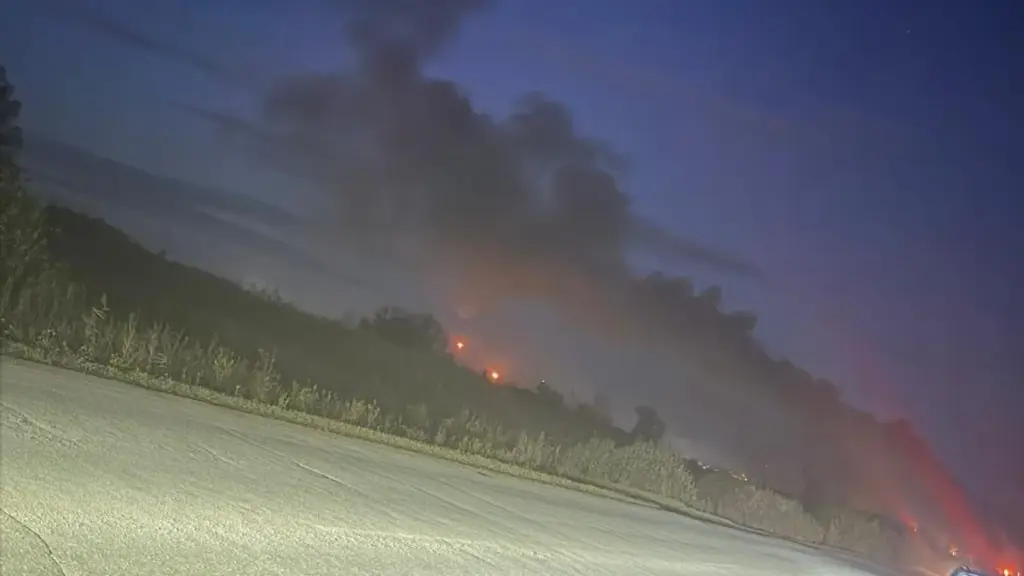
Smoke over Salavat following an attack on the night of October 8.

A drone attack overnight on 8 October caused a fire that hit part of Yandex's data center in Sasovo, Ryazan Oblast, about 580 km from Ukraine, and the site is fully stopped, the Russian tech company told Russian media. The data center sits on the grounds of Sasta, a sanctioned machine-tool plant, Russian outlet Astra said, citing Wikimapia data. Astra's OSINT analyst found from eyewitness footage that the fire hit the plant.

Since late September, Russia has been striking data centers in Kyiv that keep Ukraine's internet and online services running. Now a drone attack has stopped one of the data centers that Russia's largest tech company relies on.

Fires reported at a refinery in Salavat and a machine-tool plant in Sasovo after overnight attacks on 8 October 2026.
Fires reported at a refinery in Salavat and a machine-tool plant in Sasovo after overnight attacks on 8 October 2026. Map: Euromaidan Press

Yandex counts the damage

Yandex warned that some services may be unavailable, while its core services kept running and no one was hurt. Ryazan Oblast Governor Pavel Malkov claimed two drones were downed, a roof caught fire at an enterprise in the Sasovo district, and windows were blown out in several homes.

The power failure took down a wide range of Yandex Cloud infrastructure, including computing capacity, networks, data storage, databases, Kubernetes, cloud services, AI, and security and monitoring systems, Ukrainian outlet ZN.ua reported, citing Exilenova+.

Ukrainian monitoring channel Exilenova+ reported that the plant was hit, without naming an attacker. The channel said Sasta, which claims a place on Russia's register of defense-industry companies, makes computer-controlled machine tools, including five-axis machining centers, and previously supplied the Tactical Missiles Corporation (KTRV) and Roscosmos. The plant's value to the arms industry lies in machines that cut precision parts, not in finished weapons, the channel said.

Citing Exilenova+, Militarnyi reported that Ukraine's Defense Forces hit the plant. It also linked Sasta to Iskander missile supply chains. No source has said whether the plant or the data center was the target, and no Ukrainian official has claimed the Sasovo strike. Sasta has been under US sanctions since November 2023, UK sanctions since February 2024, and Ukrainian sanctions since April 2025, a sanctions database shows.

Salavat: Kyiv reports a hit

Ukrainian forces hit the Gazprom Neftekhim Salavat complex in Bashkortostan, about 1,380 km from the front line, causing a fire, Ukraine's General Staff said. It said the complex processes up to 10 million metric tons of hydrocarbons a year and serves Russia's armed forces. Its key unit, the ELOU-AVT-6 primary oil refining unit launched in 2012, can process 6 million metric tons a year, Militarnyi reported. Astra's analyst placed the fire a few kilometers outside Salavat, possibly near the refinery.

Salavat oil refinery moment of attack pic.twitter.com/bUxuRshSK1

— Exilenova+ (@Exilenova_plus) October 8, 2026

Salavat Mayor Marat Zagidullin claimed that debris from several drones fell in the industrial zone that morning and started a fire.

"The enterprise continues to work," he said.

Astra noted earlier hits on the complex on 24 September 2025, on 14 July 2026, when refining fully stopped, and on 13 August 2026.

Russia's strikes on Ukraine's data centers

Russia has repeatedly hit data centers in Kyiv since 23 September. Strikes hit the COSMONOVA data center twice, the second time knocking it out, and the Parkovyi data center stopped working completely on 1 October after a series of strikes. In early October, Russia destroyed the dline.ua data center in Kyiv.

A 3-year-old girl came to visit her aunt in Pryluky, Ukraine. By morning, a Russian missile had killed her grandmother and uncle

8 octobre 2026 à 07:51

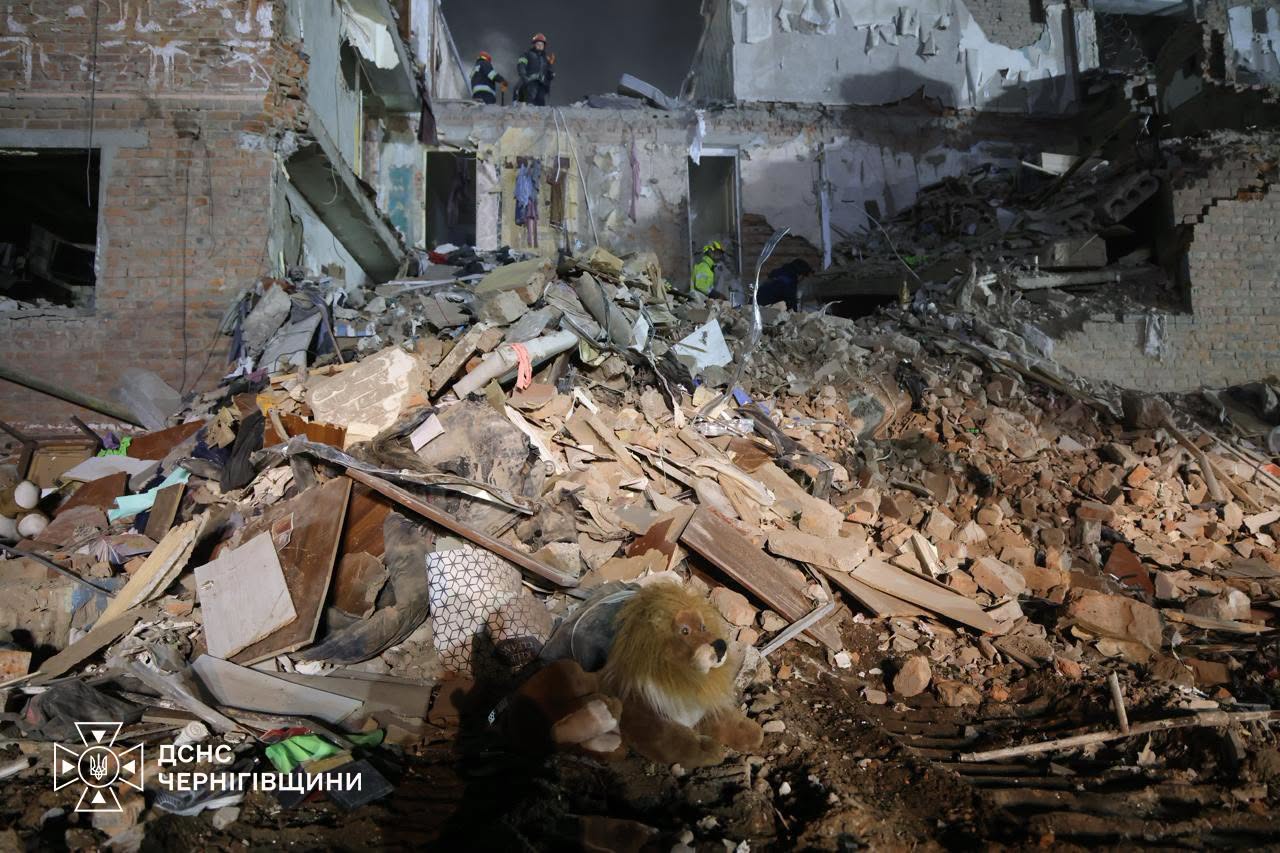
Rescue worker carries a child from the rubble following a Russian missile strike on an apartment building in Pryluky, Chernihiv Oblast.

A Russian missile strike on an apartment building in Pryluky, a town in northern Ukraine's Chernihiv Oblast, killed 22 people on 7 October, regional police reported on the morning of 8 October. Five of the dead were children: three one-year-old boys, an eight-year-old boy, and a 13-year-old girl, police said.

Russian strikes on Pryluky, Kremenchuk, Oleksandriia, and Kyiv killed 28 people on 7 October, Interior Minister Ivan Vyhivskyi said. For the town, it was the second deadly missile strike since May. Behind the toll are families like this one: three generations hit by a single strike.

A family visit that ended under rubble

Three-year-old Zlatoslava is now in the Chernihiv Oblast children's hospital, Pryluky district police chief Vladyslav Stoianov told. Her mother, Kateryna, is hospitalized too. The two had come on the evening of 6 October to visit Kateryna's sister, police officer Yuliia Malysh. The girl's father stayed home in Lynovytsia, a village 15 km away.

Yuliia was wounded and is in hospital, Stoianov said. Her husband, Oleh Malysh, was killed. Until recently, Oleh had fought at the front in the Chernihiv Oblast police rifle battalion. The sisters' mother, Liudmyla, had also come over that evening, and she died too. All the family details come from Stoianov, who was describing a colleague's family.

pryluky
Explore further

22 killed in Russian missile strike on Pryluky, including five children

Footage of an emergency worker carrying a little girl from the ruins reached almost all media, Vyhivskyi wrote in the same post. Suspilne first reported that the filmed rescuer had carried Zlatoslava. It then corrected itself: he had carried a different child, five-year-old Zoriana. Vyhivskyi also gives the girl's age as five, and he named the rescuer as State Emergency Service section commander Pavlo Levchenko. With colleagues, Levchenko freed the girl and her mother after the blast threw them out of the building.

  • ✇Euromaidan Press
  • Fewer targets, more waves: jet-powered Gerans partly free Russia to concentrate missiles, ISW says
    Russia is concentrating missiles on a smaller, more specific set of targets, and its jet-powered attack drones are part of the reason, the Institute for the Study of War (ISW) assessed. Its combined attack overnight on 7 October killed 22 people in Pryluky, the State Emergency Service (SES) said as of the morning of 8 October. Russian milbloggers noted the shift the same day. Russia often uses concentrated drone and missile strikes to overwhelm localized Ukrainian air defenses and destr
     

Fewer targets, more waves: jet-powered Gerans partly free Russia to concentrate missiles, ISW says

8 octobre 2026 à 05:49

fewer targets more waves jet-powered gerans partly free russia concentrate missiles isw says · post russia's shahed drone ukraine news ukrainian reports

Russia is concentrating missiles on a smaller, more specific set of targets, and its jet-powered attack drones are part of the reason, the Institute for the Study of War (ISW) assessed. Its combined attack overnight on 7 October killed 22 people in Pryluky, the State Emergency Service (SES) said as of the morning of 8 October. Russian milbloggers noted the shift the same day.

Russia often uses concentrated drone and missile strikes to overwhelm localized Ukrainian air defenses and destroy urban centers, ISW noted. Pryluky, where the strike killed children, was one of the areas a Russian channel says drew a significant share of the Kh-101s that night. With winter close, ISW expects the same pattern against Ukraine's energy grid, with jet drones partly letting Russia keep its missiles for priority targets without firing many more.

Missile waves on a few areas, Russian channels claim

Russia launched 48 Kh-101, Iskander-K, and Kalibr cruise missiles overnight on 7 October, Ukraine's Air Force reported. It also fired ballistic missiles, Zircon and Oniks anti-ship missiles, and 130 strike and decoy drones, 46 of them jet-powered Shahed-type models.

pryluky
Explore further

22 killed in Russian missile strike on Pryluky, including five children

Russian milbloggers claimed the same day that Moscow had grouped a large part of its missile salvo into repeated waves on a few areas, while other weapons kept stretching Ukraine's air defenses elsewhere. The pro-war Russian Telegram channel Dva Mayora described the change as a switch from striking with splayed fingers to a series of hits with missile "fists." Defenders must then absorb a sharply rising load around one chosen site as one wave follows another, the channel claimed.

Citing Ukrainian monitoring channels, it claimed that roughly 30 or more Kh-101 cruise missiles flew toward Pryluky, Kremenchuk, Svitlovodsk, and Oleksandriia in Chernihiv, Poltava, and Kirovohrad oblasts. It put the Kremenchuk group at up to 15 missiles, Kh-101s and Kalibrs among them, aimed at the area of Kremenchuk and its hydroelectric plant.

Jet drones take some of the load off Russia's missiles

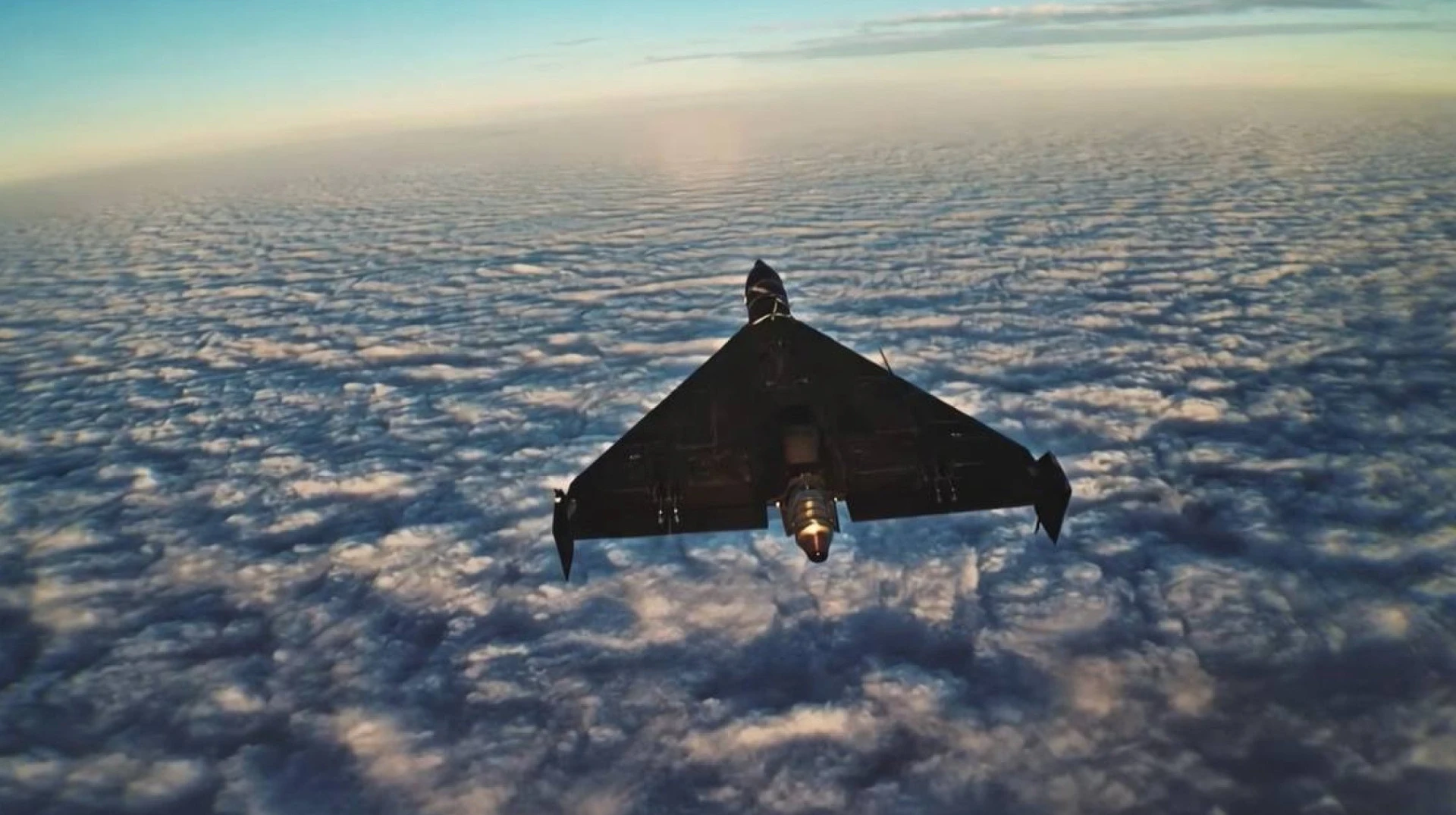
ISW said the jet-powered versions penetrate Ukrainian air defenses deeper and more reliably than propeller models. In ISW's assessment, that partly lets Russia concentrate cruise and ballistic missiles on priority targets without significantly raising missile use. Russia builds about 3,000 Geran-4 and Geran-5 jet drones a month, Ukraine's military intelligence agency (HUR) told Militarnyi in August.

ukraine spent three years learning catch russian drones—so russia made fly faster · post geran-3 jet-powered attack drone wild hornets c1c840787fca380485636007cf683d71 news ukrainian reports
Explore further

Ukraine spent three years learning to catch Russian drones—so Russia made them fly faster

ISW expects Russia to apply the pattern in a likely brutal winter campaign against energy infrastructure. Russia likely intends to make city life untenable and force Ukraine to capitulate to its demands, ISW assessed. Such tactics have not worked before and are unlikely to work now, analysts added.

They called cheap countermeasures to jet drones and small cruise missiles vital, alongside Western air defense aid such as US-made Patriots, which can stop ballistic missiles. Ukraine has already paired a Soviet-era Kub launcher with American RIM-7 interceptors to catch jet drones.

❌