❌

Vue normale

41 Ukrainians made the long journey from occupation to Ukrainian-controlled territory after enduring Russian pressure, detention and control

2 octobre 2026 à 14:31

Ukrainians who were brought from Russian-occupied territories to Ukrainian-controlled territory, August-September 2026. Photo: Dmytro Lubinets

Ukraine helped 41 citizens escape from Russian-occupied territories into Ukrainian-controlled territory in August and September, including four children and five teenagers, Ukrainian Ombudsman Dmytro Lubinets said.

For many, the crossing marked the end of months or years under Russian occupation and the beginning of their return to life in government-controlled Ukraine.

They returned to Ukraine via Belarus through the Mokrany-Domanove crossing in Ukraine's Volyn Oblast.

From occupation to safety

Lubinets described several cases among those who returned.

One family was able to leave after the father was released from Russian captivity. Their older son remains in captivity, while the woman and her younger son had been under the control of occupation authorities and, according to their account, were previously taken to a detention facility under the pretext of providing medical care and subjected to forced treatment.

A young medical worker was evacuated shortly before she could have been mobilized into Russia’s armed formations, according to Lubinets.

Another returned man had been detained several times in occupied territory and held in basements. His Ukrainian passport had also been confiscated.

Help continues after the crossing

For those returning, reaching Ukrainian-controlled territory is only the first step. The Ombudsman’s Office and partner organizations provide assistance with restoring documents, financial support, temporary accommodation, psychological and social services, and onward travel.

The office said that, in August and September, its joint project with Caritas Ukraine provided assistance to 1,140 people, including people evacuated from occupied territory.

Ukraine’s efforts to facilitate returns are taking place against a broader problem of displacement from occupied territory. A 2026 UN report documented forcible transfers and deportations from areas occupied by Russia, as well as barriers that make it difficult for displaced Ukrainians to return.

The Mokrany-Domanove crossing is one of the routes through which Ukrainians can return to government-controlled territory, making it a key part of Ukraine’s effort to bring civilians home from occupation.

Others are still waiting to leave

Lubinets said his office continues receiving requests from people seeking to leave occupied territory and works with Ukrainian, international and third-country partners to find routes out.

Lubinets noted that the situation remains particularly difficult in Oleshky and surrounding settlements in Kherson Oblast, where Ukrainian authorities say elderly people, people with disabilities, sick residents and families remain without reliable access to food, water, medicine, healthcare and communications. Recent reporting has put the number of civilians still in Oleshky at around 2,000, including about 50 children.
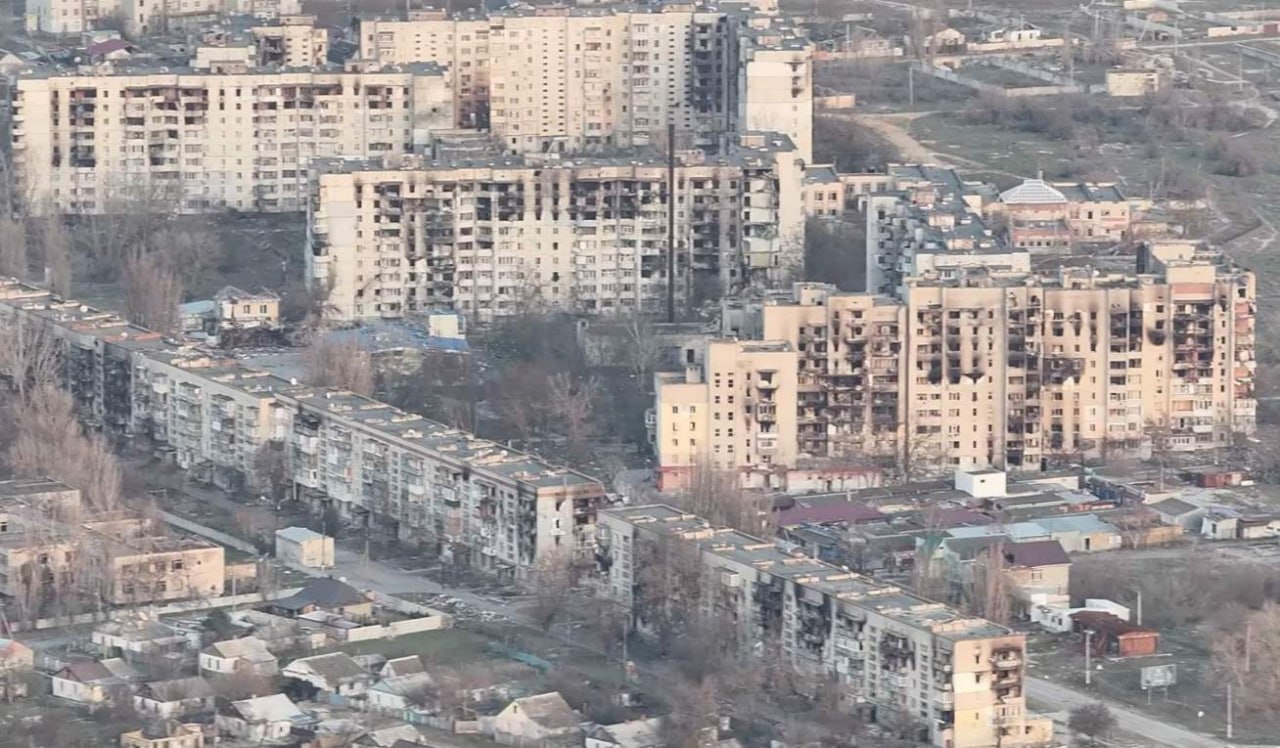
Oleshky, Kherson Oblast, has been under Russian occupation since 2022, following Russia’s capture of the city during the initial phase of its full-scale invasion of Ukraine. Photo: Dmyto Lubinets
Explore further

Thousands are starving in occupied Oleshky. People have no food, no way out, and Russian forces bomb incoming aid

Russia repeatedly attacks bridge connecting Kyiv’s two sides across the Dnipro river, disrupting transport across the capital

2 octobre 2026 à 10:34

Damage to Kyiv's Southern Bridge connecting the left and right banks of the city following several Russian drone strikes on 1-2 October, 2026. Photo: Ukraine's State Emergency Service

Russian forces have repeatedly struck Kyiv’s Southern Bridge with drones since 1 October, disrupting one of the capital’s main routes between the left and right banks of the Dnipro.

The strikes are part of a broader intensification of Russian drone attacks on the capital. In recent weeks, Russia has begun launching daily attacks involving jet-powered Geran drones, increasingly disrupting everyday life in Kyiv.

The Southern Bridge is an important road and rail crossing over the Dnipro. It carries road traffic between Kyiv's left and right banks and also forms part of the city's metro network.

The bridge was fully closed to traffic following the latest attacks, while restrictions were also introduced on the Metro and Paton bridges, according to Suspilne. Public transport has been diverted to alternative routes, while the disruptions have caused major traffic congestion across Kyiv.

Update 17:50: Kyiv Mayor Vitali Klitschko said Russian forces have struck the Southern Bridge again on the evening of 2 October. The bridge remains closed to road traffic and metro services following several previous attacks. Emergency services are heading to the site.

Bridge targeted repeatedly

The Southern Bridge came under attack multiple times on 1 October and was targeted again during the overnight attack into 2 October.

Ukrainian President Volodymyr Zelenskyy said Russian forces struck the bridge several times with drones during the night. He said the attacks were part of a larger Russian barrage involving more than 100 attack drones, nearly 50 of them jet-powered Gerans.

The bridge has not been destroyed, but the repeated strikes have forced authorities to limit its use and reorganize traffic across the Dnipro.

Ukrainian analyst Andrii Kovalenko said the Southern Bridge is difficult to destroy with the weapons Russia is using. However, he said such strikes can damage the bridge enough to disrupt its normal operation, while the resulting disruption can also be used to spread panic.

Russia’s repeated strikes on Kyiv’s Southern Bridge are now severely disrupting traffic across the capital.

Major roads are gridlocked, with some people reportedly walking across bridges as traffic comes to a standstill. Photos from Suspilne show the resulting congestion on… pic.twitter.com/7SyYG0WOCO

— Euromaidan Press (@EuromaidanPress) October 2, 2026

Zelenskyy: Russia is targeting bridges and critical infrastructure

Zelenskyy said Russia's intensified attacks are part of a broader effort to disrupt life in Ukrainian cities and damage infrastructure beyond individual military targets.

Citing Ukrainian intelligence and people he said are close to Russian President Vladimir Putin, Zelenskyy claimed Putin said in early September: “Now, there are no rules.” Zelenskyy said Russia had failed to occupy Ukraine and was therefore turning to mass attacks and killings.

“They want to destroy our bridges and, as we understand it, our data centers, internet, mobile networks, hospitals, kindergartens, schools, universities – everything,” Zelenskyy said.

He added that Russia wants to force Ukrainians to leave their cities. “They want people to flee their cities, and we need to do everything to save our people and our cities,” he said.

A key crossing for Kyiv disrupted

The bridge’s closure puts additional pressure on the capital's other bridges. On 2 October, traffic on the Metro Bridge was restricted to one lane toward the right bank, while traffic from the right bank toward the left was restricted on the Paton Bridge.

Several bus routes were diverted to other bridges. Kyiv authorities reported major traffic jams on the city's main roads as the restrictions disrupted normal movement between the two sides of the capital.

Metro service across the Southern Bridge also remains tied to an assessment of the structure. Kyiv Mayor Vitali Klitschko said on Friday the metro can resume crossing the bridge during yellow-level air alerts after experts provide an assessment confirming its condition.

Part of a wider campaign against Kyiv

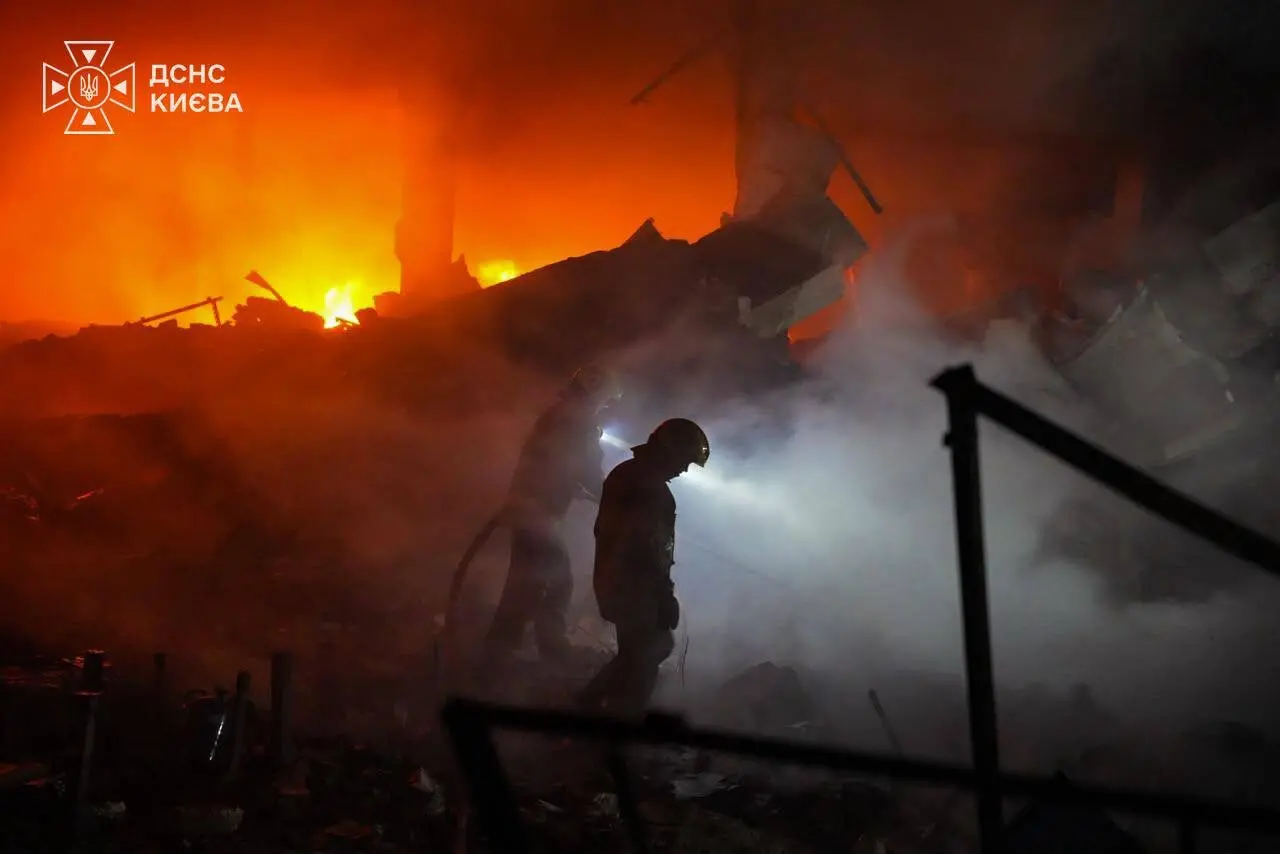
The bridge strikes came alongside attacks on civilian areas of Kyiv. A Russian drone hit the upper floors of a 25-story residential building in the Darnytskyi district on 2 October, causing a fire on the 24th and 25th floors.

One person was killed and two were injured. The attack also damaged buildings and vehicles in the Holosiivskyi district.

A Russian drone struck a 25-story residential building in Kyiv’s Darnytskyi district this morning.

According to President Volodymyr Zelenskyy, Russia launched more than 100 attack drones at Ukraine overnight, including nearly 50 jet-powered drones.

In Kyiv, the strike caused a… pic.twitter.com/jiGjJeUgVf

— Euromaidan Press (@EuromaidanPress) October 2, 2026

The growing frequency of jet-powered Geran attacks is making the impact of Russian strikes increasingly visible beyond individual damage sites. Repeated attacks on infrastructure such as the Southern Bridge can disrupt transportation and daily routines across the capital even when the targeted structures are not destroyed.

Ukraine Reports First Combat Use of Its Own Ballistic Missile

2 octobre 2026 à 10:30
While the missile fired on Thursday has a limited range, Kyiv is developing a larger weapon that could strike Moscow.

© Genya Savilov/Agence France-Presse — Getty Images

President Volodymyr Zelensky of Ukraine trumpeted the launch of the country’s first domestically made ballistic missile.
  • ✇Euromaidan Press
  • Russia paid with more than 46,000 casualties, and the front moved the other way, ISW finds
    Russia lost almost 300 km² of Ukrainian territory on net between March and September 2026, and it likely gained no ground in September despite its heaviest casualties of the year, the Institute for the Study of War (ISW) assessed. Ukraine's Operation Vivaldi accounts for much of the swing. The think tank notes that Ukraine's secrecy around such counterattacks makes exact monthly tallies hard. Russia has pressed attacks along the entire front through 2026, accepting mass casualties for m
     

Russia paid with more than 46,000 casualties, and the front moved the other way, ISW finds

2 octobre 2026 à 06:09

russia paid more than 46000 casualties front moved other way isw finds · post russian ukrainian territorial gains including infiltrations ukraine between 1 30 2026 russian-territorial-gains-in-ukraine-including-infiltrations-sep-1-to-sep-30-2026 news reports

Russia lost almost 300 km² of Ukrainian territory on net between March and September 2026, and it likely gained no ground in September despite its heaviest casualties of the year, the Institute for the Study of War (ISW) assessed. Ukraine's Operation Vivaldi accounts for much of the swing. The think tank notes that Ukraine's secrecy around such counterattacks makes exact monthly tallies hard.

Russia has pressed attacks along the entire front through 2026, accepting mass casualties for marginal ground, and its battlefield year has already been called its worst since 2023. Its losses have been outpacing its recruitment for months.

Russia came out behind in September

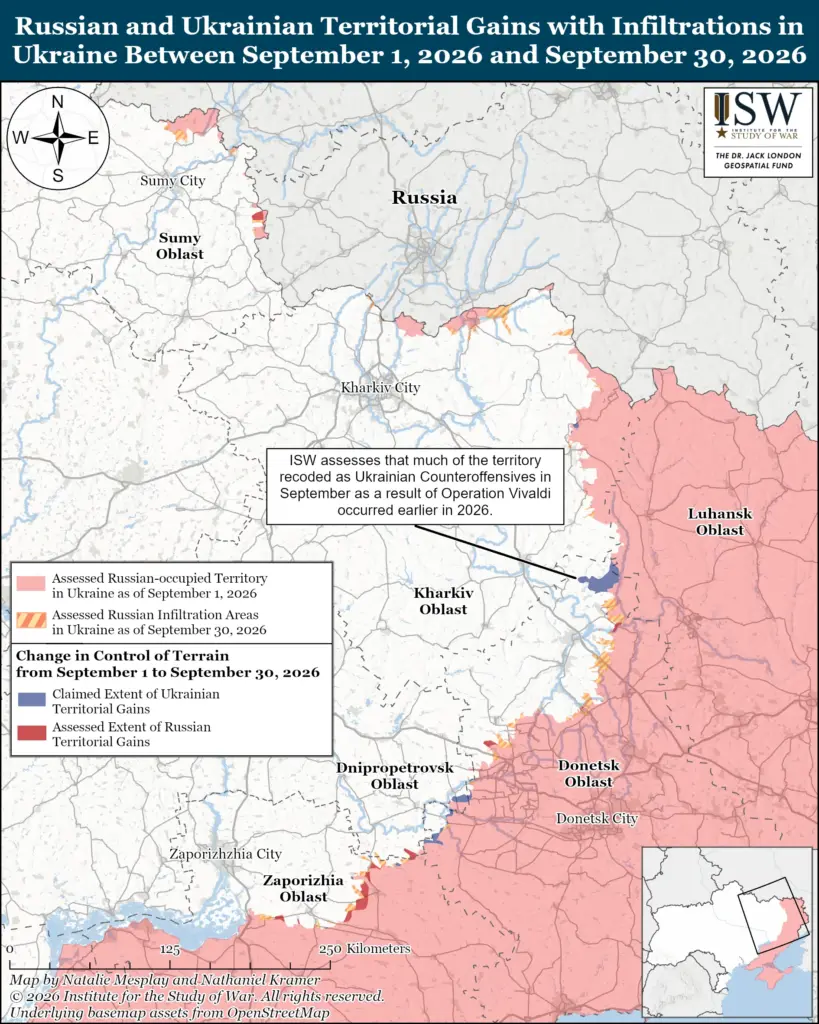
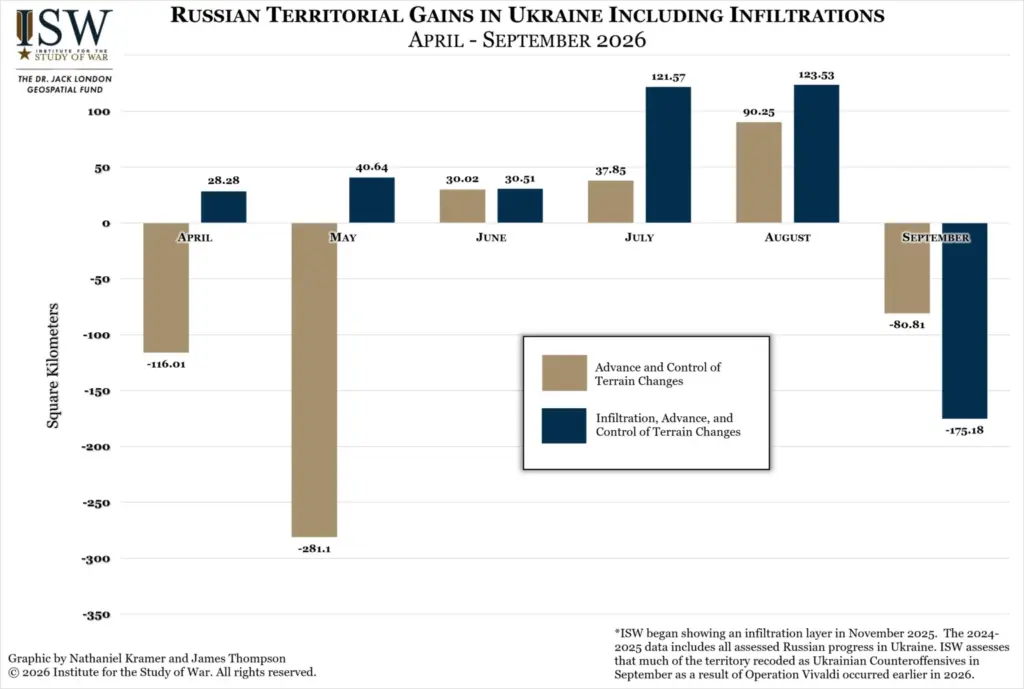
Russian forces seized 175.54 km² in September but lost 256.35 km², a net loss of 80.81 km², or minus 2.69 km² a day, ISW calculated. The balance stayed negative when Russian infiltrations into areas Russia does not control are counted: Russia seized or infiltrated 143.2 km² but lost 318.38 km², a net loss of 175.18 km².

Russian territorial gains in Ukraine with and without infiltrations, April–September 2026.
Russian territorial gains in Ukraine with and without infiltrations, April–September 2026. Graphic: ISW

The September figures include at least 147 km² near Lyman that Ukraine liberated over earlier months, but that ISW recorded only once details of Operation Vivaldi emerged in September. The operation already disrupted Russia's plan to encircle the Fortress Belt cities from the Lyman and Dobropillia directions.

Ukraine's Third Army Corps commander Brigadier General Andrii Biletskyi announcing "Operation Vivaldi," 15 September 2026. Screenshot from video: Ukraine's Third Army Corps
Explore further

Ukraine’s Vivaldi counteroffensive disrupts Russia’s plan to encircle Donetsk Fortress Belt – ISW

Almost 300 km² lost since March

Russia's rate of seizing territory dropped sharply in March 2026 and has stayed low, or even negative, since, ISW found. After controlling for the gains Ukraine made during Vivaldi, Russia lost control of 293.59 km² net across the front since March. Counting infiltrations, it gained a presence in only 174.44 km² over the same period.

ISW's monthly chart shows net Russian losses of 116.01 km² in April and 281.1 km² in May, modest gains in June, July, and August, and a net loss again in September. Oleksandr Syrskyi, then Ukraine's commander-in-chief, reported in June that Ukrainian forces had recaptured 100 km² in May.

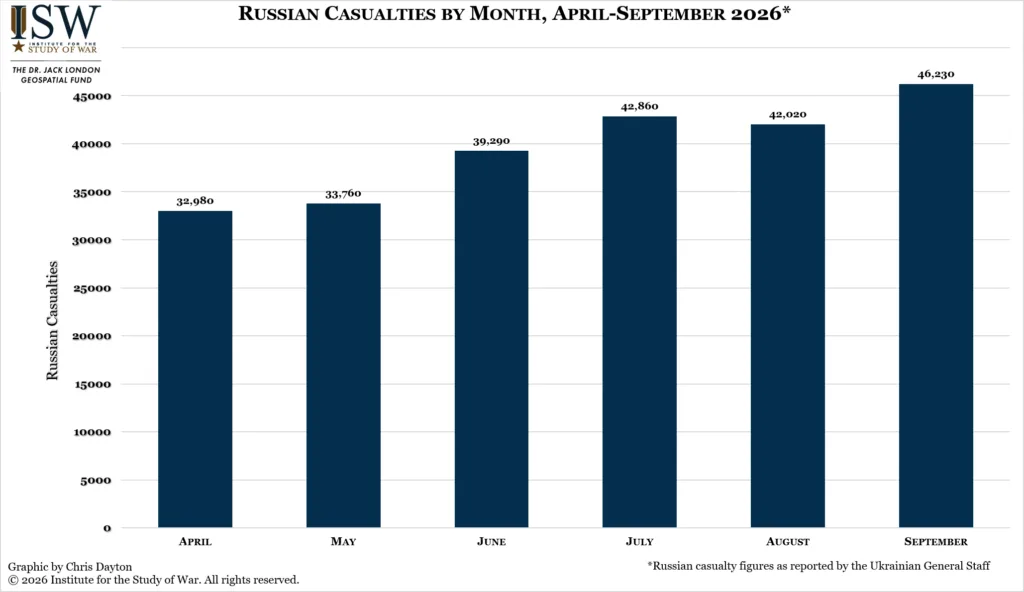
Russian casualties by month as reported by Ukraine's General Staff, April–September 2026.
Russian casualties by month as reported by Ukraine's General Staff, April–September 2026. Graphic: ISW

More than 46,000 casualties for no ground

Russian forces suffered 46,230 casualties in September, Ukraine's General Staff reported. It is the third straight month above 40,000 and the highest monthly toll of 2026, by Kyiv's count. Monthly Russian casualties have climbed from 32,980 in April to 42,860 in July and 42,020 in August, ISW's chart shows.

Russia keeps suffering heavy personnel losses while making extremely limited or even net-negative territorial gains, ISW said, and its current force generation system still recruits fewer soldiers than it needs to replace them.

kyiv strike
Explore further

Russia’s mass drone attacks on Ukraine have a goal—likely Ukraine’s capitulation by spring 2027, ISW says

Ukraine's effective operational security around Vivaldi, likely to continue in future counterattacks, will make meaningful month-to-month assessments of Russian gains and losses hard, the think tank added.

Russia’s Latest Propaganda? A.I.-Generated War Songs.

2 octobre 2026 à 10:40
Russians are creating and spreading music glorifying the invasion of Ukraine, using platforms built in the United States.

© Nanna Heitmann for The New York Times

Russian society is becoming increasingly militaristic since the war in Ukraine began. These soldiers marched in Moscow in a parade in 2023.

Russia Is Planning Its Most Powerful Blow Yet to Try to Freeze Ukraine

2 octobre 2026 à 07:25
Ukraine showed European partners what it said were intercepted Russian plans to cut off major cities from power, heat and water this winter.

Overlooking the Dnipro River before the autumn and winter period in Kyiv, Ukraine.
❌