❌

Vue normale

Robots won’t replace armored vehicles, says Ukrainian company that builds both. It reveals one job they can’t do
30 septembre 2026 à 17:48

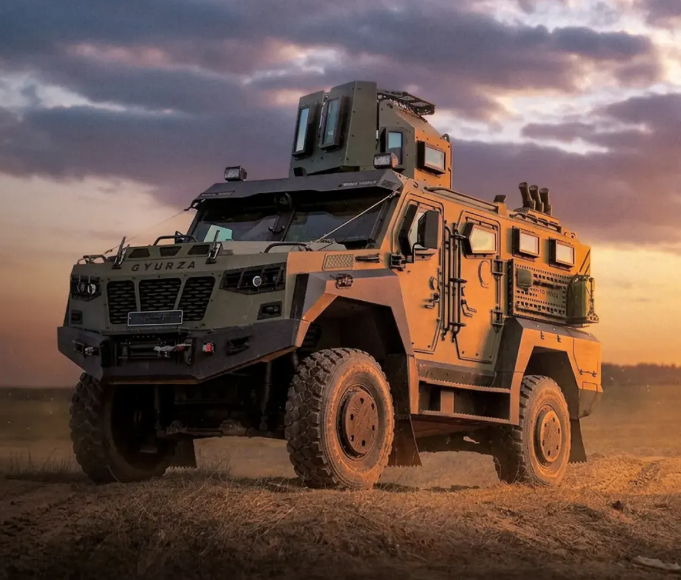
Ukraine's Gyurza-2 armored vehicle. Source: The Ukrainian Defense Ministry

Robots will not replace armored vehicles on the battlefield, says a company that builds both. Ground robots are a new tool that lets Ukraine distribute risk more smartly, but they cannot do everything a crewed armored vehicle can, above all pulling wounded soldiers out under fire, says Ukr Armo Tech's chief executive Hennadii Khirhii, in an interview with RBC-Ukraine.

Ukraine has a serious shortage of armored vehicles, from evacuation carriers to tracked fighting vehicles, with the focus shifting to hulls that offer heavy mine protection and built-in electronic warfare. For medical-evacuation armor alone, Khirhii says, the deficit is often put at 80 percent.

Robots can ease some of that, hauling ammunition and supplies to the front without risking a crew, but they are a complement, not a substitute, a view frontline commanders also confirm.

Robots share the load, not replace it

Where a robot can do the job, Khirhii says, there is no sense sending in heavy armor and the people inside it to face danger. For carrying ammunition or food, unmanned ground vehicles are useful. But evacuating the wounded is different: that usually needs, at least for the second leg, a protected medical vehicle in which care can begin on the move, with room for transfusions and resuscitation that a robot's capsule cannot provide.

"A UGV doesn't cancel the armored vehicle, just as the drone didn't cancel artillery," he says.

The limits show at evacuation

Ukraine has leaned hard into robotic logistics and casualty evacuation, running more than 100,000 such missions this year to keep medics and crews off exposed roads, but the robots themselves now draw Russian drone and artillery fire, and they cannot replace medical personnel.

One commander has called ground robots too slow for evacuation and easy targets, arguing brigades still need staffed evacuation teams and light-armored vehicles.

Commanders want both

The lesson from the front is not robots instead of armor, but robots alongside it. What matters, Khirhii says, is a smart combination of machines for each mission, with people's safety and the task's practicality first. The front today needs both armored vehicles and ground robots, he continues, and it needs a great amount of both.

Ukraine’s training facilities get boost: EU is funding centers where its army prepares soldiers, with Denmark putting in €33 million

30 septembre 2026 à 17:31

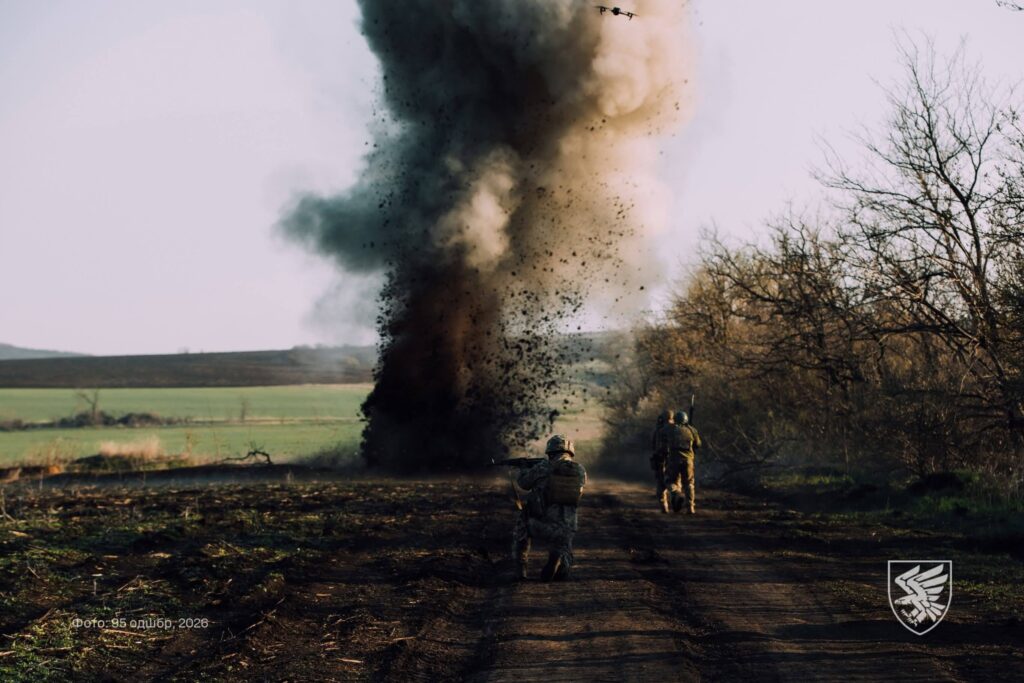
Ukrainian soldiers at the tactical training Source: The 95th Air Assault Brigade

The EU is putting money into the places inside Ukraine where the army trains its soldiers. The bloc will fund the modernization of several military training centers in Ukraine, upgrading facilities, housing, and equipment, with Denmark administering the funds and the Come Back Alive charity carrying out the work, the Defense Ministry said.

The Ministries of Defense of Ukraine and Denmark previously signed a Letter of Intent to implement a project to modernize one of the Armed Forces of Ukraine's training centers. Under this agreement, Denmark allocated about €33 million to training infrastructure, living and sanitary conditions, equipment, and drones for training defenders.

The money goes into the centers

The support will pay to modernize several training sites: better living quarters for the troops who cycle through them, upgraded facilities, and improved infrastructure, the ministry says.

The project runs under the EU's diplomatic and military-planning bodies, the European External Action Service, the Military Planning and Conduct Capability, and the bloc's military-assistance mission for Ukraine, with the Come Back Alive foundation carrying it out alongside the Defense Ministry.

Halan calls training a foundation

The aim is a modern environment for preparing soldiers.

"Modernized centers let us train the military on real combat experience," Deputy Defense Minister Liubov Halan says, thanking the EU and every partner country.

Training inside Ukraine, she says, is as fundamental to defense as ammunition and equipment, because weapons do not work without people trained to use them. The modernized sites, the ministry says, are meant to let Ukraine prepare its own forces to a higher standard, faster, and closer to the front.

Denmark administers the funds

The project is an EU initiative, open to any partner willing to contribute, with Denmark as the fund administrator. The ministry thanked the EU, Denmark, and Come Back Alive for support it says raises the quality of Ukraine's training.

Ukrainian combat simulator, used to train more than 500,000 troops, can now be ordered from NATO’s supply catalogs by single code

30 septembre 2026 à 15:12

L7 founder Ihor Bielov. Source: L7 Simulators

A Ukrainian combat simulator can now be found and ordered in NATO's supply catalogs by a single code. L7 Simulators, whose trainers have prepared more than 500,000 Ukrainian troops, has had its entire lineup NATO-codified, with each device assigned a 13-digit NATO Stock Number, Defender Media reports.

L7's more than 50 trainers, from the Browning M2 to the Stinger to the NLAW, now carry those codes, and the company can codify new ones itself, opening the door to government procurement in Ukraine and across the alliance. It is another Ukrainian defense maker stepping toward NATO's standards and supply chain.

Every trainer gets a NATO number

A NATO Stock Number is a unique 13-digit code, a kind of military barcode for supplies, that lets defense logistics systems across the alliance identify, catalog, and purchase equipment. Every simulator in L7's catalog now has one, and the firm has also won the status to assign numbers to its future products directly, rather than starting the process over for each one.

The code identifies, not certifies

The company is careful about what the step does and does not mean. Codification is not a certification that the product meets NATO's technical standards, L7 stresses, but rather a mechanism for unambiguously identifying an item within the shared defense-logistics system.

The firm entered that system in December 2024, when its UNITS training platform, already cleared for use by Ukraine's Defense Ministry, received the first number.

Half a million have trained on them

L7's range runs to more than 50 types of trainers, tied together in a single ecosystem the company calls UNITS: fire-training systems, anti-tank and air-defense simulators, and trainers for unmanned aircraft, with models for the Stinger, NLAW, Carl Gustaf, RPG-7, and SPG-9 among them.

The simulators are used by the armed forces, the National Guard, and other security agencies, and more than 500,000 service members have trained on them, with over 70,000 of them free of charge at the company's own training center.

Russia adds new weapon to its jet-powered drones, even more dangerous: 40-kilogram charge made to sever high-voltage pylons and iron bridges

30 septembre 2026 à 11:21

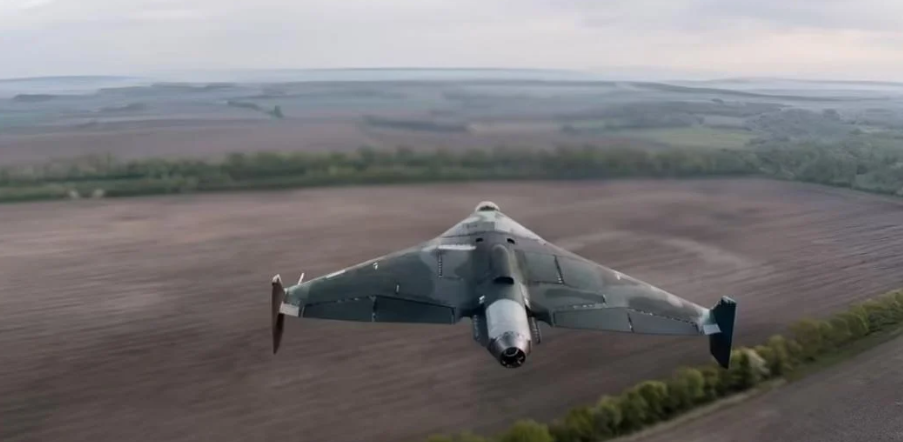
Russia's new "Geran-4 Siker" Shahed variant uses machine-vision AI for targeting. Source: Warhronika

Russia has a new warhead for its drones, and it is built to cut down power lines. For the first time, a jet drone has carried a shaped "cumulative-cutting" charge designed to sever high-voltage pylons and iron bridges, Serhii Beskrestnov, presidential adviser, known as Flash, said, as Russia opened its heaviest assault on Ukraine's power grid since last winter.

On 30 September, Russia launched its massed fall-winter campaign on Ukraine's energy infrastructure since the last heating season, hitting power sites across 11 regions overnight with missiles and drones, Prime Minister Serhii Koretskyi said.

The new warhead fits the aim: Flash says it is meant to bring down the high-voltage lines that carry the country's electricity. And Ukraine enters the winter exposed, with its energy resilience plans less than half complete.

A new charge targets the pylons

The device, which Flash calls a cumulative-cutting special load, is designed specifically to bring down high-voltage pylons and iron bridge structures.

"It consists of a main charge weighing 40 kilograms and four strike modules," he says.

In his reading, Russia intends to go after the major transmission lines that move power across the country, the backbone of the grid, rather than the substations it has struck before.

The campaign builds toward November

On 29 September, two senior Ukrainian officials told The Economist that Russia launched a three-part campaign of attacks on Kyiv, combining massive bombardments, sabotage, and the creation of political chaos. These efforts aimed at destabilizing the Ukrainian capital would peak by November, they said.

According to a representative of the Security Service of Ukraine, Russia has "thousands" of drones in its arsenal and is simultaneously expanding its stockpile of ballistic missiles. The plan is to "deploy the entire arsenal over the next two months," given that Ukraine lacks an effective weapon against jet-powered drones.

Ukraine’s new ground robot switches from land to water in seconds. It just ran its first supply mission, 40 kilometers to positions others can’t reach

30 septembre 2026 à 10:55

Ukraine's new amphibious ground drone. Source: Ukraine's Defense Ministry

A Ukrainian ground robot drove toward the front, reached the water in its path, and kept going, swimming across with ammunition and food aboard and no soldier at risk. It ran the first logistics mission with an amphibious ground robot, covering more than 40 kilometers over land and water to resupply positions, the Defense Ministry said.

Water is one of the front's quiet chokepoints: rivers, canals, and marshes that stop ground robots and force risky detours, and that air resupply cannot always solve. The amphibious robot drives like a normal ground vehicle, then switches to swimming in seconds, letting one machine cross terrain that halts the rest.

It is the latest of Ukraine's battlefield-robot firsts, which this year have included air-dropping robots behind Russian lines.

Water stops the others

The robot was developed through Brave1, Ukraine's state-backed defense-innovation cluster, which links developers with the military and government.

The one such robot gains additional capabilities to carry out missions across different terrains.

A first-ever logistics mission on an amphibious UGV: the robot covered 40 kilometers across land and water.

Operators of the "Alter Ego" unit (93rd Brigade) deployed the robotic system across mixed terrain. Facing water obstacles, the UGV seamlessly switched to swimming mode to… pic.twitter.com/rH8waq04a4

— BRAVE1 (@BRAVE1ua) September 29, 2026

For this operation, the system was refined over several months in close cooperation with the military, taking into account real tasks, operational experience, and the specifics of frontline terrain. The Brave1 defense innovation cluster provided grant support for the system, helping bring the solution to practical use.

The ministry says it is "expanding the capabilities of robotic systems" so soldiers have more tools for the fight.

Robots with grenade launchers

Earlier, Ukraine employed a new tactic during its major Operation Vivaldi in Donetsk Oblast. During the 3rd Army Corps' offensive, fighters from the world's first experimental unit of unmanned ground-strike vehicles, "NC13", upgraded their kamikaze ground drones with grenade launchers.

During the operation, UGVs equipped with two Bullspike grenade launchers attacked Russian positions, then detonated directly inside their shelters. The occupiers believed they were being attacked by an entire assault group. In reality, they were being torn apart by robots from the 3rd Assault Corps.

Russian drone explodes in Moldova, day after its opposition moves to suspend its pro-EU president. Analyst says that’s no coincidence

30 septembre 2026 à 10:20

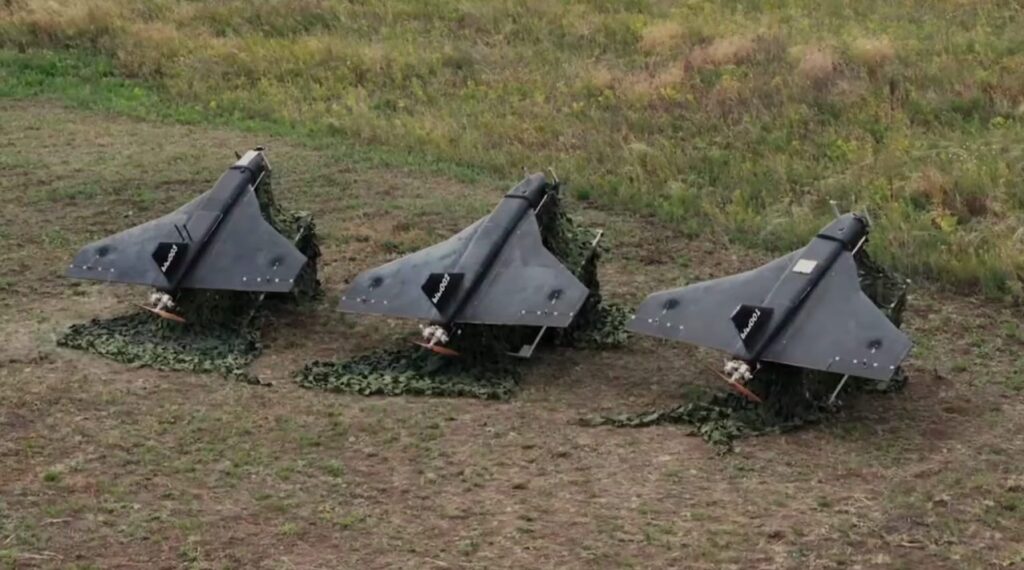
russian gerbera drones

A Russian drone exploded in Moldova on 30 September, detonating near the mast of a civilian mobile operator, TV8 reported. Despite previous such attacks, this one may have another purpose, according to Oleksandr Kovalenko, a Ukrainian military analyst.

Moldova, which borders Ukraine and is not in NATO, has become a regular waypoint and casualty of Russia's drone war, with wreckage turning up repeatedly this year. What sets this strike apart is its timing, days into a fight over the country's pro-EU president.

A drone hits a telecoms mast

Police were alerted at 5:43 a.m. to a drone flying low over Bender, in Transnistria, the general police inspectorate said. It came down near Hîrbovăț and detonated against the mast of a civilian mobile operator, leaving blast marks along about 12 meters of the structure, with the metal deformed and scorched. Service was not disrupted. Police cordoned off the area, and specialists were examining the debris.

A second drone follows

Hours later, at 10:26, Moldova's air-monitoring system detected a second drone crossing its airspace, jet-powered and heading toward the northern town of Soroca, Moldova's Defense Ministry reported, according to European Pravda.

Flights were suspended over the country's north and center. Parliament speaker Igor Grosu condemned the strike: "Russia will answer for its war crimes," he says.

An analyst ties it to the impeachment

Meanwhile, Russian drones entering Moldova on this day is no coincidence, he argues, coming as the opposition moves against President Maia Sandu.

On 29 September, 46 opposition lawmakers registered a motion to suspend her, a step that would need 67 of parliament's 101 votes to pass and, if approved, a referendum within 30 days, Moldova Live reported.

Kovalenko contends pro-Russian forces are running a destabilization campaign they will reinforce with periodic drone attacks, pressing a message at Moldovans: "if you don't want war, get rid of Sandu."

❌