❌

Vue normale

  • ✇Euromaidan Press
  • Russia’s mass drone attacks on Ukraine have a goal—likely Ukraine’s capitulation by spring 2027, ISW says
    Russia is likely attempting to force Ukraine to capitulate by spring 2027 through a large-scale campaign of long-range strikes, the Institute for the Study of War (ISW) said in its 27 September report. Russian President Vladimir Putin's new theory of victory relies heavily on the mass use of jet-powered drones and ballistic missiles against Ukraine, the institute assesses. Russia keeps shifting to faster jet-powered drones that Ukraine's defenses struggle to stop, forcing it to spend sc
     

Russia’s mass drone attacks on Ukraine have a goal—likely Ukraine’s capitulation by spring 2027, ISW says

28 septembre 2026 à 14:40

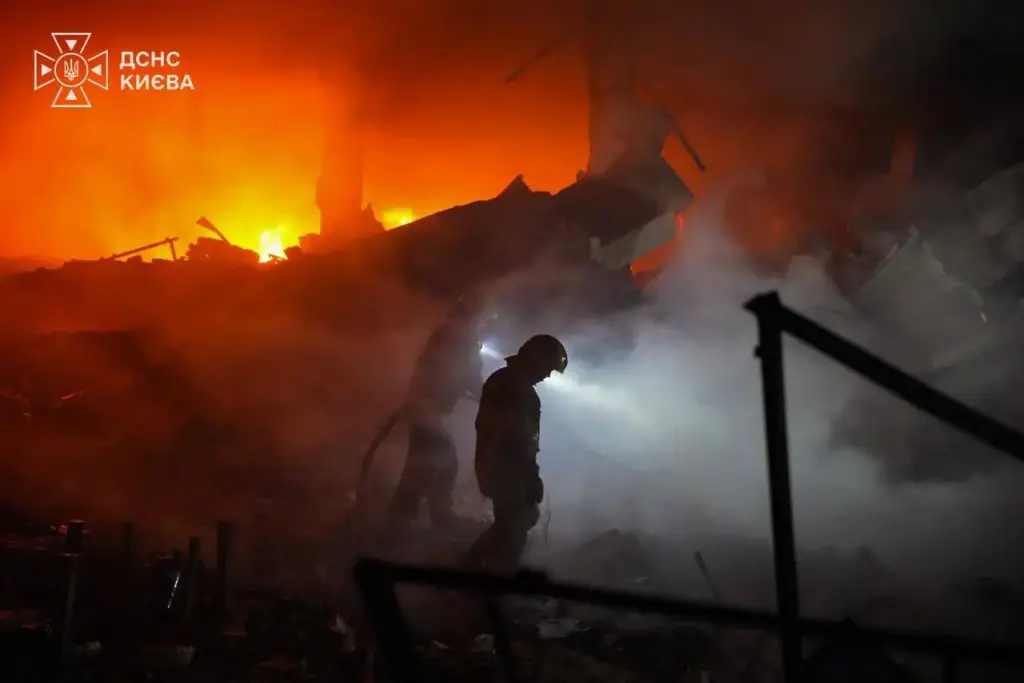
kyiv strike

Russia is likely attempting to force Ukraine to capitulate by spring 2027 through a large-scale campaign of long-range strikes, the Institute for the Study of War (ISW) said in its 27 September report. Russian President Vladimir Putin's new theory of victory relies heavily on the mass use of jet-powered drones and ballistic missiles against Ukraine, the institute assesses.

Russia keeps shifting to faster jet-powered drones that Ukraine's defenses struggle to stop, forcing it to spend scarce missiles on them. Russia's use of jet-powered drones rose eightfold from June to August, with Moscow launching around 7,700 such drones since their initial deployment, Ukrainian Air Force spokesperson Yurii Ihnat said on 23 September. But Putin likely does not expect the campaign to last indefinitely, and he may hold off on a new mobilization until he sees whether the strikes work, ISW assesses.

Putin's modified theory of victory

Putin's modified theory of victory largely depends on Russia's ability to mass-launch cheap jet-powered Gerans that get through Ukrainian defenses often enough, the institute notes.

Even a Kremlin-linked Russian milblogger claimed on 27 September that the Russian strategy, which relies heavily on long-range strikes, is costly and cannot continue indefinitely, not least because Ukraine is hitting Russia harder too, according to the analysis.

At the same time, Putin stated on 25 September that Ukraine "must feel" Russia's "retaliatory" strikes. ISW assesses that this suggests he intends to intensify Russia's strike campaign in winter, as he has in previous winters.

The aftermath of the Russian attack on Kyiv, Ukraine, 27 December 2025. Photo: National Police

If Putin is counting on Ukraine to break and capitulate this winter, he may be ignoring what the campaign will cost Russia over time, the institute notes. This strategy also counts on Ukraine's shortage of Patriot interceptors against ballistic missiles, and on the country's power grid and other vital systems giving way under months of strikes.

Until that approach runs out, Putin is unlikely to back down on his demands or agree to real ceasefire talks, ISW assesses.

Ukrainian interceptors could disrupt Russia's plan

A Kremlin-linked Russian milblogger claimed on 27 September that Russian forces launched predominantly jet-powered Geran-5 drones at Odesa, Mykolaiv, and Kyiv during the night of 26–27 September. According to the blogger, Russia's diverse arsenal of strike weapons and Ukraine's shortage of air defense assets allow Russian forces to maintain the current pace of strikes and expand the range of targets, ISW writes in its analysis.

At the same time, Ukrainian President Volodymyr Zelenskyy said on 26 September that Ukraine's interception rate for jet-powered Shahed drones currently stands at 55%. Of more than 2,730 such drones Russia had launched in September by then, Ukrainian forces had downed or suppressed more than 1,500, he added.

Geran-5 (Above) and Geran-4 (Below)
Jet-powered drones Geran-5 (above) and Geran-4 (below). Image: TurDef

Ukraine is testing interceptor drone prototypes in combat conditions, Ukrainian Presidential Office head Kyrylo Budanov told Novyny.LIVE on 27 September. The mass deployment of interceptors capable of shooting down jet-powered Gerans could begin within several months, he added. Ukrainian companies have already successfully tested several interceptor drones capable of intercepting Russian jet-powered drones in field conditions, the institute notes.

At the same time, it remains unclear whether Ukraine will be able to scale up its interceptor program quickly enough and achieve sufficient success to disrupt the intensification of Russia's campaign during the winter, ISW notes.

Why Putin may hold off on a new mobilization

Expanding Russia's arsenal of strike weapons is cheaper than carrying out a second mobilization economically, militarily, and socially, a Kremlin-linked Russian milblogger cited by the institute claimed.

Putin may put off large-scale forced mobilization until he sees whether the strikes deliver, ISW assesses, though his officials have been laying the groundwork for it despite Kremlin denials. Still, the need to replace Russia's enormous battlefield losses could push him to order such a mobilization as early as this fall, ISW notes, as Ukrainian and other sources have repeatedly reported he is preparing to do.
  • ✇Euromaidan Press
  • A Ukrainian Hornet drone hit a Russian radar 120 km behind the front. It was likely a $100 million Nebo-M
    A Ukrainian Hornet drone struck a Russian radar system about 120 kilometers behind the front, Taras Myshak, senior communications officer of the 59th Separate Assault Brigade of Unmanned Systems, said on Suspilne on 28 September, ArmyInform reported. The brigade's Signum unmanned systems battalion carried out the strike about a week earlier, he added. Russia's air defenses depend on radars to see Ukrainian drones and missiles coming. Every radar it loses weakens that watch and gives the
     

A Ukrainian Hornet drone hit a Russian radar 120 km behind the front. It was likely a $100 million Nebo-M

28 septembre 2026 à 12:15

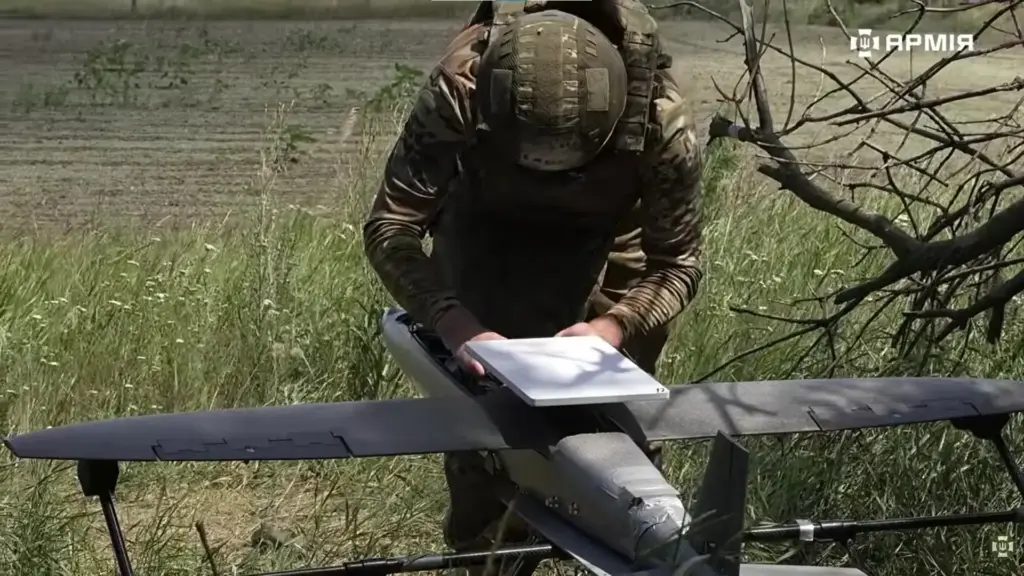
A pilot prepares the Hornet UAV for takeoff. Screenshot from Army Media video

A Ukrainian Hornet drone struck a Russian radar system about 120 kilometers behind the front, Taras Myshak, senior communications officer of the 59th Separate Assault Brigade of Unmanned Systems, said on Suspilne on 28 September, ArmyInform reported. The brigade's Signum unmanned systems battalion carried out the strike about a week earlier, he added.

Russia's air defenses depend on radars to see Ukrainian drones and missiles coming. Every radar it loses weakens that watch and gives the next Ukrainian strike a better chance of getting through.

According to Myshak, the target was a "quite expensive" Russian radar system.

A radar system is effectively the "eyes" of the Russian air defense system: it detects aerial targets, determines their coordinates, and transmits information to other elements of the system.

Russians continue probing Ukrainian defenses

Russian forces in the brigade's zone, roughly along the Donetsk Oblast border, continue to operate in small infantry groups and use infiltration tactics, Myshak says. At the same time, the Russians are trying to cut Ukrainian logistics, he adds, saying that the brigade is effectively holding the Russian army back from infiltrating into Dnipropetrovsk Oblast.

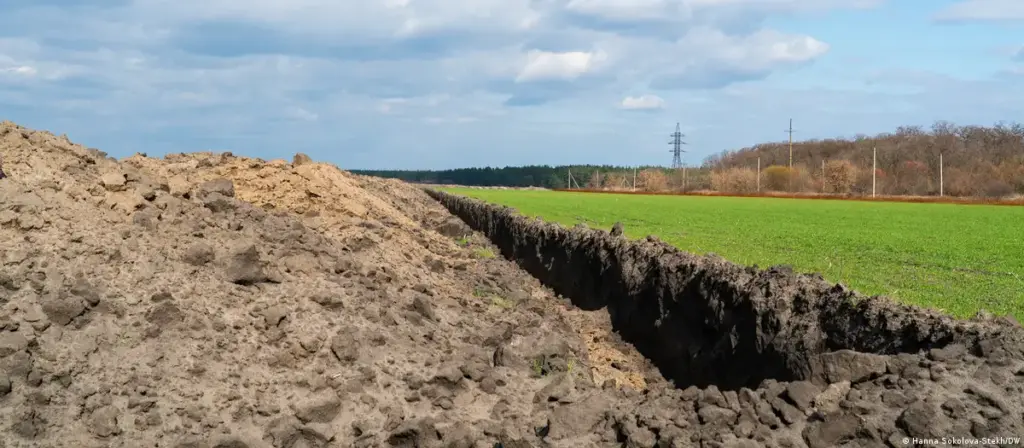
Defensive fortifications in Dnipropetrovsk Oblast, Ukraine. Illustrative photo: Hanna Sokolova-Stekh/DW

The Russians' main means in this sector remain drones and infantry, the serviceman says. The number of infantry has decreased somewhat compared with previous periods, but the pressure from the enemy has not stopped, he adds.

"Of course, they will try, they will constantly probe, so to speak, our defense with their infiltrations. And likewise with drones, of various ranges, working on logistics, making it impossible for us to enter positions, to deliver everything necessary to the positions, in order to make our defense impossible," Myshak emphasized.

At the same time, Ukrainian troops are trying not only to defend against these actions but also to deprive the Russians of radars, electronic warfare systems, and other equipment, the serviceman says. "We likewise don't let them relax," he said.

Russians tried to prevent the strike, but Ukrainian forces hit the target

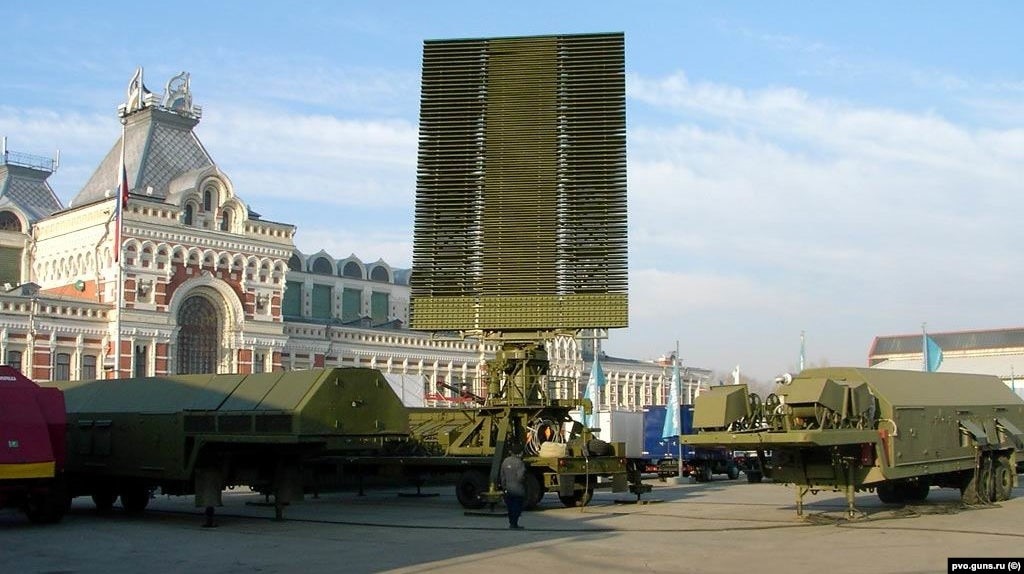
This was likely the same strike that Ukrainian volunteer fundraiser Serhii Sternenko reported on his Telegram channel on 18 September. Operators of the Signum unit of the 59th Brigade, together with the First Separate Unmanned Systems Center, hit a Russian Nebo-M radar about 120 kilometers from the front line, he wrote.

The radar, which Sternenko valued at about $100 million, was damaged over two drone sorties, which also wounded two Russian servicemen, according to his post. During the operation, the Russians tried to jam the drone's video feed with electronic warfare, but the operators flew on using only flight data and their own experience, he added.

The unfolded Protivnik-GE radar station of the Nebo-M complex, with other components of the system folded nearby. Screenshot from pvo.guns.ru via RFE/RL

Ukraine systematically knocks out the "eyes" of Russian air defense

In October 2024, Ukraine's military said it had hit a Russian Nebo-M radar station with ATACMS ballistic missiles to blunt Moscow's ability to spot and shoot down aircraft and missiles, Reuters reported. The military estimated each such system at more than $100 million.

Ukraine is systematically increasing its use of medium-range strike drones, which can hit targets up to 200 kilometers deep inside enemy territory, the Ukrainian Defense Ministry reported in May this year. Russian air defenses and radars are among the main priorities of such operations, as their destruction weakens the system for detecting and intercepting aerial targets, the ministry said. Medium-class drones, including the FP-2, Hornet, and Bulava, play a critical role in such strikes, the ministry noted.

According to the General Staff of the Armed Forces of Ukraine, Ukrainian forces struck at least 25 major Russian air defense and radar systems during April, about 12 of which were radar systems, the Ukrainian Defense Ministry also wrote in May this year.

❌