❌

Vue normale

Thousands are starving in occupied Oleshky. People have no food, no way out, and Russian forces bomb incoming aid

17 septembre 2026 à 17:54

Oleshky, Kherson Oblast, has been under Russian occupation since 2022, following Russia’s capture of the city during the initial phase of its full-scale invasion of Ukraine. Photo: Dmyto Lubinets

Oleshky, a Ukrainian city under Russian occupation in Kherson Oblast, is facing a severe humanitarian crisis, with more than 6,000 people, including around 200 children, potentially trapped there, according to Ukrainian Ombudsman Dmytro Lubinets.

Civilians are going without food, drinking water, medicine, and other basic necessities while facing daily shelling and drone attacks, Lubinets said.

The crisis has become so desperate that some residents are trying to escape on their own without waiting for an organized evacuation, crossing mined fields because they see no other way out. They risk being killed by mines or Russian drones, but are attempting to leave because staying in Oleshky has become even more dangerous.

“People need to be saved,” Lubinets said, describing the city as a “death trap.”

Thousands remain trapped

Lubinets said his office has received 176 appeals concerning the humanitarian situation in the temporarily occupied territories of Kherson Oblast and has verified 358 people who urgently need assistance to safely leave the area.

He stressed that these are only people his office has managed to identify. Based on the population of Oleshky and the surrounding area, more than 6,000 people may still remain there, including around 200 children, he said.

The civilians remaining in the city are effectively in a “gray zone,” according to Lubinets. They face daily shelling and drone attacks while lacking food, drinking water, medicine, and other essential assistance.

“The stories make your blood run cold. And so there is only one task — to get our people out of this deadly danger,” Lubinets said.
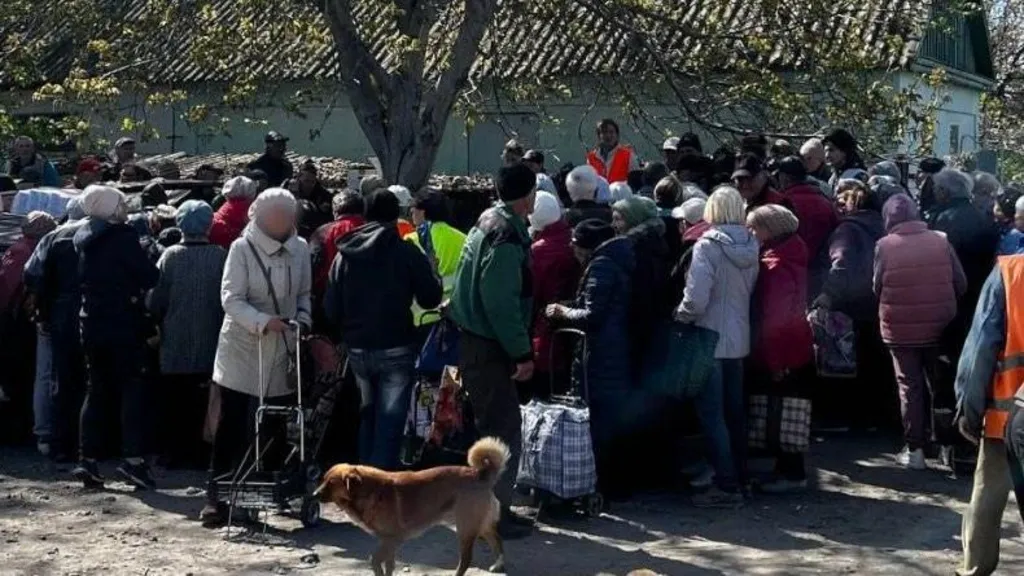
Residents, many elderly and carrying shopping trolleys, gather outdoors in occupied Oleshky, Kherson Oblast.
People in Oleshky wait for food supplies. Hola Prystan is near Oleshky. Photo: BBC

“There is real hunger there”

Other reporting indicates that the shortages have persisted for months. According to Kherson Regional Military Administration head Oleksandr Prokudin, food deliveries to Oleshky have almost completely stopped, while Russian forces prevent residents from evacuating.

Natalia Soboleva, an Odesa volunteer who tracks the situation in Oleshky, told Espreso that residents are gathering grass and searching through destroyed basements for food.

“There is hunger there, real hunger,” she said.

The blockade has also affected humanitarian efforts. Soboleva said Russian forces attacked humanitarian vehicles attempting to bring food and water into the city. During the latest reported attempt on 1 September, Russian troops shelled four volunteer vehicles.

The crisis in Oleshky has been independently documented by international organizations and media. The UN, Human Rights Watch and the OSCE have all reported severe shortages of food and medical care, dangerous conditions for civilians, and restrictions on humanitarian aid and evacuation.
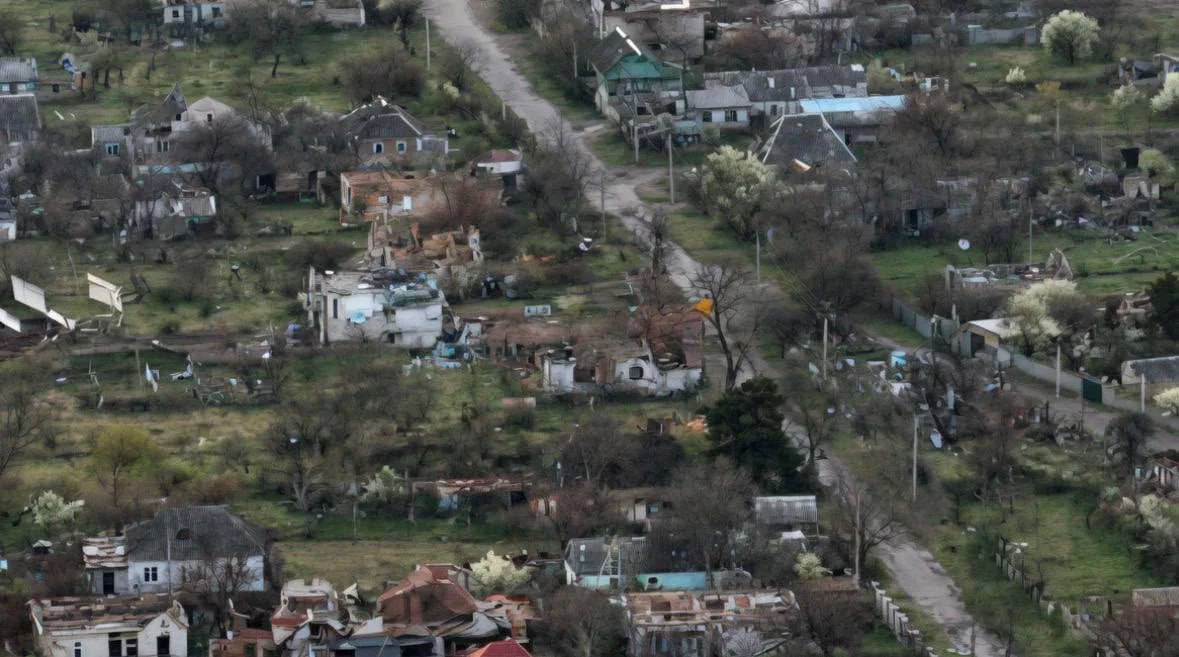
Occupied Oleshky.
Explore further

International monitors confirm Russia’s blockade of occupied Oleshky, where the living starve and the dead go unburied

Russia has not confirmed evacuation, so civilians risk mines to escape

The ombudsman said some people are now trying to leave independently. They are crossing mined areas despite the risk of being killed by a mine or targeted by a drone because they do not see another way to escape.

This desperation has also been documented by Human Rights Watch, which said there is no organized evacuation route from Oleshky and that people attempting to leave face Russian military checkpoints and a dangerous journey through occupied territory.

Lubinets said Ukraine has been pressing for an organized humanitarian evacuation.

Ukraine and Russia had previously reached agreements and established clear procedures for such a mission, he said. Lubinets also secured the International Committee of the Red Cross’ readiness to participate within its mandate.

Ukraine prepared a list of people for evacuation and coordinated with its Security and Defense Forces to establish a ceasefire during the humanitarian mission.

But Russia has not confirmed its readiness to carry out the evacuation, according to Lubinets.

Explore further

Mined in, starved out, hunted from above—life in the towns Russia demands at the peace table

Months ago, he said, he informed international organizations, including the United Nations and the ICRC headquarters in Geneva, about the critical situation and called for assistance to prevent mass deaths.

Lubinets said his office continues to collect and verify information and coordinate with the ICRC, international organizations and Ukrainian authorities. It is also continuing to press Russia for an urgent evacuation of civilians remaining in Oleshky.

The situation is difficult to independently verify because Oleshky is under Russian occupation and access to the city is severely restricted. But reports of the humanitarian crisis have been corroborated by the UN, Human Rights Watch, the OSCE and other international organizations, as well as Ukrainian and international media.

EU pledges €3.3 billion for Ukraine, von der Leyen says “more is coming” as Russia’s escalating air war makes life in Ukrainian cities increasingly difficult

17 septembre 2026 à 16:40

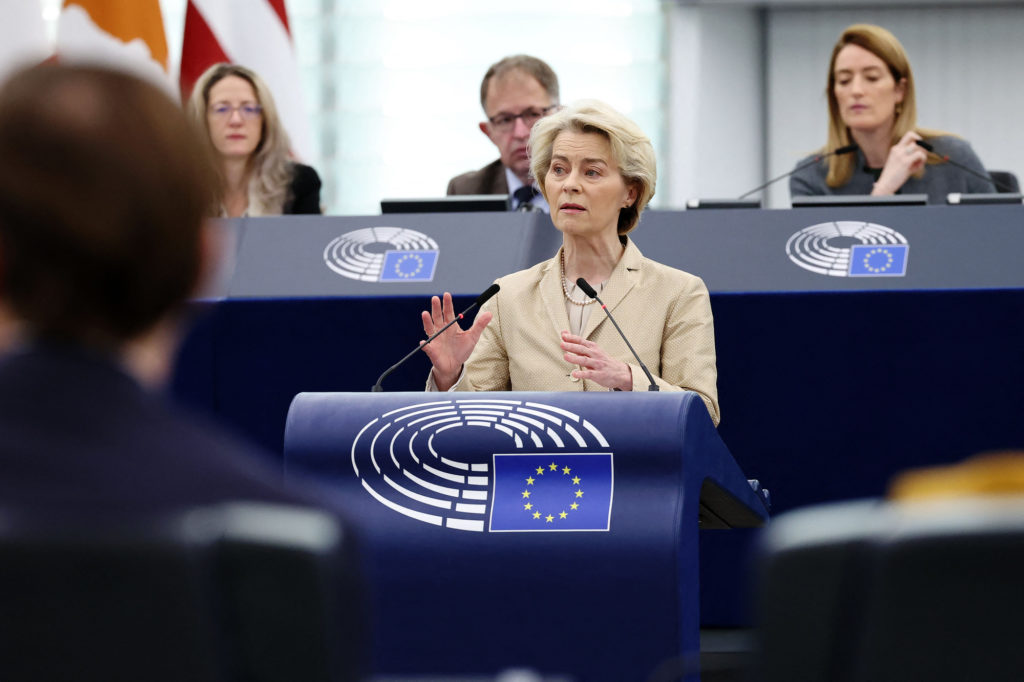
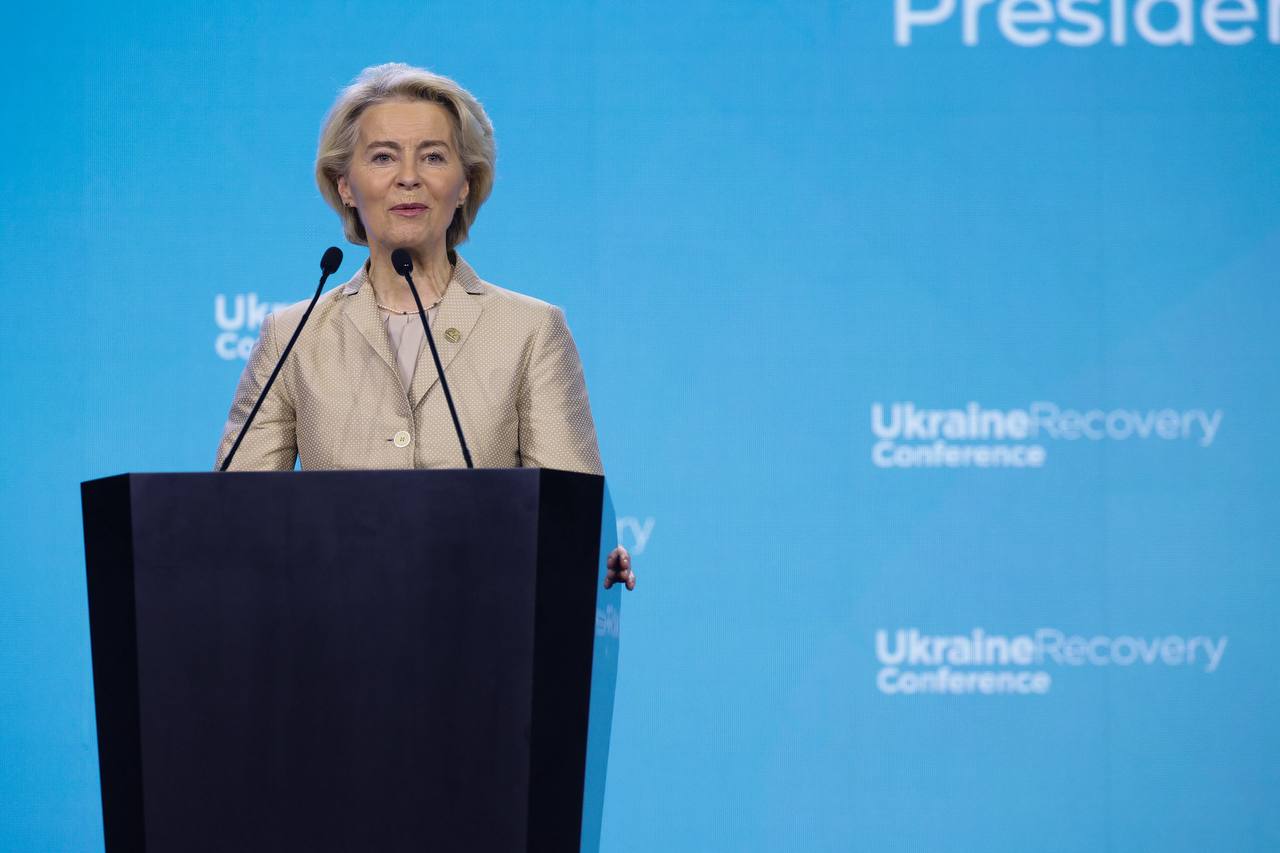
EU Commission President Ursula von der Leyen says Europe will provide Ukraine with another €3.3 billion for missiles and drones as Russia intensifies attacks on Kyiv and seeks to make daily life in Ukraine's cities impossible.

Ukraine has repeatedly appealed to its partners for more air defense as Russia develops increasingly sophisticated ways to attack Ukrainian cities, while Ukraine’s stocks of air-defense interceptors have fallen to critically low levels.

Following a call with President Volodymyr Zelenskyy, von der Leyen said the EU would disburse the funds on 18 September. She also said the EU had approved funding for Patriot air defense systems through its Ukraine Support Loan.

Ukraine needs more air defense

Russia has increasingly combined large numbers of attack drones with ballistic and cruise missiles, forcing Ukraine to defend vast areas while facing shortages of high-end interceptors.

The most difficult targets are Russia’s ballistic missiles, which can reach Ukrainian cities within minutes and require specialized systems such as Patriot to intercept. Ukraine has repeatedly called for more Patriot batteries and interceptors as Russia increases missile attacks.

Ukraine also needs additional air defense capabilities to counter Russia’s increasingly sophisticated drone attacks. Russia is deploying faster, more advanced Geran-type drones that are more difficult to intercept, increasing pressure on Ukraine’s already limited air-defense stocks.

Von der Leyen said the EU had approved funding for Patriot systems last week, but acknowledged that “clearly more is needed.”

The new €3.3 billion package will fund the procurement of missiles and drones for Ukraine, strengthening its ability to defend against Russian attacks.

I just had a phone call with President @ZelenskyyUa.

Tomorrow we will disburse €3.3 billion for missile and drones in Ukraine.

Full read-out ↓https://t.co/UYDT9vn3zC

— Ursula von der Leyen (@vonderleyen) September 17, 2026

Europe proposes joint air defense development

Von der Leyen also announced that the EU is prepared to use remaining funds from its Security Action for Europe (SAFE) program to launch a new joint EU-Ukraine defense initiative.

The proposed program would focus on developing a European air and missile defense system, building on the jointly developed anti-ballistic Freya system.

The goal is to combine Ukraine’s battlefield experience and defense innovation with European technology and industrial capacity, according to von der Leyen.

The announcement comes as Ukraine is trying to strengthen its air defenses ahead of another winter of Russian attacks, when strikes against energy and other critical infrastructure could have an especially severe impact on civilians.

title · post ursula von der leyen during ukraine recovery conference gdańsk poland 2026 news ukrainian reports
Explore further

The EU has billions in unspent defense funds. It wants to use them for projects with Ukraine

Von der Leyen calls for broader support

Von der Leyen said the EU has already mobilized nearly €15 billion for Ukraine in 2026, with additional support planned. She added that “more is coming.”

She also said Ukraine needs to complete reforms in the Verkhovna Rada to unlock further funding and continue its path toward EU membership.

“Europe is stepping up,” von der Leyen said. “Now others must step up their support too.”

  • ✇Euromaidan Press
  • Russia’s war has devastated Donetsk Oblast, with losses already exceeding $26 billion
    Donetsk Oblast’s preliminary economic losses from Russia’s full-scale invasion exceeded 1.08 trillion hryvnias ($26 billion) as of 1 August 2026, according to data provided by the Donetsk Regional Military Administration to Radio Free Europe/Radio Liberty’s Donbas.Realities project. Donetsk Oblast has been at the center of Russia’s war against Ukraine since 2014, with the frontline running through the region and Ukrainian-controlled towns facing daily Russian attacks since 2022. Only ab
     

Russia’s war has devastated Donetsk Oblast, with losses already exceeding $26 billion

17 septembre 2026 à 16:01

Damaged residential buildings in Kostiantynivka, Donetsk Oblast, 9 April 2026. Photo: UA Land Forces

Donetsk Oblast’s preliminary economic losses from Russia’s full-scale invasion exceeded 1.08 trillion hryvnias ($26 billion) as of 1 August 2026, according to data provided by the Donetsk Regional Military Administration to Radio Free Europe/Radio Liberty’s Donbas.Realities project.

Donetsk Oblast has been at the center of Russia’s war against Ukraine since 2014, with the frontline running through the region and Ukrainian-controlled towns facing daily Russian attacks since 2022. Only about 30% of the oblast remains under Ukrainian control.

Industry accounts for most losses

According to the administration, businesses in the region’s real economy suffered more than 1.08 trillion hryvnias in losses, including lost profits, Donbas.Realities reported.

Industry accounted for 909.4 billion hryvnias ($22 billion) of the estimate, while the electricity and gas sectors suffered 156.5 billion hryvnias ($3.8 billion) in losses.

Agriculture accounted for 11.8 billion hryvnias ($285 million), transport for 1.5 billion hryvnias ($36 million), and other sectors for another 1 billion hryvnias ($24 million).

The losses among businesses operating in the social sphere were separately estimated at 100 million hryvnias ($2.4 million).

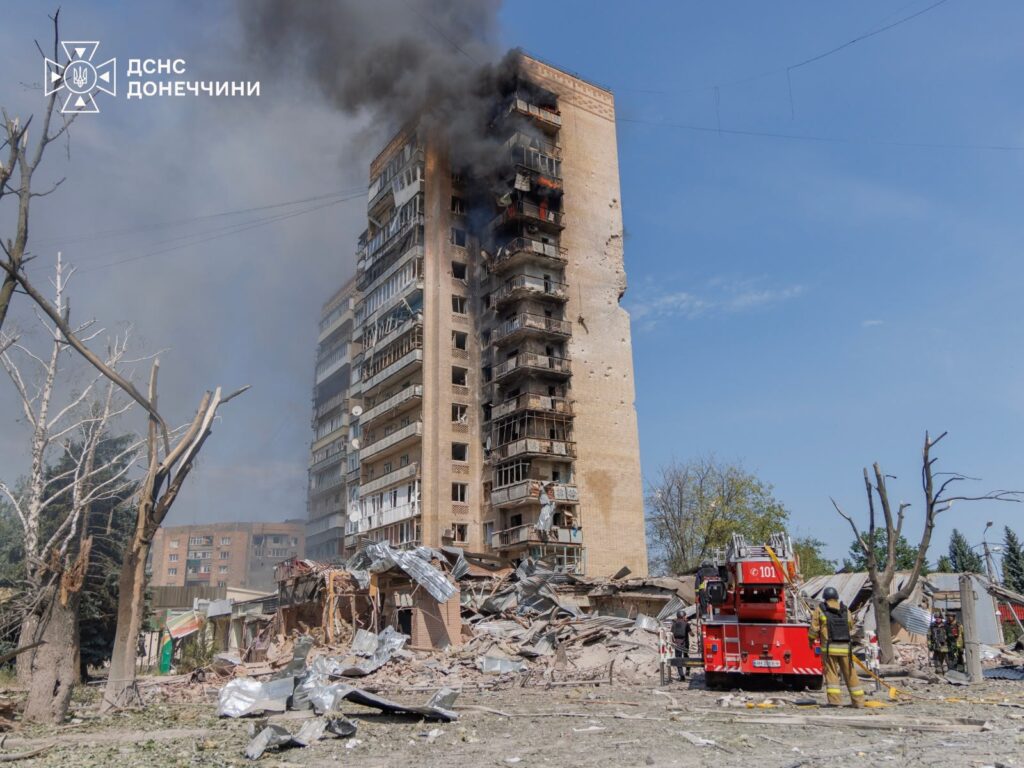
Emergency workers responding to the aftermath of a Russian airstrike on a residential building in Kramatorsk, Donetsk Oblast, Ukraine, on 4 August 2026. Photo: Ukraine's State Emergency Service

Full extent of damage remains unknown

The administration said its Department of Economy is collecting and consolidating information on losses caused by Russia’s invasion.

The regional administration said the figure is likely incomplete, as ongoing fighting and the scale of destruction make it impossible to determine the full extent of the damage.

“Determining the full extent of material damage caused in Donetsk Oblast is currently impossible,” the administration said, citing ongoing hostilities, the scale of destruction, limited access to damaged or destroyed sites, and the loss of documentation from occupied territories and areas of active fighting.

The administration emphasized that the figures are preliminary estimates and do not represent the region’s full material losses.

A final assessment can only be made after the security situation stabilizes and temporarily occupied territories are liberated, allowing authorities to properly document and assess the damage, it said.

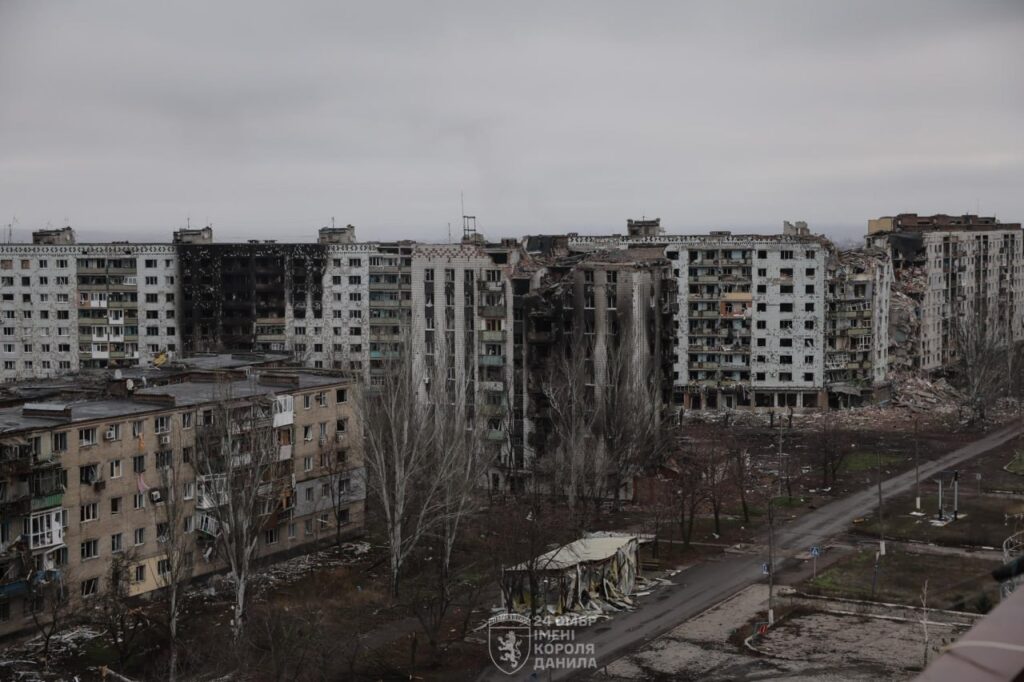
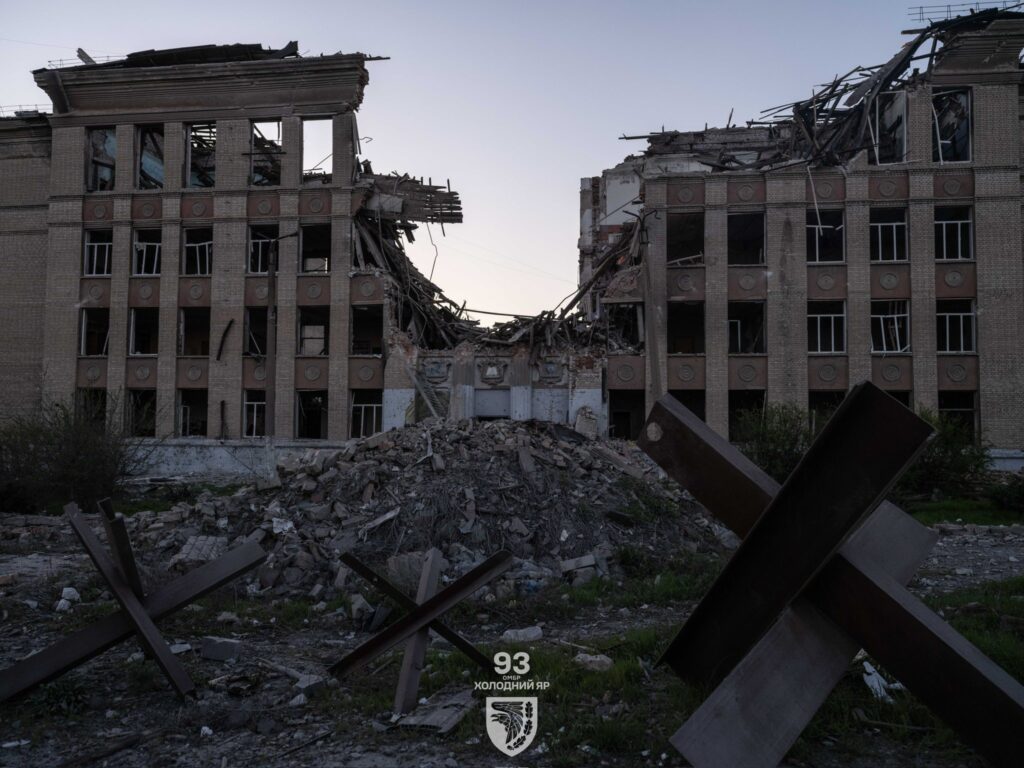
Ruins in Kostyntynivka, Donetsk Oblast, May 2025.
Ruins in Kostyntynivka, Donetsk Oblast, May 2025. Photo: 93rd Brigade

Most of Donetsk Oblast remains under Russian control

About 30% of Donetsk Oblast remains under Ukrainian control, according to the regional administration.

The region has been a major battlefield throughout the full-scale war, with Russian forces continuing to attack Ukrainian-controlled areas while large parts of the region remain occupied.

The scale of the damage in Donetsk Oblast forms part of the much broader economic cost of Russia’s invasion. At the beginning of 2026, Ukrainian authorities and international organizations estimated Ukraine’s overall losses since the start of the full-scale invasion at more than $195 billion, Donbas.Realities reported.

  • ✇Euromaidan Press
  • Russia kills captain of Tanzanian-flagged ship in latest attack on civilian shipping in Black Sea
    Russia killed the captain of a Tanzanian-flagged civilian vessel and wounded three crew members in a drone strike in the Black Sea on 17 September, Ukraine’s Ministry for Restoration, Infrastructure and Transport said. The ministry said Russia is “systematically attacking Ukrainian ports, port infrastructure and civilian commercial vessels,” threatening both people and international shipping in the Black Sea. The vessel was heading toward one of Ukraine’s ports when it was attacked.
     

Russia kills captain of Tanzanian-flagged ship in latest attack on civilian shipping in Black Sea

17 septembre 2026 à 15:20

russian black sea attacks low danube waters push eu seek alternative routes ukrainian grain exports · post civilian bulk carrier golden leo ablaze after missiles hit left odesa cargo corn

Russia killed the captain of a Tanzanian-flagged civilian vessel and wounded three crew members in a drone strike in the Black Sea on 17 September, Ukraine’s Ministry for Restoration, Infrastructure and Transport said.

The ministry said Russia is “systematically attacking Ukrainian ports, port infrastructure and civilian commercial vessels,” threatening both people and international shipping in the Black Sea.

The vessel was heading toward one of Ukraine’s ports when it was attacked. The condition of the ship is still being assessed.

Foreign vessels repeatedly targeted

The latest attack follows a series of Russian strikes on foreign-flagged vessels serving Ukrainian ports.

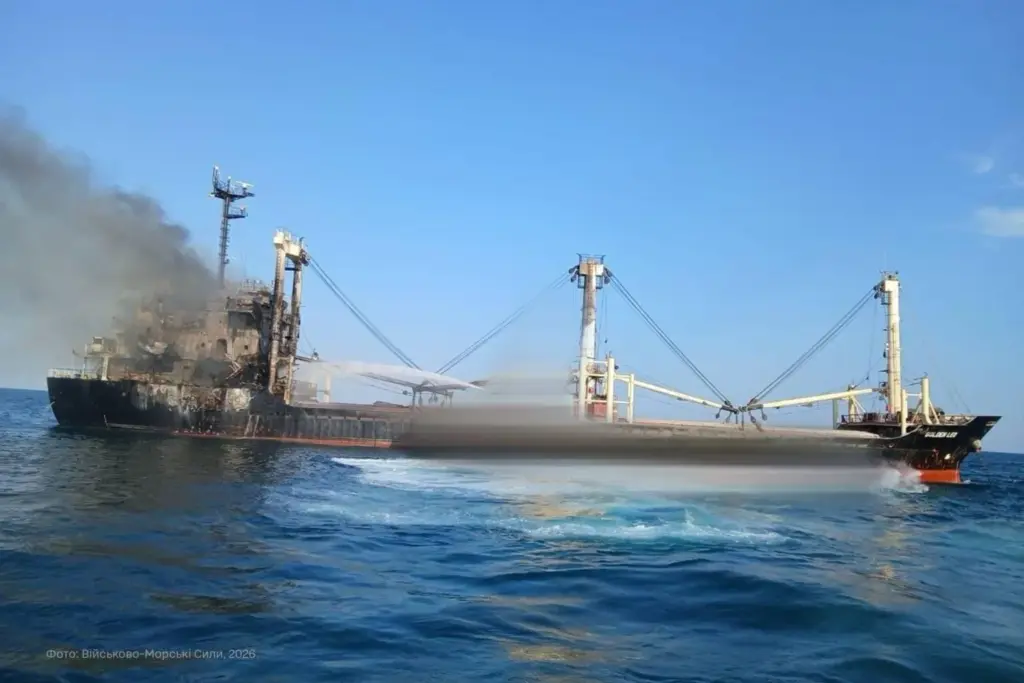
In July, Russia struck the Turkish-owned bulk carrier GOLDEN LEO with cruise missiles as it left Odesa carrying grain, killing 10 people.

Russia also attacked two foreign-flagged cargo ships with drones in June, killing one sailor and injuring five others as the vessels were leaving Ukrainian ports.

In August, a Russian strike on port infrastructure in Odesa damaged a Togo-flagged civilian vessel and injured four people.

Attacks threaten Ukraine’s maritime trade

The repeated attacks have also disrupted Ukraine’s maritime trade route.

In July, Russian strikes on civilian cargo ships brought traffic through the Black Sea corridor close to a standstill at the height of the harvest, with shipowners temporarily stopping vessels from entering Ukrainian ports.

The Ukrainian ministry called for an international response and coordinated action to strengthen the protection of civilian shipping and the security of international logistics routes.

  • ✇Euromaidan Press
  • Ukraine receives 252 bodies as repatriation remains one of the few functioning channels with Russia
    Ukraine has received the bodies of 252 people killed in the war, the Coordination Headquarters for the Treatment of Prisoners of War reported on 17 September. The return of the dead remains one of the few channels that still functions between Kyiv and Moscow during Russia’s war against Ukraine. Each handover allows families of missing Ukrainians to identify and bury their relatives. According to the Russian side, the bodies belong to Ukrainian citizens, including military personnel.
     

Ukraine receives 252 bodies as repatriation remains one of the few functioning channels with Russia

17 septembre 2026 à 14:35

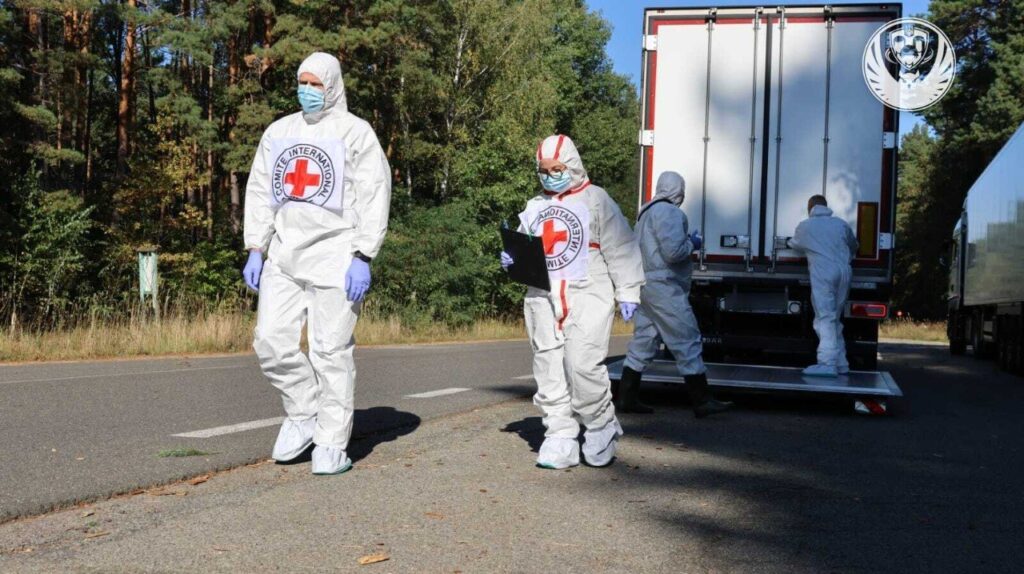
Ukraine receives the bodies of 252 people killed in the war as part of a repatriation from Russia, 17 September 2026. Photo: Coordination Headquarters for the Treatment of Prisoners of War

Ukraine has received the bodies of 252 people killed in the war, the Coordination Headquarters for the Treatment of Prisoners of War reported on 17 September.

The return of the dead remains one of the few channels that still functions between Kyiv and Moscow during Russia’s war against Ukraine. Each handover allows families of missing Ukrainians to identify and bury their relatives.

According to the Russian side, the bodies belong to Ukrainian citizens, including military personnel. Ukrainian authorities will now carry out forensic examinations and identification procedures to establish the identities of those returned, the Coordination Headquarters said.

Bodies to undergo identification

The repatriation was carried out through joint work by Ukraine’s Coordination Headquarters for the Treatment of Prisoners of War, the Security Service of Ukraine’s Joint Center, the Armed Forces, Interior Ministry, Ombudsman’s Office, Missing Persons Commissioner’s Secretariat, State Emergency Service, and other security and defense structures.

The International Committee of the Red Cross assisted with the repatriation.

Ukrainian military personnel are transporting the bodies to designated state facilities, where law enforcement and forensic experts will conduct the necessary examinations and identification.

Repatriations continue amid stalled peace talks

The latest repatriation follows the return of 261 bodies to Ukraine on 13 August. 

The return of fallen Ukrainian soldiers has accelerated since peace talks resumed in early 2025 and has become a recurring process, making repatriation operations one of the few areas of continued humanitarian cooperation between Ukraine and Russia amid the war.

  • ✇Euromaidan Press
  • No missiles intercepted again: Russia strikes Kyiv water infrastructure amid warnings of harsher winter attacks
    Russia launched a large-scale missile and drone attack on Ukraine overnight on 17 September, striking Kyiv, Zaporizhzhia, and Odesa Oblast, among other regions. The attack damaged civilian infrastructure in Kyiv, including apartment buildings and educational facilities, while water infrastructure was also affected. Kyiv mayor Vitali Klitschko reported 20 people injured, including at least two children. Water infrastructure hit as winter concerns grow The overnight strikes affected
     

No missiles intercepted again: Russia strikes Kyiv water infrastructure amid warnings of harsher winter attacks

17 septembre 2026 à 11:44

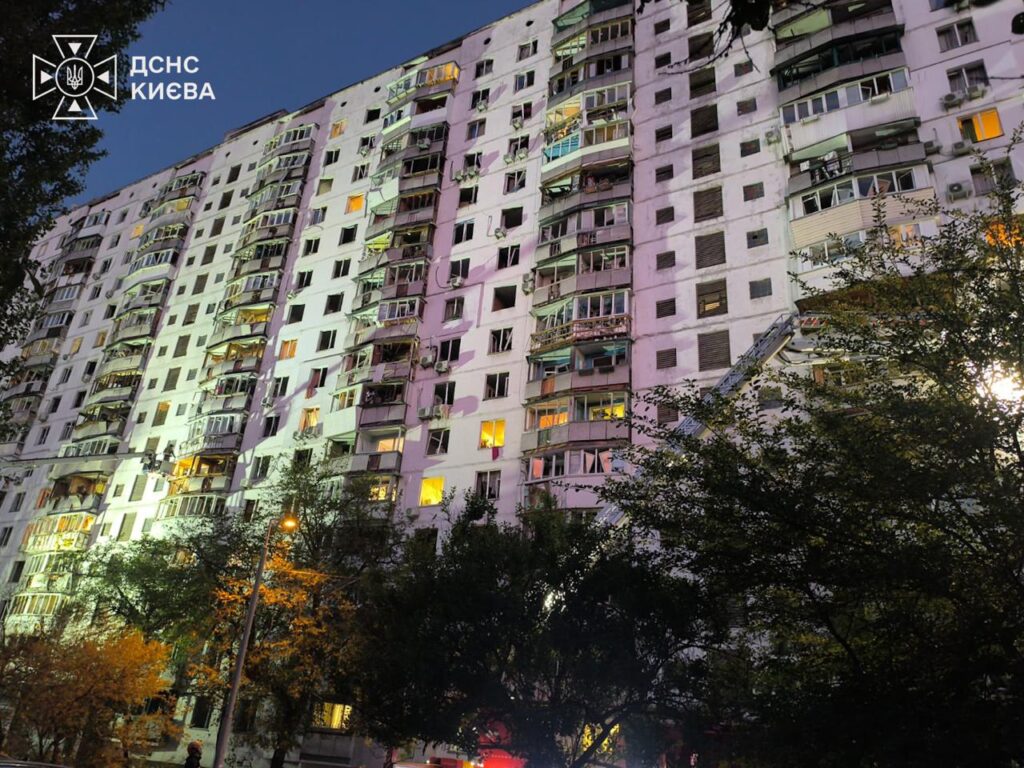
Apartment buildings in Kyiv damaged from an overnight Russian attack on 17 September 2026. Photo: Ukraine's State Emergency Service

Russia launched a large-scale missile and drone attack on Ukraine overnight on 17 September, striking Kyiv, Zaporizhzhia, and Odesa Oblast, among other regions.

The attack damaged civilian infrastructure in Kyiv, including apartment buildings and educational facilities, while water infrastructure was also affected. Kyiv mayor Vitali Klitschko reported 20 people injured, including at least two children.

Water infrastructure hit as winter concerns grow

The overnight strikes affected Kyiv’s water infrastructure, temporarily disrupting water supply on the left bank and reducing pressure in some areas on the right bank.

Kyivvodokanal said its specialists restored operations and that water supply is now fully functioning across the capital.

The damage comes as Ukrainian authorities have warned that Russia could target critical water infrastructure as winter approaches, potentially adding another major threat to civilians alongside attacks on Ukraine’s electricity and heating systems.

Russia has repeatedly used winter strikes to target Ukraine’s critical infrastructure, particularly electricity and heating, leaving civilians without power, heat, and basic services during freezing weather. 

This winter is expected to bring a heavier campaign: Russia has intensified its attacks since the summer, increasingly targeting food-related infrastructure and supplies in addition to energy facilities.

No missiles intercepted, once again

Russia launched ballistic and cruise missiles alongside 157 Shahed-type attack drones and decoy drones, according to Ukraine’s Air Force.

The ballistic missiles included Iskander-M, S-400 and North Korean KN-23 missiles launched from Russia’s Bryansk and Voronezh oblasts. Russia also launched four Kalibr cruise missiles and Oniks missiles.

Ukraine’s air defenses reported destroying or suppressing 131 aerial targets, but none of the ballistic weapons were among those intercepted. The 131 targets consisted of seven Bandеrol/Dan-T missiles and 124 Shahed, Gerbera, and other drones.

Once again, Ukraine intercepted none of the Russian ballistic missiles, underscoring the country’s shortage of high-end air-defense interceptors needed to defend against Russia’s increasing ballistic missile attacks.

However, Ukraine’s General Staff reported strikes on two of the S-400 systems that Russia uses to launch ballistic missiles from Bryansk Oblast. 

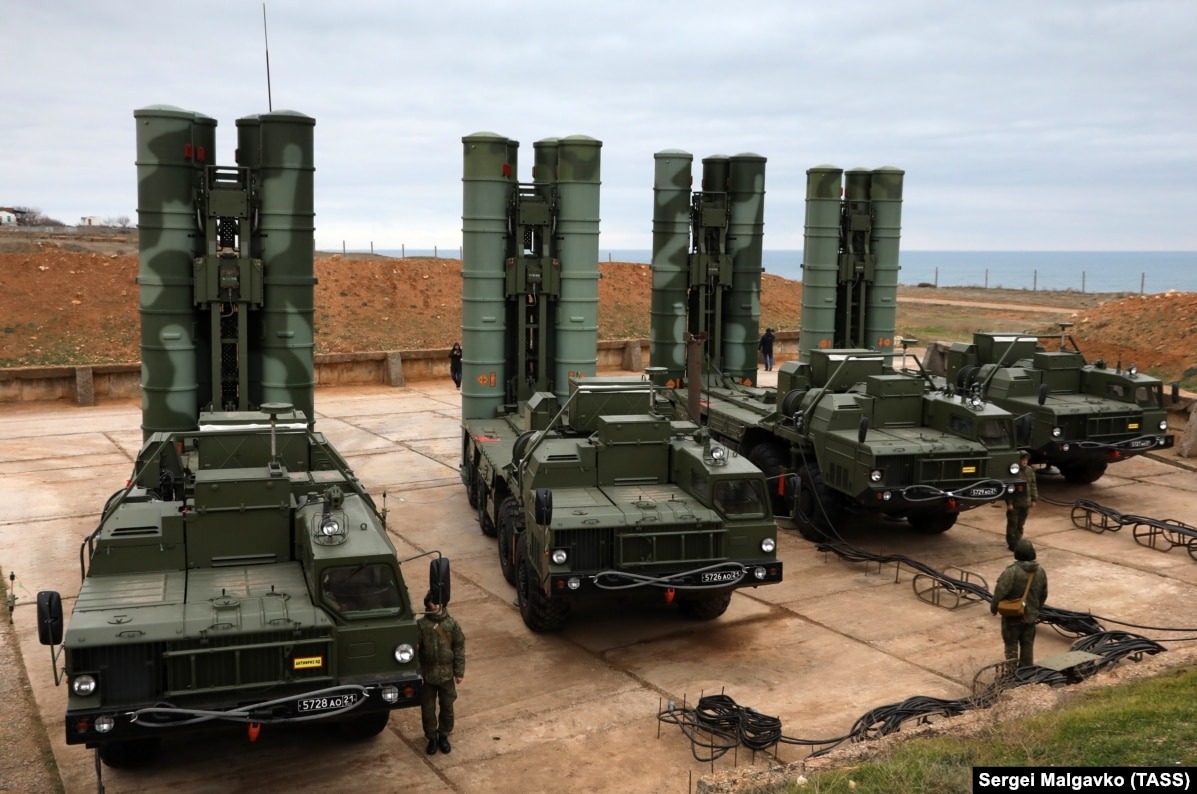
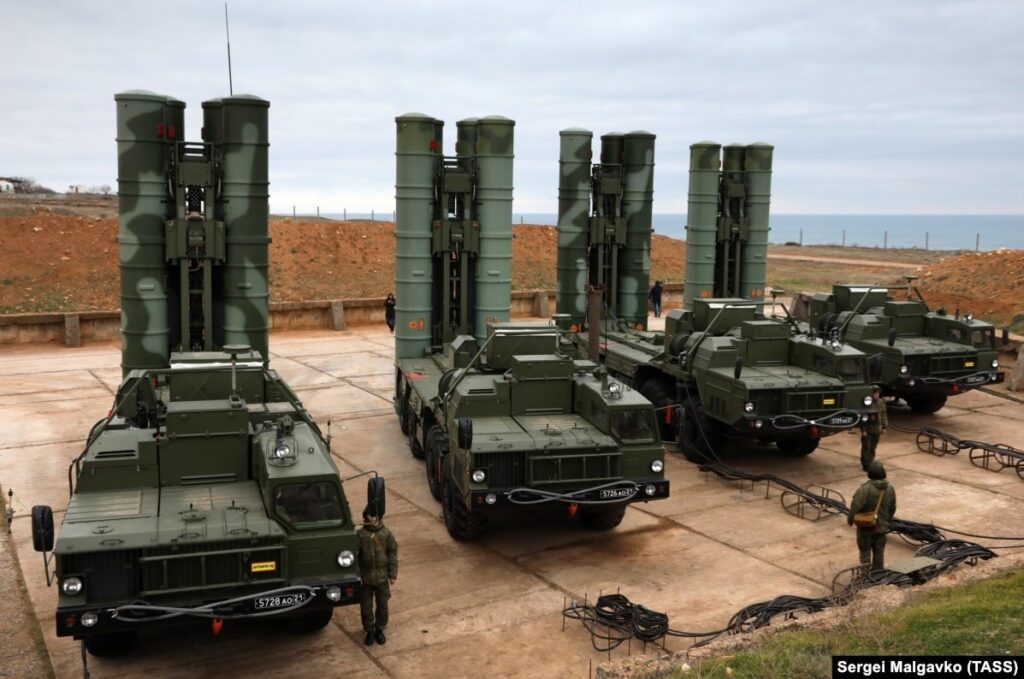
russia's arctic bases sit near-naked air defenses vanish guard moscow refineries burning inland · post s-400 defense missile launcher vehicles 2018 file sergei malgavko/tass rferl ukraine news ukrainian reports
Explore further

Ukraine strikes two Russian S-400 launchers in Bryansk. The same systems were used to attack Kyiv overnight.

Kyiv hit across several districts

Kyiv police reported damage in the Darnytskyi, Dniprovskyi, and Solomianskyi districts.

Apartment buildings, educational facilities, a municipal building, vehicles, and railway tracks were damaged. Most of the 16 injured people were residents of a damaged 16-story apartment building in Dniprovskyi district.

The victims included a 10-year-old girl and a 12-year-old boy.

Kyiv’s military administration also reported a strike on a warehouse building in Podilskyi district.

Russian attacks on Kyiv have injured 20 people today, with five hospitalized.

A blast wave damaged apartment buildings in the Dniprovskyi district, while a car caught fire at another location.

Scenes like these are becoming a daily occurrence in the capital.

📷Ukraine’s State… pic.twitter.com/bez0pOPghN

— Euromaidan Press (@EuromaidanPress) September 17, 2026

The Air Force said Russian missiles and attack drones hit 36 locations across Ukraine, while debris from intercepted targets fell at five locations.

Russia damaged the Berestyn station building and a Kyiv commuter stop in an overnight strike on the railways

A Russian drone hit the station at Berestyn in Kharkiv Oblast before dawn on 17 September, and passengers and staff sat out the attack in shelters, Ukraine's national… pic.twitter.com/OaeAaO58eX

— Euromaidan Press (@EuromaidanPress) September 17, 2026

Russia also hits Odesa and Zaporizhzhia

Russia’s overnight attack on Odesa Oblast continued for much of the night, injuring seven people, including children aged four and 13, Odesa Oblast Governor Oleh Kiper reported.

One Russian drone struck a high-rise apartment building in Odesa, destroying 10 apartments on the 14th–16th floors and damaging 11 cars. Three people were injured there, including the four-year-old child. 

Other strikes damaged at least five residential buildings, a kindergarten, a dormitory, a restaurant’s outdoor area, warehouses, garages, and cars. An elderly woman and the 13-year-old child were among four other people injured.

A Russian overnight attack on Odesa Oblast injured 7 people, including 2 children, after a strike hit a 19-story apartment building.

A private home in the region was also destroyed, while a kindergarten, cars, garages, and warehouses were damaged.

Once again, Russian strikes… pic.twitter.com/pHZQlDOcKM

— Euromaidan Press (@EuromaidanPress) September 17, 2026

Zaporizhzhia was also hit by Russian missiles, with three people injured – a woman and two men. The missiles struck industrial facilities, partially damaging buildings and causing a fire at one site.

Later in the day, Russia attacked the village of Storchove in Zaporizhzhia Oblast with guided aerial bombs. One bomb hit a private house and outbuildings, killing a 51-year-old woman and injuring a 70-year-old man. The strike destroyed property the family had accumulated over decades, according to the Zaporizhzhia Regional Military Administration.

Russia also struck a passenger bus in Zaporizhzhia with an FPV drone near a public transport stop. Five people were injured. A regional official said Russia had “once again chosen not a military target, but people who were simply traveling about their business.”

A Russian FPV drone struck a passenger bus carrying people in Zaporizhzhia, right near a public transport stop. Three people were reportedly injured.

“Russians once again chose not a military target, but people who were simply going about their daily lives,” a Zaporizhzhia… pic.twitter.com/VRZcch4PRH

— Euromaidan Press (@EuromaidanPress) September 17, 2026
  • ✇Euromaidan Press
  • Ukraine strikes two Russian S-400 launchers in Bryansk. The same systems were used to attack Kyiv overnight.
    Ukrainian forces struck two Russian S-400 launchers in Russia’s Bryansk Oblast on 16–17 September, Ukraine’s General Staff reported. These same systems were used to launch missiles at Kyiv last night. Ukraine faces severe shortages of high-end air-defense interceptors capable of countering Russia’s ballistic missiles, making strikes on the launchers themselves increasingly important. Russia has used S-400 systems to launch missiles at Ukrainian cities, including Kyiv, so destroying thes
     

Ukraine strikes two Russian S-400 launchers in Bryansk. The same systems were used to attack Kyiv overnight.

17 septembre 2026 à 10:09

russia's arctic bases sit near-naked air defenses vanish guard moscow refineries burning inland · post s-400 defense missile launcher vehicles 2018 file sergei malgavko/tass rferl ukraine news ukrainian reports

Ukrainian forces struck two Russian S-400 launchers in Russia’s Bryansk Oblast on 16–17 September, Ukraine’s General Staff reported. These same systems were used to launch missiles at Kyiv last night.

Ukraine faces severe shortages of high-end air-defense interceptors capable of countering Russia’s ballistic missiles, making strikes on the launchers themselves increasingly important. Russia has used S-400 systems to launch missiles at Ukrainian cities, including Kyiv, so destroying these systems can reduce Russia’s ability to carry out future attacks.

S-400 missile systems hit

The General Staff said Ukrainian Defense Forces struck two S-400 launchers near Vygonichi in Bryansk Oblast as part of a series of attacks on Russian military targets.

The strikes took place as Russia launched another major overnight attack against Ukraine. According to Ukraine’s Air Force, Russian forces used S-400, Iskander-M and KN-23 ballistic missiles launched from Bryansk and Voronezh oblasts, among other weapons.

The S-400 is a Russian long-range surface-to-air missile system designed to detect and engage aircraft and missiles. It was originally designed for air defense, but Russia has also used S-400 systems to launch ballistic missiles for strikes against Ukrainian cities, including Kyiv.

Kyiv Oblast was among the main targets of last night’s Russian attack.

Smoke rises from a Russian Bastion missile system position in occupied Crimea after a Ukrainian strike on 16 August 2026. Screenshot from video: Ukrainian Navy
Explore further

One alternative to air defense: Ukraine strikes Russian Bastion system used to attack Ukrainian cities from Crimea

Ukraine targets Russian military infrastructure

The S-400 launchers were among several Russian military targets struck by Ukrainian forces on 16–17 September, the General Staff reported.

Near occupied Donetsk, Ukrainian forces hit a Russian site used to store, prepare, and launch attack drones. They also struck Russian logistics warehouses in Kurakhivka, Nova Mariivka, and Luhansk.

Ukrainian forces additionally hit Russian personnel concentration areas near Strilkove in occupied Kherson Oblast and Druzhne in occupied Luhansk Oblast.

The General Staff said operations against key Russian military targets are continuing.

❌