The Defense Department’s Office of Strategic Capital, founded by the Biden administration to give loans to bolster the U.S. defense industry, is helping lead President Trump’s oil deal.
The Defense Department’s Office of Strategic Capital, founded by the Biden administration to give loans to bolster the U.S. defense industry, is helping lead President Trump’s oil deal.
President Trump said his defense secretary and secretary of state reached an agreement with the Venezuelan government on securing billions of barrels of oil reserves “through a partnership with private business.”
The Defense Department’s Office of Strategic Capital, founded by the Biden administration to give loans to bolster the U.S. defense industry, is helping lead President Trump’s oil deal.
The Defense Department’s Office of Strategic Capital, founded by the Biden administration to give loans to bolster the U.S. defense industry, is helping lead President Trump’s oil deal.
President Trump said his defense secretary and secretary of state reached an agreement with the Venezuelan government on securing billions of barrels of oil reserves “through a partnership with private business.”
The giant computing sites that power A.I. are increasingly opposed by communities across the country, a signal of voters’ concern about a changing economy.
The giant computing sites that power A.I. are increasingly opposed by communities across the country, a signal of voters’ concern about a changing economy.
A 1,000-acre data center for Meta under construction in El Paso, Texas, in May. Polling shows most Americans oppose the proliferation of data centers in their communities.
Comments signal president prepared to use dispute to push UK to raise defence spending and Nato contributionsDonald Trump has suggested he is reconsidering US support for Britain’s sovereignty over the Falkland Islands, in a move likely to strain the “special relationship” between Washington and London.“I always review every position – that’s just one of many,” the US president told reporters in the White House, in response to a question about whether he was reviewing the US’s position over the
Comments signal president prepared to use dispute to push UK to raise defence spending and Nato contributions
Donald Trump has suggested he is reconsidering US support for Britain’s sovereignty over the Falkland Islands, in a move likely to strain the “special relationship” between Washington and London.
“I always review every position – that’s just one of many,” the US president told reporters in the White House, in response to a question about whether he was reviewing the US’s position over the South Atlantic islands, an archipelago whose status has long been disputed by Argentina, which claims sovereignty.
In their broadest assault yet against the charges, lawyers for the defendants pointed to the unusual investigative tactics the administration deployed to make the case against them.
In their broadest assault yet against the charges, lawyers for the defendants pointed to the unusual investigative tactics the administration deployed to make the case against them.
Demonstrators disrupted a church service at Cities Church in St. Paul, Minn., in January to protest the dual roles of one of its pastors, who also serves as an acting field director for Immigration and Customs Enforcement.
At gathering of G20 finance ministers, the Treasury secretary accused Canada’s prime minister of starting a “political shouting match” over U.S. trade policies.
At gathering of G20 finance ministers, the Treasury secretary accused Canada’s prime minister of starting a “political shouting match” over U.S. trade policies.
The newly opened Gordie Howe International Bridge, linking Detroit and Windsor, Ontario, last month. Both the United States and Canada have announced high tariffs on each other’s products.
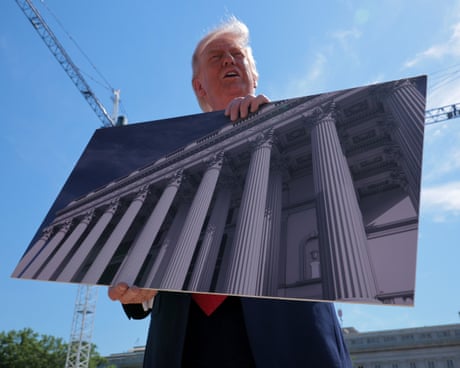
Justices’ 5-4 ruling permits Trump administration appeal to block lower court order halting above-ground workA divided US supreme court has permitted Donald Trump to continue building his controversial $400m White House ballroom despite legal challenges, raising the likelihood it will be completed.In a 5-4 ruling, the justices permitted the Trump administration’s request to block a lower court order that had halted above-ground construction of the project while a lawsuit by a historic preservat
Justices’ 5-4 ruling permits Trump administration appeal to block lower court order halting above-ground work
A divided US supreme court has permitted Donald Trump to continue building his controversial $400m White House ballroom despite legal challenges, raising the likelihood it will be completed.
In a 5-4 ruling, the justices permitted the Trump administration’s request to block a lower court order that had halted above-ground construction of the project while a lawsuit by a historic preservation group seeks to block it.
Lower-court rulings would have blocked construction of the 90,000-square-foot ballroom after finding that the Trump administration should have first sought approval from Congress.
Lower-court rulings would have blocked construction of the 90,000-square-foot ballroom after finding that the Trump administration should have first sought approval from Congress.
The subpoena of Daniel C. Richman is the latest move in a persistent campaign to go after James B. Comey, one of President Trump’s most reviled political adversaries who has already been indicted twice.
The subpoena of Daniel C. Richman is the latest move in a persistent campaign to go after James B. Comey, one of President Trump’s most reviled political adversaries who has already been indicted twice.
Three-quarters of Americans said in a recent poll that they oppose datacenters being built next to their homesDonald Trump has criticized communities pushing back against datacenter projects across the US amid a growing backlash, warning those that reject them risk becoming “backwards and poor”.As controversy surrounding local datacenter plans continues to swirl around election campaigns nationwide ahead of November’s midterm elections, the US president declared Americans “will only have yoursel
Three-quarters of Americans said in a recent poll that they oppose datacenters being built next to their homes
Donald Trump has criticized communities pushing back against datacenter projects across the US amid a growing backlash, warning those that reject them risk becoming “backwards and poor”.
As controversy surrounding local datacenter plans continues to swirl around election campaigns nationwide ahead of November’s midterm elections, the US president declared Americans “will only have yourselves to blame” if they are canceled.
The president’s deportation machine is creating a class of people inside the US who have fewer protections against the power of the stateIs the Trump administration creating a group in the US with fewer protections against executive power owing to their immigration status? Its often openly racist actions suggest so. US Immigration and Customs Enforcement (ICE) claims to target “the worst of the worst” – undocumented migrants who commit violent crimes. Yet the Guardian reported that over half of
The president’s deportation machine is creating a class of people inside the US who have fewer protections against the power of the state
Is the Trump administration creating a group in the US with fewer protections against executive power owing to their immigration status? Its often openly racist actions suggest so. US Immigration and Customs Enforcement (ICE) claims to target “the worst of the worst” – undocumented migrants who commit violent crimes. Yet the Guardian reported that over half of those arrested in July had no criminal convictions or pending charges. That month, ICE made record arrests and deportations, apprehending 1,500 people and removing 1,100 daily.
When campaigning, Donald Trump falsely claimed that Haitians were “eating the pets”. In office, his administration moved to end temporary protected status (TPS) for Haitians. In June, the supreme court let the protection expire, leaving about 350,000 people at risk of deportation to a country gripped by violence and instability. The court’s decision means more than 1 million TPS holders from 13 nations previously considered too unsafe to return to are now at risk of deportation. Many have lived and worked legally in the US for years.
Do you have an opinion on the issues raised in this article? If you would like to submit a response of up to 300 words by email to be considered for publication in our letters section, please click here.
This live blog is now closed.US supreme court allows Trump to keep building $400m White House ballroomSign up for US Breaking News emailsChris HippensteelWe’re watching today as Scott Bessent, the US treasury secretary, and Kevin Warsh, the chair of the Federal Reserve, deliver their opening remarks at the G20 meetings in Asheville, North Carolina. Continue reading...
We’re watching today as Scott Bessent, the US treasury secretary, and Kevin Warsh, the chair of the Federal Reserve, deliver their opening remarks at the G20 meetings in Asheville, North Carolina.
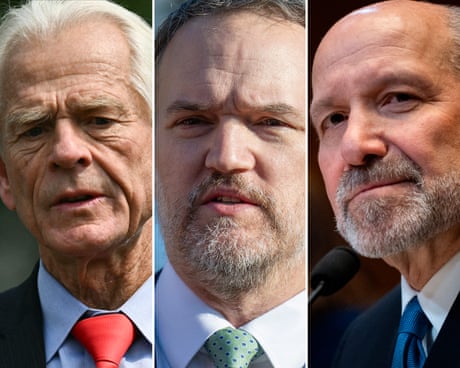
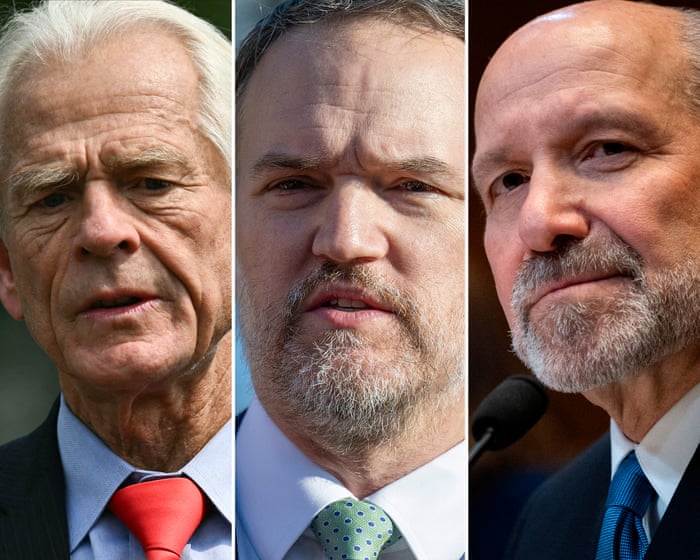
US trade representative Jamieson Greer has a level-headed reputation but commerce secretary Howard Lutnick and White House adviser Peter Navarro also have key rolesHaving reportedly read Victor Hugo’s Les Misérables, in French, during a military tour of duty in Iraq, Jamieson Greer considered himself an unlikely target for accusations of francophobia.But Donald Trump’s US trade representative, hitherto one of the president’s less high-profile cabinet members, found himself in that uncomfortable
US trade representative Jamieson Greer has a level-headed reputation but commerce secretary Howard Lutnick and White House adviser Peter Navarro also have key roles
Having reportedly read Victor Hugo’s Les Misérables, in French, during a military tour of duty in Iraq, Jamieson Greer considered himself an unlikely target for accusations of francophobia.
But Donald Trump’s US trade representative, hitherto one of the president’s less high-profile cabinet members, found himself in that uncomfortable position amid the acrimonious collapse of bilateral trade talks with Canada that now threatens to degenerate into an all-out trade war between the two close trading partners whose economies are tightly intertwined.
The meeting, which China and Russia are attending, is focused on the ongoing economic shock from the war in Iran, which has driven up oil prices globally.
The meeting, which China and Russia are attending, is focused on the ongoing economic shock from the war in Iran, which has driven up oil prices globally.
Treasury Secretary Scott Bessent and the Federal Reserve chairman, Kevin Warsh, in Asheville, N.C., before the summit. The International Monetary Fund has projected that global growth will slow this year and that inflation will rise.
State officials say they worry about the Postal Service’s ability to deliver votes this fall. They are urging voters to mail their ballots early or use drop boxes so their votes count.
State officials say they worry about the Postal Service’s ability to deliver votes this fall. They are urging voters to mail their ballots early or use drop boxes so their votes count.
The administration has revoked funding for bike paths, and encouraged removing some. A cycling advocate said it is playing on the idea of “that dork on a bike.”
The administration has revoked funding for bike paths, and encouraged removing some. A cycling advocate said it is playing on the idea of “that dork on a bike.”
Harmeet Dhillon, who leads the Justice Department’s civil rights unit, has extracted flashy agreements and personnel moves from big universities and sought to force states to turn over confidential voter data.
Harmeet Dhillon, who leads the Justice Department’s civil rights unit, has extracted flashy agreements and personnel moves from big universities and sought to force states to turn over confidential voter data.
Harmeet Dhillon has waged President Trump’s war on the left through a relentless pressure campaign against 100 universities over their diversity and antisemitism policies.
Richer countries might have more resources to deal with catastrophe, but this problem grips the entire planet, however much leaders may want to deny itClimate breakdown is happening on one Earth, but two different worlds. In one, its impacts increasingly encroach on everyday life; longer periods of discomfort and shorter periods of sharp pain. Endless, hotter summers, and within them sudden wildfires, evacuations, homes burned to cinders in a matter of hours. In another, catastrophe. This summer
Richer countries might have more resources to deal with catastrophe, but this problem grips the entire planet, however much leaders may want to deny it
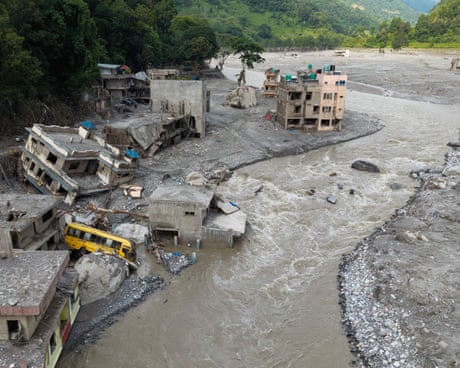
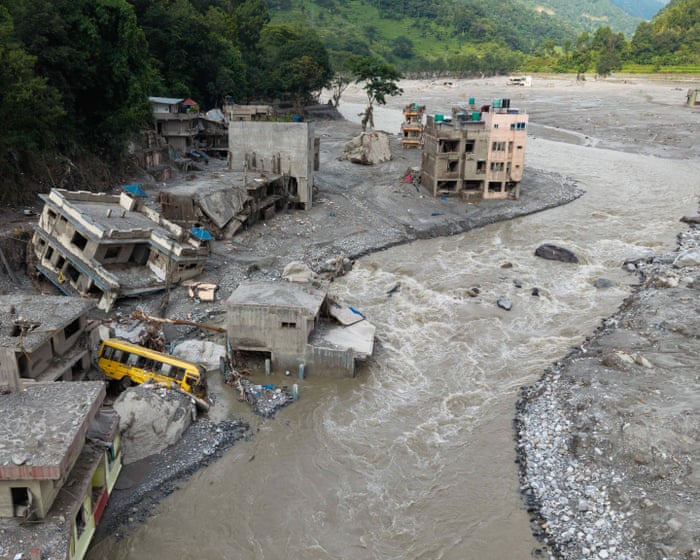
Climate breakdown is happening on one Earth, but two different worlds. In one, its impacts increasingly encroach on everyday life; longer periods of discomfort and shorter periods of sharp pain. Endless, hotter summers, and within them sudden wildfires, evacuations, homes burned to cinders in a matter of hours. In another, catastrophe. This summer has been a snapshot of that split-screen. The hottest day on record in parts of Europe, and a wave of water, mud and ice in Nepal that so far has claimed more than 750 lives. Thousands of people are still missing.
The difference is also one of resources. The climate crisis has an economic cost, but some places can absorb it better than others. Responses to this summer of wildfires in Europe included a rapid scrambling by the French government to provide everything from tax breaks for businesses affected by the fires to relocation costs and aid to rebuild homes. The UK government had deployed almost £100m before the summer to strengthen wildfire resilience.

 Connexion