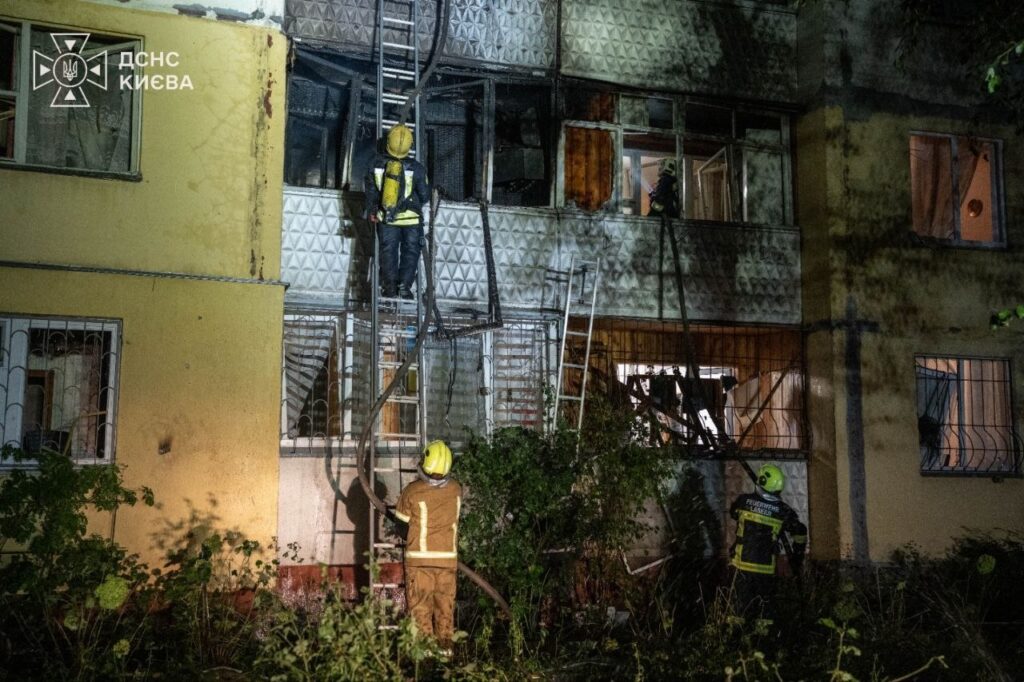
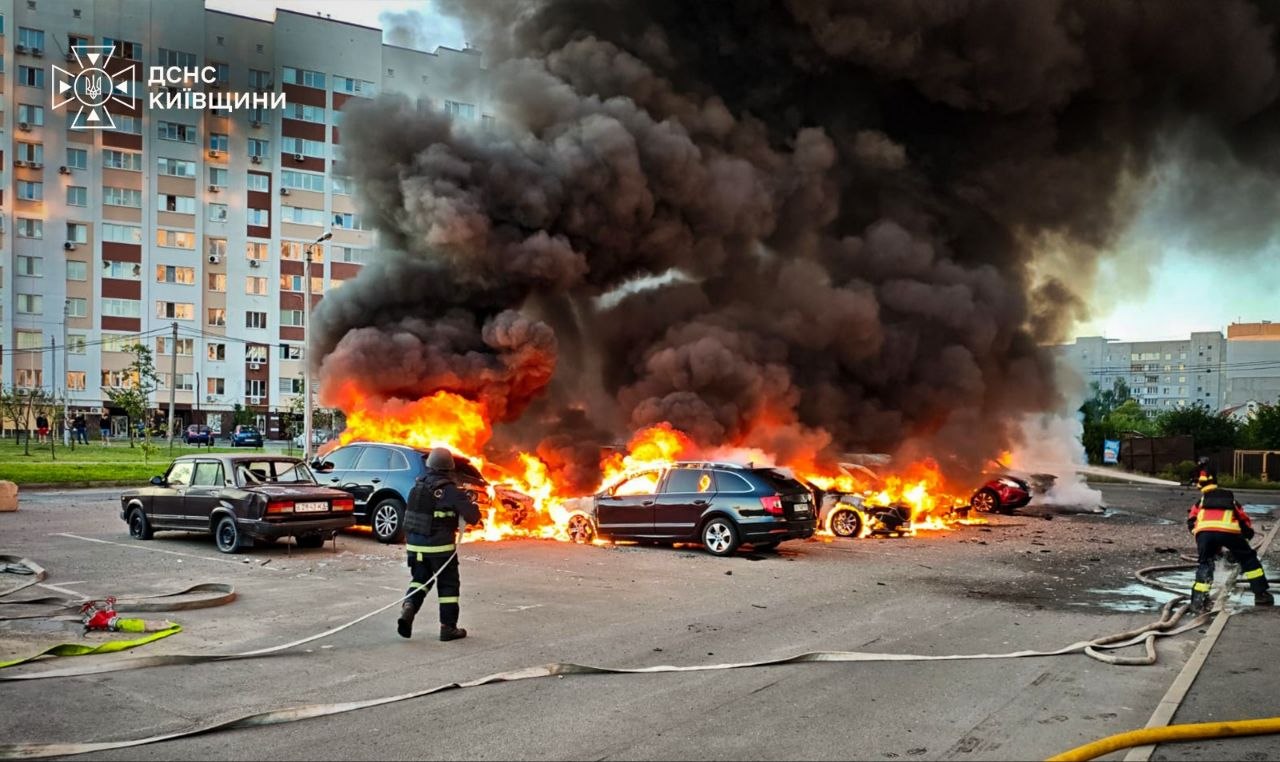
Ukraine has four potential interceptor systems that could shoot down Russia’s increasingly common jet-powered Geran attack drones, Ukrainian Defense Minister Yevhen Khmara said on 30 August, according to Suspilne.
Russia has sharply increased its use of the faster drones against Ukrainian cities, causing major damage to civilian infrastructure and many civilian casualties. The attacks are putting near-unprecedented strain on Ukraine’s air defenses.
All four intercept
Ukraine has four potential interceptor systems that could shoot down Russia’s increasingly common jet-powered Geran attack drones, Ukrainian Defense Minister Yevhen Khmara said on 30 August, according to Suspilne.
Russia has sharply increased its use of the faster drones against Ukrainian cities, causing major damage to civilian infrastructure and many civilian casualties. The attacks are putting near-unprecedented strain on Ukraine’s air defenses.
All four interceptor systems have undergone field testing, Khmara said. Ukraine now aims to bring them to the required level as quickly as possible and scale production to thousands of units.
“The search for countermeasures against jet-powered drones continues,” Khmara told journalists, according to Suspilne. “There are already four potential interceptors that can shoot down jet-powered ‘Shaheds.’ Field tests have already been conducted on them.”
Russia is rapidly expanding Geran attacks
Russia's Gerans are jet-powered adaptations of the Iranian-designed Shahed attack drones that Russia has produced domestically throughout the full-scale war. The faster Geran variants give Ukrainian air defenses less time to detect and engage them.
Ukrainian defense technology adviser Serhii “Flash” Beskrestnov said Russia used more than 2,500 jet-powered Gerans against Ukraine in August, up from about 1,500 in July.
He also said the drones are being launched against Ukraine almost directly from Russian factories, highlighting the rapid expansion of their production and use.
Zelenskyy calls for faster production
Ukrainian President Volodymyr Zelenskyy has made countering the Gerans a priority as Russia sustains repeated attacks on Ukrainian cities.
At a 28 August meeting of Ukraine’s military leadership, Zelenskyy said the country needed to maximize domestic weapons production, with the immediate focus on defending against jet-powered Gerans and increasing Ukraine’s own long-range strikes against Russia.
“[The] main thing is our defense against jet-powered ‘Shaheds,’” Zelenskyy said in his evening address.
He said Russia had adopted a tactic of keeping Kyiv and other cities under repeated air raid alerts, with Gerans reaching the capital as well as cities including Kharkiv and Zaporizhzhia.
Explore further
Four days of Russian attacks keep Kyiv under near-constant fire. Ukraine is struggling to defend its skies
“All our means of countering [them] are already being used,” Zelenskyy said, adding that Ukraine needs a significant acceleration in production of interceptors specifically designed for the jet-powered drones.
Khmara said the four potential interceptors are now at the field-testing stage, with the next step being to bring them into production at a scale of thousands of units.
For Ukraine, that scale is critical. The country must defend a large territory against increasingly large Russian drone barrages while also preserving limited air-defense resources for ballistic and other missiles that require more advanced interceptors.
Another Russian strike has destroyed tens of thousands of Ukrainian books around Kyiv, adding to a summer of attacks that has wiped out millions of copies and damaged the warehouses, printing plants and markets that keep Ukraine’s publishing industry running.
Since Russia’s full-scale invasion began in 2022, Ukrainian publishers, printers, bookstores, warehouses and other parts of the literature industry have repeatedly been hit by Russian attacks.
The destruction h
Another Russian strike has destroyed tens of thousands of Ukrainian books around Kyiv, adding to a summer of attacks that has wiped out millions of copies and damaged the warehouses, printing plants and markets that keep Ukraine’s publishing industry running.
Since Russia’s full-scale invasion began in 2022, Ukrainian publishers, printers, bookstores, warehouses and other parts of the literature industry have repeatedly been hit by Russian attacks.
The destruction has drawn comparisons to earlier Russian and Soviet efforts to suppress the Ukrainian language, culture and national identity, with publishers and cultural figures warning that the current attacks are damaging not only businesses and infrastructure but the means through which Ukrainian culture is produced and preserved.
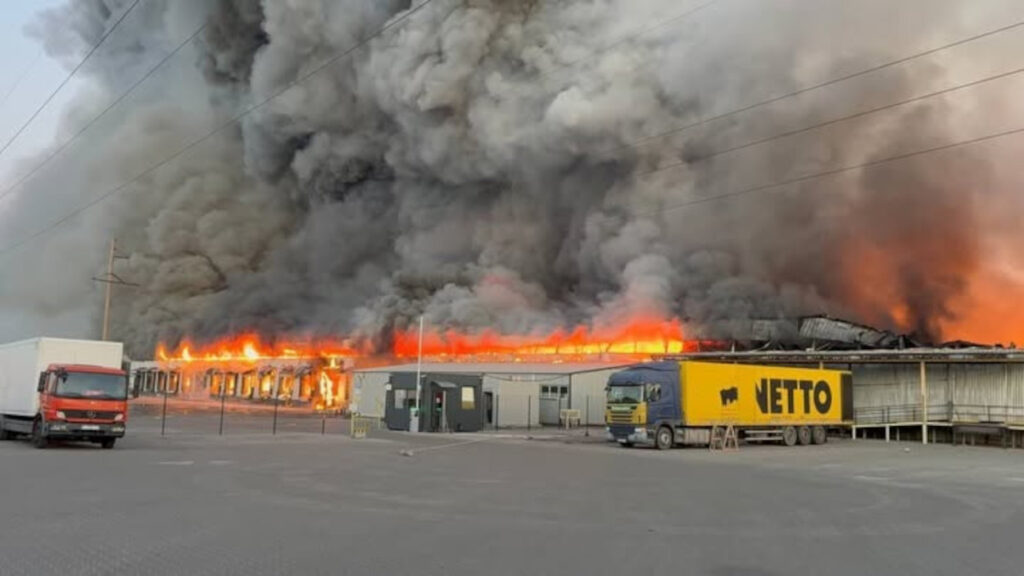
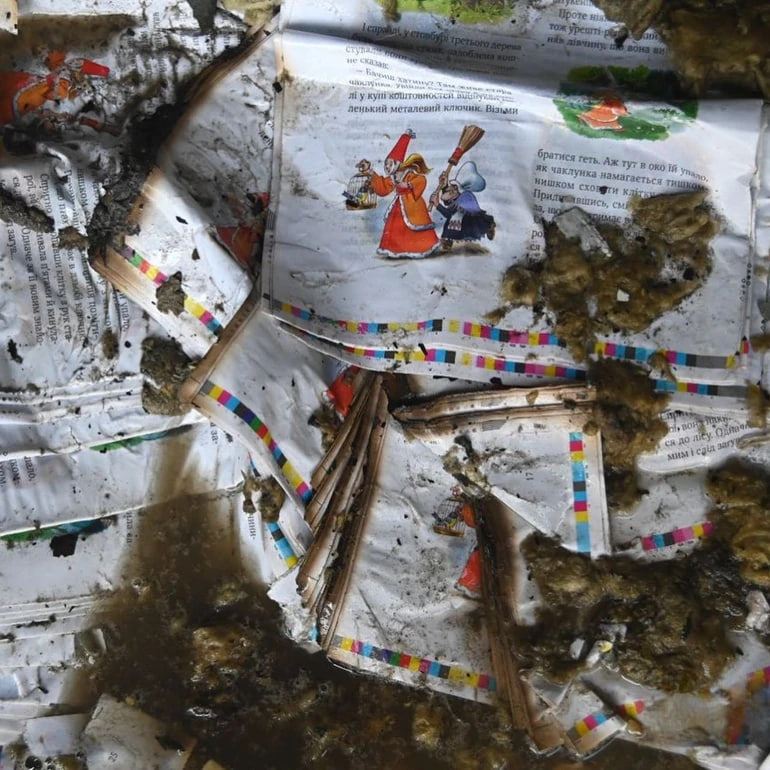
The latest loss came on 28 August, when a Russian drone struck a Nova Post fulfillment and sorting center in Sviatopetrivske, Kyiv Oblast. More than 60,000 books stored there were destroyed, including books belonging to Ukrainian publishers and retailers such as Vivat, A-BA-BA-HA-LA-MA-HA, Osnovy, Readeat and Book.ua.
The destruction is taking a growing toll on Ukrainian culture
Nova Post director Yevhen Tafiichuk said the strike destroyed the company's most modern robotic fulfillment center, along with books from several publishers and stores. He said the company is working with affected partners to compensate their losses and is moving toward a decentralized fulfillment system to reduce the risk of losing large inventories in a single strike.
“For centuries, the enemy has tried to destroy the Ukrainian language, culture and memory. Once, it burned libraries and banned printing; today, it launches missiles at printing plants and warehouses filled with books,” Tafiichuk said.
The latest destruction comes after the Ukrainian publishing industry estimated that Russian attacks had already destroyed about 13 million books in July and August – nearly a third of the number of books Ukrainian publishers printed during all of 2025.
Explore further
Russia has burned 13 million Ukrainian books in three months, nearly third of everything country printed in 2025
Another warehouse full of books goes up in flames
The Sviatopetrivske strike hit a logistics facility rather than a publishing house itself, but the consequences spread across much of the book market.
Readeat founder Dmytro Feliksov said more than 60,000 physical books were destroyed and estimated his company's losses at more than UAH 23 million. The warehouse held stock for several publishers and booksellers.
Vivat CEO Yuliia Orlova said the publisher also lost books stored at the Kyiv warehouse in the attack. The company had already begun moving some print runs to other parts of Ukraine, including Lviv, after earlier Russian strikes destroyed publishing infrastructure. But many new releases and books by Ukrainian authors remained in Kyiv.
The same attack destroyed a warehouse used by A-BA-BA-HA-LA-MA-HA to fulfill direct orders. The losses came as publishers were already trying to spread their inventories across multiple locations to reduce the risk posed by Russian strikes.
Millions of books destroyed across Ukraine, publishers hit again and again
On 1 August, a Russian strike on the warehouses of RNK-Ranok destroyed nearly 8 million books, including hundreds of thousands of school textbooks. The Ukrainian Book Institute said the loss from that strike alone was equivalent to about 30% of the country's annual book production.
A separate Russian strike on 19 July destroyed the Konvi printing facility and about 250,000 books belonging to Knyholav, along with print runs and materials belonging to numerous other publishers.
BookChef has suffered some of the largest losses around Kyiv. A Russian strike in July destroyed about 800,000 books at its main warehouse. A second strike in August hit a backup warehouse opened after the first loss, destroying more than 100,000 additional books, Interfax-Ukraine reported.
The attacks have also damaged publishing offices and warehouses. On 16 August, Russian strikes near Kyiv’s Pochaina metro station damaged the offices and warehouses of BookChef and RM, including areas where books were stored.
Kyiv’s Pochaina market also burned
The damage is not limited to modern distribution centers.
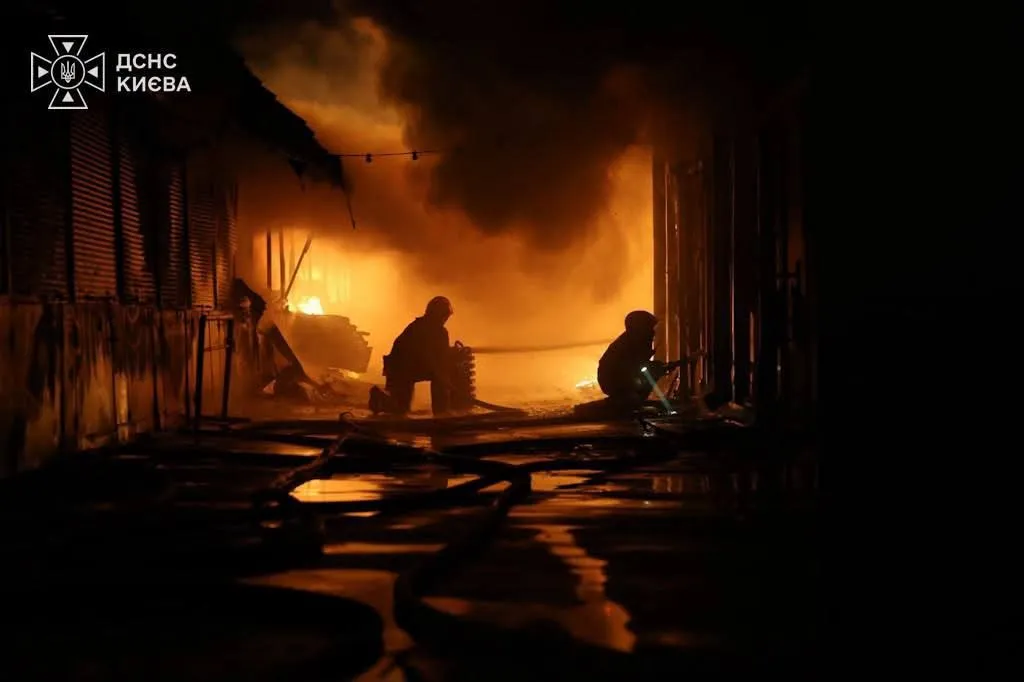
On 16 August, a Russian strike set fire to Kyiv’s Pochaina book market, one of the capital’s best-known places to buy new, used and second-hand books. Much of the market burned, with the fire covering more than 2,000 square meters of commercial space.
The market, formerly known as Petrivka, had operated for about 30 years and was a major hub for second-hand books and other goods. Dozens of thousands of books were destroyed, according to local reporting.
Kyiv’s Pochaina book market was hit again during Russia’s overnight missile attack, with rows of stalls burned and books damaged.
“Pochaina Book Market is finished. Three missiles hit the stalls. This time, the story is over,” Oleksandr Krasovytskyi, CEO of Folio publishing… pic.twitter.com/fum3LNN5Dt
The destruction was extensive enough that 60–70% of the market's commercial space was lost. The surviving Bukinist section began reopening later in August, with booksellers returning to trade where their stock had survived, RBC reported.
The market's destruction also meant the loss of a part of Kyiv's book culture that cannot simply be replaced by reprinting new editions. Second-hand books, older editions and used collections had been traded there for generations.
Explore further
Kyiv’s largest book market hit by Russian missiles
The losses are hitting an already fragile industry
The Ukrainian publishing sector had been growing before Russia's latest attacks, helped in part by rising demand for Ukrainian-language books during the full-scale invasion.
But publishers now face the repeated cost of replacing destroyed print runs, warehouses and equipment while also trying to keep books moving to stores and readers.
Olesia Ostrovska-Liuta, director general of Mystetskyi Arsenal, said the Ukrainian book industry had only recently begun to grow, making the latest losses especially painful.
“Losses are accumulating, while the tools to minimize them are being built extremely slowly,” she said. “Culture will not disappear, but it will once again be drained of its strength.”
Publishers seek help to rebuild and protect a supply chain under attack
The Ukrainian Publishing Association has called for additional support, including war-risk insurance for book stocks, affordable financing to rebuild printing capacity and the restoration of state purchases of books for libraries.
The Ukrainian Book Institute has also appealed for international support for the publishing sector, saying Russia has systematically targeted publishing houses, bookstores, printing facilities and warehouses since the start of the full-scale invasion.
For publishers, the latest strikes show that moving books from a printer to a reader has itself become a wartime vulnerability. A single warehouse can contain the output of dozens of publishers, and losing it can erase months of work and leave books unavailable even when the companies themselves survive.
Nova Post says it is responding by distributing inventory across more locations rather than relying on large centralized facilities. The strategy may help reduce future losses, but it also reflects how deeply Russia’s ongoing attacks have altered the basic infrastructure through which Ukrainians produce, store and buy books.
Ukraine’s Defense Forces struck three Russian military and energy targets overnight on 29-30 August, including a major oil refinery in Leningrad Oblast, a site used to store and launch attack drones in Rostov Oblast, and an airfield in Krasnodar Krai, Ukraine’s General Staff said.
Ukraine has increasingly targeted energy and military infrastructure inside Russia as part of an effort to disrupt the resources supporting Moscow’s war effort. Russia’s military relies heavil
Ukraine’s Defense Forces struck three Russian military and energy targets overnight on 29-30 August, including a major oil refinery in Leningrad Oblast, a site used to store and launch attack drones in Rostov Oblast, and an airfield in Krasnodar Krai, Ukraine’s General Staff said.
Ukraine has increasingly targeted energy and military infrastructure inside Russia as part of an effort to disrupt the resources supporting Moscow’s war effort. Russia’s military relies heavily on fuel and other petroleum products produced at major refineries, while oil exports provide revenue that helps fund the war.
The General Staff said the strikes caused fires at all three sites. The extent of the damage is still being assessed.
Ukraine strikes one of Russia’s largest oil refineries
In Kirishi, Leningrad Oblast, Ukrainian forces struck the Kirishi oil refinery, also known as KINEF, Russia’s 2nd largest oil refinery.
The refinery has an annual processing capacity of about 20 million metric tons of crude oil and produces motor fuels, aviation fuel, diesel and other petroleum products, according to the General Staff. It also supplies fuel for Russia’s military.
KINEF has been targeted repeatedly since Russia launched its full-scale invasion. The latest strike is at least the sixth reported Ukrainian attack on the refinery.
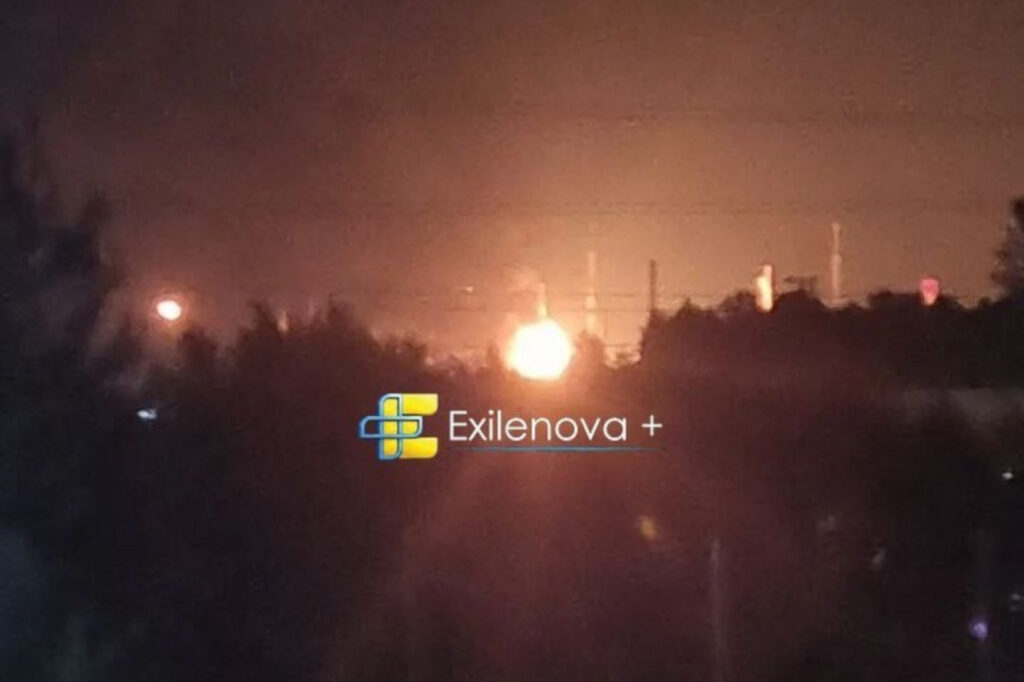
Ukraine struck Russia’s second-largest oil refinery, KINEF in Leningrad Oblast, overnight, causing a fire at the site.
The refinery has been repeatedly targeted by Ukraine since Russia launched its full-scale invasion.
Russian authorities acknowledged damage in Kirishi following the overnight attack, according to Russian OSINT outlet ASTRA. Leningrad Oblast Governor Alexander Drozdenko claimed several residential buildings were damaged, with windows blown out in some apartments, while a fire broke out in the city’s industrial zone. He said the industrial fire and fires from drone debris had been extinguished.
ASTRA reported that videos from residents showed a large fire at what appeared to be the KINEF refinery. ASTRA also geolocated footage of an explosion at the upper floors of an apartment building in Kirishi, where residents reported hearing air defense activity. The footage has not been independently verified.
Drone launch site struck in Rostov Oblast
Ukrainian forces also struck a site in Millerovo, Rostov Oblast, used to store, prepare and launch attack drones.
The General Staff said a fire was reported at the facility following the strike.
Millerovo has been repeatedly used by Russian forces as a base for launching attacks against Ukraine. Striking drone infrastructure can disrupt the storage, preparation and deployment of the weapons used in Russia’s ongoing aerial campaign.
Explore further
One alternative to air defense: Ukraine strikes Russian Bastion system used to attack Ukrainian cities from Crimea
Fire reported at Yeysk airfield
A Ukrainian strike also hit Yeysk airfield in Russia’s Krasnodar Krai, according to the General Staff.
A fire was reported at the site after the strike. The General Staff did not provide details on which facilities or equipment at the airfield were damaged.
The three strikes were part of a broader Ukrainian campaign against Russian military infrastructure and the energy facilities supporting Russia’s war effort.
Russia’s Defense Ministry claimed that its air defenses intercepted or destroyed 494 fixed-wing drones overnight across Russia and occupied Ukrainian territory. It said the drones were detected over Leningrad, Bryansk, Belgorod, Kaluga, Kursk, Tver, Smolensk, Oryol, Pskov, Tula, Novgorod and Rostov oblasts, as well as Krasnodar Krai, Moscow, occupied Crimea and the Azov and Black seas.
The General Staff said operations against key Russian targets are continuing, while the extent of the damage from the overnight strikes is still being determined.
Russia has kept Kyiv and surrounding areas under near-continuous attack for four days, repeatedly sending drones and missiles toward the capital and other Ukrainian regions.
The prolonged attacks have kept air defense crews and emergency workers operating almost constantly, while disrupting civilian life across Kyiv and the surrounding oblast.
Ukrainian President Volodymyr Zelenskyy said on 30 August that Russia had launched nearly 2,000 attack drones, more than 1,60
Russia has kept Kyiv and surrounding areas under near-continuous attack for four days, repeatedly sending drones and missiles toward the capital and other Ukrainian regions.
The prolonged attacks have kept air defense crews and emergency workers operating almost constantly, while disrupting civilian life across Kyiv and the surrounding oblast.
Ukrainian President Volodymyr Zelenskyy said on 30 August that Russia had launched nearly 2,000 attack drones, more than 1,600 guided aerial bombs and 31 missiles of various types against Ukraine over the past week. The missiles included North Korean ballistic weapons.
The current attacks follow months of increasingly heavy Russian aerial strikes against Kyiv and other Ukrainian cities. Russia has ramped up its use of ballistic missiles while also expanding its use of newer jet-powered Geran drones, which have repeatedly targeted the capital and surrounding areas.
Four days of attacks
Kyiv and Kyiv Oblast have been under repeated attack since 27 August, with waves of drones arriving throughout the day and night.
The attacks have hit residential buildings, warehouses, businesses and other civilian infrastructure. They have also repeatedly forced firefighters and rescue crews to stop their work and move to safety before returning once the immediate threat passes.
At least three people were injured in a Russian overnight attack on Kyiv, as the capital entered a fourth consecutive day of near-continuous Russian attacks.
In the Obolonskyi district, a strike caused a fire from the second to fifth floors of a 12-story residential building.… pic.twitter.com/rTT5TZvNEA
In Myla, Kyiv Oblast, rescue workers are still clearing the aftermath of the 28 August attack that killed 38 people, injured 20 and left four people missing.
Rescue crews continue working in Myla, Kyiv Oblast, clearing debris, extinguishing fires, and searching for explosive remnants after Russia’s deadly attack on 28 August.
The continuing attacks have also affected movement around the capital. Air raid alerts, damaged infrastructure and the threat of further strikes have disrupted traffic and travel both within Kyiv and on routes connecting the city with the surrounding region.
Explore further
Kyiv has been under attack for 2 days nonstop. Russia is targeting the capital’s civilian supply chains
Air defenses under pressure
The attacks are putting Ukraine's air defense network under some of its heaviest pressure since the full-scale invasion began.
Ukraine has to defend a vast area against increasingly large drone barrages while also dealing with ballistic and other missiles that are more difficult to intercept.
Ukraine relies on US-made Patriot systems to counter ballistic missiles, but limited stocks of Patriot interceptors and insufficient deliveries from partners have left a critical gap in its air defenses, which Russia is now exploiting to cause major damage to civilian infrastructure and greater civilian casualties.
The repeated use of jet-powered drones adds another challenge. Russia has increasingly deployed these faster Geran drones, adapted from the Iranian Shahed design, in attacks on Kyiv and other Ukrainian cities, including against civilian infrastructure.
Zelenskyy said the government’s priority now is to provide greater protection against the Russian attacks.
Attacks continue across Ukraine
The pressure is not limited to Kyiv.
Zelenskyy said Russian forces are carrying out attacks virtually around the clock against frontline and border communities, including Nikopol, Kramatorsk, Kherson and communities in Kharkiv, Zaporizhzhia, Dnipropetrovsk, Donetsk and Sumy oblasts.
Russian forces attacked Donetsk Oblast 30 times on 30 August, damaging residential areas and causing four fires, Ukraine’s State Emergency Service reported.
In Sloviansk, Russian shelling set balconies and apartments on fire on the fifth through seventh floors of a nine-story… pic.twitter.com/12GbUDsRpL
Across these areas, the attacks are keeping emergency services active while damaging homes, businesses and civilian infrastructure.
In Kyiv, meanwhile, the fourth day of attacks has left residents dealing with repeated air raid alerts, disrupted movement and the continuing risk of new strikes even as crews are still clearing the damage from previous ones.
A Ukrainian maker known for ground robots has built a flying attack drone. Ratel Robotics has unveiled the Ratel K1, a strike FPV drone for ground targets with a tactical range of up to 30 kilometers, according to Defender Media.
The K1 will likely join the number of weapons that clear out Russian logistics. The campaign scales medium-range drone strikes against Russian supply convoys, depots, command nodes, and air defenses 20 to 200 kilometers behind the front. On 29
A Ukrainian maker known for ground robots has built a flying attack drone. Ratel Robotics has unveiled the Ratel K1, a strike FPV drone for ground targets with a tactical range of up to 30 kilometers, according to Defender Media.
The K1 will likely join the number of weapons that clear out Russian logistics. The campaign scales medium-range drone strikes against Russian supply convoys, depots, command nodes, and air defenses 20 to 200 kilometers behind the front. On 29 May, Ukrainian forces destroyed 483 Russian vehicles in a single day, an all-time record that pushed cumulative Russian motor-transport losses past 100,000.
A 30-kilometer FPV sits at the near edge of that fight, reaching supply routes and second-line positions that shorter drones cannot.
The company came from ground robots
Ratel Robotics is a Ukrainian ground robotics maker whose fielded line includes logistics, casualty evacuation, mining, and demining platforms. The K1 is its move into aerial strike, and the company brings a wartime production record to it rather than starting from scratch.
Ratel's ground systems took part in the military parade in Kyiv on 24 August, marking Ukraine's 35th Independence Day, the company said. The firm has also joined a campaign, with the National WWII Museum and the Tallboy brand, to raise nearly $447,000 for a planned museum of modern military technologies, according to Ratel.
The specifications come from the maker
The K1 is built on a 22-inch frame, reaches a top speed of 75 kilometers per hour, remains airborne for up to 35 minutes, and carries up to 2 kilograms.
The drone uses a digital video system and a daytime camera and is controlled via a satellite link through Starlink. Per Brave1 Market, it has no built-in autonomous navigation, no auto-takeoff, and no automatic return-to-home landing.
The manufacturer is currently working on the next iteration of the Ratel K1, refining the system based on test results and operational experience.

 Connexion
 Supernova+