En Syrie, le chef des puissantes forces kurdes annonce leur dissolution
:quality(50)/2026/08/26/6a8e7613534cf725817926.jpg)


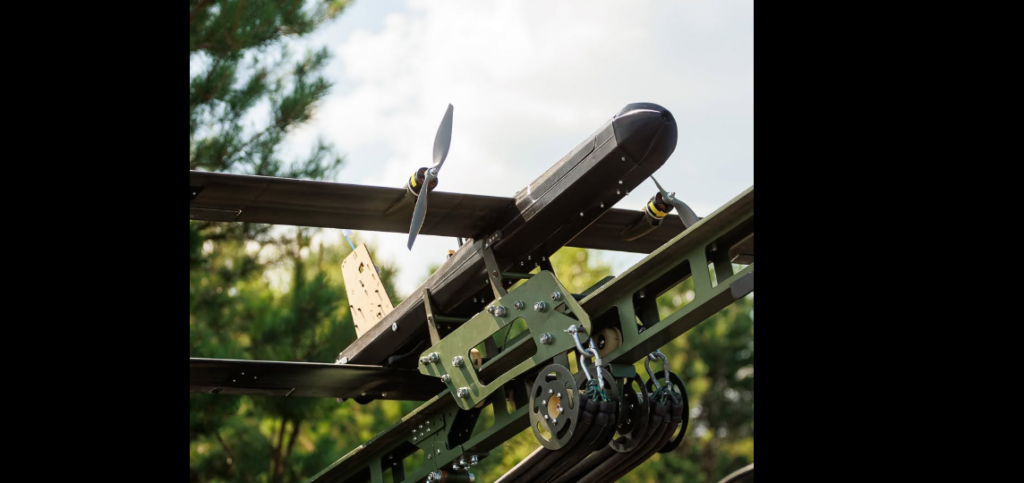
The Technological Forces of Ukraine have presented a strike drone built to cut Russian logistics. The new fixed-wing Baton is designed to hit firing positions, supply routes, and other targets at tactical depth, out to 90 kilometers, according to the association's announcement.
Everything Russian troops eat, fire, and drive reaches them by road and train. Ukraine has pushed cumulative Russian motor-transport losses past 100,000 vehicles by working that ground, destroying 483 in a single day on 29 May, the highest daily figure since February 2022. Baton is built for that band.
Baton carries three kilograms over a stated range of up to 90 kilometers, stays airborne for 50 minutes, and cruises at 105 kilometers per hour, with a maximum of 140 kilometers per hour, according to the announcement. Its working altitude ranges from 150 to 500 meters, with a ceiling of 1,500 meters.
Eight airframes fit in one pickup, launch comes from a catapult under ground-station control, and preparation takes about 15 minutes, the association said.
The drone locks onto a target and flies to it automatically from up to 2 kilometers away and at altitudes up to 500 meters, the association said. That final stretch is where Russian jamming would otherwise break the link.
Depending on the version, it carries analog or digital video, communicates over LTE or Starlink, and navigates a route autonomously with real-time positioning, according to the announcement.
Fifty minutes at the stated cruising speed covers roughly 87 kilometers. The 90-kilometer range is therefore a one-way distance at near-full endurance rather than an operating radius.
Earlier, a Ukrainian drone maker pitched a weapon that functions like a mortar, rather than a drone. F-Drones unveiled the F5, a compact five-inch strike FPV built for assault units working treelines, built-up areas, and position support at short range.


With the federal deficit near 6% of GDP and the national debt over $40tn, America’s fiscal position looks increasingly precarious
Are we seeing the first signs of panic in Donald Trump’s Treasury? The US is by far the world’s biggest debtor, and the steady rise in global long-term interest rates – which I have long argued was inevitable – is starting to cause real pain.
Until now, the Treasury secretary, Scott Bessent, has dismissed concerns about US debt, which recently surpassed $40tn, as a big nothingburger. Growth, in his telling, will be so spectacular the US will easily be able to meet its interest obligations without any significant tax rises or spending cuts, while the rest of the world will happily keep feeding it money. But if Bessent really believes that, why is he trying to strong-arm the bond market by fiddling with the maturity structure of government debt?
Continue reading...
© Photograph: Kent Nishimura/AFP/Getty Images

© Photograph: Kent Nishimura/AFP/Getty Images

© Photograph: Kent Nishimura/AFP/Getty Images


The incumbent senator Dan S Sullivan has condemned ex-school teacher Dan J Sullivan, claiming he is running at the behest of Democrats to confuse supporters
Republican senator Dan S Sullivan will be joined on the November ballot in Alaska by a challenger with a nearly identical name from the same party, election officials confirmed on Tuesday, adding a twist to what is expected to be one of the most hotly contested races of the midterms.
The Republican senator is running for a third term against Democrat Mary Peltola, a former US House representative whom polls show is neck-and-neck with him in a state that hasn’t sent a Democrat to the Senate since 2008.
Continue reading...
© Composite: Sullivan for Senate, CQ-Roll Call via Getty Images

© Composite: Sullivan for Senate, CQ-Roll Call via Getty Images

© Composite: Sullivan for Senate, CQ-Roll Call via Getty Images


© Ruth Fremson/The New York Times


© Christopher Miller for The New York Times


© Copyright 2026 The Associated Press. All rights reserved.


© Woohae Cho for The New York Times


© Arash Khamooshi/Polaris for The New York Times
:quality(50)/2026/08/18/6a8462dd07a19057943593.jpg)

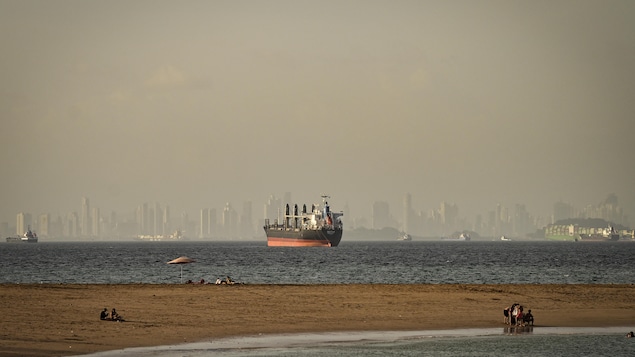

Le canal de Panama va notamment réduire à compter du 3 septembre son trafic de 36 à 34 transits par jour.


Le Suisse, quintuple vainqueur des Internationaux des États-Unis, a fait son retour sur le Arthur Ashe mardi.


© Jake Ramsey/Oklahoma Watch, via Associated Press