Vue normale

  • ✇Euromaidan Press
  • Russians are buying seaside apartments built on the ruins of the Mariupol homes Russia bombed—DW
    Russians moving into occupied Mariupol are buying apartments built over Ukrainian homes destroyed during Russia’s 2022 siege, German broadcaster Deutsche Welle (DW) reported on 15 August 2026. Ukrainians who lived on the sites received none of the new units, a source told the outlet. The construction is part of Russia’s wider Russification of occupied Mariupol. Occupation authorities have separately listed nearly 900 apartments for redistribution, including properties b
     

Russians are buying seaside apartments built on the ruins of the Mariupol homes Russia bombed—DW

17 août 2026 à 11:53

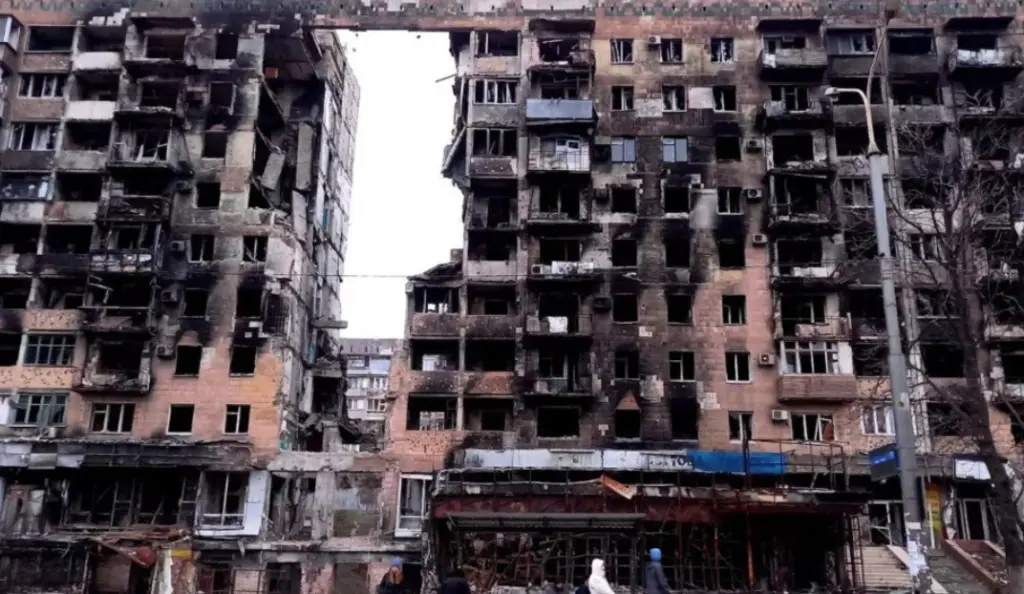
War-damaged apartment blocks in Mariupol with burned facades, shattered windows and exposed interiors.

Russians moving into occupied Mariupol are buying apartments built over Ukrainian homes destroyed during Russia’s 2022 siege, German broadcaster Deutsche Welle (DW) reported on 15 August 2026. Ukrainians who lived on the sites received none of the new units, a source told the outlet.

The construction is part of Russia’s wider Russification of occupied Mariupol. Occupation authorities have separately listed nearly 900 apartments for redistribution, including properties belonging to residents forced out by the siege.

Economist Vyacheslav Shiryaev said the new apartments are being bought primarily by newcomers, including Russian security personnel, officials, and military logistics workers. Some simply want to live by the sea but cannot afford property in occupied Crimea or Sochi, a Russian Black Sea resort, he said.

In Russia-occupied regions, borrowers with Russian citizenship are offered mortgages at 2% annual interest, DW reported.

Occupation authorities also ordered some residents out of apartments that had survived the attacks. Some were sent to hostels or accommodation on Mariupol’s outskirts instead of receiving replacement apartments, a source told DW.

Unable to enter occupied Mariupol, DW based its investigation on former residents’ accounts, satellite imagery, and online research.

Homes erased, residents pushed out

For former residents, homes destroyed in the siege are being replaced with apartments for newcomers.

Halyna Artemova, an English teacher, lived in one of the demolished apartment blocks for almost 40 years. A Russian missile struck the building in March 2022. Wounded by shrapnel, she escaped with her mother and son. A new high-rise now stands where her home once did.

Yevhen Sosnovskyi, a photographer, and his wife had lived in a neighboring building for 20 years. It caught fire during the attack, and Russian troops drove residents out without allowing them to take food or clothes.

Sosnovsky photographed his apartment before and after the attack, preserving a record of the home they lost. A parking lot now covers the site.

They’re building on human bones, and fast, to eradicate the traces of their crimes,” Sosnovsky told DW.
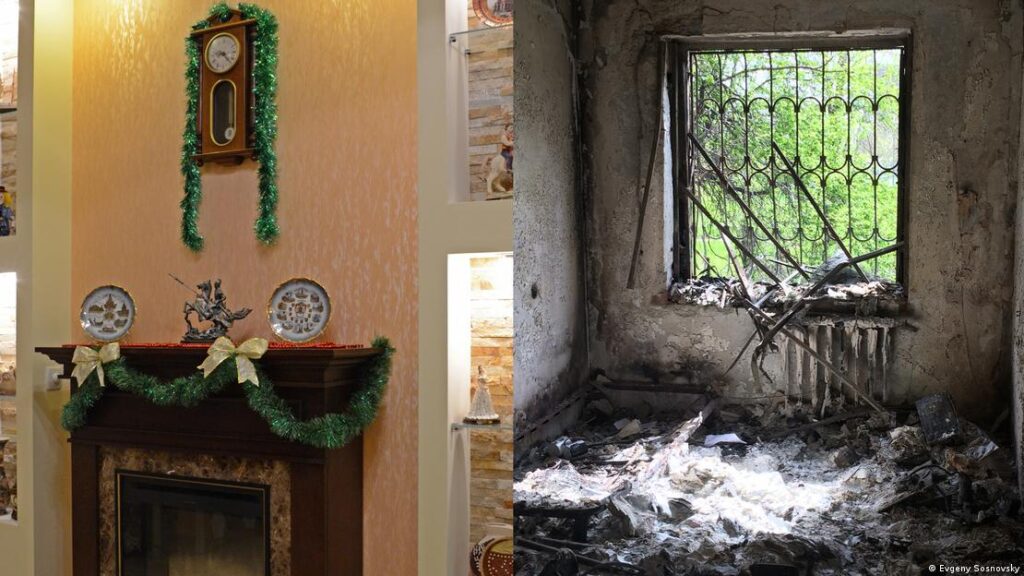
Photographer Yevhen Sosnovskyi documented his apartment before and after the Russian attack. Photo: Yevhen Sosnovskyi via DW.

Russia remakes a city it destroyed

The new housing is part of a wider Russian effort to reshape Mariupol after its forces destroyed and occupied the city. The UN assessed that up to 90% of the city’s residential buildings were damaged or destroyed.

On 16 March 2022, Russia bombed the Mariupol Drama Theater, where civilians sheltered beneath a large “CHILDREN” sign. An eyewitness described chaos, blood, and survivors using torn blankets as bandages.

In the wake of its destruction of the city, Moscow plans to move about 114,000 of its citizens into occupied Ukraine, with Mariupol as one of the main destinations.

  • ✇Euromaidan Press
  • Russia builds and expands at least 10 drone bases. Some could put Warsaw in range – Telegraph
    Russia has built or expanded at least 10 drone bases along its borders with Ukraine and Belarus, creating launch capacity for newer jet-powered attack drones, the most powerful of which could reach Warsaw, The Telegraph reported on 16 August 2026. The network expands Russia’s capacity for mass drone attacks on Ukraine, while some sites could later threaten NATO. The findings come as Russia is also expanding bases and other military infrastructure along NATO’s northern a
     

Russia builds and expands at least 10 drone bases. Some could put Warsaw in range – Telegraph

17 août 2026 à 09:07

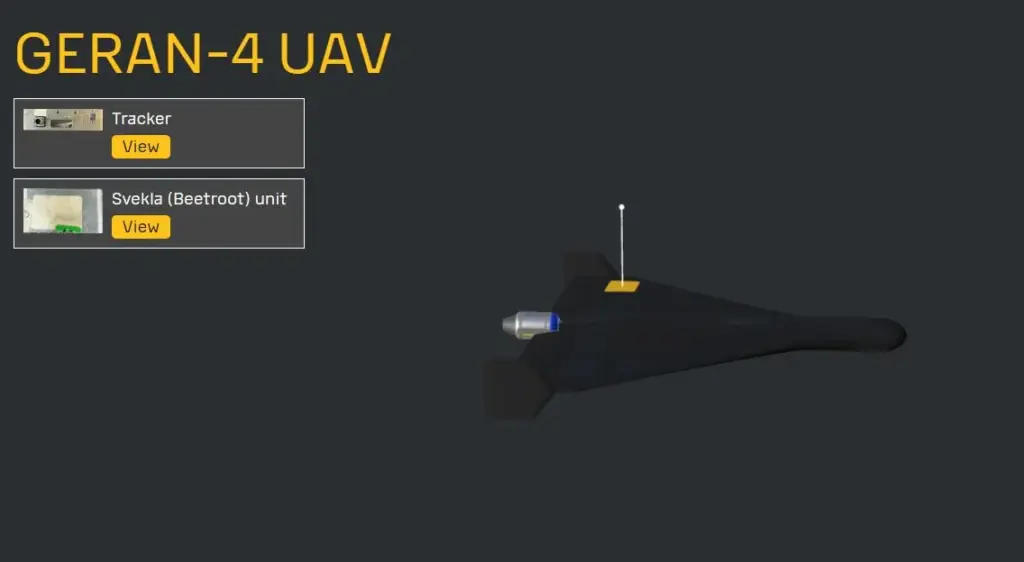
Diagram of a black Geran-4 jet-powered UAV with callouts identifying its tracker and Svekla electronic unit.

Russia has built or expanded at least 10 drone bases along its borders with Ukraine and Belarus, creating launch capacity for newer jet-powered attack drones, the most powerful of which could reach Warsaw, The Telegraph reported on 16 August 2026.

The network expands Russia’s capacity for mass drone attacks on Ukraine, while some sites could later threaten NATO. The findings come as Russia is also expanding bases and other military infrastructure along NATO’s northern and Baltic borders. The Telegraph found no evidence that Moscow is planning such an attack.

Seven of the 10 sites were used during recent bombardments of Kyiv, tracking data cited by The Telegraph showed. Using leaked documents, satellite imagery, and DroneSec's analysis, the newspaper identified at least 59 launch rails—tracks that launch fixed-wing drones without runways.

Around 20 appeared long enough for Russia’s latest long-range models, while one base could reportedly store over 1,000 drones.

Leaked Ukrainian documents cited by The Telegraph say the jet-powered Geran-4 and Geran-5 can carry 90-kilogram warheads. However, Ukrainian military intelligence puts the Geran-4’s range at up to 450 kilometers, while the larger Geran-5 has a stated range of up to 1,000 kilometers — enough to reach Warsaw from several of the new sites.

DroneSec founder Mike Monnik said expanded launch capacity and harder-to-intercept technology together increase pressure on Ukrainian air defenses.

Russia builds military infrastructure along NATO’s northern flank

Russia is also expanding military infrastructure elsewhere along NATO’s borders. A Nordic-Baltic investigation identified new or expanded infrastructure from Norway to Kaliningrad, with potential capacity for up to 115,000 personnel.

Satellite imagery showed new barracks, ammunition warehouses, and expanded bases near NATO’s northern and Baltic members.

The Institute for the Study of War, a US-based think tank, assessed that the construction likely supports future Russian operations against NATO rather than an imminent attack. Most Russian combat power remains committed to Ukraine, it said.

Other drone hubs support rapid Russian attacks

Russia has already built comparable hubs for attacks on Ukraine. Satellite imagery analyzed by the open-source intelligence group Strategic Aviation of Russia showed 10 additional launchers under construction at Tsymbulova in Oryol Oblast, following the start of work on 22 April 2026.

At occupied Donetsk Airport, the group identified enlarged launch pads, roads to a Geran and Gerbera drone warehouse, and the apparent construction of another storage building.

Ukraine’s Security Service (SBU) said it struck Shahed storage and launch sites at Primorsko-Akhtarsk on 2 August 2025. Ukraine’s Unmanned Systems Forces commander Robert "Madyar" Brovdi reported hitting drone logistics, warhead-storage, and preparation facilities at Donetsk Airport on 30 December 2025.

  • ✇Euromaidan Press
  • Nearly 500 Africans recruited into Russia’s army have died, Ukraine says
    486 Africans recruited into Russia’s armed forces are dead, while Ukraine is holding 35 citizens from 17 African countries as prisoners of war, Ukraine’s Ministry of Foreign Affairs (MFA) told Ukrainian public broadcaster Suspilne in findings published on 16 August 2026. Its overall tally rose only slightly from May, climbing from 2,965 recruits from 36 countries to at least 2,982 from 37. Russia’s recruitment in Africa is part of a broader effort to enlist foreigners f
     

Nearly 500 Africans recruited into Russia’s army have died, Ukraine says

17 août 2026 à 08:16

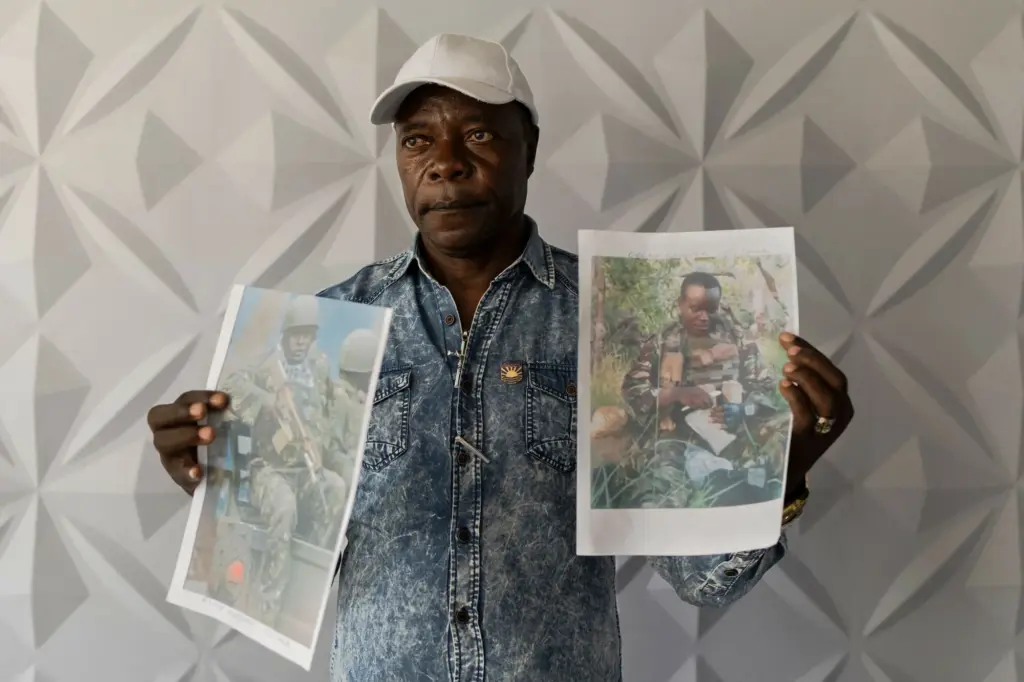
A Kenyan man holds two printed photographs of his son killed fighting for Russia.

486 Africans recruited into Russia’s armed forces are dead, while Ukraine is holding 35 citizens from 17 African countries as prisoners of war, Ukraine’s Ministry of Foreign Affairs (MFA) told Ukrainian public broadcaster Suspilne in findings published on 16 August 2026. Its overall tally rose only slightly from May, climbing from 2,965 recruits from 36 countries to at least 2,982 from 37.

Russia’s recruitment in Africa is part of a broader effort to enlist foreigners for its war. A joint human-rights investigation found that Russia had recruited at least 27,000 people from more than 130 countries since 2022. The system helps Moscow replenish its forces while shifting battlefield risk onto foreigners, many of whom are drawn in by financial pressure, deception, or coercion.

The largest groups of recruits came from Kenya, Egypt, Cameroon, Ghana, Nigeria, Uganda, Algeria, and Mali, the ministry told Suspilne.

Russia’s wider recruitment pipeline in Africa

Russian security services use a “broad arsenal of manipulative methods,” the Ukrainian MFA said. Recruiters promise civilian jobs, education, high salaries, Russian citizenship, or migration benefits. In many cases, foreigners must sign Russian-language military contracts under threat of deportation or imprisonment.

The FIDH–Truth Hounds–KIBHR report found recruiters using social media and intermediaries to advertise civilian jobs. Of 16 foreign POWs interviewed, 13 said they had been promised they would not fight. Most reached combat positions within weeks.

The human toll on African recruits

Kenyan engineer Francis told journalist Dmytro Karpenko, who interviews prisoners captured while fighting for Russia, that he thought he had accepted a security job. In Russia, he received a military uniform instead. After two weeks of training, he reached the front and was captured.

Nigerian recruits Hamzat Kazeen Kolawole and Mbah Stephen Udoka died in an assault after receiving little or no training, Ukrainian military intelligence said. Botswana reported “heartbreaking calls” from its citizens describing “perilous conditions” at the front.

Ukraine’s response to Russia's recruitment campaign

Ukraine’s diplomatic missions regularly inform African officials about the recruitment of their citizens and run awareness campaigns, according to the ministry.

The MFA and Ukraine’s POW Coordination Headquarters also launched Stop Russian Recruiters, a website that explains recruitment methods, shares victims’ accounts, advises people at risk and their families, and accepts reports about recruiters.

  • ✇Euromaidan Press
  • Man and woman attacked two children for speaking Ukrainian, Gdańsk consulate says
    Two adults allegedly attacked a 14-year-old Ukrainian girl and her 12-year-old brother after hearing them speak Ukrainian, Ukraine’s Consulate General in Gdańsk said. The attack occurred on 14 August 2026 in a park near a railway station in Bydgoszcz, north-central Poland. The case comes amid a documented rise in anti-Ukrainian violence in Poland, with recent attacks reported throughout the country. Recent incidents include attacks on Ukrainians in Poznań and Wrocław, a
     

Man and woman attacked two children for speaking Ukrainian, Gdańsk consulate says

17 août 2026 à 05:24

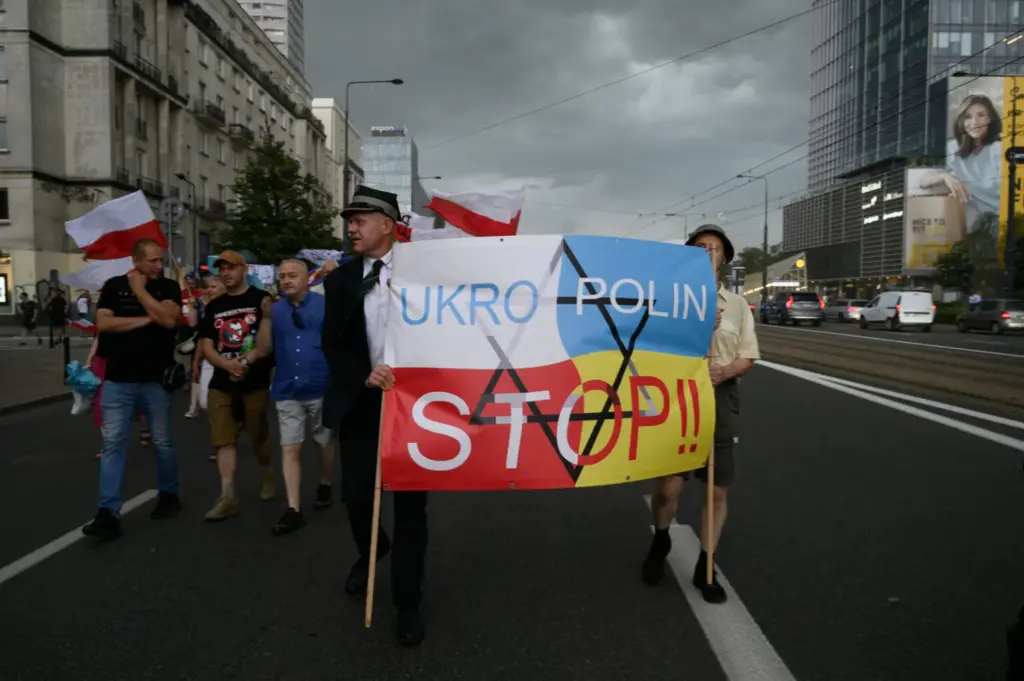
Demonstrators carrying Polish flags march behind a banner in Polish and Ukrainian colors reading “UKRO POLIN STOP!!” with a crossed-out Star of David.

Two adults allegedly attacked a 14-year-old Ukrainian girl and her 12-year-old brother after hearing them speak Ukrainian, Ukraine’s Consulate General in Gdańsk said. The attack occurred on 14 August 2026 in a park near a railway station in Bydgoszcz, north-central Poland.

The case comes amid a documented rise in anti-Ukrainian violence in Poland, with recent attacks reported throughout the country. Recent incidents include attacks on Ukrainians in Poznań and Wrocław, as well as on people mistaken for Ukrainians or defending them. Police data obtained by the Polish newspaper Rzeczpospolita showed 180 hate-crime reports involving Ukrainian citizens in the first half of 2026, over 30% more than a year earlier.

The pair, a man and woman with a small dog, shouted obscenities and made nationality-based threats, the consulate said.

They twisted a child’s arm, broke a toy drone, and threw fragments at the boy,” the Ukrainian consulate said, adding that the fragments scratched him.

The consulate said a complaint had been filed, police were searching for the pair, and the children were physically safe but severely stressed. It urged witnesses to contact the police. Polish police had not commented by the time of publication.

Other attacks on Ukrainians in Poland

The attack on the children came amid a string of assaults on Ukrainians across Polish cities.

Shortly after midnight on 13 August 2026, an intoxicated woman insulted two Ukrainian men, spat at one, and struck one of them outside a restaurant in Poznań, according to Polish media. Police detained her and another woman the following day.

In July, three men allegedly beat a young Ukrainian couple in Wrocław after first asking whether they were Ukrainian. Police detained two suspects and continued searching for the third.

That month, a man in Łódź attacked a passerby he supposedly mistook for a Ukrainian, breaking his nose and jaw. Three men also reportedly beat a 60-year-old Pole who intervened when they harassed a Ukrainian teenager on a Poznań tram.

The deepening Polish-Ukrainian rift and decline in relations

The attacks coincide with a broader decline in Polish-Ukrainian relations. Polish support for accepting Ukrainian refugees fell from 94% in March 2022 to 48% by early 2026, while politicians increasingly use Ukraine as a wedge issue.

Much of the fallout stems from disputes over the Volhynia massacres—the 1943–44 mass killings of Polish civilians by the Ukrainian Insurgent Army (UPA) and Polish retaliatory violence against Ukrainian civilians.

The dispute escalated after President Volodymyr Zelenskyy signed a 26 May decree granting a Ukrainian special forces unit the honorary title “Heroes of the UPA.” Polish President Karol Nawrocki responded on 19 June by stripping Zelenskyy of the Order of the White Eagle, Poland's highest state honor.

❌