Vue normale

  • ✇Euromaidan Press
  • Former Polish PM accuses Ukrainian officials of letting robbers plunder massacre victims’ graves
    Former Polish prime minister Jarosław Kaczyński accused groups in western Ukraine of desecrating remains and stealing WWII-era victims’ jewelry. The leader of the national-conservative Law and Justice (PiS) wrote on X on 14 August 2026 that his party would demand Polish government intervention. Kaczyński’s claim comes amid growing anti-Ukrainian sentiment in Poland and a dispute with Kyiv over how Polish wartime victims are remembered. However, Kaczyński’s X post named
     

Former Polish PM accuses Ukrainian officials of letting robbers plunder massacre victims’ graves

16 août 2026 à 14:46

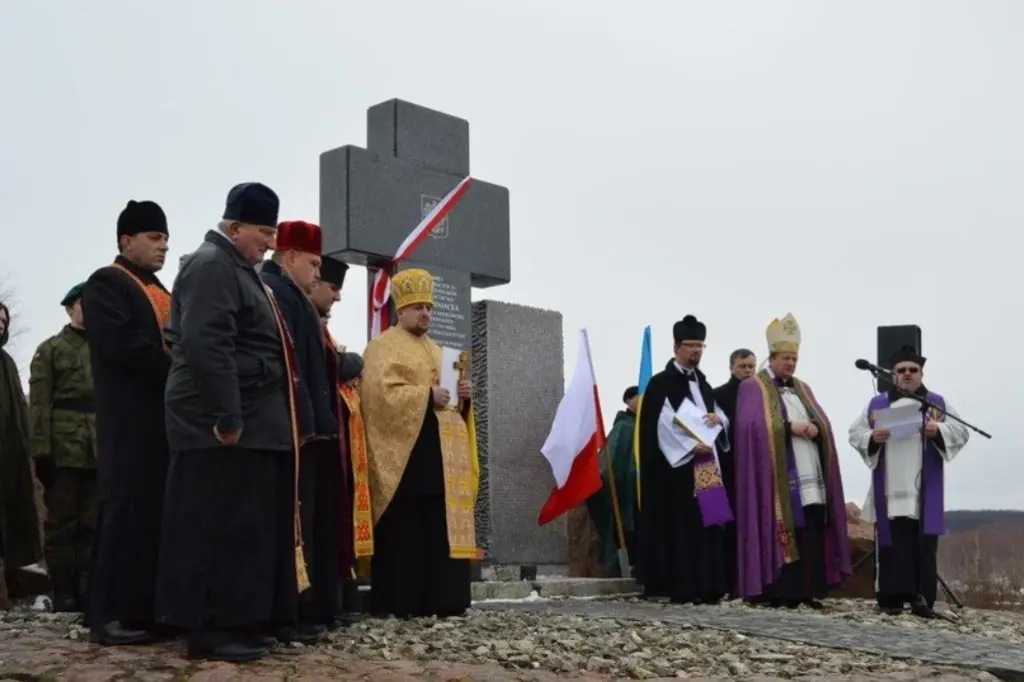
Polish and Ukrainian clergy stand beside a memorial cross during a ceremony, with both countries’ flags behind them.

Former Polish prime minister Jarosław Kaczyński accused groups in western Ukraine of desecrating remains and stealing WWII-era victims’ jewelry. The leader of the national-conservative Law and Justice (PiS) wrote on X on 14 August 2026 that his party would demand Polish government intervention.

Kaczyński’s claim comes amid growing anti-Ukrainian sentiment in Poland and a dispute with Kyiv over how Polish wartime victims are remembered. However, Kaczyński’s X post named no location and provided no public evidence, while authorized Polish-Ukrainian teams continue exhuming and reburying Polish victims.

“Illegal excavations at the sites of former Polish villages in Eastern Galicia are turning out to be real,” Kaczyński wrote, referring to a historical region now largely in western Ukraine.

He called the alleged looters “black diggers,” a term for people who dig through burials or archaeological sites for valuables. He said they were pilfering the graves of Poles killed in the World War II-era Volhynia massacres and alleged that local Ukrainian officials were allowing it.

Kaczyński said PiS would appeal to Poland’s state authorities, including the Foreign Ministry, and demand “explanations and a response.”

The evidence described by PiS has not been made public. Onet reported that it was unclear which incidents he meant and that neither government had responded at the time. PiS spokesperson Rafał Bochenek later told the publication Interia that citizens had sent photographs allegedly showing damaged graves and listings for excavated objects. Interia published neither.

Polish-Ukrainian teams continue authorized exhumations

Meanwhile, Poland’s Institute of National Remembrance (IPN), the country's state historical institute, said Ukraine authorized its latest excavations at Ostrówki and Wola Ostrowiecka in Volyn.

From 13 July to 7 August, Polish and Ukrainian specialists recovered 55 victims, including 26 children. They also secured more than 300 personal items and pieces of clothing. The remains are due to be buried at Ostrówki cemetery on 30 August.

The excavation followed a wider thaw. Ukraine lifted its moratorium on Polish searches, while joint teams exhumed and reburied 42 people at Puźniki in 2025. Both countries have exchanged lists of sites for further searches.

Historical disputes deepen the Polish-Ukrainian rift

Relations between Kyiv and Warsaw worsened after Ukraine gave a military unit the honorary title “Heroes of the Ukrainian Insurgent Army (UPA)."

The UPA fought for Ukrainian independence but is held responsible in Poland for the World War II-era massacres of Polish civilians. Polish President Karol Nawrocki later stripped President Volodymyr Zelenskyy of the Order of the White Eagle, Poland’s highest state honor.

Violence is also rising on the Polish streets. Reports of suspected hate crimes against Ukrainians in Poland rose by more than 30% in the first half of 2026, even as anti-xenophobic voices became more visible online. Kaczyński’s claim adds an unverified criminal allegation to the dispute.

  • ✇Euromaidan Press
  • British drones hit Russia for first time in Ukraine’s deep-strike campaign – The Sunday Times
    Ukrainian forces have used British drones to attack targets inside Russia for the first time, adding two UK-built systems to Kyiv’s arsenal, The Sunday Times reported on 15 August, citing Ukrainian military sources. The newspaper explicitly identified oil refineries in Volgograd and Yaroslavl among the targets struck during the previous six months. Ukraine still relies mainly on domestically produced drones. But the British systems give Kyiv cheaper weapons that can be
     

British drones hit Russia for first time in Ukraine’s deep-strike campaign – The Sunday Times

16 août 2026 à 14:29

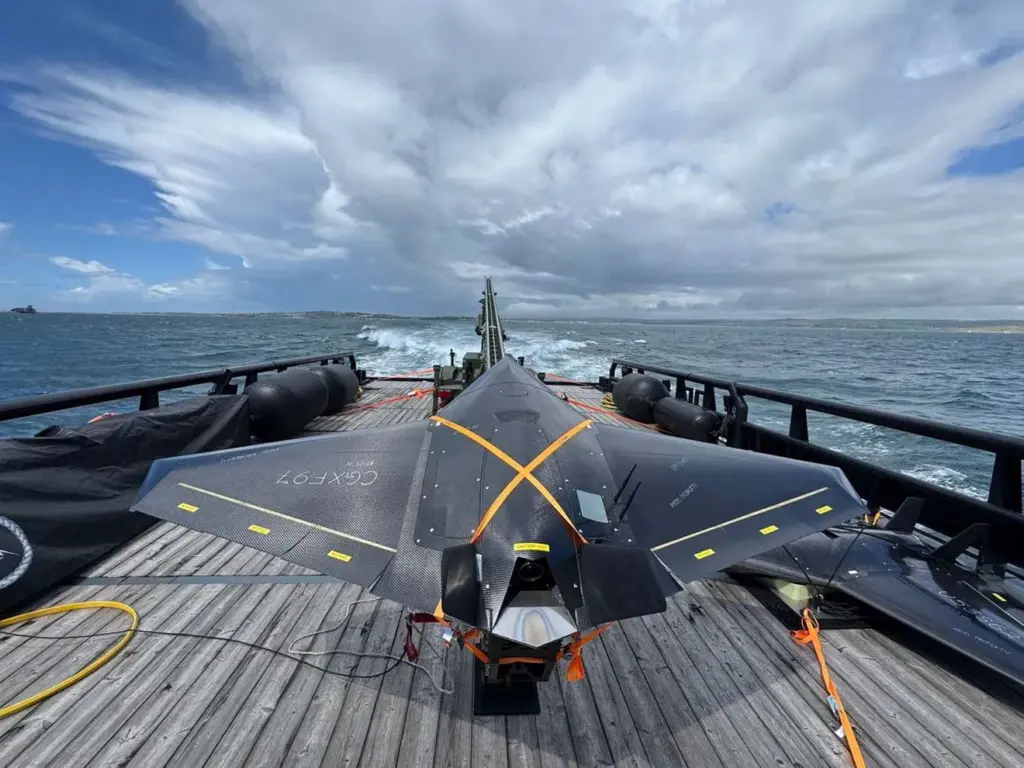
Black Nyan one-way attack drone secured to a launcher on the deck of a Royal Navy vessel at sea.

Ukrainian forces have used British drones to attack targets inside Russia for the first time, adding two UK-built systems to Kyiv’s arsenal, The Sunday Times reported on 15 August, citing Ukrainian military sources. The newspaper explicitly identified oil refineries in Volgograd and Yaroslavl among the targets struck during the previous six months.

Ukraine still relies mainly on domestically produced drones. But the British systems give Kyiv cheaper weapons that can be replenished and launched in volume. They help sustain Kyiv's attacks on Russian oil, logistics, and military targets without running down limited stocks of Western long-range missiles.

The Sunday Times called this a new phase in UK–Ukraine military cooperation. A senior British defense source said the deployments showed London was “not nervous anymore” about Russian pressure.

What British support adds to Ukraine’s homegrown drone force

Britain has supplied Ukraine with two systems with very different ranges. The Nyan, a jet-powered one-way attack drone made by BAE Systems subsidiary Callen-Lenz, can travel more than 150 miles. The second is catapult-launched and has a range above 600 miles; The Sunday Times withheld its manufacturer’s name on security grounds.

Long-range drones typically cost £50,000 to £100,000, compared with more than £750,000 to replace a Storm Shadow missile, the newspaper said. They can also be stockpiled and launched in swarms, helping Ukraine strain Russian air defenses without exhausting finite missile stocks.

The drones extend wider British support. In June, the UK announced funding for 150,000 Ukrainian-produced drones by the end of 2026. Ukrainian forces have also deployed British Rapid Ranger systems against Russian Shaheds and used UK-supplied Storm Shadows inside Russia, protecting Ukraine at home while widening its options across the border.

Ukraine’s deep-strike campaign reaches 52 Russian regions

Across Ukraine’s overall campaign, The Sunday Times reported almost 700 successful deep strikes between January and June. They reached 52 Russian regions and caused more than £35 billion (about $47.3 billion) in economic damage.

A senior Ukrainian military source said the British systems were proving successful. “When we launch them, we always say Slava Ukraini and God save the King,” the source told The Sunday Times.

Former UK Air Marshal Greg Bagwell predicted Moscow would “sabre rattle” and potentially declare British factories legitimate targets. Other defense sources warned of intensified cyberattacks or espionage against the UK.

  • ✇Euromaidan Press
  • NYT: France, Germany and UK build joint format to secure Europe a place in Ukraine peace talks
    France, Germany, and the UK are working to create a format representing Europe in talks over Russia’s war against Ukraine, The New York Times reported on 15 August, citing five European officials. Known collectively as the E3, the three countries would support Ukraine’s position and protect European interests in any settlement. The initiative is Europe’s attempt to secure a place in talks the US is expected to lead. The three governments fear that Washington and Moscow
     

NYT: France, Germany and UK build joint format to secure Europe a place in Ukraine peace talks

16 août 2026 à 12:38

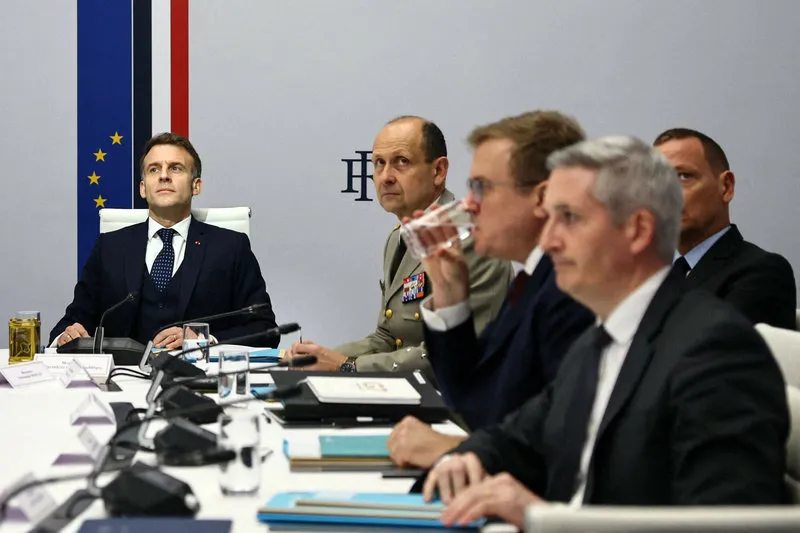
French President Emmanuel Macron sits with military officers and government officials during a Coalition of the Willing meeting in Paris on 24 February 2026.

France, Germany, and the UK are working to create a format representing Europe in talks over Russia’s war against Ukraine, The New York Times reported on 15 August, citing five European officials. Known collectively as the E3, the three countries would support Ukraine’s position and protect European interests in any settlement.

The initiative is Europe’s attempt to secure a place in talks the US is expected to lead. The three governments fear that Washington and Moscow could reach a deal without them, although Europe would have to enforce sanctions, decide how to use frozen Russian assets, and help protect Ukraine afterward. European officials also doubt Washington will stay committed to serious negotiations.

The officials expect Washington to lead negotiations with Moscow. The E3 wants to become the core group supporting Ukraine, following Kyiv’s request that it prepare for talks. France and Germany are shaping the position, while Britain fears damaging relations with Trump.

Poland, Italy, and the Nordic countries would be consulted, with the EU later involved. Some Baltic states and Hungary do not trust France and Germany to represent them. London called the discussion speculative.

The Coalition has rehearsed a force but not agreed to deploy it

The E3 forms the core of the Coalition of the Willing. At a 7 June meeting with President Volodymyr Zelenskyy, its leaders backed an immediate ceasefire and legally binding guarantees, including the deployment of a multinational force.

More than 600 British troops rehearsed with French paratroopers and an Italian platoon in February for a possible deployment. They could form the core of a 10,000-strong force pledged by London and Paris after a ceasefire.

Yet some members reportedly made Russia’s consent a condition for deploying troops, effectively giving Moscow a veto. Bulgaria has left, and Germany has not committed troops. The Coalition’s leadership is also shifting after Keir Starmer’s resignation and ahead of Emmanuel Macron’s departure in 2027.

Ukraine talks still misunderstand Russia's intentions

European officials see few signs that Vladimir Putin is ready for serious negotiations, the NYT reported. A separate EU attempt to open direct contact with Moscow divided member states.

Experts told Euromaidan Press that Russia uses peace processes to stall, press maximalist demands, and improve its battlefield position. Moscow also dismissed a Black Sea ceasefire proposal after Kyiv offered a mutual halt to attacks on civilian targets.

Ukraine’s partners risk mistaking Russia’s presence at talks for a willingness to compromise. Former Ukrainian diplomat Iuliia Osmolovska warned that Moscow also benefits from failed negotiations by exhausting Western governments until they pressure Kyiv to concede.

Before 2022, Russia signed 26 ceasefires in eastern Ukraine; none lasted more than two weeks. A pause can bank concessions, rotate troops, and let Moscow resume fighting from a stronger position.

One alternative to air defense: Ukraine strikes Russian Bastion system used to attack Ukrainian cities from Crimea

16 août 2026 à 10:38

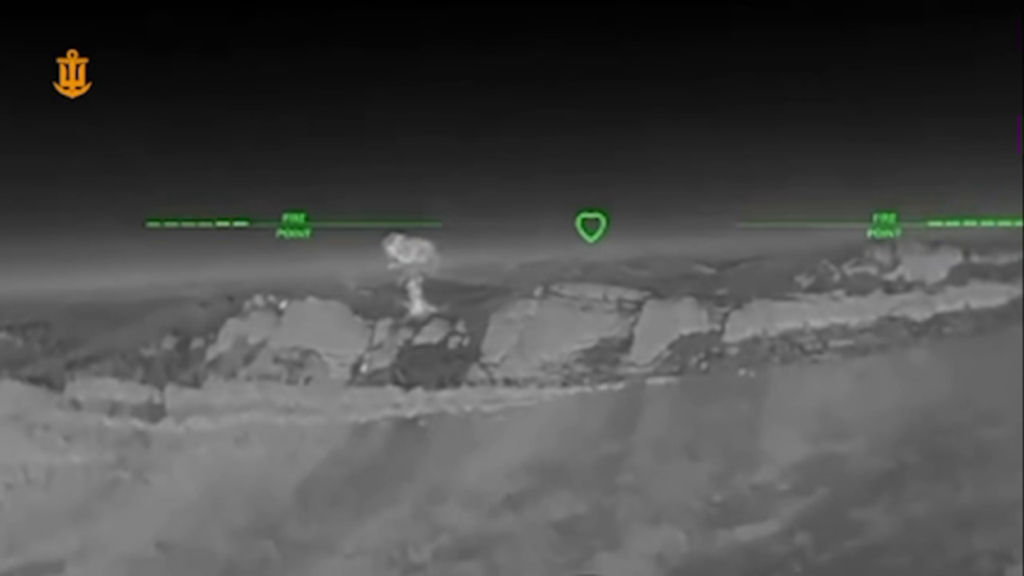
Smoke rises from a Russian Bastion missile system position in occupied Crimea after a Ukrainian strike on 16 August 2026. Screenshot from video: Ukrainian Navy

Ukraine’s Navy said its forces struck the launch positions and deployment site of a Russian Bastion coastal missile system in occupied Crimea overnight on 16 August, reportedly inflicting significant losses in equipment and personnel.

Russia has regularly used Crimea as a launch platform for strikes against Ukraine, making its missile systems there a priority target for Ukrainian forces seeking to reduce Russia’s ability to attack Ukrainian territory.

The Navy said the final Russian losses were still being assessed and did not provide details on the weapons or personnel destroyed.

Bastion systems used to strike Ukraine

The Bastion is a costly and scarce Russian coastal missile system that can launch P-800 Oniks cruise missiles. Russia has used Oniks missiles launched from occupied Crimea to attack targets across southern and other regions of Ukraine.

Oniks is a supersonic anti-ship cruise missile that Russia has adapted for strikes against ground targets in Ukraine, including Odesa Oblast. The missile can travel at more than 3,000 km/h, making it difficult for air defenses to intercept. Its standard range is about 300 kilometers, while upgraded variants can reportedly reach up to 800 kilometers and carry a 300-kilogram warhead. Russia launches ground attacks with Oniks from mobile Bastion systems based in occupied Crimea.

The Navy also said Russia uses Bastion systems to launch Zircon hypersonic missiles against Ukraine.

The Zircon is a newer hypersonic cruise missile designed to reach speeds of roughly Mach 5–9. Russia has used it against Ukrainian cities, including Kyiv, with launches previously reported from Bastion systems in occupied Crimea. Its officially claimed range exceeds 1,000 kilometers, although analysts question that figure; Ukrainian analysts have estimated a lower effective range.

Bastion launchers in Crimea are a particularly important target for Ukraine: they give Russia a mobile platform for striking targets across southern Ukraine and, with Zircon, deep into the country. Ukraine’s air defenses have struggled to intercept these missiles, making strikes on the launchers an important way to reduce the threat before the missiles are fired.

The Ukrainian Navy said the strike was part of ongoing efforts to reduce Russia’s combat potential in the Black Sea region.

Several Ukrainian strikes recorded overnight

The Crimea strike came amid a broader wave of Ukrainian attacks on Russian military, industrial, and logistics targets overnight on 16 August.

Ukraine’s General Staff reported a strike on the Kamensky Combine in Russia’s Rostov Oblast, where a fire was recorded. The plant produces solid rocket fuel for Russia’s Uragan, Smerch, and Tornado-S multiple-launch rocket systems, as well as components for other missile and aviation weapons.

In Moscow Oblast, a Ukrainian drone struck a 250,000-square-meter Wildberries warehouse in Koledino, while another fire was reported at the Severnoye Domodedovo logistics complex. Ukraine’s Defense Ministry later confirmed the Wildberries facility had been put out of operation, saying it was the retailer’s largest warehouse by area.

The General Staff also confirmed the results of two earlier strikes. It said the ZapSibNeftekhim petrochemical complex in Tobolsk was shut down after its central gas-fractionation unit was struck on 10 August, while an 11 August strike damaged several processing units at the Orsknaftaorgsyntez refinery in Orenburg Oblast.

The strikes show the expanding reach of Ukraine’s campaign against the military and industrial infrastructure supporting Russia’s war, from missile systems and rocket-fuel production to oil, petrochemical, and logistics facilities.

  • ✇Euromaidan Press
  • Stranded beside a frontline road, a dog found rescuers in Ukrainian soldiers
    A dog was caught in mesh beside a frontline road and could not free itself. Ukrainian soldiers stopped their vehicle, cut away the netting, and released it, as footage Ukrainian serviceman Denys Lysak posted on 10 August 2026 shows. The netting is meant to shield traffic from Russian FPV drones, but it can also trap animals left in the combat zone. The roadside rescue reflects how Russia's war against Ukraine has adversely impacted animals throughout Ukraine, while also
     

Stranded beside a frontline road, a dog found rescuers in Ukrainian soldiers

16 août 2026 à 09:44

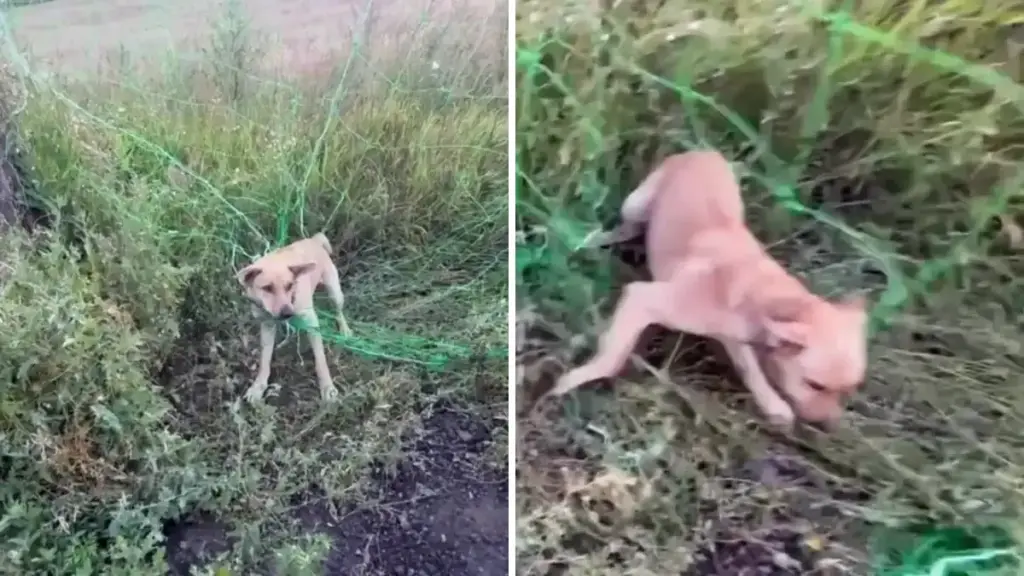
Side-by-side screenshots show a tan dog trapped in green anti-drone netting and moving free after Ukrainian soldiers cut it loose.

A dog was caught in mesh beside a frontline road and could not free itself. Ukrainian soldiers stopped their vehicle, cut away the netting, and released it, as footage Ukrainian serviceman Denys Lysak posted on 10 August 2026 shows.

The netting is meant to shield traffic from Russian FPV drones, but it can also trap animals left in the combat zone. The roadside rescue reflects how Russia's war against Ukraine has adversely impacted animals throughout Ukraine, while also highlighting a familiar relationship along Ukraine’s front, where soldiers feed, shelter, and sometimes take in the animals they encounter.

Lysak wrote that animals left without owners suffer greatly in areas affected by fighting. Ukrainian troops try to feed, evacuate, or shelter them, he said. Many units have taken in several rescued cats and dogs.

“Unfortunately, you can’t help all of them, but we try,” Lysak said.

The animals Ukrainian troops find at the front

Across Ukraine, animals are caught in the crossfire—injured, stranded, or driven from their habitats. Sometimes Ukrainian troops reach them in time, as they did during the Special Operations Forces' (SSO) “Operation Bambi.”

Rangers from the 6th Separate Special Operations Regiment found a frightened fawn while clearing a Russian position, according to footage the SSO released on 15 August. The video shows the animal nestled against one soldier as the unit moved out.

Some animals remain with the units that find them. Euromaidan Press reported in 2022 on Max, a Belgian shepherd abandoned by a Russian National Guard unit in Mykolaiv Oblast. A villager sheltered him before handing him to Ukraine’s National Guard, where handlers began teaching the former Russian service dog to follow commands in Ukrainian.

Photo of Max. Source: 19th Regiment of the National Guard of Ukraine

The fawn’s destination remains unknown. The SSO said only that it had been evacuated from the danger zone. Kharkiv volunteers had evacuated 18,800 animals by October 2024, but only around one-fifth had been reunited with their owners.

Russia's assault on Ukraine's ecosystem

Russia’s war has also affected wildlife beyond the trenches. Marine biologist Ivan Rusev estimated that more than 100,000 Black Sea dolphins have died since 2022, with sonar, underwater blasts, mines, and pollution among the suspected causes.

Russia’s destruction of the Kakhovka Dam dealt another blow. The floodwaters swept through areas holding 70% of the world’s Nordmann’s birch mice and half its sandy blind mole-rats, while killing tens of thousands of nesting birds.

  • ✇Euromaidan Press
  • Kyiv’s largest book market hit by Russian missiles
    Ukrainian emergency services confirmed a large fire at the Pochaina book market in Kyiv’s Obolonskyi district after an overnight Russian ballistic attack on 16 August. Several rows of stalls were burned. The strike comes amid mounting losses across Ukraine’s book industry, as Russian strikes burn printing houses, markets, and the millions of books within them. Pochaina’s latest fire is at least the third to damage the market or adjoining trading rows since mid-June. For
     

Kyiv’s largest book market hit by Russian missiles

16 août 2026 à 08:42

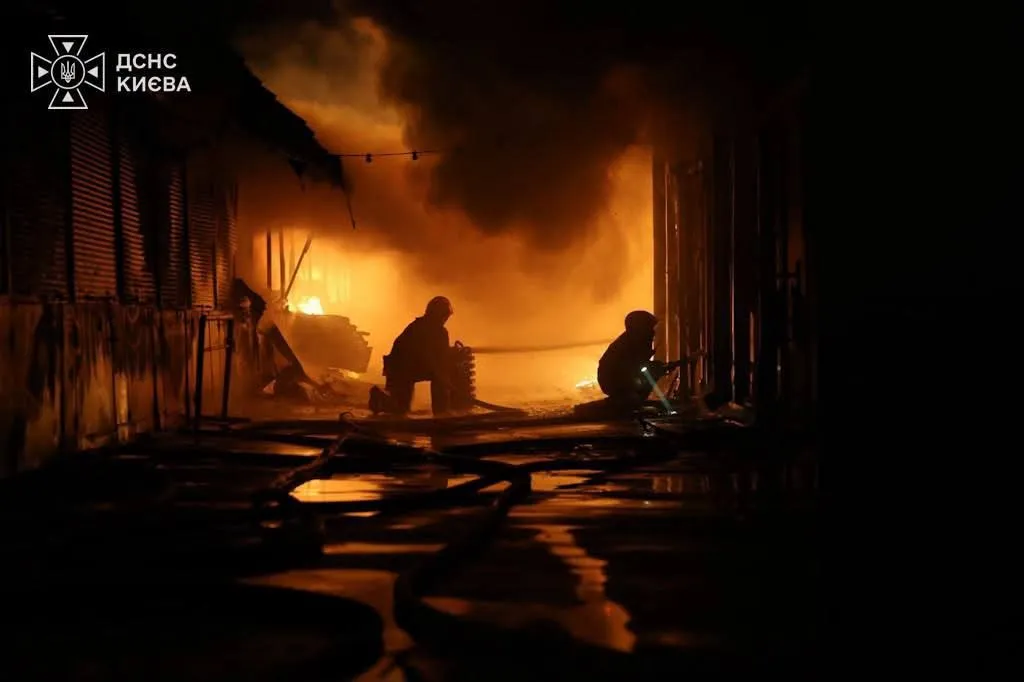
Three firefighters work amid flames and thick smoke at night.

Ukrainian emergency services confirmed a large fire at the Pochaina book market in Kyiv’s Obolonskyi district after an overnight Russian ballistic attack on 16 August. Several rows of stalls were burned. The strike comes amid mounting losses across Ukraine’s book industry, as Russian strikes burn printing houses, markets, and the millions of books within them.

Pochaina’s latest fire is at least the third to damage the market or adjoining trading rows since mid-June. For decades, the sprawling market has served as part bookshop, part flea market, and part archive of Kyiv life — a place to hunt through rare titles, vinyl, and remnants of the 20th century. Officials have not said Russia deliberately targeted it, however, the damage lands amid repeated attacks on Ukraine’s publishing chain and efforts to remove Ukrainian literature under occupation.

By 9:36 a.m., rescuers had extinguished fires at four locations in Kyiv and were dismantling damaged structures. Three people were hospitalized: two in moderate condition and one with light injuries. Pochaina metro station remained open, but damage to its glass entrance temporarily closed one vestibule.

На книжковому ринку у Києві рятувальники долають наслідки атаки.

Кілька рядів торговельного павільйону вигоріли. У багатьох інших — пошкоджені вікна. Книжки продовжують тліти

Відео: Ірина Сітнікова / hromadske pic.twitter.com/Bq3p4x6MT8

— hromadske (@HromadskeUA) August 16, 2026

Founded in 1997, Pochaina grew into Kyiv’s largest book market, offering everything from novels to specialist literature, according to a 2020 preservation petition. Independent vendors organized to defend it after plans emerged to clear the site for another shopping center. The campaign described the market as a cultural institution that supported thousands of jobs.

The adjoining weekend flea market endured the invasion and disappearance of tourists. In 2023, the Associated Press found hundreds browsing stalls stocked with vintage medals, ceramics, VHS tapes, and cracked guitars.

Russia destroys books as part of its war against Ukraine

Russian attacks have damaged publishing houses, printing plants, warehouses, libraries, bookshops, and markets across Ukraine.

The 16 August attack was not the first time Russia had hit Pochaina. A Russian attack damaged book-market pavilions in mid-June. On 30 July, falling missile debris ignited nearby stalls and destroyed collections of antiques, vinyl, and Ukrainian household artifacts, Suspilne reported.

Russia's war against Ukraine has particularly devastated Ukraine's publishing houses and their infrastructure. A 2024 Russian strike on Kharkiv’s Factor Druk printing house killed seven workers and burned 50,000 books. On 1 August 2026, a drone destroyed about eight million books at publisher Ranok’s warehouse.

Reuters reported that Russian strikes destroyed more than 10 million books in recent months.

In occupied areas, Russian forces have also seized Ukrainian history books and burned Ukrainian literature in boiler houses, Ukrainian authorities say.

Yet the Ukrainian book industry continues to thrive, despite Russia's assault. In 2025, Ukraine registered a record 117 new publishing businesses.

  • ✇Euromaidan Press
  • “One of the most massive” Ukrainian drone attacks hits Moscow Oblast: two major warehouses ablaze
    A drone hit a major Wildberries warehouse at Koledino near Moscow overnight on 16 August 2026 and set it ablaze, Moscow Oblast Governor Andrey Vorobyov said. Vorobyov described the overnight swarm as “one of the most massive drone attacks in recent times.” It comes amid an expanding Ukrainian campaign against Wildberries, Russia's largest online retailer with a vast network of warehouses and logistics centers, that has reached warehouses from Moscow Oblast to the Urals.
     

“One of the most massive” Ukrainian drone attacks hits Moscow Oblast: two major warehouses ablaze

16 août 2026 à 08:15

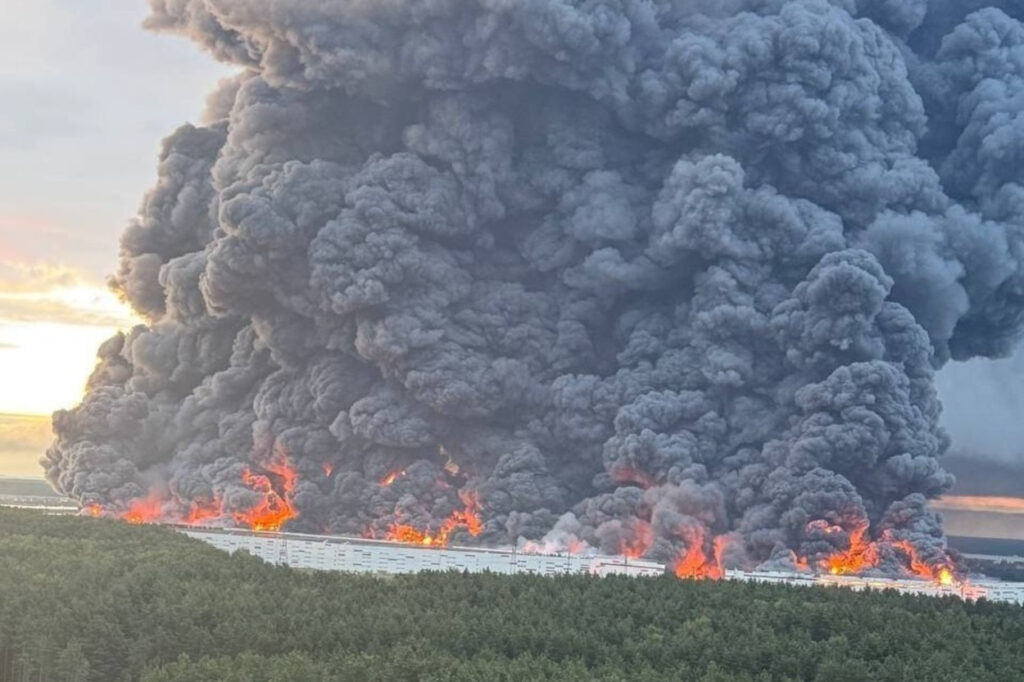
Wildberries warehouse burning in Russia's Koledino following a Ukrainian drone strike, 16 August 2026. Photo: Exilenova+

A drone hit a major Wildberries warehouse at Koledino near Moscow overnight on 16 August 2026 and set it ablaze, Moscow Oblast Governor Andrey Vorobyov said. Vorobyov described the overnight swarm as “one of the most massive drone attacks in recent times.”

It comes amid an expanding Ukrainian campaign against Wildberries, Russia's largest online retailer with a vast network of warehouses and logistics centers, that has reached warehouses from Moscow Oblast to the Urals. Ukrainian authorities say Wildberries facilities are used to supply components for Russian drone production and navigation equipment, making them part of Russia’s wartime logistics network.

The Koledino fire puts a major part of Wildberries’ storage and sorting capacity at risk. At about 250,000 square meters, the complex is one of the retailer’s largest logistics hubs. Ukrainian sources say the marketplace has moved drone parts and other military-linked goods. Wildberries denies supporting Russia’s military. 

Wildberries’ parent company, RWB, confirmed the fire, saying workers had been evacuated and deliveries rerouted. 

Unlike the 28 July fire at Koledino industrial park, the latest blaze was confirmed at Wildberries’ own Koledino warehouse. Initial reports in July had also pointed to Wildberries, but open-source investigators later identified the burning building as a neighboring warehouse run by a third-party logistics company.

The entire Wildberries logistics hub in Koledino, Moscow Oblast, is engulfed in flames following today’s attack.

The complex covers around 250,000 m² and has long been one of Wildberries’ largest and most important logistics centers. https://t.co/qqrrsLFB3Y pic.twitter.com/YivkijfyeT

— Special Kherson Cat 🐈🇺🇦 (@bayraktar_1love) August 16, 2026

A second fire broke out at Warehouse No. 15 in MLP Severnoye Domodedovo, a multimodal logistics complex near one of Moscow’s main airports. Vorobyov said the warehouse stores medications.

Vorobyov claimed an 83-year-old man was killed after a drone fell on a private home in the Ramenskoye district, while at least six other people were injured across the region.

Moscow Mayor Sergei Sobyanin claimed that Russian air defenses destroyed 201 drones approaching the region.

Ukraine confirms Wildberries warehouse was targeted

Ukraine’s Defense Ministry confirmed that the Wildberries logistics hub in the Koledino industrial park was put out of operation during the overnight drone attack.

The ministry said the facility, which covered 250,000 square meters, was Wildberries’ largest warehouse by area. It also said Ukraine has now disabled seven of the company’s 10 largest logistics centers.

Ukraine’s campaign against Wildberries keeps growing

Ukraine’s campaign against Wildberries began on 18 July 2026, when drones struck warehouses in Elektrostal and Kotovsk. Reported attacks have since reached the retailer’s sites across Russia, including a newly opened hub near Voronezh and a warehouse in Tver targeted three times in two weeks.

By 14 August, Agentstvo had counted fires at more than 20 Wildberries sites. The sustained attacks had already prompted Wildberries to prohibit warehouse workers from bringing smartphones to work, citing concerns that photos and videos taken during drone alerts could pose a security risk. 

The effects on Russia’s economy

The number and geographic spread of Ukraine’s strikes have put sustained pressure on the retailer’s nationwide warehouse network and Russia’s economy at large. 

Earlier fires destroyed goods belonging to independent sellers, The Moscow Times reported. Wildberries said it was considering compensation, although its contracts do not require the company to cover losses caused by drone attacks. 

In response to Ukraine’s strikes, the company has also reportedly sought additional storage in Kazakhstan, giving local warehouse operators greater leverage as it tries to replace capacity lost in Russia.

The physical disruption was followed on 15 August by a Ukrainian cyberattack targeting Wildberries’ payment and customer service systems. The hackers said customers could not make payments or reach the company through its main online support channel. 

Ukrainian rapper mocked Russia’s claim he helped deliver drones for attacks near Moscow. A month later, Russia allegedly tried to kill him in Poland

16 août 2026 à 05:28

Ukrainian-American rapper Kyivstoner wearing a black cap and dark jacket.

On 14 August 2026, Polish broadcaster RMF FM identified American-Ukrainian rapper and video blogger Kyivstoner as the previously unnamed target of an alleged Russian-directed assassination plot in Warsaw. The case comes as European authorities investigate suspected Russian attacks and sabotage across the continent.

The alleged plot against Kyivstoner comes amid attacks on Kremlin critics abroad, including the fatal shooting of a Russian opposition artist in Poland in June.

Polish authorities disclosed the Kyivstoner's case on 13 August but withheld the target’s identity. RMF’s identification points to a possible motive, though it relies on unverified allegations from the FSB, Russia's domestic security agency that Kyivstoner of managed drone deliveries intended for attacks near Moscow.

Who is Kyivstoner?

Kyivstoner was born Albert Vasiliev and uses the name Slevin Dadyan on his US passport. He gained attention through humorous videos and the Ukrainian group Hryby before releasing solo tracks, including “Leto” (Summer) and “Zvuk” (Sound).

In a 2025 interview, Vasiliev voiced support for Ukrainians and opposition to Russian occupation, saying Russian ruler Vladimir Putin made him angry and that he wanted civilians and soldiers to stop dying.

In July 2026, Russia’s FSB accused Kyivstoner of overseeing logistics for a foiled drone attack on a defense enterprise near Moscow.

The agency alleged that 35 drones assembled in Kyiv were concealed in a shipment of ceramic tiles and smuggled into Russia through Slovakia, Poland, and Belarus. Russian authorities also added Vasiliev to a register of people they label as involved in extremist or terrorist activity.

Vasiliev responded on Instagram by mocking Russia's allegation, saying he had been relaxing and playing video games rather than organizing an attack.

Russian authorities also accuse him of cooperating with Ukrainian intelligence. He denies the accusations, and RMF offered no independent evidence to substantiate them.

Suspect detained before alleged attack

Prime Minister Donald Tusk said Polish services detained the Russian suspect on 7 August, stopping the alleged attack “at the last minute.” US services assisted the operation. A Polish court remanded the man in custody for three months.

The journalists described the Russian citizen as a native of Donbas in eastern Ukraine. Tusk said the target, who holds Ukrainian and US passports, was “inconvenient to the Putin regime.”

The prime minister called it the first Russian-ordered attempt of its kind against a US citizen in another NATO country.

Killings and disrupted plots across Europe

Throughout Europe, Russia has tried to hunt down and kill anti-Kremlin critics and supporters of Ukraine. In June, Russian opposition artist Robert Kuzovkov, known as Semyon Skrepetsky, was shot dead in eastern Poland. Hours earlier, he had reported threats from “Russian patriots.” Polish authorities detained two Belarusian nationals, but have not attributed the killing to Moscow.

US and German services also reportedly foiled a Russian plot against Rheinmetall CEO Armin Papperger in 2024. German intelligence later treated the surveillance of Bavarian drone manufacturer Donaustahl’s CEO as a suspected planned assassination.

“Get the f*ck back to Ukraine”: Two intoxicated Polish women attack Ukrainian men amid rise in anti-Ukrainian violence in Poland

16 août 2026 à 04:07

A woman with her hands behind her back walks between two masked police officers down a white corridor.

Polish police detained two women in connection with an attack on Ukrainian men outside a Poznań restaurant, Interior Minister Marcin Kierwiński announced. The incident comes as Polish-Ukrainian relations grow more strained and public attitudes toward Ukrainians worsen. The incident occurred shortly after midnight on 13 August on Półwiejska Street.

Police data obtained by Rzeczpospolita show 180 hate-crime reports involving Ukrainian citizens in the first half of 2026, over 30% more than a year earlier. Police have not said whether they are treating the Poznań case as a hate crime, although the recording includes nationality-based abuse.

One woman insulted two Ukrainian men, spat at one, knocked over a restaurant parasol, and struck one of the men, the Polish radio station RMF FM reported.

Półwiejska core pic.twitter.com/n2KGfyDRA7

— poznan_moment (@poznan_moment) August 13, 2026

Regional police spokesperson Iwona Liszczyńska said officers responded to reports of two apparently intoxicated women. However, the women had left before officers arrived. Police contacted the restaurant manager, who filed a formal complaint on the morning of 14 August. Officers had already begun identifying the women before the complaint was filed.

Kierwiński first reported that police had detained one woman and identified the other. He later announced the second woman’s detention and declared “zero tolerance for aggression and hatred.”

Previous attacks on Ukrainians in Poland

Kierwiński’s warning followed a series of attacks against Ukrainians in Poland this year. In July, three men allegedly beat a Ukrainian couple in Wrocław after asking whether the woman was Ukrainian. Police detained two suspects and treated the assault as a nationality-motivated hate crime.

In May, police detained five suspects aged 15 to 18 after an attack on three Ukrainian teenagers in Warsaw. One of them, 16-year-old Artem, suffered a fractured skull. 

Earlier in July, two men linked to Poland’s far right confronted a Ukrainian woman at her legal-aid office in Poznań. They demanded entry and asked whether she supported Stepan Bandera, a WWII-era Ukrainian nationalist disliked by many Poles.

Historical dispute deepens political rift

The Poznań incident comes as anti-Ukrainian themes have gained ground in Polish far-right politics, while Warsaw and Kyiv remain divided over the WWII-era Ukrainian Insurgent Army. Many Ukrainians honor the UPA for resisting Soviet rule. Poland holds it responsible for massacring Polish civilians. 

Poland and Ukraine’s dispute over the Volhynia massacres, exhumations, and UPA symbols has prompted protests and a diplomatic clash over state honors. Police have not linked the Poznań attack to that dispute. 

❌