President Trump’s Air Force One subterfuge pales in comparison to the secrecy surrounding Russia’s president, whose fixation on security has reached new heights in recent years.
President Trump’s Air Force One subterfuge pales in comparison to the secrecy surrounding Russia’s president, whose fixation on security has reached new heights in recent years.
A Russian state media photo of President Vladimir Putin in his office in the Kremlin last month. The secrecy around Mr. Putin’s movements means journalists have resorted to tracking his activity by assessing the wilting of the plants in his office.
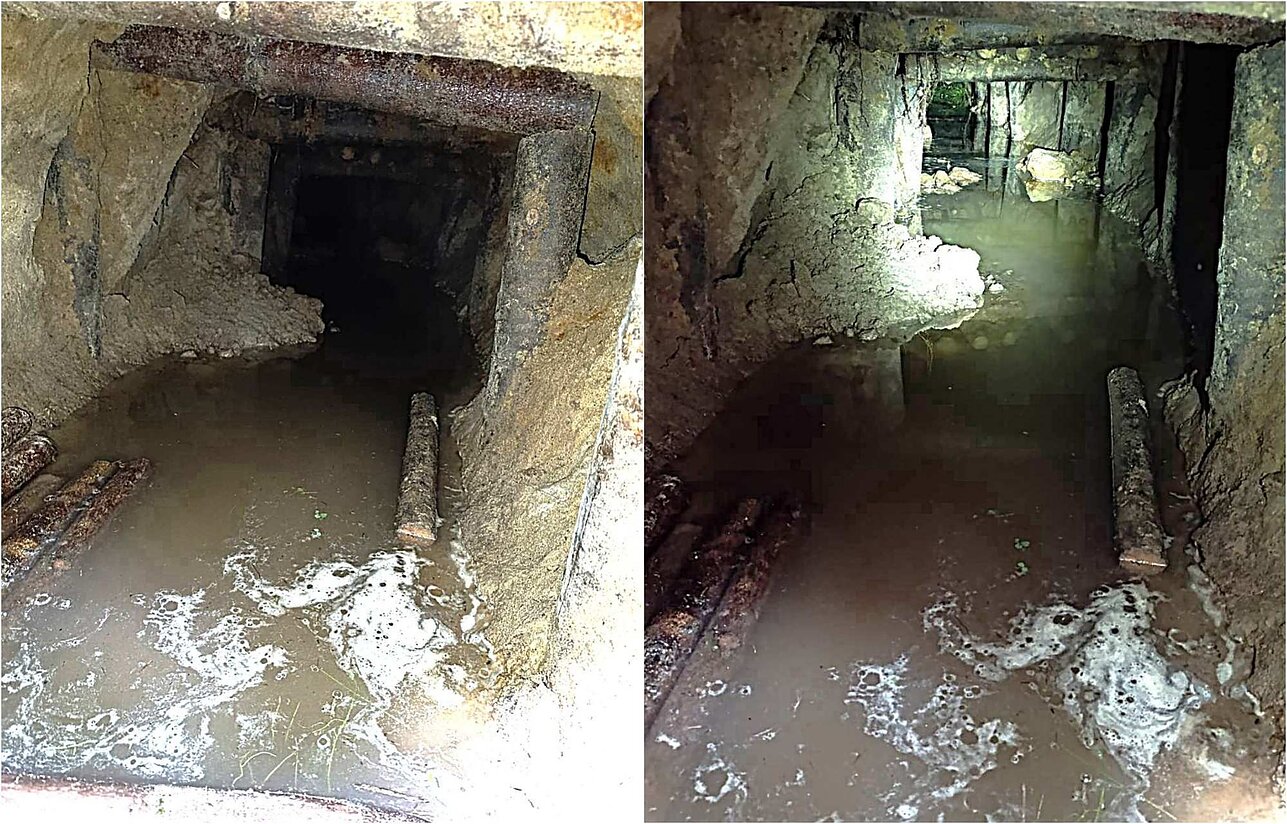
Latvia has discovered its first known border tunnel used to enter the country illegally from Belarus, the country’s State Border Guard said on 11 August. Officers intercepted 15 people who had crossed through the underground passage and returned them to Belarus.
Latvia, Lithuania, and Poland accuse Belarus and Russia of directing migrants toward their borders to retaliate for EU sanctions and strain countries supporting Ukraine. Minsk and Moscow deny orchestrating the c
Latvia has discovered its first known border tunnel used to enter the country illegally from Belarus, the country’s State Border Guard said on 11 August. Officers intercepted 15 people who had crossed through the underground passage and returned them to Belarus.
Latvia, Lithuania, and Poland accuse Belarus and Russia of directing migrants toward their borders to retaliate for EU sanctions and strain countries supporting Ukraine. Minsk and Moscow deny orchestrating the crossings. Tunnels found in Lithuania and Latvia show organizers adapting to fortified borders, requiring Baltic governments to deploy more personnel and surveillance technology.
The tunnel was about 10 meters from Latvia's fence
Border guards found the group on 10 August in Skrudaliena parish, in Latvia’s southeastern Augšdaugava municipality, and briefed the public on the discovery the following day. The operation involved the State Police, a Lithuanian border-service dog handler, and a rapid-response unit, the Latvian Border Guard said.
While reconstructing the group’s route, officers found the passage near the Silene border post, about 10 meters from Latvia’s fence. The agency said it had received intelligence that a tunnel might be under construction, but had previously found no sign of a breach there.
Riga answered on 11 August 2026 by launching Operation Vilkatis, or “Werewolf,” scheduled to run through the end of August. The government says the operation will improve intelligence-sharing among border guards, police, the military, and security services. It will also expand aerial surveillance and target networks that transport and shelter migrants after they cross.
Explore further
The Belarusian tunnel to the EU was almost done. Then Lithuania drilled a hole in exactly the wrong place—for the diggers
Latvia faced 87% of all crossing attempts along the EU-Belarus border by mid-July 2026
Belarus has weaponized migration since 2021, when EU governments accused Alyaksandr Lukashenka’s regime of bringing people from the Middle East and Africa to the bloc’s frontier in retaliation for sanctions. Belarus denied orchestrating the crisis.
Latvia reported more direct evidence in January 2026. Documents and phones taken from detained migrants linked Belarusian military and border personnel to organized crossings, according to Latvia’s armed forces and Border Guard.
By 13 July, Latvia had recorded 7,791 attempts over 111 consecutive days, 87% of all attempts along the EU-Belarus border by then. Lithuania later found an unfinished tunnel dug from Belarus. Latvia’s tunnel, unlike the unfinished Lithuanian passage, had already been used.
Ukraine's first-person-view (FPV) drones are not being displaced by newer unmanned systems, a Ukrainian officer told Ukrinform. They remain a central tool for precision strikes, while Ukrainian forces claim a separate advantage in larger bomber drones.
Unmanned systems have become a defining weapon of Russia's war against Ukraine, and both sides race to out-innovate each other, a contest in which a cheap UAV can down a platform costing dozens of times more.
FPVs re
Ukraine's first-person-view (FPV) drones are not being displaced by newer unmanned systems, a Ukrainian officer told Ukrinform. They remain a central tool for precision strikes, while Ukrainian forces claim a separate advantage in larger bomber drones.
Unmanned systems have become a defining weapon of Russia's war against Ukraine, and both sides race to out-innovate each other, a contest in which a cheap UAV can down a platform costing dozens of times more.
FPVs remain central
"Since FPVs appeared in service, they have become a leading means of precision engagement. This trend will continue," said Captain Anton Bobrovskyi, who commands a company training unmanned-systems specialists at the 199th Training Center of the Air Assault Forces.
Bobrovskyi conceded that Russia also uses drones effectively and that Ukraine learns from it, but said Ukraine keeps a lead in one category: bomber drones.
Explore further
Ukrainian drone that downed Russia’s rarest spy UAV just bagged its anti-drone interceptor too
Ukraine's bomber-drone advantage
Russian forces fear Ukrainian bomber drones, according to Bobrovskyi. He said Ukraine outmatches Russia many times over in such systems, and that Russian troops who encounter one often do not know what to do with it.
The distinction matters because bomber drones work differently from single-use FPVs. Rather than flying into a target and exploding, larger bomber drones carry and release munitions, then fly on. Euromaidan Press has documented the growing role of these systems, including reusable platforms capable of returning to base after dropping their payloads. Developers have also adapted them to fly through Russian electronic warfare, with upgraded Vampire drones built to resist jamming.
Explore further
Sea drones, jet drones, and Neptune missiles hit one Russian port in a single night
Bobrovskyi said Ukraine's advantage does not mean Russia lacks comparable technology. Instead, he argued that Ukrainian forces and society initiated many of the current battlefield drone trends and have kept the initiative in using them.
Each new drone class draws a countermeasure, so the side that keeps iterating fastest holds the battlefield initiative. How long Ukraine's bomber-drone edge lasts will depend on its ability to keep protecting and upgrading those platforms.
Ukraine’s sustained drone strikes on Russian refineries have reversed the country’s position as a net fuel exporter. Moscow now imports gasoline from as far as India and Morocco while rushing crude oil through the Arctic to reach Asian buyers it can no longer supply with finished fuel. The flows are scaling up—and running on the same sanctioned, EU-listed tankers.The reversal is tightening global fuel markets. Russia runs the world’s third-largest refining industry, and th
Ukraine’s sustained drone strikes on Russian refineries have reversed the country’s position as a net fuel exporter. Moscow now imports gasoline from as far as India and Morocco while rushing crude oil through the Arctic to reach Asian buyers it can no longer supply with finished fuel. The flows are scaling up—and running on the same sanctioned, EU-listed tankers.
The reversal is tightening global fuel markets. Russia runs the world’s third-largest refining industry, and the combined disruptions have acted to squeeze supply worldwide, with Moscow banning exports of both gasoline and diesel to keep its own pumps supplied.
With refining at a 24-year low, Russia is exporting crude through the Arctic while importing refined fuel from India.
Russian refining falls to its lowest since 2002
Ukrainian drone strikes have driven Russian crude processing to 3.6 million barrels a day in July—its lowest level since 2002 and roughly a third below the seasonal norm, according to EA Analytics data cited by Bloomberg.
Explore further
Ukraine’s drones force oil-giant Russia to import gasoline—now from Morocco
Ukraine hit at least 24 of Russia’s 34 largest refineries in some 50 strikes, with five more struck last week and at least two this week. With refining at a 24-year low, Russia is exporting crude through the Arctic while importing refined fuel from India.
Fuel shortages and rationing now affect about 50 million people—a third of Russia’s population. Moscow is subsidizing both the damaged refineries and the imported fuel replacing their output.
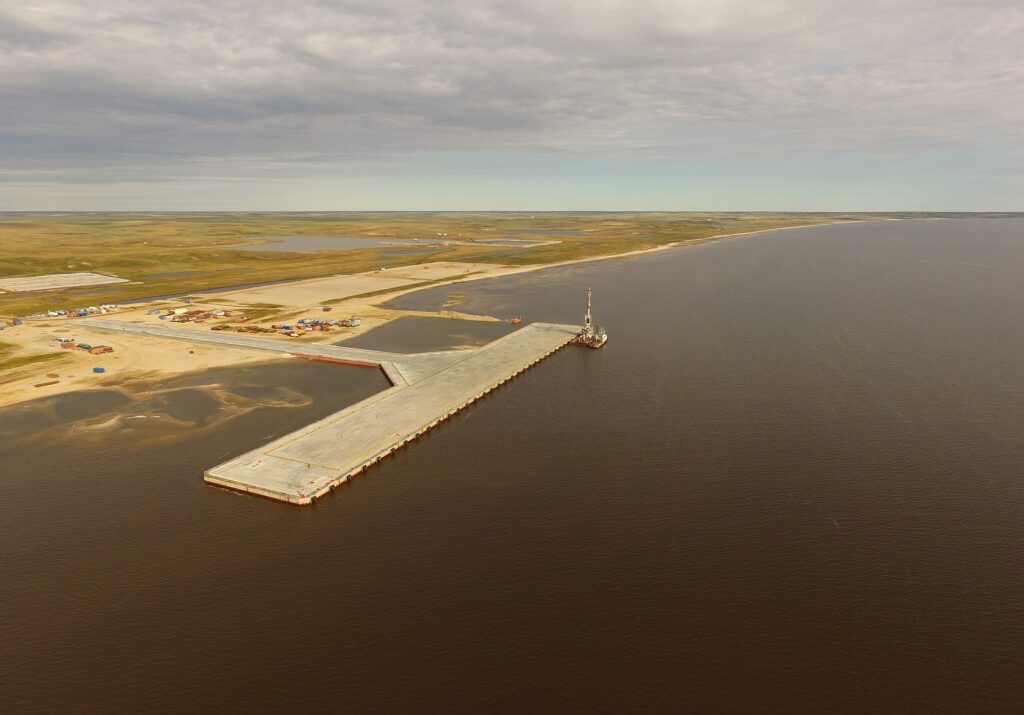
A jetty serving the Utrenneye (Salmanovskoye) field extends into Ob Bay in Russia’s Far North. The port is along the Northern Sea Route, which Russia is increasingly using to ship crude to Asia. Photo: SlavaGol/Wikimedia Commons, CC BY-SA 4.0
Sanctioned tankers take crude toward the North Pole
Seven tankers carrying about six million barrels of crude were heading to Asia through the Northern Sea Route as of 11 August. That volume already amounts to nearly half the approximately 13 million barrels the route carried during the entire 2025 season.
The route cuts two weeks off the voyage to China compared with the Suez Canal, and ice conditions are relatively mild this year, one trader told Reuters.
But speed is only part of the surge. Tankers on the Arctic route bypass European waters, where enforcement has led to inspections and detentions of sanctioned vessels, and Ukraine’s strikes on Black Sea shipping and the Iran–US standoff at Hormuz have narrowed the alternatives.
Vessel-tracking data show the convoy following a route north of the Severnaya Zemlya archipelago rather than through the traditional and more southern Vilkitsky Strait—putting sanctioned oil tankers within 500 nautical miles of the North Pole. Maritime experts said commercial traffic at this scale has never operated that far north.
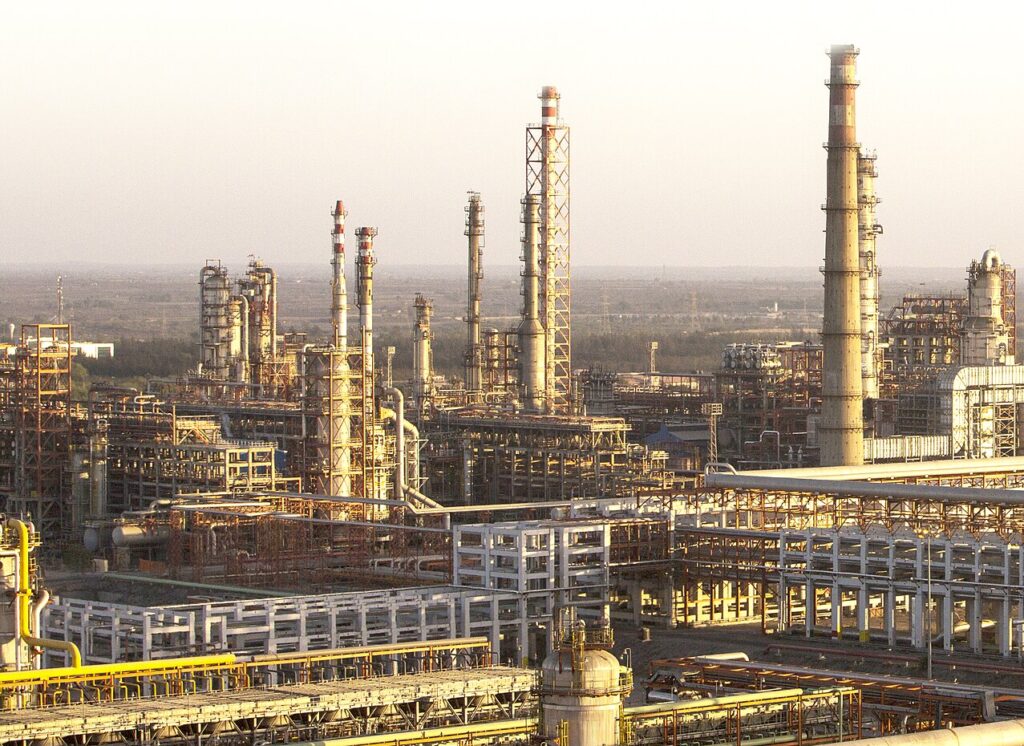
The Rosneft-controlled Nayara Energy refinery at Vadinar, Gujarat, India. Photo: AgarwalSimran / Wikimedia Commons, CC BY-SA 4.0
Russian crude returns home as Indian gasoline
In the opposite direction, gasoline refined from Russian crude at Nayara Energy’s Vadinar refinery in western India is flowing back to Russia through a chain of ship-to-ship handoffs at Egypt’s Damietta Port. At least three cargoes have cycled through the hub since June. The first reached Russia on 5 August.
Bloomberg’s tracking data show the tanker Cyclone loaded 42,000 tons of gasoline at Vadinar on 18 June, transferred the cargo to the Oman-flagged Garnet off Damietta on 6 July, and the Garnet reached Russia in early August. Two more tankers, Varg and Photon, followed the same route in July, with Photon’s cargo handed to the Russian-flagged Talisman on 28–29 July.
All these vessels are under EU sanctions. Garnet and Talisman are also under US sanctions.
Nayara’s refinery, which processes 400,000 barrels a day, is 49% owned by Rosneft. EU sanctions in July 2025 drove away its non-Russian crude suppliers, so the plant switched to processing only Russian oil and now buys and sells through traders—which is how its gasoline reaches Russia without a direct India-to-Russia sale, as Euromaidan Press reported.
The expected September launch of Rosneft’s Vostok Oil project could push more crude through the Northern Sea Route, traders told Reuters. NSR crude shipments fell 4% in 2025. This year’s opening weeks have already matched half the full-season total.
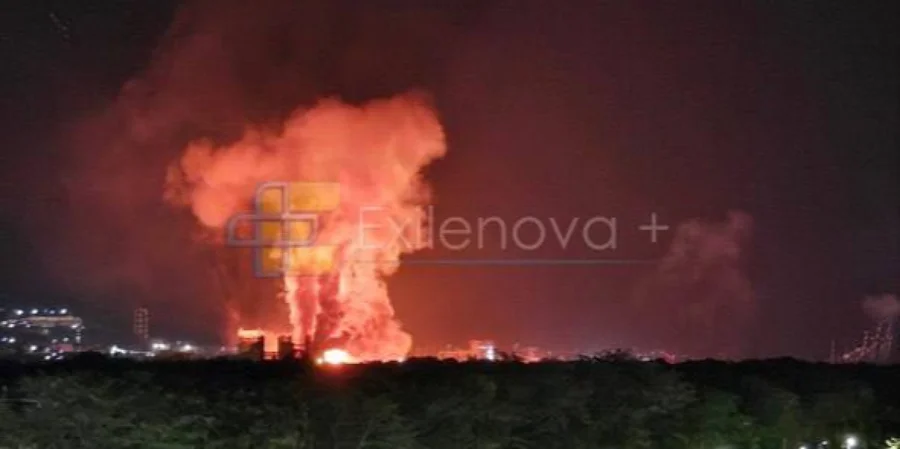
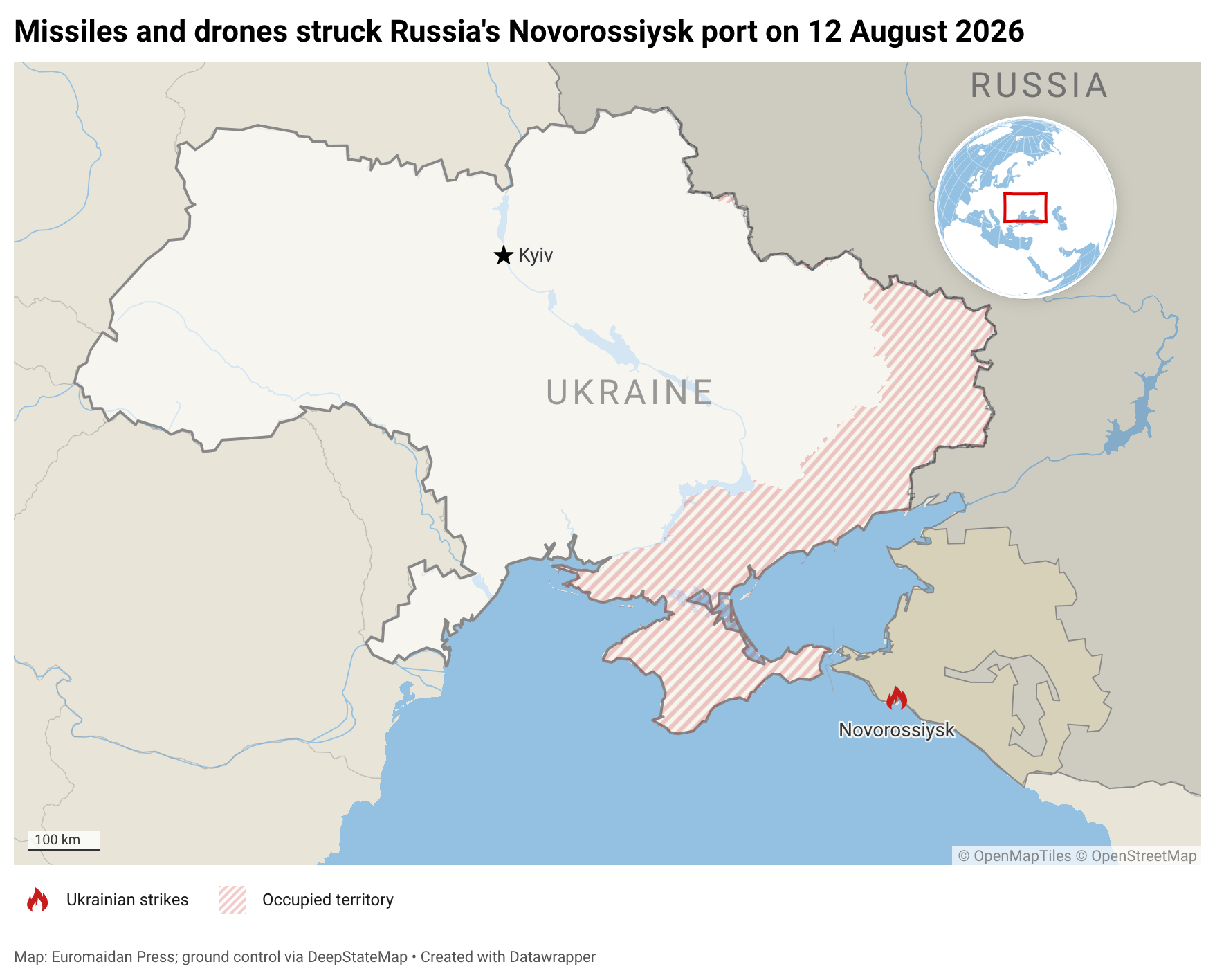
On 12 August 2026, Ukraine targeted Russia's main Black Sea naval base and oil terminal at Novorossiysk overnight. Fires broke out at the port's oil and fleet facilities, two of Russia's largest grain terminals stopped work, and debris damaged homes across the city, according to Ukrainian monitoring channels and local Russian authorities. Ukrainian President Volodymyr Zelenskyy confirmed the operation hours later.
Russia's southern coast is where much of the war is paid
On 12 August 2026, Ukraine targeted Russia's main Black Sea naval base and oil terminal at Novorossiysk overnight. Fires broke out at the port's oil and fleet facilities, two of Russia's largest grain terminals stopped work, and debris damaged homes across the city, according to Ukrainian monitoring channels and local Russian authorities. Ukrainian President Volodymyr Zelenskyy confirmed the operation hours later.
Russia's southern coast is where much of the war is paid for, the loading point for the oil revenue and grain exports that keep the invasion running, and it now sits within reach of Kyiv's long-range weapons.
Kyiv calls it a "unique operation" on the fleet's last big base
Zelenskyy said Ukraine's Defense Forces hit the Novorossiysk naval base overnight on 12 August. The port city is situated more than 350 kilometers from the front line on Russia's eastern Black Sea coast. The Ukrainian president described the assault as a unique operation against the last main outpost of Russia's Black Sea Fleet.
"Our Palianytsia jet drones, Neptune missiles, and naval uncrewed systems precisely struck the designated targets," he said, adding that hits were confirmed on air-defense positions, piers, and seaport infrastructure.
Fires at the Sheskharis oil terminal and the naval harbor
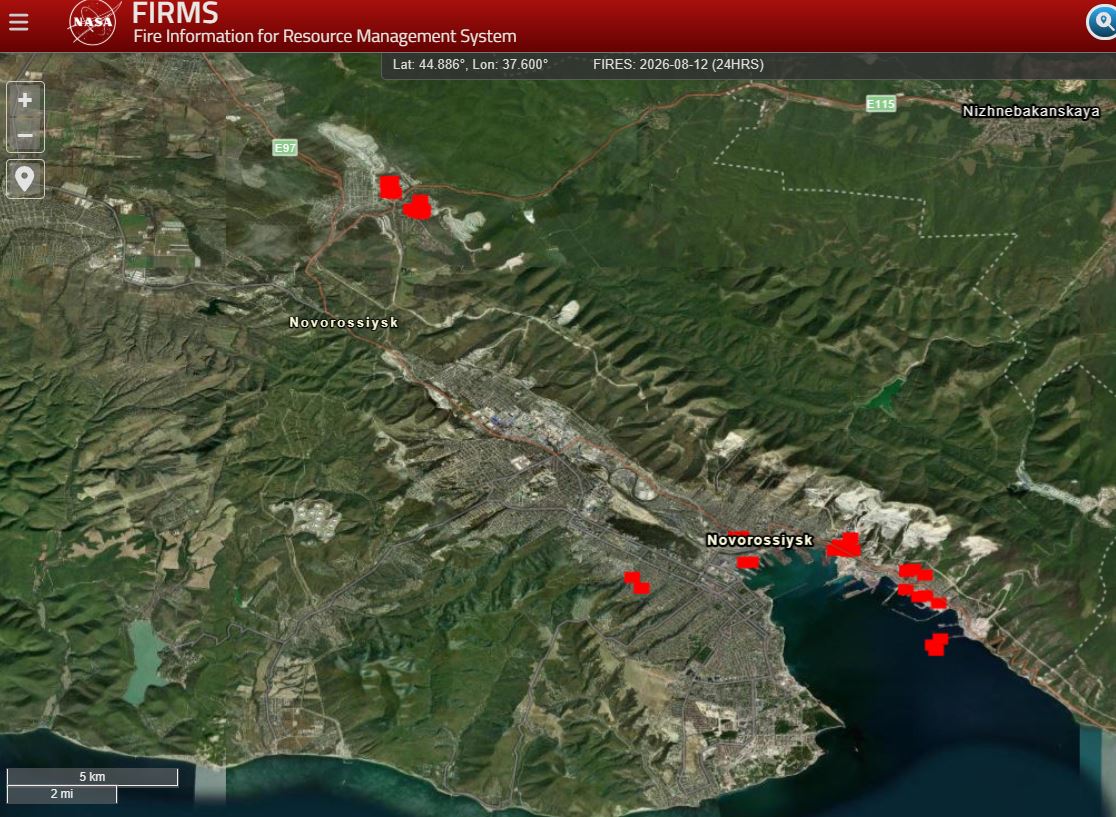
Ukrainian drones hit the oil terminal and the naval base, the Ukrainian defense outlet Militarnyi reported. Its analysis of NASA satellite fire data placed blazes at the Sheskharis complex, where crude loads onto tankers, and near the naval base and fuel-storage tanks.
A NASA FIRMS map shows fires detected in and around Novorossiysk on 12 August 2026. Map: NASA FIRMS
Sheskharis is the endpoint of Transneft's main pipelines and a key export point for Russian crude on the Black Sea. Novorossiysk ships 600,000 to 700,000 barrels of oil a day.
The Ukrainian monitoring channel Krymsky Veter said fires broke out near the Sheskharis pier and the military harbor where Black Sea Fleet ships and submarines dock. Russia moved vessels to Novorossiysk after Ukrainian strikes pushed the fleet out of occupied Crimea.
Two grain terminals stop at the world's top wheat exporter
Novorossiysk's two largest grain-handling terminals halted work after the strikes, Reuters reported, citing four industry sources. The world's top wheat seller, Russia sends most of its exports out through Black Sea ports.
The Novorossiysk grain terminal, which can move 8.5 million tons a year, halted work as owner Demetra Holding assessed the damage. NKHP, a terminal handling 7.1 million tons a year, also stopped, its main owner OZK said, adding that no one was hurt. The Ukrainian monitoring Telegram channel Exilenova+ described NKHP, Russia's largest deepwater grain terminal, as one of the sites hit.
The strikes extend Ukraine's effort to deny Russia the grain and oil revenue that funds the war, a mirror of Russia's own summer campaign against Ukraine's ports: as Moscow strikes Odesa's terminals to choke Ukrainian exports, Kyiv works to shut Russia's own.
Russia says its own drone debris damaged homes and killed two
Krasnodar Krai Governor Veniamin Kondratyev claimed several hundred drones attacked the region overnight and that falling debris struck 21 residential buildings and four enterprises in Novorossiysk. He claimed two people were killed, including an eight-year-old child, and 13 wounded across the krai, with about 90 residents moved to temporary shelters.
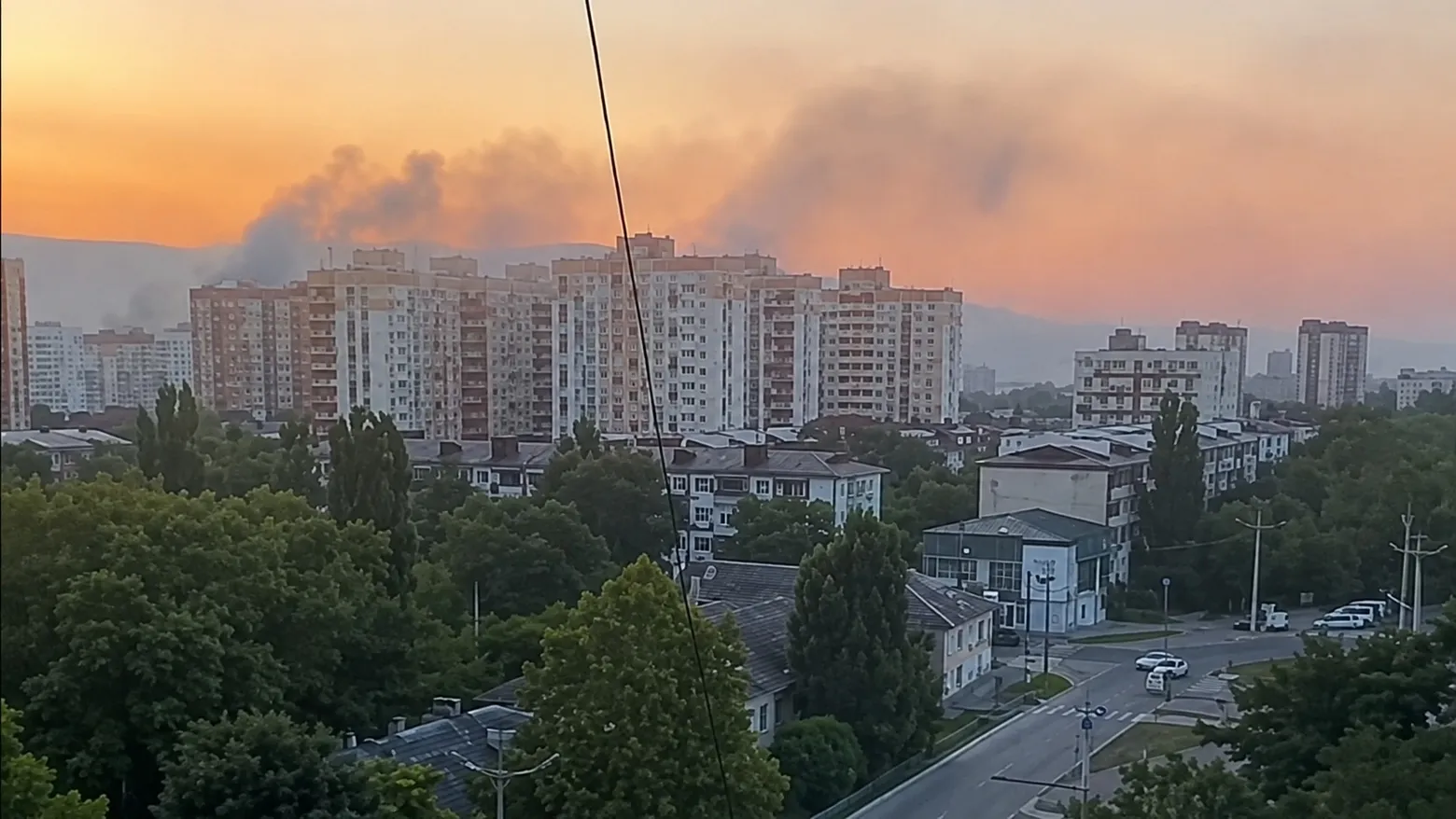
Smoke rises over Novorossiysk after a Ukrainian strike on the Russian Black Sea port, 12 August 2026. Screenshot from a video: Exilenova+
Novorossiysk Mayor Andrei Kravchenko claimed debris hit six residential buildings, a commercial building, and a construction site, and that there were casualties.
The Russian news Telegram channel Astra reported that a café burned on Sukhumskoye Shosse, across the road from the entrance to the Novorossiysk naval base. Astra also found that a strike damaged School No. 15 near the fleet's ship berths.
Part of a widening summer campaign
The strike fits a broader Ukrainian effort this summer to carry the war onto Russian soil and drain the Kremlin's ability to fight. A day earlier, Ukrainian drones set a Wildberries logistics complex ablaze near Voronezh and hit an oil refinery in Orsk. Overnight on 10 August, drones struck a petrochemical plant in Tobolsk and a refinery in Tatarstan.
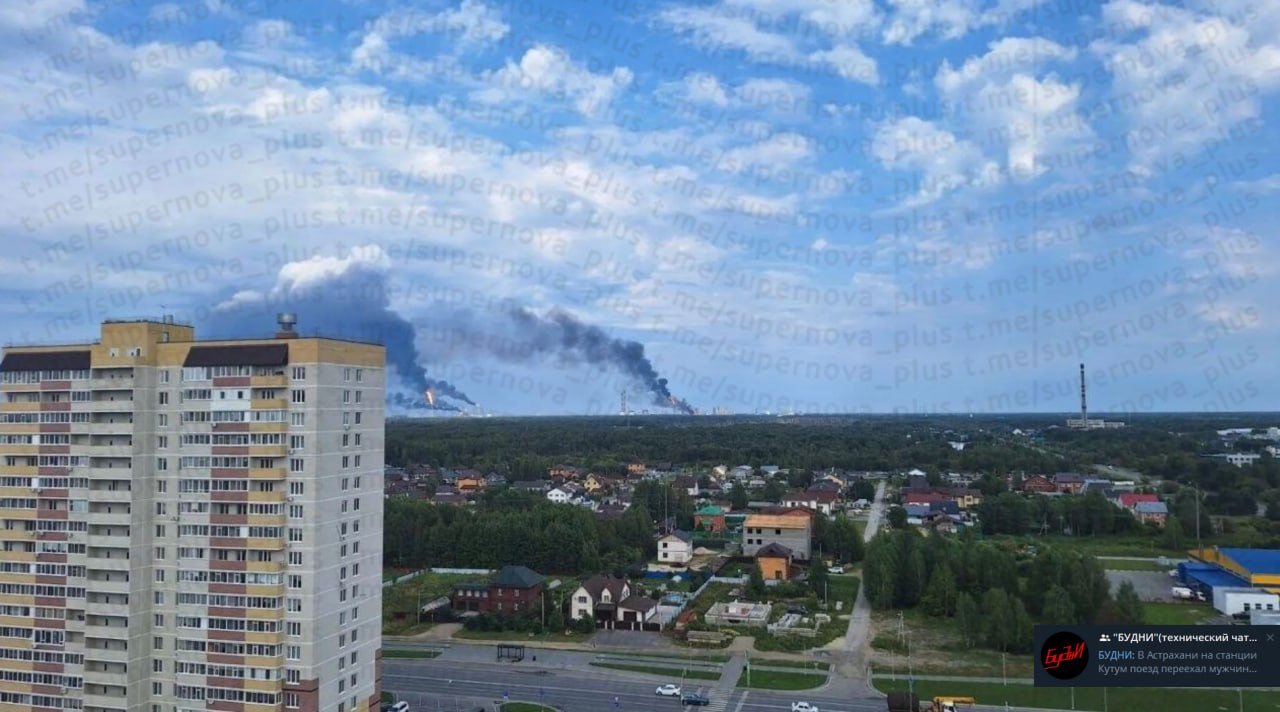
A Ukrainian drone strike shut the plant that produces 40% of Russia’s liquefied petroleum gas on 10 August, and the country’s fuel crisis snapped back across at least 16 regions within days.The shutdown of the Sibur ZapSibNefteKhim complex in Tobolsk, western Siberia, removes about six million metric tons of annual LPG capacity from a fuel system that was already under strain.
Explore furthe
A Ukrainian drone strike shut the plant that produces 40% of Russia’s liquefied petroleum gas on 10 August, and the country’s fuel crisis snapped back across at least 16 regions within days.
The shutdown of the Sibur ZapSibNefteKhim complex in Tobolsk, western Siberia, removes about six million metric tons of annual LPG capacity from a fuel system that was already under strain.
Explore further
“This is money of his accomplices burning”: Russian partisans and Ukraine hit Siberian plant tied to Putin’s inner circle
Gasoline restrictions had begun easing across Russia at the end of July, when Ukrainian drones temporarily shifted to other targets. When the strikes resumed in early August, fuel rationing returned immediately, the independent Russian outlet 7×7 reported.
Three industry sources told Reuters on Tuesday that the complex stopped operations indefinitely “while the extent of the damage and its consequences are being assessed.”
No LPG volumes were offered from the Tobolsk delivery point on Russia’s commodity exchange—a point that earlier this year handled about 4,000 metric tons of propane-butane mix per day. Sibur declined to comment.
The shutdown of the Sibur ZapSibNefteKhim complex in western Siberia, removes six million metric tons of annual LPG capacity from a fuel system already under strain.
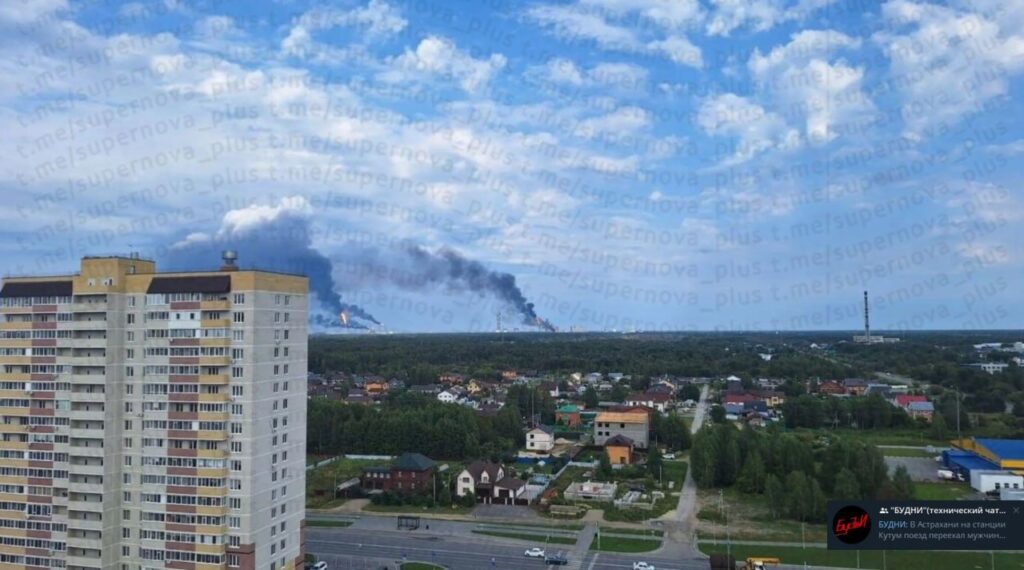
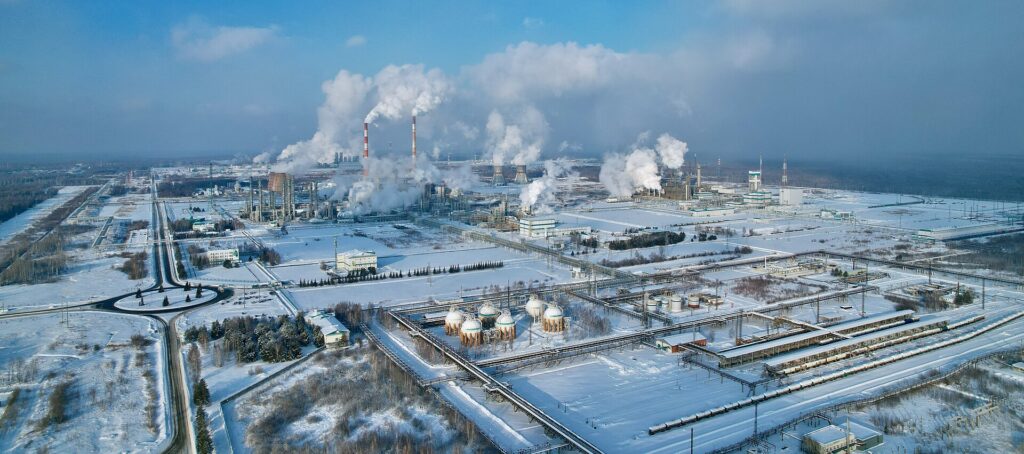
The ZapSibNefteKhim and Tobolsk-Polymer industrial sites in Tobolsk, western Siberia, seen in February 2023. A Ukrainian drone strike shut ZapSibNefteKhim indefinitely on 10 August 2026, taking 40% of Russia’s LPG production offline. Photo: Vyacheslav Bukharov/Wikimedia Commons, CC BY-SA 4.0.
A strike on one unit stopped the entire plant
Tyumen Oblast Governor Aleksandr Moor confirmed a fire at an industrial site following a drone attack but did not identify the facility.
Ukraine’s Special Operations Forces Deep Strike units, working with the Russian insurgent movement Chornaya Iskra (Black Spark), claimed the strike. The plant sits more than 2,200 kilometers from the front line.
Militarnyi’s OSINT analysis identified the specific target as the complex’s central gas fractionation unit—the plant’s entry point, where raw hydrocarbons are separated into usable products before anything else in the production chain can run. About half of ZapSibNefteKhim’s output feeds Sibur’s own petrochemical complex in Tobolsk; the rest goes to market.
Sibur held contracts to supply feedstock to defense-industry enterprises, including the Kamenskiy Kombinat, which produces solid rocket fuel and motors for the Grad, Smerch, and Uragan rocket systems.
Sibur also supplied the Perm Gunpowder Plant, which makes charges for multiple-launch rocket systems, air-defense complexes, and cruise missile boosters, Militarnyi also reported. The Sverdlov Plant and Biysk Oleum Plant, both explosives manufacturers, were also Sibur clients.
Sochi Mayor Andrei Proshunin meets with city officials as fuel remains available at only 38 of the resort’s 58 gas stations. Photo: Andrei Proshunin/Telegram
Fuel rationing returned within days
Across at least 16 regions, the fuel restrictions that had briefly eased in July are back, 7×7 reported.
In Sochi—Russia’s most famous beach resort—Mayor Andrei Proshunin said on Telegram that fuel was available at only 38 of the city’s 58 gas stations. Deputy Mayor Vyacheslav Bauer told residents and tourists to use public transport or stop driving, the Moscow Times reported.
In Bashkortostan, authorities banned gasoline sales in canisters, leaving at least one resident unable to fuel his lawnmower—as he complained to regional head Radiy Khabirov during a televised address, a Bashkortostan outlet reported. Production at the Ufa petrochemical complex is unaffected by the drone strikes, Khabirov said.
Still, the shortage persists for a different reason: every time a drone-alert protocol is activated, fuel tankers halt en route to gas stations, regional official Elena Prochakovsky explained at a briefing reported by Prufy. Three districts remain in a fuel “red zone,” and 19 of 26 gas stations in Sterlitamak are operating.
Lipetsk Oblast Governor Igor Artamonov told residents not to expect improvement for one to two weeks, Lipetsk outlet Ploshchad reported. “If you can leave 10 liters unfilled, the person arriving on empty will thank you,” he said.
Russia’s fuel system was already breaking
The Tobolsk shutdown lands on an already fractured system. By mid-July, fuel rationing had spread to more than half of Russia’s regions. Ukraine’s drone campaign had struck Russian refineries 194 times in the first half of 2026 alone—eleven times the previous year’s pace—knocking nearly half the country’s refining capacity offline, Ukraine’s General Staff reported on 4 July.
Repair timelines keep slipping because sanctions block the spare parts Russian plants need. To plug the gap, Russia has banned gasoline exports, permitted lower-grade fuel, and begun importing gasoline from India and Morocco, refined from its own crude—shipping it 14,000 kilometers home because its refineries cannot meet domestic demand.
The Tobolsk shutdown removes more LPG output than any single strike of the war. Russia was already rationing fuel in more than half its regions before this strike.
Newly analyzed airport camera footage shows a quadcopter drone loaded with Semtex explosive flew straight at a parked Ukrainian An-124 Ruslan cargo aircraft and struck its wing at Leipzig/Halle airport in Germany on the evening of 4 August, the media outlet Die Zeit reported on 10 August. The device bounced off the wing, fell to the ground, and failed to detonate. The drone attacked the aircraft at around 19:30 local time, the media outlet reports.
Russia's hybrid a
Newly analyzed airport camera footage shows a quadcopter drone loaded with Semtex explosive flew straight at a parked Ukrainian An-124 Ruslan cargo aircraft and struck its wing at Leipzig/Halle airport in Germany on the evening of 4 August, the media outlet Die Zeit reported on 10 August. The device bounced off the wing, fell to the ground, and failed to detonate. The drone attacked the aircraft at around 19:30 local time, the media outlet reports.
Russia's hybrid attacks are increasingly moving from the information domain into the physical one, including on the territory of other countries. This incident makes sabotage on NATO member states' territory potentially more dangerous if suspicion of Russian involvement is confirmed.
Footage contradicts the warning-shot theory
The drone struck the wing near the fuel tanks, then bounced off the aircraft's surface and fell to the ground. The explosive device also ended up on the ground and did not detonate. The device contained Semtex plastic explosive. Approximately four hours later, a tourist bus driver accidentally noticed it lying on the ground, put his foot on it, and reported the find to airport security.
Video analysis contradicts the earlier theory that the incident may have been intended only as a warning. The nature of the attack indicates an attempt to cause actual damage.
Drone found near a Ukrainian An-124 aircraft in Leipzig, Germany, on 5 August, 2026. Photo: screenshot from Bild video
Investigators examining foreign state involvement
German Interior Minister Alexander Dobrindt suggested that a state actor may have been behind the explosive-laden drone found at the airport. On 7 August, Germany's National Security Council convened under Chancellor Friedrich Merz.Earlier,the United States assessed that the drone discovered at Leipzig/Halle Airport in Germany overnight into 5 August belonged to Russian intelligence, a US Department of Defense official in Europe told CNN.
The cargo aboard the Ukrainian aircraft targeted in the sabotage attempt consisted of military equipment and ammunition that had arrived in Germany from France and was being prepared for further transportation, Süddeutsche Zeitung stated, citing a confidential German police report. However, Germany's Federal Ministry of the Interior denied this claim, according to dpa.
The An-124 Ruslan, struck by the drone, is operated by the Ukrainian company Antonov Airlines. After Russian forces destroyed its main base in Hostomel in 2022, the company has been using Leipzig/Halle airport as a temporary base for its aircraft.
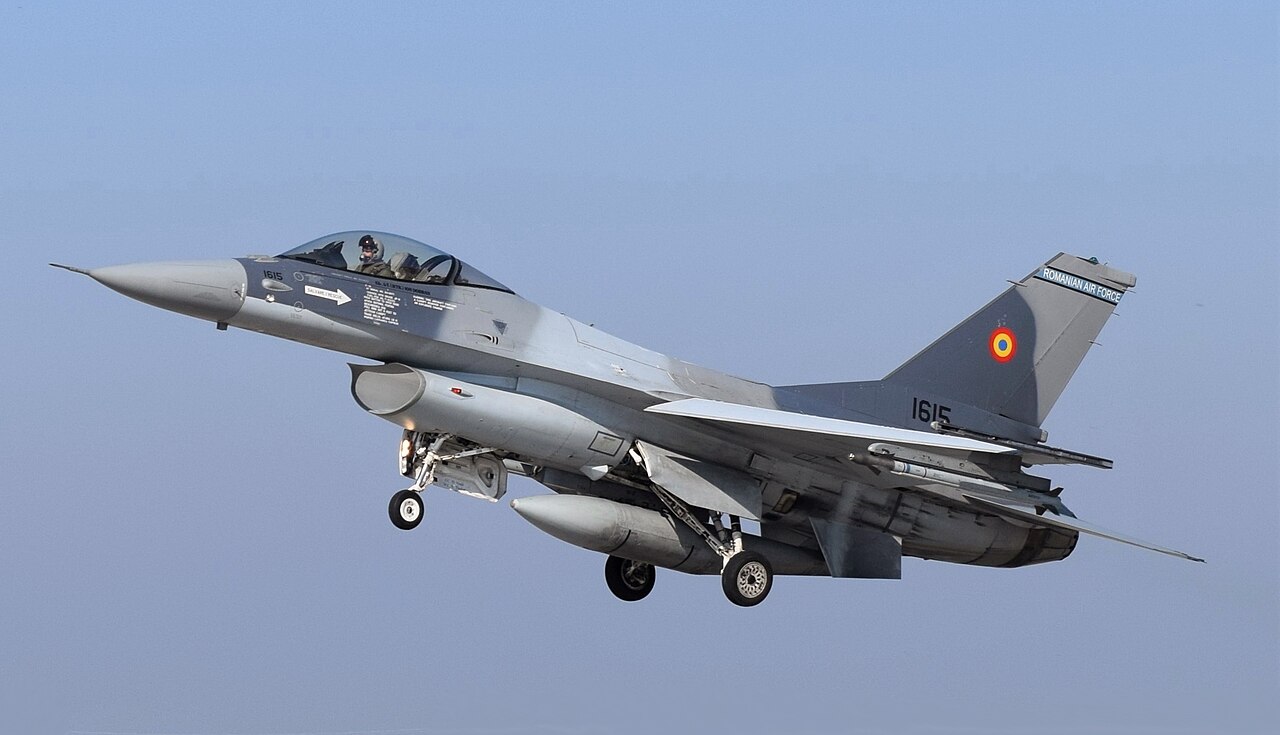
Russia's war drifted into Romania's Black Sea waters again, and this time the country's military blew the intruders up, acting Defense Minister Radu Miruță said. A vessel near an offshore gas field spotted two floating Russian drones, and army bomb-disposal divers destroyed them. Ukraine confirmed the aircraft were not its own.
Wreckage from the air war over Ukraine now keeps turning up on the land and in the waters of nearby NATO states, dragging their forces into a fi
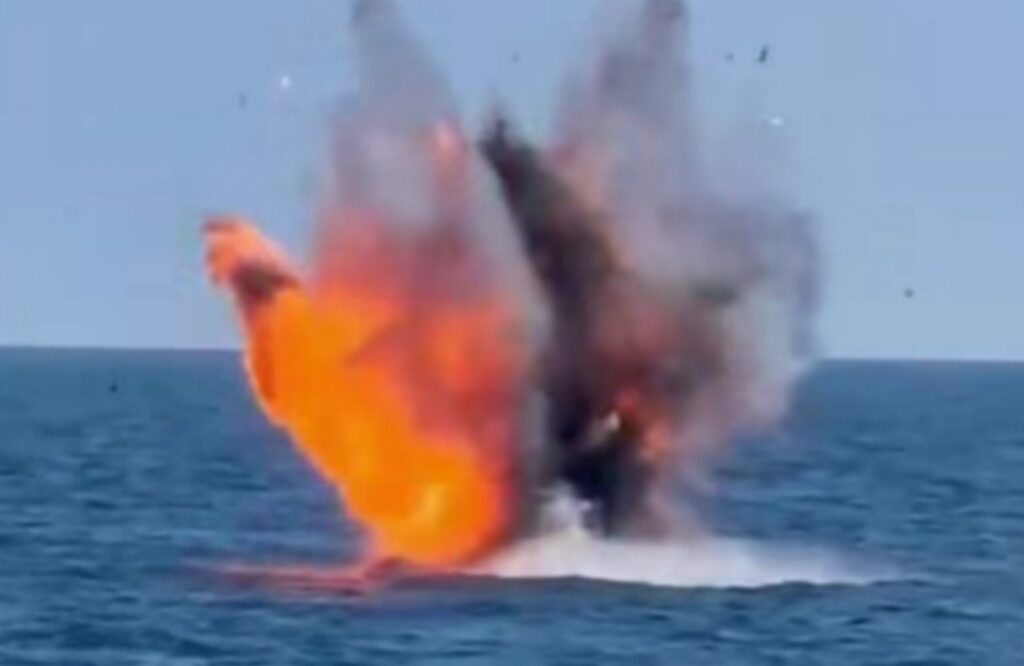
Russia's war drifted into Romania's Black Sea waters again, and this time the country's military blew the intruders up, acting Defense Minister Radu Miruță said. A vessel near an offshore gas field spotted two floating Russian drones, and army bomb-disposal divers destroyed them. Ukraine confirmed the aircraft were not its own.
Wreckage from the air war over Ukraine now keeps turning up on the land and in the waters of nearby NATO states, dragging their forces into a fight they never joined.
A ship raised the alarm
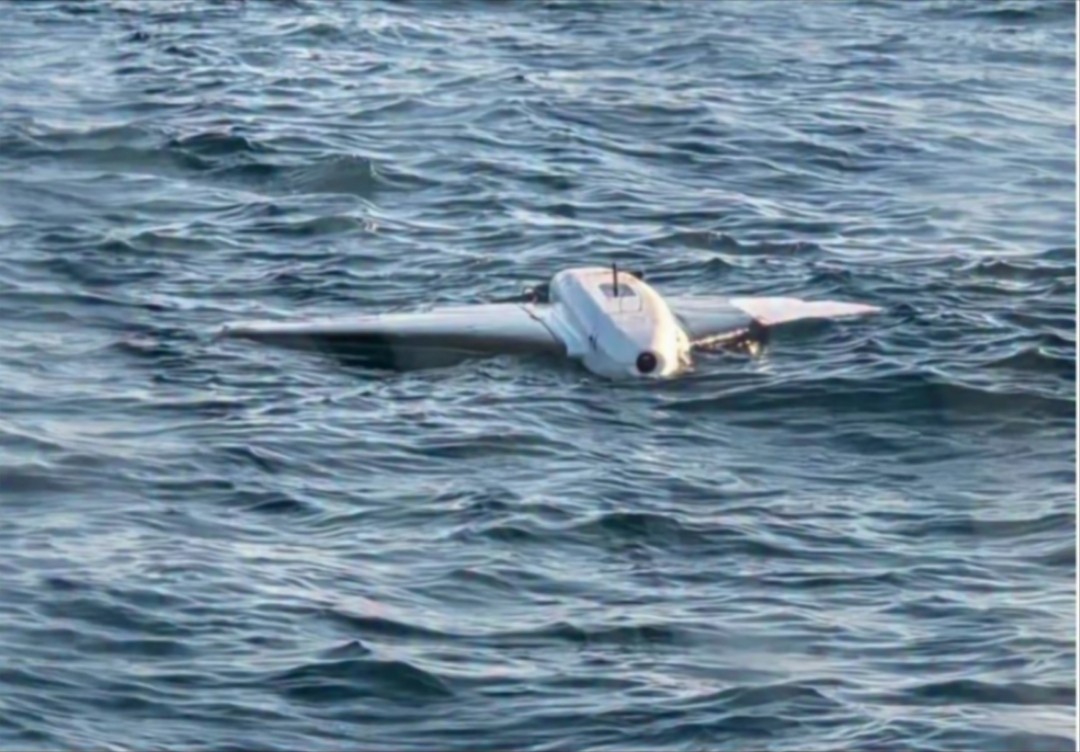
Miruță announced the operation on Facebook, sharing a video. Crews working near the gas platform first noticed the drones in the water. Miruță identified both as Gerberas. A coast guard vessel carrying Romanian army sappers then sailed to the scene. The divers found two uncrewed aircraft adrift, along with several other fragments.
The drones lay in Romania's exclusive economic zone, roughly 90 nautical miles (about 167 km) east of Constanța, Militarnyi reported. Miruță said Romania's Defense Ministry then contacted Kyiv:
"The Ministry of National Defense contacted the Ukrainian partners, who confirmed the systems do not belong to them."
One of the drifting Russian drones spotted in the Black Sea before its destruction, 11 August 2026. Photo: Romanian Defense Ministry
To protect the shipping route and the work around the platform, the military destroyed the drones in a controlled blast, Suspilne relayed.
Russia designed the Gerbera as a decoy. The cheap foam aircraft forces Ukrainian air defenses to waste time and interceptors, and helps Russian crews locate those defenses. Later, Russia fitted some Gerberas with warheads, turning the decoy into a strike drone. The same model can also carry smaller attack drones or gather intelligence.
Custom Code
The attack on Ukraine
Ukraine's Air Force reported that last night Russia hit Ukraine with an Iskander-M ballistic missile, a Kh-31P anti-radar missile, and Kh-35 guided missiles, plus 138 Shahed-type strike drones — among them jet-powered ones, Gerberas, and Parodiya decoys — fired from several sites inside Russia and from occupied territory.
The main targets were Sumy Oblast in the northeast and Odesa Oblast, Ukraine's Black Sea coastal region that lies northeast of Romania's shore. By morning, air defenses had downed or suppressed 112 of the drones, though strikes hit 16 locations.
Explore further
Romania knocks a third Russian drone from its sky in 72 hours
Adrift far from any front
The drones surfaced far from any battlefield. Russian uncrewed aircraft have repeatedly drifted into neighboring states during Moscow's attacks on Ukraine. Romania itself has shifted from escorting stray drones to shooting them down.
Neptun Deep is Romania's largest offshore gas project, due to start production in 2027. Bucharest is counting on the field to cut its reliance on outside supply and to feed neighbors that still lean on Russia. The two drones drifted into the waters around it.

 Connexion