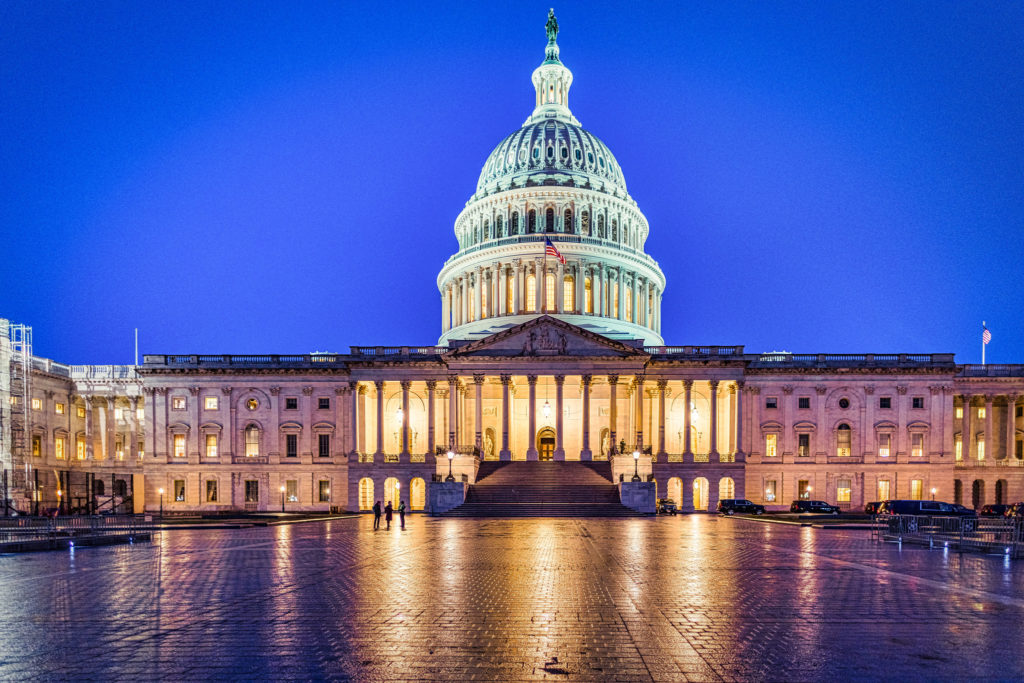
Democratic Gains Could Advance an Alternative to the Electoral College

© Victor J. Blue for The New York Times


© Victor J. Blue for The New York Times


© Rory Doyle for The New York Times


© The New York Times


© Alex Kent/The New York Times


© Erin Schaff/The New York Times


© Philip Cheung for The New York Times


© José A. Alvarado Jr. for The New York Times


© Nicole Craine for The New York Times


© Aaron Agosto for The New York Times


© Kenny Holston/The New York Times


© Ricardo Arduengo/Agence France-Presse — Getty Images


© Todd Heisler/The New York Times, Nicole Craine for The New York Times, Reba Saldanha/Associated Press, Rebecca Blackwell/Associated Press


© Rogelio V. Solis/Getty Images


© Pool photo by Olivier Fitoussi


© Victor J. Blue for The New York Times


© Chris McGrath/Getty Images


© Pool photo by Olivier Fitoussi


Drones struck Russia’s Ryazan oil refinery overnight on 5 November, and the plant caught fire, Ukrainian Telegram channel Exilenova+ reported. The Rosneft-owned plant is one of Russia’s largest refineries.
Russia’s war runs on fuel and oil money, and Ukraine’s drones go for refinery parts that sanctions make hard to repair. The Ryazan refinery supplies fuel to Moscow and central Russia, and the last raid already cost it capacity. After the 15 October strike, one of its primary crude units shut down, two industry sources told Reuters. No one has yet reported which parts of the plant this fire hit. Ryazan is the fifth Russian refinery struck since 30 October, when strikes resumed after about two weeks without a reported refinery fire.
Exilenova+ posted video of strike drones breaking through to the refinery’s industrial zone. About half an hour later, the channel wrote that the refinery had been attacked and was burning. Russian Telegram channel Astra said its OSINT analyst confirmed that the refinery itself was on fire.
The Defence Forces are using strike UAVs to break through to the industrial zone of the Ryazan Oil Refinery. pic.twitter.com/8S5E0E7vkP
— Exilenova+ (@Exilenova_plus) November 5, 2026
Ryazan Oblast Governor Pavel Malkov claimed falling drone debris caused damage. Separately, he claimed fires broke out at industrial sites in Ryazan and damaged power lines cut electricity in part of the city. He also said an outbuilding caught fire in Rybnovsky district, private houses were damaged in Ryazan district, and a city school’s windows were blown out. One person was injured, he claimed. In a later update, Malkov claimed more than 200 drones attacked the region, power was restored, and the fires were out or contained.

He did not name the refinery. Three weeks earlier, after the 15 October raid, Malkov named the plant when he reported a fire there.
Astra also reported that a large Wildberries online-retail warehouse in Ryazan was presumably burning. Its analyst based that on a reader’s photo and had not verified it.
More from Ryazan pic.twitter.com/G0Mm1dLb9b
— Exilenova+ (@Exilenova_plus) November 5, 2026
The refinery can process more than 17 million tons of crude a year, Exilenova+ noted. It makes gasoline, diesel, jet fuel, fuel oil, and bitumen. In its post on the fire, Astra also reported that the plant supplies Russia’s army, pointing to a 2014 Defense Ministry fuel batch and the TS-1 jet fuel it produces.
Drones hit Novokuibyshevsk in Samara Oblast on 30 October, the Bashneft-Novoil refinery in Ufa, Bashkortostan, on 31 October, and Lukoil’s Kstovo plant in Nizhny Novgorod Oblast on 1 November. Together, those three plants processed about 24 million tons of crude a year. That equals roughly 10% of Russia’s refining in 2024 and over 10% of its diesel. Overnight on 3 November, drones also struck the Slavneft-YANOS refinery in Yaroslavl. Yaroslavl Oblast Governor Mikhail Yevrayev said the attack damaged its infrastructure and wounded two workers. Crews were putting out a fire there, he added.
In Ufa, Astra’s analyst identified the burning plant as Bashneft-Novoil. Exilenova+ wrote that probably two Ufa refineries were attacked. Counting both, it calls Ryazan the sixth refinery hit in a week.
On 15 October, US President Donald Trump called Ukraine’s renewed refinery strikes “a disgrace.” In late October, The Wall Street Journal reported that Ukraine had paused them under US pressure until after the 3 November US midterms. The Novokuibyshevsk strike came hours later, and drones have hit four more refineries since.


© Tatsiana Chypsanava for The New York Times


© Victor J. Blue for The New York Times


© Doug Mills/The New York Times


© Doug Mills/The New York Times


© Jim Vondruska/Getty Images


© Alex Kent/The New York Times


© Christopher Miller for The New York Times


© Alex Kent/The New York Times


© Todd Heisler/The New York Times


© Lexi Parra/The New York Times


© Jamie Kelter Davis for The New York Times


© Edmund D. Fountain for The New York Times


© Maddie McGarvey for The New York Times


© Todd Heisler/The New York Times


Democrats won control of both the House and the Senate in the 3 November midterms, taking 54 Senate seats to the Republicans' 44, with races in Alaska and Mississippi still uncalled, NBC News projected on 4 November.
The result gives Ukraine's backers in Congress a chance to revive legislation that the Republican-led Senate left stalled, including a Ukraine aid and sanctions bill with $8 billion in military loans, and to challenge the administration's approach to Russia. But the change in congressional control does not automatically translate into new assistance.
The main misreading in Ukrainian media and among Ukrainians, Oleksandr Kraiev, North America Program Director at Ukrainian Prism, told Euromaidan Press, is that "we still believe that the Democrats are the quote-unquote pro-Ukrainian party."
"We should only speak about some particular pro-Ukrainian politicians, pro-Ukrainian members of the Congress," Kraiev said.
Under Republican leaders, Ukraine bills had to be forced to a vote. On 4 June, the House passed the Ukraine Support Act 226–195 only after a discharge petition, and the Senate has left it on its calendar since 20 July, according to the congressional record. From January, Democrats will set the agenda in both chambers, so bills like this will no longer need a workaround to reach the floor, though most Senate bills will still need 60 votes.
Democrats already have candidates. On 16 October, Gregory Meeks, the top Democrat on the House Foreign Affairs Committee, introduced a bipartisan bill to block Trump's Russian diesel deal and require sanctions on Russian energy, his office said.
Much of that leverage is bargaining, said Vladyslav Faraponov, President at the Institute of American Studies. Congress can propose a larger defense budget or aid packages and trade with the administration—for example, a sum for Ukraine in exchange for leaving Trump's diesel sanctions relief alone, he told Euromaidan Press.
On Ukraine, Congress is likely to reach for two levers first, Ivo Daalder, former US ambassador to NATO, told Euromaidan Press: military support and "a new Russia sanctions bill that mandates sanctions rather than allows the president to waive them (revising the Graham bill)."
Trump keeps his veto. He also showed how much room the law left him. The Graham Act, which he signed on 18 September, required him within 30 days to impose 100% tariffs on all goods from the five biggest buyers of Russian oil, sanction a range of Russian entities, and impose 500% tariffs on Russian energy imports. But Section 115 let him waive those measures by certifying to Congress that doing so served US interests, and on 16 October he waived many of them.
Overriding a veto will still "require support from Republicans: 30+ in the House; 11 or so in the Senate," Daalder said. "Won't be easy," he added.
"The main levers are still with the administration," Faraponov said, because in foreign policy the US acts as the central mediator.
Until 3 January, the outgoing Republican Congress sits. It must fund the government by 11 December, when the current stopgap expires, according to the Congressional Research Service, and any bill it leaves unpassed, including the Ukraine Support Act, dies with it. Faraponov expects no surprises before then, since Republicans will not want to look unconstructive over the budget.
"Nothing will change in the lame-duck session. [Democrats] will wait till they're in control," Daalder said.
After that, Kraiev said, the new majority will have to elect a speaker, set up committees and work on a budget that was due on 1 October. Ukraine is "not even in the first three issues of the agenda," which Kraiev said will be led by Iran, migration and the economy. Daalder put the affordability crisis at the top of Democrats' agenda, with tariffs and Iran next. Kraiev does not expect movement on Ukraine "before the start of March, or at least before the middle of February."
Trump set out his own timeline before the vote. If Democrats send him bills, he said on the New York Post's Pod Force One podcast, he will veto them until, "after a month or two of getting all vetoed," lawmakers "come over, and you make a deal," Newsweek reported.
Faraponov's horizon is longer. Kyiv should not overestimate the result, he said, because it is "only a catalyst for changes that will become visible in 2028, or during the 2028 campaign."
"This result can benefit only Americans, one party or the other. For Ukraine, this is a working result, and nothing out of the ordinary happened. It is the expected result when the party in power loses a midterm," Faraponov added.


© Alex Kent/The New York Times


© John Tully for The New York Times


© Alex Kent/The New York Times


© Haiyun Jiang/The New York Times


© Joao Silva/The New York Times


© Mark Abramson for The New York Times


© Todd Heisler/The New York Times


© Bernadett Szabo/Reuters


© Jordan Gale for The New York Times


© Haiyun Jiang/The New York Times


Democrats won control of both chambers of the US Congress in the 3 November midterm elections, NBC News projected, and will take over when the new Congress meets in January. The result ends Trump's Republican majority but leaves him the veto. For Ukraine, voters removed some of Kyiv's critics and several of its staunchest Republican allies.
Hours before Americans voted, Russia fired 59 cruise missiles at Ukraine's power grid. For two years, a Republican Congress left Ukraine policy largely to the White House, which struck a diesel deal with Moscow that senators of both parties said clashes with a 2022 jaban. Congress writes the budget and sanctions laws and can investigate the administration. That puts real levers over US help for Ukraine back in lawmakers' hands.
As of publication, Democrats hold 54 Senate seats to the Republicans' 43, with races in Alaska, Mississippi, and Nebraska still uncalled. They flipped seven, including Texas and Kansas. Kansas last sent a Democrat to the Senate in 1932, Le Monde noted. In the House, NBC News has called 231 races for Democrats and 144 for Republicans, and expects about 258 to 177 once counting ends.
Democratic leader Hakeem Jeffries is poised to become Speaker when Democrats take control in January, NPR reported, ending Mike Johnson's speakership. Johnson kept the Ukraine Support Act, introduced in April 2025, off the House floor for more than a year. Lawmakers finally forced a vote with a discharge petition, and the bill passed in June with $8 billion in military loans.
Overnight, Trump posted a red cap reading "VETO" on Truth Social. Days earlier, he laid out the plan on the New York Post's Pod Force One podcast: “They'll be sending stuff up. You veto it. And eventually, after a month or two of getting all vetoed—they're just wasting time—they come over, and you make a deal,” Newsweek reported.
Majorities of 51 senators and 218 representatives let Democrats set the agenda, chair committees, and pass bills. They are not enough to beat a veto, which takes two-thirds of the members voting in each chamber to override, the Congressional Research Service says. With every seat filled and voting, that is 290 House votes and 67 in the Senate, so Democrats would still need about 32 House Republicans and 13 senators. Most Senate bills also need 60 votes to get past a filibuster.

Ukrainian-born Victoria Spartz, who urged Ukraine to cede territory, lost Indiana's 5th District to Democrat J.D. Ford, Mirror Indy reported. Hardline Republican Scott Perry also lost. Republican Anna Paulina Luna, who backs closer dialogue with Moscow, narrowly kept her Florida seat. Russian state news agency RIA Novosti reported her win, noting she met Putin's envoy Kirill Dmitriev and hosted Russian Duma deputies.
Ukraine's Republican friends fell too. Brian Fitzpatrick, a co-chair of the Congressional Ukraine Caucus, lost to Bob Harvie. Mike Lawler conceded. Both were among 18 Republicans who voted for the Ukraine Support Act. Senator Susan Collins lost Maine. In South Carolina, Annie Andrews beat Darline Graham, appointed after her brother Lindsey, author of a major Russia sanctions bill, died in July.
Before the vote, Trump waived sanctions on Russian officials and banks and pursued deals with Moscow such as the diesel one. Richard Fontaine of the Center for a New American Security said the Kremlin was racing the calendar: “I think they see an opportunity here, one that may be relatively fleeting because the midterms are not too far away,” he told NPR.
Elon Musk, who backed Trump against Zelenskyy, spent at least $445.6 million on Republicans, Newsweek found. More than $200 million went to Texas, where his candidate lost.
The Ukrainian Congress Committee of America named oversight of Trump's Russia sanctions waiver and diesel deal, more security aid, and extended protected status for Ukrainian refugees as its priorities, RFE/RL reported. Two senior Republican Senate aides told the outlet that pressure for Russia sanctions could grow.


© Haiyun Jiang/The New York Times


© Nicole Craine for The New York Times