❌

Vue normale

  • ✇Euromaidan Press
  • For years Ukraine could jam or switch off Russia’s battlefield comms. Rassvet may be the first it can’t
    Russia's low-Earth-orbit satellite constellation Rassvet went from a few minutes of connectivity over Ukraine to two stable windows lasting more than an hour each in just five months. The system was built by the Russian private company Bureau 1440 as Moscow's answer to Starlink. As of now, it is nowhere near matching SpaceX's 10,000-satellite network—but the gap between what Russia has now and what it needs is closing, and the tools that could slow it down mostly sit unused. When Ukrai
     

For years Ukraine could jam or switch off Russia’s battlefield comms. Rassvet may be the first it can’t

28 septembre 2026 à 09:06

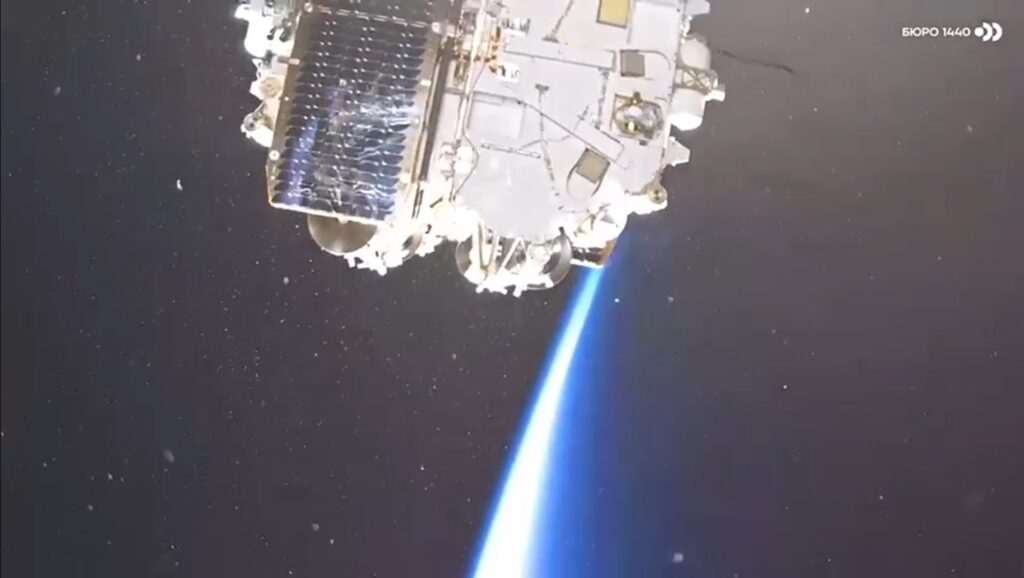
Video still from Bureau 1440's recent launch of 16 Rassvet satellites into low earth orbit

Russia's low-Earth-orbit satellite constellation Rassvet went from a few minutes of connectivity over Ukraine to two stable windows lasting more than an hour each in just five months. The system was built by the Russian private company Bureau 1440 as Moscow's answer to Starlink.

As of now, it is nowhere near matching SpaceX's 10,000-satellite network—but the gap between what Russia has now and what it needs is closing, and the tools that could slow it down mostly sit unused. When Ukraine and SpaceX bricked Russian-obtained Starlink terminals earlier this year, Russian assaults froze across the front—proof that cutting satellite command-and-control links matters more than disrupting guidance. Russia is now building its own links. The most consequential tool that could slow that down is Western sanctions against Bureau 1440 itself.

Four years of Western sanctions have failed to cut Russia off from the foreign components its missile and drone factories rely on: parts manufactured after sanctions were imposed still reach Russian assembly lines within months. Rassvet is a new version of the same problem. The system is still being built and relies on imported components whose exact origin is disputed—some experts point to American and European parts reaching Russia through sanctions-evasion networks, others say the core hardware is built from off-the-shelf Chinese components. Its manufacturer remains unsanctioned by any Western government, while some of the infrastructure needed to expand production has already been struck by Ukraine.

Six minutes in March, two hours by August

In March 2026, Bureau 1440 launched its first operational batch of 16 Rassvet satellites from Plesetsk Cosmodrome. Each pass over Ukraine created a window of six to 10 minutes, Serhii Beskrestnov, callsign Flash, a Ukrainian presidential adviser on defense technology, estimated at the time.

By late August, the picture had changed. Tracking data from N2YO showed four passes a day and two stable communication windows lasting more than an hour each. Satellite communications expert Volodymyr Stepanets said that 12 of the 16 satellites from the first batch had reached their operational altitude of 550 km, three were still ascending, and one had burned up—likely due to a manufacturing defect. A second batch of 16 went into orbit in July, though those satellites struggled to reach their target altitude and some may reenter the atmosphere.

Bureau 1440 shows footage of separation of 16 Rassvet satellites from Soyuz's third stage pic.twitter.com/jhe2krZ1kA

— afec7032 🇷🇺 (@afec7032) March 24, 2026

The second batch may be climbing faster than the first did at the same stage. Still, Russia is far from the 200–250 satellites Beskrestnov considers necessary for stable, round-the-clock coverage, and the altitude of roughly 550 km is still short of the roughly 800 km the constellation is designed to reach.

What Rassvet would change on the battlefield

Russia is unlikely to have any civilian use in mind for these communication windows. The satellites transmit in the Ka and Ku bands—high-frequency signals that are difficult to jam and difficult to detect.

Radio frequency spectrum and satellite frequency bands, including Ka and Ku bands used by Russia's Rassvet constellation. Source: Bliley Technologies

Right now, Ukraine's electronic warfare can push Russian drones offline: a Shahed flying low through a jammed zone loses its link and drifts off course. A satellite relay overhead would change that. The drone holds its course, receives updated coordinates mid-flight, stays below radar, and strikes. The constellation could do this for long-range strike and naval drones alike—letting them operate through electronic warfare at very low altitudes, where Ukraine's air defenses struggle to see them.

Bureau 1440 has also developed user terminals small enough to fit on Geran-type attack drones and cruise missiles. Gerans have struck Ukrainian territory, including Kyiv and Kyiv Oblast, almost continuously over the past month. A terminal on a Geran would turn a one-way munition into a weapon that can be redirected after launch. Unlike the Starlink terminals Ukraine relies on, which are geographically restricted, Russian terminals are expected to face no such limits—the same terminal that connects a Geran over Kyiv Oblast would work over Berlin or Paris.
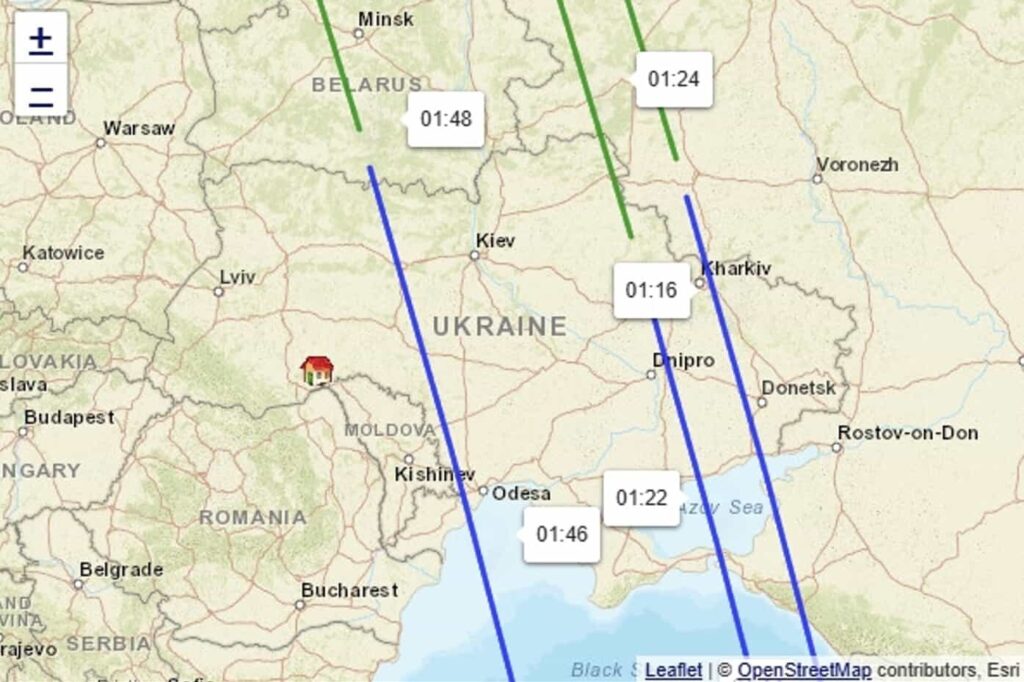
A pass of the Russian Rassvet satellites over Ukraine scheduled for April 21, 2026. Source: www.n2yo.com
A pass of the Russian Rassvet satellites over Ukraine scheduled for 21 April 2026. Source: www.n2yo.com

The sanctions lever—and the gap in it

Rassvet's parent company, IKS Holding, is one of Russia's largest hardware and software developers. The US sanctioned the holding, its then-owner Anton Cherepennikov, and the subsidiaries Kryptonit and KNS Group on 24 February 2023. Cherepennikov died under unexplained circumstances, but the company keeps operating.

Ukraine's Foreign Intelligence Service (SZRU) says the holding serves as a personnel reserve for the Federal Security Service (FSB). The first deputy CEO of IKS Holding is Boris Korolyov, son of FSB First Deputy Director Sergei Korolyov, according to the SZRU. He took the post at 27 in 2023, after Cherepennikov's death.

More importantly, though, is the company that actually builds the satellites—Bureau 1440—and its leadership. Ukraine has placed the company on its own sanctions list, but Kyiv's unilateral designations carry limited trade enforcement power, because these people and this company are absent from Western lists. At Euromaidan Press's request, the US-based research organization C4ADS confirmed that Bureau 1440 and its leadership sit outside every Western sanctions regime, and called designating the manufacturer the single most visible and effective step available.
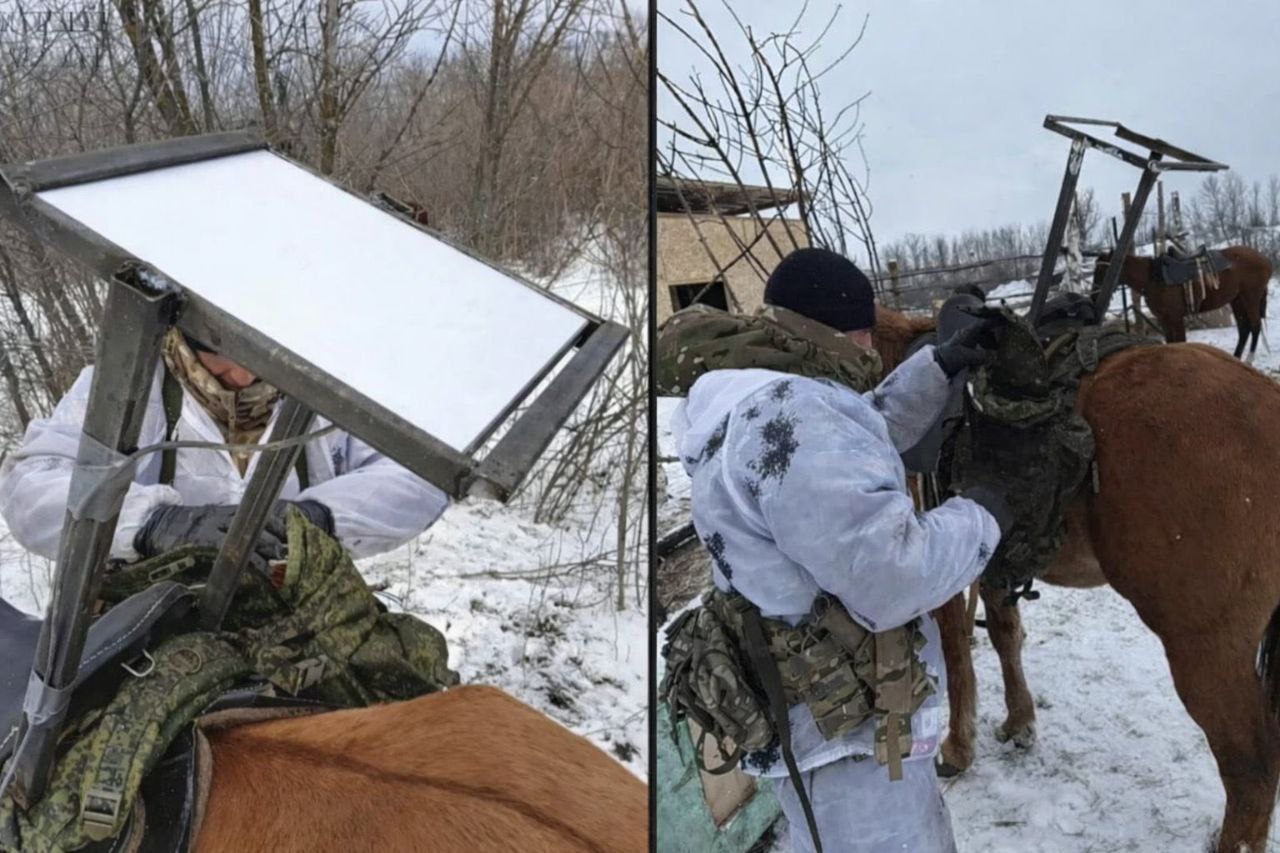
latvia convicted one node starlink supply chain russia — two latvian citizens same network still await trial · post terminal mounted russian horse 2026 latvia's riga city court has sentenced
Explore further

Ukrainian brigades detail Starlink crackdown: Russian terminals “became just bricks,” assaults disrupted

From the Ukrainian side, Viktoriia Vyshnivska, a senior analyst at the Independent Anti-Corruption Commission (NAKO), told Euromaidan Press that sanctions on Bureau 1440 are not a magic button—but they are not pointless, either. Because Bureau 1440 uses Western equipment, designating the company would directly affect trade in those boards and components, she said. Any Western manufacturer that kept doing business with the company would also risk investigation and legal consequences.

Given the reach of Russia's sanctions-evasion networks and its close ties with China in joint production and technology sharing.

"We shouldn't expect a magical effect," Vyshnivska said.

But sanctions would make direct trade impossible and raise the cost and difficulty of sourcing Western components.

Even if the useful window is short, making supplies more expensive and harder to find is the point.

Many of the goods Bureau 1440 uses are already banned from sale to Russia under EU export controls, Vyshnivska noted. Yet Bureau 1440 itself is still absent from the sanctions lists. Her recommendation: Bureau 1440, its current owners, its parent company, the key related entities and individuals, and its main suppliers should all be designated.
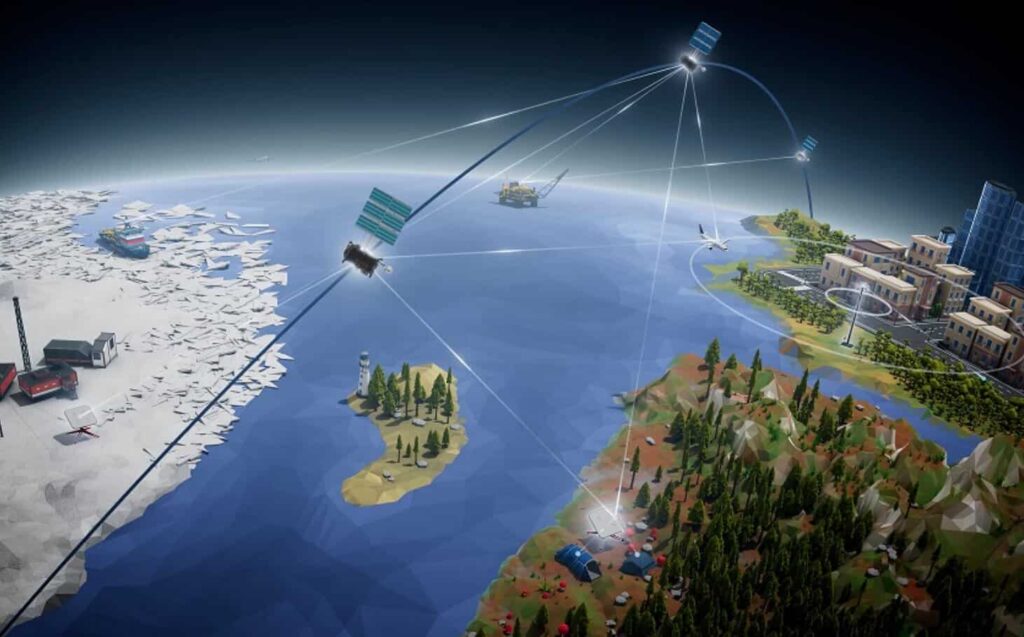
Illustration of the Russian Rassvet satellites by Bureau 1440

Diplomacy: Ukraine goes to the ITU

Beyond that, Ukraine is trying to act on its own on several fronts.

The first is diplomacy. On 28 August, Ukrainian Foreign Minister Andrii Sybiha said Ukraine had sent a formal note to the International Telecommunication Union (ITU), the UN agency that coordinates radio frequencies, demanding that Ukrainian territory be excluded from Rassvet's service areas across all frequency bands. The system's use over Ukraine "has nothing to do with civilian purposes," he wrote on X.

Today, we officially addressed the International Telecommunications Union @ITU requesting an exclusion of Ukraine’s national territory from the declared service areas of all beams of the Russian military satellite system 'Rassvet' satellite networks in all frequency bands.

The…

— Andrii Sybiha 🇺🇦 (@andrii_sybiha) August 28, 2026

Days later, at a meeting of EU foreign ministers in Ireland, Sybiha handed partners a list of nine legal entities linked to the project and urged them to impose sanctions.

The EU had already moved once: its 21st sanctions package, adopted on 23 July, targeted the Rassvet network. But the main gap is not closed, and that round stopped short of the manufacturer, leaving Bureau 1440 and its chief executive off the lists.

Hitting the supply chain with weapons

Another lever is direct strikes. In mid-August, Ukrainian-made Flamingo cruise missiles struck an industrial zone in Samara that houses the Progress Rocket Space Center—the only plant in Russia that serially assembles the Soyuz-2.1b rockets used to launch Rassvet into orbit. Satellite imagery published by the Ukrainian Telegram channel Exilenova+ showed a collapsed roof section 85 meters long and 35 meters wide over Building 106A, the hall where crews wire the rockets' control systems and cabling. The channel reported two missile hits on that hall.

The aftermath of a strike by two FP-5 Flamingo cruise missiles on the Progress Rocket and Space Center
The aftermath of a strike by two FP-5 Flamingo cruise missiles on the Progress Rocket and Space Center. Photo: t.me/exilenova_plus

If the hall was destroyed, production could stop entirely, and switching to other Russian launch vehicles would take significantly longer and add complexity. Drones also attempted to strike Plesetsk Cosmodrome, from which both 2026 batches were launched.

Both targets—the factory that builds the rockets and the site that launches them—are needed if Russia is to expand Rassvet production.

The timeline: 5.5 to eight years, if nothing changes

Russia plans to expand the constellation to 292 satellites by the end of 2027, Deputy Chief of Ukraine's Defense Intelligence (HUR) Vadym Skibitskyi said. Moscow's longer-term goal is 924 satellites by 2035.
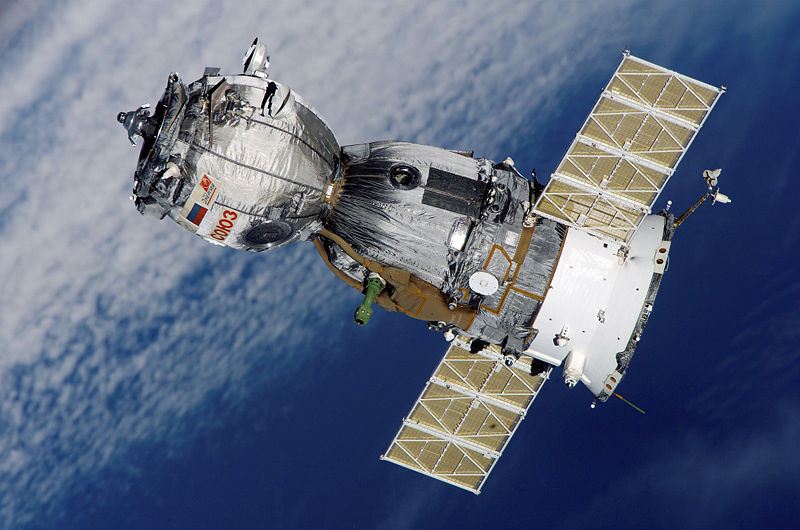
Soyuz spacecraft (TMA version)
Explore further

After SpaceX cuts off Starlink access, Russia launches first 16 satellites of its own “Rassvet” alternative

With 32 satellites already launched in two batches, 260 more are needed. At 16 satellites per launch, that requires roughly 17 launches. At a four-month interval between launches, deploying them would take roughly 5.5 years even if every launch succeeded and every satellite reached its target orbit. That most likely won't fully work out: one satellite from the first batch is already lost, two from the second batch may be lost as well, and none of them has yet reached the required altitude.

Russia also depends on the scarce Soyuz-2.1b rocket. The rocket has averaged only six to eight launches per year since 2022—most committed to GLONASS navigation satellites, ISS resupply, and military payloads—limiting Russia to a theoretical maximum of roughly two Rassvet-dedicated launches per year, or 128 Rassvet satellites over four years at that rate.

There is still time to shut this project down or slow it. Vyshnivska put the useful window to slow Rassvet at about a year. Russia, by Ukrainian calculations, needs five to eight years to see it through.
“Killing Ukraine’s internet would take nuclear or chemical weapons”—MiroHost founder whose data center Russia just destroyed

25 septembre 2026 à 12:18

kyiv strike

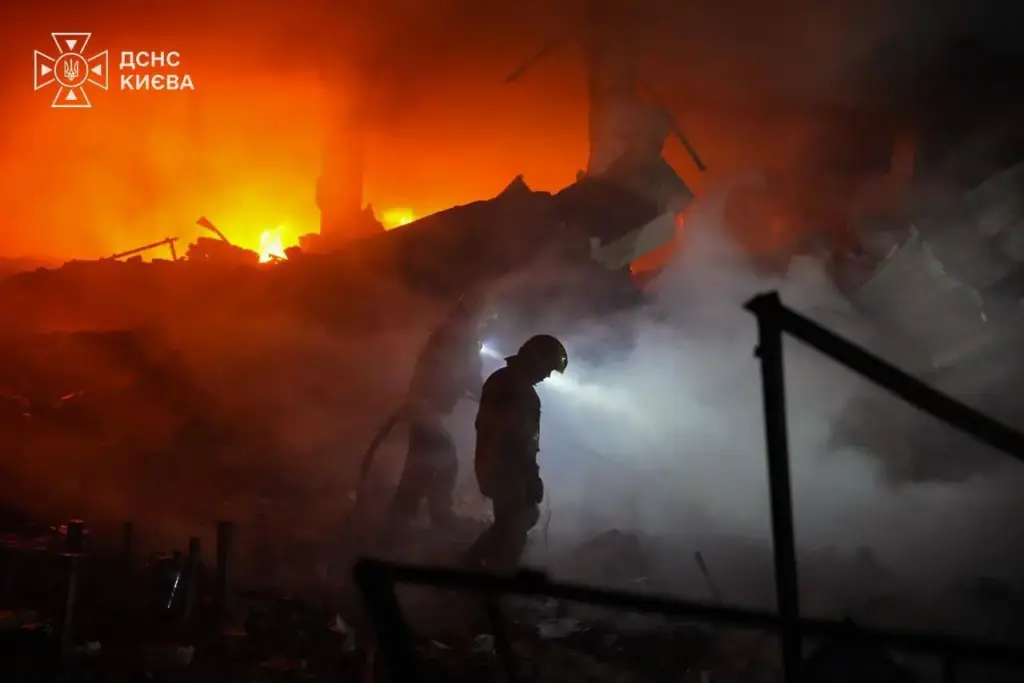
Russian drones and missiles struck Kyiv data centers over 23–24 September, knocking out internet and hosting providers. The Digital Transformation Ministry said about 100,000 subscribers lost service, NV Business reported.

Russia has widened its air campaign from power plants and warehouses to railways, fuel stations, and now digital infrastructure as it tries to grind down the country's ability to function before another war winter.

"You'd have to destroy 70-80% of Kyiv's buildings"

MiroHost founder and Internet Invest Group head Oleksandr Olshanskyi told NV Business the attack destroyed his own data center.

"Most critically important data and systems have been moved abroad or to the cloud," Olshanskyi said. "If an online store stops working, that's unpleasant but not a tragedy."

He called rumors about a full internet blackout or sharp service price hikes baseless.

"Destroying all internet in a simple way is impossible—you'd have to use nuclear or chemical weapons or destroy 70-80% of buildings in Kyiv," he said.

What Russia hit

The strikes damaged a Kyiv data center housing UTELS switching equipment on 23 September. Overnight into 24 September, Russia destroyed equipment of hosting provider CityHost.UA and the data center housing MiroHost. About 95% of MiroHost's clients operate outside Ukraine and were unaffected, he said. Russia also struck the Pavutyna network's data center. Crazy Network said a missile struck Kyiv's central traffic exchange hub, cutting service for its subscribers in Vinnytsia, Kyiv, and Khmelnytskyi Oblast.

Providers KIEVNET, Domonet, FAUST, and Etherlink also reported disruptions. Ukraine's telecom regulator NKEK said on 24 September that providers were completing emergency restoration, and Domonet estimated service would return by 21:00 that evening.

The 23 September strikes killed two people and injured more than 40, and hit a college building in Kyiv while students were on campus, Ukrainian Foreign Minister Andrii Sybiha wrote that evening. Russia targeted major Ukrainian data centers "seeking to disrupt the flow of information," he said. "This is critical civilian infrastructure that ensures people can access life-saving information. It is not a military target."

"More sanctions pressure, more missile interceptors are the only way to stop this terror," Sybiha wrote. "These attacks must not become the new normal."

Panic, not military gain

Olshanskyi said Russia uses these strikes to spread fear, not achieve lasting results.

"The enemy's goal is to cause damage, inflame panic, and heighten nervousness," he said.

His data center's destruction "will not affect the situation at the front in any way," he said.

  • ✇The Kyiv Independent
  • Ukraine's ambassador to US will be replaced, foreign minister confirms
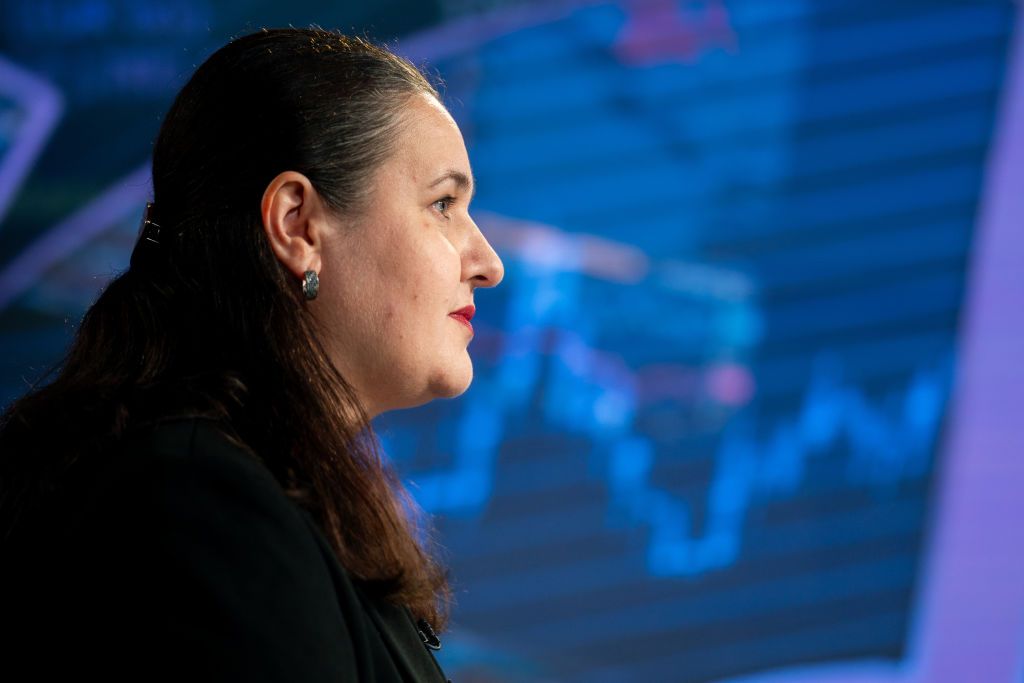
    Ukraine's current ambassador to the United States, Oksana Markarova, will be replaced in the near future, Foreign Minister Andrii Sybiha confirmed in an interview with Ukrainian Radio on July 8. Earlier on July 8, a source in the Presidential Office told the Kyiv Independent that President Volodymyr Zelensky had informed Markarova of her pending dismissal. "We can expect about 20 decrees dismissing and appointing new heads of foreign institutions," Sybiha said, specifically mentioning the U.S. a
     

Ukraine's ambassador to US will be replaced, foreign minister confirms

8 juillet 2025 à 16:08
Ukraine's ambassador to US will be replaced, foreign minister confirms

Ukraine's current ambassador to the United States, Oksana Markarova, will be replaced in the near future, Foreign Minister Andrii Sybiha confirmed in an interview with Ukrainian Radio on July 8.

Earlier on July 8, a source in the Presidential Office told the Kyiv Independent that President Volodymyr Zelensky had informed Markarova of her pending dismissal.

"We can expect about 20 decrees dismissing and appointing new heads of foreign institutions," Sybiha said, specifically mentioning the U.S. as one of the planned replacements.

In his comments, Sybiha described Markarova as "one of our most successful ambassadors."

"She is extremely effective and charismatic, but surely every diplomat has a rotation cycle," he said. "I can confirm that the Ukrainian president's vision is to carry out rotations in all countries, both G7 and G20. That is, first and foremost, to strengthen these countries, in particular the U.S. track."

Zelensky and Sybiha on June 21 announced plans to overhaul Ukraine's diplomatic corps, teasing major personnel changes in a bid to secure better military aid packages and other support from international partners.

Zelensky discussed replacing Markarova specifically in a recent phone call with U.S. President Donald Trump, a source in the President's Office told the Kyiv Independent on July 7.

There are multiple "strong candidates" in the running to replace Markarova, the source said. Prime Minister Denys Shmyhal, Deputy Prime Minister Olha Stefanishyna, Defense Minister Rustem Umerov, and Energy Minister Herman Halushchenko are among the candidates, Bloomberg previously reported.

In his evening address, Zelensky said that a meeting with all Ukrainian ambassadors is scheduled for July 21. It was not immediately clear as to when the changes to the posts may take effect.

Markarova has served as Kyiv's ambassador to Washington since April 2021, and played a central role in coordinating U.S. military and financial support during the early phases of Russia's full-scale invasion.

The announcement of her dismissal comes at a high-stakes moment in relations between Kyiv and Washington. The U.S. Defense Department recently paused shipments of critical weapons systems, including Patriot air defense missiles and precision-guided munitions, even as Ukraine faces intensifying Russian attacks.

Trump reportedly pledges to send 10 Patriot missiles to Ukraine, asks Germany to send battery
During the call with German Chancellor Friedrich Merz, U.S. President Donald Trump proposed that Germany sell one of its own Patriot batteries to Ukraine.
Ukraine's ambassador to US will be replaced, foreign minister confirmsThe Kyiv IndependentAnna Fratsyvir
Ukraine's ambassador to US will be replaced, foreign minister confirms
  • ✇The Kyiv Independent
  • Germany vows to pursue 'every path' to boost Ukraine's air defenses, FM Wadephul says in Kyiv
    German Foreign Minister Johann Wadephul pledged on June 30 that Berlin is exploring "every possible path" to provide Ukraine with additional air defense systems, amid intensifying Russian missile and drone attacks, according to RBK-Ukraine. Speaking at a press conference during his visit to Kyiv, Wadephul said Germany is working with its defense industry, European allies, and the U.S. to urgently secure more systems for Ukraine's air shield."We are going down every path available," Wadephul said
     

Germany vows to pursue 'every path' to boost Ukraine's air defenses, FM Wadephul says in Kyiv

30 juin 2025 à 04:45
Germany vows to pursue 'every path' to boost Ukraine's air defenses, FM Wadephul says in Kyiv

German Foreign Minister Johann Wadephul pledged on June 30 that Berlin is exploring "every possible path" to provide Ukraine with additional air defense systems, amid intensifying Russian missile and drone attacks, according to RBK-Ukraine.

Speaking at a press conference during his visit to Kyiv, Wadephul said Germany is working with its defense industry, European allies, and the U.S. to urgently secure more systems for Ukraine's air shield.

"We are going down every path available," Wadephul said. "The German defense industry is trying to expand its capacity. We're speaking with our European partners, and I believe we must also move forward with the United States."

He added that he remains in close contact with German Defense Minister Boris Pistorius to assess whether existing systems from Germany's own stockpiles can be redirected to Ukraine.

Wadephul's visit came just a day after Russia launched its largest aerial assault on Ukraine to date, firing 477 drones and 60 missiles in a 24-hour period. In a video message posted on social media earlier on June 30, the German minister described Ukraine as "a country once again haunted by war," and reaffirmed Germany's solidarity.

"Germany stands by Ukraine," Wadephul said. "We must not allow freedom to be lost here. We have to support this country and ensure that a ceasefire is finally achieved. (Russian President Vladimir) Putin must realize he cannot continue this war and must negotiate a peace solution."

Guten Morgen aus der Ukraine 🇺🇦 pic.twitter.com/mbvfuE0niz

— Johann Wadephul (@AussenMinDE) June 30, 2025

Ukrainian Foreign Minister Andrii Sybiha welcomed Wadephul's visit in a post on X, saying the two discussed how to counter Russian aggression and deepen bilateral ties.

Glad to welcome my German colleague and friend @AussenMinDe Johann Wadephul.

We spoke about steps to counter Russian aggression against Ukraine, neutralise the threats posed to Europe by the aggressive Russian regime, and ways to further strengthen the ties between our nations.… pic.twitter.com/38ZX97SfXb

— Andrii Sybiha 🇺🇦 (@andrii_sybiha) June 30, 2025

Sybiha said they also spoke about Germany's role in Ukraine's development of long-range capabilities and drones, calling it "win-win cooperation"— as well as Berlin's support for the 18th EU sanctions package and Ukraine's path to EU membership.

"I am grateful to Minister Wadephul for his moral clarity and personal contribution to Ukraine's resilience," Sybiha added.

Wadephul is expected to meet with President Volodymyr Zelensky later during his visit.

The German foreign minister emphasized that witnessing the destruction firsthand is critical to understanding Ukraine's suffering and the urgency of sustained international support.

"This is indeed a difficult situation," Wadephul said. "And that is why German solidarity is so important right now."

Warfare in Ukraine has changed… again
The Kyiv Independent’s Francis Farrell explains a new modification of the standard first-person view (FPV) drone that already once transformed the way war is fought. Fiber optic cable now used to connect drone operators to FPVs ensures a perfect image and control experience all the way to the target — and cannot be spotted by enemy drone detectors.
Germany vows to pursue 'every path' to boost Ukraine's air defenses, FM Wadephul says in KyivThe Kyiv IndependentFrancis Farrell
Germany vows to pursue 'every path' to boost Ukraine's air defenses, FM Wadephul says in Kyiv
  • ✇The Kyiv Independent
  • 'Russia will hit your other cheek as well' — Ukraine rebukes Slovak FM's call to 'perhaps forgive' Moscow
    Ukrainian Foreign Minister Andrii Sybiha on June 30 rebuked Slovakia's foreign minister after he suggested the international community might "perhaps even forgive" Russia's actions and reengage in dialogue with Moscow to end the war in Ukraine."Russia's sense of impunity is the root cause of its crimes," Sybiha wrote in a post on X. "It's naive to expect a criminal to stop if their crime is forgiven instead of punished. Russia will hit your other cheek as well. And those who have lost no one in
     

'Russia will hit your other cheek as well' — Ukraine rebukes Slovak FM's call to 'perhaps forgive' Moscow

30 juin 2025 à 04:02
'Russia will hit your other cheek as well' — Ukraine rebukes Slovak FM's call to 'perhaps forgive' Moscow

Ukrainian Foreign Minister Andrii Sybiha on June 30 rebuked Slovakia's foreign minister after he suggested the international community might "perhaps even forgive" Russia's actions and reengage in dialogue with Moscow to end the war in Ukraine.

"Russia's sense of impunity is the root cause of its crimes," Sybiha wrote in a post on X. "It's naive to expect a criminal to stop if their crime is forgiven instead of punished. Russia will hit your other cheek as well. And those who have lost no one in this war have no right to make such statements."

Sybiha's remarks came in response to comments made by Slovak Foreign Minister Juraj Blanar during a domestic media interview on June 29. Blanar argued the war in Ukraine could not be resolved militarily and called for a return to diplomacy, suggesting Russia could be forgiven.

"Let us return to respect for international law and seek ways to communicate with the Russian Federation," he said. "And perhaps even forgive everything that has happened."

Juraj, Russia's sense of impunity is the root cause of its crimes. It's naive to expect a criminal to stop if their crime is forgiven instead of punished. Russia will hit your other cheek as well. And those who have lost no one in this war have no right to make such statements. pic.twitter.com/ALLzGT6ugP

— Andrii Sybiha 🇺🇦 (@andrii_sybiha) June 30, 2025

Slovakia recently requested a delay in adopting the European Union's 18th sanctions package against Russia, citing the need for further clarification on how it would impact member states, particularly in light of the EU's RePowerEU initiative to end dependence on Russian fossil fuels by 2030.

Fico's administration has distanced itself from the pro-Ukraine consensus within the EU and NATO. Since taking office in 2023, he has halted Slovak military aid to Ukraine and pursued diplomatic engagement with Russia. Earlier this year, Fico attended Russia's Victory Day Parade in Moscow and met with President Vladimir Putin — a gesture most Western leaders avoided.

Fico has dismissed the idea of meeting with President Volodymyr Zelensky, telling Slovak broadcaster STVR that Zelensky "hates me" and that such a meeting "has no significance."

Ukraine has consistently emphasized that peace can only come through justice and accountability for Russian war crimes and aggression, a position echoed by many Western governments.

More empty threats from Washington, more deadly bombs from Russia
The ongoing and escalating slaughter of Ukrainian civilians depends on two preconditions: Moscow’s determination to erase Ukraine, and the tacit permission it receives from America and Europe. On Monday, a Russian missile tore through a residential building in Kyiv, leaving at least six civilians dead and over a dozen
'Russia will hit your other cheek as well' — Ukraine rebukes Slovak FM's call to 'perhaps forgive' MoscowThe Kyiv IndependentAndrew Chakhoyan
'Russia will hit your other cheek as well' — Ukraine rebukes Slovak FM's call to 'perhaps forgive' Moscow
  • ✇The Kyiv Independent
  • Ukraine planning diplomatic overhaul to win stronger global support against Russia
    Kyiv is preparing to overhaul its Foreign Ministry and diplomatic corps in order to strengthen international support for Ukraine as the all-out war with Russia enters its fourth year, President Volodymyr Zelensky and Foreign Minister Andrii Sybiha said on June 21. The announcement is part of "a number of new decisions" Ukraine has made in response to Russia's stated aim to conquer all of Ukraine, Zelensky said in his evening address."(W)e will make changes to certain staff positions, including w
     

Ukraine planning diplomatic overhaul to win stronger global support against Russia

21 juin 2025 à 13:06
Ukraine planning diplomatic overhaul to win stronger global support against Russia

Kyiv is preparing to overhaul its Foreign Ministry and diplomatic corps in order to strengthen international support for Ukraine as the all-out war with Russia enters its fourth year, President Volodymyr Zelensky and Foreign Minister Andrii Sybiha said on June 21.

The announcement is part of "a number of new decisions" Ukraine has made in response to Russia's stated aim to conquer all of Ukraine, Zelensky said in his evening address.

"(W)e will make changes to certain staff positions, including within the Ukrainian diplomatic corps and institutional management, to increase Ukraine's potential both in relations with partners and in internal Ukrainian resilience," Zelensky said.

The president said that all of Ukraine's ambassadors will hold a meeting and that results of the diplomatic transformation should be apparent in a month.

Ukraine's Foreign Minister, Andrii Sybiha, confirmed that the president had already made decisions regarding some diplomatic personnel and that the ambassadors' meeting was scheduled for July.

"The geopolitical situation requires the diplomatic service to find new arguments and approaches adapted to realities," Sybiha said in a television broadcast on June 21.

"Therefore, the president has already made certain personnel decisions regarding the heads of some foreign institutions, because the criterion is very simple: results."

According to Sybiha, expected results include military aid packages, humanitarian and financial assistance, and support for Ukrainians living abroad.

Sybiha described the coming month as a "month of full diplomatic mobilization to bring about a just and sustainable peace for Ukraine."

The announcement comes after the disappointing outcome of the Group of Seven (G7) Leaders' Summit in Canada and before the June 24-25 NATO summit in The Hague, where Zelensky will once again advocate for international support for Ukraine.

At the G7 summit, Zelensky hoped to reset relations with Washington during a face-to-face meeting with U.S. President Donald Trump and potentially win an agreement to purchase weapons from the United States.

Trump's abrupt departure from the summit quashed those hopes, and Zelensky himself left the conference early. The G7 summit produced no unified statement on Ukraine and Trump reportedly objected to other leaders' call for stronger sanctions against Russia.

Zelensky told G7 leaders that "diplomacy is now in a state of crisis."

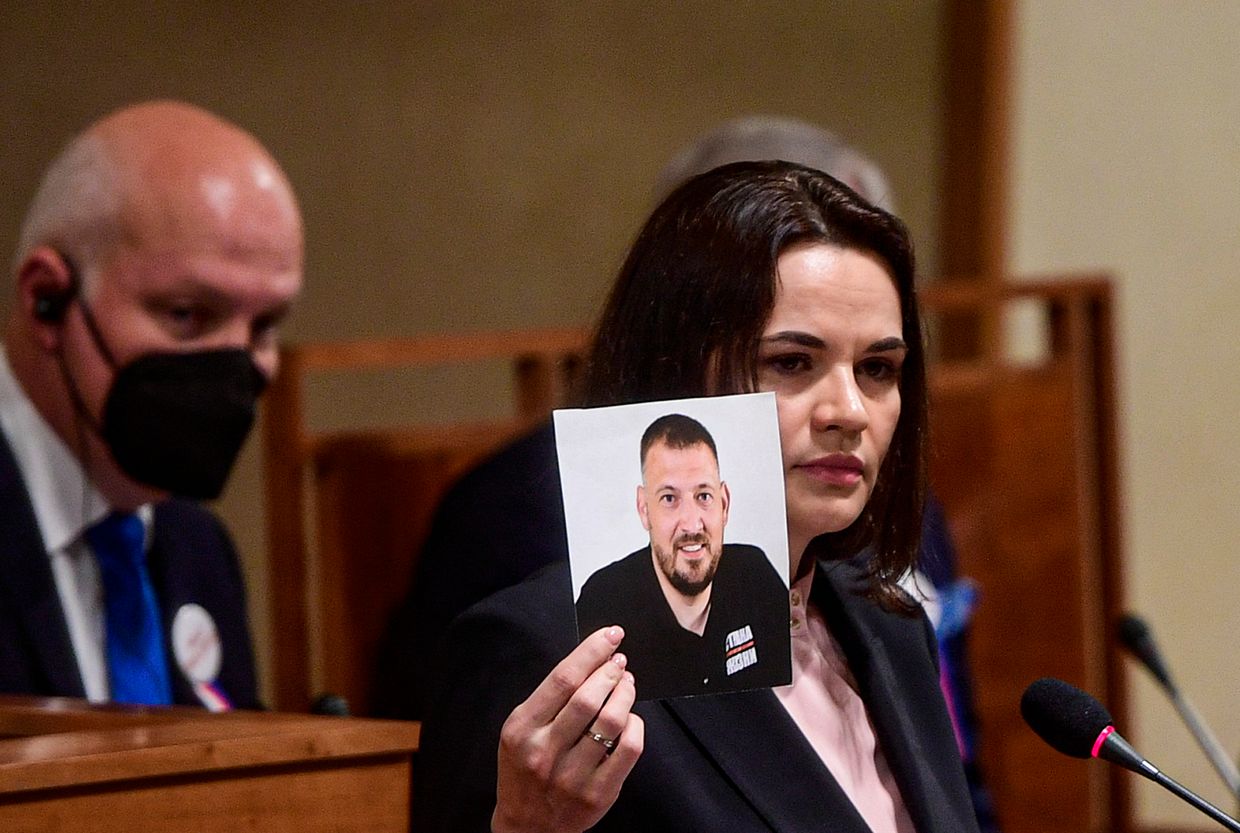
‘My husband is free’ — Belarus opposition leader Siarhei Tsikhanouski freed after US envoy visits Minsk
Sergei Tikhanovsky was sentenced to 18 years in prison on politically motivated charges in 2021.
Ukraine planning diplomatic overhaul to win stronger global support against RussiaThe Kyiv IndependentTim Zadorozhnyy
Ukraine planning diplomatic overhaul to win stronger global support against Russia

  • ✇The Kyiv Independent
  • '100 days of Russian manipulations' — Ukraine blasts Moscow over disregarding US ceasefire effort
    A hundred days since Ukraine agreed to a U.S. proposal for a ceasefire, "Russia continues to choose war," Foreign Minister Andrii Sybiha said on June 19, urging international pressure to push Moscow toward ending the war."It has been exactly 100 days since Ukraine unconditionally accepted the U.S. peace proposal to completely cease fire, put an end to the killing, and move forward with a genuine peace process," Sybiha said on X.Ukraine backed the U.S. proposal for an unconditional 30-day ceasefi
     

'100 days of Russian manipulations' — Ukraine blasts Moscow over disregarding US ceasefire effort

19 juin 2025 à 03:58
'100 days of Russian manipulations' — Ukraine blasts Moscow over disregarding US ceasefire effort

A hundred days since Ukraine agreed to a U.S. proposal for a ceasefire, "Russia continues to choose war," Foreign Minister Andrii Sybiha said on June 19, urging international pressure to push Moscow toward ending the war.

"It has been exactly 100 days since Ukraine unconditionally accepted the U.S. peace proposal to completely cease fire, put an end to the killing, and move forward with a genuine peace process," Sybiha said on X.

Ukraine backed the U.S. proposal for an unconditional 30-day ceasefire during talks in Jeddah on March 11. Russia has rejected the offer, instead pushing maximalist demands while intensifying attacks across Ukrainian cities.

"A hundred days of Russian manipulations and missed opportunities to end the war. A hundred days of Russia escalating terror against Ukraine rather than ending it," Sybiha said.

Ukraine's top diplomat stressed that Kyiv remains committed to peace, while Russia disregards U.S. efforts to "end the killing."

While U.S. President Donald Trump initially pledged to broker a swift peace deal between Kyiv and Moscow, the U.S. administration has become increasingly less engaged in negotiations as the progress stalls.

Trump has evaded calls for exerting additional pressure on Russia via sanctions, and compared the two warring sides to "two young children" who should be let "fight for a while" before being pulled apart.

The U.S. president has also become increasingly preoccupied with the Middle East amid escalating hostilities between Iran and Israel.

"It is time to act now and force Russia to peace. Peace through strength, increased sanctions, and enhanced capabilities for Ukraine," Sybiha said.

European leaders have declared they are ready to impose additional sanctions on Russia as the 18th sanctions package is being prepared. In turn, a U.S. bill imposing heavy sanctions on Russian oil has been postponed, as other foreign policy issues dominate the agenda in Washington.

Russia turns sound into weapon
When I was at school and learned about World War II, my grandmother told me what she remembered of her wartime childhood on the English coast. Growing up near a Royal Navy base, she survived countless nighttime air raids. Most of all, she remembered exactly how the Blitz sounded — the
'100 days of Russian manipulations' — Ukraine blasts Moscow over disregarding US ceasefire effortThe Kyiv IndependentElsa Court
'100 days of Russian manipulations' — Ukraine blasts Moscow over disregarding US ceasefire effort
  • ✇The Kyiv Independent
  • Three Ukrainians killed in bus accident in France, Zelensky confirms
    Three Ukrainian nationals were killed in a bus accident in France on June 13, President Volodymyr Zelensky confirmed in a statement on Telegram."Terrible news about the tragic bus accident in France," Zelensky wrote.The accident occurred in the morning of June 13, near the Sarthe department of France. The bus was reportedly carrying Ukrainian nationals, including adults and children, who were returning from an educational exchange.While en route to Paris, the bus lost control and flipped into a
     

Three Ukrainians killed in bus accident in France, Zelensky confirms

13 juin 2025 à 21:09
Three Ukrainians killed in bus accident in France, Zelensky confirms

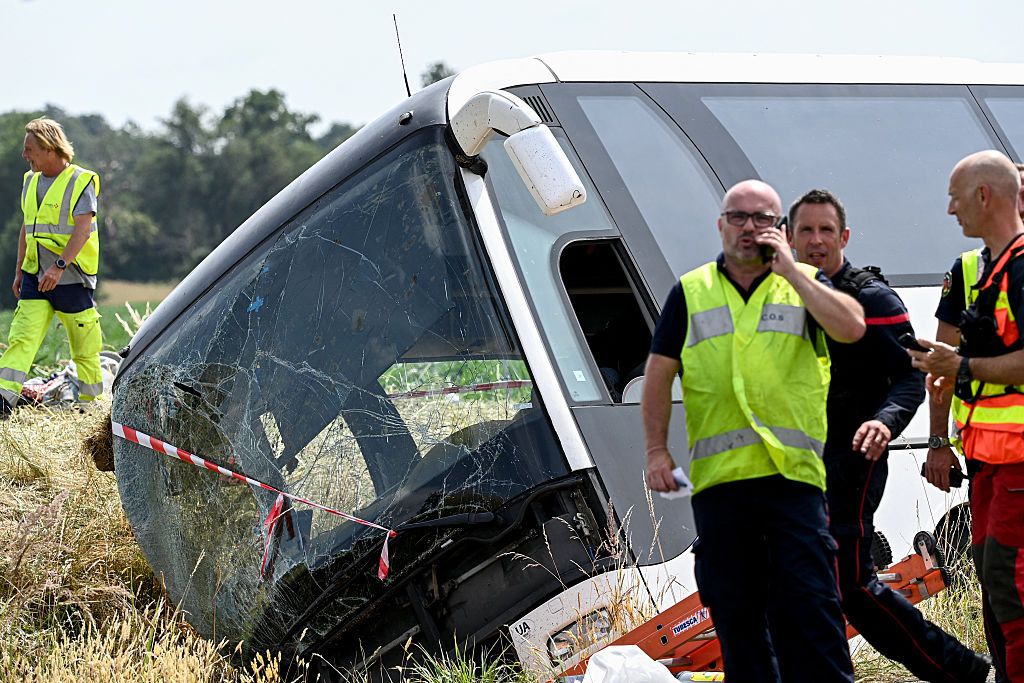
Three Ukrainian nationals were killed in a bus accident in France on June 13, President Volodymyr Zelensky confirmed in a statement on Telegram.

"Terrible news about the tragic bus accident in France," Zelensky wrote.

The accident occurred in the morning of June 13, near the Sarthe department of France. The bus was reportedly carrying Ukrainian nationals, including adults and children, who were returning from an educational exchange.

While en route to Paris, the bus lost control and flipped into a ditch.

Four adults were killed in total – three of whom were Ukrainian nationals. French media reported that nine people sustained serious injuries, while an additional 18 suffered minor injuries.

Zelensky added that Ukraine's Foreign Ministry promptly sent a team of diplomats and consuls, led by the ambassador to France, to assist survivors and support the victims’ families. The team is coordinating with French authorities and emergency services at the scene.

Foreign Minister Andrii Sybiha and Interior Minister Ihor Klymenko are providing regular updates on the victims' conditions and emerging details regarding the accident.

Zelensky thanked the French authorities, noting that "more than 50 emergency teams were deployed" in what he called "a true expression of French solidarity."

He also expressed his "condolences to all the families of the victims" and wished for a "speedy recovery of the injured children."

Russian military equipment reportedly hit in Ukrainian drone attack against Crimea
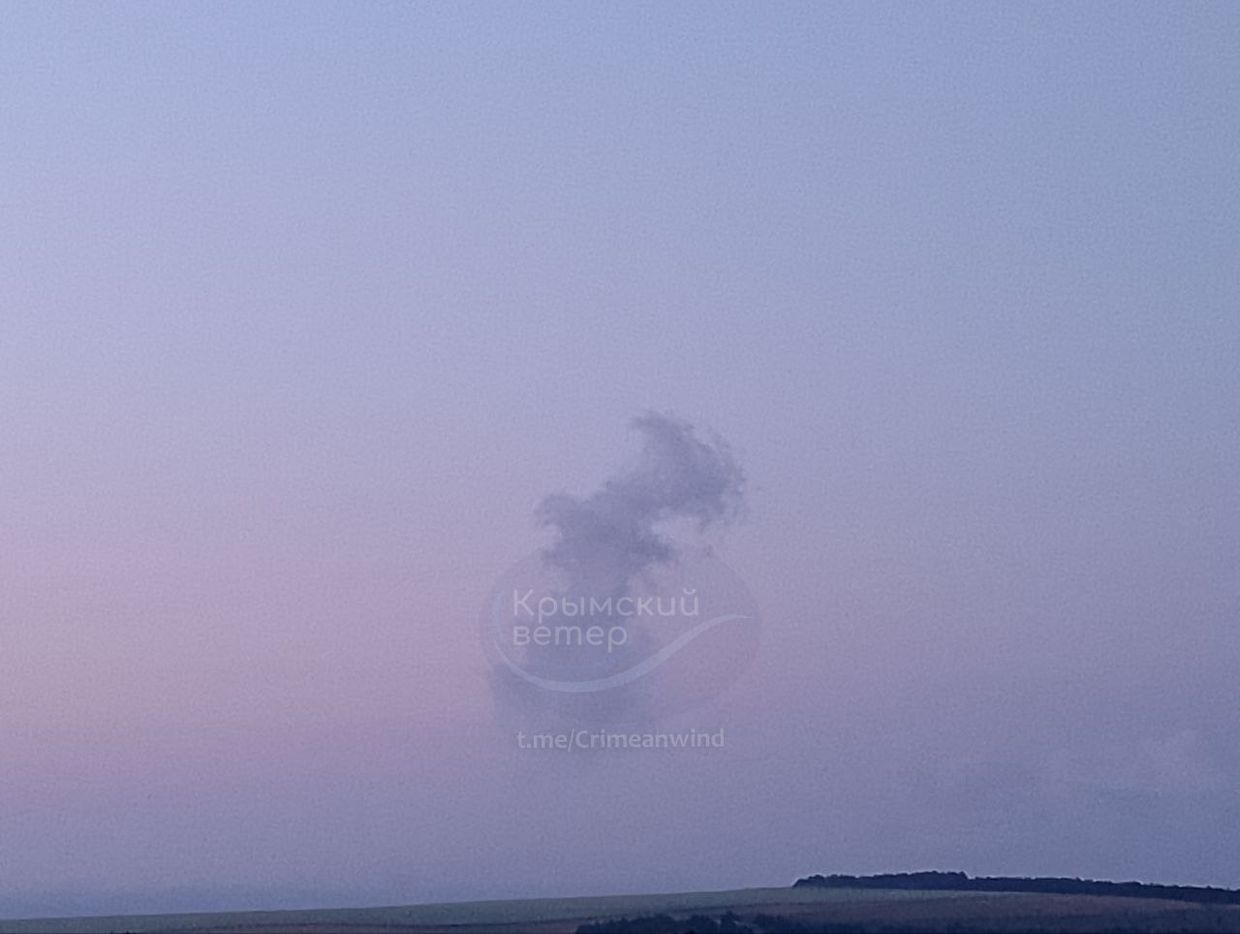
The Crimean Wind Telegram channel reported a hit in Simferopol, Crimea’s capital, sharing a photo of a plume of smoke rising in the vicinity of a local power station and of the village of Perevalne.
Three Ukrainians killed in bus accident in France, Zelensky confirmsThe Kyiv IndependentMartin Fornusek
Three Ukrainians killed in bus accident in France, Zelensky confirms
  • ✇The Kyiv Independent
  • Russia preparing strategic reserves for conflicts beyond Ukraine, Ukraine warns
    Foreign Minister Andrii Sybiha warned on June 13 that Russia has begun preparing strategic military reserves, signaling plans for military operations that may extend beyond Ukraine."According to our intelligence, Russia has started to prepare strategic reserves, which indicates plans for combat operations not only in Ukraine," Sybiha said during the Globsec conference in Prague, calling for urgent diplomatic and economic pressure. "Allies need full diplomatic mobilization to stop this war. This
     

Russia preparing strategic reserves for conflicts beyond Ukraine, Ukraine warns

13 juin 2025 à 08:51
Russia preparing strategic reserves for conflicts beyond Ukraine, Ukraine warns

Foreign Minister Andrii Sybiha warned on June 13 that Russia has begun preparing strategic military reserves, signaling plans for military operations that may extend beyond Ukraine.

"According to our intelligence, Russia has started to prepare strategic reserves, which indicates plans for combat operations not only in Ukraine," Sybiha said during the Globsec conference in Prague, calling for urgent diplomatic and economic pressure.

"Allies need full diplomatic mobilization to stop this war. This is not just a question for Ukraine. (Russian President Vladimir) Putin only understands strength, and right now it's crucial to apply sanctions in a timely manner, using them as economic weapons to pressure Russia," Sybiha said.

The comments come as Russia intensifies its military offensives and missile strikes across Ukraine, despite participating in two recent rounds of peace talks in Istanbul. The first talks were held on May 16, followed by a second meeting on June 2. While both rounds produced agreements on prisoner exchanges, they failed to secure a ceasefire.

President Volodymyr Zelensky said in a June 12 interview with Germany's Bild newspaper that Russia is using the talks to delay tougher U.S. sanctions, while continuing to escalate attacks on Ukrainian cities.

Russia also continues to issue nuclear threats to Western countries. Putin claimed on June 11 that Russia possesses the world's most advanced nuclear systems, with 95% of its strategic nuclear forces reportedly made up of modern equipment.

Putin emphasized the need to significantly strengthen Russia's ground forces. Russian defense spending has surged to 6.3% of GDP, the highest level since the Cold War, as Moscow continues to ramp up its military investment amid the ongoing war.

What Russia’s 1 million casualties mean for Ukraine
The Kyiv Independent’s Chris York sits down with George Barros, team lead for the Russia and Ukraine portfolio at the Institute for the Study of War, to discuss what Russia’s approaching one million casualties mean for its war effort in Ukraine. They explore how the Kremlin might generate more forces — and what impact this could have on Russia’s economy.
Russia preparing strategic reserves for conflicts beyond Ukraine, Ukraine warnsThe Kyiv IndependentChris York
Russia preparing strategic reserves for conflicts beyond Ukraine, Ukraine warns
❌