A 15-year-old using social media apps in Australia in July, more than half a year after the country had implemented a ban on children under 16 using many platforms.
President Trump appeared to suggest that the United States would impose economic penalties on countries that do business with Iran, though he did not specify what actions he would take.
President Trump appeared to suggest that the United States would impose economic penalties on countries that do business with Iran, though he did not specify what actions he would take.
Ukraine has brought another 103 servicemembers home from Russian captivity in the first stage of a new prisoner exchange, the Coordination Headquarters for the Treatment of Prisoners of War reported on 19 August 2026. Most of the returning defenders are wounded or seriously ill after captivity that, for some, reached back to 2022, the year of Russia's full-scale invasion. The United States and the United Arab Emirates helped organize the swap, the headquarters said.
Ami
Ukraine has brought another 103 servicemembers home from Russian captivity in the first stage of a new prisoner exchange, the Coordination Headquarters for the Treatment of Prisoners of War reported on 19 August 2026. Most of the returning defenders are wounded or seriously ill after captivity that, for some, reached back to 2022, the year of Russia's full-scale invasion. The United States and the United Arab Emirates helped organize the swap, the headquarters said.
Amid Moscow's full-scale invasion, prisoner swaps have become one of the few channels that still functions between Kyiv and Moscow, and each one hinges on how many enemy captives one side can put on the table for the next round. Thousands of Ukrainian soldiers and, separately, civilians remain in Russian hands, and each release still returns only a fraction of the people whose families are waiting for them.
Who came home
The freed group covers nearly every branch of Ukraine's forces. It includes members of the Armed Forces, the Navy, Territorial Defense, the National Guard and the State Border Guard Service. Alongside soldiers and sergeants, several officers were released.
The SBU said the return of the 103 Ukrainian defenders was coordinated by the Joint Center for the Search and Release of Prisoners of War, the Coordination Headquarters for the Treatment of POWs, and other authorized agencies.
The Coordination HQ detailed the composition. The Defense Ministry accounted for 92 of those freed, and the Interior Ministry for 11. Two of the returnees are officers, the rest enlisted personnel and NCOs. Interior Minister Ivan Vyhivskyi said his ministry's 11 broke down into five National Guardsmen and six border guards.
The defenders had been captured across the Donetsk, Luhansk, Kharkiv, Zaporizhzhia, Dnipropetrovsk, Kherson and Sumy directions, as well as at Mariupol. The single largest share, 72, fell on the Donetsk front. The youngest freed defender was born in 2000, and the oldest is 59.
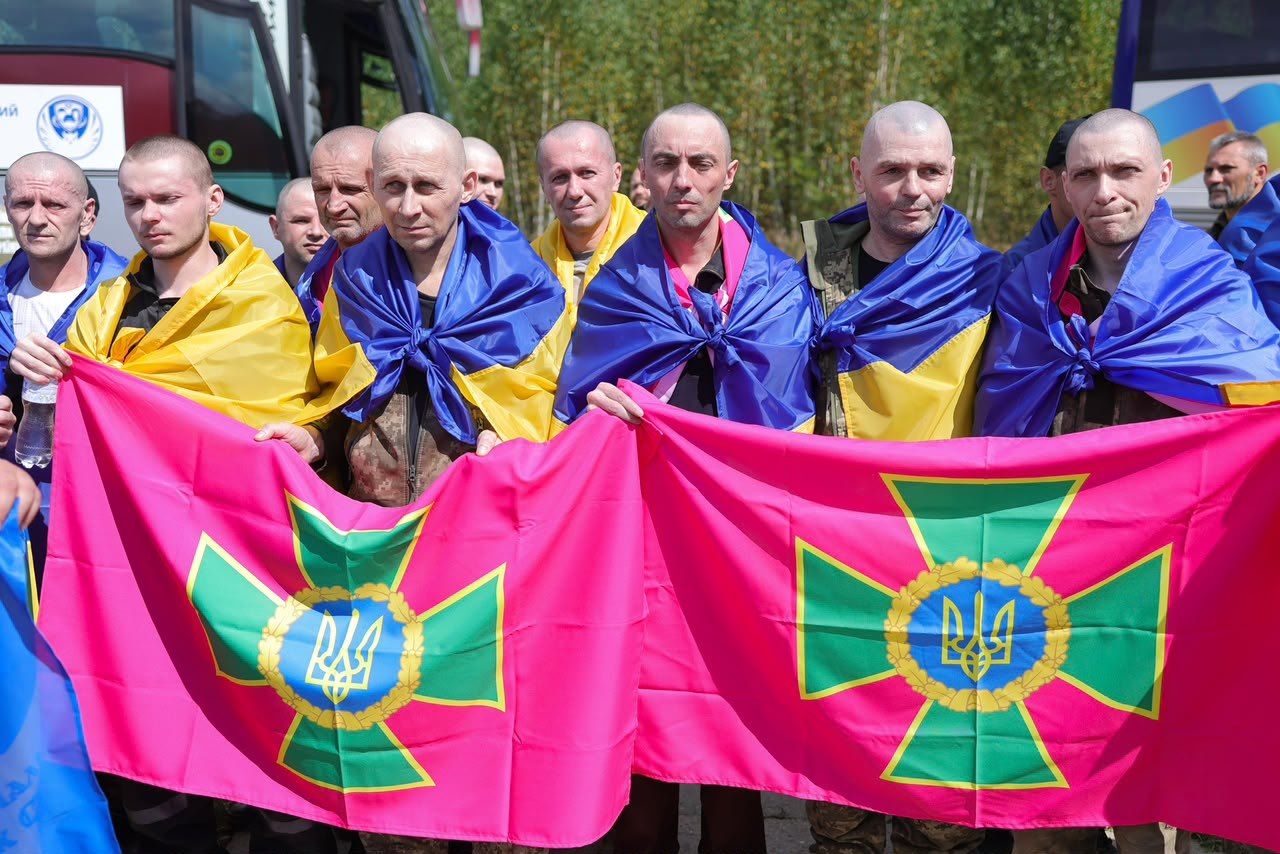
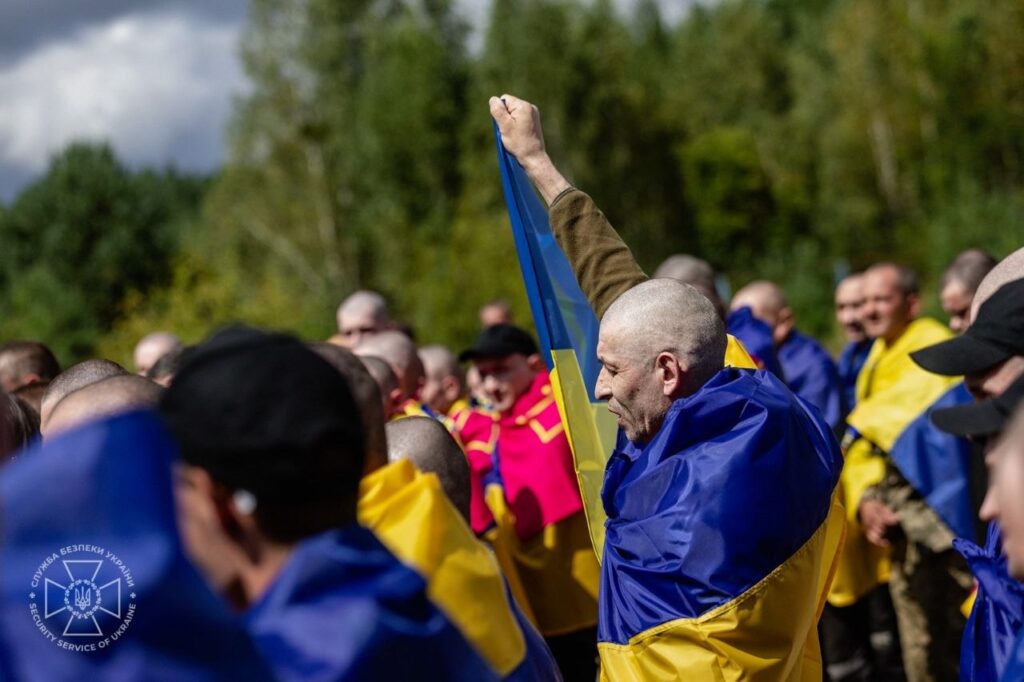
Freed Ukrainian prisoners of war and officials pose with military flags after returning from Russian captivity, 19 August 2026. Photo: Security Service of Ukraine
Years behind Russian bars
The captures span the entire full-scale war. One of those freed had been held since 2022, 16 since 2023, and 48 since 2024. Another 31 were seized in 2025 and seven this year. By the same tally, the International Committee of the Red Cross had confirmed the captivity of 102 of the group before the handover, with a single case verified through other sources.
A previous swap in late June returned 160 defenders, all of them held since 2022.
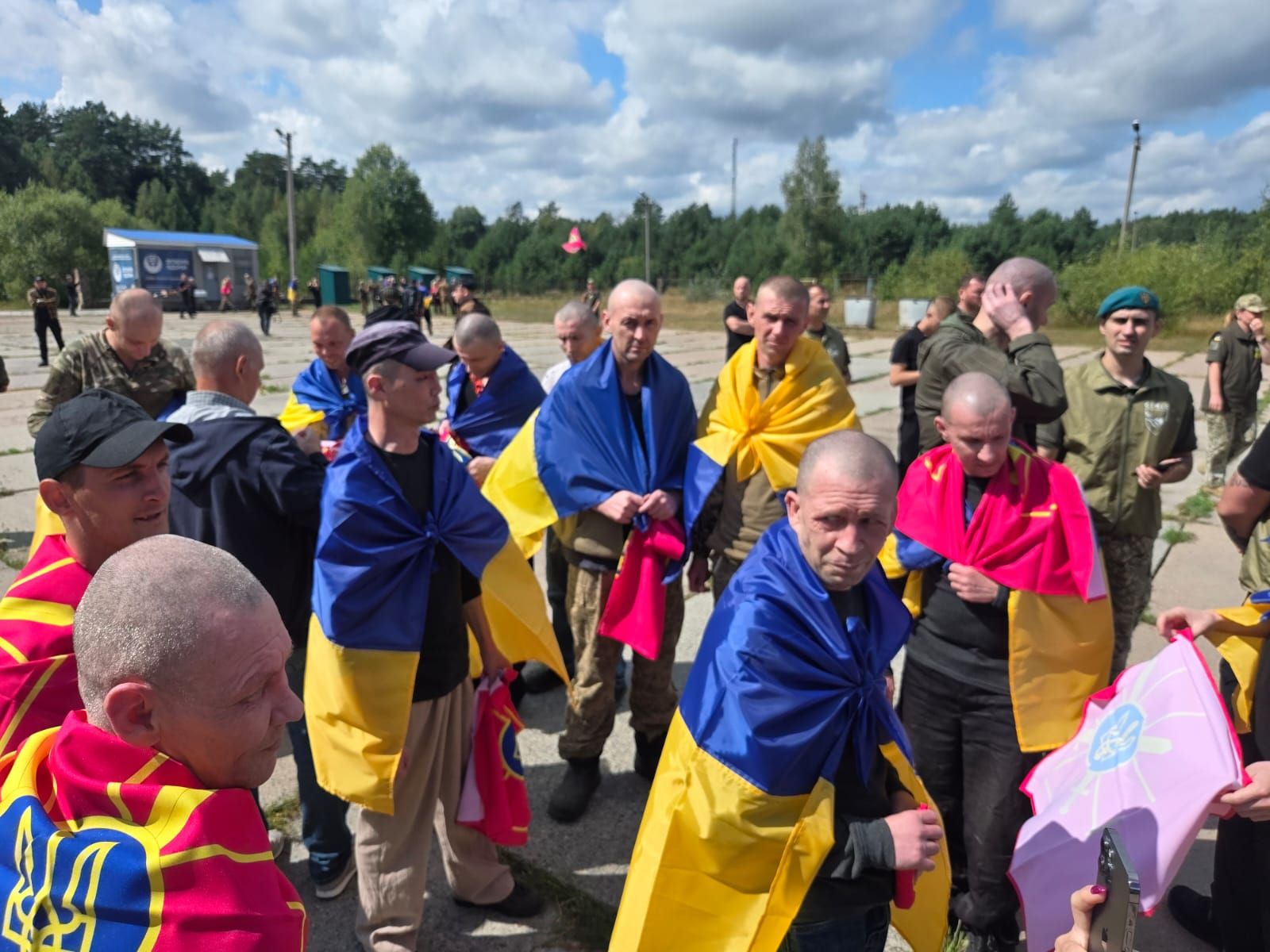
Freed Ukrainian servicemen wrapped in national flags gather after returning from Russian captivity, 19 August 2026. Photo: Coordination Headquarters for the Treatment of Prisoners of War
Wounded and ill
The released defenders will undergo full medical examinations, receive physical and psychological rehabilitation, and obtain the state payments provided by law. The head of the President's Office, Kyrylo Budanov, said doctors were already doing everything necessary for the returnees, most of whom came back with wounds and serious illness.
Their condition fits a wider pattern Ukrainian officials have described, in which Russia starves most captives and executes many surrendered soldiers on the battlefield.
Released Ukrainian defenders hold State Border Guard Service flags after their return from Russian captivity, 19 August 2026. Photo: Ivan Vyhivskyi / Interior Ministry
"We remember everyone still in captivity"
President Volodymyr Zelenskyy said the freed included men who had defended Mariupol.
"We remember every man and every woman still held captive. We are doing everything possible to bring all our people home," he said.
Freed Ukrainian servicemen wrapped in national flags gather after returning from Russian captivity, 19 August 2026. Photo: Coordination Headquarters for the Treatment of Prisoners of War
The Security Service of Ukraine noted the swap ran through the joint center it operates to coordinate the search and release of prisoners. Oleh Ivashchenko, chief of the Main Directorate of Intelligence (HUR) and head of the Coordination Headquarters, met the returning defenders in person.
The Emirates has long been a major trading hub for Iran, and analysts say it has been key to Iranian efforts to evade international sanctions, which Emirati officials deny.
The Emirates has long been a major trading hub for Iran, and analysts say it has been key to Iranian efforts to evade international sanctions, which Emirati officials deny.
The US plan to sell Türkiye F-35 stealth fighter jets has stalled, blocked by a Russian missile system Ankara bought years ago, Semafor reported. Lawmakers in Washington won't clear the deal while Türkiye keeps the hardware. The lone buyer in talks hasn't budged, and destroying the system is now on the table.
Russia has long used arms exports to pull buyers into its orbit, and the war it started raised the price of those ties—leaving governments that bought Russian air
The US plan to sell Türkiye F-35 stealth fighter jets has stalled, blocked by a Russian missile system Ankara bought years ago, Semafor reported. Lawmakers in Washington won't clear the deal while Türkiye keeps the hardware. The lone buyer in talks hasn't budged, and destroying the system is now on the table.
Russia has long used arms exports to pull buyers into its orbit, and the war it started raised the price of those ties—leaving governments that bought Russian air defense to clash with the supplier that sold it.
The Russian system is in the way
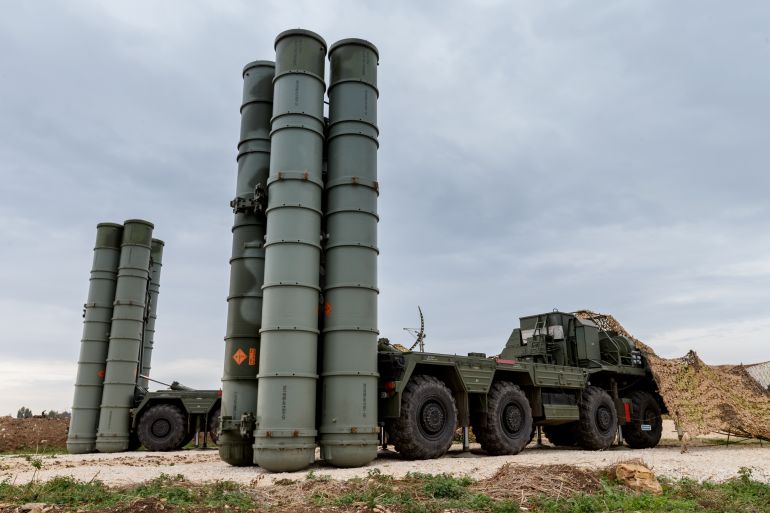
US sanctions law bars Türkiye from the F-35 program while it retains the Russian S-400, Semafor reported. That system is a long-range air defense, built to shoot down planes and missiles. Ankara already paid for six of the jets. They have sat in the United States since Washington expelled Türkiye from the F-35 program in 2019. US President Donald Trump announced plans to sell the jets more than a month ago, and nothing has moved since.
Explore further
Türkiye wants to send Ukraine old US-made cluster munitions—one human rights group is fighting to stop it
No buyer, no easy exit
One way out is to sell the S-400 to another country. Türkiye reportedly opened talks with the United Arab Emirates (UAE) last month, but they don't appear to have progressed. American lawmakers insist Ankara must give up the system entirely first.
Republican Senator Rick Scott told Semafor that Türkiye shouldn't get the jets unless it becomes a true partner—"so if they have the S-400, they cannot have the F-35." Senate Foreign Relations Committee Chairman Jim Risch, a longtime opponent, said the process is "at a standstill."
Explore further
Erdoğan asks Putin to take back Russian S-400 SAM systems in move to win Trump’s favor
Israel and Congress are the live block
The sharper obstacle sits in Washington, Semafor reported. A vote to sell would pit Israel against a NATO ally, and many of Trump's own allies want the S-400 scrapped completely. Israeli Prime Minister Benjamin Netanyahu warned the jets could "destroy the power balance in the Middle East." The outlet said AIPAC, the leading pro-Israel lobby in Washington, is pressing Congress to keep the block.
Selling it still runs through Moscow
Any resale carries its own catch: Russia must approve the transfer of the S-400, giving the Kremlin a reason to block it. The only option that bypasses Moscow is to disable or destroy the system outright. Türkiye earlier tried to return the systems to Moscow, hoping to thaw relations with Washington. It didn't work.
The Trump administration says Ankara hasn't met all the conditions to buy the jets, and the State Department wants the S-400 issue settled with guarantees first.

 Connexion


 SBU
SBU