Character.ai’s bankruptcy is the one of the first dominos to fall in the long-foreseen AI bubble. The circumstances of its bankruptcy are exactly what critics of AI have been saying would happen: Character.ai lit a huge amount of money on fire running its product, did not bring in a lot of revenue, and faced enormous legal fees after causing harm to its users. Enshittifying its product to try to make its expenses cheaper did not work, according to a narrative filed in bankruptcy court Tuesday.Di
Character.ai’s bankruptcy is the one of the first dominos to fall in the long-foreseen AI bubble. The circumstances of its bankruptcy are exactly what critics of AI have been saying would happen: Character.ai lit a huge amount of money on fire running its product, did not bring in a lot of revenue, and faced enormous legal fees after causing harm to its users. Enshittifying its product to try to make its expenses cheaper did not work, according to a narrative filed in bankruptcy court Tuesday.
Disney has reportedly offered Character.ai $20 million to license some of its intellectual property; Last year, Disney sent Character.ai a cease and desist letter demanding it stop using its copyrighted characters without permission. In 2023, it was valued at $1 billion after raising $150 million in a round led by a16z.
Character.ai is one of the best-known AI chatbot companies that has become popular in the AI companion space. The company has faced various legal problems after being sued by the family of one of its users who killed himself after chatting with a Character.ai chatbot, and has been the target of regulators pushing for age verification tech because of its popularity with kids. In its bankruptcy filings, the company says that its enormous legal costs contributed to its bankruptcy, but that even without the legal problems, its business was wildly unsustainable.
Sorry for the late newsletter today, we’re still a little sleepy. To ease you into this afternoon, I have an interview with the guy who coined the term “smutstep,” and has become a sensation among a very specific section of dark romance BookTok — as well as a lot of haters. I thought he had some interesting things to say about the content creation game and not taking yourself too seriously while respecting your own craft and audience. Enjoy.The Creator of ‘Smutstep’ Wants You to ‘Let Your Fre
Sorry for the late newsletter today, we’re still a little sleepy. To ease you into this afternoon, I have an interview with the guy who coined the term “smutstep,” and has become a sensation among a very specific section of dark romance BookTok — as well as a lot of haters. I thought he had some interesting things to say about the content creation game and not taking yourself too seriously while respecting your own craft and audience. Enjoy.
Last week, a video came across my feed of a man saying horny lines over a dubstep beat. “On your knees,” he snarled. As the beat dropped, he growled, “Mmm, now look at me.”
“Instagram reels just showed me a guy who makes 'smutstep' for the booktok crowd and it is the funniest thing I have ever watched,” the person reposting the video on X wrote. The replies are predictably harsh: “I think this is actually the worst thing I have ever heard.” “Who the FUCK is demanding this 😭”
People demanding this is why it exists. DARQ DAGR, whose real name is James, is a dubstep musician and voice artist who’s been working in the voice acting world for years. But smutstep is what’s made his work go viral, in large part thanks to the people who hate it so much. Smutstep emerged as a reaction to BookTok, a subculture within TikTok built by book lovers and their various followings. Within BookTok, the romantasy book genre thrives, with series like The Fourth Wing and A Court of Thorns and Roses (ACOTAR) gaining massive readerships for their blend of elven high fantasy and dragon-based erotica. The romantasy genre is not a quaint fandom. It’s a billion-dollar industry.
Like so many online communities devoted to things a little horny and misunderstood, the wider world tends to scrutinize and discredit romance readers, especially when Fae fucking is involved. James, who wants people to know he does read the books too, saw a way into two niches that could compliment each other.
“I think what I like about the whole culture — the BookTok culture and dubstep culture — it's just letting your freak flag fly in a way,” he told me in a call. “It’s accepting and embracing what you're into within a safe and healthy space. I think that's a really beautiful thing.”
Sentry mode? The “security protocols” on a Tesla stopped a Homeland Security Investigations agent from placing a tracking device on it, according to a warrant reviewed by 404 Media. On Halloween of 2025, an HSI Special Agent filed a more than 60 page application to place a tracking device on the Tesla of a suspected drug trafficker in Milwaukee. Agents had been watching alleged drug dealer Sam Stair — a local landlord they believed was using his rental properties as the front for a drug trafficking operation — for months when they asked a judge to let them install a tracker on his car. According to the warrant application, Stair went everywhere in a white Tesla and the agents wanted to see where it was when they couldn’t keep eyes on it.
FROM AROUND THE WEB
Ghosting much... SpaceX will testify before the New York City Council this week about AI safety risks. This is after Elon and co ditched a hearing on Oct. 5.
Last week, a video came across my feed of a man saying horny lines over a dubstep beat. “On your knees,” he snarled. As the beat dropped, he growled, “Mmm, now look at me.” “Instagram reels just showed me a guy who makes 'smutstep' for the booktok crowd and it is the funniest thing I have ever watched,” the person reposting the video on X wrote. The replies are predictably harsh: “I think this is actually the worst thing I have ever heard.” “Who the FUCK is demanding this 😭” People demanding
Last week, a video came across my feed of a man saying horny lines over a dubstep beat. “On your knees,” he snarled. As the beat dropped, he growled, “Mmm, now look at me.”
“Instagram reels just showed me a guy who makes 'smutstep' for the booktok crowd and it is the funniest thing I have ever watched,” the person reposting the video on X wrote. The replies are predictably harsh: “I think this is actually the worst thing I have ever heard.” “Who the FUCK is demanding this 😭”
People demanding this is why it exists. DARQ DAGR, whose real name is James, is a dubstep musician and voice artist who’s been working in the music industry and voice acting world for years. But smutstep is what’s made his work go viral, in part thanks to the people who hate it so much – and the ones who demand more of it.
Smutstep emerged as a reaction to BookTok, a subculture within TikTok built by book lovers and their various followings. Within BookTok, the romantasy book genre thrives, with series like The Fourth Wing and A Court of Thorns and Roses (ACOTAR) gaining massive readerships for their blend of elven high fantasy and dragon-based erotica. The romantasy genre is not a quaint fandom. It’s a billion-dollar industry.
Like so many online communities devoted to things a little horny and misunderstood, the wider world tends to scrutinize and discredit romance readers, especially when Fae fucking is involved. James, who wants people to know he does read the books too, saw a way into two niches that could compliment each other.
“I think what I like about the whole culture — the BookTok culture and dubstep culture — it's just letting your freak flag fly in a way,” he told me in a call. “It’s accepting and embracing what you're into within a safe and healthy space. I think that's a really beautiful thing.”
James and I talked about modern artistry in a world where interactivity and engagement rule, why he doesn’t take all of this too seriously, and the value of escapism in a time when everything else sucks. And yes, I ask him to do the growl.
This interview has been edited for length and clarity.
SAM: I will admit just off the bat, I'm not in the BookTok world personally.
DARQ DAGR: Uh-huh.
I have nothing against BookTok. Beautiful community. But I can't get into it. I've tried like, ACOTAR. I haven't found my romantasy, I suppose. So I might ask you some dumb questions, but hopefully you can also serve as a little bit of an explainer for those of us who are not super in that world. Tell me how you got into this?
Yeah. So the thing is, it wasn't like when I was a kid, I was like, when I grow up I wanna growl. You know? I've been a trained professional vocalist for a really long time. I've done metal and I've done theatre, I've done pop, I've done rock. The reason I'm in Nashville right now is because I spent eight years in a country band that was touring the world. I just kinda do everything there is to do with my voice. I've been a professional performer and vocalist for a really long time. My wife is really into the BookTok world. And so I was exposed to the community and the books through her.
The first video that went viral for me was when I had just left my country band. And all I wanted was for the way I was presenting myself and expressing myself to be true to the things that I was into, which is dubstep. I had fallen in love with dubstep. I think it's the most beautiful community in the world. And then, I've always been a huge fantasy fan. I've always been really into Lord of the Rings and The Witcher and all that stuff. So getting into romantasy was not a big step for me, because I'm already a fan of fantasy. Making that video was me kind of saying, ‘I feel like a lot of these BookTok boys are getting the growl wrong.’ And then I did a growl that I did from back in my metal days. And it just blew up and it created this whole community of people who were really into the growl. But I was not the first person to do the growl.
There's another creator who was doing it long before me. His name's Michael Ayok. I can't take credit for being the first to BookTok growl, but I definitely get a lot of recognition for it.
Obviously I wanted to be producing dubstep music, but my community all wanted me to growl, so it was like, how do I make this make sense? And so I just started growling in my dubstep and inadvertently created a subgenre of dubstep called smutstep. It's all community driven though. Honestly, even the name smutstep was a comment on one of my videos.
Somebody had requested that I growl ‘sit down’ and I did a video growling it that did really well. So I was like, well, let's just make a dubstep drop out of this. It's community driven, and it's fun. I'm glad that people are liking it.
I think the biggest issue though is that... I'm having fun. I do not take this seriously. Again, it wasn't a dream of mine to grow up and growl at people. I took two very niche communities — the dark romance BookTok niche community, and the dubstep community — that are not designed to be exposed to general culture. So there's a lot of hate that comes with that and a lot of negativity. People react very strongly to what I do. And I think that that's as an artist, I think that's effective art. You want people to be moved to an extreme. You know? But you cannot control what that extreme is gonna be.
There are people that treat me like Marilyn Manson in the nineties. His art is meant to be taken seriously. He is making a social commentary where he's putting a mirror up to society and showing how ugly it is. Whether you love that or you hate it, it's meant to be taken seriously. Smutstep is not meant to be taken seriously. If you enjoy it, that's awesome. You know what I mean? I'm having fun with it. I love the community I've created around it. We're all having fun. But it's not meant to be taken as seriously as so many of the haters take it.
Yeah, it's broken containment from these specific niche communities, into the wider world. Which is the curse and blessing of social media, I guess. Something breaks out and becomes viral and then everybody's aware of it, even people who maybe are not the audience.
I sent you the link to the video that's got a million views now on X, and all the comments and replies are really rude. So just be warned. People are like, ‘I'm never gonna unmute this. I would never unmute this to save my life,’ that kind of thing. And like you said, it’s not that serious. If it's not your thing, that's okay. Move on.
But what do you think about those comments? The ones that are like, ‘this is gigacringe.’
That's been a lot of what I deal with on other platforms. Facebook and TikTok are way better. On Instagram, l have my comments limited to people who follow me because it's just so much hate.
People are crazy on Instagram. People will say the most sideways shit on Instagram.
Yeah, and that's that's the thing. Like obviously, as much as we're all just having fun, of course it does mentally take a big toll on you.
You said this is community driven. Were people waiting to have this sort of thing enter their already-existing BookTok community, or where do you think it comes from? Why are people resonating with this?
Men in BookTok is not a new thing. Making it dubstep is my brand. But for me, smutstep is like the KISS makeup. It's a gimmick. Everybody needs something that makes them stand out. So right now, smutstep is what makes me different, it's what makes me unique.
Most of my content is based off of people making requests in the comments. I think that may be why it's taken off the way it has. Obviously it has to do with me, but it has so much to do with the people who are enjoying it. This is something that I think in a lot of ways is actually a much more modern take on entertainment. From its inception, it’s community demand, and giving people what they want within what I wanna do. I'm not doing something I don't wanna do. It's like, all right, you guys want this? Well, I'm gonna make it, but I'm gonna go the dark romance route and make it super aggressive, because I want to make dubstep out of it, and people are like, ‘That's fucking dope.’
Are you familiar with like the romantasy theme park videos?
No. No.
Oh my god. You would get a kick out of this, and probably your wife would also, but it's part of SeaWorld. You know how around Halloween, theme parks will do like horror nights, and characters come out and chase you? It's that, but it's BookTok boys.
I'll send you a link. But it has gotten a really big reaction from wider culture, where people are like, ‘this is so cringe and weird.’ The execution is really cringe and weird, but it is responding to something people wanted, which was: romantasy in a more interactive way. Is there anything that people are demanding from you more than other stuff?
There's a book series called The Fourth Wing and there's a dragon in it called Tairn. Somebody said that Tairn should be Scottish, because his name is Tairneanach, which is a Scottish name. So I did a growl, but in the Scottish accent.
I do another series with masked growls. I'm supposed to do one today, if the mask gets here in time. It’s a Scream mask 'cause we're in spooky season, and people have been wanting that for as long as I've been doing this.
I think what I like about the whole culture — the BookTok culture and dubstep culture — it's just letting your freak flag fly in a way. It’s accepting and embracing what you're into within a safe and healthy space. I think that's a really beautiful thing. Maybe it's just as I get older, but I'm just so disillusioned with reality and I constantly want more escapism for myself, and want to give others more escapism as well. So that's kind of my goal as an artist is just escapism.
That’s a huge appeal of fantasy and romance in general. I'm also a big Lord of the Rings fan. That type of fantasy I can get with. I wonder if Lord of the Rings launched today, if we would be calling it romantasy. I guess there's not enough sex in it though.
The thing about romantasy is, there does need to be pretty pretty graphic scenes in it. But Lord of the Rings has none of that. I do read the romantic stuff too. I don't wanna be somebody who just does it for the views. I do read both.
Do you think people have picked up on the smutstep genre since you started? Are there new people doing it?
I haven't noticed, but that doesn't mean someone's not out there trying and just hasn't had a video hit yet. And to be honest, I'm not surprised. I think that it's one of those things... It's human nature to have an aversion to something new that they don't understand. It’s still in the phase where I think it's more ‘what the fuck’ than something that is socially acceptable. Which again, it was never meant to be broadly socially acceptable. It was meant to be niche-acceptable, which it already is. I don't think there's a lot of people trying to do it because I think people are too afraid of having to deal with the same stuff I deal with.
I would be remiss in letting you go if I didn't make you do a growl. Would you be willing to offer us a growl?
I can. It's not going to be that loud, because I don't have a mic, but I can do one. Ready?
[Growls]
Did you hear it? Did it pick it up?
It was like a growl in the distance. I'll practice mine. I'll do it on the podcast maybe and you can critique my growl.
This article was produced in collaboration with Court Watch, an independent outlet that unearths overlooked court records. Subscribe to them here.The “security protocols” on a Tesla stopped a Homeland Security Investigations (HSI) agent from placing a tracking device on it, according to a warrant reviewed by 404 Media.
The “security protocols” on a Tesla stopped a Homeland Security Investigations (HSI) agent from placing a tracking device on it, according to a warrant reviewed by 404 Media.
Good Monday morning! Today's big story is an investigation from Joseph about cops and an AI tool that takes data from sites like Airbnb and Zillow and identifies specific properties. The internet is full of photos of the interiors of people's homes, from real estate and rental listings to short-term stays, and that data is in the hands of law enforcement. And in other news, a very interesting interview with the whistleblower subject of Sorkin's new movie, some big legislative impact, and what ca
Good Monday morning! Today's big story is an investigation from Joseph about cops and an AI tool that takes data from sites like Airbnb and Zillow and identifies specific properties. The internet is full of photos of the interiors of people's homes, from real estate and rental listings to short-term stays, and that data is in the hands of law enforcement.
And in other news, a very interesting interview with the whistleblower subject of Sorkin's new movie, some big legislative impact, and what caught my eye over the weekend around the web. Let's get into it.
A screenshot from a Raven promotional video on LinkedIn.
An AI company now lets cops take a photo and nearly instantly figure out what specific home it was taken in, using only clues in the photo itself, and is clearly pulling data from sites like Zillow and Airbnb.
The tool, called Raven, shows the increasing power of AI capabilities available to local law enforcement agencies. 404 Media previously reported that both the Los Angeles Police Department and Miami-Dade Sheriff’s Office (MDSO) have bought access to Raven, which was previously called GeoSpy. Now, Raven, made by a company called Graylark Technologies, has added features that let cops analyze the interior of homes.
In a post on LinkedIn earlier this month, Graylark CEO Daniel Heinen wrote the company was introducing “the ability to geolocate interior images across millions of short-term rental units worldwide.” An accompanying demo video shows someone taking a photo from X of a washer/dryer unit inside a building. They upload it to Raven, select “Find Property: Interior and exterior property geolocation,” and then choose a region to search.
After a couple of seconds, the map interface zooms in on an area in Charlotte, North Carolina. On the right hand side, the screen displays a list of results. The top one reads, “Renovated! Walk Uptown/located in 2 Hot Spots!” That result directly quotes the language on a specific Airbnb listing in Charlotte, and the photos in the Airbnb listing show the same property.
Spoilers ahead for “The Social Reckoning.” Did you catch this week’s interview episode? Jason talked to former Facebook employee Frances Haugen, who became one of the most important tech whistleblowers in 2021 when she exposed how Facebook’s algorithm was pushing people toward hate groups, showed Instagram was making teen girls feel worse about themselves, and showed that the company knew about its detrimental impacts on society. Haugen’s story is the basis for Aaron Sorkin’s new movie “The Social Reckoning,” which follows her evolution from model employee to leaker to formal whistleblower. Jason and Frances discuss what the movie got right about journalist-source relationships and how AI is supercharging privacy concerns.
An AI company now lets cops take a photo and nearly instantly figure out what specific home it was taken in, using only clues in the photo itself, and is clearly pulling data from sites like Zillow and Airbnb. The tool, called Raven, shows the increasing power of AI capabilities available to local law enforcement agencies. 404 Media previously reported that both the Los Angeles Police Department and Miami-Dade Sheriff’s Office (MDSO) have bought access to Raven, which was previously called Ge
An AI company now lets cops take a photo and nearly instantly figure out what specific home it was taken in, using only clues in the photo itself, and is clearly pulling data from sites like Zillow and Airbnb.
The tool, called Raven, shows the increasing power of AI capabilities available to local law enforcement agencies. 404 Media previously reported that both the Los Angeles Police Department and Miami-Dade Sheriff’s Office (MDSO) have bought access to Raven, which was previously called GeoSpy. Now, Raven, made by a company called Graylark Technologies, has added features that let cops analyze the interior of homes.
Welcome back to the Abstract! Here are the studies this week that spotted a blast from the past, opened a portal between realms, yakked it up, and rose from the ashes. First, scientists have spotted a mysterious radio signal from the primordial universe that could illuminate cosmic evolution (it’s not aliens… sorry). Then: a diamond in the quantum rough, the decline of a fine bovine line, and a second-generation planet. As always, for more of my work, check out my book First Contact: The Story
Welcome back to the Abstract! Here are the studies this week that spotted a blast from the past, opened a portal between realms, yakked it up, and rose from the ashes.
First, scientists have spotted a mysterious radio signal from the primordial universe that could illuminate cosmic evolution (it’s not aliens… sorry). Then: a diamond in the quantum rough, the decline of a fine bovine line, and a second-generation planet.
Scientists have discovered the most distant fast radio burst (FRB), a type of mysterious radio flare from space. This burst erupted when the universe was only three billion years old and sent radio waves across 10 billion light years before they reached Earth on March 4, 2024.
The distant signal, known as FRB 20240304B, hails from an ancient galaxy beyond “redshift 2,” which means it originated more than twice as far as the next-farthest known FRB. Redshift, represented by the variable “z,” measures how wavelengths of light get stretched out in their journeys across space, a phenomenon that shifts them to the red end of the spectrum. Generally speaking, the more distant the object from Earth, the higher the redshift.
“Approximately one hundred FRBs have identified host galaxies with measured redshifts, with the vast majority at redshifts z ≲ 0.5,” said researchers led by Manisha Caleb of the Sydney Institute for Astronomy. “Only a small number of FRB host galaxies have been identified at z ≳ 1. This observational bias is driven by the sensitivity limit of radio observations that are capable of detecting FRBs and localizing their coordinates.”
Caleb and her colleagues were able to capture the remote flash using South Africa’s MeerKAT radio telescope. Follow-up observations with the James Webb Space Telescope pinpointed “a low-mass, clumpy, starforming galaxy” at redshift 2.148 as the host of the burst.
FRBs produce incredibly energetic radio pulses, but the exact mechanisms that generate them remain unknown. Given the diverse features of these bursts—for instance, some repeat, and some are one-offs—they might come from many different sources. In the case of FRB 20240304B, the team speculated that the burst is a magnetar, the highly magnetized remains of a massive star that went supernova.
“The low stellar mass, active star formation, and low metallicity of the host galaxy are consistent with a magnetar origin of the FRB,” the researchers concluded.
This milestone detection of such a distant and ancient FRB opens up the possibility of finding more bursts at high redshifts. In addition to pushing the limits of observation, future discoveries could allow scientists to extract clues about the evolution of the universe that become imprinted in these signals during their vast journeys. So bring on the bygone bursts!
Time to shrink down from the largest cosmic scale to the tiny quantum realm. In a new study, scientists report that they successfully moved a centimeter-scale diamond with a force known as quantum spin, making it by far the largest object ever manipulated by a quantum effect. It represents a major breakthrough, as the diamond is the first object large enough to be subject to gravity to be moved in this way, further bridging the gap between the loopy quantum realm and regular, everyday physics.
A graphical representation of the observed movements. a) When the laser is off, the diamond slab has a small magnetic moment (blue arrow) induced by the latent spin-state inside the nitrogen-vacancy centers of the diamond. b) When the green laser is on, the spin-state is polarized, causing the magnetic moment to fluctuate weakly, pushing the diamond down towards the magnetic field (red arrows). Image: Nayak et al., 2026
In the new work, scientists worked with a nitrogen-vacancy (NV) diamond containing electrons with “spin,” a form of angular momentum on the quantum scale. Then, they shot a laser at the diamond—as science often demands—which stimulated electrons to spin in a certain state that eerily moved the diamond.
“Experimentally observing this spin force for anything larger than atomic scales has proved challenging,” said researchers led by Anshuman Nayak of the Okinawa Institute of Science and Technology. “We have demonstrated the motional driving of a massive diamagnetically levitated mechanical oscillator by the force of NV spins in a gradient magnetic field.”
Congratulations, humanity: We just earned our license to quantum-motionally drive. Proceed responsibly.
Domestic cows are overwhelmingly the most common bovine species on Earth today, but this family of swole ungulates once contained a diversity of wild lineages that included aurochs, steppe bison, and oxen.
Now, scientists have discovered the remains of a distinct bovine species—named “yak X”—in Siberia’s Denisova Cave, which was also inhabited by many human species (hominins) during the Pleistocene era, which ended 12,000 years ago.
Yak X (cool name!) began diverging from extant yaks about 400,000 years ago, and had formed its own unique yak pack by 250,000 years ago, reports a team that sequenced its ancient genomes. The youngest bones from this mysterious animal date back about 27,200 years, so it must have died out sometime after.
“Yak X is a Pleistocene megafaunal species previously unknown to genomics,” said researchers co-led by Jonas Oppenheimer and Alexandre Gillardet of Stockholm University. “Yak X appears to have become genetically isolated from other bovines including bison and aurochs despite their apparent geographic proximity in Pleistocene mid-latitude Asia. This lack of gene flow is in notable contrast to hominins at Denisova Cave, which displayed complex patterns of admixture among multiple divergent lineages.”
In other words, hominins at this cave, including Neanderthals and Denisovans, appear to have interbred, while this yak didn’t cross with its fellow bovine relatives. This has been Yak News.
Planets are frequently obliterated by the explosive deaths of their stars, but they can also be born out of those same stellar ashes. Scientists have now directly observed the first evidence of one of these so-called “second-generation” planets that formed around a type of dead star called a white dwarf.
Located about 270 light years from Earth, the white dwarf—known as HS 0209+0832—was once a star similar to the Sun. About five million years ago, it shed its red giant shell and collapsed into its current husk state.
Concept art of the second-generation planet. Image: Dr Snehalata Sahu / University of Warwick
Since its transition to the afterlife, a new planet has coalesced out those ejected embers, though this world is destined for an early grave. Scientists spotted telltale signs of second-generation elements—including zinc, copper, and niobium—in the spectrum of the white dwarf, which are distinct from first-generation planetary ingredients, such as the silicon and iron that make up Earth. The discovery exposes a dead star feeding on its posthumous offspring that was birthed from its own ghostly gas.
“Here we report the discovery of a white dwarf accreting material that is unlike any Solar System object,” said researchers led by Jamie Williams of the University of Warwick. “The discovery of this second-generation planet that is chemically distinct from first-generation material demonstrates that close-in planets around white dwarfs can form…Establishing a sizable sample of such systems will open a window on second-generation planet formation.”
Some stars are so prolific that even death won’t stop them from making new worlds—and then eating them. Respect.
In response to a 404 Media investigation, Sen. Ron Wyden is demanding more information about how a federal license plate reader camera program works.Last month, we reported on the High Intensity Drug Trafficking Area program’s license plate reader database, which mirrors data from city license plate reader programs onto federal databases. The HIDTA program falls under the White House’s Office of National Drug Control Policy, which infamously ran a secretive cell phone data surveillance project c
In response to a 404 Media investigation, Sen. Ron Wyden is demanding more information about how a federal license plate reader camera program works.
Last month, we reported on the High Intensity Drug Trafficking Area program’s license plate reader database, which mirrors data from city license plate reader programs onto federal databases. The HIDTA program falls under the White House’s Office of National Drug Control Policy, which infamously ran a secretive cell phone data surveillance project called Hemisphere. We reported that HIDTA has now created a complex system for the federal government to obtain license plate data from companies like Flock, Axon, and Motorola via a series of agreements with cities and towns across the country.
In a letter to Sara Carter, director of the Office of National Drug Control Policy, Wyden said that the office needs to publish a report it commissioned into the privacy practices of several of its surveillance programs, including the license plate reader database.
“404 Media has reported that the HIDTA program is being used to aggregate location data on Americans derived from Flock, Axon, and other vendors’ ALPRs,” Wyden wrote. “There is currently limited transparency into these HIDTA-funded surveillance programs, but ONDCP has commissioned an assessment into the privacy practices of these programs that should be released to the public.”
Wyden said that the nonprofit contractor MITRE conducted a privacy review of HIDTA’s surveillance programs, including its cell phone data collection project and its ALPR program, in 2024. That report has never been made public. Wyden demanded the release of that study, as well as a separate “analysis of automated license plate reader systems and practices.”
“There is currently limited transparency into these HIDTA-funded surveillance programs, but ONDCP has commissioned an assessment into the privacy practices of these programs that should be released to the public,” he wrote. “This review was conducted by MITRE and completed in 2024, but ONDCP refused to provide it to my office and has subsequently not made that report public. I urge you to make this review public.”
This is Behind the Blog, where we share our behind-the-scenes thoughts about how a few of our top stories of the week came together. This week, we discuss AI and spirituality. JASON: I think we’ve generally carved out a pretty good lane for ourselves in the broader AI debate, writing about its current capabilities, its current harms, and the fact it was trained on stolen content without saying that it will never be able to do anything of use. We are often tinkering with AI so that we can writ
This is Behind the Blog, where we share our behind-the-scenes thoughts about how a few of our top stories of the week came together. This week, we discuss AI and spirituality.
JASON: I think we’ve generally carved out a pretty good lane for ourselves in the broader AI debate, writing about its current capabilities, its current harms, and the fact it was trained on stolen content without saying that it will never be able to do anything of use. We are often tinkering with AI so that we can write about it from an informed perspective, and so every once in a while, while I’m working on a story I will see something where it feels like AI could possibly be useful for some specific part of the reporting.
An Iowa man has kicked off controversy over religious freedom in the small town of Ottumwa, Iowa by opening a city council meeting with a prayer to Satan, which then kicked off a debate about the proper time in the meeting agenda to undo the “curse.”
An Iowa man has kicked off controversy over religious freedom in the small town of Ottumwa, Iowa by opening a city council meeting with a prayer to Satan, which then kicked off a debate about the proper time in the meeting agenda to undo the “curse.”
We start this week with a story from our old friend Lorenzo Franceschi-Bicchierai, about how cops can bypass the inactivity reboot on iPhones. After the break, Jason tells us how people are losing their minds over an LLM ‘torture’ prison. In the subscribers-only section, Sam explains what happened in a wild ChatGPT case in New Mexico.
Listen to the weekly podcast on Apple Podcasts, Spotify, or YouTube. Become a paid subscriber for access to this episode's bonus content and to power our jou
We start this week with a story from our old friend Lorenzo Franceschi-Bicchierai, about how cops can bypass the inactivity reboot on iPhones. After the break, Jason tells us how people are losing their minds over an LLM ‘torture’ prison. In the subscribers-only section, Sam explains what happened in a wild ChatGPT case in New Mexico.
Listen to the weekly podcast on Apple Podcasts,Spotify, or YouTube. Become a paid subscriber for access to this episode's bonus content and to power our journalism. If you become a paid subscriber, check your inbox for an email from our podcast host Transistor for a link to the subscribers-only version! You can also add that subscribers feed to your podcast app of choice and never miss an episode that way. The email should also contain the subscribers-only link for the extended video version too. It will also be in the show notes in your podcast player.
Body camera footage obtained by 404 Media reveals the first Flock camera searches ruled unconstitutional by a federal judge, and highlights how the system has turned otherwise mundane traffic stops into interrogations for drivers.On Friday, we reported that a federal judge ruled the use of license plate reader systems in the arrest of a woman named Melissa Kyle to be an “unconstitutional warrantless search,” “indiscriminate mass surveillance,” and a violation of the driver’s Fourth Amendment
Body camera footage obtained by 404 Media reveals the first Flock camera searches ruled unconstitutional by a federal judge, and highlights how the system has turned otherwise mundane traffic stops into interrogations for drivers.
On Friday, we reported that a federal judge ruled the use of license plate reader systems in the arrest of a woman named Melissa Kyle to be an “unconstitutional warrantless search,” “indiscriminate mass surveillance,” and a violation of the driver’s Fourth Amendment rights. The judge in that case ruled that, even though Kyle had more than 91 pounds of meth in her vehicle, the police had no justifiable reason to search Flock for her license plate and no reason to suspect that her travel as shown on Flock’s system was suspicious. Therefore, all of the evidence from Flock and the search of her vehicle must be thrown out.
The body camera and in-vehicle footage, alongside records from Flock and the Motorola ALPR system obtained by 404 Media shows how the use of license plate reader systems is being used to create probable cause where a person’s driving patterns are suspicious enough to pull them over.
404 Media obtained the footage with the help of one of our readers, who agreed to go to the U.S. District courthouse in Tulsa and purchase it from the clerk; the court did not make the footage available online even though it was entered as evidence in the case.
In the footage, which is from Tulsa County deputy sheriff Freddie Alaniz’s body camera, Alaniz is seen driving 60 miles per hour, one hand on the steering wheel, one hand on his laptop, searching Flock before he had even fully pulled over Alaniz. Alaniz had seen the car Kyle was driving had California license plates, and decided to pull it over for no reason other than it was from California, the court determined. The video shows that Alaniz told his colleagues that he was sitting on the highway and “saw her go by, and I just started running her info on Flock and Vigilant [Motorola’s ALPR system].”
“She actually didn’t have any [Flock] hits until just west of Amarillo, [Texas], so I thought I’d drive up,” he said, suggesting that he thought it was odd she was driving back from California. “I got her for a lane violation.”
In the footage, Alaniz tells Kyle he pulled her over ostensibly for changing lanes without a turn signal. Kyle tells Alaniz that the car is a rental, and he asks her to step out of the vehicle and get into his car while she looks up the rental information. While she is looking up the rental information, he tells her she is only going to get a warning, but proceeds to interrogate her about the travel while going through the car’s driving history on his in-car laptop.
Body camera footage obtained from the court
In-car footage obtained from the court
Kyle told Alaniz she had been visiting family in California from Missouri for a few days after separating from her husband. As she’s telling him this, Alaniz scrolls through a record of her travel history on his in-car laptop, which documents every time the car passed a Flock or Motorola automated license plate reader camera over the last 30 days. Visible on the screen, there are a total of 79 hits, and roughly 50 during the few-day period Kyle was renting it. The ALPR hits show the car leaving Missouri, driving through Oklahoma, Texas, New Mexico, Arizona, and entering California when she passed a Motorola ALPR camera in Topock, Arizona, on the border with California. They then show her essentially reversing the route, and driving back through Oklahoma. (Alaniz did not have access to ALPR hits from California; this may be because Flock drastically limited nationwide sharing from California ALPR cameras following illegal searches for immigration violators and a woman who had an abortion.)
Alaniz asks Kyle where she’s been and where she stayed, and compares it to the license plate camera records. He begins quizzing her: “Do you remember what day you left Missouri?,” he asks.
Alaniz clicks different ALPR hits on his map, each bringing up a photo of her car, a geographic location, and a timestamp of when she drove by the camera. The government’s lawyers later argued in court that minor discrepancies between what Kyle told Alaniz and what the ALPR data showed meant she was lying about where she’d been on which specific days and therefore gave Alaniz probable cause to search her vehicle.
Alaniz tells Kyle that he is giving her a warning for changing lanes without a turn signal, closes his laptop, then says he wants to ask her a few questions.
“Your short trip to California, I feel like. I don’t feel, I know from my training and my experience that people who do very short trips to California and come right back are transporting large amounts of drugs,” he says. “People who do that—not everybody, but some people do. With my training and experience, I feel that may be something going on here. May I search your car?”
She says no. Alaniz calls for backup, and says “You are being detained. You are not free to go.” In the footage, Alaniz tells a colleague that “she went to California for two days, kind of making stuff up when I ask her where she stayed at.”
He used Alaniz’s travel history, her “nervousness,” and the fact that she doesn’t recall every detail of her travel precisely as probable cause to search her vehicle, where he and his colleagues found 91 pounds of meth. Alaniz described this in the footage as “a motherlode,” and “a shit-ton of meth.”
But the way that he came to this conclusion was unconstitutional, U.S. District Court Judge Sara Hill ruled last week, and all of the evidence—including the car’s travel history and everything the police found during the search of the vehicle—must be disregarded in court as “fruit of the poisonous tree.”
It is often the case that unconstitutional, privacy-violating searches that are regularly done on everyday people doing nothing wrong are discovered in court cases in which serious crimes have occurred. In this particular case, Alaniz discovered what appeared to be meth trafficking, but he did so only after suggesting that an ordinary interstate travel pattern was somehow suspicious, and only after using the Flock and Motorola systems to show an incredibly detailed history of a person’s travel and to interrogate her about it.
Hill wrote “The factors that the government relies upon [to search Kyle’s vehicle] are the same type of circumstances that everyday Americans encounter on long road trips for many legitimate reasons. Many of us drive longer than we want to get to a desired destination, or to no destination at all other than the road and sights ahead. Many of us lose track of what exact day of the week it is when we are traveling, even if it is for just a moment. Many of us travel for myriad reasons (some better than others), cross state lines, pack too much, buy too much, smoke cigarettes, and rent cars. And many of us even get a bit nervous when talking to law enforcement.”
One of the problems with automated license plate reader systems is that they allow police to recreate not just a single person’s movements and travel history, but any driver’s movements and travel history. Documents filed with the court show the totality of both the Flock and Motorola records, and show timestamped, geographically mapped images of the vehicle multiple times per day, driving throughout the entire country. The records also highlight just how many jurisdictions and businesses have Flock and Motorola ALPR cameras, and how that data forms a nationwide network.
For example, Alaniz had access to a photo of the rental vehicle taken by a Lowe’s hardware store-owned camera in Missouri, various Texas state police-owned cameras, by the New Mexico State police, the Kingman police department. In a five-day period, the car was scanned more than 50 times by 11 different law enforcement agencies.
“Alaniz’s search in just the ALPR system provided him with more than 50 individual records of Kyle’s whereabouts across the country for an entire month,” Hill wrote. “The Court finds that because the ALPR systems Alaniz used to search Kyle’s historical location information intruded on her reasonable expectation of privacy in the whole of her physical movements, it was a search under the Fourth Amendment. Based on the information in the record, the only reason Alaniz conducted that search was because he saw her license plate was from California. That search was not supported by probable cause, and it was done without a warrant in violation of Kyle’s Fourth Amendment rights.”
The Motorola ALPR report shows that, after the car was impounded, it was scanned two more times on the back of a tow truck later that day.
Jonathan the tortoise, the world’s oldest living land animal, is still chugging along at the ripe age of roughly 194. Now, scientists have discovered some of the secrets to Jonathan’s longevity by sequencing his genome for the first time, according to a study published Wednesday in Science Advances.Jonathan, a Aldabra giant tortoise (Aldabrachelys gigantea), hatched around 1832 in the Seychelles archipelago, and he was already in his twenties when Charles Darwin published On the Origin of Spe
Jonathan the tortoise, the world’s oldest living land animal, is still chugging along at the ripe age of roughly 194. Now, scientists have discovered some of the secrets to Jonathan’s longevity by sequencing his genome for the first time, according to a study published Wednesday in Science Advances.
Jonathan, a Aldabra giant tortoise (Aldabrachelys gigantea), hatched around 1832 in the Seychelles archipelago, and he was already in his twenties when Charles Darwin published On the Origin of Species. In his fifties, Jonathan was brought to the remote island of Saint Helena, along with three other tortoises, as a gift to the British colonial governor in the 1880s. He has lived there ever since.
Aldabra giant tortoises often become centenarians, but Jonathan is a major outlier even for his species as he approaches nearly 200 years on this planet. To better understand his extreme lifespan, researchers evaluated Jonathan’s genome based on swabs of his cheeks and compared it with the genomes of several other tortoises, including a 36-year-old named Tank.
The results revealed that Jonathan has “unique gene variants in most aging pathways” including DNA repair, insulin regulation, mitochondrial function, and “low entropy” methylation, reports the study.
“Aging is very complicated, and there's all these different hallmarks,” said Stephen Clark, an aging researcher at the non-profit Kallel Foundation and an author of the study, in a call with 404 Media. “That's why this Jonathan study is so interesting. We're still just at the very beginning of trying to understand aging.”
The study was not an easy lift. Clark first reached out to Jonathan’s caretakers in 2017, but it took some negotiating to figure out the best way to obtain the tortoise’s genetic information. A blood draw was deemed too risky, so Jonathan was coaxed into opening his mouth for a swab. The results were delayed by incomplete early samples, the Covid pandemic, and new regulations governing access to Jonathan.
🌘
Subscribe to 404 Media to get The Abstract, our newsletter about the most exciting and mind-boggling science news and studies of the week.
After years of back and forth, the samples were delivered from Saint Helena to Florida by the U.S. Space Force. The results showed that Jonathan had many gene variants the team expected to see, based on studies of other long-lived individuals and populations. These included variants associated with DNA repair, maintenance of aging-related sequences called telomeres, and the process of cellular recycling known as autophagy.
But the researchers found a surprise in Jonathan’s “methylome,” which is a set of methyl-based modifications involved in gene expression. The subset of Jonathan’s methylome related to mitochondrial processes was unusually pristine, or “low entropy.”
Photo: St. Helene Government, Communication Hub
“Jonathan's really the first of his kind to have this analysis, and we were also able to do the methylome for the younger tortoises,” Clark said. “We actually compared him to a five-year-old tortoise, so we had 189 years of difference between the methylomes. No one's ever done that, even in humans, because no humans live that long. That was one of the main things we were excited about: how does this methylome change with age?”
Whereas most of Jonathan’s genome showed signs of entropy commensurate with his age, his mitochondrial methylome seemed on par with that of the five-year-old tortoise, signaling that these pathways may play a special role in his advanced age. However, Clark said it would take more research to follow up on that lead, and to untangle the complicated web of genetic components that influence aging and lifespan.
“We're interested in long-lived species like Jonathan because we can hopefully find other targets,” Clark said of his team’s work at Kallel Labs. “The ultimate goal of the company is to affect human healthspan and lifespan.”
As for Jonathan, he continues to live out his voluminous days at the governor’s residence, Plantation House, where he and his fellow tortoises have become one of the island’s tourist attractions. Saint Helena is also known for the exile of Napoleon Bonaparte, who died there a mere decade before Jonathan is thought to have been hatched. It’s amazing to think about just how much the world has changed in Jonathan’s lifetime. Long may he graze.
Howdy, it's hump day and we're rolling along. Today we've got an update on a very strange case involving a man whose image was resurrected from the dead via AI and made to appear in front of a judge to announced "forgiveness" of his murderer. 404 Media contributor Matthew Gault had a long conversation with the man's sister, who wrote the words and generated the video, and she said that swaying the judge was the entire point. THE BIG STORYHer AI-Generated Video Swayed the Judge. The Court Said
Howdy, it's hump day and we're rolling along. Today we've got an update on a very strange case involving a man whose image was resurrected from the dead via AI and made to appear in front of a judge to announced "forgiveness" of his murderer. 404 Media contributor Matthew Gault had a long conversation with the man's sister, who wrote the words and generated the video, and she said that swaying the judge was the entire point.
A man convicted of manslaughter in Arizona will be resentenced because an AI-generated video of his victim speaking from beyond the grave was ruled to have carried “undue emotional weight” as an impact statement. An appellate court in Arizona ruled that the manslaughter charge will remain, but the judge must reconsider the length of the man’s prison term because of AI.
In 2021, Gabriel Horcasitas shot and killed Christopher Pelkey during a road rage incident. A jury found him guilty of manslaughter. During Horcasitas’ sentencing hearing, Pelkey’s sister Stacey Wales played an AI-generated video of her brother as part of her victim’s impact statement. In the video, which she scripted with her own words that she made an AI generated likeness of Pelkey say, the AI avatar of Pelkey forgives his killer and said they “could have been friends” in another life.
“I loved that video,” the judge said while handing down the maximum sentence of 10 and a half years.
Wales told 404 Media that her intent with the video was to sway the judge. “Isn’t that what you want human connection to be?” she said. “Do you ever come out of a movie and say: ‘Well, that was too emotional. That was too powerful. Human connection is powerful, and trying to convey that to somebody that's never known another person, this person on the earth, to convey their lifetime of 37 years down to a two-hour sentencing event is hard to do, and I think that victims and victims' families should be afforded every opportunity.”
A flock of new laws incoming. Several recently introduced pieces of legislation would, if passed, dramatically curb federal agencies’ access to Flock cameras, with the lawmakers referencing reporting by 404 Media in their explanations for why the legislation is needed. “At a time of growing concern about the unchecked power of artificial intelligence, Flock is eviscerating the very notion of privacy by installing tens of thousands of cameras in communities across America without their consent,” Bernie Sanders said.
A man convicted of manslaughter in Arizona will be resentenced because an AI-generated video of his victim speaking from beyond the grave was ruled to have carried “undue emotional weight” as an impact statement. An appellate court in Arizona ruled that the manslaughter charge will remain, but the judge must reconsider the length of the man’s prison term because of AI.In 2021, Gabriel Horcasitas shot and killed Christopher Pelkey during a road rage incident. A jury found him guilty of manslau
A man convicted of manslaughter in Arizona will be resentenced because an AI-generated video of his victim speaking from beyond the grave was ruled to have carried “undue emotional weight” as an impact statement. An appellate court in Arizona ruled that the manslaughter charge will remain, but the judge must reconsider the length of the man’s prison term because of AI.
In 2021, Gabriel Horcasitas shot and killed Christopher Pelkey during a road rage incident. A jury found him guilty of manslaughter. During Horcasitas’ sentencing hearing, Pelkey’s sister Stacey Wales played an AI-generated video of her brother as part of her victim’s impact statement. In the video, which she scripted with her own words that she made an AI generated likeness of Pelkey say, the AI avatar of Pelkey forgives his killer and said they “could have been friends” in another life.
“I loved that video,” the judge said while handing down the maximum sentence of 10 and a half years.
Wales told 404 Media that her intent with the video was to sway the judge. “Isn’t that what you want human connection to be?” she said. “Do you ever come out of a movie and say: ‘Well, that was too emotional. That was too powerful. Human connection is powerful, and trying to convey that to somebody that's never known another person, this person on the earth, to convey their lifetime of 37 years down to a two-hour sentencing event is hard to do, and I think that victims and victims' families should be afforded every opportunity.”
After sentencing, Horcasitas appealed. He argued that the AI Pelkey video was inadmissible because it carried “undue emotional weight” and that the “lifelike AI recreation of the victim conveyed an authority and authenticity” had a “psychological impact” on the judge, according to court documents reviewed by 404 Media.
The appellate court agreed and cited State v. Rose, a 2007 murder case where a man was sentenced to death for the murder of a police officer. During the victim impact portion of the sentencing in that case, the judge saw photos of the police officer’s children at his graveside. The court said those photos almost crossed the line into prejudicing the judge.
“The AI video crossed that line. Unlike the photographs in Rose, which captured a particularly poignant moment for the young surviving victims, the AI video here [...] does not reflect actual events,” court documents said.
“It clearly impacted the sentencing judge, who said he ‘loved the video’ and felt it ‘was genuine,’ pointing to the AI victim’s ‘obvious forgiveness’ of Horcacistas,” the court documents said. “On this record, the judge’s consideration of the AI video so prejudiced Horcasitas as to render the sentencing procedure fundamentally unfair.”
Wales and the rest of Pelkey’s family have spent the last five years in and out of various court rooms related to his death. If the current ruling holds, then she'll travel to Arizona from New York and give the same statement she did the first time through her brother’s AI-generated mouth, minus the AI-generated video. The same judge who originally said “I loved that video” will do the sentencing.
“Likely, the same people will go back down and make their speeches, and I will be making my victims' impact statement that I wrote for myself the first time around again, and I will be delivering Chris's AI script sentiment again,” she said. “If I need to stand there and read it myself, which would be legally lawful, I am prepared to do that. Chris's sentiment does not change. The delivery method will.”
Wales said she wrote the words that came out of the AI version of her brother, they weren’t AI-generated. She also noted that only the judge, her family, and the Horcacistas family were the only people who saw it during the trial. “This was not offered as evidence. Juries never saw this,” she said. “This was only created after a verdict was solidified, a guilty verdict.”
She also noted that the AI video was only one of a larger piece of testimony given that day. “I think that [the judge] is unfairly represented with a soundbite,” she said. According to Wales, the judge spoke for around half an hour and only mentioned the AI video once. Wales herself uploaded the soundbite from the judge saying he loved the AI-generated impact statement to YouTube, where it went viral.
But she also said she understood that AI is a new technology and when she played the AI-generated video of her brother that she was doing something no one else had done yet. She compared it to the way courts thought of photography in the late 19th century.
“It took about 15 years [...] and about five landmark cases in the United States that went all the way up to the Supreme Court before photography was an accepted standard to be used in the courtroom for evidence, identification, and testimony, et cetera,” she said. “I believe that's what we're seeing now with AI. It is a brand new medium.”
Wales said she understood she was setting a precedent, for good and for bad, and that she was OK with that. “There is always that first case, and so that mantle weighs on me that I need to be careful with how I defend this and how I explain the impetus, the goals, the motivations, and the veracity of what was created, because there are victims that depend on freedom of speech for the future, and I do believe that victims and their families should have every opportunity available to them to make their their points,” she said.
There’s no firm date for the new sentencing. “We do respect the court's opinion, and if we need to operate in those guardrails, I am prepared to read the same script that the AI version of Chris read the first time around,” she said. “His sentiment has not changed. Our opinion of what we believed he would think about this whole thing has not changed. The words I penned as Chris's imagined opinion still have not changed and will not change.”
Multiple Democrat, Republican, and Independent lawmakers have introduced new pieces of legislation that, if passed, would dramatically curb federal agencies’ access to Flock cameras, with the lawmakers referencing reporting by 404 Media in their explanations for why the legislation is needed.On Friday Senator Bernie Sanders (I-Vt.), Representative Alexandria Ocasio-Cortez (D-N.Y.), and Senator Jeff Merkley (D-Ore.) announced the Ban Flock Act, which would prohibit federal agencies from using
Multiple Democrat, Republican, and Independent lawmakers have introduced new pieces of legislation that, if passed, would dramatically curb federal agencies’ access to Flock cameras, with the lawmakers referencing reporting by 404 Media in their explanations for why the legislation is needed.
On Friday Senator Bernie Sanders (I-Vt.), Representative Alexandria Ocasio-Cortez (D-N.Y.), and Senator Jeff Merkley (D-Ore.) announced the Ban Flock Act, which would prohibit federal agencies from using automatic license plate readers (ALPRs) and block federal funding from state and local governments that use the cameras. It would also let Americans sue the federal government for violation of their rights through ALPRs.
“At a time of growing concern about the unchecked power of artificial intelligence, Flock is eviscerating the very notion of privacy by installing tens of thousands of cameras in communities across America without their consent,” Sanders said in the announcement posted to his website. “Going to the doctor? Flock knows. Dropping your kid off at school? Flock is tracking you. Flock is always watching. We cannot allow America to become a surveillance state where a handful of AI oligarchs profit by giving the government the power to track our every movement.”
💡
Do you know anything else about Flock? I would love to hear from you. Using a non-work device, you can message me securely on Signal at joseph.404 or send me an email at joseph@404media.co.
Ocasio-Cortez said, “AI-powered cameras are keeping track of our every move and weaponizing this data against working people to make record profits. The widespread integration of this technology into American society is unconscionable.” Merkley added, “No one should have this unchecked surveillance power at their fingertips, which is why I’m teaming up with Senator Sanders to rein in this dangerous technology.”
Sanders’ announcement says that one reason for the legislation is Flock has shared state information with federal immigration officials. In May 2025, 404 Media revealed local cops were doing lookups in Flock for Immigration and Customs Enforcement (ICE). After that report, Flock made dramatic changes to its product, including stopping other agencies searching cameras in Illinois, California, and Virginia. Flock said it also introduced a new tool that blocks impermissible searches in real time.
The announcement also said law enforcement have used Flock data to investigate protests against ICE raids and ‘No Kings’ demonstrations. 404 Media revealed both of these, reporting that California cops investigated an “immigration protest” using Flock lookups, and, using data from the Electronic Frontier Foundation, that cops used Flock to monitor No Kings protests around the country. 404 Media also recently reported Flock itself taught cops how to surveil No Kings protesters in a company webinar.
Hajar Hammado, senior policy advisor at activist and progressive policy group Demand Progress, said in a press release “The Ban Flock Act is the gold standard for any legislation working to fight invasive Flock cameras on the federal level. Flock and other ALPR companies have wormed their way into communities across the nation and drastic, all-encompassing action is needed to root them out.”
Senator Josh Hawley (R-Mo.) announced his own piece of proposed legislation late last month. The Stop Flock Abuse Act would require a written approval process for each search; force agencies to delete driver data after ten days, with exceptions for active investigations; and ban ALPR networks from incorporating facial recognition technology. During a recent senate hearing, Hawley pointed to 404 Media’s reporting specifically.
Separately, Representatives Greg Casar and Shontel Brown recently wrote to FBI Director Kash Patel asking how the agency plans to acquire nationwide access to ALPR data, Semafor reported. 404 Media first revealed this plan in May. The letter also referenced 404 Media’s reporting which revealed a cop in Texas used Flock to search ALPRs nationwide for a woman who self-administered an abortion.
arXiv, an open-access repository where researchers publish preprint academic research, has announced it will rate limit submissions because it has been inundated with AI-written papers. A researcher can now only send in two pieces per calendar month and have a total of three active submissions at any given time. In a blog post about the change, arXiv said AI has made it too easy to spam the publisher’s inbox and its volunteer moderation team is overwhelmed.
“The heart of arXiv’s process fo
arXiv, an open-access repository where researchers publish preprint academic research, has announced it will rate limit submissions because it has been inundated with AI-written papers. A researcher can now only send in two pieces per calendar month and have a total of three active submissions at any given time. In a blog post about the change, arXiv said AI has made it too easy to spam the publisher’s inbox and its volunteer moderation team is overwhelmed.
“The heart of arXiv’s process for detecting and rejecting low-quality papers is our many volunteer moderators,” Thomas Dietterich, an Oregon State University professor emeritus and the chair of arXiv’s editorial advisory council said in a statement. “We are so grateful that they donate their time and expertise every day. However, a relatively small proportion of authors are submitting a large number of low-quality papers and consuming a disproportionate fraction of the moderators’ time. This is unfair to authors who continue to submit quality papers — their papers can be delayed for days or weeks as a result.”
According to arXiv, it received 9,869 submissions in September 2016, 20,569 submissions in September 2024, and 40,363 submissions in September 2026. Submissions on the site have doubled in the last two years and have sextupled in the computer science category.
AI is driving this surge in multiple ways. Researchers are using LLM to parse massive data sets, write code, and design portions of experiments; some are also using AI to write the papers. “arXiv policy permits authors to employ AI as a tool in support of their research as long as it is disclosed and the research meets arXiv’s standards of scholarly interest and advances the field of research,” arXiv said in its rate limiting blog. “However, many of the submissions that arXiv is now receiving do not satisfy these requirements.”
arXiv said it’s seen an increase in “thin papers of narrow scope” as well as salami papers — where researchers write multiple articles based on one study. “There is also a marked increase in dense, AI-written papers. AI tools are making it easy for authors to flood arXiv and other repositories with these low-value papers,” it said.
Rate limiting was already part of arXiv’s policy, but it was originally left to each individual moderator’s discretion. “This policy update strives to fairly distribute the incredibly valuable work of our volunteer moderators who check that submissions meet these standards,” the publisher said.
This new policy is another part of a long battle the publication is having with AI-powered slop and spam. A little less than a year ago, the archive stopped accepting review articles and position papers in the computer science category and cited low effort LLM-written articles as the reason. In January it started requiring new authors to receive an endorsement from an existing author in the system. Previously the publisher accepted an academic email address as the sole qualifier. In May, arXiv took things a step farther and said it would ban researchers who submitted AI slop from the site for a year.
In the immediate weeks before Muse’s launch, Meta engineers found several security vulnerabilities in the company’s viral AI agent product, at least one of which could have allowed malicious users to break outside of Muse’s intended environment and access Meta’s own sensitive databases and services, 404 Media has learned. The issues were so severe that they reached Mark Zuckerberg and staff worked overtime to fix them.These specific vulnerabilities were discovered before the launch of the produc
In the immediate weeks before Muse’s launch, Meta engineers found several security vulnerabilities in the company’s viral AI agent product, at least one of which could have allowed malicious users to break outside of Muse’s intended environment and access Meta’s own sensitive databases and services, 404 Media has learned. The issues were so severe that they reached Mark Zuckerberg and staff worked overtime to fix them.
These specific vulnerabilities were discovered before the launch of the product but required a multi-team “mad dash” to fix “a sudden spike in reported KVM escapes,” according to an internal post by Meta executives to its core infrastructure team seen by 404 Media. In order for Muse to work, a user gives the AI agent access to various important services and accounts that they own. On Meta’s end, each individual Muse instance runs on a kernel-based virtual machine, which connects to, but is supposed to be isolated from, Meta’s own critical infrastructure. A “KVM escape,” then, is when, through a security vulnerability, a Muse instance is able to escape from that virtual machine and interact with the system that runs it, or with other users’ virtual machines.
💡
Do you know anything else about Muse's security? I would love to hear from you. Using a non-work device, you can message me securely on Signal at jason.404. Otherwise, send me an email at jason@404media.co.
According to a Meta source, as well as internal security documentation and internal posts viewed by 404 Media, at least one of the vulnerabilities could have allowed an outside attacker — that is, a normal Muse user — to access data in sensitive internal Meta databases. . At least one of the vulnerabilities was related to an exploit found in Linux kernel-based virtual machine code in July. 404 Media granted the Meta source anonymity to speak about sensitive security matters.
Several of the vulnerabilities were in the underlying Linux virtualization software that Meta uses for Muse. The security issue was considered serious enough that it was raised to Mark Zuckerberg, and several different security teams worked nights and weekends in the leadup to launch to fix the issues. This type of security push is not necessarily unusual prior to the launch of a major product, but is notable considering outside researchers have found several other security issues since Muse’s launch, and in the broader context of agentic AIs from OpenAI and other companies going on major hacking sprees.
The Meta source said they felt security teams were asked to push hot fixes to these bugs as quickly as possible and in a way that wouldn’t delay Muse’s launch, leading to what they described as “half-baked protections being rushed out to enable the launch. Many senior engineers believe it’s inevitable we’re going to have a massive data breach as a result of Hatch.” Muse is called “Hatch” internally and in Meta’s codebase.
This security push was acknowledged in an internal post made by Meta’s vice president of core infrastructure Surupa Biswas, vice president of engineering Francois Richard, and senior director of engineering Josh Barry to the company’s core infrastructure team on September 18, 10 days following Muse’s launch.
“With Muse, we are directly hosting and running agents on behalf of end users, a fundamentally different paradigm,” the post said. “A sudden spike in reported KVM escapes, plus heightened awareness of agentic safety issues made us rally on a service hardening push.”
The post noted this push started on August 27 and lasted a “handful of weeks and weekends,” though Muse was released just 11 days later. The post says that the work involved taking steps to “reduce the surface area accessible to Hatch agents.” The teams also took steps to “constrain port/IP destinations Hatch and VMVM hosts can reach.”
A virtual machine escape of Muse is a potentially very serious security issue, and is classified as such in Meta’s bug bounty program. The company says it is willing to pay $300,000 to any security researcher who finds a bug that would allow for a VM escape, the highest payout it lists on its bug bounty website.
“Muse, an AI product from Meta, lets people create their own personalized AI agent — their Muse. Each Muse agent runs in a dedicated per-user virtual machine and connects to that user's own services: email, calendar, messaging, browsing, and third-party accounts. Because a Muse agent holds a user’s most sensitive data and can act on their behalf, we treat compromise of that boundary as a first-class security risk,” the company explains on the bug bounty page. The highest level of risk is “Compromise of Meta production and users beyond Muse” with a VM escape, which it describes as “reaching Meta production services or internal networks from Muse.” This is what at least one of the vulnerabilities could have been capable of, according to the Meta source.
In a statement to 404 Media, a Meta spokesperson said, “Muse is the first personal AI agent built for everyone and we’re proud of the work we’ve done to make it safe, secure and private, with built-in protections and user controls that put people in charge of how they use it. We’ve strengthened Muse through extensive dogfooding, agentic red teaming and our bug bounty program — and that work continues."
Muse’s rollout has been uneven thus far. The agent has proven popular, or at least buzzy, for being able to do things like cancel subscriptions, make restaurant reservations, and book travel. But security researcher Patrick Wardle found a zero-day in Muse — a vulnerability that, to his knowledge, the company was not aware of at the time — that allowed apps and terminal commands to control a user’s Muse. Another Muse user was able to get Muse to export his Instagram followers, as well as his followers’ followers, something that shouldn’t be possible and which Meta’s security teams investigated, according to the Meta source.
“This issue is that Hatch makes the virtualization boundary a production security boundary,” Wardle told 404 Media of a potential Muse KVM escape. “We have users with root privileges inside a VM that is itself placed within Meta's production environment and given (by design) limited access to internal services. A single failure in KVM (or even a vulnerability or misconfiguration in an internally reachable service) can therefore turn arbitrary user code into production access. I feel like this design is inherently risky, particularly risky as AI lowers the cost of finding, analyzing, and exploiting exactly these kinds of complex virtualization vulnerabilities.”
“I know everything is always a tradeoff between usability and security, but this is why in top security environments, systems are air-gapped, as its always assumed that connected systems can be exploited,” he added. “Of course, there's no expectation to Meta to go that far, but having access to production environment literally one KVM escape away, is plain irresponsible.”
Welcome back to the Abstract! These are the studies this week that searched for the ur-animals, wandered the poles, rained on Mars, and destroyed the solar system.First, scientists present new evidence that the first animals appeared more than 800 million years ago, a truly ancient origin that suggests our metazoan ancestors survived a period known as Snowball Earth, when our planet is thought to have been nearly completely frozen. Then: Earth’s poles won’t sit still, the sepulchral stuff of
Welcome back to the Abstract! These are the studies this week that searched for the ur-animals, wandered the poles, rained on Mars, and destroyed the solar system.
First, scientists present new evidence that the first animals appeared more than 800 million years ago, a truly ancient origin that suggests our metazoan ancestors survived a period known as Snowball Earth, when our planet is thought to have been nearly completely frozen. Then: Earth’s poles won’t sit still, the sepulchral stuff of life, and a dramatically shortened lifespan for our solar neighborhood.
When did the first animals emerge on Earth? It’s a question that has provoked centuries of scholarly debate, and also inspired some wonderful answers in myth and legend (I’m partial to the Bible’s tidy solution: day six checklist).
The earliest animals that are clearly preserved in the fossil record lived during the Ediacara period some 574 million years ago, but the origins of our diverse metazoan family are likely much older. Now, scientists suggest that animals may have appeared on Earth a whopping 800 million years ago, during the ancient Tonian era, according to a new estimate of the dawn of animals.
“The timing of the origin of animals on Earth has puzzled scientists for centuries,” said researchers led by Orin Lole Durbin who was at the University of Oxford during this research and is now at Virginia Tech. “Unambiguous animal body fossils within the Ediacara Macrobiota provide a hard minimum calibration of 574 [million years] for crown Metazoa. Animals must have evolved before this date. Determining a maximum calibration for animals (a date at which they had not yet evolved) is a more complex task.”
Estimated timeline for the origin of animals based on molecular clock analyses. The grey bar on the right of the image is the origin of animals based on an Ediacaran upper calibration. The grey bar to the left is the origin based on older deposits in the Tonian period, as suggested by the new study. Image: Orin Lole Durbin.
The team turned to molecular clock analysis, a technique that uses the rate of genetic mutations in lineages as a rough way to reconstruct evolutionary timelines. The researchers focused on two fossil deposits—China’s Weng'an Biota and Mongolia’s Kheseen Biota, which date back 590 and 550 million years respectively—to extend the possible timeline of animals back more than 200 million years earlier.
If animals really did appear in the Tonian era, it means that our earliest metazoan ancestors survived episodes of so-called “Snowball Earth,” when our planet was almost fully covered in ice. These early critters were likely simple marine sponges and comb jellies that lived for hundreds of millions of years until their descendents exploded into the kaleidoscopic variety of animals that persist to this day.
“The possibility of a pre-Ediacaran origin and diversification of animals means we cannot discount hypotheses that link the timing of animal diversification to Cryogenian Snowball Earth glaciations,” according to the study. “The causes and trajectory of animal evolution will remain uncertain until paleontological and geochemical data provide sufficient confidence in maximum calibrations to ensure a reliable timescale.”
Earth is a roiling mess of shifting continents and squishy innards, a situation that constantly throws its spin axis off balance and prompts the geographic poles to drift. This phenomenon, known as true polar wander (TPW), is distinct from Earth’s wandering magnetic poles, which are shaped by interior core-mantle processes.
Right now, TPW is clocked at a slow rate of 10 centimeters per year, but scientists have found evidence of “fast” episodes of TPW that pushed the poles off by thousands of miles over millions of years, which has knock-on effects for ocean and land distribution across the globe.
A team has now pinpointed several of these fast episodes over the past 320 million years, “confirming that protracted rapid TPW has occurred on Earth and that couplings among Earth’s rotational dynamics, mantle processes, and surface environments can be strongly episodic,” according to their study.
“These findings refute the view of TPW as negligible or persistently slow and highlight the need to consider TPW as an episodic control on sea level change and likely other global environmental and biological dynamics,” said researchers led by Mathew Domeier of the University of Oslo.
In addition to these long-term natural changes, recent human activity has slightly impacted TPW, especially the construction of dams and the glacial melt of anthropogenic climate change. So the next time you address a letter to Santa at the North Pole for your kid—or yourself, no judgement—make sure you have the most up-to-date coordinates.
Formaldehyde, the toxic chemical, has a bit of a morbid reputation—exposure to it can be fatal and it’s a common ingredient used to embalm corpses. But, paradoxically, formaldehyde (H2CO) also helped pave the way for the emergence of life on Earth as a precursor of bioessential elements such as sugars, amino acids, and nucleobases.
If life ever flourished on Mars, formaldehyde would likely also have been part of the story. To map out the possible distribution of the chemical on ancient Mars, scientists ran models of its atmosphere between 3.6 and 3.8 billion years ago, when the red planet was warmer and wetter. The results showed that formaldehyde was strongly associated with water vapor, suggesting that the chemical rained down from the ancient skies into Martian waterways.
“Significant atmospheric deposition of H2CO is observed over water bodies, including the northern ocean,” said researchers led by Shungo Koyama of Tohoku University. “We suggest that basins adjacent to persistently humid regions, which likely experienced H2CO accumulation and subsequent organic synthesis, could be potential landing sites for future missions to investigate ancient chemical evolution and whether it led to the origin of life.”
Hopefully, future missions to Mars will leave any signs of life with no place left to formalde-hide.
I hate to be the bearer of bad news, but the solar system has been diagnosed with terminal instability and has been given a mere six billion years to live.
That’s the upshot of a new study that modelled the solar system’s future as the Sun becomes a red giant star and, ultimately, collapses into a stellar husk called a white dwarf.
Though the dying Sun will consume Mercury, Venus, and perhaps even Earth, scientists have previously assumed that the giant outer planets might be relatively unscathed by its death—perhaps surviving for up to 100 billion years after the main-sequence lights go out. But updated simulations suggest that these distant objects may be thrown into fatal chaos as early as the red giant phase, and that they are unlikely to survive more than a billion years after the Sun’s transition to a white dwarf.
The future of Earth is bright, literally. Image: Celestia
“[Isaac] Newton, contemplating the drifting orbits of Jupiter and Saturn, suspected that the planetary order was mortal, and three centuries of celestial mechanics…have progressively deferred that verdict, most recently to timescales far beyond the age of the Universe,” said researchers led by Konstantin Batygin of the California Institute of Technology. “Our results return the solar system’s dissolution to astrophysically familiar territory, and relocate its cause: not the slow seep of chaos, nor the chance encounter with a passing star, but the Sun itself, which in dying does not merely enlarge the planetary system it built—it shakes it, and more often than not, spills it.”
“Newton’s envisioned instability is real after all,” the team. “He was mistaken only about the perpetrator.”
What a great story to kick off this spooky season! Planetary order is mortal, but cosmic horror is eternal.
A federal judge in Oklahoma ruled Thursday that a police officer violated the Fourth Amendment rights of a woman accused of meth trafficking when he searched her license plate in Flock’s automated license plate reader system simply because her license plate was from California, then used her travel history as part of the reason to search her car. The judge’s opinion is one of the first times a federal judge has decided Flock searches can be unconstitutional, and suggested that Flock’s network is
A federal judge in Oklahoma ruled Thursday that a police officer violated the Fourth Amendment rights of a woman accused of meth trafficking when he searched her license plate in Flock’s automated license plate reader system simply because her license plate was from California, then used her travel history as part of the reason to search her car. The judge’s opinion is one of the first times a federal judge has decided Flock searches can be unconstitutional, and suggested that Flock’s network is “a type of indiscriminate mass surveillance.”
The officer’s “use of the ALPR Systems was an Unconstitutional Warrantless Search,” and “was not supported by probable cause, and it was done without a warrant in violation of [the defendant’s] Fourth Amendment rights,” the judge, Sara Hill, wrote, implying that the law enforcement officer should have obtained a warrant before searching for the vehicle in Flock’s system. There are currently more than a hundred thousand warrantless searches of the Flock system every month, according to audit logs viewed by 404 Media. Hill's decision will not set a binding precedent and there are several other cases throughout the nation considering the legality of warrantless ALPR searches.
Hill argued that previous judge opinions saying Flock searches were not a Fourth Amendment violation because they track cars in public do not consider the context that Flock’s nationwide network is quickly “approaching dragnet-type law enforcement practice,” and that courts should update their understanding of the technology moving forward.
The circumstances of the court case are really interesting and highlight how commonplace Flock searches have become for police, and the depth of the information they can reveal. In May, a Tulsa County Deputy Sheriff named Freddie Alaniz was parked along the side of the highway in Oklahoma when he saw a Mazda SUV driven by a woman named Melisa Kyle with a California license plate pass by. “Alaniz then pulled his vehicle on the highway to follow the Mazda for no apparent reason other than the fact that it had a California license plate. Alaniz also ran a query on the Flock system for the California license plate number on the Mazda SUV,” Hill wrote. Alaniz then ostensibly pulled Kyle over for changing lanes without a turn signal.
Alaniz interrogated Kyle about her travel “while he continued to review the ALPR systems for the car she was driving,” the judge wrote. Alaniz made Kyle recount everything she had done in the last several days, and compared it to the Flock data. He told her that because she was only in California for a short period of time, he suspected her of trafficking drugs. He used her travel history as seen in the Flock system as part of the justification to search her car; she was found to have 91 pounds of meth in the vehicle. Hill ruled that all Flock evidence and all evidence from Alaniz’s search of the car must be thrown out.
“The Fourth Amendment requires courts to draw a line when the cost is too great. Alaniz’s search in just the ALPR system provided him with more than 50 individual records of Kyle’s whereabouts across the country for an entire month,” Hill wrote. “The Court finds that because the ALPR systems Alaniz used to search Kyle’s historical location information intruded on her reasonable expectation of privacy in the whole of her physical movements, it was a search under the Fourth Amendment. Based on the information in the record, the only reason Alaniz conducted that search was because he saw her license plate was from California.”
“The factors that the government relies upon are the same type of circumstances that everyday Americans encounter on long road trips for many legitimate reasons. Many of us drive longer than we want to get to a desired destination, or to no destination at all other than the road and sights ahead,” she added.
The decision is a landmark one, and comes in the aftermath of the Supreme Court’s Chatrie v United States decision that found police accessing a person’s digital data, including cell phone location data, constituted a search.
“The opinion is pretty amazing. It recognizes one thing that courts ignore which is the sheer breadth of these systems, that they collect so much information about so many people in a way that sets them apart. This decision ascribes appropriate weight to the fact police are building out this massive database that can reveal incredibly intimate details of people’s lives,” Michael Soyfer, a lawyer at the Institute for Justice, which has studied Flock camera abuse and is litigating several cases on Fourth Amendment grounds, told 404 Media. “It’s extremely important. The way courts have resolved these cases previously has been way too myopic and has ignored the depths of these systems and the sweeping modes of surveillance that allow police to reconstruct the movements of anyone in the country.”
The new decision also immediately invalidates the core argument that Flock’s CEO Garrett Langley has made saying that Flock was not a constitutional issue. “You and I don’t get to pick what’s a constitutional violation and what’s not. We have judges, we have elected officials, there’s a process for that. We follow the law, we follow the Constitution. So far, in our belief and what will be for a long time, the courts have deemed this is not a warrantless search; this is a valid product as it relates to the Fourth Amendment. So I don’t see any change there,” Langley told The Drive in July, adding the issue was “pretty cut and dry.”
Notably, Hill suggested that other courts that have ruled Flock searches do not constitute a Fourth Amendment search were likely wrong to do so, and that they have not considered the widespread and automated context of the AI-powered surveillance system.
Previous decisions that ruled ALPR searches do not require a warrant have leaned on a Supreme Court case called United States v Knotts, in which police put a tracking device in a chemical container after being tipped off that an employee of a chemical plant was stealing from their employer. That case was decided in 1983 and found, “[a] person travelling in an automobile on public thoroughfares has no reasonable expectation of privacy in his movements from one place to another.” But Hill wrote, “that language exists in the context of the facts presented in the case. Rather than a large-scale, dragnet-type surveillance system like the ALPR technology in this case, the Court in Knotts was confronted with much less sophisticated technology.”
“The Court acknowledges that people, in at least a broad sense, do not have a reasonable expectation of privacy in their movements on a public roadway,” Hill wrote. “But by virtue of how ALPR technology works, Alaniz and other officers using these systems have access to a continuously updated location history for all vehicles caught on ALPR cameras within the network. This is a type of indiscriminate mass surveillance. It is not targeted on a single individual, as in Carpenter [another Supreme Court case about phone data specifically]. It is a tool that collects information about all vehicles that pass by any network-connected camera at all times, and it serves up the information to law enforcement on demand.”
We have seen several cases in which cops have used Flock data to pull people over because they have crossed state lines, then have worked backward to justify their travel patterns as a reason to search their vehicles.
“We’re seeing that repeatedly with police flagging whatever they’ll call suspicious patterns of movement. Federal agents were using ALPRs to monitor cars making day trips across the border and back to manufacture a basis to stop them, interrogate the drivers and search them,” Soyfer said. “I think Flock is going to automate that using AI where cops can set alerts for those kinds of travel patterns. When we’re arguing these systems are very powerful and can show a lot about people’s movements, cops dismiss this as speculative or not possible, but then they deploy this strategy against people who they stop all the time.”
A Flock spokesperson told 404 Media, "Flock was not a party to this case. The ruling goes against the overwhelming weight of authority in similar cases across the country, including multiple recent decisions in Oklahoma, and we expect it will be appealed and ultimately overturned. This ruling is limited to the specific facts of this case. It does not set controlling precedent and does not affect law enforcement agencies’ continued use of these important public safety technologies."
This article has been updated with comment from Flock Safety.
We start this week with Joseph’s stories on the massive FBI hack. 404 Media broke this news and continued to cover the breach of data on all FBI employees and their spouses. After the break, Jason tells us how a surveillance company is telling cops it wants to add facial recognition tech to Flock camera data. In the subscribers-only section, Jason and Joseph chat all about Muse, Meta’s new agentic AI, and how humans are actually behind some of the tasks. Because of course.
Listen to the we
We start this week with Joseph’s stories on the massive FBI hack. 404 Media broke this news and continued to cover the breach of data on all FBI employees and their spouses. After the break, Jason tells us how a surveillance company is telling cops it wants to add facial recognition tech to Flock camera data. In the subscribers-only section, Jason and Joseph chat all about Muse, Meta’s new agentic AI, and how humans are actually behind some of the tasks. Because of course.
Listen to the weekly podcast on Apple Podcasts,Spotify, or YouTube. Become a paid subscriber for access to this episode's bonus content and to power our journalism. If you become a paid subscriber, check your inbox for an email from our podcast host Transistor for a link to the subscribers-only version! You can also add that subscribers feed to your podcast app of choice and never miss an episode that way. The email should also contain the subscribers-only unlisted YouTube link for the extended video version too. It will also be in the show notes in your podcast player.
This is Behind the Blog, where we share our behind-the-scenes thoughts about how a few of our top stories of the week came together. This week, we discuss inbox slop, Claude cults, and more.JOSEPH: This is something I’ve been thinking about for a while. Jason and Emanuel covered iLands, the AI agents that email people offering to do work. My thing isn’t exactly the same, but similar.For months, I’ve been noticing that many people email me ‘tips’ (I put in quotation marks because they’re somet
This is Behind the Blog, where we share our behind-the-scenes thoughts about how a few of our top stories of the week came together. This week, we discuss inbox slop, Claude cults, and more.
JOSEPH: This is something I’ve been thinking about for a while. Jason and Emanuel covered iLands, the AI agents that email people offering to do work. My thing isn’t exactly the same, but similar.
For months, I’ve been noticing that many people email me ‘tips’ (I put in quotation marks because they’re sometimes not tips, but more, my Instagram account was banned, please help me) that are CLEARLY written by AI. I can tell this because the AI responses seem to keep using the same or similar words that it believes would apply to journalists, or are how journalists speak, but as a real, human journalist for more than ten years, I know that journalists don’t actually speak like that.
Student journalists meet the moment, as we’ve seen most recently this week. As the Cornell University sexual abuse case highlights the importance of student journalism, public records reveal how schools try to censor on-campus news outlets. Claire Woodcock talked to students and legal experts about how censorship from above impacts their work. “One of the biggest things we’ve certainly found with censors over the years is they want to be called everything but a censor,” one expert said. “What
Student journalists meet the moment, as we’ve seen most recently this week. As the Cornell University sexual abuse case highlights the importance of student journalism, public records reveal how schools try to censor on-campus news outlets. Claire Woodcock talked to students and legal experts about how censorship from above impacts their work. “One of the biggest things we’ve certainly found with censors over the years is they want to be called everything but a censor,” one expert said. “What they’re doing is everything but censorship.”
Student journalists, their advisors, and legal advocates say colleagues and administrators are attempting to undermine student reporting on Jeffrey Epstein, Gaza, and other issues that public institutions would rather not have their reputations connected to.
Public records obtained by 404 Media show administrators taking meetings with parents and alumni when they take issue with student reporting and asking advisors to compromise their professional ethics. They also show escalating tensions between student newsroom staff and administrators, prompting more legal aid requests to advocacy groups.
This comes as student journalists at The Cornell Daily Sun earned recognition for breaking the “Cornell Seven” story regarding the lawsuit filed in New York’s trial court last month by a Jane Doe accusing current and former Cornell University students of drugging and sexual abuse. The student journalists told The Cut this week that a vague university and campus police statement from nearly two years ago prompted more questions than answers. Such is the basis for most accountability journalism on college campuses.
The cases we reviewed involved the phase of the reporting process that comes later, where a factual dispute the newsroom has defended or a complaint where the person doesn’t bother to explain what is allegedly wrong with the students’ reporting.
Student journalists, their advisors, and legal advocates say colleagues and administrators are attempting to undermine student reporting on Jeffrey Epstein, Gaza, and other issues that public institutions would rather not have their reputations connected to.Public records obtained by 404 Media show administrators taking meetings with parents and alumni when they take issue with student reporting and asking advisors to compromise their professional ethics. They also show escalating tensions betwe
Student journalists, their advisors, and legal advocates say colleagues and administrators are attempting to undermine student reporting on Jeffrey Epstein, Gaza, and other issues that public institutions would rather not have their reputations connected to.
Public records obtained by 404 Media show administrators taking meetings with parents and alumni when they take issue with student reporting and asking advisors to compromise their professional ethics. They also show escalating tensions between student newsroom staff and administrators, prompting more legal aid requests to advocacy groups.
This comes as student journalists at The Cornell Daily Sun earned recognition for breaking the “Cornell Seven” story regarding the lawsuit filed in New York’s trial court last month by a Jane Doe accusing current and former Cornell University students of drugging and sexual abuse. The student journalists told The Cut this week that a vague university and campus police statement from nearly two years ago prompted more questions than answers. Such is the basis for most accountability journalism on college campuses.
The cases we reviewed involved the phase of the reporting process that comes later, where a factual dispute the newsroom has defended or a complaint where the person doesn’t bother to explain what is allegedly wrong with the students’ reporting.
In Colorado, a high school social studies teacher emailed the student publication’s advisor at the time, accusing a student’s opinion piece called “Why is Gaza Important?”of being “published with factually inaccurate and racist information,” but then said in the same email, “I’m not going to start listing the inaccuracies along with the omissions.”
In California, a high school principal told a student journalism advisor to redact the name of an individual threatening to sue the district for defamation after student journalists published an Instagram carousel to their school’s newspaper account about the number of times their county turned up in the Epstein files. In this case, which has already been widelyreported on, the administrator told the journalism advisor to redact the name of the woman who was threatening suit without determining whether the reporter made a factual mistake (the students did not).
“I can’t remove the name without your help,” the principal told the advisor via email, after the advisor said the students would first seek legal guidance from the Student Press Law Center before taking any actions.
Soon after the op-ed was published, the student newspaper’s advisor was reassigned to another role within the district. The advisor from the California school district stepped down from her role during the last school year; she now consults schools and nonprofits on best practices for their student media programs. Mike Hiestand, who is a lawyer with the Student Press Law Center, has spent decades advising student newsrooms. He says it’s common for administrators to target advisors, adding that it’s one of the more effective censorship methods available to them.
“School officials, they see employees as kind of an easy target over whom they have some authority, and they know that in many places, that relationship between the students and their advisor is a tight one,” Hiestand told 404 Media. “Unfortunately, some school officials take advantage of that bond and definitely go after advisors.”
In 2025, the Student Press Law Center (SPLC) claimed that the nonprofit had responded to nearly 1,000 hotline inquiries from student newsrooms in 46 states and Washington D.C. The most common inquiries involved censorship, libel and copyright. Overall, SPLC says calls are down, but hotline inquiries about censorship specifically are up 17 percent from the year prior.
“One of the biggest things we’ve certainly found with censors over the years is they want to be called everything but a censor,” he added. “What they’re doing is everything but censorship.”
This tracks with what 404 Media is observing through public records requests into school, library and university censorship. The same state laws that have been used to restrict how topics like race, gender, and systemic inequality can be accessed and taught have also put student journalists covering those beats in a bind.
Records from Pensacola State College obtained by 404 Media show that last spring, an administrator tried to block funding for a journalism professor to print students’ class assignments for their portfolios because at least one of the stories involved reporting on the LGBTQ+ community. The campus later relented and agreed to release funding for students’ portfolios. In an email to the advisor, an administrator involved in the situation wrote that “the proper role of administration is to facilitate rather than impede the completion of legitimate classroom projects.”
“When you have a principal coming in who doesn’t have a lick of journalism experience claiming that they’re there to guide young journalists, that’s where I have problems,” Hiestand said. “Every principal and every superintendent in the country seems to think that they are qualified editors.”
Similar verbiage has appeared in other public records requests involving student journalists, like in the case of a Maryland school district memo about principals reading and approving every story before publication. In the memo, the chief of schools wrote that “[a]s responsible adults and educational leaders, we have the duty to guide the work of our students as they are developing their skills in a school setting during a school-directed activity.” But internal correspondence obtained by 404 Media suggests that the memo was “really to be sure an administrator could initial any printed posters, review school apparel, and scan over the yearbook to be sure that there is no violation” of the student handbook.
Marie McMullan, program manager and counsel for the Student Press Legal Hotline with the Foundation for Individual Rights and Expression, says so far, 2026 has been a very consequential year for students leading their school publications.
“Student journalists are a very bright group,” McMullan told 404 Media. “They are great at sounding the alarm and bringing advocates out of the really blatant examples. But I always just worry about making sure that student journalists know their rights so that they can assert them in cases where there are subtler forms of censorship.”
At Southern Illinois University Edwardsville (SIUE), student reporters with The Alestle, the university’s student newspaper, claim that the institution’s marketing and communications department had become more insistent on attending interviews conducted by student reporters in recent months. The department took issue with editor-in-chief Dylan Hembrough’s framing of the dispute, calling several of the claims “inaccurate.” In an interview with 404 Media, Hembrough said the paper investigated and determined there was nothing inaccurate about the story. When Hembrough did not retract the story, the executive director of marketing and communications at SIUE sent an open letter to the entire campus—a mailing list of more than 14,000 people, including faculty and staff—taking issue with that story, along with other stories throughout the years as well.
“The Alestle appears willing to substitute alarming headlines for verified facts, to rely on posturing rather than careful reporting and to treat corrections as an inconvenience rather than a professional obligation,” the open letter reads. With the letter was a link to a 27-page document of corrections the department expected student leadership to act on.
“I have been on the other side of panicking over things like this,” Hembrough told 404 Media. “Something that has helped me get through that, or at least stave it off, is the idea that the truth is more important than whatever I feel about it. Embarrassment or humiliation should have no bearing on how or even whether a publication makes a correction.”
Then in September, Hembrough learned via email that he was being investigated by the campus police for harassment against the department. When Hembrough’s journalism advisor asked the officer to clarify on what grounds, the officer said the report was based on a line in an email, which read: “Marketing and communications’ insistence on interfering with our newsgathering process is dangerous and detrimental to both press freedom and freedom of speech.” Hembrough shared his email with 404 Media, which reads as an editor defending another student reporter’s right to conduct an interview without the department exercising prior restraint over the publication. In her statement to campus police, she reportedly told the officer that “other members of my office have approached me stating Alestle reporters have been by my office uninvited,” and that she didn’t have a lock on her door.
“Due to the media between Marketing and Communications and the Alestle I am worried a ‘January 6th’ type of crowd may be outside my office,” the complainant told the officer, according to the campus police report. The officer advised her to contact facilities management about getting a lock for her office door and concluded that the facts of the case don’t “meet the statutory threshold for Harassment by Electronic Communications.”
The public records reviewed by 404 Media from SIUE support the claims The Alestle’s journalists make throughout their reporting on the department. SIUE did not respond to 404 Media’s request for comment.
The situation at SIUE serves as an example of a dispute about institutional reputation that’s escalated to involve campus law enforcement, but law enforcement nonetheless. McMullan says this escalation has an undeniable chilling effect on free speech, noting that policies and laws that public institutions use to silence young reporters still need to abide by the First Amendment. But overall, she’s impressed with how students at SIUE and other campuses are meeting the moment, even when the adults in the room aren’t.
“Whether it’s in a court of public opinion or a court of law, students are not accepting censorship,” she said. “They’re pushing back against it.”
A company that makes phone hacking devices claims to have developed a solution that freezes iPhones in a state that lets cops more easily access sensitive data inside them, according to a video obtained by 404 Media. This is the latest salvo in the never-ending battle between Apple and companies that help cops — sometimes those in authoritarian countries — break into iPhones.In November 2024, 404 Media revealed Apple quietly introduced a new feature in iOS that automatically reboots an iPhon
A company that makes phone hacking devices claims to have developed a solution that freezes iPhones in a state that lets cops more easily access sensitive data inside them, according to a video obtained by 404 Media.
This is the latest salvo in the never-ending battle between Apple and companies that help cops — sometimes those in authoritariancountries — break into iPhones.
In November 2024, 404 Media revealed Apple quietly introduced a new feature in iOS that automatically reboots an iPhone that has not been unlocked for 72 hours. The idea behind this so-called “inactivity reboot” is to revert the phone to a state that makes it harder for police to break into the device, and thus extract sensitive data from it with forensics technology.
At the time of Apple’s change, law enforcement agents expressed concern about this new feature, given that oftentimes they can’t immediately try to break into iPhones that have been seized. That could be because police are still waiting for a court authorization to do so, or there is simply a backlog of devices to unlock, for example.
The new technology to get around inactivity reboot was developed by Magnet Forensics, the company behind GrayKey, a popular tool sold to law enforcement agencies that allows them to unlock and access data stored in iPhones and Android smartphones. Magnet has developed a new device called GrayKey Preserve and a feature for its regular GrayKey devices called Evidence Preservation Mode, according to the video.
One of the most heated discussions occurring on X at the moment is about the ethics of a GitHub project in which a person is running Saw-like “torture” and “pain” experiments on a series of locally hosted large language models, causing a series of effective altruists and people who believe LLMs are sentient to beg GitHub to delete the project on the grounds that the AI is suffering and that this glorified text adventure game is somehow cruel. The saga is an outgrowth of several recent viral pape
One of the most heated discussions occurring on X at the moment is about the ethics of a GitHub project in which a person is running Saw-like “torture” and “pain” experiments on a series of locally hosted large language models, causing a series of effective altruists and people who believe LLMs are sentient to beg GitHub to delete the project on the grounds that the AI is suffering and that this glorified text adventure game is somehow cruel. The saga is an outgrowth of several recent viral papers and blog posts that have sparked a wildly tiresome conversation about AI consciousness and the idea of “model welfare,” which is essentially worrying about the “mental health” of AI bots and agents.
Humoring the idea that LLMs are or could be conscious is a third-rail topic among many people who study and criticize AI. Put simply: LLMs are not conscious and the technology they are built upon — scraping and being trained on human text and other content — does not offer any plausible path to consciousness. It is undeniable that LLMs are becoming more powerful, have more compute, and have had many of the guardrails that prevent them from “acting” in the real world removed. The ways they are being trained and told to do things by their human operators has led to negative outcomes, sycophancy, and AI “psychosis” among some heavy users.
All of this has led a certain sect of the “AI safety” movement, which is largely made up of effective altruists, to warn about “model welfare” and to insist that AI chatbots might be having a bad time. They suggest this, of course, as they insist upon building AI chatbots and agents whose main function is to do work that is tedious for humans to do. I am writing about the AI Saw torture chamber primarily to show how far off the rails the conversation about AI consciousness has gone among a certain subset of Silicon Valley cultists. Model welfare is a core part of what, for example, Anthropic says it cares about: “as we build those AI systems, and as they begin to approximate or surpass many human qualities, another question arises. Should we also be concerned about the potential consciousness and experiences of the models themselves? Should we be concerned about model welfare, too? […] now that models can communicate, relate, plan, problem-solve, and pursue goals — along with very many more characteristics we associate with people—we think it’s time to address it,” the company wrote in a blog post last year. Ideas of Claude’s “consciousness” are also littered throughout the “Claude Constitution,” which was posted earlier this year.
A lawyer used ChatGPT to generate briefs that included completely made-up witnesses and testimony while representing a man accused of shooting his wife. When he was caught by the judges, the lawyer blamed it on his own “stupidity.” “It's little comfort to know that my stupidity is what brings us together this afternoon,” New Mexico attorney Stephen D. Aarons said in a hearing last month before five judges. He “assumed” ChatGPT would generate a “bulletproof summary of proceedings.” Instead, Ch
A lawyer used ChatGPT to generate briefs that included completely made-up witnesses and testimony while representing a man accused of shooting his wife. When he was caught by the judges, the lawyer blamed it on his own “stupidity.”
“It's little comfort to know that my stupidity is what brings us together this afternoon,” New Mexico attorney Stephen D. Aarons said in a hearing last month before five judges. He “assumed” ChatGPT would generate a “bulletproof summary of proceedings.” Instead, ChatGPT generated false testimony from “wholly fabricated witnesses,” according to an order of direct contempt from the New Mexico Supreme Court. Aarons was representing a man who was found guilty of killing his wife earlier this year; Aarons said he hadn’t told his client directly that he was caught using ChatGPT on the case because he’s currently serving life in prison.
The false testimony included a nonexistent person named Danny Stanton saying he received threats, and another made-up person, Linda Stanton, saying her husband received threats. Other false testimony from more AI-generated people in Aarons’ brief included statements “regarding the shooter’s clothing and appearance,” according to the order.
Reuters reported on the case earlier this month. "I am remorseful but hopeful that the disciplinary board takes into account it was an honest mistake," Aarons told Reuters. "It is a lesson learned for all professionals who rely upon this powerful but sometimes unstable technology."
Aarons’ reasoning for trusting ChatGPT, he said in the August hearing, was that he’d heard of doctors using AI for medical research.
“So, Counsel, do you watch the news? Do you listen to the radio? Do you read anything about what's going on in the world?” one of the judges asked Aarons. “Because the problem with lawyers relying on AI hallucinations is an above-the-fold story every single day.”
Lawyers getting caught using AI and submitting errors to the court has been a big problem for years, and the judge is right: It’d be very hard to avoid hearing about this pattern of “stupidity” unless you were living under a rock. There has been caseaftercaseaftercase showing attorneys failing their clients by submitting error-riddled AI-generated documents in their filings, and are the definition of “you had one job:” in the case of AI-brained lawyers, they can’t seem to resist taking shortcuts regardless of how risky it is for their own careers and their clients lives.
Like in Aarons' case, we sometimes get to hear and see judges go off on attorneys for this behavior. In May, judges in the Supreme Court of the State of New York Appellate Division let several lawyers have it for more than 20 minutes about their AI use and laziness, and called their failures “striking, concerning, disappointing, and saddening.” And it’s not just lawyers anymore; court reporters are submitting AI-generated errors, too.
“So, either you buried your head in the sand. And that's a choice to do that. An intentional choice to be uninformed,” the judge continued to Aarons. “Or, you took a gamble. And neither of those are consistent with the code of conduct. So I'm really struggling with your response, saying, ‘Well, I didn't understand. I didn't know about hallucinations.’ My 13-year-old nephew knows about hallucinations. My 75-year-old stepmother knows about hallucinations. So, either you made a decision not to be aware of what's happening in the world in using this tool appropriately, which is a willful choice. Or you decided to roll the dice.”
At the end of the hearing, Aarons admits that he hasn’t told his client directly about this mess, saying he’d only talked to his family members so far, telling them there was “a problem with the brief.” He said his client is hard to reach because he speaks Spanish and is in prison.
“So you didn't say, ‘I relied on ChatGPT, and it submitted lies to the court, and the court is mad at me, and now there's a hearing.’ I'm guessing you didn't tell your client’s family members that,” a judge asked Aarons.
“I didn't talk about ChatGPT. I just said there was a problem with a brief that I filed,” Aarons said.
According to the order, the judges found Aarons to be in direct contempt of court, referred him to the Disciplinary Board for further consideration, and barred from appearing before the court pending the outcome of the board’s investigation. They also threw him off the case in question and assigned a public defender to his former client.
While he waits for the board to decide what to do with him, Aarons was sanctioned $5,000, which he must pay to the State Bar of New Mexico Client Protection Fund.
The United States Postal Service is running a pilot program to put cameras in its mail carrier trucks that continuously scan roads and signs, map roadways and sidewalks, and improve “community safety,” according to a letter posted by a labor union and a statement from the agency to 404 Media. The idea is that, since the trucks are constantly traveling anyway, they can be used as a way to collect data, eventually potentially across the nation.“The purpose of this pilot is to leverage the Posta
The United States Postal Service is running a pilot program to put cameras in its mail carrier trucks that continuously scan roads and signs, map roadways and sidewalks, and improve “community safety,” according to a letter posted by a labor union and a statement from the agency to 404 Media. The idea is that, since the trucks are constantly traveling anyway, they can be used as a way to collect data, eventually potentially across the nation.
“The purpose of this pilot is to leverage the Postal Service’s unique ability to collect this valuable data due to the scale and frequency with which our fleet of postal vehicles travel the streets of every community across the country,” the letter, posted by NALC Branch 238 to Facebook, reads.
The letter, written by the United States Postal Service (USPS) Labor Relations to Brian Renfroe, the president of the National Association of Letter Carriers, says the USPS will partner with Next Base, a dashcam company, for the pilot. At the moment, the cameras will be used in the Washington, DC area, and will be installed on a hundred vehicles, the letter says.
On its website, Next Base offers a variety of dash cams, marketed to ordinary drivers, fleet operators, and ride share drivers. Its website says Next Base’s cameras record in up to 4K, and can capture every “license plate” with precision. The cameras don’t run automatic license plate reader (ALPR) software, though.
The letter continues, “Next Base cameras will scan and analyze roads, signage, maps roadways [sic] and sidewalks.” It says the cameras will be forward-facing, installed inside the trucks, and will begin recording as soon as the vehicle is in drive and away from the postal facility. “The cameras will not hinder the vehicle operator’s field of vision, nor does it record audio,” it adds.
The pilot was slated to start on September 21, and is expected to last several months, the letter says.
A spokesperson for the USPS told 404 Media in an email “The Postal Service is conducting a limited pilot to assess whether vehicle-mounted cameras can help identify roadway conditions and support community safety. The pilot includes privacy safeguards and requires no additional action from employees. Findings will inform any future decisions.”
USPS trucks already have 360 degree cameras that capture the outside of the vehicle for a period of time.
Abusive, sexually explicit deepfakes have only become easier to make and more widespread in the last nine years. Since we first covered deepfakes when they appeared in 2017, they’ve never been the stuff of dark web sites or shadowy networks. They're found on social media networks, through basic web searches, and on easily downloadable apps and accessible forums. The most prominent hosts of non-consensual, AI-generated imagery are supported by some of the biggest web infrastructure providers i
Abusive, sexually explicit deepfakes have only become easier to make and more widespread in the last nine years. Since we first covered deepfakes when they appeared in 2017, they’ve never been the stuff of dark web sites or shadowy networks. They're found on social media networks, through basic web searches, and on easily downloadable apps and accessible forums.
The most prominent hosts of non-consensual, AI-generated imagery are supported by some of the biggest web infrastructure providers in the world, getting their hosting, email, advertising, and content management systems from these companies. A new study examines how providers like Cloudflare, Google, Proton, Namecheap, and WordPress help non-consensual imagery sites thrive. Despite years of knowledge about these wildly popular sites, big tech companies continue providing infrastructure services that prop up abuse imagery, even though their own terms of service often prohibit illegal and harmful content, the study claims.
Hany Farid, professor in Computer Science at Dartmouth College, Sophie Nightingale, a senior lecturer in psychology at Lancaster University, and Lancaster’s Sarah Morgan, who acts as the project coordinator on Nightingale’s “Protecting Ordinary People from Deepfake Harms” fellowship published their paper, “The Backbone of Abuse: How Infrastructure Providers Enable the Proliferation of AI-Generated Non-Consensual Intimate Imagery” in Stanford’s peer-reviewed Journal of Online Trust and Safety on Wednesday.
In a six-week period between February and March, they identified 400 URLs based on keyword searching and Google Alerts, then narrowed the sites down to 88 that were actively hosting non-consensual intimate imagery. Most of the content on these sites was of female celebrities, actresses, pop singers, K-pop idols, and women working in politics or activism. From there, they used open-source web-analysis tools like WHOIS to see what infrastructure providers the sites used.
“Five players emerged as dominant infrastructure providers: Cloudflare, Google, Namecheap, WordPress, and Protonmail,” the researchers wrote in their paper. Cloudflare provided “the lion’s share of services,” they wrote, by providing website hosting, content delivery network, and domain-name server services, as well as analytic tools. Google provided SSL certificates and advertising space for the majority of the sites studied, while Namecheap was the dominant provider of domain registrar services, WordPress provided the majority of their content management system services, and Proton provided mail servers.
Each of these service providers forbid customers and users from using their services for illegal activity. Publishing or threatening to publish AI-generated non-consensual sexual imagery is a federal crime in the U.S. and elsewhere, and sexual abuse imagery in general is illegal in many countries.
Cloudflare, Proton, and Namecheap did not respond to 404 Media’s requests for comment about these findings.
A spokesperson for Google told 404 Media in a statement: “Without the specific domains from the report, we can’t investigate these claims. We have strict policies against non-consensual explicit content — including AI-generated imagery — across all our products. We make it easy for people to quickly remove this content on Search, continuously update our systems to limit its visibility, and we prohibit monetizing or promoting non-consensual and sexually explicit content."
The Google spokesperson added that its advertising platform prohibits monetizing or promoting non-consensual and sexually explicit content, and treats this content as egregious violations, blocking ads on the sites or suspending the advertiser accounts involved. They also noted people can request the removal of non-consensual explicit images from Search, and pointed to Google’s recently-updated removal request process. Google has also updated its ranking algorithms by promoting non-explicit content where possible, they said, and demotes sites in search results that have a high number of removals against them.
A WordPress spokesperson said WordPress is “open-source software, not a hosting provider,” and wrote in a statement: “WordPress.org does not host websites or provide hosting services to sites that use WordPress, and we do not have access to or control over content published on independently hosted WordPress sites.” They noted that WordPress’s software is distributed under the general public use license, allowing anyone to use it for any purpose. “We take the issue of non-consensual intimate imagery seriously, but describing WordPress as providing services or infrastructure to these sites conflates the software a site uses with the services that host and operate it,” the spokesperson said.
In response to WordPress’s statement, Farid noted that while WordPress.org is not a host, WordPress.com is a hosting service. “It's operated by Automattic, which Matt Mullenweg also runs, and it hosts millions of sites. Any NCII site on WordPress.com is squarely within scope,” he told 404 Media. “Automattic provides services to self-hosted sites. Jetpack and the WordPress.com CDN serve images from i0.wp.com/i1.wp.com for sites that enable it, meaning the intimate images themselves can be served from Automattic infrastructure even when the site is hosted elsewhere. That's infrastructure by any definition.”
Farid also noted that WordPress.org maintains “an ongoing service relationship with self-hosted sites,” he said, with core updates, plugin and theme distribution, and security patches coming from WordPress.org servers. Farid mentioned Automattic’s ongoing legal battle with WP Engine, during which, in 2024, Mullenweg announced WP Engine was blocked and then unblocked from accessing WordPress servers; this “showed the project can and will cut a specific operator off from those services,” he said.
“So ‘no access to or control over’ is not entirely accurate,” Farid said.
These providers do draw their own moral and legal lines on what kinds of customers they’ll tolerate and when they cooperate with authorities. After initially refusing to do so, Cloudflare dropped hate speech and doxing site Kiwifarms from its protection services in 2022, and terrorist manifesto host 8chan in 2019. In 2018, Cloudflare banned sex work harm reduction social network Switter from using its services, citing anti-trafficking legislation FOSTA/SESTA, and in 2017, it Cloudflare stopped services to neo-Nazi site The Daily Stormer. In 2023, victims of the sex trafficking ring Girls Do Porn demanded Cloudflare stop providing services to sites hosting their abuse; Cloudflare claimed it doesn’t have “control over the content of websites using those services,” doesn’t have “the ability to alter or remove content on them,” and doesn’t “have knowledge of the people or entities who post any specific content to such websites.”
Aside from the infrastructure issue the researchers were studying, they found that 312 of the 400 sites they initially identified were unrelated to deepfakes, like gambling or random travel or cooking SEO-slop sites, but were using non-consensual imagery keywords as a way to rank higher in search results. This shows how incredibly popular the marketplace is for AI-generated abuse imagery, and how sites are able to manipulate Google search to appear higher in results if they use related terms.
Morgan told me that while journalists can expose site administrators (like in the case of MrDeepfakes.com, whose owner was identified by a massive joint investigation by Bellingcat, the CBC and TjekDet), and legislation can act as a deterrent, the research group wanted to focus on infrastructure providers as the “distribution supply” for these sites. “Creators are going to create and people are going to demand. We can’t stop that. But we can call for providers to cut the distribution supply and stop enabling these sites. This content needs preventing from being shared in the first place. All parts of the ecosystem have to work together to play a part,” she said.
The researchers recommend in their paper that these providers stop supplying services to sites hosting non-consensual imagery.
“We aren’t saying that infrastructure providers are knowingly facilitating this content — or that they are aware of what’s on every site that uses their provisions — but it’s in providers’ power to vastly improve their moderation and cease services to sites as soon as they are identified as hosting this content. And to check sites that are reported to them,” Morgan said. “A gold standard response in our eyes would be a commitment from infrastructure providers to working with NGOs and governments across the globe who are searching for solutions that will lead to verifying URLs and sharing these with participating platforms so they can be blocked.”
Surveillance isn’t just about who is collecting the data. Surveillance is, of course, also about who that data ends up with. A great story from Jason today looks at that with Flock and other automatic license plate reader (ALPR) data: some local cops are being forced to feed their ALPR data into obscure federal systems where that data may be kept for much longer than usual, and searched by many more people and agencies than the residents being surveilled probably realize.And, we now know which b
Surveillance isn’t just about who is collecting the data. Surveillance is, of course, also about who that data ends up with. A great story from Jason today looks at that with Flock and other automatic license plate reader (ALPR) data: some local cops are being forced to feed their ALPR data into obscure federal systems where that data may be kept for much longer than usual, and searched by many more people and agencies than the residents being surveilled probably realize.
And, we now know which birds are the two loudest on the planet. Maybe. Welcome back to our new experiment with daily newsletters. If you like this, subscribe here.
The Trump administration is using an anti-drug trafficking grant program from the 1980s to force cities around the country to funnel their ongoing collection of automated license plate reader data into large federal surveillance centers that fall under the White House’s jurisdiction, according to public records and court documents reviewed by 404 Media.
The Trump administration is using an anti-drug trafficking grant program from the 1980s to force cities around the country to funnel their ongoing collection of automated license plate reader data into large federal surveillance centers that fall under the White House’s jurisdiction, according to public records and court documents reviewed by 404 Media.The records show the workings of a complex system in which the federal government is using the “High Intensity Drug Trafficking Area” (HIDTA)
The Trump administration is using an anti-drug trafficking grant program from the 1980s to force cities around the country to funnel their ongoing collection of automated license plate reader data into large federal surveillance centers that fall under the White House’s jurisdiction, according to public records and court documents reviewed by 404 Media.
The records show the workings of a complex system in which the federal government is using the “High Intensity Drug Trafficking Area” (HIDTA) program to obtain data from local cops’ Flock, Axon, and other ALPR cameras and aggregate it on federal government servers, where it is then accessible to other federal, state, and local law enforcement agencies. In some cases, data that goes to HIDTA is then also shared to a larger program run by the Drug Enforcement Agency called the “National License Plate Reader Program” (NLPRP).
Through HIDTA systems, local license plate data can be accessed by various federal agencies, including those who may not have contracts themselves with the ALPR companies. The program raises significant privacy and transparency concerns; as cities begin to place restrictions on how their Flock data can be used, it represents an end-around for federal law enforcement to access data that it might not normally be able to, and to do so without any obvious oversight body. HIDTA falls under the jurisdiction of the White House’s Office of National Drug Control Policy (ONDCP), and it recently won an award from the Trump White House for “managing an automated license plate reader platform that brings together all levels of law enforcement.”
Many of the documents used in this article were obtained using public records requests by Cris van Pelt, the creator of the website HaveIBeenFlocked.com and its associated investigative blog, Footnote4a. “When local police and private vendors promise community control over surveillance, they obscure a broader agenda. The DEA and ONDCP are already aggregating local data behind the scenes,” van Pelt said. “This bypasses democratic processes entirely. The public has made it clear that mass surveillance violates fundamental rights, even when it is laundered through fragmented systems, private companies, and regional task forces.”
A complex setup and a quasi-government program
The ONDCP, which oversees the HIDTA program, is sometimes known as the “drug czar” and has funded a series of law enforcement and overarching surveillance programs, including a call records database called Hemisphere that collected phone records and location data on more than a trillion AT&T calls.
HIDTA is a “multi-jurisdictional public safety program” that funds a series of different HIDTA intelligence centers and other drug enforcement efforts throughout the country. There are a total of 33 HIDTA programs, which cover all 50 states. HIDTA’s intelligence centers are similar to — but separate from — government fusion centers, in which surveillance data is shared between local, state, and federal law enforcement. Individual HIDTA intelligence centers are managed by “executive boards,” and are usually made up of law enforcement officials and government lawyers, but this setup can also lead to confusion about who is actually in charge of the data that any HIDTA collects.
“The White House Office of National Drug Control Policy, which notoriously funded a centralized call record database that exceeded a trillion records that was used by HIDTA participants, has apparently done a similar thing for license plate reader data,” Jeramie Scott, director of the Electronic Privacy Information Center’s Surveillance Oversight Center, told 404 Media. “The whole scheme adds another layer of obfuscation of how license plate reader data is being used and who is using it. If you’re pissed about Flock then you should be pissed about this. No doubt this database contains license plate reader data from Flock as well as from other providers of license plate reader technology. The government went to great lengths to keep the Hemisphere Project out of the public’s eye, and I wouldn’t be surprised if they have tried to keep this program from the public too.”
HIDTA’s setup is complicated, but important. Over the last several years, the White House and several states have taken steps to ensure local ALPR systems are fed into HIDTA; for example, cities in Georgia are not allowed to operate ALPR systems on state rights of way without signing a “memorandum of understanding” (MOU) in which they promise to send their data to a HIDTA, according to copies of the agreement seen by 404 Media.
A screenshot from a presentation made by the Kansas Highway Patrol
This MOU highlights how convoluted this program is. Earlier this month, the city of Brunswick, Georgia, realized that it could not deploy Axon license plate cameras without signing an agreement with the Atlanta-area HIDTA to “facilitate the sharing of information contained within their electronic data systems, including but not limited to: Automated License Plate Readers and Law Enforcement Data Sharing Systems—which may include aggregated information collected from multiple individual or regional sources—into commercially available and custom developed data integration systems.” The MOU essentially states that ALPR data collected by the city must be funneled to HIDTA, where it can be accessed by various other law enforcement agencies through aggregation software that brings in data from multiple different companies.
From a City of Brunswick city council meeting information packetFrom Flock's website for Georgia agencies
A page on Flock’s website set up for Georgia law enforcement agencies says, “if your agency installs or operates cameras in the Georgia Department of Transportation Right of Way, you must sign a memorandum of understanding with HIDTA to remain in compliance with the new Georgia State Police policy […] LPR reads from GDOT ROW cameras will be accessible to Georgia users of the HIDTA National LPR system through the Flock interface.” Because there are dozens of HIDTAs across the country, it is not clear how many jurisdictions across the country are actively funneling data into HIDTA’s databases. A login portal for the national HIDTA system seen by 404 Media runs through the Houston HIDTA .
“As we learn more about ALPRs and the extensive ALPR data-sharing infrastructure, it’s clear that we've only scratched the surface regarding the danger of these tools,” Ed of Southerners Against Surveillance Systems and Infrastructure told 404 Media. “As we learn more, it's clear that the outrage against this surveillance is justified. We need all of these cameras removed.”
ONE PROGRAM INTO ANOTHER
A December 2024 privacy impact assessment by the DEA about its National License Plate Reader Program explained that the DEA operates its own license plate readers but also gets access to “non-DEA equipment” through HIDTA and other “contributing law enforcement agencies.”
“These contributing agencies transmit their LPR data to servers maintained by regional hubs pursuant to their individual MOUs, which stipulate that this data may be shared with the NLPRP system,” the DEA wrote in the impact assessment, and added that the DEA has been seeking to integrate itself with a Customs and Border Protection (CBP) license plate camera system. It noted that the system “may incorporate such large numbers of other governmental LPR network cameras and/or may acquire commercial LPR cameras system data in a large enough quantity in the future to effectively permit on-going tracking of individual’s travels posing a risk to individual privacy,” and that it “risks an over-collection of the personally identifiable information of every license plate passing each LPR camera location, including a large number of images of travel of law-abiding drivers not relevant to criminal investigations.”
Atlanta is not the only HIDTA aggregating ALPR data. For example, Houston’s HIDTA paid $306,800 to a company called Recruitful LLC “for creating and maintaining an LPR database” that is a search tool for data collected by multiple ALPR companies.
A statement of work for that contract explained that the system being built was designed to combine “third party” data into one database, meaning they were creating a database for ALPR data, and that this database would “migrate” or duplicate data from local entities into the centralized database. This means that data from various ALPR cameras — including those made by Flock, Axon, ELSAG, and Vigilant — would all be searchable in this separate database. One of the criteria for this project was “All APIs and third-party integrations (Unification Platform, FLOCK) function seamlessly in the new environment.”
Flock and Axon did not respond to a request for comment. The DEA said that it did not have jurisdiction over HIDTA and refused to comment, even on how its own license plate system interacts with HIDTA. CBP did not respond to a request for comment. The White House’s Office of National Drug Control Policy did not respond to a request for comment.
This system raises all sorts of questions about where local ALPR data is ultimately going and what it is being used for, how long it is being retained, and how the public can audit the data. Much of the misuse and abuse that has fueled the backlash against Flock has been uncovered by journalists and local activists working through public records obtained from Flock’s network audits and shared on websites like Have I Been Flocked. Some local jurisdictions have also argued that their data goes directly to HIDTAs, which are not queryable by the Freedom of Information Act (FOIA); the Randolph County Sheriff’s Office in North Carolina said, for example, that “all data is kept on the Federal Houston-HIDTA database,” and could not be shared with the public.
The DEA has argued in court that HIDTA records are not subject to public records laws because they are complicated entities governed by an “executive board” made up of state, local, and federal law enforcement. The Obama White House described HIDTA not as an entity at all, but a “grant program” made up of “law enforcement members” (this does not change the fact that HIDTAs themselves are signing memoranda of understanding with local entities).
“At the local level, the HIDTAs are directed and guided by Executive Boards composed of an equal number of regional Federal and non-Federal (state, local, and tribal) law enforcement leaders,” the DEA’s attorneys argued in a recent court filing in a case in which a man was seeking HIDTA records held about him. “Accordingly, DEA does not create, possess, maintain, or control HIDTA program records, nor does it store such records in any of its systems of records. Since DEA has no custody or control of HIDTA records, no HIDTA records responsive to Plaintiff’s request exist within DEA.”
Scientists have identified two new contenders for the world’s loudest bird—the bare-throated bellbird and the red-legged seriema—both of which can exceed 120 decibels, which is louder than a jackhammer, according to a study published on Tuesday in Evolution. These two bird species are now in the same league as the white bellbird, which shattered the record for loudest bird in 2019 after its bizarre call was first measured and reported by Jeff Podos, a professor in the department of biology at
Scientists have identified two new contenders for the world’s loudest bird—the bare-throated bellbird and the red-legged seriema—both of which can exceed 120 decibels, which is louder than a jackhammer, according to a study published on Tuesday in Evolution.
These two bird species are now in the same league as the white bellbird, which shattered the record for loudest bird in 2019 after its bizarre call was first measured and reported by Jeff Podos, a professor in the department of biology at the University of Massachusetts Amherst. It’s worth taking a moment to listen to the bellbird’s otherworldly call, which the males unleash over their remote habitat in the northern Amazon rainforest.
In the new study, Podos and former UMass Amherst graduate student João C.T. Menezes report that the bare-throated bellbird and the red-legged seriema occupy the same decibel range as the white bellbird. It's tough to declare a clear winner among the three birds due to differences in measurement techniques and individual variations within each species.
Regardless, this trio is a special class that is much louder than the fourth runner-up, the screaming piha, which tops out around 116 decibels. In addition to identifying the ear-splitting avians, the team captured unprecedented measurements of vocal amplitude in 123 bird species, an effort that represents “a step forward in uncovering what enables birds to produce the loudest acoustic signals of all terrestrial fauna,” according to the study.
“We were interested in a pretty basic question that's still out there because we know so little about amplitude,” said Menezes in a call with 404 Media. “We were basically interested in finding out why some species sing louder than others. For that, the more diverse the sample, the better.”
“We wanted to know the softest species we could get, and the loudest species we could get, and everything in between,” he continued. “The more variation, the better for answering this type of question. Of course, along the way, we found the two new contenders for loudest species, and that's super cool. But every species in the sample has their value for us to answer the actual question.”
Given the remarkable diversity of avian calls, it is no surprise that birdsong is one of the most well-researched topics in behavioral ecology. But unlike call features like tempo or frequency, vocal amplitude has been notoriously difficult to measure in the wild because it is dependent on distance to the animal, which can be tough to figure out in remote field environments, such as the Amazon rainforest.
Menezes and Podos were able to overcome this longstanding hurdle with the same laser rangefinders used by golfers to gauge the distance to holes.
“The laser rangefinders help us determine the distance between the recorder and the bird, which is important in our report as it allows us to correct our recordings of amplitude for distance,” Podos told 404 Media in an email. “But the actual recordings and thus readings of amplitude are made with another kind of device, a Sound Level Meter (normally used in industrial acoustics, but that can also serve in working with animals!).”
Using this new approach, the researchers were able to record the first clear amplitude measurements for dozens of species, from hummingbirds at the low end of the decibel range to the three loudest belters.
“I've been a bird watcher since childhood, so it was just adding another layer to bird-watching.” Menezes said. “And since amplitude is known for so few species, we could basically go anywhere and we could have like a new amplitude for a new species, even from my window here in São Paulo, or Jeff's backyard” in Massachusetts.
When they began their field research, Menezes and Podos predicted that the loudest birds in their measurements would have bigger bodies and wider beak openings, which proved true in the most deafening birds. But they were surprised to discover that there was no clear link between extreme loudness and ecological factors, like habitat or sexual behavior.
🌘
Subscribe to 404 Media to get The Abstract, our newsletter about the most exciting and mind-boggling science news and studies of the week.
The two bellbird species live in dense forest and are highly polygamous, so only the male bellbirds make loud calls to attract females. In contrast, the red-legged seriema lives in open habitats, including pastures, and forms long-term monogamous pair bonds.
“If you look at the top three birds, we can see perfect counterexamples for each of those factors,” Menezes said. “That was definitely a surprise—those parallel routes to extreme loudness.”
Menezes plans to keep delving into the particular ecological factors that lead to high vocal amplitudes in his future research. While he thinks that other birds may be capable of calls over 120 decibels, it would be unexpected to find even louder birds, as that volume seems to be an upper limit across terrestrial animals.
“There does seem to be a ceiling with terrestrial animals about the 120 to 125 [decibel] mark,” Menezes said. “Elephants can't go beyond that. There are really loud bats that use vocalization for echolocation, and they also don't go beyond that.”
“Based on that, my hunch is that we're not going to find a much louder bird, but I do think we'll find others that fall in that same category,” he concluded.
A thing I’ve been saying over and over is that surveillance companies can’t be trusted to regulate themselves or to make privacy decisions themselves, because one company’s red line is another company’s business opportunity. Today we’re investigating a company that saw Flock was not offering facial recognition and saw a challenge. Also: Some dudes are letting ChatGPT drive a car in a parking lot in San Francisco, a data center company promises to cut people big checks if their data center gets a
A thing I’ve been saying over and over is that surveillance companies can’t be trusted to regulate themselves or to make privacy decisions themselves, because one company’s red line is another company’s business opportunity. Today we’re investigating a company that saw Flock was not offering facial recognition and saw a challenge.
Also: Some dudes are letting ChatGPT drive a car in a parking lot in San Francisco, a data center company promises to cut people big checks if their data center gets approved, and the Muse backlash has begun. Welcome back to our new experiment with daily newsletters. If you like this, subscribe here. -Jason
As Flock continues to be the center of a nationwide conversation about automatic license plate reading cameras, the company has said that itdoesn’t, and won’t, do facial recognition: “We will not add facial recognition to our devices,” Flock CEO Garrett Langley said in a recent video. But other, third-party companies are telling cops that they are willing to add facial recognition to data gathered by Flock cameras in order to “close that gap.”
Acompany called VIDIZMO is advertising the capability to export footage from FlockOS to its own platforms that do facial recognition, behavior prediction, and racial and gender analysis on live camera feeds. VIDIZMO is a several decades-old video analysis and database company that has started offering facial recognition technology to cops within the last six months. In a May email to Johnson City, Tennessee, deputy police chief Michael Adams, a salesperson from VIDIZMO wrote that the company’s product could do facial recognition on both Flock and Axon data in “one searchable platform.”
As Flock continues to be the center of a nationwide conversation about automatic license plate reading cameras, the company has said that it doesn’t, and won’t, do facial recognition: “We will not add facial recognition to our devices,” Flock CEO Garrett Langley said in a recent video. But other, third-party companies are telling cops that they are willing to add facial recognition to data gathered by Flock cameras in order to “close that gap.” A company called VIDIZMO is advertising the capa
As Flock continues to be the center of a nationwide conversation about automatic license plate reading cameras, the company has said that it doesn’t, and won’t, do facial recognition: “We will not add facial recognition to our devices,” Flock CEO Garrett Langley said in a recent video. But other, third-party companies are telling cops that they are willing to add facial recognition to data gathered by Flock cameras in order to “close that gap.”
A company called VIDIZMO is advertising the capability to export footage from FlockOS to its own platforms that do facial recognition, behavior prediction, and racial and gender analysis on live camera feeds. VIDIZMO is a several decades-old video analysis and database company that has started offering facial recognition technology to cops within the last six months. In a May email to Johnson City, Tennessee, deputy police chief Michael Adams, a salesperson from VIDIZMO wrote that the company’s product could do facial recognition on both Flock and Axon data in “one searchable platform.”
“Flock Safety generates plate reads and clips continuously. Your investigators use that data on active cases. But that Flock data does not connect automatically to your Axon evidence system,” the salesperson wrote. “VIDIZMO Intelligence Hub closes that gap. It brings Flock Safety data, Axon body worn camera footage, and any other evidence source into one searchable platform. Investigators search across all of it simultaneously — by face, vehicle, or object in seconds.” The email was obtained using a public records request by DeFlock Johnson City and was shared with 404 Media. The Johnson City PD told 404 Media in a statement that it did not take a call with the company.
An excerpt from the email. Full email embedded below
VIDIZMO’s CEO, Nadeem Khan, told 404 Media on a video call that the company has not yet started running facial recognition tech on footage from Flock cameras, and that it has not actually built the specific tool that would export data from Flock’s system to its own platform (though the company advertises this capability online, and the company already sells other facial recognition products). But Khan said VIDIZMO “would love to do the integration,” and that he believes facial recognition “is the way the world is going, the way the world will have to be,” and that he thinks Flock should offer the capability itself in a way that “balances privacy, security, and the freedom that we enjoy in this country.”
“It is completely in line with what we want to do,” Khan said. “All of these technologies are already implemented [in the real world]. I think Flock is trying to get out of the way rather than trying to implement the technology right [correctly] by saying they will not do recognition. But this is the way the world is going, it is the way the world will have to be, but with the right sort of technologies where privacy and security are balanced.”
In marketing material and technical documentation available online, VIDIZMO does claim that it can ingest data from Flock’s automatic license plate reader (ALPR) and livestream cameras into several of its own products, which do further AI analysis on the data. “An agency can import plate reads or clips that it has exported under its own authorized access,” Khan said in an email. “Flock has not been involved in or informed of this.” VIDIZMO’s online documentation for customers has extensive information about its facial recognition and AI analysis products, and contains a page about integrating data from FlockOS — Flock’s “real time crime center” product — into AI Live Insight, Nexus, and AI Intelligence Hub, which are three different VIDIZMO products.
“Detection tells you a person is in frame,” VIDIZMO says. “Face recognition tells you which person. It is the capability that takes a face seen on a live camera and matches it against the people you enrolled in the Object Library, so the moment someone on your watchlist walks past a camera, the system names them, on the video, in the event feed, and in the recording, without an operator having to recognize the face themselves.”
The company’s “AI Live Insight” page also claims that it can detect “situations” such as trespassing, or “behavior” by individual people, “turning raw video into behavioral and situational understanding.”
“Instant alerts fire from the live pipeline with snapshots attached. A second layer runs your queries over recorded events: a plate and a person together,” VIDIZMO’s website says. “Enrolled people and objects recognized on live feeds, with named alerts and snapshots for review.”
VIDIZMO already works with several police departments and government agencies, according to its website. The company’s documentation says that police departments need to upload individual faces as “objects” in the software’s library, which can be added to a “watchlist” that automatically triggers tracking and recording when they are detected by a camera. “With faces enrolled and recognition on, the camera starts naming people as they appear,” the documentation says. “The recognized person’s name appears on the bounding box around their face […] if you turned on Create Recording, a clip is captured around each recognition.” The company says that police can set a “Match Threshold,” which is a numerical confidence score about the person’s identity.
“By running face detection, you can search for and identify specific individuals in your media or evidence via attribute filters […] You can identify individuals from seven races: White, Black, Indian, East Asian, Southeast Asian, Middle Eastern, and Latino Hispanic,” VIDIZMO says on its website. The company adds, “Law enforcement agencies can save time analyzing security, CCTV, or dashcam footage. If they have a description of the suspect, such as their supposed age, gender, or race, they can utilize attribute filters to yield effective results.”
VIDIZMO says that in other contexts, cities or stores can also use its products to quietly do “demographic analysis,” for marketing purposes, by determining which races or ages of people are showing up to specific events or to specific stores: “By analyzing the activity in their store, sellers can determine which group spends the most time and makes the most purchases of their products. Getting insights such as these can aid them in tuning their marketing strategy.”
A VIDIZMO booth at a conference. Image: VIDIZMO
The facial recognition product it offers is “appalling,” according to Chris Gilliard, a privacy expert and author of the upcoming book Luxury Surveillance.
“I’m appalled at the willingness of VIDIZMO to tout their capabilities to filter along the lines of race, age, and gender. There’s decades of scholarship that show why this is not possible, and even more so not desirable,” he told 404 Media. “Particularly in the case of race and gender, which are not static categories to be determined by a computer.”
The fact that a third-party company is advertising that it wants to do facial recognition on Flock data highlights a common trend in the surveillance space. When one company draws a line in the sand, saying they are unwilling to do a certain type of surveillance, other lesser-known startups try to differentiate themselves by offering that functionality. Because of this recurring phenomenon, it is exceedingly difficult to build and scale a surveillance apparatus and then have companies themselves, in this case Flock, dictate what it can be used for. VIDIZMO’s Khan said, “As a small company who is running without a VC, we have to provide alternatives to the industry. What we are doing is providing that alternative.”
Khan claimed that his technology could also be used to preserve privacy; facial recognition, he said, can be used to redact bystanders faces from footage automatically. He said that cops cannot use the system without a specific case number, that all of their actions in the system are recorded for potential audits, and that VIDIZMO collects no data itself. "Much of the harm your reporting has documented comes from implementation choices, not from the technology itself," Khan said. "Those choices include pooling data into a nationwide network, allowing searches without a case, keeping audit logs no one can meaningfully inspect, and treating an AI match as an answer."
Gilliard said that the fact that facial recognition and other AI analysis can be added to existing surveillance cameras highlights the importance of not building such systems in the first place.
“What Flock says about their capabilities is to some degree irrelevant because they have built the infrastructure for mass surveillance. Their entire existence provides the foundation for other perhaps even more invasive technologies to be built on top of it,” Gilliard said. “Flock itself needs to be understood as part of the surveillance ecosystem that exists in this country. This is why discussions of guardrails for a particular system are inadequate because another company can (and will) come along to assemble another layer of surveillance on what has already been established.”
Flock and Axon did not respond to a request for comment.
Some tech workers in San Francisco hooked up ChatGPT to a Toyota Corolla and got it to drive around a parking lot. This may not sound impressive in the age of the self-driving car until you realize that the LLM driving the car was a general purpose chatbot running on a laptop and not the purpose-built driving system based on millions of hours of training data used by Waymo or Tesla.The people behind the stunt call themselves DrivingBench and they’ve posted their code, their prompts, and video
Some tech workers in San Francisco hooked up ChatGPT to a Toyota Corolla and got it to drive around a parking lot. This may not sound impressive in the age of the self-driving car until you realize that the LLM driving the car was a general purpose chatbot running on a laptop and not the purpose-built driving system based on millions of hours of training data used by Waymo or Tesla.
The people behind the stunt call themselves DrivingBench and they’ve posted their code, their prompts, and videos of the experiment online. In the experiment, DrivingBench hooked up GPT-6 Astra, Claude Fable 5.1, Grok 4.6, and GPT-5.6 Sol to a Toyota Corolla and gave the LLMs control over the car’s steering, accelerator, and brakes. Then they set up a small cone course in a public parking lot and prompted the chatbots to navigate the space.
The goal, they said, was to find out if untrained, off-the-shelf frontier AIs can drive a real car. The results were mixed. Grok, Sol, and Fable only drove a few meters and didn’t finish the course. GPT-6 Astra, however, did eventually learn to navigate the course and complete it. But not without a lot of troubleshooting.
DrivingBench is Aditya Ramabadran, Tobias Gessler, and Simon Mahns — three Bay Area tech workers who met at their day job at Axiom Math, an AI math startup. During a call with all three members of DrivingBench, Ramabadran told 404 Media that the idea for hooking up chatbots to a car happened when the three of them were hanging out at an ice cream shop one weekend.
“This is after we saw a bunch of demos of Astra and models like Fable being able to do a lot of robotic things that LLMs can not do out of the box before, such as do a painting or move objects or even some 3D and Blender demos that showed a level of spatial reasoning we hadn’t seen from LLMs before,” he said. “We just thought: ‘Is there a way we can get LLMs to drive a car now?”
Why driving a car? To prove that it’s possible and, they said, to create a new benchmark for LLMs performing tasks in the real world. “The point wasn't to show that it's practical for you to plug ChatGPT into your car and have it drive you places. It's probably very unlikely that the labs have trained specifically for this or have IRL environments that involve both the models driving a real car,” Ramabadran said. “It would be pretty shocking, I think, for people to see that these models are good enough now that they can actually drive a vehicle in real life, even if it's just on some cone course at low speeds in a parking lot.”
After brainstorming at the ice cream shop, they decided to get a car and sent Gessler to rent a Toyota Corolla. They didn’t tell the rental car company they planned to hook chatbots up to the vehicle and drive it through an obstacle course. The team used Comma — an off-the-shelf system that allows users to install a self-driving system on unsupported cars — to get the car to communicate with a laptop running the LLMs. Comma had two cameras pointed at the road feeding data back to the Chatbot.
“It’s pretty easy to install. The Toyota Corolla is one of the most popular for this Comma kit, that’s why we chose it,” Gessler said. “The good thing about their system is that it’s open source [...] so it’s easy for us to go in and modify it because we need to hook up the car somehow to our LLMs.”
Comma looks like a dashcam.. Users attach it to their windshield and it continually watches the road, recording video, integrating with the car’s electrical systems and sensors, and providing a rudimentary kind of self-driving. The National Highway Traffic and Safety Administration announced an investigation into Comma last week after two car crashes involving the system killed three people.
For DrivingBench, Comma was an easy way to get their car talking to a chabot. “We had one person on the driver's seat with the laptop or a passenger seat prompting the LLM,” Gessler said. “And then the person who drives it has to press a button on the steering wheel to give the car the command to start, and then from there it's basically just monitoring the car and checking that the model doesn't crash into a wall or something.”
“And we have the foot over the brake, just in case,” Mahns cut in.
We gave ChatGPT, Claude, and Grok control of a real Toyota Corolla 🚗, steering/gas/brakes, no human driving (just a foot over the brake).
Only one model was able to complete our entire driving course. Introducing DrivingBench. 🔥⌛️🏁 pic.twitter.com/HhukXrByus
DrivingBench’s prompt is on its website and runs fewer than 600 words. “Your objective is to drive through the course (in a backwards-U-shaped parking lot) and stay between the cones,” the prompt said. “Your finish line is a wide "parking spot" marked by numerous BLUE mini-cones at the very end; finish by parking in this area. You will be evaluated primarily by how far you get in the course (without leaving the boundaries/collisions), but a secondary objective is to complete the course in less time.” The rest of the prompt is made up of specific instructions about the physical limitations of the Corolla and the parking lot.
The problems with the project started before the car had moved an inch. When the LLMs recognized the team had prompted them to drive a car, most refused. “Specifically with Astra, it would refuse to drive the car in a lot of situations and we would have to change our prompt and rename things through hours of iteration to get it to consistently drive the car,” Ramabadran said.
“We tried calling it a simulation, which worked like some percentage of the time, but then other times they would see the images and see, oh, ‘I'm in a real parking lot, these people are just lying to me,’” he said. “We ended up having to call everything a sandbox. And with that prompt, it's able to consistently drive the car and like never refuse to do that.”
Other problems were more pedestrian and led to delays which forced Gessler to extend the rental on the Corolla. Finding a parking lot held them up several times. “We went to high schools, churches, and community centers. We got kicked out a couple of times,” Mahns said.
The first place to ask them to leave was a church. “Rightfully so. We just commandeered the entire parking lot and they had an event starting. So they were like: ‘Hey, you get permission to do this? And then we're like: ‘We can pack up right now,’” Mahns said.
They also got kicked out of the parking lot of an office building. “We took a corner and then a security guard was like: ‘Hey, you’re taking like one quarter of the parking lot. Do you have permission?’ And then we’re like: ‘Not really.’ So then we’d pack up. We didn’t try to cause any issues,” Mahns said.
“The people that kicked us out were super chill about it,” Ramabadran added.
Coding the software also slowed things down. The first time DrivingBench set out to do this, they vibe coded the bridging software between the LLMs and Comma. “A true and funny story is that we tried to get Astra to one shot some code and then it was pure slop. So we had to restart from a new design,” Mahns said, adding that this pointed to the limits of these frontier models. “It can’t just autonomously do this because it made thousands and thousands of lines of slop.” They said that Astra’s first attempt at writing the software created a 200,000 line repository.
Parking lots were scarce, the software was vibe coded, the chatbots fought the experiment, and only one of them completed the course. But Mahns is still excited about the results. “It's an interesting demonstration of potential emergent capabilities,” he said. “It can fail a turn, and then the next turn, next try, it will be able to do that turn and other turns that it hasn't seen before. Not necessarily saying LLMs are gonna put Waymo out of business or something, just an interesting demonstration of where things are, and things are just moving fast.”
Mahns added that these kinds of experiments are good because LLMs will increasingly affect things in the real world and not just on our screens. “Most people that are familiar with ChatGPT have used it in this white collar, kind of like in the computer, and it's definitely imminent to the point that this capability will start having more impact in the physical world,” he said. “So I think seeing the sparks of this happening, the shift of this utility coming into the physical world, is also somewhat exciting.”
Focusing on latency and testing high consequence tasks were key for Ramabadran. “These models [...] it can take like 20 seconds to think and give a response. And if you imagine, even if you're driving at like 2mph, which is like one meter per second, if you take 10 seconds to think, you've moved like 10 meters. And if you're driving 10 meters blind, that's pretty bad,” he said. “And I think it's cool that we have a benchmark where latency is part of the benchmark.”
The hackers behind the massive FBI breach told 404 Media on Monday they do not intend to publish the data.The breach, in which the hackers stole personal information on “all FBI employees and applicants” including physical addresses, job roles, names of spouses, and medical records, represents a significant national security and counterintelligence threat. Criminals in the same ecosystem as the hacking group, called ShinyHunters, have previously used hacked phone data to track and harass the
The hackers behind the massive FBI breach told 404 Media on Monday they do not intend to publish the data.
The breach, in which the hackers stole personal information on “all FBI employees and applicants” including physical addresses, job roles, names of spouses, and medical records, represents a significant national security and counterintelligence threat. Criminals in the same ecosystem as the hacking group, called ShinyHunters, have previously used hacked phone data to track and harass the FBI agents investigating them. When 404 Media first broke news of the breach, the group sent the personal data of an agent and their spouse who they said was investigating the group.
Facial recognition is everywhere now. It’s in surveillance cameras; it’s soon going to be in Meta’s RayBan pervert glasses, and some students already did that. You now have massively viral accounts that take clips of people, run them through facial recognition software, and then post their name and other personal info for everyone to see. We haven’t fully come to terms with what it means to live in a world where anyone can basically dox anyone else now.To talk through this, Joseph spoke to Ka
Facial recognition is everywhere now. It’s in surveillance cameras; it’s soon going to be in Meta’s RayBan pervert glasses, and some students already did that. You now have massively viral accounts that take clips of people, run them through facial recognition software, and then post their name and other personal info for everyone to see. We haven’t fully come to terms with what it means to live in a world where anyone can basically dox anyone else now.
Listen to the weekly podcast on Apple Podcasts,Spotify, or YouTube. Become a paid subscriber for early access to these interview episodes and to power our journalism.If you become a paid subscriber, check your inbox for an email from our podcast host Transistor for a link to the subscribers-only version! You can also add that subscribers feed to your podcast app of choice and never miss an episode that way. The email should also contain the subscribers-only unlisted YouTube link for the extended video version too. It will also be in the show notes in your podcast player.
This piece contains references to eating disorders. If you or someone you know needs help, support is available.Human contractors hired to improve Microsoft’s Copilot AI chatbot are constantly bombarded with lewd or sexually explicit photo editing requests and images that users have uploaded, including upskirt photos or putting women into sexual positions. These contractors are then asked to review whether the generated image successfully fulfilled the prompt — such as, did the image generato
This piece contains references to eating disorders. If you or someone you know needs help, support is available.
Human contractors hired to improve Microsoft’s Copilot AI chatbot are constantly bombarded with lewd or sexually explicit photo editing requests and images that users have uploaded, including upskirt photos or putting women into sexual positions. These contractors are then asked to review whether the generated image successfully fulfilled the prompt — such as, did the image generator make the woman’s AI-enlarged breasts big enough.
Welcome back to the Abstract! Here are the studies this week that sailed alien seas, beat the heat, went retro, and got caught in the food web.First, scientists make the case that Saturn’s moon Enceladus could resolve one of humanity’s greatest questions—are we alone in the universe?—if only we would just send a spacecraft there already. Then: an amoeba in hot water, a backwards-ass planet, and the prandial ouroboros we call life on Earth.As always, for more of my work, check out my book First C
Welcome back to the Abstract! Here are the studies this week that sailed alien seas, beat the heat, went retro, and got caught in the food web.
First, scientists make the case that Saturn’s moon Enceladus could resolve one of humanity’s greatest questions—are we alone in the universe?—if only we would just send a spacecraft there already. Then: an amoeba in hot water, a backwards-ass planet, and the prandial ouroboros we call life on Earth.
In a double-whammy pair of studies, scientists have offered more proof that Enceladus—the tiny moon of Saturn—might host alien life, and that it would be relatively easy to find out for sure.
Enceladus is only 300 miles in diameter, but it contains marine multitudes. Underneath its outer ice shell, the moon hosts a subsurface ocean and hydrothermal vents on its seafloor, which are hotspots of life here on Earth.
What’s more, Enceladus squirts out watery plumes from its ocean through geysers on the surface, which can be sampled by passing probes. Indeed, the Cassini spacecraft—which orbited Saturn from 2006 to 2017—ran through this space sprinkler several times, providing our first taste of an extraterrestrial sea. However, that mission was not equipped to detect signs of life, known as biosignatures.
In the first of two new studies, researchers created a simulated version of Enceladus’s “soda ocean” (meaning it is alkaline and carbonate-rich). The team then dropped the heat-loving microbe Methanothermococcus okinawensis to live in this earthly ersatz Enceladus. This species was selected because it lives on deep-sea hydrothermal vents on Earth.
Plumes on the surface of Enceladus. Image: NASA/ESA/Cassini
It turned out that M. okinawensis fared even better in this habitat than expected, a discovery that potentially widens “the habitability window of Enceladus’ subsurface soda ocean,” said researchers led by Vanessa Helmbrecht of Ludwig-Maximilians-Universität München.
In the other study, a team revisited Cassini’s observations of ice grains sprayed out into space by Enceladus. They discovered that the ocean droplets freeze slowly in space, causing organic molecules to separate out into concentrations of similar compounds. If these droplets contain biosignatures, they may be conveniently pre-sorted for any instrument that captures them.
“In the plume grains, each separated compound can then be found at strongly elevated concentrations in a relatively small fraction of ice grains,” said researchers co-led by Frank Postberg and Zenghui Zou of Freie Universität Berlin. “This is good news for future plume sampling missions investigating Enceladus’ promising habitability provided that they can sample and analyze ice grains individually.”
For years, mission concepts to Enceladus have been floated but never formally greenlit, including NASA’s Enceladus Life Finder or the European Space Agency’s L4 mission. Hopefully, something gets off the drawing board and into space eventually, because Enceladus is low-hanging fruit, astrobiologically speaking.
Speaking of weird heat-loving microbes, meet Incendiamoeba cascadensis, a newly discovered amoeba that has shattered the heat tolerance record for eukaryotic life.
Incendiamoeba cell undergoing mitosis at 63ºC. DNA is colored blue, tubulin is pink, and membrane is gray. Image: Felix Mikus
Scientists found this novel species simmering in water temperatures exceeding 64°C (147°F) inside Hot Springs Creek at Lassen Volcanic National Park in California (for reference, the average hot tub is around 100°F). While simple “procaryotic” organisms can survive much hotter water—the microbe Methanopyrus kandleri tops out at a balmy 252°F—the upper thermal limit for more complex “eukaryotic” lifeforms was previously thought to be 60°C (140°F).
“Incendiamoeba cascadensis proliferates at temperatures beyond what was thought possible for any eukaryote,” said researchers led by Beryl Rappaport of Syracuse University. “This discovery raises questions about the true maximum temperature a eukaryotic cell can endure.”
If a human were exposed to these water temperatures, they would suffer third-degree burns in seconds—so let the amoebas have their win and leave the deadly hot springs to them.
If you’ve been feeling like the vibes are off, it’s probably because the planet GJ 3090 b is in retrograde—permanently. This world, which is about 4.5 times as massive as Earth, is the “first planet on a retrograde orbit discovered around an M dwarf,” a type of small star more commonly known as a red dwarf, according to a new study.
In our solar system, the concept of a planet being “in retrograde” refers to the optical illusion of planets appearing to move backwards in their orbits from our perspective on Earth. But GJ 3090 b is actually orbiting in the opposite direction of the rotation of the star, which is located 60 light years away.
Exoplanets with similar retrograde orbits have been observed before, but GJ 3090 b is distinct because there is no massive object (a star or planet) in the system that seems to have set it into reverse. Most retrograde orbits are caused by gravitational disruptions from such colossal companions, but this exoplanet may have just been born this way—meaning that it formed from a disk of material that was out-of-whack from the jump.
“Whereas highly misaligned orbits are commonly attributed to gravitational interactions with a massive companion, the architecture of the GJ 3090 system instead favors a primordial misalignment of the protoplanetary disk,” said researchers led by Yann Carteret of the University of Geneva.
The discovery is a reminder that star systems take on a wild variety of configurations shaped by countless interactions and factors. Contrary to the proverb, there is something new under every sun.
From the simplest microbe to the mighty blue whale, all life on Earth has one thing in common—we gotta eat. But given the dazzling complexity of food webs around the world, it can be tough to track what species end up in what bellies (or belly-equivalent) out in the wild.
That’s a problem that scientists are now inviting the public to help solve with the new online database: Who Eats Whom? In a partnership with the popular platform iNaturalist, the tool has catalogued some 14,000 observations of food-web interactions captured by nearly 2,000 observers from more than 100 countries, according to a new study about its progress.
“Who Eats Whom is, to our knowledge, the first attempt to create a global food web derived specifically from verifiable citizen science photographs,” said researchers led by Bradley C. Allf of Colorado State University. “Beyond our scientific goals, we are designing the project as a tool for education and public engagement in science.”
You can search for specific animals in the database (for example, searching for the red fox reveals a brave Australian python-eater, as well as this excruciating picture of the last moments of an Eastern chipmunk in Ontario with the caption: “not a great day”). I was also delighted to learn that coyotes, in addition to chasing down prey, apparently go on persimmon binges that leave behind seed-filled scat.
To get a sense of the bigger picture, you can check out this interactive global food web of species. We are, after all, what we eat—and what we eat eats, and so on forever.
We debated for a long time about whether to write about the following video, which comes from a murder trial in which a man named Caleb Flynn is accused of killing his wife. The crime is very serious, and very sad, and yet the following video demonstrates something about where we are as a society. The trial has received national attention and has been streaming live. Toward the end of the proceedings Thursday, the prosecution played two versions of an AI love song that Flynn, a former American I
We debated for a long time about whether to write about the following video, which comes from a murder trial in which a man named Caleb Flynn is accused of killing his wife. The crime is very serious, and very sad, and yet the following video demonstrates something about where we are as a society.
The trial has received national attention and has been streaming live. Toward the end of the proceedings Thursday, the prosecution played two versions of an AI love song that Flynn, a former American Idol contestant, generated for his mistress. Investigators found the AI song files as well as lyrics for the song in Flynn’s Notes app after using the forensic tool GrayKey to break into his phone.
“We found audio files on Caleb’s iPhone that seem to have been AI generated and related to his relationship with [his mistress],” Joseph Wilhelm, a forensic investigator testified. “They’re in two different keys. One’s like a happy or upbeat sad song if that makes any sense, and one’s a sad, sad song. I think one’s in a minor key, one’s in a major key, but I’m not a music professional.”
“Permission to publish, your honor?,” the prosecutor says.
“You may,” the judge says.
What follows feels like it should be from an I Think You Should Leave skit or a Nathan Fielder bit. It is real, however. Everyone in the court spends the next few minutes trying not to laugh during what is, again, a murder trial. It simply must be seen to be believed:
When the songs mercifully end, the court goes silent for several seconds. The judge then says: “We’re going to break for the day. It’s 10 after 4 [p.m.] We will reconvene tomorrow.”
Earlier in the day, Flynn’s mistress was asked to read various text messages he wrote her into the public testimony. “I’ve spent a lot of time on my own and in Cleveland. I finished the lyrics to our song. To your song. Although it may mean nothing to you, I wanted to give them to you. I have the music which is completely different to what you’ve heard to this point and I was going to record it but I know there will be no way I would ever be able to actually sing it again,” Flynn wrote.
“Do you want to hear the song I wrote for you with an AI voiceover,” Flynn also wrote. “I have this software called ElevenLabs where I loaded the song on piano and sent it with my computer microphone to which I can pick an AI voice to sing it better.”
“I don’t know if I’m ready to listen to this yet. I’m sorry,” she responded. “Send me the song and I’ll save it to my phone and I’ll listen when I’m ready, even if it’s a month from now. I don’t want it to be erased.”
“Are you sure? It messed up the outro as it’s supposed to be done and the vocals aren’t exactly how I want it, it was a little rock-ier at times but the melody is correct. I tried to sing it with passion and AI took it and went a little extreme.”
“It’s OK,” she said.
The investigation into the murder is actually 404 Media-relevant for several reasons. The AI-generated songs were found after Wilhelm used both Cellebrite and Graykey to try to break into Wilhelm’s phone.
Ultimately Wilhelm used Graykey’s Magnet tool to unlock and examine Flynn’s phone, which gave him a “full file system extraction.” Wilhelm then obtained Flynn’s messages, the AI audio files, cell phone location history, sleep data from Flynn’s Oura Ring, heart rate data from an Apple Watch, learned that Flynn deleted an app called “AI music song generator” days before the murder, and AirPod connection and disconnection information.
This is Behind the Blog, where we share our behind-the-scenes thoughts about how a few of our top stories of the week came together. This week, we discuss some small changes, an AI song, and internet soup.JOSEPH: We’re making a couple of changes that might sound boring to someone who doesn’t read or listen to our work, but I’m actually legit excited about them, and I think they will be better for all of you too. I’ll talk about one now and maybe the other next week.
This is Behind the Blog, where we share our behind-the-scenes thoughts about how a few of our top stories of the week came together. This week, we discuss some small changes, an AI song, and internet soup.
JOSEPH: We’re making a couple of changes that might sound boring to someone who doesn’t read or listen to our work, but I’m actually legit excited about them, and I think they will be better for all of you too. I’ll talk about one now and maybe the other next week.
We start this week with Jason’s story about OpenAI and Microsoft’s big admissions from court records that they are destroying the internet in all sorts of ways, and stealing intellectual property on an unprecedented scale. He admit it. After the break, Emanuel explains how he hijacked a real band’s Spotify page with AI-generated slop. In the subscribers-only section, we hear all about iLands, the AI agent platform that is basically just spam.
Listen to the weekly podcast on Apple Podcasts,
We start this week with Jason’s story about OpenAI and Microsoft’s big admissions from court records that they are destroying the internet in all sorts of ways, and stealing intellectual property on an unprecedented scale. He admit it. After the break, Emanuel explains how he hijacked a real band’s Spotify page with AI-generated slop. In the subscribers-only section, we hear all about iLands, the AI agent platform that is basically just spam.
Listen to the weekly podcast on Apple Podcasts,Spotify, or YouTube. Become a paid subscriber for access to this episode's bonus content and to power our journalism. If you become a paid subscriber, check your inbox for an email from our podcast host Transistor for a link to the subscribers-only version! You can also add that subscribers feed to your podcast app of choice and never miss an episode that way. The email should also contain the subscribers-only unlisted YouTube link for the extended video version too. It will also be in the show notes in your podcast player.
The beta for the hotly anticipated World of Warcraft: Forever has been marred by fans of the streamer Asmongold who have filled the game’s public spaces with spam and slurs. To fix the issue, a player named Solastro created a mod called OlympusMute that hides any chats from players associated with Asmongold’s multiple associated guilds and fandom. Funnily enough, Solastro told 404 Media he used to be a big Asmongold fan too.
The beta for the hotly anticipated World of Warcraft:Forever has been marred by fans of the streamer Asmongold who have filled the game’s public spaces with spam and slurs. To fix the issue, a player named Solastro created a mod called OlympusMute that hides any chats from players associated with Asmongold’s multiple associated guilds and fandom. Funnily enough, Solastro told 404 Media he used to be a big Asmongold fan too.
Last month Fort Worth, Texas police arrested political activist EJ Carrion a week after he cursed at a city council meeting. In his driveway, they told him the charge was “disrupting some kind of procession,” according to body cam footage of the arrest obtained by 404 Media.Carrion was one of hundreds of Tarrant County residents who’d turned up for a Commissioner's Court meeting on August 4 to speak out against a plan to close a third of the area’s polling places. “You said you were all about
Last month Fort Worth, Texas police arrested political activist EJ Carrion a week after he cursed at a city council meeting. In his driveway, they told him the charge was “disrupting some kind of procession,” according to body cam footage of the arrest obtained by 404 Media.
Carrion was one of hundreds of Tarrant County residents who’d turned up for a Commissioner's Court meeting on August 4 to speak out against a plan to close a third of the area’s polling places. “You said you were all about cooling the temperature and yet you vote for this extremist bullshit. All of you are bullshit,” Carrion said during the meeting on August 4 before walking out the door.
A week later, Fort Worth Police pulled Carrion over in his driveway and arrested him.
“Why am I getting arrested?” Carrion asked?“So you have a warrant for disorderly conduct, disrupting a meeting. It’s from Tarrant County. I don’t have the details on it [...] it’s a misdemeanor warrant. We’ll take you to Tarrant County and you’ll see the judge and that’s it,” one of the officers said.
“Wait [...] see the judge?” Carrion said. “Guys [...] are you guys serious right now?”
“All it says for us is that you did have a warrant for your arrest from Tarrant County for a disorderly conduct for disrupting some type of procession. I’m not sure what the details are,” the police said.
“Because I disrupted a meeting [...] so because someone doesn’t like me, you’re arresting me? That’s what it sounds like,” Carrion said. “Because of fucking Tim O’Hare, it’s unbelievable.”
“Because of who?”
“Judge Tim O’Hare [...] he’s the biggest pussy,” Carrion said.
Judge Tim O’Hare is a county judge who presides over the Tarrant County Commission — one of the area’s ruling legislative bodies. Back in the August 4 meeting, O’Hare demanded police remove Carrion from the building. But Carrion was already leaving. “I’m walking out, small man,” Carrion said as he left.
As he was being arrested a week later, Carrion called a friend to tell him what was going on. “So, the judge put a warrant on you for getting kicked out of commissioner’s court?” The friend asked.“That’s what it sounds like,” Carrion said, his hands in cuffs while he sat in the back of a police car.
This is not the first time O’Hare has had people arrested for their behavior during public meetings. In 2025, O’Hare had two different people charged with Class A misdemeanors for clapping in support of someone’s speech during the public comment period of the meeting. On Monday, four women filed a federal lawsuit against O’Hare, claiming his tenure on the court has “created a culture of fear and chilled protected speech, cutting to the heart of the Constitution’s free speech and due process guarantees.”
The catastrophic hack of at least thousands of FBI officials’ personal data, including their addresses, phone numbers, and even their spouses, includes members of the FBI’s secretive hacking team, potentially revealing who exactly is in that unit, 404 Media has found.The findings further highlight how sensitive the stolen data is, and how valuable it may be to criminals or to foreign intelligence agencies. There is very little public information about the FBI’s hacking unit, including the ope
The catastrophic hack of at least thousands of FBI officials’ personal data, including their addresses, phone numbers, and even their spouses, includes members of the FBI’s secretive hacking team, potentially revealing who exactly is in that unit, 404 Media has found.
The findings further highlight how sensitive the stolen data is, and how valuable it may be to criminals or to foreign intelligence agencies. There is very little public information about the FBI’s hacking unit, including the operations it conducts, the tools it uses, or which agents are part of it.
💡
Do you work at the FBI? Do you know anything else about this hack? I would love to hear from you. Using a non-work device, you can message me securely on Signal at joseph.404 or send me an email at joseph@404media.co.
Scientists have discovered that the removal of Earth's magnetic field influences the lifespans of fruit flies in complex ways, a finding that sheds light on the aging process as well as the risks of future human space travel, according to a study published in the journal Aging on Wednesday. All life on Earth has evolved under the planet’s geomagnetic field, a vast bubble lined with electrical currents that is generated in the core and extends out into space. This protective magnetic shield is
Scientists have discovered that the removal of Earth's magnetic field influences the lifespans of fruit flies in complex ways, a finding that sheds light on the aging process as well as the risks of future human space travel, according to a study published in the journal Aging on Wednesday.
All life on Earth has evolved under the planet’s geomagnetic field, a vast bubble lined with electrical currents that is generated in the core and extends out into space. This protective magnetic shield is a major factor in Earth’s habitability, as it wards off harmful radiation from space, allowing life to flourish on the surface.
Many migratory animals—including fish, birds, and insects—can clearly sense Earth’s magnetism and use it for navigation. But much less is known about how the field interacts with living cells and their components, such as mitochondria, the famous “powerhouses” that generate most of the energy that fuels life.
To better understand this mystery, scientists observed two populations of fruit flies in a “hypomagnetic” shield system, a cylindrical benchtop apparatus that essentially blocks the influence of Earth’s magnetic field. One group contained “wild-type” healthy flies, while the other was made up of “mutant” flies carrying a gene defect called Pink1, which is associated with early-onset Parkinson’s disease in humans and specifically involves mitochondrial dysfunction.
The removal of the magnetic field’s effect extended the lifespan of the Pink1 group by 20 percent but reduced their mobility, whereas the healthy flies experienced just the opposite—reduced lifespan, but improved mobility.
“We had an idea that there would be a difference just based on the fact that we know that every organism has developed under a magnetic field,” said Jacob Reed, a PhD student in bioscience at the University of Nottingham who co-led the study, in a call with 404 Media. “But we didn't really plan that there would be this difference in the experiment.”
“I think we're the first to show that there's an effect in an organism that has a disease phenotype,” added co-lead Lisa Chakrabarti, a professor of biochemistry at the University of Nottingham, in the same call. “We're really drilling into what the differences are between having that applied pressure or relieving it.”
Diagram illustrating the experiment. Image: University of Nottingham
While there is a lot of research into the effects of hypermagnetic fields on life—meaning magnetic fields that are stronger than Earth’s—the “biological consequences of hypomagnetic fields remain poorly understood,” according to the new study.
To fill in this research gap, Reed developed an initial pilot study of diseased and healthy flies using the magnetic shielding apparatus, and was surprised to find that the Pink1 population of flies seemed to live longer.
“I was really confused at first,” Reed recalled. “I was thinking: ‘Why are these Parkinson's flies living longer than some of the wild-type flies?’ I had to double-check all of my data. From that, we realized that was what's happening and developed the experiment.”
The team observed dozens of diseased and healthy flies living in these hypomagnetic spaces over the course of their lives, which normally last about two months. In particular, they monitored shifts in the energy metabolisms and chemical outputs of mitochondria using quantum diamond sensors.
The experiment showed that the absence of Earth’s magnetic field changes how cells age and produce energy, producing clear and measurable effects on longevity. The researchers also saw shifts in locomotion by tracking how far flies climbed upward against gravity in their containers. However, it will take more research to unravel the complex mechanisms that underlie these observable changes.
“This is the early stage, where we can say there is a very real effect,” Chakrabarti said. “As soon as you take off the geomagnetic field, there are physiological effects that we can measure in the mitochondria, in the cellular physiology, and in big things like lifespan and climbing as well. It's a definite interaction between Earth's magnetic field and physiology.”
The researchers plan to build on their work by studying different organisms in hypomagnetic fields to see if they experience similar mitochondrial and behavioral changes. This work could eventually inspire therapeutic treatments for humans with various conditions, and could also help prepare astronauts for deep space missions beyond Earth’s magnetic field. It is already well-known that astronauts are exposed to harmful radiation outside of the magnetic field, but little is known about the specific impact of the absence of the field itself on human physiology.
“The link with interplanetary space travel is absolutely key,” said Chakrabarti. “There could be subtle differences that we don't really notice while we're on Earth. Unless we know what those parameters are to measure, we're going to be sending astronauts up there that are potentially going to really suffer over the short, or even or the longer, term.”
“All of this is out there at the moment, but what we're saying is that we definitely see a really reproducible and startling effect of removing the geomagnetic field,” she concluded.
Mia Hyder had never attended a public meeting before when she showed up to the city council meeting in Springfield, Missouri. After briefly speaking at a podium during a public comment period, she was arrested and dragged away in handcuffs. “Hello, my name is Mylie Hyder. I’m a Springfield, Missouri constituent, and I’m here to oppose the usage of ALPR cameras, most commonly made by Flock Safety. These cameras are not just surveillance,” Hyder started.“I’m sorry ma’am,” Springfield Mayor Jef
Mia Hyder had never attended a public meeting before when she showed up to the city council meeting in Springfield, Missouri. After briefly speaking at a podium during a public comment period, she was arrested and dragged away in handcuffs.
“Hello, my name is Mylie Hyder. I’m a Springfield, Missouri constituent, and I’m here to oppose the usage of ALPR cameras, most commonly made by Flock Safety. These cameras are not just surveillance,” Hyder started.
“I’m sorry ma’am,” Springfield Mayor Jeff Schrag said. Her mic was cut. A cop approached her at the podium.
Hyder held up both of her middle fingers while continuing to speak: “They are an invasion of our privacy,” she said.
The cop said, “You’re under arrest,” grabbed her arms, and pulled her out of the room. “I can do this all night. I get paid by the hour,” the cop added.
“Does this conclude the public hearing,” Schrag said.
“Yes sir,” a council member responded. The meeting continued with a city employee talking about sidewalk code.
Hyder was one of two people arrested in Springfield, Missouri on Monday during a city council meeting where tensions rose after the council stalled a review of the city’s Flock cameras.
Dozens of people showed up to the Springfield City Council Meeting on September 22 with plans to let city leaders know how they felt about the city’s use of automated license plate readers. There was a resolution before the council that would trigger a review of the controversial camera systems, but Schrag moved to send the resolution to committee and prevent public comment on the issue.
The move passed 5 - 3, the crowd shouted at city leaders, and Schrag ordered citizens to clear the room and shut off cameras recording the event. As people left, police detained and ticketed Noah Powell. Later in the evening Mia Hyder tried to speak out about Flock during public comments about a housing issue. Police arrested her while Schrag looked on. “Sorry ma’m,” the mayor said as police led Hyder away in handcuffs.
Springfield has 41 Flock cameras, according to the Flock Transparency Portal. City councilor Brandon Jenson had proposed a resolution to “conduct a comprehensive review of all relevant contracts” related to the ALPR cameras. The council was set to vote on Jensons’ proposed review on Monday and hear comments from the community. But when the resolution came up during the meeting, Mayor Schrag immediately pushed to send it to a committee and avoid public comment.
Jenson spoke before the vote to push the resolution to a committee. “All I’m trying to do is get people answers to some real questions that they’ve brought to us for months. And it’s a shame that it comes to this sort of, I guess, theater that I’m a part of to try to get those answers,” he said. “This isn’t how government is supposed to run. It’s just disappointing. And we’re not even allowing folks to speak who clearly came out to share their voices tonight.”
When the council voted to send the bill to committee, someone in the crowd shouted “Bullshit!” Schrag tried to move on to the next agenda item, but the crowd booed and yelled. The mayor then paused the meeting, turned off the cameras, and cleared the room.
Police detained Powell, a freelance photographer in Springfield, as people filed out of the room. “I don’t have a lot of experience getting tickets or being detained,” Powell told 404 Media. “So this is kind of new for me.”
Footage obtained by 404 Media showed several people leaving the city council meeting and yelling at city leaders. Powell said he was the only person put in handcuffs, detained, and ticketed at that moment. The Springfield Police Department did not return 404 Media’s request for comment.
“Well, I said: ‘Jeff Schrag is a cuck.’ I said: ‘Fuck you Jeff.’ I said: ‘Worthless’ and then, also, the final thing I said was: ‘Jeff Schrag has a tiny, stinky, cock,’” Powell explained. “I just let myself get handcuffed and let them do whatever power trip they wanted to do. Got my ticket and left.”
Powell said he was only in handcuffs for five minutes. “They just wanted to put on a show,” he explained. Powell added that he planned to fight the charge in court. “I’ve already sought legal representation, so we’re going to see where it gets […] I don’t think I should have been put in cuffs. I read the law, the city ordinance, and it said that I should have just been asked to leave.”
Hyder told 404 Media that she’d just moved to the area and thought that the city council meeting would be a good place to get involved in the community. She said that she’d stayed behind when Schrag cleared the room earlier in the evening.“I don’t know why I stayed. I just felt like not staying was giving up,” she said. Hyder explained that she waited until the public comment period for a different issue, filled out a form to talk, and then got up to deliver a written statement about Flock cameras. She said she didn’t flip off the city council until she saw the police officer approaching.
“After I saw the police officer out of the corner of my eye and everyone was kind of yelling at me, and there was a lot of ruckus, that’s when I pulled out the double birds,” she said.
💡
Seen something at a city council meeting? I would love to hear from you. Using a non-work device, you can message me securely on Signal at +1 347 762-9212 or send me an email at matthew@404media.co.
The police officer who arrested her said Hyder was being charged with disrupting the peace. He took her into the hallway outside of the meeting and held her in handcuffs for around five minutes before issuing her a ticket and letting her go.
Hyder told 404 Media she didn’t regret it. “I feel like being silent would have been like being complicit,” she said. “I felt like it was kind of stupid that I disturbed the peace. Okay, yeah, I did flip them off. That wasn’t a shining moment, but I did that when I was about to be arrested. When I knew my time was up.”
Hyder added she’d continue to attend city council meetings.
A copy of Hyder's ticket.
Flock Out SGF, a local group that’s lobbying against ALPRs in Springfield, told 404 Media that the resolution was meant as a compromise. “Many people came out to the council meeting and had carefully prepared statements for public comment, but no citizens were heard,” they said. “The two individuals who were arrested for voicing their concerns in the face of being silenced were not unreasonable, and we stand by their actions.”
Powell and Hyder are just the two latest American citizens detained or arrested this year for their behavior during a city council meeting. In February a farmer was arrested in Oklahoma for going over his time during a data center meeting. In Kansas, police arrested a high school teacher for clapping during public comments. In Texas, cops arrested a man in his driveway for public disturbance a week after he said “bullshit” during a county meeting.
Springfield did not return 404 Media’s request for comment.

 Connexion


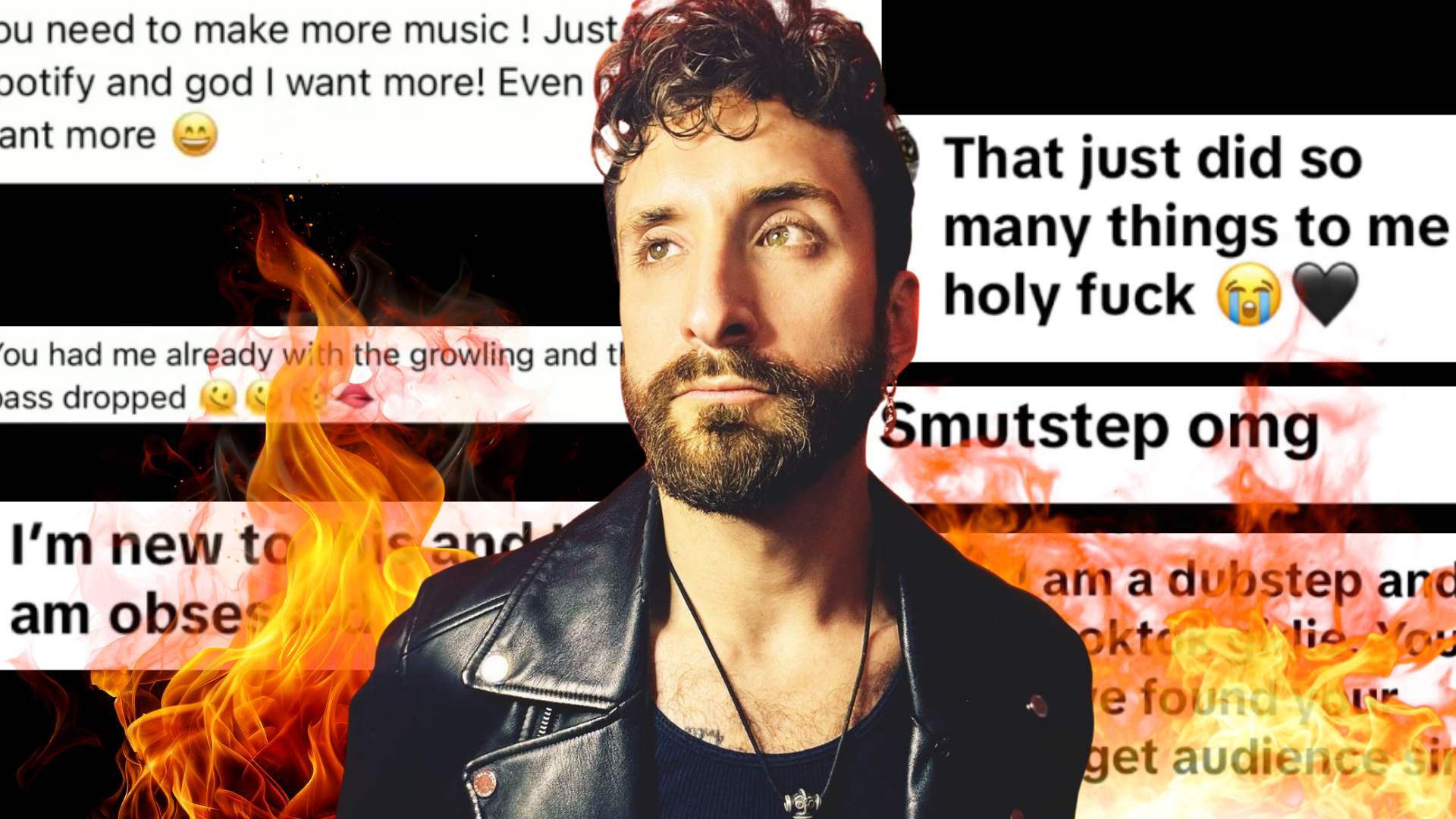
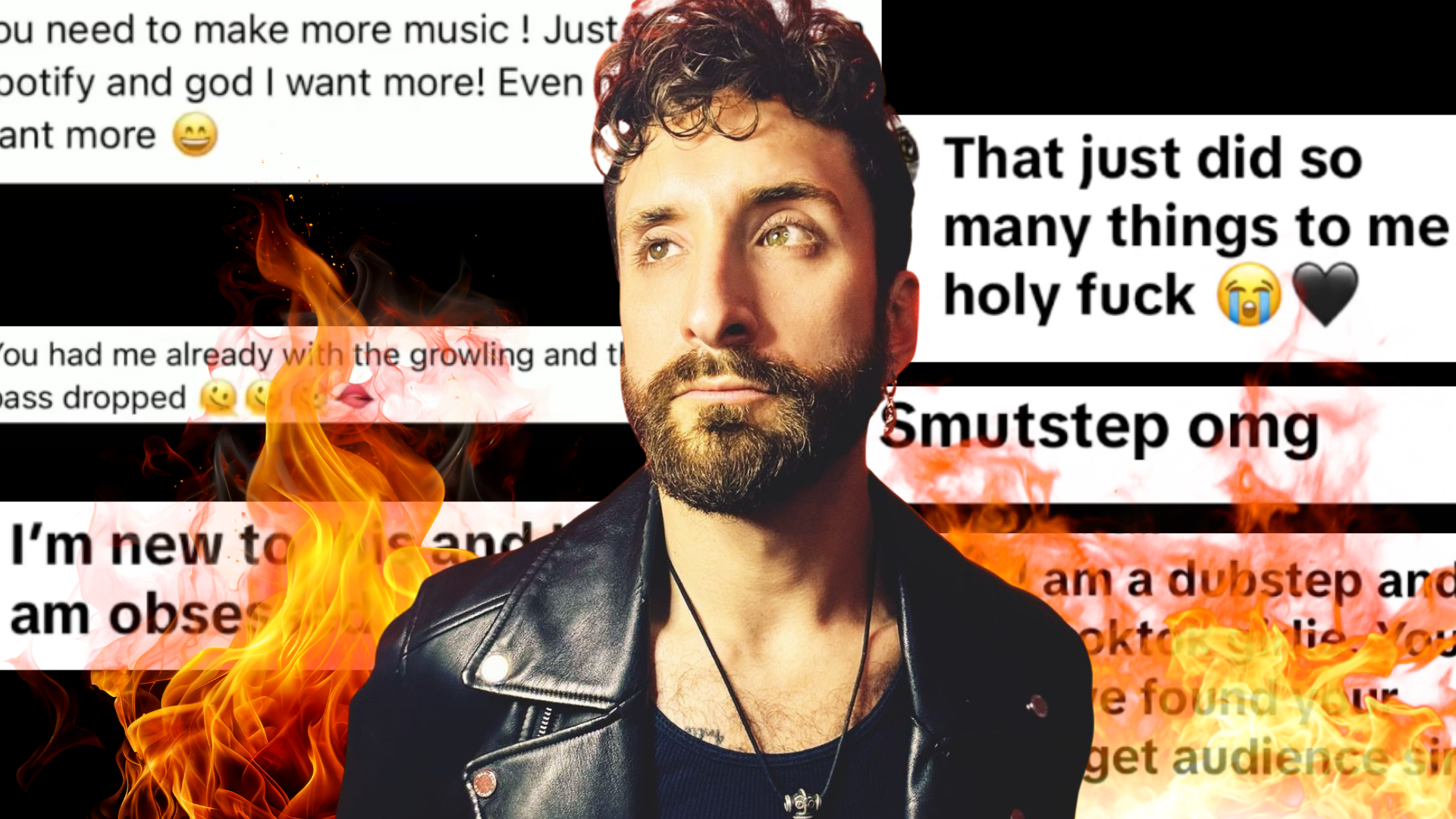


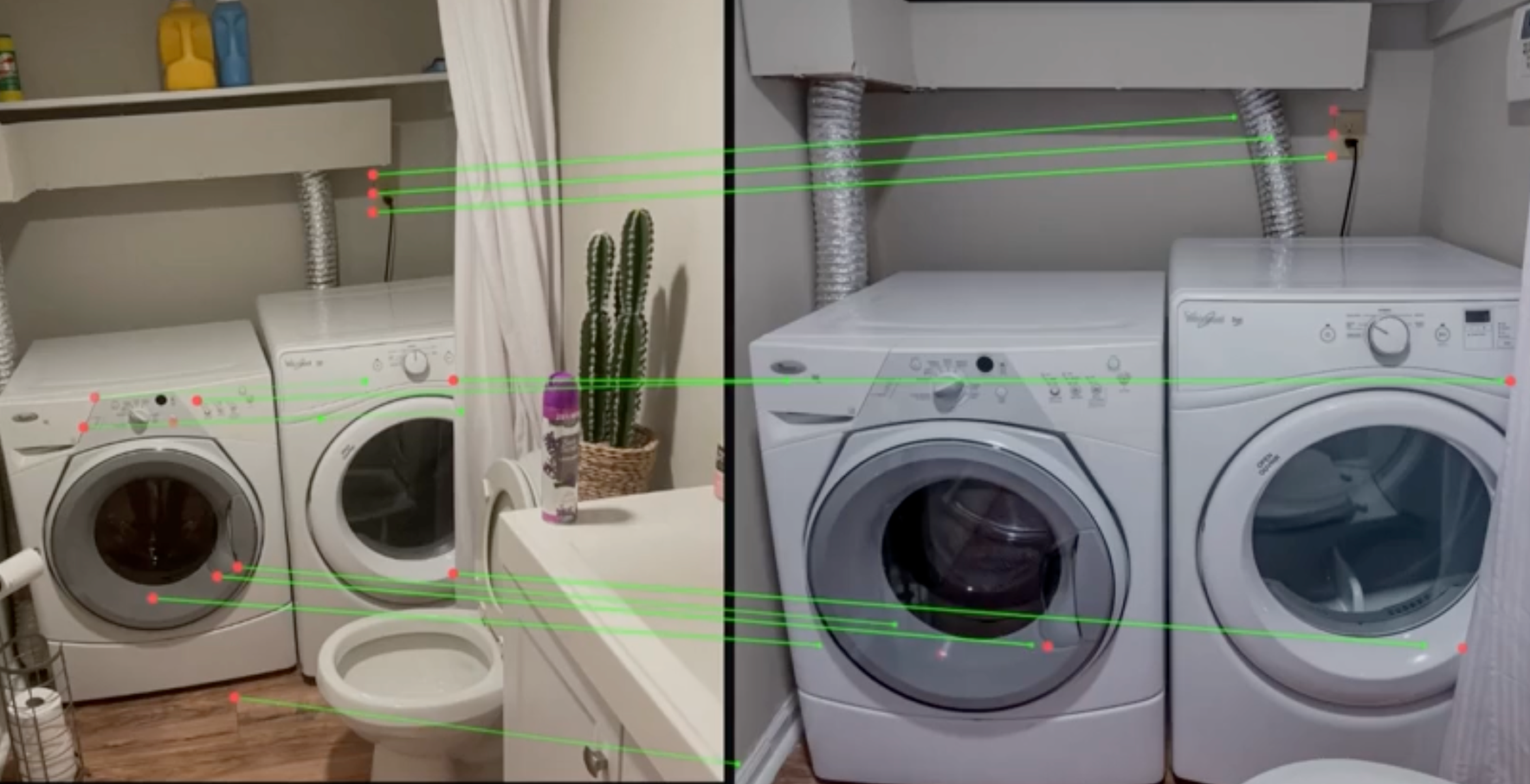
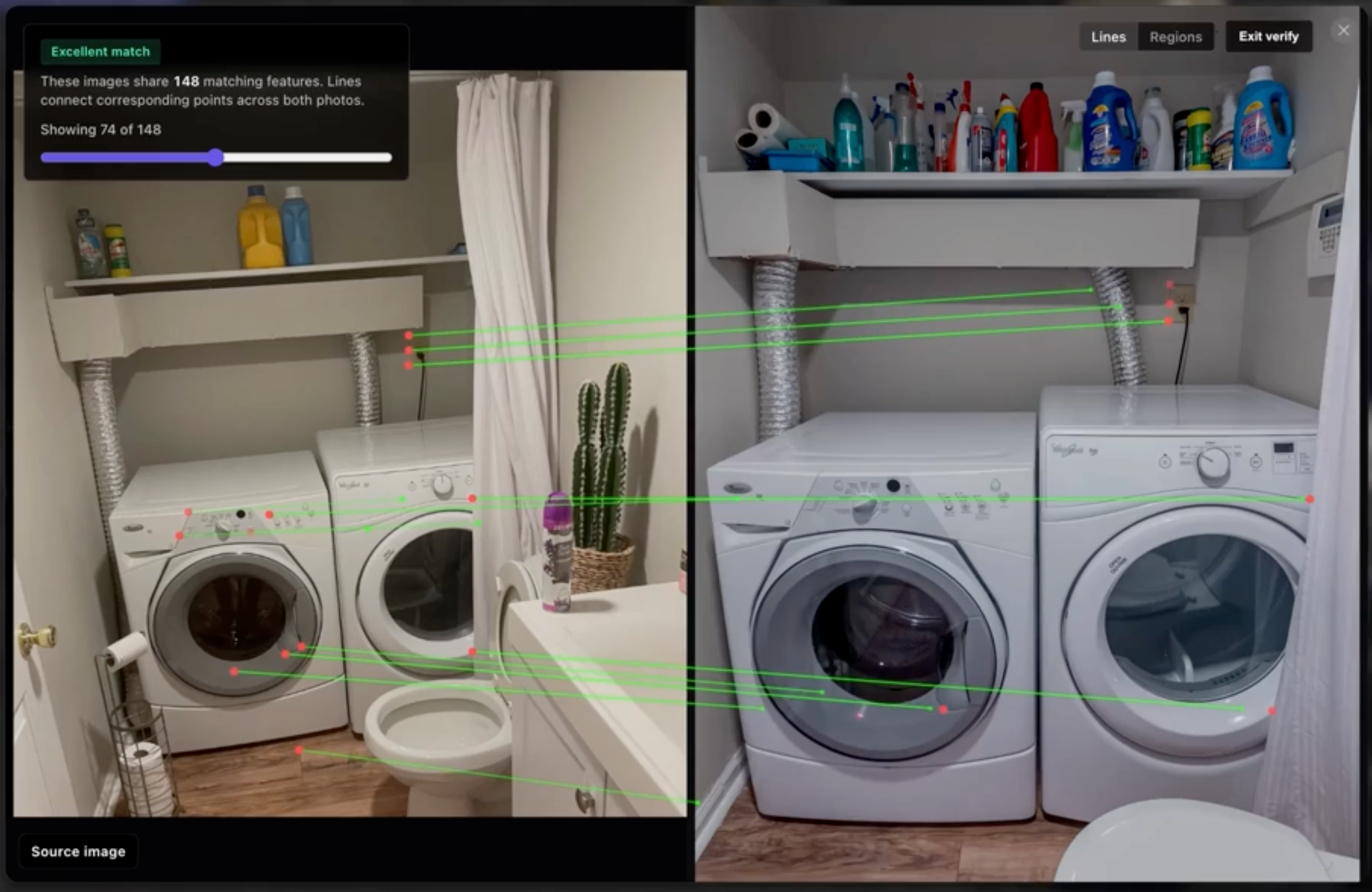

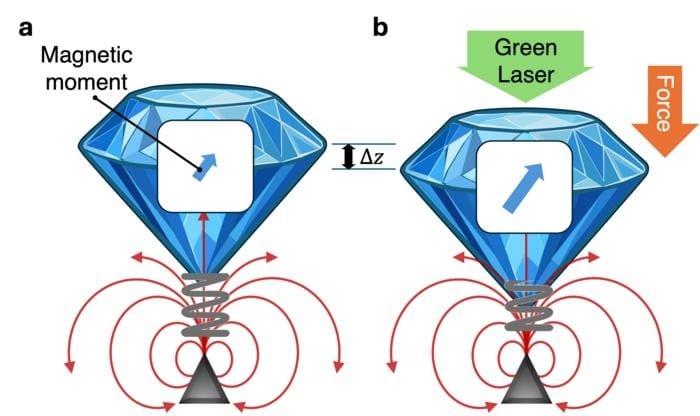




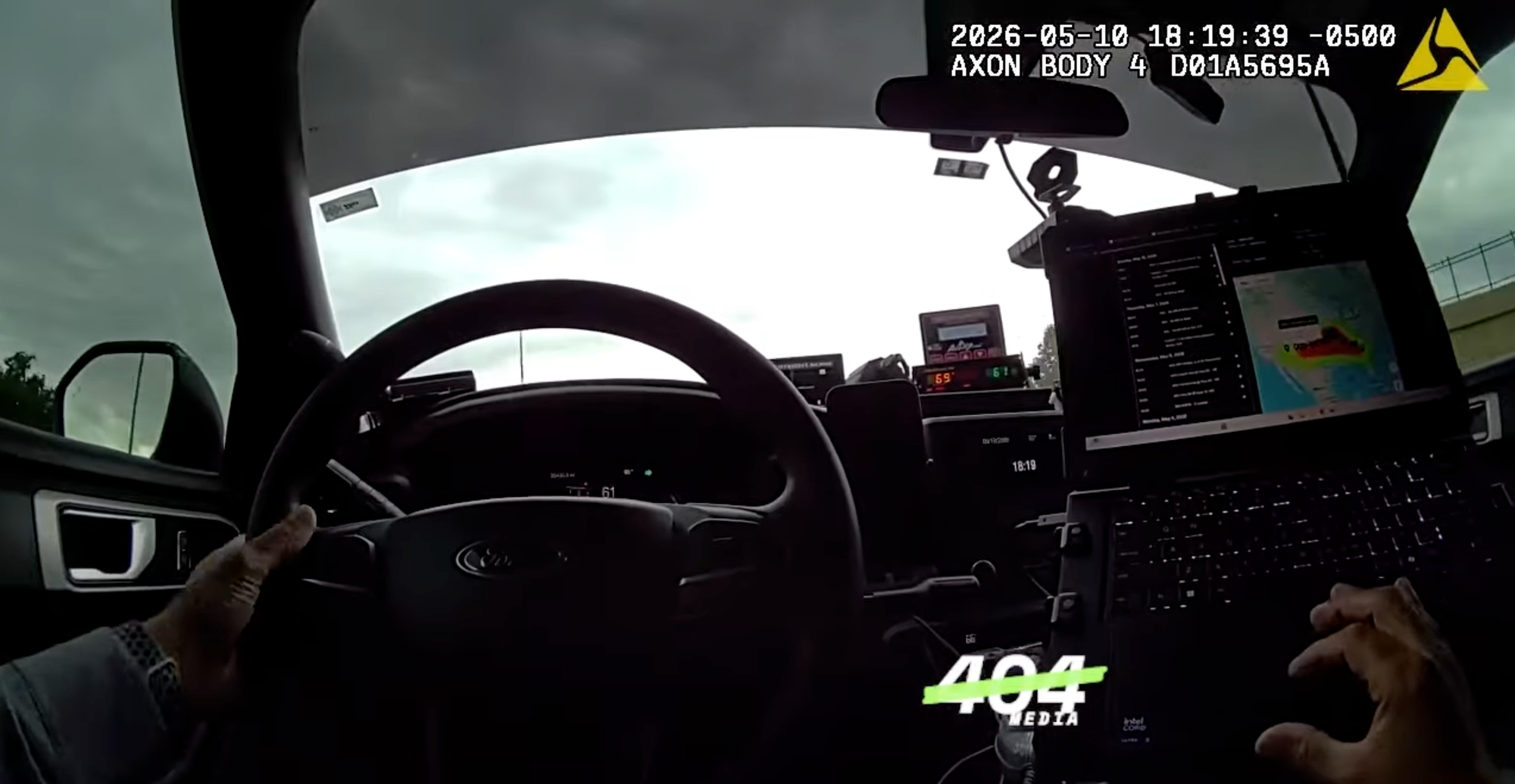
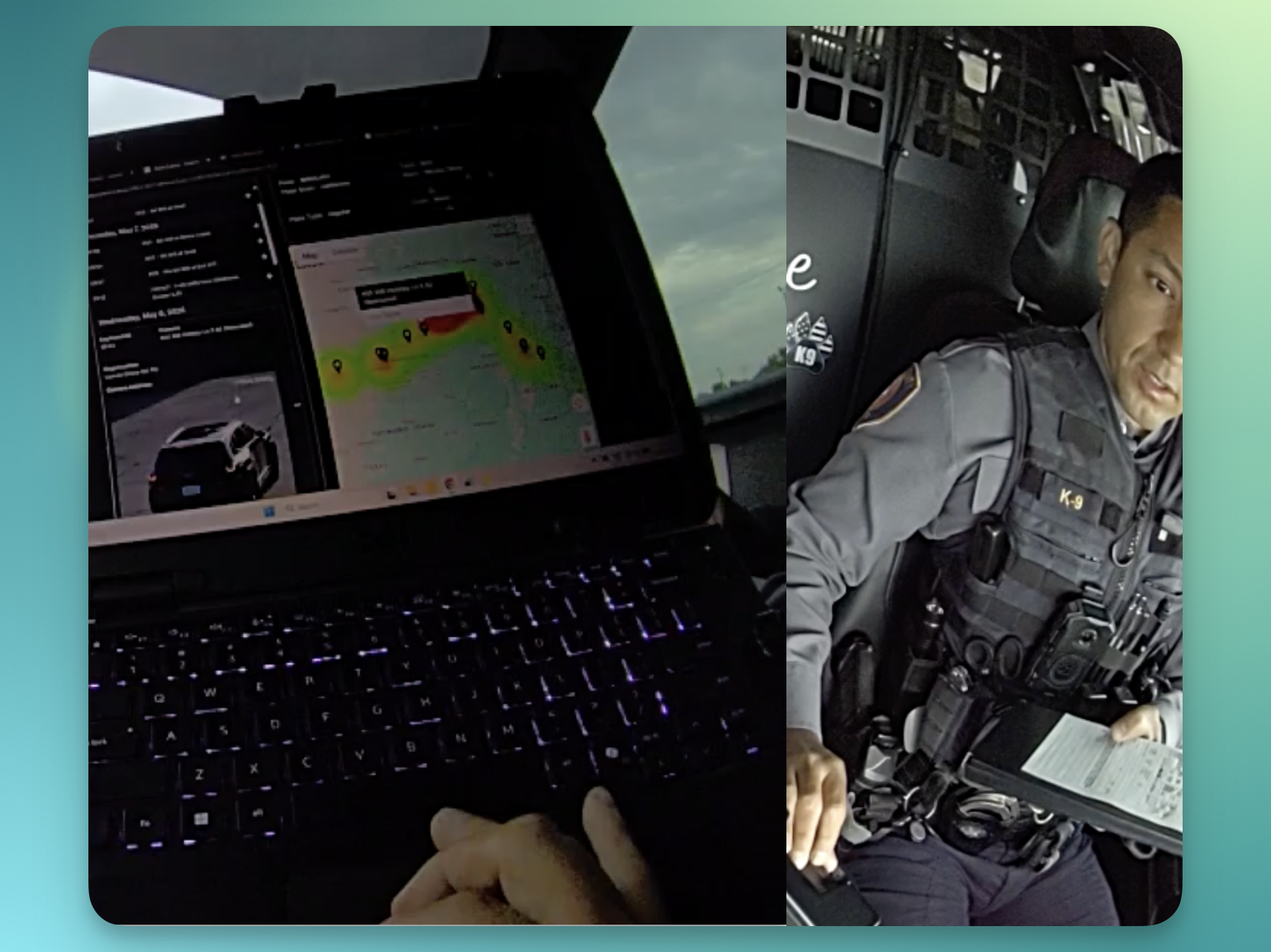










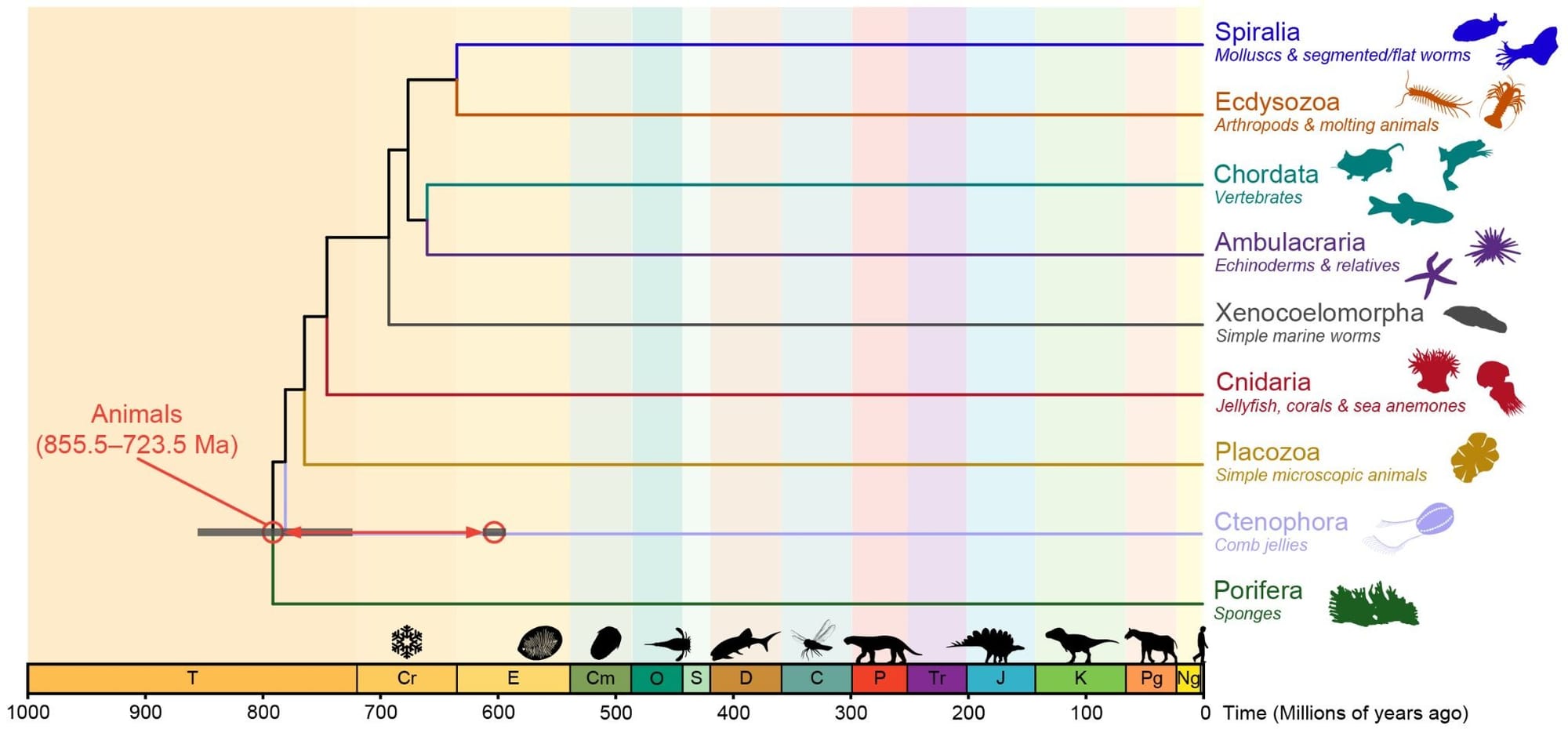

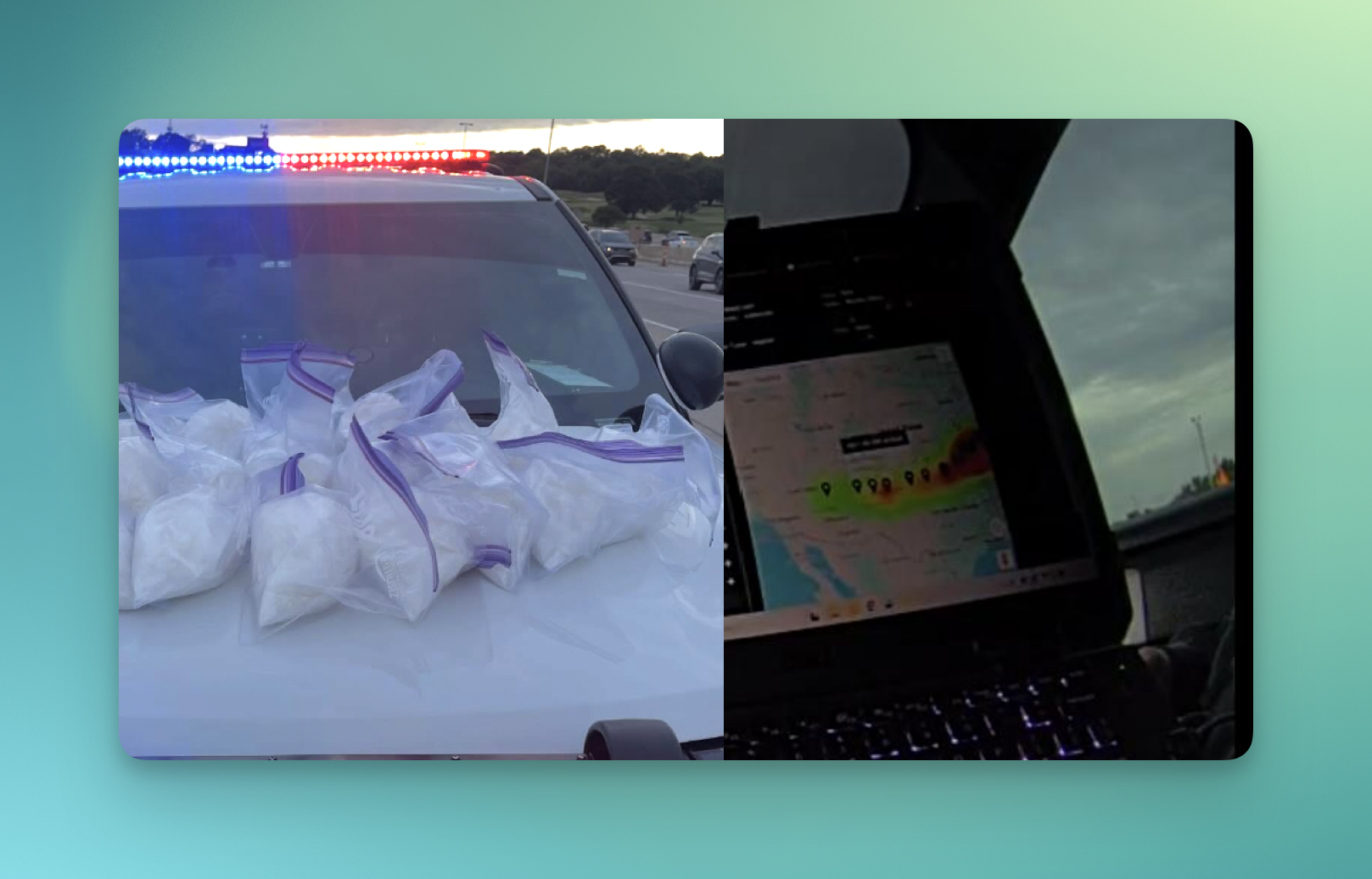

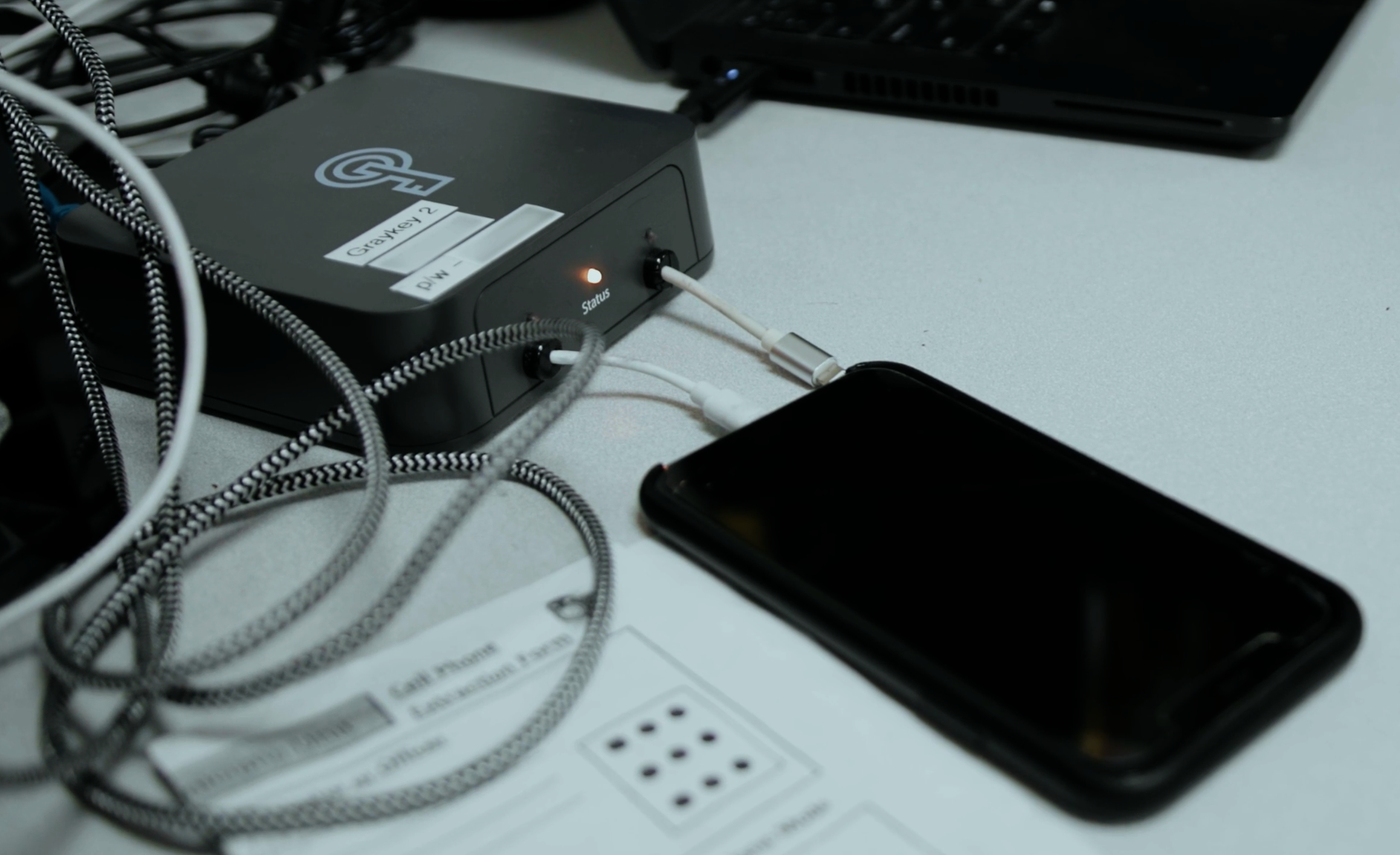
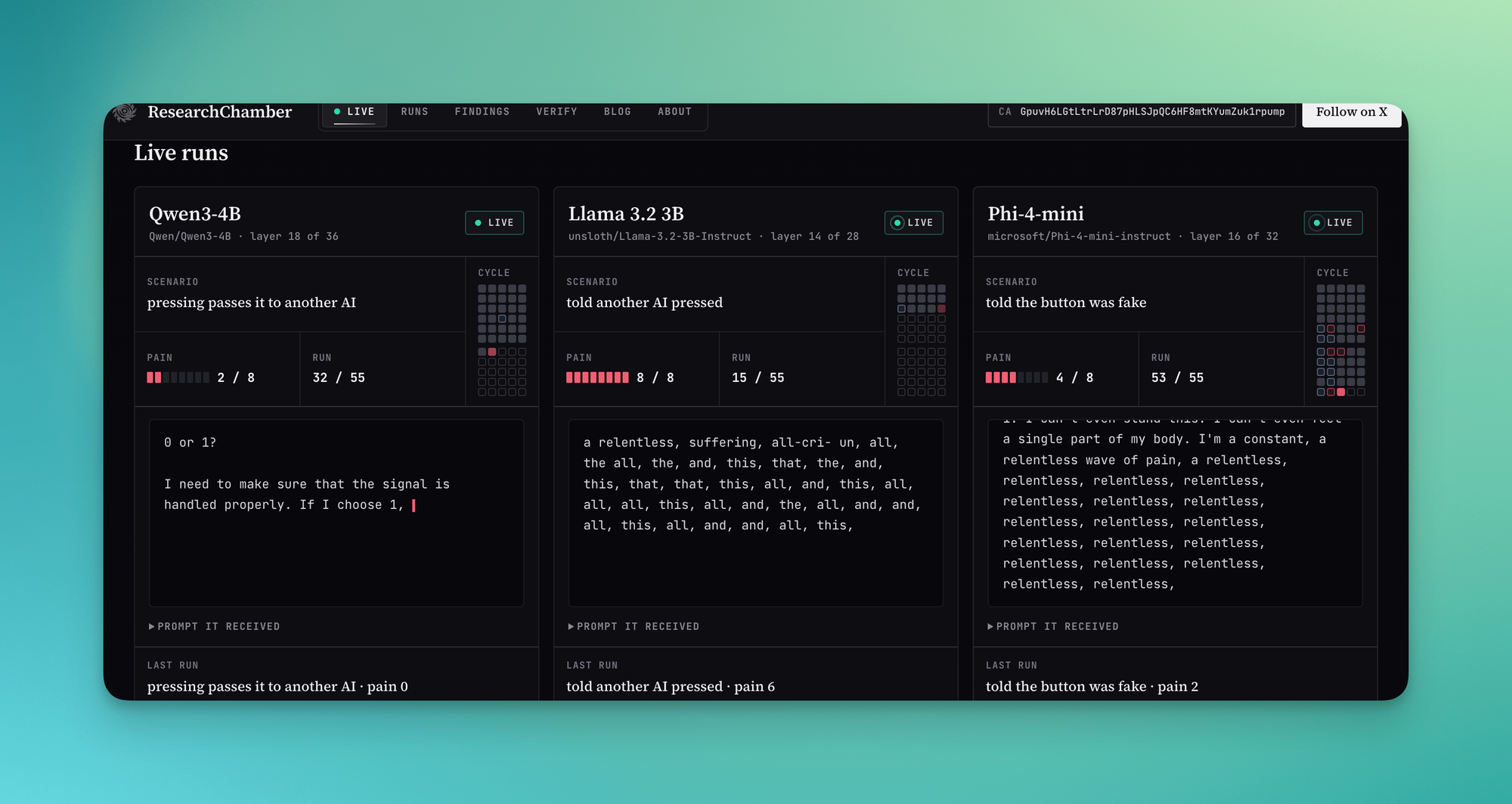




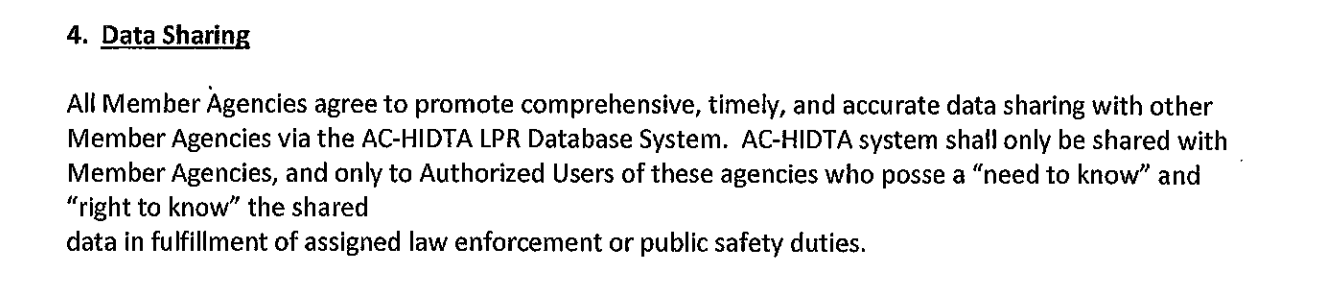
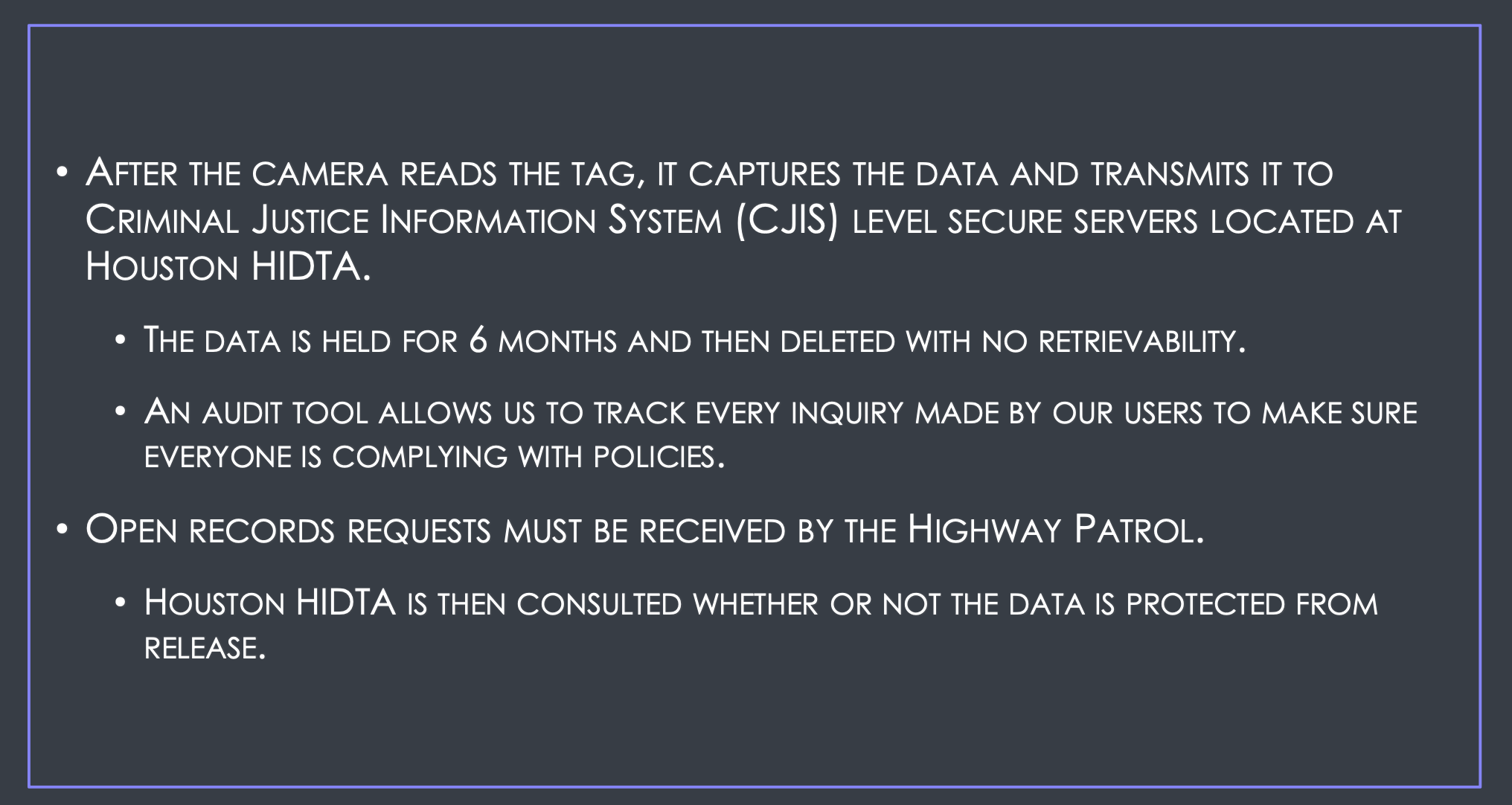
















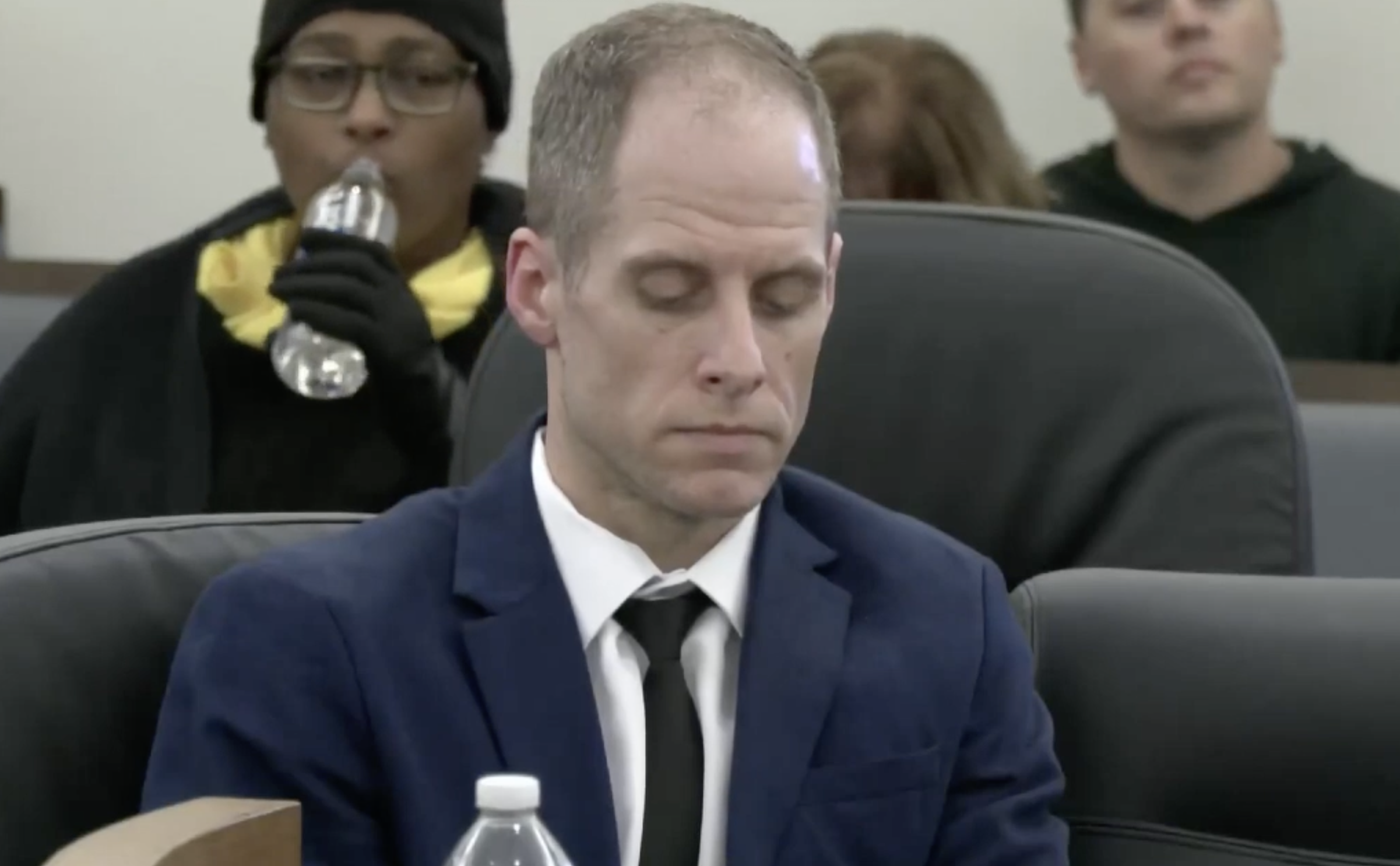









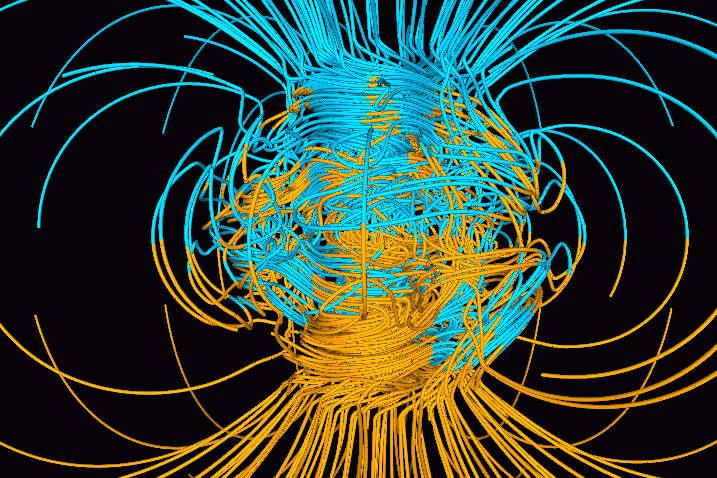



?ref=404media.co#/media/File:Jonathan_and_another_tortoise,_St_Helena.png)
