Inequality is bad for you, and new figures in the UK show that the number of years when people can live healthy lives have fallen everywhere and furthest in the country’s poorest areas. This is partly a lingering after-effect of COVID, but is mostly a result of cuts imposed on health services by the last government. The results are dramatic, with the average person in a wealthy area expected to enjoy almost 20 years more good health than someone in a more deprived area. The situation in the Unit
Inequality is bad for you, and new figures in the UK show that the number of years when people can live healthy lives have fallen everywhere and furthest in the country’s poorest areas. This is partly a lingering after-effect of COVID, but is mostly a result of cuts imposed on health services by the last government. The results are dramatic, with the average person in a wealthy area expected to enjoy almost 20 years more good health than someone in a more deprived area. The situation in the United States is similar, and declines in health have also been observed in Germany, Canada and the Netherlands.
“Reducing smoking and improving diet and physical activity can delay the onset of illness and improve day-to-day wellbeing,” notes this extremely commonsensical analysis from the UK healthcare think tank The Health Foundation. “Secure work, good-quality housing and supportive local environments all influence physical and mental health.”
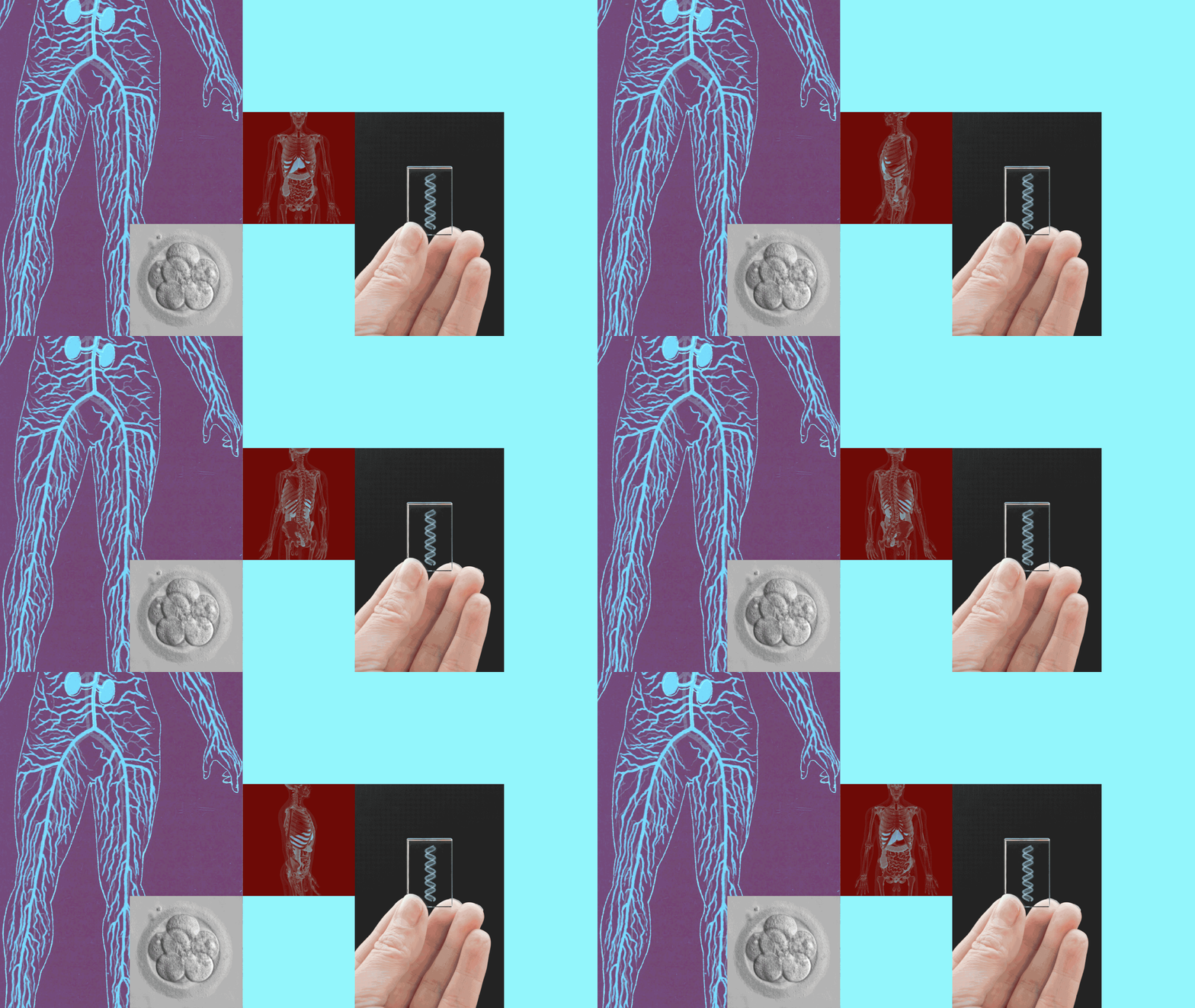
Being unhealthy is just terrible in all ways, and the problem is clearly getting worse, so you would expect the disrupters of our new economy to be finding ways to respond to this challenge. And at first glance, the Sam Altman-backed Retro Biosciences — with its focus on targeting “aging mechanisms to increase healthy lifespan” — looks promising. So does Altos Labs, with its mission to reverse “disease, injury, and the disabilities that can occur throughout life.” And there’s Saudi Arabia’s Hevolution, which is catalysing “the shift from lifespan to healthspan.”
And that’s before we get to the start-ups operating in a “free city” off the coast of Honduras, which has the brave approach of basically letting people do whatever medical research they like (“Prospera is a unique place where we can do such things,” says one businessman) to help drive progress towards an illness-free future.
But don’t get your hopes up. They’re not looking at ways to help people to get vaccinated, eat healthily, stop smoking or do more exercise. Instead, they’re working on gene therapy, stem cells, and other extremely expensive treatments that will only benefit people who can afford them, and who are thus already likely to be doing well. In the UK meanwhile, Genflow is also aiming to slow the ageing process in dogs, to make sure the super-rich aren’t left without their pets in this artificially prolonged future.
It’s tempting to see this as a metaphor for late-stage capitalism in the West, with its focus on the needs of the few (and their pets) rather than of society as a whole, except that we’re seeing a similar pattern in other places too. In Russia, Moscovites live longer than people from the provinces (although the picture is complicated by the relatively good health of the non-drinkers from Muslim regions), so you would have expected Vladimir Putin to be concerned about how to close that gap. But when he was chatting with Xi Jinping last year in China (where inequality has also harmed health), they were instead more focused on how to live forever.
“Human organs can be continuously transplanted, and people can live younger and younger, and even achieve immortality,” Putin said. (Three important questions: firstly, does this mean he will be president of Russia literally forever, the world’s first un-dead head of state? Secondly, are they farming people as a source of organs for him? Thirdly, does he really believe this?)
“This century, there's a chance of also living to 150,” replied Xi, who could — under that scenario — rule China for another 77 years, which is longer than he’s been alive, by which time his nation’s population could well, according to UN estimates, have halved.
I, for one, wouldn’t mind having a vote on whether this is a future I want to be a part of.
An insider betting scam
Here’s a fascinating piece of research from the Anti-Corruption Data Collective about prediction markets, looking at how often “long shot” bets on military and security matters pay off compared to what you would expect: fully 52% succeed, compared to only 14% across Polymarket as a whole.
“Government officials and members of our military being able to turn a profit on insider information incentivises corrosive corruption in public office and undermines national security,” notes David Szakonyi, Co-Founder of the Anti-Corruption Data Collective.
The analysis follows the indictment of a U.S. serviceman who made $400,000 betting on the bid to capture Nicolas Maduro in Venezuela, with 13 “yes” wagers on various aspects of the operation in December and January. And that was only a comparatively small military campaign. Just imagine how much money privileged insiders could have made in the past, if only they’d had access to prediction markets before D-Day, before the first nuclear bomb test, or before the assassination of Archduke Ferdinand in Sarajevo.
I really enjoyed this recent episode of Planet Money about prediction markets, particularly with its clear explanation that — like so much “financial innovation” of the past — they’ve not invented anything new at all; they’ve just found a clever way around regulations that previously stopped people making bets in this way.
There is fierce competition between the two leading players — Kalshi and Polymarket — although they have common ground in one area: they bothemploy Donald Trump Jr.
Trump sues his own government
There are so many things happening in the United States at the moment that it’s hard to keep track, but I did like this analysis from David Allen Green of a particularly strange lawsuit, in which President Trump is suing the federal government for $10 billion. The judge is, unsurprisingly, concerned about a situation where the president is basically suing himself, and wants more information about how that’s going to work.
This could, however, be a whole new money-making front for the first family, and why should the Trumps stop at just $10 billion? They could presumably take the government for every penny it’s got. I’m amazed no one has done this before.
A version of this story was published in this week’s Oligarchy newsletter. Sign up here.
A coup is underway in Mali, though it has not brought down the governing junta just yet. The country’s military leader, General Assimi Goïta has, after days in hiding, appeared in public to claim, unconvincingly, that the “situation is under control.” But rebel forces — an alliance of Al-Qaeda affiliates and Tuareg separatists — have taken over provincial cities and are calling for a blockade of the capital Bamako. Mali’s military junta hangs on by a thread, in a familiar regional story of viole
A coup is underway in Mali, though it has not brought down the governing junta just yet. The country’s military leader, General Assimi Goïta has, after days in hiding, appeared in public to claim, unconvincingly, that the “situation is under control.” But rebel forces — an alliance of Al-Qaeda affiliates and Tuareg separatists — have taken over provincial cities and are calling for a blockade of the capital Bamako. Mali’s military junta hangs on by a thread, in a familiar regional story of violence, civilian suffering and international intrigue.
On April 25, coordinated attacks across Mali exposed the junta’s fragile hold over the country. Jamaat Nusrat al-Islam wal-Muslimin (JNIM), the al-Qaeda affiliate that has driven insurgency across the region for over a decade, joined forces for the first time with Tuareg separatist groups — who have been fighting the central government for even longer — to simultaneously strike cities hundreds of miles apart, including the capital Bamako, Gao, Kidal, Sévaré, and the garrison town of Kati. A suicide car bomber drove into the residence of defence minister General Sadio Camara, killing him along with his wife, two grandchildren, and several civilians. Camara was one of the most influential figures in Mali's ruling junta and had been widely seen as a possible future leader of the country. He was also the key architect of Mali's military alliance with Russia. Mali, Burkina Faso and Niger, which together form the Alliance of Sahel States (AES), have all in recent years realigned away from France, the former colonial power in the region, and towards Russia.
Russian mercenaries, in the form of the Wagner Group and more recently the Africa Corps, have backed military juntas in the Sahel, after coups in Mali, Burkina Faso and Niger led to the withdrawal of French troops from France’s former colonies. But during these latest rebel strikes, it was Russian fighters that were chased out of the northern city of Kidal to the sound of jeers. Africa Corps, the Kremlin-controlled paramilitary group, described the insurgent attacks as a "coup attempt" backed by "Western intelligence services." RT amplified these claims, accusing France and the West of orchestrating the violence, even as it claimed Russian fighters successfully repelled rebels. In 2024, Ukraine’s military agency said it had provided information to help Tuareg rebels ambush and rout a Wagner convoy, killing dozens of Russian mercenaries. Both Mali and Niger have cut diplomatic ties with Kyiv. Burkina Faso has described Kyiv as a destabilizing force in the region, making the Sahel effectively a front in Russia’s war with Ukraine.
The Kremlin’s combination of misinformation and mercenaries helped exploit growing anti-Western sentiments in the Sahel to give Russia a propaganda win in the region. Former colonial powers such as France didn’t help themselves, as can be seen even now in Madagascar, the latest nation to expel a French diplomat and accuse Paris of fomenting unrest. But the success of Russian propaganda hasn’t been matched on the ground. As Mali struggles to contain a rebel alliance that has fresh impetus and energy, Moscow’s control is weakening and the effectiveness of its military support is under question. Already, with Russian weapons in short supply because of war with Ukraine, it is China that the Malian junta turns to for arms. China’s strategic efforts in the Sahel have been similar to its efforts in the rest of the African continent – a focus on securing infrastructure contracts as part of the Belt and Road Initiative and securing access to mineral resources. But rebel attacks in the Sahel are bad for Chinese business. In February, the Chinese embassy in Niamey, the capital of Niger, warned Chinese companies to take their workers out of the firing line as rebels increasingly targeted Chinese infrastructure projects, including a $4.5 billion oil pipeline from Niger to Benin.
In 2024, the United States was forced to leave neighboring Niger after a coup, to withdraw from a $100 million base. It seemed the U.S. was losing ground to both Russia and China in the Sahel. Earlier this year, though, as security concerns in the Sahel escalated sharply, the U.S. adjusted its approach, choosing to deal pragmatically with military juntas. By late February, the U.S. lifted sanctions on top Malian officials, including General Camara, the recently slain defence minister. It may see closer cooperation with Sahel countries as essential to its security interests and a way to undercut Chinese access to Sahelian resources.
The three Sahel states, Mali, Burkina Faso and Niger, have turned away from France and Europe and towards Russia, while increasingly flirting with the U.S. and reliant on Chinese weapons. The result has been disaster. All three Sahel states are ranked in the top 5 for countries impacted by terrorism. And the humanitarian toll has been severe. Millions of people face internal displacement across the region and cuts in aid programmes mean many millions, especially children, also face acute hunger. But, as the great powers circle the region, jockeying for geopolitical gain, the talk remains about the logistics of propping up failing juntas, providing military solutions to human crises, and maintaining power rather than confronting problems.
Mali, Burkina Faso and Niger – all led by military authorities that came to power in a coup – have also isolated themselves from the rest of their neighbors by withdrawing from the West African regional bloc, Ecowas. Meanwhile, they sell their model as an alternative to Western-style democracy, a narrative that Russian propaganda networks have been all too eager to promote. But the strength of the insurgency against Mali’s government, and Russia’s apparent inability to protect it, sends a different message to the rest of the African continent.
Donald Trump and the crypto world have done well out of each other. The Trump family has made profits of several billion dollars, and ‘cryptopreneurs’ have found the United States a newly supportive environment for their products. But the crypto world is not a single entity, and there are potential differences of opinion and approach between the parts that specialise in fraud, money laundering, and speculation (as well as the small number of societally beneficial uses), and a court case between
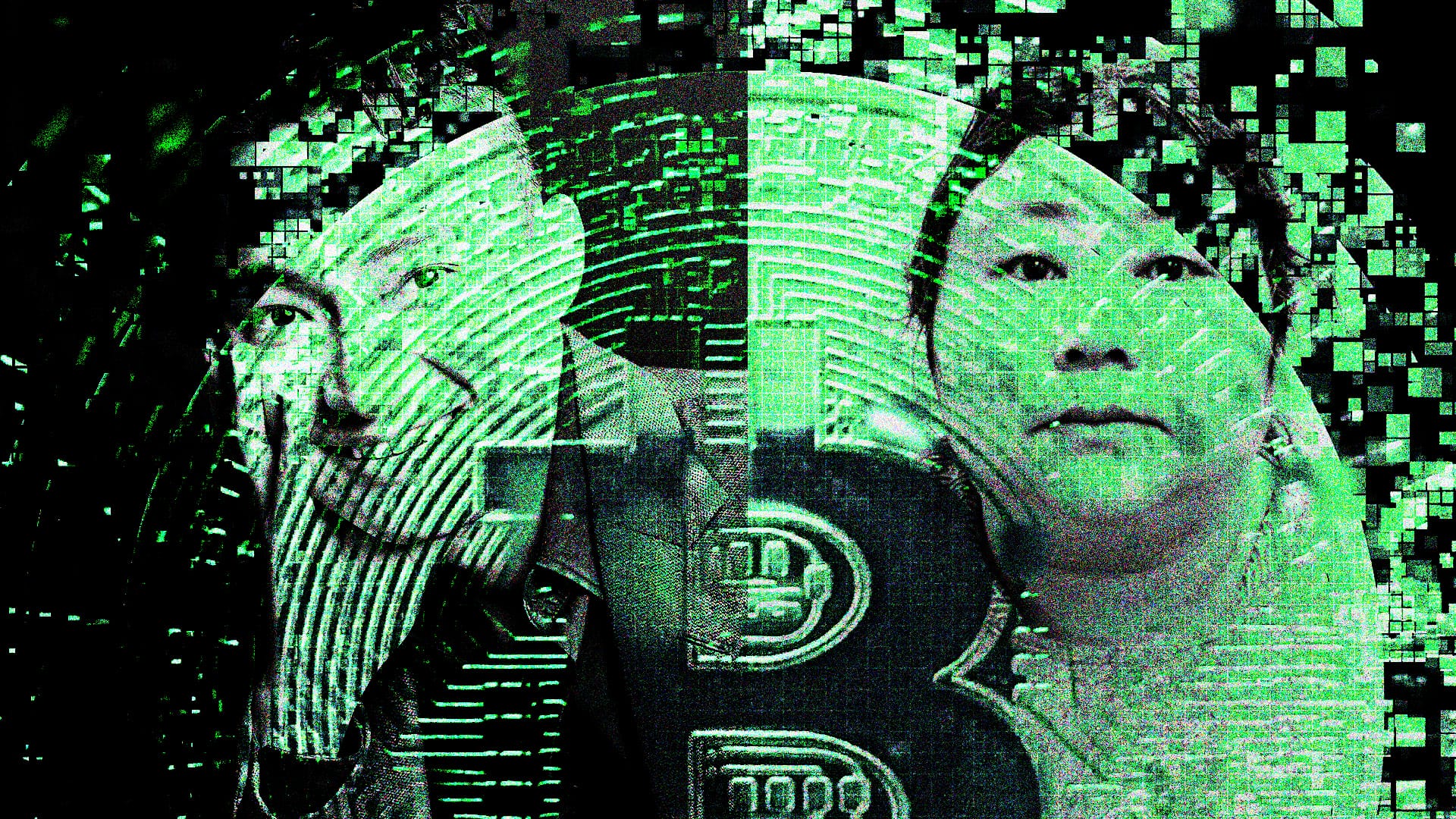
Donald Trump and the crypto world have done well out of each other. The Trump family has made profits of several billion dollars, and ‘cryptopreneurs’ have found the United States a newly supportive environment for their products. But the crypto world is not a single entity, and there are potential differences of opinion and approach between the parts that specialise in fraud, money laundering, and speculation (as well as the small number of societally beneficial uses), and a court case between billionaire Justin Sun and the Trump family’s World Liberty Financial threatens to blow those divides wide open.
Sun is a colourful gentleman and a firm favourite of this newsletter, thanks to his efforts to essentially buy the Pitcairn Islands, his voyage into kind-of space, his consumption of a $6.2 million banana, his stewardship of the Tron blockchain, his premiership of Liberland, and his frankly adorable continued usage of “H.E.” (his excellency) as a title despite losing his Grenadian ambassadorship three years ago after being accused of fraud by the Securities and Exchange Commission.
He also had a key role in transforming Trump from cryptosceptic into cryptoenthusiast after investing millions of dollars in World Liberty Financial in late 2024, which helped to persuade the president — then running for re-election — that there was money to be made on the blockchain.
Considering the improbability of the Trump family building an actually successful crypto company, and the strong likelihood World Liberty Financial would find a way to keep investors’ money as has happened with Trump ventures in the past, quite a lot of people assumed Sun’s money was in reality more of a gift than an investment. But it appears these doubters were wrong, at any rate that’s what it says in the suit that Sun has filed in California alleging that World Liberty Financial has abused his rights.
“Mr. Sun invested $45 million to purchase $WLFI tokens from World Liberty not only because of the project’s claims that it would promote adoption of decentralized finance… but also because of the Trump family’s association with the project,” his claim states. “But as Mr. Sun unfortunately has learned, World Liberty’s operators, including Chase Herro, see the project as a golden opportunity to leverage the Trump brand to profit through fraud.”
Sun has been careful to make clear this is not an attack on the president (“Unfortunately, certain individuals on the World Liberty project team have been operating the project in a manner that goes against President Trump’s values,” he posted on X), who is, he says, being betrayed by underlings — as autocrats have always been throughout history — but he is certainly airing a lot of dirty laundry, which is likely to upset influential people.
Perhaps the most significant allegations, which World Liberty Financial denies, is that the Trump family’s company is on the verge of collapse, having paid most of its money to its owners, and that it tried to extort money from Sun to keep it in business. This is not just significant for its investors but also for America’s diplomatic ties, since Abu Dhabi has invested $2 billion via World Liberty Financial’s USD1 stablecoin, and the United States can ill-afford to further irritate its allies in the Gulf right now.
The timing of the lawsuit is interesting. It was notable that, shortly after Trump returned to the White House, the Securities and Exchange Commission paused its investigation into Sun. In March, that investigation was finally wrapped up, with Sun paying $10 million but not admitting wrong-doing, so he is perhaps no longer concerned about facing legal action himself.
Sun was also a major investor in Trump’s memecoin, but is not the only person who seems to have soured on that particularly unlovely project. One of the perks of being an investor in the token is the right to have dinner with Trump, but the value of that ticket dropped this year to just $539,000 from $3.28 million in 2025, with the Financial Times quoting an expert as calling the friendship between Trump and the crypto-world “a shotgun marriage,” which seems fair.
The Trump family has, however, made $320 million in fees from the memecoin alone, so I suspect they’re not that bothered.
A tale of two scammers
There was, hard though it is to imagine, a time when Trump was just a strangely-tinted TV personality with strong views on where Barack Obama was born. And back then, in those prelapsarian days, 2014’s billion-dollar Moldovan bank fraud was a big deal. It’s great to see that mega-oligarch Vlad Plahotniuc has been jailed for 19 years for his involvement in a crime that ruined his homeland.
Moldova has struggled through the resulting period of economic, financial, diplomatic and political turmoil, and it was great to see that Viktor Orbán’s defeat in Hungary has meant it can make progress on its movement towards membership of the European Union.
The other mastermind of the bank fraud is pro-Kremlin politician Ilan Shor who was convicted and sentenced in absentia. He remains, of course, at liberty. Though his A7A5 sanctions-evading cryptocurrency has still not recovered the trading volume it had before the recent hack of the Grinex trading platform where people bought and sold it. Grinex blamed the hack on Western intelligence agencies, but Chainalysis has an interesting alternative explanation, based on the fact that A7A5 is gradually being squeezed by Western sanctions (including the latest ones from the European Union).
“Faced with mounting international pressure and a shrinking operational footprint, actors associated with Grinex could be using the guise of an alleged hack to quietly siphon liquidity and execute an exit scam,” Chainalysis suggested. I’m not saying that is what happened and to be honest, I think it’s more likely that this was the handiwork of Ukrainian hackers or standard financial criminals. I mention it, however, because Shor does have a previous record when it comes to setting up a money laundering scheme and then defrauding everyone who was foolish enough to trust him with their money.
The billion-dollar bank fraud was a clever way to profit out of the ‘Moldovan Laundromat,’ which had been allowing Russians to smuggle money out of their homeland before Shor and his co-conspirators destroyed the Moldovan banking system and stole everyone’s cash. It would be remarkable if he had basically done the same thing for a second time with his stablecoin. Crypto people call it a rug pull.
A version of this story was published in this week’s Oligarchy newsletter. Sign up here.
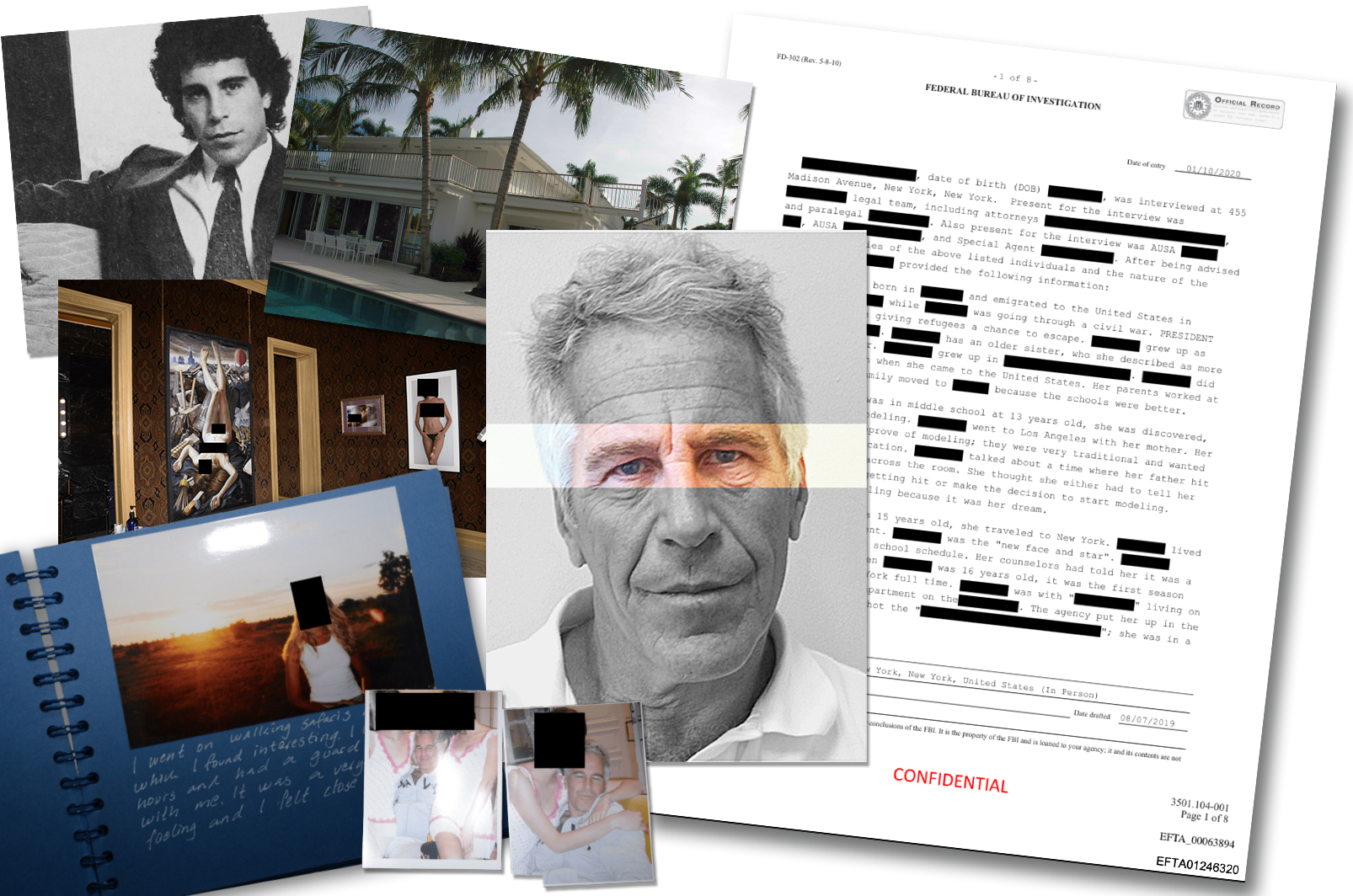
It starts with a simple search term in the Department of Justice’s Epstein Library. “Blue eyes.” Hundreds of results. Jeffrey Epstein’s international trafficking agents send him pictures and descriptions of blue-eyed young girls: potential victims to be dispatched to his various homes. “I spotted two skinny blond blue eyes 21 years old ladies in Monaco last weekend and asked them for CVs,” one agent, whose name has been redacted, wrote. “Trying her best to move from her small town to Moscow;
It starts with a simple search term in the Department of Justice’s Epstein Library. “Blue eyes.” Hundreds of results. Jeffrey Epstein’s international trafficking agents send him pictures and descriptions of blue-eyed young girls: potential victims to be dispatched to his various homes. “I spotted two skinny blond blue eyes 21 years old ladies in Monaco last weekend and asked them for CVs,” one agent, whose name has been redacted, wrote. “Trying her best to move from her small town to Moscow; English isn't great. Could be fun for Paris, blue eyes,” wrote another. “Can't understand if her breast is real. Otherwise very pretty and sweet…Very blue eyes as we like.”
One of Epstein’s victims wrote of being chosen for her eye color in a journal entry later shared with federal prosecutors. "Superior gene pool?!? Why me?" she wrote, describing Epstein's worldview as "Nazi like." "It makes no sense. Why my hair color and eye color?"
Epstein — himself blue-eyed — seemed to prefer both his victims, and the people he bankrolled, to have blue eyes. “All of my fundees have blue eyes,” he boasted in one email. In the entryway of his Manhattan townhouse, he displayed dozens of prosthetic eyeballs in a frame. Epstein made notes and sent article links to his contacts asking if having blue eyes meant you were more intelligent or a “genius”. He even had a list of scientists and tech leaders with blue eyes — including Elon Musk, Peter Thiel, and Google’s Ray Kurzweil. “Total — 70 people Blue eyes — 41 Unclear (might be blue, but not 100% sure)” the list says. Appearing in the files — whether on this list or elsewhere in Epstein's records — does not connote legal wrongdoing.
Going deeper into the files, Epstein and his network of contacts discussed beliefs about how physical characteristics and race might denote intelligence. They exchanged emails about population control. They spoke of engineering women’s sex drives, building designer babies, and living in a world full of superintelligent humans that could merge with robots. They spoke of getting rid of the elderly, the infirm, and the poor.
The files offer a glimpse into a world where ideas about eugenics and race science have never gone away. On the contrary, they run through our elite universities, through the most powerful companies in Silicon Valley, and through the tech industry itself. Epstein’s was an exclusive club that counted among its members people who harbor dreams of re-engineering human minds and bodies, seizing control of our collective future, and building technology that, they hope, will one day merge with — or even replace — all of us.
Jeffrey Epstein, 27. Jeffrey Epstein's mansion El Brillo Way in Palm Beach. U.S. Virgin Islands, Department of Justice, Sexual Offender Registry Photograph.
In 2002, two decades before the launch of ChatGPT, Epstein hosted an Artificial Intelligence summit on his Caribbean island. In the years that followed, he cultivated close, regular contact with a network of (predominantly male) scientists, researchers, academics and tech leaders working at the vanguard of AI, biotech, genetics and cognitive science, meeting them at universities like Harvard and at his various homes.
In August 2018, a year before Epstein was found dead in his jail cell, he was in email correspondence with software consultant and bitcoin investor Bryan Bishop about funding a project to create “designer babies” — children with genes cherrypicked for their looks, health, strength, immune systems, sleep needs and even, in Bishop’s imaginings, abilities to live on a different planet.
“Attached is the doc you requested, it's the "use of funds" spreadsheet for the designer baby and human cloning company,” Bishop wrote to Epstein. “This gets us out of our self-funded ‘garage biology’ phase to the first live birth of a human designer baby, and possibly a human clone, within 5 years. Once we reach the first birth, everything changes and the world will never be the same again.”
Bishop went on to discuss how his ultimate ambition was to make “practically unlimited modifications to the cells before generating an embryo.”
In response to a request for comment, Bishop sent Coda a publicly available set of answers to frequently asked questions about designer babies.
“The reason people have an aversion to eugenics, and rightfully so, is because countries used genocide and sterilization to prevent reproduction by populations that they didn’t like. We have no intention of doing anything of the sort,” Bishop writes in the public FAQ. “‘Designer baby’ simply describes a child whose genome has been intentionally altered or chosen by their parents, rather than left entirely to the genetic lottery of natural conception.”
“It’s such a great subject,” Epstein responded after he read Bishop’s proposal. “We need to get a read on legal. Can’t do anything where US rules apply to US citizens regardless of where [they are].”
Building a super-race of humans, and parachuting humanity into a different evolutionary era — or even obsoleting the human race as we know it — is a running theme in the Epstein files, and an increasingly prominent ambition for tech evangelists today.
“It’s eugenics all the way down,” said Jacob Metcalf, a founding partner at Ethical Resolve, a consulting firm working with tech companies to develop their ethics protocols. A common fantasy in tech circles, he said, is “to essentially control human destiny. And a lot of the times that human destiny is for humans to be replaced. That's the really bleak thing here. What could be more eugenic than getting rid of humans.”
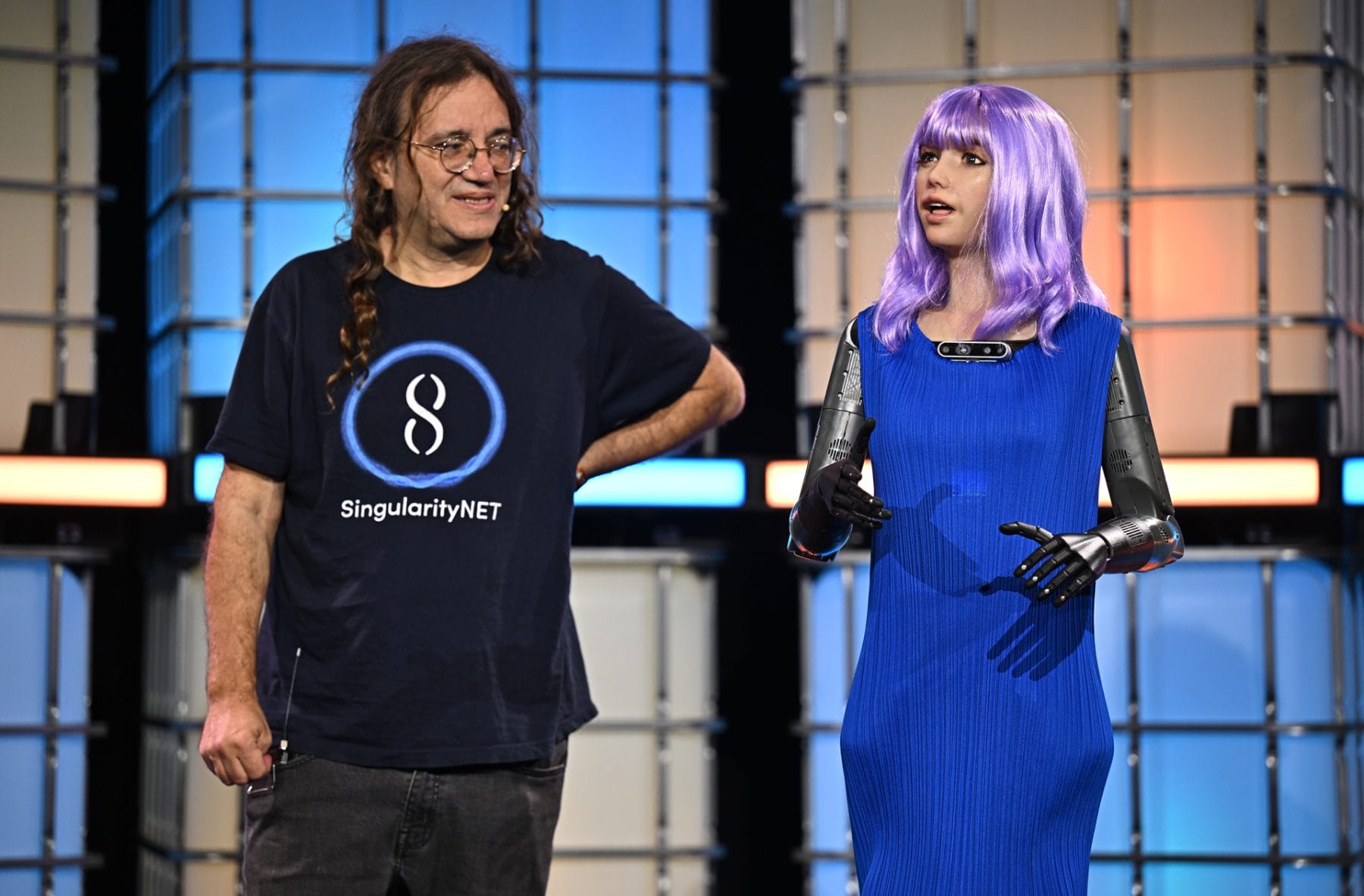
In 2008, Epstein began conversations with the computer scientist Ben Goertzel. Over the years, Epstein would send Goertzel more than $360,000 to fund the researcher’s plans to build towards Artificial General Intelligence (AGI), a term Goertzel himself popularized.
“I remain eager to move forward on working together to accelerate progress toward a human-obsoleting thinking machine,” Goertzel wrote to Epstein in May 2008. Eighteen years on, and the idea of obsoleting humans with artificial intelligence is widely discussed in the tech world.
When asked to comment on his exchange with Epstein, Goertzel told Coda: “I do think we will create forms of transhuman intelligence going beyond the scope of humanity as we know it, but I also very much hope and envision a strong role for humans even after this happens.”
Goertzel went on to describe a future where the world reaches the “Singularity” — a Silicon Valley buzzword signifying a tipping point where AI surpasses human intelligence. “I do think AI will eventually gain its own superhuman autonomy, but I think this can happen in a way that respects and nourishes human life rather than being harmful to it,” he said. “Epstein and I discussed this face to face a few times and indeed I was a bigger fan of the human species than he was, and more optimistic about its flourishing post-Singularity.”
In an email to Epstein, Goertzel laid out a scenario where AI systems would start running their own economic activity. He envisioned this Artificial Intelligence economy acting as a “parasite to overcome the regular human economy” that would eventually “gain its own superhuman autonomy.” The ideas Epstein and Goertzel exchanged mirror a broader conversation unfolding in the tech world that imagines a future where ultimately, human labour could be rendered superfluous, and ultimately be replaced by artificial intelligence and robots.
Together, Goertzel and Epstein also discussed modifying human brains — a concept popular in Silicon Valley today, where numerous brain-computer projects are researching ways to cognitively enhance the human brain, and alter human personality, memory, and mental capabilities.
In 2008, when Epstein told Goertzel he was “off to jail” for a year, after he was convicted of soliciting a minor for prostitution, Goertzel suggested the solution to his problems might one day be solved if human brains could be re-programmed.
Ben Goertzel with Desdemona the robot, at a tech event in Portugal in November. Sam Barnes/Sportsfile for Web Summit via Getty Images.
“According to my understanding, the girls you were involved with were old enough to know what they were doing, so society really has no ‘moral right’ to lock you up,” Goertzel wrote to Epstein. “This is a fucked-up society we live in. But past ones have really been no better -- the fault is really w/ the human brain architecture, which is precisely what I'm aiming to supercede in my AGI work.”
When asked to comment on these remarks — and in particular the implication that Epstein’s problems might be solved if his accusers' brains were one day re-engineered — Goertzel told Coda: “This was a general observation that the messed-up nature of our society generally is rooted in the way our brains have evolved... and that advanced tech will let us modify our brains to make ourselves and thus our society better. There was no implication intended (nor stated) that women’s brains are any more or less messed up or in need of improvement than men’s.”
Goertzel reflected that his comments on Epstein’s victims being “old enough” were “regrettable and unfortunate in hindsight,” adding that his impression was that Epstein had been involved with adult women, not “disgustingly curating high school students for sexual purposes. I should have paid more attention.”
In 2013, three and a half years after Epstein was released from jail, Goertzel approached Epstein for funding to build a “toddler robot”. Given Epstein’s criminal history of abusing minors, this has inevitably attracted attention online. “When we were discussing measuring the IQ of robot toddlers, the topic was never sexualized in any way,” Goertzel told Coda when asked about the project. “While I had nothing to do with Epstein's perverse sexual tastes or abuse of women, what I have read about his awful doings in the newspapers relates to his interest in teenage girls not toddlers.”
Epstein was particularly interested in funding projects that built — like Goertzel’s –- on transhumanist theories. Transhumanism is a worldview that captivates many of the most prominent tech leaders in Silicon Valley today. It believes in a future when the human body can be endlessly altered, genetically engineered, and ultimately fused with artificial intelligence.
“Transhumanism is a much more radical concept than eugenics,” explained Timnit Gebru, a computer scientist and researcher who has written extensively about eugenicist ideas within artificial intelligence. “In eugenics, you're trying to create a more superior human by breeding humans through generations. In transhumanism, you're trying to get rid of humans altogether.”
For transhumanists, she added, “their idea is to get rid of any undesirable properties they see with humans."
Perhaps the most well-known proponent of transhumanism in the Epstein files is Peter Thiel.
“I think you would prefer the human race to endure, right?” New York Times journalist Ross Douthat asked Thiel last year. “Uh—,” Thiel said. “This is a long hesitation!” Douthat said. “Should the human race survive?” “Yes, but I would like us to radically solve these problems,” Thiel said. “We want you to be able to change your heart and change your mind and change your whole body.”
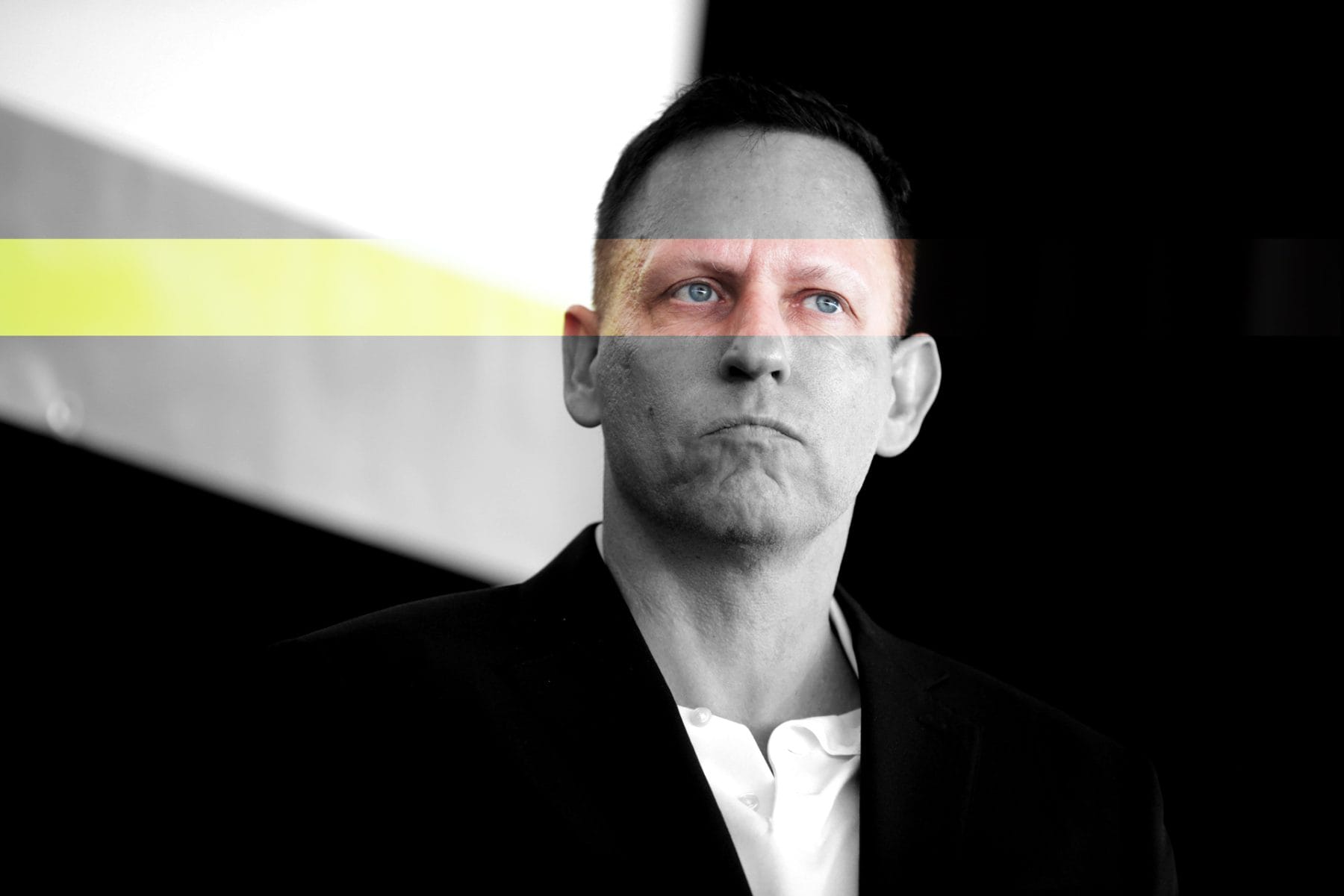
Peter Thiel. Creative Commons (CC BY 2.0) /Gage Skidmore.
Thiel’s name appears in the files more than 2000 times, and Epstein reportedly invested some $40 million into Valar Ventures, a firm co-founded by Thiel. The two spoke of building secret societies and shared an interest in transhumanism and cryogenics — Epstein wanted to freeze his brain and penis when he died, so that one day he could be revived, while Thiel has also stated his body will be frozen after his death.
They also appeared to share an interest in bringing an end to the democratic systems of today, imagining a different system altogether. Epstein, for his part, spent his life puppeteering the most powerful people in the world and undermining democratic systems. Thiel, meanwhile, first expressed his own anti-democratic views in 2009 when he wrote: “I no longer believe that freedom and democracy are compatible,” adding that since women were allowed to vote, the notion of a capitalist democracy became impossible. When the Brexit vote came through, Epstein wrote to Thiel: “Brexit, just the beginning.” Thiel asked — “of what”; Epstein said – “Return to tribalism, counter to globalization, amazing new alliances.”
Globalization — and the idea of internationally powerful governing bodies — is a worldview that both Epstein and Thiel seemed to distrust. In March, in a palazzo in Rome, a stone’s throw from the Vatican, Thiel gave one of his infamous lectures in which he espoused his views about an “antichrist” that gets in the way of technological progress. This antichrist, he suggested, could be an internationally powerful body; the product of globalization. I stood outside the palace as attendees — priests, students, researchers — mutely hurried out, refusing to speak to the cluster of reporters waiting for Thiel’s black Mercedes.
“He has a totally irrational side, which lives on fear, of what danger might happen,” one audience member told me of Thiel on condition of anonymity, recalling how, up close, Thiel looked haunted and ill. “His head is full of future scenarios, which is what’s killing him. I think he’s scared.”
Thiel did not respond to multiple requests for comment.
Epstein didn’t confine himself to lofty conversations about a future collapse of the global order or re-engineering humanity. He also had ambitions for his own personal eugenics project. In 2019, it emerged that he wanted to seed the world with his DNA — and reportedly have 20 women impregnated at a time at Zorro ranch, his New Mexico property.
Epstein tried to recruit Virginia Giuffre for this very project. He “fantasized about improving the human race by fathering children who carried his superior genes,” she recounted in her memoir, published posthumously late last year. “He’d talk about using his Zorro ranch as a literal breeding ground to propagate babies.” When Giuffre was 18 years old, she recalled, Epstein asked if she would carry his child and hand over all legal rights to it – “like a modern-day handmaid.”
Zorro Ranch, New Mexico. Diary of Epstein's victim.
In a haunting diary entry from another Epstein victim, written between the ages of 16 and 17 and shared with federal prosecutors, a girl describes being told she will be sent to Zorro ranch — possibly to participate in the very same project. “Go to New Mexico? What in the hell? This makes no sense. What about school?” she writes, describing how Epstein chose her for her hair color and eye color, and tried to convince her she would create “perfect offspring.”
The teenager chronicles her pregnancy, pasting a sonogram into the scrapbook, before giving a traumatic account of giving birth with Ghislaine Maxwell beside her. “Ghislaine said to push all the pain away. I don't understand. Blood and water all over the bed.” As the baby was born, she writes, Maxwell covered her eyes. “I saw between her fingers this tiny head and body in the doctors hands.”
The girl describes hearing the baby’s “tiny cries” before “they took her.”
“I’m nothing but your property and incubator,” the teenager writes of Epstein. The diary is a terrifying piece of evidence that appears to link to Epstein’s longstanding fixation with creating genetically bespoke humans. The diary author’s lawyers, Wigdor LLP, declined to comment.
Epstein’s fever-dreams of creating an army of children carrying specific genes reflect a broader trend of “pronatalism” — a movement historically tied to eugenics — that’s thriving in Silicon Valley.
Millions of dollars of funding are currently being poured into projects creating “superbabies,” while billionaire tech oligarchs including Elon Musk — whose name appears more than 1000 times in the files — reportedly want to use surrogates “to reach legion-level before the apocalypse.” Musk did not respond to requests for comment.
In the files, women appear either as victims, as objects, or as vessels for genetic engineering experiments. They are an inconvenient reality, people to be controlled and re-booted. Epstein wrote a 2013 email implying that women “are like shrimp. You throw away the head and keep the body.”
“The obsession with "artificial" life appears tied to a masculine desire to try control the production of life – ultimately ridding themselves of their dependency on women," said Gabriella Razzano, Co-Founder of OpenUp, a social impact tech lab based in Cape Town, who is also a senior advisor at the African AI Observatory. “I think there is important work to be done on tying the narratives that are very revealing in the Epstein files to understand how, and why, technology is being developed as it is.”
The trading of ideas about intelligence — both artificial and human — takes a particularly sinister turn in a 2016 exchange between Epstein and the cognitive scientist and AI researcher Joscha Bach, whose research Epstein funded to the tune of $300,000.
Bach writes to Epstein about a study claiming that “black children outperform white children in motor development, even in very poor and socially disadvantaged households, but they lag behind (and never catch up) in cognitive development even after controlling for family income.”
Epstein responds with racist ideas about his notion of how to “make blacks smarter”, adding — “maybe climate change is a good way of dealing with overpopulation. The Earth’s forest fire. Potentially a good thing for the species,” before contemplating a world with “too many people,” where “many mass executions of the elderly and infirm make sense.”
Bronze sculpture of a female torso Jeffrey Epstein's Manhattan residence.
Epstein then imagines creating a future “Übermensch” — a superior human with cherry-picked attributes. “What I like is the idea that ubermensch could be the melding of humans, put together in one brain,” Epstein writes. This bespoke human, he suggests, would include traits from marginalized groups, who he appears to believe have a stronger awareness of how to navigate power structures because of their historical exclusion. “An increased motor system, an increased awareness, an increased status calculator (Blacks, jews, women). Ubermensch could be the combination of the best of humans, not the best of a specific race or gender. Fun idea.”
Bach told Coda in a statement: “I was summarizing a scientific study in a private email. Studies like this get often abused in ideological discourse to justify discrimination, which I strongly oppose and condemn.”
“I am firmly opposed to any form of racial discrimination, and I reject the use of group-level statistical claims to make judgments about individuals or to justify unequal treatment.”
He continued: “It goes without saying that if global warming were to lead to a reduction in the human population, it would be accompanied by immeasurable suffering. Our civilization would break down, leading to a return to dark ages, in which the elderly and infirm were often killed, because people could not support them, and often did not care about supporting them. Every reasonable person understands that this is horrible and not desirable in any way.”
Epstein “was often callous about human suffering in a way that I found disturbing but worth understanding, as a window into the perspectives of the rich and powerful,” Bach added.
Alongside Epstein’s conversations about mass executions for the old and and the sick, he was also interested in Silicon Valley’s dream concept of living forever — he had numerous email conversations with the longevity guru Peter Attia about prolonging his own lifespan, and funded a Harvard project geared towards “the end of aging.” In an email to Attia, Epstein mused: “I’m not sure why women live past reproductive age at all.” Attia, who published a statement about his relationship to Epstein, did not respond to requests for comment.
This interest in “longevity” — living for as long as possible, even living forever, is popular among the elite precisely because they find themselves in an elite class, says David Robert Grimes, a scientist and disinformation expert who has written about longevity and race science in Silicon Valley. “They're both sides of the same coin — the Silicon Valley eugenics, and also the longevity stuff. They promote an idea that ‘we are exclusive and we are special',” he said. "It helps them to justify deep social inequality."
The tech elite did not inherit this ideology by accident. Stanford University, the intellectual heart of Silicon Valley, was once a major hub for the American eugenics movement, which later helped to inspire Nazi race laws. Stanford’s founding president, David Starr Jordan, was a prominent eugenicist, campaigning for forced sterilization of people with undesirable genetic traits. The university removed his name from its buildings in 2020 — but in Palo Alto, his beliefs did not disappear with the nameplate.
"Instead of eugenics we just call it longevity or biohacking," Christopher Wylie, the Cambridge Analytica whistleblower who has spent years investigating Silicon Valley's belief systems, said on a panel with me at a journalism conference last year. "It's the same."
The ideology Epstein bankrolled in private is being built in public. It’s a vision of the future in which a select few get to upgrade and extend their lives, while tightening their grip on the systems that determine which humans are worth investing in — and which are not.
It sounds like a dark sci-fi fantasy, except, as the files show, that fantasy is being funded and pushed into reality. Most of us will never be in the rooms where these ideas are discussed. All of us will live with the results.
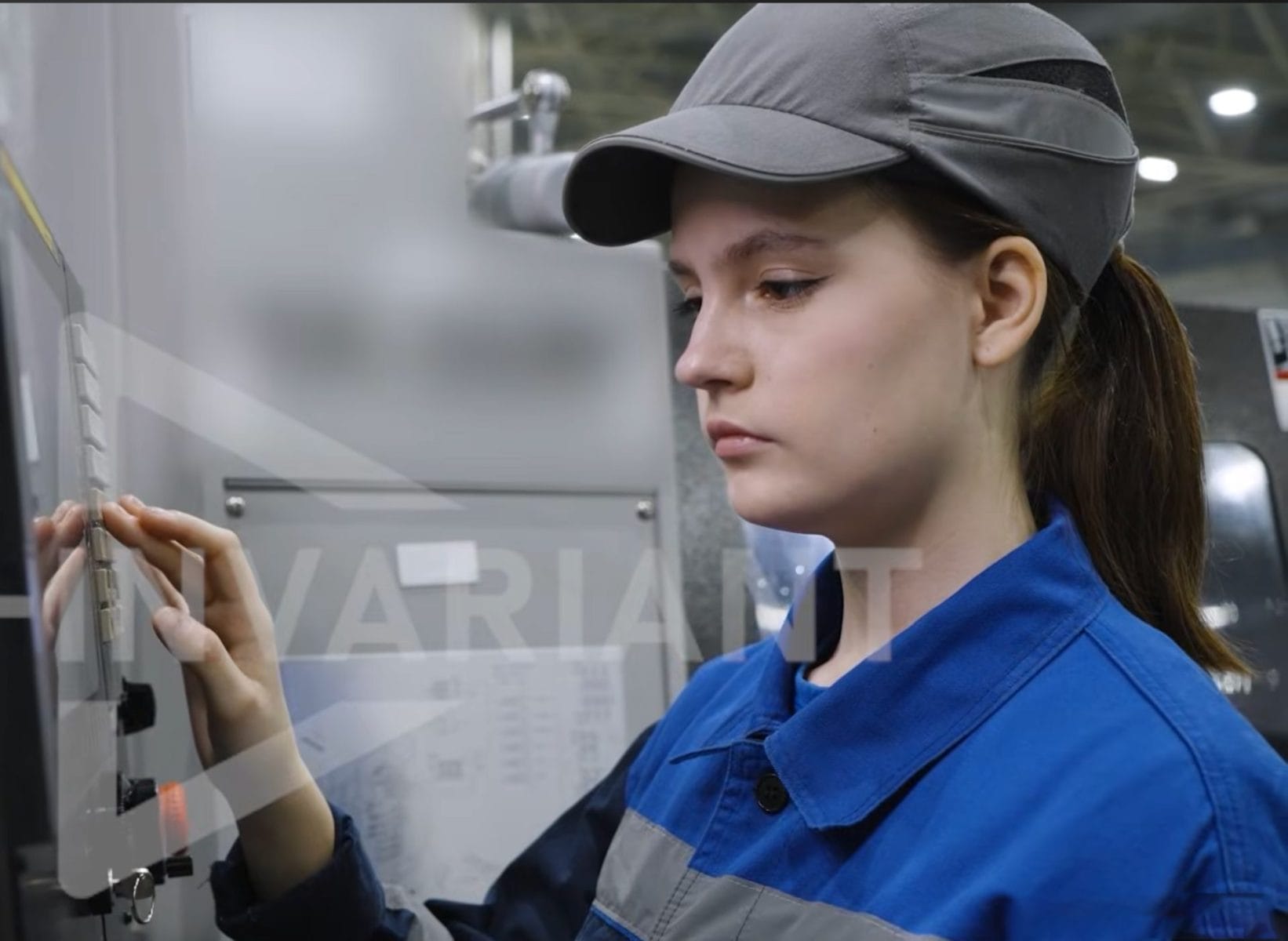
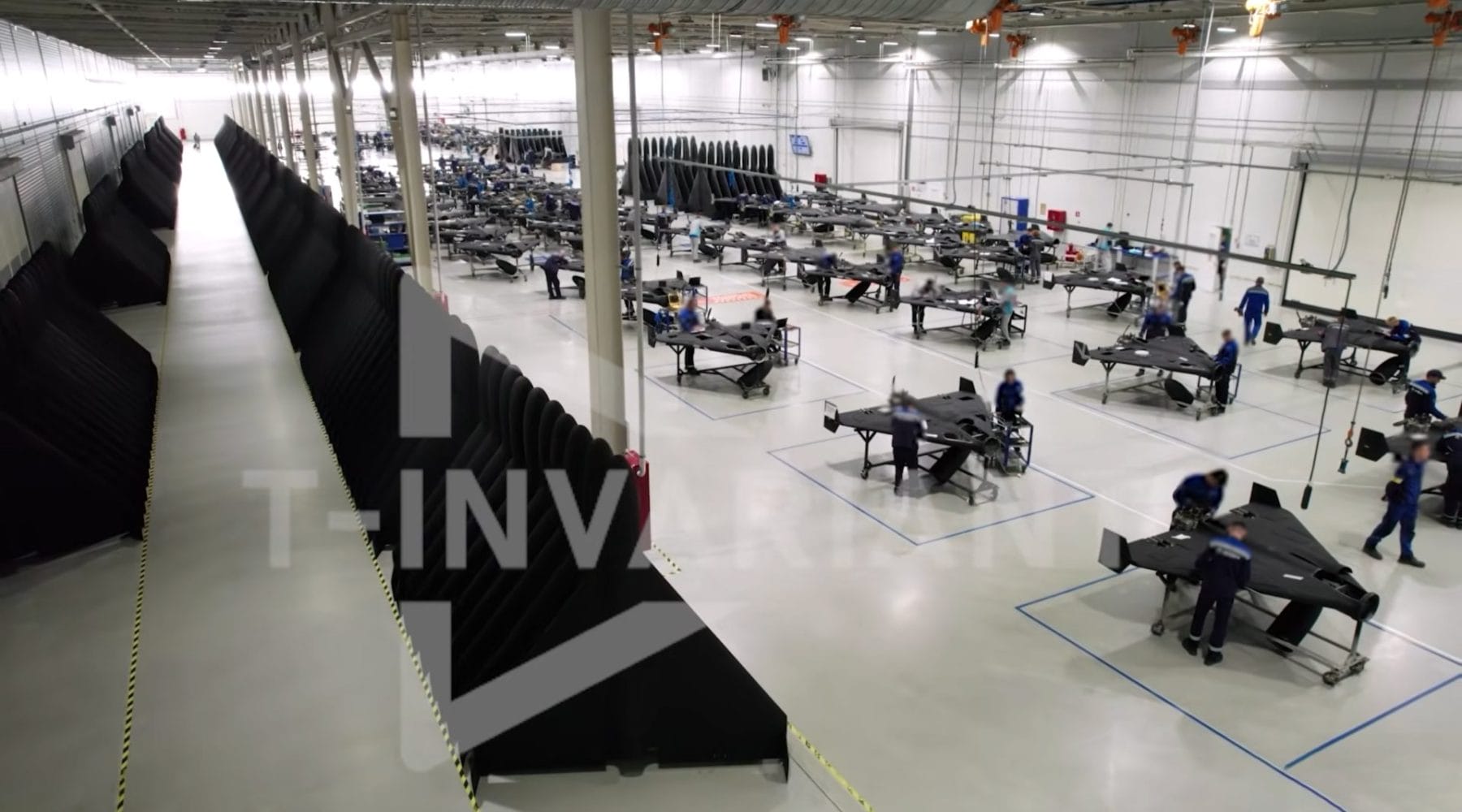
My name is Darina,” says an elfin teen, ponytail pulled through the back of her cap, and “next year I’ll be earning 150,000 rubles (nearly $2,000) a month.” Darina works at what she calls “the world’s largest drone factory,” helping to assemble versions of the Iranian Shahed drone. “My parents are proud of me. Wanna do the same?” She asks as she advertises a polytechnic in Tatarstan. The Russian government, in the face of war and looming demographic disaster, has been relaxing child labor laws s
My name is Darina,” says an elfin teen, ponytail pulled through the back of her cap, and “next year I’ll be earning 150,000 rubles (nearly $2,000) a month.” Darina works at what she calls “the world’s largest drone factory,” helping to assemble versions of the Iranian Shahed drone. “My parents are proud of me. Wanna do the same?” She asks as she advertises a polytechnic in Tatarstan. The Russian government, in the face of war and looming demographic disaster, has been relaxing child labor laws since 2022, making it easier to put 14-year-olds to work. Now, legislators are open about the need to reform “outdated” restrictions on employing minors in industries that were “considered dangerous 20 years ago.” Drone production is not the only part of the war effort to which teenagers are being recruited. This month in a “content camp” in Moscow, soldiers and state media propagandists trained 120-plus teens on how to make videos, use AI, and grow their audiences as aspiring influencers. Vladislav Golovin, a former soldier and a leader of Russia’s Young Army Cadets National Movement, said the program had “created a huge team of kids who understand how to broadcast government values.”
But many young people, subject to year-round conscription, subject to internet shut downs and subject to surveillance, have little desire to spread propaganda. Instead, according to Google Trends data, growing numbers of Russians are seeking information on how to emigrate. A new exodus would accelerate Russia’s deep demographic crisis. Already, up to a million people are thought to have left Russia since the full scale invasion of Ukraine in 2022. According to one recent count, nearly 210,000 Russian soldiers have been killed in the war with Ukraine, with other estimates suggesting over 1.2 million casualties, including 325,000 deaths. And Russian fertility rates are the lowest they have been for 200 years. Anton Kotyakov, the labor minister, has told Vladimir Putin that the country faces a labor shortage of 11 million people by 2030.
So concerning is this crisis that Rosstat, the national statistics agency, has stopped publishing monthly demographic data. State officials and local governors have been told to compete to come up with the most innovative solutions to a seemingly intractable problem. The pressure on Russian officials and the Kremlin is leading to desperate measures, including guidance from the Russian health ministry that women who say they do not want to have children should be referred to a psychologist. Nothing the Russian state has tried has worked, from financial incentives (extended even to schoolgirls under 18) to banning advertising that supposedly promotes “child-free” lifestyles and so-called “LGBTQ propaganda.”
Darina, 16, assembles Shahed-style drones at a factory in Alabuga, Tatarstan, Russia. Screenshots from YouTube video by T-invariant.
Alongside “anti-woke” policies disguised as family values, is rising xenophobia and anti-immigrant rhetoric that has led to a marked decline in the number of foreigners living in Russia. The Kremlin’s anti-migrant policies include a new system to monitor migrant workers through biometric registration, location tracking, and intensified police oversight. The Russian parliament is currently debating enhancing the number of offences that can be punished by deportation or substantially increased fines. Much of it is targeted at Russia’s Central Asian migrants who make up an overwhelming majority of immigrant labor. Some Central Asian governments, notably Kyrgyzstan and Tajikistan, have now urged their citizens to think twice about going to Russia for work.
Russia has been publicizing political stunts such as its “shared values visa” in which applicants from 46, largely developed, nations are given temporary residence permits if they profess to support “traditional Russian values.” The visa, the Kremlin has said, is “Russia’s response to what it perceives as the harmful effects of Western neoliberal policies.” But only a tiny fraction of the immigrants Russia needs will be Westerners who apply for such a visa; instead, Russia has been diversifying its pool of migrant workers by looking further east. Around 72,000 work permits were issued to Indian nationals in 2025, up from just 5,000 in 2021. Russian officials have signaled they are ready to accept “unlimited” numbers of workers from South Asian countries like India, Sri Lanka, and Myanmar.
While the Kremlin is looking to South Asia and Africa to address its immediate need for workers (and soldiers), the ambition in the longer term is to boost Russian birthr rates, despite the signal failure of ongoing attempts.
In the U.S., there have been several moves borrowed from the Kremlin’s playbook, including the restriction of abortion, the attempt to deny women birth control, and even alarm at the fall in teen pregnancies. But data released this month showed that women in the U.S. gave birth to 710,000 fewer babies in 2025 than they did in 2007, a reflection of two decades of steadily dropping birth rates. Russian demographer Salavat Abylkalikov, at the Leibniz Institute for East and Southeast European Studies in Germany, says “if the birth rate has fallen below the level of simple reproduction, it is almost impossible to raise it back.” Especially when financial incentives cover just a fraction of childcare costs.
In any case, Abylkalikov says, “in Russia, death is much more profitable than birth: in Nizhny Novgorod Oblast, the government provides around 1,000,000 rubles (about $12,000) for each child, but if one person goes to war and dies, the family receives up to 12 million rubles in total. That's more than $120,000. This is the economy of death.” The evidence, from countries like Russia, Hungary and the U.S., is that appeals to tradition, to religion and to female “responsibility” do not work, when support for families is limited. And while migration is an obvious fix to demographic questions everywhere, it’s politically toxic.
Russia knows it is hurtling towards demographic doom but can do little to halt the momentum. Its policies are riddled with inconsistencies — a strong line in anti-migration rhetoric and bullying, while being forced to import workers and soldiers from Asia and Africa; a patriarchal view of women’s roles, mostly confined to the domestic, while increasingly reliant on women to take the jobs of the men who are fighting and dying in Putin's war; and encouraging more women to give birth, while employing children to build drones. With family values like these, no wonder young Russians are hesitant to procreate.
Someone recently asked me what mark out of 10 I’d give for the efforts of governments to tackle financial crime. It got me thinking about that one bright spot of recent times — the West’s response to Russia’s full-scale invasion of Ukraine four years ago — and how it is now looking. Back in 2022, a lot of us were pleasantly surprised by the speed and ambition with which Western governments sanctioned the Russian government, state-owned companies and wealthy individuals. While Western pressure di
Someone recently asked me what mark out of 10 I’d give for the efforts of governments to tackle financial crime. It got me thinking about that one bright spot of recent times — the West’s response to Russia’s full-scale invasion of Ukraine four years ago — and how it is now looking. Back in 2022, a lot of us were pleasantly surprised by the speed and ambition with which Western governments sanctioned the Russian government, state-owned companies and wealthy individuals. While Western pressure did not prevent the war, the asset freezes did impose a real cost on those conducting it. Four years on, however, those sanctions are beginning to look a bit shopsoiled. If they began at 7/10, they’re now scoring a lot lower.
There are reasons for this: Donald Trump does not appear particularly interested in Ukraine; the now former Hungarian prime minister Viktor Orbán has been snarling things up; and so on, as laid out in this analysis from Tom Keatinge. To make things worse, Trump’s latest adventure in Iran has pushed the oil prices sharply higher, earning more money for Russia while also giving Trump cover to lift sanctions, a temporary measure he has recently extended.
Keatinge argues that European countries need to be far more focussed on going after Russia’s payment mechanisms, particularly digital. “The extent to which crypto activity supports Russia’s war effort is clear,” he writes, “yet repeated initiatives to elevate the importance of opening a concerted line of effort on this issue are ignored. This must change.”
I agree, though it won’t be easy, considering the diffuse crypto ecosystem, and the increasing sophistication of Russian involvement in it. As long as Telegram is willing to host markets, the markets will continue to function to some extent whatever Western countries do (see the story of Xinbi, a Chinese-language hub for illicit crypto.) However, it does look like someone somewhere has lost patience with the ease with which Russia is funding itself.
“The sanctioned Russia-linked cryptoasset exchange Grinex announced an immediate suspension of its operations, citing a ‘large-scale cyberattack,’” reports Elliptic. According to the statement, which Kyrgyzstan-registered Grinex posted on Telegram, it lost around $13 million worth of USDT in the hack, blaming the theft on Western intelligence agencies.
“Today the attempts to destabilise our fatherland’s financial sector hit a new level, with the direct theft of the assets of Russian citizens and companies with the involvement of complex cyberattacks,” the statement said. Grinex is the successor to Garantex, which was shut down just over a year ago after years of effort by Western law enforcement. I would be surprised if Western countries had decided to take direct action against Grinex, as the exchange claims they did. Westerners tend to be a bit too legalistic for this kind of smash-and-grab, and I would expect any operation to more closely resemble what worked a year ago, conducted with Tether’s cooperation.
Instead, I suspect this attack is the work of hacktivists, perhaps working for or with the Ukrainians. Whatever the answer, it is embarrassing for the Russians, shows their crypto-security is not impregnable, and has made a noticeable dent in trading volumes of the A7A5 ruble-denominated stablecoin, which has become a key sanctions evasion tool. Three birds with one stone.
The important point is that sanctions were never supposed to be permanent: they are a foreign policy tool, not a law enforcement one. Hundreds of billions of Russian-owned dollars are languishing in various frozen bank accounts, and Western countries need to start thinking about what to do with them. They can confiscate them, investigate them or — if they’re feeling brave — use their potential return as leverage to persuade wealthy Russians to break with the Kremlin. What they shouldn’t do is leave them as they are to gather dust.
Hopefully, now that Orbán is out of the way, European countries will be able to take firmer collective action but they also need to be imaginative, and to start behaving as if they actually want Ukraine to win, rather than just not lose.
A defeat for transparency
Of course, the United States will have a lot to say about that too, and what it ends up saying about how to tackle the Russian crypto operations will depend on what happens in the midterm elections this year. So, it strikes me as a big deal that crypto firms are once more pouring tens of millions of dollars into campaign vehicles in their quest for, what they euphemistically refer to as, “regulatory clarity.” Among them, of course, is Tether.
If you’re wondering quite how it’s possible to spend that much money on elections, I draw your attention once more to the great Integrity Index, with its records for who’s been spending what. It boggles my mind that, for example, the three Democratic rivals to the Republicans’ Susan Collins for the Maine Senate seat have raised more than $17 million just for the primary. Collins herself has raised over $10.5 million. There really shouldn’t be that much money in politics.
Besides, when it comes to value for money, investing in court cases beats investing in politics every day of the week. I don’t know how much the (ironically) anonymous plaintiffs in the 2022 case against corporate transparency in Luxembourg paid their lawyers, but its effects just seem to keep compounding to the benefit of those who want to hide their wealth from society.
The European Union’s retreat from revealing the ownership of shell companies has given cover for Britain’s tax havens as they resisted efforts from London to force them to open up their own corporate registries. It looks like those efforts may have finally failed. “We are committed to full transparency, but I don’t think there will be any turning back,” said the British Virgin Islands’ Junior Minister for Financial Services Lorna Smith in comments confirming that the islands are in fact very much not committed to full transparency.
A version of this story was published in this week’s Oligarchy newsletter. Sign up here.
In 2016, when Peter Thiel killed Gawker, he insisted that he wasn’t attacking journalism writ large.
On the contrary, he told the New York Times, he’d spent $10 million secretly backing Hulk Hogan’s lawsuit against the news outlet because: “I saw Gawker pioneer a unique and incredibly damaging way of getting attention by bullying people even when there was no connection with the public interest… if I didn’t think Gawker was unique, I wouldn’t have done any of this. If the entire media was mo
In 2016, when Peter Thiel killed Gawker, he insisted that he wasn’t attacking journalism writ large.
On the contrary, he told the New York Times, he’d spent $10 million secretly backing Hulk Hogan’s lawsuit against the news outlet because: “I saw Gawker pioneer a unique and incredibly damaging way of getting attention by bullying people even when there was no connection with the public interest… if I didn’t think Gawker was unique, I wouldn’t have done any of this. If the entire media was more or less like this, this would be like trying to boil the ocean.”
10 years later with the aid of an “AI tribunal,” a team of intelligence and law enforcement veterans, and a political climate vastly more hostile to press freedom, he is trying to do exactly that, bypassing the courts, short-circuiting the first amendment, and making it much, much cheaper to indulge in the quasi legal harassment of journalists.
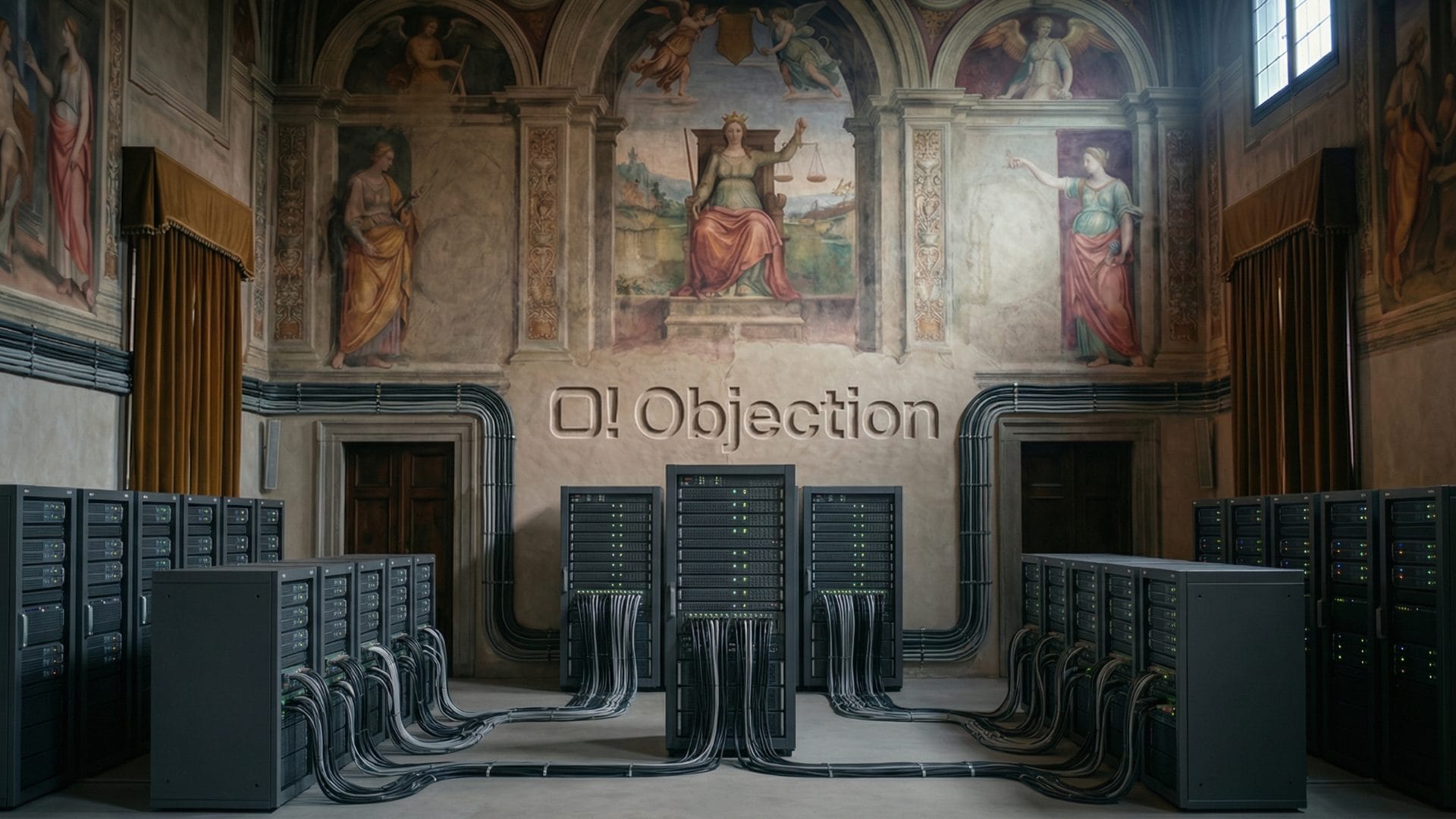
Objection.ai is a new startup funded by Thiel, and cofounded by Aron D’Souza, who worked closely with him on the Gawker case. It promises “a fast affordable way to challenge statements in the media.” Anyone can file an objection, which will trigger an investigation by a team hired, the company says, from the CIA, FBI, and British intelligence agencies. Targeted outlets and reporters will have an opportunity to respond, and the results will be fed to an AI model, which will render a verdict. The complainant, and the target, are asked to agree to binding arbitration, with an unspecified range of potential consequences. Financial details are vague, but the company has said the process will cost around $2,000 — far less than the retainer of a crisis communications expert.
An initial slate of cases includes objections against the New York Times, for reporting on how Thiel’s fellow traveller David Sacks, former PayPal chief operating officer and Donald Trump’s former “AI and Crypto Czar,” uses his White House position to benefit Silicon Valley connections; The Wall Street Journal for its revelations about the doodle contributed by Donald Trump to Jeffrey Epstein’s birthday book (a case recently dismissed by a federal judge); and British reporter Hannah Broughton for an aggregated story in the UK tabloid the Mirror about allegations that Amazon workers were told to continue working while a colleague lay dead on the warehouse floor. A smattering of social media provocateurs (Candace Owens) and politicians (Bernie Sanders) round out the roster, but the aggregate effect is indisputable: Thiel’s animus was about journalism all along. Indeed, the Objection.ai team couldn't be clearer about that.
“Gawker was not unique,” writes D’Souza on the company’s website. “It was simply the first large media company to be tested against reality in the age of clicks, outrage, and algorithmic amplification. Since then, the same structural failure has spread everywhere.”
“Peter Thiel and I … did not just fight Gawker,” he goes on. “ — We demonstrated that facts still mattered if someone was willing to enforce them.”
This is worse than revisionism. D’Souza is banking on everyone having forgotten that the Hulk Hogan case had nothing to do with “reality.” It was undisputed that the sex tape published by Gawker was real. The original suit, which failed, was for copyright infringement and the ultimate $140 million award that bankrupted the company was for invasion of privacy and intentional infliction of emotional harm.
This foundational lie is important, because it is a warning against the temptation to engage Objection.ai on the merits. It would be easy enough to conduct a good faith debate to take at face value D’Souza’s argument that tech platforms and algorithms amplify false claims to millions, that courts are expensive and slow, media ombuds toothless, and fact-checkers partisan. And it would not be hard to demonstrate that he is harnessing widely shared concerns about a disordered information environment to mobilize support for an AI powered justice system controlled by a hyperpartisan private company with a track record of attacking the very institutions that are holding the line on consensus reality.
It would also be a mistake. There is nothing good faith about this effort. Rather, it is classic Thiel: an attempt to hack the principles of accountability, and turn them against journalism. Leave it to his less sophisticated Silicon Valley peers to rail against the media, create in house news outlets or buy them. The PayPal co-founder is going for the heart of the system, and financing infrastructure that will enable anyone who can afford a used Honda Civic to launch a harassment campaign, cloaked in the language of legitimate investigation. James O’Keefe, but with the judicial rather than journalistic process as its governing metaphor.
It will be tempting, too, to question the likely financial sustainability of Objection. That will be the least of its founders' concerns. The for-profit structure supports a story about the company’s purpose. It may work, or not, but its goals are nonfinancial. We reached out to Thiel for comment on Objection.ai before publication and will update this article as soon as he responds.
Providing funding, alongside Thiel, is Balaji Srinivasan, the investor and author of “The Network State,” a book about social networks with “a sense of national consciousness” replacing the nation state. He once outlined an early version of the Objection.ai model in an email to the far right theorist Curtis Yarvin about dealing with critical coverage. "If things get hot,” he suggested “it may be interesting to sic the Dark Enlightenment audience on a single vulnerable hostile reporter to dox them and turn them inside out with hostile reporting sent to *their* advertisers/friends/contacts."
These men understand the limits of the Gawker verdict’s impact. It bankrupted the company, a personal victory for Thiel, but perhaps the least important outcome of the case. At a more systemic level, it struck fear into the hearts of media insurers and newsroom counsel, focusing attention on third party litigation finance as potential threat.
If people with limitless resources could sponsor litigation against news organizations they disliked, constitutional protections would be no match for the sheer cost and complexity of defense.
Now, they’ve found an AI-assisted way to supercharge those effects.
The Gawker case routed around the First Amendment by relying on a privacy claim. Objection.ai does so by building a hallucination of the legal process. Any journalist foolish enough to agree to binding arbitration by the company probably deserves what they get, but that will be a vanishingly small minority. For those who don’t, a phone call, or a knock on the door from a former FBI agent, or defense intelligence operative, will be chilling, and an ex-parte verdict rendered by Thiel’s custom-tuned AI will act as a cudgel on social media and via traditional PR. Journalists will be assigned a “trust score” to act as an additional goad.
In an environment of less peril for press freedom, it might be easy to laugh off Objection.ai as the confection of a thin-skinned millenarian. Right now, with the crony capture of broadcast news far advanced, swathes of the tech community openly hostile to journalism, and the White House onside, it would be wise to take it seriously. That starts with seeing it for what it is, and refusing to engage with a process which, unlike the real courts, Peter Thiel has no legal power to compel.
An endless purgatory: How an exiled Iranian waits and watches
“They’re shooting smoke at protesters.”
“They broke doors.”
“They brought an armored vehicle.”
In Aarhus, Denmark, Hemad Nazari lay in bed, refreshing his phone.
It was early evening in Iran on January 8, when the messages began arriving from Rasht, the northern city where he grew up.
Nearly two hours later, another message appeared: “We are trapped in our home.”
Then the messages stopped.
For the next eight da
An endless purgatory: How an exiled Iranian waits and watches
“They’re shooting smoke at protesters.”
“They broke doors.”
“They brought an armored vehicle.”
In Aarhus, Denmark, Hemad Nazari lay in bed, refreshing his phone.
It was early evening in Iran on January 8, when the messages began arriving from Rasht, the northern city where he grew up.
Nearly two hours later, another message appeared: “We are trapped in our home.”
Then the messages stopped.
For the next eight days, Hemad heard nothing from his family.
He wasn’t the only one. Several million Iranians are part of an educated, relatively prosperous diaspora spread across the world, particularly North America and Europe, a diaspora that grew from the mass emigration of professionals and intellectuals after the 1979 Iranian revolution.
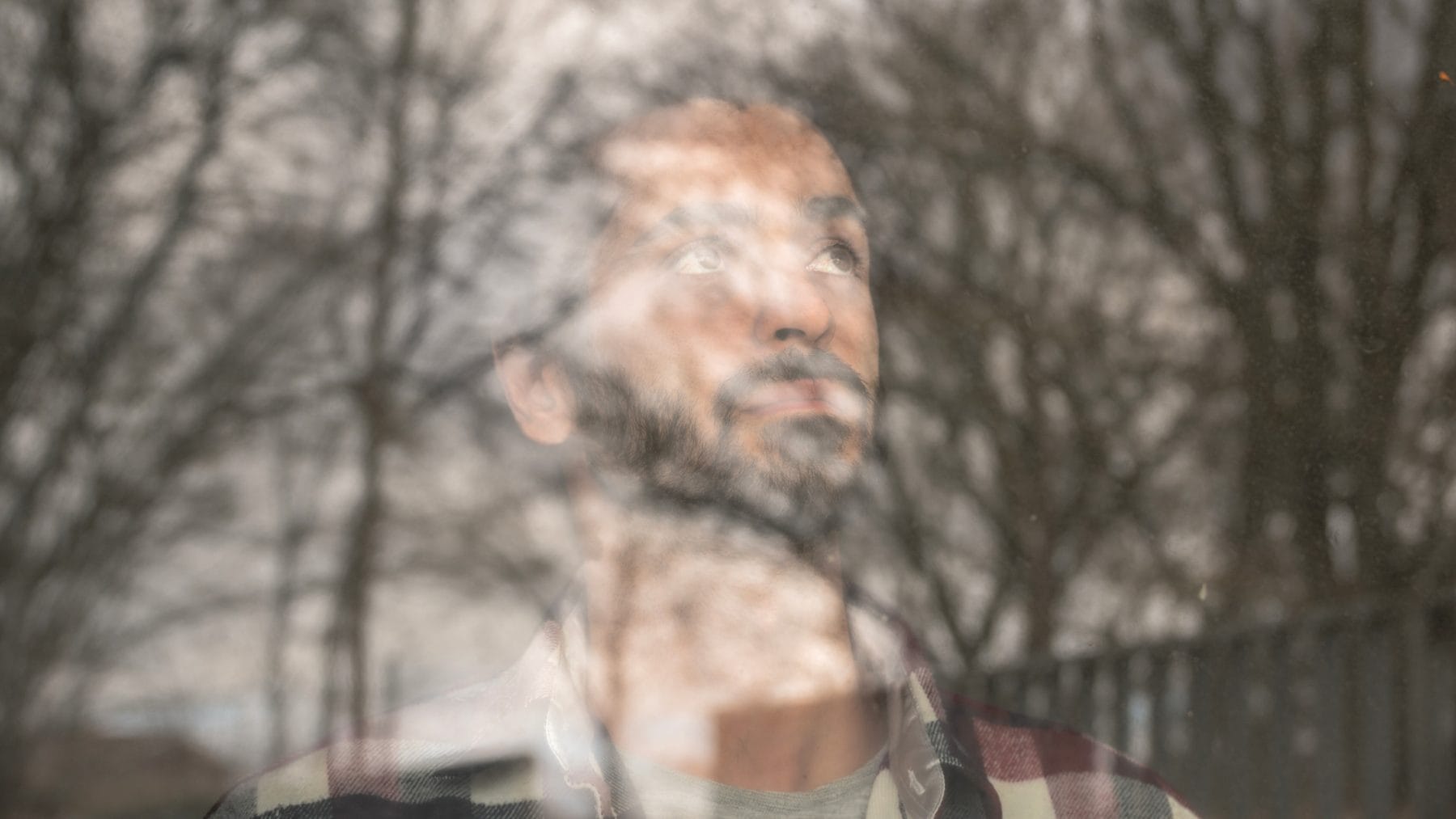
Nazari lives in Aarhus, Denmark’s second-largest city. He works for a real estate company. He’s a photographer, an active part of the local climbing community, and over the past year, he has been cycling across the world with his girlfriend.
It looks and feels like freedom. And in many ways, it is.
But Nazari hasn’t set foot in Iran for eight years. In that time, he has met his parents three times — twice in Turkey, once in Nepal.
As for now, with a nationwide internet blackout still in effect amid a flickering, faltering peace process, he can, like everyone else around the world, only watch — and wait.
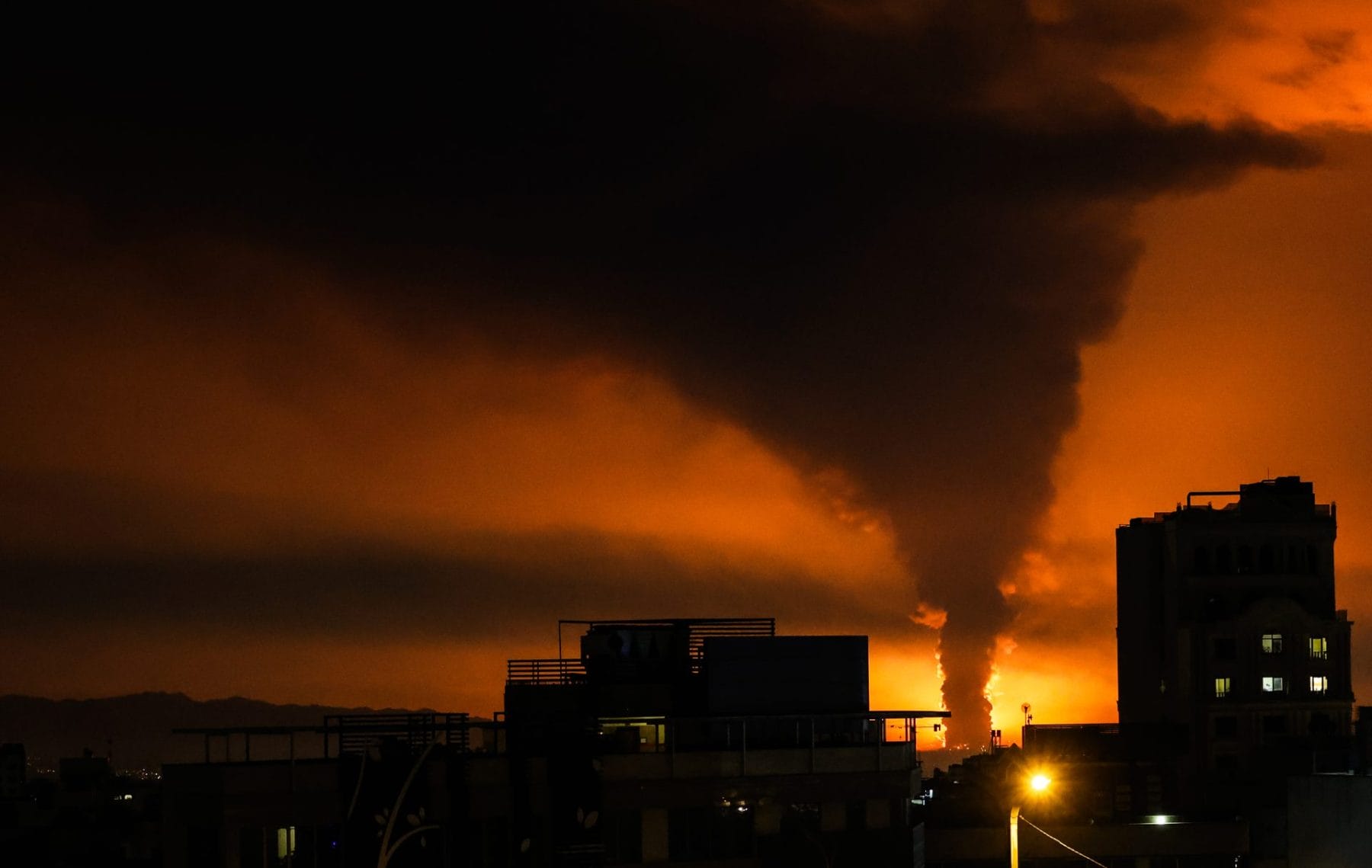
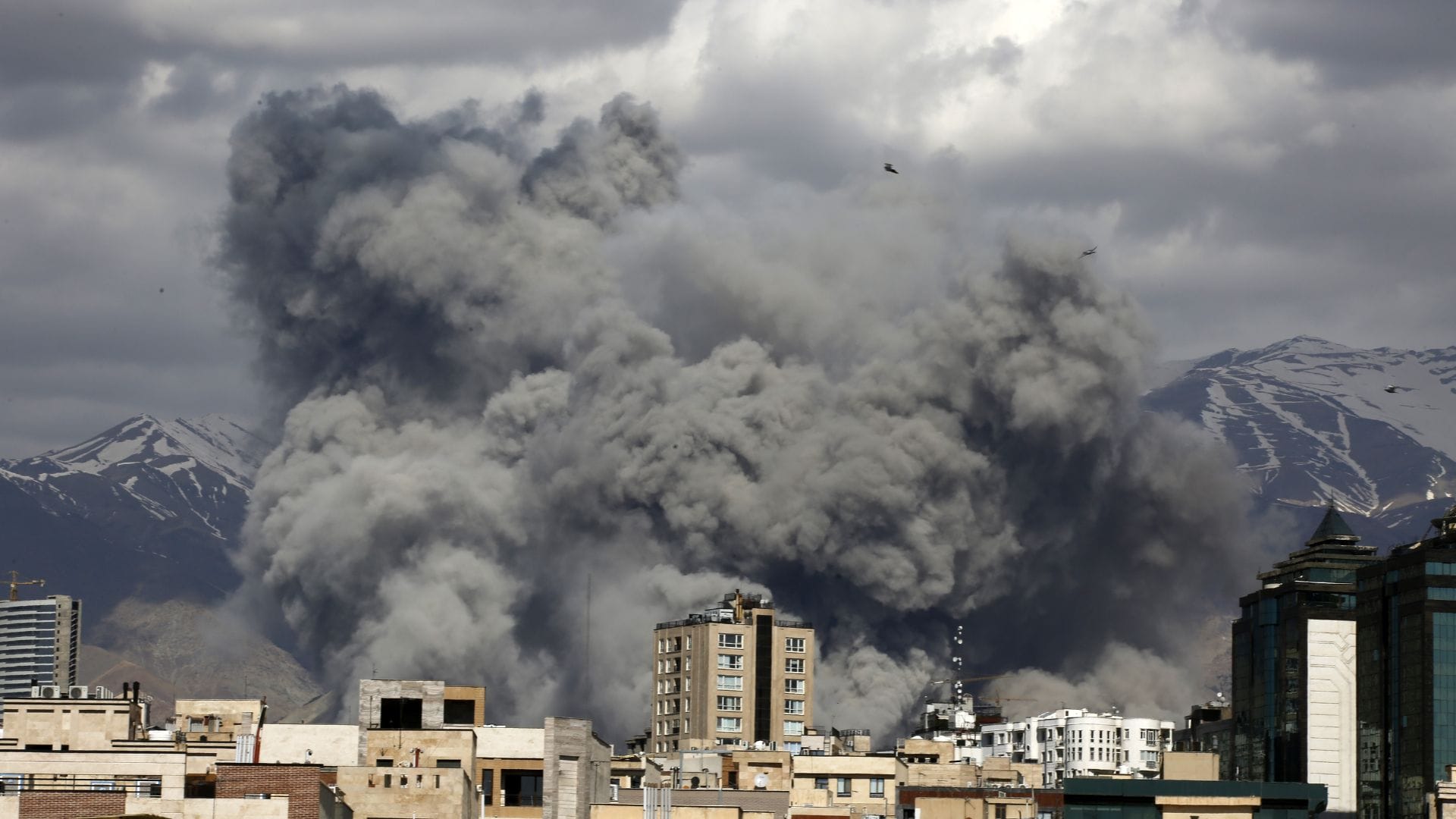
A large plume of smoke rises over Tehran after explosions were reported in the city during the night on March 07, 2026 in Tehran. Contributor/Getty Images.
Hemad Nazari left Iran in 2016, at 27. He was not at the time a political exile. He was a civil engineer with a steady job and a passport that made most borders difficult to cross. He wanted to travel. To see the world. To live somewhere else for a while.
The sanction-ridden Iranian economy was in a state of collapse. Nazari’s salary, once worth a few hundred dollars a month, shrank rapidly as the currency fell. Saving money became meaningless. Planning a future felt abstract — a concept more than a tangible goal.
So he left. He went to Vietnam first. Then Nepal, Georgia, Turkey. What began as travel, slowly turned into something more permanent.
“I didn’t leave because I thought Iran would change,” he told me. “I left because I could see that it wouldn’t.”
And it wasn’t because people were satisfied, or afraid of change. The January protests, in which many thousands of Iranians were killed, were no eruption, no sudden flaring of anger.
Since 2019, Iran has experienced three major waves of mass protest. That year, demonstrations sparked by a sudden rise in fuel prices spread rapidly across the country. The response was immediate. There was, typically, a near-total internet shutdown and, according to a Reuters investigation, as many as 1,500 people may have been killed during the crackdown. Human rights groups said more than 10,000 people were arrested during and after the protests, with many of them held incommunicado and at risk of being tortured or facing capital punishment.
The demonstrations ultimately collapsed under isolation and fear.
For Nazari, whose travels had enabled him to put distance between himself and his homeland, the 2019 protests made it apparent that Iran was no longer an option for him, no longer a place he wanted to call home. He was not a persona non grata. There was no letter. No summons. No official declaration. Nothing that could be quoted or appealed.
Instead, he had changed.
When the internet inside Iran is shut down, information can only escape through fragments: phone calls, short videos, people with rare access still intact. From abroad, Iranians like Nazari become intermediaries by default. He translated. Shared. Verified. Some of his posts were picked up by Persian-language television channels broadcasting from outside Iran, including BBC Persian and Iran International. Channels watched closely by the authorities.
Nazari did not think much of it at first. He was not an activist by profession. He did not belong to an organization. He was simply using his name, his language, his access. But others who had said less had been detained on arrival in Iran. Cartoonists. Writers. Ordinary social media users. Some disappeared into prison for years. Some emerged broken. Some did not emerge at all.
“You don’t need to be told,” Hemad says about knowing he couldn’t go back. “You understand.”
In early 2020, after Iranian forces shot down a Ukrainian passenger plane and initially denied responsibility, crowds returned to the streets. Once again, arrests followed. So did the silence.
Hemad Nazari’s activity increased again. His real name was public. His face was visible; he didn’t hide. It was a choice he made despite the risk not just to himself, but to his family. “If they can’t get to you,” he told me, “they get to the people around you.”
Since then, eight years have passed.
“It’s not that I chose not to go to Iran,” he says. “It’s that every time I tried, the door closed again.” He does not refer to it as exile. But, in a manner of speaking, he had been made stateless, effectively stopped from going home, from seeing his family, from resuming the life he knew.
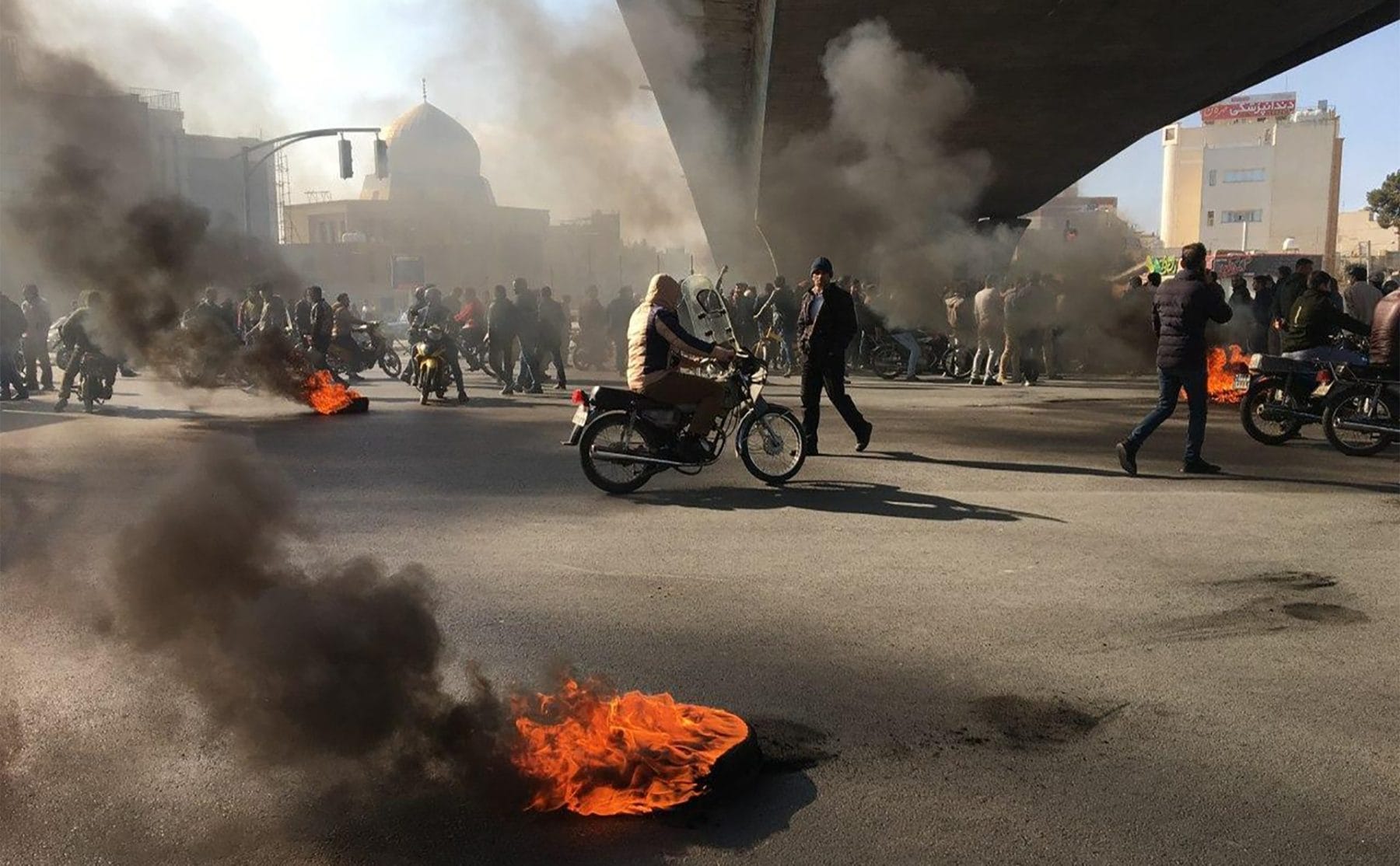
Iranian protesters rally amid burning tires during a demonstration against an increase in gasoline prices, in the central city of Isfahan on November 16, 2019. AFP via Getty Images.
By late December 2025, daily life in Iran once again became untenable. Food prices surged, paychecks were worth less every day, and families thought only about short term survival, unable to think even a month ahead.
According to Nazari, official inflation figures — though already extremely high — failed to capture the reality on the ground. By February, he told me, the cost of basic goods rivaled those in Denmark. Wages, he said, stagnated “at around $110 or $120 a month, with many people earning much less than that.” The minimum wage, the official figures from Iran’s Supreme Labor Council show, increased by 45% and still only reached $110 per month.
“The protests were fuelled by the economy,” Hemad says. “When shopkeepers and traders joined, it was a sign that frustration had reached a boiling point. But people don’t just want better prices. They want freedom. They want new leadership.”
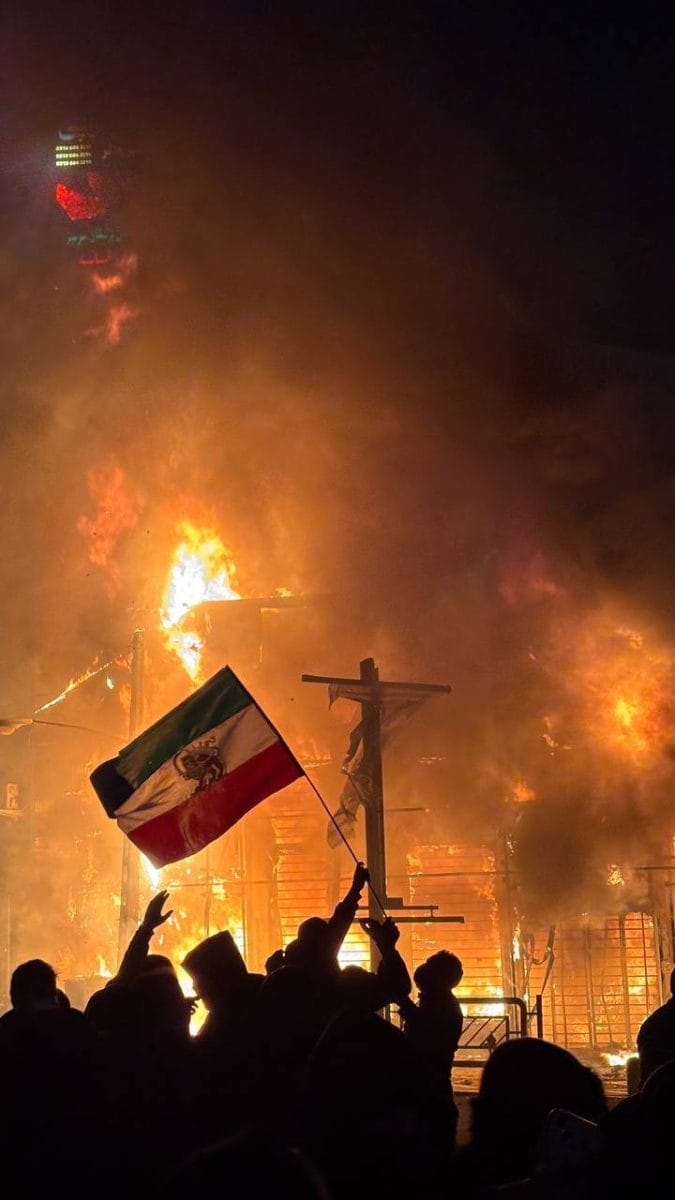
In Rasht, his hometown in northern Iran, even families with children took to the streets in protest. “In my city, a lot of mosques are gone,” he says. “They burned them down. That tells you something.” What struck Nazari most, though, was not only who was protesting, but what they were saying, what they appeared to want.
“For the first time, the main chant on the street was the name of the prince,” he told me. “The son of the former shah: Reza Pahlavi.” Nazari is quick to stress that he himself is “principally a believer in democracy.” But the chants were telling.
“For 40 years, only loyalists dared utter the name Pahlavi. Now it’s spoken openly across all layers of society,” It was not about restoring the past. Instead, suggests Nazari, “for the first time, we had a plan.” People, he says, “were asking, ‘what happens if the regime collapses?’ And for the first time, there was an answer.”
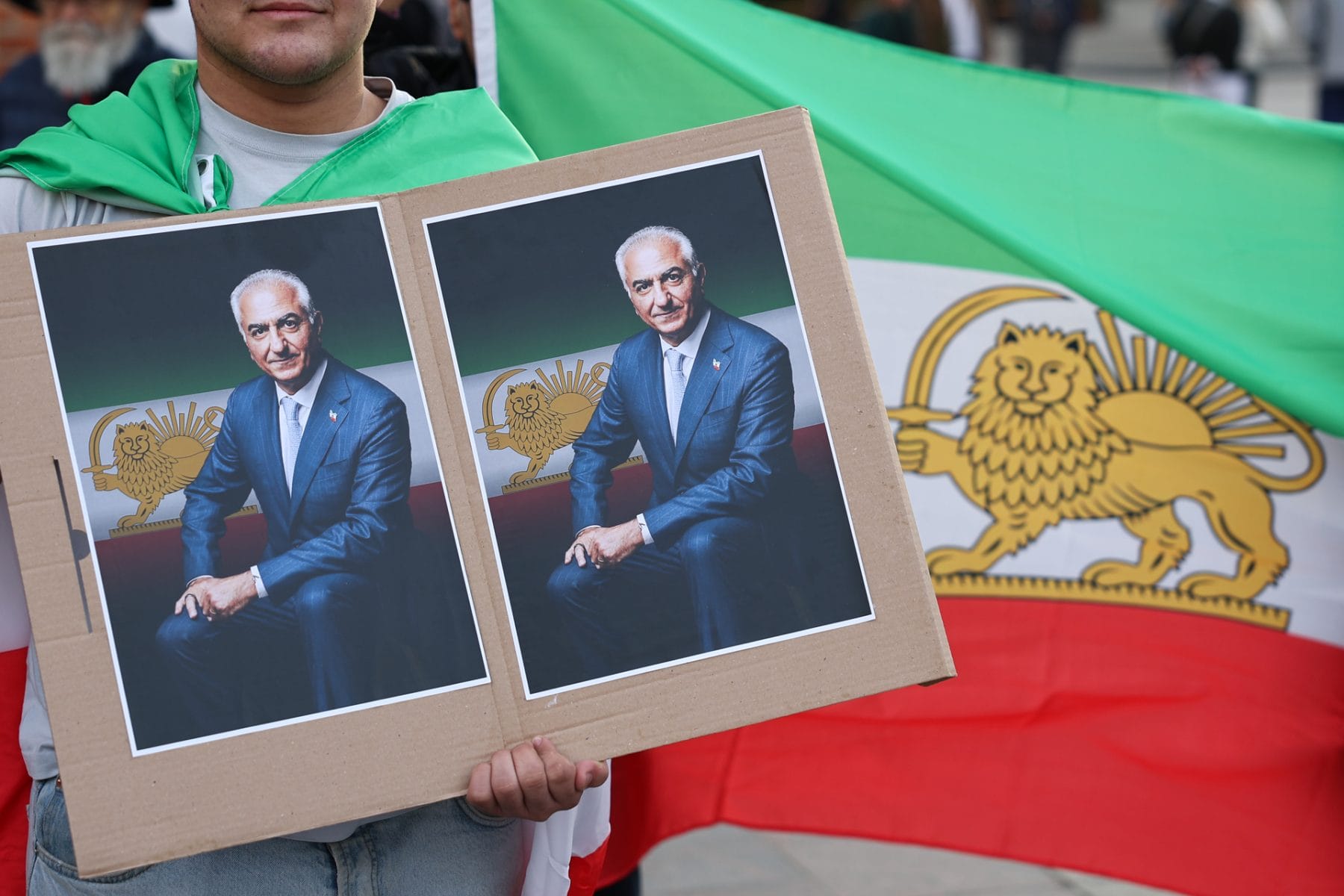
A person holds images of Reza Pahlavi during the demonstration supporting American-Israeli intervention in Iran, at Main Square in Krakow, Poland on March 8, 2026. Jakub Porzycki/NurPhoto via Getty Images.
In January, there was, as Nazari describes it, a rare sense of readiness among people he knew inside Iran. Friends who had never protested before were sending messages saying they would go. Family members spoke with a kind of cautious hope. This time, it felt different. It felt like change was possible.
Two days earlier, the son of the former shah had issued a public call for people to take to the streets on January 8 and 9 — not to follow a detailed program, but to say openly what they had long been afraid to say.
From Denmark, Nazari watched the buildup hour by hour. On January 8, as protests reached their peak, the internet went dark. The blackout was not unprecedented. Iran’s authorities had used these tactics before. Inevitably, as access disappeared, reports of mass arrests and the use of live ammunition to dispel crowds spread through the few remaining channels still connected to the outside world.
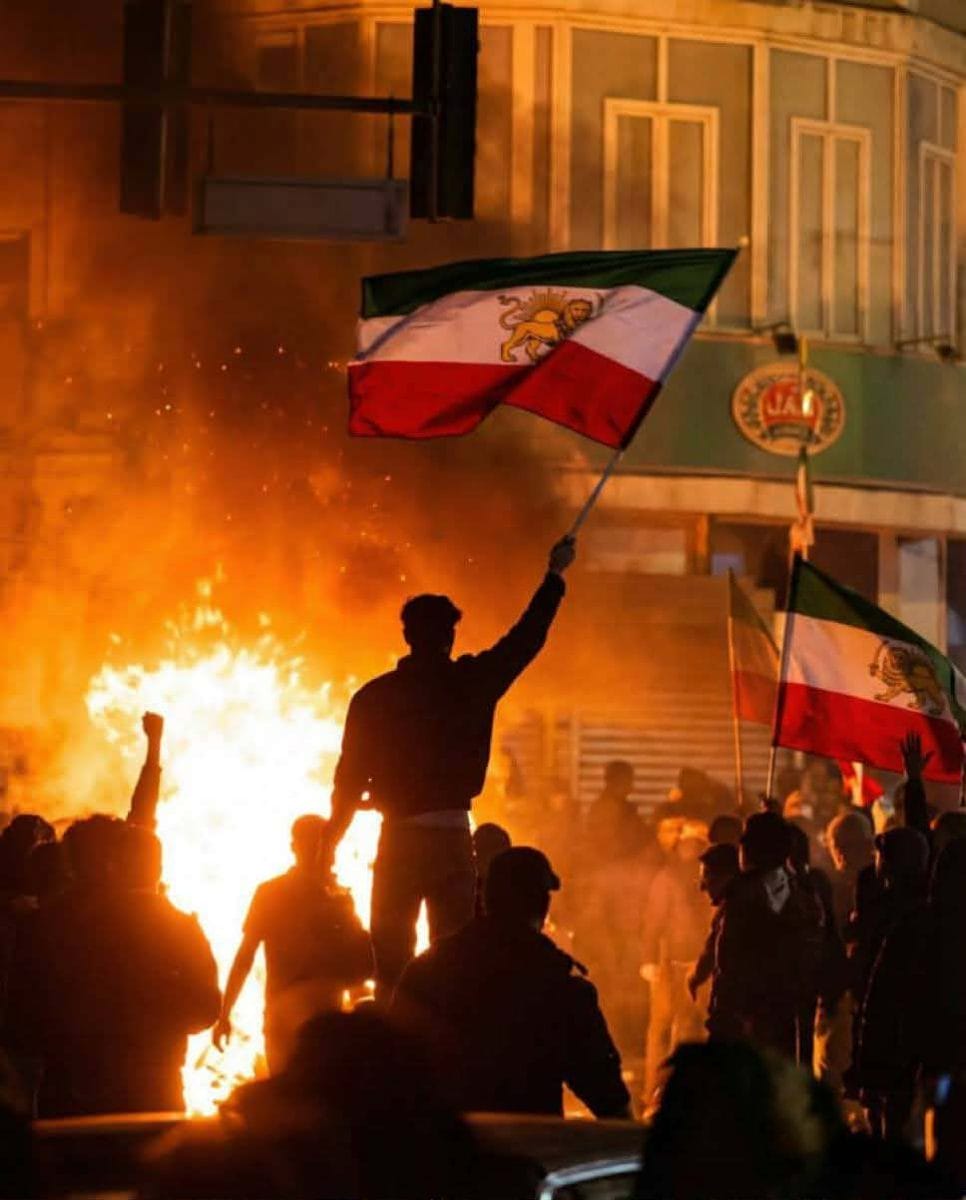
In Rasht, Nazari’s close friends sent him a video from their apartment window. Smoke drifted through the street. Shouting echoed between buildings. Gunfire cut through the noise.
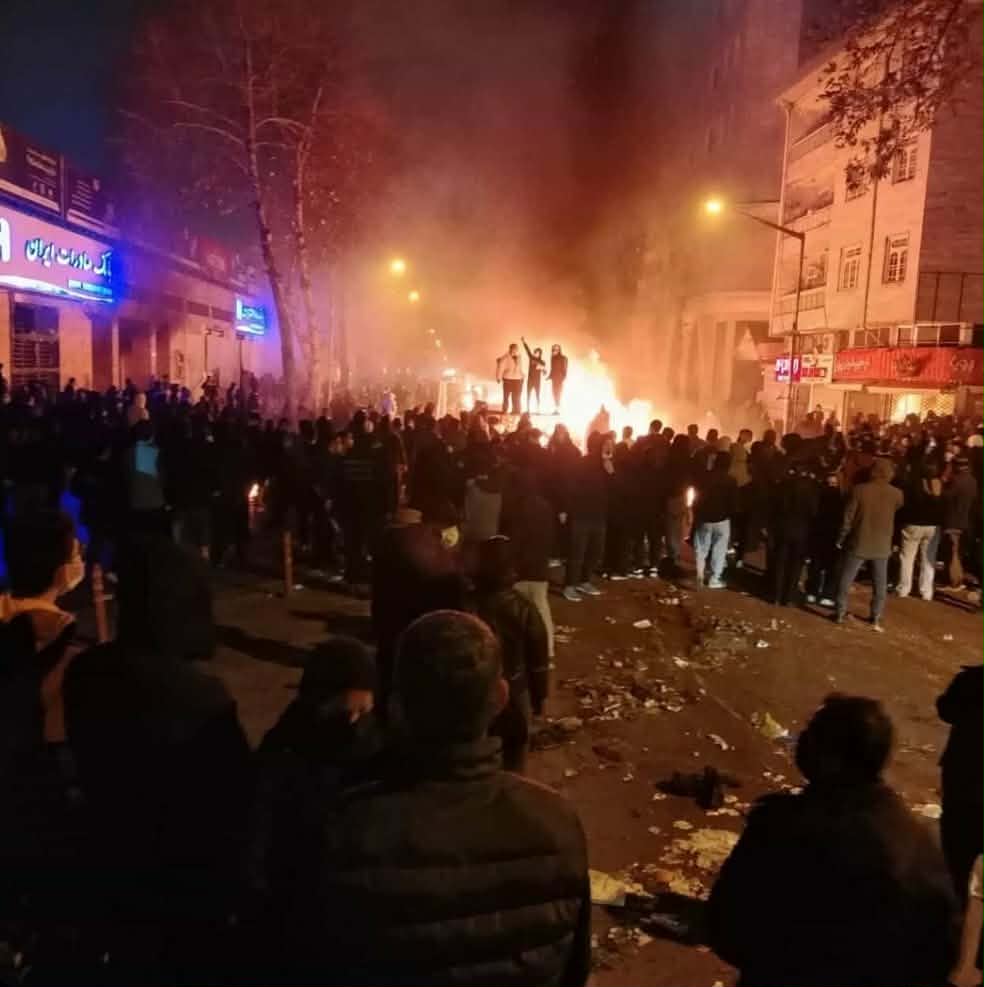
Protest in Rasht. From the personal archive of Hemad Nazari.
During the blackout, Nazari continued to receive fragments of information — through people with Starlink terminals, through friends who still had limited access. By January 10, the informal network of activists and diaspora Iranians he was part of believed that at least 2,000 people had been killed.
Eventually, his mother managed to call him. “We’ve been trying to reach you,” she said. With international charges for calls piling up every second, they had been trying to call him for days. Since that brief call, contact has been sporadic. A snatched few minutes. And then silence again.
“People showed everything they had,” Nazari says of the protests. “They did what they could do.” He’s trying not to romanticize what happened in January, he tells me. He’s not saying, he insists, that the protests were heroic. “Iranians,” he says, “are just desperate.” As for Nazari, he tells me up until the U.S. and Israel attacked Iran, he was “constantly debating whether to go home.” Right now, he adds, “it could have severe consequences, potentially a death sentence.” But, he pauses, “if it comes to civil war, I will go. My life doesn’t matter.”
For years, Nazari believed — as many Iranians did — that pressure, negotiations, sanctions, or appeals to international institutions might eventually force the regime to change. Over time, that belief had eroded. By January, he says, “it was gone.” It’s why he supported the attacks on Iran by Israel and the U.S., the execution of Ayatollah Khamenei and key regime figures.
“I’ve been saying for years that they are not going to leave peacefully,” he says. “They will fight. If the choice is that many people die, including me and my family, but the country becomes free — and then in 10 years we are back as a people, it will be worth it.”
He stops himself.
“I don’t say this because I like death, I say it because I don’t see another way. There is no peaceful path left.”
Protest in Tehran. From the personal archive of Hemad Nazari
But the hope Nazari felt when Donald Trump said the United States would respond forcefully if Iranian authorities continued killing their own people, has also now died.
On February 28, when U.S. and Israeli strikes on Iranian leadership and critical infrastructure began, some diaspora Iranians gathered to celebrate what they saw as the fall of a regime figurehead they had opposed for decades. Others responded with shock, caution, or grief, warning of what might follow.
In Denmark, where roughly 25,000 people of Iranian origin live, that divide played out in public. In Aarhus, several hundred Iranian Danes gathered in the city center with flags, music and open calls for regime change. Some thanked the U.S. and Israel for the strikes. At the same time, a pro-regime memorial for Ayatollah Khamenei in Copenhagen drew around 200 participants.
Their response to U.S. actions were playing out in a country where the broad view of the U.S. as a friend and force for good in the world had shifted sharply. In Denmark, as war in Iran broke out, people were still thinking of Greenland and Trump’s threats to annex the territory. In a January 2026 poll, 60% of Danes said they now see the U.S. as an opponent rather than an ally, while just 17% still considered it an ally.
Among Iranians, inside Denmark as in the wider diaspora, this ambivalence towards the U.S. is all too familiar. In a recent article in the Dagbladet Information, Iranian-born activist Nahid Riazi warned against celebrating a war that seemed to have little to do with emancipation for Iranians.
“Who says that war brings freedom?” she wrote. “It is us who are being hit. It is our children who are being destroyed.”
Nezari says he has heard this argument. He does not dismiss it. But, he asks, “what is the alternative?” If the war stops, he says, “and the regime stays, how do you guarantee they won’t keep killing people like they have since 1979? How do you guarantee they won’t start the street executions again?”
Trump, despite the failure of the first 21 hours of peace talks in Pakistan, continues to say the war is “very close to over,” that the Iranian government wants to make a deal. A deal, presumably, that enables them to stay in power.
The Islamic Republic may have been dealt a devastating blow, but it remains intact. Its leadership structure has shifted but not collapsed. To Nazari, that does not show resilience so much as the nature of the system itself.
He rejects the idea that the Islamic Republic functions like a government in any conventional sense. It behaves, he says, more like a cartel or an armed network — something held together not by institutions, but by force and succession. Too many powerful men remain alive, still able to operate. And a system like this, he argues, does not surrender because its center has been hit. It keeps going until every center is removed.
“Not until all the heads are cut off,” he says.
But U.S. attempts to bully the world into joining a war where the goals remain so varied and nebulous have been unsuccessful. The popularity of the war inside the U.S., even among Trump supporters, is low. The uncomfortable question now is what comes next — and whether anything has truly changed.
Still, Nazari argues that the current state of purgatory, in which the war is neither ongoing nor over, is not evidence of failure, but of what was always going to happen.
“We were not living in Iran,” he says. “We were living in a military compound with cities in between.” Even if negotiations resume, he believes something irreversible has already happened. The fact that the regime’s leaders now have to hide underground means, to him, that there is no real return to the old order.
“There’s no going back to how it was,” he says. But for now, Nazari is still in Denmark. His family is still in Iran. He still holds his phone close, hoping for news. Any news. Like Iranian exiles everywhere, and like the war itself, he is trapped in stasis, caught between distance and a sense of responsibility to his homeland — deeply involved, fundamentally powerless, yet unable to look away.
The Age of Exile
This story is part of our Age of Exile series, which explores how displacement has evolved from historical punishment into a defining condition of our time—one that reveals profound transformations in how we construct identity, maintain community, and exercise power across borders. In an era where digital connection enables presence without physical proximity, exile has become more complex, more global, and more central to understanding our world. Explore The Age of Exile series
Dutch friends like to tell me that their nation’s primary characteristic is bluntness, and the Netherlands’ Court of Audit has done nothing to challenge the stereotype with its bracing assessment of the country’s and, by extension, the world’s failure in fighting money laundering. Published last month, after an extensive analysis of the country’s efforts to stop dirty money, the Court’s report concludes that the system is expensive, discriminatory, and — possibly — completely ineffective. No one
Dutch friends like to tell me that their nation’s primary characteristic is bluntness, and the Netherlands’ Court of Audit has done nothing to challenge the stereotype with its bracing assessment of the country’s and, by extension, the world’s failure in fighting money laundering. Published last month, after an extensive analysis of the country’s efforts to stop dirty money, the Court’s report concludes that the system is expensive, discriminatory, and — possibly — completely ineffective. No one has really checked on that last point, so they can’t be sure, which if anything makes it all worse.
The Netherlands hosts the largest port in Europe, and is therefore home to a vast smuggling industry — Dutch politicians not infrequently warn that it’s becoming a narco-state — which requires an equally vast money laundering industry to service its profits. The Court of Audit set out to check the government’s response to this challenge, concluding that it cost banks €1.6 billion a year. It’s a price tag that has increased by almost 17% between 2021 and 2024, during which time the number of reports the banks’ 13,000 compliance officers made more than doubled.
“We think it is important that these employees make a meaningful societal contribution to preventing and combatting money laundering. There is no evidence that shows that they do,” the report witheringly observes.
The court sent surveys out to “politically-exposed people” (PEP is a jargon term meaning anyone in a position of power, or a close relative or associate) asking about their experiences. One person’s 83-year-old mother was asked to explain the source of an inheritance she received after the PEP applied for a loan. It is an eye-opening section, revealing how process is prioritised over any kind of judgement about where the risk of money laundering genuinely lies, but the real shock is in the section about different religious groups, which shows how the transactions of immigrant-focussed churches and mosques are systematically checked more thoroughly than local Protestant or Catholic congregations.
“A bank told a mosque that it was not possible to collect so much money after a prayer meeting,” the report notes. “The mosque’s trustees said the bank could come and see for itself but the bank declined. Feeling powerless and unable to deposit the money with the bank, the trustees hid it in the mosque.”
Imagine if we had an ongoing health crisis. And imagine that the government had created an expensive, intrusive system to tackle it, which was generating an endlessly increasing amount of paperwork, employing thousands of people and actively discriminating against religious and ethnic minorities. Surely, someone would at least put in the hours to check if the system worked, whether it was making people healthier, and assess therefore whether all these bad side effects were justified?
With anti-money laundering policy, that is simply not happening. It’s based on faith rather than facts: we just need to do more of the same thing, and eventually we’ll get the results we want; if we don’t, we need to do the same thing even more. Interestingly, Texan judge Jeremy Kernodle — fresh from gutting the Corporate Transparency Act — has returned to the fight against anti-money laundering regulation. He has killed Geographic Targeting Orders, which were supposed to collect information around real estate transactions. “FinCEN’s explanations are vague, conclusory, and unpersuasive,” the court ruled. “The fact that some bad actors have conducted non-financed real estate transactions does not make such transactions categorically ‘suspicious.’”
I’m not saying I agree with Mr. Kernodle, because I don’t, but I don’t think pushback on anti-money laundering orthodoxy is necessarily a bad thing, since it obliges us to think more deeply about what actually works, rather than just going along with ineffective old policies. I hope people outside the Netherlands read the Court of Audit’s report and start wondering whether this approach isn’t long past time for a complete overhaul.
How do you solve a problem like crypto?
It’s quite unusual for there to be a divide in the UK’s anti-corruption community, which tends to agree on technocratic solutions to the problems around illicit finance, but one has emerged around the role of cryptocurrencies in political donations. Spotlight on Corruption doesn’t think the government’s moratorium on crypto donations goes far enough. There needs to be a ban, they argue, in primary legislation with additional safeguards. I agree.
The folks at RUSI, on the other hand, think a moratorium on crypto donations is a better idea since it would prime the country to take regulating cryptocurrencies more seriously, and prepare the way for them to be widespread. Take a look, judge for yourself, and let me know what you think. The difference may reflect deeper and unresolvable political differences in how countries should respond to globalisation, but it’s an interesting one to think about.
One thing I think we all agree on is the need for an urgent overhaul of all rules around electoral finance, while there’s still an honest system to approve them.
On that note, interesting news from Cambodia, which has extradited Li Xiong to China. Xiong, who is accused by governments worldwide of playing a key role in the now-collapsed Huione group, which was laundering money for crime syndicates on an industrial scale, with particular expertise in cryptocurrencies. Of course, the criminals have not stood still and have new markets up and running, but it is striking how quickly the extradition went ahead.
In contrast, the legal proceedings around the mammoth tax fraud exposed two decades ago by Sergei Magnitsky grind tortuously on, with the culprits still safe in Russia. They certainly enjoyed themselves in Europe for a while, however, as a court case in Paris shows. “The spending spree included: €668,517, ($771,703) at a Parisian art and antique gallery; €696,015 ($803,445) across two high-end French women’s fashion brands; €96,814 ($111,757) at a luxury jewellery store in Courchevel, an exclusive ski resort in the French Alps; and €127,182 ($146,813) for a Courchevel tour package.”
There are few things that reveal the moral bankruptcy of the regime in the Kremlin more than this case. It’s not enough that corrupt officials could kill a good man who exposed their $230 million theft from the Russian people, but the Russian state then shielded them while they splashed the loot on European luxury holidays, and continues to do so to this day.
Nothing on the same scale is happening in the United States of course, but still this analysis of how enforcement of the Foreign Corrupt Practices Act is being politicised is a bit grim: “The transformation of U.S. antibribery tools into economic weapons also threatens to undo the global system the United States helped establish to punish business corruption.”
A version of this story was published in this week’s Oligarchy newsletter. Sign up here.
On the night of January 16, 2024, Egana Djabbarova was awoken by her wife and told that she needed to leave the country immediately. Djabbarova, her wife said, had been denounced by pro-war activists and framed as an enemy of the country. She had recently published her novel, “My Dreadful Body,” with a small, indie press that had been praised by mainstream critics, unexpectedly propelling her into the public eye. One of the book's central themes is surveillance: growing up in a community with st
On the night of January 16, 2024, Egana Djabbarova was awoken by her wife and told that she needed to leave the country immediately. Djabbarova, her wife said, had been denounced by pro-war activists and framed as an enemy of the country. She had recently published her novel, “My Dreadful Body,” with a small, indie press that had been praised by mainstream critics, unexpectedly propelling her into the public eye. One of the book's central themes is surveillance: growing up in a community with strict behavioural codes, the protagonist's every move is under scrutiny.
In a dark echo of her work, Djabbarova was now under online surveillance herself. “I was just the perfect enemy,” she tells me, “because I’m queer, I’m not Slavic, I worked on decolonial and feminist projects… So boom, it happened.”
She is speaking to me from Hamburg, where she now lives. Djabbarova is part of the so-called fifth wave of writers exiled from Russia, alongside Maria Stepanova, Lyudmila Ulitskaya, and Maxim Osipov to name a few. Her upbeat tone during our call gives little indication of the arduous journey she has endured since fleeing Russia. Upon receiving a humanitarian visa from Germany, she spent months in a refugee camp. She lived, she says, “in a container house, literally a shipping container. You feel like you're not a subject, not a human being.”
More permanent accommodation has provided a degree of safety and stability, but a sense of precariousness lingers. She describes her position as an exile as “strange” — on the one hand she has been welcomed into Germany’s cultural elite in winning the Hamburger Literaturpreis; on the other, she feels like a “ghost,” unable to express herself in German and often bewildered by the unfamiliarity of everyday tasks in a new country, and in a new city which, she tells me jokingly, is quaint and polite like the well-behaved boy next door.
But there’s a deeper, historical layer to Djabbarova’s story of exile. Her father was a refugee from the region of Nagorno-Karabakh, while her mother was forced out of her family home. “Homelessness and exile — this is my heritage,” she says. Being othered became a common theme of Djabbarova’s childhood, as a child of Azeri parents living in Yekaterinburg. “In Russia you are constantly reminded that you're not Russian,” she says. “Then during the summer you visit your relatives in Azerbaijan and they laugh because you cannot speak Azerbaijani properly.”
This sense of double estrangement is mirrored in “My Dreadful Body”(published in Russian in 2023 and recently translated into English by Lisa Hayden). At only a touch over 100 pages, it is a slim but powerful account of the pressures on one woman growing up among the strict codes of an Azerbaijani family living in Russia. A sense of surveillance and conditional belonging defines the narrator’s upbringing: “In the world where I grew up,” she writes, “gazes penetrated every little corner. The evil eye, the neighbors’ eyes, the relatives’ eyes, the random pedestrian’s eyes, the unscrupulous men’s eyes, the women’s unhappy eyes. Life in the community was reminiscent of a reality show with constant video surveillance: no action, word, or undertaking went unnoticed.”
The story is based on Djabbarova’s own life. “Maybe 70-80% of this story is absolutely true”, she confirms. The narrator is named Egana, she grows up in an Azerbaijani family in Russia, too Russian for the family, not Russian enough for her friends at school. She also, like Djabbarova, suffers from a debilitating autoimmune disorder that is eventually diagnosed as dystonia, a neurological disorder that causes involuntary muscle contractions. During one episode, she describes her body as resembling “willow branches gone mad from a strong wind” — a potent image of struggle against external forces. Djabbarova describes the book as a way to reclaim her body through language. “I was trying to tell this story in a poetic way. I wanted to change my body into poetry.”
Each chapter of “My Dreadful Body”begins with a different body part (“Eyebrows,” “Eyes,” “Hair” and so on), like the poetic blazons spun by Renaissance poets. Where those poems encouraged an idealized, sensationalized reading of each body part, Djabbarova’s chapters are more sober explorations of the physical limits — and personal and cultural stories — these body parts contain.
In one of many poignant scenes, the narrator’s head is shaved in preparation for a procedure. She cries on seeing her “shorn scalp,” but the sadness is not aesthetic, it’s ancestral; the act marks a symbolic rupture with her lineage. “My past,” she writes, “the past of all the women in my family, the memory of my ancestors, the history of a single body — all that now lay on the cold floor.” After this scene, her grandmother’s dictum that only long hair was considered beautiful, rings even more sharply.
Illness then emerges as another form of exile, from one’s sense of self, from what’s perceived as “normal” in society, from the culture and community one belongs to. “They do not see you as a subject, as a human being, and they do not recognize your existence… I realized if I wanted to be seen as a subject, I needed to do it myself.” Djabbarova is talking about the plight to be believed about her symptoms here, but she could easily be talking about the often dehumanizing experience of exile. In both instances there is something fundamental under question, or as Djabbarova puts it, “You’re trying to prove that you have the right of being. You’re trying not to be erased.”
We often talk about exile in the context of loss, but how might exile liberate? Paradoxically, Djabbarova tells me, her diagnosis became a form of liberation. “I always felt I had so many expectations on me as a girl, as a woman, so when I was finally diagnosed it was a liberation because my parents realized I would never be this type of girl.” Exile breeds a particular creative liberation, too, evidenced by the fact Djabbrova wrote the novel from Taiwan where she was briefly teaching Russian. “Here I had enough distance from my own life and my own experience,” she says. “Maybe it’s easier to write about your story being on an island in the Pacific Ocean.”
Writing is arguably the real heroine of Djabbarova's novel. For the narrator Egana, it is a place free from surveillance and a source of protection, “like an invisible amulet.” Poetry, she told me “was the only safe space for me because nobody was asking anything of me. It's the only place where I don't feel judged. I don’t feel ashamed. I don’t feel questioned.”
The chapter “Hands” opens: “The most important parts of a woman’s body were her hands: they prepared food, rocked children, did laundry, ironed men’s shirts, sewed clothes, swept, washed the floor, and dusted.… Any woman in our family knew that her hands were not given to her for writing.” To use her hands, then, to write becomes both a symbolic and quite literal form of resistance against such gendered codes.
Notably, Djabbarova is not alone in invoking the body as a space to explore the upheavals of exile. In Maria Stepanova’s autofictional work “The Disappearing Act” — recently translated into English by Sasha Dugdale — the narrator attempts to purge herself by volunteering to be cut in half as part of a circus trick. Djabbarova’s approach to reclaim identity and agency through the body is less literal, and more personal, but through this specificity she has landed somewhere indisputably universal.
“I realized the only way I can write this novel is through my body,” she says. “Because the only way I can rehabilitate my being, my agency, my subjectivity is through my body. And that's why I wanted every reader to feel my body… It's really important for all of us not to forget that this right of being is basic. It's not given. It's something you have from birth."
At the end of our conversation, Djabbarova (who has been speaking in English) struggles to recall a word and jokes that learning German is slowly pushing her English out. “Certain words I only remember in German!” she laughs. Is this the beginnings of a kind of homemaking for Djabbarova, a sign that the seeds she has scattered in her new country are taking root? Like her protagonist, who finds solace and safety in words, it seems that Djabbarova’s most trusted tool for survival, for managing the condition of exile, is language.
The Age of Exile
This story is part of our Age of Exile series, which explores how displacement has evolved from historical punishment into a defining condition of our time—one that reveals profound transformations in how we construct identity, maintain community, and exercise power across borders. In an era where digital connection enables presence without physical proximity, exile has become more complex, more global, and more central to understanding our world. Explore The Age of Exile series
Viktor Orbán, Hungary’s prime minister since 2010, faces an election dogfight. Behind in the polls, he has been effectively endorsed by both the Kremlin and the White House, and a host of conservative world leaders. As wars in Iran and Ukraine exacerbate the fissures that have weakened NATO, as well as the U.S.’s relationship with the European Union, this is an election that is being followed with bated breath in Washington, Moscow, Kyiv and Brussels.
Before the elections on April 12, a scan
Viktor Orbán, Hungary’s prime minister since 2010, faces an election dogfight. Behind in the polls, he has been effectively endorsed by both the Kremlin and the White House, and a host of conservative world leaders. As wars in Iran and Ukraine exacerbate the fissures that have weakened NATO, as well as the U.S.’s relationship with the European Union, this is an election that is being followed with bated breath in Washington, Moscow, Kyiv and Brussels.
Before the elections on April 12, a scandal engulfed the Hungarian government. On leaked recordings, foreign minister Péter Szijjártó can be heard deferentially acquiescing to his Russian counterpart Sergey Lavrov and passing on information from EU meetings. Szijjártó appeared willing to help the Kremlin’s cause in Brussels, to remove oligarchs and their relatives from the EU blacklist, and to block efforts to aid Ukraine. Hungary’s advocacy for the Kremlin’s agenda culminated in its recent veto of fresh sanctions on Russia and over $100 billion in loans to Ukraine. On X, Polish prime minister Donald Tusk wrote that while “Hungary is and will be in the European Union, Victor Orbán and his foreign minister left Europe long ago.” And the Irish taoiseach Micheál Martin described Szijjárto’s calls with Lavrov as both “sinister” and “alarming.”
Szijjárto alleged that “foreign intelligence services, with the active involvement of Hungarian journalists, have been intercepting my phone calls.” It is a plot, the Hungarian government claims, to influence the upcoming polls. Orbán directly blames Ukraine for seeking to unseat his government. The opposition, led by Peter Magyar, has a healthy lead in the polls and describes the Hungarian government’s closeness to the Kremlin as “treason.” According to European intelligence reports, Moscow sent a three-person team to Hungary, overseen by Putin confidant Sergei Kiriyenko who ran an operation to interfere in the Moldovan election back in September. His tactics encompassed “vote-buying networks, troll farms, and on-the-ground influence campaigns.” A Kremlin-linked media consultancy, facing EU sanctions, was hired to dismiss Magyar as a Brussels stooge and portray Orbán as the only candidate strong enough to to be treated as an equal by world leaders, as evidenced by the strength of his relationship with Trump.
Despite a war with Iran that doesn’t appear to be going entirely to plan, the U.S. president took time out to back Orbán with enthusiasm and at considerable length on Truth Social. Trump said Orbán was “a true friend, fighter, and WINNER.” JD Vance, the vice president, is scheduled to visit Hungary on April 7, just five days before the election. And secretary of state Marco Rubio went to Hungary in February. It is now part of the U.S. National Security Strategy to work towards “cultivating resistance to Europe’s current trajectory within European nations.” To that end, notes the U.S. government, “the growing influence of patriotic European parties indeed gives cause for great optimism.” Orbán speaks MAGA’s language on immigration, traditional values and the Christian essence of Western societies. He is, like Putin and Trump, in MAGA’s view, an implacable opponent of secular, progressive, globalist politics as symbolised by Brussels.
Orbán, the longest serving current head of government in the EU, has become a figurehead for populist, nationalist movements across the world. The recent CPAC Hungary summit was attended by several of these leaders including France’s Marine Le Pen, Italian deputy prime minister Matteo Salvini, and the Netherlands’ Geert Wilders,who called Orbán “a lion on a continent led by sheep.” Latin American leaders close to Trump , including Javier Milei of Argentina and Jose Antonio Kast of Chile, also attended. Milei, who gave the longest speech at the summit, said Orbán was “a beacon for all… who refuse to accept that the West's destiny is one of managed decline.” This international network, with the United States and Russia included, has a vested ideological interest in seeing Orban continue to remain a thorn in the EU's side.
But what can Brussels do? The answer, it appears, is not much. The EU is consensus driven; it needs all its parts to act in concert, giving holdouts like Orbán considerable power to hold the whole bloc hostage. But given Orbán’s prominence as an ideologue, when Hungary blocks sanctions or delays support for Ukraine, it is more than a single nation going rogue. Alice Weidler, co-chair of the far-right AfD, the largest opposition party in the German Bundestag, was among those who spoke at the CPAC Hungary conference last month. Robert Fico, prime minister of Slovakia, is an Orbán ally. On April 19, Bulgaria will have its eighth general election in just five years. Former president Rumen Radev’s new Progressive Party leads the polls and shares Orbán’s pro-Kremlin, anti-EU inclinations.
So polarized is the Hungarian election, that right wing groups are deploying their own observers from Argentina, Austria, the Czech Republic, Kenya, Poland, Germany, Italy, Spain, Serbia, Tanzania and the United States to monitor proceedings. EU observers have said the Hungarian government controls the national media and a recent documentary alleges that a desperate government is resorting to vote-buying, gerrymandering and intimidation tactics. It’s hard to see how either Orbán or Magyar will accept the election result without protest, unless the margin is crushing. But, given Trump’s disdain for NATO allies and the EU, an Orbán election defeat would be a much-needed victory for European unity.
A version of this story was published in this week’s Coda Currents newsletter. Sign up here.
It’s good to celebrate the wins, and I’m delighted the British government has decided to cap political donations from voters overseas at 100,000 pounds a year. It has long been grotesque that a wealthy citizen could move to a tax haven, stop paying towards the upkeep of his home country, and use the money he’d saved in taxes to buy influence in the politics of the country he’s left behind. I’m delighted that this has (largely) stopped.
This policy came from the independent Rycroft Review in
It’s good to celebrate the wins, and I’m delighted the British government has decided to cap political donations from voters overseas at 100,000 pounds a year. It has long been grotesque that a wealthy citizen could move to a tax haven, stop paying towards the upkeep of his home country, and use the money he’d saved in taxes to buy influence in the politics of the country he’s left behind. I’m delighted that this has (largely) stopped.
This policy came from the independent Rycroft Review into foreign interference in UK politics, which other countries will be looking at closely as well. For believers in liberal democracy, which is on the retreat everywhere, this issue has only been getting more urgent thanks to Russian interference in Moldova, Romania and Hungary; as well as Chinese spying scandals; and the new U.S. strategy of supporting far right parties in Europe.
There’s a good summary of the Rycroft report here, but perhaps the most contentious recommendation is for a moratorium on any cryptocurrency donations to politicians until a time when the government feels regulations around digital assets are robust enough for them to be safe. Nigel Farage of the Reform Party popped up to say this was a retrograde step against innovation, but the real question is whether a moratorium is strong enough.
So much of the threat to democracy arises from the fact that wealthy people have been able to park their money wherever they like, to exploit multiple countries’ loopholes to evade taxes, scrutiny and investigations, and then use their money to project influence anywhere they wish. This is what doomed Russia’s chance of gaining democracy, and it’s now threatening many other places too.
I would love to see the governments of the remaining few liberal democracies be far more proactive in advocating the benefits of their systems, rather than staying in the perpetual defensive crouch that they seem to be in at the moment.
Money is global, but politics is local, so rich people can buy influence in ways that are not available to others, not just because they’re richer but because they can afford a whole world full of tricks to make their money go further. The answer to this problem is either to make politics more global, so it can stand up to the money, or to make money more local, so it is subject to countries’ political processes.
This is what the Rycroft review is doing with its cap on overseas donations, and it’s also why I think a complete ban on crypto donations would be better than just a moratorium.
The health of democracy is far too important to be subject to the whims of the unaccountable, nomadic class of the mega-rich, and nothing exemplifies their influence so much as cryptocurrencies, which are privatised money. A ban would be harder for a future government to overturn than a moratorium. And it would also send a signal that liberal democracy has its own currency, which is that it abides by rules set democratically and doesn’t need or want to outsource any aspect of that to the billionaires who dominate crypto.
A moratorium on crypto suggests a time when crypto may become acceptable, and thus a time when we won’t want money to have democratic oversight, and will be comfortable with obeying the whims of its owners. Financial innovation can be good, but we don’t need to innovate in how we pay politicians, that is too risky a game to play. So play with crypto by all means, but if you want to play with democracy, you need to abide by its rules. And democracies need to be more confident about asserting that principle.
Democracies also need to enforce their own laws properly, which means — as Rycroft suggests — hiring and training specialist police officers who can investigate attempts to slip dirty money into politics.
Crypto’s digital dodge
On that note, I’m glad it wasn’t me that had to write the new U.S. national money laundering risk assessment. Glad it wasn’t me who had to balance the obvious reality that cryptocurrencies are the most potent new tool for financial criminals since the invention of the shell company with the political fact that the White House really likes cryptocurrencies. “Uneven and often inadequate regulation and supervision across jurisdictions allows digital asset service providers and illicit actors to engage in regulatory arbitrage,” notes the report. But without pointing out that the United States itself is a major source of that particular problem.
Case in point, Tether, the El Salvador-headquartered company behind the dollar-pegged USDT stablecoin, has hired the Big Four accountancy firm KPMG to audit its books and confirm everything is as it should be. This is, the FT notes, all part of a plan to expand into the United States and to raise money there, though you would imagine that a first audit of a company with a murky regulatory history and claiming such a vast haul of assets could take a while.
In other crypto news: the UK has sanctioned Xinbi, an illicit online marketplace in Southeast Asia, and #8 Park, a compound where criminals can keep up to 20,000 trafficked people to engage in global scam operations. Xinbi moved something like $20 billion between 2021 and 2025, much of it stolen from vulnerable victims, to the benefit of Chinese gangsters. The transactions tend to be arranged on the messaging app Telegram. Vladimir Putin has been restricting access to Telegram for a while now, to build a government-issued surveillance app. I don’t agree with Putin’s reasons for shutting Telegram down, but I do think that the world would be better off without it. And without Tether.
It’s hard to imagine that Tether will care about British sanctions nor that they will make much of a dent in these activities, but I think we need to keep an eye on how the situation evolves when other countries take an interest too. Xinbi has already launched its own payment app, and has expanded to use other messaging apps, including Telegram, suggesting it is working to make itself immune from regulatory actions.
This replicates what we saw with Russian crypto operators moving to the rouble-denominated A7A5 in response to the freezing of notorious crypto exchange Garantex’s assets last year. USDT is still central to how value moves globally, but the new tokens create a secure bridge in and out of it, which cannot be touched by Western regulators or governments.
A version of this story was published in this week’s Oligarchy newsletter. Sign up here.
In the flatlands of Italy’s Po Valley, the decommissioned Caorso nuclear power plant can be seen for miles, the reactor looming into the sky. When Alessandro Maffini, now an assistant professor at the Polytechnic University of Milan, was growing up in the 1990s, the plant's distant silhouette captured his imagination. “The physical presence of that thing was so significant to me as a child. It was a very visible, tangible, concrete presence,” Maffini remembers. “It was like a white Duomo, there
In the flatlands of Italy’s Po Valley, the decommissioned Caorso nuclear power plant can be seen for miles, the reactor looming into the sky. When Alessandro Maffini, now an assistant professor at the Polytechnic University of Milan, was growing up in the 1990s, the plant's distant silhouette captured his imagination. “The physical presence of that thing was so significant to me as a child. It was a very visible, tangible, concrete presence,” Maffini remembers. “It was like a white Duomo, there on the horizon, always in the background.” For many others, though, it was a specter of disaster, a ghost nuclear plant — shuttered, alongside all of Italy’s nuclear power stations, in the wake of the Chernobyl accident.
“If that plant explodes, we’re all dead,” Maffini’s mother used to intone, looking out at the defunct Caorso station, once the largest in Italy. As Maffini rode his bike six miles across the countryside to get a closer look at the plant from a nearby overpass, his mother’s doom-laden words rang in his ears. Her warning scared him. It also made him want to learn more. When he left home to go to university, Maffini decided to work in nuclear physics. “Radioactivity is a strange thing,” he says. “You can’t see it, you can't hear it, you can't smell it. It leaves a lot of room for imagination, for speculation, for fear.”
Four decades on from Chernobyl, and Italy has some of the highest energy bills in Europe. The country is scrambling to disentangle itself from its dependence on Russian gas in the wake of Russia’s invasion of Ukraine, and build out its energy sovereignty. War in Iran, and a growing European consensus that turning away from nuclear power was, in the words of European Commission president Ursula von der Leyen, a “strategic mistake,” has given more impetus to the Italian government’s argument that the country needs to move past its qualms.
Last year, the Italian cabinet approved a new draft law reintroducing the prospect of returning to nuclear power. “The government has approved another important measure to ensure clean, safe, low-cost energy that can guarantee energy security and strategic independence,” the Prime Minister Giorgia Meloni announced.
Italy is already surrounded on all sides by nuclear power plants: Slovenia’s Krsko plant is 90 miles away from the border, and there are four French nuclear power plants within 110 miles. Italy is the world’s second-largest importer of electricity, with nuclear power, largely imported from France, making up 5% of its energy basket. Italy also plays host to more U.S. nuclear warheads than any other European country. An estimated 35 thermonuclear gravity bombs are stored at two NATO airbases in northern Italy, according to the Nuclear Threat Initiative.
Now, as data centers spring up in Italy’s industrial north, the country’s energy needs are expected to increase exponentially and the government is turning, albeit cautiously, to a long-held Italian taboo. Since the spring of 1986, when the most serious accident in nuclear history unfolded in Unit 4 of the Chernobyl Nuclear Power Plant in northern Ukraine, the Italian population has lived in fear of nuclear energy. It voted to shutter its once-burgeoning nuclear industry in 1987, and in 2011, after the Fukushima nuclear accident, when 94% of voters rejected government plans to revive the industry.
It is a fear that has transformed Italy’s energy fortunes, making it reliant on imports and vulnerable to volatility and price shocks.
The Latina nuclear power plant during its construction in the late '50s and early '60s. Photos courtesy of SOGIN.
“The international crises of recent years have clearly demonstrated the risk of excessive dependence on imported fossil fuels or vulnerable supply chains,” said Fiorella Corrado, communications chief at Italy’s environment and energy ministry. “The government approaches this issue with great respect for the country's history and the democratic choices expressed by citizens. The 1987 and 2011 referendums profoundly impacted the national energy strategy at very different historical moments. Precisely for this reason, the point is not to ignore those choices, but to acknowledge that today's technological, climatic, industrial, and geopolitical context has radically changed.”
For Meloni’s government, the argument is not so much whether Italy needs to revive its nuclear industry, it’s whether the country is ready to shake its demons, to shake the cultural memory of what happened at Chernobyl forty years ago, a thousand miles away from Rome.
In the early hours of April 28, 1986, in the control room of the Latina nuclear power plant south of Rome, a young technician called Ruggero Dell’Aquila was working the night shift. “Everything was perfectly quiet,” he recalled. As morning broke, teletype messages from Northern Europe began to rattle in. A clerk came down from the control room with reports from the Forsmark Nuclear Power Plant in Sweden. Their monitoring stations were registering radiation spikes far above background levels, and no one knew why.
Inside the control room of the Latina power plant, 1963. Photo courtesy of Pionieri Del Nucleare.jpg
That evening, nuclear physicist Sergio Malossi, a director at the Latina plant responsible for monitoring radioactive risk, drove home. His mind was turning over what the clerks had been reporting. “He came in extremely agitated,” remembers his daughter, Roberta Malossi, who was 16 at the time. “We knew he was worried about something going wrong at the facility, but we didn’t understand.” Malossi says that her father’s first paranoid thought was that there had been a malfunction in his own plant, that radiation was leaching into the air, and that it was somehow his fault.
At 9 p.m. Moscow time — aperitivo hour in Latina — the Soviet Union announced there had been an accident at the Chernobyl nuclear plant. In the ensuing days, Italian news was full of dire warnings.
On April 30, 1986, Soviet television aired this image of the Chernobyl plant, claiming there was “no destruction, no major fires, and no mass casualties.” AFP via Getty Images.
“Television was showing these clouds that would soon reach Italy. Everyone was terrified. The only information we got was from state TV, and the news was shocking,” said Monica Tommasi, President of Friends of the Earth Italy, who was a child at the time. Radiation, the news said, would rain down on the population. “The fear from the sky,” ran one La Repubblica headline. “The cloud above us, the doubt within us,” ran another.
On the night of April 30, 1986, Italy’s nuclear monitoring stations began recording increases in radioactivity. The cloud moved over the Valley of the Po, and while the government called for calm, the country began to descend into panic. In the minds of the Italian people, the worst had happened, explained Luca Romano, a writer and activist campaigning for the return of nuclear power in Italy. “Nuclear annihilation, death by radiation, the radioactive cloud and the nuclear holocaust, had arrived,” he said. Nuclear armageddon was a fear that had gripped the West for decades. This was not a nuclear war, but in the Italian collective consciousness, that didn’t make a difference.
The reality was, says Barbara Curli, Professor of Contemporary History at the University of Turin, that “Italy was only marginally affected by the cloud.”
The cloud in northern Italy meant radioactivity levels peaked briefly, but ten days later they had fallen dramatically back down. Because this spike was short-lived, the total radiation exposure remained low. A United Nations committee report recorded that northern Italy received an additional radiation dose of about 380 microsieverts in the year following Chernobyl — less than a fifth of the normal background radiation humans absorb in a year; equivalent to taking about six transatlantic flights. It was much smaller than the doses received by neighboring countries like Bulgaria, Austria and Greece, and in the south of Italy the dose was lower still.
Nuclear Physicist Sergio Malossi, Long-time Director of the Department of Medical Physics at the Latina Nuclear plant. Photo courtesy of Pionieri del Nucleare di Latina.
Down by the Latina power plant, though, the community was shaken by events in Chernobyl, and rumors and misinformation began to spread about the fallout. The friends and family of the technician, Ruggero Dell’Aquila, started asking him if a Chernobyl-style disaster could happen at Latina, too. “Everyone was afraid, asking — ‘can it explode, can it explode?’” he recalled.
The reality was, a Chernobyl-style explosion was not possible at Latina, because its reactor lacked the unstable characteristics of the Soviet design. But this was not such an easy concept to explain.
“The problem was that a slew of journalists took over, telling lies,” Malossi said, recalling paranoid rumours about radioactivity causing mutations in nature. People started telling stories, Malossi said, about “frogs with three heads, animals and fish with four tails. Strange things. When in fact absolutely nothing like that was happening.”
The government advised people to avoid fresh vegetables and dairy products, particularly for children. Farmers destroyed crops and poured away milk. Sergio Malossi ignored the warnings, having measured radiation levels in the air himself. “My father and others from the plant brought the vegetables home and we ate them,” his daughter recalled.
It was these warnings — delivered amid a lack of clear information — that shifted public attitudes toward nuclear energy, said Renzo Colombo, 65, who was just beginning a career in nuclear engineering when the explosion happened. Now a member of Nucleare e Ragione, a nonprofit that promotes a rational approach to nuclear energy in Italy, he recalls how quickly fear took hold. “A real phobia was born, a panic about radioactivity,” he said. “And this panic marked the next 25 years.”
The months after the accident were a shadowy, uncertain period for Italians working in the nuclear industry. “I have to be honest, I felt a little guilty,” said Colombo. “As a nuclear engineer, I thought ‘what have we done?’ My colleagues and I always thought we were designing something useful for humanity. And at that moment we felt betrayed by our own profession.”
Workers at Latina nuclear plant during its construction in 1961. Photo courtesy Pionieri del Nucleare di Latina.
Outside Italy’s nuclear plants, crowds began to gather. A coalition of environmental groups and political parties started pushing for people to vote against nuclear power in an upcoming referendum.
This movement was not new. “Many years before Chernobyl, an environmentalist culture was born — and it didn’t just concern nuclear power, but risky industry in general,” explained Curli, the Turin historian. The anti-nuclear environmental movement, which spread across Europe in the 1970s, was particularly potent in Italy — a country rocked by violent political turmoil, organized crime, and corruption scandals. Public fears, explained Curli, were sharpened by the Seveso disaster, an accident at an industrial plant in the north of Italy in 1976 that exposed tens of thousands of people to a toxic cloud of chemicals. Nuclear power, she said, “was not perceived by public opinion as a credible policy because there's this underlying distrust in institutions.”
Workers in protective suits clean up the land and homes contaminated by the industrial accident at Seveso chemical manufacturing plant in 1976. Alberto Roveri/Archivio Alberto Roveri/Mondadori Portfolio via Getty Images.
In 1977, almost a decade before Chernobyl, a 10,000-strong crowd of protesters showed up at Montalto di Castro, to protest against a large new nuclear plant that was planned. A Time magazine correspondent described the activists as “an improbable mix of elegant members of the Italian nobility, radical students in American Indian garb, middle-class citizens and Christian Democratic and Communist politicians.”
Demonstrators taking part in an anti-nuclear demonstration. Turin, 1980s. Alberto RoveriMondadori via Getty Images.Anti-nuclear protest, Milan, 1980s. Universal Archive / Universal Images Group via Getty Images.Anti-nuclear protest, Rome, 1980s. Universal Archive / Universal Images Group via Getty Images.
In the wake of Chernobyl, Renzo Colombo was working at that very same plant, helping to build the thermohydraulic cycle. By then, the station was nearly complete. “It was a beautiful plant,” Colombo said. “I loved working there.”
In November 1987, 18 months after the Chernobyl accident, the Italian government held a referendum on nuclear energy. Nearly 80% of Italians voted in favor of measures that would end the country’s use of atomic energy.
One morning, following the referendum, the Montalto di Castro plant’s director called the workers to a meeting. Colombo remembers him saying: “‘Ragazzi, gather round, I need to talk to you. I’ve just been to the ministry, and Italy has decided that we are closing all nuclear activity and will focus on coal and gas instead.’” The room went silent. “I was young,” said Colombo. “But there were people there who were older and had devoted years of their life to the nuclear field. There was just this urge to cry.”
The effect of the referendum was all-encompassing: construction was halted, and over the next three years Italy’s nuclear plants were shut down for good; its nuclear engineers scattered — many going to work abroad, or, like Colombo, re-training to work in other industries.
It was hailed as a victory for Italian environmentalism, says Curli. But the result was that there was a push to “gasify” Italy. That is, she says, “to choose the gas route — less expensive, and less demanding than nuclear power. But this made Italy almost completely dependent on Russian gas, Libyan gas, Algerian gas.” The Montalto di Castro site was converted into a fossil-fuel powered plant, running on gas and fuel oil.
Decades on from that post-Chernobyl referendum — and a second referendum in the wake of the Fukushima nuclear accident in 2011 — Italy remains in the process of dismantling its nuclear power stations, even as it now contemplates a return to nuclear power.
In the vast, cavernous belly of the Latina nuclear power plant, three workers in hazmat suits hammer away at pieces of the shielding cylinders that once protected the rest of the plant from radiation emitted from the reactor. From the viewing gallery, they look tiny in the enormous space, and the vastness of their task feels Sisyphean.
Watching them work is Enrico Bastianini, director of operations at the Latina plant. As I walk with Bastianini through the plant, we come to the old control room. When it first opened in 1963, the Latina plant was the largest nuclear power station in Europe — a feat of Italian and British engineering (the reactor was of UK design) and a symbol of Italy’s post-war industrial growth.
“We were emerging from the destruction of the war, and this was progress. And it was what allowed us to escape the economic hardships of war, and have low-cost energy,” Bastianini says.
Now, over 60 years on from when the plant opened, more than half of its existence has been spent being taken apart. Critics of nuclear power often focus on precisely this point: the long and complex process of dismantling nuclear plants, and the problem of managing radioactive waste, some of which takes millennia to decay.
There are two phases to the process of taking apart the plant. “The first phase allows us to dismantle everything that’s nuclear except the reactor. That’s because the reactor contains a huge amount of graphite,” Bastianini explains. “When we have a national repository, it can be removed. But for now, it’s safest if it stays in the first phase.”
Bastianini leads me into a deposit room where radioactive material is being stored in steel containers, inside an earthquake-resistant facility. These containers are only for temporary storage.
There were attempts in the early 2000s to establish a national nuclear waste repository at a salt mine in Basilicata in southern Italy, but huge protests forced the government to abandon its plans. Today, SOGIN, the state-owned Italian company in charge of decommissioning nuclear sites, is still actively searching for a suitable location for a permanent repository and faces considerable opposition.
Rumours and anxiety swirl around the Latina plant itself — just as they did in the 1980s, when Malossi heard stories of radioactive fish with four tails. Last April, an article by the Italian magazine L’Espresso published claims that the Latina plant could leach radioactive material into the soil. The plant vigorously denies these claims — a spokesperson for SOGIN said the company periodically checks the quality of vegetables, milk and fodder as well as air, soil and groundwater for radiation and that “as always, the results of the analyses confirm radiologically negligible environmental impacts.”
The old control room of the Latina nuclear plant. Photos courtesy of SOGIN
In the gloaming of a summer evening in Umbria, Monica Tommasi drives me through the twilight-darkened hills surrounding the medieval city of Orvieto. This land is rich in archeological and ecological heritage — filled with ancient tunnels, Etruscan caves, untapped archeological sites, wild places where wolves and boar roam. Tommasi is the President of Amici Della Terra — "Friends of the Earth" in Italian — an organization that was once the Italian chapter of the international Friends of the Earth network before breaking away in 2014. "We left, because we argued a lot," she said of the split, describing how the network "wanted to put turbines and panels everywhere, and we couldn't be in favour of that approach."
The International Friends of the Earth association was born from the anti-nuclear movement in America, where the group successfully lobbied to shut down two reactors, and has since 1969 made anti-nuclear campaigning a core part of its identity.
But Tommasi remembers precisely when she first began to reconsider nuclear power. “I started thinking about it in 2011, when I began to see that the government was investing heavily in solar and wind power, which would invade and industrialize the natural landscape,” she recalled. Many of these green transition projects have been fraught with problems in Italy — wind farm companies accused of corruption and profiteering, of erecting wind farms in areas where there’s little wind, and laying waste to nature.
For the first time, Tommasi began to think about ways to decarbonize “that don’t destroy the environment where people live and the landscape around them.”. She became intrigued by the nuclear option. “We needed to start reasoning and changing our minds,” she said.
Tommasi now advocates for a national conversation about nuclear power. “This choice must be accompanied by a public debate,” she told me, “but it isn’t happening because everyone is still afraid.”
“The future of Italy's energy sector must lie in nuclear,” she said, adding that if Italy was to continue pursuing solar and wind energy alone, “it means destroying all the natural areas that are still left.”
I asked the government to respond to allegations about how criminality, speculation and land-grabs in the renewable energy sector might be affecting Italians’ opinions on nuclear power.
“We do not believe it is appropriate to frame the energy debate by ideologically pitting nuclear power against renewables, nor should we use any administrative or criminal issues in certain sectors to discredit a technology as a whole,” said Fiorella Corrado, communications chief at Italy’s environment and energy ministry. “Nuclear power is not an alternative to renewables, but their best ally,” she said.
Wind turbines and solar panels near Cagliari, Sardinia, 2024. The island relies largely on coal but must phase it out by 2028 as Italy transitions to cleaner energy. Giovanni Grezzi / AFP via Getty Images.
On a warm autumn day in Rome, several thousand people gathered for an annual “climate pride” march. They brandished homemade cardboard wind turbines that spun in the breeze. Vincenzo Migliucci, 83, was among them. He worked for more than three decades for ENEL, Italy’s energy corporation, and he’s been anti-nuclear for much of his life. After the Chernobyl accident, he protested outside the nuclear plant under construction in Montalto di Castro almost every day, picketing the workers as they went through the gates.
“The wrath of God happened,” he said, referring to Chernobyl. “And when a true estimate is made, we’ll one day see how many disasters Chernobyl caused.”
Migliucci is against nuclear power plants of all types — arguing for solar panels instead — and is particularly concerned about what happens to the plants after they become obsolete and must, like the Latina plant, be slowly dismantled over decades. “The decommissioning costs a fortune; the nuclear waste repositories cost a fortune,” he said.
Subscribe to our coda currents newsletter
Insights from the Coda newsroom on the global forces that shape local crises.
He began telling me some of the stories that surround Italy’s shuttered nuclear plants. “Near the Garigliano power plant,” he told me, “a child was born with only one eye.” His own eyes widened as he pressed a finger into the middle of my forehead. “Sheep and cattle,” he said, “were born with six legs, or entirely red in colour. It’s not a myth, it’s real.”
Younger generations of Italians don’t have the same collective impressions around nuclear power, nor around Chernobyl or its aftermath, explained Luca Romano, a young pro-nuclear influencer with a quarter of a million followers on Instagram. Romano makes videos with his partner, Luiza Munteanu, about the advantages of nuclear power. The main problem he runs up against, he says, is that “we have a very low scientific literacy, the level of debate is abysmal.” And culturally, he adds, “Italy has always been a country that looks backwards rather than forwards.”
In May, the director general of the International Atomic Energy Agency visited Italy’s Lombardy region, and signed a Memorandum of Understanding with the governor to cooperate on applying nuclear science for development across the region. The choice of Lombardy was significant. It is home to Milan, and is at the heart of Italy’s digital infrastructure. Speckled with no fewer than 60 data centers, with more cropping up, Lombardy has opened itself up to Silicon Valley. Microsoft is investing billions in the area to boost its AI and cloud computing infrastructure. Amazon Web Services has committed to spending over $1 billion to expand its data center operations around Milan.
How northern Italy’s growing AI infrastructure will be powered, though, is still a problem to be solved — one that cuts to the heart of Italy’s energy dependence. Since Giorgia Meloni became prime minister in October 2022 — which coincided with the launch of ChatGPT a month later — the Italian government has been broaching the topic of nuclear power as essential to Italy's energy future. “World population and economic growth will significantly increase energy demand,” Meloni said at a sustainability summit in Abu Dhabi. “Not least due to the growing requirements arising from the development of generative artificial intelligence.”
Artificial intelligence is a “highly relevant topic,” said Corrado, the communications chief at Italy’s environment and energy ministry. “As more things run on electricity, the economy goes digital, and data centers and AI expand, demand for steady, low-emissions power will rise. Nuclear energy can help as a reliable, controllable source that works alongside renewables.”
In August, it emerged that the government had set aside €7.5 million purely for pro-nuclear communication and information campaigns directed at regions where new plants may be built. One focus of the Meloni administration is on the prospect of building small modular reactors, sometimes called “mini nukes.” They are compact fission plants, a fraction of the size of the traditional, cathedral-like nuclear power stations. They have a smaller core, and proponents argue their safety features mean there’s minimal chance of an epic, Chernobyl-scale nuclear disaster, something the government is keen to get across to voters.
Currently, only China and Russia have these small reactors up and running, but mini nuclear plants have attracted significant attention in Silicon Valley. OpenAI’s Sam Altman was chairman of Oklo, a nuclear startup focused on SMRs, while U.S. nuclear startup Kairos has signed an agreement with Google to develop these reactors to power its data centers. This month, the European Commission unveiled a strategy for rolling out small modular reactors and bringing them “online” by the 2030s.
Soon, Italy may take the first steps towards the reconstruction of a nuclear industry that has been abandoned for decades. “I believe it won't be easy to relaunch nuclear energy,” said Barbara Curli, the Turin historian. “Knowing a little about the history of nuclear power in Italy and its political dimension, I'd be quite skeptical about the possibility of relaunching nuclear power here in Italy — but let’s see.”
A little under 1,500 miles away, in the Chernobyl exclusion zone, among wild boar, birds, and deer, radiation levels in some areas have dipped below around 0.3 microsieverts per hour, lower than background radiation levels in many European cities. Not least the eternal city of Rome.
Why Did We Write This Story?
As the U.S.-Israel war against Iran enters its second month, strikes on nuclear facilities have raised the stakes of an already catastrophic conflict. The WHO is now openly preparing for a nuclear incident it hopes will never come. Whether or not this escalates further, the fear already has a life of its own.
That is something we follow closely at Coda: how fear settles into collective memory and shapes policy long after the original crisis has passed, or even when the disaster people dreaded never fully arrived.
Isobel Cockerell takes us to Italy, one of the only industrialized nations to have dismantled its entire nuclear energy program after Chernobyl, despite being barely touched by the fallout.
This story is about nuclear power, but it is also about how fear can shape the world more than the event that caused it.
A funny thing happened on the day OpenAI announced it was shutting down Sora, its video generation app: Iran went all in on synthetic propaganda and very quickly started winning the global meme war. The timing is a coincidence, no doubt, but it is the kind of coincidence that illuminates.
Watching the explosive virality of the clips offers a powerful lesson in asymmetric media operations. They deploy cultural sophistication, an understanding of online communities and the enormously powerful
A funny thing happened on the day OpenAI announced it was shutting down Sora, its video generation app: Iran went all in on synthetic propaganda and very quickly started winning the global meme war. The timing is a coincidence, no doubt, but it is the kind of coincidence that illuminates.
Watching the explosive virality of the clips offers a powerful lesson in asymmetric media operations. They deploy cultural sophistication, an understanding of online communities and the enormously powerful creation tools made available by American tech companies, tools that give everyone on the internet access to a personal reality distortion field — drones, but for your feed.
On Wednesday, as Donald Trump was trying desperately to talk down the oil markets with hints of a deal, a stream of videos, carefully calibrated for U.S., regional and third country audiences rolled out on X via embassy accounts, Russia Today, and disaffected Maga influencers. The clips, by broad social media consensus, are good. Some lean heavily on the extremely online grammar of the U.S. right. Some remix Hollywood characters and likenesses in exactly the way that OpenAI’s now nixed billion-dollar deal with Disney was supposed to sanction. Others lean more heavily into Islamic iconography, featuring Donald Trump and Benjamin Netanyahu as worshippers of Baal, the foreign demon god who figures in both the Quran and the Hebrew Bible. The Lego movie is an especially rich resource, but so are TikTok formats, and the kind of idealized AI figures beloved of Trump administration meme makers. You can watch a few of them here.
Notably, faked war footage is far from the dominant format. All of these clips foreground and celebrate their own artificiality: some are sentimental, some triumphal, many are full of the gleeful adolescent wit of gamers on discord forums.
Researchers have long been warning that generative tools will undercut the authority of visual evidence, compounding and accelerating the damage created by slower, cruder forms of fakery: photoshop, selective editing, even gaming clips passed off as combat footage. Of course, we are already there, and have been for a while. Russia has been the paramount master of this game, in Ukraine and in its ongoing influence operations around the world. But others have learned quickly. Last year, when India and Pakistan were engaged in a brief aerial battle, social media bullshit overwhelmed and compromised traditional coverage. More recently, Israel’s obliteration of Gaza was accompanied by a sustained and comprehensive blizzard of visually compelling misinformation, propaganda, and official lies.
That continues. On March 28, Israel killed three journalists in a targeted strike in Southern Lebanon, claiming without evidence that one of them, Ali Shoaib, was a member of Hezbollah’s Radwan forces. They later distributed a photograph of him in military fatigues to reinforce the point, but explained to Fox news that in fact, they’d had to photoshop the uniform in because no such picture existed.
Meanwhile, in the Trump administration’s domestic war on immigrants and political opponents, we’ve seen a complete resetting of norms around the tone of official communication and any expectation that it is rooted in fact. Nowhere was that more evident than in the altered footage posted by the White House of the arrest of the prominent Minneapolis activist Nekima Levy Armstrong in January. In the video, shared by the official White House handle, a handcuffed Levy Armstrong is sobbing, her skin visibly darkened. In fact, she had faced arrest calmly.
Questioned by reporters about this blatant falsification, deputy White House communications director Kaelan Dorr responded: "Enforcement of the law will continue. The memes will continue.” Collapsing the distinction between a meme and the factual record with the aid of AI is the final step in this administration's insistence that its preferred narrative simply is reality.
The problem for the White House and its allies is that their choices in tech policy, official communication, and press freedom level the playing field for information war in ways that Tehran’s media strategists understand and they, for all their immersion in online worlds, do not.
Iranian propagandists know that the currency of visual information online has already been completely debased. They’ve dealt with it plenty, and no doubt practiced it themselves in regional battles for narrative dominance. Their insight is that as cheap and easy as it is to create and distribute fakes, returns on the effort of mobilizing what disinformation researchers call “coordinated inauthentic action” are diminishing. They still do it, but it isn’t where the action is.
Sam Altman, Elon Musk and Mark Zuckerberg have, in a very practical sense, wrought this moment in concert with Peter Thiel, Alex Karp, JD Vance and Donald Trump. At their urging, the U.S. has surrendered unrivaled dominance in scarce, expensive information and cultural assets in exchange for a political economy of media that widely distributes cheap, abundant ones.
Tech leaders and conservative politicians have worked consistently for a decade to deprecate the trustworthiness of American journalism and constrain its liberties. They have smeared its practitioners as “enemies of the people”; they have captured the commanding heights of the broadcast and culture industries through crony deals, and they have launched an assault on both press freedom and standards, two assets that once made American news outlets the envy of the world. Needless to say, the economic collapse of traditional media companies fostered by Google’s and Meta’s advertising duopoly only served to deepen the damage. Jeff Bezos’s Washington Post shuttered its Middle East bureaus just days before the war began.
Meanwhile, lying from agency podiums and the Oval Office, makes Karoline Leavitt barely distinguishable from Baghdad Bob, Iraq’s minister of information in 2003 whose surreal, truth-dodging press conferences during the U.S.-led invasion made him a global laughingstock. And the DOGEing of both the nominally independent Voice of America, as well as the state department’s Global Engagement Center leaves the administration with neither broadcast nor digital counter-propaganda assets.
When no one can be trusted with the actual truth, we are left with the AI equivalent of 19th-century editorial cartoons, produced at industrial scale and distributed globally. America has little advantage in that war, particularly when it is at a moral, political and legal nadir.
If anything, Iran, which combines repression with an enormously rich literary culture, film scene and advertising market brings serious capabilities to the fight.
Of course, the ebbing of information power was already under way during the first Trump administration, and during Joe Biden’s term in ways that are indissociable from broader democratic decline. The “trust and safety” architecture adopted by big platform companies was designed — implicitly if not always visibly — to conserve information authority, and ensure that it functioned in broadly pro-democratic ways.
After the disastrous failures of the Rohingya genocide — which rights groups and UN investigators blamed Facebook for facilitating — and the fears surrounding the manipulation of the U.S. electoral environment in 2016, there was a clear threat to the commercial and political health of Twitter, Facebook and YouTube. Tech companies, governments, researchers and human rights experts devised rules and norms for content moderation grounded in existing standards, tools for detecting coordinated inauthentic behavior, and a framework for crisis response.
The community of practitioners and institutions that sprung up to combat the flesh-eating virus attacking the body politic were working with bandaids in the battlefield hospital even before Covid, a coordinated attack from the right, and the second Trump victory hit them, but they succeeded in imposing some limits. That project now lies in ruins.
The Stanford Information Laboratory has been shut down. Trust and Safety teams at Meta and X have been disbanded. The national security arm of the project, centered around the State Department is gone, and private funding for countering misinformation has largely dried up.
Where are the hyperscalers, the AI titans, whose tools are being so effectively deployed, in all of this?
The trust and safety people who do work at OpenAI are dutifully putting out reports every few months. They are detailing how they foiled efforts to use ChatGPT for a Chinese influence campaign aimed at Sanae Takaichi, the Japanese prime minister, and exposing a Russian content mill feeding African newspapers. “Pro-tip for governments,” wrote Head of National Security policy Sasha Baker on LinkedIn of the February report. “Please don’t use our products to spread lies online.”
Governments, in the world of Sam Altman’s “democratic AI” do not include that of the United States. OpenAI has not mentioned a single U.S. ally — let alone the administration itself — in these reports.
OpenAI has hired multiple ex-Clinton, Obama and Biden officials, and in their work a weird, attenuated piece of the old national security approach to information integrity lives on, alongside the project of selling products to the Pentagon. The company’s leaders clearly treat these issues as a complement to messaging around Western AI, or a picayune adjunct to the bigger questions of AI risk, which are handled way up in the organizational stratosphere, as they are at Anthropic.
Perhaps the larger lesson is that you can’t really shut down Sora, or put AI-generated video back in its box. If you choose to prosecute an illegal war of choice after surrendering the hard-won high ground of a robust, democratic information environment, high tech weaponry will not offset the deficit. On the contrary, you will have compounded the risk of both tactical failure and strategic geopolitical defeat. When that happens, and in some ways it already has, those who made this war, and their enablers in Silicon Valley, will have only themselves to blame.
THE RECKONING PROJECT AND CODA STORY PRESENT
Russian officials and propagandists built cover stories for war crimes before those crimes were committed. Lawyers call this an information alibi. And they think it's prosecutable.
Credits
Thanks to research by Global Rights Compliance with The Reckoning Project
Donate
Legal Research ( Global Rights Compliance ) :
Scott Martin, Anastasiia Vor
Russian officials and propagandists built cover stories for war crimes before those crimes were committed. Lawyers call this an information alibi. And they think it's prosecutable.
Credits
Thanks to research by Global Rights Compliance with The Reckoning Project
< The Alibi Machine
The Pattern
next: THE Suspects >
Two days after the attack on the maternity ward, new warnings appear on Russian social media channels.The focus this time: Mariupol’s Drama Theatre.
Hundreds of Ukrainians are sheltering there from Russian airstrikes.
At 10 a.m. on March 16, 2022, the theatre is hit by Russian airstrikes. Initial estimates suggest hundreds of people are killed.
It’s the same pattern as the airstrike on M
Two days after the attack on the maternity ward, new warnings appear on Russian social media channels.
The focus this time: Mariupol’s Drama Theatre.
Hundreds of Ukrainians are sheltering there from Russian airstrikes.
At 10 a.m. on March 16, 2022, the theatre is hit by Russian airstrikes. Initial estimates suggest hundreds of people are killed.
It’s the same pattern as the airstrike on Mariupol’s Maternity Ward:
Russian media outlets and officials lay the groundwork for a potential attack.
The attack happens.
Media outlets and officials deny that Russia is to blame, and instead blame Ukraine.
“Whenever you're looking at war crimes, crimes against humanity, there's always the excuse that this is a one-off, there's a bad apple, one person did something. When you see it as a pattern, when you see the actors repeating, then you can go, okay, this is part of a consistent behavior, part of a plan, and it becomes like a character trait for a criminal in a court case.“
Peter Pomerantsev
The Reckoning Project Co-Founder
The Syrian civil war morphed out of the pro-democracy Arab Spring protests of 2011, when demonstrations against President Bashar al-Assad's authoritarian government were met with violent repression.
The country fractured into a complex conflict involving government forces, armed opposition groups, and jihadist factions including Al Qaeda and Islamic State.
Russia entered the Syrian civil war at the request of President Assad in late 2015.
Syrian forces had already used chemical weapons against civilians by the time Russia entered the war. By 2016, their use was ‘widespread and systematic,’ according to Human Rights Watch.
By 2018, as Syrian government forces continue to carry out chemical attacks against civilians, a pattern emerges in Russia’s behavior.THE PATTERN:
Russian officials say Syrian rebels are planning to fake a chemical weapons attack and blame it on the Syrian army. Several weeks later an attack takes place.
Dozens of civilians are killed.
Syrian rebels and Western governments blame Syrian government forces. Russia denies the accusations
And then blames others.Investigation by the OPCW later confirmed that Syrian government forces carried out the attack.
But it took five years.
By then the same pattern was being repeated in Ukraine. For months, Russia warned that Ukraine planned to destroy the dam and flood communities downstream.
On June 6 2023, the dam was destroyed.
More than 30 people were killed.
A joint assessment by the UN and the Government of Ukraine finds that the flooding damaged more than 37,000 residential properties, 37 educational institutions and 11 health facilities.
Total losses were more than $13 billion.
Russia denies involvement. It blames Ukraine. In May 2022, Russian blogs and Telegram channels start discussing captured Ukrainian soldiers, held at Olenivka prison. They say the Ukrainian POWs are “confessing” to “war crimes committed by the Ukrainian Army,” and Ukrainian authorities are planning to silence them.
On July 29, an explosion kills at least 53 Ukrainian POW and injures hundreds.
Russia denies involvement. It says Ukraine killed its own soldiers to keep them quiet.
A week before the attack, Russian channels warn Ukraine will use civilians as ‘human shields’ in Kramatorsk. On April 8, at 10.28 A.M., a ballistic Tochka-U missile hits Kramatorsk railway station. It’s equipped with a cluster-munition warhead which disperses 50 small bombs across the station.
At least 58 civilians are killed.
Russia denies involvement. It says Ukraine bombed its own citizens. There’s something curious about the Kramatorsk attack though. According to The Ukrainian Centre for Strategic Communications, Russian state-owned news agency RIA Novosti posts about the attack at 10:25 A.M.
That’s three minutes BEFORE the attack takes place.
The tweet is now deleted, but screenshots were taken before it was removed.
"One of the possible mistakes the Russian info alibi machine could have made was to publish information about a strike on the Kramatorsk railway station before it actually took place.
It's a sort of sloppy mistake that you always want the criminal to make. Without all the other evidence, I don't think we'd be seeing the important patterns that we're looking into, but it's always good for a lawyer if the criminal ends up leaving a shoe at the crime scene.”
Peter Pomerantsev
The Reckoning Project Co-Founder
Photo Credits: 1.Mohammed Khair/Anadolu Agency/Getty Images. 2.Stringer/AFP via Getty Images. 3. White helmets/Handout/Anadolu Agency/Getty Images. 4. Louai Beshara/AFP via Getty Images. 5. Hamza Al-AjwehAFP via Getty Images. 6. Satellite image (c) 2023 Maxar Technologies. 7. Andriy Zhyhaylo/Obozrevatel/Global Images Ukraine via Getty Images. 8. Fadel Senna/AFP via Getty Images. 9. Grzedzinski for The Washington Post via Getty Images.
Russia, Disinformation, and the Syrian Civil War
Russia repeatedly attacked the credibility of the OPCW (Organisation for the Prohibition of Chemical Weapons) which determined that the Syrian regime was carrying out chemical attacks.
Michael Weiss, of The Insider, is writing a history of the GRU (Russian military intelligence) and reports that the unit hacked the OPCW as part of its information warfare operations:
Read more
Why did they want to exfiltrate data from the OPCW? So that they could see this is what the West is preparing to say, and this is how we have to muddy the waters. So here are the counterfactual narratives that we should be putting out. One of them was ‘there was no attack, it was all just manufactured, it was a stage play by crisis actors who feigned asphyxiation and symptoms of being exposed to chlorine.’ Or ‘it was a chemical attack but it was done by the other side.’
The Syria Civil Defence, better known as the White Helmets, was another major target of Russian disinformation. This volunteer rescue organisation documented the attacks on the ground, and their footage and physical evidence proved critical to international investigations. Networks of bots and trolls linked to Russia attacked the White Helmets repeatedly. Russia’s ambassador to the UN submitted one such blogger's report as formal evidence to the Security Council.
< The Alibi Machine
The suspects
next: THE Case >
To identify suspects, investigators need to map out the landscape of Russia’s information operations.At the heart of the alibi machine are real people — government officials, media executives, reporters and bloggers.
“Understanding the system depends in part on knowing who participates in it. So firstly, we have to identify a hierarchical network involved in a particular information operation. This may include senior
To identify suspects, investigators need to map out the landscape of Russia’s information operations.
At the heart of the alibi machine are real people — government officials, media executives, reporters and bloggers.
“Understanding the system depends in part on knowing who participates in it. So firstly, we have to identify a hierarchical network involved in a particular information operation. This may include senior political leaders, media organizations, and social media influencers… We have to prove that there were some orders or instructions that were given by more senior groups to less senior groups.”
Nadiia Vaskivska,
Legal Advisor at Global Rights Compliance
They distribute the talking points — called “temniki” — directly to editors-in-chief of Russia’s biggest state media outlets: TASS, Channel One, Rossiya, RIA Novosti.
We asked Alexey Kovalev — a Russian journalist in exile who once worked inside one of those outlets — to describe how it functions.
“The presidential administration intervenes with specific instructions. It has a kill switch that can immediately blacklist any coverage in Kremlin-controlled media of any unwanted, undesirable topics, like protests, for example. The presidential administration is like the central nervous system of the beast.”
Alexey Kovalev
The Kremlin ‘brain’ doesn't only issue orders. It also enforces silence. Russia's official censorship body, Roskomnadzor, can red-flag content and suspend licences. The effect, Kovalev says, is a system that rarely needs to give explicit instructions because everyone already knows the rules.
"You should instinctively know what things to cover, what things not to cover, and from which angle. Do what you think is expected of you."
Alexey Kovalev
These are the people whose job it is to take Kremlin narratives and project them onto the world stage. As well as Sergei Shoigu, Minister of Defense, and Foreign Minister Sergey Lavrov, several names crop up regularly in the information alibis we’ve looked at:
Igor Konashenkov, spokesman for the Russian Ministry of Defense — the military's public voice, whose briefings provide official cover for Russian military actions.
Maria Zakharova, Russian Foreign Ministry spokesperson, who amplifies narratives across international media from behind her podium.
Vasily Nebenzia, Russia's Ambassador to the United Nations, who takes the alibi to the Security Council, where it can be delivered with diplomatic immunity and broadcast live to the world.
“The Russian mission to the UN plays a very central role in this ecosystem. It picks up and amplifies disinformation that has been seeded in more esoteric parts of the internet and gives it a global platform.”
Peter Pomerantsev
The words of these officials have the full weight of the state behind them. And that helps achieve one of the key goals of the information alibi.
“The Russian use of info alibis has to be seen in their general kind of strategy of ultimately avoiding responsibility and giving their allies enough “implausible” deniability about what the Russians are up to… It gives allies at the UN, for example, a way to go ‘well, we just don't know what happened, maybe this was an accident, maybe the Ukrainians bombed themselves.’”
Peter Pomerantsev
The Reckoning Project Co-Founder
This includes organizations that look independent, but which are actually funded by and have direct links to the Russian state.
ANO Dialog and the Social Design Agency — both now sanctioned by the U.S., UK and EU — are the engine room of this layer.
ANO Dialog — reportedly directly linked to Sergey Kiriyenko and the Presidential administration — distributes billions of rubles in grants to social media creators. Its network of social media channels started spreading fakes about Ukraine from the start of the invasion. One of the examples — a pseudo fact-checking Telegram channel War on Fakes, with over 400k subscribers.
“It's a way to ensure that every content creator is hooked on the government money… The ‘don't bite the hand that feeds you’ mentality.”
Alexey Kovalev
The Social Design Agency (SDA) operates differently — it focuses on creating and spreading Russian disinformation abroad.
“The Social Design Agency is industrialized disinformation, and it can be terrifyingly effective because explicitly pro-Kremlin narratives created by the SDA were shared by people like Elon Musk and Marjorie Taylor Greene. The stuff that they're creating is really bleeding into mainstream Western discourse.”
Alexey Kovalev
An investigation by RFERL found that this meme denigrating President Zelensky, and shared by Elon Musk, was created by the SDA.
Prominent MAGA voice and noted conspiracy theorist Marjorie Taylor Greene also repeated SDA narratives, including about child abductions and organ harvesting in Ukraine. Beyond the funded networks lies the wild west of the information ecosystem: Telegram channels run by so-called “voyenkory” — “war correspondents” — and “Z-bloggers” — activists and war supporters with an estimated audience of approximately 10 million.
They share each other's content, amplify each other's narratives, and give the impression of a spontaneous, grassroots consensus.“Their value to the state is that they create the appearance of organic grassroot support, and can be disowned if something goes wrong.” - Alexey Kovalev
Their “disposable” nature is also what makes them so difficult to pin down and prosecute.
Let’s take the Mariupol hospital attack as an example.
It appears that bloggers and Telegram channels were the first to point to maternity wards being used as firing positions.
A week before the attack, DPR People's Militia channels were claiming that maternity wards were being used as firing positions. Pro-war Telegram channels amplified it within hours.
It was after that, that official spokespeople reinforced the message:
Igor Konashenkov, Defense Ministry spokesman, accused the Ukrainian army of turning hospitals into firing positions.
Vasily Nebenzia, UN Ambassador told the Security Council that Ukrainian forces had placed a firing position in a Mariupol maternity ward before the attack, and reminded them of his warning two days after the attack.
Maria Zakharova, Foreign Ministry spokesperson — remember the briefing she gave just four hours before the bombs fell on the maternity ward?
And then, almost before the dust had settled, the bloggers and Telegram channels echoed the narrative the spokespeople had told the world.
So, as far as who’s leading who, Vasily Gatov, former Russian media strategist and disinformation researcher, thinks it’s a two-way street. Some indications come from the Kremlin, other initiatives are launched from the bottom.
“My opinion is that most of these information operations are created in small groups, mostly people with very limited knowledge of psychology and especially media effects. Some are military, maybe military intelligence. Some are journalists, war journalists. And most of them are people who make their living from telling the Kremlin they're doing a great job.”
Vasily Gatov
Alexey Kovalev agrees that, in his experience as a journalist, there are rarely detailed instructions flowing from the top. Each individual is expected to use their own judgment, as long as it’s favorable to the Kremlin.
“It's a way of controlling by omission that you should not say under any circumstances, and that is anything that is not on the Russian defense ministry's website. Steer clear from any Ukrainian perspective. It doesn't matter. Ukrainians don't have agency. Flood the zone with shit, with a million conflicting narratives. It doesn't really matter that they don't make any sense or it falls apart at the slightest scrutiny. Seeds of doubt have been sowed.”
Alexey Kovalev
“We can tell when an info alibi is peaking. We can look at the online patterns and see how it's spiked. We can see so many telltale signs that this is not organic activity, but part of a planned operation. The technology is a double-edged sword and I think this war is going to be a game changer globally for holding propagandists accountable.”
Peter Pomerantsev
The Reckoning Project Co-Founder
Russia's Disinformation Agencies and their links to the Kremlin
1. The “Doppelganger” case
In 2024, an FBI agent’s affidavit submitted to the Eastern District of Pennsylvania reported that Sergei Kirienko and Sofia Zakharova, both employed with the Russian presidential administration, played key leadership roles in a disinformation campaign named “Doppelganger”.
Read more
In this campaign, entities including the SDA and ANO Dialog created and spread deep fakes about the war, between at least 2022 and 2024.
2. The Dmitri Simes case
Another indictment, filed in 2024 by US prosecutors in the case against Channel One host Dimitri Simes, also reports direct involvement of Russian executive bodies in disinformation operations.
3. Investigations like this one established the impressive width of ANO Dialog’s network of over 100,000 social media pages, as well as regional governance centres and direct links to the Ministry of Defense.
< The Alibi Machine
The case for the Prosecution
next: THE Verdict >
Scott Martin, International Lawyer at Global Rights Compliance
Scott Martin: There's nothing wrong in general with propaganda, disinformation, information operations — they're a common form of any military operation. But when something helps to contribute to the perpetration of a crime, if it helps to conceal crimes or if it obstructs investigations, it shouldn't be seen as background support o
Scott Martin, International Lawyer at Global Rights Compliance
Scott Martin: There's nothing wrong in general with propaganda, disinformation, information operations — they're a common form of any military operation. But when something helps to contribute to the perpetration of a crime, if it helps to conceal crimes or if it obstructs investigations, it shouldn't be seen as background support of propaganda but actually an operational aspect of a kinetic military action. And legally relevant as a consequence.
Free speech is a protected right. Don’t you risk infringing on that right?
SM: This report was done by a group of human rights lawyers with a firm commitment to an expansive understanding of freedom of expression or freedom of speech. However, the right to speak, the right to freely express yourself, ends when speech becomes a tool of a crime. Propaganda is lawful. Information operations are lawful. Participation in a crime is not.
So what exactly is the crime? Which law would you use to bring a case?
SM: It's called Article 25(3)(d) [of the Rome Statute] and it relates to the criminalization of contributions to a crime by a group acting with a common purpose.
Can you break down what exactly a prosecutor would need to show?
SM: - Show that an international crime was perpetrated.
- Show that the perpetrators of the crime were part of a group that acted with a common purpose.
- Then demonstrate that the person disseminating the false narrative made a significant contribution to the commission of that crime.
And what counts as a ‘significant contribution’ to the crime?
SM: If the contribution led to impunity for the crime, because the narrative disseminated in advance was strong enough to conceal the perpetration of a crime or otherwise obstruct accountability investigations, then you should be able to argue that that could be a significant contribution.
How do you prove a group is working with ‘common purpose?’ In the information ecosystem, rumours circulate all the time, they get picked up and passed on, details may change as the story mutates. It doesn’t have to mean there’s coordination between the people involved.
SM: I wouldn't think you'd need to show that here's this group sitting together saying ‘here's how we're going to attack and Vlado this is your responsibility, and Sergei this is your responsibility.’ And international criminal law is a lot like this because we don't have access to many of the conversations that went into a plan. What you do is you draw inferences. And then from there you hopefully will be able to see: Is it accidental? Do we have a group acting together pursuant to a common purpose?
Is that why you need to show a pattern of behavior?
SM: This pattern is important principally for legal reasons. It helps to show that this attack wasn't isolated. It wasn't a mistake. It wasn't opportunistic. It's taking place repetitively in Ukraine. It [the pattern] shows integration between the information operation and the military operation. The speech wasn't just incidental to the military action. It was functionally connected. And as a consequence, maybe providing a material contribution to the crime that takes place and the obfuscation afterwards.
Wouldn’t you need to show direct links between the security services and the people conducting the information operations?
SM: We need to show a full integration and plan of the information operation within the kinetic military action because that's what connects it to the crime. And if we can show that a high-ranking political or diplomatic official in Russia was participating from the beginning, during and after the attack, it leads you to believe that this was being done. But we still must work to ensure an unassailable direct link between the disinformation and the crime that took place. The way it normally comes, in international crimes work, is through an insider who was present at a particular moment and she or he can testify that this information operation was integrated into the military operation as an information alibi.
What gives you confidence a prosecution of Russian propagandists could ever be brought using this law? It’s never been done before.
SM: Its legal coherence is jumping off the page. There was no stretching of definitions. There was no creating new ideas or practices. This was, ‘here's what the law says and here's how it fits and here is supporting jurisprudence.’
There have been plenty of conversations about whether any Russian interference campaigns that they launch online, or these types of disinformation operations can be elevated to a crime. And while a lot of it remains and ought to remain protected speech, when you're looking at it through a human rights lens, in this case, I think we found a very clear example where it should be investigated as a contribution to a crime and perhaps even prosecuted as such.
< The Alibi Machine
The Verdict
START AGAIN? >
Donate
Support The Reckoning Project
For more information about Information Alibi, see the “Maufacturing Impunity” report
The post The Alibi Machine: The Verdict appeared first on Coda Story.
< The Alibi Machine
the crime
next: THE PATTERN >
March 2022 Ukraine’s port city of Mariupol is under siege. 400,000 civilians are trapped as the Russian Army and its local allies, the so-called Donetsk People’s Republic People’s Militia, blockade the city.
Over the following weeks senior officials, state-backed TV channels and news agencies, war reporters and bloggers echo a version of the sam
March 2022 Ukraine’s port city of Mariupol is under siege.
400,000 civilians are trapped as the Russian Army and its local allies, the so-called Donetsk People’s Republic People’s Militia, blockade the city.
Over the following weeks senior officials, state-backed TV channels and news agencies, war reporters and bloggers echo a version of the same story.
The details don’t always match.
Some reports say the maternity ward was used by Ukrainian soldiers, and was therefore a legitimate target.
Others say the attack was “staged” — that Ukrainian forces carried it out and made it look as though Russia had done it.
But the conclusion is always the same: Russia is not to blame for this attack.
“Sometimes things are just chaotic because war is chaotic. At other times, spreading many, many, many different versions of the same event is a very classic Russian tactic to blur the reality of what happened… This is the way you undermine the very idea of truth and belief and just create a sort of a haze around what really happened.”
Peter Pomerantsev
The Reckoning Project Co-Founder
Independent investigations have determined that the hospital was clearly identifiable and operational.
There was no evidence of Ukrainian military positions.
The OSCE calls the attack a "clear violation of international humanitarian law" and a "war crime."
“The narratives were planted well in advance. And I can essentially break them down into:
1 - “We didn’t do it.”
2 - “We warned you that Ukraine was planning to do it.”
3 - “Even if we did it, the maternity ward was a legitimate target.”
They create so many alternative versions of the truth that if you are having at least some doubt you can pick and choose the one that suits you the most and go with it.”
Anastasiia Vorobiova
Legal Advisor at Global Rights Compliance
The mystery of the “Mariupol Madonna” who became the face of Russian propaganda
You might remember this woman, who in the first days after the maternity ward attack appeared on front pages of the media worldwide.
Read more
Her name is Mariana Vyshemirskaya. She’s a Ukrainian blogger, who was about to deliver her baby in that maternity ward.
In the first days after the attack, images of her, taken by Evgeniy Maloletka and Mstyslav Chernov, heavily pregnant, her terrified face covered in blood, made her a symbol of Russian brutality.
Meanwhile, an intense propagandist campaign against Mariana was happening in Russian media.
“She’s an actress” they said. “The blood is fake. She’s not really pregnant.”
Soon after, an interview with the blogger appeared in ChVK media, in which she repeated the Russian version of events: the hospital had been used by Ukrainian military, and Russia had nothing to do with the attack. Vyshemirskaya has since become a well-known blogger inside Russia, collaborated with Russian media and continued to support the government's agenda.
One difficulty in writing about corruption is explaining what it is. You’re either too specific — “it’s taking bribes”. Or too vague — “it’s being bad”. Another difficulty is obtaining the raw material to analyse: corrupt people don’t tend to speak openly about it, which means you’re left looking at corruption’s visible manifestations, which is like trying to understand a virus only from its spots.
So huge kudos to Earth League International for producing a detailed, specific and thoughtful r
One difficulty in writing about corruption is explaining what it is. You’re either too specific — “it’s taking bribes”. Or too vague — “it’s being bad”. Another difficulty is obtaining the raw material to analyse: corrupt people don’t tend to speak openly about it, which means you’re left looking at corruption’s visible manifestations, which is like trying to understand a virus only from its spots.
So huge kudos to Earth League International for producing a detailed, specific and thoughtful report on how corruption facilitates wildlife crime globally, which is packed full of lessons for the study of corruption in general as well. Corruption is a system, everything is connected. It’s the water in which criminals swim, and it will drown the rest of us if we let it.
Earth League International embeds investigators in corrupt networks all over the world, and reveals how it is so much more than just the “abuse of entrusted power for private gain” and their report quotes multiple specific examples. The choice for an official standing in the way of a Transnational Criminal Organisation (TCO) is not between taking a bribe and being honest, it’s between taking a bribe and having a family member killed.
“Corruption tilts the playing field of justice by turning some officials or even agencies into additional arms of criminal networks, akin to painting a group of white chess pieces red and then commencing a match, giving the criminal side a decided advantage”, notes the report. And, it adds, “Transnational Criminal Organisations are savvy about which officials they approach, assessing weaknesses such as debt or family ties that may make them more vulnerable to financial offers or threats.”
It estimates the value of global wildlife-related crime at over $1 trillion annually, which is an astonishing amount of money, but an important point to take is that this is not a separate form of corruption. The same border officials that wave through illegal shipments of timber or shark fins also help with other forms of smuggling. The money that criminals funnel into politics undermines democracy in all ways. “Corruption is not the sole purview of less wealthy nations. It is everywhere. During investigations into illegal wildlife trafficking for (traditional Chinese medicine) in Europe, for example, Earth League International found enablers in San Marino, Italy, Belgium, and Poland,” notes the report.
There is something grimly ironic that so much of the despoliation that is making things worse for everyone is driven by the trade in “medicine” and thus a desire to make the world better. In reality, of course, pangolin scales and totoaba swim bladders are no more medicinal than my toenail clippings. Perhaps the ultimate expression of this is the demand for hallucinogenic toad venom, as detailed in this excellent article from a few years ago, which supposedly helps us all access the inner divine, but which is meanwhile wiping out the unfortunate toads that secrete it. “Most harvesters don’t have a consciousness about the sacredness of the species”, said a toad practitioner. “It’s just a hustle business.”
On a more geopolitical and less psychedelic level, this report on how Russia is repurposing its influence networks in Europe so as to maintain its fossil fuel exports show that other forms of corruption have huge environmental impact of their own. “The time for polite half-measures is over. Stronger enforcement, embargoes and tariffs on Russian fossil fuels to cripple exports, personal sanctions, and transparency rules are the only way to dismantle Russia’s covert influence architecture,” it concludes.
I’d add to that: we all need to build renewable energy sources like there’s a war on, because there is, and democracies urgently need to gain the freedom to act independently of autocracies’ control of fossil fuel supplies. You can’t act freely if someone’s hands are around your neck.
So, what’s the answer? As so often with financial crime, it’s possible to be overawed by the scale of the challenge. But the important thing is just to start. Here’s a manifesto from a coalition of British environmental groups, which gives some ideas. I particularly approve of this one: “government should introduce comprehensive protections and safeguards for whistleblowers, followed by financial incentives, to enable whistleblowers to disclose evidence of corruption and money laundering”.
Of course, corrupt officials are not just standing still while we agonise about how to stop them. I am particularly alarmed by the potential appeal of modern prediction markets for allowing politicians, military officers or anyone to profit from their privileged access to advance knowledge of government actions. Here’s a remarkable story about how people betting on the specific details of the Iran War sent death threats to a Times of Israel journalist whose reporting threatened to lose them a wager.
U.S. lawmakers have introduced a bill, the BETS OFF Act, for which acronym they deserve credit — to crack down on the markets that encourage this kind of behaviour, which was also observed in the hours leading up to the U.S. attack on Venezuela. “There’s no getting around the fact that any prediction market where somebody knows or controls the outcome of a bet is ripe for corruption,” said Senator Chris Murphy of Connecticut. “When events that involve good and evil, life and death become just another financial product, morality no longer matters and the soul of America is fundamentally corrupted.”
On that note, I see that someone is trying to juice the price of the $TRUMP memecoin by inviting its biggest holders to dinner at Mar-a-Lago, apparently with a speech by President Donald Trump (or whoever that is in the decidedly weird picture accompanying the announcement — Nigel Farage in a blond wig?), and an exclusive audience for the 29 biggest holders. The president, should he attend, will not, however, be accepting gifts, which is a weight off my mind. I had been worrying that this whole event was a bit dodgy.
The announcement of the event did boost the price of the $TRUMP tokens, as presumably did the announcement that Tether head Paolo Ardoino would be the headlining speaker, a remarkable turnaround for someone whose company was, just 18 months ago, having to vehemently deny it was the subject of a Department of Justice probe. Whether corruption will continue to be seriously investigated and punished, in a newly transactional world order, remains to be seen. The signs, though, are not promising.
A version of this story was published in this week’s Oligarchy newsletter. Sign up here.
There has never been a better time to be a billionaire. It’s official, Forbes says so, and it’s got the numbers to prove it. Top of the magazine’s annual list is, of course, Elon Musk who is only a Bernaud Arnault (worth about $147 billion) and some change away from being the world’s first trillionaire.
But to get the real headliner, we need to drop down to number 17 where we find Changpeng Zhao ($110 billion, since you ask), founder of cryptocurrency exchange Binance and business partner of
There has never been a better time to be a billionaire. It’s official, Forbes says so, and it’s got the numbers to prove it. Top of the magazine’s annual list is, of course, Elon Musk who is only a Bernaud Arnault (worth about $147 billion) and some change away from being the world’s first trillionaire.
But to get the real headliner, we need to drop down to number 17 where we find Changpeng Zhao ($110 billion, since you ask), founder of cryptocurrency exchange Binance and business partner of the Trump family’s own crypto firm. Centibillionaires are old hat now but CZ is, as far as I can tell, the first centibillionaire on the Forbes list to have been pardoned by the U.S. president for egregious financial criminality. That feels like quite a big deal so congratulations to him.
CZ’s pardon last October was, according to the White House, because his 2023 plea deal and $4.3 billion fine for enabling money laundering on an industrial scale were the result of “an overly prosecuted case by the Biden administration” and part of a war on cryptocurrency.
Awkwardly for all concerned, Binance is now suing the Wall Street Journal after it reported that $1 billion had moved through the company to Iran-backed terror groups. And the Wall Street Journal has not only declined to spike the story, it has doubled down by reporting that the Justice Department is now investigating the firm’s actions. “The Wall Street Journal couldn’t determine whether the Justice Department is investigating Binance itself for potential misconduct, or solely the customers on its platform,” the WSJ said. But either way, considering the White House has committed to wiping out Iran’s support of terror groups and upended the global energy markets in its quest to do so, the news reports alleging that CZ’s company enabled those same groups would surely be embarrassing for all concerned, were any of them the kind of people capable of embarrassment.
After all, the fact that Iran is using crypto on a huge scale to evade the sanctions placed on its activities, and to support foreign proxies like Hezbollah, with the active connivance of some of the biggest companies in the crypto world, could only be a surprise to the most witlessly incurious of numbskulls. Or perhaps, I suppose, they are all making so much money from crypto that they don’t care who else might be.
While we’re on the subject of Trump, he’s at No. 640 on the list of billionaires as I write this, nearly tripling his wealth in just the last two years. Forbes has this very apropos explanation: “Donald Trump has presided over the most lucrative presidency in American history, adding billions to his net worth, largely by cashing in on crypto.”
But, I hear you ask, what about non-billionaires? How are the few billion of us whose net worth isn’t counted in the billions doing? Well, not great. And I’m beginning to feel a bit concerned about what this all means for democracy. “The widening gap between the rich and the rest is at the same time creating a political deficit that is highly dangerous and unsustainable,” said Oxfam International Executive Director Amitabh Behar back in January, and the situation has gotten worse since then.
The Bank of England’s animal stories
I spend a lot of time at the moment talking in public about money laundering because of my new book. Top of my list for policy suggestions for tackling financial crime, if anyone were to ask, is that governments should stop printing large denomination bills: $100 bills, €200 notes or — worst of all — Switzerland’s colossal 1,000-france banknote are little used by ordinary people, but extremely helpful for criminals looking to transport large amounts of wealth in a small space.
So, in one way it was great that Britain was temporarily convulsed by controversy around banknotes last week. It’s high time we talked more about them. Could this spell the end of the UK’s own big bill: the £50, of which the Bank of England issued almost an extra 30 million last year, even though pretty much the only people that ever use them are criminals and tax dodgers? Would Britain finally get serious about ending the epidemic of financial crime?
No, of course not, the controversy was entirely about the Bank of England’s decision to replace the pictures of people on its next series of banknotes with pictures of animals. For some reason, badgers were mentioned. Also otters. “It says all you need to know about the lack of seriousness of the Bank,” said former business secretary Sir Jacob Rees-Mogg, without any apparent irony, considering his own spectacular lack of seriousness in agreeing to comment on this absurdly unserious confection.
A sledgehammer that cracks nuts
While researching the anti-money laundering system that has grown over the last few decades, I have come to find it strange that there isn’t more public disquiet over the powers that governments have awarded themselves to check ordinary people’s transactions. When there is concern, it tends to come from crypto/libertarian bores (the kind of people who talk about ‘Operation Choke Point 2.0’), so perhaps no one else wants to be associated with it. But I think the situation would be a bit healthier if more of us engaged with what is being done to us in ways that we can get.
I obviously think that tackling money laundering is of huge importance, but I am coming round to the view that more public pushback over exactly how that is being done would be good. It would force policymakers to justify what they’re doing, and therefore come up with some techniques that actually work, instead of the ineffective but intrusive mess we have at the moment.
To cut a long story short, I found this contribution from the Dutch non-profit organisation ‘Privacy First’ to be interesting. “Instead of managing risk, banks seek to eliminate it by withdrawing altogether from customers or sectors perceived as problematic. The burden of compliance and over-enforcement often falls not on criminals, but on already marginalised communities with limited access to remedies,” it says.
I agree with that, and I agree also with its argument that beneficial ownership transparency should not be absolute. Were there to be opt-outs from ownership registries for vulnerable people, there would be less scope for rich crooks to argue that shell company transparency is a violation of their human rights.
A version of this story was published in this week’s Oligarchy newsletter. Sign up here.
As the Iran war pushes oil prices over $100 a barrel, and ships are attacked and mines are being laid in the Strait of Hormuz, a taboo has been broken and nuclear energy is back in fashion. European Commission president Ursula von der Leyen acknowledged that “the current Middle East crisis is a stark reminder” that it was “a strategic mistake for Europe to turn its back on” nuclear energy.
She was speaking at an International Atomic Agency summit hosted by France. Just days before the summit
As the Iran war pushes oil prices over $100 a barrel, and ships are attacked and mines are being laid in the Strait of Hormuz, a taboo has been broken and nuclear energy is back in fashion. European Commission president Ursula von der Leyen acknowledged that “the current Middle East crisis is a stark reminder” that it was “a strategic mistake for Europe to turn its back on” nuclear energy.
She was speaking at an International Atomic Agency summit hosted by France. Just days before the summit, French president Emanuel Macron spoke — a nuclear submarine looming behind him — of the need to increase the country’s stockpile of nuclear warheads for the first time in several decades. “In this dangerous and uncertain world,” Macron said, “you have to be feared if you want to be free.”
In February, the ‘New START treaty’, a mutual agreement between Russia and the U.S. to reduce and limit their nuclear arsenal, officially expired. The U.S. said China had conducted secret tests and that Beijing had to be part of any future non-proliferation agreement. For its part, the Chinese accused the U.S. government of seeking to mask its own expansionist ambitions. In the wake of the Iran war, started apparently because the Iranian regime was just days away from securing a bomb, other countries have spoken openly of their nuclear ambitions. After the start of the Iran war, North Korean leader Kim Jong Un spoke pointedly about preparing a nuclear-ready navy while inspecting a new destroyer and observing the testing of nuclear-capable cruise missiles. Even Polish prime minister Donald Tusk said Poland “will not want to be passive when it comes to nuclear security in a military context.”
On X, Tusk posted that Poland is in talks with France about joining its nuclear deterrence program. “We are arming together with our friends,” he wrote, “so that our enemies will never dare to attack us.” France is the only nuclear-capable European country, its systems (unlike the UK’s) completely independent of the U.S. and its new deterrence framework will include collaborations with Germany, Poland, Greece, Sweden, Denmark, the Netherlands and Belgium. Macron is calling France’s new strategy “advance deterrence,” a willingness to spread French nuclear armaments across the continent. A senior Pentagon official said the U.S. would “obviously at a minimum strenuously oppose” European countries seeking to acquire nuclear weapons. The U.S., as part of a NATO agreement, already deploys over 100 nuclear weapons in Europe — in Germany, Belgium, Italy, the Netherlands, and Turkey.
Europe’s anti-nuclear tradition grew out of grassroots movements in the 1970s. In West Germany, protests against a planned nuclear plant in the small wine-growing town of Wyhl began when local farmers feared pollution would destroy their land and crops. By the 1980s, millions of Europeans were protesting nuclear weapons and the deployment of NATO missiles across the continent, bringing nuclear security debates into the public arena and pushing governments toward disarmament efforts. The political impact of those protests were long-lasting. Across Europe, nuclear energy programs were curtailed or abandoned entirely. Denmark banned nuclear power plants in 1985, Germany shut down its last nuclear reactors in 2023, and several countries imposed strict limits on nuclear development. Nuclear technology, whether for energy or weapons, remained politically toxic in much of Europe. But, as Denmark’s Mette Frederiksen said European deterrence “is necessary because the military threat from Russia is expected to increase,” and its reliance on U.S. military support can arguably no longer be taken for granted.
At the Paris summit, China, Brazil, Belgium and Italy all signed up to a pledge to triple global nuclear capacity by 2050. South Africa signed the pledge earlier this month. The war in Iran has once again made clear that the world must wean itself off fossil fuels. The U.S. — which imposed additional tariffs on India for buying Russian oil and thus helping to finance the continuation of the war in Ukraine — has, since the start of the attack on Iran, told India it can continue to buy Russian oil. Delhi promptly bought 30 million barrels of Russian crude oil. But this month India also signed a deal with Canada to receive uranium to expand its nuclear energy program. But in 1974, Canada provided India with nuclear technology for peaceful uses that were promptly put towards the building of nuclear weapons. Nuclear collaborations between the two countries were suspended for decades. It’s not a coincidence that those ties are once again being revived in the current geopolitical context. A growing clamor for nuclear energy has clear proliferation risks.
While France has been talking about greater nuclear deterrence, most European states are speaking about a revival of nuclear energy as an alternative to fossil fuels and as a means to achieve climate goals. The vast energy requirements of AI and data centres is also prompting nations to adopt an “atoms for algorithms” strategy, to be, as Macron said, “at the heart of the artificial intelligence challenge.” But to talk about energy alone is to ignore the appeal nuclear deterrence has for nation states trying to navigate dangerous geopolitical straits. Iran was attacked ostensibly because it was on the verge of having a bomb. Favored nations such as Saudi Arabia are able to sign nuclear pacts that remove non-proliferation guardrails, but the actions of the U.S. and Israel in Iran will make the bomb attractive to many more as a national security strategy.
A version of this story was published in this week’s Coda Currents newsletter. Sign up here.
Julia E, an 18-year-old influencer from Germany, was hanging out with her family on the Palm Jumeirah beach when she heard a blast and saw a fireball erupt into the sky. She knew tension was mounting following the U.S.-Israeli attack on Iran the previous day, but she didn’t imagine Dubai would be on the frontline. “I was a little scared,” she says. “Usually you just read about it in the newspapers, you see it online, but when you see it in front of you, it’s a different feeling — like your heart
Julia E, an 18-year-old influencer from Germany, was hanging out with her family on the Palm Jumeirah beach when she heard a blast and saw a fireball erupt into the sky. She knew tension was mounting following the U.S.-Israeli attack on Iran the previous day, but she didn’t imagine Dubai would be on the frontline. “I was a little scared,” she says. “Usually you just read about it in the newspapers, you see it online, but when you see it in front of you, it’s a different feeling — like your heart just drops.”
The fear was not an emotion she expressed on Instagram. Julia’s family moved to Dubai from Germany in 2024, tempted by the business potential of an emirate that aggressively marketed itself as the influencer capital of the world — a digital utopia carved out of the desert, with its gleaming skyscrapers and Insta-ready waterfronts. Dubai’s state-backed Creator HQ offers content creators long-term residencies, legal support, networking opportunities, training and an environment geared towards digital entrepreneurship. Influencers need a permit to legally operate in Dubai but taxes are negligible — 5% VAT on taxable income from clients in the UAE over AED 375,000 (about $102,000), and a flat 9% corporate tax on income exceeding AED 1,000,000 (about $272,000). It has attracted over 50,000 content creators to Dubai, which has a population of about 4 million.
With 60,000 followers on TikTok and Instagram, Julia is looking to build her own marketing company in Dubai. In an effort, she says, to comfort her younger brother, she recorded a video shortly after witnessing the explosion. It showed Julia, a palm tree and the glittering night skyline behind her, with the caption: “You live in Dubai, aren’t you scared?” The video cuts to a montage of Mohamed bin Zayed Al Nahyan and other Emirati sheikhs: “No, because I know who protects us.” The short video is set to an AI-generated rendition of the Belgian singer Stromae’s ‘Papaoutai’, a song that laments the loss of a father.
According to Julia, she was the first content creator to post an ‘Are you safe?’-style video, a now viral trend across the Gulf as influencers counter the narrative of a region in turmoil.
“I decided to make that video,” she says, “because I did feel safe. And I wanted to spread some positivity and my perspective that we are still being protected and we still have someone behind us here.” As Iranian drones hit the Gulf, including luxury tourist hotels destinations like Fairmont, The Palm hotel and the Burj Al Arab hotel, there was a wave of schadenfreude online. Some users outside Dubai could not contain their glee that the city’s glossy surface, its influencer-curated image of sunkissed luxury, had been ripped apart. The distress of those who spend their working hours flaunting luxury and throwing shade at the cities they come from, were, it has to be admitted, amusing to many.
But Dubai’s influencers doubled down, as the war spiralled and airports shut down, stressing the city’s safety, walking around in crowded public spaces, praising “the best air defense systems” and the men behind it: a reaction so seemingly choreographed that people questioned whether it was part of a government PR campaign.
On March 3, the UAE’s president and crown prince were conspicuously filmed on a stroll through a Dubai mall, reassuring bewildered shoppers. It was eerily reminiscent of Volodymyr Zelensky’s “The President is here” video from four years ago, when Russia invaded Ukraine. Vogue Arabia, headquartered in the UAE, praised Gulf leaders and wrote about the influencer campaigns and the people’s “unwavering faith in their nation’s leadership and its steadfast commitment to protecting those who call it home.”
As inviting as Dubai is to influencers, they must acquire advertiser permits that can cost up to $4,000 and are told to respect the state and avoid circulating rumors and unverified information or any content that can harm the UAE’s foreign relations or “offend or compromise national unity or social cohesion.” In the wake of Iran’s strikes, the UAE’s Public Prosecution announced that "anyone who shares or republishes content from unknown sources may face legal accountability under the country’s applicable laws, even if they are not the original creator of the content.”
There is a sense of vulnerability among Dubai’s influencers, says Zoe Hurley, associate professor of media at the American University of Sharjah and author of the 2023 book ‘Social Media Influencing in the City of Likes: Dubai and the Postdigital Condition’. “They haven't necessarily been trained professionally. They don't have institutional guardrails protecting them, or any formal buffer zones that might have protected people who are putting themselves out there.” she said. Hurley made a distinction between “influencers who are here on holiday who don't live here and who are followed by, say, people in the UK” and homegrown ones, representing diasporas in Dubai — from South Asia, the Levant and Europe — “who people are turning to because they're the thought leaders in their communities.”
None of the influencers we contacted in Dubai or across the Gulf confirmed ever being prompted or paid to post positive content. The German NTV network, however, reported concerns voiced by German influencers: "I don't know what I'm allowed to say and what I'm not allowed to say," one posted, "We're not allowed to post anything!” said another. These stories and reels have since been deleted.
Julia recorded a second video in response to the backlash she faced.
Julia made another video, responding to the accusations that influencers were essentially providing a PR service for Dubai. “I will tell you exactly how much I got paid,” she says. “Dubai pays me in business… in safety… in connections… with weather.” She adds that, unlike in Dubai, she would never venture outside alone in her native Germany after 8 at night.
This point about Dubai’s safety — leaving things in the car without being scared to be robbed, or walking alone at night — is echoed widely among European expatriates in the Emirates and Saudi Arabia who compare it to the relative anxiety they feel in Europe. Telegram’s CEO, Pavel Durov recently made the same point: “Unfortunately, I had to leave Dubai for Europe a week ago — so I’m not only missing the free fireworks from Iran, but also exposing myself to greater risk. Given Europe’s crime rates, Dubai is statistically safer even with missiles flying.” Elon Musk shared the sentiment, writing that “No country is perfect, but Dubai and UAE broadly are objectively safer and better run than many areas of Europe.” Notorius influencer and ‘manosphere’ icon, Andrew Tate, still facing human trafficking and rape charges in Romania, posted a video of himself dancing on a yacht “as bombs fall.” His brother Tristan Tate chimed in, comparing air attacks in Dubai to stabbings in London.
What these influencers don’t discuss is Dubai’s underbelly, an invisible city occupied by an underpaid migrant workforce, their treatment explained away on the grounds that they make more money in Dubai than they would in the poor countries in South Asia and Africa that they come from. While the influencers enjoy government-sponsored benefits and status, these other migrant workers remain bound under the kafala (sponsorship) system that binds their residency status to their employer. Despite reforms, under the system their status remains uncertain, their earnings precarious, and imprisonment or fines for relatively minor offences is common. There are no golden visas for laborers and maids, never mind darkerreports about human trafficking and sexual and physical abuse.
London-based barrister Caoilfhionn Gallagher described the UAE’s exploitation of migrant workers as a “grubby reality, with rampant human rights abuses.” She said she had “acted for people prosecuted and jailed in the UAE for daring to work with human rights organisations or criticise the authorities,” referring to the mass trial in 2024, when 43 people, among them human rights activists, had been “subjected to enforced disappearance, solitary confinement and incommunicado detention.”
The contrast between the city that influencers show their followers and the city built on the abuse of migrant labor is one that governments across the Gulf want to bury. The UAE’s 2031 vision sees creative industries contributing up to 5% of the country’s GDP.
For decades now, the UAE has been trying to diversify its economy, to pivot away from its reliance on hydrocarbons. It is betting on the digital economy and tourism to be the cornerstones of economic growth.
But for all the bravado on display, rich people and Western influencers are fleeing the Gulf, as war with Iran continues. Influencers unable or unwilling to leave, must keep grinding. Narcissus could not stop staring at his reflection even as he was dying. Will Dubai’s influencers be allowed to look away from their reflections in the city’s famous mirrored skyscrapers?
Kleptocracy is a global system, which allows crooks, thieves, oligarchs, tycoons, and the like to enjoy their wealth while evading any responsibility to the society where they obtained that wealth. It infects different countries to different extents, and I’ve been very impressed by the Bloomberg investigations into how kleptocratic the Iranian elite has become. If you’d like a shortcut to those investigations, this new video is worth watching. Obviously, Iran’s regime has been vicious and aggres
Kleptocracy is a global system, which allows crooks, thieves, oligarchs, tycoons, and the like to enjoy their wealth while evading any responsibility to the society where they obtained that wealth. It infects different countries to different extents, and I’ve been very impressed by the Bloomberg investigations into how kleptocratic the Iranian elite has become. If you’d like a shortcut to those investigations, this new video is worth watching. Obviously, Iran’s regime has been vicious and aggressive from the start, but I do think there is a new kind of vicious aggression that develops when a country’s elite becomes kleptocratic, and thus is — in essence — colonising its own country.
If it is extracting wealth, hiding that wealth offshore and thus secure in its future, it is able to take risks and make decisions without concerning itself about their effect on ordinary people. “While ordinary Iranians contend with a collapsing currency, rising prices, fuel shortages and now war, elites like (Hossein) Shamkhani have translated political lineage into global capital — buying property abroad, securing foreign passports and moving freely through systems that everyday citizens cannot enter,” Bloomberg notes.
Much of the elite’s ability to enrich itself has come from its evasion of Western sanctions, which Iranians have had decades of practice in learning how to dodge. And the role of cryptocurrencies in enabling Iran’s kleptocrats is clearly significant, as demonstrated by this report from Chainalysis. But of course the backbone of the corruption has been the elite’s control over trade, and thus its ability to move value to safe havens like Dubai (that’s not looking as safe as it did of course but, don’t worry, the money can easily find a new home), which gives it the security to fire missiles without worrying too much about retaliation.
In this though, I’m not sure Iran is particularly unusual. A lot of the governments involved in the crisis in the Middle East are a bit like those F. Scott Fitzgerald characters who “smashed up things and creatures and then retreated back into their money or their vast carelessness”.
Israel’s Benjamin Netanyahu has been dancing on the edge of a corruption trial for the best part of a decade, ever since he was indicted in 2019 for, among other things, accepting “hundreds of thousands of pounds in luxury gifts from billionaire friends”. Donald Trump’s family has assets worth more than double what they were just two and a half years ago. The earnings from crypto alone are enough to guarantee the most comfortable of futures. These two are very definitely careless people, as is everyone around them.
If this ill-planned military adventure ends badly, then the elites of none of the combatant countries will end up suffering in the way that ordinary Iranians, Israelis or Americans will. This sense of impunity infects much of the discussion of the war: how, for example, could someone who feels any connection to other people be exulting in their death in the way that U.S. Secretary of War Pete Hegseth does? In this bloodthirstiness, as in so many other aspects of kleptocracy of course, Russia led the way, but the rest of the world is catching up and I don’t think we’re ready for what that will look like.
An important aspect of this, again long visible in Russia with its dreadful public services and military failure in Ukraine, is that corruption does not just enrich elites, it also degrades state capabilities. “Corruption at the top always rolls downhill. Once it becomes open and acknowledged, it leads to corrupt and slovenly acts throughout a system,” as Phillips Payson O’Brien argues, in a piece which builds on another article in which he lays out how the Russian model might be worth applying to much of what’s happening in the United States.
This of course adds fresh weight, not that it’s needed, to the urgency of shoring up defences not just against foreign interference in the democratic processes of those countries that still have them, but to getting big money out too. It’s great that a U.S. politician has, for the first time, taken the Political Integrity Pledge and won (though admittedly only a primary), but just to get to the stage of standing in the general election, he’s had to raise more than $20 million. Too much of that and pretty soon you’re talking about real money.
This week at Tether
Talking about real money, the latest episode of Tether watch is a weird one: our favourite crypto concern has just invested $50 million in a smart mattress company. Now admittedly, that isn’t even two days’ worth of last year’s profits, so it’s not exactly a big deal for CEO Paolo Ardoino but it’s still sufficiently sinister to be worthy of mention.
I find it disturbing enough that tech companies are harvesting our browsing history to make money from, but it’s a whole other level to have Tether — Tether!?! — monitoring what people get up to in bed. It’s all, apparently, about personal sovereignty, which is to say you should stop trusting big companies with your data and instead trust it to Tether, including with what’s happening in your head: “Paolo's $200 million acquisition of a majority stake in brain-computer interface company Blackrock Neurotech may not be because he is optimistic about the size of the brain-computer interface market, but because he does not want the brain-computer interface to be controlled by others”.
Historians are going to be so confused by this; assuming of course that there will still be historians, which may be an over-optimistic assumption about a future with brain-computer interfaces.
The need to know your enemy
I’ve been talking to quite a lot of people about money laundering of late, and one of the enduring problems is the lack of reliable ways to gauge the scale of the problem. We’ve been saying it’s between 2% to 5% of the world economy since the late 1990s, but beyond repeating that age-hallowed guesstimate, how do you measure it?
Often we turn to other measures, such as how many suspicious activity reports get filed, or how many fines get imposed. So, on that note, is it good or bad that the UK’s Financial Conduct Authority imposed fines last year of just £124 million, a decline of 78% from half a decade earlier? Maybe this means there’s 78% less crime? Or maybe it means that the FCA has stopped investigating 78% of crime? Or maybe 2021 was just a really big year for fines (which it was)? Or maybe something else happened?
The answer to this is that we should properly investigate money laundering not just criminally but also academically, looking at gaps in statistics and devising new methods of measuring how large the criminal economy is, rather than rely on proxies for it. That would not only help us identify what to target, but also help us see what techniques are working as criminal wealth rises and falls. As it stands, it feels like we’re waging a war without a clear idea of where the enemy is, and what the final goal might be, and there’s quite enough of that going on elsewhere at the moment.
A version of this story was published in this week’s Oligarchy newsletter. Sign up here.
When the United States and Israel started blitzing Iran last weekend, eyes turned to the Chagos Islands in the Indian Ocean. The British-administered archipelago is home to a strategically vital US air base on the island of Diego Garcia. Would US President Donald Trump be using it in his “Operation Epic Fury”?
It's fair to say Trump probably didn't give a damn about Misley Mandarin’s opinion. But the self-styled “interim first minister” of Chagos, who recently upped sticks from Britain in a “
When the United States and Israel started blitzing Iran last weekend, eyes turned to the Chagos Islands in the Indian Ocean. The British-administered archipelago is home to a strategically vital US air base on the island of Diego Garcia. Would US President Donald Trump be using it in his “Operation Epic Fury”?
It's fair to say Trump probably didn't give a damn about Misley Mandarin’s opinion. But the self-styled “interim first minister” of Chagos, who recently upped sticks from Britain in a “super, super secret” mission to take up residence on the long-deserted Peros Banhos atoll, gave Washington his official “blessing” anyway.
I spoke via WhatsApp to the 47-year-old Chagossian in his base camp: basically a few tents, with a solar generator and a Starlink satellite connection enabling him to beam reels to his 10,000 Facebook followers. He quit his job as a bus driver in London to come here, determined to halt Britain’s plan to hand over what he considers to be his land to Mauritius after a long-running decolonization battle.
“We’re British citizens here. We’re not moving,” he said.
Mandarin wants the land of his forebears to remain under the rule of Britain, the former colonial ruler that booted out about 1,500 native Chagossians, including his own father, to make room for the U.S. military base in the late 1960s. The removal consigned Chagossians to a miserable fate in newly independent Mauritius.
Now on home turf, Mandarin, his 72-year-old dad, and two other Chagossians have dodged immediate deportation: they’ve obtained an injunction from a British court allowing them to stay until a hearing on March 13. Since their arrival, two more Chagossians have joined them. “We can do self-determination right now. We don't want to cut any links with Britain. We're not looking for independence,” Mandarin says.
“The next generation will decide on independence.”
Marriage of convenience
Life on Île du Coin, the largest island on Peros Banhos, is simple. The daily routine revolves around catching fish and finding a supply of fresh water. The new residents collect overnight rainfall in tarpaulin sheets to drink. Bathing involves a dip in the sea to wash off dirt, followed by a splash of precious rainwater to rinse.
Mandarin appears to be relishing the experience. Soon after his arrival, the former army cook, who has bags of swagger, posted a video of himself cooking up “naan fromaaz”, or cheese naan, in a skillet on a makeshift stove. “Pa bizin madam isi mwa!” he jokes. I don't need a wife here!
The Chagossians arrived on the island on 16 February, accompanied by former army officer Adam Holloway, a former Conservative MP who recently defected to the radical right Reform UK party.
Reform, which is surging in the polls, is leading opposition to a bilateral treaty that would see Britain cede sovereignty of Chagos to Mauritius, while paying an average of £101-million ($135-million) per year to maintain a lease on Diego Garcia over the coming century. Negotiations began after the International Court of Justice ruled in 2019 that Britain should transfer sovereignty of Chagos to Mauritius “as rapidly as possible.”
The sleek yacht that brought the group on the five-day journey from Sri Lanka and travels back and forth with supplies was paid for by British-Thai businessman Christopher Harborne, a mega-donor to Reform. Its name is No Excuse – as in, “no excuse for us not to stay on Chagos,” says Mandarin.
Reform UK and the Chagossians make for curious bedfellows. On the one hand, there's a political party that has floated plans to create a Trump-inspired, ICE-style agency to carry out mass deportations in Britain.
On the other, there’s Mandarin’s dad, finally back home after being brutally evicted from his atoll at the age of 14. “I will not go back to England. I want to die here,” said Michel Mandarin, as he set foot on his cherished Chagossian soil.
The unlikely pairing has had cause for joint celebration. Two days after they arrived, Trump withdrew his approval for the UK-Mauritius transfer treaty, which was supposed to provide legal certainty for the base in a hypothetical world governed by the rules-based international order.
It turned out the president was annoyed at British Prime Minister Keir Starmer’s refusal to sanction the use of Diego Garcia for the Iran offensive. “DO NOT GIVE AWAY DIEGO GARCIA!” he told the British prime minister. The treaty was paused. Then war broke out and a beleaguered Starmer agreed to “defensive” strikes from Diego Garcia.
On Île du Coin, war seems like a distant prospect, even if it is potentially less than 200km (about 125 miles) away in Diego Garcia. As Tuesday drew to a close, there had so far been neither sight nor sound of the US’s deadly B-52, B-1, and B-2 bombers in the slightly overcast skies.
Wynona Mutisi/The Continent
Kicking the can
Mandarin left Mauritius at age 22. He joined the British army in a bid to improve his lot and later became a bus driver in south London. He says he always felt like a second-class citizen in Mauritius, with “no opportunity to progress”.
Rights groups have charted how evictees from Chagos struggled to cope in Mauritius, many of them ending up trapped in an urban nightmare of poverty, mental illness, and addiction — with little sympathy from their hosts. Many Chagossians left for Britain after securing citizenship rights.
Now the fate of their homeland is being decided by a treaty negotiated over their heads. Last year, a UN committee on racial discrimination warned that the treaty could perpetuate “long-standing violations” of Chagossian rights.
The treaty says Mauritius is “free” to resettle islanders on any of the Chagos islands — except Diego Garcia. But there is no binding obligation for it to do so and the exclusion of Diego Garcia rankles. The deal also includes a £40-million trust fund to be managed by Mauritius, which has been criticised as a ruse by Britain to avoid paying proper compensation.
“People talk about decolonisation, but if Britain did the wrongs, Britain should have to repair the wrongs — not kick the can to Mauritius,” says Mandarin. “Or they will get away with it.”
One of the reels he has filmed on Île du Coin features an industrial oven that was used by colonial officials to burn the islanders’ dogs before they were evicted. Officials threatened the islanders with the same fate if they refused to leave. Britain must pay compensation, he says.
'Belongers'
Mandarin’s joint odyssey with Reform UK has provoked mixed feelings among the Chagossian diaspora in Britain, Seychelles, and Mauritius.
“He’s put us back in the centre of the story, but will we be overshadowed by Reform’s agenda?” asked one Chagossian in the English town of Crawley – home to a 3,500-strong Chagossian community — who is also opposed to the deal.
As the treaty was being negotiated, Chagossians’ concerns were largely swept under the carpet as a complicating factor in a pragmatic decolonization drive.
The hard right has capitalized on the deal’s major flaw, positioning itself as the main champion of Chagossians, just as their ancestral land finds itself embroiled in a conflict that could upend the global order.
One video recently posted by Reform leader Nigel Farage saw him express outrage after being “denied access” to Île du Coin for the delivery of “humanitarian” supplies to Mandarin and his men, racking up a cool 4.7 million views on X.
Asked whether he is being used by Reform and its supporters, Mandarin is sanguine. He says he also contacted the left-wing Green Party for support, but it never replied. “Only Reform responded. At the end of the day, it’s politics. You have to make your own judgements for the sake of your people,” he says.
He views the upcoming hearing as a potential “turning point in our fight”. The injunction barring their removal was granted on the basis that their location was too far from the base to pose a security threat. “If the court says they can’t remove us, then maybe more people will come,” he says. “This is our people. This is our time. We’re not visitors — we’re belongers.”
The Age of Exile
This story is part of our Age of Exile series, which explores how displacement has evolved from historical punishment into a defining condition of our time—one that reveals profound transformations in how we construct identity, maintain community, and exercise power across borders. In an era where digital connection enables presence without physical proximity, exile has become more complex, more global, and more central to understanding our world. Explore The Age of Exile series
Between them, the United States and Israel struck more than 2,000 targets within the first 24 hours of their war with Iran.
For even the largest militaries, it is an almost impossible task to identify, select and then precisely locate such a high volume of targets. But the U.S. military had some help. Claude, the “next generation AI assistant” built by Anthropic, was used in the planning of ‘Operation Epic Fury’. This, even though the Department of War recently labeled Anthropic a “supply cha
Between them, the United States and Israel struck more than 2,000 targets within the first 24 hours of their war with Iran.
For even the largest militaries, it is an almost impossible task to identify, select and then precisely locate such a high volume of targets. But the U.S. military had some help. Claude, the “next generation AI assistant” built by Anthropic, was used in the planning of ‘Operation Epic Fury’. This, even though the Department of War recently labeled Anthropic a “supply chain risk”.
Anthropic is one of the world’s leading AI companies. Together with Palantir, another Big Tech company, it has been working since 2024 with the Pentagon to embed its systems in military decision-making – creating what is arguably the operating platform of present-day U.S. warfare and intelligence. Even though secretary of defense Pete Hegseth said the company “delivered a master class in arrogance and betrayal” and that the government would “cease all use of Anthropic's technology,” the company is too integrated into modern U.S. warfare for it not to be essential to the U.S. attack on Iran. The question might be not whether companies like Anthropic can ringfence their tech but whether the Pentagon might just commandeer it.
Craig Jones, an academic who studies automated kill chains at the University of Newcastle, has told reporters that “the AI machine is making recommendations for what to target, which is actually much quicker in some ways than the speed of thought.” Similar AI systems have been used by Israel to coordinate its bombing campaign in Gaza, which is among the most destructive in human history.
Among the first hits in the United States and Israel’s aerial bombardment of Iran was the Shajarah Tayyebeh primary school for girls, in the southern town of Minab. It was a Saturday morning, and school was in session. According to Iranian state media, at least 165 people were killed, mostly young girls between the ages of seven and 12. Another 96 were severely injured. Eyewitness and open source intelligence reports corroborate the claims of mass civilian casualties. Both Iran and Israel have denied responsibility. The United States has said it is “looking into” allegations that the school was destroyed by one of its missiles. Maybe, given the volume of the bombardment, they’ve lost track.
It is too soon to know why the school was targeted – or whether it was an error. Either way, the U.S. military’s reliance on AI raises difficult questions.
AIs get things wrong all the time. Maybe it’s an extra finger in an AI-generated image, or a ‘hallucinated’ reference in a research report. Or, maybe, an algorithm sends a missile to the wrong address. That’s why Anthropic CEO Dario Amodei has said that weapons “that take humans out of the loop entirely and automate selecting and engaging targets” are simply not reliable enough. That position — along with Anthropic’s refusal to allow Claude to be used for mass domestic surveillance (although they are just fine with foreignsurveillance) — led to the Pentagon cancelling a $200-million contract with the company on Friday, the day before the attacks on Iran began. The Department of War immediately signed a new deal, minus any ethical guardrails, with OpenAI.
Anthropic’s confrontation with the Pentagon has burnished its reputation as an “ethical” AI company. But it may have found its ethical backbone too late. Critics argue that even within Anthropic’s “red lines”, there is enormous potential for abuse, while a “human in the loop” does not necessarily prevent mistakes — raising questions about who, exactly, is responsible when these mistakes result in fatalities. Francesca Albanese, the United Nations special rapporteur for Palestine, accused Amazon, Google and Microsoft in a 2025 of being “complicit in genocide” for providing cloud storage systems to the Israeli military. Anthropic’s integration into the U.S. military has been much deeper.
While Israel and the U.S. are waging an AI-powered war, Iran is responding with a technological revolution of its own. The Islamic Republic has pioneered the production of low-cost one-way attack drones, most notably the Shahed-136, which costs just $34,000 to produce and as much as $4 million to shoot down. These are battle-tested: Russia has launched an estimated 57,000 Shahed-type drones in its war against Ukraine. Despite U.S. reliance on its own high-tech AI-powered systems, an American version of the Shahed also made its debut, alongside Claude, in the attack on Iran.
In response, Iran has aimed more than 1000 drones at neighboring Gulf states since the war broke out on Saturday. Hundreds have been shot down, but even the most sophisticated air defences struggle with this sheer volume, and dozens have struck their targets, threatening to prolong this war and cause more damage to U.S. allies than anticipated. It is significant that these targets included at least three Amazon data centers in Dubai and Bahrain. Just last month, Amazon announced that it was making Anthropic’s Claude available to its Middle Eastern customers. Claude experienced two global outages this week — it is not clear if these were related to the data center attacks.
Tech evangelists promise that artificial intelligence will, one day, cure cancer, end poverty and greatly increase our quality of life. But the new technology’s most obvious impact has been on warfare. For those with access to them, AI systems like Claude make it dramatically easier to bomb hundreds of targets at the same time — and much harder to figure out who is accountable when something goes wrong. On Truth Social, Donald Trump — who has promised to stop wars, not start them — posted approvingly that technology and munitions now mean Wars “can be fought ‘forever,’ and very successfully.”
As the bombing of Iran continues, we are not far from a time when AI not only parses data to select targets, it actually chooses when to pull the trigger. And advanced AI models have far fewer qualms, for instance, about deploying nuclear weapons than humans faced with similar scenarios. One day, when — if — war crimes investigators are able to pin down exactly who is responsible for killing dozens of young girls in Minab, tech bosses may find themselves implicated alongside military and political leaders. “The AI did it” can’t be their defense.
A version of this story was published in this week’s Coda Currents newsletter. Sign up here.
This is going to be a big year for the Financial Action Task Force, the world’s standard-setter on money laundering regulations, under its new president Giles Thomson. Quite apart from the standard folderol of plenary meetings, reports and publications, it is due to send a mission to assess the United States.
This whole process will not be quick, and there will be the usual abundant opportunity for acronyms, circumlocution and horse-trading. But eventually the hooves are going to have to hit
This is going to be a big year for the Financial Action Task Force, the world’s standard-setter on money laundering regulations, under its new president Giles Thomson. Quite apart from the standard folderol of plenary meetings, reports and publications, it is due to send a mission to assess the United States.
This whole process will not be quick, and there will be the usual abundant opportunity for acronyms, circumlocution and horse-trading. But eventually the hooves are going to have to hit the road. There is simply no way of hiding the fact that, under Donald Trump, the United States has broken its promise to bring greater transparency to shell companies; nor that it has scaled back prosecution of financial crimes, pardonedconvicted financial criminals, and unleashed a crypto frenzy.
Throughout its history the FATF, set up by the G7, has been able and willing to overlook transgressions from big countries that it wouldn’t tolerate from smaller ones. It punished the remote island states of Niue and the Marshall Islands in its first ever blacklist for their lack of transparency around shell companies, for example, while merrily tolerating the fact that not even the Federal Bureau of Investigation could figure out who owned a corporation in Nevada. Nauru got punished for moving dirty Russian wealth while the UK and Switzerland didn’t.
The FATF’s structure, which ensures it is dominated by large economies, is a classic example of how, if you’re not at the table, you’re on the menu. But, in the past, those large economies have at least pretended to go along with its recommendations. They’ve made promises, passed legislation, convened working groups, said the right things: all of which has given everyone the diplomatic cover they need to keep each other off the naughty step.
Trump’s not doing any of that, and it’s hard to believe that he’s going to change that habit. If the FATF criticizes his administration, I think we can safely assume Trump won’t take that well, and could — if past behavior is any guide — pull the United States out. But if the FATF doesn’t criticize what he’s been up to, it will lose all credibility.
Speaking for myself, I think the FATF’s conception, structure and techniques are all flawed, perhaps irreparably, and that it has been part of the problem, rather than part of the solution, for most if not all of its 37-year history. Perhaps, therefore, Giles Thomson should get ahead of the looming fiasco by declaring a complete overhaul of the whole organization, re-examining its recommendations, its memberships, its strategy, and more.
What are the chances of that happening? Well, here’s some news from the Pacific: “Papua New Guinea one step away from being blacklisted, global money laundering watchdog warns”. Is Papua New Guinea the problem? No. Do we get anywhere by pretending that it is? Also no. Will the FATF carry on regardless anyway? I would love to be surprised by the answer to that question.
The need to clean house
I’m a big fan of this video from Transparency International’s UK chapter, which lays out the inglorious history of corruption in British politics, and urges the government to be more ambitious in its new piece of legislation. TI has pointed out three areas where it thinks the government should go further, and I agree with all of them, but I would also like to see a complete ban on crypto donations, which would help prevent compliance departments being overwhelmed by automated efforts to circumvent donation limits.
I would also urge you to read this comment piece from RUSI about the threat to democracy posed by big funders from the American right, which has significance far beyond British politics. The world’s remaining democracies have been slow to recognize how radically the values of many U.S. billionaires have diverged from what we traditionally associate with conservatism, and to shore up their defences against them. “The task now is to strengthen our democratic guardrails — calmly, transparently and proportionately — before those boundaries are redrawn by others,” the writers Neil Barnett and Eliza Lockhart conclude.
Transparency International’s Russian chapter has been in exile since 2022 for obvious reasons (last year, for example, it had to issue a statement to argue that “fighting corruption is not terrorism”) but it has continued to conduct really valuable investigations into how illicit wealth flows in and out of its home country, including a recent one detailing the use of shell companies in the UK’s tax havens to trade with Russia, and identifying $8 billion worth of transactions.
The worst offender as a source of opaque companies was the British Virgin Islands, though Bermuda was also a problem, moving sanctioned products — including lead and zinc — as well as oil and other fossil fuels, a surprisingly large number of yachts, and a jet that ended up belonging to Chechen strongman Ramzan Kadyrov (whose ill-health is, apparently, once more the subject of speculation, poor chap).
“For many years now, we have observed a dysfunctional equilibrium in which illicit financial flows, tax evasion, sanctions circumvention, and other forms of misconduct are channelled through firms and intermediaries registered in unaccountable jurisdictions,” TI-Russia notes. Fortunately, however, the British government is hosting an illicit finance summit this June and so has the perfect opportunity to set an example by making sure this kind of thing stops happening on the territory it’s responsible for if nowhere else.
Here’s an interesting story from the Netherlands, where luxury firm Louis Vuitton was fined half a million euros for failing to identify customers spending large amounts of cash. This case was part of an investigation into the Chinese money laundering technique known as ‘daigou’, in which value is transferred internationally not via the financial system but by buying expensive objects and then reselling them in China. High-end fashion is often used in the system, and it will be intriguing to see if other countries follow the Dutch lead and investigate unusual cash purchases.
And here’s a piece on our favorite crypto company Tether, which is apparently valued by market participants at between $200 and $350 billion. That is less than estimates made in the summer, but still an awful lot of money. Fun fact: finance firm Cantor Fitzgerald has a five percent stake in Tether, which is thus worth $10 to $17.5 billion, via a convertible bond. Another fun fact: Cantor Fitzgerald is owned by Commerce Secretary Howard Lutnick’s children.
Interesting question, would the prospect of your family earning a windfall of that size affect how stringently you would approach the regulation of a financial institution accused of involvement in industrial-scale money laundering? Lutnick, who led Cantor Fitzgerald for over 30 years, is of course not the kind of man who would let petty cash cloud his judgement, so this question is of academic interest only, but still, worth thinking about.
A version of this story was published in this week’s Oligarchy newsletter. Sign up here.
That Iran's Supreme Leader, Ayatollah Ali Khamenei, should disappear, or be disappeared, from the scene was not a novel notion.
Throughout my nearly five years in Tehran at the turn of this century, speculation about his health and longevity was a near-constant background hum. He was reported, or rumoured, to be mortally stricken by prostate cancer, his constitution already weakened by an assassination attempt in 1981 that left his right arm largely useless. Who would succeed him was far f
That Iran's Supreme Leader, Ayatollah Ali Khamenei, should disappear, or be disappeared, from the scene was not a novel notion.
Throughout my nearly five years in Tehran at the turn of this century, speculation about his health and longevity was a near-constant background hum. He was reported, or rumoured, to be mortally stricken by prostate cancer, his constitution already weakened by an assassination attempt in 1981 that left his right arm largely useless. Who would succeed him was far from clear, and the object of further speculation.
As he lived on into more recent times, reaching the same age of 86 attained by his predecessor – the Islamic Republic's founding father Ayatollah Ruhollah Khomeini – the prospect of his demise became a more immediate issue, though the question of succession remained equally shrouded in uncertainty. As Supreme Leader, Ayatollah Khamenei was the commanding voice behind the ruthless crackdown that took the lives of tens of thousands of citizens early this year in the latest and greatest of many escalating protests, at which the slogan "Marg Bar Diktator!" — Death to the Dictator! — became an increasingly prominent slogan.
Their wish was confirmed to be true at 5 a.m. local time on Sunday morning by Iranian broadcasters. The previous morning, Khamenei’s compound in Tehran was demolished as the Israeli-American onslaught got under way while the Ayatollah was heading a meeting of the Defence Council. That ensured that top military figures were also killed, including the commander of the Revolutionary Guards, Mohammad Pakpour, the Army Chief of Staff Abdolrahim Musavi, and Khamenei's top military adviser, Ali Shamkhani, who had been wounded but survived the attack in June last year.
The Iranian leadership appears to have been caught by surprise, as it was last year when the opening Israeli strike, which culled many top military leaders as well as nuclear scientists, was launched between two rounds of indirect negotiations between Iran and the U.S. Oman, which was mediating the talks, was furious then, denouncing Israel as the real destabilising factor in the region.
Perhaps the Iranian leaders — and the Omani mediators — thought that such a dirty trick could only be pulled once. But it has happened again, with no evidence that the talks in Geneva had broken down. The chief Omani negotiator, Badr Albusaidi, was livid. Only hours before the strike, he was in Washington for meetings “to explain that a peace agreement between the U.S. and Iran is now within reach. No nuclear weapons. Not ever. Zero stockpiling. Comprehensive verification. Peacefully and permanently. Let’s support the negotiators in closing the deal.”
After learning of the attack, he expressed his outrage in another tweet: “I am dismayed. Active and serious negotiations have yet again been undermined. Neither the interests of the United States nor the cause of global peace are well served by this. And I pray for the innocents who will suffer. I urge the United States not to get sucked in further. This is not your war.”
But Donald Trump and the U.S. were already thoroughly sucked in, and it was indeed their war, or at least his. According to the Israelis, the date had been decided jointly weeks before, after months of planning. Which meant that the Geneva negotiations, focused on the nuclear issue, were simply deceptive camouflage designed to give time for the U.S. to complete the marshalling of its biggest naval and air buildup in the region since the 2003 invasion of Iraq.
Trump and the Israeli prime minister Benjamin Netanyahu soon made it clear that the campaign now had little to do with the niceties of Iran's nuclear programme: the agenda was regime change in Tehran, and a surprise attack to decapitate the regime was an essential element.
With Iran's air defences largely taken out in last year's 12 days of war, it was like shooting fish in a barrel. Hundreds of air, missile and drone strikes were carried out on missile launchers, military bases and other targets around the country, with inevitable "collateral damage", including a girl's primary school in the southern town of Minab where scores of children were reported killed.
People gathered in Tehran's Revolution Square to mourn the assassination of Iran's Supreme Leader Ayatollah Ali Khamenei on March 1, 2026.
The Iranians did their best to live up to their dire warnings of deadly reprisals against Israel, and against American bases and allies on the Arab side of the Gulf and elsewhere. Missiles hailed down on airports and other installations in Kuwait, Bahrain, the UAE, Saudi Arabia and even Oman, despite its active mediation. While some U.S. bases may have been hit, so too were many civilian sites such as Dubai's iconic Burj al Arab hotel. Explosions too are being heard in Beirut, after Hezbollah fired rockets and drones at northern Israel to "avenge" Khamenei's death and the Israel Defense Forces struck back.
Air traffic was halted throughout a region rich in international hubs, sowing chaos worldwide. Iran's declaration that the strategic Strait of Hormuz was closed to shipping forced cargo shippers to suspend the voyages that transport some 20% of the world's oil and a lot of liquid gas, causing tremors through international markets. Once again, a decision taken by a tiny circle of men in Washington, Jerusalem and Tehran instantly rewired daily life, reminding us who actually gets to pull the global emergency brake.
What all this would do to Iran's relations with the Arab side of the Gulf was one of many open questions. While Oman was actively mediating, the other Arab oil states had been pressing the Americans not to allow a campaign that would predictably destabilise the region, and declaring their airspace not available for any hostilities. But any sympathy for Tehran quickly evaporated when the missiles started flying in: the Gulf Arab states closed ranks.
Trump and the Israelis made it clear that this was not one quick spectacular strike, but an ongoing campaign that would last days, perhaps even weeks. Presumably at the end, Iran would find its missile capabilities "obliterated," in Trump's favourite term, along with any nuclear activities.
Once the bombs stop falling, Trump and Netanyahu urged, the Iranians should come out of their basements and take over a government that would be theirs for the taking. A historic opportunity that would likely not recur for generations, Iranians were told.
But it is hard to imagine such regime change being wrought remotely from the skies. The regime lost little time in filling the leadership vacuum, setting up a three-man ruling council in line with the constitution, composed of the President, Masood Pezeshkian, the head of the Judiciary, Gholamhossein Mohseni-Ejei, and Ayatollah Alireza Arafi from the Council of Guardians. All regime loyalists, and the latter two noted hard-liners. So business as usual as far as they are concerned. But the fact is that the assassination of the Supreme Leader and the attendant bludgeoning of the regime's capabilities will inevitably usher in a new and unpredictable phase in Iran's turbulent history.
On the streets, reactions were fractured: jubilation in areas that had long chanted “Death to the dictator”, state-promote mourning in others, but also fear and a grim resignation, an understanding that power vacuums are often filled with fresh repression or civil war.
A smooth transition to a peaceful democracy is about the least likely scenario among the many possibilities. So too is an imminent return of the monarchy, with a comeback by Israeli-backed Reza Pahlavi, son of the Shah ousted by the 1979 revolution. So far there has been no sign visible to the outside world of a split in the ranks of the defenses built up by the Islamic Republic, which still has regular military forces numbering around 400,000, Revolutionary Guards of up to 190,000, and its auxiliary militia enforcers, the Basij, who may be able to mobilise around a million at street level.
There must be much anger among regime loyalists, which may fall on the heads of any opposition protestors who imagine they can move in and take over the reins of government from the bombed-out wreckage of the Islamic Republic. The U.S. military is not likely to be able to remain engaged in the detail of defanging the regime once the main thrust of the campaign is done. But Israel likely will. Its equivalent of the CIA, the Mossad, has spent years building up formidable intelligence at street level, and will be doing its utmost to continue hamstringing the regime from within and fomenting opposition.Among the many unanswerable questions is whether all this will lead simply to chaos and fragmentation, which is probably Israel's preferred outcome, or to a more compliant regime willing to compromise with the U.S. in order to get crippling economic sanctions lifted. As Trump concedes the war might last weeks, who knows what Iran will eventually emerge from the smoke and the rubble?
Will he or won't he? The Middle East is on tenterhooks as the U.S. continues to build up a massive and menacing military posture around Iran, threatening an attack that could trigger a conflagration whose tremors would be felt throughout the region.
If anybody hoped that the man on whose word it all hangs, President Donald Trump, might clarify his intentions in his State of the Union address on Tuesday night, they were disappointed.
Speaking 36 hours before a third round of indirect an
Will he or won't he? The Middle East is on tenterhooks as the U.S. continues to build up a massive and menacing military posture around Iran, threatening an attack that could trigger a conflagration whose tremors would be felt throughout the region.
If anybody hoped that the man on whose word it all hangs, President Donald Trump, might clarify his intentions in his State of the Union address on Tuesday night, they were disappointed.
Speaking 36 hours before a third round of indirect and ultimately inconclusive talks with the Iranians in Geneva on Thursday, he said, "My preference is to stop this problem through diplomacy but one thing is for certain, I will never allow the world's number one sponsor of terror, which they are by far, to have a nuclear weapon...they want to make a deal, but we haven't heard those secret (sic) words, 'We will never have a nuclear weapon.’”
In the run-up to the Geneva talks, led on the U.S. side by real estate moguls Steve Witkoff and Trump son-in-law Jared Kushner, Iranian officials voiced optimism that a deal could be struck and insisted they would be flexible on the nuclear issue. Various formulas were being bandied around, such as Iran sending abroad half of its estimated 300kg of highly enriched uranium and diluting the rest under supervision, participating in a regional consortium for peaceful enrichment and so on.
In theory, for Iran to say "We will never have a nuclear weapon" should not be an issue — it has said all along that it is not pursuing that goal, which is banned by a fatwa. Iranian foreign minister Abbas Araghchi posted on X this week that Tehran “will under no circumstances ever develop a nuclear weapon.” Which begs the question as to why it has enriched uranium to 60% — short of weapons grade but well beyond the levels needed for peaceful civilian purposes.
Witkoff and Kushner will be vigilant for signs of Iranian duplicity and foot-dragging. But with another set of talks ending with no deal apart from promises of more talks, both sides might simply be playing for time, Iran to delay the feared blow, and the U.S. to finish assembling the assault force, its biggest mobilization of naval and air power in the region since the 2003 invasion of Iraq.
There is strong apprehension in the region that the huge and costly U.S. buildup must mean business. American bombs and missiles would hit Iran. The Iranians would make good on their threat to make it a regional war, not a symbolic retaliation as happened in the 12-day war in June last year after American bunker-buster bombs hit Iran's nuclear facilities in Isfahan, Natanz and Fordow. This time Iranian missiles would target U.S. military assets, bases on the Arab side of the Gulf and elsewhere, and perhaps oil installations. And Israel. The Israelis would hit back hard. Hezbollah in Lebanon would do its best to join in, prompting a further massive Israeli response.
There were ominous straws in the wind. The U.S. withdrew non-essential personnel from bases in the Gulf, and from its embassy in Beirut. The Israelis reportedly warned Lebanon that if Hezbollah joined in, they would hit back at government targets, including Beirut airport, which were unscathed throughout the earlier hostilities. They stepped up their daily attacks on suspected Hezbollah targets, including a big missile attack on February 20 on the eastern Beqaa valley which left 12 dead, including eight Hezbollahis. Since the November 2024 ceasefire, Hezbollah has not fired so much as a peashooter at Israel while well over 400 of their people have been killed in Israeli attacks on Lebanon.
Does all this mean the doomsday scenario is inexorable? Are the Americans set on a clear game plan, with identified objectives and the means to attain them?
Apparently not. Trump is reportedly receiving divided counsel from his advisers, military and political, some more hawkish and others more cautious than others. Above all, he has an eye on the looming mid-term elections in November. He was elected on a platform of ending the "forever" wars in the Middle East, yet could be on the brink of starting another one, which would not go down well with part of his MAGA base or the public in general.
The signs are that he was hoping the swashbuckling display of power would intimidate the Iranians into buckling. Witkoff admitted Trump was puzzled that Iran had not capitulated. “Why, under this pressure, with the amount of sea power and naval power over there, why haven’t they come to us and said, ‘We profess we don’t want a weapon, so here’s what we’re prepared to do?’ And, yet, it’s sort of hard to get them to that place,” he told Fox News. Iran's Foreign Minister Abbas Araqchi explained: "It's because we're Iranian."
Trump's adrenalin was clearly set pumping by the adventure in Venezuela, where a similar military buildup culminated in the operation to abduct President Nicolas Maduro. But Iran is not Venezuela. It is a highly militarized regime which has spent 47 years preparing its internal and external defences, and which has different power bases that make it hard simply to decapitate. There is no magic bullet that might not set the region on fire.
Taking out the Supreme Leader, Ayatollah Ali Khamene'i (who is also a religious leader, and this is Ramadan) would not be likely to bring about a change in regime behavior as in Venezuela. Bringing the regime down altogether would require a prolonged and detailed campaign that the U.S. military machine might not be able to sustain.
That's where Israel comes in. Some White House advisers reportedly believe it would play better politically for Israel to strike first rather than the U.S., and thus force Iran to retaliate. Like Trump, Israel’s Prime Minister Benjamin Netanyahu is a man with an eye on impending elections (October at the latest) is Prime Minister Benjamin Netanyahu, who makes no secret of his ambition to see the Iranian regime brought down. Netanyahu — backed by almost the entire Israeli political spectrum — is clearly champing at the bit, but aware of the danger of being seen to drag the U.S. into a potentially messy embroilment. One reason perhaps for the unusually discreet nature of Netanyahu's sixth visit to the White House on February 11 — in through the back door, no lovefest press appearances.
Which may also actually have been a sign that the two allies might not be on the same strategic page. Plunging Iran into fragmentation and chaos would absolutely fit Israel's playbook, but not necessarily America's. The two are working at cross-purposes in Syria, where the Israelis are pushing against a strong central government which the U.S. is supporting, even against its erstwhile Kurdish allies in the north-east.
If there are two constants in the current equation, they are that the Iranian people’s disillusionment and rage against the regime will not go away, and neither will Israel's desire to overthrow it. But if Trump does not share that goal, he will have to find a face-saving way to wriggle off the hook he has created with his ostentatious military buildup.
A version of this story was published in this week’s Coda Currents newsletter.Sign up here.
I like writing about the huge consequences of tiny details: a compromise made at a G7 meeting in 1989 by people who didn’t know what they were doing that now defines all anti-money laundering work; an opportunist deal among London bankers in the mid-1950s which created the globalized financial system; things like that (read my books if you want more.)
Few tiny details are more consequential than the rules around democratic processes, and particularly those that define who pays for them: just
I like writing about the huge consequences of tiny details: a compromise made at a G7 meeting in 1989 by people who didn’t know what they were doing that now defines all anti-money laundering work; an opportunist deal among London bankers in the mid-1950s which created the globalized financial system; things like that (read my books if you want more.)
Few tiny details are more consequential than the rules around democratic processes, and particularly those that define who pays for them: just look at the effects of the U.S. Supreme Court’s decision in a dull-sounding case in 2010. A lot of other democracies are looking at the U.S. right now and thinking they’d like to avoid replicating this experiment with endless money, which is one reason why the UK has a new ‘Representation of the People Bill’.
As it stands, it looks like a big missed opportunity.
Much of the requirement for the tighter rules proposed in the bill is the need to tackle foreign interference, a concern stoked by suggestions that the Kremlin helped securevictory for both Brexit and Donald Trump in 2016. Although I can see why we don’t want Vladimir Putin near our political systems, I’ve always thought these concerns missed the point: home-grown oligarchs dislike democracy as much as Russian ones do and, since they are more numerous, richer and far better-connected, we should worry about them more.
So, it is a great shame that the UK’s new bill hasn’t imposed a cap on political donations to prevent the kind of funding arms race that has infected the United States, and which is gearing up in the UK too, or stripped away a lot of the unnecessary complexity in the existing regulations that create the kind of loopholes exploited in the Brexit referendum. Most importantly, it has failed to address the growing threat of cryptocurrencies and impose the same kind of ban on crypto donations that Ireland has.
A democracy is sovereign, and a crucial defence of that sovereignty is ensuring only actual voters fund its operations. British law enforcement agencies acknowledge that they already don’t have the resources they need to keep up with what bad actors are doing with crypto, so why would politicians take the risk of allowing crooks to buy influence by making it easier for them to hide what they’re doing?
“If you put an element of crypto in what is already a complicated and sometimes lengthy trail to hide the true source of the funds, you are just adding another layer of complexity. Anything we can do to take away that friction is good,” said Rachael Herbert, director of the National Economic Crime Centre, to a parliamentary committee.
It is not too late to close this gap in the bill, and to prevent it from becoming one of those little details with huge consequences. Blocking cryptocurrencies will not solve the problem caused by oligarchs’ assault on democracy, but at least it would help not make it worse, and it is always easier to mend things before they break.
On that note, credit to Daniel Lobo-Lewis for trying to use some of the mechanisms of the unregulated U.S. political funding system for a good cause (“Give us money to get money out of politics. It makes sense if you don't think about it too hard”) by creating the political integrity project. He’s built a tracker so you can see how much cash different candidates have raised, and which of them have pledged to try to get money out of politics, and it’s a lot of fun to play around with.
Here’s what it looks like when there is unfettered money in politics. Lobbyists for crypto firms are planning to spend $263 million on the midterm elections this year. That is not only more than the entire oil and gas industry spent in 2024, but more than double the total spent by all parties in the UK’s last general election. This is not healthy.
I’ve largely avoided writing about the Jeffrey Epstein revelations, because I don’t feel like I have anything to add to what everyone else has already said, but they do spectacularly demonstrate the size of the threat posed to girls in particular and society in general when the political, cultural, financial and economic elites of a country become entangled, give each other money, do each other favours, and generally take over the world.
Preventing this kind of collusion is why it’s important to keep big money out of politics, so at least there is a source of power in society that’s independent of the oligarchs.
Crooks thriving in chaos
While on the subject of human trafficking, Chainalysis has produced this alarming report on how crypto helped traffickers move their profits last year, including from child sexual abuse material (CSAM), with a staggering 85% increase in them dong so over 2024.
“CSAM networks have evolved to subscription-based models and show increasing overlap with sadistic online extremism (SOE) communities, while strategic use of U.S.-based infrastructure suggests sophisticated operational planning,” the report notes.
The report gives more evidence for how Chinese money laundering networks based in Southeast Asia are using cryptocurrencies to expand their influence globally (as they also are in fraud), with business deals coordinated via the encrypted messaging app Telegram, and laundered via sophisticated techniques beyond the reach of law enforcement even at the best of times.
And this is not the best of times, what with the United States having abdicated its traditional role as the only country serious about investigating, prosecuting and convicting financial criminals.
“Enforcement is now solely in Washington’s hands, allowing politically driven cases to proceed or be stifled,” noted John Lothian in this scathing commentary contextualised by the FT. “Given the pardons issued by President Trump, there has never been a better time to be a crook. This chaotic formula for enforcement is a disaster or a cluster of disasters waiting to happen, given the explosive growth in retail futures trading, prediction markets, and legitimized crypto trading… ‘God help us’ is the last defence.”
A version of this story was published in this week’s Oligarchy newsletter. Sign up here.
Hundreds of journalists are forced into exile each year, from every corner of the world. As authoritarianism and censorship rise, reporters are among the first to feel the pressure — pushed out of their homes and separated from the careers, sources and communities they’ve built. The number of journalists forced into exile is rising. In Latin America alone, more than 900 journalists were forced into exile between 2018 and 2024. Almost half of the journalists killed around the world last year were
Hundreds of journalists are forced into exile each year, from every corner of the world. As authoritarianism and censorship rise, reporters are among the first to feel the pressure — pushed out of their homes and separated from the careers, sources and communities they’ve built. The number of journalists forced into exile is rising. In Latin America alone, more than 900 journalists were forced into exile between 2018 and 2024. Almost half of the journalists killed around the world last year were by Israeli forces in Gaza; the tally is close to 300 for the duration of the war. The genocide created impossible conditions for Palestinian journalists, forcing some to flee the Gaza strip entirely.
In a digitized, connected world, exile doesn’t mean silence. Using open source intelligence techniques, encrypted messaging, and data, journalists can report in real time from thousands of miles away, serving communities they can no longer reach in person.
We spoke to four journalists from four countries who have spent the past decade working in exile. Some left gradually, step by step. Others had only hours to abandon their lives. Every year, hundreds more join them — barred from returning home, facing imprisonment or persecution if they do, uncertain when or whether they’ll see their families again.
Still, they keep reporting. These are their stories.
Ekaterina Fomina – Russia
When Ekaterina Fomina was working as a reporter in Moscow, her favorite kind of journalism was old-school shoeleather reporting: traveling to far-flung regions of Russia, knocking on doors, talking to rural families who lived most of their lives offline. “My main tools were my legs and arms,” she said.
In the lead-up to Russia’s invasion of Ukraine, Fomina began to grasp that one day soon, she might have to leave the country. Media outlets across Russia were facing intense pressure. As each day passed, the government implemented new censorship and repression laws. “We knew that if the government labeled us an “undesirable organization”— a criminal label in Russia — we could be arrested,” she said. Every newsroom had some kind of contingency plan in place for leaving, but the plans were vague and abstract. Fomina and her colleagues made sure they had visas ready in their passports for Europe, in case they had to leave quickly. “But we were not ready for a real tragedy.”
Russia launched its full-scale invasion of Ukraine in February 2022, and Fomina went into overdrive, covering the war.
“The polarization, the open war towards another country, made me realize that my position in society was completely different from those of many people around me. It was very difficult for me to accept that my fellow citizens could support such cruelty,” she said. “In the first weeks of the war, seeing this support made me realize that it would be very hard to live in this country.”
Fomina — who was reporting for the independent outlet iStories — understood it would be impossible to cover the war from inside the country without facing prosecution. “The only option was to leave the country and continue covering the war openly.”
It was not immediately obvious how long she would be away for. Her friends and colleagues reassured her that this wouldn’t last forever, but she wasn’t so sure. “Everything was unpredictable, and it was unclear how it would affect our destinies,” she said. She had no illusions that she would ever come back to Russia.
“I don’t even remember the whole process of escape, because in the very first days of the war my colleagues and I were constantly working — covering events, talking to people on both sides, but especially people in Ukraine.” In the meantime, she packed up her life in one day. She packed just one suitcase, giving a few things to her mother, and throwing the rest away. She took a handful of souvenirs from Russia — gifts from friends and family, a T-shirt with Cyrillic letters on it, talismans of the life she was leaving behind.
In the middle of a cold March night in Moscow, she said goodbye to her mother and grandmother, not knowing when she would see them again. “The scale of my personal tragedy couldn’t be compared to the scale of the tragedy happening in Ukraine. Only years later can I evaluate how awful, how tragic, and how traumatic those events were for me. But at that moment, it was just a feeling of adrenaline,” she said. “At an intuitive level, I felt that this was the last peaceful moment of my life in Russia.”
Living in exile in Europe, Fomina began to reorient her reporting techniques. She could no longer be a shoeleather reporter, using her legs and arms as tools and knocking on doors. She began investigating war crimes using open-source intelligence techniques.
Subscribe to our coda currents newsletter
Insights from the Coda newsroom on the global forces that shape local crises.
Not long into her exile, she investigated Russian soldiers who had been there during the massacre in Bucha. She started by tracing evidence from a survivor’s phone. The phone and its calling credit had been confiscated by Russian soldiers, then used to call their families back home. When it ran out of credit, the soldiers left it behind. One survivor recovered it and gave it to Fomina. Using investigative techniques and leaked data, she identified the numbers on the call log as belonging largely to relatives — mothers and wives — of Russian soldiers. She was then able to verify precisely which soldiers had been deployed in the area.
For her work on this investigation, Fomina was arrested in Russia in absentia in the summer of 2024. Then, on March 31, 2025, a Moscow court sentenced Fomina to 8.5 years in prison for disseminating “fake news” about Ukraine out of “political hatred.”
“On the one hand, you know that you did everything right,” Fomina said, describing her schooling, her education, her constant pursuit of the truth in journalism. “But on the other hand, you are facing such limitations and such punishment.”
“I suppress my trauma in order to continue doing this,” she said. “But I can’t stop doing my work because the war crimes are continuing.”
It is now four years since Fomina fled Russia. Barring a dramatic regime change in the future, there’s no prospect she’ll ever return.
Luz Mely Reyes - Venezuela
Luz Mely Reyes left Venezuela in slow motion. In 2015, she was the editor-in-chief Efecto Cocuyo, a small newspaper in Caracas. “Our heart as journalists was not to be too close to power. Power can be very seductive. But when you are too close to power you can lose the heart of your duty. So we tried always to be close to the common people,” she said.
In 2018, a Venezuelan politician and opposition member called Fernando Albán mysteriously fell from a tenth-floor window while being held in custody. Nicolás Maduro’s government said he jumped. Reyes wasn’t so sure. “I asked questions on my Twitter account — why was he on the 10th floor, how did he jump?” she recalled. After tweeting, she turned her phone off to focus on writing. Suddenly, her husband’s phone began to ring. It was a tip-off: police were discussing Reyes’ tweet online, and talking about detaining her. Reyes scrambled to leave the country, only coming back a few months later when the dust had settled.
All too soon, she had to leave Venezuela again — this time because of her coverage of a journalist who had been arrested in the middle of a blackout.
And so her wandering years began. Whenever Reyes felt too much pressure from the authorities, she would leave Venezuela for extended periods, spending time in neighboring Brazil and Colombia, before slipping back into Venezuela when she felt it was safe.
“I had to accept that I wouldn’t be able to live in Venezuela anymore,” she said. But she continued to shuttle back and forth. The authorities canceled her passport twice, threatened to imprison her, increasing the pressure all the time. Her team told her how it didn’t make sense to be in Venezuela — that she couldn’t do her work properly while she was constantly in hiding, on high alert.
Finally, after five years of this, she booked a one-way ticket out of Venezuela. She now lives in Austin, Texas, and doesn’t know if she’ll ever go home.
“I had been struggling for about five years to accept that the government was expelling me from the country. I finally accepted that I was in exile — because if you can’t return to your country without the risk of being persecuted, well, you’re an exile.”
Reyes hasn’t stopped working for the people of Venezuela. During the US military strike on Venezuela and the capture of Maduro, she mobilized her sources and contacts across the country. She and her team livestreamed updates for ten hours straight, confirming the facts, debunking disinformation as the extraordinary events of January 3 unfolded.
She feels the pain of being away from home acutely. “They say there are seven stages of grief when you’re forced to migrate. One grief I always have is for the landscape, for the weather, for the beach, for the space I was in, for the sun,” she said. “It’s very physical. I feel like a tree that has been ripped out of the ground.”
There is no job she would rather do, though. “If I had to do it all over again, I would choose to be a journalist.”
Zahra Joya - Afghanistan
Zahra Joya’s world changed forever over just a few days in August 2021. On August 14, she was working in Kabul as editor-in-chief of Rukhshana Media, an Afghan women’s journalism platform. The following day, Kabul fell to the Taliban. Joya joined the chaos of people fleeing the country out of Kabul airport. She arrived in a hotel room in London on August 26 — in less than a fortnight, everything she knew was gone. “Everything vanished overnight,” Joya said. From her hotel, she couldn’t stop reporting.
“I personally was safe, but when I looked back to all our achievements, to all the work that we had done, it gave me this chance to rethink my circumstances. I realized I could not stop my work. So we continued.”
Rukhshana Media’s burgeoning team scattered to the four winds following the collapse — some made it out of Afghanistan like her, others took shelter within the country, where it was no longer safe for them to keep working openly.
Founded in 2020, Rukhshana Media is a platform for female journalists — a space for stories by and about women in Afghanistan. It was named after an Afghan teenager who was stoned to death after being accused of adultery in 2015.
Joya had to find a way to keep Rukhshana Media alive. She began, frantically, to build a completely new team, from thousands of miles away.
“It was a terrible moment of my life. It was something I never, ever imagined I would go through,” she said. ““It was impossible for me to not think about Afghanistan just because I was outside.”
Joya scoured social media for new reporters. Then came the complex problem of how to hire them. How to look after journalists on the ground in Afghanistan under Taliban rule, keep them anonymous, and keep them safe, from thousands of miles away? She drew up a security plan and a code of conduct for her team. “I tell my colleagues, “please prioritize your safety. No information is worth your safety.”” She decided not to tell each reporter who their colleagues were, so that if they were captured by the Taliban, they would have no information to hand over under interrogation.
Bathed in the glow of her computer in her government-issued hotel room in London — where she stayed for a year — Joya worked and worked to publish as many stories as possible from on the ground in Afghanistan.
“For the women of Afghanistan, one of the only ways to raise their voices is through media,” Joya said, describing how Afghan families often call her asking for help, asking if she can write about their situation. Families of female activists call Joya as soon as their relatives are imprisoned by the Taliban.
“I feel guilty sometimes because people rely on me. They’re inside the country and they want to raise their voice,” she said. “My colleagues are taking their life in their hands to gather information.”
To evade capture, Rukhshana Media’s reporters often need to switch phone numbers without warning, meaning people can go dark at any time, and there are panicked moments where Joya doesn’t know what’s happened to them.
In September 2025, the entire country went dark without warning. The Taliban had shut down the internet completely — stating it was being blocked "for the prevention of vices." All of Joya’s contacts, reporters and sources stopped responding.
“Afghanistan was cut off from the world. It was terrible. It reminded us of the fall of Kabul all over again. We had no idea what was going on in the country,” she said. When the internet came back on, her work continued, the pace relentless — and it hasn’t stopped since.
Jesús Adonis Martínez Peña- Cuba
The idea for El Estornudo — a narrative journalism magazine covering Cuba — started on a balcony in Havana in 2015. A group of young people, many of them university students, gathered together and talked about their dream to tell the stories of Cuba on their own terms.
“It was a time of bilateral tension between the United States and Cuba, and the situation in Cuba wasn't as serious in terms of the social, political, and economic crisis as it is now,” remembers the editor-in-chief of El Estornudo, Jesús Adonis Martinez Peña. Widespread internet had not yet arrived in Cuba, but more and more people were getting access every day, and new media outlets were springing up –– “basically in what had been, up until that point, a wasteland in terms of independent media.”
Together, the young journalists drafted a manifesto for their magazine, which they published on March 16, 2015, Journalist’s Day in Cuba.
“In Cuba, the press is a neo-colonial republic. With flags, coats of arms, statutes, organizations, prizes, forums, infinite debates — but without independence,” they wrote. “If you want to know Cuba beyond the clash of slogans and the three or four topics recycled by the contemporary media world, you have to read this magazine.”
They decided to call their magazine ‘El Estornudo’ — The Sneeze. The name, they said, reflected their own reflexive need to “react against the prevailing climate, the urgent need to expel something.”
More than a decade has passed since that balcony brainstorming session. “Ten years later, and here we are. And most of our founders are scattered around the world,” Peña, who is now based in Chicago, said. Peña himself believes he can still go back to Cuba if he stays low-profile, doesn’t work, and just sees his family. But a number of his colleagues can’t. “My colleague who edits the magazine with me, they wouldn’t even let him board the American Airlines flight.”
The situation for Cuban journalists is specific to the island. “In Cuba, no one is going to shoot us in the head for journalism,” the Estornudo staff wrote in their founder’s letter ten years ago. This still holds true today — and it’s important, Peña said, “to respectfully acknowledge the realities for our colleagues in the region, in Central America, in countries like Mexico, where there are journalists being killed. We have the imperative, the duty, to do journalism under our own specific conditions of totalitarianism.” Reporters in Cuba exist within an insidious culture of fear and control. “The press is constantly under siege by state security. They monitor our colleagues, restrict their movements within the island, put police patrols in front of their houses — it functions almost like a temporary house arrest,” Peñam said. “There have been arrests, interrogations; they put pressure on the families of journalists too, pushing them into exile too.”
Since the Trump administration’s kidnapping of Venezuelan President Nicolás Maduro and the subsequent blocking of Venezuelan oil to Cuba, the country has been plunged into fresh crisis. President Trump has called on Cuba to “make a deal before it’s too late” and threatened to implement Secretary of State Marco Rubio as the “next President of Cuba.” Looking on, Peña’s team has been on high alert. They’re preparing themselves for every outcome — from a spiralling social crisis resulting from the U.S.-imposed fuel blockade, to a direct American attack on Havana. “We are considering every scenario, and we are not ruling anything out. And whatever happens, we are ready to report.”
Drop in Illustrations by Teona Tsintsadze.
The Age of Exile
This story is part of our Age of Exile series, which explores how displacement has evolved from historical punishment into a defining condition of our time—one that reveals profound transformations in how we construct identity, maintain community, and exercise power across borders. In an era where digital connection enables presence without physical proximity, exile has become more complex, more global, and more central to understanding our world. Explore The Age of Exile series
“The impunity of the giants must end,” posted Spanish prime minister Pedro Sánchez on X. His government has instructed the public prosecutor to “investigate the crimes that X, Meta and TikTok may be committing through the creation and dissemination of child pornography by means of their AI.” Sánchez has said the state “cannot allow” platforms to affect the “mental health, dignity and rights of our sons and daughters.” But Republican legislators, seemingly in response, released Part II of a repor
“The impunity of the giants must end,” posted Spanish prime minister Pedro Sánchez on X. His government has instructed the public prosecutor to “investigate the crimes that X, Meta and TikTok may be committing through the creation and dissemination of child pornography by means of their AI.” Sánchez has said the state “cannot allow” platforms to affect the “mental health, dignity and rights of our sons and daughters.” But Republican legislators, seemingly in response, released Part II of a report, titled ‘The Foreign Censorship Threat’, in which it accuses the European Commission of “directly infringing on Americans’ online speech.”
Almost simultaneously, Ireland’s Data Protection Commission launched an investigation into Grok, X’s generative AI chatbot, for producing sexualized deepfakes which might have included personal data of Europeans, including children. Even British prime minister Keir Starmer, who has signed a sweeping “Technology Prosperity Deal” with the U.S. has, spoken about the need to “protect children’s wellbeing” from Grok. And earlier this month, French police searched the Paris offices of X as part of a process that X described as a “politicized criminal investigation.”
With Australia having set a precedent for “age-gating” the Internet through legislation, France’s under-15 ban is now due to come into force in September. The UK already requires age verification for certain content via the Online Safety Act, and Spain, Slovenia, Denmark, Germany, and Greece are among those considering similar measures. The social and political consensus is striking. A 30-country Ipsos survey found strong majorities in every country supporting bans for under-14s.
Elon Musk responded to the Spanish prime minister’s comments about social media being essentially a failed state, rife with criminality and a disregard for law, by calling him “a tyrant and traitor to the people of Spain.” The U.S. government has only been marginally more restrained. The House Judiciary Committee’s report accused Europe of mounting a decade-long campaign to “censor the global internet.”
The involvement of the U.S. government, and its consistent defence of U.S. tech companies, means the battle is increasingly less about European regulators and Silicon Valley and more about what appears to be a profound ideological mismatch. “Though often framed as combating so-called ‘hate speech’ or ‘disinformation’,” said the Republican legislators’ report, the EU was working to “censor true information and political speech about some of the most important policy debates in recent history — including the Covid-19 pandemic, mass migration, and transgender issues.” Meanwhile, a recently published report in Europe shows how Silicon Valley companies spent 151 million euros lobbying far right European parliamentarians in 2025 to water down regulations.
Big Tech forging links to the European far right dovetails with a Trump administration in which senior figures, including Donald Trump himself, endorse certain candidates in elections and routinely repeat far right talking points as part of an “unapologetic defense of Western civilization.” And now the U.S. State Department has openly touted the building of a “freedom.gov” portal that enables people to access restricted content, even if it contravenes local laws in sovereign countries.
But European regulations are not the only challenge to the impunity with which social media platforms seem to be able to act. As momentum builds to hold social media platforms to account in Europe, in the U.S. Meta owner Mark Zuckerberg has been defending Instagram in a Los Angeles courtroom. He was testifying in a lawsuit, one of several hundred filed in U.S. civil courts, alleging that social media platforms are addictive, harm the mental health of children and that platforms are aware of these effects but do little to safeguard teenage users from harm.
The lawsuits have the effect of making the Australian, European, and perhaps global attempt to ban teens from setting up social media accounts appear necessary. But Paige Collings, a digital policy expert at the Electronic Frontier Foundation and board member at European Digital Rights, said that bans are politically attractive precisely because they are simple. “Complex problems require complex solutions,” she said. “It’s more expensive. It’s longer-term. It can’t just be implemented overnight. But blocking under-16s from social media — that is something you can implement overnight.”
Collings is among a growing chorus of experts that are cautious about embracing bans as a comprehensive solution. For instance, she explains, to ban children, platforms first need to know who is a child. This relies on national digital ID systems, facial recognition, and third-party age verification. In all scenarios, Collings said, “we are trusting that these services and platforms are not storing this information, not selling the information,” often without meaningful guardrails to ensure that is the case.
When the UK introduced age restrictions last summer, searches for VPNs surged as users of all ages tried to avoid giving away personal information. Now the government has floated expanding restrictions to VPN usage to plug enforcement gaps. The purpose of a VPN itself is to preserve the privacy of its user, however imperfectly. VPNs are essential tools for businesses to secure communications, for journalists to protect sources, and for citizens in restrictive environments to access independent information. Forcing identification to use them fundamentally undermines their purpose. And when the argument for banning them is framed around the protection of children, it reinstates the urgency of an entire infrastructure required to keep children off the internet and risks normalizing identity checks as conditions for access to online spaces. In a digital economy where personal data is highly valuable, such measures raise the question of who ultimately benefits.Beyond privacy concerns, Collings points out that age-gating can become “a fantastic tool for censorship with no accountability or remedy.” It does, in fact, do in part what the U.S. government and Silicon Valley companies say it does, which is restrict speech. At an AI summit in Delhi, French president Emmanuel Macron dismissed Silicon Valley’s invocation of censorship as a defense against European regulation. “Free speech,” he said, “is pure bullshit if nobody knows how you are guided through this… having no clue about how the algorithm is made, how it is tested and where it will guide you — the democratic biases of this could be huge.” But, forcing accountability and improving safety would perhaps be better than a blanket ban where the cutoff is 14 or 16, leaving everyone else to take cover as best they can in a “digital Wild West,” to borrow the Spanish prime minister’s phrase.
Subscribe to our coda currents newsletter
Insights from the Coda newsroom on the global forces that shape local crises.
Transparency International has published its annual Corruption Perceptions Index and, for once, I think this rather tiresome survey of how likely various countries’ public officials are to be crooked has something important to tell us. Generally speaking, the CPI spends its time informing us that poor countries have worse governance than rich countries, which is not a very useful insight. What it fails to do is tell us that a significant reason for this fact is that rich countries make it very e
Transparency International has published its annual Corruption Perceptions Index and, for once, I think this rather tiresome survey of how likely various countries’ public officials are to be crooked has something important to tell us. Generally speaking, the CPI spends its time informing us that poor countries have worse governance than rich countries, which is not a very useful insight. What it fails to do is tell us that a significant reason for this fact is that rich countries make it very easy for poor countries’ rulers to steal from their subjects, obscure the theft, and spend the proceeds on property in Mayfair, Miami or St Moritz.
But I do think it’s important that, this year, influential Western countries are sliding down the rankings: the United States has dropped to its lowest-ever score and last year’s crackdown on independent media and judges haven’t even been reflected in that score yet. “We’re seeing a concerning picture of long-term decline in leadership to tackle corruption,” noted TI. “Even established democracies, like the U.S., UK and New Zealand, are experiencing a drop in performance. The absence of bold leadership is leading to weaker standards and enforcement, lowering ambition on anti-corruption efforts around the world.”
Hopefully, TI’s index and its grave conclusions will help galvanize opposition to the pro-oligarch policies that are infesting the world, and help to stave off oligarchical takeover in places that are still doing okay. That is, I suppose, valuable.
Still, I haven’t changed my opinion that the Corruption Perceptions Index should be abolished. It is absurd that Hong Kong is ranked as the 12th cleanest jurisdiction in the world, while China — the country it exists to loot — is 76th. Just as ridiculous is the position of the United Arab Emirates at 21st in the list, considering its growing role as a lynchpin of global kleptocracy, including from Russia (ranked a lowly 157).
The United Kingdom may have fallen to 20th but that is still far too high for a country that, by its own admission, launders a hundred billion pounds a year. That’s equivalent to the entire GDP of Kenya, which is down at 130 in the list.
You simply cannot understand corruption on a country-by-country basis because kleptocracy is a globalized phenomenon, and anything that suggests you can — particularly something so crude as a league table — is too misleading to be useful.
Talking about multijurisdictional wizardry, check out this report from the FACT coalition on how U.S. companies structure their affairs. Thanks to new accounting rules, it is possible to see how and where U.S. corporations pay tax. Some of the results are pretty remarkable: Boeing pays more tax in Germany than in the United States; Tesla pays only $28 million to the U.S. Treasury, fully 27 (!) times less tax than it pays in China.
Of course, a large chunk of these companies’ profits barely get taxed at all, but instead are routed to countries that treat them generously, of which Ireland, the Netherlands, Bermuda and Singapore are particular standouts.
The fact that this information is disclosed is good, because it allows ordinary citizens to see how big companies win special treatment, and hopefully thus increases public pressure for fair taxation. I would not therefore be at all surprised if some skilled and energetic lobbyists are right now working very hard to make sure the disclosures end as soon as possible.
Of course, you do not need to leave the United States to obtain complicated corporate structures, as shown in this recent piece from Bloomberg, about how the Russian oligarch, party-goer and billionaire Suleiman Kerimov opened a Delaware-based trust to, er, manage assets held by a Liechtenstein-based foundation but originating from his business empire in Russia, where he remains a member of the upper house of parliament. But then Kerimov was sanctioned in 2018 for what the first Trump administration called “worldwide malign activity”. He was specifically accused of bringing millions of euros into France in suitcases, using it to purchase villas, and evading taxes on them (there’s no school like the old school).
Despite the sanctions, Kerimov continued to benefit from the trust, according to Bloomberg. But the Treasury Department has gradually been catching up with everyone involved: a $216 million fine for a venture capital firm in June; an $11.5 million settlement from a private equity firm in December; and a $1.1 million fine for an attorney around the same time.
I’d like to say that hopefully this will focus minds on the majesty of sanctions and the importance of complying with them. And there are certainly some — such as the excellent folks of Collectif Sassoufit who are campaigning against corruption in Congo — who want the United States to designate more people, since justice can’t be obtained at home. I, however, think it’s time to have a serious reconsideration of Western over-reliance on sanctions, particularly in the light of the way that the United States is using them now.
If you want an example of what I mean, consider the case of Kimberly Prost, an impeccably-credentialled Canadian judge at the International Criminal Court who was sanctioned because the White House didn’t like the way she’d authorised investigations into U.S. military personnel in Afghanistan (other ICC staff were also sanctioned for investigating other alleged American and Israeli transgressions), and who suffers repeated indignities as a result. “I have an e-reader,” she said. “it’s not even an American product, but for some reason, I assume tied to the payment, I’d purchase books, I’d start to read them and then they’d disappear.” You just, she admitted, “sort of end up using cash a lot.”
Frivolous sanctions like this are just driving countries to find ways around the restrictions (it’s notable that banks in Canada, the UK, and the Netherlands are happy to keep serving her, and it seems unlikely they’d be doing that without permission from their respective governments) and, in decades to come when genuine criminals can bank with impunity, future generations will despair at how U.S. governments wasted the powerful weapon that was their dominance of the global financial system.
A version of this story was published in this week’s Oligarchy newsletter. Sign up here.
Subscribe to our coda currents newsletter
Insights from the Coda newsroom on the global forces that shape local crises.
There’s a story I often tell when I talk about my new book: a couple of years ago, an adviser to a senior politician here in the UK asked me for some suggestions for policy proposals for tackling financial crime. I told him I’d like more resources for law enforcement agencies. His reply: “that’s not going to get us many headlines, is it?”
This story is intended to illustrate how one of the reasons for the world’s failure to stop money laundering is that politicians are addicted to the sugar r
There’s a story I often tell when I talk about my new book: a couple of years ago, an adviser to a senior politician here in the UK asked me for some suggestions for policy proposals for tackling financial crime. I told him I’d like more resources for law enforcement agencies. His reply: “that’s not going to get us many headlines, is it?”
This story is intended to illustrate how one of the reasons for the world’s failure to stop money laundering is that politicians are addicted to the sugar rush of new policy announcements, but shun the hard work of enforcing old ones. But it’s indicative of a problem with journalism too. Journalists like to talk about shiny new things — crypto! AI! — and ignore the old ones that we’ve already reported on.
This is the lesson I draw from the horror of the Jeffrey Epstein revelations, with the rich, powerful men dividing up the world between themselves. Crooks and thieves may invent new tools, but they’re always designed to do the same old job: steal. A world-weary shrug — “politicians on the take? How is that a story? Bring me something new” — just lets them off the hook.
So in a small gesture towards being the change I want to see in the world, this week’s newsletter is about massive problems that have been going on for so long that everyone’s kind of forgotten about them, but which we should still be trying to solve because they’re still massive problems.
Global Financial Integrity, a research and advocacy organisation in Washington DC, has been arguing for almost two decades that we need to spend as much time looking at how illicit value flows through the trade system as we do looking at the financial system. In simple terms, by lying on the documentation that accompanies trade shipments, exporters can suck wealth out of poorer countries and — according to GFI’s analysis — have been doing so on a vast scale for decades.
In its latest analysis of trade flows out of Sub-Saharan African nations, GFI has identified “a renewed intensification of trade misinvoicing risks across the region”, with an average of $112.97 billion in value disappearing each year over the past decade, and at an accelerating rate. This total significantly exceeds that of the countries’ new debt over the same period, meaning that they should be seen effectively as net creditors to the world, rather than as net debtors.
“Illicit outflows on the scale observed in Africa have dire consequences for development. Every dollar siphoned out of African economies is a dollar not taxed or invested at home,” GFI concludes.
This phenomenon is often called ‘Trade-Based Money Laundering’, and is central to how illicit finance works, including the business model of the giant new ‘Chinese Money Laundering Networks’, but policy proposals for how to tackle it are sorely lacking.
There has been, however, no shortage of suggestions for how to stop criminals being able to hide their identities behind shell companies when moving illicit funds. Corporate transparency has been pushed by the Financial Action Task Force since its earliest days.
Efforts to achieve that goal have foundered in the European Union and the United States, but the UK has been a bright spot, with its notoriously filthy corporate registry of a decade ago adopting new rules to clean itself up. It would be nice to think this would mean we’d no longer see insiders from ex-Soviet republics using UK-registered companies to arrange questionable deals, but here’s the Organised Crime and Reporting Project to set us right.
“Two UK companies with no prior record in the mining industry have won tens of millions of dollars in Uzbek state procurement contracts,” the report states. “One was owned, on paper, by a septuagenarian British bookkeeper with no evident ties to Central Asia. The other, by a UK corporate services provider that for years managed corporate structures that shielded their true ownership from public view.”
The real meat in this sandwich, however, is how — after the journalists asked questions about the companies — their owners were able to seamlessly change the inconsistent pieces of information in the registry, much of it backdated, despite the supposedly more stringent new requirements.
I know this may all seem a bit academic because, thanks to the gutting of the U.S. Corporate Transparency Act, it’s easier, cheaper and murkier to use an American shell company these days anyway, but it’s important to remember that the battle hasn’t yet been won anywhere.
And one of the reasons it hasn’t been won is incompetence by underfunded and under-supported regulatory bodies. This was once again on display in the disastrous attempt to punish a British lawyer for allegedly persecuting a whistleblower who helped to expose the workings of the vast OneCoin scam.
Everything about the case has been a fiasco: the fact that the fraud happened in the first place; the fact that the fraudster was able to retain a British lawyer; the fact that the regulatory action took eight years to happen; the fact the tribunal threw the case out; and now the fact the regulator is on the hook for everyone’s costs. I would say this has achieved nothing, but it’s worse than that: now the regulators have a reason to be even more timid than they already are.
It means that theft keeps happening and even when efforts are made to find the stolen wealth and punish those responsible, the damage has already been done. For instance, it’s good that UK prosecutors are launching a case against Nigeria’s notorious former oil minister, but how much better would it have been if theft hadn’t been so easy in the first case?
Of course that’s not to say that we shouldn’t talk about shiny new problems too, so here’s this week’s instalment of Tether watch. Fair warning — it is unusually gross, even by the low standards of this newsletter’s most regularly-appearing crypto company.
“Private Telegram groups for the sharing of secretly taken footage of women and girls take payment via the popular Chinese digital payments systems Alipay and WeChat Pay, as well as the cryptocurrency Tether.” One group “offers access to more than 40,000 videos of secretly taken footage from hotels, homes and public toilets for a $20 ‘V.I.P.’ membership”.
Tether denies any wrongdoing, and says that it cooperates with dozens of law enforcement agencies worldwide. It’s clearly doing something right anyway, since it claims to have made more than $10 billion in profits last year, having issued $50 billion worth of new crypto currency, and has launched a separate stablecoin — USAT, as opposed its normal USDT — for the American market.
A version of this story was published in this week’s Oligarchy newsletter. Sign up here.

 Connexion