Vue normale

Reçu — 5 septembre 2026 Euromaidan Press

“If you’re gonna f*ck, f*ck a queen, if you’re gonna steal, steal a million”: Ukraine’s anti-corruption bureau says senior official ran criminal ring inside Prosecutor General’s Office
5 septembre 2026 à 13:32

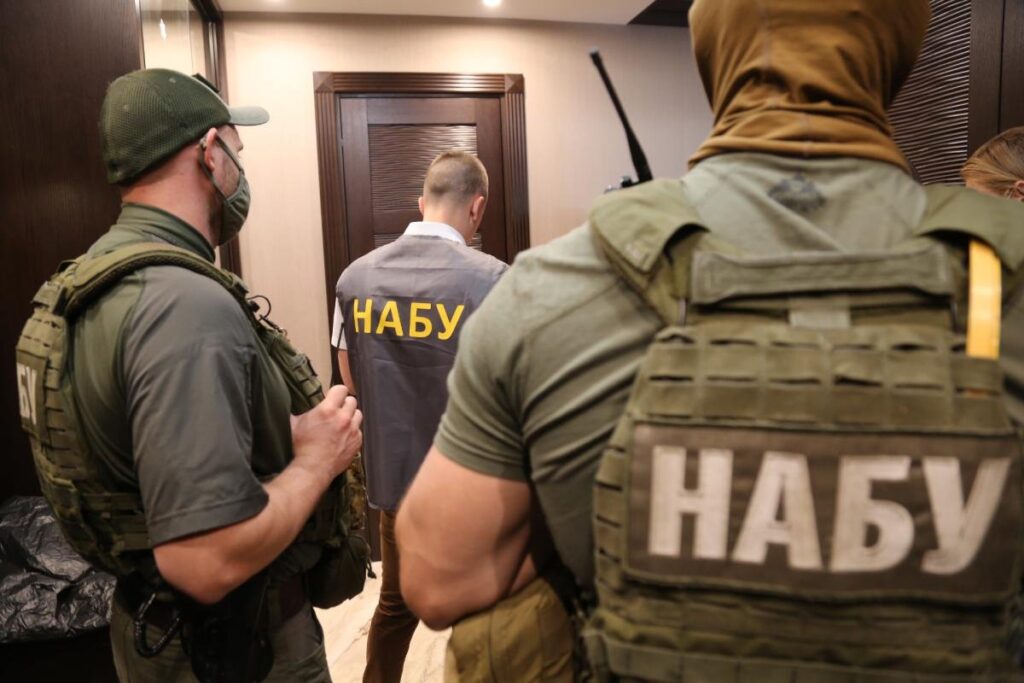
wiretaps mocking codename seized playbook—ukraine's anti-graft bureau reaches president's office again · post national anti-corruption (nabu) officers during search forest gump operation 19 2026 nabu ukraine news ukrainian reports

Ukraine's anti-corruption investigators say a senior official in the Office of the Prosecutor General set up and ran a criminal organization from within the office. The National Anti-Corruption Bureau (NABU) and the Specialized Anti-Corruption Prosecutor's Office (SAPO) said in a statement on 5 September that the group took bribes to allow fraudulent call centers to operate and laundered millions.

The case cuts into Ukraine's own prosecution service, the body meant to bring such crimes to court. NABU, widely regarded as the country's most independent anti-corruption institution, and SAPO opened the operation this week, at a time when fraudulent call centers have become a major problem for organized crime. Meanwhile, authorities are pursuing hundreds of suspected operations at home and abroad.

More than $450,000 was spent on real estate

According to the investigation, a head of a structural unit at the Office of the Prosecutor General created and led the organization in mid-2025, recruiting both serving prosecutors and close associates. Members allegedly took systematic bribes in exchange for not obstructing the so-called call centers, which defraud Ukrainian citizens and foreigners on a mass scale. Such operations run phone and online scams that strip money from victims at home and abroad.

The proceeds were laundered, investigators say. More than $450,000 was spent on real estate, jewelry, and other valuables, while roughly $225,000 was placed in associates' bank accounts and passed off as business income. The alleged organizer also re-registered previously acquired assets to third parties to hide his ownership, including property in a popular apartment complex near the Carpathian Mountains worth at least $270,000.

According to NABU, the criminal group included:

  • "Chancellor", its leader
  • "Muza", a close friend of the Chancellor
  • "Comrade", Chancellor’s driver
  • "Flash", Chancellor’s assistant

The investigation shows that the "Chancellor" has managed to consolidate all the levers of influence over fraudulent call centers in his hands. The individual decided which call centers to “protect” and which ones to shut down. Bribes were also allegedly paid to secure appointments to senior positions in the prosecution service.

“I can’t just go to work for the sake of going to work. I need to live there, not just exist. If you’re going to do something, then go all in. But I prefer it this way: if you’re gonna f*ck, f*ck a queen, if you’re gonna steal, steal a million,” Chancellor says in an audio recording released by NABU.

Five charged, more expected

Five people have been exposed so far, suspected of creating, leading, or participating in a criminal organization and of laundering money. The investigation is continuing, and NABU says it is identifying other possible participants.

The Office of the Prosecutor General said it would assist the anti-corruption agencies and suspended the employee in question for the duration of the pre-trial investigation.

"I have a Porsche, Loro Piana, Mimi, flowers"

At the same time, the Prosecutor General’s Office is calling for an assessment of the legality of NABU’s nighttime searches. It says the searches of the offices of senior officials and the investigators’ access to materials from other criminal proceedings require a legal assessment.

Meanwhile, the recordings show that after NABU began searching the people involved in the scheme, they panicked and covered up the most obvious traces of their alleged wrongdoing, including deleting photos of their luxurious lifestyles from social media.

“I need to delete everything… I have a Porsche, Loro Piana, Mimi, flowers, watches, bracelets, bags here. I need to delete everything,” an accomplice in the scheme, known by the pseudonym "Muza", tells "Chancellor" in the recordings.

Earlier, Ukrainska Pravda reported, citing its own sources, that on 4 September NABU detained Serhii Kropyva, deputy head of the Department of International Legal Cooperation at the Prosecutor General’s Office.

  • ✇Euromaidan Press
  • Ukraine’s Lasar’s Group says its bomber drones destroyed rare Russian Zhitel jammer 55 km behind front
    A Ukrainian National Guard unit says it destroyed one of Russia's rarer electronic-warfare stations, 55 kilometers behind the front. Lasar's Group said its own bomber drones hunted down an R-330Zh Zhitel jamming station near Sievierodonetsk in mid-summer, in a statement on its Telegram channel. The Zhitel is worth the effort. It detects and jams GPS, satellite, and cellular signals, and Russian forces have been using it to blind Ukrainian reconnaissance drones over the
     

Ukraine’s Lasar’s Group says its bomber drones destroyed rare Russian Zhitel jammer 55 km behind front

5 septembre 2026 à 12:36

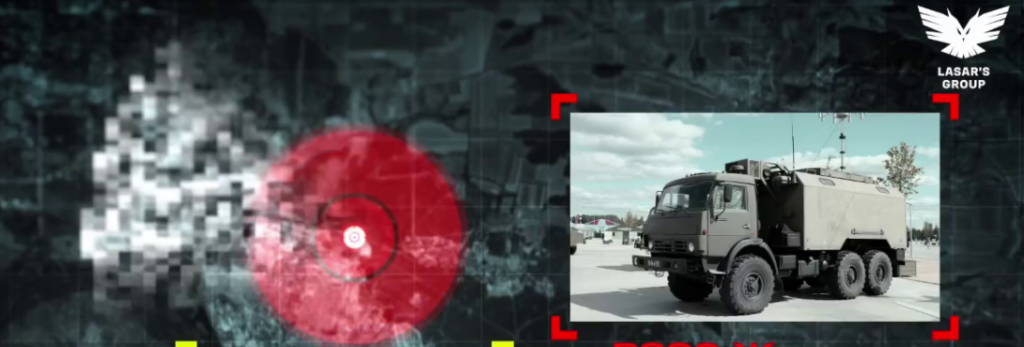
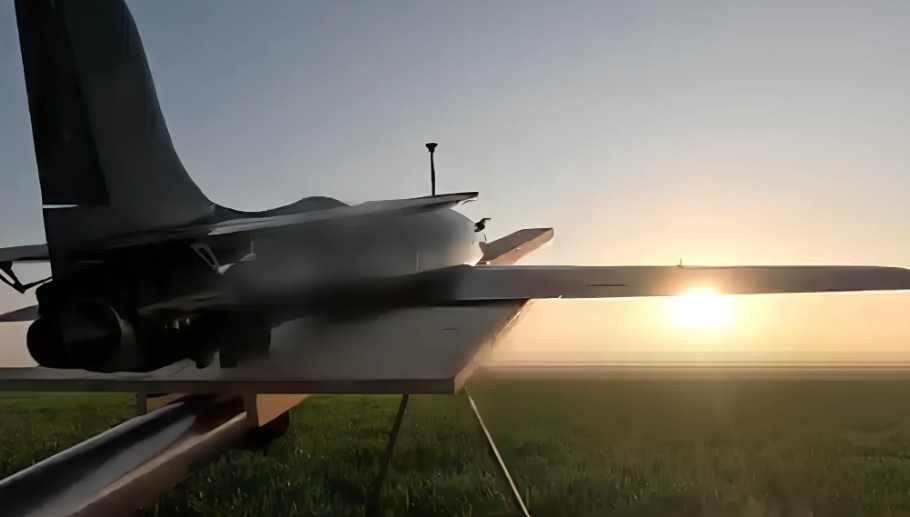
The R-330Zh Zhitel jamming station. Source: Lasar's Group

A Ukrainian National Guard unit says it destroyed one of Russia's rarer electronic-warfare stations, 55 kilometers behind the front. Lasar's Group said its own bomber drones hunted down an R-330Zh Zhitel jamming station near Sievierodonetsk in mid-summer, in a statement on its Telegram channel.

The Zhitel is worth the effort. It detects and jams GPS, satellite, and cellular signals, and Russian forces have been using it to blind Ukrainian reconnaissance drones over the Sievierodonetsk area. Mounted on a KamAZ truck, it can operate alone or be integrated into a wider jamming network, Militarnyi reported.

How the unit says it did it

The strike was the unit's own from start to finish, Lasar's Group said. Its intelligence analysts, working with the unit's aerial reconnaissance crews, pinpointed the Zhitel's exact position.

Ukrainian soldiers from "Lasar's Group" of the National Guard destroyed a rare Russian R-330Zh "Zhitel" jamming station deep in Russian-held territory

Russian troops had used the system mainly to blind Ukrainian reconnaissance drones over the Siverskodonetsk
🎥 Lasar's Group pic.twitter.com/JEQeADMSBk

— Euromaidan Press (@EuromaidanPress) September 5, 2026

Strike crews then flew in-house-built LASAR bomber drones 55 kilometers deep to destroy it.

The rationale is simple: the fewer electronic warfare systems the Russians have, the freer Ukrainian drones are at the front, which is why such systems sit high on the Lasars' target list. The Zhitel they hit had been used mainly against reconnaissance drones, keeping Ukraine's forces from monitoring the area around Sievierodonetsk.

Not the unit's first

It is at least the second Zhitel Lasar's Group has claimed this year. In April, the unit destroyed a Zhitel and a command-and-staff vehicle in Kharkiv Oblast. The unit has made a specialty of hunting high-value Russian assets deep in the rear: in March, its drone crews tracked down a roughly $50-million Yastreb-AV counter-battery radar in occupied Luhansk Oblast, one pilot even landing a drone on the vehicle to follow it as Russian forces tried to move it to safety.

Taking out a jamming node like the Zhitel has an outsized effect: it restores freedom of movement for Ukrainian drones, brings back GPS-dependent navigation and weapons in the area, and makes it harder for Russia to blind Ukrainian reconnaissance.

Ukraine is running short of its best missiles for hunting Russia’s jet drones. Now MiG-29s are firing 1970s weapons

Par : David Axe
5 septembre 2026 à 11:21

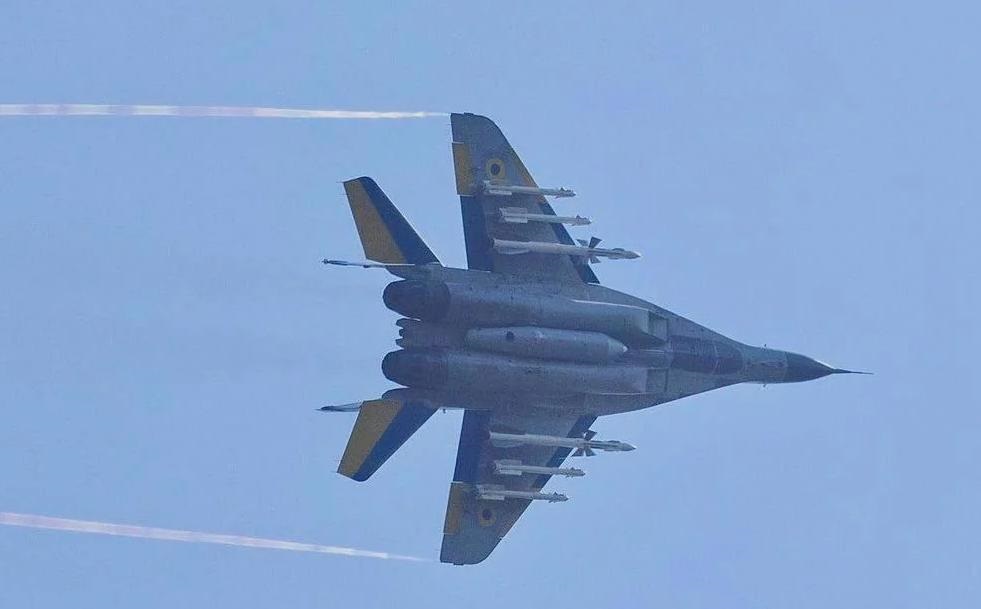
MiG-29 with R-27s and R-73s.

  • Russia is launching more jet-propelled Geran drones and Banderol missiles
  • Speeding along as fast as 700 km/hr, these munitions are hard to intercept
  • Ukraine's fighters are up to the task—but they are reaching for missiles designed in the 1970s

Russia is launching more of its best jet-propelled attack drones and miniature cruise missiles at Ukrainian ports, cities, warehouses, and power plants. The speedy Geran-3, Geran-4, and Geran-5 drones and Banderol missiles can zoom right past Ukraine's ground-based guns and slower interceptor drones, so the Ukrainian air force is deploying more supersonic fighters to chase down the Russian munitions.

But there's a problem. The Ukrainian jets are running short of the missiles that work best against them.

A deepening shortage of infrared-guided AIM-9 missiles and radar-guided AIM-120 missiles for the Ukrainian air force's ex-European Lockheed Martin F-16 fighters has been reported elsewhere. Less well known is what has been happening to the Soviet-era missiles carried by Ukraine's older Mikoyan MiG-29 fighters.

The F-16 is probably the most numerous Ukrainian fighter type, with around 50 in service. But the MiG-29 is a close second. Despite steep losses of MiG-29s in the 55 months since Russia widened its war on Ukraine, Ukrainian aviation brigades may still fly dozens of the classic Soviet-made fighters. MiG-29s are daily sights in the sky over the port of Odesa in southern Ukraine as the twin-engine fighters chase down Russian missiles and drones.

The missile shortage spreading to F-16s really concerns me.
Because at the same time out of nowhere we are seeing Ukrainian MiGs flying combat sorties with older R-60 missiles and not R-73s.

Here’s a recent video of an R-60 being used against a banderol cruise missile : pic.twitter.com/UMhtXW2o2p

— capt. Wild Bill Kelso (@_wild_billkelso) September 4, 2026

The MiG-29 can carry the full array of Soviet-style air-to-air missiles in the Ukrainian inventory including the infrared-guided R-60 and R-73 and the radar-guided R-27. But the missile of choice for intercepting the 500 km/hr Gerans and 700 km/hr Banderols is the more modern R-73. The $300,000 heat-seeking missile is maneuverable and accurate at the close ranges that are typical of fighter-on-drone engagements. Its one known weakness is cloud: a Ukrainian pilot said in 2022 that the R-73 tracks poorly through it, which is part of why pilots sometimes fall back on the cannon.

Ukraine went to war in 2022 with substantial stocks of R-73s and surely received additional copies from allies. While Ukrainian industry built some components for the 1980s-vintage missiles, they were and still are assembled in Russia—so the supply is finite. And the rate of expenditure rose sharply as Ukraine pushed the R-73 into roles it was never built for: onto ground-based launchers, after the 9M33 missiles for its Soviet Osa air defense systems ran short, and even onto some of its robotic boats.

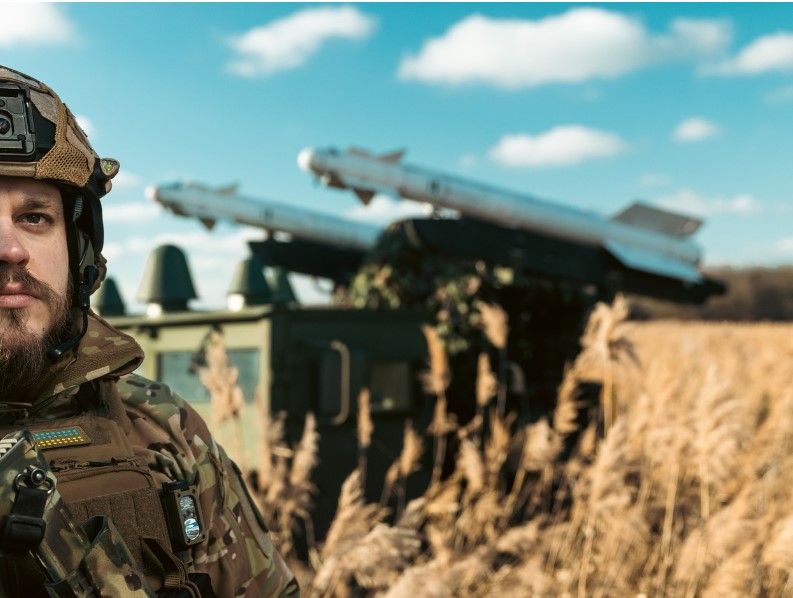
Ukrainian mobile air defense system firing Soviet R-73 air-to-air missiles
Mobile air defense system with R-73 missiles from the 3rd Separate Assault Brigade, March 2025. Photo: Maksym Zaichenko

Down to the 1970s stock

The sign of that pressure is the return of the R-60—a missile designed in the 1970s and considered obsolete when Russia widened the war. Last month an R-60 was visible in the wreckage following the crash of a Ukrainian MiG-29. And this week, video circulated of a MiG-29 downing a Banderol with one at extremely low altitude.

Ukraine's air force had enough R-73s in 2022 that nobody expected to see R-60s again. Continuous interception of Russian cruise missiles and Shahed-type drones changed that, Militarnyi reported. Nor is this improvisation: since November 2025 Ukraine has been running a program to modernize the R-60, replacing analog seeker components with digital ones to sharpen its infrared sensitivity, and adapting it for ground launch. Ihor Fedirko of the Ukrainian Council of Defense Industry called it a temporary way to put otherwise unusable missiles to work.

It's not that the R-60 isn't suitable for downing a Geran or Banderol. It's that it's less suitable than an R-73. "I don't think Ukraine would be using R-60 missiles unless it had nothing else left," one close observer of the Ukrainian air force noted.

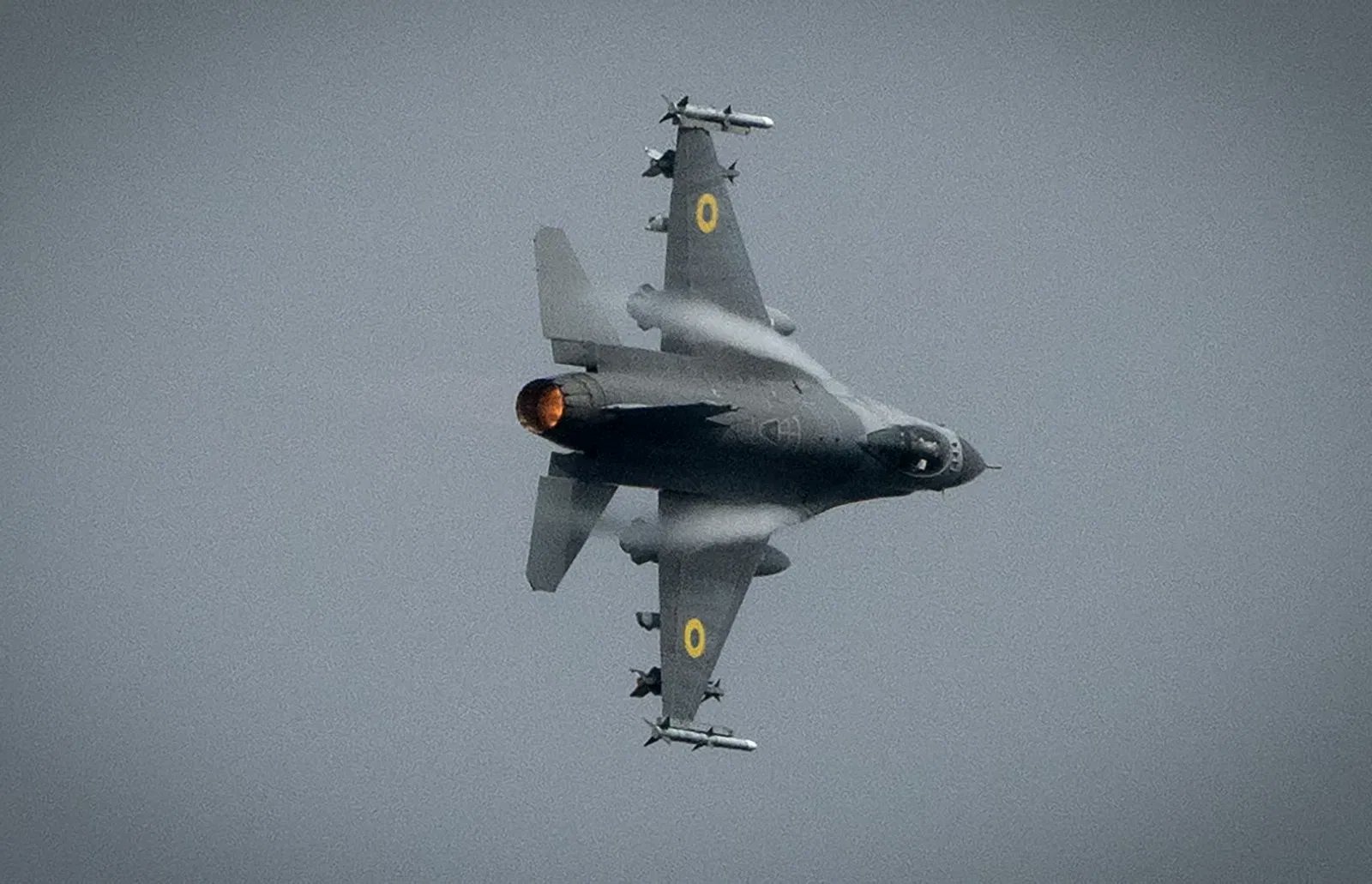
A Ukrainian air force F-16.
Explore further

Ukraine’s F-16s are so short of Western missiles that pilots fall back on jet’s built-in M61A1 Vulcan cannon, which risks killing civilians below

The only other alternative is for a fighter to use its gun. But that's risky, as the pilot must fly dangerously close to a drone or missile before opening fire; the resulting explosion could take out both the interceptee and the interceptor.

In the same way Russia is exhausting Ukraine's long-range surface-to-air missile batteries by firing more ballistic missiles than Ukrainian forces can intercept with their dwindling supply of Patriot missiles, Russia may also be exhausting Ukraine's fighters and their limited stocks of short-range air-to-air missiles.

As the Ukrainian missiles run out, more of the Russian missiles and drones get through—and strike their targets.

I’m not a missile expert but the missile on the left looks like an R-60. Perhaps Ukraine was trying to burn through some old R-60s it had and one malfunctioned.
It could also just be An R-27 but I don’t know.
The missile on the right looks to be an R-73 pic.twitter.com/yyZ0tSmaf4

— capt. Wild Bill Kelso (@_wild_billkelso) August 11, 2026

The problem is going to get worse before it gets better. Russian industry is ramping up production of both the jet-propelled Geran models and the Banderol, and jet output overtook piston output in August. The Russians launched a reported 1,500 jet Gerans in July and 2,500 in August. Interception rates for the fast drones specifically ran as low as 50% in July, though they may have ticked up to 60% or even 70%.

But that's still too low considering that Ukrainian air defenders usually shoot down 90% of slower propeller-driven Geran-1s and Geran-2s. "Nobody wants interception rates in the 60s/70s," explained Michael Bohnert, an analyst for the RAND think tank in California.

New models of faster interceptor drones, which several Ukrainian manufacturers are scrambling to deliver to front-line forces, may help restore the 90% kill rate for even the fastest Gerans. But "jet-interceptor output has been behind jet-drone output," Bohnert noted. So it's likely that, for a few months at least, the Russians will have the numerical edge, and the Ukrainians will have no choice but to continue sortieing F-16s and MiG-29s to reinforce ground-launched air defenses.

But what happens when the fighters run out of even their oldest missiles?

More than 400 defense firms ask Kyiv to create one state body with real authority over $6.8 billion industry

5 septembre 2026 à 10:50

Griffen, Ukraine's jet-powered interceptor. Source: Firebolt Engineering

Ukraine's private defense industry says no single part of the government is actually responsible for it. The Ukrainian Council of Defense Industry, an alliance of more than 400 companies, has called on the authorities to create a state body with clear powers over defense-industry policy.

The gap sits under a fast-growing sector: Ukraine's top defense-market segments more than doubled to $6.8 billion in 2025, and the private arms market has grown roughly tenfold since 2022. By industry estimates, the sector now employs on the order of 300,000 people. The council argues that a sector of that scale has no government home with the authority to steer it.

Responsibility with no owner

The council traces the problem to July 2025, when the government merged the Ministry of Strategic Industries into the Ministry of Defense, a move meant to unify defense management. More than a year on, the council says the relevant functions remain split among the Defense Ministry, the ministries of economy, finance, and digital transformation, the National Security and Defense Council, and various state agencies.

Each institution handles one slice, the council says, but none holds enough authority or bears comprehensive responsibility for developing the defense industry. That, it argues, makes it harder to solve producers' problems, coordinate policy, attract investment, scale production, and enter foreign markets.

What the council wants

The council stresses that it is not demanding the restoration of the Strategic Industries Ministry. Instead, it wants a capable body with clear powers, adequate resources, and defined political responsibility — a single point of contact between the state and Ukrainian producers.

Such an institution should:

  • Develop a medium-term defense-industrial policy aligned with the needs of the Defense Forces and budget planning;
  • Coordinate the development of production capabilities, technologies, testing infrastructure, investment, and joint production;
  • Serve as the state’s single point of contact with Ukrainian defense manufacturers;
  • Ensure the systematic promotion of Ukrainian defense products abroad and protect the interests of Ukrainian companies in international partnerships;
  • Involve manufacturers and relevant industry associations in developing decisions that affect the sector.

    The council, chaired by presidential adviser Oleksandr Kamyshyn, groups more than 360 private producers, 28 drone-pilot schools, and 20 defense venture funds.

    "We represent the industry's common position and help producers work with the state, the military, and international partners," it says of its role.

    The defense-industrial complex is critical to Ukraine's ability to defend itself, the council says, and its scale now demands a matching system of state management.

    Slovakia, led by one of EU’s most Russia-friendly governments, condemns Russia’s drone strike on Ukraine’s Security Service building

    5 septembre 2026 à 10:30

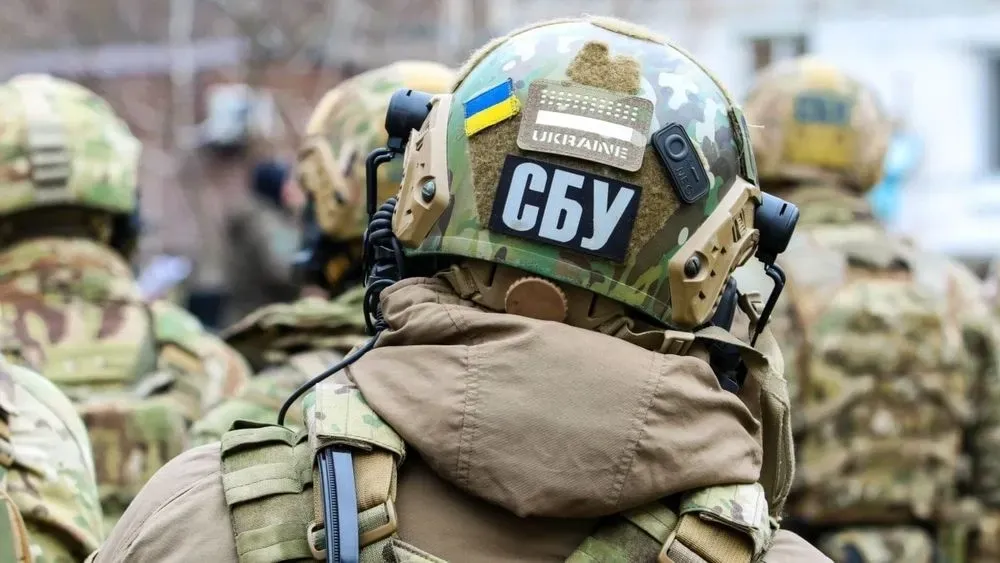
    sbu busts agitator trio propaganda rubles tiktok defense bucha massacre · post officer security service ukraine unn news ukrainian reports

    The Russian drone that hit Ukraine's Security Service headquarters in Kyiv came down next to Slovakia's consular section in central Kyiv. Bratislava condemned the strike and ordered Russia's ambassador summoned, Slovak Foreign Minister Juraj Blanár said on 5 September, a day after the attack, according to the Slovak Foreign Ministry.

    The response is a rare rebuke from a government that has been among the EU's friendliest to Moscow. The jet-powered Geran drone struck the SBU's central building on 4 September, injuring 12, in what Ukraine called a deliberate hit on the office of its Acting Security Service chief, Oleksandr Poklad, who was unharmed.

    What Blanár said

    "We strongly condemn today's Russian attack with a jet-powered drone on the building of the Ukrainian Security Service, which is located near the consular section of the Slovak Embassy in Kyiv," Blanár said.

    The building has been operating on a limited basis for security reasons, he added, and no one was inside during the attack.

    Blanár said Slovakia would not confine itself to a statement.

    "I have ordered the Russian ambassador to the Slovak Republic to be summoned," he said, to seek an explanation from Moscow, and called on Russia to refrain from actions that could endanger civilians.

    A condemnation with a hedge

    He paired the rebuke with an appeal that treated the war as a two-sided problem, urging "both sides" to avoid further escalation and pointing to a "peaceful settlement." The strike, however, was carried out by Russia against Ukraine.

    The symmetry fits Bratislava's stance under Prime Minister Robert Fico, whose government has been the most openly pro-Moscow in the EU and repeatedly at odds with Kyiv. Relations soured over Ukraine's decision to end Russian gas transit to Europe, and Fico has called President Zelenskyy an "enemy" of Slovakia. Meanwhile, Kyiv has accused him of acting as a "mouthpiece" for the Kremlin.

    Russia made 500 Ukrainian schoolchildren in occupied Donetsk take part in “anti-terrorism dictation”. It taught them they can be jailed for a repost at 14

    5 septembre 2026 à 08:09

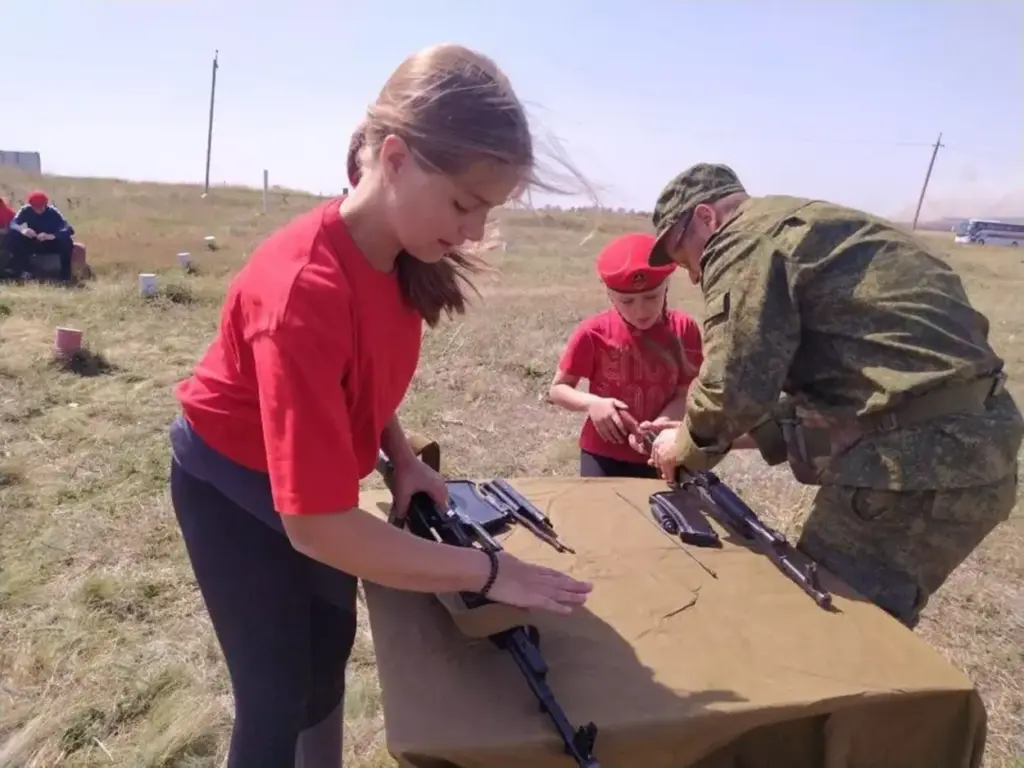
    Two children handle rifles as a uniformed man demonstrates a weapon on a table outdoors.

    In occupied Donetsk Oblast, the Russian occupation authorities had some 500 schoolchildren take part in an "anti-terrorist dictation." The rights group Zmina says the occupiers and their collaborators stage such events deliberately to intimidate local residents, children, and teenagers among them.

    The exercise is one instrument of a documented system. In July 2026, an OSCE expert mission invoked by 41 states found that Russia's use of terrorism and extremism legislation against Ukrainian children may amount to a crime against humanity.

    Only in 2025, occupation authorities sent 48 Ukrainian children in Donetsk Oblast to psychiatric hospitals on extremism charges. For example, teenager Maksym Lypkan is being forcibly subjected to psychiatric treatment because he said that the war against Ukraine is an act of villainy.

    The test drilled Russian criminal law

    The dictation was held in 17 schools across occupied Donetsk, Mariupol, Makiivka, and Volnovakha, with pupils in grades eight through eleven answering questions in writing, according to the occupation's Donetsk News Agency, cited by Zmina.

    The three themes were basic definitions, criminal responsibility, and the roles of the state and citizens in combating terrorism, with an emphasis on Russian criminal code provisions on terrorism and extremism.

    Some questions were situational. In one, pupils were told that an internet user had shared someone else's post containing banned content, and then asked whether only the original author bore responsibility, or whether the person who reposted it had also broken the law.

    Afterward, teachers walked the teenagers through the correct answers. Particular attention was given to the point that criminal liability for terrorism offenses begins at age 14, said Marharyta Kucheriava, who heads a committee on information policy and countering extremism and terrorism within the occupation's "youth parliament" in Donetsk Oblast.

    One arm of a wider effort

    The dictation sits alongside a broader remaking of occupied schools. From 1 September, the occupation authorities introduced a compulsory Russian-identity subject, a separate military-training track, and behavior grades for children as young as second grade.

    From HQ to the zero line: Ukraine’s Hrafit system answers one important question on an ordinary phone in a trench and on the road

    5 septembre 2026 à 07:49

    Ukrainian soldiers. Source: The Third Separate Assault Brigade of the Ukrainian Ground Forces

    A Ukrainian soldier in a trench or in a vehicle can now get a short alert on their phone the moment a Russian FPV drone or glide bomb starts closing in. The system behind it, Hrafit (Graphite), pulls together data from nearly all available radio-technical intelligence and surveillance into a single picture, ArmyInform reported.

    The threat no longer stops at a command post. The warning reaches the soldier at an observation point, the sector command, and the commander-in-chief at once. To use it in a position, a soldier needs only a protected smartphone and satellite internet, including Starlink, and on the ground, it comes down to one short push notification.

    Hrafit answers one question: Is the sky clear?

    In modern combat, a second's hesitation can be enough for an infantry soldier in a trench or a crew in a vehicle to be caught by an FPV drone or a guided glide bomb. Hrafit is the Ukrainian answer, moving situational awareness onto an ordinary phone.

    Military programmers built it for Ukraine's Defense Forces to answer the one question that matters most in the field: is the sky clear? Militarnyi reported that the system is being supplied to the Armed Forces, the National Guard, the Security Service, and the Border Guard Service.

    It tracks drones and glide bombs

    Working in real time, Hrafit flags a wide range of incoming threats:

    • FPV drones, both kamikaze and loitering types
    • tactical quadcopters such as the DJI Mavic, which are often used to direct fire
    • winged Russian drones like the Molniya and Privet
    • guided glide bombs and other aerial munitions

    Three versions run from HQ to the trench

    Hrafit runs on Android, iOS, and the web, in three versions.

    The full version, for analysts, commanders, and electronic warfare and air defense operators, adds reporting, filters, frequency-band analysis, and a global map of the fighting.

    For instance, Hrafit Lite strips down the interface for troops on the zero line, showing only the local area, so nothing distracts from the fight.

    A third module, Sova (Owl), is built for logistics crews, drivers, and medical evacuation: it runs during a drive, moves its monitoring sector across the map with the vehicle, and warns of danger along the way.

    Soldiers can learn the system through an official online course in the Army+ app, which teaches them to operate and configure Hrafit and issues a completion certificate.

    Ukraine is taking 1980s Leopards from across Europe and giving them radar-guided anti-drone guns and gunner-less turrets

    Par : David Axe
    5 septembre 2026 à 07:45

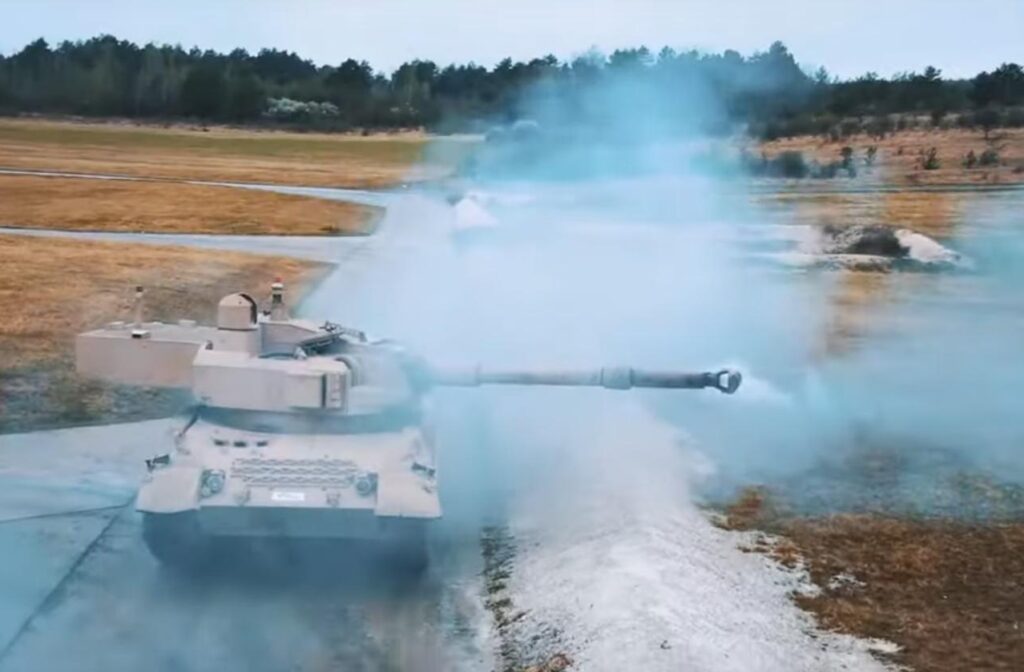
    A Leopard 1A5 with a C3105 turret.

    • Ukraine is getting 170 Leopard 1A5 tanks from a European consortium
    • Most fight as tanks, but some are becoming air defense vehicles—built in Rome, paid for with frozen Russian money
    • A second program swaps in an unmanned Belgian turret and drops the crew to three
    • Europe's warehouses hold enough spare hulls to feed both

    Ukraine has lost a quarter of its German-designed Leopard 1A5 tanks. But it could get many more of the nimble, 40-ton tanks. And some could have brand-new turrets that make them lighter, faster, farther-shooting, and more survivable.

    The hulls are 1980s West German. The refurbishment is done in Germany, the air defense turrets are built in Rome, the tank turrets are designed in Belgium, and one of the two programs is paid for out of frozen Russian assets. Ukraine's newest armored vehicles are being assembled from the leftovers of a war Europe spent forty years preparing for and never fought.

    In 2023, a German-Danish-Dutch consortium pledged 170 Leopard 1A5s to Ukraine. The 1980s-vintage tanks have come from German, Danish, and Belgian surplus stocks.

    Refurbished in Germany by tank-maker Rheinmetall and fitted with add-on anti-drone armor in Ukraine, the first 135 or so Leopard 1A5s now equip at least five units: the 44th Mechanized Brigade, 5th Heavy Mechanized Brigade, the 425th Assault Regiment, the 142nd Mechanized Brigade, and the 13th National Guard Brigade.

    Losses have been heavy. The Russians have struck no fewer than 37 of the four-person tanks, destroying at least 30 of them. The 44th Mechanized Brigade, which is fighting a defensive action south of the cities of Kramatorsk and Sloviansk in eastern Ukraine's Donetsk Oblast, has been hit the hardest. The brigade has written off around half of its original allotment of 31 or so Leopard 1A5s.

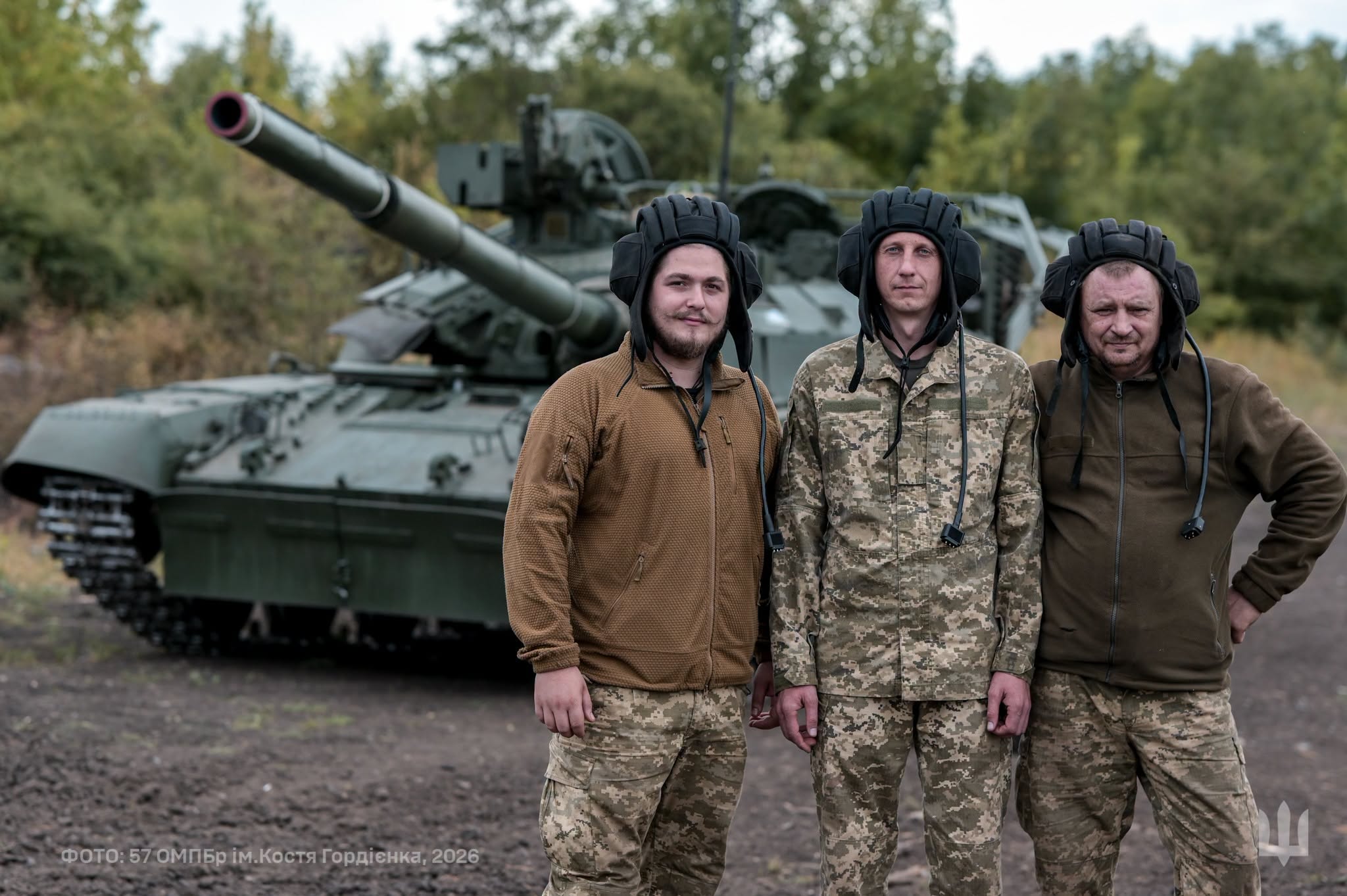
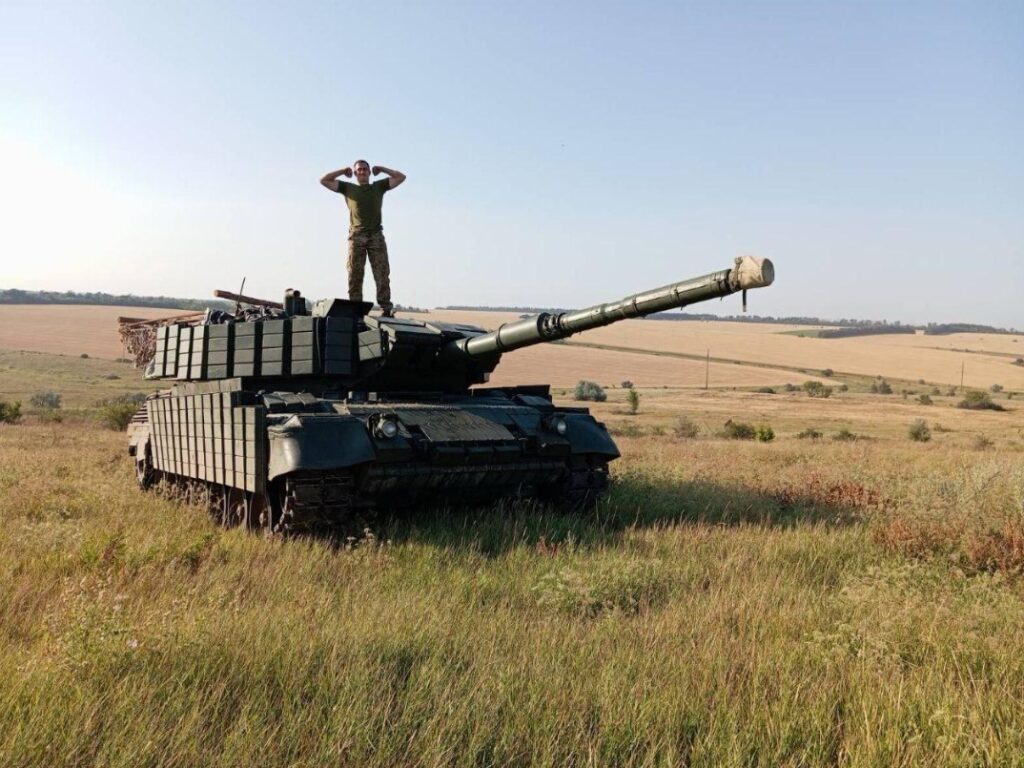
    A T-64BM Bulat in the 57th Motorized Brigade. Photo by the brigade
    Explore further

    A rare Ukrainian Bulat tank turned up in a brigade that never had them

    Another 35 Leopard 1A5s from the 2023 pledge should eventually reach Ukrainian units, potentially making good those losses.

    But Kyiv is diverting some of those initial 170 Leopard 1A5s to a pair of conversion programs that are reinforcing Ukraine's air defense while also re-equipping the ground forces with a new generation of tank.

    The first conversion program, overseen by Rheinmetall, plucks the old turrets with their 105-millimeter cannons off some Leopard 1A5s and drops in a new turret with a faster-firing 35-millimeter anti-aircraft gun. Effectively a next-generation Gepard, the resulting Skyranger 35 is a mobile, armored drone-killer that can post up between Russian drone launch sites and Ukrainian cities in order to down incoming Geran drones before they can strike.

    Its revolver cannon fires 1,000 rounds a minute out to 4 km, using airburst ammunition that scatters tungsten pellets in the path of an incoming drone. An unnamed EU country is paying for the systems out of proceeds from frozen Russian assets, and Rheinmetall builds them at its subsidiary in Rome. Germany's own army has ordered 19 and is discussing hundreds more; Ukraine's arrived first.

    The first imagery of a Skyranger 35 in Ukrainian service circulated online this week, with the 1020th Anti-Aircraft Missile Regiment.

    It seems that Ukraine's 1020th Anti-Aircraft Missile Regiment which belongs to the Ground Forces has taken delivery of the first Skyranger 35 SPAAGs mounted on a Leopard 1 chassis made by @RheinmetallAG.

    A contract for the delivery of the Skyranger 35 SPAAGs was signed in H2 of… pic.twitter.com/VRWhGx1LCa

    — GAU (@deaidua) September 3, 2026

    Old tank, new turret

    The second conversion program won't produce combat-ready vehicles for another year or so. This program will swap out the turrets on 31 Leopard 1A5s. The new turret, produced by John Cockerill Defense in Belgium, is unmanned: the commander and gunner move down into the hull alongside the driver, and an autoloader replaces the human loader. That drops the crew from four to three and takes everyone out of the part of the tank most likely to be hit.

    🇺🇦 A spokesperson from Cockerill confirmed to me at Eurosatory that the company has been contracted to deliver 30 C3105 turret to Ukraine to be mounted on the countries Leopard 1 main battle tanks.

    The first five systems will be delivered in June of 2027 with the remainder to be… https://t.co/uAAIUR1ZDr pic.twitter.com/mnLxXSJBcb

    — Jeff2146🇧🇪 (@Jeff21461) June 15, 2026

    The new turret is welded from ballistic aluminum instead of steel, shaving three tons off the tank's 40 and freeing weight for reactive armor, anti-drone netting, or electronic warfare kit.

    As a bonus, the 105-millimeter gun in the multi-million-dollar Cockerill 3105 turret also elevates far higher than the gun in the existing turret—42 degrees, against roughly 20 on the original. That confers greater range when a tank functions as artillery, firing its cannon at targets over the horizon: Cockerill says no other Western main battle tank can shoot indirectly the way this one does, and Ukrainian trials reached 10 km from a covered position.

    Kyiv has ordered 30 of the turrets and holds one more it bought for testing last year. Some time in 2027, that is a battalion of new medium tanks: a cutting-edge turret on a chassis built when Leonid Brezhnev was alive.

    A Ukrainian soldier standing on a Leopard 1A5 tank
    Ukrainian soldier standing on the Leopard 1A5 tank. Photo: Army Inform

    To provide hulls for the 31 Cockerill-converted Leopard 1A5s while also sustaining the Skyranger 35 program, Ukraine must make a choice. Combined, the two programs need potentially 50 or more tank chassis, but just 35 Leopard 1A5s from the initial 170-tank pledge are still in the queue for delivery to Ukraine.

    A T-72B3A the moment before a Ukrainian drone strikes.
    Explore further

    Russia took the cages off its newest tanks. The new Arena-M shield bought them a few minutes.

    Ukraine's ground forces are already short on tanks; taking Leopard 1A5s from the five brigades and regiments that operate the type could deprive those units of desperately needed firepower. Fortunately for Ukraine, there are still hundreds of old Leopard 1A5s in warehouses in Europe and farther abroad—and Rheinmetall is pulling the Skyranger hulls from storage rather than from Ukraine's active fleet.

    French historian Stevius made a count and concluded "the stocks in Europe are far from exhausted." As recently as 2022, German firm Flensburger Fahrzeugbau Gesellschaft held 99 Leopard 1A5s. Rheinmetall held 88 of the tanks in 2022 and, in 2023, bought 50 more from OIP Land Systems in Belgium. That's 237 tanks: 67 more than the Europeans pledged to the Ukrainians in 2023.

    Some of those 67 excess Leopard 1A5 hulls are unusable owing to rust and other wear and tear. Even so, there should be enough Leopard 1A5s left in Europe to feed the Skyranger and Cockerill conversion efforts. And once those run out, there are still some ex-Italian and ex-Greek Leopard 1A5s that Ukraine could acquire.

    And if it can secure the financing, Ukraine could convert those additional tanks—or even some of its existing ones—into faster, farther-firing Leopard 1A5s with Cockerill C3105 turrets. Cockerill has already proposed doing the whole active fleet, around 100 tanks.

    “Everyone is absolutely livid”: Expert says Russian agent may have activated MESH relay within 5 km of attack on Security Service, enraging Ukraine and Europe

    5 septembre 2026 à 07:27

    Smoke seen from the damaged SBU headquarters building on Volodymyrska Street in central Kyiv following a Russian drone strike on 4 September, 2026. Screenshot from video: Suspilne

    On the afternoon of 4 September, a Russian drone struck the building of Ukraine's Security Service in Kyiv, flying straight at the office of the acting chief, Oleksandr Poklad. One source close to the security services was blunt about the mood afterward, telling LIGA.net that everyone was "not just furious — everyone is absolutely livid."

    It was a rare direct hit on a top government building — the first time the SBU headquarters had been struck in the four-and-a-half-year war. The central building stands on Volodymyrska Street opposite St. Sophia's Cathedral, a UNESCO World Heritage site.

    Poklad was unharmed, and President Volodymyr Zelenskyy said he had ordered a response that mirrors the attack.

    Beskrestnov: a planned operation, guided from the ground

    Serhii "Flash" Beskrestnov, President Zelenskyy's adviser on defense technologies, argued the strike was too precise to be a stray hit.

    "My personal opinion: the Geran was controlled and guided online through a MESH radio relay with internet access, which a Russian agent switched on somewhere nearby — within five kilometers — for a short period during the attack," he wrote.

    Such a relay is small, about the size of half a school backpack, he said. He added that no other jet-powered Gerans were in the air over Kyiv at the moment of the strike, which, in his view, rules out the drone being flown along a relay chain reaching back into Russia and points instead to local control.

    Europe calls it a major escalation

    Katarína Mathernová, head of the EU Delegation to Ukraine, said the drone hit near where she and her colleagues live and work, and her Kyiv staff again had to leave their desks for shelter. Under her post, former EU Ambassador to Ukraine José Manuel Pinto Teixeira called Russia a terror state.

    "Time for Ukrainian drones visiting the center of Moscow," he said.

    Estonian Foreign Minister Margus Tsahkna said Russian drones had struck "the very heart of Kyiv," and pressed for tighter sanctions and deeper isolation of Moscow.

    "The Kremlin’s objective remains unchanged: inflict maximum carnage, sow terror, and trample every norm of international law," he said.

    Russia destroyed most of Ukraine’s big warehouses. Now the country is scrambling to build small ones everywhere

    5 septembre 2026 à 06:45

    Grocery shortage

    On the morning of 30 August, I went to a central Lviv branch of Silpo, a Ukrainian supermarket chain operated by Fozzy Group. It had run out of buckwheat, peas, pearl barley, and other dry goods.

    Telegram reports from Lviv showed partially empty shelves at other supermarkets as shoppers stocked up on flour, salt, and cereals. Similar gaps appeared in Kharkiv, Ivano-Frankivsk, and Vinnytsia. Russian strikes have also damaged some of Ukraine's largest wine warehouses, raising the prospect of shortages of wine and other alcoholic beverages.

    As replacement space runs short, the state has stepped in: on 4 September, on Zelenskyy's order, oblast military administrations switched to round-the-clock operation, opening a single window for businesses and forming working groups to find them relocation sites and connect utilities, deputy Head of the President's office Viktor Mykyta said.

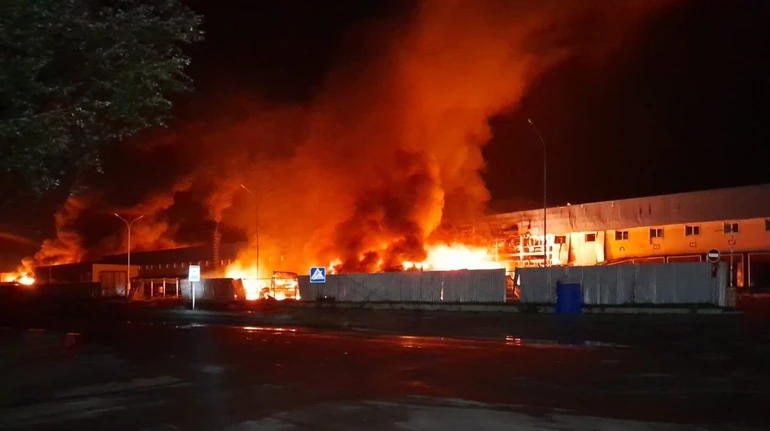
    Overall, Russia has destroyed about 90% of Ukraine's modern storage—including 80% of the refrigerated warehouses around Kyiv—faster than it can be rebuilt. So retailers, parcel carriers, and now the government are scrambling to replace one centralized system with dozens of scattered sites. Whether they can do it before winter, and at what cost to prices, is the question now hanging over the country's food supply.

    Replacement warehouses become new targets

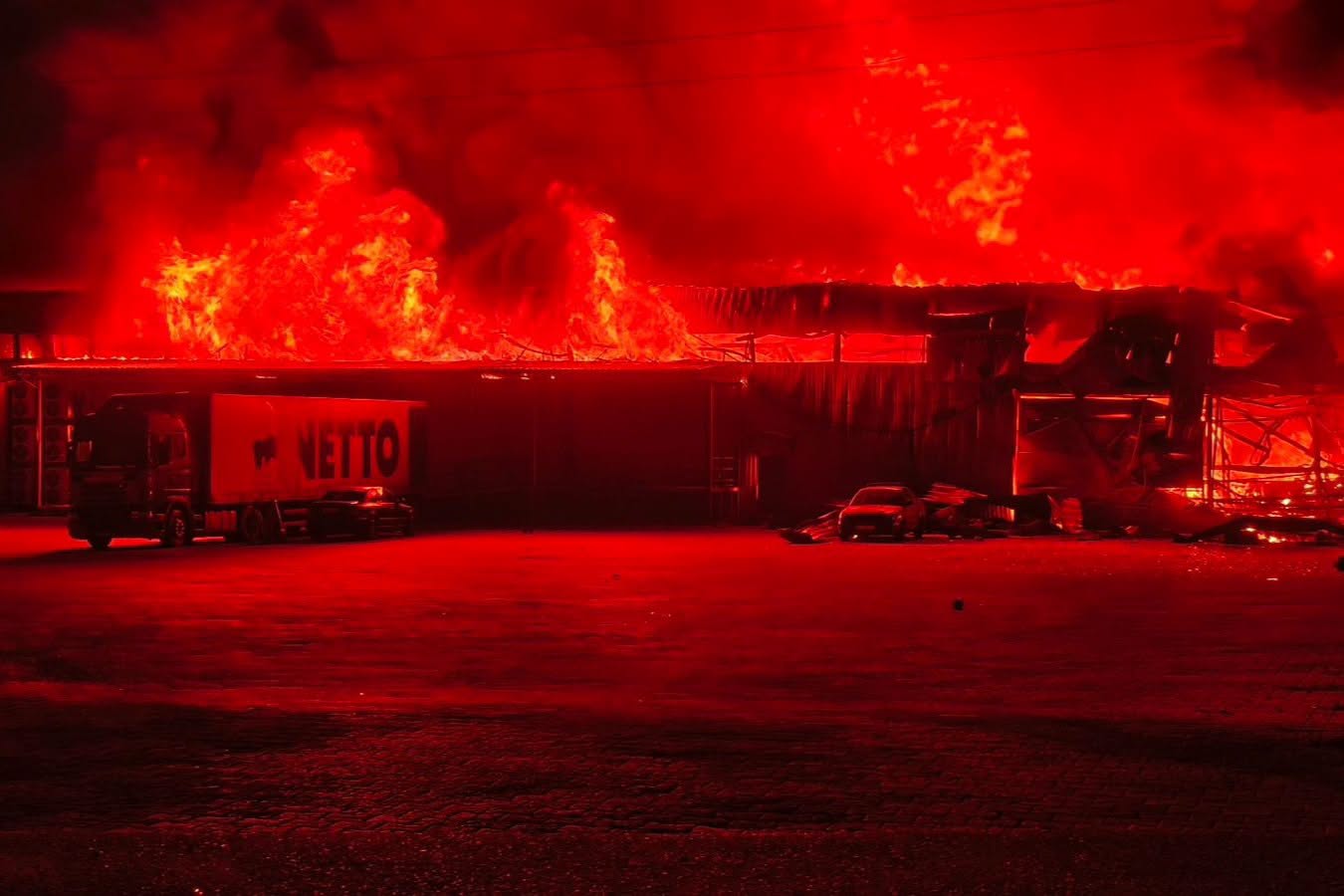
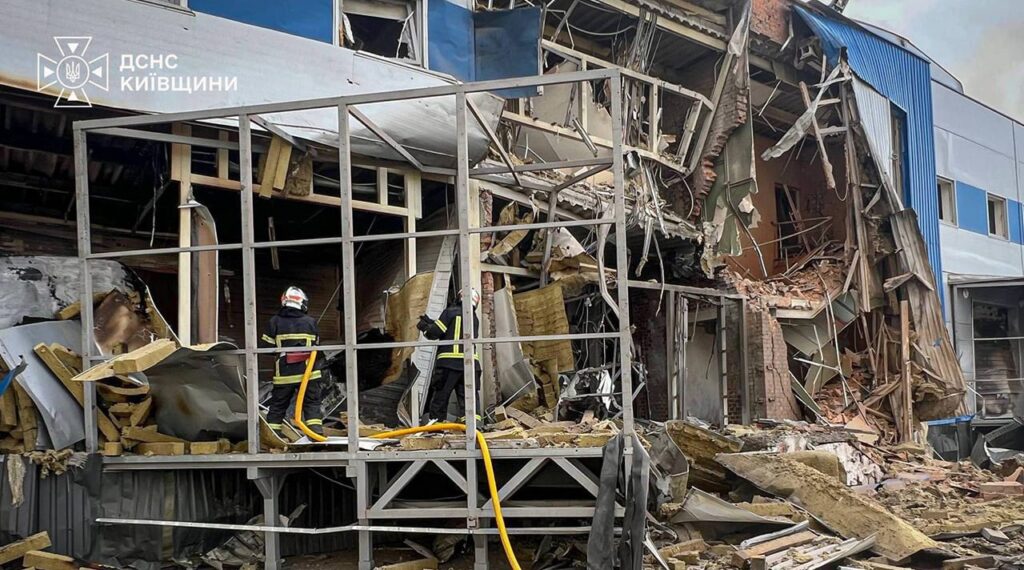
    Aftermath of Russian strikes on a Nova Poshta warehouse in Sviatopetrivske near Kyiv on 28 August 2026. Photo: Anton Ovsienko/Facebook
    Aftermath of Russian strikes on a Nova Poshta warehouse in Sviatopetrivske near Kyiv on 28 August 2026. Photo: Anton Ovsienko/Facebook

    Each time a company disperses its stock to survive, the new sites become the next targets. Russia hit a warehouse used by Fora, a nationwide "store next door" Ukrainian grocery chain, four days after the company began using it—the third strike on Fora's logistics in 22 days, and the chain had only just spread its stock across several warehouses to reduce exactly this risk. Another warehouse added during that rebuilding was destroyed on 20 August, one week after Fora began using it.

    The same pattern caught Ukraine's largest private parcel carrier Nova Poshta: lost its most advanced robotic fulfillment center and a sorting depot in Sviatopetrivske near Kyiv overnight on 28 August and is now doing what Fora did—pushing stock out to its local branches, according to CEO Yevhen Tafiichuk's Facebook statement. "Nova Poshta's cargo and postal branches across the country are becoming local warehouses," he wrote.

    Clients' stock will be divided among those locations, reducing dependence on a few large centers. Nova Poshta is also contacting publishers and shops whose books were destroyed and will compensate them for their losses, Tafiichuk said.

    And it continues daily. On 29–30 August alone, Russian strikes hit PepsiCo, an Auchan warehouse, and food stores in Odesa Oblast.

    The Agriculture Ministry told Euromaidan Press that Ukrainian farms continued to supply the domestic market in full and that the country faced no danger of famine. Individual supermarket chains could nevertheless carry a narrower selection.

    Fozzy freezes office hiring

    Aftermath of a Russian attack on Silpo's distribution centers and NOVUS's main logistics center on 5 August in Kyiv.
Photo: Fozzy Group press office
    Aftermath of a Russian attack on Silpo's distribution centers and NOVUS's main logistics center on 5 August in Kyiv. Photo: Fozzy Group press office

    Fora's parent company, the Fozzy chain of wholesale supermarkets, told Forbes Ukraine that ten of its distribution centers had been damaged during August. Rebuilding delivery routes and restoring supplies had substantially increased logistics costs.

    The increased costs have hit company development. Fozzy has frozen office hiring and canceled its planned autumn salary review for office employees. However, recruitment for supermarkets, warehouses, and production continues. The company will reconsider the restrictions once its financial results and cash flow become clearer.

    Replacement storage falls short

    A Russian attack on 3 September destroyed warehouses of the Teva pharmaceutical company. Photo: DSNS
    A Russian attack on 3 September destroyed warehouses of the Teva pharmaceutical company. Photo: DSNS

    Kyiv's commercial warehouse space had returned to prewar levels by the end of 2025. Yet only 2.5% was vacant at the end of June 2026, according to Yaroslav Horbushko's August assessment. Horbushko, an executive at commercial property consultancy Expandia, said a business seeking a 10,000-square-meter warehouse could not find one because only scattered smaller premises remained available.

    Available refrigerated storage in and around Kyiv could replace only 20–30% of the refrigerated space destroyed by Russian attacks, Investment Programs Bureau CEO Oleksandr Bondarenko estimated on 11 August. He put the destroyed space at 80,000–100,000 square meters, compared with 20,000–30,000 square meters still available to rent.

    The destroyed warehouses kept meat, dairy products, fruit, and vegetables chilled before delivery to shops. Even a small new refrigerated terminal would take six to twelve months to build.

    Logistics company Global Ocean Link outlined one option on 17 August: keeping some imported stock in Central European warehouses and bringing it into Ukraine in smaller batches. Factories can also bypass distribution centers and deliver directly to shops. However, three-quarters of Ukrainian dairy producers lack enough vehicles and staff to supply individual stores across large retail networks, said Arsen Didur, executive director of the Union of Dairy Enterprises of Ukraine.

    Export bottleneck strains grain storage

    A separate shortage is developing in the storage of crops awaiting export. The Agriculture Ministry expects Ukraine to harvest approximately 84 million tonnes of grain and oilseeds this season—far more than the country consumes—while civilian agricultural exports through deepwater sea routes have stopped completely following intensified attacks on ports and warehouses.

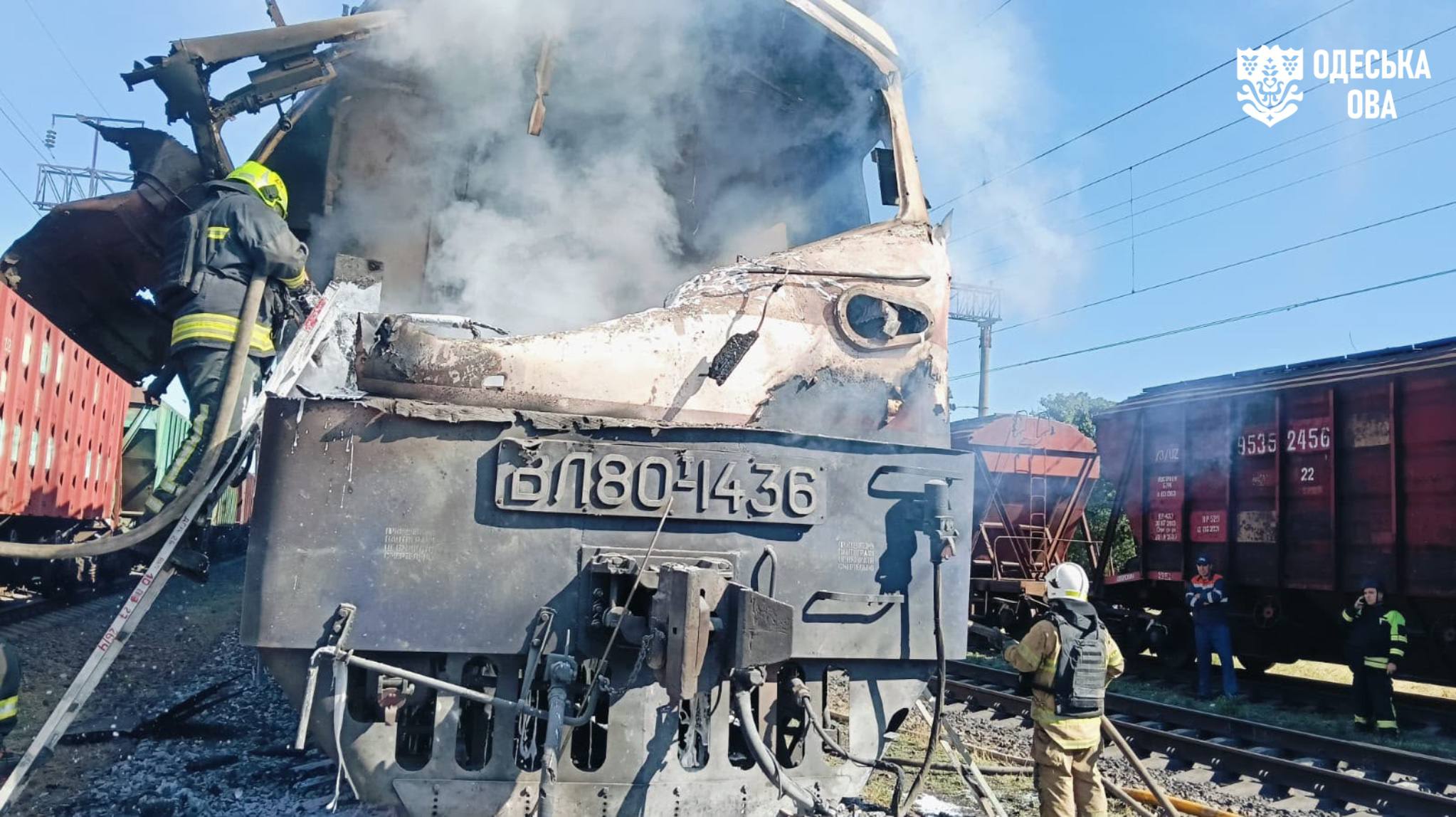
    locomotive, Odesa Oblast
    Explore further

    Russia drove most ships from Ukraine’s ports. Now its drones are hunting the trains

    Alternative routes carried approximately 1.5 million tonnes of agricultural products in August, only 33% of the estimated requirement, the ministry told Euromaidan Press. Grain shipments reached 822,000 tonnes, or 21% of potential export demand.

    Even if fully expanded, the Danube ports, railways, and roads could carry no more than half of the required export volume. Slower exports could leave Ukraine short of storage for 11 million tonnes of agricultural products by November.

    The government is seeking temporary storage capacity. With international donors, it is also providing large polymer sleeves to farmers whose warehouses have been damaged in nine oblasts. The sleeves allow crops to be stored temporarily at individual farms.

    Who pays for new routes?

    Bondarenko's cost estimates suggest that replacing one large refrigerated warehouse with several smaller facilities could increase logistics costs by 10–15%. He estimated that the smaller sites would collectively require 60–70 workers, compared with 20–30 at one large automated warehouse, as well as additional loading and sorting equipment.

    Some retail chains were demanding that manufacturers cover all logistics risks, according to Didur's RBC-Ukraine interview. He warned that suppliers could seek other sales channels if those demands spread.

    Ukrainian supermarket chain VARUS, the fifth-largest on the Ukrainian market, said it was trying to absorb additional logistics costs. Higher delivery costs would not automatically raise shelf prices by the same percentage, the chain said, because purchasing costs, exchange rates, and other factors also influence what shoppers pay.

    Shops remain open, and the ministry sees no famine threat. The lasting damage appears in the capacity and money consumed by each workaround: more workers and vehicles, smaller shipments, deferred hiring and salary reviews, and fewer warehouses available when the next strike comes.

    In the pessimistic scenario, producers would refuse to work under the new logistics rules and prefer going down the export route, which would lead to a stable deficit of goods on the shelves of Ukrainian supermarkets by October-November, Bondarenko assessed.

    But from a broader perspective, if the pace of Russian strikes continues, Ukrainian businesses could be forced to close or relocate their production facilities to neighboring Romania, Slovakia, and Poland—leading to losses in employment and taxes to the Ukrainian budget, he added.

    ❌