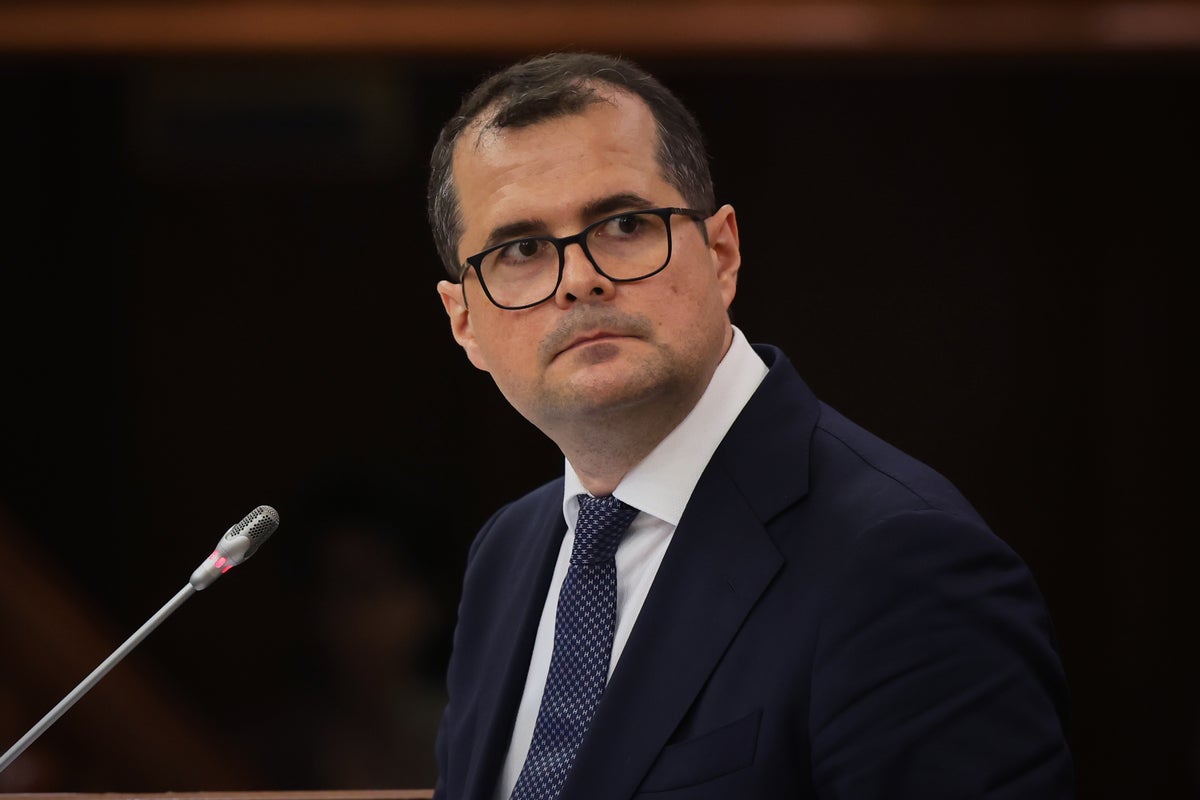
President Volodymyr Zelensky said he had offered former Defense Minister Mykhailo Fedorov a leadership position that would allow him to consolidate the state's technological capabilities and drive their further development.
President Volodymyr Zelensky said he had offered former Defense Minister Mykhailo Fedorov a leadership position that would allow him to consolidate the state's technological capabilities and drive their further development.
A total of 21.9 metric tons of equipment donated by Lithuania has been delivered to the Kharkiv region from the Ministry of Energy’s emergency energy aid warehouses.
A total of 21.9 metric tons of equipment donated by Lithuania has been delivered to the Kharkiv region from the Ministry of Energy’s emergency energy aid warehouses.
Police in the Polish city of Legnica (southwest Poland) are investigating the circumstances surrounding an attack on two 13-year-old Ukrainian citizens that occurred last Saturday, July 18.
Police in the Polish city of Legnica (southwest Poland) are investigating the circumstances surrounding an attack on two 13-year-old Ukrainian citizens that occurred last Saturday, July 18.
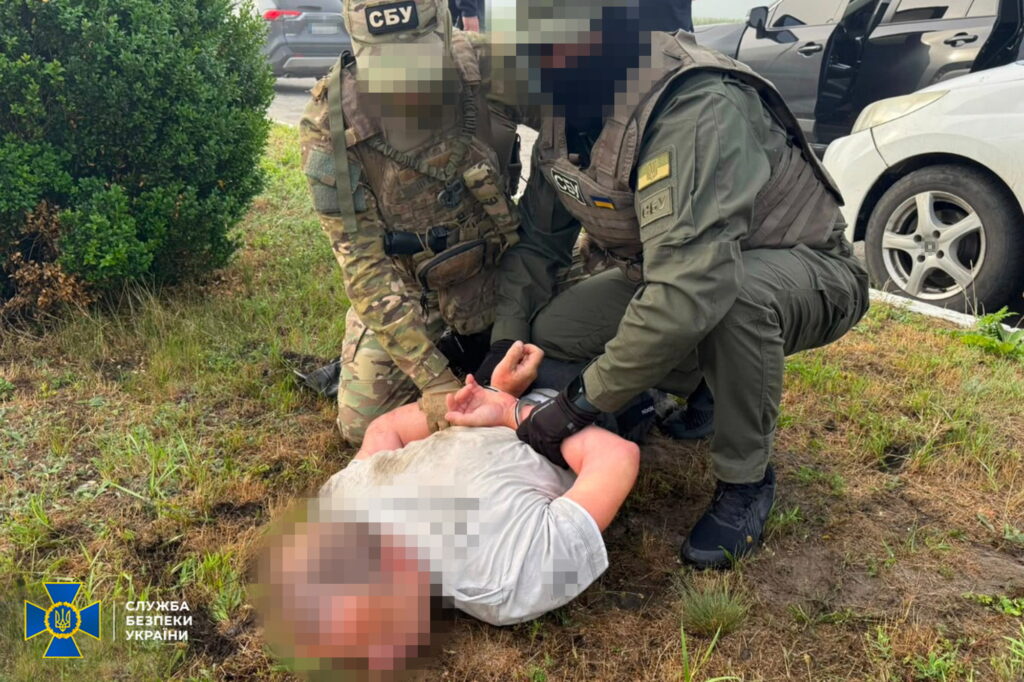
Employees of the Security Service of Ukraine detained three more Russian agents who registered terminals of the Starlink satellite system for Russian invaders.
Employees of the Security Service of Ukraine detained three more Russian agents who registered terminals of the Starlink satellite system for Russian invaders.
Exclusives
Some Ukrainian bomber drones aren’t carrying bombs anymore. They’re carrying robots.. Roads can be treacherous for Ukraine's explosive unmanned ground vehicles. So heavy bomber drones are now airlifting them into action.
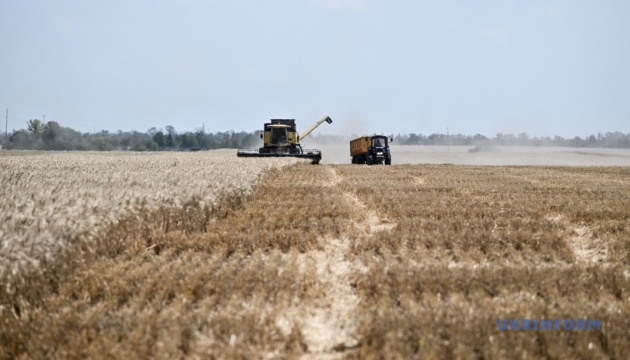
Ukraine shut a quarter of Russia’s grain exports—the world’s wheat money now flows to Russia’s competitors. Ukraine’s Azov campaign built a paradox: the world pays more for wheat because Russia cannot ship it—and the windfall flows to Russia’s
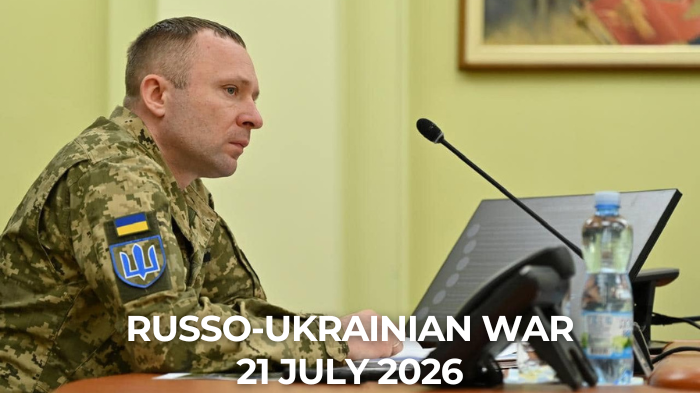
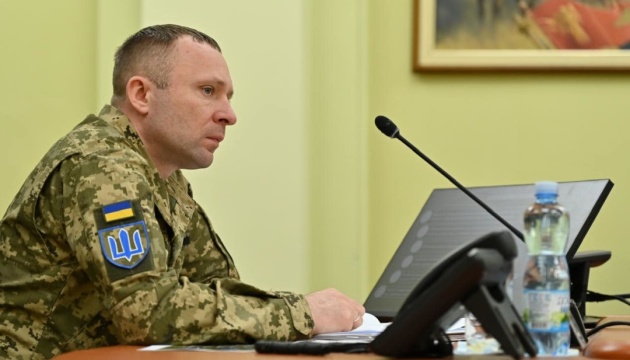
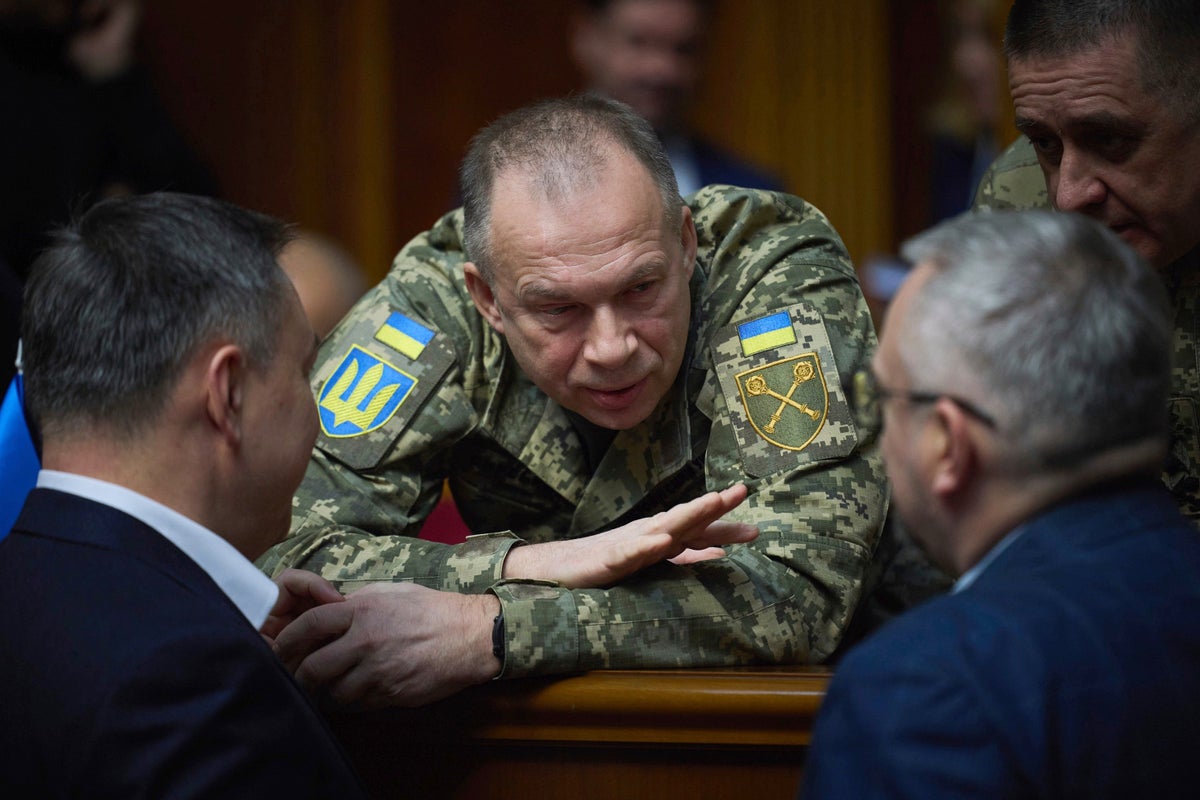
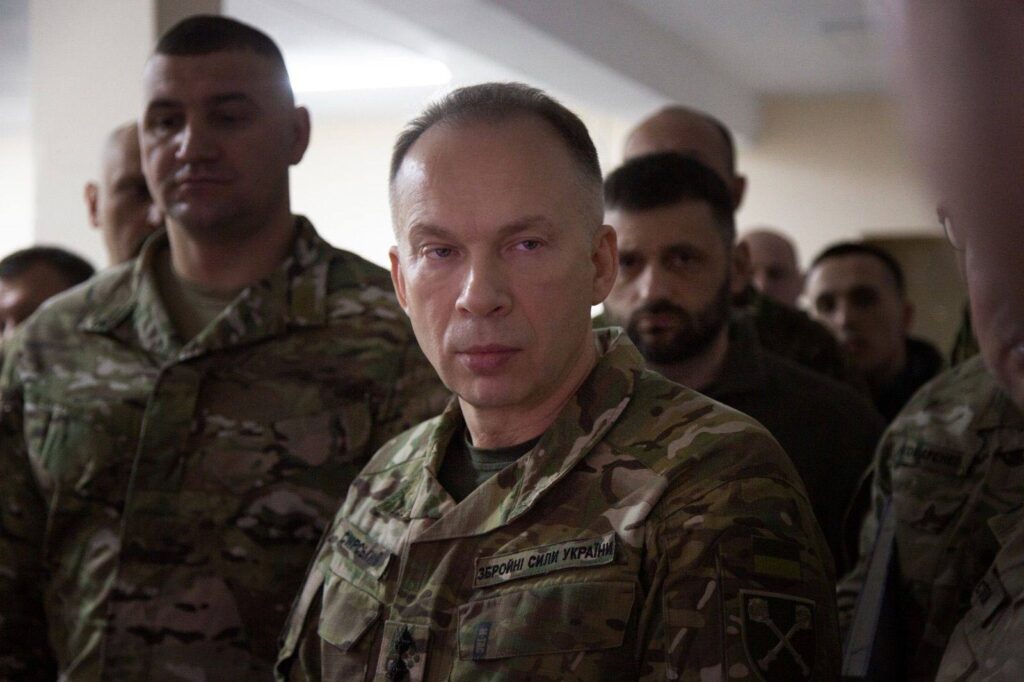
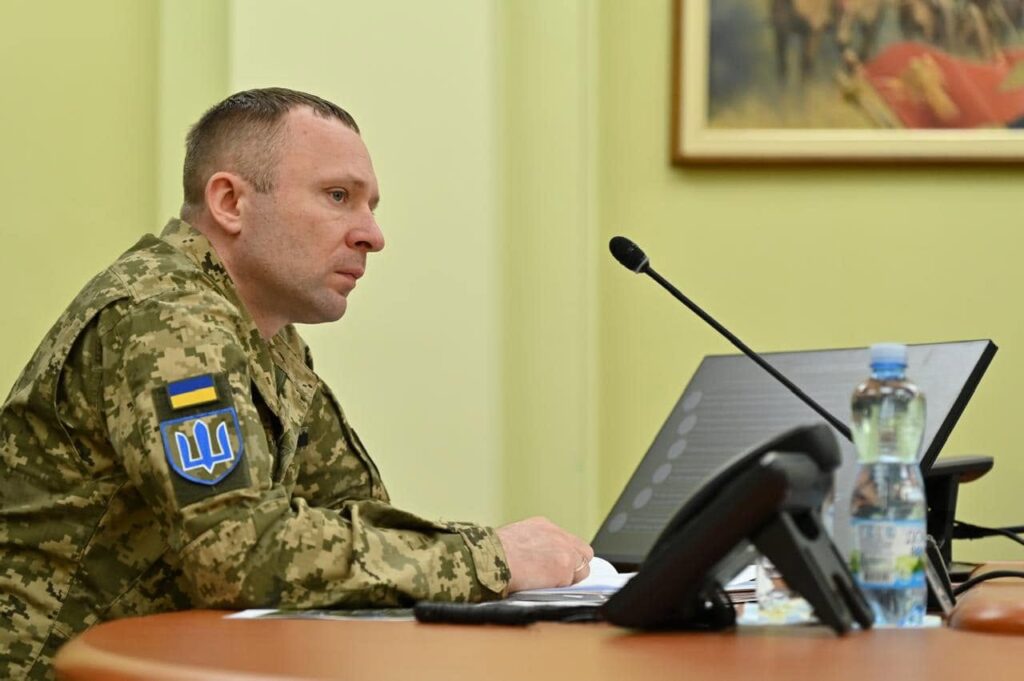
President Volodymyr Zelensky announced that he has appointed Major General Mykhailo Drapatyi as the new Commander-in-Chief of the Armed Forces of Ukraine, and thanked Oleksandr Syrskyi for his leadership during the defense of Kyiv, the Kharkiv counteroffensive, and the Kursk operation.
President Volodymyr Zelensky announced that he has appointed Major General Mykhailo Drapatyi as the new Commander-in-Chief of the Armed Forces of Ukraine, and thanked Oleksandr Syrskyi for his leadership during the defense of Kyiv, the Kharkiv counteroffensive, and the Kursk operation.
Latvia’s Defense Minister Raivis Melņis has ordered radar systems and drone detection equipment to be deployed along the country’s eastern border by the end of September in order to significantly strengthen border protection against unmanned aerial vehicles.
Latvia’s Defense Minister Raivis Melņis has ordered radar systems and drone detection equipment to be deployed along the country’s eastern border by the end of September in order to significantly strengthen border protection against unmanned aerial vehicles.
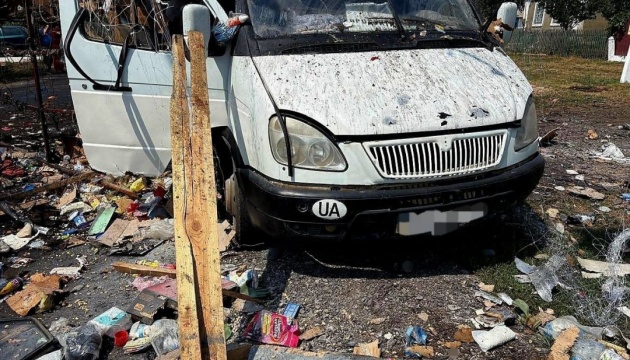
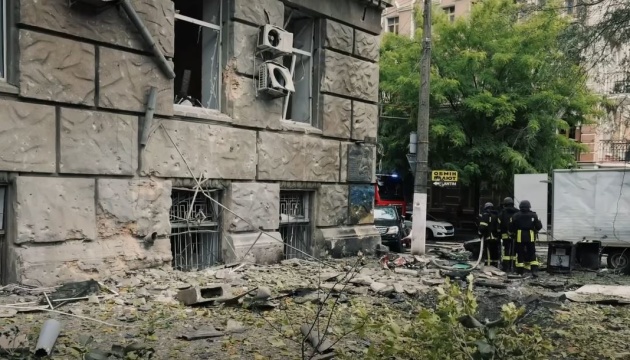
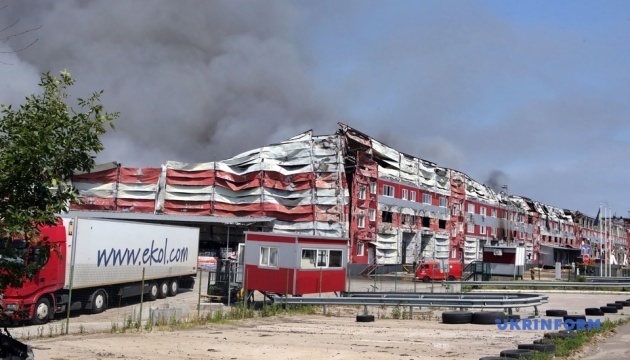
Russia struck a UNICEF warehouse in the Kyiv region where humanitarian aid intended for Ukrainian children and families affected by the war was being stored.
Russia struck a UNICEF warehouse in the Kyiv region where humanitarian aid intended for Ukrainian children and families affected by the war was being stored.
Editor’s note: This is a developing story.
Ukrainian President Volodymyr Zelenskyy announced on 21 July that Major General Mykhailo Drapatyi will become Ukraine's next commander-in-chief, replacing Oleksandr Syrskyi in the most significant shake-up of the country's military leadership since the start of Russia's full-scale invasion.
Syrskyi's replacement follows a week of upheaval that began with Zelenskyy's dismissal of the popular reformist Defense Minister Mykhail
Ukrainian President Volodymyr Zelenskyy announced on 21 July that Major General Mykhailo Drapatyi will become Ukraine's next commander-in-chief, replacing Oleksandr Syrskyi in the most significant shake-up of the country's military leadership since the start of Russia's full-scale invasion.
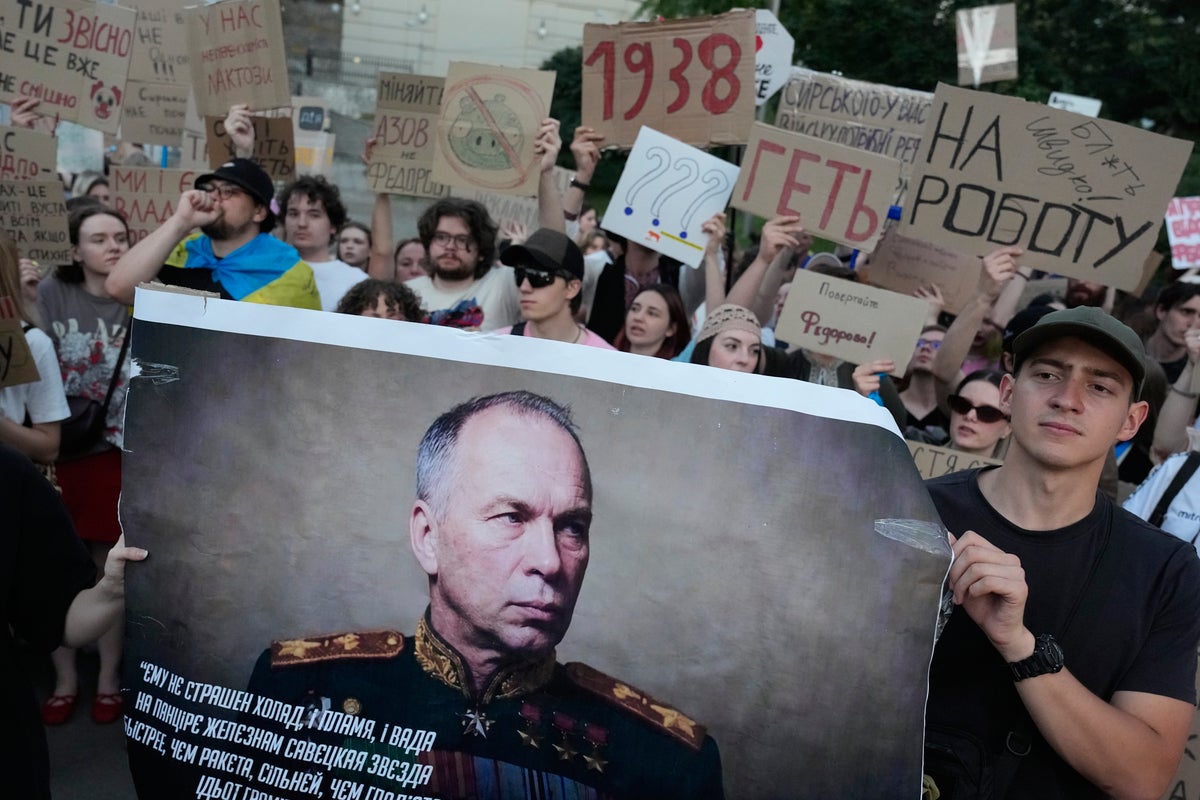
Syrskyi's replacement follows a week of upheaval that began with Zelenskyy's dismissal of the popular reformist Defense Minister Mykhailo Fedorov. The move exposed deep divisions over military reform and battlefield strategy, with Fedorov publicly criticizing Syrskyi's leadership and the decision prompting several days of protests across Ukraine.
Zelenskyy said the decision followed consultations with Drapatyi, SBU special operations commander Yevhen Khmara, and presidential office deputy head Pavlo Palisa on restructuring the General Staff.
He thanked Syrskyi for leading Ukraine's defense during the Battle of Kyiv, the 2022 Kharkiv counteroffensive, and the Kursk operation, adding that he, Syrskyi, and Chief of the General Staff Andrii Hnatov had also discussed the transition and their future roles.
"Tomorrow we will formalize all the decisions," Zelenskyy said in his evening address. "Ukraine must emerge stronger from this situation, and it must become harder for Russia."
Zelenskyy also said he met with Fedorov today and offered him a new role in government focused on bringing together Ukraine’s technological capabilities and supporting their development. The president did not specify the position.
Drapatyi thanks Zelenskyy and Syrskyi
Drapatyi thanked Zelenskyy for his trust and Ukraine’s Defense Minister for their support, saying that serving Ukraine during the war of independence carries “absolute responsibility.”
He also thanked Syrskyi for his work in strengthening the Armed Forces, saying he had grown professionally under Syrskyi’s leadership.
“I will work responsibly, with focus, and with respect for the people who are defending our state today,” Drapatyi wrote on Facebook.
Ukraine's new Commander-in-Chief of the Armed Forces Mykhailo Drapatyi. Photo: Mykhailo Drapatyi on Facebook
Fedorov welcomes Drapatyi’s appointment
Former Defense Minister Mykhailo Fedorov welcomed Drapatyi’s appointment, calling it “new air and new hope” in Ukraine’s fight for independence and justice.
Fedorov said the new military leadership would need to meet high expectations with a clear vision for ending the war, a strong team, and actions focused on preserving soldiers’ lives, expanding battlefield robotics, carrying out asymmetric strikes, and weakening Russia’s economy.
He also thanked Syrskyi for his role in defending Kyiv Oblast, the Kharkiv counteroffensive, and other major battles, calling them an important part of Ukraine’s history. At the same time, Fedorov said Ukraine needed to move faster and correct past mistakes.
A week of turmoil
Syrskyi's dismissal comes less than a week after Zelenskyy removed Fedorov in the most significant government reshuffle since the start of the full-scale war.
The move quickly evolved into a public confrontation over the future direction of Ukraine's military. Zelenskyy acknowledged that relations between the Defense Ministry and the Armed Forces' leadership had broken down, saying he ultimately had to choose between Fedorov and Syrskyi because the two could no longer work together effectively.
Fedorov accused Syrskyi of blocking reforms
Following his dismissal, Fedorov publicly confirmed he had been in conflict with Syrskyi, accusing the commander-in-chief of obstructing military reform and resisting changes needed to adapt Ukraine's armed forces to modern, drone-centric warfare.
He said initiatives developed by the Defense Ministry were systematically blocked after Zelenskyy decided to keep Syrskyi in command. Fedorov also accused the general of fueling internal divisions rather than focusing on defeating Russia, while stressing that he respected the president's authority as supreme commander.
The former defense minister argued that Ukraine needed fundamental changes to its military leadership to gain an advantage over Russia, framing the dispute as one between reform and the preservation of existing command structures.
At its core, the dispute represented a clash between two visions for Ukraine's military future: a faster transition toward a technology-driven force centered on drones and innovation, and a more traditional command approach focused on established military structures and battlefield experience.
Then-Defense Minister Mykhailo Fedorov (center) during a visit to the TNO defense research center in the Netherlands, one of the partnership trips he highlighted in his farewell message. Photo: Mykhailo Fedorov / Telegram
Rare wartime protests spread across Ukraine
Fedorov's dismissal sparked the largest public protests seen in Ukraine since Russia's full-scale invasion began.
Demonstrations began in Kyiv before spreading to cities including Lviv, Odesa, Dnipro, and others, with protesters demanding Fedorov's reinstatement and Syrskyi's removal. Many argued that replacing the architect of Ukraine's defense technology reforms risked slowing military innovation at a critical stage of the war.
The protests continued across Ukraine on 21 July, with demonstrators again calling for Fedorov's reinstatement and Syrskyi's dismissal. Protesters carried signs reading "Bring Fedorov back" and "Syrskyi out," accusing the military leadership of resisting reform.
Protesters at the Taras Shevchenko monument in Lviv on 20 July 2026, the fifth straight day of rallies over the government reshuffle. Cardboard signs read “To be handed personally into Ze’s paws!”—mimicking the wording of a hand-delivered letter to President Volodymyr Zelenskyy—alongside “There are no vacations in war,” a jab at lawmakers on summer recess, and “Vova, can you hear?”, using the president’s diminutive. Photo: Euromaidan Press
Zelenskyy consulted military leaders as pressure mounted
As pressure mounted following Fedorov's dismissal, Zelenskyy launched consultations on the future leadership of Ukraine's Armed Forces.
Over the last several days, the president met with senior military commanders, government officials, and representatives of the defense sector, but did not confirm that the consultations were related to changes in the military's command structure.
He said the discussions focused on improving coordination, accelerating battlefield innovation, and strengthening Ukraine's ability to respond to Russia's evolving tactics.
The consultations came amid growing public debate over the direction of Ukraine's armed forces, with supporters of Fedorov arguing that the military needed to accelerate reforms and expand its use of emerging technologies, particularly drones and autonomous systems, while others stressed the need for continuity in wartime command.
Satellite imagery has revealed another Russian attempt to connect the occupied Zaporizhzhia Nuclear Power Plant (ZNPP) to the power grid of the temporarily occupied territories and Russia's energy system. According to Greenpeace Ukraine, the plan was disrupted by Ukrainian drone strikes.
Satellite imagery has revealed another Russian attempt to connect the occupied Zaporizhzhia Nuclear Power Plant (ZNPP) to the power grid of the temporarily occupied territories and Russia's energy system. According to Greenpeace Ukraine, the plan was disrupted by Ukrainian drone strikes.
Russian troops captured a new Ukrainian tactic on video
A Ukrainian heavy bomber drone airlifted an explosive ground robot into action
More precise than a bomb, an explosive UGV can crack open a Russian bunker
The robotic airlift is just the latest in Ukraine's ever-expanding all-robot mission sets
Just days after landing robots on an enemy shore in the first all-robot amphibious assault, Ukrainian forces flew one into battle. This week, a Russian video cir
Russian troops captured a new Ukrainian tactic on video
A Ukrainian heavy bomber drone airlifted an explosive ground robot into action
More precise than a bomb, an explosive UGV can crack open a Russian bunker
The robotic airlift is just the latest in Ukraine's ever-expanding all-robot mission sets
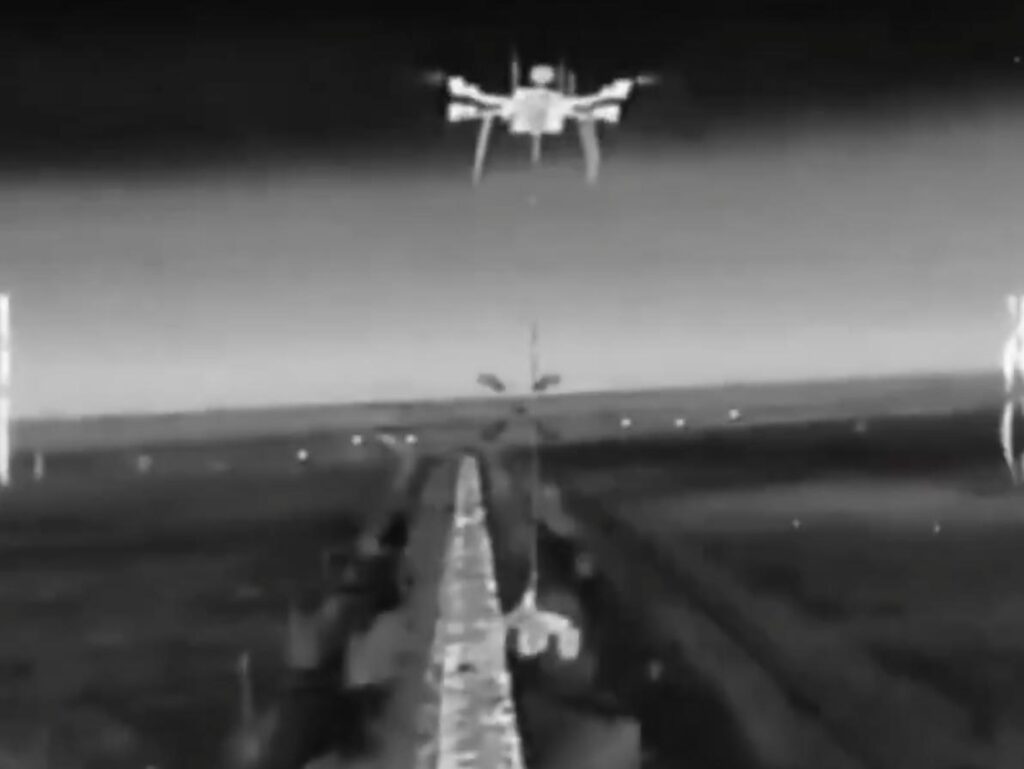
Just days after landing robots on an enemy shore in the first all-robot amphibious assault, Ukrainian forces flew one into battle. This week, a Russian video circulated depicting a Ukrainian heavy bomber drone airlifting an explosives-laden unmanned ground vehicle into action.
What happened next is unclear. Did the exploding UGV successfully strike its target?
Regardless of the outcome, however, the unmanned air assault is notable. If Ukrainian forces can use an unmanned aerial vehicle to airlift one unmanned ground vehicle, they can do it a second time. And a third. And fourth. So on until these kinds of all-robot operations become routine.
And that's indeed the aim in Kyiv. To make robotic combat operations an everyday occurrence in order to help alleviate a deep and persistent manpower shortage. This spring, recently sacked Ukrainian defense minister Mykhailo Fedorov claimed Ukraine would acquire 25,000 UGVs in just the first six months of 2026.
Russian channels in an uproar today over new video – filmed from the Russian side – a Ukrainian heavy drone delivering a ground-based kamikaze robot via air to destroy Russian positions.
While Putin is about to mobilize at keast 500,000 for more meat assaults, Ukraine is… pic.twitter.com/qb9dmySNRQ
That's twice as many UGVs as Kyiv bought in all of 2025. The rapid mass acquisition would allow more Ukrainian brigades to shift to robotic resupply missions, removing potentially thousands of precious human logisticians from dangerous roads.
But UGVs perform combat missions, too. Armed with guns, they help counterattack Russian infiltrators and also patrol roads inside the disputed gray zone. In November, one gun-armed UGV belonging to the Ukrainian 5th Assault Brigade, fighting north of Kostiantynivka in eastern Ukraine's Donetsk Oblast, inadvertently advanced UGV tactics in an accidental encounter with an up-armored Russian MT-LB infantry transport.
The UGV, equipped with thermal night vision and armed with a remotely operated M2 .50-caliber machine gun, was reportedly on a combat trial—crawling around the battlefield at nighttime for testing purposes—when an MT-LB rolled toward it on the same road.
Connected via radio, the UGV operators opened fire, peppering the tracked MT-LB with rounds until the Russian vehicle passed by—and escaped in the opposite direction.
An unmanned ground vehicle (UGV) from the Bulava Battalion of Ukraine's 72nd Mechanized Brigade. Photo: David Kirichenko
One-way drones
Other Ukrainian UGVs are meant to fight exactly once. They're suicide bombers, hauling payloads of explosives into Russian strongpoints and blowing themselves up. Back in January, the Ukrainian 3rd Assault Brigade's NC-13 robotics unit piled a dozen TM-62 anti-tank mines, each with 7.5 kg of explosives, onto one of its UGVs and carefully steered the robot into a Russian bunker presumably somewhere south of the ruins of Kupiansk in eastern Ukraine's Kharkiv Oblast.
It made a very big boom. As seen in an official video, the NC-13 team broke into cheers when an escorting aerial drone registered the blast. The team had carefully assembled, painted, and deployed the robot apparently over a period of days before maneuvering it 19 km across rough terrain to deliver the explosive payload.
The recent robotic air assault addressed the mobility problem. A 19-km trip is a long trip for a remotely controlled vehicle that's susceptible to enemy radio jamming and prone to getting stuck in potholes. Airlifting a UGV underneath a heavy bomber drone gets the UGV into action faster and with less risk of a loss or accident en route.
Ukraine’s 123rd Territorial Defense Brigade has carried out the first known mission of its kind.
Ukrainian operators remotely guided an unmanned maritime platform across the Black Sea, carrying a machine-gun-equipped ground robot. They landed the robot on the occupied Kinburn… pic.twitter.com/wKncXttJqb
— Special Kherson Cat (@bayraktar_1love) July 13, 2026
A heavy bomber drone could just drop a bomb, of course. But a UGV can do something an aerial bomber can't do: drive straight through the open door of a Russian bunker regardless of how much protection the Russians pile atop the door.
The Ukrainians are finding more and more new ways to get their UGVs into action. On 13 July, the Ukrainian 123rd Territorial Defense Brigade sailed several unmanned surface vessels across the western Black Sea and landed gun-armed unmanned ground vehicles on the Kinburn Spit, at the westernmost edge of the Russian occupation zone in southern Ukraine.
The 123rd Territorial Defense Brigade released a video montage—shot by a USV, a UGV and an escorting UAV—depicting the UGV firing on a Russian installation with its suppressed .50-caliber machine gun.
It was an all-robot amphibious assault. "An impressive feat," RAND analyst Michael Bohnertwrote.
The later robotic airlift was no less impressive.
Explore further
Ukraine put armed robot on Russian-held ground. Naval drone was landing craft
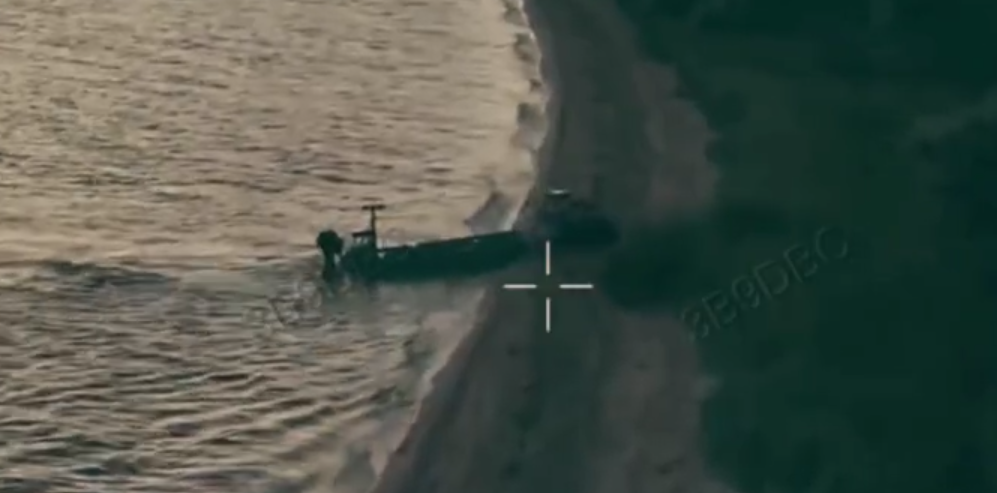
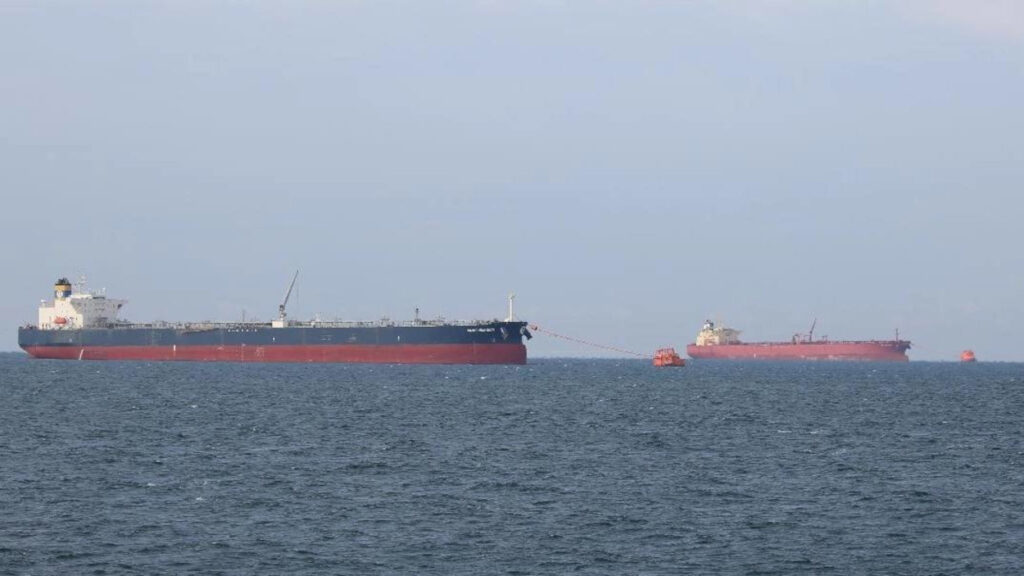
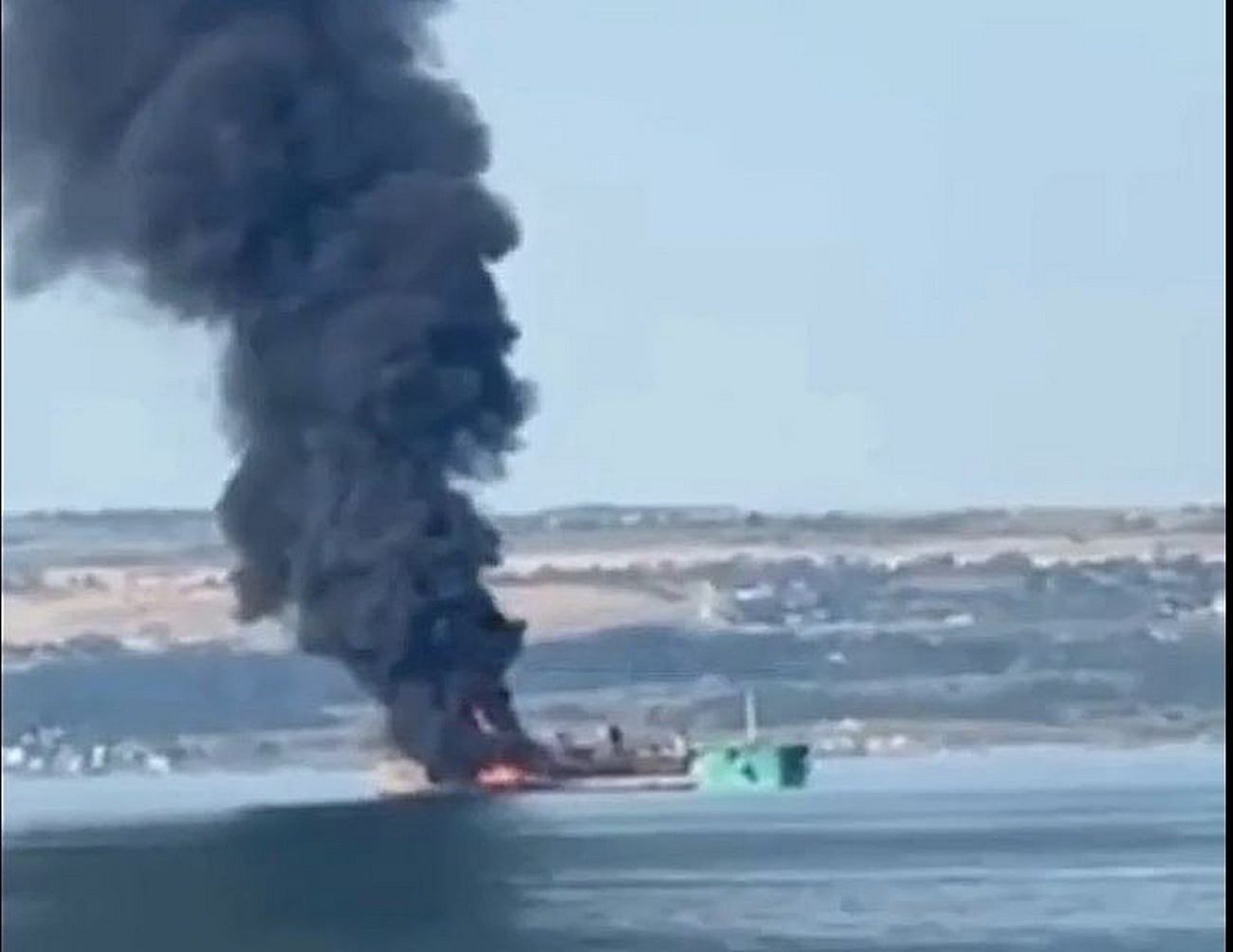
Kazakhstan has been forced to halt crude oil flows to its main Black Sea export terminal after a series of attacks on tankers near Russia's Novorossiysk port disrupted shipping, Bloomberg reported on 21 July, citing people familiar with the matter.
The reported disruption comes as Ukraine has stepped up efforts to target Russia's maritime logistics and energy infrastructure in the Black Sea, while Moscow continues using the region to support its war effort and energy ex
Kazakhstan has been forced to halt crude oil flows to its main Black Sea export terminal after a series of attacks on tankers near Russia's Novorossiysk port disrupted shipping, Bloomberg reported on 21 July, citing people familiar with the matter.
The reported disruption comes as Ukraine has stepped up efforts to target Russia's maritime logistics and energy infrastructure in the Black Sea, while Moscow continues using the region to support its war effort and energy exports.
According to Bloomberg, the Caspian Pipeline Consortium (CPC) terminal near Novorossiysk stopped accepting pipeline deliveries because tanker operators were unwilling to send vessels to the facility following recent attacks in the Black Sea. It was not immediately clear whether the suspension had already taken effect.
The reported disruption threatens Kazakhstan's oil exports and could force producers to reduce output if pipeline deliveries remain suspended through the end of the week, Bloomberg reported.
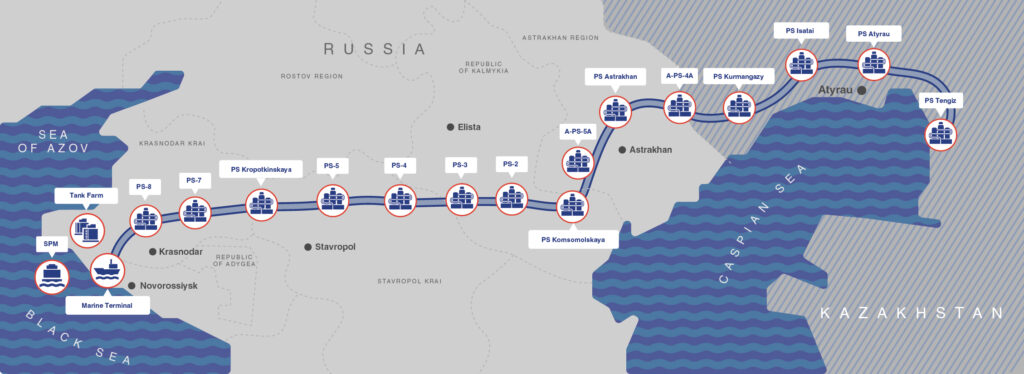
Caspian Pipeline Consortium oil pipeline system connecting Kazakhstan to Russia's Novorossiysk port in the Black Sea. Image: Caspian Pipeline Consortium
Critical export route under pressure
The CPC terminal handles about 80% of Kazakhstan's crude oil exports, making it the country's primary outlet to international markets.
Kazakhstan is Europe's second-largest external oil supplier after Norway, and much of its crude is produced through projects involving international energy companies including Chevron, ExxonMobil, and Shell.
A prolonged disruption could tighten supplies for European refiners already facing pressure from instability affecting energy shipments through the Persian Gulf, Bloomberg noted.
The CPC press office declined to comment, according to Bloomberg.
Tengizchevroil, Kazakhstan's largest oil producer and a Chevron-led joint venture, said it was monitoring loading operations at the Novorossiysk terminal. In a statement cited by Bloomberg, the company said production and deliveries into the CPC pipeline system "may be adjusted from time to time in response to operational conditions," but declined to comment on specific output levels.
Tanker attacks raise pressure on Russian Black Sea exports
The disruption follows a series of recent attacks on tankers in the Black Sea.
Ukraine has not claimed responsibility for the specific attacks cited by Bloomberg. Kyiv has, however, acknowledged responsibility for numerous strikes on vessels supporting Russia's maritime logistics in recent months, including attacks on oil tankers in the Black Sea.
Although the CPC terminal is located on Russia's Black Sea coast, the facility primarily exports Kazakh crude and is not subject to Western sanctions.
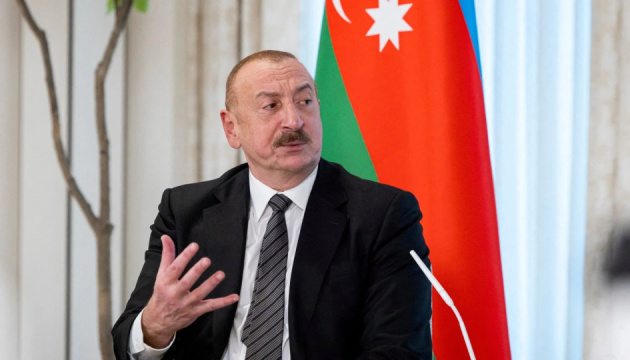
Azerbaijani President Ilham Aliyev confirmed that former high-ranking German officials and representatives of the Russian government were in Baku at the same time on July 12–14, which, according to him, suggests that a secret German-Russian meeting took place.
Azerbaijani President Ilham Aliyev confirmed that former high-ranking German officials and representatives of the Russian government were in Baku at the same time on July 12–14, which, according to him, suggests that a secret German-Russian meeting took place.
The Russian army attacked the Nikopol and Synelnykiv districts of Dnipropetrovsk region nearly 40 times throughout the day, resulting in five people being wounded.
The Russian army attacked the Nikopol and Synelnykiv districts of Dnipropetrovsk region nearly 40 times throughout the day, resulting in five people being wounded.
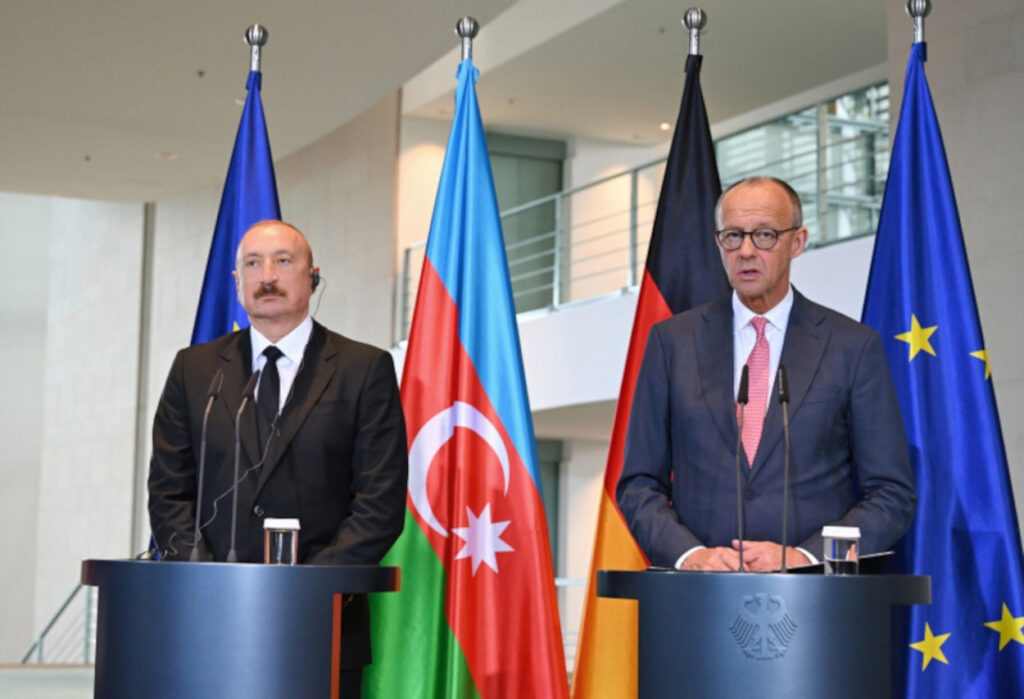
Azerbaijani President Ilham Aliyev confirmed that former senior German and Russian officials held a secret meeting in Baku earlier this month to discuss ending Russia's war against Ukraine, Bloomberg reported, corroborating earlier media reports about the undisclosed talks.
Speaking alongside German Chancellor Friedrich Merz in Berlin on 21 July, Aliyev said the meeting took place in the Azerbaijani capital between 12 and 14 July. He said Azerbaijani authorities had not
Azerbaijani President Ilham Aliyev confirmed that former senior German and Russian officials held a secret meeting in Baku earlier this month to discuss ending Russia's war against Ukraine, Bloomberg reported, corroborating earlier media reports about the undisclosed talks.
Speaking alongside German Chancellor Friedrich Merz in Berlin on 21 July, Aliyev said the meeting took place in the Azerbaijani capital between 12 and 14 July. He said Azerbaijani authorities had not been aware of the gathering at the time but later confirmed it through flight records.
"Our territory was used for such a meeting without our knowledge," Aliyev told reporters. "I cannot comment on the details, as we were not present at the meeting. However, the flight data allows me to state that a secret meeting did take place in Baku."
Former officials reportedly attended
Bloomberg reported that the unofficial German delegation included Ronald Pofalla, former chief of staff to former Chancellor Angela Merkel, and Matthias Platzeck, the former minister-president of Brandenburg.
The Russian delegation reportedly included Valery Fadeyev, head of Russian President Vladimir Putin's Council for Civil Society and Human Rights, and Viktor Zubkov, a former Russian prime minister who now chairs the board of state-owned energy giant Gazprom.
The reported participants were former or unofficial representatives rather than serving government officials.
Merz says Berlin was not involved
Merz said the German government had no role in the reported discussions.
"I'm not aware of any such meeting," the chancellor said when asked about Aliyev's remarks during the joint press conference.
Aliyev said that if the meeting had been intended to help bring an end to Russia's war against Ukraine, "we can only welcome that," but added that he did not know what had been discussed.
It remains unclear who organized the meeting and who was aware of it.
Ukraine's Defense Forces struck a series of Russian military targets across occupied Ukraine and Russia between 20 July and the night of 21 July, including a fighter jet, an air defense system, radar equipment, logistics depots, and drone command posts, Ukraine's General Staff reported.
The reported strikes were part of a broader effort to reduce Russia's military and economic potential, according to the military.
Airfield in Russia's Kursk Oblast targeted
In a st
Ukraine's Defense Forces struck a series of Russian military targets across occupied Ukraine and Russia between 20 July and the night of 21 July, including a fighter jet, an air defense system, radar equipment, logistics depots, and drone command posts, Ukraine's General Staff reported.
The reported strikes were part of a broader effort to reduce Russia's military and economic potential, according to the military.
Airfield in Russia's Kursk Oblast targeted
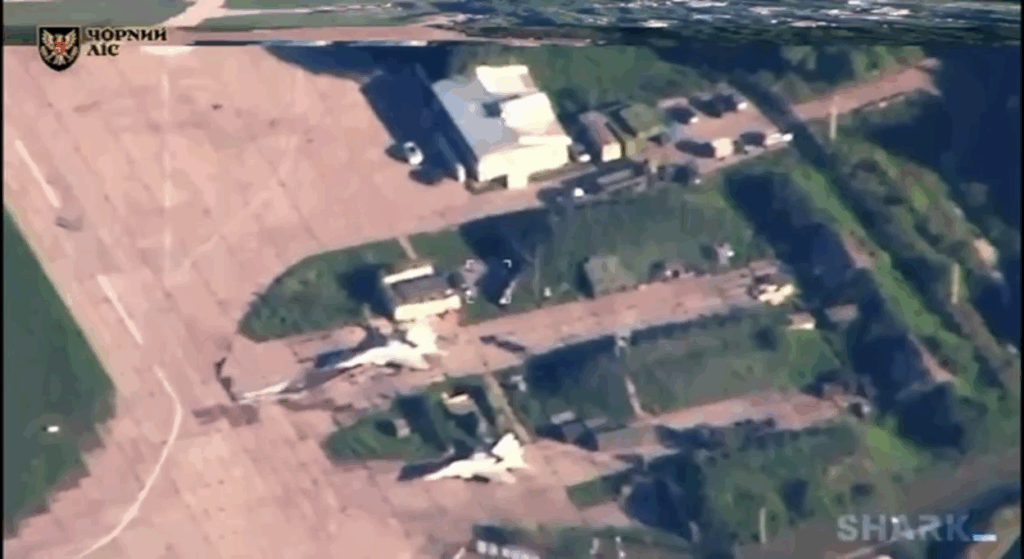
In a statement, the General Staff said Ukraine's 15th "Black Forest" Artillery Reconnaissance Brigade successfully carried out a strike on Khalino airfield in Russia's Kursk Oblast.
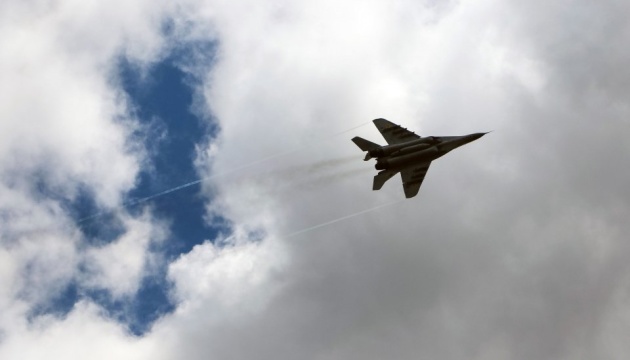
According to the military, the operation damaged a Russian MiG-29 fighter jet and a Pantsir-S1 self-propelled air defense missile and gun system.
The MiG-29 remains one of Russia's standard tactical fighter aircraft despite its Soviet-era origins. Primarily used to patrol airspace, engage hostile aircraft, and support combat operations, the jet continues to play a significant role in Russia's air campaign against Ukraine.
The Pantsir-S1 is a short-range air defense system designed to protect high-value military assets, including airfields such as Khalino, from aircraft, missiles, and drones.
Khalino airfield, near the city of Kursk, has repeatedly been used by Russian tactical aviation operating near Ukraine's northeastern border and has previously been targeted by Ukrainian long-range strikes.
Radar, depots, and drone control posts hit
The General Staff also reported striking a Bussol-S radar station near Horly in occupied Kherson Oblast. According to the military, the radar detects, tracks, and provides targeting data on maritime targets, supporting Russian coastal surveillance operations.
Ukrainian forces also struck a logistics depot near Davydivske in occupied Donetsk Oblast, an ammunition depot near Kundriuche in occupied Luhansk Oblast, and another logistics warehouse near Popovo-Lezhachi in Russia's Kursk Oblast, the statement said.
In addition, Ukraine reported hitting Russian drone control posts near Komar and the village of Zaporizhzhia in Donetsk Oblast, as well as near Kamianske in Zaporizhzhia Oblast.
Ukraine has increasingly targeted Russian airfields, logistics hubs, air defense systems, and drone infrastructure in an effort to disrupt Moscow's ability to sustain operations along the front and launch long-range attacks on Ukrainian cities.
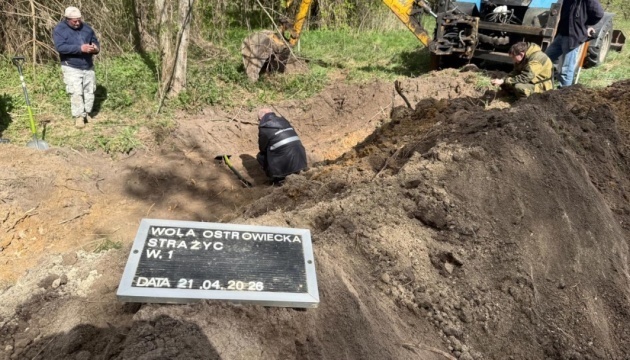
During exhumation work on the site of the former village of Volia Ostrovetska in the Volyn region, the remains of 38 people who died during World War II were discovered.
During exhumation work on the site of the former village of Volia Ostrovetska in the Volyn region, the remains of 38 people who died during World War II were discovered.
One is a tech-savvy entrepreneur with no military experience who became Ukraine’s youngest defense minister six months ago, leading it to successes in defending against Russia’s 4-year-old invasion
One is a tech-savvy entrepreneur with no military experience who became Ukraine’s youngest defense minister six months ago, leading it to successes in defending against Russia’s 4-year-old invasion
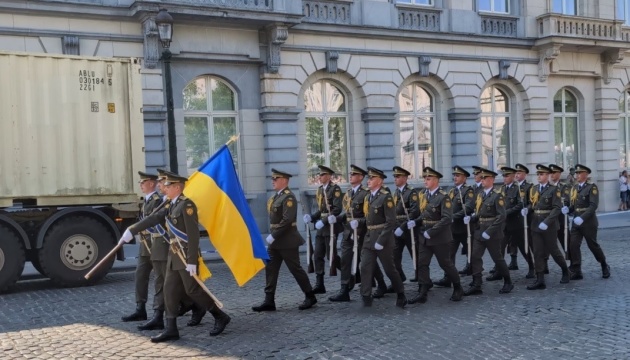
Ukrainian troops proudly marching in Brussels on Belgium’s National Day should send a powerful message to the Kremlin that the European Union, Belgium, and Brussels that hosts all major EU institutions – all stand with Ukraine and its people.
Ukrainian troops proudly marching in Brussels on Belgium’s National Day should send a powerful message to the Kremlin that the European Union, Belgium, and Brussels that hosts all major EU institutions – all stand with Ukraine and its people.
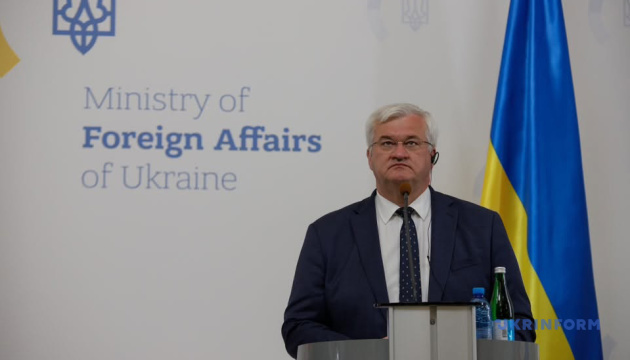
Andrii Sybiha, head of Ukraine’s Ministry of Foreign Affairs, called for tougher sanctions and increased pressure on Russia following its attack on a tanker off the coast of Romania.
Andrii Sybiha, head of Ukraine’s Ministry of Foreign Affairs, called for tougher sanctions and increased pressure on Russia following its attack on a tanker off the coast of Romania.
Wheat in Chicago is at a two-year high, and southern Russia is bringing in its best harvest in years—yet Russian farmers are heading into the season earning less, not more.Ukraine’s drone campaign in the Sea of Azov closed the Kerch Strait to shipping on 10 July, trapping the route that carries a quarter of Russia’s grain and sunflower-oil exports. Export duties and soaring logistics skim what still moves, and the grain piling up in full elevators is crushing prices at hom
Wheat in Chicago is at a two-year high, and southern Russia is bringing in its best harvest in years—yet Russian farmers are heading into the season earning less, not more.
Ukraine’s drone campaign in the Sea of Azov closed the Kerch Strait to shipping on 10 July, trapping the route that carries a quarter of Russia’s grain and sunflower-oil exports. Export duties and soaring logistics skim what still moves, and the grain piling up in full elevators is crushing prices at home while the world price climbs out of reach.
Russia is now heading for its weakest July wheat exports in nine years.
“Farmers should be receiving payment for half or all of their wheat harvest and putting that money back into circulation. But there is no one to sell to.”
Ural-Don agricultural holding president Alexander Yaroshenko
The weakest July in nine years
Russia may export 1.5 million tons of wheat this July—half its five-year average for the month and the lowest July volume since 2017, the SovEcon analytical center forecast on 20 July, its second cut in a week after analysts had already reduced July estimates by 13–20%, Kommersant reported.
The IKAR agricultural institute expects under two million tons. Both name the same main cause: navigation limits through the Kerch Strait, beyond which a quarter of Russia’s grain and sunflower-oil exports ship, according to SovEcon, with weak demand from Egypt and Türkiye adding pressure.
Russia shut the strait on 10 July after Ukrainian drones struck vessels across the Sea of Azov, including tankers—a closure Moscow imposed on itself because the water had become too dangerous to cross.
Explore further
Russia halts Don-Azov Channel shipping, closes Kerch Strait after Ukrainian tanker strikes
The backlog is already physical: grain exports down the Don River—27% of Russia’s grain exports last season—have stopped entirely, elevators at the Don ports are full, and agreed export contracts are collapsing because cargo cannot ship, industry figures told the Rostov business outlet Gorod N.
“Active trading should be picking up right now. Farmers should be receiving payment for half or all of their wheat harvest and putting that money back into circulation. But there is no one to sell to,” Ural-Don agricultural holding president Alexander Yaroshenko told the outlet.
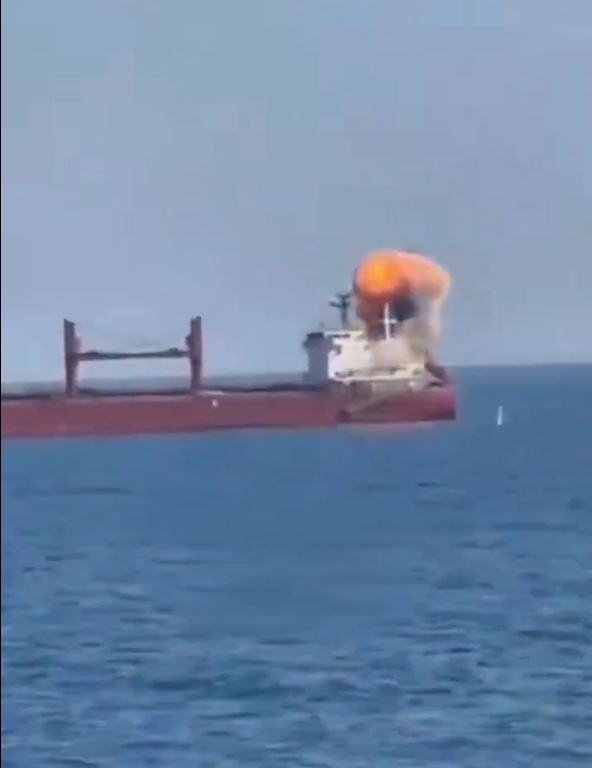
A drone strikes one of Russia's shadow-fleet bulk carriers in the Black Sea, recorded from another ship, on 17 July 2026. Screenshot from video: Exilenova+
The price rally Russia cannot collect
September wheat in Chicago gained more than 10% in a week, touching two-year highs, while Paris wheat hit a 17-month high, SovEcon director Andrei Sizov noted. “The market is starting to understand this is not the typical short-lived Black Sea rally,” the Financial Times quoted him as saying—this time, export estimates for both Russia and Ukraine may be cut substantially.
The Ukrainian half of that warning is already happening. Russia struck back at Ukraine’s grain gateways the same week: massed attacks on Chornomorsk on 10–12 July forced Kernel, Ukraine’s largest grain exporter, to halt terminal operations, with about 45,000 tons of wheat and 9,000 tons of sunflower oil lost or damaged—leaving Ukraine’s deep-water grain exports with almost nowhere to go.
Explore further
Russia’s port strikes leave Ukraine’s grain with almost nowhere else to go
Both of the Black Sea’s grain suppliers are choked at once—the reason, in Sizov’s reading, is that the market has stopped treating this as a passing rally.
The tension raises world prices, and the money goes to Russia’s competitors. Russian farmers are fenced off from their own rally twice—a floating export duty skims the price above them, and logistics costs climb as grain hunts for other routes. Ruble prices will stay under strong pressure, Sizov wrote on Telegram.
Why rerouting does not save the season
Russia’s deep-water ports beyond the strait can ship 4–4.5 million tons of grain a month—enough for July, but at the season’s peak in August through October, Russia normally ships 5–6.5 million tons a month, Sizov calculates on Telegram.
The industry agrees from the ground: the Black Sea ports cannot physically handle southern Russia’s seasonal volumes, and the railways to them were not built for it, Yaroshenko told Gorod N—while a grain trader told the same outlet that rerouting would jam rail approaches to Novorossiysk for months. The shallow Azov ports are not a convenience; they are the margin between Russia’s export capacity and its harvest.
And this year, the domestic market has more grain than usual to absorb. SovEcon expects the southern crop—grown in exactly the regions that ship through Azov—to rise 17.2% from last year. The best harvest is arriving in the provinces with the most blocked ports.
The long clock
The squeeze works through margins. Falling farm profitability is already cutting sowing—wheat area this year is the lowest since 2014, Forbes reported—and Sizov expects the trend to worsen in 2027.
The market is pricing the decay in real time: Rodnye Polya, once Russia’s largest grain exporter, was sold this month for 11.7 billion rubles ($150 million) to a little-known holding company, and terminal incomes will decline as the grain market’s export potential shrinks, Sizov told Kommersant.
Put together, the mechanism runs in one direction. Blocked ports overfill the domestic market; the surplus crushes the prices farmers live on; falling margins cut next year’s sowing; smaller harvests shrink the exports that made Russia the world’s top wheat supplier. The world, meanwhile, is already paying two-year-high prices to buy its wheat elsewhere—and the longer this runs, the more of Russia’s market share moves to the competitors the rally is enriching.
Russia's fuel crisis has reached the bus stop, with carriers in at least 25 regions raising public transport fares, The Moscow Times reported. Ten more regions have cut routes or reshuffled schedules as Ukrainian drone strikes on refineries starve the market of gasoline and diesel. The squeeze is hitting small carriers on suburban routes hardest.
Ukraine treats the Russian refining industry bankrolling the invasion as a legitimate target, and the resulting shortage has alre
Russia's fuel crisis has reached the bus stop, with carriers in at least 25 regions raising public transport fares, The Moscow Times reported. Ten more regions have cut routes or reshuffled schedules as Ukrainian drone strikes on refineries starve the market of gasoline and diesel. The squeeze is hitting small carriers on suburban routes hardest.
Ukraine treats the Russian refining industry bankrolling the invasion as a legitimate target, and the resulting shortage has already spread from gas-station lines to Russia's harvest fields. Official fuel-sale restrictions cover more than 40 regions, while de facto limits and bans operate in nearly every Russian region and in the occupied territories of Ukraine.
Intercity fares outrun inflation by 30 points
Russian investigative outlet Vazhnye Istorii counted the fare hikes and route cuts from media reports across 35 regions. Fuel shortages have sent diesel and gasoline prices sharply higher, and spare parts have grown more expensive alongside, driving up carriers' costs.
Rosstat data show an average city trip rose 12% over the year, from 40.58 to 45.58 rubles ($0.58). An intercity bus ride climbed 20%, from 204.56 to 243.89 rubles ($3.11). Since the start of the full-scale invasion, intercity travel has grown 81% more expensive and city transport 52%, against cumulative inflation of about 50%.
Explore further
Why Russia is importing gasoline made from its own oil
Across Siberia, the hikes are concrete
In Irkutsk, Siberia, the municipal carrier Irkutskavtotrans raised fares 20% from 1 July, from 37 to 45 rubles ($0.57), while private operators added almost a quarter. The 50-km ride between Irkutsk and Angarsk jumped more than 30%.
In Altai Krai, the private company Transmagistral lifted its Barnaul–Novoaltaisk fare from 85 to 90 rubles ($1.15). At the current rate, the gasoline prices reached $1.15 a liter, or about $4.35 a gallon, and diesel at $1.17 a liter, roughly $4.45 a gallon.
In Buryatia, rides to Ulan-Ude from remote villages 250–350 km away rose more than 10%. A trip from the village of Isingi now costs 1,700 rubles ($22) instead of 1,500 ($19).
Explore further
Fires erupt at three Russian oil depots after Ukraine targets fuel supply chain overnight in Stavropol Krai
Half of Russia's refining sits idle
The Moscow Times noted that the crisis now covers practically the whole country. Sources familiar with the matter told Reuters that Ukrainian drone strikes have knocked out about 40% of Russia's refining capacity. In the second week of July, gasoline output fell 35% to 75,000–80,000 tons a day, against summer demand of 115,000–120,000 tons.
EA Analytics put July's crude processing at 3.91 million barrels a day, the lowest since 2005. Energy Intelligence gives an even lower estimate of 3.58 million barrels, potentially the weakest figure since 2002, with about half of Russia's refining capacity standing idle.
With repair crews losing the race against strikes like the one that halted the Syzran refinery, Russia is reduced to importing gasoline refined from its own crude — and the pass-through to fares, freight, and food prices has room to widen.
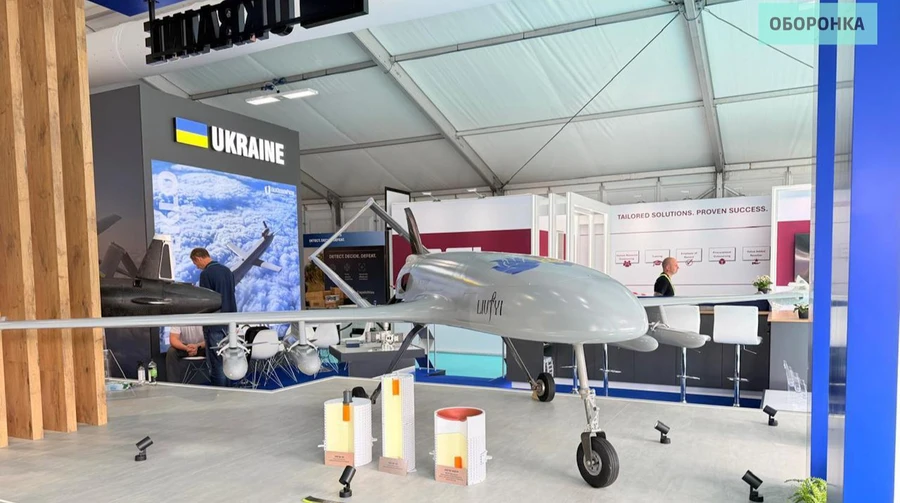
Ukraine's An-196 "Liutyi"—the long-range drone behind hundreds of strikes on Russian oil refineries—appeared at the Farnborough International Airshow in the United Kingdom armed with four small air-to-surface missiles, Oboronka reported. The configuration marks a departure from the drone's defining role. Until now, the Liutyi has been a one-way weapon: it flies into its target and is destroyed on impact. Armed with launchable munitions, the same airframe becomes something e
Ukraine's An-196 "Liutyi"—the long-range drone behind hundreds of strikes on Russian oil refineries—appeared at the Farnborough International Airshow in the United Kingdom armed with four small air-to-surface missiles, Oboronka reported. The configuration marks a departure from the drone's defining role. Until now, the Liutyi has been a one-way weapon: it flies into its target and is destroyed on impact. Armed with launchable munitions, the same airframe becomes something else—a platform that launches weapons and returns.
The shift matters because it could put the Liutyi into the niche once held by the Bayraktar TB2—the Turkish reconnaissance-strike drone that became a symbol of Ukrainian resistance in 2022. It was largely swept from the skies once Russia rebuilt its air defenses, too slow and too visible to survive over a contested front. A missile-armed Liutyi could reoccupy that niche at a fraction of the cost: a roughly $200,000 Ukrainian-built airframe, produced in the hundreds, now potentially able to loiter, strike multiple targets with standoff missiles, and fly home to do it again.
What changed on the airframe
The Liutyi is a propeller-driven, satellite-guided drone with a claimed range of about 2,000 km, carrying a 50-to-75 kg warhead and using inertial navigation with satellite correction. In its standard form, it is a flying bomb—Ukraine has used it to hit refineries as deep as 1,700 km inside Russia, near the Urals, and Germany is financing 500 more at roughly $100 million.
Explore further
Liutyi drones strike deep into Russia, hitting Izhevsk military plant about 1,400 km away (video)
The Farnborough version carries four compact air-to-surface missiles under its wings. That transforms the payload logic entirely: instead of delivering a single warhead to a single target and ceasing to exist, the drone can engage multiple targets at a distance and preserve its airframe. For a weapon Ukraine builds in volume, reusability multiplies the value of every unit produced.
Why show it at Farnborough
Farnborough is one of the two largest arms and aerospace trade fairs in the world, alongside the Paris Air Show. Displaying an armed, reusable Liutyi is a commercial statement as much as a military one.
Ukraine's defense industry has spent 2026 moving from wartime improvisation toward export positioning —presenting naval drones, interceptors, and strike systems at international expos in Paris, Kyiv, and now the UK. A drone with a combat record measured in hundreds of deep strikes on Russian territory is, for a foreign buyer, a rare thing: a system proven in the most demanding air-defense environment on earth.
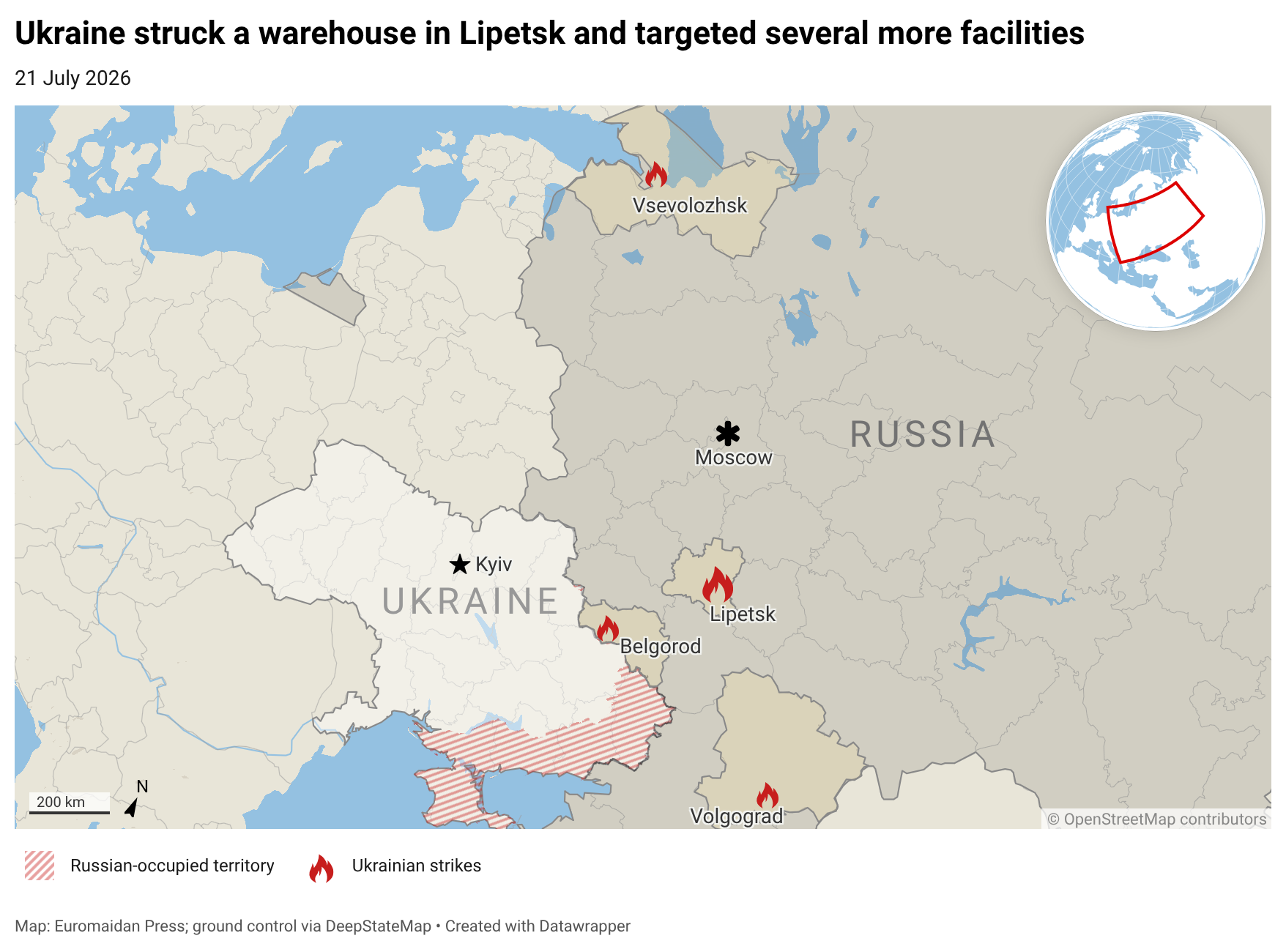
Explosions under an hours-long missile alert ended in a large industrial fire in the Russian city of Lipetsk overnight on 21 July, monitoring channels and Russian officials reported. The blaze rose beside facilities central to Russia's steel output and heat supply, and what exactly came down on the city remains unconfirmed. Lipetsk is about 300 km from Ukraine's northeastern border.
Ukraine's long-range campaign now hits Russian rear infrastructure nightly, from oil depots
Explosions under an hours-long missile alert ended in a large industrial fire in the Russian city of Lipetsk overnight on 21 July, monitoring channels and Russian officials reported. The blaze rose beside facilities central to Russia's steel output and heat supply, and what exactly came down on the city remains unconfirmed. Lipetsk is about 300 km from Ukraine's northeastern border.
Ukraine's long-range campaign now hits Russian rear infrastructure nightly, from oil depots in Stavropol Krai to logistics hubs near Moscow, forcing Russia to defend targets far behind the front. Every new fire at plants tied to weapons production deepens the strain on a war economy whose oil refining has already sunk to a two-decade low, and the night's missile warnings point to Ukraine's expanding options for reaching targets hundreds of kilometers inside Russia.
Fire erupts between power plant and steel giant
Lipetsk Oblast had declared missile and drone danger from the previous evening. Residents then reported explosions over the city, followed by a spreading fire. The Russian news Telegram channel Astra wrote that locals described blasts and flames through the night. Later eyewitness footage, published by the channel, showed the aftermath of what residents called a missile attack.
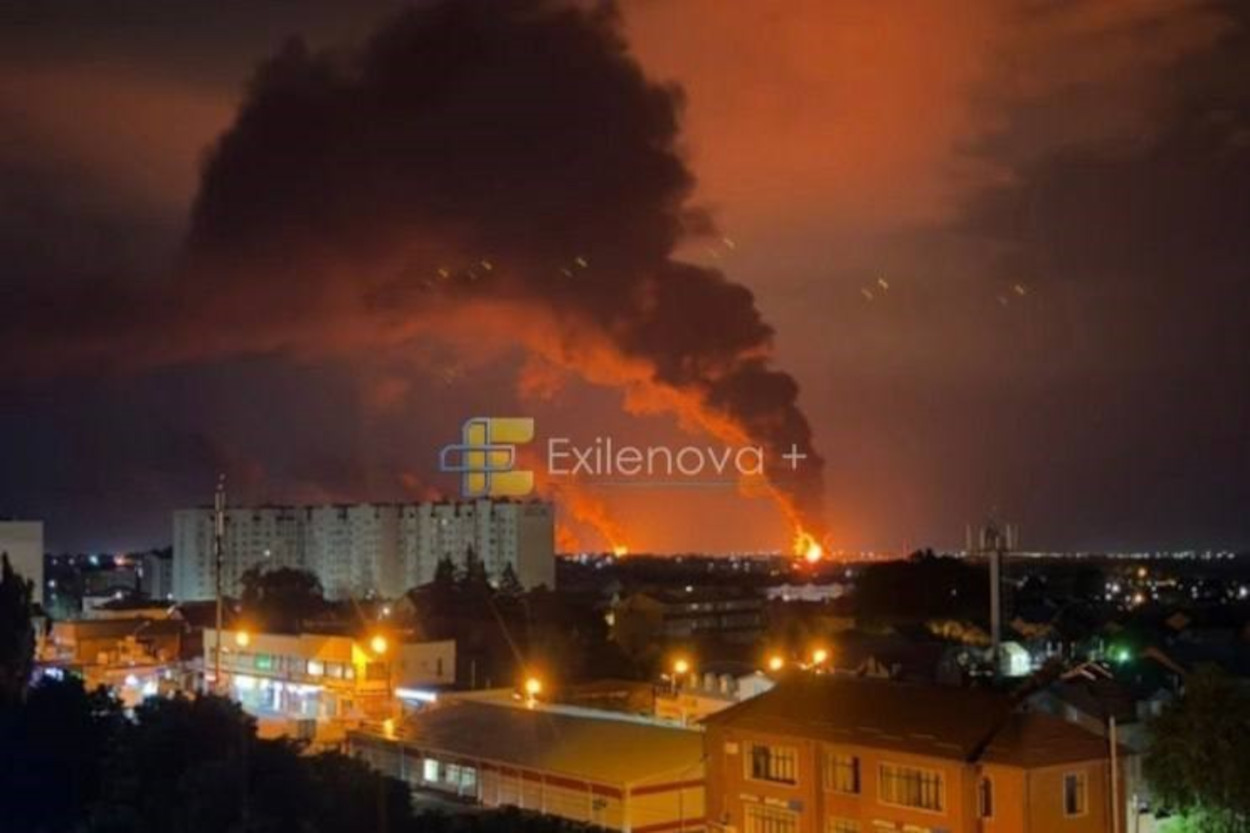
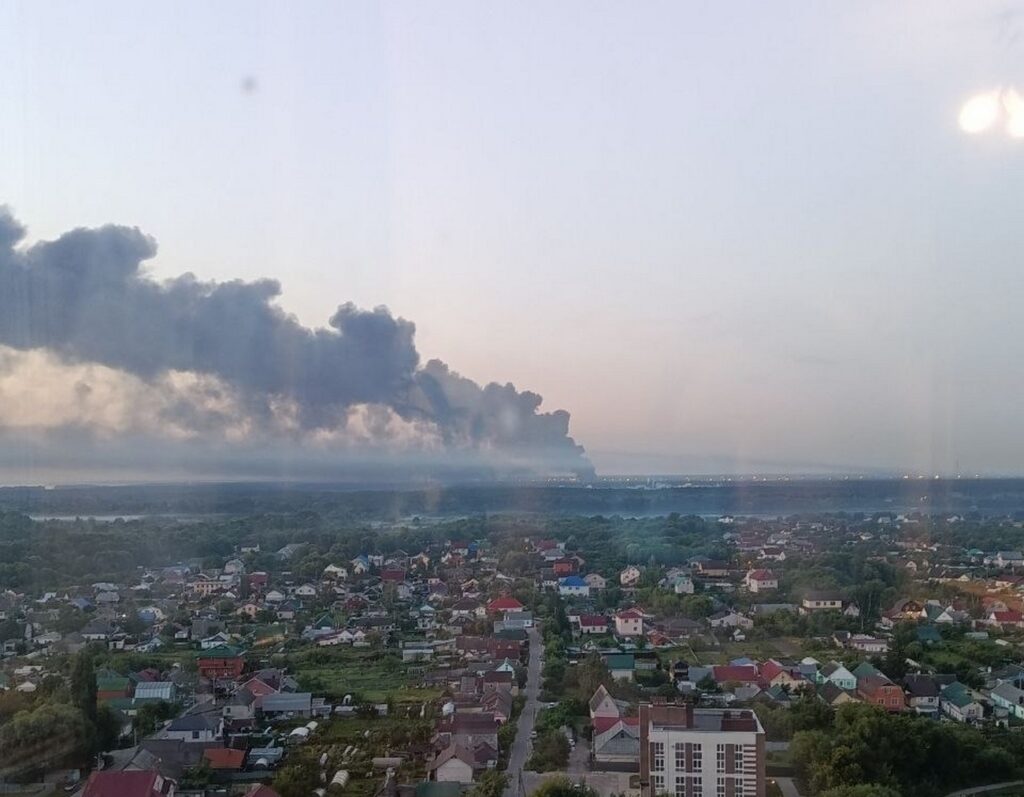
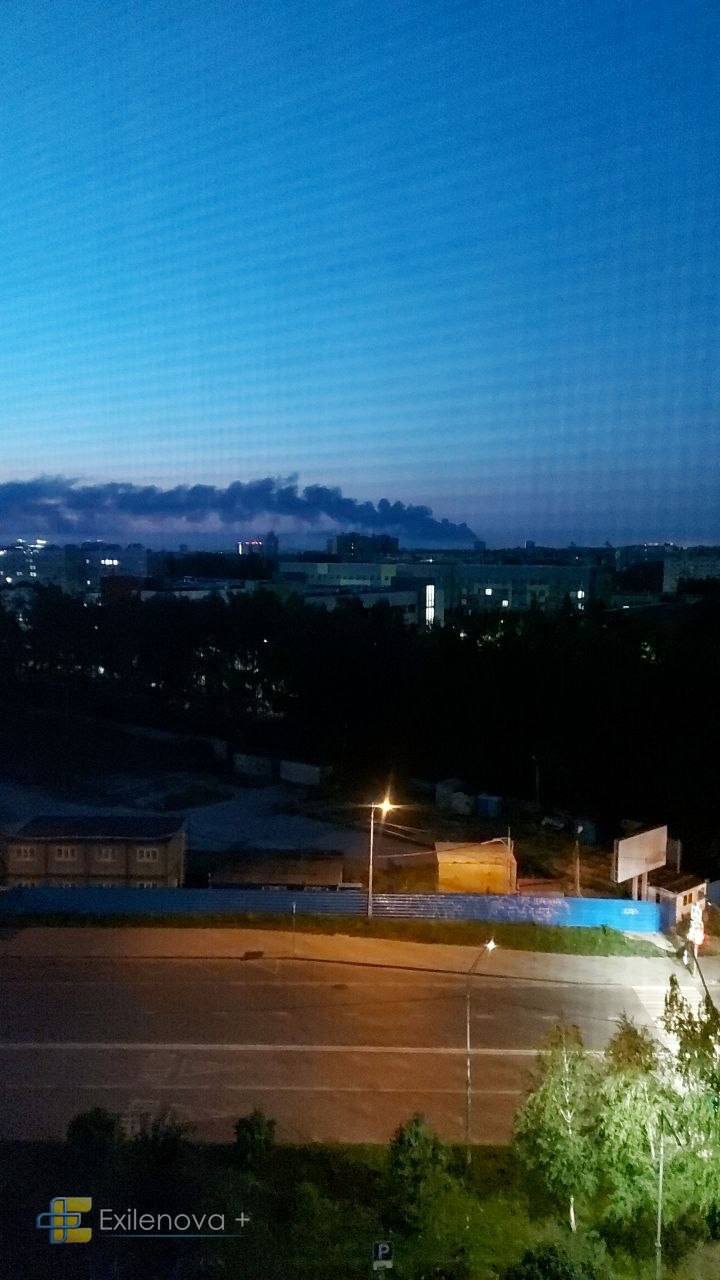
Smoke from a fire in Lipetsk's industrial zone rises on the horizon after a night of explosions and missile alerts, Russia, 21 July 2026. Photo: Exilenova+
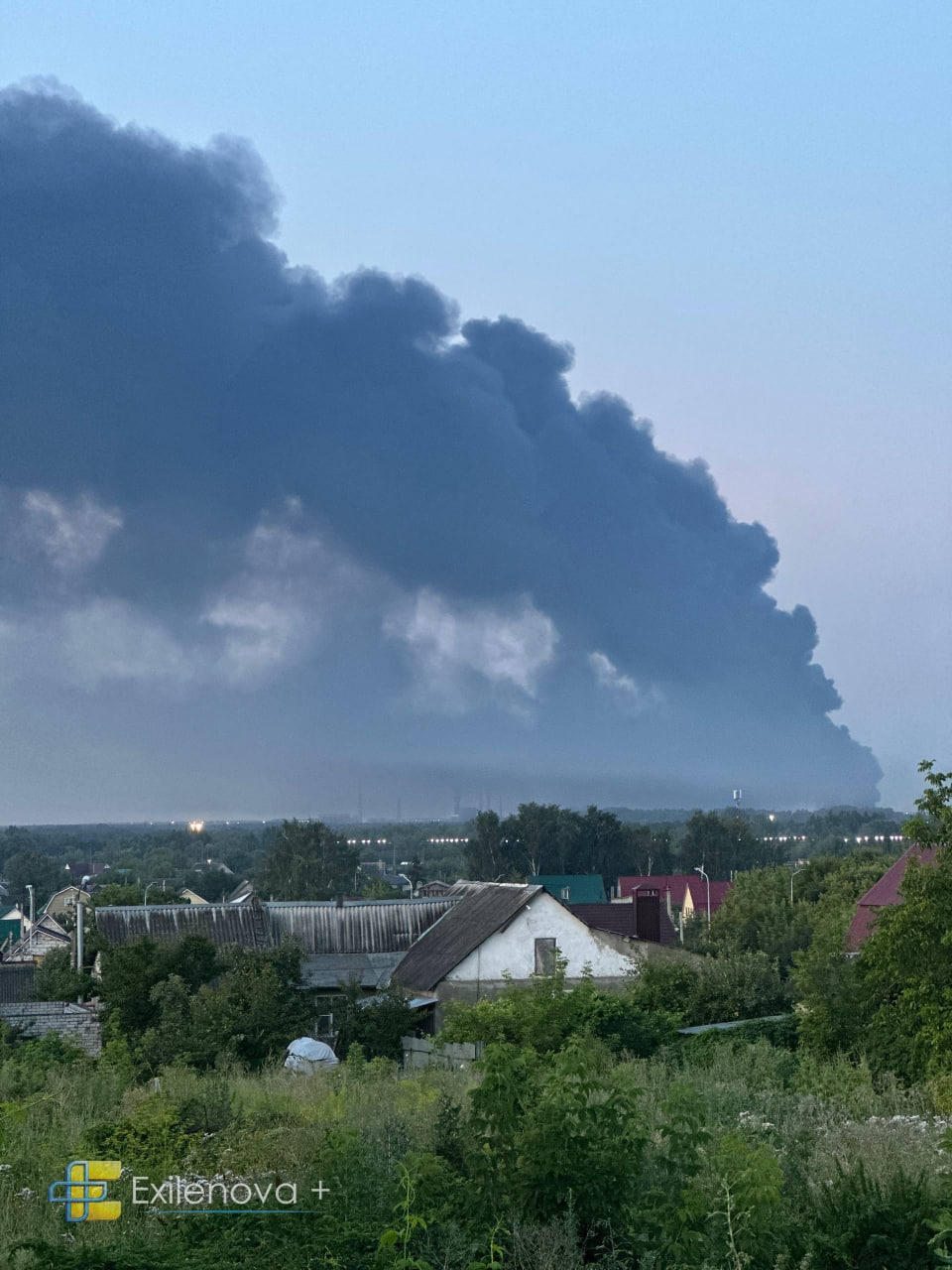
Videos posted by the Ukrainian monitoring Telegram channel Exilenova+ and Astra's OSINT analysis captured a thick smoke column and flashes of explosions. Astra's geolocation work placed the fire between the city's CHPP-2 heat-and-power plant and the Novolipetsk Metallurgical Combine (NLMK). Which facility took the hit remains unknown.
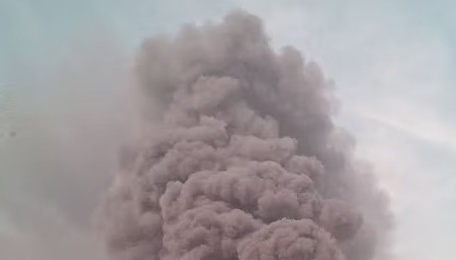
A dark smoke plume hangs over Lipetsk in the early hours after residents reported explosions, Russia, 21 July 2026. Photo: Exilenova+
Lipetsk Oblast Governor Igor Artamonov confirmed the fire, putting its area at about 2,500 square meters. He said the blaze broke out at an open site among production facilities on Peredelcheskaya Street. The governor named no weapon behind the fire, and Astra noted the causes were "being established." Artamonov claimed no one died or suffered injuries.
OSINT analysts of the Falcon insight map channel concluded from available footage that a logistics warehouse was burning. The Ukrainian monitoring channel Supernova+ located the fire at a warehouse on Almaznaya Street holding NLMK facilities, near Peredelcheskaya. Other, unconfirmed reports suggested the Indesit appliance plant near CHPP-2 might have caught fire.
Explosions and large fire hit Russia's Lipetsk last night
Residents of Lipetsk reported blasts last night as a blaze broke out between the TETs-2 thermal power plant and the Novolipetsk Metallurgical Combine, one of Russia's largest steel plants. The burning site is possibly a… pic.twitter.com/h93hRj3EaE
NLMK is Russia's largest steel producer, making about 20% of all Russian steel. The plant works for Russia's defense-industrial complex and fulfills a large number of state orders. Its metal goes into Russian missiles, artillery, and other weaponry. Ukrainian drones have attacked the combine before, and a February 2025 drone strike injured a worker there. Astra has documented NLMK steel going to companies specializing in missile production.
Lipetsk CHPP-2 is one of the largest thermal power plants in Russia's Chernozem region. It supplies heat to Lipetsk and several industrial enterprises around the city.
Belgorod loses water, Volgograd hears blasts
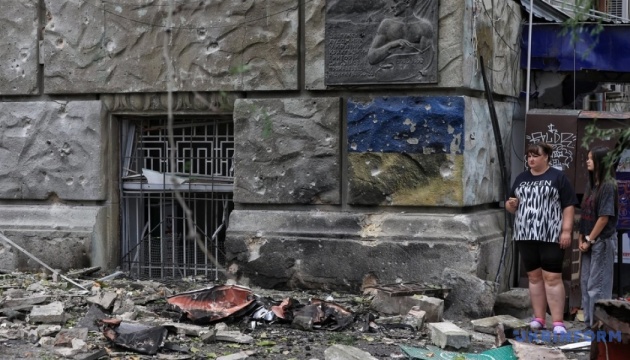
Belgorod—a city between Lipetsk and Ukraine—and its surrounding settlements also came under attack the same night. Monitoring channels said a rain of debris from downed missiles fell over the city and the Belgorod agglomeration. Parts of the city lost water supply, with probable hits on energy infrastructure.
In Volgograd, residents reported explosions and sirens under a declared missile danger. No information about any aftermath had emerged by morning.
A powerful fire broke out the same night in the Vsevolozhsk district of Leningrad Oblast. Regional authorities said a polymer production facility caught fire at the Ladoga industrial park, covering 5,900 square meters. Open data lists the companies Terra-Plast, Miksplast, and the Center of Radiation Technologies at the site.
Russia's Defense Ministry claimed its air defenses and electronic warfare intercepted 209 Ukrainian drones over Russian regions overnight.
The Ukrainian Armed Forces struck a MiG-29 fighter jet and a “Pantsir-S1” anti-aircraft missile and gun system at the “Khalino” airfield in the Kursk region.
The Ukrainian Armed Forces struck a MiG-29 fighter jet and a “Pantsir-S1” anti-aircraft missile and gun system at the “Khalino” airfield in the Kursk region.
Ukraine's Security Service (SBU) said it detained an alleged Russian Federal Security Service (FSB) agent accused of installing concealed cameras near military sites in Kharkiv Oblast to help Russia coordinate attacks on Ukrainian positions.
Bordering Russia, Kharkiv Oblast has remained one of Ukraine's most dangerous regions throughout the full-scale war. Communities across the oblast continue to face regular missile, drone, and guided bomb attacks.
According to the
Ukraine's Security Service (SBU) said it detained an alleged Russian Federal Security Service (FSB) agent accused of installing concealed cameras near military sites in Kharkiv Oblast to help Russia coordinate attacks on Ukrainian positions.
Bordering Russia, Kharkiv Oblast has remained one of Ukraine's most dangerous regions throughout the full-scale war. Communities across the oblast continue to face regular missile, drone, and guided bomb attacks.
According to the SBU, the suspect, an unemployed resident of Chuhuiv district, was recruited by Russia's FSB to identify operational airfields and Ukrainian artillery positions, including multiple-launch rocket systems, in frontline areas of the eastern region.
Hidden cameras in trees allegedly used to guide strikes
Investigators allege the man searched for military locations on foot and, once identifying potential targets, installed hidden cameras in nearby trees. The devices allegedly provided Russian intelligence with remote, real-time video feeds intended to help adjust missile, guided bomb, and drone strikes.
The SBU said its counterintelligence officers uncovered the operation after documenting the suspect installing what the agency described as "video traps" near sites he believed could be used by Ukraine's Defense Forces. He was detained as he prepared for another reconnaissance mission.
During searches, officers seized four smartphones that the SBU says the suspect regularly rotated to maintain covert communications with his alleged FSB handlers and transmit intelligence.
The suspect has been charged with high treason committed under martial law, an offense punishable by life imprisonment with confiscation of property under Ukrainian law. He remains in custody pending trial.
Kharkiv Oblast remains under constant Russian attack
Kharkiv Oblast, which borders Russia, has been a key battleground since the start of Moscow's full-scale invasion. Although Ukrainian forces repelled Russia's attempt to seize Kharkiv city in 2022 and pushed Russian troops back from much of the region, frontline civilian communities continue to face frequent missile, drone, and guided bomb attacks.
Ukraine's security services have repeatedly reported uncovering alleged Russian spy networks tasked with gathering targeting data on military facilities and critical infrastructure.
The operation was conducted by the SBU's Kharkiv regional office under the procedural supervision of the Kharkiv Oblast Prosecutor's Office.
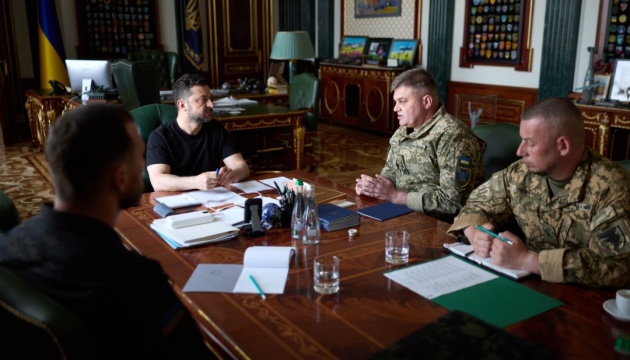
President Volodymyr Zelensky heard a briefing on preparations for various possible scenarios in the Chernihiv-Kyiv sector, taking into account intelligence reports.
President Volodymyr Zelensky heard a briefing on preparations for various possible scenarios in the Chernihiv-Kyiv sector, taking into account intelligence reports.
Russia’s Agriculture Ministry has asked every region whether its farms will buy furnace oil—fuel made for boilers and industrial ovens—and diesel up to 90 times dirtier than the standard farms fueled with last year, an official downgrade the ministry turned to as attacks on refineries cut the country’s fuel supply, the Russian business daily Kommersant reported, citing a 17 July letter it obtained.
What 90 times more sulfur does
Euro-5 diesel, the standard Russian fa
Russia’s Agriculture Ministry has asked every region whether its farms will buy furnace oil—fuel made for boilers and industrial ovens—and diesel up to 90 times dirtier than the standard farms fueled with last year, an official downgrade the ministry turned to as attacks on refineries cut the country’s fuel supply, the Russian business daily Kommersant reported, citing a 17 July letter it obtained.
What 90 times more sulfur does
Euro-5 diesel, the standard Russian farms bought last season, caps sulfur at 0.01%, while the ministry’s letter asks about fuel with up to 0.9% sulfur. The difference is made by hydrotreating units at refineries—the equipment that strips sulfur out of fuel—and Ukraine’s drone campaign has been destroying exactly that.
The ministry is most likely mapping demand for straight-run diesel from mini-refineries or from large plants whose hydrotreating sections have been damaged, one Kommersant source said—statistics no one in Russia had ever collected before.
Furnace oil can run only Soviet-era tractors—for modern imported machines, it is forbidden.
The letter, signed by the ministry’s crop farming department director Andrei Artikulov, gave regional agriculture bodies three days to report which farms want the degraded fuel and in what monthly volumes, according to Kommersant. The Energy Ministry has confirmed the fuel can be produced, the letter says.
The government had already legalized the circulation of Euro-3 gasoline and diesel through the end of 2026—and considered going back to Euro-2, a standard Russia abandoned years ago, the paper’s sources said.
A tractor of this class burns more than 1,000 liters of diesel in a day of round-the-clock work—while Russian filling stations ration 100–200 liters per customer. Photo: Yevgeny Sofiychuk / NGS55.RU
Fine for a Soviet tractor, forbidden for a modern one
What the downgrade does to a machine is not in dispute. Raising sulfur content fivefold cuts an engine’s service life in half, and repairing a modern combine or tractor costs many times more than the fuel savings, Lazarevskoye farm director Kristina Romanovskaya told Kommersant.
Furnace oil, she said, can run only Soviet-era or early-Russian tractors and trucks—for modern imported machines, it is forbidden. The problems are soot and clogged filters, fuel pumps, and injectors, another industry source told the paper, adding that farms that service their own aging fleets “will cope.”
Farmers had already been doing this out of desperation—now it is policy. A week earlier, Rostov Oblast farmer Aleksei Zhdanov described pouring low-grade Euro-3 into his imported tractors—wrecking them at double last year’s price, 130 rubles ($1.66) a liter—because nothing else reached his farm.
Explore further
Russia’s fuel crisis has moved from the pump to the harvest
The shortage behind the letter
Russian refining fell in June to its lowest level in years, according to Kpler data cited by Kommersant, after Ukrainian drones reached all 10 of Russia’s largest refineries in two months.
The stakes run past Russia’s borders: Russia is the world’s largest wheat exporter, and analysts have cut its July export forecast by 13–20%, naming diesel restrictions among the causes alongside a late harvest start and shipping limits at the Azov port.
By 20 July, the SovEcon center had cut its estimate again, to the lowest July export volume since 2017, mainly due to navigation restrictions through the Kerch Strait. Russian media describe the cause of the shortage as “unscheduled repairs” at refineries; the repairs follow the strikes.
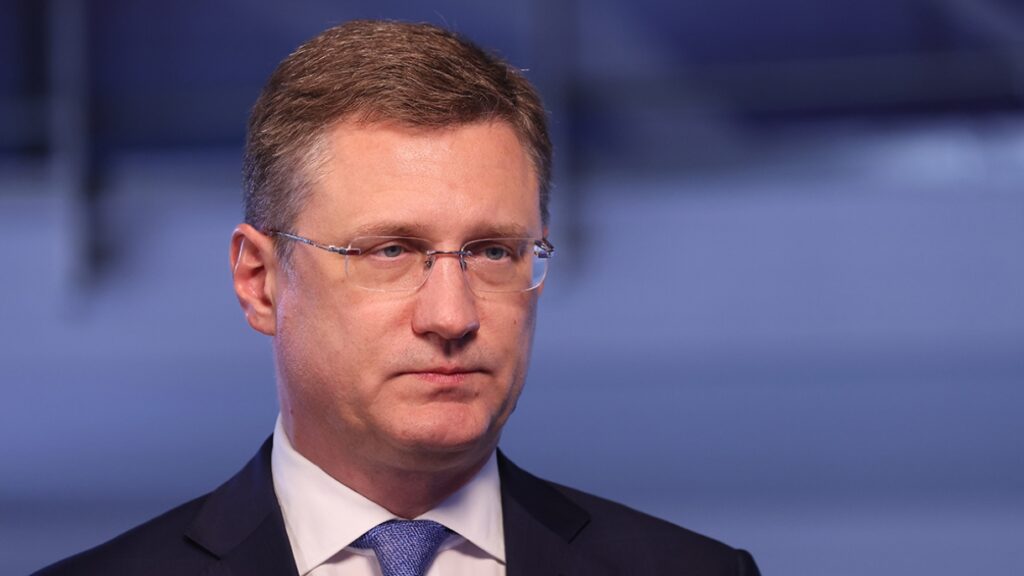
Russian Deputy Prime Minister Alexander Novak. Photo: Russian government press service
The rest of the fuel system is improvising too. The government restricted diesel exports from 8 July to keep fuel inside the country, and Deputy Prime Minister Alexander Novak said on 15 July that the effect was already visible, Kommersant reported.
Krasnodar Krai’s governor asked Moscow to raise his region’s monthly fuel quota, Rostov Oblast negotiated extra deliveries, and Stavropol appointed a regional fuel operator for small farms.
In occupied Crimea, 86 stations resumed open gasoline sales—rationed by QR codes issued a day in advance, 20 to 40 liters per car, Vechernyaya Moskva reported. In Tyumen, businesspeople are being pitched private mini-filling stations built around single storage tanks, the same outlet said.
Agriculture Minister Oksana Lut acknowledged on 17 July that fuel supply for farmers has “roughnesses on the ground,” Kommersant reported. The ministry’s letter went out the same day.
A Liberian-flagged vessel traveling from Egypt to Ukraine was struck off the coast of Romania in an attack likely linked to Russia’s war against Ukraine.
A Liberian-flagged vessel traveling from Egypt to Ukraine was struck off the coast of Romania in an attack likely linked to Russia’s war against Ukraine.

 Connexion












 Ukraine’s 123rd Territorial Defense Brigade has carried out the first known mission of its kind.
 (@bayraktar_1love)