❌

Vue normale

  • ✇Euromaidan Press
  • Bloomberg: Russia’s leaked records show foreigners from nearly 100 countries died in its war on Ukraine
    Russia’s own records show foreign fighters from nearly 100 countries have died in its war on Ukraine. Leaked Rosstat death certificates, obtained by hackers and analyzed by Bloomberg, logged 11,335 such deaths between February 2022 and August 2026. The data is a rare documentary confirmation, from Russia’s own statistics agency, of how heavily Moscow leans on foreign recruits, whom Ukraine puts at nearly 46,000 in its army. It also maps where they came from, with the dead shifting from
     

Bloomberg: Russia’s leaked records show foreigners from nearly 100 countries died in its war on Ukraine

12 novembre 2026 à 13:53

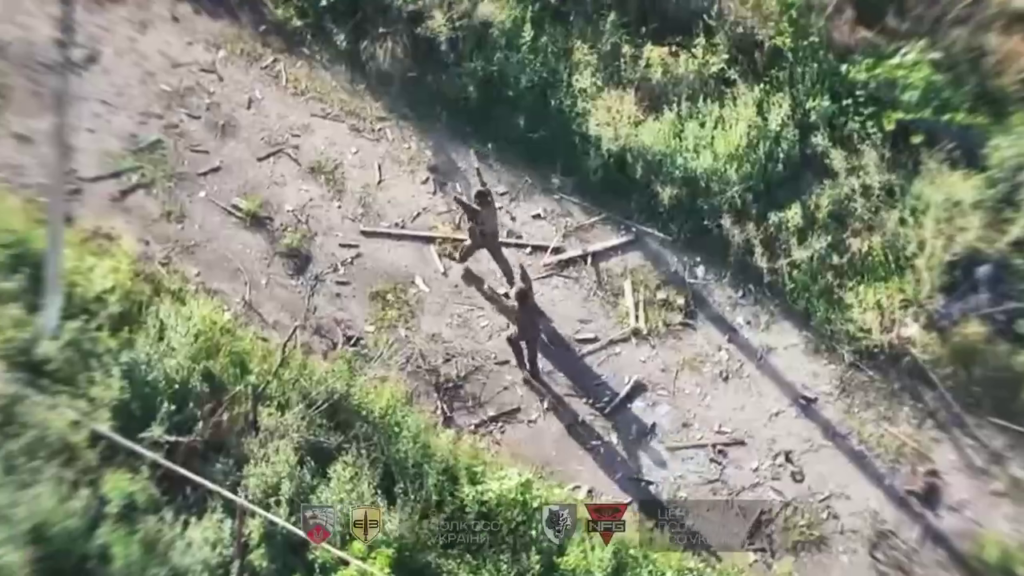
Russian soldiers surrendering in Andriivka-Klevtsove, Donetsk Oblast, Ukraine, as Ukrainian forces retook the settlement, August 2026. Screenshot from video: Ukrainian Special Operations Forces

Russia’s own records show foreign fighters from nearly 100 countries have died in its war on Ukraine. Leaked Rosstat death certificates, obtained by hackers and analyzed by Bloomberg, logged 11,335 such deaths between February 2022 and August 2026.

The data is a rare documentary confirmation, from Russia’s own statistics agency, of how heavily Moscow leans on foreign recruits, whom Ukraine puts at nearly 46,000 in its army. It also maps where they came from, with the dead shifting from Central and South Asia toward Latin America and Africa as the war ground on.

Most of the dead came from the former Soviet republics

Journalists sifted more than 11 million death certificates, counting as foreign anyone born outside Russia or holding another citizenship, and tied the 11,335 war deaths to the fighting through notes citing a “military operation,” shelling, or drone attacks. About 3,700 were Ukrainian citizens or born in Ukraine, most of them from Russian-occupied areas in the east and south. Around 80% of the rest came from other former Soviet republics, and more than 6,000 of the dead had taken Russian citizenship before they were killed.

Recruitment shifted from Asia to Latin America and Africa

Registered foreign deaths rose with Russia’s overall losses, from roughly 630 in 2022 to more than 5,500 in 2025. The geography moved too: most Nepalese deaths fell in 2023 and 2024, Sri Lankans and Chinese in 2024 and 2025, and from late 2025 the toll climbed among Colombians, Kenyans, and Nigerians. About 340 of the dead came from African countries, most since 2025, led by Egypt, Cameroon, Nigeria, Kenya, and Ghana.

The real toll is higher, and North Koreans are missing from it

Bloomberg cautions that the true number is likely larger, with some fighters listed as missing, some bodies unidentified, and 2026 records especially incomplete. The files held no North Korean deaths at all, even though Pyongyang sent thousands of troops, which the reporters suggested is because they fought in separate units rather than enlisting in the Russian army. The data came from a 1 November hack that the groups Silent Crow and Cyber Partisans said pulled some 23 terabytes from Rosstat, part of the same leak that put Russia’s total war dead as high as 450,100. Rosstat reported the attack but denied its databases were breached.

UN commission finds Russia’s grid strikes are crimes against humanity, citing last winter at minus 21°C. Now they’re intensifying

27 octobre 2026 à 08:21

Russia struck a burning Odesa Oblast plant twice more as firefighters worked on 26 October 2026

Russian authorities committed war crimes and crimes against humanity through attacks on Ukraine’s energy infrastructure, the UN Independent International Commission of Inquiry on Ukraine said in a report to the UN General Assembly on 26 October.

International Criminal Court (ICC) warrants for former Russian Defense Minister Sergei Shoigu and Chief of the General Staff Valery Gerasimov, issued in June 2024, already covered alleged crimes linked to Russia’s 2022–2023 strikes on Ukraine’s energy infrastructure. The UN commission’s new report reaches into last winter, 2025–2026, and the cumulative toll since 2022, documenting what the attacks did to civilians living through outages in freezing temperatures.

“As the cold season approaches, the attacks have intensified once again, raising serious concerns about the threats to civilians’ lives and health,” commission chair Erik Møse said.

Russian commanders knew heating facilities were vital

The commission said Russian commanders knew that heating facilities in large cities were indispensable to civilians, particularly during winter. Russian authorities also made official declarations about further attacks and referred to a plan to carry them out, it said. It found that Russian authorities intentionally directed attacks against civilian objects, constituting war crimes.

The commission also concluded that the attacks were carried out under a state policy aimed at depriving civilians of electricity and other essential energy-dependent services and causing suffering. It classified these acts as crimes against humanity in the form of “other inhumane acts.”

Minus 21°C, weeks without heat, and shelters out of reach for older people

Last winter, temperatures fell to minus 21°C as millions of Ukrainians endured prolonged disruptions to heating, electricity, water, and gas, the commission said.

The commission relied on the accounts of 255 people from Dnipropetrovsk, Kyiv, Kharkiv, Kherson, Mykolaiv, Odesa, Poltava, Zaporizhzhia, and Zhytomyr Oblasts, alongside officials, doctors, and nongovernmental organizations.

Older people and those with limited mobility were particularly affected. Fear of becoming trapped in elevators during blackouts prevented some residents from reaching shelters during air raid alerts. They remained in unheated homes, sometimes without access to life-support equipment.

A 53-year-old Kyiv resident told investigators he tried to stay awake at night because he feared he might not wake up if he fell asleep in the cold.

Meanwhile, school closures disrupted children’s education, and children fell ill in unheated homes, the report said.

Russia rejects the findings

Russia’s UN mission said Moscow did not recognize the commission’s mandate and dismissed its findings as “falsified data,” the Associated Press reported.

The commission also examined Ukrainian attacks on energy infrastructure in Russia and Russian-occupied Ukraine. It said it could not investigate their impact fully because Russia denied access and did not respond to its requests.

Foreign recruits trafficked to the front

The same report found “compelling evidence” that Russian authorities trafficked men from 29 countries into the Russian armed forces through deception and coercion.

Recruitment agents arranged visas and travel, presenting themselves as legitimate businesses. After arriving in Russia, the men were forced to sign military contracts in Russian and were sent to the front, where many were killed or went missing, the commission said.

Ukraine has identified nearly 46,000 foreigners from 151 countries in Russia’s army—and says Moscow is on pace to meet its 2026 hiring plan

20 octobre 2026 à 05:45

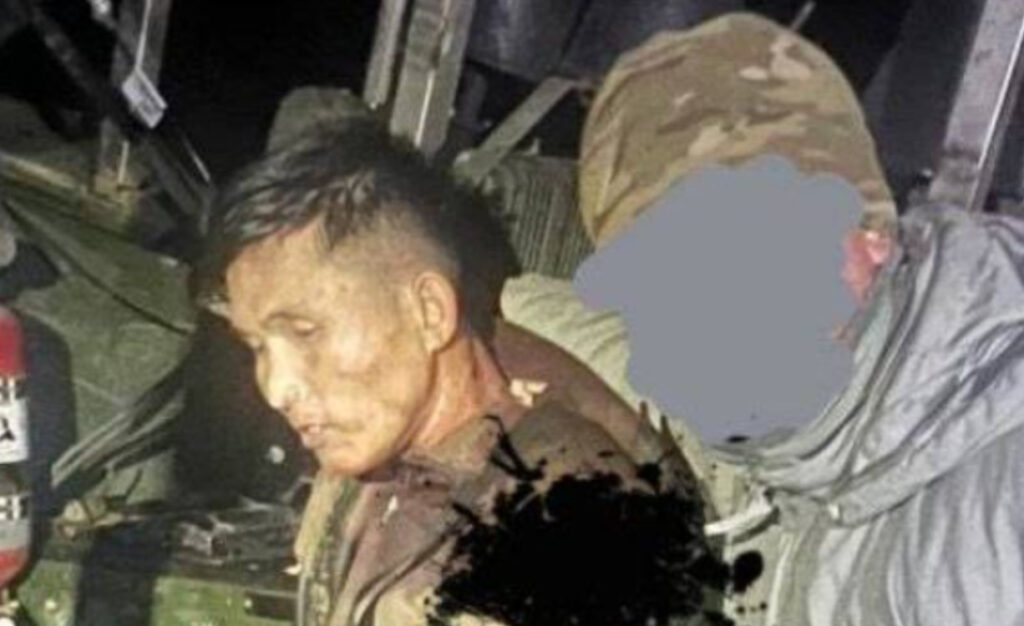
ukrainians capture first north korean pow military says claimed prisoner war dprk tme/ the_warhal18 zayavlenyj-polonenyj-vijskovyj-kndr-2 26 reports emerged ukrainian special forces had captured soldier fighting russia during operation kursk oblast

Ukraine holds personal data on each of the nearly 46,000 foreigners it has identified as signing with Russia’s army since 2022, Dmytro Usov, secretary of its prisoner-of-war coordination headquarters, said on 19 October. If the current pace holds, he expects this year’s contracts to reach Moscow’s plan. Meanwhile, a survey of captured foreigners gave a split answer on how many knew they were heading to war.

Usov said 41% of surveyed foreign POWs signed at enlistment offices and recruitment points, which the headquarters reads as a sign of a systematic campaign. He also said the hiring is meant to ease the social and budget burden of Russia’s own losses. Russia has long turned to foreigners to offset shortages in its regular forces. In April, Ukraine’s military intelligence (HUR) said enlistment offices had reportedly been assigned regional quotas.

A count built name by name

Usov, a brigadier general and secretary of Ukraine’s Coordination Headquarters for the Treatment of Prisoners of War, spoke at the international conference Crimea Global. He said Russia’s Defense Ministry has signed 45,959 foreigners from 151 countries. Ukraine’s records include each one’s rank, dog tag, and contract date.

The figure counts everyone who signed, not only those serving now. In April, Usov said his count left out North Korea’s regular troops, that 25–30% more recruits were likely still unidentified, and that at least 5,149 foreign recruits had died, Interfax-Ukraine reported.

This year’s contracts near the plan

Contracts have grown every year: 94 in 2022, 4,067 in 2023, 8,877 in 2024, and 16,085 in 2025. Some names surface late. At the same April event, Interfax-Ukraine reported, Usov had put 2025 at 13,997 and said the headquarters adds newly identified foreigners every month.

For 2026, Russia’s Defense Ministry planned 18,500 foreign contracts. Ukraine knows of 16,168 so far, roughly level with all of 2025. Another 668 contracts still have no year assigned. If the same dynamic holds, Usov said, the ministry will fully meet its plan and may even exceed it.

He named Indonesia, Peru, Chad, and Zimbabwe among the ten countries that drove the growth in recruits, Ukrinform reported. At the same time, he said, Ukraine’s Foreign Ministry and POW agencies have cut recruitment in some countries and stopped it in others.

What captured foreigners told Ukraine

Ukrainian forces have captured citizens of 59 countries since the full-scale invasion began. Uzbeks, Tajiks, Belarusians, and Colombians are among the largest groups.

In the headquarters’ survey of foreign POWs, nearly half said they knew they would fight Ukrainian soldiers and civilians. Another 28% said they didn’t know, 14.8% weren’t sure, and 13.8% said they were deceived. The headquarters ran the survey, and neither report gave a sample size or explained how the shares fit together. Usov said the results showed most knew where they were going. Almost 47% said they signed up for Russian citizenship.

❌