Death row inmates used to be held together at the San Quentin state prison, but they have since been transferred to other state facilities and moved into the general population.
Three handwritten, signed reports attributed to a young Viktor Orbán described fellow conscripts’ conduct and their political, sexual, and religious orientation during his military service in Zalaegerszeg, according to former Prime Minister Miklós Németh. He made the claim in a statement that investigative journalist Szabolcs Panyi first described in a podcast and published on 5 November.
For 16 years, until May, Orbán ran Hungary as Russian President Vladimir Putin’s most reliable ally in the EU, and US President Donald Trump publicly endorsed him. As Russia waged its war on Ukraine, his government vetoed EU sanctions on Russia and blocked a €90 billion EU loan to Kyiv.
The account surfaced as Hungary opened its communist-era secret police files to the public. It also comes as the Trump administration is backing Orbán for UN secretary-general, according to the Wall Street Journal’s editorial board. Németh’s statement now sits in the state security archive, but it is testimony, not the reports themselves.
Németh says he could not verify the papers
Németh wrote that Defense Minister Ferenc Kárpáti showed him the reports in March 1990, shortly before Hungary’s first free election. He could not check who wrote them, or whether the handwriting and signature were genuine, though he believed he recognized them. He returned the papers to Kárpáti and kept no copies.
Miklós Németh’s statement of 30 March 2026 in English translation. The original is held by Hungary’s State Security Archive. Source: Szabolcs Panyi/VSquare
Years later, a few months before Kárpáti died in 2013, Németh asked him what had become of the documents. Kárpáti said they were with Géza Stefán, the longtime head of the Military Security Office, which succeeded communist military counterintelligence. According to Panyi, Stefán had been trained by the KGB in Moscow and hoarded compromising files on Hungary’s elite. Those files vanished from his safe the day after he died in 2009, and Panyi wrote that the alleged Orbán reports could have been among them.
Orbán says he was the target, not the informer
A day after the podcast, on 3 November, Orbán posted more than 20 pages of state security files on Facebook. He said authorities had tried to recruit him during his military service, that he refused, and that he and his wife were later wiretapped. Hungarian weekly hvg noted that he had published the same files in 2005 and 2012. Earlier, when Panyi asked for comment, Orbán’s spokesman Bertalan Havasi called the claims “FAKE NEWS.”
Meanwhile, Hungarian outlet Contextus cited an archive card that lists Orbán from October 1981 as a “social contact” of military counterintelligence in Zalaegerszeg. Under military counterintelligence rules, Contextus noted, such contacts signed no recruitment pledge and filed no written reports, which does not fit handwritten, signed reports.
Explore further
Ukraine’s last two EU negotiation blocks stay shut as Hungary’s new government keeps Orbán’s veto
Németh waited for a new disclosure law
Németh was vice president of the London-based European Bank for Reconstruction and Development in 1991–2000. In a 2020 interview, he said he had signed a declaration not to comment on Hungarian politics while he worked at the bank. Panyi says this explains Németh’s silence in the 1990s. In March this year, Németh deposited his statement with a lawyer. Then, in September, he handed it to the State Security Archive, after parliament widened access to the files under the new government that took office in May. Historian János M. Rainer, who heads the new review committee, attended the handover, according to Hungarian outlet Telex.
Hungary’s online database of communist-era secret police files opened on 4 November, as Reuters reported it would. Panyi wrote that it names roughly 50,000–60,000 people, with more recruitment files due by 25 February 2027.
L’enquête préliminaire de Likenson Grégoire, accusé de tentative de meurtre relativement à une agression armée survenue le 25 avril 2024 à Sainte-Angèle de Mérici, débutera lundi prochain (9 novembre) avec 23 témoins qui devraient se faire entendre au cours de la semaine.
Le juge de la Cour du Québec, James Rondeau, a présidé une séance de gestion, mercredi matin, au palais de justice de Rimouski.
L’individu de 23 ans s’est trouvé un avocat, Me Stéphane Pouyes, mais ce dernier n’est pas en mesure d’œuvrer à l’enquête préliminaire puisqu’il vient tout juste de recevoir la preuve de son client.
« Je vous comprends, mais j’avais prévenu monsieur Grégoire que l’enquête ne serait pas reportée s’il arrivait avec un avocat à la dernière minute. Il y a eu plusieurs reports et changements d’avocats. C’est un dossier qui date de 2024. Il faut procéder. Je refuse le report, mais je vous permets d’assister à l’enquête si vous souhaitez vous préparer pour un éventuel procès à venir », a mentionné le juge.
Me Pouyes sera le 4e avocat de Likenson Grégoire après Frédérik Couturier, Kristina Markovich et à Gleb Shalabanov. L’enquête préliminaire devait initialement se tenir du 23 au 27 mars.
« Monsieur Grégoire pensait régler ces dossiers selon une entente qu’il croyait intervenue entre les parties, ce qui n’est pas le cas », a précisé Me Pouyes.
Procès devant jury
Likenson Grégoire conteste sa citation à procès. Son enquête préliminaire prévue pour cinq jours se tiendra de manière commune avec la coaccusée Doxanne Maherline Racine.
L’accusé a opté pour un procès devant un jury à la suite de l’enquête préliminaire.
Grégoire a renoncé à la tenue de son enquête sur remise en liberté. Il est détenu depuis son arrestation le 25 avril 2024. Rappelons que la détention préventive purgée avant l’imposition d’une peine compte à 1,5 jour par jour purgé.
La procureure de la Couronne, Me Marie-Pier Chicoine-Côté, a déposé une nouvelle accusation de voies de faits graves en août 2024.
Grégoire faisait déjà face à une accusation de tentative de meurtre et à une autre de possession d’une arme prohibée.
Les policiers sont intervenus le 25 avril 2024 vers 9 h 30 concernant un homme de 31 ans ayant été blessé par arme à feu à Sainte-Angèle-de-Mérici. Une heure plus tard, le suspect a été interpellé à Notre-Dame-des-Neiges.
Un pistolet de calibre 9 mm a été saisi par les policiers. Le suspect et la victime sont connus des milieux policiers.
Ukraine’s National Anti-Corruption Bureau (NABU) has charged five people in a new episode of its Carthage case, the bureau said. Investigators say the group ran or shielded scam call centers, drug sales, and a fake-euro workshop. Judges have ruled on two suspects, while the most senior one, a security service general, still waits.
As Ukraine fights off Russia’s full-scale invasion, Brussels has tied its EU membership talks to reforms that include independent anti-corruption agencies, a condition watchdogs flagged as under strain. Carthage is the bureau’s hunt for officials allegedly paid to let scam call centers rob people in Ukraine and abroad, and it now reaches the police and security service meant to stop them.
The general called Akim
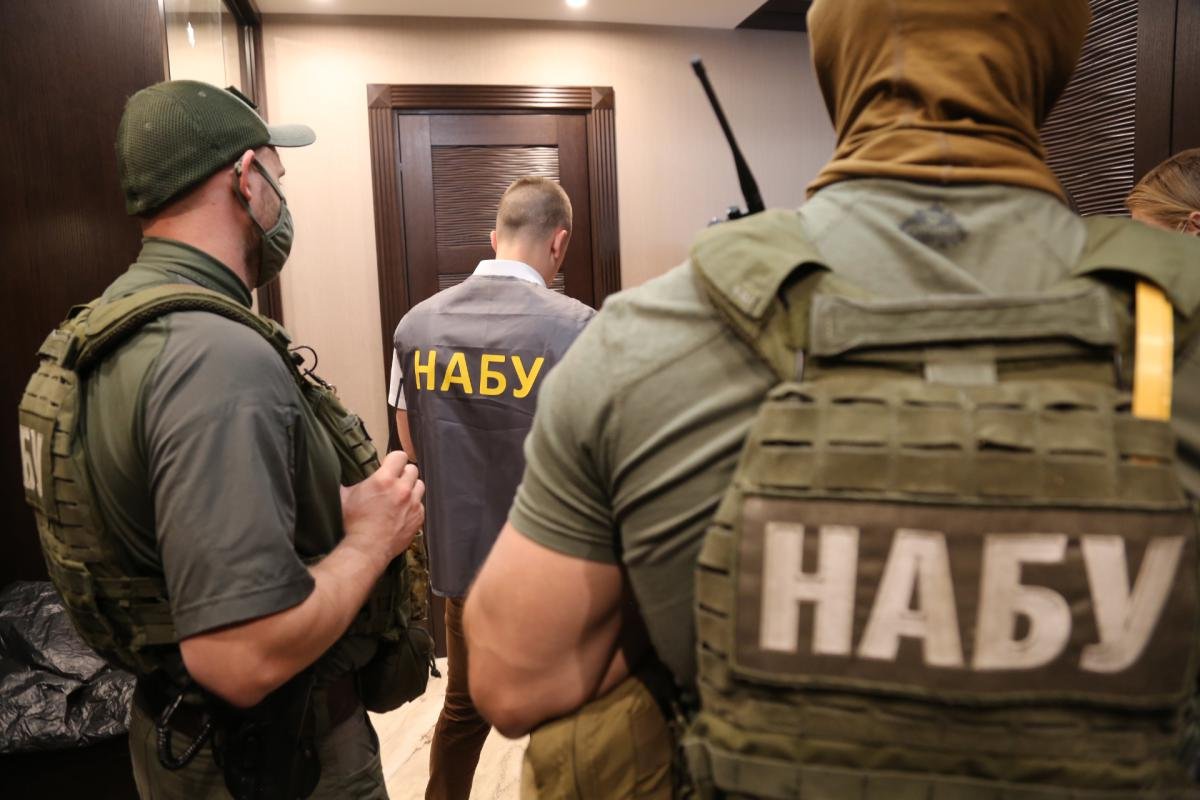
On 4 November, NABU detectives detained Serhii Duka, a major general in the Security Service of Ukraine (SBU). A source in the Specialized Anti-Corruption Prosecutor’s Office (SAP) told BBC News Ukrainian that he was held under Article 208 (detention without a prior court order). Investigators say Duka is Akim from their tapes, who helped the group with problems in the SBU, the Prosecutor General’s Office, and the police. When the gang paused its call centers last summer, he allegedly told its leader to change addresses and “go partisan.”
Explore further
“If you’re gonna f*ck, f*ck a queen, if you’re gonna steal, steal a million”: Ukraine’s anti-corruption bureau says senior official ran criminal ring inside Prosecutor General’s Office
Detectives found Duka at a cottage in Roslavychi, Kyiv Oblast, owned by the family of business partners of a relative with ties to Russia, investigative outlet Slidstvo.Info reported.
NABU unit head Oleksandr Abakumov described armed men at the windows and Duka with a pistol, who then smashed his phones with a hammer on a balcony and destroyed a hard drive. Fighters from Alfa, the SBU’s special forces, then arrived in vans. Abakumov called it absurd that the unit came to shield the general from detectives.
The same day, SBU head Oleksandr Poklad said he had fired two senior officials involved in the case, without naming them. The Anti-Corruption Action Center, a Kyiv watchdog, called Duka a key player in the July 2025 attack on NABU, when the SBU searched its detectives. SAP planned to ask a court on 6 November to keep Duka in custody, BBC News Russian reported.
Where the other four suspects stand
Mezha, an anti-corruption center, matched the tapes’ nicknames to the people NABU and SAP charged. The charge list names Andrii Osipov, a repeat convict known as Kryminal (“Criminal”), as the organizer.
On 5 November, the High Anti-Corruption Court ordered Vitalii Rybalka, called Boxer in NABU’s video, held for 60 days without bail, Radio Svoboda reported. The video mentions people being beaten with a hammer. Rybalka denied any part in that and called the suspicion far-fetched, but admitted he knows Osipov. Osipov, jailed in another case, faces the same court next week.
Vitalii Rybalka, called Boxer on NABU’s video, in the High Anti-Corruption Court, Kyiv, 5 November 2026. Photo: Daryna Kolomiiets/RFE/RL
The same court ordered Volodymyr Tsenov, known as Price, held unless he posts bail of UAH 15 million ($330,000). A senior National Police investigator, he is also suspected of taking a bribe.
The fifth suspect, Oleksandr Demianchuk, called Consultant, is a police detective in Kyiv Oblast. No ruling on him was reported by Friday morning.
Detectives also searched Kyiv Oblast police chief Andrii Rubel but did not charge him, Abakumov told Ukrainska Pravda. Rubel ran the National Police’s strategic investigations department from October 2022 to April 2026. NABU suspects he may have acted so as not to notice the crimes, Abakumov said.
Volodymyr Tsenov, known as Price, in the dock of the High Anti-Corruption Court, Kyiv, 5 November 2026. Photo: Anti-Corruption Action Center
What the gang allegedly planned
The tapes show a plot to attack Denys Bihus, an investigative journalist, over his reporting on U420, a shop chain suspected of selling drugs. Participants also discussed how to stop a man who wanted to tell NABU that evidence against one of its detectives might have been faked.
Explore further
Zelenskyy suspends prosecutor general who charged the bureau probing his own office
The leader of the Russian drug cartel Khimprom, called Mexican, offered $2 million on the recordings to remove Dmytro Torhalo, the National Police’s anti-drug chief, Slidstvo.Info reported. Torhalo confirmed Mexican threatened him.
The cartel leader also discussed bribing then-Interior Minister Ihor Klymenko to keep the cartel’s drugs off the banned list, Abakumov said in the same interview. Middlemen suggested offering people close to the minister a share of the business instead.
Dmytro Torhalo, head of the National Police’s anti-drug department, whom the Khimprom cartel leader offered $2 million to remove. Photo: Slidstvo.Info/National Police
Police push back, the Presidential Office responds
Andrii Nebytov, a deputy head of the National Police, wrote that the tapes date from September 2025 to April 2026, when police were already tracking Khimprom with Interpol and the US Drug Enforcement Administration. Deal plans existed, he said, but police dismantled U420.
Presidential Office head Kyrylo Budanov said after the searches that the law is the same for everyone.
NABU and SAP launched Carthage in September against an official in the Prosecutor General’s Office suspected of shielding call centers. Prosecutor General Ruslan Kravchenko then resigned and left Ukraine. His office has since fired eight people.
A civilian was also injured after a man opened fire on officers who pursued him onto a bus in Lakewood, Colo., the authorities said. The gunman was shot dead by the police.

 Connexion