❌

Vue lecture

Nasdaq sees worst day in 19 months as investors bet on AI slowdown after Democrats’ election triumph

Nearly $2tn shaved off Nasdaq value as worries of curbs to AI datacenters ripple across bourses

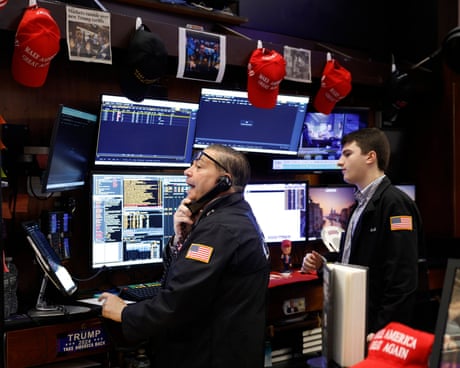
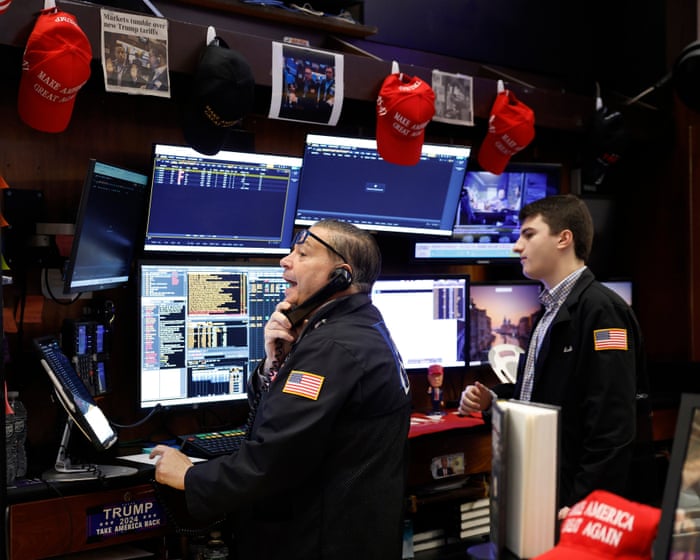
The Nasdaq share index had its worst day in 19 months after slumping 5.5% on Thursday amid growing signs that the artificial intelligence industry will face tougher regulation because of the midterm election results.

As Wall Street sustained widespread losses, the Nasdaq composite tumbled into “correction territory” – more than 10% below its recent record high – with more than $2tn shaved off its value by the end of trading Thursday. The tech-heavy index had its biggest one-day fall since Donald Trump announced his “liberation day” tariffs on US trading partners in April 2025.

Continue reading...

© Photograph: John Angelillo/UPI/Shutterstock

© Photograph: John Angelillo/UPI/Shutterstock

© Photograph: John Angelillo/UPI/Shutterstock

  •  

British Doctor Infected With Ebola While Working on Outbreak Evacuated to U.K.

The government said the risk to the British public from the disease was low. The current outbreak in Africa has spread widely across the continent, killing more than 5,000 people.

© Toby Shepheard/Reuters

The Royal Free Hospital in London, which one medical expert noted had a specialist isolation unit to deal with Ebola cases.
  •  

What to Know About the Bomb Threats Disrupting Flights in Europe

More threats were reported Friday after dozens of planes were targeted earlier this week. Officials have not reported finding any explosives, but the hoaxes have added to anxiety over hybrid attacks on the continent.

© Gonzalo Fuentes/Reuters

An Aer Lingus plane was diverted to Évreux military air base in France on Thursday.
  •  

Was Elon Musk the US midterms' biggest loser? – Stateside with Kai and Carter

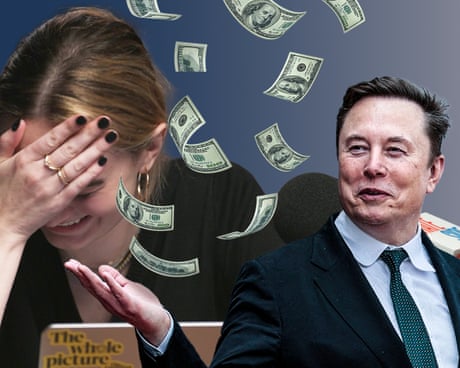
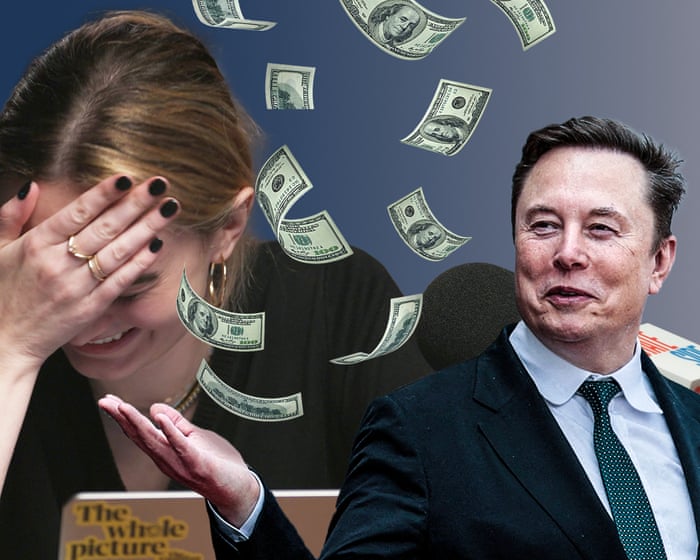
The tech industry spent big on the midterms, but it turned out to be a poor investment. Elon Musk poured a staggering $446m dollars into Republican-aligned political action committees (Pacs) and groups since last year, but his efforts didn’t pay off. Democrats won every one of the five Senate races where Musk’s America Pac spent the most money backing Republican candidates. Carter Sherman and Kai Wright are joined by the Guardian’s US tech editor, Blake Montgomery, to ask what the ‘blue tsunami’ will mean for Musk and the wider tech industry. Will this spell the end of AI datacenters? And if so, what could this mean for the US economy?

Continue reading...

© Photograph: Grid

© Photograph: Grid

© Photograph: Grid

  •  

Washington DC, une capitale toujours plus à l'image de Donald Trump ?

Depuis son retour au pouvoir, Donald Trump n’a eu de cesse de vouloir remodeler la capitale américaine en y laissant son nom et son empreinte. Après le Kennedy Center, la salle de bal de la Maison Blanche et le Lincoln Memorial reflecting pool, le président américain a à cœur la construction d’une arche de 79 mètres de haut. Pour un projet de cette ampleur, il faut en principe l’aval du Congrès mais Donald Trump semble vouloir s’en affranchir. L’arche verra-t-elle le jour ?

  •  

Germany’s chancellor admits occasional resupply snags in Ukraine aid—he’ll try to clear them at the 19 November summit

German Chancellor Friedrich Merz speaks online with Ukrainian President Volodymyr Zelenskyy, 12 October 2026. Photo: Volodymyr Zelenskyy/X

German Chancellor Friedrich Merz conceded on 3 November, after meeting Ukrainian President Volodymyr Zelenskyy, that military deliveries to Ukraine have run into occasional resupply difficulties, according to a transcript the German government published. He will try to resolve them at a Coalition of the Willing summit in Berlin on 19 November, where leaders will agree on the scope of further, mostly military, aid for 2027, he said.

Those snags land on a country already short of air defense. Russia launched another massive cruise and ballistic missile attack that day, Zelenskyy said. In April, Ukraine’s Air Force confirmed that Patriot crews were rationing missiles mid-attack. From late November to mid-December 2025, Ukraine’s F-16 fleet had only a handful of US-made AIM-9 Sidewinder air-to-air missiles, three sources told Reuters.

Merz: deliveries help, despite occasional resupply difficulties

Merz said Germany wants to provide more winter aid and energy support this year. He said he gathered from his talks with Zelenskyy that many shipments are helping Ukraine’s army a lot right now, despite all the weaknesses in its air defense. He named ammunition for F-16 fighter jets in particular, but also air defense and other munitions.

Germany co-hosts the summit with France and the UK, which lead the coalition of over 30 countries coordinating aid to Ukraine, Radio Svoboda noted. Merz also urged all partners to meet NATO allies’ €70 billion (about $80 billion) military aid commitment for 2026.

Ukrainian President Volodymyr Zelenskyy during a meeting of the Coalition of the Willing, which brought together representatives of 30 countries both online and in person, on 24 August 2026. Photo: Official Website of the President of Ukraine
Explore further

Europe’s future force for Ukraine from 11 countries will hold its first rehearsal in Poland—for a peace that doesn’t exist yet

Zelenskyy: a big shortage in air defense

Zelenskyy said the leaders discussed Ukraine’s big air-defense shortage and supplies of PAC-2 and PAC-3 interceptors for US-made Patriots and German IRIS-T missiles. They also discussed a new support package for Ukraine’s F-16s, which Ukraine needs, among other things, against Russia’s Shahed attack drones, he said.

The next day, Zelenskyy met German Defense Minister Boris Pistorius. Ukraine has a two-year contract for German-made PAC-2 missiles, and “we are working to accelerate deliveries,” he wrote on X. The two agreed their teams would explore this and other issues, including IRIS-T and F-16 munitions.

None of that closes the Patriot gap quickly. Only a handful of countries can build ballistic-missile interceptors, and all of them are short, defense scholar Marc DeVore told Euromaidan Press in June. Zelenskyy said work is under way on Freya, an anti-ballistic program, but DeVore said he would not bet on it being produced by this winter.

  •  
❌