❌

Vue lecture

Ukraine’s war budget has $52 billion hole, and army needs $45 billion more on top
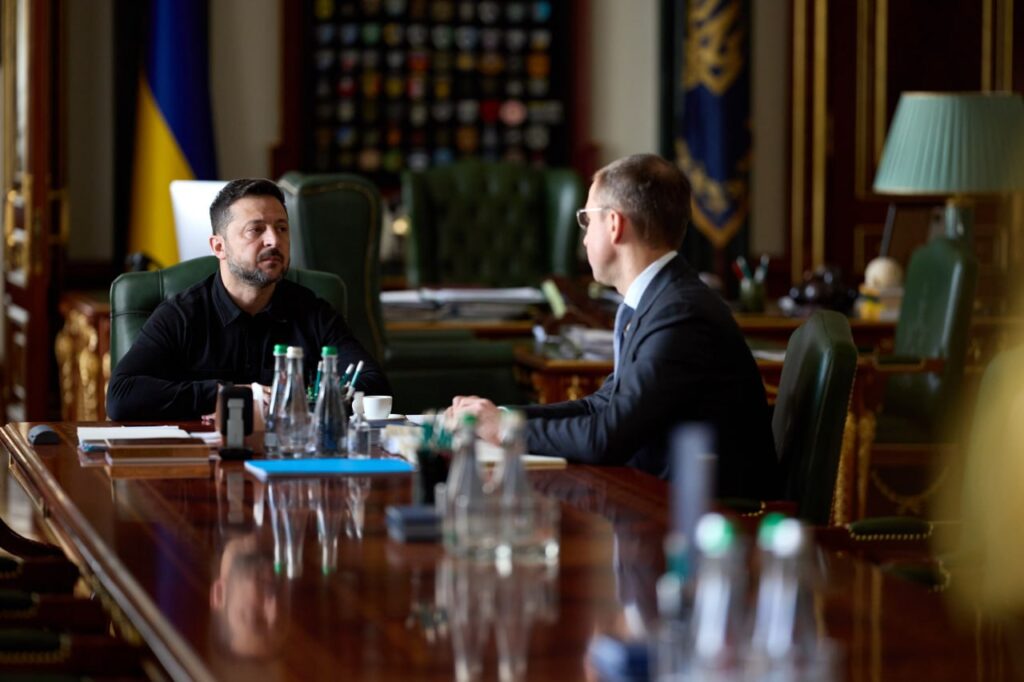
zelenskyy with koretskyi

Ukraine is seeking fresh funding for 2027 and says it is ready to deliver the reforms. Prime Minister Serhii Koretskyi says Ukraine’s external budget financing need for 2027 exceeds $52 billion, with more than $32.6 billion still to be raised.

That money underwrites the basics of a country at war: the army, pensions, hospitals, and support for business, he notes. Defense and security alone will take almost 44 percent of GDP in the 2027 budget, and the gap comes as Russia keeps hammering the infrastructure that generates Ukraine’s own revenue.

“The defense capability of the country, the payment of pensions, the support of hospitals and business depend on these funds,” Koretskyi says.

The hole Russia keeps digging faster than Kyiv can fill it

Russia’s strikes widen the gap even as Kyiv tries to close it. Russia systematically attacks critical infrastructure, business, production and civilian sites, and the destruction and halted enterprises will leave tax revenues about $1.5 billion below forecast by the end of the year, he warns.

For instance, output of Ukraine's steel industry, one of the pillars of its wartime economy, fell 57.3% in August due to Russian strikes. This sector is Ukraine's second-largest foreign-currency earner, employing more than 70,000 people directly and another 250,000 in related industries, and paying close to $1 billion a year in taxes.

Beyond the budget itself, the off-budget needs of Ukraine’s Defense Forces for 2027 are estimated at $45 billion, or about 40 billion euros, a figure that sits on top of the $52 billion budget requirement, he says.

The reforms Kyiv must deliver to unlock the money

The money hinges on reforms Ukraine still has to deliver. In the next few days, the government is to approve all the decisions needed to continue financing.

“Ukraine continues to work on fulfilling its part of the commitments. This week, the government is expected to approve all the necessary decisions to ensure continued funding,” the Ukrainian prime minister says.

Meanwhile, the Parliament plans to consider the bills required under the support programs of the IMF, the World Bank and the EU.

  •  

To scale up air defense without straining the front, Ukraine enlists business. In under year nearly 100 companies have joined, their crews downing 60-plus targets

Ukraine's mobile gun team. Photo: Ukraine's Air Force via Facebook

Ukraine is handing its factories the right to shoot back at the Russian drones hunting them. Nearly 100 companies have joined Ukraine’s experimental program that allows private enterprises to operate their own air defenses, granting them authority to conduct air defense operations and form their own crews, the Defense Ministry says.

Russian drones strike Ukrainian factories, warehouses and power sites so relentlessly that the state cannot shield every one, so the Defense Ministry is enlisting the businesses being hit to defend themselves.

The program has grown quickly, from 24 companies in April to 81 by mid-September and nearly 100 now, and its crews have already destroyed a substantial number of Russian aerial targets.

The companies range from operators of critical infrastructure to state and private firms across the economy. The project is carried out under a Cabinet resolution dated 19 November 2025, which mobilizes enterprise resources to support Ukraine’s defense against air threats.

Civilian crews that answer to the Air Force, not themselves

These teams do not fire into a shared sky on their own. About 50 air-defense groups have been formed and are operating under the relevant Air Force commands, and crews from six enterprises are already carrying out combat missions, the ministry says. The rest are training or finishing preparation before they join.

As of 14 October, the groups have downed more than 60 aerial targets, mostly Russian drones, using interceptor drones and automated turrets with heavy machine guns, according to the ministry. The Air Force command sets each group’s targets based on its weapons and tasks, and, jointly with the company, defines its sector, personnel, and equipment.

Who pays, and who pulls the trigger

The arrangement splits cost and control. Some weapons the enterprises buy with their own money, holding end-user status, while a company can also ask the Air Force to lend arms and ammunition from military stocks.

Private air defense is one layer of a multi-tiered shield, meant to protect industrial capacity, critical infrastructure and civilian staff from systematic drone attacks. The crews began combat work in 2026.

  •  

Ukraine’s anti-corruption bodies, whose independence EU made condition for membership, have clawed back $5.1 million for state budget

The National Anti-Corruption Bureau of Ukraine (NABU) and the Specialized Anti-Corruption Prosecutor's Office (SAP) issuing notices of suspicion

Ukraine’s anti-corruption agencies just clawed back millions for the state budget. The National Anti-Corruption Bureau (NABU), the Specialized Anti-Corruption Prosecutor’s Office (SAPO) and the State Property Fund have returned about $5.1 million to the state budget, the bureau says.

NABU and SAPO were created in 2015 after the Euromaidan revolution as independent bodies to fight high-level corruption, and their independence is a core condition for Ukraine's path to the EU. This recovery is the kind of concrete payoff that EU-backed reform was meant to produce.

Investigating one case, detectives and prosecutors found that the leadership of a regional branch of the State Property Fund had failed to act. Because of that inaction, the state risked losing millions of dollars.

To head off the loss, NABU and SAPO alerted the fund’s central leadership and gave it access to part of the investigation materials.

How the agencies turned a case into cash

The fix came from sharing what the investigation had uncovered. After working through the data, the State Property Fund took the necessary steps and secured the full budget amount, the bureau says.

NABU and SAPO continue to cooperate with other state bodies to protect the country’s economic interests and prevent corruption crimes, the bureau adds. The agencies framed the case as proof that enforcement, beyond investigation alone, can return money the state would otherwise lose.

Why these agencies matter beyond one case

The recovery lands at a fraught moment for the two institutions. Their independence has been under sustained pressure, and in July 2026 parliament briefly stripped it before mass protests and EU warnings forced a reversal.

In 2025, Brussels tied as much as 50 billion euros in aid and the pace of accession talks to the agencies’ autonomy, treating NABU and SAPO as pillars of the rule-of-law reforms Ukraine promised on its way into the bloc.

  •  

“Starshield systems are owned and controlled by the US government”: Musk says Trump, not SpaceX, is behind cut hitting Ukraine

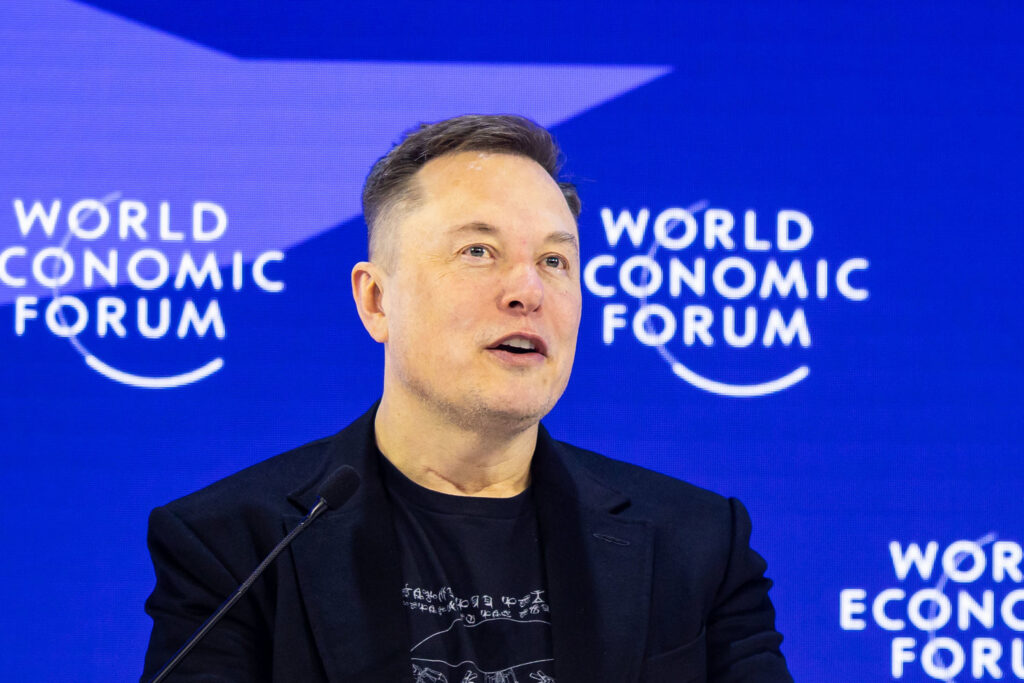
kyiv asking musk let strike inside russia its best line gone · post elon 2026 world economic forum / ciaran mccrickard wef ukraine news ukrainian reports

SpaceX chief Elon Musk says the version of Starlink that Ukraine’s military uses, StarShield, is owned and controlled by the US government rather than by his company. His claims come amid a storm over Ukrainian reports that a speed cut had broken their frontline operations.

Ukraine’s drones and air defenses rely on Starlink to steer and strike, so a limit on the network hits combat directly. Ukrainian troops reported that overnight into 14 October, the faster military package they depend on was throttled, halting a series of missions. Musk’s answer shifts the decision and the blame from SpaceX to the US government and, ultimately, to the president.

“Any limits on speed or usage are decided by the US military and ultimately POTUS. StarShield systems are owned and controlled by the US government,” Musk says.

He draws a line between the two services. Ordinary Starlink is a commercial product owned by SpaceX, limited to civilian or defensive use and not for offensive military action, which he called inappropriate for a commercial company.

Their conversation took place the same week that Washington pressured Kyiv over its strikes on Russian oil refineries amid US President Donald Trump's diesel deal with Moscow.

The exchange that forced Musk to answer

The statement followed a direct appeal. Former Defense Minister Mykhailo Fedorov told Musk on X that Starlink connectivity at speeds of up to 160 km/h was being restored, and pressed for more.

“Removing StarShield’s speed limit entirely is now critical for Ukraine’s defense. Thank you, Elon Musk. We hope for your continued support,” Fedorov wrote, framing the cap as a direct constraint on the war.

The faster package Ukraine cannot do without

The ordinary Starlink Mini mounted on drones is capped at about 160 km/h, which is too slow for some missions, so faster flight requires access to the military version, StarShield, Ukrainska Pravda notes. Ukraine has used StarShield since 2024.

  •  

“He thinks Ukraine is a weak link and that it needs to be squeezed into giving in”: diplomat on why Trump pressures Kyiv, not Moscow

The White House in Washington DC, USA. Illustrative image: Wikimedia Commons.

Washington is pressing the victim, not the aggressor, a Ukrainian diplomat says. President Donald Trump is using the threat of cutting military aid and intelligence as a tool to pressure Ukraine, while failing to apply enough pressure on Russia to stop the war, says Oleksandr Khara, executive director of the Center for Defense Strategies, Espreso reports.

Ukraine’s drones and air defense still lean on US satellite intelligence and weapons, which gives Trump room to squeeze Kyiv rather than Moscow. Khara argues Trump wants to end the war on Ukraine’s and Europe’s account to restore normal relations with Russian ruler Vladimir Putin, treating Ukraine as the weak link to be pushed.

“Trump wants to use restrictions, levers of influence on Ukraine to achieve his goal. To end or stop this war at any cost, at the expense of Ukraine and Europe, to restore normal relations with Putin,” Khara said.

Using American aid as leverage over Kyiv is not new for Trump, the diplomat noted, recalling earlier instances in which support was blocked or suspended.

The pressure points Trump picks, and the ones he leaves alone

Trump wants a visible success in ending the war, Khara says, partly against the backdrop of US domestic politics. He has economic tools to press Moscow but is in no hurry to use them, and his administration is instead gradually loosening sanctions on Russia.

“He doesn’t want to pressure Russia. He thinks Ukraine is the weak link and that it needs to be pushed,” Khara stressed.

Ukraine’s dependence on US support has fallen thanks to European partners, he added, so Kyiv has more room to keep fighting even as European states keep buying American weapons for it.

The one trade Kyiv might accept, and the pressure until then

An energy ceasefire is possible only on strict terms, Khara believes. Kyiv could agree to stop striking Russian refineries only if Moscow halts attacks on Ukraine’s power generation and transmission, heating, and the Black Sea ports and the ships heading to them.

Until such a deal exists, Ukraine must hit harder, he argued, because steadily draining Russia’s economic resources is what could force the Kremlin to reconsider.

“As long as there is no such agreement, and no desire from Russia, we must increase this pressure and destroy as much of their energy infrastructure as possible,” Khara said.

  •  

“Trump and Musk must be held accountable”: US senator warns Starlink network failing over Ukraine could cripple its shield against Russian missiles and drones

geran-2 (shahed-136) drone belarusian markings service military belta militarnyi російський безпілотник герань 2

US Senator Richard Blumenthal, a co-author of the Russia sanctions law named after Lindsey Graham, has issued a sharp statement on the latest developments in Ukraine. He says that President Donald Trump and SpaceX chief Elon Musk should be held accountable for reported Starlink failures that could cripple Ukraine’s defense.

On 14 October, Ukraine’s military reported a Starlink disruption that halted its operations. It happened at the same time the country’s air defense stopped receiving intelligence on a Russian ballistic strike that killed three people in Kyiv. Both failures came right after the US struck a diesel deal with Russia, letting low volumes of fuel into global markets and America while pressure grew on Ukraine to stop hitting the Russian oil refineries that raise the cost of the war.

"Reports of Starlink failing in Ukraine are deeply alarming— potentially crippling air defense against Russia’s murderous missiles & drones. Trump & Musk must be held accountable," he says.

When the network falters, the war feels it

The alarm rests on how completely Ukraine leans on the system. SpaceX has reportedly throttled the StarShield military package Ukrainian drones use, with connections dropping once the drones move at speed, and breaking a series of missions.

Ukraine neither owns nor controls Starlink, and the latest limits revived long-running fears that its battlefield lifeline can be dialed down from outside the country.

Blumenthal’s demand sits inside a broader revolt in Congress. A bipartisan group of 12 senators wrote Trump on 13 October urging him to rescind his deal letting Russian diesel back to market, calling the Treasury’s General License No. 135 a gift to Moscow that should be withdrawn.

They pressed him instead to use the Graham-Leach-Bliley Act he signed in September to squeeze Russia and its enablers, above all, China.

"If there's one lesson from Trump's mindless warmongering, it's that we need to break our dependence on foreign imports of fossil fuels & embrace alternate sources of energy," he said.

  •  

“Trump was looking for any opportunity to undermine our defense capabilities,” top Ukrainian volunteer, who supplied 291,502 FPV drones to front, says of sudden Starlink limit

Elon Musk: “Starlink will never turn off for Ukraine”

One of Ukraine’s most prominent drone volunteers, Serhii Sternenko, says that Starlink terminals have been restricted overnight, with connectivity beginning to drop out at speeds exceeding 160 km/h. As a result, several critical missions were disrupted.

Sternenko heads a charitable foundation that has purchased 291,502 FPV drones, which have helped the Ukrainian military shoot down more than 12,954 aerial targets. He has also served as an adviser within the team of former Defense Minister Mykhailo Fedorov.

Sternenko suggests that SpaceX may have introduced the restrictions at the request of the Trump administration. He adds that Ukraine had refrained from striking Russian oil refineries and energy infrastructure in recent days, as Trump had requested.

“But Trump was looking for any opportunity to undermine our defense capabilities, and he did so despite the fact that we had complied with his demands,” Sternenko says.

The limit landed the same night Russian ballistic missiles struck Kyiv’s Desnianskyi district, killing three women and injuring 24, including a seven-year-old girl.

Rescuers evacuated people covered in blood

The strike on a nine-story residential building set it ablaze, burning out apartments from the first floor to the ninth, with rescuers pulling bloodied residents from the flames and leaving survivors without power, water, or gas, according to Suspilne.

During the night’s first ballistic launches, partners did not alert Ukraine, but for the three later waves the warnings did come through, Air Force communications chief Yurii Ihnat says. The cause of the first lapse is still being established, per Radio Free Europe/Radio Liberty.

The early warnings help Ukrainian civilians quickly find a place to hide from such strikes, leaving up to 3 minutes to do so. Without it, people are left entirely helpless in the face of the aggression.

Further Starlink restrictions have reportedly been introduced

Later, Sternenko wrote that reports were "coming in from military personnel that restrictions on the use of Starlink satellite communications terminals for our operations have just been tightened.

"The speed at which the connection starts dropping out is now 60–70 km/h,” he added.

  •  

NATO country that pays for Kyiv’s Starlink warns Musk as his cap breaks Ukraine’s drone missions: “As your European customers, we are watching you”

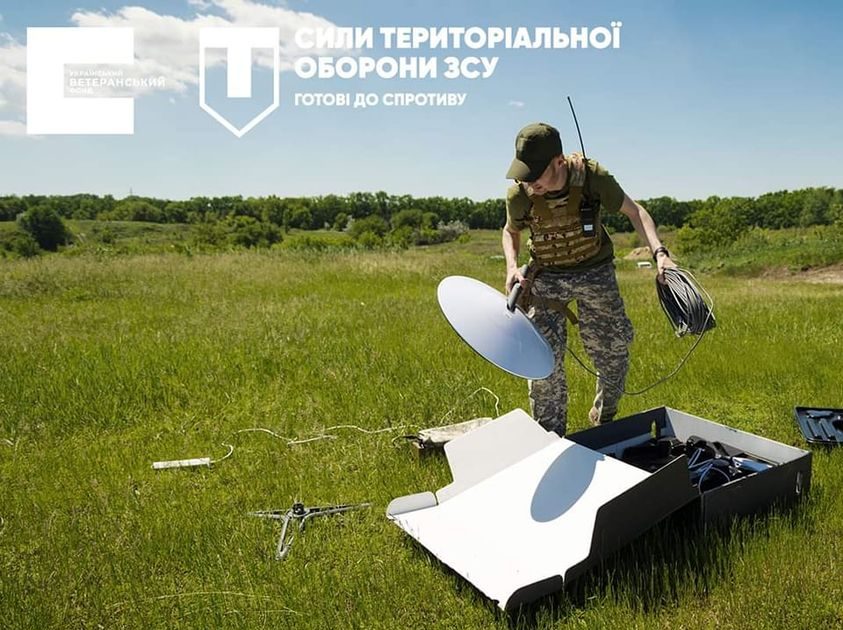
Starlink terminal.

Poland’s Foreign Minister Radoslaw Sikorski has publicly criticized SpaceX chief Elon Musk over the latest disruptions in Starlink's operation in Ukraine. Poland is the largest supplier of Ukraine’s terminals, having provided about 29,500, roughly half the network. It also has a Starlink ground station in Wola Krobowska that provides connectivity for much of Central and Eastern Europe, including Ukraine, RMF24 reports.

On 13 October, SpaceX imposed a 100 mph (160 km/h) speed limit on the StarShield military package that Ukrainian forces use, disrupting drone missions without warning. Poland, which pays about $50 million a year for Ukraine’s Starlink terminals, told Musk it is watching.

“Hey, @elonmusk, big man, are you playing politics with your products again? As your European customers, we are watching you,” Sikorski wrote on X.

The “big man” jab echoed their 2025 clash, when Musk told Sikorski to “be quiet, small man” after the minister noted that Warsaw, not SpaceX as charity, pays for the service.

Be quiet, small man.

You pay a tiny fraction of the cost.

And there is no substitute for Starlink.

— Elon Musk (@elonmusk) March 9, 2025

Meanwhile, presidential adviser Serhii “Flash” Beskrestnov said that this could not be a coincidence and was most likely tied to the current political situation.

When a drone outruns its own signal

The cap bites exactly where Ukraine’s drones do their work. The StarShield package had previously carried no data speed limit, and the change directly affected drones that use Starlink to steer in flight, the 7th Air Assault Corps said.

“During flights, the connection could drop for 10 to 20 seconds at speeds of just 110 to 120 kilometers per hour. The drones kept moving, but these interruptions made them harder to control,” the corps said, describing problems that now start well below the new ceiling.

A dependence Kyiv has feared for years. The limit revives an old worry. Ukraine neither owns nor controls Starlink, and the restriction follows fresh fears of a shutdown after Musk backed US President Donald Trump’s call for Zelenskyy to resign.

  •  
❌