❌

Vue lecture

Mavic vs Slavic: Ukrainian developers adapt reconnaissance drones to the modern battlefield
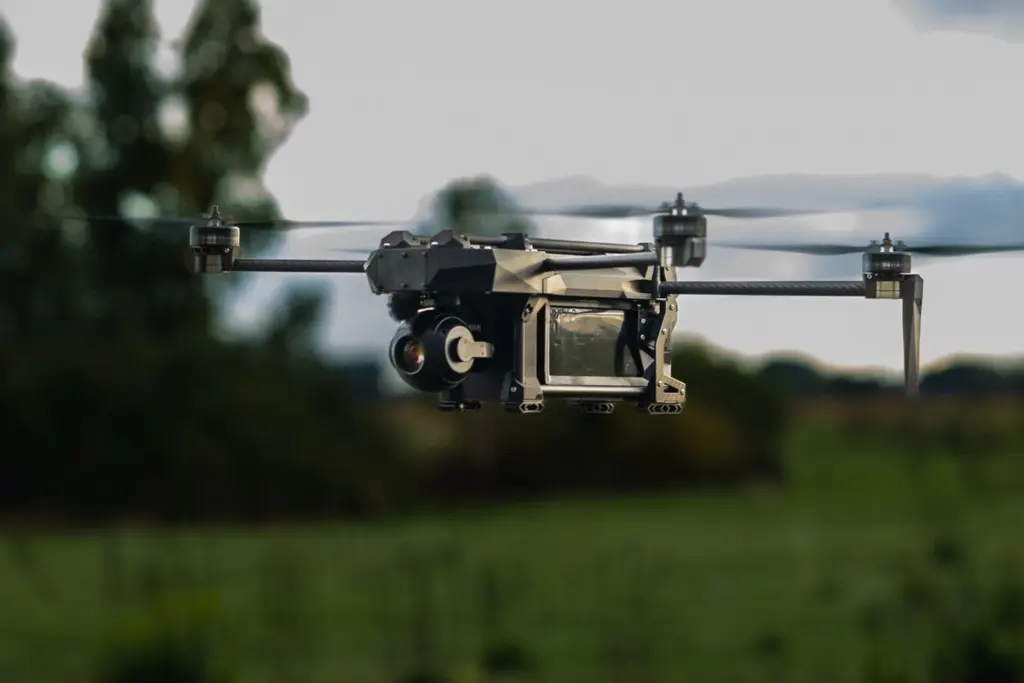
Slavic drone by Vyriy Industries. Photo: Vyriy Industries

Ukrainian company Vyriy Industries is bringing a new tactical reconnaissance drone, Slavic, to the market, Oboronka reports, citing information from the manufacturer. The control system of the new drone will be familiar to DJI Mavic operators, the company also said.

Mavic has long been one of the main reconnaissance tools used by Ukrainian forces, with Ukraine relying heavily on supplies of these drones from abroad. After Ukrainian President Volodymyr Zelenskyy said China had stopped selling drones to Ukraine, the country began seeking alternatives. Slavic is one of these domestic alternatives, designed not only to replace Mavic but also to adapt its capabilities to current battlefield conditions, allowing reconnaissance crews to operate farther from the line of contact and reducing risks to personnel.

Slavic has a tactical range of up to 30 kilometers without GPS

Slavic can remain airborne for up to 1.5 hours because it is equipped with a 40,000 mAh solid-state battery, the media outlet notes. The drone has a tactical range of up to 30 kilometers, the report says.

Illustration showing the positions of the Slavic pilot (left) and Mavic pilot (farther to the right), as well as the drones’ flight ranges relative to enemy positions (shown in red). Illustration: Vyriy Industries

The aircraft can operate without GPS, as Slavic uses optical positioning for navigation. The pilot can also select a less congested channel and operate more effectively in difficult terrain because the communications system operates across a wide range of channels.

The manufacturer notes that for surveillance, Slavic is equipped with a daytime 2K digital camera mounted on a three-axis stabilized gimbal, with 10x optical and 30x hybrid zoom.

Part of the drone with the camera. Photo: Vyriy Industries

The system is supplied as a ready-to-use package “out of the box,” with all the equipment needed for operation without additional field modifications.

The drone is designed to keep crews farther from the front line

The company said its new drone has successfully completed initial combat trials with seven units of the Ukrainian Defense Forces and is preparing for scale-up, the media outlet notes.

“The war has changed, and so have the working conditions for crews. The kill zone has expanded, while available commercial drones have a limited tactical range. The main task now is to provide the military with a specialized platform that can fly longer and farther, so crews can operate farther from the line of contact. This is exactly why we began developing Slavic,” said Oleksii Babenko, founder and CEO of Vyriy Industries.

At the same time, the team is working on new Slavic configurations, including testing thermal imaging modules for nighttime reconnaissance. The manufacturer is also preparing the platform for scaled-up production and deliveries to the Ukrainian Defense Forces, the company told the media.

“Frankensteins” and Ukrainian-made drones are among the options for replacing scarce Mavics

The Ukrainian military had widely used Chinese DJI Mavic 3 drones, including to adjust artillery fire, monitor infantry positions and conduct surveillance, prompting Ukraine to seek ways to replace the shortage. More than five alternatives to the Chinese drone had already been developed in Ukraine, the Ministry of Strategic Industries of Ukraine confirmed to RBC-Ukraine in July 2025.

DJI Mavic 3 in use by a Ukrainian servicemember. Photo: Ministry of Defense of Ukraine

There are also other options for replacing them. The main work in military units is being done with “Frankensteins,” drones assembled from two or three damaged aircraft, Mavic UAV pilot instructor “Dobryi” said in an interview with Militarnyi in July this year. At the same time, such drones are less reliable than new ones, he added.

  •  

Russian jet-powered drone hits near Yahodyn, just 1.5 km from Poland, as Warsaw changes air defense rules

A map showing the 1.5-kilometer distance between the site of the Russian strike on 18 September and the Yahodyn Auto border crossing. Map: Institute for the Study of War

A Russian drone struck near the Yahodyn border crossing on the Ukrainian-Polish border, the Ukrainian Border Service and the Polish Armed Forces Operational Command reported on 28 September. Geolocated footage of the attack shows the jet-powered Geran-5 striking near the facility. Following the incident, Poland is reviewing its air security measures.

Russia systematically strikes Ukraine’s border crossings to complicate logistics. Russian strikes near the Ukrainian-Polish border have increased over the past month. Yahodyn is one of the largest border crossings with Poland, on a route leading, among other destinations, to Warsaw, and has repeatedly been used by senior foreign officials visiting Ukraine.

The blast wave damaged the checkpoint building at the terminal entrance, Ivan Romaniuk, head of the Volyn Regional Military Administration, reported on 28 September. It was a jet-powered drone, but there was “preliminarily no direct hit” on the border crossing, BBC Ukraine reported, citing its own sources in the State Border Guard Service of Ukraine.

Russian drone strikes near Yahodyn

On the afternoon of 28 September, Poland reported the involvement of Polish military aviation because of Russian drone attacks against Ukraine. That day, it was also reported that the airports in Rzeszów and Lublin suspended operations.

Jacek Horyszewski, a spokesperson for the Polish Armed Forces Operational Command, said on TVN24 that a Russian drone had struck near the Yahodyn border crossing in Volyn Oblast on the border with Poland.

Romaniuk confirmed the attack in the village of Starovoitove, Kovel district, Volyn Oblast, where the Yahodyn international border crossing is located.

“There have been no reports of injuries or fatalities,” he said.

Videos that appeared online show the drone falling in a forest near people and border infrastructure.

❗ Момент удару «Герані-5» поблизу КПП «Ягодин», – місцеві канали.
BBC з посиланням на ДПСУ пише, що реактивний дрон вдарив неподалік кордону з Польщею: «Влучання у пункт пропуску «Ягодин» попередньо, не було». pic.twitter.com/VNq7QMy2Ly

— Breaking News (@breakingUAnews) September 28, 2026

The Russians carry out such attacks on Ukraine’s western regions using repeaters on Belarusian territory that amplify signals for Shahed- and Gerbera-type drones, BBC Ukraine reported, citing State Border Guard Service data.

Detonation of a Russian Geran-5 drone at the YAGODIN BORDER CORSSING, Ukraine. The explosion occurred ~1km from Polish territory.

POV: 51.193867, 23.821266@FaytuksNetwork @GeoConfirmed

geolocated by @Grimm_Intel pic.twitter.com/IeVClA06WF

— acceladealer (@acceladealer) September 28, 2026

Poland is already considering changes to its air security rules after the incident

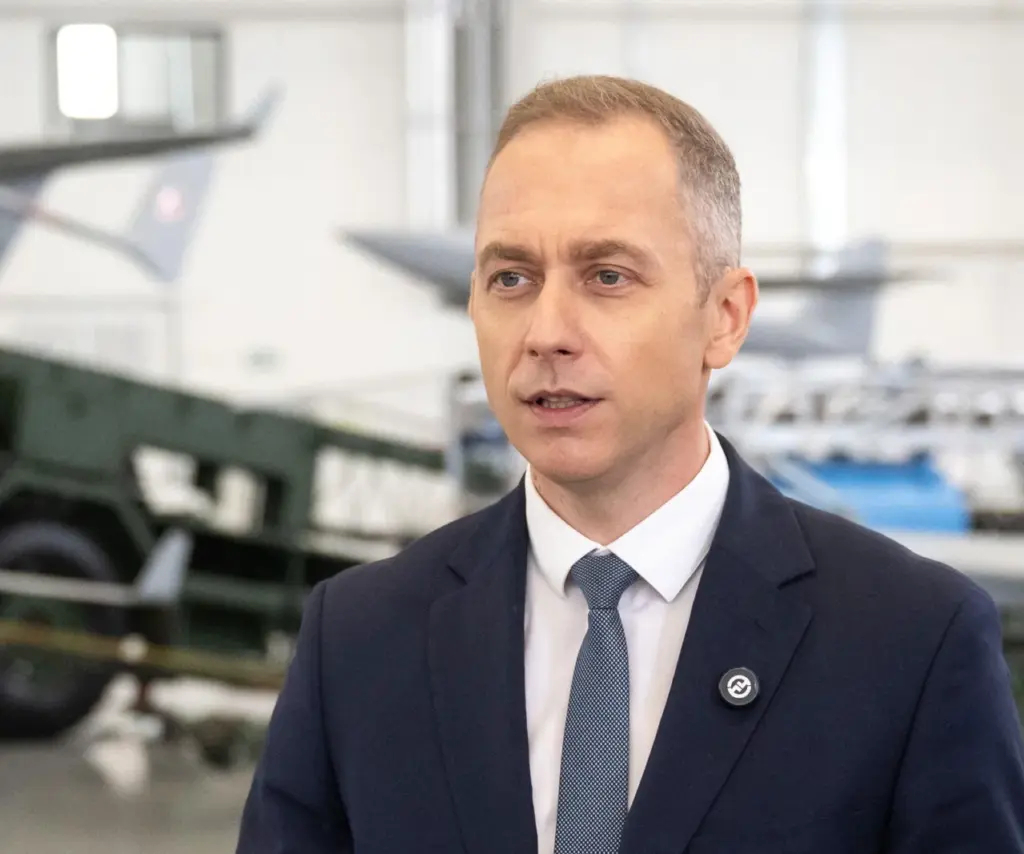
The same day, Polish Deputy Defense Minister Cezary Tomczyk said Poland will change its engagement rules "in the coming days." Currently, helicopter and fighter jet pilots can use weapons only after visually identifying a target: the aircraft must approach the object and determine what it is. After the rules are changed, however, a pilot or operational commander will be able to make a decision to engage based solely on radar data.

Cezary Tomczyk. Photo: Paweł Skraba / Super Express

“It is notable that Polish authorities have taken this step as NATO states attempt to find an adequate response to Russian drones nearing or entering their airspace from Ukraine, often leaving NATO air defense insufficient time to identify and target such threats before they have entered allied airspace,” the Institute for the Study of War noted in its 28 September report.

Recent strikes near the Polish border

On 10 September, Polish Prime Minister Donald Tusk said that Poland had prevented a threat to one of its border crossings with Ukraine overnight and expected its border crossings to be attacked as Moscow targets trade routes in an attempt to economically weaken Kyiv. He made the statement after drones struck a border crossing between Ukraine and Moldova on the previous day, killing two people.

On 13 September, Russian forces struck the locomotive of a passenger train two kilometers from the Polish border and hit a gas station near the Yahodyn international border crossing on the Ukrainian-Polish border.

❗На Волині внаслідок атаки РФ пошкоджено АЗС біля ПП «Ягодин» на кордоні з Польщею - речниця Волинської митниці Валентина Черниш.

Також на кордоні із Польщею рашисти атакували залізничну інфраструктуру - відео. pic.twitter.com/3XLc3B4FFw

— @UA_Peacemaker (@UaPeacemaker) September 13, 2026

The drone attack forced passengers on a train from Ukraine to leave the carriages for safety. Those evacuated included Boris Johnson, security advisers to European governments, German Bundestag lawmakers, diplomats, and academics.

After the Russian attacks, Poland deployed military units on the border with Ukraine and strengthened infrastructure near the border crossings, Polish Defense Minister Władysław Kosiniak-Kamysz said on 15 September.

On 17 September, Russian forces struck near the Yahodyn border crossing with a jet-powered drone.

  •  
❌